
क्रेडिट कार्ड एक्टिव कराने के नाम पर साइबर ठगी, पेनाल्टी का डर दिखाकर उड़ाए 73 हजार रुपये, 3 साल बाद FIR दर्ज
क्रेडिट कार्ड चालू कराने के नाम पर एक युवक से 73 हजार रुपये से अधिक…
क्रेडिट कार्ड चालू कराने के नाम पर एक युवक से 73 हजार रुपये से अधिक…
Editor’s Note: The following story contains spoilers for “Euphoria” Season 3, Episode 3. The impending…
इंदौर शहर की यातायात व्यवस्था को सुगम बनाने और आगामी मानसून के दौरान जलभराव की…

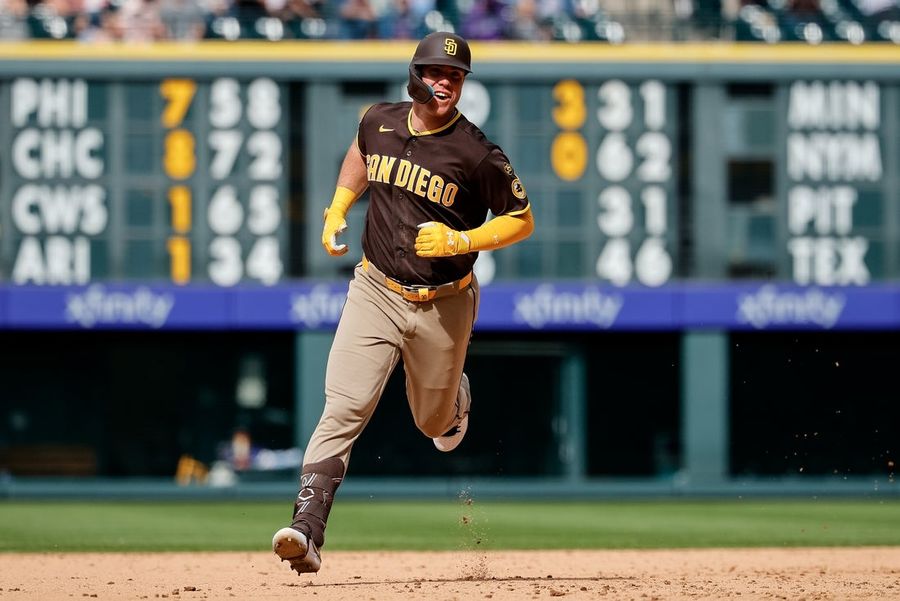 Apr 23, 2026; Denver, Colorado, USA; San Diego Padres first baseman Gavin Sheets (30) rounds the bases on a three run home run in the ninth inning against the Colorado Rockies at Coors Field. Mandatory Credit: Isaiah J. Downing-Imagn Images
 Ildemaro Vargas had three hits, including a home run, and drove in four runs as the Arizona Diamondbacks overcame a six-run deficit to beat the San Diego Padres 12-7 for a split of the short two-game Mexico City Series at Estadio Alfredo Harp Helu on Sunday.
The D-Backs trailed 6-0 after Manny Machado’s second homer, a three-run shot in the fifth, before scoring 10 runs in their final two bat-bats while batting around in the seventh and eighth.
Tim Tawa triggered a six-run seventh with his first career grand slam, and Lourdes Gurriel Jr. capped it with a two-run single to give the D-Backs their first lead, 8-7
Vargas had a bases-loaded triple to ignite a four-run eighth inning and scored on a Ketel Marte single to close the scoring.
Vargas’ homer in the sixth extended his season-opening hitting streak to 20 games, and he doubled and scored in the seventh. He has the longest active hitting streak in the majors and is tied with Pablo Sandoval for the longest in the majors since 2012. He has a 23-game hitting streak dating to 2025.
Jose Fernandez had three hits including a homer and Gurriel, Alek Thomas and Nolan Arenado had two hits apiece for the D-Backs, who had lost four of five. They were the designated home team.
Luis Campusano doubled and homered and Jackson Merrill had two hits for the Padres, who had won 13 of 15.
Machado’s two-run homer off Ryne Nelson in the third gave the Padres a 3-0 lead following Campusano’s RBI double in the second,. Campusano went deep in the sixth gave San Diego a 7-2 lead.
Padres starter Michael King gave up three hits and two runs in six innings, with eight strikeouts and one walk. He fanned seven of the first nine batters he faced.
Fernandez, Arenado and Thomas singled off David Morgan with one out to open the D-Backs’ seventh with one out, and Tawa followed with a 363-foot shot to left, a homer in 15 major league parks, according to Statcast.
Bradgley Rodriguez (0-1) entered and gave up a double to Vargas and a two-out walk to Corbin Carroll before Gurriel grounded a two-run double inside the bag at third.
Ryan Thompson (2-0) gave up two hits in the seventh.
Nelson allowed six runs on seven hits in five innings, with four strikeouts and two walks. He has given up 14 runs in his last two starts over 5 1/3 innings.
Arizona catcher Adrian Del Castillo was replaced by James McCann in the third inning after suffering a dislocated left ring finger when his glove was struck by Jackson Merrill foul tip.
–Field Level Media
Apr 23, 2026; Denver, Colorado, USA; San Diego Padres first baseman Gavin Sheets (30) rounds the bases on a three run home run in the ninth inning against the Colorado Rockies at Coors Field. Mandatory Credit: Isaiah J. Downing-Imagn Images Ildemaro Vargas had three hits, including a home run, and drove in four runs as the Arizona Diamondbacks overcame a six-run deficit to beat the San Diego Padres 12-7 for a split of the short two-game Mexico City Series at Estadio Alfredo Harp Helu on Sunday.
The D-Backs trailed 6-0 after Manny Machado’s second homer, a three-run shot in the fifth, before scoring 10 runs in their final two bat-bats while batting around in the seventh and eighth.
Tim Tawa triggered a six-run seventh with his first career grand slam, and Lourdes Gurriel Jr. capped it with a two-run single to give the D-Backs their first lead, 8-7
Vargas had a bases-loaded triple to ignite a four-run eighth inning and scored on a Ketel Marte single to close the scoring.
Vargas’ homer in the sixth extended his season-opening hitting streak to 20 games, and he doubled and scored in the seventh. He has the longest active hitting streak in the majors and is tied with Pablo Sandoval for the longest in the majors since 2012. He has a 23-game hitting streak dating to 2025.
Jose Fernandez had three hits including a homer and Gurriel, Alek Thomas and Nolan Arenado had two hits apiece for the D-Backs, who had lost four of five. They were the designated home team.
Luis Campusano doubled and homered and Jackson Merrill had two hits for the Padres, who had won 13 of 15.
Machado’s two-run homer off Ryne Nelson in the third gave the Padres a 3-0 lead following Campusano’s RBI double in the second,. Campusano went deep in the sixth gave San Diego a 7-2 lead.
Padres starter Michael King gave up three hits and two runs in six innings, with eight strikeouts and one walk. He fanned seven of the first nine batters he faced.
Fernandez, Arenado and Thomas singled off David Morgan with one out to open the D-Backs’ seventh with one out, and Tawa followed with a 363-foot shot to left, a homer in 15 major league parks, according to Statcast.
Bradgley Rodriguez (0-1) entered and gave up a double to Vargas and a two-out walk to Corbin Carroll before Gurriel grounded a two-run double inside the bag at third.
Ryan Thompson (2-0) gave up two hits in the seventh.
Nelson allowed six runs on seven hits in five innings, with four strikeouts and two walks. He has given up 14 runs in his last two starts over 5 1/3 innings.
Arizona catcher Adrian Del Castillo was replaced by James McCann in the third inning after suffering a dislocated left ring finger when his glove was struck by Jackson Merrill foul tip.
–Field Level Media
Apr 23, 2026; Denver, Colorado, USA; San Diego Padres first baseman Gavin Sheets (30) rounds…

The 2026 NFL Draft is complete and after a day to digest all the picks we’re prepared to hand out grades for all 32 teams. It generally takes a few years to know exactly how well a team did in an NFL Draft, but there’s still instant grades and immediate winners and losers that set a baseline of expectations for how we think a team’s draft went. We already published a 2027 NFL mock draft to set up next year’s board, which will surely change a ton over the next 11 months. If your team didn’t land its QB of the future this season, don’t worry, there are a bunch of quarterbacks coming next year.
One pitfall many teams seemed to fall into was at tight end. This was not a good tight end class, with only Kenyon Sadiq and Eli Stowers standing out, but both are pure pass catchers. Teams continued to over-pick the position out of necessity, and it led to some wild names coming off the board. This seemed to have a trickle down effect where lots of players fell lower than we expected.
Without further ado, here are our grades for the 2026 NFL Draft.
Best pick: Olaivavega Ioane, IOL, Penn State — 1st round, 14th overall
Leading off with Olaivavega Ioane was a tremendous pick for the Ravens, as he was the top interior offensive lineman on the board and one of our favorite players in the class. Zion Young in the second round was another solid selection, as the Missouri pass rusher did generate some first-round buzz late in the process. Ja’Kobi Lane and Elijah Sarratt are a pair of ball-winners who should help replace what the Ravens lost in Isaiah Likely.
Best pick: T.J. Parker, EDGE, Clemson — 2nd round, 35th overall
The Bills deserve some credit for the way they worked the board, trading back three times and yet drafting T.J. Parker at 35, a player that would have been a reasonable pick for them with their original pick at No. 26. Those picks also helped Buffalo bridge a gap from No. 26 to No. 91, which is when they would have been on the clock next. Davison Igbinosun brings a lot of experience and should play a role immediately for Buffalo at corner, and WR Skyler Bill (Round 4) and S Jalon Kilgore (Round 5) should also be contributors. Solid work from Brandon Beane.
Best pick: Tacario Davis, CB, Washington — 3rd round, 72nd overall
I was tempted to list Dexter Lawrence as their best pick, as the trade with the New York Giants is some important context. But looking at just the draft class, this was an interesting group. Cashius Howell in the second round will give the pass rush a boost, and Tacario Davis addresses a big need in the secondary and should slot in at CB2. Cincinnati also added a pair of centers in Connor Lew and Brian Parker II, giving them options behind Ted Karras. If you consider Lawrence a “draft pick,” the overall grade might be better, but we’re grading the picks alone.
Best pick: KC Concepcion, WR, Texas A&M — 1st round, 24th overall
This was a fantastic draft for Andrew Berry and company. Everyone knew the Browns needed to come out of Round 1 with a WR and an offensive tackle, so they slide back a few spots and still draft Spencer Fano at No. 9, a tackle many thought they would get at No. 6. They added the rising KC Concepcion, but then paired him with Denzel Boston as a second-round pick. That is a tremendous duo for their WR room. And to then grab safety Emmanuel McNeil-Warren in the third, when many thought he might be the first safety taken? Great work.
And yes, we are excited about QB Taylen Green on Day 3. The upside and potential are certainly there.
Best pick: Jonah Coleman, RB, Washington — 4th round, 108th overall
Due in large part to the Jaylen Waddle trade, the Broncos only had seven picks in the 2026 NFL Draft. When arguably their best pick is a running back out of this year’s class, you know how their draft went. Dallen Bentley was one of the sleepers we identified ahead of the draft, so he was a nice find in the seventh round.
Best pick: Kayden McDonald, DT, Ohio State — 2nd round, 36th overall
Getting Kayden McDonald in the second round is a fantastic pick for the Texans, as their defensive front gets a bit more imposing. Lewis Bond in the sixth round is a nice selection, he was one of our sleepers heading into the draft. Keyland Rutledge brings a ton of experience and might have been a bit early, but fills a need. Marlin Klein in the second round was an absolute stunner, however.
Best pick: A.J. Haulcy, S, LSU — 3rd round, 78th overall
The Colts did not have a pick in the first round, thanks to the Sauce Gardner trade, but they addressed a massive need in the second with linebacker CJ Allen, a player that might have been a first-round pick were it not for positional value. A.J. Haulcy is a fun safety, who probably plays more of a box role but showed some chops in deep coverage. The double-dip on the EDGE during Day 3 with George Gumbs Jr. and Caden Curry should help a pass rush that could use an assist.
Best pick: Emmanuel Pregnon, IOL, Oregon — 3rd round, 88th overall
Getting interior offensive lineman Emmanuel Pregnon where they did, at pick No. 88, certainly stands out. The Oregon lineman was a fringe first-round player, so getting him in the third round is a good bit of work, and absolutely helps their grade here.
Because almost everything else has us scratching our heads. Nate Boerkircher might be the best blocking tight end in the class, but is that the best pick at No. 56, with your first pick of the night? Albert Regis will help in the run game, but is likely a two-down tackle in the NFL. And while the Jaguars added two of my favorite sleepers in this class – EDGE Wesley Williams and TE Tanner Koziol – it does not change the overall needle.
Best pick: Mansoor Delane, CB, LSU — 1st round, 6th overall
Opinions on the Chiefs’ draft class are mixed, but I for one love what they did. Following the Trent McDuffie trade they had a glaring need in the secondary, and they moved up a few spots to draft Mansoor Delane, the top CB on the board (when you factor in Jermod McCoy’s injury situation). I’m fine with that move, as it not only addresses a big need but he is an NFL-ready cornerback. Add in Peter Woods and R Mason Thomas with the next two picks, and you have three players in the first three picks, all of whom were mentioned as potential first-round selections during the process.
Delane might be their “best” pick, but my favorite might be Nebraska running back Emmitt Johnson. It might be my Cornhuskers homerism showing, but he is a good football player and will contribute in this offense, even with the addition of Kenneth Walker III.
Best pick: Fernando Mendoza, QB, Indiana — 1st round, 1st overall
Getting the top quarterback in this class makes this draft a win for the Raiders, but they were not done. Treydan Stukes and Keyron Crawford are huge additions for their defense, and Trey Zuhn III could play almost anywhere along their offensive line. And then the Raiders opened Day 3 by moving up to stop Jermod McCoy’s slide, grabbing a top-15 talent to open the fourth round. Tremendous value, even with the medical concerns. Later in the fourth round the Raiders added Mike Washington Jr., the running back largely considered RB3, which was a great value pick.
Best pick: Brenen Thompson, WR, Mississippi State — 4th round, 105th overall
Akheem Mesidor is an interesting way to start the draft, while the Miami pass rusher is on the older side as a prospect, he should help the Chargers’ pass rush. While Los Angeles did make some additions to the offensive line in free agency, they needed to add more help and Florida’s Jake Slaughter can boost that unit, and the Chargers added some guard help late with Logan Taylor and Alex Harkey in Round 6. Whether those two guards are enough to solidify the interior is a big question.
Thompson can absolutely fly, and could be a big weapon for Justin Herbert out of the slot.
Best pick: Chris Johnson, CB, San Diego State — 1st round, 27th overall
I really like what the Dolphins did in this draft, starting out with Kadyn Proctor and Chris Johnson in the first round, and then adding Texas Tech LB Jacob Rodriguez early in the second. If you want to tell me their best pick is Chris Bell in the third round – a WR who drew comparisons to both Deebo Samuel and A.J. Brown but slid due to a knee injury – I would not push back on that at all.
Miami added a pair of safeties in Kyle Louis and Michael Taaffe on Day 3, and it would not surprise me to see both have big roles next year on both defense and special teams.
Best pick: Gabe Jacas, EDGE, Illinois — 2nd round, 55th overall
New England moved up a bit in the first round to take tackle Caleb Lomu, with the hope he and Will Campbell will be the bookends on this offensive line for the next few years. Gabe Jacas can do a lot on the edge, from rushing the passer – he had 11 sacks last year at Illinois – to setting the edge and dropping into coverage, but if he is tasked with just getting after the QB this could be a huge pick for the Patriots. Many will talk about drafting a QB in round 7, but I’m always appreciative of a team looking to upgrade their entire QB room, even behind a young franchise QB like Drake Maye.
Best pick: Omar Cooper Jr., WR, Indiana — 1st round, 30th overall
Opinions on the Jets are all over the place, but I might be in the minority as someone who loves what they did. While I might have preferred Arvell Reese over David Bailey, the Texas Tech product will give them some juice off the edge.
But where this truly stands out is with their next few picks. The selection of Oregon TE Kenyon Sadiq at No. 16 had some scratching their heads, given how many believed a WR – perhaps Indiana’s Omar Cooper Jr. – was the move at that spot. But then the Jets moved back into the first to add … none other than Cooper. Now you can see the vision, as they’ll lean into a 12 personnel package with Garrett Wilson and Cooper at WR, and Mason Taylor and Sadiq at TE. That could work. Add in a feisty CB in D’Angelo Ponds, who plays a lot like his new head coach, and you have a draft class that Jets fans will learn to love.
Best pick: Eli Heidenreich, RB, Navy — 7th round, 230th overall
This was an … interesting draft from the Steelers. It looks as if they wanted Makai Lemon in the first round, but were forced to pivot in the blink of an eye when the Eagles came up for the USC WR. Max Iheanachor is a decent consolation prize, but is still a bit of a project. Germie Bernard is a solid option, but a step below what Lemon offers. Drew Allar is going to get the headlines, but he until he cleans up his pocket presence, that is also going to be a question. Eli Heidenreich at the end of their class is obviously a great story, but Mike McCarthy should find a way to get him on the field.
Best pick: Anthony Hill Jr., LB, Texas — 2nd round, 60th overall
Carnell Tate will certainly help Cam Ward, and an offense that badly needed some explosive plays. Getting the most out of Keldric Faulk will be job one for Robert Saleh, as the traits are there even if the production was lacking at Auburn. Anthony Hill Jr. was a great pick for them in the second round, and gives Saleh an athletic, three-down linebacker.
Best Pick: Chase Bistontis, OL, Texas A&M — 2nd round, 34th overall
Jeremiyah Love is going to be a stud, but taking a running back at No. 3 was a luxury when this team had so many other core needs. Carson Beck in the third round borders on an illogical, wasted pick when Arizona will likely be drafting a 1st round QB next year. They found some value on day three, but that doesn’t make up failing to set the table for success in 2027 and beyond.
Best Pick: Aveion Terrell, CB, Clemson — 2nd round, 48th overall
The Falcons did some really solid work despite not having a first round pick from the James Pearce trade a year ago. The team found tremendous value on day two by landing Aveion Terrell to pair with his older brother AJ Terrell in the secondary, and Zachariah Branch is going to be so fun if the team can use him creatively with Drake London and Kyle Pitts.
Best Pick: Sam Hecht, C, Kansas State — 5th round, 144th overall
This was a monster class from the Panthers that addressed needs while also finding great value up and down the board. Monroe Freeling solidifies the tackle spot immediately with room for growth. DT Lee Hunter will free up space for Derrick Brown to be even more effective — but it was their 5th round pick that turned heads. Sam Hecht is a starting-caliber center, which was a huge need, and they got him two rounds later than I thought he’d go.
Best Pick: Dillon Thieneman, S, Oregon — 1st round, 25th overall
It’s clear the Bears worked their board with an eye on the best players as they saw the class, but Chicago entered this draft with questions, and didn’t necessarily leave with answers. There remains a major need at EDGE and along the defensive line, and while I really like Thieneman and fourth round pick Malik Muhammas, the Bears still have major issues when it comes to rushing the passer and stopping the run.
Best Pick: Caleb Downs, S, Ohio State — 1st round, 11th overall
You really have to nitpick to find a lot wrong with this draft class. It took incredible discipline to wait for Downs to fall out of the Top 10 to pull the trigger, and Dallas got one of the best defensive players in this entire draft class. All the way down the board the Cowboys found value, and topping it off with a trade for veteran linebacker Dee Winters helps solidify a need the team couldn’t address on Day 1.
Best Pick: Keith Abney, CB, Arizona State — 5th round, 157th overall
There was a lot of needs-based drafting out of Detroit, which is largely okay because they didn’t have a lot of major holes — but we could look back in 3-4 years and feel a little like this team missed out on some higher-end talent. Finding Abney in the fifth round was a steal, and he can be a plus-level Nickel in the NFL. All-in-all this was a solid, but unremarkable class.
Best Pick: Dani Dennis-Sutton, EDGE, Penn State — 4th round, 120th overall
The Packers didn’t have a lot of picks in the draft due to trades, but still managed to come away with some really solid players at need positions. Taking CB Brandon Cisse with their first pick in the draft was a little too cute for my liking, as Cisse is a project who needs 2-3 years before he can be an impact player. Still, they made up for this was Dennis-Sutton, one of the best steals in this draft to solidify their pass rush.
Best Pick: Charles Demmings, CB, Stephen F. Austin — 5th round, 163rd overall
The Vikings went into this draft without having an established GM, and they operated like a team drafting without an established GM. Taking Caleb Banks in the first filled a need, but not sure a defensive tackle with motor and injury issues is a good use of resources. Jake Golday will help against the run, but he’s a below-average athlete. Picking Charles Demmings in the 5th round was a steal, but not enough to make up for this mess of a class that whiffed on dozens of good players to fill needs.
Best Pick: Jordyn Tyson, WR, Arizona State — 1st round, 8th overall
This was a solid draft from the Saints. They addressed several core needs while adding more threats to the offense, which the team desperately needed. It’s going to be fascinating to see Jordyn Tyson in this offense, because he complements Chris Olave really well, and gives Tyler Shough a much-needed catch radius receiver who can high point the ball well on contested throws.
Best Pick: Arvell Reese, LB, Ohio State — 1st round, 5th overall
This was a masterclass from the Giants with an eye towards one thing: Reforming this team in John Harbaugh’s image. That means revamping the defense, getting much tougher in the trenches, and finding impact defensive players who can support and strengthen the team’s stellar pass rush. I love almost every one of the Giants picks, but Arvell Reese is the standout. He was the best player in this draft class, and his scheme flexibility is going to be a lot of fun to watch.
Best Pick: Makai Lemon, WR, USC — 1st round, 20th overall
Unlike past drafts the Eagles did enter this draft with some questions. They had a core need at pass rusher and wide receiver, especially if the team is going to be trading A.J. Brown after June 1. Landing Makai Lemon was a gift courtesy of the Cowboys, who facilitated the trade to make it happen. The other big part of this class was making the trade for Jonathan Greenard with the Vikings, giving the team the veteran pass rusher they needed. This was a great draft top to bottom.
Best Pick: Gracen Halton, DT, Oklahoma — 4th round, 107th overall
The 49ers operated in this draft like a team that had no issues or areas for improvement, and that didn’t make me a huge fan of this class top-to-bottom. There are definitely some nice pieces — but a lot of questions about the process with the Niners board having few lineups with consensus on value. This could be some trait-based drafting, but the fact San Francisco was using A.I. to hone this process is especially worrisome. Gracen Halton was really good value in the 4th, and where he can collapse the middle and help in run support.
Best pick: Bud Clark, S, TCU — 2nd round, 64th overall
The Hawks definitely got the secondary help they were looking for, but the corners they selected were reached for a little too far. I really like the Bud Clark pick in the 2nd round. He was one of my favorite safeties in this class, and think he can be an impact players. Still, the core issue is that the Seahawks didn’t really maximize their value with the majority of their selections. There were some rumors that Seattle was trying to make a massive trade into the Top 10 in the hopes of landing Jeremiyah Price, and when that didn’t materialize they scrambled a little too much.
Best Pick: Rueben Bain Jr., EDGE, Miami — 1st round, 15th overall
The board broke in the best possible way for the Bucs in the first round as Bain slid to them at No. 15. The belief pre-draft was that Tampa Bay would have to settle for a tier two EDGE rusher, and they ended up not just getting a tier one guy — but the best pass rusher in this class for their system. From there they got another steal in round four with Keionte Scott, which made this class even better. Love what this team did top to bottom
Best Pick: Antonio Williams, WR, Clemson — 3rd round, 71st overall
The Commanders had two home run picks in this draft in their first two. Sonny Styles is going to be so, so good in the NFL with range and athleticism that will make him the anchor of the Washington defense for years to come. The sizzle came in the third with one of my favorite picks in this class in Antonio Williams. All of the Clemson players were hit with a draft knock because of the Tigers’ underperformance last year, but I think the talent and skill is absolutely there. Williams compares favorably to Terry McLaurin and I love that for this team. The later rounds were more of a wash, with some picks I didn’t love — but still a solid overall haul.
The 2026 NFL Draft is complete and after a day to digest all the picks we’re prepared to hand out grades for all 32 teams. It generally takes a few years to know exactly how well a team did in an NFL Draft, but there’s still instant grades and immediate winners and losers that set a baseline of expectations for how we think a team’s draft went. We already published a 2027 NFL mock draft to set up next year’s board, which will surely change a ton over the next 11 months. If your team didn’t land its QB of the future this season, don’t worry, there are a bunch of quarterbacks coming next year.
One pitfall many teams seemed to fall into was at tight end. This was not a good tight end class, with only Kenyon Sadiq and Eli Stowers standing out, but both are pure pass catchers. Teams continued to over-pick the position out of necessity, and it led to some wild names coming off the board. This seemed to have a trickle down effect where lots of players fell lower than we expected.
Without further ado, here are our grades for the 2026 NFL Draft.
Best pick: Olaivavega Ioane, IOL, Penn State — 1st round, 14th overall
Leading off with Olaivavega Ioane was a tremendous pick for the Ravens, as he was the top interior offensive lineman on the board and one of our favorite players in the class. Zion Young in the second round was another solid selection, as the Missouri pass rusher did generate some first-round buzz late in the process. Ja’Kobi Lane and Elijah Sarratt are a pair of ball-winners who should help replace what the Ravens lost in Isaiah Likely.
Best pick: T.J. Parker, EDGE, Clemson — 2nd round, 35th overall
The Bills deserve some credit for the way they worked the board, trading back three times and yet drafting T.J. Parker at 35, a player that would have been a reasonable pick for them with their original pick at No. 26. Those picks also helped Buffalo bridge a gap from No. 26 to No. 91, which is when they would have been on the clock next. Davison Igbinosun brings a lot of experience and should play a role immediately for Buffalo at corner, and WR Skyler Bill (Round 4) and S Jalon Kilgore (Round 5) should also be contributors. Solid work from Brandon Beane.
Best pick: Tacario Davis, CB, Washington — 3rd round, 72nd overall
I was tempted to list Dexter Lawrence as their best pick, as the trade with the New York Giants is some important context. But looking at just the draft class, this was an interesting group. Cashius Howell in the second round will give the pass rush a boost, and Tacario Davis addresses a big need in the secondary and should slot in at CB2. Cincinnati also added a pair of centers in Connor Lew and Brian Parker II, giving them options behind Ted Karras. If you consider Lawrence a “draft pick,” the overall grade might be better, but we’re grading the picks alone.
Best pick: KC Concepcion, WR, Texas A&M — 1st round, 24th overall
This was a fantastic draft for Andrew Berry and company. Everyone knew the Browns needed to come out of Round 1 with a WR and an offensive tackle, so they slide back a few spots and still draft Spencer Fano at No. 9, a tackle many thought they would get at No. 6. They added the rising KC Concepcion, but then paired him with Denzel Boston as a second-round pick. That is a tremendous duo for their WR room. And to then grab safety Emmanuel McNeil-Warren in the third, when many thought he might be the first safety taken? Great work.
And yes, we are excited about QB Taylen Green on Day 3. The upside and potential are certainly there.
Best pick: Jonah Coleman, RB, Washington — 4th round, 108th overall
Due in large part to the Jaylen Waddle trade, the Broncos only had seven picks in the 2026 NFL Draft. When arguably their best pick is a running back out of this year’s class, you know how their draft went. Dallen Bentley was one of the sleepers we identified ahead of the draft, so he was a nice find in the seventh round.
Best pick: Kayden McDonald, DT, Ohio State — 2nd round, 36th overall
Getting Kayden McDonald in the second round is a fantastic pick for the Texans, as their defensive front gets a bit more imposing. Lewis Bond in the sixth round is a nice selection, he was one of our sleepers heading into the draft. Keyland Rutledge brings a ton of experience and might have been a bit early, but fills a need. Marlin Klein in the second round was an absolute stunner, however.
Best pick: A.J. Haulcy, S, LSU — 3rd round, 78th overall
The Colts did not have a pick in the first round, thanks to the Sauce Gardner trade, but they addressed a massive need in the second with linebacker CJ Allen, a player that might have been a first-round pick were it not for positional value. A.J. Haulcy is a fun safety, who probably plays more of a box role but showed some chops in deep coverage. The double-dip on the EDGE during Day 3 with George Gumbs Jr. and Caden Curry should help a pass rush that could use an assist.
Best pick: Emmanuel Pregnon, IOL, Oregon — 3rd round, 88th overall
Getting interior offensive lineman Emmanuel Pregnon where they did, at pick No. 88, certainly stands out. The Oregon lineman was a fringe first-round player, so getting him in the third round is a good bit of work, and absolutely helps their grade here.
Because almost everything else has us scratching our heads. Nate Boerkircher might be the best blocking tight end in the class, but is that the best pick at No. 56, with your first pick of the night? Albert Regis will help in the run game, but is likely a two-down tackle in the NFL. And while the Jaguars added two of my favorite sleepers in this class – EDGE Wesley Williams and TE Tanner Koziol – it does not change the overall needle.
Best pick: Mansoor Delane, CB, LSU — 1st round, 6th overall
Opinions on the Chiefs’ draft class are mixed, but I for one love what they did. Following the Trent McDuffie trade they had a glaring need in the secondary, and they moved up a few spots to draft Mansoor Delane, the top CB on the board (when you factor in Jermod McCoy’s injury situation). I’m fine with that move, as it not only addresses a big need but he is an NFL-ready cornerback. Add in Peter Woods and R Mason Thomas with the next two picks, and you have three players in the first three picks, all of whom were mentioned as potential first-round selections during the process.
Delane might be their “best” pick, but my favorite might be Nebraska running back Emmitt Johnson. It might be my Cornhuskers homerism showing, but he is a good football player and will contribute in this offense, even with the addition of Kenneth Walker III.
Best pick: Fernando Mendoza, QB, Indiana — 1st round, 1st overall
Getting the top quarterback in this class makes this draft a win for the Raiders, but they were not done. Treydan Stukes and Keyron Crawford are huge additions for their defense, and Trey Zuhn III could play almost anywhere along their offensive line. And then the Raiders opened Day 3 by moving up to stop Jermod McCoy’s slide, grabbing a top-15 talent to open the fourth round. Tremendous value, even with the medical concerns. Later in the fourth round the Raiders added Mike Washington Jr., the running back largely considered RB3, which was a great value pick.
Best pick: Brenen Thompson, WR, Mississippi State — 4th round, 105th overall
Akheem Mesidor is an interesting way to start the draft, while the Miami pass rusher is on the older side as a prospect, he should help the Chargers’ pass rush. While Los Angeles did make some additions to the offensive line in free agency, they needed to add more help and Florida’s Jake Slaughter can boost that unit, and the Chargers added some guard help late with Logan Taylor and Alex Harkey in Round 6. Whether those two guards are enough to solidify the interior is a big question.
Thompson can absolutely fly, and could be a big weapon for Justin Herbert out of the slot.
Best pick: Chris Johnson, CB, San Diego State — 1st round, 27th overall
I really like what the Dolphins did in this draft, starting out with Kadyn Proctor and Chris Johnson in the first round, and then adding Texas Tech LB Jacob Rodriguez early in the second. If you want to tell me their best pick is Chris Bell in the third round – a WR who drew comparisons to both Deebo Samuel and A.J. Brown but slid due to a knee injury – I would not push back on that at all.
Miami added a pair of safeties in Kyle Louis and Michael Taaffe on Day 3, and it would not surprise me to see both have big roles next year on both defense and special teams.
Best pick: Gabe Jacas, EDGE, Illinois — 2nd round, 55th overall
New England moved up a bit in the first round to take tackle Caleb Lomu, with the hope he and Will Campbell will be the bookends on this offensive line for the next few years. Gabe Jacas can do a lot on the edge, from rushing the passer – he had 11 sacks last year at Illinois – to setting the edge and dropping into coverage, but if he is tasked with just getting after the QB this could be a huge pick for the Patriots. Many will talk about drafting a QB in round 7, but I’m always appreciative of a team looking to upgrade their entire QB room, even behind a young franchise QB like Drake Maye.
Best pick: Omar Cooper Jr., WR, Indiana — 1st round, 30th overall
Opinions on the Jets are all over the place, but I might be in the minority as someone who loves what they did. While I might have preferred Arvell Reese over David Bailey, the Texas Tech product will give them some juice off the edge.
But where this truly stands out is with their next few picks. The selection of Oregon TE Kenyon Sadiq at No. 16 had some scratching their heads, given how many believed a WR – perhaps Indiana’s Omar Cooper Jr. – was the move at that spot. But then the Jets moved back into the first to add … none other than Cooper. Now you can see the vision, as they’ll lean into a 12 personnel package with Garrett Wilson and Cooper at WR, and Mason Taylor and Sadiq at TE. That could work. Add in a feisty CB in D’Angelo Ponds, who plays a lot like his new head coach, and you have a draft class that Jets fans will learn to love.
Best pick: Eli Heidenreich, RB, Navy — 7th round, 230th overall
This was an … interesting draft from the Steelers. It looks as if they wanted Makai Lemon in the first round, but were forced to pivot in the blink of an eye when the Eagles came up for the USC WR. Max Iheanachor is a decent consolation prize, but is still a bit of a project. Germie Bernard is a solid option, but a step below what Lemon offers. Drew Allar is going to get the headlines, but he until he cleans up his pocket presence, that is also going to be a question. Eli Heidenreich at the end of their class is obviously a great story, but Mike McCarthy should find a way to get him on the field.
Best pick: Anthony Hill Jr., LB, Texas — 2nd round, 60th overall
Carnell Tate will certainly help Cam Ward, and an offense that badly needed some explosive plays. Getting the most out of Keldric Faulk will be job one for Robert Saleh, as the traits are there even if the production was lacking at Auburn. Anthony Hill Jr. was a great pick for them in the second round, and gives Saleh an athletic, three-down linebacker.
Best Pick: Chase Bistontis, OL, Texas A&M — 2nd round, 34th overall
Jeremiyah Love is going to be a stud, but taking a running back at No. 3 was a luxury when this team had so many other core needs. Carson Beck in the third round borders on an illogical, wasted pick when Arizona will likely be drafting a 1st round QB next year. They found some value on day three, but that doesn’t make up failing to set the table for success in 2027 and beyond.
Best Pick: Aveion Terrell, CB, Clemson — 2nd round, 48th overall
The Falcons did some really solid work despite not having a first round pick from the James Pearce trade a year ago. The team found tremendous value on day two by landing Aveion Terrell to pair with his older brother AJ Terrell in the secondary, and Zachariah Branch is going to be so fun if the team can use him creatively with Drake London and Kyle Pitts.
Best Pick: Sam Hecht, C, Kansas State — 5th round, 144th overall
This was a monster class from the Panthers that addressed needs while also finding great value up and down the board. Monroe Freeling solidifies the tackle spot immediately with room for growth. DT Lee Hunter will free up space for Derrick Brown to be even more effective — but it was their 5th round pick that turned heads. Sam Hecht is a starting-caliber center, which was a huge need, and they got him two rounds later than I thought he’d go.
Best Pick: Dillon Thieneman, S, Oregon — 1st round, 25th overall
It’s clear the Bears worked their board with an eye on the best players as they saw the class, but Chicago entered this draft with questions, and didn’t necessarily leave with answers. There remains a major need at EDGE and along the defensive line, and while I really like Thieneman and fourth round pick Malik Muhammas, the Bears still have major issues when it comes to rushing the passer and stopping the run.
Best Pick: Caleb Downs, S, Ohio State — 1st round, 11th overall
You really have to nitpick to find a lot wrong with this draft class. It took incredible discipline to wait for Downs to fall out of the Top 10 to pull the trigger, and Dallas got one of the best defensive players in this entire draft class. All the way down the board the Cowboys found value, and topping it off with a trade for veteran linebacker Dee Winters helps solidify a need the team couldn’t address on Day 1.
Best Pick: Keith Abney, CB, Arizona State — 5th round, 157th overall
There was a lot of needs-based drafting out of Detroit, which is largely okay because they didn’t have a lot of major holes — but we could look back in 3-4 years and feel a little like this team missed out on some higher-end talent. Finding Abney in the fifth round was a steal, and he can be a plus-level Nickel in the NFL. All-in-all this was a solid, but unremarkable class.
Best Pick: Dani Dennis-Sutton, EDGE, Penn State — 4th round, 120th overall
The Packers didn’t have a lot of picks in the draft due to trades, but still managed to come away with some really solid players at need positions. Taking CB Brandon Cisse with their first pick in the draft was a little too cute for my liking, as Cisse is a project who needs 2-3 years before he can be an impact player. Still, they made up for this was Dennis-Sutton, one of the best steals in this draft to solidify their pass rush.
Best Pick: Charles Demmings, CB, Stephen F. Austin — 5th round, 163rd overall
The Vikings went into this draft without having an established GM, and they operated like a team drafting without an established GM. Taking Caleb Banks in the first filled a need, but not sure a defensive tackle with motor and injury issues is a good use of resources. Jake Golday will help against the run, but he’s a below-average athlete. Picking Charles Demmings in the 5th round was a steal, but not enough to make up for this mess of a class that whiffed on dozens of good players to fill needs.
Best Pick: Jordyn Tyson, WR, Arizona State — 1st round, 8th overall
This was a solid draft from the Saints. They addressed several core needs while adding more threats to the offense, which the team desperately needed. It’s going to be fascinating to see Jordyn Tyson in this offense, because he complements Chris Olave really well, and gives Tyler Shough a much-needed catch radius receiver who can high point the ball well on contested throws.
Best Pick: Arvell Reese, LB, Ohio State — 1st round, 5th overall
This was a masterclass from the Giants with an eye towards one thing: Reforming this team in John Harbaugh’s image. That means revamping the defense, getting much tougher in the trenches, and finding impact defensive players who can support and strengthen the team’s stellar pass rush. I love almost every one of the Giants picks, but Arvell Reese is the standout. He was the best player in this draft class, and his scheme flexibility is going to be a lot of fun to watch.
Best Pick: Makai Lemon, WR, USC — 1st round, 20th overall
Unlike past drafts the Eagles did enter this draft with some questions. They had a core need at pass rusher and wide receiver, especially if the team is going to be trading A.J. Brown after June 1. Landing Makai Lemon was a gift courtesy of the Cowboys, who facilitated the trade to make it happen. The other big part of this class was making the trade for Jonathan Greenard with the Vikings, giving the team the veteran pass rusher they needed. This was a great draft top to bottom.
Best Pick: Gracen Halton, DT, Oklahoma — 4th round, 107th overall
The 49ers operated in this draft like a team that had no issues or areas for improvement, and that didn’t make me a huge fan of this class top-to-bottom. There are definitely some nice pieces — but a lot of questions about the process with the Niners board having few lineups with consensus on value. This could be some trait-based drafting, but the fact San Francisco was using A.I. to hone this process is especially worrisome. Gracen Halton was really good value in the 4th, and where he can collapse the middle and help in run support.
Best pick: Bud Clark, S, TCU — 2nd round, 64th overall
The Hawks definitely got the secondary help they were looking for, but the corners they selected were reached for a little too far. I really like the Bud Clark pick in the 2nd round. He was one of my favorite safeties in this class, and think he can be an impact players. Still, the core issue is that the Seahawks didn’t really maximize their value with the majority of their selections. There were some rumors that Seattle was trying to make a massive trade into the Top 10 in the hopes of landing Jeremiyah Price, and when that didn’t materialize they scrambled a little too much.
Best Pick: Rueben Bain Jr., EDGE, Miami — 1st round, 15th overall
The board broke in the best possible way for the Bucs in the first round as Bain slid to them at No. 15. The belief pre-draft was that Tampa Bay would have to settle for a tier two EDGE rusher, and they ended up not just getting a tier one guy — but the best pass rusher in this class for their system. From there they got another steal in round four with Keionte Scott, which made this class even better. Love what this team did top to bottom
Best Pick: Antonio Williams, WR, Clemson — 3rd round, 71st overall
The Commanders had two home run picks in this draft in their first two. Sonny Styles is going to be so, so good in the NFL with range and athleticism that will make him the anchor of the Washington defense for years to come. The sizzle came in the third with one of my favorite picks in this class in Antonio Williams. All of the Clemson players were hit with a draft knock because of the Tigers’ underperformance last year, but I think the talent and skill is absolutely there. Williams compares favorably to Terry McLaurin and I love that for this team. The later rounds were more of a wash, with some picks I didn’t love — but still a solid overall haul.
The 2026 NFL Draft is complete and after a day to digest all the picks…

Maharashtra batter Sahil Parakh made his Indian Premier League debut for Delhi Capitals, in an IPL 2026 game against Royal Challengers Bengaluru on Monday in New Delhi.
DC skipper Axar Patel confirmed at the toss that Parakh will replace Sri Lanka’s Pathum Nissanka at the top of the order.
Parakh, a left-handed batter and a leg spinner, was picked by DC in the IPL 2026 auction for Rs. 30 lakh.
The 18-year-old was part of India’s under-19 squad, scoring an unbeaten hundred (109 off just 75 balls) against Australia in 2024.
Parakh shone in the Maharashtra Premier League in 2025. Representing Eagle Titans Nashik, he scored 202 runs at an impressive strike rate of 177.19.
Published on Apr 27, 2026
Maharashtra batter Sahil Parakh made his Indian Premier League debut for Delhi Capitals, in an IPL 2026 game against Royal Challengers Bengaluru on Monday in New Delhi.
DC skipper Axar Patel confirmed at the toss that Parakh will replace Sri Lanka’s Pathum Nissanka at the top of the order.
Parakh, a left-handed batter and a leg spinner, was picked by DC in the IPL 2026 auction for Rs. 30 lakh.
The 18-year-old was part of India’s under-19 squad, scoring an unbeaten hundred (109 off just 75 balls) against Australia in 2024.
Parakh shone in the Maharashtra Premier League in 2025. Representing Eagle Titans Nashik, he scored 202 runs at an impressive strike rate of 177.19.
Published on Apr 27, 2026
Maharashtra batter Sahil Parakh made his Indian Premier League debut for Delhi Capitals, in an…
Traffic constable dies by suicide The Times of India Source link #Google #News

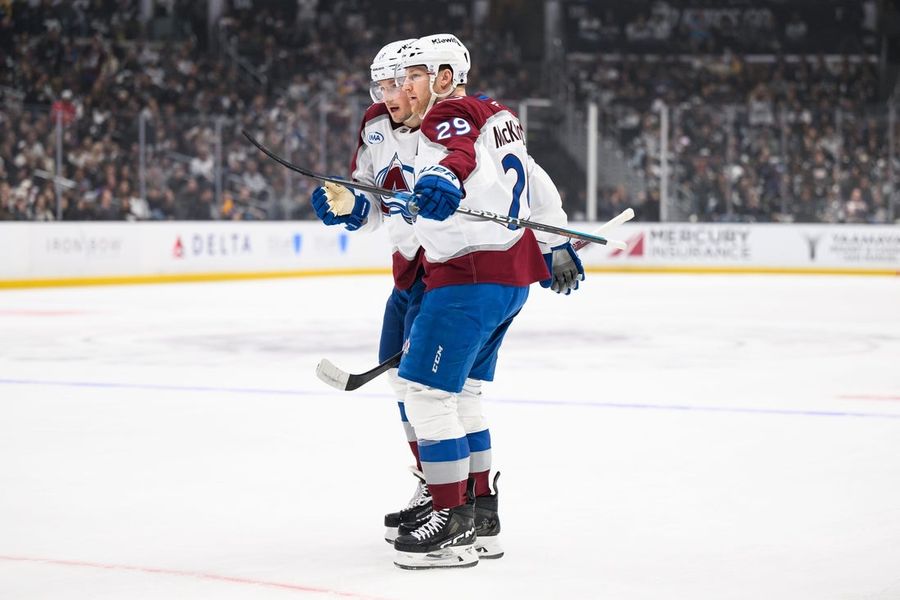 Apr 26, 2026; Los Angeles, California, USA; Colorado Avalanche center Nathan MacKinnon (29) is greeted by defenseman Cale Makar (8) after scoring during the first period in game four of the first round of the 2026 Stanley Cup Playoffs against the Los Angeles Kings at Crypto.com Arena. Mandatory Credit: William Liang-Imagn Images
 Nathan MacKinnon scored two goals and added an assist for the Colorado Avalanche, who finished off the host Los Angeles Kings with a 5-1 victory Sunday to sweep the best-of-seven Western Conference first-round series.
MacKinnon, who led the NHL with 53 goals in the regular season, got his first goals of the postseason. Cale Makar, Nicolas Roy and Devon Toews also scored for the Avalanche. Gabriel Landeskog added two assists in the win.
Scott Wedgewood made 24 saves for the Avalanche, who will advance to play the winner of the Dallas Stars-Minnesota Wild series that’s tied 2-2.
Joel Edmundson registered his first goal of the series for the Kings, with assists coming from Adrian Kempe and Alex Laferriere.
Anton Forsberg stopped 27 of the 31 shots he faced for Los Angeles.
The Kings received two power-play opportunities in the first 10 minutes of the contest. However, it was the Avalanche who struck first, capitalizing on their first chance with the advantage with 6:47 remaining in the first.
MacKinnon’s one-timer from the left faceoff circle came off a feed from Nazem Kadri. It trickled in as Forsberg could not close the five-hole in time.
Makar doubled the lead with 14:12 left in the second. He stopped Scott Laughton’s attempted clearance at the point and turned around Taylor Ward, who was playing in his first Stanley Cup playoff game, as he skated into the right circle and beat Forsberg on the short side for his second of the series.
While Colorado padded its lead, the Kings went 11:38 between shots on Wedgewood. That prompted the Kings to shuffle their lines, and Edmundson broke the ice with 6:17 remaining in the second.
It became a two-goal lead again with 16:47 left in the third on Roy’s second of the series, as he put away a rebound created by Forsberg’s denial of Artturi Lehkonen.
Less than three minutes later, Toews got his first from MacKinnon and Landeskog.
With their season on the brink, the Kings pulled Forsberg with 5:48 remaining. MacKinnon finished the scoring 20 seconds later.
The loss was the final game for Kings captain Anze Kopitar, who announced his plans to retire after this season. As the game neared its end, Kings fans chanted their thanks to Kopitar, who played 20 seasons for the Kings and led them to two Stanley Cups.
–Field Level Media
Apr 26, 2026; Los Angeles, California, USA; Colorado Avalanche center Nathan MacKinnon (29) is greeted by defenseman Cale Makar (8) after scoring during the first period in game four of the first round of the 2026 Stanley Cup Playoffs against the Los Angeles Kings at Crypto.com Arena. Mandatory Credit: William Liang-Imagn Images Nathan MacKinnon scored two goals and added an assist for the Colorado Avalanche, who finished off the host Los Angeles Kings with a 5-1 victory Sunday to sweep the best-of-seven Western Conference first-round series.
MacKinnon, who led the NHL with 53 goals in the regular season, got his first goals of the postseason. Cale Makar, Nicolas Roy and Devon Toews also scored for the Avalanche. Gabriel Landeskog added two assists in the win.
Scott Wedgewood made 24 saves for the Avalanche, who will advance to play the winner of the Dallas Stars-Minnesota Wild series that’s tied 2-2.
Joel Edmundson registered his first goal of the series for the Kings, with assists coming from Adrian Kempe and Alex Laferriere.
Anton Forsberg stopped 27 of the 31 shots he faced for Los Angeles.
The Kings received two power-play opportunities in the first 10 minutes of the contest. However, it was the Avalanche who struck first, capitalizing on their first chance with the advantage with 6:47 remaining in the first.
MacKinnon’s one-timer from the left faceoff circle came off a feed from Nazem Kadri. It trickled in as Forsberg could not close the five-hole in time.
Makar doubled the lead with 14:12 left in the second. He stopped Scott Laughton’s attempted clearance at the point and turned around Taylor Ward, who was playing in his first Stanley Cup playoff game, as he skated into the right circle and beat Forsberg on the short side for his second of the series.
While Colorado padded its lead, the Kings went 11:38 between shots on Wedgewood. That prompted the Kings to shuffle their lines, and Edmundson broke the ice with 6:17 remaining in the second.
It became a two-goal lead again with 16:47 left in the third on Roy’s second of the series, as he put away a rebound created by Forsberg’s denial of Artturi Lehkonen.
Less than three minutes later, Toews got his first from MacKinnon and Landeskog.
With their season on the brink, the Kings pulled Forsberg with 5:48 remaining. MacKinnon finished the scoring 20 seconds later.
The loss was the final game for Kings captain Anze Kopitar, who announced his plans to retire after this season. As the game neared its end, Kings fans chanted their thanks to Kopitar, who played 20 seasons for the Kings and led them to two Stanley Cups.
–Field Level Media
Apr 26, 2026; Los Angeles, California, USA; Colorado Avalanche center Nathan MacKinnon (29) is greeted…

For Petra Sorling and the International Table Tennis Federation (ITTF), 2025 was a tumultuous year. The Swede, the first-ever female President in the history of the sport, was re-elected in Doha in May after beating Khalil Al-Mohannadi, her Qatari opponent, by just two votes. There were protests regarding the validity of the online votes which led to the suspension of that Annual General Meeting. The matter even reached the Court of Arbitration for Sport.
Now, the dust has settled. With big ticket events such as the Los Angeles Olympics on the horizon and several important issues impacting the sport, Sorling’s second term as President is a crucial one.
In an exclusive interview with Sportstar on the sidelines of the World Table Tennis Day celebrations in Kapadwanj, Gujarat, Sorling shares her thoughts on the importance of making the LA Olympics count, the controversy regarding the 2025 elections, the issue of prize money, technology, the review system, and more:
Q: What are your thoughts on celebrating World Table Tennis Day and commemorating 100 years of the ITTF in a small place like Kapadwanj. What does it mean to you and how did you plan this?
First and foremost, I’m very happy with the warm welcome in India and the celebration in Kapadwanj. We have been so warmly welcomed by the communities and it goes without saying that I feel very happy and proud of this celebration. But it’s also not only a celebration on this day, this is a long-term project and we work together with the communities and with our partners here, KKM (Kapadwanj Kelavani Mandal) and the Dani Sports Foundation. And I’m very happy to meet the young boys and girls here who tell the story of how table tennis has impacted their lives.
Q: ITTF and India have a long association. India is now hosting a lot of international events as well. Chennai hosted a WTT Star Contender. There were a couple of feeder and youth contender events as well. And later this year, the country is going to host the Commonwealth Championships. What is in store for India when it comes to the future? Will Indians fans also get to witness bigger events like WTT Champions or Grand Smash soon?
Table Tennis Federation of India was one of the founding members of ITTF 100 years ago. So, yes, there is a long tradition of table tennis in India. What I’m extremely happy about is to see the growth of table tennis in India in the last few years. We feel that we can do much more in such a big country where table tennis is a very good sport. You can pick a racket and you can play literally everywhere. I was extremely proud to present medals to the players from India at last year’s edition of the Youth World Championships because it’s a very high-level event. I come from Sweden, a country with a long tradition, and we were not even qualified to play.
I do believe that these results come by all the investments that you have done locally with a lot of events. Not least, the UTT League where players have been used to this international environment. When the players have been able to play at home but also learn a lot from the international coaches and players. You have also been very good at investing in players travelling the world, playing a lot of events on all levels. So, on that topic, of course, you’re more than ready to take on the next level of events – title events or a Grand Smash. So, I’m looking forward to coming to India also for those events in the future.
Q: At the global level, table tennis is a growing sport. It’s one of the most popular sports. But still, there are some markets which it is yet to capture. And in that aspect, how big is the LA 2028 Olympics for table tennis? You’ve mentioned in past interviews that you’re not happy with the capacity of the venue there. How important is it for your sport to capitalise on these coming Olympics?
When I took office as president, I identified two markets as priority for us. One was India and the other was America. Table tennis in LA 2028 offers six medals (men’s singles, women’s singles, mixed doubles, men’s doubles, women’s doubles and mixed team). We are very happy that we are the racquet sport with the most medals. However, we do have a small venue and it will be filled up very easily which I think is good in a way because we can already see the demand for the tickets released recently.
But we have to work very hard to establish ourselves as one of the top eight sports in the Olympic program. We are on a good journey there. If the venue is too small, we have to use outdoor parks and try to add value so that everyone who likes to see table tennis can be part of the family. This holds up for the next editions as well.
But I already see table tennis growing in the U.S. Last year, we had a Grand Smash in Las Vegas. This year, we will have it at the Ontario Convention Centre in Los Angeles. That’s also a very good segue into LA 2028 and for what comes afterwards. We are working very hard on growing in these markets.
Q: You’re one of the few female presidents of a global sports body. How has your experience been so far?
It’s been five years. I was elected to the ITTF Executive Board in 2009 and I was the only female in the Executive Board during that time until 2021, when I was elected as the first-ever woman president in 95 years. So, I’m happy to be the one that shows that it’s possible but I’m even more happy that after the 2025 elections, we now have a gender equal Executive Board. And I do believe that it’s not a coincidence. I think that by opening doors, we can be more diverse.
Being one of the very few female presidents of an international federation is also a big task to carry because I really try to motivate and provide that spirit for more women to take on that office and to go for elections. At the moment, we are four female presidents in all sports – Summer and Winter Olympics. So, there is room for many more.
Q: Coming to last year’s elections, there was a little bit of controversy and it took some time to solve all those issues. How did that affect the sport?
The last year had been stressful for us with the AGM turning out to create a lot of political stress. However, I must say that I’m very proud of how we went through that year due to the robust structure that we have. ITTF, of course, is the heart but our commercial arm, WTT, running the events as usual and the foundation, the social arm running all the social activities as usual. We, at ITTF, stabilized ourselves and we came out with a stronger board and a stronger ITTF than before. Hard work pays off. I really believe that it turned out to be a good platform for the next 100 years to come.
Q: You also come from a business background. Table tennis is not one of the lucrative sports. Sometimes, it’s not easy for a player to make ends meet. Many players have complained that unless they make it to the very deep end of the tournament, it’s not easy for them to break even. How do you address this issue of prize money and better pay for players?
It’s a very important question for us. We were very proud already in 2008 when we had equal prize money. But it doesn’t mean that the prize money is enough.
The prize money must be on a level. So, as a player, you can live your dream and be a table tennis player professionally. We are working hard now to make our WTT profitable so that we can return those investments also in higher prize money.
This is a job that we do together with the athletes and I must acknowledge here that we have very good athletes. They are really contributing in every aspect of our sport.
Q: Players are a lot happier when there is the presence of technology in bigger events like the review system for World Championships, World Cups and Olympics as well. But when it comes to other events, what is the plan? Is it too big a financial ask for any event or are you planning to somehow make it affordable for everyone?
When it comes to new technology, of course, it’s very expensive in the beginning. And today, actually, it’s only the financial aspect that is the reason for us not to go all out because we can see that it creates a good fair play. Of course, we can still improve a little bit on how we are using the cameras, etc. but this is the way to go.
Hopefully, with new technology, when there will be competition, more people will deliver this kind of system and we can launch it on a wider scale.
Published on Apr 27, 2026
For Petra Sorling and the International Table Tennis Federation (ITTF), 2025 was a tumultuous year. The Swede, the first-ever female President in the history of the sport, was re-elected in Doha in May after beating Khalil Al-Mohannadi, her Qatari opponent, by just two votes. There were protests regarding the validity of the online votes which led to the suspension of that Annual General Meeting. The matter even reached the Court of Arbitration for Sport.
Now, the dust has settled. With big ticket events such as the Los Angeles Olympics on the horizon and several important issues impacting the sport, Sorling’s second term as President is a crucial one.
In an exclusive interview with Sportstar on the sidelines of the World Table Tennis Day celebrations in Kapadwanj, Gujarat, Sorling shares her thoughts on the importance of making the LA Olympics count, the controversy regarding the 2025 elections, the issue of prize money, technology, the review system, and more:
Q: What are your thoughts on celebrating World Table Tennis Day and commemorating 100 years of the ITTF in a small place like Kapadwanj. What does it mean to you and how did you plan this?
First and foremost, I’m very happy with the warm welcome in India and the celebration in Kapadwanj. We have been so warmly welcomed by the communities and it goes without saying that I feel very happy and proud of this celebration. But it’s also not only a celebration on this day, this is a long-term project and we work together with the communities and with our partners here, KKM (Kapadwanj Kelavani Mandal) and the Dani Sports Foundation. And I’m very happy to meet the young boys and girls here who tell the story of how table tennis has impacted their lives.
Q: ITTF and India have a long association. India is now hosting a lot of international events as well. Chennai hosted a WTT Star Contender. There were a couple of feeder and youth contender events as well. And later this year, the country is going to host the Commonwealth Championships. What is in store for India when it comes to the future? Will Indians fans also get to witness bigger events like WTT Champions or Grand Smash soon?
Table Tennis Federation of India was one of the founding members of ITTF 100 years ago. So, yes, there is a long tradition of table tennis in India. What I’m extremely happy about is to see the growth of table tennis in India in the last few years. We feel that we can do much more in such a big country where table tennis is a very good sport. You can pick a racket and you can play literally everywhere. I was extremely proud to present medals to the players from India at last year’s edition of the Youth World Championships because it’s a very high-level event. I come from Sweden, a country with a long tradition, and we were not even qualified to play.
I do believe that these results come by all the investments that you have done locally with a lot of events. Not least, the UTT League where players have been used to this international environment. When the players have been able to play at home but also learn a lot from the international coaches and players. You have also been very good at investing in players travelling the world, playing a lot of events on all levels. So, on that topic, of course, you’re more than ready to take on the next level of events – title events or a Grand Smash. So, I’m looking forward to coming to India also for those events in the future.
Q: At the global level, table tennis is a growing sport. It’s one of the most popular sports. But still, there are some markets which it is yet to capture. And in that aspect, how big is the LA 2028 Olympics for table tennis? You’ve mentioned in past interviews that you’re not happy with the capacity of the venue there. How important is it for your sport to capitalise on these coming Olympics?
When I took office as president, I identified two markets as priority for us. One was India and the other was America. Table tennis in LA 2028 offers six medals (men’s singles, women’s singles, mixed doubles, men’s doubles, women’s doubles and mixed team). We are very happy that we are the racquet sport with the most medals. However, we do have a small venue and it will be filled up very easily which I think is good in a way because we can already see the demand for the tickets released recently.
But we have to work very hard to establish ourselves as one of the top eight sports in the Olympic program. We are on a good journey there. If the venue is too small, we have to use outdoor parks and try to add value so that everyone who likes to see table tennis can be part of the family. This holds up for the next editions as well.
But I already see table tennis growing in the U.S. Last year, we had a Grand Smash in Las Vegas. This year, we will have it at the Ontario Convention Centre in Los Angeles. That’s also a very good segue into LA 2028 and for what comes afterwards. We are working very hard on growing in these markets.
Q: You’re one of the few female presidents of a global sports body. How has your experience been so far?
It’s been five years. I was elected to the ITTF Executive Board in 2009 and I was the only female in the Executive Board during that time until 2021, when I was elected as the first-ever woman president in 95 years. So, I’m happy to be the one that shows that it’s possible but I’m even more happy that after the 2025 elections, we now have a gender equal Executive Board. And I do believe that it’s not a coincidence. I think that by opening doors, we can be more diverse.
Being one of the very few female presidents of an international federation is also a big task to carry because I really try to motivate and provide that spirit for more women to take on that office and to go for elections. At the moment, we are four female presidents in all sports – Summer and Winter Olympics. So, there is room for many more.
Q: Coming to last year’s elections, there was a little bit of controversy and it took some time to solve all those issues. How did that affect the sport?
The last year had been stressful for us with the AGM turning out to create a lot of political stress. However, I must say that I’m very proud of how we went through that year due to the robust structure that we have. ITTF, of course, is the heart but our commercial arm, WTT, running the events as usual and the foundation, the social arm running all the social activities as usual. We, at ITTF, stabilized ourselves and we came out with a stronger board and a stronger ITTF than before. Hard work pays off. I really believe that it turned out to be a good platform for the next 100 years to come.
Q: You also come from a business background. Table tennis is not one of the lucrative sports. Sometimes, it’s not easy for a player to make ends meet. Many players have complained that unless they make it to the very deep end of the tournament, it’s not easy for them to break even. How do you address this issue of prize money and better pay for players?
It’s a very important question for us. We were very proud already in 2008 when we had equal prize money. But it doesn’t mean that the prize money is enough.
The prize money must be on a level. So, as a player, you can live your dream and be a table tennis player professionally. We are working hard now to make our WTT profitable so that we can return those investments also in higher prize money.
This is a job that we do together with the athletes and I must acknowledge here that we have very good athletes. They are really contributing in every aspect of our sport.
Q: Players are a lot happier when there is the presence of technology in bigger events like the review system for World Championships, World Cups and Olympics as well. But when it comes to other events, what is the plan? Is it too big a financial ask for any event or are you planning to somehow make it affordable for everyone?
When it comes to new technology, of course, it’s very expensive in the beginning. And today, actually, it’s only the financial aspect that is the reason for us not to go all out because we can see that it creates a good fair play. Of course, we can still improve a little bit on how we are using the cameras, etc. but this is the way to go.
Hopefully, with new technology, when there will be competition, more people will deliver this kind of system and we can launch it on a wider scale.
Published on Apr 27, 2026
For Petra Sorling and the International Table Tennis Federation (ITTF), 2025 was a tumultuous year.…

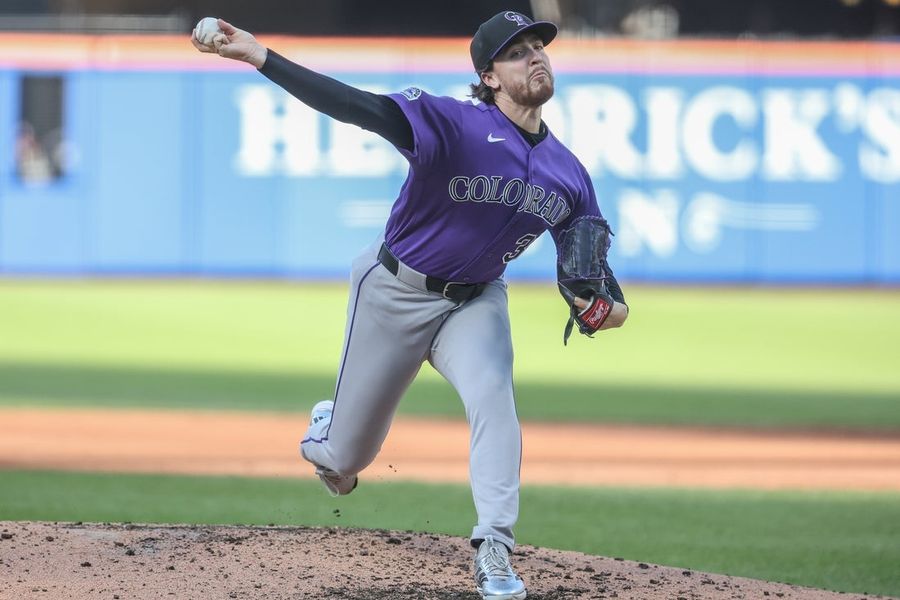 Apr 26, 2026; New York City, New York, USA; Colorado Rockies starting pitcher Chase Dollander (32) pitches in the third inning against the New York Mets at Citi Field. Mandatory Credit: Wendell Cruz-Imagn Images
 Chase Dollander threw seven scoreless innings in the longest outing of his career as the visiting Colorado Rockies completed a doubleheader sweep of the sinking New York Mets with a 3-0 win in Sunday’s nightcap.
Four Rockies pitchers combined on a four-hitter in a 3-1 win in the opener. The doubleheader was necessitated by a rainout Saturday.
Troy Johnston had an RBI single in the second inning of the nightcap and Hunter Goodman hit a two-run homer one inning later for Colorado, which swept a series from the Mets in New York for the first time since 2018 to improve to 13-16.
The Rockies didn’t record their 13th win last season until June 12, when they improved to 13-55 on their way to a 43-119 finish.
The Mets have lost 15 of 17 – their worst 17-game stretch since a 2-15 skid from Aug. 28 through Sept, 13, 2004.
New York scored one run or fewer in a traditional doubleheader Sunday for the first time since Oct, 3, 2015, when the Mets scored one run while being swept by the Washington Nationals.
Dollander (3-2), who made his first start of the season after six long relief outings, allowed five hits and two walks while striking out seven over a career-high 105 pitches.
The scoreless start was the first of Dollander’s career, though he threw 5 1/3 scoreless innings as a bulk reliever and earned the win in a 3-2 victory over the Houston Astros on Apr. 16.
Dollander wriggled out of a two-on, two-out jam in the first when he got MJ Melendez to fly out. Carson Benge and Ronny Mauricio singled to open the fifth, but Tyrone Taylor lined into a double play before Dollander retired Bo Bichette on a grounder.
Seth Halvorsen threw a hitless eighth before Zach Agnos worked around Melendez’s one-out double in the ninth to notch his second save.
The struggling Kodai Senga (0-4) took the loss after allowing three runs on three hits and three walks while striking out three in 2 2/3 innings. Senga has given up 17 runs (16 earned) over 8 1/3 innings in his last three starts.
–Field Level Media
Apr 26, 2026; New York City, New York, USA; Colorado Rockies starting pitcher Chase Dollander (32) pitches in the third inning against the New York Mets at Citi Field. Mandatory Credit: Wendell Cruz-Imagn Images Chase Dollander threw seven scoreless innings in the longest outing of his career as the visiting Colorado Rockies completed a doubleheader sweep of the sinking New York Mets with a 3-0 win in Sunday’s nightcap.
Four Rockies pitchers combined on a four-hitter in a 3-1 win in the opener. The doubleheader was necessitated by a rainout Saturday.
Troy Johnston had an RBI single in the second inning of the nightcap and Hunter Goodman hit a two-run homer one inning later for Colorado, which swept a series from the Mets in New York for the first time since 2018 to improve to 13-16.
The Rockies didn’t record their 13th win last season until June 12, when they improved to 13-55 on their way to a 43-119 finish.
The Mets have lost 15 of 17 – their worst 17-game stretch since a 2-15 skid from Aug. 28 through Sept, 13, 2004.
New York scored one run or fewer in a traditional doubleheader Sunday for the first time since Oct, 3, 2015, when the Mets scored one run while being swept by the Washington Nationals.
Dollander (3-2), who made his first start of the season after six long relief outings, allowed five hits and two walks while striking out seven over a career-high 105 pitches.
The scoreless start was the first of Dollander’s career, though he threw 5 1/3 scoreless innings as a bulk reliever and earned the win in a 3-2 victory over the Houston Astros on Apr. 16.
Dollander wriggled out of a two-on, two-out jam in the first when he got MJ Melendez to fly out. Carson Benge and Ronny Mauricio singled to open the fifth, but Tyrone Taylor lined into a double play before Dollander retired Bo Bichette on a grounder.
Seth Halvorsen threw a hitless eighth before Zach Agnos worked around Melendez’s one-out double in the ninth to notch his second save.
The struggling Kodai Senga (0-4) took the loss after allowing three runs on three hits and three walks while striking out three in 2 2/3 innings. Senga has given up 17 runs (16 earned) over 8 1/3 innings in his last three starts.
–Field Level Media
Apr 26, 2026; New York City, New York, USA; Colorado Rockies starting pitcher Chase Dollander…