![Sanjay Manjrekar on why Impact Player rule, short boundaries are reducing venues to bowler graveyards The debate surrounding the Impact Player rule in Indian Premier League (IPL) isn’t new, but this season has once again pushed it into sharper focus.This is also the fourth year of the Impact Player rule. Despite strong calls from players to scrap it, the IPL has made it clear there will be no review before the 2027 season.The balance between bat and ball, always a delicate balance in T20 cricket, now appears to have tipped decisively in one direction.Former India cricketer Sanjay Manjrekar believes the shift is no longer subtle, but stark.“Yes, that’s the burning topic. Everyone’s talking about it. I can recall at least five batters [in IPL 2026] scoring not just hundreds, but hundreds off around 50 balls, striking at 200. I’ve felt strongly for a number of years about the balance between bat and ball, and I think we’ve now gone beyond a certain limit,” Manjrekar said on Sportstar’s Insight Edge podcast.For Manjrekar, the concern is not limited to purists longing for the past. Even the modern T20 audience, conditioned to expect high-scoring thrillers, is beginning to feel the excess.“Even T20 fans, not just traditional Test cricket followers, are starting to feel slightly disillusioned by the sheer dominance of bat over ball.”The pitch problemAt the heart of this imbalance, he argues, lies the nature of Indian pitches. “Let’s start with one fact: the IPL is played on Indian pitches. While not every ground is high-scoring, venues like Lucknow and occasionally Chennai have maintained some balance. But most grounds, including the new one in Chandigarh, are heavily skewed in favour of batters.”The issue is not just flatness, but predictability. “Why do I say that? Because on Indian pitches, once the ball lands, it does very little. It comes on straight, which makes batting much easier. Even on flat pitches in Australia, South Africa, or England, the ball still does something occasionally. That’s not the case here.”Unintended consequencesLayered onto these conditions is the Impact Player rule, which Manjrekar believes has amplified the imbalance. “Reason number two is the Impact Player rule. I think it has impacted bowlers far more negatively than it has benefited batters. Imagine this rule in New Zealand, where the ball swings. Bringing in a seam bowler could balance things. But in India, it hasn’t worked that way.”Interestingly, he admits he initially welcomed the rule. “When it was introduced, I was actually excited. I thought we’d see more specialist players, an extra pure batter or bowler, raising the overall quality. So the players who I used to call bits and pieces, I don’t do that anymore, because that term is misunderstood. So I would say, non-specialists.”The effect is visible in team composition and intent. “You now have pure batters like Ashutosh Sharma coming in at No. 8. When you have batting depth till No. 8, players at the top can go all out because they know there’s cover.”That safety net, he suggests, has fundamentally altered risk-taking. “Imagine a scenario where the overs were reduced to 20, you know, from 50 and teams could only use seven batters and the innings ended after five wickets. It would be a completely different game.”Grounds stuck in another eraThen comes a structural issue that often escapes scrutiny: ground dimensions. “Many were built decades ago, with dimensions suited to a different era of cricket. The game has evolved, but the grounds haven’t.”If anything, the problem has worsened. “Boundaries need to be longer. Instead, in some cases, like at Wankhede, they’re brought in further for advertising boards. It’s ridiculous. You see shots reaching the boundary in seconds, with no real fielding contest. You don’t see the chasing, you know, the old-fashioned somebody running after the ball and people going, ‘oh, is he going to stop it?’ It’s just four or six.”Is the middle order being exposed or protected?While some argue that the Impact Player rule masks weak middle orders, Manjrekar sees it differently. “Not necessarily. Teams with strong middle orders, like RCB, still see contributions from those players. The bigger issue is how conditions favour batters so heavily.”He even questions whether certain T20 staples remain relevant in current conditions. “In fact, someone suggested whether we even need the six-over PowerPlay in these conditions. With a hard new ball and only two fielders outside the circle, teams at the top are maximising this phase.”What can be fixed?If given the power to intervene, Manjrekar points to both ideal and practical solutions. “Two or three things come to mind. First, reconsider the six-over PowerPlay. It’s pragmatic.”Longer boundaries would help, but aren’t always feasible. “Ideally, I’d like longer boundaries, but not all grounds allow that. Some venues are simply too small. After watching recent games, especially at Wankhede Stadium in Mumbai, I feel some grounds just aren’t suited for T20 anymore… Same with [Chinnaswamy Stadium] in Bengaluru… They’ve become bowler graveyards.”He offers a telling example. “Take Vaibhav Sooryavanshi’s hundred [against Sunrisers Hyderabad], for instance. At least four sixes he hit would’ve been catches if the boundaries were even slightly longer. That would bring some sanity back to the game.”One unintended casualty of the current ecosystem is the genuine all-rounder.“Yes, it does,” Manjrekar says when asked if the Impact Player rule hurts them. “For example, Shivam Dube showed his value in the T20 World Cup and Asia Cup by contributing with both bat and ball. In the IPL, he barely bowls.”The broader issue, he feels, is the loss of in-game adaptability.“In hindsight, I’d like to see teams forced to adapt when bowlers struggle, instead of relying on substitutions. That unpredictability adds to the charm.”Published on Apr 27, 2026 #Sanjay #Manjrekar #Impact #Player #rule #short #boundaries #reducing #venues #bowler #graveyards](https://i0.wp.com/ss-i.thgim.com/public/incoming/yj32ws/article70911774.ece/alternates/LANDSCAPE_1200/IMG_WANKHEDE_CRICKET_STA_2_1_AC96HDHH.jpg?ssl=1 "Sanjay Manjrekar on why Impact Player rule, short boundaries are reducing venues to bowler graveyards The debate surrounding the Impact Player rule in Indian Premier League (IPL) isn’t new, but this season has once again pushed it into sharper focus.This is also the fourth year of the Impact Player rule. Despite strong calls from players to scrap it, the IPL has made it clear there will be no review before the 2027 season.The balance between bat and ball, always a delicate balance in T20 cricket, now appears to have tipped decisively in one direction.Former India cricketer Sanjay Manjrekar believes the shift is no longer subtle, but stark.“Yes, that’s the burning topic. Everyone’s talking about it. I can recall at least five batters [in IPL 2026] scoring not just hundreds, but hundreds off around 50 balls, striking at 200. I’ve felt strongly for a number of years about the balance between bat and ball, and I think we’ve now gone beyond a certain limit,” Manjrekar said on Sportstar’s Insight Edge podcast.For Manjrekar, the concern is not limited to purists longing for the past. Even the modern T20 audience, conditioned to expect high-scoring thrillers, is beginning to feel the excess.“Even T20 fans, not just traditional Test cricket followers, are starting to feel slightly disillusioned by the sheer dominance of bat over ball.”The pitch problemAt the heart of this imbalance, he argues, lies the nature of Indian pitches. “Let’s start with one fact: the IPL is played on Indian pitches. While not every ground is high-scoring, venues like Lucknow and occasionally Chennai have maintained some balance. But most grounds, including the new one in Chandigarh, are heavily skewed in favour of batters.”The issue is not just flatness, but predictability. “Why do I say that? Because on Indian pitches, once the ball lands, it does very little. It comes on straight, which makes batting much easier. Even on flat pitches in Australia, South Africa, or England, the ball still does something occasionally. That’s not the case here.”Unintended consequencesLayered onto these conditions is the Impact Player rule, which Manjrekar believes has amplified the imbalance. “Reason number two is the Impact Player rule. I think it has impacted bowlers far more negatively than it has benefited batters. Imagine this rule in New Zealand, where the ball swings. Bringing in a seam bowler could balance things. But in India, it hasn’t worked that way.”Interestingly, he admits he initially welcomed the rule. “When it was introduced, I was actually excited. I thought we’d see more specialist players, an extra pure batter or bowler, raising the overall quality. So the players who I used to call bits and pieces, I don’t do that anymore, because that term is misunderstood. So I would say, non-specialists.”The effect is visible in team composition and intent. “You now have pure batters like Ashutosh Sharma coming in at No. 8. When you have batting depth till No. 8, players at the top can go all out because they know there’s cover.”That safety net, he suggests, has fundamentally altered risk-taking. “Imagine a scenario where the overs were reduced to 20, you know, from 50 and teams could only use seven batters and the innings ended after five wickets. It would be a completely different game.”Grounds stuck in another eraThen comes a structural issue that often escapes scrutiny: ground dimensions. “Many were built decades ago, with dimensions suited to a different era of cricket. The game has evolved, but the grounds haven’t.”If anything, the problem has worsened. “Boundaries need to be longer. Instead, in some cases, like at Wankhede, they’re brought in further for advertising boards. It’s ridiculous. You see shots reaching the boundary in seconds, with no real fielding contest. You don’t see the chasing, you know, the old-fashioned somebody running after the ball and people going, ‘oh, is he going to stop it?’ It’s just four or six.”Is the middle order being exposed or protected?While some argue that the Impact Player rule masks weak middle orders, Manjrekar sees it differently. “Not necessarily. Teams with strong middle orders, like RCB, still see contributions from those players. The bigger issue is how conditions favour batters so heavily.”He even questions whether certain T20 staples remain relevant in current conditions. “In fact, someone suggested whether we even need the six-over PowerPlay in these conditions. With a hard new ball and only two fielders outside the circle, teams at the top are maximising this phase.”What can be fixed?If given the power to intervene, Manjrekar points to both ideal and practical solutions. “Two or three things come to mind. First, reconsider the six-over PowerPlay. It’s pragmatic.”Longer boundaries would help, but aren’t always feasible. “Ideally, I’d like longer boundaries, but not all grounds allow that. Some venues are simply too small. After watching recent games, especially at Wankhede Stadium in Mumbai, I feel some grounds just aren’t suited for T20 anymore… Same with [Chinnaswamy Stadium] in Bengaluru… They’ve become bowler graveyards.”He offers a telling example. “Take Vaibhav Sooryavanshi’s hundred [against Sunrisers Hyderabad], for instance. At least four sixes he hit would’ve been catches if the boundaries were even slightly longer. That would bring some sanity back to the game.”One unintended casualty of the current ecosystem is the genuine all-rounder.“Yes, it does,” Manjrekar says when asked if the Impact Player rule hurts them. “For example, Shivam Dube showed his value in the T20 World Cup and Asia Cup by contributing with both bat and ball. In the IPL, he barely bowls.”The broader issue, he feels, is the loss of in-game adaptability.“In hindsight, I’d like to see teams forced to adapt when bowlers struggle, instead of relying on substitutions. That unpredictability adds to the charm.”Published on Apr 27, 2026 #Sanjay #Manjrekar #Impact #Player #rule #short #boundaries #reducing #venues #bowler #graveyards")
Sports news
#Sanjay #Manjrekar #Impact #Player #rule #short #boundaries #reducing #venues #bowler #graveyards">Sanjay Manjrekar on why Impact Player rule, short boundaries are reducing venues to bowler graveyards The debate surrounding the Impact Player rule in Indian Premier League (IPL) isn’t new, but this season has once again pushed it into sharper focus.
This is also the fourth year of the Impact Player rule. Despite strong calls from players to scrap it, the IPL has made it clear there will be no review before the 2027 season.
The balance between bat and ball, always a delicate balance in T20 cricket, now appears to have tipped decisively in one direction.
Former India cricketer Sanjay Manjrekar believes the shift is no longer subtle, but stark.
“Yes, that’s the burning topic. Everyone’s talking about it. I can recall at least five batters [in IPL 2026] scoring not just hundreds, but hundreds off around 50 balls, striking at 200. I’ve felt strongly for a number of years about the balance between bat and ball, and I think we’ve now gone beyond a certain limit,” Manjrekar said on Sportstar’s Insight Edge podcast.
For Manjrekar, the concern is not limited to purists longing for the past. Even the modern T20 audience, conditioned to expect high-scoring thrillers, is beginning to feel the excess.
“Even T20 fans, not just traditional Test cricket followers, are starting to feel slightly disillusioned by the sheer dominance of bat over ball.”
The pitch problem
At the heart of this imbalance, he argues, lies the nature of Indian pitches. “Let’s start with one fact: the IPL is played on Indian pitches. While not every ground is high-scoring, venues like Lucknow and occasionally Chennai have maintained some balance. But most grounds, including the new one in Chandigarh, are heavily skewed in favour of batters.”
The issue is not just flatness, but predictability. “Why do I say that? Because on Indian pitches, once the ball lands, it does very little. It comes on straight, which makes batting much easier. Even on flat pitches in Australia, South Africa, or England, the ball still does something occasionally. That’s not the case here.”
Unintended consequences
Layered onto these conditions is the Impact Player rule, which Manjrekar believes has amplified the imbalance. “Reason number two is the Impact Player rule. I think it has impacted bowlers far more negatively than it has benefited batters. Imagine this rule in New Zealand, where the ball swings. Bringing in a seam bowler could balance things. But in India, it hasn’t worked that way.”
Interestingly, he admits he initially welcomed the rule. “When it was introduced, I was actually excited. I thought we’d see more specialist players, an extra pure batter or bowler, raising the overall quality. So the players who I used to call bits and pieces, I don’t do that anymore, because that term is misunderstood. So I would say, non-specialists.”
The effect is visible in team composition and intent. “You now have pure batters like Ashutosh Sharma coming in at No. 8. When you have batting depth till No. 8, players at the top can go all out because they know there’s cover.”
That safety net, he suggests, has fundamentally altered risk-taking. “Imagine a scenario where the overs were reduced to 20, you know, from 50 and teams could only use seven batters and the innings ended after five wickets. It would be a completely different game.”
Grounds stuck in another era
Then comes a structural issue that often escapes scrutiny: ground dimensions. “Many were built decades ago, with dimensions suited to a different era of cricket. The game has evolved, but the grounds haven’t.”
If anything, the problem has worsened. “Boundaries need to be longer. Instead, in some cases, like at Wankhede, they’re brought in further for advertising boards. It’s ridiculous. You see shots reaching the boundary in seconds, with no real fielding contest. You don’t see the chasing, you know, the old-fashioned somebody running after the ball and people going, ‘oh, is he going to stop it?’ It’s just four or six.”
Is the middle order being exposed or protected?
While some argue that the Impact Player rule masks weak middle orders, Manjrekar sees it differently. “Not necessarily. Teams with strong middle orders, like RCB, still see contributions from those players. The bigger issue is how conditions favour batters so heavily.”
He even questions whether certain T20 staples remain relevant in current conditions. “In fact, someone suggested whether we even need the six-over PowerPlay in these conditions. With a hard new ball and only two fielders outside the circle, teams at the top are maximising this phase.”
What can be fixed?
If given the power to intervene, Manjrekar points to both ideal and practical solutions. “Two or three things come to mind. First, reconsider the six-over PowerPlay. It’s pragmatic.”
Longer boundaries would help, but aren’t always feasible. “Ideally, I’d like longer boundaries, but not all grounds allow that. Some venues are simply too small. After watching recent games, especially at Wankhede Stadium in Mumbai, I feel some grounds just aren’t suited for T20 anymore… Same with [Chinnaswamy Stadium] in Bengaluru… They’ve become bowler graveyards.”
He offers a telling example. “Take Vaibhav Sooryavanshi’s hundred [against Sunrisers Hyderabad], for instance. At least four sixes he hit would’ve been catches if the boundaries were even slightly longer. That would bring some sanity back to the game.”
One unintended casualty of the current ecosystem is the genuine all-rounder.
“Yes, it does,” Manjrekar says when asked if the Impact Player rule hurts them. “For example, Shivam Dube showed his value in the T20 World Cup and Asia Cup by contributing with both bat and ball. In the IPL, he barely bowls.”
The broader issue, he feels, is the loss of in-game adaptability.
“In hindsight, I’d like to see teams forced to adapt when bowlers struggle, instead of relying on substitutions. That unpredictability adds to the charm.”
Published on Apr 27, 2026
The debate surrounding the Impact Player rule in Indian Premier League (IPL) isn’t new, but…
Be sure to check out our related buying guides, like the Best Power Banks, the Best 3-in-1 Chargers, and the Best Wireless Chargers.
Table of Contents
The Best iPhone Chargers
Best Wall Charger for iPhone

Photograph: Julian Chokkattu
Anker
Nano 45W With USB-C Cable
This Anker charger is slick and has folding prongs so it’s easy to travel with, but the best part is that it can charge your phone at 40 watts (average is 20 to 27 watts). That means you can get up to 50 percent battery life in only 20 minutes. Not all iPhone models support charging this fast—it’s limited to iPhone 17, iPhone 17 Pro, and iPhone 17 Pro Max—but you may as well future-proof your gear if you’re shopping for a wall charger, even if your phone can’t take full advantage of those speeds yet.
Best Power Bank for iPhone
-Portable-Charger-Reviewer-Photo-(no-border)-SOURCE-Simon-Hill.jpg)
We do recommend the Anker Laptop Power Bank as our top-pick power bank, but if you’re only trying to top off your iPhone, this is a very reliable and neat-looking power bank. It’s svelte, smaller than a deck of cards, and can deliver 20 watts to two devices at once. Nimble also makes a slightly larger version, which has a larger capacity and can charge at up to 65 watts. Aside from the cool design featuring speckled colors and a lanyard loop, Nimble also uses bioplastics, recycled materials, and minimal packaging. A USB-C charger is included in the box.
Best MagSafe Portable Charger for iPhone
.jpg)
Anker
MagGo Power Bank (10K) (Qi2)
This 10,000-mAh power bank can charge your device at up to 15 watts, but it’ll also charge older devices at a slower rate. It has a built-in kickstand and an LED display that lets you know how much power is left at a glance. It works in portrait or landscape modes. Be aware that it won’t be able to charge most phones fully more than once, but it’s hard to beat if you’re seeking wireless charging on the go. If you want a bigger capacity or faster charging, you don’t want MagSafe.
Best 3-in-1 Charger for iPhone

Belkin
3-in-1 Qi2 Charging Stand
The Belkin 3-in-1 can charge your compatible iPhone at 15 watts, plus your AirPods and your Apple Watch at the same time. The charging pad can be tilted to your preferred angle, including in landscape orientation if you want to watch a video or put your phone in StandBy mode. The USB-C cable is permanently attached, which you may or may not like. Check our best 3-in-1 chargers buying guide for additional picks.
Best 2-in-1 Charger for iPhone

Photograph: Louryn Strampe
Mophie
2-in-1 Wireless Charging Stand
I love a 3-in-1 charger as much as the next tech nerd, but sometimes they’re overkill. My Apple Watch battery usually lasts all day long, but I can chew through my older AirPods battery before my lunch break hits, and my iPhone battery might be depleted too, depending on whether or not I’m streaming Max Velocity off to the side. This 2-in-1 charger has been my steadfast desktop companion. Mophie makes another version that tops off your Apple Watch and iPhone instead of your headphones, which might be what you want if you’re rocking wired headphones or you’re making intense use of a walking pad throughout the day. There’s a 40-watt wall charger in the box—a rarity these days!—plus a USB-C cable that winds neatly into the base. It’s easy to adjust the angle of your iPhone as well, and I’ve found the base very sturdy. If you want to charge, but not necessarily all of the possible devices simultaneously, these might be what you seek.

Anker
Prime USB-C to USB-C Cable
This braided nylon USB-C cable has a durable exterior made from recycled plastic. The cable is rugged, with Anker promising that it can operate in temperatures ranging from negative 40 degrees to 176 degrees Fahrenheit. It’s backed by a lifetime warranty. It’s got a built-in cable management loop. It’s more than enough cable for your iPhone. Read our guide to the Best USB-C Cables for more picks.

Ugreen
USB-C to Lightning Cable
If your iPhone is still rocking the Lightning cable, this is gonna be way better than whatever shoddy cable Apple sent you. It’s durable and is Made for iPhone-certified, so you won’t have any problems getting it to work. It comes in 3-, 6-, or 10-foot lengths with a two-year warranty. Best of all, the exterior casing will stay intact, unlike what you’d probably get with Apple’s cables.

Tech-news
#iPhone #Charger #LateNight #Doomscrollingshopping,iphone,apple,accessories and peripherals,phones,smartphones">The Best iPhone Charger for Late-Night DoomscrollingThe best iPhone charger depends on several factors. Are you topping off your battery on the go? Do you want to charge your iPhone as quickly as possible? Are you charging it overnight on your nightstand? The best gear recommendation is going to change with the situation. Luckily, the WIRED Reviews team tests iPhone chargers in the field all year long. There’s not a day that goes by that at least one of us is not assessing at least one iPhone charger. I’ve gathered up our favorite picks for every scenario.
Be sure to check out our related buying guides, like the Best Power Banks, the Best 3-in-1 Chargers, and the Best Wireless Chargers.
Table of Contents
The Best iPhone Chargers
Best Wall Charger for iPhone
Photograph: Julian Chokkattu
Anker
Nano 45W With USB-C Cable
This Anker charger is slick and has folding prongs so it’s easy to travel with, but the best part is that it can charge your phone at 40 watts (average is 20 to 27 watts). That means you can get up to 50 percent battery life in only 20 minutes. Not all iPhone models support charging this fast—it’s limited to iPhone 17, iPhone 17 Pro, and iPhone 17 Pro Max—but you may as well future-proof your gear if you’re shopping for a wall charger, even if your phone can’t take full advantage of those speeds yet.
Best Power Bank for iPhone
We do recommend the Anker Laptop Power Bank as our top-pick power bank, but if you’re only trying to top off your iPhone, this is a very reliable and neat-looking power bank. It’s svelte, smaller than a deck of cards, and can deliver 20 watts to two devices at once. Nimble also makes a slightly larger version, which has a larger capacity and can charge at up to 65 watts. Aside from the cool design featuring speckled colors and a lanyard loop, Nimble also uses bioplastics, recycled materials, and minimal packaging. A USB-C charger is included in the box.
Best MagSafe Portable Charger for iPhone
Anker
MagGo Power Bank (10K) (Qi2)
This 10,000-mAh power bank can charge your device at up to 15 watts, but it’ll also charge older devices at a slower rate. It has a built-in kickstand and an LED display that lets you know how much power is left at a glance. It works in portrait or landscape modes. Be aware that it won’t be able to charge most phones fully more than once, but it’s hard to beat if you’re seeking wireless charging on the go. If you want a bigger capacity or faster charging, you don’t want MagSafe.
Best 3-in-1 Charger for iPhone
Belkin
3-in-1 Qi2 Charging Stand
The Belkin 3-in-1 can charge your compatible iPhone at 15 watts, plus your AirPods and your Apple Watch at the same time. The charging pad can be tilted to your preferred angle, including in landscape orientation if you want to watch a video or put your phone in StandBy mode. The USB-C cable is permanently attached, which you may or may not like. Check our best 3-in-1 chargers buying guide for additional picks.
Best 2-in-1 Charger for iPhone
Photograph: Louryn Strampe
Mophie
2-in-1 Wireless Charging Stand
I love a 3-in-1 charger as much as the next tech nerd, but sometimes they’re overkill. My Apple Watch battery usually lasts all day long, but I can chew through my older AirPods battery before my lunch break hits, and my iPhone battery might be depleted too, depending on whether or not I’m streaming Max Velocity off to the side. This 2-in-1 charger has been my steadfast desktop companion. Mophie makes another version that tops off your Apple Watch and iPhone instead of your headphones, which might be what you want if you’re rocking wired headphones or you’re making intense use of a walking pad throughout the day. There’s a 40-watt wall charger in the box—a rarity these days!—plus a USB-C cable that winds neatly into the base. It’s easy to adjust the angle of your iPhone as well, and I’ve found the base very sturdy. If you want to charge, but not necessarily all of the possible devices simultaneously, these might be what you seek.
Anker
Prime USB-C to USB-C Cable
This braided nylon USB-C cable has a durable exterior made from recycled plastic. The cable is rugged, with Anker promising that it can operate in temperatures ranging from negative 40 degrees to 176 degrees Fahrenheit. It’s backed by a lifetime warranty. It’s got a built-in cable management loop. It’s more than enough cable for your iPhone. Read our guide to the Best USB-C Cables for more picks.
Ugreen
USB-C to Lightning Cable
If your iPhone is still rocking the Lightning cable, this is gonna be way better than whatever shoddy cable Apple sent you. It’s durable and is Made for iPhone-certified, so you won’t have any problems getting it to work. It comes in 3-, 6-, or 10-foot lengths with a two-year warranty. Best of all, the exterior casing will stay intact, unlike what you’d probably get with Apple’s cables.
The best iPhone charger depends on several factors. Are you topping off your battery on the go? Do you want to charge your iPhone as quickly as possible? Are you charging it overnight on your nightstand? The best gear recommendation is going to change with the situation. Luckily, the WIRED Reviews team tests iPhone chargers in the field all year long. There’s not a day that goes by that at least one of us is not assessing at least one iPhone charger. I’ve gathered up our favorite picks for every scenario.
Be sure to check out our related buying guides, like the Best Power Banks, the Best 3-in-1 Chargers, and the Best Wireless Chargers.
Table of Contents
The Best iPhone Chargers
Best Wall Charger for iPhone
Photograph: Julian Chokkattu
Anker
Nano 45W With USB-C Cable
This Anker charger is slick and has folding prongs so it’s easy to travel with, but the best part is that it can charge your phone at 40 watts (average is 20 to 27 watts). That means you can get up to 50 percent battery life in only 20 minutes. Not all iPhone models support charging this fast—it’s limited to iPhone 17, iPhone 17 Pro, and iPhone 17 Pro Max—but you may as well future-proof your gear if you’re shopping for a wall charger, even if your phone can’t take full advantage of those speeds yet.
Best Power Bank for iPhone
We do recommend the Anker Laptop Power Bank as our top-pick power bank, but if you’re only trying to top off your iPhone, this is a very reliable and neat-looking power bank. It’s svelte, smaller than a deck of cards, and can deliver 20 watts to two devices at once. Nimble also makes a slightly larger version, which has a larger capacity and can charge at up to 65 watts. Aside from the cool design featuring speckled colors and a lanyard loop, Nimble also uses bioplastics, recycled materials, and minimal packaging. A USB-C charger is included in the box.
Best MagSafe Portable Charger for iPhone
Anker
MagGo Power Bank (10K) (Qi2)
This 10,000-mAh power bank can charge your device at up to 15 watts, but it’ll also charge older devices at a slower rate. It has a built-in kickstand and an LED display that lets you know how much power is left at a glance. It works in portrait or landscape modes. Be aware that it won’t be able to charge most phones fully more than once, but it’s hard to beat if you’re seeking wireless charging on the go. If you want a bigger capacity or faster charging, you don’t want MagSafe.
Best 3-in-1 Charger for iPhone
Belkin
3-in-1 Qi2 Charging Stand
The Belkin 3-in-1 can charge your compatible iPhone at 15 watts, plus your AirPods and your Apple Watch at the same time. The charging pad can be tilted to your preferred angle, including in landscape orientation if you want to watch a video or put your phone in StandBy mode. The USB-C cable is permanently attached, which you may or may not like. Check our best 3-in-1 chargers buying guide for additional picks.
Best 2-in-1 Charger for iPhone
Photograph: Louryn Strampe
Mophie
2-in-1 Wireless Charging Stand
I love a 3-in-1 charger as much as the next tech nerd, but sometimes they’re overkill. My Apple Watch battery usually lasts all day long, but I can chew through my older AirPods battery before my lunch break hits, and my iPhone battery might be depleted too, depending on whether or not I’m streaming Max Velocity off to the side. This 2-in-1 charger has been my steadfast desktop companion. Mophie makes another version that tops off your Apple Watch and iPhone instead of your headphones, which might be what you want if you’re rocking wired headphones or you’re making intense use of a walking pad throughout the day. There’s a 40-watt wall charger in the box—a rarity these days!—plus a USB-C cable that winds neatly into the base. It’s easy to adjust the angle of your iPhone as well, and I’ve found the base very sturdy. If you want to charge, but not necessarily all of the possible devices simultaneously, these might be what you seek.
Anker
Prime USB-C to USB-C Cable
This braided nylon USB-C cable has a durable exterior made from recycled plastic. The cable is rugged, with Anker promising that it can operate in temperatures ranging from negative 40 degrees to 176 degrees Fahrenheit. It’s backed by a lifetime warranty. It’s got a built-in cable management loop. It’s more than enough cable for your iPhone. Read our guide to the Best USB-C Cables for more picks.
Ugreen
USB-C to Lightning Cable
If your iPhone is still rocking the Lightning cable, this is gonna be way better than whatever shoddy cable Apple sent you. It’s durable and is Made for iPhone-certified, so you won’t have any problems getting it to work. It comes in 3-, 6-, or 10-foot lengths with a two-year warranty. Best of all, the exterior casing will stay intact, unlike what you’d probably get with Apple’s cables.
The best iPhone charger depends on several factors. Are you topping off your battery on…

Sports news
#Deadspin #Rockets #start #strong #dont #beat #Lakers #stay #alive #series">Deadspin | Rockets start strong, don’t let up to beat Lakers, stay alive in series
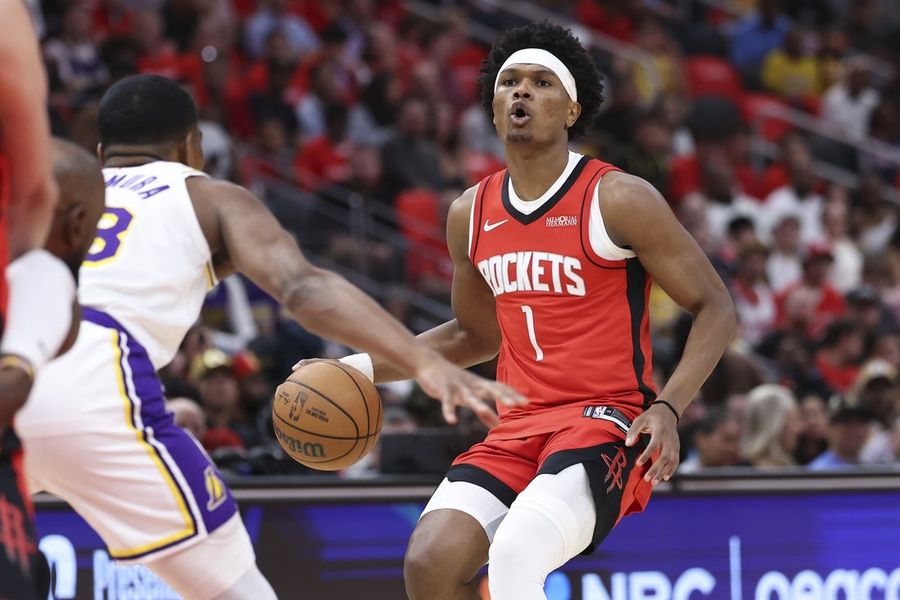 Apr 26, 2026; Houston, Texas, USA; Houston Rockets guard/forward Amen Thompson (1) dribbles the ball during the first quarter against the Los Angeles Lakers during game four of the first round of the 2026 NBA Playoffs at Toyota Center. Mandatory Credit: Troy Taormina-Imagn Images
 Amen Thompson scored a game-high 23 points, Tari Eason added 20 added 19 and the Houston Rockets averted elimination with a 115-96 victory over the visiting Los Angeles Lakers on Sunday night in Game 4 of their Western Conference first-round playoff series.
All five starters scored in double figures for the Rockets, who played without Kevin Durant (ankle) for the third time in the series. Reed Sheppard chipped in 17 points on 4-for-7 3-point shooting while Alperen Sengun (19 points) and Jabari Smith Jr. (16 points) rounded out the balanced offensive attack. Eason and Smith grabbed eight rebounds apiece.
The Rockets made headway by forcing 24 turnovers that they converted into 30 points. Houston scored 23 fast-break points and limited the Lakers to 5-for-22 3-point shooting (22.7%).
After dominating Game 3 and co-authoring the Lakers’ overtime victory, LeBron James (10 points, nine assists) and Marcus Smart (nine, five) shot a combined 5 of 17 from the floor. Deandre Ayton finished with 19 points and 10 rebounds but was ejected with 5:41 remaining in the third quarter after elbowing Sengun in the neck and incurring a flagrant-2 foul.
The Lakers will carry a 3-1 series lead back to Los Angeles for Game 5 on Wednesday.
Houston seized an 18-17 lead on a Sengun dunk at the 3:19 mark of the first quarter and didn’t look back. The Lakers shot 41.2% (7 of 17) in the first period, missed both of their 3-pointers and conceded eight points off eight turnovers. Sengun played the entire first period for the Rockets.
The Rockets used a 16-4 run bridging the opening two periods to help extend to a 38-28 lead via a Sengun three-point play at the 6:35 mark of the second. When the Lakers sliced that deficit to three points, Josh Okogie keyed a 10-2 rally with a 3-pointer. Thompson added a pull-up jumper and a three-point play before Sheppard capped the run with a layup.
The Lakers shot 58.8% in the second quarter (10 of 17) but committed six turnovers in the frame. Houston pulled away in the third, opening the second half with a 12-4 burst before Eason drilled a corner 3 and Sengun completed another three-point play that pushed the lead to 76-55.
The Rockets led by as many as 28 points.
–Field Level Media
Apr 26, 2026; Houston, Texas, USA; Houston Rockets guard/forward Amen Thompson (1) dribbles the ball during the first quarter against the Los Angeles Lakers during game four of the first round of the 2026 NBA Playoffs at Toyota Center. Mandatory Credit: Troy Taormina-Imagn Images Amen Thompson scored a game-high 23 points, Tari Eason added 20 added 19 and the Houston Rockets averted elimination with a 115-96 victory over the visiting Los Angeles Lakers on Sunday night in Game 4 of their Western Conference first-round playoff series.
All five starters scored in double figures for the Rockets, who played without Kevin Durant (ankle) for the third time in the series. Reed Sheppard chipped in 17 points on 4-for-7 3-point shooting while Alperen Sengun (19 points) and Jabari Smith Jr. (16 points) rounded out the balanced offensive attack. Eason and Smith grabbed eight rebounds apiece.
The Rockets made headway by forcing 24 turnovers that they converted into 30 points. Houston scored 23 fast-break points and limited the Lakers to 5-for-22 3-point shooting (22.7%).
After dominating Game 3 and co-authoring the Lakers’ overtime victory, LeBron James (10 points, nine assists) and Marcus Smart (nine, five) shot a combined 5 of 17 from the floor. Deandre Ayton finished with 19 points and 10 rebounds but was ejected with 5:41 remaining in the third quarter after elbowing Sengun in the neck and incurring a flagrant-2 foul.
The Lakers will carry a 3-1 series lead back to Los Angeles for Game 5 on Wednesday.
Houston seized an 18-17 lead on a Sengun dunk at the 3:19 mark of the first quarter and didn’t look back. The Lakers shot 41.2% (7 of 17) in the first period, missed both of their 3-pointers and conceded eight points off eight turnovers. Sengun played the entire first period for the Rockets.
The Rockets used a 16-4 run bridging the opening two periods to help extend to a 38-28 lead via a Sengun three-point play at the 6:35 mark of the second. When the Lakers sliced that deficit to three points, Josh Okogie keyed a 10-2 rally with a 3-pointer. Thompson added a pull-up jumper and a three-point play before Sheppard capped the run with a layup.
The Lakers shot 58.8% in the second quarter (10 of 17) but committed six turnovers in the frame. Houston pulled away in the third, opening the second half with a 12-4 burst before Eason drilled a corner 3 and Sengun completed another three-point play that pushed the lead to 76-55.
The Rockets led by as many as 28 points.
–Field Level Media
Apr 26, 2026; Houston, Texas, USA; Houston Rockets guard/forward Amen Thompson (1) dribbles the ball during the first quarter against the Los Angeles Lakers during game four of the first round of the 2026 NBA Playoffs at Toyota Center. Mandatory Credit: Troy Taormina-Imagn Images Amen Thompson scored a game-high 23 points, Tari Eason added 20 added 19 and the Houston Rockets averted elimination with a 115-96 victory over the visiting Los Angeles Lakers on Sunday night in Game 4 of their Western Conference first-round playoff series.
All five starters scored in double figures for the Rockets, who played without Kevin Durant (ankle) for the third time in the series. Reed Sheppard chipped in 17 points on 4-for-7 3-point shooting while Alperen Sengun (19 points) and Jabari Smith Jr. (16 points) rounded out the balanced offensive attack. Eason and Smith grabbed eight rebounds apiece.
The Rockets made headway by forcing 24 turnovers that they converted into 30 points. Houston scored 23 fast-break points and limited the Lakers to 5-for-22 3-point shooting (22.7%).
After dominating Game 3 and co-authoring the Lakers’ overtime victory, LeBron James (10 points, nine assists) and Marcus Smart (nine, five) shot a combined 5 of 17 from the floor. Deandre Ayton finished with 19 points and 10 rebounds but was ejected with 5:41 remaining in the third quarter after elbowing Sengun in the neck and incurring a flagrant-2 foul.
The Lakers will carry a 3-1 series lead back to Los Angeles for Game 5 on Wednesday.
Houston seized an 18-17 lead on a Sengun dunk at the 3:19 mark of the first quarter and didn’t look back. The Lakers shot 41.2% (7 of 17) in the first period, missed both of their 3-pointers and conceded eight points off eight turnovers. Sengun played the entire first period for the Rockets.
The Rockets used a 16-4 run bridging the opening two periods to help extend to a 38-28 lead via a Sengun three-point play at the 6:35 mark of the second. When the Lakers sliced that deficit to three points, Josh Okogie keyed a 10-2 rally with a 3-pointer. Thompson added a pull-up jumper and a three-point play before Sheppard capped the run with a layup.
The Lakers shot 58.8% in the second quarter (10 of 17) but committed six turnovers in the frame. Houston pulled away in the third, opening the second half with a 12-4 burst before Eason drilled a corner 3 and Sengun completed another three-point play that pushed the lead to 76-55.
The Rockets led by as many as 28 points.
–Field Level Media
Apr 26, 2026; Houston, Texas, USA; Houston Rockets guard/forward Amen Thompson (1) dribbles the ball…