West Bengal Voting LIVE: दूसरे चरण में 91.80% मतदान, चुनाव बाद भी CAPF की 700 कंपनियां बंगाल में ही रहेंगी
06:22 PM, 29-Apr-2026 उत्तर 24 परगना में मतदान के बाद बवाल, भाजपा और टीएमसी कार्यकर्ताओं…
06:22 PM, 29-Apr-2026 उत्तर 24 परगना में मतदान के बाद बवाल, भाजपा और टीएमसी कार्यकर्ताओं…
यातायात नियमों के प्रति लापरवाही बरतने वालों के खिलाफ अब पुलिस ने सख्त रुख अपना…

 Oct 29, 2023; Denver, Colorado, USA; Denver Broncos safety Justin Simmons (31) reacts after the game against the Kansas City Chiefs at Empower Field at Mile High. Mandatory Credit: Isaiah J. Downing-Imagn Images
 Former Denver Broncos free safety Justin Simmons is announcing his retirement Wednesday after nine seasons.
The two-time Pro Bowl selection played for Denver from 2016-23 and spent 2024 with the Atlanta Falcons before sitting out the 2025 season.
The Broncos planned a press conference with Simmons, 32, at noon local time Wednesday in Englewood, Colo.
Simmons recorded 32 interceptions — at least two picks in every season — with 71 passes defensed, five forced fumbles, three fumble recoveries, 4.5 sacks and 666 tackles in 134 games (124 starts).
He shared the NFL lead with a career-high six interceptions in 2022 and returned an interception for a 65-yard touchdown in Denver’s Week 13 game at Miami in 2017. He is tied for seventh in Broncos history with 30 career interceptions.
–Field Level Media
Oct 29, 2023; Denver, Colorado, USA; Denver Broncos safety Justin Simmons (31) reacts after the game against the Kansas City Chiefs at Empower Field at Mile High. Mandatory Credit: Isaiah J. Downing-Imagn Images Former Denver Broncos free safety Justin Simmons is announcing his retirement Wednesday after nine seasons.
The two-time Pro Bowl selection played for Denver from 2016-23 and spent 2024 with the Atlanta Falcons before sitting out the 2025 season.
The Broncos planned a press conference with Simmons, 32, at noon local time Wednesday in Englewood, Colo.
Simmons recorded 32 interceptions — at least two picks in every season — with 71 passes defensed, five forced fumbles, three fumble recoveries, 4.5 sacks and 666 tackles in 134 games (124 starts).
He shared the NFL lead with a career-high six interceptions in 2022 and returned an interception for a 65-yard touchdown in Denver’s Week 13 game at Miami in 2017. He is tied for seventh in Broncos history with 30 career interceptions.
–Field Level Media
Oct 29, 2023; Denver, Colorado, USA; Denver Broncos safety Justin Simmons (31) reacts after the…

Anastasia Potapova turned tennis heartbreak into history by becoming the first lucky loser to reach a WTA 1000 semifinal after her 6-1, 6-7(4), 6-3 win over Karolina Pliskova at the Madrid Open on Wednesday.
The Russian-born Austrian, who lost in qualifying last week, has made the most of her unexpected entry into the main draw, beating the former World No. 1 in a roller-coaster contest despite squandering three match points.
Potapova’s run has included impressive wins over former French Open champion Jelena Ostapenko and World No. 2 Elena Rybakina.
Asked if she thought she would be in the last four after her qualifying loss, the unseeded Potapova said: “No, I wouldn’t, for any money and anything.
“That’s what makes our sport beautiful. I was given a second chance and now I’m here.
“I’m super happy. There’s nothing better that could happen to me in my life at the moment.”
ALSO READ: Sinner criticises schedule after surging into Madrid quarterfinals
After easing through the opening set, Potapova appeared set for a straightforward win when she earned three match points in the second.
But Pliskova fought back to force a tiebreak and level the match.
Potapova trailed 3-1 in the decider, only to win five consecutive games and seal victory with her 10th ace before dropping to her knees.
Potapova will face Marta Kostyuk or Linda Noskova in the semifinals.
Published on Apr 29, 2026
Anastasia Potapova turned tennis heartbreak into history by becoming the first lucky loser to reach a WTA 1000 semifinal after her 6-1, 6-7(4), 6-3 win over Karolina Pliskova at the Madrid Open on Wednesday.
The Russian-born Austrian, who lost in qualifying last week, has made the most of her unexpected entry into the main draw, beating the former World No. 1 in a roller-coaster contest despite squandering three match points.
Potapova’s run has included impressive wins over former French Open champion Jelena Ostapenko and World No. 2 Elena Rybakina.
Asked if she thought she would be in the last four after her qualifying loss, the unseeded Potapova said: “No, I wouldn’t, for any money and anything.
“That’s what makes our sport beautiful. I was given a second chance and now I’m here.
“I’m super happy. There’s nothing better that could happen to me in my life at the moment.”
ALSO READ: Sinner criticises schedule after surging into Madrid quarterfinals
After easing through the opening set, Potapova appeared set for a straightforward win when she earned three match points in the second.
But Pliskova fought back to force a tiebreak and level the match.
Potapova trailed 3-1 in the decider, only to win five consecutive games and seal victory with her 10th ace before dropping to her knees.
Potapova will face Marta Kostyuk or Linda Noskova in the semifinals.
Published on Apr 29, 2026
Anastasia Potapova turned tennis heartbreak into history by becoming the first lucky loser to reach…

 Apr 28, 2026; San Diego, California, USA; Chicago Cubs center fielder Pete Crow-Armstrong (4) celebrates after hitting a three-run home run during the seventh inning against the San Diego Padres at Petco Park. Mandatory Credit: David Frerker-Imagn Images
 Bench coach Randy Knorr will be at the helm of the San Diego Padres when they host the Chicago Cubs in the finale of the teams’ three-game series on Wednesday afternoon.
Knorr will fill in for manager Craig Stammen, who will be attending an out-of-town funeral. Stammen departed before the start of the eighth inning of San Diego’s 8-3 loss Tuesday to catch a flight.
“We knew when he was going to leave,” Knorr said. “We’re going to miss him a lot (Wednesday).”
All-Star third baseman Manny Machado sat out Tuesday’s game due to an ailing left leg, but the Padres could get him back for Wednesday’s contest.
Knorr said Machado wants to play, and the acting manager would love to have him.
“It’s still April,” Knorr said, implying there was no reason to take a chance — even on an injury later deemed minor — this early in the season.
Knorr also noted that Machado — who doubled twice Monday in a 9-7 win over Chicago before being removed from the game, and then got two homers and five RBIs Sunday during a 12-7 loss to Arizona — is starting to get hot. In his past seven games, Machado is hitting .310 with two homers and six RBIs.
The same can’t be said of San Diego pitching, which has yielded at least four runs in each of the past six games. The staff ran into control problems Tuesday night as five pitchers combined to walk six, toss three wild pitches and hit two batters. Three walks and a hit batter came around to score.
“It’s hard to fall behind those guys and give them good pitches to hit,” Knorr said of Chicago’s batters.
San Diego’s Matt Waldron (0-1, 12.46 ERA) hopes to turn his fortunes around in his third start since being called up from Triple-A El Paso. He allowed eight hits and six runs Thursday in the team’s 10-8 win at Colorado, walking three and striking out three. This will be the right-hander’s first career outing against the Cubs.
Chicago will counter with right-hander Jameson Taillon (1-1, 4.55 ERA), who last worked on Friday night at the Los Angeles Dodgers. He took a no-decision after giving up four runs on four hits and three walks with four strikeouts in his team’s 6-4 victory.
He’s 2-0 with a 2.40 ERA in five career starts against San Diego.
Cubs manager Craig Counsell said he hopes that shortstop Dansby Swanson, who left the game on Tuesday in the second inning with a left glute cramp, will be able to play on Wednesday.
“He’s feeling good,” Counsell said of Swanson, who was injured while attempting to steal third base. “His hip and glute got jammed up a little bit. I’m optimistic that it’s nothing serious.”
Swanson got the scoring started by swatting a two-run double to left-center, giving him 23 RBIs, second on the team to Nico Hoerner’s 26. Offense has been the calling card for the Cubs, who already have 40 homers after Pete Crow-Armstrong’s three-run blast in the seventh broke Tuesday’s game open.
Equally as pleasing for Counsell was his team’s ability to get late outs from a depleted bullpen. After allowing four runs on Monday night, Chicago relievers retired all 10 men they faced on Tuesday to protect Edward Cabrera’s third win, keeping the Padres from using their high-leverage relievers.
“Just playing with a lead against this team is enormous,” Counsell said. “It’s something you’ve got to do.”
–Field Level Media
Apr 28, 2026; San Diego, California, USA; Chicago Cubs center fielder Pete Crow-Armstrong (4) celebrates after hitting a three-run home run during the seventh inning against the San Diego Padres at Petco Park. Mandatory Credit: David Frerker-Imagn Images Bench coach Randy Knorr will be at the helm of the San Diego Padres when they host the Chicago Cubs in the finale of the teams’ three-game series on Wednesday afternoon.
Knorr will fill in for manager Craig Stammen, who will be attending an out-of-town funeral. Stammen departed before the start of the eighth inning of San Diego’s 8-3 loss Tuesday to catch a flight.
“We knew when he was going to leave,” Knorr said. “We’re going to miss him a lot (Wednesday).”
All-Star third baseman Manny Machado sat out Tuesday’s game due to an ailing left leg, but the Padres could get him back for Wednesday’s contest.
Knorr said Machado wants to play, and the acting manager would love to have him.
“It’s still April,” Knorr said, implying there was no reason to take a chance — even on an injury later deemed minor — this early in the season.
Knorr also noted that Machado — who doubled twice Monday in a 9-7 win over Chicago before being removed from the game, and then got two homers and five RBIs Sunday during a 12-7 loss to Arizona — is starting to get hot. In his past seven games, Machado is hitting .310 with two homers and six RBIs.
The same can’t be said of San Diego pitching, which has yielded at least four runs in each of the past six games. The staff ran into control problems Tuesday night as five pitchers combined to walk six, toss three wild pitches and hit two batters. Three walks and a hit batter came around to score.
“It’s hard to fall behind those guys and give them good pitches to hit,” Knorr said of Chicago’s batters.
San Diego’s Matt Waldron (0-1, 12.46 ERA) hopes to turn his fortunes around in his third start since being called up from Triple-A El Paso. He allowed eight hits and six runs Thursday in the team’s 10-8 win at Colorado, walking three and striking out three. This will be the right-hander’s first career outing against the Cubs.
Chicago will counter with right-hander Jameson Taillon (1-1, 4.55 ERA), who last worked on Friday night at the Los Angeles Dodgers. He took a no-decision after giving up four runs on four hits and three walks with four strikeouts in his team’s 6-4 victory.
He’s 2-0 with a 2.40 ERA in five career starts against San Diego.
Cubs manager Craig Counsell said he hopes that shortstop Dansby Swanson, who left the game on Tuesday in the second inning with a left glute cramp, will be able to play on Wednesday.
“He’s feeling good,” Counsell said of Swanson, who was injured while attempting to steal third base. “His hip and glute got jammed up a little bit. I’m optimistic that it’s nothing serious.”
Swanson got the scoring started by swatting a two-run double to left-center, giving him 23 RBIs, second on the team to Nico Hoerner’s 26. Offense has been the calling card for the Cubs, who already have 40 homers after Pete Crow-Armstrong’s three-run blast in the seventh broke Tuesday’s game open.
Equally as pleasing for Counsell was his team’s ability to get late outs from a depleted bullpen. After allowing four runs on Monday night, Chicago relievers retired all 10 men they faced on Tuesday to protect Edward Cabrera’s third win, keeping the Padres from using their high-leverage relievers.
“Just playing with a lead against this team is enormous,” Counsell said. “It’s something you’ve got to do.”
–Field Level Media
Apr 28, 2026; San Diego, California, USA; Chicago Cubs center fielder Pete Crow-Armstrong (4) celebrates…
सरकार ने विद्यार्थियों में भेदभाव की शिकायतों की सुनवाई के लिए नया नियम बनाते हुए…

The seemingly inevitable change that absolutely nobody wants appears to be coming in 2027.
According to ESPN’s Pete Thamel, the NCAA has initiated the final steps to expand the men’s and women’s NCAA basketball tournaments to 76 teams. The expansion is on track to be formalized in the upcoming weeks, and the new 76-team tournament formats will begin next year.
The news was met with the same reaction we’ve seen every time the idea of tournament expansion has been floated: Near universal disapproval.
While not unexpected at this point, messing with the least flawed postseason in all of American sports remains inexplicable and indefensible.
Outside of a handful of head coaches, athletic directors and television executives who stand to personally (but not sizably) benefit from this, nobody associated with college basketball wants this to happen.
Fans of the sport absolutely despise the idea. Media members who cover the sport mostly feel the same. The NCAA Tournament is already the most popular postseason in American sports. There’s no obvious competitive reason for the change. And in an era where massive change is driven by money and virtually nothing else, the financial implications of expansion would seem to be minimal when put up against the pushback from just about everyone who cares about March Madness.
There is simply no logical defense when it comes to messing with one of the few things in sports that just about everyone agrees shouldn’t be messed with it.
Side note: The irony of all ironies here is that if you polled every college basketball fan in the world and asked them what they would do to change the NCAA Tournament before the better, the most common response you would undoubtedly get would be to DECREASE the field back to 64 teams like it was from 1985-2001.
Despite its best efforts over decades littered with ineptitude and head-scratching decisions, the NCAA has consistently done one thing well: Organize a tournament that captivates the American public like few other things can for three weeks ever March/early April. The event brings in about a billion dollars a year for the NCAA, a total which accounts for right around 90 percent of the entity’s annual revenue.
You would think those two sentences would be more than enough reason to leave well enough alone, and yet here we are.
The most logical explanation for why, despite everything, expansion seems inevitable revolves around greed. No amount of money is ever enough, which is why college basketball fans are going to be force fed multiple tournament games featuring power conference teams with losing conference records playing ugly basketball in front of small crowds starting in March of 2027.
The problem with this argument is that the financial benefits of tournament expansion really aren’t that great.
The current television rights agreement between CBS Sports/TNT Sports and the NCAA runs through the 2032 tournament, and the addition of any early round games would have little to no bearing on that deal.
“Right now there’s no guarantee there’s any additional revenue,” one commissioner told CBS Sports’ Matt Norlander last fall. “One of the main sticking points is that without more revenue, how do you pay for more games? How do you pay for more travel? How do you pay for more expenses of an expanded tournament? And on the flip side of it, if you expand, you’re devaluing basketball units at that point. Without more revenue it creates more problems.”
Adding to the point: The current television ratings for the four “First Four” games that are played in Dayton each year on the Tuesday and Wednesday before the “real” tournament starts are … not great. The numbers belabor the point that the 2001 move from 64 to 65 teams — a move made because power conference officials didn’t want to lose an at-large bid after a handful of teams left the WAC to form the Mountain West Conference — was the original minor sin that is now on the verge of blossoming into a deadly sin.
March Madness fanatics are willing to ignore the TruTV contests, and will even fill out brackets on Sunday-Wednesday of tournament week without knowing (or caring) who is going to win the four games in Dayton, but the early round becomes almost impossible to ignore when the number of teams participating jumps from four to 12.
And those games? They aren’t going to be pretty.
It’s almost too gross to look at.
The biggest argument in favor of tournament expansion surrounds the idea of access.
There are 365 teams in the sport.
Great power conference teams are left out every year.
Look at UCLA in 2021 and VCU in 20111.
This will get more mid-majors into the field.
Why are people so mad about more basketball?
Let’s be clear: This has never been about access.
No major American sport has greater access to its ultimate postseason than college basketball does. The reason? Conference tournaments.
Almost every team in Division-I college basketball automatically qualifies for its conference tournament, which means almost every team in Division-I college basketball has the opportunity at the end of its season to play until it loses.
Had an injured star player in the first half of the season who tanked your tournament resume? You can win your conference tournament and make the Big Dance. Had some chemistry issues early on that got fixed in the second half of the season? You can win your conference tournament and make the Big Dance. Played horrible basketball for absolutely no logical reason for the first three months of the season but are now playing splendidly? You can win your conference tournament and make the Big Dance.
The power conference head coaches and administrators who seem to be the only ones in favor this will tell you that this is a numbers game. More and more teams keep making the jump to D-I, and because of that, bids are being taken away from some of the best power conference teams in the sport. Oh, and those mid-major Cinderellas you guys love so much? They’re also getting less of a chance to shine.
It’s a disingenuous argument on both fronts.
Sure, the Division-I level of college basketball has been adding teams on a consistent basis for decades now, but over that time, the stranglehold that power conference teams have had on bids to the Big Dance has only grown stronger.
Over the last 10 years, a total of 362 NCAA Tournament at-large bids have been handed out. Out of those 362, 304 of them went to schools in a power conference. That’s 83 percent. If you can’t get your power conference program into the field of 68 over the course of 3-5 years, you probably deserve to have your job performance questioned.
Three of the first four teams left out of last year’s NCAA Tournament were power conference squads Indiana, Auburn and Seton Hall. The fourth was the Mountain West’s San Diego State, a team from the best conference outside of the sport’s Power 5.
Make no mistake about it, these new early round games will be loaded with power conference teams that have records right around .500 and have spent the previous four months proving beyond the shadow of a doubt that they are too average to compete for the sport’s biggest prize. We didn’t need to see Indiana versus Auburn last month. We saw more than enough from both teams between November and February to know exactly who they were.
No one is claiming that this is a change that’s going to make college basketball diehards or casual March Madness bracket fillers abandon the event entirely. It’s just going to make every aspect of the event a little bit worse. The build-up to March will be a little bit more dull. The two weeks of conference tournament action will be a little less exciting. Filling out a bracket will be a decent bit more tedious. The added games themselves will be overwhelmingly forgettable. And all this will happen for no justifiable reason.
For years, college basketball fans have fretted over the powers that be within the NCAA eventually screwing up the one and only thing they consistently get right. We appear to be on the precipice of their latest attempt to do just that.
The seemingly inevitable change that absolutely nobody wants appears to be coming in 2027.
According to ESPN’s Pete Thamel, the NCAA has initiated the final steps to expand the men’s and women’s NCAA basketball tournaments to 76 teams. The expansion is on track to be formalized in the upcoming weeks, and the new 76-team tournament formats will begin next year.
The news was met with the same reaction we’ve seen every time the idea of tournament expansion has been floated: Near universal disapproval.
While not unexpected at this point, messing with the least flawed postseason in all of American sports remains inexplicable and indefensible.
Outside of a handful of head coaches, athletic directors and television executives who stand to personally (but not sizably) benefit from this, nobody associated with college basketball wants this to happen.
Fans of the sport absolutely despise the idea. Media members who cover the sport mostly feel the same. The NCAA Tournament is already the most popular postseason in American sports. There’s no obvious competitive reason for the change. And in an era where massive change is driven by money and virtually nothing else, the financial implications of expansion would seem to be minimal when put up against the pushback from just about everyone who cares about March Madness.
There is simply no logical defense when it comes to messing with one of the few things in sports that just about everyone agrees shouldn’t be messed with it.
Side note: The irony of all ironies here is that if you polled every college basketball fan in the world and asked them what they would do to change the NCAA Tournament before the better, the most common response you would undoubtedly get would be to DECREASE the field back to 64 teams like it was from 1985-2001.
Despite its best efforts over decades littered with ineptitude and head-scratching decisions, the NCAA has consistently done one thing well: Organize a tournament that captivates the American public like few other things can for three weeks ever March/early April. The event brings in about a billion dollars a year for the NCAA, a total which accounts for right around 90 percent of the entity’s annual revenue.
You would think those two sentences would be more than enough reason to leave well enough alone, and yet here we are.
The most logical explanation for why, despite everything, expansion seems inevitable revolves around greed. No amount of money is ever enough, which is why college basketball fans are going to be force fed multiple tournament games featuring power conference teams with losing conference records playing ugly basketball in front of small crowds starting in March of 2027.
The problem with this argument is that the financial benefits of tournament expansion really aren’t that great.
The current television rights agreement between CBS Sports/TNT Sports and the NCAA runs through the 2032 tournament, and the addition of any early round games would have little to no bearing on that deal.
“Right now there’s no guarantee there’s any additional revenue,” one commissioner told CBS Sports’ Matt Norlander last fall. “One of the main sticking points is that without more revenue, how do you pay for more games? How do you pay for more travel? How do you pay for more expenses of an expanded tournament? And on the flip side of it, if you expand, you’re devaluing basketball units at that point. Without more revenue it creates more problems.”
Adding to the point: The current television ratings for the four “First Four” games that are played in Dayton each year on the Tuesday and Wednesday before the “real” tournament starts are … not great. The numbers belabor the point that the 2001 move from 64 to 65 teams — a move made because power conference officials didn’t want to lose an at-large bid after a handful of teams left the WAC to form the Mountain West Conference — was the original minor sin that is now on the verge of blossoming into a deadly sin.
March Madness fanatics are willing to ignore the TruTV contests, and will even fill out brackets on Sunday-Wednesday of tournament week without knowing (or caring) who is going to win the four games in Dayton, but the early round becomes almost impossible to ignore when the number of teams participating jumps from four to 12.
And those games? They aren’t going to be pretty.
It’s almost too gross to look at.
The biggest argument in favor of tournament expansion surrounds the idea of access.
There are 365 teams in the sport.
Great power conference teams are left out every year.
Look at UCLA in 2021 and VCU in 20111.
This will get more mid-majors into the field.
Why are people so mad about more basketball?
Let’s be clear: This has never been about access.
No major American sport has greater access to its ultimate postseason than college basketball does. The reason? Conference tournaments.
Almost every team in Division-I college basketball automatically qualifies for its conference tournament, which means almost every team in Division-I college basketball has the opportunity at the end of its season to play until it loses.
Had an injured star player in the first half of the season who tanked your tournament resume? You can win your conference tournament and make the Big Dance. Had some chemistry issues early on that got fixed in the second half of the season? You can win your conference tournament and make the Big Dance. Played horrible basketball for absolutely no logical reason for the first three months of the season but are now playing splendidly? You can win your conference tournament and make the Big Dance.
The power conference head coaches and administrators who seem to be the only ones in favor this will tell you that this is a numbers game. More and more teams keep making the jump to D-I, and because of that, bids are being taken away from some of the best power conference teams in the sport. Oh, and those mid-major Cinderellas you guys love so much? They’re also getting less of a chance to shine.
It’s a disingenuous argument on both fronts.
Sure, the Division-I level of college basketball has been adding teams on a consistent basis for decades now, but over that time, the stranglehold that power conference teams have had on bids to the Big Dance has only grown stronger.
Over the last 10 years, a total of 362 NCAA Tournament at-large bids have been handed out. Out of those 362, 304 of them went to schools in a power conference. That’s 83 percent. If you can’t get your power conference program into the field of 68 over the course of 3-5 years, you probably deserve to have your job performance questioned.
Three of the first four teams left out of last year’s NCAA Tournament were power conference squads Indiana, Auburn and Seton Hall. The fourth was the Mountain West’s San Diego State, a team from the best conference outside of the sport’s Power 5.
Make no mistake about it, these new early round games will be loaded with power conference teams that have records right around .500 and have spent the previous four months proving beyond the shadow of a doubt that they are too average to compete for the sport’s biggest prize. We didn’t need to see Indiana versus Auburn last month. We saw more than enough from both teams between November and February to know exactly who they were.
No one is claiming that this is a change that’s going to make college basketball diehards or casual March Madness bracket fillers abandon the event entirely. It’s just going to make every aspect of the event a little bit worse. The build-up to March will be a little bit more dull. The two weeks of conference tournament action will be a little less exciting. Filling out a bracket will be a decent bit more tedious. The added games themselves will be overwhelmingly forgettable. And all this will happen for no justifiable reason.
For years, college basketball fans have fretted over the powers that be within the NCAA eventually screwing up the one and only thing they consistently get right. We appear to be on the precipice of their latest attempt to do just that.
The seemingly inevitable change that absolutely nobody wants appears to be coming in 2027.According to…
NewsFeedAn Israeli air attack on a residential building in Jebchit town in Lebanon has killed…
Gujarat Titans will have a second crack at Royal Challengers Bengaluru in less than a week, at the Narendra Modi Stadium here on Thursday.
And this time, the Titans will hope for a reversal in fortunes after having lost the previous encounter by five wickets as RCB chased 206 with ease.
Shubman Gill & Co. come into the contest after a thumping eight-wicket win over Chennai Super Kings that averted a third straight loss. It was fashioned by a fine bowling effort, led by Kagiso Rabada (three for 25), and some solid batting.
It is however a fact that GT is heavily dependent on its top-three of B. Sai Sudharsan, Shubman Gill and Jos Buttler, who bat a lion’s share of the overs.
There is no mistaking their quality, but they have so far proved to be more accumulators than ransackers. The line-up is like a simmering volcano that threatens to erupt but doesn’t follow through on the promise. GT’s highest total this season is 210; every other side, apart from Lucknow Super Giants, has scored more.
Against RCB, a team that pursues totals in the vicinity of 200 like it’s child’s play, GT can ill-afford to bide its time. Even without Phil Salt, who missed the last two games, the defending champion strikes the same fear, for it has the equally marauding Jacob Bethell.
And versus Delhi Capitals most recently, the RCB bowlers showed what devastation they can cause, dismissing Axar Patel’s men for a paltry 75.
READ | Pitch perfect Hazlewood and Bhuvneshwar show how to restore IPL’s bat-ball balance
Bhuvneshwar Kumar and Josh Hazlewood, 36 and 35 respectively, scalped seven wickets between them and gave away just 17 runs. Ageing – in sporting terms – is generally associated with physical decline and a slight dulling of the senses, but not for these two.

On a lively surface at the Arun Jaitley Stadium, Hazlewood and Bhuvneshwar claimed seven wickets between them and bundled out Delhi Capitals for 75. | Photo Credit: SHIV KUMAR PUSHPAKAR

On a lively surface at the Arun Jaitley Stadium, Hazlewood and Bhuvneshwar claimed seven wickets between them and bundled out Delhi Capitals for 75. | Photo Credit: SHIV KUMAR PUSHPAKAR
However, as the table-topping Punjab Kings found out in its six-wicket reverse to Rajasthan Royals on Tuesday, momentum has limited currency in T20 cricket. Can RCB prove otherwise?
Published on Apr 29, 2026

Gujarat Titans will have a second crack at Royal Challengers Bengaluru in less than a week, at the Narendra Modi Stadium here on Thursday.
And this time, the Titans will hope for a reversal in fortunes after having lost the previous encounter by five wickets as RCB chased 206 with ease.
Shubman Gill & Co. come into the contest after a thumping eight-wicket win over Chennai Super Kings that averted a third straight loss. It was fashioned by a fine bowling effort, led by Kagiso Rabada (three for 25), and some solid batting.
It is however a fact that GT is heavily dependent on its top-three of B. Sai Sudharsan, Shubman Gill and Jos Buttler, who bat a lion’s share of the overs.
There is no mistaking their quality, but they have so far proved to be more accumulators than ransackers. The line-up is like a simmering volcano that threatens to erupt but doesn’t follow through on the promise. GT’s highest total this season is 210; every other side, apart from Lucknow Super Giants, has scored more.
Against RCB, a team that pursues totals in the vicinity of 200 like it’s child’s play, GT can ill-afford to bide its time. Even without Phil Salt, who missed the last two games, the defending champion strikes the same fear, for it has the equally marauding Jacob Bethell.
And versus Delhi Capitals most recently, the RCB bowlers showed what devastation they can cause, dismissing Axar Patel’s men for a paltry 75.
READ | Pitch perfect Hazlewood and Bhuvneshwar show how to restore IPL’s bat-ball balance
Bhuvneshwar Kumar and Josh Hazlewood, 36 and 35 respectively, scalped seven wickets between them and gave away just 17 runs. Ageing – in sporting terms – is generally associated with physical decline and a slight dulling of the senses, but not for these two.
On a lively surface at the Arun Jaitley Stadium, Hazlewood and Bhuvneshwar claimed seven wickets between them and bundled out Delhi Capitals for 75. | Photo Credit: SHIV KUMAR PUSHPAKAR
On a lively surface at the Arun Jaitley Stadium, Hazlewood and Bhuvneshwar claimed seven wickets between them and bundled out Delhi Capitals for 75. | Photo Credit: SHIV KUMAR PUSHPAKAR
However, as the table-topping Punjab Kings found out in its six-wicket reverse to Rajasthan Royals on Tuesday, momentum has limited currency in T20 cricket. Can RCB prove otherwise?
Published on Apr 29, 2026
Gujarat Titans will have a second crack at Royal Challengers Bengaluru in less than a week, at the Narendra Modi Stadium here on Thursday.
And this time, the Titans will hope for a reversal in fortunes after having lost the previous encounter by five wickets as RCB chased 206 with ease.
Shubman Gill & Co. come into the contest after a thumping eight-wicket win over Chennai Super Kings that averted a third straight loss. It was fashioned by a fine bowling effort, led by Kagiso Rabada (three for 25), and some solid batting.
It is however a fact that GT is heavily dependent on its top-three of B. Sai Sudharsan, Shubman Gill and Jos Buttler, who bat a lion’s share of the overs.
There is no mistaking their quality, but they have so far proved to be more accumulators than ransackers. The line-up is like a simmering volcano that threatens to erupt but doesn’t follow through on the promise. GT’s highest total this season is 210; every other side, apart from Lucknow Super Giants, has scored more.
Against RCB, a team that pursues totals in the vicinity of 200 like it’s child’s play, GT can ill-afford to bide its time. Even without Phil Salt, who missed the last two games, the defending champion strikes the same fear, for it has the equally marauding Jacob Bethell.
And versus Delhi Capitals most recently, the RCB bowlers showed what devastation they can cause, dismissing Axar Patel’s men for a paltry 75.
READ | Pitch perfect Hazlewood and Bhuvneshwar show how to restore IPL’s bat-ball balance
Bhuvneshwar Kumar and Josh Hazlewood, 36 and 35 respectively, scalped seven wickets between them and gave away just 17 runs. Ageing – in sporting terms – is generally associated with physical decline and a slight dulling of the senses, but not for these two.
On a lively surface at the Arun Jaitley Stadium, Hazlewood and Bhuvneshwar claimed seven wickets between them and bundled out Delhi Capitals for 75. | Photo Credit: SHIV KUMAR PUSHPAKAR
On a lively surface at the Arun Jaitley Stadium, Hazlewood and Bhuvneshwar claimed seven wickets between them and bundled out Delhi Capitals for 75. | Photo Credit: SHIV KUMAR PUSHPAKAR
However, as the table-topping Punjab Kings found out in its six-wicket reverse to Rajasthan Royals on Tuesday, momentum has limited currency in T20 cricket. Can RCB prove otherwise?
Published on Apr 29, 2026
Gujarat Titans will have a second crack at Royal Challengers Bengaluru in less than a…
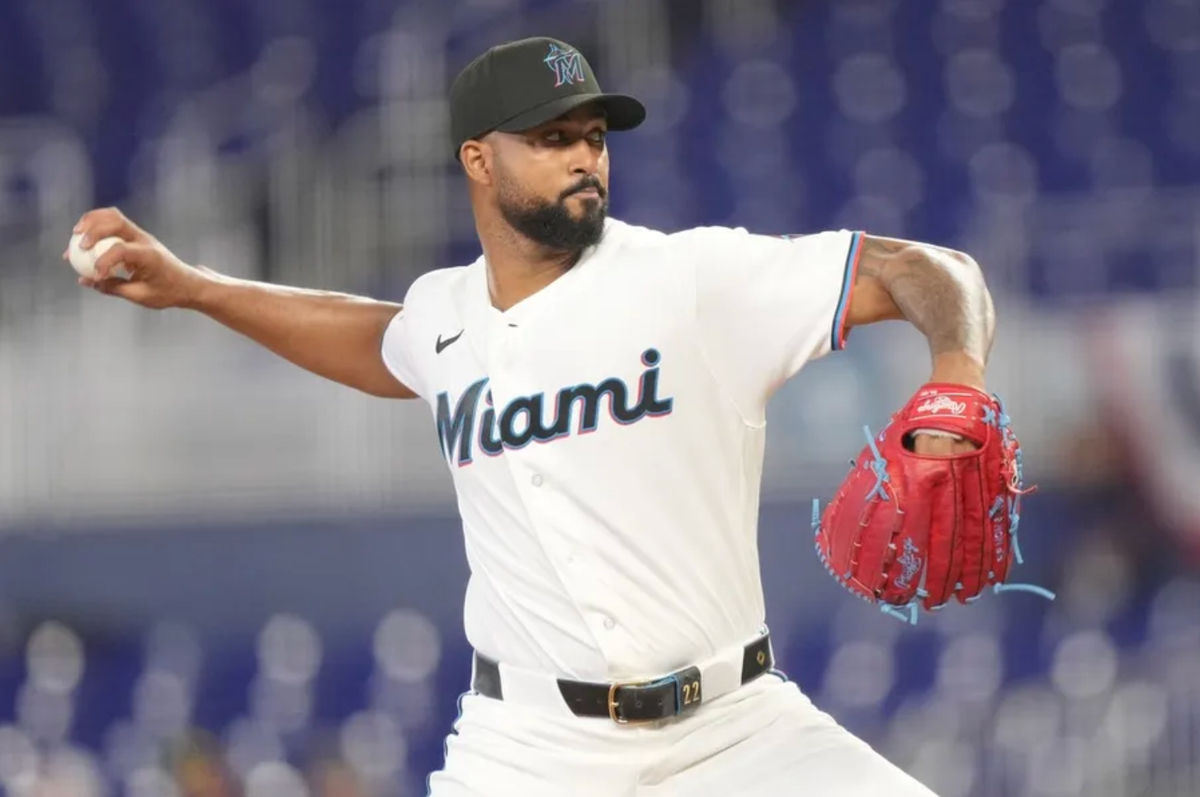 Apr 1, 2026; Miami, Florida, USA; Miami Marlins starting pitcher Sandy Alcantara (22) pitches against the Chicago White Sox in the first inning at loanDepot Park. Mandatory Credit: Jim Rassol-Imagn Images
 How about a little East Coast-West Coast combo for our MLB picks today?
Season Record 14-12-1, -0.42 Units
Astros F5 (+102 BetRivers)
It’s been quite the mess for Houston so far in 2025.
Expected to compete for the AL West as always, they have instead fallen on hard times amid a raft of pitcher injuries. But this is an organization with an excellent record of developing arms, and they may have found one in today’s starter, Peter Lambert. You might recognize the name as he pitched parts of four seasons in Colorado from 2019 to 2024, never logging more than 89.1 IP in the majors and never finishing a season with an ERA under 5.36.
Well, he took his talents (or at that point, lack thereof) to Japan last year and well, was just okay there too with a 4.26 ERA and 20.1% K%. The Astros brought him back and appeared to have unlocked something in the minors as he had a 1.84 ERA and 0.95 WHIP in three minor league starts, and now a 3.27 ERA in 11 IP with a whopping 33.3% K% and 17.7% SwSwr% over two starts in MLB. His fastball has gone up about 2 MPH over where he typically sat in his Rockies days, and he’s now added a cutter to his arsenal. Are his improvements for real? Well, the results look promising very early on.
His Stuff+ is 94 if you’re into that sort of thing, which indicates he’s a shade below average.
He does appear to have the upper hand tonight as he faces off against the Orioles Chris Bassitt. The well-traveled vet has gotten off to a brutal start in Baltimore, with a super ugly 6.75 ERA and 2.08 WHIP. His -2.70% K-BB% is the worst in MLB among starters who have logged at least 10 IP.
The best I can say is he keeps the ball on the ground and his EV allowed is low so there’s always a chance all the contact he induces will go to his fielders. The Astros have one of the best offenses in the league though and they have a 120 wRC+ on the road this year and an identical 120 wRC+ vs. righties. The Orioles for their part have a 119 wRC+ at home, so it’s a pretty even battle at the plate. Give me the Astros as I’d rather take the unknown SP who looks great right now vs. the aging vet who looks absolutely cooked right now.
Our Current Best Offers
Channel debug: betting
Sandy Alcantara Over 17.5 Outs Recorded (-107 DraftKings)
The Marlins ace looked back to his Cy Young form through his first three starts as he logged 24.1 IP and the only two runs he allowed were in the 9th inning of the third start.
He was just two outs away from a second straight complete game shutout, which makes him a regular Old Hoss Radbourne in today’s game. The last three outings have not gone so great, 17 IP, 6.35 ERA and 1.88 WHIP and he’s at the Dodgers tonight. But innings are what Sandy does. He induces a lot of grounders (48%) and has low whiff and walk and barrel rates.
So in games where he’s not getting BABIP-ed around he’s extremely efficient. Let’s back on another Sandy Special today.
Our Current Best Offers
Channel debug: betting
 Apr 1, 2026; Miami, Florida, USA; Miami Marlins starting pitcher Sandy Alcantara (22) pitches against the Chicago White Sox in the first inning at loanDepot Park. Mandatory Credit: Jim Rassol-Imagn Images
 How about a little East Coast-West Coast combo for our MLB picks today?
Season Record 14-12-1, -0.42 Units
Astros F5 (+102 BetRivers)
It’s been quite the mess for Houston so far in 2025.
Expected to compete for the AL West as always, they have instead fallen on hard times amid a raft of pitcher injuries. But this is an organization with an excellent record of developing arms, and they may have found one in today’s starter, Peter Lambert. You might recognize the name as he pitched parts of four seasons in Colorado from 2019 to 2024, never logging more than 89.1 IP in the majors and never finishing a season with an ERA under 5.36.
Well, he took his talents (or at that point, lack thereof) to Japan last year and well, was just okay there too with a 4.26 ERA and 20.1% K%. The Astros brought him back and appeared to have unlocked something in the minors as he had a 1.84 ERA and 0.95 WHIP in three minor league starts, and now a 3.27 ERA in 11 IP with a whopping 33.3% K% and 17.7% SwSwr% over two starts in MLB. His fastball has gone up about 2 MPH over where he typically sat in his Rockies days, and he’s now added a cutter to his arsenal. Are his improvements for real? Well, the results look promising very early on.
His Stuff+ is 94 if you’re into that sort of thing, which indicates he’s a shade below average.
He does appear to have the upper hand tonight as he faces off against the Orioles Chris Bassitt. The well-traveled vet has gotten off to a brutal start in Baltimore, with a super ugly 6.75 ERA and 2.08 WHIP. His -2.70% K-BB% is the worst in MLB among starters who have logged at least 10 IP.
The best I can say is he keeps the ball on the ground and his EV allowed is low so there’s always a chance all the contact he induces will go to his fielders. The Astros have one of the best offenses in the league though and they have a 120 wRC+ on the road this year and an identical 120 wRC+ vs. righties. The Orioles for their part have a 119 wRC+ at home, so it’s a pretty even battle at the plate. Give me the Astros as I’d rather take the unknown SP who looks great right now vs. the aging vet who looks absolutely cooked right now.
Our Current Best Offers
Channel debug: betting
Sandy Alcantara Over 17.5 Outs Recorded (-107 DraftKings)
The Marlins ace looked back to his Cy Young form through his first three starts as he logged 24.1 IP and the only two runs he allowed were in the 9th inning of the third start.
He was just two outs away from a second straight complete game shutout, which makes him a regular Old Hoss Radbourne in today’s game. The last three outings have not gone so great, 17 IP, 6.35 ERA and 1.88 WHIP and he’s at the Dodgers tonight. But innings are what Sandy does. He induces a lot of grounders (48%) and has low whiff and walk and barrel rates.
So in games where he’s not getting BABIP-ed around he’s extremely efficient. Let’s back on another Sandy Special today.
Our Current Best Offers
Channel debug: betting
Apr 1, 2026; Miami, Florida, USA; Miami Marlins starting pitcher Sandy Alcantara (22) pitches against the Chicago White Sox in the first inning at loanDepot Park. Mandatory Credit: Jim Rassol-Imagn Images How about a little East Coast-West Coast combo for our MLB picks today?
Season Record 14-12-1, -0.42 Units
Astros F5 (+102 BetRivers)
It’s been quite the mess for Houston so far in 2025.
Expected to compete for the AL West as always, they have instead fallen on hard times amid a raft of pitcher injuries. But this is an organization with an excellent record of developing arms, and they may have found one in today’s starter, Peter Lambert. You might recognize the name as he pitched parts of four seasons in Colorado from 2019 to 2024, never logging more than 89.1 IP in the majors and never finishing a season with an ERA under 5.36.
Well, he took his talents (or at that point, lack thereof) to Japan last year and well, was just okay there too with a 4.26 ERA and 20.1% K%. The Astros brought him back and appeared to have unlocked something in the minors as he had a 1.84 ERA and 0.95 WHIP in three minor league starts, and now a 3.27 ERA in 11 IP with a whopping 33.3% K% and 17.7% SwSwr% over two starts in MLB. His fastball has gone up about 2 MPH over where he typically sat in his Rockies days, and he’s now added a cutter to his arsenal. Are his improvements for real? Well, the results look promising very early on.
His Stuff+ is 94 if you’re into that sort of thing, which indicates he’s a shade below average.
He does appear to have the upper hand tonight as he faces off against the Orioles Chris Bassitt. The well-traveled vet has gotten off to a brutal start in Baltimore, with a super ugly 6.75 ERA and 2.08 WHIP. His -2.70% K-BB% is the worst in MLB among starters who have logged at least 10 IP.
The best I can say is he keeps the ball on the ground and his EV allowed is low so there’s always a chance all the contact he induces will go to his fielders. The Astros have one of the best offenses in the league though and they have a 120 wRC+ on the road this year and an identical 120 wRC+ vs. righties. The Orioles for their part have a 119 wRC+ at home, so it’s a pretty even battle at the plate. Give me the Astros as I’d rather take the unknown SP who looks great right now vs. the aging vet who looks absolutely cooked right now.
Our Current Best Offers
Channel debug: betting
Sandy Alcantara Over 17.5 Outs Recorded (-107 DraftKings)
The Marlins ace looked back to his Cy Young form through his first three starts as he logged 24.1 IP and the only two runs he allowed were in the 9th inning of the third start.
He was just two outs away from a second straight complete game shutout, which makes him a regular Old Hoss Radbourne in today’s game. The last three outings have not gone so great, 17 IP, 6.35 ERA and 1.88 WHIP and he’s at the Dodgers tonight. But innings are what Sandy does. He induces a lot of grounders (48%) and has low whiff and walk and barrel rates.
So in games where he’s not getting BABIP-ed around he’s extremely efficient. Let’s back on another Sandy Special today.
Our Current Best Offers
Channel debug: betting
Apr 1, 2026; Miami, Florida, USA; Miami Marlins starting pitcher Sandy Alcantara (22) pitches against…