×
the possibility of a connected outbreak in multiple Midwestern states. No specific food source linked to these cases has been identified as of yet, though local health officials have singled out lettuce or salad greens as potential culprits to avoid for residents in these hot spots.

A delayed alert

Cyclosporiasis is caused by various species of the microscopic parasite Cyclospora, predominantly Cyclospora cayatenensis. Though rarely life-threatening, the disease is infamous for causing watery and explosively loud bouts of diarrhea, along with other common symptoms of gastrointestinal illness.

Cyclosporiasis is endemic to tropical and subtropical parts of the world, and stateside cases tend to be traced back to imported food from these areas (particularly produce) or to people who initially caught the disease while traveling in these endemic regions. The incidence of cyclosporiasis seems to be increasing worldwide, however, and 2026 is gearing up to be an especially bad year for it in the U.S.

On July 1, the CDC first stated that 145 cases from 17 states had been reported to the agency as of mid-June. Even by then, though, it was clear the CDC’s reporting was woefully out of date. By July 4, health officials in Michigan (a state not included in the initial CDC tally) had reported over 500 cases in the state, which was already triple the number reported less than a week earlier. It would take an additional two weeks, on July 14, for the CDC to formally issue a health advisory on the growing clusters.

As of July 15, the CDC has received reports of 1,645 confirmed domestic cases of cyclosporiasis dating back to May 1, along with at least 141 people who were hospitalized as a result (no deaths). The agency is also aware of more than 5,100 cases that require further analysis before they can be classified as domestic cases.
The Explosive Diarrhea Outbreak Is Officially Blowing Up
                If you ever wanted a good excuse for skipping out on the fresh salad for lunch, here’s one. Reports of cyclosporiasis, a foodborne parasitic disease that can cause explosive bouts of diarrhea, are skyrocketing in several parts of the country, and federal health officials are finally sounding the alarm about it after weeks of media reports. As of Wednesday, thousands of cyclosporiasis cases have been reported recently in more than 30 states. The true toll is likely higher, however, and it’s taken weeks for the Centers for the Disease Control and Prevention to formally acknowledge the possibility of a connected outbreak in multiple Midwestern states. No specific food source linked to these cases has been identified as of yet, though local health officials have singled out lettuce or salad greens as potential culprits to avoid for residents in these hot spots. A delayed alert Cyclosporiasis is caused by various species of the microscopic parasite Cyclospora, predominantly Cyclospora cayatenensis. Though rarely life-threatening, the disease is infamous for causing watery and explosively loud bouts of diarrhea, along with other common symptoms of gastrointestinal illness.

 Cyclosporiasis is endemic to tropical and subtropical parts of the world, and stateside cases tend to be traced back to imported food from these areas (particularly produce) or to people who initially caught the disease while traveling in these endemic regions. The incidence of cyclosporiasis seems to be increasing worldwide, however, and 2026 is gearing up to be an especially bad year for it in the U.S.

 On July 1, the CDC first stated that 145 cases from 17 states had been reported to the agency as of mid-June. Even by then, though, it was clear the CDC’s reporting was woefully out of date. By July 4, health officials in Michigan (a state not included in the initial CDC tally) had reported over 500 cases in the state, which was already triple the number reported less than a week earlier. It would take an additional two weeks, on July 14, for the CDC to formally issue a health advisory on the growing clusters. As of July 15, the CDC has received reports of 1,645 confirmed domestic cases of cyclosporiasis dating back to May 1, along with at least 141 people who were hospitalized as a result (no deaths). The agency is also aware of more than 5,100 cases that require further analysis before they can be classified as domestic cases.

 People infected with Cyclospora will eventually poop out larvae forms of the parasite called oocysts. The micrograph above shows two oocysts found in a stool sample. © Melanie Moser/CDC Cases of cyclosporiasis happen every year in the U.S., with the usual seasonal peak occurring between May and August. So some of these cases are part of the pattern we would expect to see around this time of year. But it’s also become clear by now that this isn’t a typical season overall, and that some states are being hit especially hard by the explosive diarrhea bug. According to the CDC, only 249 cases were reported nationally by this same time last year. And whereas the CDC previously stated there was “no evidence of a single, multistate Cyclospora outbreak” linking cases, it is now investigating a potentially linked outbreak in four midwestern states: Michigan, Ohio, West Virginia, and Kentucky. At least 400 confirmed cases have been tied to this single cluster, though the agency is aware of more reports. Michigan alone has reported 2,640 cases as of Monday, while Ohio has reported more than 300. All of these numbers are an underestimate. People generally don’t see their doctors when they get sick from foodborne illness, and cyclosporiasis is even harder to diagnose than other similar infections, since it requires more specialized testing that is not readily available.

 It’s also worth noting that the CDC chose to trim back its active surveillance of cyclosporiasis and other foodborne diseases last year, possibly due to funding cuts from the Trump administration. What to do Cyclosporiasis is spread through eating food and water contaminated with parasites shed from an infected carrier’s poop. However, infections usually don’t spread directly from person to person, since it takes several weeks for the pooped parasites to mature and become infectious.

 Health officials in Michigan and other possibly linked states have not identified a specific type of produce, grower, or supplier implicated in these outbreaks, but some common threads may already be emerging. “Early information has shown lettuce as a common product that regularly comes up during the investigation,” said Natasha Bagdasarian, chief medical executive at the Michigan Department of Health and Human Services, in a statement Monday, and federal and local health officials are reportedly also looking into whether Taco Bell restaurants might be linked to the midwestern cluster. Unless you live in Michigan, Ohio, West Virginia, or Kentucky, you probably shouldn’t worry too much about the risk of catching cyclosporiasis from your next salad (at least right now).

 That said, health experts always recommend washing your hands with soap and water before and after handling or preparing raw fruits and vegetables; washing all fruits and vegetables thoroughly under running water before eating, cutting, or cooking (if the produce is labeled prewashed, then you don’t need to do it again), and refrigerating cut, peeled, or cooked fruits and vegetables as soon as possible (within two hours if possible).      #Explosive #Diarrhea #Outbreak #Officially #Blowingdiarrhea,foodborne illnesses,outbreaks
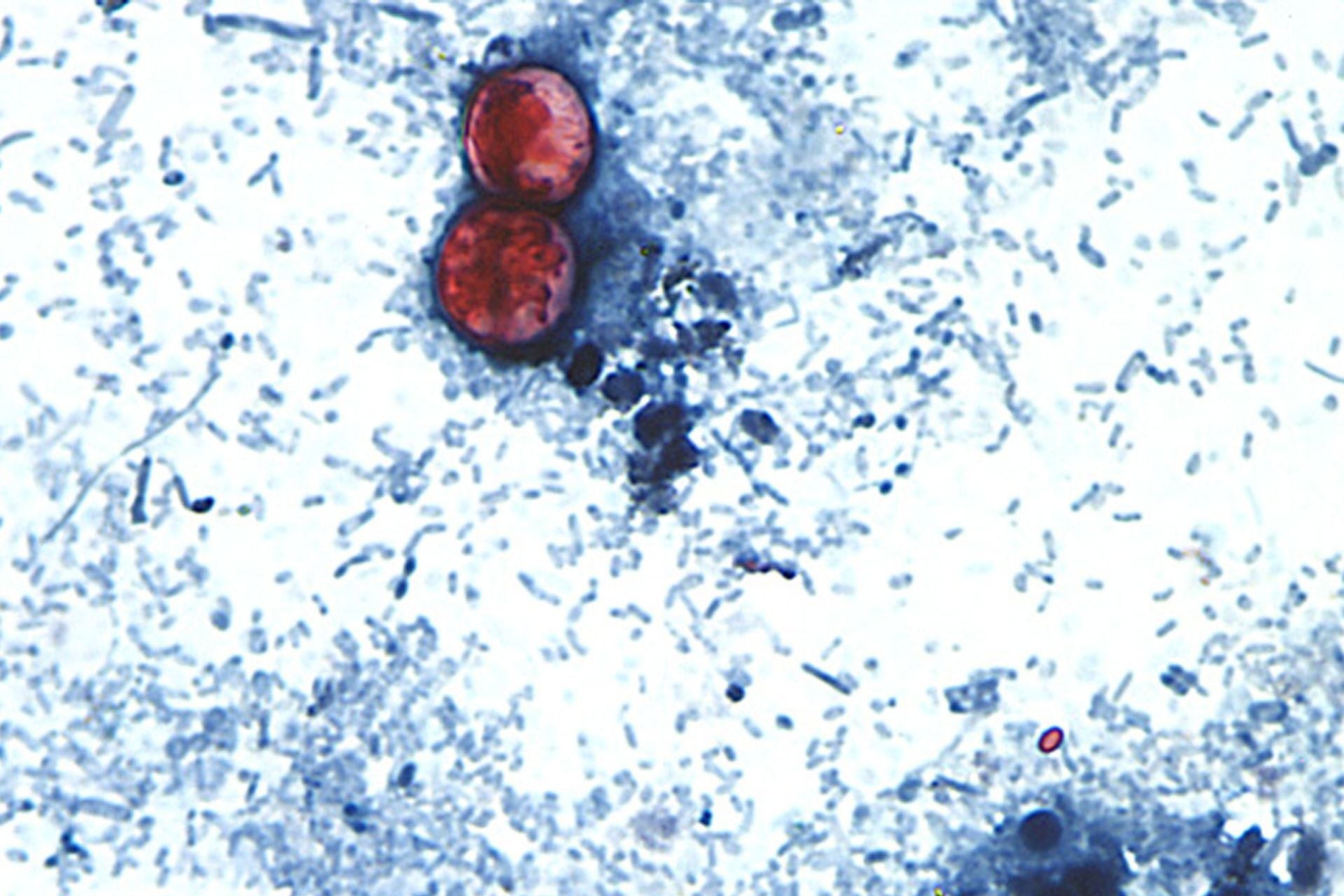
People infected with Cyclospora will eventually poop out larvae forms of the parasite called oocysts. The micrograph above shows two oocysts found in a stool sample. © Melanie Moser/CDC

Cases of cyclosporiasis happen every year in the U.S., with the usual seasonal peak occurring between May and August. So some of these cases are part of the pattern we would expect to see around this time of year. But it’s also become clear by now that this isn’t a typical season overall, and that some states are being hit especially hard by the explosive diarrhea bug.

According to the CDC, only 249 cases were reported nationally by this same time last year. And whereas the CDC previously stated there was “no evidence of a single, multistate Cyclospora outbreak” linking cases, it is now investigating a potentially linked outbreak in four midwestern states: Michigan, Ohio, West Virginia, and Kentucky. At least 400 confirmed cases have been tied to this single cluster, though the agency is aware of more reports. Michigan alone has reported 2,640 cases as of Monday, while Ohio has reported more than 300.

All of these numbers are an underestimate. People generally don’t see their doctors when they get sick from foodborne illness, and cyclosporiasis is even harder to diagnose than other similar infections, since it requires more specialized testing that is not readily available.

It’s also worth noting that the CDC chose to trim back its active surveillance of cyclosporiasis and other foodborne diseases last year, possibly due to funding cuts from the Trump administration.

What to do

Cyclosporiasis is spread through eating food and water contaminated with parasites shed from an infected carrier’s poop. However, infections usually don’t spread directly from person to person, since it takes several weeks for the pooped parasites to mature and become infectious.

Health officials in Michigan and other possibly linked states have not identified a specific type of produce, grower, or supplier implicated in these outbreaks, but some common threads may already be emerging.

“Early information has shown lettuce as a common product that regularly comes up during the investigation,” said Natasha Bagdasarian, chief medical executive at the Michigan Department of Health and Human Services, in a statement Monday, and federal and local health officials are reportedly also looking into whether Taco Bell restaurants might be linked to the midwestern cluster.

Unless you live in Michigan, Ohio, West Virginia, or Kentucky, you probably shouldn’t worry too much about the risk of catching cyclosporiasis from your next salad (at least right now).

That said, health experts always recommend washing your hands with soap and water before and after handling or preparing raw fruits and vegetables; washing all fruits and vegetables thoroughly under running water before eating, cutting, or cooking (if the produce is labeled prewashed, then you don’t need to do it again), and refrigerating cut, peeled, or cooked fruits and vegetables as soon as possible (within two hours if possible).

#Explosive #Diarrhea #Outbreak #Officially #Blowingdiarrhea,foodborne illnesses,outbreaks"> The Explosive Diarrhea Outbreak Is Officially Blowing Up
                If you ever wanted a good excuse for skipping out on the fresh salad for lunch, here’s one. Reports of cyclosporiasis, a foodborne parasitic disease that can cause explosive bouts of diarrhea, are skyrocketing in several parts of the country, and federal health officials are finally sounding the alarm about it after weeks of media reports. As of Wednesday, thousands of cyclosporiasis cases have been reported recently in more than 30 states. The true toll is likely higher, however, and it’s taken weeks for the Centers for the Disease Control and Prevention to formally acknowledge the possibility of a connected outbreak in multiple Midwestern states. No specific food source linked to these cases has been identified as of yet, though local health officials have singled out lettuce or salad greens as potential culprits to avoid for residents in these hot spots. A delayed alert Cyclosporiasis is caused by various species of the microscopic parasite Cyclospora, predominantly Cyclospora cayatenensis. Though rarely life-threatening, the disease is infamous for causing watery and explosively loud bouts of diarrhea, along with other common symptoms of gastrointestinal illness.

 Cyclosporiasis is endemic to tropical and subtropical parts of the world, and stateside cases tend to be traced back to imported food from these areas (particularly produce) or to people who initially caught the disease while traveling in these endemic regions. The incidence of cyclosporiasis seems to be increasing worldwide, however, and 2026 is gearing up to be an especially bad year for it in the U.S.

 On July 1, the CDC first stated that 145 cases from 17 states had been reported to the agency as of mid-June. Even by then, though, it was clear the CDC’s reporting was woefully out of date. By July 4, health officials in Michigan (a state not included in the initial CDC tally) had reported over 500 cases in the state, which was already triple the number reported less than a week earlier. It would take an additional two weeks, on July 14, for the CDC to formally issue a health advisory on the growing clusters. As of July 15, the CDC has received reports of 1,645 confirmed domestic cases of cyclosporiasis dating back to May 1, along with at least 141 people who were hospitalized as a result (no deaths). The agency is also aware of more than 5,100 cases that require further analysis before they can be classified as domestic cases.

 People infected with Cyclospora will eventually poop out larvae forms of the parasite called oocysts. The micrograph above shows two oocysts found in a stool sample. © Melanie Moser/CDC Cases of cyclosporiasis happen every year in the U.S., with the usual seasonal peak occurring between May and August. So some of these cases are part of the pattern we would expect to see around this time of year. But it’s also become clear by now that this isn’t a typical season overall, and that some states are being hit especially hard by the explosive diarrhea bug. According to the CDC, only 249 cases were reported nationally by this same time last year. And whereas the CDC previously stated there was “no evidence of a single, multistate Cyclospora outbreak” linking cases, it is now investigating a potentially linked outbreak in four midwestern states: Michigan, Ohio, West Virginia, and Kentucky. At least 400 confirmed cases have been tied to this single cluster, though the agency is aware of more reports. Michigan alone has reported 2,640 cases as of Monday, while Ohio has reported more than 300. All of these numbers are an underestimate. People generally don’t see their doctors when they get sick from foodborne illness, and cyclosporiasis is even harder to diagnose than other similar infections, since it requires more specialized testing that is not readily available.

 It’s also worth noting that the CDC chose to trim back its active surveillance of cyclosporiasis and other foodborne diseases last year, possibly due to funding cuts from the Trump administration. What to do Cyclosporiasis is spread through eating food and water contaminated with parasites shed from an infected carrier’s poop. However, infections usually don’t spread directly from person to person, since it takes several weeks for the pooped parasites to mature and become infectious.

 Health officials in Michigan and other possibly linked states have not identified a specific type of produce, grower, or supplier implicated in these outbreaks, but some common threads may already be emerging. “Early information has shown lettuce as a common product that regularly comes up during the investigation,” said Natasha Bagdasarian, chief medical executive at the Michigan Department of Health and Human Services, in a statement Monday, and federal and local health officials are reportedly also looking into whether Taco Bell restaurants might be linked to the midwestern cluster. Unless you live in Michigan, Ohio, West Virginia, or Kentucky, you probably shouldn’t worry too much about the risk of catching cyclosporiasis from your next salad (at least right now).

 That said, health experts always recommend washing your hands with soap and water before and after handling or preparing raw fruits and vegetables; washing all fruits and vegetables thoroughly under running water before eating, cutting, or cooking (if the produce is labeled prewashed, then you don’t need to do it again), and refrigerating cut, peeled, or cooked fruits and vegetables as soon as possible (within two hours if possible).      #Explosive #Diarrhea #Outbreak #Officially #Blowingdiarrhea,foodborne illnesses,outbreaks
Tech-news

the possibility of a connected outbreak in multiple Midwestern states. No specific food source linked to these cases has been identified as of yet, though local health officials have singled out lettuce or salad greens as potential culprits to avoid for residents in these hot spots.

A delayed alert

Cyclosporiasis is caused by various species of the microscopic parasite Cyclospora, predominantly Cyclospora cayatenensis. Though rarely life-threatening, the disease is infamous for causing watery and explosively loud bouts of diarrhea, along with other common symptoms of gastrointestinal illness.

Cyclosporiasis is endemic to tropical and subtropical parts of the world, and stateside cases tend to be traced back to imported food from these areas (particularly produce) or to people who initially caught the disease while traveling in these endemic regions. The incidence of cyclosporiasis seems to be increasing worldwide, however, and 2026 is gearing up to be an especially bad year for it in the U.S.

On July 1, the CDC first stated that 145 cases from 17 states had been reported to the agency as of mid-June. Even by then, though, it was clear the CDC’s reporting was woefully out of date. By July 4, health officials in Michigan (a state not included in the initial CDC tally) had reported over 500 cases in the state, which was already triple the number reported less than a week earlier. It would take an additional two weeks, on July 14, for the CDC to formally issue a health advisory on the growing clusters.

As of July 15, the CDC has received reports of 1,645 confirmed domestic cases of cyclosporiasis dating back to May 1, along with at least 141 people who were hospitalized as a result (no deaths). The agency is also aware of more than 5,100 cases that require further analysis before they can be classified as domestic cases.

The Explosive Diarrhea Outbreak Is Officially Blowing Up
                If you ever wanted a good excuse for skipping out on the fresh salad for lunch, here’s one. Reports of cyclosporiasis, a foodborne parasitic disease that can cause explosive bouts of diarrhea, are skyrocketing in several parts of the country, and federal health officials are finally sounding the alarm about it after weeks of media reports. As of Wednesday, thousands of cyclosporiasis cases have been reported recently in more than 30 states. The true toll is likely higher, however, and it’s taken weeks for the Centers for the Disease Control and Prevention to formally acknowledge the possibility of a connected outbreak in multiple Midwestern states. No specific food source linked to these cases has been identified as of yet, though local health officials have singled out lettuce or salad greens as potential culprits to avoid for residents in these hot spots. A delayed alert Cyclosporiasis is caused by various species of the microscopic parasite Cyclospora, predominantly Cyclospora cayatenensis. Though rarely life-threatening, the disease is infamous for causing watery and explosively loud bouts of diarrhea, along with other common symptoms of gastrointestinal illness.

 Cyclosporiasis is endemic to tropical and subtropical parts of the world, and stateside cases tend to be traced back to imported food from these areas (particularly produce) or to people who initially caught the disease while traveling in these endemic regions. The incidence of cyclosporiasis seems to be increasing worldwide, however, and 2026 is gearing up to be an especially bad year for it in the U.S.

 On July 1, the CDC first stated that 145 cases from 17 states had been reported to the agency as of mid-June. Even by then, though, it was clear the CDC’s reporting was woefully out of date. By July 4, health officials in Michigan (a state not included in the initial CDC tally) had reported over 500 cases in the state, which was already triple the number reported less than a week earlier. It would take an additional two weeks, on July 14, for the CDC to formally issue a health advisory on the growing clusters. As of July 15, the CDC has received reports of 1,645 confirmed domestic cases of cyclosporiasis dating back to May 1, along with at least 141 people who were hospitalized as a result (no deaths). The agency is also aware of more than 5,100 cases that require further analysis before they can be classified as domestic cases.

 People infected with Cyclospora will eventually poop out larvae forms of the parasite called oocysts. The micrograph above shows two oocysts found in a stool sample. © Melanie Moser/CDC Cases of cyclosporiasis happen every year in the U.S., with the usual seasonal peak occurring between May and August. So some of these cases are part of the pattern we would expect to see around this time of year. But it’s also become clear by now that this isn’t a typical season overall, and that some states are being hit especially hard by the explosive diarrhea bug. According to the CDC, only 249 cases were reported nationally by this same time last year. And whereas the CDC previously stated there was “no evidence of a single, multistate Cyclospora outbreak” linking cases, it is now investigating a potentially linked outbreak in four midwestern states: Michigan, Ohio, West Virginia, and Kentucky. At least 400 confirmed cases have been tied to this single cluster, though the agency is aware of more reports. Michigan alone has reported 2,640 cases as of Monday, while Ohio has reported more than 300. All of these numbers are an underestimate. People generally don’t see their doctors when they get sick from foodborne illness, and cyclosporiasis is even harder to diagnose than other similar infections, since it requires more specialized testing that is not readily available.

 It’s also worth noting that the CDC chose to trim back its active surveillance of cyclosporiasis and other foodborne diseases last year, possibly due to funding cuts from the Trump administration. What to do Cyclosporiasis is spread through eating food and water contaminated with parasites shed from an infected carrier’s poop. However, infections usually don’t spread directly from person to person, since it takes several weeks for the pooped parasites to mature and become infectious.

 Health officials in Michigan and other possibly linked states have not identified a specific type of produce, grower, or supplier implicated in these outbreaks, but some common threads may already be emerging. “Early information has shown lettuce as a common product that regularly comes up during the investigation,” said Natasha Bagdasarian, chief medical executive at the Michigan Department of Health and Human Services, in a statement Monday, and federal and local health officials are reportedly also looking into whether Taco Bell restaurants might be linked to the midwestern cluster. Unless you live in Michigan, Ohio, West Virginia, or Kentucky, you probably shouldn’t worry too much about the risk of catching cyclosporiasis from your next salad (at least right now).

 That said, health experts always recommend washing your hands with soap and water before and after handling or preparing raw fruits and vegetables; washing all fruits and vegetables thoroughly under running water before eating, cutting, or cooking (if the produce is labeled prewashed, then you don’t need to do it again), and refrigerating cut, peeled, or cooked fruits and vegetables as soon as possible (within two hours if possible).      #Explosive #Diarrhea #Outbreak #Officially #Blowingdiarrhea,foodborne illnesses,outbreaks
People infected with Cyclospora will eventually poop out larvae forms of the parasite called oocysts. The micrograph above shows two oocysts found in a stool sample. © Melanie Moser/CDC

Cases of cyclosporiasis happen every year in the U.S., with the usual seasonal peak occurring between May and August. So some of these cases are part of the pattern we would expect to see around this time of year. But it’s also become clear by now that this isn’t a typical season overall, and that some states are being hit especially hard by the explosive diarrhea bug.

According to the CDC, only 249 cases were reported nationally by this same time last year. And whereas the CDC previously stated there was “no evidence of a single, multistate Cyclospora outbreak” linking cases, it is now investigating a potentially linked outbreak in four midwestern states: Michigan, Ohio, West Virginia, and Kentucky. At least 400 confirmed cases have been tied to this single cluster, though the agency is aware of more reports. Michigan alone has reported 2,640 cases as of Monday, while Ohio has reported more than 300.

All of these numbers are an underestimate. People generally don’t see their doctors when they get sick from foodborne illness, and cyclosporiasis is even harder to diagnose than other similar infections, since it requires more specialized testing that is not readily available.

It’s also worth noting that the CDC chose to trim back its active surveillance of cyclosporiasis and other foodborne diseases last year, possibly due to funding cuts from the Trump administration.

What to do

Cyclosporiasis is spread through eating food and water contaminated with parasites shed from an infected carrier’s poop. However, infections usually don’t spread directly from person to person, since it takes several weeks for the pooped parasites to mature and become infectious.

Health officials in Michigan and other possibly linked states have not identified a specific type of produce, grower, or supplier implicated in these outbreaks, but some common threads may already be emerging.

“Early information has shown lettuce as a common product that regularly comes up during the investigation,” said Natasha Bagdasarian, chief medical executive at the Michigan Department of Health and Human Services, in a statement Monday, and federal and local health officials are reportedly also looking into whether Taco Bell restaurants might be linked to the midwestern cluster.

Unless you live in Michigan, Ohio, West Virginia, or Kentucky, you probably shouldn’t worry too much about the risk of catching cyclosporiasis from your next salad (at least right now).

That said, health experts always recommend washing your hands with soap and water before and after handling or preparing raw fruits and vegetables; washing all fruits and vegetables thoroughly under running water before eating, cutting, or cooking (if the produce is labeled prewashed, then you don’t need to do it again), and refrigerating cut, peeled, or cooked fruits and vegetables as soon as possible (within two hours if possible).

#Explosive #Diarrhea #Outbreak #Officially #Blowingdiarrhea,foodborne illnesses,outbreaks">The Explosive Diarrhea Outbreak Is Officially Blowing Up

If you ever wanted a good excuse for skipping out on the fresh salad for lunch, here’s one. Reports of cyclosporiasis, a foodborne parasitic disease that can cause explosive bouts of diarrhea, are skyrocketing in several parts of the country, and federal health officials are finally sounding the alarm about it after weeks of media reports.

As of Wednesday, thousands of cyclosporiasis cases have been reported recently in more than 30 states. The true toll is likely higher, however, and it’s taken weeks for the Centers for the Disease Control and Prevention to formally acknowledge the possibility of a connected outbreak in multiple Midwestern states. No specific food source linked to these cases has been identified as of yet, though local health officials have singled out lettuce or salad greens as potential culprits to avoid for residents in these hot spots.

A delayed alert

Cyclosporiasis is caused by various species of the microscopic parasite Cyclospora, predominantly Cyclospora cayatenensis. Though rarely life-threatening, the disease is infamous for causing watery and explosively loud bouts of diarrhea, along with other common symptoms of gastrointestinal illness.

Cyclosporiasis is endemic to tropical and subtropical parts of the world, and stateside cases tend to be traced back to imported food from these areas (particularly produce) or to people who initially caught the disease while traveling in these endemic regions. The incidence of cyclosporiasis seems to be increasing worldwide, however, and 2026 is gearing up to be an especially bad year for it in the U.S.

On July 1, the CDC first stated that 145 cases from 17 states had been reported to the agency as of mid-June. Even by then, though, it was clear the CDC’s reporting was woefully out of date. By July 4, health officials in Michigan (a state not included in the initial CDC tally) had reported over 500 cases in the state, which was already triple the number reported less than a week earlier. It would take an additional two weeks, on July 14, for the CDC to formally issue a health advisory on the growing clusters.

As of July 15, the CDC has received reports of 1,645 confirmed domestic cases of cyclosporiasis dating back to May 1, along with at least 141 people who were hospitalized as a result (no deaths). The agency is also aware of more than 5,100 cases that require further analysis before they can be classified as domestic cases.

The Explosive Diarrhea Outbreak Is Officially Blowing Up
                If you ever wanted a good excuse for skipping out on the fresh salad for lunch, here’s one. Reports of cyclosporiasis, a foodborne parasitic disease that can cause explosive bouts of diarrhea, are skyrocketing in several parts of the country, and federal health officials are finally sounding the alarm about it after weeks of media reports. As of Wednesday, thousands of cyclosporiasis cases have been reported recently in more than 30 states. The true toll is likely higher, however, and it’s taken weeks for the Centers for the Disease Control and Prevention to formally acknowledge the possibility of a connected outbreak in multiple Midwestern states. No specific food source linked to these cases has been identified as of yet, though local health officials have singled out lettuce or salad greens as potential culprits to avoid for residents in these hot spots. A delayed alert Cyclosporiasis is caused by various species of the microscopic parasite Cyclospora, predominantly Cyclospora cayatenensis. Though rarely life-threatening, the disease is infamous for causing watery and explosively loud bouts of diarrhea, along with other common symptoms of gastrointestinal illness.

 Cyclosporiasis is endemic to tropical and subtropical parts of the world, and stateside cases tend to be traced back to imported food from these areas (particularly produce) or to people who initially caught the disease while traveling in these endemic regions. The incidence of cyclosporiasis seems to be increasing worldwide, however, and 2026 is gearing up to be an especially bad year for it in the U.S.

 On July 1, the CDC first stated that 145 cases from 17 states had been reported to the agency as of mid-June. Even by then, though, it was clear the CDC’s reporting was woefully out of date. By July 4, health officials in Michigan (a state not included in the initial CDC tally) had reported over 500 cases in the state, which was already triple the number reported less than a week earlier. It would take an additional two weeks, on July 14, for the CDC to formally issue a health advisory on the growing clusters. As of July 15, the CDC has received reports of 1,645 confirmed domestic cases of cyclosporiasis dating back to May 1, along with at least 141 people who were hospitalized as a result (no deaths). The agency is also aware of more than 5,100 cases that require further analysis before they can be classified as domestic cases.

 People infected with Cyclospora will eventually poop out larvae forms of the parasite called oocysts. The micrograph above shows two oocysts found in a stool sample. © Melanie Moser/CDC Cases of cyclosporiasis happen every year in the U.S., with the usual seasonal peak occurring between May and August. So some of these cases are part of the pattern we would expect to see around this time of year. But it’s also become clear by now that this isn’t a typical season overall, and that some states are being hit especially hard by the explosive diarrhea bug. According to the CDC, only 249 cases were reported nationally by this same time last year. And whereas the CDC previously stated there was “no evidence of a single, multistate Cyclospora outbreak” linking cases, it is now investigating a potentially linked outbreak in four midwestern states: Michigan, Ohio, West Virginia, and Kentucky. At least 400 confirmed cases have been tied to this single cluster, though the agency is aware of more reports. Michigan alone has reported 2,640 cases as of Monday, while Ohio has reported more than 300. All of these numbers are an underestimate. People generally don’t see their doctors when they get sick from foodborne illness, and cyclosporiasis is even harder to diagnose than other similar infections, since it requires more specialized testing that is not readily available.

 It’s also worth noting that the CDC chose to trim back its active surveillance of cyclosporiasis and other foodborne diseases last year, possibly due to funding cuts from the Trump administration. What to do Cyclosporiasis is spread through eating food and water contaminated with parasites shed from an infected carrier’s poop. However, infections usually don’t spread directly from person to person, since it takes several weeks for the pooped parasites to mature and become infectious.

 Health officials in Michigan and other possibly linked states have not identified a specific type of produce, grower, or supplier implicated in these outbreaks, but some common threads may already be emerging. “Early information has shown lettuce as a common product that regularly comes up during the investigation,” said Natasha Bagdasarian, chief medical executive at the Michigan Department of Health and Human Services, in a statement Monday, and federal and local health officials are reportedly also looking into whether Taco Bell restaurants might be linked to the midwestern cluster. Unless you live in Michigan, Ohio, West Virginia, or Kentucky, you probably shouldn’t worry too much about the risk of catching cyclosporiasis from your next salad (at least right now).

 That said, health experts always recommend washing your hands with soap and water before and after handling or preparing raw fruits and vegetables; washing all fruits and vegetables thoroughly under running water before eating, cutting, or cooking (if the produce is labeled prewashed, then you don’t need to do it again), and refrigerating cut, peeled, or cooked fruits and vegetables as soon as possible (within two hours if possible).      #Explosive #Diarrhea #Outbreak #Officially #Blowingdiarrhea,foodborne illnesses,outbreaks
People infected with Cyclospora will eventually poop out larvae forms of the parasite called oocysts. The micrograph above shows two oocysts found in a stool sample. © Melanie Moser/CDC

Cases of cyclosporiasis happen every year in the U.S., with the usual seasonal peak occurring between May and August. So some of these cases are part of the pattern we would expect to see around this time of year. But it’s also become clear by now that this isn’t a typical season overall, and that some states are being hit especially hard by the explosive diarrhea bug.

According to the CDC, only 249 cases were reported nationally by this same time last year. And whereas the CDC previously stated there was “no evidence of a single, multistate Cyclospora outbreak” linking cases, it is now investigating a potentially linked outbreak in four midwestern states: Michigan, Ohio, West Virginia, and Kentucky. At least 400 confirmed cases have been tied to this single cluster, though the agency is aware of more reports. Michigan alone has reported 2,640 cases as of Monday, while Ohio has reported more than 300.

All of these numbers are an underestimate. People generally don’t see their doctors when they get sick from foodborne illness, and cyclosporiasis is even harder to diagnose than other similar infections, since it requires more specialized testing that is not readily available.

It’s also worth noting that the CDC chose to trim back its active surveillance of cyclosporiasis and other foodborne diseases last year, possibly due to funding cuts from the Trump administration.

What to do

Cyclosporiasis is spread through eating food and water contaminated with parasites shed from an infected carrier’s poop. However, infections usually don’t spread directly from person to person, since it takes several weeks for the pooped parasites to mature and become infectious.

Health officials in Michigan and other possibly linked states have not identified a specific type of produce, grower, or supplier implicated in these outbreaks, but some common threads may already be emerging.

“Early information has shown lettuce as a common product that regularly comes up during the investigation,” said Natasha Bagdasarian, chief medical executive at the Michigan Department of Health and Human Services, in a statement Monday, and federal and local health officials are reportedly also looking into whether Taco Bell restaurants might be linked to the midwestern cluster.

Unless you live in Michigan, Ohio, West Virginia, or Kentucky, you probably shouldn’t worry too much about the risk of catching cyclosporiasis from your next salad (at least right now).

That said, health experts always recommend washing your hands with soap and water before and after handling or preparing raw fruits and vegetables; washing all fruits and vegetables thoroughly under running water before eating, cutting, or cooking (if the produce is labeled prewashed, then you don’t need to do it again), and refrigerating cut, peeled, or cooked fruits and vegetables as soon as possible (within two hours if possible).

#Explosive #Diarrhea #Outbreak #Officially #Blowingdiarrhea,foodborne illnesses,outbreaks

If you ever wanted a good excuse for skipping out on the fresh salad for…

FACT CHECK: Ramayana distribution rights sold to Karan Johar for Rs. 350 crores – Biggest of all time, defeating King

More Pages: Ramayana – Part : I Box Office Collection


BOLLYWOOD NEWS – LIVE UPDATES

Catch us for latest Bollywood News, New Bollywood Movies update, Box office collection, New Movies Release , Bollywood News Hindi, Entertainment News, Bollywood Live News Today & Upcoming Movies 2026 and stay updated with latest hindi movies only on Bollywood Hungama.

CBFC,CBFC (Censor Board Of Film Certification),Censor,Censor Board of Film Certification,News,Ramayana,Ramayana Part: I,Ranbir Kapoor,Ravi Dubey,Sai Pallavi,Sunny Deol,Trailer,Yash"> BREAKING: 4-minute-15-second-long trailer of Ramayana passed by CBFC with a ‘U’ certificate    A few days remain before the release of the Ramayana trailer, and excitement is tremendous. Today, the Central Board of Film Certification (CBFC) passed the trailer and in this article, Bollywood Hungama will share interesting information about the same.BREAKING: 4-minute-15-second-long trailer of Ramayana passed by CBFC with a ‘U’ certificateThe CBFC passed the Ramayana trailer today, July 15, with a ‘U’ certificate. Since the film’s release is more than 3 months away, many would assume that it’ll be a short promo, lasting less than 2 ½ minutes or 3 minutes. However, that’s not the case. The run time of the trailer is a whopping 4 minutes and 15 seconds.The website of CBFC lists two entries for the Ramayana trailer. One is called ‘Trailer – Ramayana 3D’ and the other is called ‘Theatrical Trailer – Ramayana 3D’. The former is 4 minutes and 15 seconds long, while the duration of the latter is 4 minutes. It now remains to be seen which one drops digitally.This will be the third asset that would be released by the makers of Ramayana. The introduction asset was unveiled last year on July 3. Earlier this year, on April 2, the makers introduced the teaser called ‘Rama’ on the occasion of Hanuman Jayanti, focusing on the lead character of Lord Rama, played by Ranbir Kapoor. The ‘Rama’ asset was 2 minutes and 38 seconds long and also received a ‘U’ certificate.Ramayana stars Ranbir Kapoor as Lord Rama, Sai Pallavi as Sita, Yash as Ravana, Sunny Deol as Lord Hanuman and Ravie Dubey as Lakshman. It is directed by Nitesh Tiwari of Dangal (2016) fame and produced by Namit Malhotra. The music is composed by A R Rahman and Hans Zimmer. It’s a two-part saga with the first part releasing on Diwali 2026. As for the second part, it’ll arrive on the big screen on Diwali 2027.Also Read: FACT CHECK: Ramayana distribution rights sold to Karan Johar for Rs. 350 crores – Biggest of all time, defeating King More Pages: Ramayana – Part : I Box Office CollectionTags :  CBFC, CBFC (Censor Board Of Film Certification), Censor, Censor Board of Film Certification, News, Ramayana, Ramayana Part: I, Ranbir Kapoor, Ravi Dubey, Sai Pallavi, Sunny Deol, Trailer, YashBOLLYWOOD NEWS – LIVE UPDATESCatch us for latest Bollywood News, New Bollywood Movies update, Box office collection, New Movies Release , Bollywood News Hindi, Entertainment News, Bollywood Live News Today & Upcoming Movies 2026 and stay updated with latest hindi movies only on Bollywood Hungama.CBFC,CBFC (Censor Board Of Film Certification),Censor,Censor Board of Film Certification,News,Ramayana,Ramayana Part: I,Ranbir Kapoor,Ravi Dubey,Sai Pallavi,Sunny Deol,Trailer,Yash
Bollywood hindi news

FACT CHECK: Ramayana distribution rights sold to Karan Johar for Rs. 350 crores – Biggest of all time, defeating King

More Pages: Ramayana – Part : I Box Office Collection


BOLLYWOOD NEWS – LIVE UPDATES

Catch us for latest Bollywood News, New Bollywood Movies update, Box office collection, New Movies Release , Bollywood News Hindi, Entertainment News, Bollywood Live News Today & Upcoming Movies 2026 and stay updated with latest hindi movies only on Bollywood Hungama.

CBFC,CBFC (Censor Board Of Film Certification),Censor,Censor Board of Film Certification,News,Ramayana,Ramayana Part: I,Ranbir Kapoor,Ravi Dubey,Sai Pallavi,Sunny Deol,Trailer,Yash">BREAKING: 4-minute-15-second-long trailer of Ramayana passed by CBFC with a ‘U’ certificate

A few days remain before the release of the Ramayana trailer, and excitement is tremendous. Today, the Central Board of Film Certification (CBFC) passed the trailer and in this article, Bollywood Hungama will share interesting information about the same.

BREAKING: 4-minute-15-second-long trailer of Ramayana passed by CBFC with a ‘U’ certificate    A few days remain before the release of the Ramayana trailer, and excitement is tremendous. Today, the Central Board of Film Certification (CBFC) passed the trailer and in this article, Bollywood Hungama will share interesting information about the same.BREAKING: 4-minute-15-second-long trailer of Ramayana passed by CBFC with a ‘U’ certificateThe CBFC passed the Ramayana trailer today, July 15, with a ‘U’ certificate. Since the film’s release is more than 3 months away, many would assume that it’ll be a short promo, lasting less than 2 ½ minutes or 3 minutes. However, that’s not the case. The run time of the trailer is a whopping 4 minutes and 15 seconds.The website of CBFC lists two entries for the Ramayana trailer. One is called ‘Trailer – Ramayana 3D’ and the other is called ‘Theatrical Trailer – Ramayana 3D’. The former is 4 minutes and 15 seconds long, while the duration of the latter is 4 minutes. It now remains to be seen which one drops digitally.This will be the third asset that would be released by the makers of Ramayana. The introduction asset was unveiled last year on July 3. Earlier this year, on April 2, the makers introduced the teaser called ‘Rama’ on the occasion of Hanuman Jayanti, focusing on the lead character of Lord Rama, played by Ranbir Kapoor. The ‘Rama’ asset was 2 minutes and 38 seconds long and also received a ‘U’ certificate.Ramayana stars Ranbir Kapoor as Lord Rama, Sai Pallavi as Sita, Yash as Ravana, Sunny Deol as Lord Hanuman and Ravie Dubey as Lakshman. It is directed by Nitesh Tiwari of Dangal (2016) fame and produced by Namit Malhotra. The music is composed by A R Rahman and Hans Zimmer. It’s a two-part saga with the first part releasing on Diwali 2026. As for the second part, it’ll arrive on the big screen on Diwali 2027.Also Read: FACT CHECK: Ramayana distribution rights sold to Karan Johar for Rs. 350 crores – Biggest of all time, defeating King More Pages: Ramayana – Part : I Box Office CollectionTags :  CBFC, CBFC (Censor Board Of Film Certification), Censor, Censor Board of Film Certification, News, Ramayana, Ramayana Part: I, Ranbir Kapoor, Ravi Dubey, Sai Pallavi, Sunny Deol, Trailer, YashBOLLYWOOD NEWS – LIVE UPDATESCatch us for latest Bollywood News, New Bollywood Movies update, Box office collection, New Movies Release , Bollywood News Hindi, Entertainment News, Bollywood Live News Today & Upcoming Movies 2026 and stay updated with latest hindi movies only on Bollywood Hungama.CBFC,CBFC (Censor Board Of Film Certification),Censor,Censor Board of Film Certification,News,Ramayana,Ramayana Part: I,Ranbir Kapoor,Ravi Dubey,Sai Pallavi,Sunny Deol,Trailer,YashBREAKING: 4-minute-15-second-long trailer of Ramayana passed by CBFC with a ‘U’ certificate    A few days remain before the release of the Ramayana trailer, and excitement is tremendous. Today, the Central Board of Film Certification (CBFC) passed the trailer and in this article, Bollywood Hungama will share interesting information about the same.BREAKING: 4-minute-15-second-long trailer of Ramayana passed by CBFC with a ‘U’ certificateThe CBFC passed the Ramayana trailer today, July 15, with a ‘U’ certificate. Since the film’s release is more than 3 months away, many would assume that it’ll be a short promo, lasting less than 2 ½ minutes or 3 minutes. However, that’s not the case. The run time of the trailer is a whopping 4 minutes and 15 seconds.The website of CBFC lists two entries for the Ramayana trailer. One is called ‘Trailer – Ramayana 3D’ and the other is called ‘Theatrical Trailer – Ramayana 3D’. The former is 4 minutes and 15 seconds long, while the duration of the latter is 4 minutes. It now remains to be seen which one drops digitally.This will be the third asset that would be released by the makers of Ramayana. The introduction asset was unveiled last year on July 3. Earlier this year, on April 2, the makers introduced the teaser called ‘Rama’ on the occasion of Hanuman Jayanti, focusing on the lead character of Lord Rama, played by Ranbir Kapoor. The ‘Rama’ asset was 2 minutes and 38 seconds long and also received a ‘U’ certificate.Ramayana stars Ranbir Kapoor as Lord Rama, Sai Pallavi as Sita, Yash as Ravana, Sunny Deol as Lord Hanuman and Ravie Dubey as Lakshman. It is directed by Nitesh Tiwari of Dangal (2016) fame and produced by Namit Malhotra. The music is composed by A R Rahman and Hans Zimmer. It’s a two-part saga with the first part releasing on Diwali 2026. As for the second part, it’ll arrive on the big screen on Diwali 2027.Also Read: FACT CHECK: Ramayana distribution rights sold to Karan Johar for Rs. 350 crores – Biggest of all time, defeating King More Pages: Ramayana – Part : I Box Office CollectionTags :  CBFC, CBFC (Censor Board Of Film Certification), Censor, Censor Board of Film Certification, News, Ramayana, Ramayana Part: I, Ranbir Kapoor, Ravi Dubey, Sai Pallavi, Sunny Deol, Trailer, YashBOLLYWOOD NEWS – LIVE UPDATESCatch us for latest Bollywood News, New Bollywood Movies update, Box office collection, New Movies Release , Bollywood News Hindi, Entertainment News, Bollywood Live News Today & Upcoming Movies 2026 and stay updated with latest hindi movies only on Bollywood Hungama.CBFC,CBFC (Censor Board Of Film Certification),Censor,Censor Board of Film Certification,News,Ramayana,Ramayana Part: I,Ranbir Kapoor,Ravi Dubey,Sai Pallavi,Sunny Deol,Trailer,Yash

BREAKING: 4-minute-15-second-long trailer of Ramayana passed by CBFC with a ‘U’ certificate

The CBFC passed the Ramayana trailer today, July 15, with a ‘U’ certificate. Since the film’s release is more than 3 months away, many would assume that it’ll be a short promo, lasting less than 2 ½ minutes or 3 minutes. However, that’s not the case. The run time of the trailer is a whopping 4 minutes and 15 seconds.

The website of CBFC lists two entries for the Ramayana trailer. One is called ‘Trailer – Ramayana 3D’ and the other is called ‘Theatrical Trailer – Ramayana 3D’. The former is 4 minutes and 15 seconds long, while the duration of the latter is 4 minutes. It now remains to be seen which one drops digitally.

This will be the third asset that would be released by the makers of Ramayana. The introduction asset was unveiled last year on July 3. Earlier this year, on April 2, the makers introduced the teaser called ‘Rama’ on the occasion of Hanuman Jayanti, focusing on the lead character of Lord Rama, played by Ranbir Kapoor. The ‘Rama’ asset was 2 minutes and 38 seconds long and also received a ‘U’ certificate.

Ramayana stars Ranbir Kapoor as Lord Rama, Sai Pallavi as Sita, Yash as Ravana, Sunny Deol as Lord Hanuman and Ravie Dubey as Lakshman. It is directed by Nitesh Tiwari of Dangal (2016) fame and produced by Namit Malhotra. The music is composed by A R Rahman and Hans Zimmer. It’s a two-part saga with the first part releasing on Diwali 2026. As for the second part, it’ll arrive on the big screen on Diwali 2027.

Also Read: FACT CHECK: Ramayana distribution rights sold to Karan Johar for Rs. 350 crores – Biggest of all time, defeating King

More Pages: Ramayana – Part : I Box Office Collection


BOLLYWOOD NEWS – LIVE UPDATES

Catch us for latest Bollywood News, New Bollywood Movies update, Box office collection, New Movies Release , Bollywood News Hindi, Entertainment News, Bollywood Live News Today & Upcoming Movies 2026 and stay updated with latest hindi movies only on Bollywood Hungama.

CBFC,CBFC (Censor Board Of Film Certification),Censor,Censor Board of Film Certification,News,Ramayana,Ramayana Part: I,Ranbir Kapoor,Ravi Dubey,Sai Pallavi,Sunny Deol,Trailer,Yash

A few days remain before the release of the Ramayana trailer, and excitement is tremendous.…