×
7 Best Alarm Clock Apps For Android Users | 2026 Edition

7 Best Alarm Clock Apps For Android Users | 2026 Edition

Do you struggle to wake up on time every morning and find yourself running late to the office, college, or appointments? If yes, it’s time to break the cycle of hitting the snooze button over and over and end up getting late by using alarm apps for Android phones.

While there are thousands of alarm apps available on the Play Store, no one really has the time to test them all. So this is where we step in to help you select one from a list of best free alarm clock apps for Android, which includes tried and tested apps that will force you to get out of bed.

Why is Sleep Important?

Sleeping is one of, if not the most important functions of humans, as it gives time to your brain and body to repair muscles, re-energize functions like memory, and get rid of the day’s fatigue. As a result, getting a good night sleep is super important. However, the number of hours you should be sleeping depends on factors like age. If you aren’t getting in the right numbers, then a lack of sleep can increase the chances of obesity, diabetes, depression, high blood pressure, stroke, and heart disease. 

Fortunately, checking how many hours you should sleep is pretty straightforward. CalculatorYogi has a neat sleep debt calculator feature, which takes into account your age, and how many hours you sleep regularly. It then calculates the sleep deficit you might have and helps you get back on track.

Top 7 Free Android Alarm Apps For Heavy Sleepers

1. Alarmy (Sleep If U Can)

If you regularly snooze or turn off the alarm to go back to sleep, this app is perfect for you. Voted as the most annoying alarm clock app for Android, Alarmy has a unique method of waking up users. It requires you to complete a certain task or puzzle to turn off your morning alarm.

The difficulty levels of these challenges are also adjustable. So in case you are a stubborn one, set the difficulty mode to hardest and you will find yourself awake on time.

In addition to this, if you like to start your morning by reading news, horoscope or checking the weather, Alarmy offers that too.

Why use Alarmy?

  • Best alarm app for heavy sleepers.
  • Different challenges like math equations, shaking the phone, barcode scan, and taking a picture to turn off the alarm.
  • Features like “prevent app uninstall” and “phone turn-off.”

Download Alarmy for free

2. I Can’t Wake Up
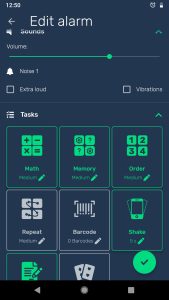
I Can't Wake Up! Alarm Clock

If the title above is applicable to you, this Android app has 8 different Wake Up Tasks that won’t let you turn off the alarm unless you complete them. These include Math, Memory, Order (setting tiles in order), Repeat (sequence), Barcode, Rewrite (text), Shake, and Match.

The idea behind it is to make your mind alert enough to prevent it from going back to sleep. The UI is pretty basic, but multiple facilities compensate for it by getting the job done. There is also an Awake Test that pokes you after few minutes to ensure you are awake. So no cheating!

Why use I Can’t Wake Up?

  • Variety of Wake Up Tests to choose from
  • Option to choose snooze music
  • Smooth wake up mode – offers dimmed screen, rising volume
  • Awake Test to ensure you are awake

Download I Can’t Wake Up for free

3. Sleep as Android

Sleep as Android: Smart alarm

Sleep as Android primarily serves as a sleep tracking app. It studies and analyzes your sleep pattern throughout the night and wakes you up at the most optimal time with a gentle alarm sound. To activate sleep tracking, turn on the sleep mode and place the phone on your mattress.

There are options for setting up tasks and puzzles like the previous app. But the best part about this alarm app is it can be integrated with wearable gear such as Optional Pebble, Android Wear, Galaxy Gear, Google Fit, Samsung S Health. It can also be integrated with Spotify and Philips Hue smart bulbs.

Why use Sleep as Android?

  • Displays sleep tracking stats
  • Support for wearables and Spotify
  • Records sleep talking activity
  • Detects and prevents snoring as well as jet lag too

Download Sleep as Android for free

4. AMdroid Alarm Clock

Smart Alarm Clock – AMdroid

AMdroid is another free alarm app for Android heavy sleepers that allows you set up multiple alarms and customize them fully to wake you up gently. The interface design is visually pleasing with a dark theme, and the settings are quite flexible. Apart from setting up wake-up challenges, the app can automatically disable alarms on public holidays by syncing through your calendar.

Another remarkable feature of AMdroid is its location awareness. It means it can figure out if you are at a restaurant or office to prevent stray alarms going off. It also tracks the time you snoozing to help you cut down on it. Heavy sleepers can also put up a pre-alarm for the app to wake you up gradually and activate sleep tracking for bedtime notifications and more.

Why use AMdroid Alarm Clock?

  • Android Wear integration
  • Track sleep patterns and snooze time with Stats
  • Countdown alarm timer for quick afternoon naps
  • Location-aware alarm app

Download AMdroid Alarm Clock for free

6. Shake-it Alarm
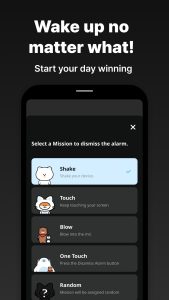
Shake-it Alarm

If you hate solving math equations or puzzles to wake up, try the Shake-it Alarm. To turn off the alarm, you will either have to shake it, scream loud or touch off. It comes with a tutorial to help you get used to the app.

You can force yourself to wake up by using “Deactivate Home Button” which will prevent you from exiting the app and turning it off before completion of the task.

The unique feature of this app is “Send Message To” which will send a message to your pre-decided friend or family member to wake you up in case the alarm sounds weren’t sufficient.

Why use Shake-it Alarm?

  • Unique wake-up challenges
  • Can message friends or family to wake you up on time

Download Shake-it Alarm for free

7. Alarm Clock Xtreme

Alarm Clock - Timer, Stopwatch

Alarm Clock Xtreme comes with a free sleep tracker, stopwatch, and timer. It will wake you up gently to your favorite music and prevent dismissing of alarms accidentally by using an extra-large snooze button. It has options like auto-snooze with a max limit, nap alarm, random music alarm, etc.

Obstacles like math problems, captcha, barcode scanning and much more help to jumpstart the brain early morning. More than 30 million Android users have installed this free alarm app for Android, and it carries a rating of 4.5 stars, so it’s definitely worth checking out.

Why use Alarm Clock Xtreme?

  • Best music alarm app
  • Get a daily sleep cycle analysis
  • Auto-snooze, auto-dismiss, nap alarm

Download Alarm Clock Xtreme for free

Final Words

All the apps listed above are free and offer something unique. Feel free to pick any of them which suits your requirements. Also check out our article on best android scanner app here. Do tell us which free alarm clock app you liked the most and in case we missed any other alarm app for Android, let us know in the comments. Until then, rise and shine early because the best way to make your dreams come true is to wake up!

Source link
#Alarm #Clock #Apps #Android #Users #Edition

Oracle disclosed Monday that it has reduced its workforce by 21,000 employees over the past 12 months, a decline of 13%, which means more cuts than was previously known, including jobs eliminated because of AI. “The adoption and deployment of AI technologies across our operations have resulted, and may continue to result, in reductions to our workforce,” the company said in an annual financial regulatory filing.

The revelation puts new numbers to what feels to many in the tech industry like an epidemic: companies reporting record revenues while simultaneously culling their workforces, pointing to AI as both the engine of growth and the reason for the cuts. Tech layoffs hit their highest single month in years in May, and AI was the most-cited reason, according to outplacement firm Challenger, Gray & Christmas.

We recently wrote about why that rationale is something companies may want to rethink, not least because for many of these companies, the headcount they’re now cutting was hired during the pandemic hiring surge, raising questions about what’s really going on. Below, a running look — in reverse chronological order — at the bigger tech companies that have announced significant layoffs this year with AI as a stated factor.


GitLab — June 3, 2026. In one of the most recent cuts on this list, GitLab laid off roughly 350 workers, about 14% of its staff, to fund AI infrastructure investment and handle surging traffic from AI workflows. CEO Bill Staples said agentic workloads are “pushing competitors to the brink” and that the company had begun a “generational rebuild” of its core infrastructure to support what he called 100x growth requirements. GitLab is exiting 22 countries, flattening management layers, and partnering with an unspecified AI lab to rebuild its platform for agent-scale workloads. The company reported first-quarter revenue of $264 million, up 23% year-over-year, and expects to incur $30 to $35 million in restructuring costs.

Google — ongoing through May. Alphabet’s Google has quietly cut employees across its Cloud division, including its Threat Intelligence Group and Mandiant-linked cybersecurity staff, even as Cloud revenue grew 63% to exceed $20 billion for the first time and its backlog nearly doubled to over $460 billion. Over the past year, Google has cut more than a third of the managers overseeing small teams — 35% fewer managers with fewer direct reports. Unlike most companies on this list, Google has never announced a single overall number — the cuts have come through a rolling performance review process, a voluntary buyout program, and structural reorganizations, with outside estimates putting the 2026 total at between 1,500 and 3,000+ engineers.

Intuit — May 20, 2026. Intuit announced plans to eliminate roughly 3,000 jobs — about 17% of its total workforce — in a restructuring centered on reducing complexity and reallocating resources toward AI. CEO Sasan Goodarzi reportedly told staff the company is reducing complexity and simplifying the structure, so it can deliver better products.

Meta — May 20-21, 2026. Meta laid off about 8,000 employees, roughly 10% of its workforce, while moving about 7,000 employees into new AI-focused roles (that they reportedly hate). Zuckerberg told staff the cuts were necessary because “success isn’t a given” in AI.

Cisco — May 14, 2026. Cisco announced it’s cutting nearly 4,000 jobs, about 5% of its workforce, despite reporting better-than-expected profit and revenue. CFO Mark Patterson said: “This was really not a savings-driven restructure… this is more [about] realigning … resources around silicon, optics, security and AI.”

Cloudflare — May 7-8, 2026. Cloudflare cut about 20% of its workforce (1,100 people), reporting quarterly revenue of $639.8 million, up 34% year-over-year and the highest single quarter in company history. CEO Matthew Prince wrote that “the vast majority of those we laid off last week were measurers” — middle management, finance, legal, internal auditing, and revenue recognition.

General Motors — May 12, 2026. GM eliminated 500 to 600 jobs, largely in IT roles in Austin, Texas, and Warren, Michigan, saying it was reevaluating its workforce needs amid uncertain market conditions. A person familiar with the cuts told CNBC that AI played a role in the decision but that it wasn’t the only reason. GM’s statement said it was “transforming its Information Technology organization to better position the company for the future.” Despite the cuts, the company still had roughly 80 open IT positions, including roles in AI, motorsports, and autonomous vehicles.

Coinbase — May 5, 2026. The crypto exchange said it was cutting about 700 employees, or 14% of its staff, as part of a restructuring aimed at addressing market volatility and increasing AI efficiency. The company flattened its organizational structure to five layers below the CEO and COO, and said it would experiment with “one-person teams” combining engineering, design, and product roles. CEO Brian Armstrong wrote that AI had changed the pace of work dramatically — “engineers use AI to ship in days what used to take a team weeks” — and that the company needed to “leverage AI across every facet of our jobs.”

PayPal — May 5, 2026. PayPal announced plans to cut around 20% of its workforce over the next two to three years — north of 4,500 jobs — as part of a turnaround strategy centered on AI adoption and organizational simplification. CEO Enrique Lores told investors the company would “aggressively adopt AI” in its development processes and formed a new “AI transformation and simplification” team reporting directly to him, tasked with redesigning the company’s processes “function by function.” Lores framed the cuts as removing organizational layers, and said AI would extend well beyond coding into customer service, support operations, and risk management.

Microsoft — April-May 2026. Microsoft offered buyouts structured as voluntary separations, without disclosing how many employees these would impact. CFO Amy Hood said total headcount declined year-over-year in fiscal Q3, and is expected to keep declining as the company focuses on “building high-performing teams that operate with pace and agility” amid rising AI investment.

Snap — April 16, 2026. Snap cut roughly 16% of its global workforce — about 1,000 full-time employees — and closed more than 300 open roles, with CEO Evan Spiegel citing AI advancements as a key driver. “Rapid advancements in artificial intelligence enable our teams to reduce repetitive work, increase velocity, and better support our community, partners, and advertisers,” Spiegel wrote in a memo filed with the SEC. The company said it had already seen small squads using AI tools to drive progress across Snapchat+, ad platform performance, and infrastructure efficiency.

IBM — rolling through 2026. Between Q4 2025 cuts and April 2026 Red Hat engineering reductions, estimates range from 3,000 to 9,000 U.S. positions eliminated, bringing IBM’s cumulative total since September 2024 above 15,000. Bloomberg reported IBM plans to triple its U.S. entry-level hiring for AI and hybrid-cloud roles, even as roughly 200 HR positions were replaced by AI agents. An IBM spokesperson described the Q4 2025 round as a routine rebalancing affecting “a low single-digit percentage” of its global workforce.

Atlassian — March 11, 2026. Atlassian cut about 1,600 jobs (10% of its workforce) to “rebalance” toward AI and enterprise sales, even as shares rose nearly 2% on the news. CEO Mike Cannon-Brookes said: “Our approach is not ‘AI replaces people.’ But it would be disingenuous to pretend AI doesn’t change the mix of skills we need or the number of roles required in certain areas. It does.”

Dell — Jan 30 (though disclosed in March 2026). Dell’s total workforce fell about 10% in fiscal 2026 — roughly 11,000 jobs — to about 97,000 employees from 108,000 a year earlier, with $569 million spent on severance. The cuts came as Dell projected its AI-optimized server revenue could double in fiscal 2027.

Oracle — March 5-31, 2026. As noted above, Oracle began telling employees it would be cutting thousands of jobs via terminal emails. The cuts came even as Oracle posted $3.7 billion in quarterly net income, up 27% year-over-year, with remaining performance obligations up 325% to $553 billion — savings redirected toward AI data centers. The cuts that would later total 21,000 over 12 months, as Oracle disclosed in its June 22 annual filing.

Block — February 26-27, 2026. Jack Dorsey’s Block cut 4,000 jobs — nearly half its workforce, down to under 6,000 from over 10,000. Dorsey wrote on X: “We’re already seeing that the intelligence tools we’re creating and using, paired with smaller and flatter teams, are enabling a new way of working which fundamentally changes what it means to build and run a company.” He added: “I think most companies are late. Within the next year, I believe the majority of companies will reach the same conclusion and make similar structural changes.”

Salesforce — February 10, 2026. Salesforce laid off fewer than 1,000 employees across marketing, product management, data analytics, and its Agentforce AI unit. The company told Fortune, “Because of the benefits and efficiencies of Agentforce, we’ve seen the number of support cases we handle decline and we no longer need to actively backfill support engineer roles.” This followed an earlier cut of about 4,000 customer-support roles, shrinking that team from roughly 9,000 to 5,000, with CEO Marc Benioff saying the company needed “less heads” because AI agents handle the work.

Amazon — January 28, 2026. Amazon cut 16,000 corporate jobs, following 14,000 cuts in October 2025 — about 9% of its corporate workforce in three months. The company said it was part of “strengthen[ing] our organization by reducing layers, increasing ownership, and removing bureaucracy.” CEO Andy Jassy had said in June 2025 that, “As we roll out more generative AI and agents, it should change the way our work is done. We will need fewer people doing some of the jobs that are being done today… in the next few years, we expect that this will reduce our total corporate workforce as we get efficiency gains from using AI extensively across the company.”

When you purchase through links in our articles, we may earn a small commission. This doesn’t affect our editorial independence.

#running #list #major #tech #layoffs #employers #cited #TechCrunchAI,Layoffs">The running list: major tech layoffs in 2026 where employers cited AI | TechCrunch
Oracle disclosed Monday that it has reduced its workforce by 21,000 employees over the past 12 months, a decline of 13%, which means more cuts than was previously known, including jobs eliminated because of AI. “The adoption and deployment of AI technologies across our operations have resulted, and may continue to result, in reductions to our workforce,” the company said in an annual financial regulatory filing. 

The revelation puts new numbers to what feels to many in the tech industry like an epidemic: companies reporting record revenues while simultaneously culling their workforces, pointing to AI as both the engine of growth and the reason for the cuts. Tech layoffs hit their highest single month in years in May, and AI was the most-cited reason, according to outplacement firm Challenger, Gray & Christmas. 


We recently wrote about why that rationale is something companies may want to rethink, not least because for many of these companies, the headcount they’re now cutting was hired during the pandemic hiring surge, raising questions about what’s really going on. Below, a running look — in reverse chronological order — at the bigger tech companies that have announced significant layoffs this year with AI as a stated factor.


GitLab — June 3, 2026. In one of the most recent cuts on this list, GitLab laid off roughly 350 workers, about 14% of its staff, to fund AI infrastructure investment and handle surging traffic from AI workflows. CEO Bill Staples said agentic workloads are “pushing competitors to the brink” and that the company had begun a “generational rebuild” of its core infrastructure to support what he called 100x growth requirements. GitLab is exiting 22 countries, flattening management layers, and partnering with an unspecified AI lab to rebuild its platform for agent-scale workloads. The company reported first-quarter revenue of 4 million, up 23% year-over-year, and expects to incur  to  million in restructuring costs.

Google — ongoing through May. Alphabet’s Google has quietly cut employees across its Cloud division, including its Threat Intelligence Group and Mandiant-linked cybersecurity staff, even as Cloud revenue grew 63% to exceed  billion for the first time and its backlog nearly doubled to over 0 billion. Over the past year, Google has cut more than a third of the managers overseeing small teams — 35% fewer managers with fewer direct reports. Unlike most companies on this list, Google has never announced a single overall number — the cuts have come through a rolling performance review process, a voluntary buyout program, and structural reorganizations, with outside estimates putting the 2026 total at between 1,500 and 3,000+ engineers.

Intuit — May 20, 2026. Intuit announced plans to eliminate roughly 3,000 jobs — about 17% of its total workforce — in a restructuring centered on reducing complexity and reallocating resources toward AI. CEO Sasan Goodarzi reportedly told staff the company is reducing complexity and simplifying the structure, so it can deliver better products.

Meta — May 20-21, 2026. Meta laid off about 8,000 employees, roughly 10% of its workforce, while moving about 7,000 employees into new AI-focused roles (that they reportedly hate). Zuckerberg told staff the cuts were necessary because “success isn’t a given” in AI. 


Cisco — May 14, 2026. Cisco announced it’s cutting nearly 4,000 jobs, about 5% of its workforce, despite reporting better-than-expected profit and revenue. CFO Mark Patterson said: “This was really not a savings-driven restructure… this is more [about] realigning … resources around silicon, optics, security and AI.” 

Cloudflare — May 7-8, 2026. Cloudflare cut about 20% of its workforce (1,100 people), reporting quarterly revenue of 9.8 million, up 34% year-over-year and the highest single quarter in company history. CEO Matthew Prince wrote that “the vast majority of those we laid off last week were measurers” — middle management, finance, legal, internal auditing, and revenue recognition. 

General Motors — May 12, 2026. GM eliminated 500 to 600 jobs, largely in IT roles in Austin, Texas, and Warren, Michigan, saying it was reevaluating its workforce needs amid uncertain market conditions. A person familiar with the cuts told CNBC that AI played a role in the decision but that it wasn’t the only reason. GM’s statement said it was “transforming its Information Technology organization to better position the company for the future.” Despite the cuts, the company still had roughly 80 open IT positions, including roles in AI, motorsports, and autonomous vehicles.


Coinbase — May 5, 2026. The crypto exchange said it was cutting about 700 employees, or 14% of its staff, as part of a restructuring aimed at addressing market volatility and increasing AI efficiency. The company flattened its organizational structure to five layers below the CEO and COO, and said it would experiment with “one-person teams” combining engineering, design, and product roles. CEO Brian Armstrong wrote that AI had changed the pace of work dramatically — “engineers use AI to ship in days what used to take a team weeks” — and that the company needed to “leverage AI across every facet of our jobs.” 

PayPal — May 5, 2026. PayPal announced plans to cut around 20% of its workforce over the next two to three years — north of 4,500 jobs — as part of a turnaround strategy centered on AI adoption and organizational simplification. CEO Enrique Lores told investors the company would “aggressively adopt AI” in its development processes and formed a new “AI transformation and simplification” team reporting directly to him, tasked with redesigning the company’s processes “function by function.” Lores framed the cuts as removing organizational layers, and said AI would extend well beyond coding into customer service, support operations, and risk management.Microsoft — April-May 2026. Microsoft offered buyouts structured as voluntary separations, without disclosing how many employees these would impact. CFO Amy Hood said total headcount declined year-over-year in fiscal Q3, and is expected to keep declining as the company focuses on “building high-performing teams that operate with pace and agility” amid rising AI investment.

Snap — April 16, 2026. Snap cut roughly 16% of its global workforce — about 1,000 full-time employees — and closed more than 300 open roles, with CEO Evan Spiegel citing AI advancements as a key driver. “Rapid advancements in artificial intelligence enable our teams to reduce repetitive work, increase velocity, and better support our community, partners, and advertisers,” Spiegel wrote in a memo filed with the SEC. The company said it had already seen small squads using AI tools to drive progress across Snapchat+, ad platform performance, and infrastructure efficiency.

IBM — rolling through 2026. Between Q4 2025 cuts and April 2026 Red Hat engineering reductions, estimates range from 3,000 to 9,000 U.S. positions eliminated, bringing IBM’s cumulative total since September 2024 above 15,000. Bloomberg reported IBM plans to triple its U.S. entry-level hiring for AI and hybrid-cloud roles, even as roughly 200 HR positions were replaced by AI agents. An IBM spokesperson described the Q4 2025 round as a routine rebalancing affecting “a low single-digit percentage” of its global workforce.

Atlassian — March 11, 2026. Atlassian cut about 1,600 jobs (10% of its workforce) to “rebalance” toward AI and enterprise sales, even as shares rose nearly 2% on the news. CEO Mike Cannon-Brookes said: “Our approach is not ‘AI replaces people.’ But it would be disingenuous to pretend AI doesn’t change the mix of skills we need or the number of roles required in certain areas. It does.” Dell — Jan 30 (though disclosed in March 2026). Dell’s total workforce fell about 10% in fiscal 2026 — roughly 11,000 jobs — to about 97,000 employees from 108,000 a year earlier, with 9 million spent on severance. The cuts came as Dell projected its AI-optimized server revenue could double in fiscal 2027.

Oracle — March 5-31, 2026. As noted above, Oracle began telling employees it would be cutting thousands of jobs via terminal emails. The cuts came even as Oracle posted .7 billion in quarterly net income, up 27% year-over-year, with remaining performance obligations up 325% to 3 billion — savings redirected toward AI data centers. The cuts that would later total 21,000 over 12 months, as Oracle disclosed in its June 22 annual filing.

Block — February 26-27, 2026. Jack Dorsey’s Block cut 4,000 jobs — nearly half its workforce, down to under 6,000 from over 10,000. Dorsey wrote on X: “We’re already seeing that the intelligence tools we’re creating and using, paired with smaller and flatter teams, are enabling a new way of working which fundamentally changes what it means to build and run a company.” He added: “I think most companies are late. Within the next year, I believe the majority of companies will reach the same conclusion and make similar structural changes.” Salesforce — February 10, 2026. Salesforce laid off fewer than 1,000 employees across marketing, product management, data analytics, and its Agentforce AI unit. The company told Fortune, “Because of the benefits and efficiencies of Agentforce, we’ve seen the number of support cases we handle decline and we no longer need to actively backfill support engineer roles.” This followed an earlier cut of about 4,000 customer-support roles, shrinking that team from roughly 9,000 to 5,000, with CEO Marc Benioff saying the company needed “less heads” because AI agents handle the work. Amazon — January 28, 2026. Amazon cut 16,000 corporate jobs, following 14,000 cuts in October 2025 — about 9% of its corporate workforce in three months. The company said it was part of “strengthen[ing] our organization by reducing layers, increasing ownership, and removing bureaucracy.” CEO Andy Jassy had said in June 2025 that, “As we roll out more generative AI and agents, it should change the way our work is done. We will need fewer people doing some of the jobs that are being done today… in the next few years, we expect that this will reduce our total corporate workforce as we get efficiency gains from using AI extensively across the company.”
When you purchase through links in our articles, we may earn a small commission. This doesn’t affect our editorial independence.#running #list #major #tech #layoffs #employers #cited #TechCrunchAI,Layoffs

annual financial regulatory filing.

The revelation puts new numbers to what feels to many in the tech industry like an epidemic: companies reporting record revenues while simultaneously culling their workforces, pointing to AI as both the engine of growth and the reason for the cuts. Tech layoffs hit their highest single month in years in May, and AI was the most-cited reason, according to outplacement firm Challenger, Gray & Christmas.

We recently wrote about why that rationale is something companies may want to rethink, not least because for many of these companies, the headcount they’re now cutting was hired during the pandemic hiring surge, raising questions about what’s really going on. Below, a running look — in reverse chronological order — at the bigger tech companies that have announced significant layoffs this year with AI as a stated factor.


GitLab — June 3, 2026. In one of the most recent cuts on this list, GitLab laid off roughly 350 workers, about 14% of its staff, to fund AI infrastructure investment and handle surging traffic from AI workflows. CEO Bill Staples said agentic workloads are “pushing competitors to the brink” and that the company had begun a “generational rebuild” of its core infrastructure to support what he called 100x growth requirements. GitLab is exiting 22 countries, flattening management layers, and partnering with an unspecified AI lab to rebuild its platform for agent-scale workloads. The company reported first-quarter revenue of $264 million, up 23% year-over-year, and expects to incur $30 to $35 million in restructuring costs.

Google — ongoing through May. Alphabet’s Google has quietly cut employees across its Cloud division, including its Threat Intelligence Group and Mandiant-linked cybersecurity staff, even as Cloud revenue grew 63% to exceed $20 billion for the first time and its backlog nearly doubled to over $460 billion. Over the past year, Google has cut more than a third of the managers overseeing small teams — 35% fewer managers with fewer direct reports. Unlike most companies on this list, Google has never announced a single overall number — the cuts have come through a rolling performance review process, a voluntary buyout program, and structural reorganizations, with outside estimates putting the 2026 total at between 1,500 and 3,000+ engineers.

Intuit — May 20, 2026. Intuit announced plans to eliminate roughly 3,000 jobs — about 17% of its total workforce — in a restructuring centered on reducing complexity and reallocating resources toward AI. CEO Sasan Goodarzi reportedly told staff the company is reducing complexity and simplifying the structure, so it can deliver better products.

Meta — May 20-21, 2026. Meta laid off about 8,000 employees, roughly 10% of its workforce, while moving about 7,000 employees into new AI-focused roles (that they reportedly hate). Zuckerberg told staff the cuts were necessary because “success isn’t a given” in AI.

Cisco — May 14, 2026. Cisco announced it’s cutting nearly 4,000 jobs, about 5% of its workforce, despite reporting better-than-expected profit and revenue. CFO Mark Patterson said: “This was really not a savings-driven restructure… this is more [about] realigning … resources around silicon, optics, security and AI.”

Cloudflare — May 7-8, 2026. Cloudflare cut about 20% of its workforce (1,100 people), reporting quarterly revenue of $639.8 million, up 34% year-over-year and the highest single quarter in company history. CEO Matthew Prince wrote that “the vast majority of those we laid off last week were measurers” — middle management, finance, legal, internal auditing, and revenue recognition.

General Motors — May 12, 2026. GM eliminated 500 to 600 jobs, largely in IT roles in Austin, Texas, and Warren, Michigan, saying it was reevaluating its workforce needs amid uncertain market conditions. A person familiar with the cuts told CNBC that AI played a role in the decision but that it wasn’t the only reason. GM’s statement said it was “transforming its Information Technology organization to better position the company for the future.” Despite the cuts, the company still had roughly 80 open IT positions, including roles in AI, motorsports, and autonomous vehicles.

Coinbase — May 5, 2026. The crypto exchange said it was cutting about 700 employees, or 14% of its staff, as part of a restructuring aimed at addressing market volatility and increasing AI efficiency. The company flattened its organizational structure to five layers below the CEO and COO, and said it would experiment with “one-person teams” combining engineering, design, and product roles. CEO Brian Armstrong wrote that AI had changed the pace of work dramatically — “engineers use AI to ship in days what used to take a team weeks” — and that the company needed to “leverage AI across every facet of our jobs.”

PayPal — May 5, 2026. PayPal announced plans to cut around 20% of its workforce over the next two to three years — north of 4,500 jobs — as part of a turnaround strategy centered on AI adoption and organizational simplification. CEO Enrique Lores told investors the company would “aggressively adopt AI” in its development processes and formed a new “AI transformation and simplification” team reporting directly to him, tasked with redesigning the company’s processes “function by function.” Lores framed the cuts as removing organizational layers, and said AI would extend well beyond coding into customer service, support operations, and risk management.

Microsoft — April-May 2026. Microsoft offered buyouts structured as voluntary separations, without disclosing how many employees these would impact. CFO Amy Hood said total headcount declined year-over-year in fiscal Q3, and is expected to keep declining as the company focuses on “building high-performing teams that operate with pace and agility” amid rising AI investment.

Snap — April 16, 2026. Snap cut roughly 16% of its global workforce — about 1,000 full-time employees — and closed more than 300 open roles, with CEO Evan Spiegel citing AI advancements as a key driver. “Rapid advancements in artificial intelligence enable our teams to reduce repetitive work, increase velocity, and better support our community, partners, and advertisers,” Spiegel wrote in a memo filed with the SEC. The company said it had already seen small squads using AI tools to drive progress across Snapchat+, ad platform performance, and infrastructure efficiency.

IBM — rolling through 2026. Between Q4 2025 cuts and April 2026 Red Hat engineering reductions, estimates range from 3,000 to 9,000 U.S. positions eliminated, bringing IBM’s cumulative total since September 2024 above 15,000. Bloomberg reported IBM plans to triple its U.S. entry-level hiring for AI and hybrid-cloud roles, even as roughly 200 HR positions were replaced by AI agents. An IBM spokesperson described the Q4 2025 round as a routine rebalancing affecting “a low single-digit percentage” of its global workforce.

Atlassian — March 11, 2026. Atlassian cut about 1,600 jobs (10% of its workforce) to “rebalance” toward AI and enterprise sales, even as shares rose nearly 2% on the news. CEO Mike Cannon-Brookes said: “Our approach is not ‘AI replaces people.’ But it would be disingenuous to pretend AI doesn’t change the mix of skills we need or the number of roles required in certain areas. It does.”

Dell — Jan 30 (though disclosed in March 2026). Dell’s total workforce fell about 10% in fiscal 2026 — roughly 11,000 jobs — to about 97,000 employees from 108,000 a year earlier, with $569 million spent on severance. The cuts came as Dell projected its AI-optimized server revenue could double in fiscal 2027.

Oracle — March 5-31, 2026. As noted above, Oracle began telling employees it would be cutting thousands of jobs via terminal emails. The cuts came even as Oracle posted $3.7 billion in quarterly net income, up 27% year-over-year, with remaining performance obligations up 325% to $553 billion — savings redirected toward AI data centers. The cuts that would later total 21,000 over 12 months, as Oracle disclosed in its June 22 annual filing.

Block — February 26-27, 2026. Jack Dorsey’s Block cut 4,000 jobs — nearly half its workforce, down to under 6,000 from over 10,000. Dorsey wrote on X: “We’re already seeing that the intelligence tools we’re creating and using, paired with smaller and flatter teams, are enabling a new way of working which fundamentally changes what it means to build and run a company.” He added: “I think most companies are late. Within the next year, I believe the majority of companies will reach the same conclusion and make similar structural changes.”

Salesforce — February 10, 2026. Salesforce laid off fewer than 1,000 employees across marketing, product management, data analytics, and its Agentforce AI unit. The company told Fortune, “Because of the benefits and efficiencies of Agentforce, we’ve seen the number of support cases we handle decline and we no longer need to actively backfill support engineer roles.” This followed an earlier cut of about 4,000 customer-support roles, shrinking that team from roughly 9,000 to 5,000, with CEO Marc Benioff saying the company needed “less heads” because AI agents handle the work.

Amazon — January 28, 2026. Amazon cut 16,000 corporate jobs, following 14,000 cuts in October 2025 — about 9% of its corporate workforce in three months. The company said it was part of “strengthen[ing] our organization by reducing layers, increasing ownership, and removing bureaucracy.” CEO Andy Jassy had said in June 2025 that, “As we roll out more generative AI and agents, it should change the way our work is done. We will need fewer people doing some of the jobs that are being done today… in the next few years, we expect that this will reduce our total corporate workforce as we get efficiency gains from using AI extensively across the company.”

When you purchase through links in our articles, we may earn a small commission. This doesn’t affect our editorial independence.

#running #list #major #tech #layoffs #employers #cited #TechCrunchAI,Layoffs">The running list: major tech layoffs in 2026 where employers cited AI | TechCrunch

Oracle disclosed Monday that it has reduced its workforce by 21,000 employees over the past 12 months, a decline of 13%, which means more cuts than was previously known, including jobs eliminated because of AI. “The adoption and deployment of AI technologies across our operations have resulted, and may continue to result, in reductions to our workforce,” the company said in an annual financial regulatory filing.

The revelation puts new numbers to what feels to many in the tech industry like an epidemic: companies reporting record revenues while simultaneously culling their workforces, pointing to AI as both the engine of growth and the reason for the cuts. Tech layoffs hit their highest single month in years in May, and AI was the most-cited reason, according to outplacement firm Challenger, Gray & Christmas.

We recently wrote about why that rationale is something companies may want to rethink, not least because for many of these companies, the headcount they’re now cutting was hired during the pandemic hiring surge, raising questions about what’s really going on. Below, a running look — in reverse chronological order — at the bigger tech companies that have announced significant layoffs this year with AI as a stated factor.


GitLab — June 3, 2026. In one of the most recent cuts on this list, GitLab laid off roughly 350 workers, about 14% of its staff, to fund AI infrastructure investment and handle surging traffic from AI workflows. CEO Bill Staples said agentic workloads are “pushing competitors to the brink” and that the company had begun a “generational rebuild” of its core infrastructure to support what he called 100x growth requirements. GitLab is exiting 22 countries, flattening management layers, and partnering with an unspecified AI lab to rebuild its platform for agent-scale workloads. The company reported first-quarter revenue of $264 million, up 23% year-over-year, and expects to incur $30 to $35 million in restructuring costs.

Google — ongoing through May. Alphabet’s Google has quietly cut employees across its Cloud division, including its Threat Intelligence Group and Mandiant-linked cybersecurity staff, even as Cloud revenue grew 63% to exceed $20 billion for the first time and its backlog nearly doubled to over $460 billion. Over the past year, Google has cut more than a third of the managers overseeing small teams — 35% fewer managers with fewer direct reports. Unlike most companies on this list, Google has never announced a single overall number — the cuts have come through a rolling performance review process, a voluntary buyout program, and structural reorganizations, with outside estimates putting the 2026 total at between 1,500 and 3,000+ engineers.

Intuit — May 20, 2026. Intuit announced plans to eliminate roughly 3,000 jobs — about 17% of its total workforce — in a restructuring centered on reducing complexity and reallocating resources toward AI. CEO Sasan Goodarzi reportedly told staff the company is reducing complexity and simplifying the structure, so it can deliver better products.

Meta — May 20-21, 2026. Meta laid off about 8,000 employees, roughly 10% of its workforce, while moving about 7,000 employees into new AI-focused roles (that they reportedly hate). Zuckerberg told staff the cuts were necessary because “success isn’t a given” in AI.

Cisco — May 14, 2026. Cisco announced it’s cutting nearly 4,000 jobs, about 5% of its workforce, despite reporting better-than-expected profit and revenue. CFO Mark Patterson said: “This was really not a savings-driven restructure… this is more [about] realigning … resources around silicon, optics, security and AI.”

Cloudflare — May 7-8, 2026. Cloudflare cut about 20% of its workforce (1,100 people), reporting quarterly revenue of $639.8 million, up 34% year-over-year and the highest single quarter in company history. CEO Matthew Prince wrote that “the vast majority of those we laid off last week were measurers” — middle management, finance, legal, internal auditing, and revenue recognition.

General Motors — May 12, 2026. GM eliminated 500 to 600 jobs, largely in IT roles in Austin, Texas, and Warren, Michigan, saying it was reevaluating its workforce needs amid uncertain market conditions. A person familiar with the cuts told CNBC that AI played a role in the decision but that it wasn’t the only reason. GM’s statement said it was “transforming its Information Technology organization to better position the company for the future.” Despite the cuts, the company still had roughly 80 open IT positions, including roles in AI, motorsports, and autonomous vehicles.

Coinbase — May 5, 2026. The crypto exchange said it was cutting about 700 employees, or 14% of its staff, as part of a restructuring aimed at addressing market volatility and increasing AI efficiency. The company flattened its organizational structure to five layers below the CEO and COO, and said it would experiment with “one-person teams” combining engineering, design, and product roles. CEO Brian Armstrong wrote that AI had changed the pace of work dramatically — “engineers use AI to ship in days what used to take a team weeks” — and that the company needed to “leverage AI across every facet of our jobs.”

PayPal — May 5, 2026. PayPal announced plans to cut around 20% of its workforce over the next two to three years — north of 4,500 jobs — as part of a turnaround strategy centered on AI adoption and organizational simplification. CEO Enrique Lores told investors the company would “aggressively adopt AI” in its development processes and formed a new “AI transformation and simplification” team reporting directly to him, tasked with redesigning the company’s processes “function by function.” Lores framed the cuts as removing organizational layers, and said AI would extend well beyond coding into customer service, support operations, and risk management.

Microsoft — April-May 2026. Microsoft offered buyouts structured as voluntary separations, without disclosing how many employees these would impact. CFO Amy Hood said total headcount declined year-over-year in fiscal Q3, and is expected to keep declining as the company focuses on “building high-performing teams that operate with pace and agility” amid rising AI investment.

Snap — April 16, 2026. Snap cut roughly 16% of its global workforce — about 1,000 full-time employees — and closed more than 300 open roles, with CEO Evan Spiegel citing AI advancements as a key driver. “Rapid advancements in artificial intelligence enable our teams to reduce repetitive work, increase velocity, and better support our community, partners, and advertisers,” Spiegel wrote in a memo filed with the SEC. The company said it had already seen small squads using AI tools to drive progress across Snapchat+, ad platform performance, and infrastructure efficiency.

IBM — rolling through 2026. Between Q4 2025 cuts and April 2026 Red Hat engineering reductions, estimates range from 3,000 to 9,000 U.S. positions eliminated, bringing IBM’s cumulative total since September 2024 above 15,000. Bloomberg reported IBM plans to triple its U.S. entry-level hiring for AI and hybrid-cloud roles, even as roughly 200 HR positions were replaced by AI agents. An IBM spokesperson described the Q4 2025 round as a routine rebalancing affecting “a low single-digit percentage” of its global workforce.

Atlassian — March 11, 2026. Atlassian cut about 1,600 jobs (10% of its workforce) to “rebalance” toward AI and enterprise sales, even as shares rose nearly 2% on the news. CEO Mike Cannon-Brookes said: “Our approach is not ‘AI replaces people.’ But it would be disingenuous to pretend AI doesn’t change the mix of skills we need or the number of roles required in certain areas. It does.”

Dell — Jan 30 (though disclosed in March 2026). Dell’s total workforce fell about 10% in fiscal 2026 — roughly 11,000 jobs — to about 97,000 employees from 108,000 a year earlier, with $569 million spent on severance. The cuts came as Dell projected its AI-optimized server revenue could double in fiscal 2027.

Oracle — March 5-31, 2026. As noted above, Oracle began telling employees it would be cutting thousands of jobs via terminal emails. The cuts came even as Oracle posted $3.7 billion in quarterly net income, up 27% year-over-year, with remaining performance obligations up 325% to $553 billion — savings redirected toward AI data centers. The cuts that would later total 21,000 over 12 months, as Oracle disclosed in its June 22 annual filing.

Block — February 26-27, 2026. Jack Dorsey’s Block cut 4,000 jobs — nearly half its workforce, down to under 6,000 from over 10,000. Dorsey wrote on X: “We’re already seeing that the intelligence tools we’re creating and using, paired with smaller and flatter teams, are enabling a new way of working which fundamentally changes what it means to build and run a company.” He added: “I think most companies are late. Within the next year, I believe the majority of companies will reach the same conclusion and make similar structural changes.”

Salesforce — February 10, 2026. Salesforce laid off fewer than 1,000 employees across marketing, product management, data analytics, and its Agentforce AI unit. The company told Fortune, “Because of the benefits and efficiencies of Agentforce, we’ve seen the number of support cases we handle decline and we no longer need to actively backfill support engineer roles.” This followed an earlier cut of about 4,000 customer-support roles, shrinking that team from roughly 9,000 to 5,000, with CEO Marc Benioff saying the company needed “less heads” because AI agents handle the work.

Amazon — January 28, 2026. Amazon cut 16,000 corporate jobs, following 14,000 cuts in October 2025 — about 9% of its corporate workforce in three months. The company said it was part of “strengthen[ing] our organization by reducing layers, increasing ownership, and removing bureaucracy.” CEO Andy Jassy had said in June 2025 that, “As we roll out more generative AI and agents, it should change the way our work is done. We will need fewer people doing some of the jobs that are being done today… in the next few years, we expect that this will reduce our total corporate workforce as we get efficiency gains from using AI extensively across the company.”

When you purchase through links in our articles, we may earn a small commission. This doesn’t affect our editorial independence.

#running #list #major #tech #layoffs #employers #cited #TechCrunchAI,Layoffs
ASUS Chromebook CM32 Detachable Leads the Lineup
ASUS Expands Chromebook Lineup in India With New CM14, CM15, and CM32 Models
	
Chromebooks aren’t exactly the most exciting laptops on the market, but they continue to be a popular option for students and anyone who primarily works in the cloud. Looking to capitalize on that demand, ASUS has launched three new Chromebooks in India, including a detachable 2-in-1 model that doubles as a tablet.


The new lineup consists of the ASUS Chromebook CM32 Detachable, Chromebook CM14, and Chromebook CM15. All three devices run ChromeOS and come with Google’s latest AI-powered features, along with cloud-first productivity tools aimed at students, educators, and young professionals. ASUS is also bundling three months of Google AI Pro with the devices, giving buyers access to Google’s AI tools and 5TB of cloud storage.


ASUS Chromebook CM32 Detachable Leads the Lineup


Leading the lineup is the ASUS Chromebook CM32, a 2-in-1 device designed for users who want the flexibility of both a tablet and a laptop. The device features a 2.5K touchscreen display, a detachable keyboard, a magnetic kickstand, and support for the ASUS Pen. This makes it suitable for everything from note-taking and studying to media consumption and light gaming.


ASUS has also focused on portability and durability. Despite its lightweight design, the Chromebook comes with military-grade durability certifications and Corning Gorilla Glass protection, making it better equipped to handle everyday wear and tear.


Chromebook CM14 and CM15 Focus on Battery Life


If you prefer a traditional laptop design, ASUS is also offering the Chromebook CM14 and Chromebook CM15. The two laptops feature 14-inch and 15-inch displays, respectively, and are powered by the MediaTek Kompanio 540 processor. While these aren’t performance-focused machines, they should be more than capable of handling web browsing, document editing, online classes, and other everyday workloads.


One of the standout features is battery life. ASUS claims both laptops can deliver up to 20 hours of usage on a single charge, which should easily get most users through a full day of work or study. The laptops also include a 180-degree hinge, allowing users to lay the display flat for easier collaboration during meetings, presentations, or classroom sessions.


Price and Availability


The new ASUS Chromebook lineup is now available through Amazon and the ASUS eShop. Pricing starts at ₹26,990 for the Chromebook CM14, while the larger Chromebook CM15 starts at ₹28,990. The more premium Chromebook CM32 Detachable is priced at ₹37,990. ASUS is also offering No Cost EMI and ASUS Easy Pay financing options. Monthly installments start at ₹5,165 for the CM14, ₹5,665 for the CM15, and ₹6,332 for the CM32 Detachable.


#ASUS #Expands #Chromebook #Lineup #India #CM14 #CM15 #CM32 #ModelsAsus

Leading the lineup is the ASUS Chromebook CM32, a 2-in-1 device designed for users who want the flexibility of both a tablet and a laptop. The device features a 2.5K touchscreen display, a detachable keyboard, a magnetic kickstand, and support for the ASUS Pen. This makes it suitable for everything from note-taking and studying to media consumption and light gaming.

ASUS has also focused on portability and durability. Despite its lightweight design, the Chromebook comes with military-grade durability certifications and Corning Gorilla Glass protection, making it better equipped to handle everyday wear and tear.

Chromebook CM14 and CM15 Focus on Battery Life

If you prefer a traditional laptop design, ASUS is also offering the Chromebook CM14 and Chromebook CM15. The two laptops feature 14-inch and 15-inch displays, respectively, and are powered by the MediaTek Kompanio 540 processor. While these aren’t performance-focused machines, they should be more than capable of handling web browsing, document editing, online classes, and other everyday workloads.

One of the standout features is battery life. ASUS claims both laptops can deliver up to 20 hours of usage on a single charge, which should easily get most users through a full day of work or study. The laptops also include a 180-degree hinge, allowing users to lay the display flat for easier collaboration during meetings, presentations, or classroom sessions.

Price and Availability

The new ASUS Chromebook lineup is now available through Amazon and the ASUS eShop. Pricing starts at ₹26,990 for the Chromebook CM14, while the larger Chromebook CM15 starts at ₹28,990. The more premium Chromebook CM32 Detachable is priced at ₹37,990. ASUS is also offering No Cost EMI and ASUS Easy Pay financing options. Monthly installments start at ₹5,165 for the CM14, ₹5,665 for the CM15, and ₹6,332 for the CM32 Detachable.

#ASUS #Expands #Chromebook #Lineup #India #CM14 #CM15 #CM32 #ModelsAsus">ASUS Expands Chromebook Lineup in India With New CM14, CM15, and CM32 Models
	
Chromebooks aren’t exactly the most exciting laptops on the market, but they continue to be a popular option for students and anyone who primarily works in the cloud. Looking to capitalize on that demand, ASUS has launched three new Chromebooks in India, including a detachable 2-in-1 model that doubles as a tablet.


The new lineup consists of the ASUS Chromebook CM32 Detachable, Chromebook CM14, and Chromebook CM15. All three devices run ChromeOS and come with Google’s latest AI-powered features, along with cloud-first productivity tools aimed at students, educators, and young professionals. ASUS is also bundling three months of Google AI Pro with the devices, giving buyers access to Google’s AI tools and 5TB of cloud storage.


ASUS Chromebook CM32 Detachable Leads the Lineup


Leading the lineup is the ASUS Chromebook CM32, a 2-in-1 device designed for users who want the flexibility of both a tablet and a laptop. The device features a 2.5K touchscreen display, a detachable keyboard, a magnetic kickstand, and support for the ASUS Pen. This makes it suitable for everything from note-taking and studying to media consumption and light gaming.


ASUS has also focused on portability and durability. Despite its lightweight design, the Chromebook comes with military-grade durability certifications and Corning Gorilla Glass protection, making it better equipped to handle everyday wear and tear.


Chromebook CM14 and CM15 Focus on Battery Life


If you prefer a traditional laptop design, ASUS is also offering the Chromebook CM14 and Chromebook CM15. The two laptops feature 14-inch and 15-inch displays, respectively, and are powered by the MediaTek Kompanio 540 processor. While these aren’t performance-focused machines, they should be more than capable of handling web browsing, document editing, online classes, and other everyday workloads.


One of the standout features is battery life. ASUS claims both laptops can deliver up to 20 hours of usage on a single charge, which should easily get most users through a full day of work or study. The laptops also include a 180-degree hinge, allowing users to lay the display flat for easier collaboration during meetings, presentations, or classroom sessions.


Price and Availability


The new ASUS Chromebook lineup is now available through Amazon and the ASUS eShop. Pricing starts at ₹26,990 for the Chromebook CM14, while the larger Chromebook CM15 starts at ₹28,990. The more premium Chromebook CM32 Detachable is priced at ₹37,990. ASUS is also offering No Cost EMI and ASUS Easy Pay financing options. Monthly installments start at ₹5,165 for the CM14, ₹5,665 for the CM15, and ₹6,332 for the CM32 Detachable.


#ASUS #Expands #Chromebook #Lineup #India #CM14 #CM15 #CM32 #ModelsAsus

ASUS Chromebook CM32, a 2-in-1 device designed for users who want the flexibility of both a tablet and a laptop. The device features a 2.5K touchscreen display, a detachable keyboard, a magnetic kickstand, and support for the ASUS Pen. This makes it suitable for everything from note-taking and studying to media consumption and light gaming.

ASUS has also focused on portability and durability. Despite its lightweight design, the Chromebook comes with military-grade durability certifications and Corning Gorilla Glass protection, making it better equipped to handle everyday wear and tear.

Chromebook CM14 and CM15 Focus on Battery Life

If you prefer a traditional laptop design, ASUS is also offering the Chromebook CM14 and Chromebook CM15. The two laptops feature 14-inch and 15-inch displays, respectively, and are powered by the MediaTek Kompanio 540 processor. While these aren’t performance-focused machines, they should be more than capable of handling web browsing, document editing, online classes, and other everyday workloads.

One of the standout features is battery life. ASUS claims both laptops can deliver up to 20 hours of usage on a single charge, which should easily get most users through a full day of work or study. The laptops also include a 180-degree hinge, allowing users to lay the display flat for easier collaboration during meetings, presentations, or classroom sessions.

Price and Availability

The new ASUS Chromebook lineup is now available through Amazon and the ASUS eShop. Pricing starts at ₹26,990 for the Chromebook CM14, while the larger Chromebook CM15 starts at ₹28,990. The more premium Chromebook CM32 Detachable is priced at ₹37,990. ASUS is also offering No Cost EMI and ASUS Easy Pay financing options. Monthly installments start at ₹5,165 for the CM14, ₹5,665 for the CM15, and ₹6,332 for the CM32 Detachable.

#ASUS #Expands #Chromebook #Lineup #India #CM14 #CM15 #CM32 #ModelsAsus">ASUS Expands Chromebook Lineup in India With New CM14, CM15, and CM32 Models

Chromebooks aren’t exactly the most exciting laptops on the market, but they continue to be a popular option for students and anyone who primarily works in the cloud. Looking to capitalize on that demand, ASUS has launched three new Chromebooks in India, including a detachable 2-in-1 model that doubles as a tablet.

The new lineup consists of the ASUS Chromebook CM32 Detachable, Chromebook CM14, and Chromebook CM15. All three devices run ChromeOS and come with Google’s latest AI-powered features, along with cloud-first productivity tools aimed at students, educators, and young professionals. ASUS is also bundling three months of Google AI Pro with the devices, giving buyers access to Google’s AI tools and 5TB of cloud storage.

ASUS Chromebook CM32 Detachable Leads the Lineup

ASUS Expands Chromebook Lineup in India With New CM14, CM15, and CM32 Models
	
Chromebooks aren’t exactly the most exciting laptops on the market, but they continue to be a popular option for students and anyone who primarily works in the cloud. Looking to capitalize on that demand, ASUS has launched three new Chromebooks in India, including a detachable 2-in-1 model that doubles as a tablet.


The new lineup consists of the ASUS Chromebook CM32 Detachable, Chromebook CM14, and Chromebook CM15. All three devices run ChromeOS and come with Google’s latest AI-powered features, along with cloud-first productivity tools aimed at students, educators, and young professionals. ASUS is also bundling three months of Google AI Pro with the devices, giving buyers access to Google’s AI tools and 5TB of cloud storage.


ASUS Chromebook CM32 Detachable Leads the Lineup


Leading the lineup is the ASUS Chromebook CM32, a 2-in-1 device designed for users who want the flexibility of both a tablet and a laptop. The device features a 2.5K touchscreen display, a detachable keyboard, a magnetic kickstand, and support for the ASUS Pen. This makes it suitable for everything from note-taking and studying to media consumption and light gaming.


ASUS has also focused on portability and durability. Despite its lightweight design, the Chromebook comes with military-grade durability certifications and Corning Gorilla Glass protection, making it better equipped to handle everyday wear and tear.


Chromebook CM14 and CM15 Focus on Battery Life


If you prefer a traditional laptop design, ASUS is also offering the Chromebook CM14 and Chromebook CM15. The two laptops feature 14-inch and 15-inch displays, respectively, and are powered by the MediaTek Kompanio 540 processor. While these aren’t performance-focused machines, they should be more than capable of handling web browsing, document editing, online classes, and other everyday workloads.


One of the standout features is battery life. ASUS claims both laptops can deliver up to 20 hours of usage on a single charge, which should easily get most users through a full day of work or study. The laptops also include a 180-degree hinge, allowing users to lay the display flat for easier collaboration during meetings, presentations, or classroom sessions.


Price and Availability


The new ASUS Chromebook lineup is now available through Amazon and the ASUS eShop. Pricing starts at ₹26,990 for the Chromebook CM14, while the larger Chromebook CM15 starts at ₹28,990. The more premium Chromebook CM32 Detachable is priced at ₹37,990. ASUS is also offering No Cost EMI and ASUS Easy Pay financing options. Monthly installments start at ₹5,165 for the CM14, ₹5,665 for the CM15, and ₹6,332 for the CM32 Detachable.


#ASUS #Expands #Chromebook #Lineup #India #CM14 #CM15 #CM32 #ModelsAsus

Leading the lineup is the ASUS Chromebook CM32, a 2-in-1 device designed for users who want the flexibility of both a tablet and a laptop. The device features a 2.5K touchscreen display, a detachable keyboard, a magnetic kickstand, and support for the ASUS Pen. This makes it suitable for everything from note-taking and studying to media consumption and light gaming.

ASUS has also focused on portability and durability. Despite its lightweight design, the Chromebook comes with military-grade durability certifications and Corning Gorilla Glass protection, making it better equipped to handle everyday wear and tear.

Chromebook CM14 and CM15 Focus on Battery Life

If you prefer a traditional laptop design, ASUS is also offering the Chromebook CM14 and Chromebook CM15. The two laptops feature 14-inch and 15-inch displays, respectively, and are powered by the MediaTek Kompanio 540 processor. While these aren’t performance-focused machines, they should be more than capable of handling web browsing, document editing, online classes, and other everyday workloads.

One of the standout features is battery life. ASUS claims both laptops can deliver up to 20 hours of usage on a single charge, which should easily get most users through a full day of work or study. The laptops also include a 180-degree hinge, allowing users to lay the display flat for easier collaboration during meetings, presentations, or classroom sessions.

Price and Availability

The new ASUS Chromebook lineup is now available through Amazon and the ASUS eShop. Pricing starts at ₹26,990 for the Chromebook CM14, while the larger Chromebook CM15 starts at ₹28,990. The more premium Chromebook CM32 Detachable is priced at ₹37,990. ASUS is also offering No Cost EMI and ASUS Easy Pay financing options. Monthly installments start at ₹5,165 for the CM14, ₹5,665 for the CM15, and ₹6,332 for the CM32 Detachable.

#ASUS #Expands #Chromebook #Lineup #India #CM14 #CM15 #CM32 #ModelsAsus

Post Comment