×
7 NFL QBs explained by advanced stats this season

7 NFL QBs explained by advanced stats this season

The 2025 NFL season has been wildly unpredictable, but down quarterback play has been a constant. A combination of inconsistent offensive line play and defensive adjustments have led to the lowest passing in 14 years, and a regression that began in 2020.

Five years ago quarterbacks around the league threw for an average of 240.2 yards per game. Now that has plummeted to 212.3 league wide. In that same 2020 season we had 12 passers who finished with over 4,000 yards passing, while in 2025 we’re projected to have six quarterbacks cross the 4,000 yard mark.

While yardage is down, we are seeing some fascinating trends with some of the top quarterbacks. Advanced metrics which show why some quarterbacks are thriving in 2025, and there’s some fascinating details inside the numbers.

All statistics mentioned come from Football Reference’s advanced passer metrics

No. 1: Drake Maye is on another level

There’s good reason Drake Maye is on the hype train for MVP this season as he’s brought the Patriots back from mediocrity and turned them into one of the best teams in the NFL, but inside the advanced numbers he’s been absolutely stunning.

Maye’s 135 rating in yards-per-attempt almost puts him among the greatest single seasons in NFL history. Averaging 8.7 yards on every play, this kind of deep passing is typically indicative of inaccuracy or high risk-reward variance. That’s just not happening with the Patriots’ QB. He’s managing to throw deep and throw efficiently, which is incongruous.

Not only does Maye have a 122 completion percentage index (league-leading), but only 13.5% of his passes are categorized as bad throws. In addition he’s only had an average of 2.2 seconds in pocket time this year, which is traditionally a marker for quick, short yardage throwing, and a lot of mistakes.

Basically nothing Maye is doing makes sense, but everything is elite. If the Patriots had a high-tier offensive line he could be having one of the greatest seasons in NFL history.

No. 2: Caleb Williams is unlike anyone in the NFL

It’s a little tricky to evaluate Williams based on his whole season performance, because frankly he wasn’t at his best to start the year while adapting to Ben Johnson’s system. Now we’re seeing Williams and Johnson marry their systems together, which is having some huge results.

The Bears have accepted that Williams doesn’t have the precision accuracy the Johnson system typically demands, and thats okay. Caleb has been a 57.8% passer this season, which is below the acceptable level for modern QBs — and he has a rather staggering 20.7% bad throw rate. When he misses, he misses big — but there are also a lot of explosive plays coming out of these attempts.

Very much a feast or famine quarterback at this point in his career, where Williams is truly dominating is his off platform throwing. Not only does Williams have a 116 sack rating, showing he’s one of the best QBs in the league at avoiding pressure — but he has a 116 interception rating as well. This means he’s escaping pressure, throwing deep, but not turning it over. This is a winning formula, especially when the defense is generating turnovers.

No. 3: Trevor Lawrence is the king of structure

A lot has been made out of the work Liam Coen has done to correct the mechanics of Trevor Lawrence this season, and it’s really showing as the season has gone on. Perhaps the most fascinating element of this is how the Jaguars don’t need to use a lot of specific offensive scheming or packages for Lawrence to derive his success.

Of Lawrence’s over 3,400 passing yards this season, only 790 have come on play action, and fewer than 100 yards on RPO plays — which aren’t really a part of the Jaguars playbook. What this means is that Coen and the Jags aren’t needing to try and create scenarios where Lawrence can win in the passing game, he’s simply doing it himself inside of structure, particularly out of the shotgun.

We also see how much room there is to improve even more. Only 14% of Lawrence’s passes are defined as bad throws, putting him up near Drake Maye — however his completion percentage is still below average. Lawrence is missing small, and this means there’s only a few more adjustments to be made to his passing and we’re going to see him get even better.

No. 4: Jared Goff’s mistake-free play in unreal

We know Jared Goff’s best trait is his intelligence when it comes to decision making. Naturally a risk-averse QB who is happy to sacrifice a potential big play for an overall win on a drive, Goff’s accuracy and decision making have been next level in 2025.

This season he he has a career-best 1% interception rate on his passes, meaning that on average he’s only throwing a pick every three games, while throwing the ball over 33 times per game. This is happening despite having a career low 2.0 seconds of pocket time this year. While that has certainly impacted Goff’s on-target throwing this season (which is down to 70.1% from 80.5% a year ago), he’s not turning the ball over.

No. 5: Matthew Stafford is having a career year

The wildest thing about Stafford’s season is how many dang touchdowns he’s throwing. At a TD rate of 7.7% he’s effectively scoring with the football every 14 pass attempts — which is remarkable for a volume thrower. Not only that, but he’s setting career-highs in numerous advanced metrics.

  • Adjusted yards-per-attempt
  • Adjusted net yards-per-attempt
  • Highest TD%
  • Lowest INT%
  • Passer rating index

Never lauded as being the most accurate passer, Stafford is still in the mid-65% range, which is plenty good enough. The biggest thing is that he’s throwing a lot of touchdowns, an not turning the ball over. This is the difference.

No. 6: Patrick Mahomes was flat-out bad this year for the first time

It doesn’t take a sage to notice that the Chiefs were bad this year, but inside of that Mahomes was really below average this season. This wasn’t simply a case of everyone letting Pat down, but he let the Chiefs down as well.

Most critically the 2025 season was a year where Mahomes was just average in a lot of key areas, which is bad in his book. He had a 100 ranking in interception rate, which puts him dead average. This was paired by a below-average touchdown and completion rate. Also, while he’s obscenely accuracy, Mahomes had a career-low in on target throwing at 74.3% and a high in bad throws.

It was a middling season by NFL standards, which makes it an awful season by Mahomes’ standards.

No. 7: Bryce Young is putting it all together

The Panthers are the weirdest team in the NFL, and inside of that weirdness we’ve seen Bryce Young become a lightning rod for criticism. There has been some serious up-and-down play, but watching the film there are a lot of external factors responsible for that — and the numbers bear it out.

Young only had 15.7% bad throws on the season, putting him in the upper echelon of NFL quarterbacks this year. His success rate as a passer has also taken a big jump from 39% last year, to 44.6% this season — which is above Trevor Lawrence or Caleb Williams.

The biggest area that Young has thrived this season is in the clutch. He has the highest passer rating in the fourth quarter of any quaterback, as well as registering four 4th quarter comebacks, and a league-leading six game-winning drives (tied with Bo Nix and Caleb Williams). These 10 clutch games represent the Panthers season and they’ve struggled a lot of defense and required the QB to play them back into the game, and Young has done it.

Source link
#NFL #QBs #explained #advanced #stats #season
Didi, mujhe bhi archery karni hai (Sister, I too want to do archery),” the girl said. 

Theek hai. Aa jao (Okay. Please, come here),” replied Sheetal Devi, the Asian Games gold medallist.

It was a simple exchange between two teenaged girls over a video call in 2023. 

Last week, that girl, competing in only her second international event, beat World Champion Sheetal in the compound women’s open final of the World Archery Para Series event in Bangkok.

Her name—Payal Nag.

But Payal’s story doesn’t start from that quick conversation with Sheetal. 

In 2015, while Payal’s parents were busy working at a brick kiln in Raipur, Chhattisgarh, she was wandering around like any other seven-year-old when tragedy struck. She came into contact with a live wire. Consequently, the kid lost all four of her limbs.

ALSO READ | World Archery announces LA 2028 qualification process for recurve, compound events

The parents, despite societal taunts about the young daughter’s future, took care of her in their hometown of Balangir in Odisha. Barsha, her elder sister, became a major support. 

Gradually, Payal took a liking to the world of painting and would draw sketches with her mouth. In 2022, for a better overall development, she was taken to Parbati Giri Bal Niketan—a government institute for childcare.

“Our District Collector Sir took me to the  Ashram. I used to draw even when I was at home and had even participated in one or two competitions. I used to sing as well. At the institute, competitions amongst the kids were held on a regular basis. There, a teacher named Prachi guided me,” recalls Payal. 

“Then came a big drawing competition—Surbhi. I won the first prize. I even went on to compete at the State level. This is where someone tweeted about me.”

Call it the power of social media or pure destiny—Kuldeep Vedwan, Sheetal’s coach, saw Payal. 

Vedwan, who Payal addresses as  Guru Ji, contacted the institute, got in touch with the District Collector, and made arrangements to bring Payal, along with her elder sister Barsha as her caretaker, to the Shri Mata Vaishno Devi Shrine Board Academy in Katra, Jammu and Kashmir.

Payal, who was also willing to learn archery during a video call with Vedwan and Sheetal, now had the chance to train.

The world had never witnessed a quadruple amputee in para archery. It was a journey into the unknown. But Vedwan had been here before with Sheetal. 

Sheetal was born with phocomelia, a rare congenital condition due to which she had no arms. But Vedwan made a special equipment and trained her. Sheetal’s hard work bore fruit and her achievements turned her into an inspirational icon. 

For Payal, Vedwan did the unthinkable again. By integrating a specialised mechanism into her prosthetic and securing it to her shoulder, he allowed her to anchor the bow via her mouth and trigger the release through a sharp shoulder movement.

Watching Sheetal practise in front of her gave Payal the necessary confidence to train, but she had to do so differently.

“In the initial stages, Payal used both prosthetic legs to shoot the arrows but it is against the international rules. Slowly, we switched to a single prosthetic limb,” says Abhilasha Chaudhary, who has also been coaching Payal at the academy and travels with the Indian para archery team.

“Once she became capable enough to shoot and hit 10s on a consistent basis, we had to customise the equipment so that she could perform using a single prosthetic leg. We also had to change the grip of her foot. Finally, we got the equipment approved by World Archery.”

After training for a year and a half, Payal took part in her first-ever event—the Para Archery Nationals in Jaipur in January. There, she grabbed two medals and also beat Sheetal for the first time. 

That confidence of having beaten Sheetal earlier held Payal in good stead in Bangkok.

Itna bhi darr nahin lag raha tha. Ma’am pichhe se samjha bhi rahe the. (I wasn’t that scared. Ma’am was also guiding me from behind,” says the 18-year-old on facing her idol in the final at a global stage.)

After winning the women’s team gold together, it was time for an individual battle. Payal led Sheetal 27-25 after the first end of three arrows in the summit clash. But Sheetal, a year senior to Payal and much more experienced, equalised the score at 54-54. Another set of three arrows later, Payal was in front again at 82-80. With three more arrows to go, Payal led Sheetal by three—110-107.

Sheetal shot first and started the final end with a 10. Payal’s lead was down to two as she shot a 9. Then, Sheetal hit a 9 and shook her head slightly, realising that she had missed an opportunity. Payal responded with a 10. Sheetal came up with a 10 in her final shot. Payal needed only an 8 to secure the win but she matched Sheetal’s effort to put the icing on the cake. 

Once the competition was over, Payal received a warm embrace from her senior. In a heartwarming gesture, Sheetal also helped in turning Payal’s wheelchair so that she could face the tricolour as the national anthem was to be played during the medal ceremony. 

Payal’s success means a lot to her family. “My parents are really happy because earlier, people used to say, ‘ Kuchh nahin kar payegi’ (She won’t be able to do anything) about me. I have proved myself to those who didn’t have faith in me,” says the teenager. Her parents, along with her two younger siblings, also visit her in Katra sometimes and watch her train in person.

Payal’s victory is significant for Sheetal as well. “It was tough for her to do archery. I was worried about her. I could use my feet, but she had no limbs. How will she manage the grip? But Kuldeep Sir made a special device for her. Then, I felt that she could do it.  Mujhe boht khushi huyi thi jab usne pehla teer chalaya tha (I was really happy when she shot her first arrow) I felt she would have to work harder, but she will manage,” recalls Sheetal, a Paralympic medallist, on watching Payal train at the academy.

In Payal, Sheetal has also found a strong teammate, “Winning and losing is part of the game. It’s good that she is here. I felt like I was alone, winning medals. With her, India will win more medals. The mixed team and women’s team have become better,” she says.

Payal is back to her daily routine at the academy, a place Sheetal left last year and shifted to Patiala to train under Gaurav Sharma to reinvent her technique after a major World Archery rule change made it illegal for the heel to touch the bow.

Payal, who is amongst the 10 per cent differently abled students at the academy, trains from 7:30 a.m. along with other able-bodied kids. The post-lunch training session begins at 2:30 p.m. and ends at 6 p.m. 

“Training with able-bodied archers does have a positive effect on para archers’ performance,” says Abhilasha.

She believes that Payal can follow Sheetal, who made history last year by making it to the national able-bodied squad for the Asia Cup in Jeddah after finishing third among more than 60 compound women archers in the selection trials.

For now, Payal’s goal is to prepare for this year’s Asian Para Games and later, win gold at the Los Angeles Paralympics in 2028. 

But what about drawing—the thing which started it all? “I still paint whenever I get time. My last painting was of  Kanha Ji (Lord Krishna) on my room’s wall,” she answers.

And singing? “ Kabhi Kabhi (sometimes),” she says with a huge smile on her face.

Published on Apr 12, 2026

#simple #exchange #Sheetal #Devi #put #Payal #Nag #worlds #limbless #archer">How a simple exchange with Sheetal Devi put Payal Nag on course to become world’s first limbless archer  “       Didi, mujhe bhi archery karni hai (Sister, I too want to do archery),” the girl said. “       Theek hai. Aa jao (Okay. Please, come here),” replied Sheetal Devi, the Asian Games gold medallist.It was a simple exchange between two teenaged girls over a video call in 2023. Last week, that girl, competing in only her second international event, beat World Champion Sheetal in the compound women’s open final of the World Archery Para Series event in Bangkok.Her name—Payal Nag.But Payal’s story doesn’t start from that quick conversation with Sheetal. In 2015, while Payal’s parents were busy working at a brick kiln in Raipur, Chhattisgarh, she was wandering around like any other seven-year-old when tragedy struck. She came into contact with a live wire. Consequently, the kid lost all four of her limbs.ALSO READ | World Archery announces LA 2028 qualification process for recurve, compound eventsThe parents, despite societal taunts about the young daughter’s future, took care of her in their hometown of Balangir in Odisha. Barsha, her elder sister, became a major support. Gradually, Payal took a liking to the world of painting and would draw sketches with her mouth. In 2022, for a better overall development, she was taken to Parbati Giri Bal Niketan—a government institute for childcare.“Our District Collector Sir took me to the        Ashram. I used to draw even when I was at home and had even participated in one or two competitions. I used to sing as well. At the institute, competitions amongst the kids were held on a regular basis. There, a teacher named Prachi guided me,” recalls Payal. “Then came a big drawing competition—Surbhi. I won the first prize. I even went on to compete at the State level. This is where someone tweeted about me.”Call it the power of social media or pure destiny—Kuldeep Vedwan, Sheetal’s coach, saw Payal. Vedwan, who Payal addresses as        Guru Ji, contacted the institute, got in touch with the District Collector, and made arrangements to bring Payal, along with her elder sister Barsha as her caretaker, to the Shri Mata Vaishno Devi Shrine Board Academy in Katra, Jammu and Kashmir.Payal, who was also willing to learn archery during a video call with Vedwan and Sheetal, now had the chance to train.The world had never witnessed a quadruple amputee in para archery. It was a journey into the unknown. But Vedwan had been here before with Sheetal. Sheetal was born with phocomelia, a rare congenital condition due to which she had no arms. But Vedwan made a special equipment and trained her. Sheetal’s hard work bore fruit and her achievements turned her into an inspirational icon. For Payal, Vedwan did the unthinkable again. By integrating a specialised mechanism into her prosthetic and securing it to her shoulder, he allowed her to anchor the bow via her mouth and trigger the release through a sharp shoulder movement.Watching Sheetal practise in front of her gave Payal the necessary confidence to train, but she had to do so differently.“In the initial stages, Payal used both prosthetic legs to shoot the arrows but it is against the international rules. Slowly, we switched to a single prosthetic limb,” says Abhilasha Chaudhary, who has also been coaching Payal at the academy and travels with the Indian para archery team.“Once she became capable enough to shoot and hit 10s on a consistent basis, we had to customise the equipment so that she could perform using a single prosthetic leg. We also had to change the grip of her foot. Finally, we got the equipment approved by World Archery.”After training for a year and a half, Payal took part in her first-ever event—the Para Archery Nationals in Jaipur in January. There, she grabbed two medals and also beat Sheetal for the first time. That confidence of having beaten Sheetal earlier held Payal in good stead in Bangkok.“       Itna bhi darr nahin lag raha tha. Ma’am pichhe se samjha bhi rahe the. (I wasn’t that scared. Ma’am was also guiding me from behind,” says the 18-year-old on facing her idol in the final at a global stage.)After winning the women’s team gold together, it was time for an individual battle. Payal led Sheetal 27-25 after the first end of three arrows in the summit clash. But Sheetal, a year senior to Payal and much more experienced, equalised the score at 54-54. Another set of three arrows later, Payal was in front again at 82-80. With three more arrows to go, Payal led Sheetal by three—110-107.Sheetal shot first and started the final end with a 10. Payal’s lead was down to two as she shot a 9. Then, Sheetal hit a 9 and shook her head slightly, realising that she had missed an opportunity. Payal responded with a 10. Sheetal came up with a 10 in her final shot. Payal needed only an 8 to secure the win but she matched Sheetal’s effort to put the icing on the cake. Once the competition was over, Payal received a warm embrace from her senior. In a heartwarming gesture, Sheetal also helped in turning Payal’s wheelchair so that she could face the tricolour as the national anthem was to be played during the medal ceremony. 𝗧𝗵𝗲 𝗠𝗲𝗱𝗮𝗹 𝗠𝗼𝗺𝗲𝗻𝘁 🎖️Kudos to #Odisha‘s Payal Nag and Paralympian Sheetal Devi for etching history at the World Archery Para Series in Bangkok, securing #Gold 🥇 and #Silver 🥈 with a remarkable performance! 👏#OdishaForSports#ParaArchery#PadiaToPodiumpic.twitter.com/PNnafB4mNc— Odisha Sports (@sports_odisha) April 6, 2026Payal’s success means a lot to her family. “My parents are really happy because earlier, people used to say, ‘       Kuchh nahin kar payegi’ (She won’t be able to do anything) about me. I have proved myself to those who didn’t have faith in me,” says the teenager. Her parents, along with her two younger siblings, also visit her in Katra sometimes and watch her train in person.Payal’s victory is significant for Sheetal as well. “It was tough for her to do archery. I was worried about her. I could use my feet, but she had no limbs. How will she manage the grip? But Kuldeep Sir made a special device for her. Then, I felt that she could do it.        Mujhe boht khushi huyi thi jab usne pehla teer chalaya tha (I was really happy when she shot her first arrow)       . I felt she would have to work harder, but she will manage,” recalls Sheetal, a Paralympic medallist, on watching Payal train at the academy.In Payal, Sheetal has also found a strong teammate, “Winning and losing is part of the game. It’s good that she is here. I felt like I was alone, winning medals. With her, India will win more medals. The mixed team and women’s team have become better,” she says.Payal is back to her daily routine at the academy, a place Sheetal left last year and shifted to Patiala to train under Gaurav Sharma to reinvent her technique after a major World Archery rule change made it illegal for the heel to touch the bow.Payal, who is amongst the 10 per cent differently abled students at the academy, trains from 7:30 a.m. along with other able-bodied kids. The post-lunch training session begins at 2:30 p.m. and ends at 6 p.m. “Training with able-bodied archers does have a positive effect on para archers’ performance,” says Abhilasha.She believes that Payal can follow Sheetal, who made history last year by making it to the national able-bodied squad for the Asia Cup in Jeddah after finishing third among more than 60 compound women archers in the selection trials.For now, Payal’s goal is to prepare for this year’s Asian Para Games and later, win gold at the Los Angeles Paralympics in 2028. But what about drawing—the thing which started it all? “I still paint whenever I get time. My last painting was of        Kanha Ji (Lord Krishna) on my room’s wall,” she answers.And singing? “       Kabhi Kabhi (sometimes),” she says with a huge smile on her face.Published on Apr 12, 2026  #simple #exchange #Sheetal #Devi #put #Payal #Nag #worlds #limbless #archer

that girl, competing in only her second international event, beat World Champion Sheetal in the compound women’s open final of the World Archery Para Series event in Bangkok.

Her name—Payal Nag.

But Payal’s story doesn’t start from that quick conversation with Sheetal. 

In 2015, while Payal’s parents were busy working at a brick kiln in Raipur, Chhattisgarh, she was wandering around like any other seven-year-old when tragedy struck. She came into contact with a live wire. Consequently, the kid lost all four of her limbs.

ALSO READ | World Archery announces LA 2028 qualification process for recurve, compound events

The parents, despite societal taunts about the young daughter’s future, took care of her in their hometown of Balangir in Odisha. Barsha, her elder sister, became a major support. 

Gradually, Payal took a liking to the world of painting and would draw sketches with her mouth. In 2022, for a better overall development, she was taken to Parbati Giri Bal Niketan—a government institute for childcare.

“Our District Collector Sir took me to the  Ashram. I used to draw even when I was at home and had even participated in one or two competitions. I used to sing as well. At the institute, competitions amongst the kids were held on a regular basis. There, a teacher named Prachi guided me,” recalls Payal. 

“Then came a big drawing competition—Surbhi. I won the first prize. I even went on to compete at the State level. This is where someone tweeted about me.”

Call it the power of social media or pure destiny—Kuldeep Vedwan, Sheetal’s coach, saw Payal. 

Vedwan, who Payal addresses as  Guru Ji, contacted the institute, got in touch with the District Collector, and made arrangements to bring Payal, along with her elder sister Barsha as her caretaker, to the Shri Mata Vaishno Devi Shrine Board Academy in Katra, Jammu and Kashmir.

Payal, who was also willing to learn archery during a video call with Vedwan and Sheetal, now had the chance to train.

The world had never witnessed a quadruple amputee in para archery. It was a journey into the unknown. But Vedwan had been here before with Sheetal. 

Sheetal was born with phocomelia, a rare congenital condition due to which she had no arms. But Vedwan made a special equipment and trained her. Sheetal’s hard work bore fruit and her achievements turned her into an inspirational icon. 

For Payal, Vedwan did the unthinkable again. By integrating a specialised mechanism into her prosthetic and securing it to her shoulder, he allowed her to anchor the bow via her mouth and trigger the release through a sharp shoulder movement.

Watching Sheetal practise in front of her gave Payal the necessary confidence to train, but she had to do so differently.

“In the initial stages, Payal used both prosthetic legs to shoot the arrows but it is against the international rules. Slowly, we switched to a single prosthetic limb,” says Abhilasha Chaudhary, who has also been coaching Payal at the academy and travels with the Indian para archery team.

“Once she became capable enough to shoot and hit 10s on a consistent basis, we had to customise the equipment so that she could perform using a single prosthetic leg. We also had to change the grip of her foot. Finally, we got the equipment approved by World Archery.”

After training for a year and a half, Payal took part in her first-ever event—the Para Archery Nationals in Jaipur in January. There, she grabbed two medals and also beat Sheetal for the first time. 

That confidence of having beaten Sheetal earlier held Payal in good stead in Bangkok.

Itna bhi darr nahin lag raha tha. Ma’am pichhe se samjha bhi rahe the. (I wasn’t that scared. Ma’am was also guiding me from behind,” says the 18-year-old on facing her idol in the final at a global stage.)

After winning the women’s team gold together, it was time for an individual battle. Payal led Sheetal 27-25 after the first end of three arrows in the summit clash. But Sheetal, a year senior to Payal and much more experienced, equalised the score at 54-54. Another set of three arrows later, Payal was in front again at 82-80. With three more arrows to go, Payal led Sheetal by three—110-107.

Sheetal shot first and started the final end with a 10. Payal’s lead was down to two as she shot a 9. Then, Sheetal hit a 9 and shook her head slightly, realising that she had missed an opportunity. Payal responded with a 10. Sheetal came up with a 10 in her final shot. Payal needed only an 8 to secure the win but she matched Sheetal’s effort to put the icing on the cake. 

Once the competition was over, Payal received a warm embrace from her senior. In a heartwarming gesture, Sheetal also helped in turning Payal’s wheelchair so that she could face the tricolour as the national anthem was to be played during the medal ceremony. 

Payal’s success means a lot to her family. “My parents are really happy because earlier, people used to say, ‘ Kuchh nahin kar payegi’ (She won’t be able to do anything) about me. I have proved myself to those who didn’t have faith in me,” says the teenager. Her parents, along with her two younger siblings, also visit her in Katra sometimes and watch her train in person.

Payal’s victory is significant for Sheetal as well. “It was tough for her to do archery. I was worried about her. I could use my feet, but she had no limbs. How will she manage the grip? But Kuldeep Sir made a special device for her. Then, I felt that she could do it.  Mujhe boht khushi huyi thi jab usne pehla teer chalaya tha (I was really happy when she shot her first arrow) I felt she would have to work harder, but she will manage,” recalls Sheetal, a Paralympic medallist, on watching Payal train at the academy.

In Payal, Sheetal has also found a strong teammate, “Winning and losing is part of the game. It’s good that she is here. I felt like I was alone, winning medals. With her, India will win more medals. The mixed team and women’s team have become better,” she says.

Payal is back to her daily routine at the academy, a place Sheetal left last year and shifted to Patiala to train under Gaurav Sharma to reinvent her technique after a major World Archery rule change made it illegal for the heel to touch the bow.

Payal, who is amongst the 10 per cent differently abled students at the academy, trains from 7:30 a.m. along with other able-bodied kids. The post-lunch training session begins at 2:30 p.m. and ends at 6 p.m. 

“Training with able-bodied archers does have a positive effect on para archers’ performance,” says Abhilasha.

She believes that Payal can follow Sheetal, who made history last year by making it to the national able-bodied squad for the Asia Cup in Jeddah after finishing third among more than 60 compound women archers in the selection trials.

For now, Payal’s goal is to prepare for this year’s Asian Para Games and later, win gold at the Los Angeles Paralympics in 2028. 

But what about drawing—the thing which started it all? “I still paint whenever I get time. My last painting was of  Kanha Ji (Lord Krishna) on my room’s wall,” she answers.

And singing? “ Kabhi Kabhi (sometimes),” she says with a huge smile on her face.

Published on Apr 12, 2026

#simple #exchange #Sheetal #Devi #put #Payal #Nag #worlds #limbless #archer">How a simple exchange with Sheetal Devi put Payal Nag on course to become world’s first limbless archer

Didi, mujhe bhi archery karni hai (Sister, I too want to do archery),” the girl said. 

Theek hai. Aa jao (Okay. Please, come here),” replied Sheetal Devi, the Asian Games gold medallist.

It was a simple exchange between two teenaged girls over a video call in 2023. 

Last week, that girl, competing in only her second international event, beat World Champion Sheetal in the compound women’s open final of the World Archery Para Series event in Bangkok.

Her name—Payal Nag.

But Payal’s story doesn’t start from that quick conversation with Sheetal. 

In 2015, while Payal’s parents were busy working at a brick kiln in Raipur, Chhattisgarh, she was wandering around like any other seven-year-old when tragedy struck. She came into contact with a live wire. Consequently, the kid lost all four of her limbs.

ALSO READ | World Archery announces LA 2028 qualification process for recurve, compound events

The parents, despite societal taunts about the young daughter’s future, took care of her in their hometown of Balangir in Odisha. Barsha, her elder sister, became a major support. 

Gradually, Payal took a liking to the world of painting and would draw sketches with her mouth. In 2022, for a better overall development, she was taken to Parbati Giri Bal Niketan—a government institute for childcare.

“Our District Collector Sir took me to the  Ashram. I used to draw even when I was at home and had even participated in one or two competitions. I used to sing as well. At the institute, competitions amongst the kids were held on a regular basis. There, a teacher named Prachi guided me,” recalls Payal. 

“Then came a big drawing competition—Surbhi. I won the first prize. I even went on to compete at the State level. This is where someone tweeted about me.”

Call it the power of social media or pure destiny—Kuldeep Vedwan, Sheetal’s coach, saw Payal. 

Vedwan, who Payal addresses as  Guru Ji, contacted the institute, got in touch with the District Collector, and made arrangements to bring Payal, along with her elder sister Barsha as her caretaker, to the Shri Mata Vaishno Devi Shrine Board Academy in Katra, Jammu and Kashmir.

Payal, who was also willing to learn archery during a video call with Vedwan and Sheetal, now had the chance to train.

The world had never witnessed a quadruple amputee in para archery. It was a journey into the unknown. But Vedwan had been here before with Sheetal. 

Sheetal was born with phocomelia, a rare congenital condition due to which she had no arms. But Vedwan made a special equipment and trained her. Sheetal’s hard work bore fruit and her achievements turned her into an inspirational icon. 

For Payal, Vedwan did the unthinkable again. By integrating a specialised mechanism into her prosthetic and securing it to her shoulder, he allowed her to anchor the bow via her mouth and trigger the release through a sharp shoulder movement.

Watching Sheetal practise in front of her gave Payal the necessary confidence to train, but she had to do so differently.

“In the initial stages, Payal used both prosthetic legs to shoot the arrows but it is against the international rules. Slowly, we switched to a single prosthetic limb,” says Abhilasha Chaudhary, who has also been coaching Payal at the academy and travels with the Indian para archery team.

“Once she became capable enough to shoot and hit 10s on a consistent basis, we had to customise the equipment so that she could perform using a single prosthetic leg. We also had to change the grip of her foot. Finally, we got the equipment approved by World Archery.”

After training for a year and a half, Payal took part in her first-ever event—the Para Archery Nationals in Jaipur in January. There, she grabbed two medals and also beat Sheetal for the first time. 

That confidence of having beaten Sheetal earlier held Payal in good stead in Bangkok.

Itna bhi darr nahin lag raha tha. Ma’am pichhe se samjha bhi rahe the. (I wasn’t that scared. Ma’am was also guiding me from behind,” says the 18-year-old on facing her idol in the final at a global stage.)

After winning the women’s team gold together, it was time for an individual battle. Payal led Sheetal 27-25 after the first end of three arrows in the summit clash. But Sheetal, a year senior to Payal and much more experienced, equalised the score at 54-54. Another set of three arrows later, Payal was in front again at 82-80. With three more arrows to go, Payal led Sheetal by three—110-107.

Sheetal shot first and started the final end with a 10. Payal’s lead was down to two as she shot a 9. Then, Sheetal hit a 9 and shook her head slightly, realising that she had missed an opportunity. Payal responded with a 10. Sheetal came up with a 10 in her final shot. Payal needed only an 8 to secure the win but she matched Sheetal’s effort to put the icing on the cake. 

Once the competition was over, Payal received a warm embrace from her senior. In a heartwarming gesture, Sheetal also helped in turning Payal’s wheelchair so that she could face the tricolour as the national anthem was to be played during the medal ceremony. 

Payal’s success means a lot to her family. “My parents are really happy because earlier, people used to say, ‘ Kuchh nahin kar payegi’ (She won’t be able to do anything) about me. I have proved myself to those who didn’t have faith in me,” says the teenager. Her parents, along with her two younger siblings, also visit her in Katra sometimes and watch her train in person.

Payal’s victory is significant for Sheetal as well. “It was tough for her to do archery. I was worried about her. I could use my feet, but she had no limbs. How will she manage the grip? But Kuldeep Sir made a special device for her. Then, I felt that she could do it.  Mujhe boht khushi huyi thi jab usne pehla teer chalaya tha (I was really happy when she shot her first arrow) I felt she would have to work harder, but she will manage,” recalls Sheetal, a Paralympic medallist, on watching Payal train at the academy.

In Payal, Sheetal has also found a strong teammate, “Winning and losing is part of the game. It’s good that she is here. I felt like I was alone, winning medals. With her, India will win more medals. The mixed team and women’s team have become better,” she says.

Payal is back to her daily routine at the academy, a place Sheetal left last year and shifted to Patiala to train under Gaurav Sharma to reinvent her technique after a major World Archery rule change made it illegal for the heel to touch the bow.

Payal, who is amongst the 10 per cent differently abled students at the academy, trains from 7:30 a.m. along with other able-bodied kids. The post-lunch training session begins at 2:30 p.m. and ends at 6 p.m. 

“Training with able-bodied archers does have a positive effect on para archers’ performance,” says Abhilasha.

She believes that Payal can follow Sheetal, who made history last year by making it to the national able-bodied squad for the Asia Cup in Jeddah after finishing third among more than 60 compound women archers in the selection trials.

For now, Payal’s goal is to prepare for this year’s Asian Para Games and later, win gold at the Los Angeles Paralympics in 2028. 

But what about drawing—the thing which started it all? “I still paint whenever I get time. My last painting was of  Kanha Ji (Lord Krishna) on my room’s wall,” she answers.

And singing? “ Kabhi Kabhi (sometimes),” she says with a huge smile on her face.

Published on Apr 12, 2026

#simple #exchange #Sheetal #Devi #put #Payal #Nag #worlds #limbless #archer
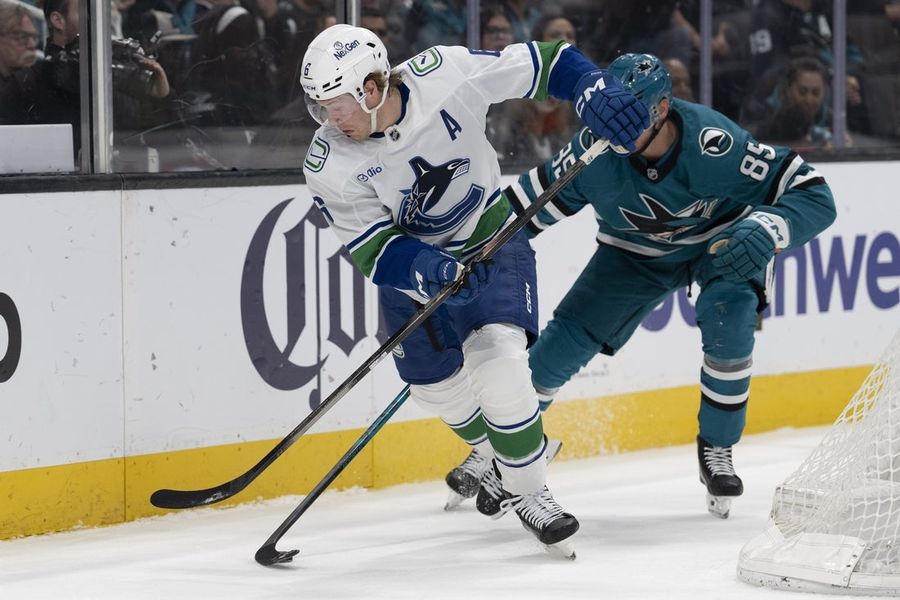
Deadspin | Canucks pull out win over Sharks in shootout  Apr 11, 2026; San Jose, California, USA;  Vancouver Canucks right wing Brock Boeser (6) and San Jose Sharks defenseman Shakir Mukhamadullin (85) battle for control of the puck during the first period at SAP Center at San Jose. Mandatory Credit: Stan Szeto-Imagn Images   Macklin Celebrini tallied his 109th and 110th points of the season, but the San Jose Sharks couldn’t win their home finale of the season, falling 4-3 to the Vancouver Canucks in a shootout on Saturday night.  Teddy Blueger and Linus Karlsson found the back of the net for the Canucks in the shootout, which went to six rounds.  Blueger, Marco Rossi, and Jake DeBrusk scored in regulation, and Kevin Lankinen made 28 saves for the Canucks (23-48-8, 54 points), who had lost four straight games and nine of their last 10. Vancouver has been eliminated from playoff contention.  Igor Chernyshov scored twice, Celebrini had two assists, and Yaroslav Askarov made 38 saves for the Sharks (37-34-8, 82 points), who have lost three straight. Saturday’s loss keeps the Sharks five points behind the Los Angeles Kings, who are currently in the second wild-card spot in the Western Conference playoff standings.  Chernyshov put San Jose ahead 1-0 at 16:19 of the first period. Celebrini won a faceoff in Vancouver’s zone and fell as he fed the puck to Chernyshov, who scored on a backhanded shot in front of the net.   Rossi tied the game 1-1 at 5:56 of the second period. Askarov went to play the puck behind the net, then tried to adjust before Rossi’s shot caught him out of position. The netminder pulled the net down on the puck, but officials called the goal good for Vancouver.  Tyler Toffoli gave the Sharks the 2-1 lead at 9:02. Sam Dickinson broke up the ice and set Toffoli up with a drop pass. The veteran center scored on a wrist shot.  DeBrusk tied the score back up 2-2 on a power play at 17:37. Askarov stopped a shot by Filip Hronek, and DeBrusk successfully scored on the rebound. San Jose challenged the goal for goaltender interference, but the call stood. It was DeBrusk’s 20th goal of the season, and 17th on the man advantage.  Chernyshov’s second goal of the night put the Sharks up 3-2 at 12:44 as Celebrini set him up for a wrist shot. Blueger tied the game 3-3 with 3:00 left in regulation with a wrist shot of his own.  –Field Level Media    #Deadspin #Canucks #pull #win #Sharks #shootoutApr 11, 2026; San Jose, California, USA; Vancouver Canucks right wing Brock Boeser (6) and San Jose Sharks defenseman Shakir Mukhamadullin (85) battle for control of the puck during the first period at SAP Center at San Jose. Mandatory Credit: Stan Szeto-Imagn Images

Macklin Celebrini tallied his 109th and 110th points of the season, but the San Jose Sharks couldn’t win their home finale of the season, falling 4-3 to the Vancouver Canucks in a shootout on Saturday night.

Teddy Blueger and Linus Karlsson found the back of the net for the Canucks in the shootout, which went to six rounds.

Blueger, Marco Rossi, and Jake DeBrusk scored in regulation, and Kevin Lankinen made 28 saves for the Canucks (23-48-8, 54 points), who had lost four straight games and nine of their last 10. Vancouver has been eliminated from playoff contention.

Igor Chernyshov scored twice, Celebrini had two assists, and Yaroslav Askarov made 38 saves for the Sharks (37-34-8, 82 points), who have lost three straight. Saturday’s loss keeps the Sharks five points behind the Los Angeles Kings, who are currently in the second wild-card spot in the Western Conference playoff standings.


Chernyshov put San Jose ahead 1-0 at 16:19 of the first period. Celebrini won a faceoff in Vancouver’s zone and fell as he fed the puck to Chernyshov, who scored on a backhanded shot in front of the net.

Rossi tied the game 1-1 at 5:56 of the second period. Askarov went to play the puck behind the net, then tried to adjust before Rossi’s shot caught him out of position. The netminder pulled the net down on the puck, but officials called the goal good for Vancouver.

Tyler Toffoli gave the Sharks the 2-1 lead at 9:02. Sam Dickinson broke up the ice and set Toffoli up with a drop pass. The veteran center scored on a wrist shot.

DeBrusk tied the score back up 2-2 on a power play at 17:37. Askarov stopped a shot by Filip Hronek, and DeBrusk successfully scored on the rebound. San Jose challenged the goal for goaltender interference, but the call stood. It was DeBrusk’s 20th goal of the season, and 17th on the man advantage.

Chernyshov’s second goal of the night put the Sharks up 3-2 at 12:44 as Celebrini set him up for a wrist shot. Blueger tied the game 3-3 with 3:00 left in regulation with a wrist shot of his own.


–Field Level Media

#Deadspin #Canucks #pull #win #Sharks #shootout">Deadspin | Canucks pull out win over Sharks in shootout  Apr 11, 2026; San Jose, California, USA;  Vancouver Canucks right wing Brock Boeser (6) and San Jose Sharks defenseman Shakir Mukhamadullin (85) battle for control of the puck during the first period at SAP Center at San Jose. Mandatory Credit: Stan Szeto-Imagn Images   Macklin Celebrini tallied his 109th and 110th points of the season, but the San Jose Sharks couldn’t win their home finale of the season, falling 4-3 to the Vancouver Canucks in a shootout on Saturday night.  Teddy Blueger and Linus Karlsson found the back of the net for the Canucks in the shootout, which went to six rounds.  Blueger, Marco Rossi, and Jake DeBrusk scored in regulation, and Kevin Lankinen made 28 saves for the Canucks (23-48-8, 54 points), who had lost four straight games and nine of their last 10. Vancouver has been eliminated from playoff contention.  Igor Chernyshov scored twice, Celebrini had two assists, and Yaroslav Askarov made 38 saves for the Sharks (37-34-8, 82 points), who have lost three straight. Saturday’s loss keeps the Sharks five points behind the Los Angeles Kings, who are currently in the second wild-card spot in the Western Conference playoff standings.  Chernyshov put San Jose ahead 1-0 at 16:19 of the first period. Celebrini won a faceoff in Vancouver’s zone and fell as he fed the puck to Chernyshov, who scored on a backhanded shot in front of the net.   Rossi tied the game 1-1 at 5:56 of the second period. Askarov went to play the puck behind the net, then tried to adjust before Rossi’s shot caught him out of position. The netminder pulled the net down on the puck, but officials called the goal good for Vancouver.  Tyler Toffoli gave the Sharks the 2-1 lead at 9:02. Sam Dickinson broke up the ice and set Toffoli up with a drop pass. The veteran center scored on a wrist shot.  DeBrusk tied the score back up 2-2 on a power play at 17:37. Askarov stopped a shot by Filip Hronek, and DeBrusk successfully scored on the rebound. San Jose challenged the goal for goaltender interference, but the call stood. It was DeBrusk’s 20th goal of the season, and 17th on the man advantage.  Chernyshov’s second goal of the night put the Sharks up 3-2 at 12:44 as Celebrini set him up for a wrist shot. Blueger tied the game 3-3 with 3:00 left in regulation with a wrist shot of his own.  –Field Level Media    #Deadspin #Canucks #pull #win #Sharks #shootout

Post Comment