×
FIFA World Cup 2026 not available to fans in India yet — What’s going wrong?  The FIFA World Cup, nearly a century since its inception, has remained the crown jewel of international men’s football.Despite India never playing in the tournament, the spectacle has always taken centre stage among football fans. But 2026 carries a different writing on the wall.The quadrennial carnival does not have a broadcaster. No TV channel, no streaming company has put its foot forward to take it up. Why is that so?“Football viewership in India has been on the decline for some time now. If you look at the Premier League, its valuation has fallen from 5 million in 2013-14 to  million in the latest deal,” an industry expert tells        Sportstar.Sony Sports acquired the commercial rights for the FIFA World Cup 2014, 2018, and Euro 2016 for around  million in 2013, which would be almost double the value today, adjusted for inflation.Eight years later, Reliance picked up the 2022 World Cup rights for  million.FIFA had offered rights for the next two World Cups as a package to the Indian market for 0 million last year. However, a lack of interest saw the global football body reconsider the valuation to  million.Even then, interest did not emerge, exposing the broken economics of World Cup broadcasting in this part of the world.“In India, the picture appears more nuanced than a simple lack of takers. Broadcasters are likely weighing a combination of structural and commercial considerations,” says Rohit Potphode, Managing Partner – Sports, Gaming, eSports & Live Experiences, Dentsu India. Rohit Potphode discussed why the company went for broadcasting rights in Japan for FIFA World Cup 2026 and not in India.
                                                            | Photo Credit: 
                                Special Arrangement
                            

                            Rohit Potphode discussed why the company went for broadcasting rights in Japan for FIFA World Cup 2026 and not in India.
                                                            | Photo Credit: 
                                Special Arrangement
                                                    Dentsu is the commercial partner for the FIFA World Cup 2026 in Japan, which was also among the top viewers of the tournament in 2022.“Japan is significantly different from India in terms of audience appetite, advertisers, and overall media ecosystem.”“One significant factor is match timing; fixtures scheduled at late-night or early-morning hours for Indian audiences can materially impact viewership peaks, which in turn affects advertising inventory and revenue potential. Even marquee events can struggle to deliver optimal returns when they fall outside prime viewing windows,” he adds.The FIFA World Cup 2026 is being played in the United States of America, Canada and Mexico, placing most matches outside prime Indian viewing hours.Of the 104 games in the World Cup this time, only 14 begin before midnight. In comparison, Qatar 2022 had 44 of its 64 matches before midnight, while Russia 2018 had 63.Profitability the only priority“The business scenario in sports in India has shifted primarily to profitability,” a source from one of the broadcasters says.“Subscription is a limited option in this country, despite the appetite being there. In the West, football is mostly behind paywalls. You cannot do that in India.”Sky Sports charges a subscription fee of about £22 per month to show the Premier League in the UK, while FOX Sports, the World Cup broadcaster in the US, sells its FOX One + ESPN Bundle for  per month.The FIFA World Cup 2022 was streamed on JioCinema and Sports18HD, with the former offering it for free and the latter charging Rs. 12 for the channel.The result: India saw one of the steepest individual market drops, losing 87 million linear viewers in four years. The audience moved to digital, which was free, not away from football. Meanwhile, JioStar reportedly lost millions with the free-to-air service.In general, though, football viewership in the country has declined. The Indian Super League, the top flight of men’s football, has seen its broadcast rights valuation fall by 97 per cent in the last year.World Cup football has followed the same trend: The 2022 edition had every match worth Rs. 6.94 crore. Four years later, that value has fallen to Rs. 1.56 crore per match — a 77.5 per cent drop. Most fans in India watched the FIFA World Cup 2022 free of cost on JioCinema, not on linear television.
                                                            | Photo Credit: 
                                Getty Images
                            

                            Most fans in India watched the FIFA World Cup 2022 free of cost on JioCinema, not on linear television.
                                                            | Photo Credit: 
                                Getty Images
                                                    “The lack of advertising opportunities in football is another issue. While commercial partners can have ad slots after every over or dismissal in cricket, or maybe every set in tennis, in football, it’s largely restricted to pre-match, half-time and full-time, with limited additional breaks,” another individual from an Indian broadcaster says.Potphode adds further insight. “The advertising market remains highly value-conscious, with brands increasingly seeking measurable and consistent returns across both television and digital platforms.“With a crowded sports calendar and the continued rise of on-demand consumption, rights holders and broadcasters may be taking a more calibrated approach, evaluating not just scale, but the quality and timing of audience engagement.”Will there be a solution?FIFA is expected to hold negotiations with leading Indian broadcasters — JioStar, FanCode, Sony Sports and ZEE Entertainment — in search of a last-ditch solution. It is unlikely for DAZN to enter the conversation, while Netflix and YouTube have chosen not to comment.If all options fail, the World Cup could return to Doordarshan, India’s public broadcaster, after 28 years. Under the Sports Broadcasting Signals (Mandatory Sharing with Prasar Bharati) Act, sporting events of national importance must be shared with the broadcaster. Prasar Bharati, Doordarshan’s parent company, had made a profit of Rs. 3.5 crore from the 1998 rights.
                                                            | Photo Credit: 
                                The Hindu Photo Library
                            

                            Prasar Bharati, Doordarshan’s parent company, had made a profit of Rs. 3.5 crore from the 1998 rights.
                                                            | Photo Credit: 
                                The Hindu Photo Library
                                                    That could offer a lifeline, with marquee matches — likely the knockouts and the final — broadcast on Doordarshan irrespective of the primary rights holder.Prasar Bharati, Doordarshan’s parent company, had made a profit of Rs. 3.5 crore from the 1998 rights. A return to public broadcasting could yet make the World Cup viable again in India.Published on Apr 22, 2026  #FIFA #World #Cup #fans #India #Whats #wrong

FIFA World Cup 2026 not available to fans in India yet — What’s going wrong?

The FIFA World Cup, nearly a century since its inception, has remained the crown jewel of international men’s football.

Despite India never playing in the tournament, the spectacle has always taken centre stage among football fans. But 2026 carries a different writing on the wall.

The quadrennial carnival does not have a broadcaster. No TV channel, no streaming company has put its foot forward to take it up. Why is that so?

“Football viewership in India has been on the decline for some time now. If you look at the Premier League, its valuation has fallen from $145 million in 2013-14 to $60 million in the latest deal,” an industry expert tells  Sportstar.

Sony Sports acquired the commercial rights for the FIFA World Cup 2014, 2018, and Euro 2016 for around $90 million in 2013, which would be almost double the value today, adjusted for inflation.

Eight years later, Reliance picked up the 2022 World Cup rights for $60 million.

FIFA had offered rights for the next two World Cups as a package to the Indian market for $100 million last year. However, a lack of interest saw the global football body reconsider the valuation to $35 million.

Even then, interest did not emerge, exposing the broken economics of World Cup broadcasting in this part of the world.

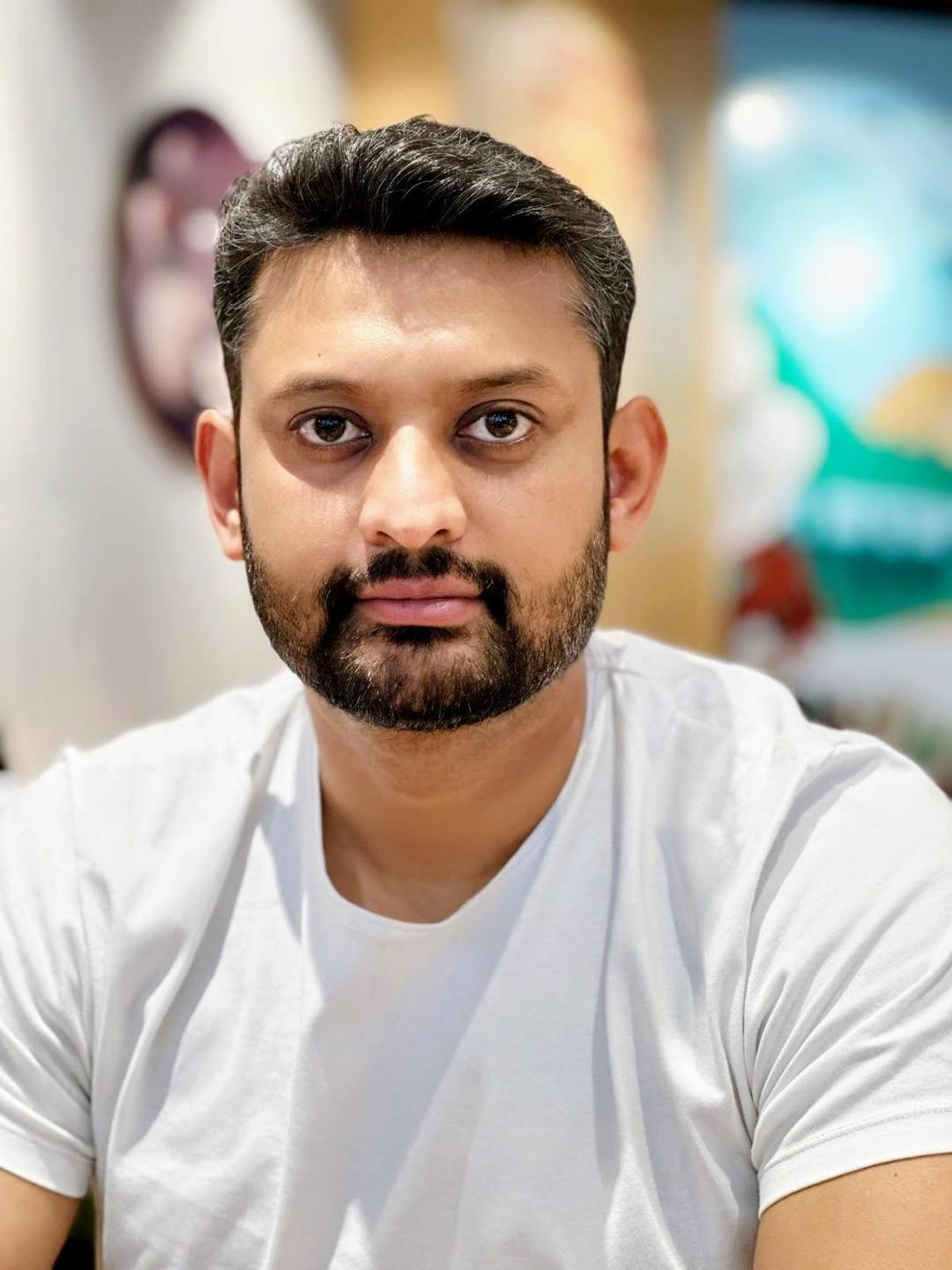
“In India, the picture appears more nuanced than a simple lack of takers. Broadcasters are likely weighing a combination of structural and commercial considerations,” says Rohit Potphode, Managing Partner – Sports, Gaming, eSports & Live Experiences, Dentsu India.

Rohit Potphode discussed why the company went for broadcasting rights in Japan for FIFA World Cup 2026 and not in India.

Rohit Potphode discussed why the company went for broadcasting rights in Japan for FIFA World Cup 2026 and not in India. | Photo Credit: Special Arrangement

FIFA World Cup 2026 not available to fans in India yet — What’s going wrong?  The FIFA World Cup, nearly a century since its inception, has remained the crown jewel of international men’s football.Despite India never playing in the tournament, the spectacle has always taken centre stage among football fans. But 2026 carries a different writing on the wall.The quadrennial carnival does not have a broadcaster. No TV channel, no streaming company has put its foot forward to take it up. Why is that so?“Football viewership in India has been on the decline for some time now. If you look at the Premier League, its valuation has fallen from 5 million in 2013-14 to  million in the latest deal,” an industry expert tells        Sportstar.Sony Sports acquired the commercial rights for the FIFA World Cup 2014, 2018, and Euro 2016 for around  million in 2013, which would be almost double the value today, adjusted for inflation.Eight years later, Reliance picked up the 2022 World Cup rights for  million.FIFA had offered rights for the next two World Cups as a package to the Indian market for 0 million last year. However, a lack of interest saw the global football body reconsider the valuation to  million.Even then, interest did not emerge, exposing the broken economics of World Cup broadcasting in this part of the world.“In India, the picture appears more nuanced than a simple lack of takers. Broadcasters are likely weighing a combination of structural and commercial considerations,” says Rohit Potphode, Managing Partner – Sports, Gaming, eSports & Live Experiences, Dentsu India. Rohit Potphode discussed why the company went for broadcasting rights in Japan for FIFA World Cup 2026 and not in India.
                                                            | Photo Credit: 
                                Special Arrangement
                            

                            Rohit Potphode discussed why the company went for broadcasting rights in Japan for FIFA World Cup 2026 and not in India.
                                                            | Photo Credit: 
                                Special Arrangement
                                                    Dentsu is the commercial partner for the FIFA World Cup 2026 in Japan, which was also among the top viewers of the tournament in 2022.“Japan is significantly different from India in terms of audience appetite, advertisers, and overall media ecosystem.”“One significant factor is match timing; fixtures scheduled at late-night or early-morning hours for Indian audiences can materially impact viewership peaks, which in turn affects advertising inventory and revenue potential. Even marquee events can struggle to deliver optimal returns when they fall outside prime viewing windows,” he adds.The FIFA World Cup 2026 is being played in the United States of America, Canada and Mexico, placing most matches outside prime Indian viewing hours.Of the 104 games in the World Cup this time, only 14 begin before midnight. In comparison, Qatar 2022 had 44 of its 64 matches before midnight, while Russia 2018 had 63.Profitability the only priority“The business scenario in sports in India has shifted primarily to profitability,” a source from one of the broadcasters says.“Subscription is a limited option in this country, despite the appetite being there. In the West, football is mostly behind paywalls. You cannot do that in India.”Sky Sports charges a subscription fee of about £22 per month to show the Premier League in the UK, while FOX Sports, the World Cup broadcaster in the US, sells its FOX One + ESPN Bundle for  per month.The FIFA World Cup 2022 was streamed on JioCinema and Sports18HD, with the former offering it for free and the latter charging Rs. 12 for the channel.The result: India saw one of the steepest individual market drops, losing 87 million linear viewers in four years. The audience moved to digital, which was free, not away from football. Meanwhile, JioStar reportedly lost millions with the free-to-air service.In general, though, football viewership in the country has declined. The Indian Super League, the top flight of men’s football, has seen its broadcast rights valuation fall by 97 per cent in the last year.World Cup football has followed the same trend: The 2022 edition had every match worth Rs. 6.94 crore. Four years later, that value has fallen to Rs. 1.56 crore per match — a 77.5 per cent drop. Most fans in India watched the FIFA World Cup 2022 free of cost on JioCinema, not on linear television.
                                                            | Photo Credit: 
                                Getty Images
                            

                            Most fans in India watched the FIFA World Cup 2022 free of cost on JioCinema, not on linear television.
                                                            | Photo Credit: 
                                Getty Images
                                                    “The lack of advertising opportunities in football is another issue. While commercial partners can have ad slots after every over or dismissal in cricket, or maybe every set in tennis, in football, it’s largely restricted to pre-match, half-time and full-time, with limited additional breaks,” another individual from an Indian broadcaster says.Potphode adds further insight. “The advertising market remains highly value-conscious, with brands increasingly seeking measurable and consistent returns across both television and digital platforms.“With a crowded sports calendar and the continued rise of on-demand consumption, rights holders and broadcasters may be taking a more calibrated approach, evaluating not just scale, but the quality and timing of audience engagement.”Will there be a solution?FIFA is expected to hold negotiations with leading Indian broadcasters — JioStar, FanCode, Sony Sports and ZEE Entertainment — in search of a last-ditch solution. It is unlikely for DAZN to enter the conversation, while Netflix and YouTube have chosen not to comment.If all options fail, the World Cup could return to Doordarshan, India’s public broadcaster, after 28 years. Under the Sports Broadcasting Signals (Mandatory Sharing with Prasar Bharati) Act, sporting events of national importance must be shared with the broadcaster. Prasar Bharati, Doordarshan’s parent company, had made a profit of Rs. 3.5 crore from the 1998 rights.
                                                            | Photo Credit: 
                                The Hindu Photo Library
                            

                            Prasar Bharati, Doordarshan’s parent company, had made a profit of Rs. 3.5 crore from the 1998 rights.
                                                            | Photo Credit: 
                                The Hindu Photo Library
                                                    That could offer a lifeline, with marquee matches — likely the knockouts and the final — broadcast on Doordarshan irrespective of the primary rights holder.Prasar Bharati, Doordarshan’s parent company, had made a profit of Rs. 3.5 crore from the 1998 rights. A return to public broadcasting could yet make the World Cup viable again in India.Published on Apr 22, 2026  #FIFA #World #Cup #fans #India #Whats #wrong

Rohit Potphode discussed why the company went for broadcasting rights in Japan for FIFA World Cup 2026 and not in India. | Photo Credit: Special Arrangement

Dentsu is the commercial partner for the FIFA World Cup 2026 in Japan, which was also among the top viewers of the tournament in 2022.

“Japan is significantly different from India in terms of audience appetite, advertisers, and overall media ecosystem.”

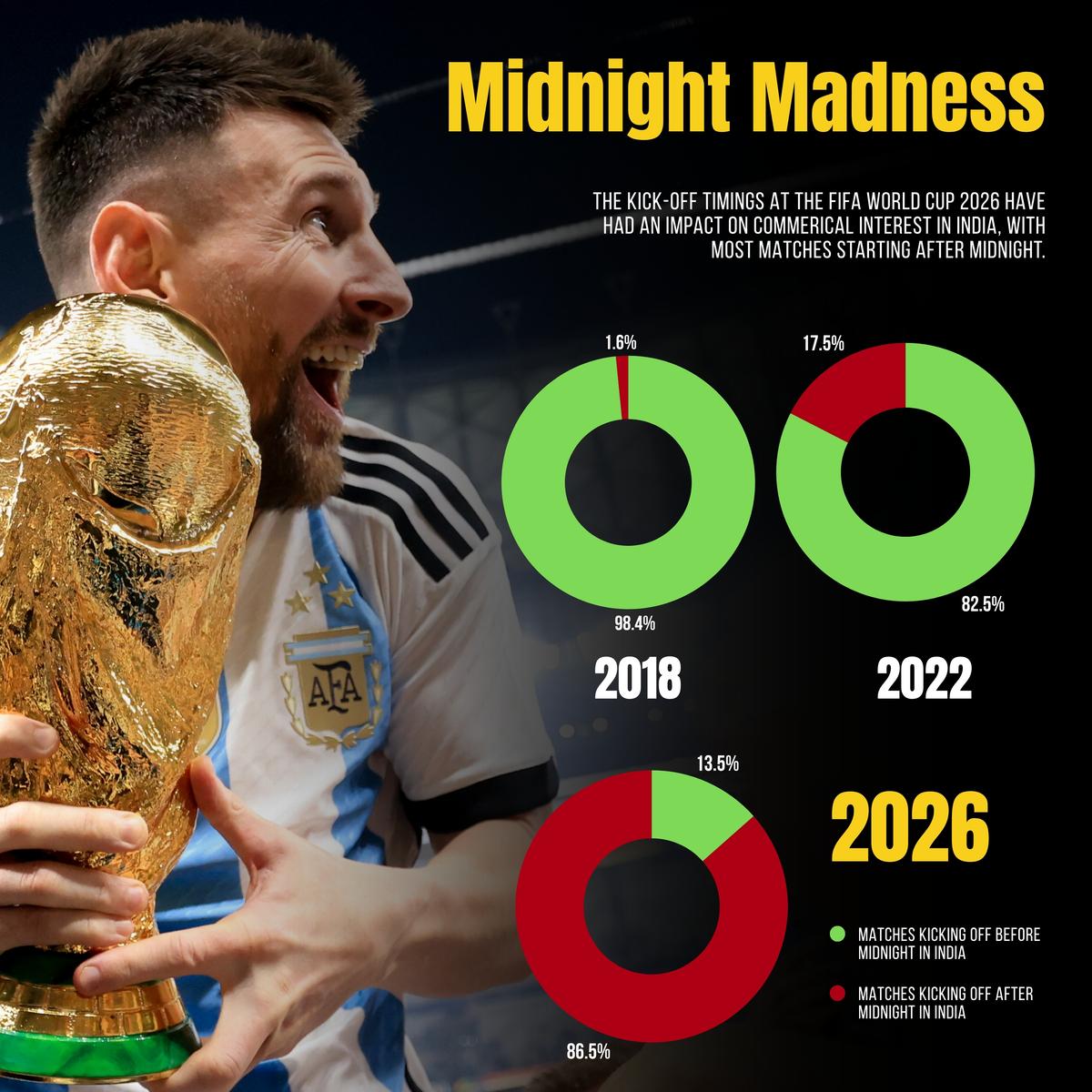
“One significant factor is match timing; fixtures scheduled at late-night or early-morning hours for Indian audiences can materially impact viewership peaks, which in turn affects advertising inventory and revenue potential. Even marquee events can struggle to deliver optimal returns when they fall outside prime viewing windows,” he adds.

The FIFA World Cup 2026 is being played in the United States of America, Canada and Mexico, placing most matches outside prime Indian viewing hours.

Of the 104 games in the World Cup this time, only 14 begin before midnight. In comparison, Qatar 2022 had 44 of its 64 matches before midnight, while Russia 2018 had 63.

Profitability the only priority

“The business scenario in sports in India has shifted primarily to profitability,” a source from one of the broadcasters says.

“Subscription is a limited option in this country, despite the appetite being there. In the West, football is mostly behind paywalls. You cannot do that in India.”

Sky Sports charges a subscription fee of about £22 per month to show the Premier League in the UK, while FOX Sports, the World Cup broadcaster in the US, sells its FOX One + ESPN Bundle for $40 per month.

visualization

The FIFA World Cup 2022 was streamed on JioCinema and Sports18HD, with the former offering it for free and the latter charging Rs. 12 for the channel.

The result: India saw one of the steepest individual market drops, losing 87 million linear viewers in four years. The audience moved to digital, which was free, not away from football. Meanwhile, JioStar reportedly lost millions with the free-to-air service.

In general, though, football viewership in the country has declined. The Indian Super League, the top flight of men’s football, has seen its broadcast rights valuation fall by 97 per cent in the last year.

World Cup football has followed the same trend: The 2022 edition had every match worth Rs. 6.94 crore. Four years later, that value has fallen to Rs. 1.56 crore per match — a 77.5 per cent drop.

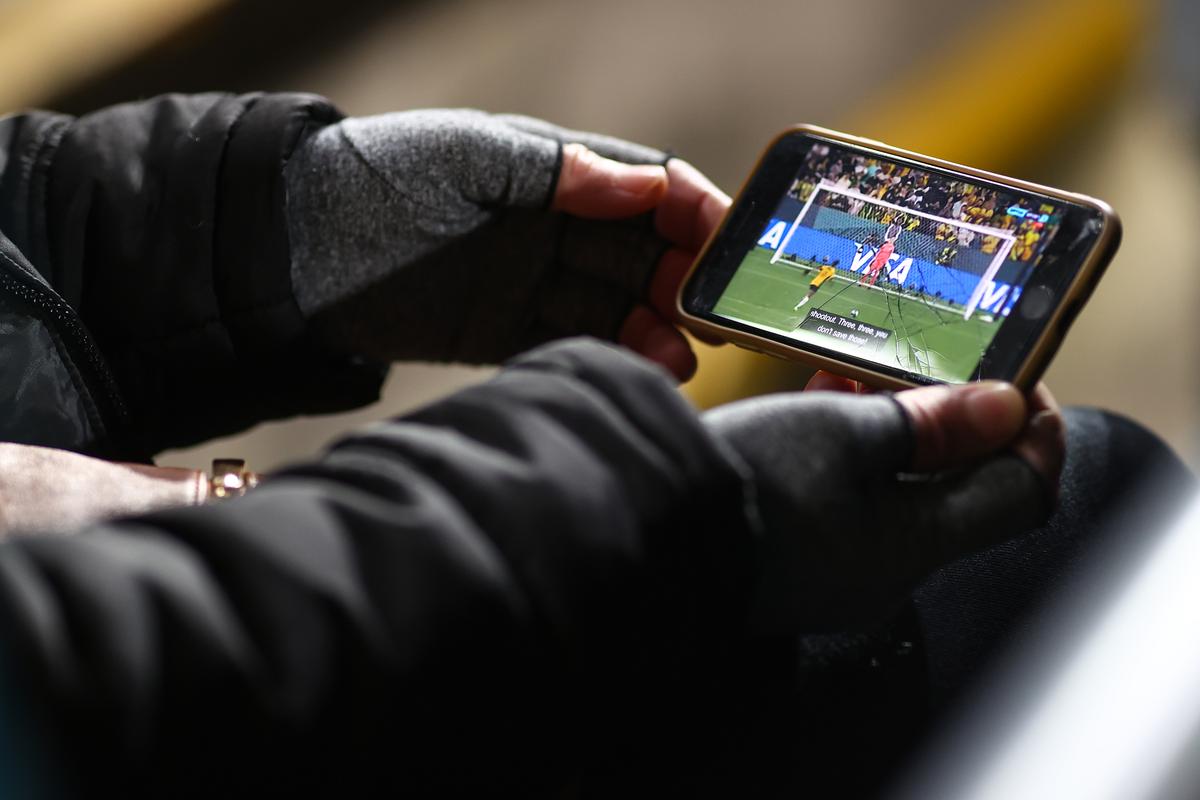
Most fans in India watched the FIFA World Cup 2022 free of cost on JioCinema, not on linear television.

Most fans in India watched the FIFA World Cup 2022 free of cost on JioCinema, not on linear television. | Photo Credit: Getty Images

FIFA World Cup 2026 not available to fans in India yet — What’s going wrong?  The FIFA World Cup, nearly a century since its inception, has remained the crown jewel of international men’s football.Despite India never playing in the tournament, the spectacle has always taken centre stage among football fans. But 2026 carries a different writing on the wall.The quadrennial carnival does not have a broadcaster. No TV channel, no streaming company has put its foot forward to take it up. Why is that so?“Football viewership in India has been on the decline for some time now. If you look at the Premier League, its valuation has fallen from 5 million in 2013-14 to  million in the latest deal,” an industry expert tells        Sportstar.Sony Sports acquired the commercial rights for the FIFA World Cup 2014, 2018, and Euro 2016 for around  million in 2013, which would be almost double the value today, adjusted for inflation.Eight years later, Reliance picked up the 2022 World Cup rights for  million.FIFA had offered rights for the next two World Cups as a package to the Indian market for 0 million last year. However, a lack of interest saw the global football body reconsider the valuation to  million.Even then, interest did not emerge, exposing the broken economics of World Cup broadcasting in this part of the world.“In India, the picture appears more nuanced than a simple lack of takers. Broadcasters are likely weighing a combination of structural and commercial considerations,” says Rohit Potphode, Managing Partner – Sports, Gaming, eSports & Live Experiences, Dentsu India. Rohit Potphode discussed why the company went for broadcasting rights in Japan for FIFA World Cup 2026 and not in India.
                                                            | Photo Credit: 
                                Special Arrangement
                            

                            Rohit Potphode discussed why the company went for broadcasting rights in Japan for FIFA World Cup 2026 and not in India.
                                                            | Photo Credit: 
                                Special Arrangement
                                                    Dentsu is the commercial partner for the FIFA World Cup 2026 in Japan, which was also among the top viewers of the tournament in 2022.“Japan is significantly different from India in terms of audience appetite, advertisers, and overall media ecosystem.”“One significant factor is match timing; fixtures scheduled at late-night or early-morning hours for Indian audiences can materially impact viewership peaks, which in turn affects advertising inventory and revenue potential. Even marquee events can struggle to deliver optimal returns when they fall outside prime viewing windows,” he adds.The FIFA World Cup 2026 is being played in the United States of America, Canada and Mexico, placing most matches outside prime Indian viewing hours.Of the 104 games in the World Cup this time, only 14 begin before midnight. In comparison, Qatar 2022 had 44 of its 64 matches before midnight, while Russia 2018 had 63.Profitability the only priority“The business scenario in sports in India has shifted primarily to profitability,” a source from one of the broadcasters says.“Subscription is a limited option in this country, despite the appetite being there. In the West, football is mostly behind paywalls. You cannot do that in India.”Sky Sports charges a subscription fee of about £22 per month to show the Premier League in the UK, while FOX Sports, the World Cup broadcaster in the US, sells its FOX One + ESPN Bundle for  per month.The FIFA World Cup 2022 was streamed on JioCinema and Sports18HD, with the former offering it for free and the latter charging Rs. 12 for the channel.The result: India saw one of the steepest individual market drops, losing 87 million linear viewers in four years. The audience moved to digital, which was free, not away from football. Meanwhile, JioStar reportedly lost millions with the free-to-air service.In general, though, football viewership in the country has declined. The Indian Super League, the top flight of men’s football, has seen its broadcast rights valuation fall by 97 per cent in the last year.World Cup football has followed the same trend: The 2022 edition had every match worth Rs. 6.94 crore. Four years later, that value has fallen to Rs. 1.56 crore per match — a 77.5 per cent drop. Most fans in India watched the FIFA World Cup 2022 free of cost on JioCinema, not on linear television.
                                                            | Photo Credit: 
                                Getty Images
                            

                            Most fans in India watched the FIFA World Cup 2022 free of cost on JioCinema, not on linear television.
                                                            | Photo Credit: 
                                Getty Images
                                                    “The lack of advertising opportunities in football is another issue. While commercial partners can have ad slots after every over or dismissal in cricket, or maybe every set in tennis, in football, it’s largely restricted to pre-match, half-time and full-time, with limited additional breaks,” another individual from an Indian broadcaster says.Potphode adds further insight. “The advertising market remains highly value-conscious, with brands increasingly seeking measurable and consistent returns across both television and digital platforms.“With a crowded sports calendar and the continued rise of on-demand consumption, rights holders and broadcasters may be taking a more calibrated approach, evaluating not just scale, but the quality and timing of audience engagement.”Will there be a solution?FIFA is expected to hold negotiations with leading Indian broadcasters — JioStar, FanCode, Sony Sports and ZEE Entertainment — in search of a last-ditch solution. It is unlikely for DAZN to enter the conversation, while Netflix and YouTube have chosen not to comment.If all options fail, the World Cup could return to Doordarshan, India’s public broadcaster, after 28 years. Under the Sports Broadcasting Signals (Mandatory Sharing with Prasar Bharati) Act, sporting events of national importance must be shared with the broadcaster. Prasar Bharati, Doordarshan’s parent company, had made a profit of Rs. 3.5 crore from the 1998 rights.
                                                            | Photo Credit: 
                                The Hindu Photo Library
                            

                            Prasar Bharati, Doordarshan’s parent company, had made a profit of Rs. 3.5 crore from the 1998 rights.
                                                            | Photo Credit: 
                                The Hindu Photo Library
                                                    That could offer a lifeline, with marquee matches — likely the knockouts and the final — broadcast on Doordarshan irrespective of the primary rights holder.Prasar Bharati, Doordarshan’s parent company, had made a profit of Rs. 3.5 crore from the 1998 rights. A return to public broadcasting could yet make the World Cup viable again in India.Published on Apr 22, 2026  #FIFA #World #Cup #fans #India #Whats #wrong

Most fans in India watched the FIFA World Cup 2022 free of cost on JioCinema, not on linear television. | Photo Credit: Getty Images

“The lack of advertising opportunities in football is another issue. While commercial partners can have ad slots after every over or dismissal in cricket, or maybe every set in tennis, in football, it’s largely restricted to pre-match, half-time and full-time, with limited additional breaks,” another individual from an Indian broadcaster says.

Potphode adds further insight. “The advertising market remains highly value-conscious, with brands increasingly seeking measurable and consistent returns across both television and digital platforms.

“With a crowded sports calendar and the continued rise of on-demand consumption, rights holders and broadcasters may be taking a more calibrated approach, evaluating not just scale, but the quality and timing of audience engagement.”

Will there be a solution?

FIFA is expected to hold negotiations with leading Indian broadcasters — JioStar, FanCode, Sony Sports and ZEE Entertainment — in search of a last-ditch solution. It is unlikely for DAZN to enter the conversation, while Netflix and YouTube have chosen not to comment.

If all options fail, the World Cup could return to Doordarshan, India’s public broadcaster, after 28 years. Under the Sports Broadcasting Signals (Mandatory Sharing with Prasar Bharati) Act, sporting events of national importance must be shared with the broadcaster.

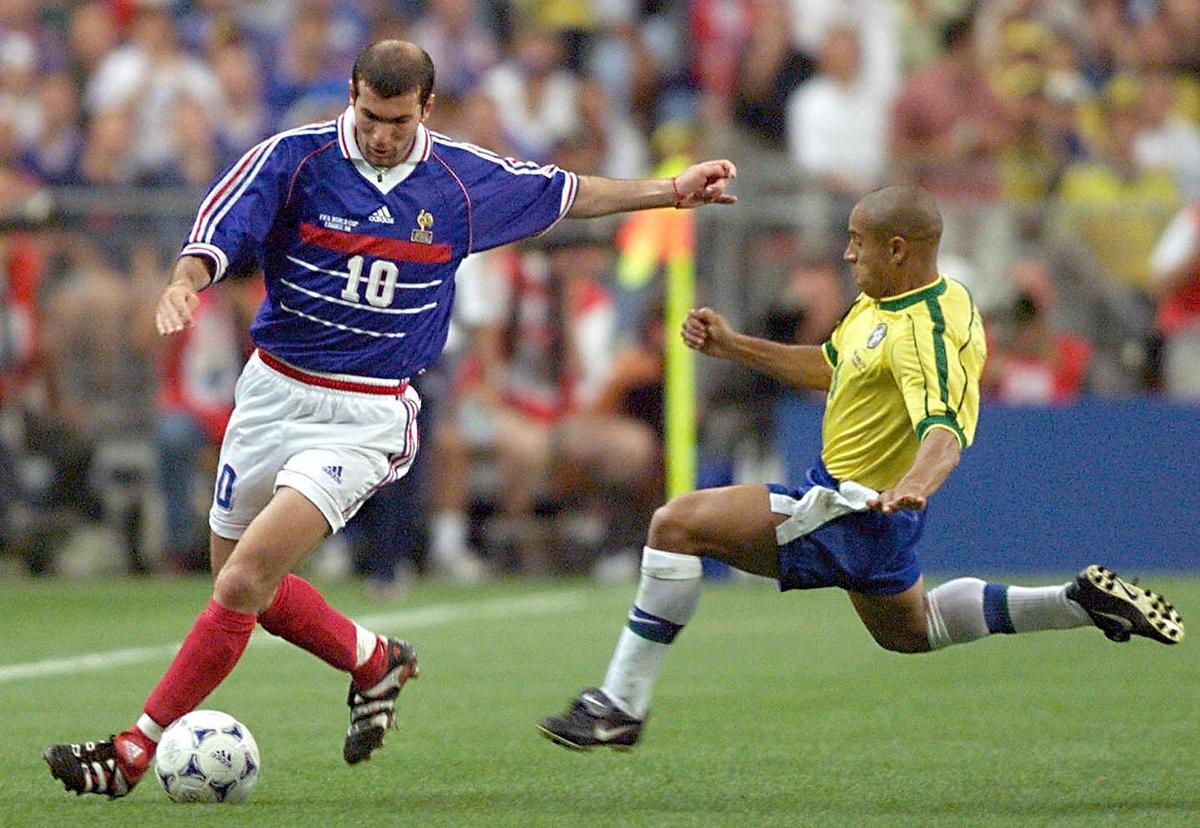
Prasar Bharati, Doordarshan’s parent company, had made a profit of Rs. 3.5 crore from the 1998 rights.

Prasar Bharati, Doordarshan’s parent company, had made a profit of Rs. 3.5 crore from the 1998 rights. | Photo Credit: The Hindu Photo Library

FIFA World Cup 2026 not available to fans in India yet — What’s going wrong?  The FIFA World Cup, nearly a century since its inception, has remained the crown jewel of international men’s football.Despite India never playing in the tournament, the spectacle has always taken centre stage among football fans. But 2026 carries a different writing on the wall.The quadrennial carnival does not have a broadcaster. No TV channel, no streaming company has put its foot forward to take it up. Why is that so?“Football viewership in India has been on the decline for some time now. If you look at the Premier League, its valuation has fallen from 5 million in 2013-14 to  million in the latest deal,” an industry expert tells        Sportstar.Sony Sports acquired the commercial rights for the FIFA World Cup 2014, 2018, and Euro 2016 for around  million in 2013, which would be almost double the value today, adjusted for inflation.Eight years later, Reliance picked up the 2022 World Cup rights for  million.FIFA had offered rights for the next two World Cups as a package to the Indian market for 0 million last year. However, a lack of interest saw the global football body reconsider the valuation to  million.Even then, interest did not emerge, exposing the broken economics of World Cup broadcasting in this part of the world.“In India, the picture appears more nuanced than a simple lack of takers. Broadcasters are likely weighing a combination of structural and commercial considerations,” says Rohit Potphode, Managing Partner – Sports, Gaming, eSports & Live Experiences, Dentsu India. Rohit Potphode discussed why the company went for broadcasting rights in Japan for FIFA World Cup 2026 and not in India.
                                                            | Photo Credit: 
                                Special Arrangement
                            

                            Rohit Potphode discussed why the company went for broadcasting rights in Japan for FIFA World Cup 2026 and not in India.
                                                            | Photo Credit: 
                                Special Arrangement
                                                    Dentsu is the commercial partner for the FIFA World Cup 2026 in Japan, which was also among the top viewers of the tournament in 2022.“Japan is significantly different from India in terms of audience appetite, advertisers, and overall media ecosystem.”“One significant factor is match timing; fixtures scheduled at late-night or early-morning hours for Indian audiences can materially impact viewership peaks, which in turn affects advertising inventory and revenue potential. Even marquee events can struggle to deliver optimal returns when they fall outside prime viewing windows,” he adds.The FIFA World Cup 2026 is being played in the United States of America, Canada and Mexico, placing most matches outside prime Indian viewing hours.Of the 104 games in the World Cup this time, only 14 begin before midnight. In comparison, Qatar 2022 had 44 of its 64 matches before midnight, while Russia 2018 had 63.Profitability the only priority“The business scenario in sports in India has shifted primarily to profitability,” a source from one of the broadcasters says.“Subscription is a limited option in this country, despite the appetite being there. In the West, football is mostly behind paywalls. You cannot do that in India.”Sky Sports charges a subscription fee of about £22 per month to show the Premier League in the UK, while FOX Sports, the World Cup broadcaster in the US, sells its FOX One + ESPN Bundle for  per month.The FIFA World Cup 2022 was streamed on JioCinema and Sports18HD, with the former offering it for free and the latter charging Rs. 12 for the channel.The result: India saw one of the steepest individual market drops, losing 87 million linear viewers in four years. The audience moved to digital, which was free, not away from football. Meanwhile, JioStar reportedly lost millions with the free-to-air service.In general, though, football viewership in the country has declined. The Indian Super League, the top flight of men’s football, has seen its broadcast rights valuation fall by 97 per cent in the last year.World Cup football has followed the same trend: The 2022 edition had every match worth Rs. 6.94 crore. Four years later, that value has fallen to Rs. 1.56 crore per match — a 77.5 per cent drop. Most fans in India watched the FIFA World Cup 2022 free of cost on JioCinema, not on linear television.
                                                            | Photo Credit: 
                                Getty Images
                            

                            Most fans in India watched the FIFA World Cup 2022 free of cost on JioCinema, not on linear television.
                                                            | Photo Credit: 
                                Getty Images
                                                    “The lack of advertising opportunities in football is another issue. While commercial partners can have ad slots after every over or dismissal in cricket, or maybe every set in tennis, in football, it’s largely restricted to pre-match, half-time and full-time, with limited additional breaks,” another individual from an Indian broadcaster says.Potphode adds further insight. “The advertising market remains highly value-conscious, with brands increasingly seeking measurable and consistent returns across both television and digital platforms.“With a crowded sports calendar and the continued rise of on-demand consumption, rights holders and broadcasters may be taking a more calibrated approach, evaluating not just scale, but the quality and timing of audience engagement.”Will there be a solution?FIFA is expected to hold negotiations with leading Indian broadcasters — JioStar, FanCode, Sony Sports and ZEE Entertainment — in search of a last-ditch solution. It is unlikely for DAZN to enter the conversation, while Netflix and YouTube have chosen not to comment.If all options fail, the World Cup could return to Doordarshan, India’s public broadcaster, after 28 years. Under the Sports Broadcasting Signals (Mandatory Sharing with Prasar Bharati) Act, sporting events of national importance must be shared with the broadcaster. Prasar Bharati, Doordarshan’s parent company, had made a profit of Rs. 3.5 crore from the 1998 rights.
                                                            | Photo Credit: 
                                The Hindu Photo Library
                            

                            Prasar Bharati, Doordarshan’s parent company, had made a profit of Rs. 3.5 crore from the 1998 rights.
                                                            | Photo Credit: 
                                The Hindu Photo Library
                                                    That could offer a lifeline, with marquee matches — likely the knockouts and the final — broadcast on Doordarshan irrespective of the primary rights holder.Prasar Bharati, Doordarshan’s parent company, had made a profit of Rs. 3.5 crore from the 1998 rights. A return to public broadcasting could yet make the World Cup viable again in India.Published on Apr 22, 2026  #FIFA #World #Cup #fans #India #Whats #wrong

Prasar Bharati, Doordarshan’s parent company, had made a profit of Rs. 3.5 crore from the 1998 rights. | Photo Credit: The Hindu Photo Library

That could offer a lifeline, with marquee matches — likely the knockouts and the final — broadcast on Doordarshan irrespective of the primary rights holder.

Prasar Bharati, Doordarshan’s parent company, had made a profit of Rs. 3.5 crore from the 1998 rights. A return to public broadcasting could yet make the World Cup viable again in India.

Published on Apr 22, 2026

#FIFA #World #Cup #fans #India #Whats #wrong

The FIFA World Cup, nearly a century since its inception, has remained the crown jewel of international men’s football.

Despite India never playing in the tournament, the spectacle has always taken centre stage among football fans. But 2026 carries a different writing on the wall.

The quadrennial carnival does not have a broadcaster. No TV channel, no streaming company has put its foot forward to take it up. Why is that so?

“Football viewership in India has been on the decline for some time now. If you look at the Premier League, its valuation has fallen from $145 million in 2013-14 to $60 million in the latest deal,” an industry expert tells  Sportstar.

Sony Sports acquired the commercial rights for the FIFA World Cup 2014, 2018, and Euro 2016 for around $90 million in 2013, which would be almost double the value today, adjusted for inflation.

Eight years later, Reliance picked up the 2022 World Cup rights for $60 million.

FIFA had offered rights for the next two World Cups as a package to the Indian market for $100 million last year. However, a lack of interest saw the global football body reconsider the valuation to $35 million.

Even then, interest did not emerge, exposing the broken economics of World Cup broadcasting in this part of the world.

“In India, the picture appears more nuanced than a simple lack of takers. Broadcasters are likely weighing a combination of structural and commercial considerations,” says Rohit Potphode, Managing Partner – Sports, Gaming, eSports & Live Experiences, Dentsu India.

Rohit Potphode discussed why the company went for broadcasting rights in Japan for FIFA World Cup 2026 and not in India.

Rohit Potphode discussed why the company went for broadcasting rights in Japan for FIFA World Cup 2026 and not in India.
| Photo Credit:
Special Arrangement

Rohit Potphode discussed why the company went for broadcasting rights in Japan for FIFA World Cup 2026 and not in India.
| Photo Credit:
Special Arrangement

Dentsu is the commercial partner for the FIFA World Cup 2026 in Japan, which was also among the top viewers of the tournament in 2022.

“Japan is significantly different from India in terms of audience appetite, advertisers, and overall media ecosystem.”

“One significant factor is match timing; fixtures scheduled at late-night or early-morning hours for Indian audiences can materially impact viewership peaks, which in turn affects advertising inventory and revenue potential. Even marquee events can struggle to deliver optimal returns when they fall outside prime viewing windows,” he adds.

The FIFA World Cup 2026 is being played in the United States of America, Canada and Mexico, placing most matches outside prime Indian viewing hours.

Of the 104 games in the World Cup this time, only 14 begin before midnight. In comparison, Qatar 2022 had 44 of its 64 matches before midnight, while Russia 2018 had 63.

Profitability the only priority

“The business scenario in sports in India has shifted primarily to profitability,” a source from one of the broadcasters says.

“Subscription is a limited option in this country, despite the appetite being there. In the West, football is mostly behind paywalls. You cannot do that in India.”

Sky Sports charges a subscription fee of about £22 per month to show the Premier League in the UK, while FOX Sports, the World Cup broadcaster in the US, sells its FOX One + ESPN Bundle for $40 per month.

visualization

The FIFA World Cup 2022 was streamed on JioCinema and Sports18HD, with the former offering it for free and the latter charging Rs. 12 for the channel.

The result: India saw one of the steepest individual market drops, losing 87 million linear viewers in four years. The audience moved to digital, which was free, not away from football. Meanwhile, JioStar reportedly lost millions with the free-to-air service.

In general, though, football viewership in the country has declined. The Indian Super League, the top flight of men’s football, has seen its broadcast rights valuation fall by 97 per cent in the last year.

World Cup football has followed the same trend: The 2022 edition had every match worth Rs. 6.94 crore. Four years later, that value has fallen to Rs. 1.56 crore per match — a 77.5 per cent drop.

Most fans in India watched the FIFA World Cup 2022 free of cost on JioCinema, not on linear television.

Most fans in India watched the FIFA World Cup 2022 free of cost on JioCinema, not on linear television.
| Photo Credit:
Getty Images

FIFA World Cup 2026 not available to fans in India yet — What’s going wrong?  The FIFA World Cup, nearly a century since its inception, has remained the crown jewel of international men’s football.Despite India never playing in the tournament, the spectacle has always taken centre stage among football fans. But 2026 carries a different writing on the wall.The quadrennial carnival does not have a broadcaster. No TV channel, no streaming company has put its foot forward to take it up. Why is that so?“Football viewership in India has been on the decline for some time now. If you look at the Premier League, its valuation has fallen from 5 million in 2013-14 to  million in the latest deal,” an industry expert tells        Sportstar.Sony Sports acquired the commercial rights for the FIFA World Cup 2014, 2018, and Euro 2016 for around  million in 2013, which would be almost double the value today, adjusted for inflation.Eight years later, Reliance picked up the 2022 World Cup rights for  million.FIFA had offered rights for the next two World Cups as a package to the Indian market for 0 million last year. However, a lack of interest saw the global football body reconsider the valuation to  million.Even then, interest did not emerge, exposing the broken economics of World Cup broadcasting in this part of the world.“In India, the picture appears more nuanced than a simple lack of takers. Broadcasters are likely weighing a combination of structural and commercial considerations,” says Rohit Potphode, Managing Partner – Sports, Gaming, eSports & Live Experiences, Dentsu India. Rohit Potphode discussed why the company went for broadcasting rights in Japan for FIFA World Cup 2026 and not in India.
                                                            | Photo Credit: 
                                Special Arrangement
                            

                            Rohit Potphode discussed why the company went for broadcasting rights in Japan for FIFA World Cup 2026 and not in India.
                                                            | Photo Credit: 
                                Special Arrangement
                                                    Dentsu is the commercial partner for the FIFA World Cup 2026 in Japan, which was also among the top viewers of the tournament in 2022.“Japan is significantly different from India in terms of audience appetite, advertisers, and overall media ecosystem.”“One significant factor is match timing; fixtures scheduled at late-night or early-morning hours for Indian audiences can materially impact viewership peaks, which in turn affects advertising inventory and revenue potential. Even marquee events can struggle to deliver optimal returns when they fall outside prime viewing windows,” he adds.The FIFA World Cup 2026 is being played in the United States of America, Canada and Mexico, placing most matches outside prime Indian viewing hours.Of the 104 games in the World Cup this time, only 14 begin before midnight. In comparison, Qatar 2022 had 44 of its 64 matches before midnight, while Russia 2018 had 63.Profitability the only priority“The business scenario in sports in India has shifted primarily to profitability,” a source from one of the broadcasters says.“Subscription is a limited option in this country, despite the appetite being there. In the West, football is mostly behind paywalls. You cannot do that in India.”Sky Sports charges a subscription fee of about £22 per month to show the Premier League in the UK, while FOX Sports, the World Cup broadcaster in the US, sells its FOX One + ESPN Bundle for  per month.The FIFA World Cup 2022 was streamed on JioCinema and Sports18HD, with the former offering it for free and the latter charging Rs. 12 for the channel.The result: India saw one of the steepest individual market drops, losing 87 million linear viewers in four years. The audience moved to digital, which was free, not away from football. Meanwhile, JioStar reportedly lost millions with the free-to-air service.In general, though, football viewership in the country has declined. The Indian Super League, the top flight of men’s football, has seen its broadcast rights valuation fall by 97 per cent in the last year.World Cup football has followed the same trend: The 2022 edition had every match worth Rs. 6.94 crore. Four years later, that value has fallen to Rs. 1.56 crore per match — a 77.5 per cent drop. Most fans in India watched the FIFA World Cup 2022 free of cost on JioCinema, not on linear television.
                                                            | Photo Credit: 
                                Getty Images
                            

                            Most fans in India watched the FIFA World Cup 2022 free of cost on JioCinema, not on linear television.
                                                            | Photo Credit: 
                                Getty Images
                                                    “The lack of advertising opportunities in football is another issue. While commercial partners can have ad slots after every over or dismissal in cricket, or maybe every set in tennis, in football, it’s largely restricted to pre-match, half-time and full-time, with limited additional breaks,” another individual from an Indian broadcaster says.Potphode adds further insight. “The advertising market remains highly value-conscious, with brands increasingly seeking measurable and consistent returns across both television and digital platforms.“With a crowded sports calendar and the continued rise of on-demand consumption, rights holders and broadcasters may be taking a more calibrated approach, evaluating not just scale, but the quality and timing of audience engagement.”Will there be a solution?FIFA is expected to hold negotiations with leading Indian broadcasters — JioStar, FanCode, Sony Sports and ZEE Entertainment — in search of a last-ditch solution. It is unlikely for DAZN to enter the conversation, while Netflix and YouTube have chosen not to comment.If all options fail, the World Cup could return to Doordarshan, India’s public broadcaster, after 28 years. Under the Sports Broadcasting Signals (Mandatory Sharing with Prasar Bharati) Act, sporting events of national importance must be shared with the broadcaster. Prasar Bharati, Doordarshan’s parent company, had made a profit of Rs. 3.5 crore from the 1998 rights.
                                                            | Photo Credit: 
                                The Hindu Photo Library
                            

                            Prasar Bharati, Doordarshan’s parent company, had made a profit of Rs. 3.5 crore from the 1998 rights.
                                                            | Photo Credit: 
                                The Hindu Photo Library
                                                    That could offer a lifeline, with marquee matches — likely the knockouts and the final — broadcast on Doordarshan irrespective of the primary rights holder.Prasar Bharati, Doordarshan’s parent company, had made a profit of Rs. 3.5 crore from the 1998 rights. A return to public broadcasting could yet make the World Cup viable again in India.Published on Apr 22, 2026  #FIFA #World #Cup #fans #India #Whats #wrong

Most fans in India watched the FIFA World Cup 2022 free of cost on JioCinema, not on linear television.
| Photo Credit:
Getty Images

“The lack of advertising opportunities in football is another issue. While commercial partners can have ad slots after every over or dismissal in cricket, or maybe every set in tennis, in football, it’s largely restricted to pre-match, half-time and full-time, with limited additional breaks,” another individual from an Indian broadcaster says.

Potphode adds further insight. “The advertising market remains highly value-conscious, with brands increasingly seeking measurable and consistent returns across both television and digital platforms.

“With a crowded sports calendar and the continued rise of on-demand consumption, rights holders and broadcasters may be taking a more calibrated approach, evaluating not just scale, but the quality and timing of audience engagement.”

Will there be a solution?

FIFA is expected to hold negotiations with leading Indian broadcasters — JioStar, FanCode, Sony Sports and ZEE Entertainment — in search of a last-ditch solution. It is unlikely for DAZN to enter the conversation, while Netflix and YouTube have chosen not to comment.

If all options fail, the World Cup could return to Doordarshan, India’s public broadcaster, after 28 years. Under the Sports Broadcasting Signals (Mandatory Sharing with Prasar Bharati) Act, sporting events of national importance must be shared with the broadcaster.

Prasar Bharati, Doordarshan’s parent company, had made a profit of Rs. 3.5 crore from the 1998 rights.

Prasar Bharati, Doordarshan’s parent company, had made a profit of Rs. 3.5 crore from the 1998 rights.
| Photo Credit:
The Hindu Photo Library

FIFA World Cup 2026 not available to fans in India yet — What’s going wrong?  The FIFA World Cup, nearly a century since its inception, has remained the crown jewel of international men’s football.Despite India never playing in the tournament, the spectacle has always taken centre stage among football fans. But 2026 carries a different writing on the wall.The quadrennial carnival does not have a broadcaster. No TV channel, no streaming company has put its foot forward to take it up. Why is that so?“Football viewership in India has been on the decline for some time now. If you look at the Premier League, its valuation has fallen from 5 million in 2013-14 to  million in the latest deal,” an industry expert tells        Sportstar.Sony Sports acquired the commercial rights for the FIFA World Cup 2014, 2018, and Euro 2016 for around  million in 2013, which would be almost double the value today, adjusted for inflation.Eight years later, Reliance picked up the 2022 World Cup rights for  million.FIFA had offered rights for the next two World Cups as a package to the Indian market for 0 million last year. However, a lack of interest saw the global football body reconsider the valuation to  million.Even then, interest did not emerge, exposing the broken economics of World Cup broadcasting in this part of the world.“In India, the picture appears more nuanced than a simple lack of takers. Broadcasters are likely weighing a combination of structural and commercial considerations,” says Rohit Potphode, Managing Partner – Sports, Gaming, eSports & Live Experiences, Dentsu India. Rohit Potphode discussed why the company went for broadcasting rights in Japan for FIFA World Cup 2026 and not in India.
                                                            | Photo Credit: 
                                Special Arrangement
                            

                            Rohit Potphode discussed why the company went for broadcasting rights in Japan for FIFA World Cup 2026 and not in India.
                                                            | Photo Credit: 
                                Special Arrangement
                                                    Dentsu is the commercial partner for the FIFA World Cup 2026 in Japan, which was also among the top viewers of the tournament in 2022.“Japan is significantly different from India in terms of audience appetite, advertisers, and overall media ecosystem.”“One significant factor is match timing; fixtures scheduled at late-night or early-morning hours for Indian audiences can materially impact viewership peaks, which in turn affects advertising inventory and revenue potential. Even marquee events can struggle to deliver optimal returns when they fall outside prime viewing windows,” he adds.The FIFA World Cup 2026 is being played in the United States of America, Canada and Mexico, placing most matches outside prime Indian viewing hours.Of the 104 games in the World Cup this time, only 14 begin before midnight. In comparison, Qatar 2022 had 44 of its 64 matches before midnight, while Russia 2018 had 63.Profitability the only priority“The business scenario in sports in India has shifted primarily to profitability,” a source from one of the broadcasters says.“Subscription is a limited option in this country, despite the appetite being there. In the West, football is mostly behind paywalls. You cannot do that in India.”Sky Sports charges a subscription fee of about £22 per month to show the Premier League in the UK, while FOX Sports, the World Cup broadcaster in the US, sells its FOX One + ESPN Bundle for  per month.The FIFA World Cup 2022 was streamed on JioCinema and Sports18HD, with the former offering it for free and the latter charging Rs. 12 for the channel.The result: India saw one of the steepest individual market drops, losing 87 million linear viewers in four years. The audience moved to digital, which was free, not away from football. Meanwhile, JioStar reportedly lost millions with the free-to-air service.In general, though, football viewership in the country has declined. The Indian Super League, the top flight of men’s football, has seen its broadcast rights valuation fall by 97 per cent in the last year.World Cup football has followed the same trend: The 2022 edition had every match worth Rs. 6.94 crore. Four years later, that value has fallen to Rs. 1.56 crore per match — a 77.5 per cent drop. Most fans in India watched the FIFA World Cup 2022 free of cost on JioCinema, not on linear television.
                                                            | Photo Credit: 
                                Getty Images
                            

                            Most fans in India watched the FIFA World Cup 2022 free of cost on JioCinema, not on linear television.
                                                            | Photo Credit: 
                                Getty Images
                                                    “The lack of advertising opportunities in football is another issue. While commercial partners can have ad slots after every over or dismissal in cricket, or maybe every set in tennis, in football, it’s largely restricted to pre-match, half-time and full-time, with limited additional breaks,” another individual from an Indian broadcaster says.Potphode adds further insight. “The advertising market remains highly value-conscious, with brands increasingly seeking measurable and consistent returns across both television and digital platforms.“With a crowded sports calendar and the continued rise of on-demand consumption, rights holders and broadcasters may be taking a more calibrated approach, evaluating not just scale, but the quality and timing of audience engagement.”Will there be a solution?FIFA is expected to hold negotiations with leading Indian broadcasters — JioStar, FanCode, Sony Sports and ZEE Entertainment — in search of a last-ditch solution. It is unlikely for DAZN to enter the conversation, while Netflix and YouTube have chosen not to comment.If all options fail, the World Cup could return to Doordarshan, India’s public broadcaster, after 28 years. Under the Sports Broadcasting Signals (Mandatory Sharing with Prasar Bharati) Act, sporting events of national importance must be shared with the broadcaster. Prasar Bharati, Doordarshan’s parent company, had made a profit of Rs. 3.5 crore from the 1998 rights.
                                                            | Photo Credit: 
                                The Hindu Photo Library
                            

                            Prasar Bharati, Doordarshan’s parent company, had made a profit of Rs. 3.5 crore from the 1998 rights.
                                                            | Photo Credit: 
                                The Hindu Photo Library
                                                    That could offer a lifeline, with marquee matches — likely the knockouts and the final — broadcast on Doordarshan irrespective of the primary rights holder.Prasar Bharati, Doordarshan’s parent company, had made a profit of Rs. 3.5 crore from the 1998 rights. A return to public broadcasting could yet make the World Cup viable again in India.Published on Apr 22, 2026  #FIFA #World #Cup #fans #India #Whats #wrong

Prasar Bharati, Doordarshan’s parent company, had made a profit of Rs. 3.5 crore from the 1998 rights.
| Photo Credit:
The Hindu Photo Library

That could offer a lifeline, with marquee matches — likely the knockouts and the final — broadcast on Doordarshan irrespective of the primary rights holder.

Prasar Bharati, Doordarshan’s parent company, had made a profit of Rs. 3.5 crore from the 1998 rights. A return to public broadcasting could yet make the World Cup viable again in India.

Published on Apr 22, 2026
Source link
#FIFA #World #Cup #fans #India #Whats #wrong

Previous post

Deadspin | Lenyn Sosa’s late clutch hit lifts Jays over skidding Angels <div id=""><section id="0" class=" w-full"><div class="xl:container mx-0 !px-4 py-0 pb-4 !mx-0 !px-0"><img src="https://images.deadspin.com/tr:w-900/28782213.jpg" srcset="https://images.deadspin.com/tr:w-900/28782213.jpg" alt="MLB: Toronto Blue Jays at Los Angeles Angels" class="w-full" fetchpriority="high" loading="eager"/><span class="text-0.8 leading-tight">Apr 21, 2026; Anaheim, California, USA; Toronto Blue Jays first baseman Vladimir Guerrero Jr. (27) beats the tag of Los Angeles Angels catcher Logan O’Hoppe (14) to score during the eighth inning at Angel Stadium. Mandatory Credit: Gary A. Vasquez-Imagn Images<!-- --> <!-- --> </span></div></section><section id="section-1"> <p>Pinch hitter Lenyn Sosa drilled a tiebreaking two-run double during a three-run eighth inning to propel the Toronto Blue Jays to a 4-2 victory over the Los Angeles Angels on Tuesday night at Anaheim, Calif.</p> </section><section id="section-2"> <p>Eloy Jimenez had two RBIs and Vladimir Guerrero scored twice for the Blue Jays, who defeated the Angels for the second straight night and matched their season best of three straight wins.</p> </section><section id="section-3"> <p>Ernie Clement and Daulton Varsho had two hits apiece for Toronto. Louie Varland entered to induce a game-ending double play with the bases loaded for his first career save.</p> </section><section id="section-4"> <p>Oswald Peraza had two hits and a run for the Angels, who had just five hits overall. Los Angeles has scored just six runs during a season-worst four-game losing streak.</p> </section><section id="section-5"> <p>Clement’s one-out double inside the left field line got the decisive uprising going against Drew Pomeranz (0-2) in the eighth. Guerrero was walked intentionally and Sosa came up and ripped a 1-1 fastball off the wall in right to give Toronto a 3-1 lead.</p> </section><section id="section-6"> <p>Jimenez followed with a ground single through the right side to score Clement.</p> </section><br/><section id="section-7"> <p>Mason Fluharty (1-0) retired the final two batters of the seventh and Tyler Rogers worked a perfect eighth for Toronto.</p> </section> <section id="section-8"> <p>Struggling closer Jeff Hoffman started the ninth and created a jam. He struck out Zach Neto to start the inning before allowing Mike Trout’s single to left and plunking Jo Adell on the right hand and Jorge Soler on the left elbow to load the bases.</p> </section><section id="section-9"> <p>Yoan Moncada then pinch-hit for Peraza and hit an RBI single to right to bring the Angels within 4-2 and end Hoffman’s night. Varland entered and got Nolan Schanuel to hit his first pitch on the ground to Toronto second baseman Clement, who began to turn the decisive double play with shortstop Andres Gimenez’s throw to first narrowly beating the diving Schanuel.</p> </section><section id="section-10"> <p>Toronto starter Patrick Corbin allowed one run and two hits over five innings. He struck out three and walked two.</p> </section><section id="section-11"> <p>Los Angeles starter Jack Kochanowicz gave up one run and five hits over 5 2/3 innings. He walked two and struck out one.</p> </section><section id="section-12"> <p>The Angels moved ahead in the fifth when Peraza and Schanuel hit one-out singles and Vaughn Grissom followed with a sacrifice fly to score Peraza.</p> </section><section id="section-13"> <p>Toronto had a similar frame in the sixth when Guerrero and Jesus Sanchez had consecutive one-out singles and Jimenez plated Guerrero with a sacrifice fly.</p> </section><br/><section id="section-14"> <p>–Field Level Media</p> </section> </div> #Deadspin #Lenyn #Sosas #late #clutch #hit #lifts #Jays #skidding #Angels

Next post

Deadspin | Victor Wembanyama sustains concussion in Spurs’ Game 2 loss <div id=""><section id="0" class=" w-full"><div class="xl:container mx-0 !px-4 py-0 pb-4 !mx-0 !px-0"><img src="https://images.deadspin.com/tr:w-900/28780124.jpg" srcset="https://images.deadspin.com/tr:w-900/28780124.jpg" alt="NBA: Portland Trail Blazers at San Antonio Spurs" class="w-full" fetchpriority="high" loading="eager"/><span class="text-0.8 leading-tight">Apr 21, 2026; San Antonio, Texas, USA; Portland Trail Blazers forward Deni Avdija (8) drives to the basket past San Antonio Spurs forward Victor Wembanyama (1) during the first half of game two of the first round of the 2026 NBA Playoffs at Frost Bank Center. Mandatory Credit: Scott Wachter-Imagn Images<!-- --> <!-- --> </span></div></section><section id="section-1"> <p>San Antonio star center Victor Wembanyama was concussed during Game 2 of the Spurs’ first-round playoff series with the Portland Trail Blazers on Tuesday, his coach confirmed following the contest.</p> </section><section id="section-2"> <p>“I just know he has a concussion and he’s in the protocol and we’ll obviously take the proper and appropriate steps,” San Antonio coach Mitch Johnson said. “You know, it’s tough. That protocol is the protocol, so we’ll just follow it, as everyone else does, and plan accordingly.”</p> </section><section id="section-3"> <p>Wembanyama was forced from Game 2 after hitting his face on the floor early in the second quarter. The Spurs later announced that Wembanyama had entered concussion protocol and would not return to the game before it was confirmed after the contest — a 106-103 Blazers win that leveled the series — that a concussion had been sustained.</p> </section><section id="section-4"> <p>Wembanyama hit his face on the floor at near-full speed after being knocked off his feet during a drive to the basket at the 8:57 mark of the second period, with the contact leaving him dazed enough to struggle standing up before jogging off the floor to the locker room.</p> </section><br/><section id="section-5"> <p>San Antonio trailed 34-32 at the time, and Wembanyama had amassed five points, four rebounds, an assist and a blocked shot in 11:41 of court time when he was injured. The game was tied 57-57 by halftime.</p> </section> <section id="section-6"> <p>The Spurs have had plenty of success without their star this season. Wembanyama missed 18 games this season with various injuries, with San Antonio going 12-6 in those games.</p> </section><section id="section-7"> <p>However, Wembanyama’s absence for Game 3 and potentially beyond would loom large in a series that suddenly swung to Portland’s advantage after the Blazers wrested away the home-court edge on Tuesday.</p> </section><section id="section-8"> <p>Wembanyama is scheduled to receive further testing on Wednesday but must remain inactive for a minimum of 24 hours and can’t resume full participation before 48 hours, per NBA concussion guidelines.</p> </section><section id="section-9"> <p>The teams won’t play again until Friday, when Game 3 will be contested in Portland.</p> </section><br/><section id="section-10"> <p>–Field Level Media</p> </section> </div> #Deadspin #Victor #Wembanyama #sustains #concussion #Spurs #Game #loss

#NCAA #baseball #tournament #Oklahoma #baseball #SEC #streak #alive">NCAA baseball tournament: Oklahoma baseball keeps SEC streak alive  That win also means something more for the SEC.Oklahoma becomes the fifth SEC team to reach Omaha this season, joining Ole Miss, Alabama, Texas, and Georgia. But with Oklahoma joining Alabama, Texas, and Georgia in one of the two four-team brackets in the Men’s College World Series, not only does the conference have five of the eight teams that have advanced to the Men’s College World Series, but the SEC is guaranteed to have a team reach the Men’s College World Series Finals.The winner of a double-elimination tournament between Oklahoma, Alabama, Texas, and Georgia will be one of the two teams in the Finals.The SEC has seen at least one team reach the Men’s College World Series Finals in each year since 2016, with the 2020 being skipped due to the COVID-19 pandemic. In 2016 Coastal Carolina defeated Arizona in the Finals.In addition, the SEC has won the last six Finals, dating back to Vanderbilt in 2019. Oregon State was the last non-SEC team to win the Men’s College World Series Finals, as the Beavers knocked off Arkansas back in 2018.  #NCAA #baseball #tournament #Oklahoma #baseball #SEC #streak #alive

Ellyse Perry’s masterful 64 helped Australia secure a five-wicket warm-up win over ICC Women’s T20 World Cup 2026 hosts England.

In the second of two matches in Cardiff, the six-time champions chased down 158 with an impressive performance ahead of their opening game against South Africa on Saturday.

Earlier in the day, Radha Yadav took three wickets in an over to help India to a 26-run victory over the West Indies.

ALSO READ | Women’s T20 World Cup warm-up wrap Day 1: Athpaththu misses ton; business as usual for NZ, SA

India spin to Windies win

India is bidding to add the T20 crown to their ICC Women’s Cricket World Cup win last year, and on this evidence, it is shaping up nicely for Sunday’s opening game against Pakistan.

Smriti Mandhana and Shafali Verma made a fast start having been put into bat, with Mandhana departing for 39 from 23 balls inside the powerplay.

Verma fell one over later for 29 with a strike rate of 223.07 and India were then reduced to 85 for three when Jemimah Rodrigues became the first of Afy Fletcher’s four victims.

Women’s T20 World Cup warm-up day 2: India, Australia warm up with straightforward wins over West Indies, England  Ellyse Perry’s masterful 64 helped Australia secure a five-wicket warm-up win over ICC Women’s T20 World Cup 2026 hosts England.In the second of two matches in Cardiff, the six-time champions chased down 158 with an impressive performance ahead of their opening game against South Africa on Saturday.Earlier in the day, Radha Yadav took three wickets in an over to help India to a 26-run victory over the West Indies.ALSO READ | Women’s T20 World Cup warm-up wrap Day 1: Athpaththu misses ton; business as usual for NZ, SAIndia spin to Windies winIndia is bidding to add the T20 crown to their ICC Women’s Cricket World Cup win last year, and on this evidence, it is shaping up nicely for Sunday’s opening game against Pakistan.Smriti Mandhana and Shafali Verma made a fast start having been put into bat, with Mandhana departing for 39 from 23 balls inside the powerplay.Verma fell one over later for 29 with a strike rate of 223.07 and India were then reduced to 85 for three when Jemimah Rodrigues became the first of Afy Fletcher’s four victims. Bharti Fulmali resisted the Afy Fletcher-led middle order squeeze, helping India to a score that West Indies eventually failed to chase down.
                                                            | Photo Credit: 
                                Getty Images
                            

                            Bharti Fulmali resisted the Afy Fletcher-led middle order squeeze, helping India to a score that West Indies eventually failed to chase down.
                                                            | Photo Credit: 
                                Getty Images
                                                    The middle and lower order wobbled but Bharti Fulmali top scored with 56 not out from 40 balls to set the West Indies 180 to win.Without skipper Hayley Matthews, who was not in the team in Cardiff, the West Indies made a strong start but tailed off.Shemaine Campbelle retired out on 25 and Deandra Dottin was dismissed one run short of a half-century.The middle order struggled for consistency and their hopes of victory suffered a major dent when Yadav took three wickets in the 14th over, while Shreyanka Patil posted four for 36 as the Windies fell 26 runs short.Perry powers Australia to simple winAfter choosing to bowl, Australia decimated England’s opening order with the returning Nat Sciver-Brunt departing for three runs to leave her side 19 for three in the fifth over.Alice Capsey and Heather Knight steadied England with the former making 45 off 36 before being dismissed lbw by Megan Schutt.Freya Kemp (41) and Danielle Gibson (27 not out) powered the hosts to a competitive total of 157 for six but Australia always looked comfortable in the chase and scored runs freely.Beth Mooney departed for 43 from 26, while Perry showed she is still an elite player to swiftly move Australia above the run-rate.The legend departed for 64 just before Australia completed its chase with 10 balls to spare.
Scores in brief
West Indies v India – Sophia Gardens, Cardiff
India 179/8 in 20 overs (Bharti Fulmali 56 not out, Smriti Mandhana 39; Afy Fletcher 4/23, Aaliyah Alleyne 1/17)

West Indies 153/8 in 20 overs (Deandra Dottin 49, Shemaine Campbelle 25; Shreyanka Patil 4/36, Radha Yadav 3/25)
Result: India win by 26 runsEngland v Australia – Sophia Gardens, Cardiff
England 157/6 in 20 overs (Alice Capsey 45, Freya Kemp 41; Alana King 2/10, Megan Schutt 2/20)

Australia 158/5 in 18.2 overs (Ellyse Perry 64, Beth Mooney 43; Lauren Bell 2/22, Alice Capsey 1/4)
Result: Australia win by five wicketsPublished on Jun 09, 2026  #Womens #T20 #World #Cup #warmup #day #India #Australia #warm #straightforward #wins #West #Indies #England

Bharti Fulmali resisted the Afy Fletcher-led middle order squeeze, helping India to a score that West Indies eventually failed to chase down. | Photo Credit: Getty Images

FIFA World Cup 2026 not available to fans in India yet — What’s going wrong?  The FIFA World Cup, nearly a century since its inception, has remained the crown jewel of international men’s football.Despite India never playing in the tournament, the spectacle has always taken centre stage among football fans. But 2026 carries a different writing on the wall.The quadrennial carnival does not have a broadcaster. No TV channel, no streaming company has put its foot forward to take it up. Why is that so?“Football viewership in India has been on the decline for some time now. If you look at the Premier League, its valuation has fallen from 5 million in 2013-14 to  million in the latest deal,” an industry expert tells        Sportstar.Sony Sports acquired the commercial rights for the FIFA World Cup 2014, 2018, and Euro 2016 for around  million in 2013, which would be almost double the value today, adjusted for inflation.Eight years later, Reliance picked up the 2022 World Cup rights for  million.FIFA had offered rights for the next two World Cups as a package to the Indian market for 0 million last year. However, a lack of interest saw the global football body reconsider the valuation to  million.Even then, interest did not emerge, exposing the broken economics of World Cup broadcasting in this part of the world.“In India, the picture appears more nuanced than a simple lack of takers. Broadcasters are likely weighing a combination of structural and commercial considerations,” says Rohit Potphode, Managing Partner – Sports, Gaming, eSports & Live Experiences, Dentsu India. Rohit Potphode discussed why the company went for broadcasting rights in Japan for FIFA World Cup 2026 and not in India.
                                                            | Photo Credit: 
                                Special Arrangement
                            

                            Rohit Potphode discussed why the company went for broadcasting rights in Japan for FIFA World Cup 2026 and not in India.
                                                            | Photo Credit: 
                                Special Arrangement
                                                    Dentsu is the commercial partner for the FIFA World Cup 2026 in Japan, which was also among the top viewers of the tournament in 2022.“Japan is significantly different from India in terms of audience appetite, advertisers, and overall media ecosystem.”“One significant factor is match timing; fixtures scheduled at late-night or early-morning hours for Indian audiences can materially impact viewership peaks, which in turn affects advertising inventory and revenue potential. Even marquee events can struggle to deliver optimal returns when they fall outside prime viewing windows,” he adds.The FIFA World Cup 2026 is being played in the United States of America, Canada and Mexico, placing most matches outside prime Indian viewing hours.Of the 104 games in the World Cup this time, only 14 begin before midnight. In comparison, Qatar 2022 had 44 of its 64 matches before midnight, while Russia 2018 had 63.Profitability the only priority“The business scenario in sports in India has shifted primarily to profitability,” a source from one of the broadcasters says.“Subscription is a limited option in this country, despite the appetite being there. In the West, football is mostly behind paywalls. You cannot do that in India.”Sky Sports charges a subscription fee of about £22 per month to show the Premier League in the UK, while FOX Sports, the World Cup broadcaster in the US, sells its FOX One + ESPN Bundle for  per month.The FIFA World Cup 2022 was streamed on JioCinema and Sports18HD, with the former offering it for free and the latter charging Rs. 12 for the channel.The result: India saw one of the steepest individual market drops, losing 87 million linear viewers in four years. The audience moved to digital, which was free, not away from football. Meanwhile, JioStar reportedly lost millions with the free-to-air service.In general, though, football viewership in the country has declined. The Indian Super League, the top flight of men’s football, has seen its broadcast rights valuation fall by 97 per cent in the last year.World Cup football has followed the same trend: The 2022 edition had every match worth Rs. 6.94 crore. Four years later, that value has fallen to Rs. 1.56 crore per match — a 77.5 per cent drop. Most fans in India watched the FIFA World Cup 2022 free of cost on JioCinema, not on linear television.
                                                            | Photo Credit: 
                                Getty Images
                            

                            Most fans in India watched the FIFA World Cup 2022 free of cost on JioCinema, not on linear television.
                                                            | Photo Credit: 
                                Getty Images
                                                    “The lack of advertising opportunities in football is another issue. While commercial partners can have ad slots after every over or dismissal in cricket, or maybe every set in tennis, in football, it’s largely restricted to pre-match, half-time and full-time, with limited additional breaks,” another individual from an Indian broadcaster says.Potphode adds further insight. “The advertising market remains highly value-conscious, with brands increasingly seeking measurable and consistent returns across both television and digital platforms.“With a crowded sports calendar and the continued rise of on-demand consumption, rights holders and broadcasters may be taking a more calibrated approach, evaluating not just scale, but the quality and timing of audience engagement.”Will there be a solution?FIFA is expected to hold negotiations with leading Indian broadcasters — JioStar, FanCode, Sony Sports and ZEE Entertainment — in search of a last-ditch solution. It is unlikely for DAZN to enter the conversation, while Netflix and YouTube have chosen not to comment.If all options fail, the World Cup could return to Doordarshan, India’s public broadcaster, after 28 years. Under the Sports Broadcasting Signals (Mandatory Sharing with Prasar Bharati) Act, sporting events of national importance must be shared with the broadcaster. Prasar Bharati, Doordarshan’s parent company, had made a profit of Rs. 3.5 crore from the 1998 rights.
                                                            | Photo Credit: 
                                The Hindu Photo Library
                            

                            Prasar Bharati, Doordarshan’s parent company, had made a profit of Rs. 3.5 crore from the 1998 rights.
                                                            | Photo Credit: 
                                The Hindu Photo Library
                                                    That could offer a lifeline, with marquee matches — likely the knockouts and the final — broadcast on Doordarshan irrespective of the primary rights holder.Prasar Bharati, Doordarshan’s parent company, had made a profit of Rs. 3.5 crore from the 1998 rights. A return to public broadcasting could yet make the World Cup viable again in India.Published on Apr 22, 2026  #FIFA #World #Cup #fans #India #Whats #wrong

Bharti Fulmali resisted the Afy Fletcher-led middle order squeeze, helping India to a score that West Indies eventually failed to chase down. | Photo Credit: Getty Images

The middle and lower order wobbled but Bharti Fulmali top scored with 56 not out from 40 balls to set the West Indies 180 to win.

Without skipper Hayley Matthews, who was not in the team in Cardiff, the West Indies made a strong start but tailed off.

Shemaine Campbelle retired out on 25 and Deandra Dottin was dismissed one run short of a half-century.

The middle order struggled for consistency and their hopes of victory suffered a major dent when Yadav took three wickets in the 14th over, while Shreyanka Patil posted four for 36 as the Windies fell 26 runs short.

Perry powers Australia to simple win

After choosing to bowl, Australia decimated England’s opening order with the returning Nat Sciver-Brunt departing for three runs to leave her side 19 for three in the fifth over.

Alice Capsey and Heather Knight steadied England with the former making 45 off 36 before being dismissed lbw by Megan Schutt.

Freya Kemp (41) and Danielle Gibson (27 not out) powered the hosts to a competitive total of 157 for six but Australia always looked comfortable in the chase and scored runs freely.

Beth Mooney departed for 43 from 26, while Perry showed she is still an elite player to swiftly move Australia above the run-rate.

The legend departed for 64 just before Australia completed its chase with 10 balls to spare.

Scores in brief
West Indies v India – Sophia Gardens, Cardiff

India 179/8 in 20 overs (Bharti Fulmali 56 not out, Smriti Mandhana 39; Afy Fletcher 4/23, Aaliyah Alleyne 1/17)

West Indies 153/8 in 20 overs (Deandra Dottin 49, Shemaine Campbelle 25; Shreyanka Patil 4/36, Radha Yadav 3/25)

Result: India win by 26 runs

England v Australia – Sophia Gardens, Cardiff

England 157/6 in 20 overs (Alice Capsey 45, Freya Kemp 41; Alana King 2/10, Megan Schutt 2/20)

Australia 158/5 in 18.2 overs (Ellyse Perry 64, Beth Mooney 43; Lauren Bell 2/22, Alice Capsey 1/4)

Result: Australia win by five wickets

Published on Jun 09, 2026

#Womens #T20 #World #Cup #warmup #day #India #Australia #warm #straightforward #wins #West #Indies #England">Women’s T20 World Cup warm-up day 2: India, Australia warm up with straightforward wins over West Indies, England  Ellyse Perry’s masterful 64 helped Australia secure a five-wicket warm-up win over ICC Women’s T20 World Cup 2026 hosts England.In the second of two matches in Cardiff, the six-time champions chased down 158 with an impressive performance ahead of their opening game against South Africa on Saturday.Earlier in the day, Radha Yadav took three wickets in an over to help India to a 26-run victory over the West Indies.ALSO READ | Women’s T20 World Cup warm-up wrap Day 1: Athpaththu misses ton; business as usual for NZ, SAIndia spin to Windies winIndia is bidding to add the T20 crown to their ICC Women’s Cricket World Cup win last year, and on this evidence, it is shaping up nicely for Sunday’s opening game against Pakistan.Smriti Mandhana and Shafali Verma made a fast start having been put into bat, with Mandhana departing for 39 from 23 balls inside the powerplay.Verma fell one over later for 29 with a strike rate of 223.07 and India were then reduced to 85 for three when Jemimah Rodrigues became the first of Afy Fletcher’s four victims. Bharti Fulmali resisted the Afy Fletcher-led middle order squeeze, helping India to a score that West Indies eventually failed to chase down.
                                                            | Photo Credit: 
                                Getty Images
                            

                            Bharti Fulmali resisted the Afy Fletcher-led middle order squeeze, helping India to a score that West Indies eventually failed to chase down.
                                                            | Photo Credit: 
                                Getty Images
                                                    The middle and lower order wobbled but Bharti Fulmali top scored with 56 not out from 40 balls to set the West Indies 180 to win.Without skipper Hayley Matthews, who was not in the team in Cardiff, the West Indies made a strong start but tailed off.Shemaine Campbelle retired out on 25 and Deandra Dottin was dismissed one run short of a half-century.The middle order struggled for consistency and their hopes of victory suffered a major dent when Yadav took three wickets in the 14th over, while Shreyanka Patil posted four for 36 as the Windies fell 26 runs short.Perry powers Australia to simple winAfter choosing to bowl, Australia decimated England’s opening order with the returning Nat Sciver-Brunt departing for three runs to leave her side 19 for three in the fifth over.Alice Capsey and Heather Knight steadied England with the former making 45 off 36 before being dismissed lbw by Megan Schutt.Freya Kemp (41) and Danielle Gibson (27 not out) powered the hosts to a competitive total of 157 for six but Australia always looked comfortable in the chase and scored runs freely.Beth Mooney departed for 43 from 26, while Perry showed she is still an elite player to swiftly move Australia above the run-rate.The legend departed for 64 just before Australia completed its chase with 10 balls to spare.
Scores in brief
West Indies v India – Sophia Gardens, Cardiff
India 179/8 in 20 overs (Bharti Fulmali 56 not out, Smriti Mandhana 39; Afy Fletcher 4/23, Aaliyah Alleyne 1/17)

West Indies 153/8 in 20 overs (Deandra Dottin 49, Shemaine Campbelle 25; Shreyanka Patil 4/36, Radha Yadav 3/25)
Result: India win by 26 runsEngland v Australia – Sophia Gardens, Cardiff
England 157/6 in 20 overs (Alice Capsey 45, Freya Kemp 41; Alana King 2/10, Megan Schutt 2/20)

Australia 158/5 in 18.2 overs (Ellyse Perry 64, Beth Mooney 43; Lauren Bell 2/22, Alice Capsey 1/4)
Result: Australia win by five wicketsPublished on Jun 09, 2026  #Womens #T20 #World #Cup #warmup #day #India #Australia #warm #straightforward #wins #West #Indies #England

Women’s T20 World Cup warm-up wrap Day 1: Athpaththu misses ton; business as usual for NZ, SA

India spin to Windies win

India is bidding to add the T20 crown to their ICC Women’s Cricket World Cup win last year, and on this evidence, it is shaping up nicely for Sunday’s opening game against Pakistan.

Smriti Mandhana and Shafali Verma made a fast start having been put into bat, with Mandhana departing for 39 from 23 balls inside the powerplay.

Verma fell one over later for 29 with a strike rate of 223.07 and India were then reduced to 85 for three when Jemimah Rodrigues became the first of Afy Fletcher’s four victims.

Women’s T20 World Cup warm-up day 2: India, Australia warm up with straightforward wins over West Indies, England  Ellyse Perry’s masterful 64 helped Australia secure a five-wicket warm-up win over ICC Women’s T20 World Cup 2026 hosts England.In the second of two matches in Cardiff, the six-time champions chased down 158 with an impressive performance ahead of their opening game against South Africa on Saturday.Earlier in the day, Radha Yadav took three wickets in an over to help India to a 26-run victory over the West Indies.ALSO READ | Women’s T20 World Cup warm-up wrap Day 1: Athpaththu misses ton; business as usual for NZ, SAIndia spin to Windies winIndia is bidding to add the T20 crown to their ICC Women’s Cricket World Cup win last year, and on this evidence, it is shaping up nicely for Sunday’s opening game against Pakistan.Smriti Mandhana and Shafali Verma made a fast start having been put into bat, with Mandhana departing for 39 from 23 balls inside the powerplay.Verma fell one over later for 29 with a strike rate of 223.07 and India were then reduced to 85 for three when Jemimah Rodrigues became the first of Afy Fletcher’s four victims. Bharti Fulmali resisted the Afy Fletcher-led middle order squeeze, helping India to a score that West Indies eventually failed to chase down.
                                                            | Photo Credit: 
                                Getty Images
                            

                            Bharti Fulmali resisted the Afy Fletcher-led middle order squeeze, helping India to a score that West Indies eventually failed to chase down.
                                                            | Photo Credit: 
                                Getty Images
                                                    The middle and lower order wobbled but Bharti Fulmali top scored with 56 not out from 40 balls to set the West Indies 180 to win.Without skipper Hayley Matthews, who was not in the team in Cardiff, the West Indies made a strong start but tailed off.Shemaine Campbelle retired out on 25 and Deandra Dottin was dismissed one run short of a half-century.The middle order struggled for consistency and their hopes of victory suffered a major dent when Yadav took three wickets in the 14th over, while Shreyanka Patil posted four for 36 as the Windies fell 26 runs short.Perry powers Australia to simple winAfter choosing to bowl, Australia decimated England’s opening order with the returning Nat Sciver-Brunt departing for three runs to leave her side 19 for three in the fifth over.Alice Capsey and Heather Knight steadied England with the former making 45 off 36 before being dismissed lbw by Megan Schutt.Freya Kemp (41) and Danielle Gibson (27 not out) powered the hosts to a competitive total of 157 for six but Australia always looked comfortable in the chase and scored runs freely.Beth Mooney departed for 43 from 26, while Perry showed she is still an elite player to swiftly move Australia above the run-rate.The legend departed for 64 just before Australia completed its chase with 10 balls to spare.
Scores in brief
West Indies v India – Sophia Gardens, Cardiff
India 179/8 in 20 overs (Bharti Fulmali 56 not out, Smriti Mandhana 39; Afy Fletcher 4/23, Aaliyah Alleyne 1/17)

West Indies 153/8 in 20 overs (Deandra Dottin 49, Shemaine Campbelle 25; Shreyanka Patil 4/36, Radha Yadav 3/25)
Result: India win by 26 runsEngland v Australia – Sophia Gardens, Cardiff
England 157/6 in 20 overs (Alice Capsey 45, Freya Kemp 41; Alana King 2/10, Megan Schutt 2/20)

Australia 158/5 in 18.2 overs (Ellyse Perry 64, Beth Mooney 43; Lauren Bell 2/22, Alice Capsey 1/4)
Result: Australia win by five wicketsPublished on Jun 09, 2026  #Womens #T20 #World #Cup #warmup #day #India #Australia #warm #straightforward #wins #West #Indies #England

Bharti Fulmali resisted the Afy Fletcher-led middle order squeeze, helping India to a score that West Indies eventually failed to chase down. | Photo Credit: Getty Images

FIFA World Cup 2026 not available to fans in India yet — What’s going wrong?  The FIFA World Cup, nearly a century since its inception, has remained the crown jewel of international men’s football.Despite India never playing in the tournament, the spectacle has always taken centre stage among football fans. But 2026 carries a different writing on the wall.The quadrennial carnival does not have a broadcaster. No TV channel, no streaming company has put its foot forward to take it up. Why is that so?“Football viewership in India has been on the decline for some time now. If you look at the Premier League, its valuation has fallen from 5 million in 2013-14 to  million in the latest deal,” an industry expert tells        Sportstar.Sony Sports acquired the commercial rights for the FIFA World Cup 2014, 2018, and Euro 2016 for around  million in 2013, which would be almost double the value today, adjusted for inflation.Eight years later, Reliance picked up the 2022 World Cup rights for  million.FIFA had offered rights for the next two World Cups as a package to the Indian market for 0 million last year. However, a lack of interest saw the global football body reconsider the valuation to  million.Even then, interest did not emerge, exposing the broken economics of World Cup broadcasting in this part of the world.“In India, the picture appears more nuanced than a simple lack of takers. Broadcasters are likely weighing a combination of structural and commercial considerations,” says Rohit Potphode, Managing Partner – Sports, Gaming, eSports & Live Experiences, Dentsu India. Rohit Potphode discussed why the company went for broadcasting rights in Japan for FIFA World Cup 2026 and not in India.
                                                            | Photo Credit: 
                                Special Arrangement
                            

                            Rohit Potphode discussed why the company went for broadcasting rights in Japan for FIFA World Cup 2026 and not in India.
                                                            | Photo Credit: 
                                Special Arrangement
                                                    Dentsu is the commercial partner for the FIFA World Cup 2026 in Japan, which was also among the top viewers of the tournament in 2022.“Japan is significantly different from India in terms of audience appetite, advertisers, and overall media ecosystem.”“One significant factor is match timing; fixtures scheduled at late-night or early-morning hours for Indian audiences can materially impact viewership peaks, which in turn affects advertising inventory and revenue potential. Even marquee events can struggle to deliver optimal returns when they fall outside prime viewing windows,” he adds.The FIFA World Cup 2026 is being played in the United States of America, Canada and Mexico, placing most matches outside prime Indian viewing hours.Of the 104 games in the World Cup this time, only 14 begin before midnight. In comparison, Qatar 2022 had 44 of its 64 matches before midnight, while Russia 2018 had 63.Profitability the only priority“The business scenario in sports in India has shifted primarily to profitability,” a source from one of the broadcasters says.“Subscription is a limited option in this country, despite the appetite being there. In the West, football is mostly behind paywalls. You cannot do that in India.”Sky Sports charges a subscription fee of about £22 per month to show the Premier League in the UK, while FOX Sports, the World Cup broadcaster in the US, sells its FOX One + ESPN Bundle for  per month.The FIFA World Cup 2022 was streamed on JioCinema and Sports18HD, with the former offering it for free and the latter charging Rs. 12 for the channel.The result: India saw one of the steepest individual market drops, losing 87 million linear viewers in four years. The audience moved to digital, which was free, not away from football. Meanwhile, JioStar reportedly lost millions with the free-to-air service.In general, though, football viewership in the country has declined. The Indian Super League, the top flight of men’s football, has seen its broadcast rights valuation fall by 97 per cent in the last year.World Cup football has followed the same trend: The 2022 edition had every match worth Rs. 6.94 crore. Four years later, that value has fallen to Rs. 1.56 crore per match — a 77.5 per cent drop. Most fans in India watched the FIFA World Cup 2022 free of cost on JioCinema, not on linear television.
                                                            | Photo Credit: 
                                Getty Images
                            

                            Most fans in India watched the FIFA World Cup 2022 free of cost on JioCinema, not on linear television.
                                                            | Photo Credit: 
                                Getty Images
                                                    “The lack of advertising opportunities in football is another issue. While commercial partners can have ad slots after every over or dismissal in cricket, or maybe every set in tennis, in football, it’s largely restricted to pre-match, half-time and full-time, with limited additional breaks,” another individual from an Indian broadcaster says.Potphode adds further insight. “The advertising market remains highly value-conscious, with brands increasingly seeking measurable and consistent returns across both television and digital platforms.“With a crowded sports calendar and the continued rise of on-demand consumption, rights holders and broadcasters may be taking a more calibrated approach, evaluating not just scale, but the quality and timing of audience engagement.”Will there be a solution?FIFA is expected to hold negotiations with leading Indian broadcasters — JioStar, FanCode, Sony Sports and ZEE Entertainment — in search of a last-ditch solution. It is unlikely for DAZN to enter the conversation, while Netflix and YouTube have chosen not to comment.If all options fail, the World Cup could return to Doordarshan, India’s public broadcaster, after 28 years. Under the Sports Broadcasting Signals (Mandatory Sharing with Prasar Bharati) Act, sporting events of national importance must be shared with the broadcaster. Prasar Bharati, Doordarshan’s parent company, had made a profit of Rs. 3.5 crore from the 1998 rights.
                                                            | Photo Credit: 
                                The Hindu Photo Library
                            

                            Prasar Bharati, Doordarshan’s parent company, had made a profit of Rs. 3.5 crore from the 1998 rights.
                                                            | Photo Credit: 
                                The Hindu Photo Library
                                                    That could offer a lifeline, with marquee matches — likely the knockouts and the final — broadcast on Doordarshan irrespective of the primary rights holder.Prasar Bharati, Doordarshan’s parent company, had made a profit of Rs. 3.5 crore from the 1998 rights. A return to public broadcasting could yet make the World Cup viable again in India.Published on Apr 22, 2026  #FIFA #World #Cup #fans #India #Whats #wrong

Bharti Fulmali resisted the Afy Fletcher-led middle order squeeze, helping India to a score that West Indies eventually failed to chase down. | Photo Credit: Getty Images

The middle and lower order wobbled but Bharti Fulmali top scored with 56 not out from 40 balls to set the West Indies 180 to win.

Without skipper Hayley Matthews, who was not in the team in Cardiff, the West Indies made a strong start but tailed off.

Shemaine Campbelle retired out on 25 and Deandra Dottin was dismissed one run short of a half-century.

The middle order struggled for consistency and their hopes of victory suffered a major dent when Yadav took three wickets in the 14th over, while Shreyanka Patil posted four for 36 as the Windies fell 26 runs short.

Perry powers Australia to simple win

After choosing to bowl, Australia decimated England’s opening order with the returning Nat Sciver-Brunt departing for three runs to leave her side 19 for three in the fifth over.

Alice Capsey and Heather Knight steadied England with the former making 45 off 36 before being dismissed lbw by Megan Schutt.

Freya Kemp (41) and Danielle Gibson (27 not out) powered the hosts to a competitive total of 157 for six but Australia always looked comfortable in the chase and scored runs freely.

Beth Mooney departed for 43 from 26, while Perry showed she is still an elite player to swiftly move Australia above the run-rate.

The legend departed for 64 just before Australia completed its chase with 10 balls to spare.

Scores in brief
West Indies v India – Sophia Gardens, Cardiff

India 179/8 in 20 overs (Bharti Fulmali 56 not out, Smriti Mandhana 39; Afy Fletcher 4/23, Aaliyah Alleyne 1/17)

West Indies 153/8 in 20 overs (Deandra Dottin 49, Shemaine Campbelle 25; Shreyanka Patil 4/36, Radha Yadav 3/25)

Result: India win by 26 runs

England v Australia – Sophia Gardens, Cardiff

England 157/6 in 20 overs (Alice Capsey 45, Freya Kemp 41; Alana King 2/10, Megan Schutt 2/20)

Australia 158/5 in 18.2 overs (Ellyse Perry 64, Beth Mooney 43; Lauren Bell 2/22, Alice Capsey 1/4)

Result: Australia win by five wickets

Published on Jun 09, 2026

#Womens #T20 #World #Cup #warmup #day #India #Australia #warm #straightforward #wins #West #Indies #England">Women’s T20 World Cup warm-up day 2: India, Australia warm up with straightforward wins over West Indies, England

Ellyse Perry’s masterful 64 helped Australia secure a five-wicket warm-up win over ICC Women’s T20 World Cup 2026 hosts England.

In the second of two matches in Cardiff, the six-time champions chased down 158 with an impressive performance ahead of their opening game against South Africa on Saturday.

Earlier in the day, Radha Yadav took three wickets in an over to help India to a 26-run victory over the West Indies.

ALSO READ | Women’s T20 World Cup warm-up wrap Day 1: Athpaththu misses ton; business as usual for NZ, SA

India spin to Windies win

India is bidding to add the T20 crown to their ICC Women’s Cricket World Cup win last year, and on this evidence, it is shaping up nicely for Sunday’s opening game against Pakistan.

Smriti Mandhana and Shafali Verma made a fast start having been put into bat, with Mandhana departing for 39 from 23 balls inside the powerplay.

Verma fell one over later for 29 with a strike rate of 223.07 and India were then reduced to 85 for three when Jemimah Rodrigues became the first of Afy Fletcher’s four victims.

Women’s T20 World Cup warm-up day 2: India, Australia warm up with straightforward wins over West Indies, England  Ellyse Perry’s masterful 64 helped Australia secure a five-wicket warm-up win over ICC Women’s T20 World Cup 2026 hosts England.In the second of two matches in Cardiff, the six-time champions chased down 158 with an impressive performance ahead of their opening game against South Africa on Saturday.Earlier in the day, Radha Yadav took three wickets in an over to help India to a 26-run victory over the West Indies.ALSO READ | Women’s T20 World Cup warm-up wrap Day 1: Athpaththu misses ton; business as usual for NZ, SAIndia spin to Windies winIndia is bidding to add the T20 crown to their ICC Women’s Cricket World Cup win last year, and on this evidence, it is shaping up nicely for Sunday’s opening game against Pakistan.Smriti Mandhana and Shafali Verma made a fast start having been put into bat, with Mandhana departing for 39 from 23 balls inside the powerplay.Verma fell one over later for 29 with a strike rate of 223.07 and India were then reduced to 85 for three when Jemimah Rodrigues became the first of Afy Fletcher’s four victims. Bharti Fulmali resisted the Afy Fletcher-led middle order squeeze, helping India to a score that West Indies eventually failed to chase down.
                                                            | Photo Credit: 
                                Getty Images
                            

                            Bharti Fulmali resisted the Afy Fletcher-led middle order squeeze, helping India to a score that West Indies eventually failed to chase down.
                                                            | Photo Credit: 
                                Getty Images
                                                    The middle and lower order wobbled but Bharti Fulmali top scored with 56 not out from 40 balls to set the West Indies 180 to win.Without skipper Hayley Matthews, who was not in the team in Cardiff, the West Indies made a strong start but tailed off.Shemaine Campbelle retired out on 25 and Deandra Dottin was dismissed one run short of a half-century.The middle order struggled for consistency and their hopes of victory suffered a major dent when Yadav took three wickets in the 14th over, while Shreyanka Patil posted four for 36 as the Windies fell 26 runs short.Perry powers Australia to simple winAfter choosing to bowl, Australia decimated England’s opening order with the returning Nat Sciver-Brunt departing for three runs to leave her side 19 for three in the fifth over.Alice Capsey and Heather Knight steadied England with the former making 45 off 36 before being dismissed lbw by Megan Schutt.Freya Kemp (41) and Danielle Gibson (27 not out) powered the hosts to a competitive total of 157 for six but Australia always looked comfortable in the chase and scored runs freely.Beth Mooney departed for 43 from 26, while Perry showed she is still an elite player to swiftly move Australia above the run-rate.The legend departed for 64 just before Australia completed its chase with 10 balls to spare.
Scores in brief
West Indies v India – Sophia Gardens, Cardiff
India 179/8 in 20 overs (Bharti Fulmali 56 not out, Smriti Mandhana 39; Afy Fletcher 4/23, Aaliyah Alleyne 1/17)

West Indies 153/8 in 20 overs (Deandra Dottin 49, Shemaine Campbelle 25; Shreyanka Patil 4/36, Radha Yadav 3/25)
Result: India win by 26 runsEngland v Australia – Sophia Gardens, Cardiff
England 157/6 in 20 overs (Alice Capsey 45, Freya Kemp 41; Alana King 2/10, Megan Schutt 2/20)

Australia 158/5 in 18.2 overs (Ellyse Perry 64, Beth Mooney 43; Lauren Bell 2/22, Alice Capsey 1/4)
Result: Australia win by five wicketsPublished on Jun 09, 2026  #Womens #T20 #World #Cup #warmup #day #India #Australia #warm #straightforward #wins #West #Indies #England

Bharti Fulmali resisted the Afy Fletcher-led middle order squeeze, helping India to a score that West Indies eventually failed to chase down. | Photo Credit: Getty Images

FIFA World Cup 2026 not available to fans in India yet — What’s going wrong?  The FIFA World Cup, nearly a century since its inception, has remained the crown jewel of international men’s football.Despite India never playing in the tournament, the spectacle has always taken centre stage among football fans. But 2026 carries a different writing on the wall.The quadrennial carnival does not have a broadcaster. No TV channel, no streaming company has put its foot forward to take it up. Why is that so?“Football viewership in India has been on the decline for some time now. If you look at the Premier League, its valuation has fallen from 5 million in 2013-14 to  million in the latest deal,” an industry expert tells        Sportstar.Sony Sports acquired the commercial rights for the FIFA World Cup 2014, 2018, and Euro 2016 for around  million in 2013, which would be almost double the value today, adjusted for inflation.Eight years later, Reliance picked up the 2022 World Cup rights for  million.FIFA had offered rights for the next two World Cups as a package to the Indian market for 0 million last year. However, a lack of interest saw the global football body reconsider the valuation to  million.Even then, interest did not emerge, exposing the broken economics of World Cup broadcasting in this part of the world.“In India, the picture appears more nuanced than a simple lack of takers. Broadcasters are likely weighing a combination of structural and commercial considerations,” says Rohit Potphode, Managing Partner – Sports, Gaming, eSports & Live Experiences, Dentsu India. Rohit Potphode discussed why the company went for broadcasting rights in Japan for FIFA World Cup 2026 and not in India.
                                                            | Photo Credit: 
                                Special Arrangement
                            

                            Rohit Potphode discussed why the company went for broadcasting rights in Japan for FIFA World Cup 2026 and not in India.
                                                            | Photo Credit: 
                                Special Arrangement
                                                    Dentsu is the commercial partner for the FIFA World Cup 2026 in Japan, which was also among the top viewers of the tournament in 2022.“Japan is significantly different from India in terms of audience appetite, advertisers, and overall media ecosystem.”“One significant factor is match timing; fixtures scheduled at late-night or early-morning hours for Indian audiences can materially impact viewership peaks, which in turn affects advertising inventory and revenue potential. Even marquee events can struggle to deliver optimal returns when they fall outside prime viewing windows,” he adds.The FIFA World Cup 2026 is being played in the United States of America, Canada and Mexico, placing most matches outside prime Indian viewing hours.Of the 104 games in the World Cup this time, only 14 begin before midnight. In comparison, Qatar 2022 had 44 of its 64 matches before midnight, while Russia 2018 had 63.Profitability the only priority“The business scenario in sports in India has shifted primarily to profitability,” a source from one of the broadcasters says.“Subscription is a limited option in this country, despite the appetite being there. In the West, football is mostly behind paywalls. You cannot do that in India.”Sky Sports charges a subscription fee of about £22 per month to show the Premier League in the UK, while FOX Sports, the World Cup broadcaster in the US, sells its FOX One + ESPN Bundle for  per month.The FIFA World Cup 2022 was streamed on JioCinema and Sports18HD, with the former offering it for free and the latter charging Rs. 12 for the channel.The result: India saw one of the steepest individual market drops, losing 87 million linear viewers in four years. The audience moved to digital, which was free, not away from football. Meanwhile, JioStar reportedly lost millions with the free-to-air service.In general, though, football viewership in the country has declined. The Indian Super League, the top flight of men’s football, has seen its broadcast rights valuation fall by 97 per cent in the last year.World Cup football has followed the same trend: The 2022 edition had every match worth Rs. 6.94 crore. Four years later, that value has fallen to Rs. 1.56 crore per match — a 77.5 per cent drop. Most fans in India watched the FIFA World Cup 2022 free of cost on JioCinema, not on linear television.
                                                            | Photo Credit: 
                                Getty Images
                            

                            Most fans in India watched the FIFA World Cup 2022 free of cost on JioCinema, not on linear television.
                                                            | Photo Credit: 
                                Getty Images
                                                    “The lack of advertising opportunities in football is another issue. While commercial partners can have ad slots after every over or dismissal in cricket, or maybe every set in tennis, in football, it’s largely restricted to pre-match, half-time and full-time, with limited additional breaks,” another individual from an Indian broadcaster says.Potphode adds further insight. “The advertising market remains highly value-conscious, with brands increasingly seeking measurable and consistent returns across both television and digital platforms.“With a crowded sports calendar and the continued rise of on-demand consumption, rights holders and broadcasters may be taking a more calibrated approach, evaluating not just scale, but the quality and timing of audience engagement.”Will there be a solution?FIFA is expected to hold negotiations with leading Indian broadcasters — JioStar, FanCode, Sony Sports and ZEE Entertainment — in search of a last-ditch solution. It is unlikely for DAZN to enter the conversation, while Netflix and YouTube have chosen not to comment.If all options fail, the World Cup could return to Doordarshan, India’s public broadcaster, after 28 years. Under the Sports Broadcasting Signals (Mandatory Sharing with Prasar Bharati) Act, sporting events of national importance must be shared with the broadcaster. Prasar Bharati, Doordarshan’s parent company, had made a profit of Rs. 3.5 crore from the 1998 rights.
                                                            | Photo Credit: 
                                The Hindu Photo Library
                            

                            Prasar Bharati, Doordarshan’s parent company, had made a profit of Rs. 3.5 crore from the 1998 rights.
                                                            | Photo Credit: 
                                The Hindu Photo Library
                                                    That could offer a lifeline, with marquee matches — likely the knockouts and the final — broadcast on Doordarshan irrespective of the primary rights holder.Prasar Bharati, Doordarshan’s parent company, had made a profit of Rs. 3.5 crore from the 1998 rights. A return to public broadcasting could yet make the World Cup viable again in India.Published on Apr 22, 2026  #FIFA #World #Cup #fans #India #Whats #wrong

Bharti Fulmali resisted the Afy Fletcher-led middle order squeeze, helping India to a score that West Indies eventually failed to chase down. | Photo Credit: Getty Images

The middle and lower order wobbled but Bharti Fulmali top scored with 56 not out from 40 balls to set the West Indies 180 to win.

Without skipper Hayley Matthews, who was not in the team in Cardiff, the West Indies made a strong start but tailed off.

Shemaine Campbelle retired out on 25 and Deandra Dottin was dismissed one run short of a half-century.

The middle order struggled for consistency and their hopes of victory suffered a major dent when Yadav took three wickets in the 14th over, while Shreyanka Patil posted four for 36 as the Windies fell 26 runs short.

Perry powers Australia to simple win

After choosing to bowl, Australia decimated England’s opening order with the returning Nat Sciver-Brunt departing for three runs to leave her side 19 for three in the fifth over.

Alice Capsey and Heather Knight steadied England with the former making 45 off 36 before being dismissed lbw by Megan Schutt.

Freya Kemp (41) and Danielle Gibson (27 not out) powered the hosts to a competitive total of 157 for six but Australia always looked comfortable in the chase and scored runs freely.

Beth Mooney departed for 43 from 26, while Perry showed she is still an elite player to swiftly move Australia above the run-rate.

The legend departed for 64 just before Australia completed its chase with 10 balls to spare.

Scores in brief
West Indies v India – Sophia Gardens, Cardiff

India 179/8 in 20 overs (Bharti Fulmali 56 not out, Smriti Mandhana 39; Afy Fletcher 4/23, Aaliyah Alleyne 1/17)

West Indies 153/8 in 20 overs (Deandra Dottin 49, Shemaine Campbelle 25; Shreyanka Patil 4/36, Radha Yadav 3/25)

Result: India win by 26 runs

England v Australia – Sophia Gardens, Cardiff

England 157/6 in 20 overs (Alice Capsey 45, Freya Kemp 41; Alana King 2/10, Megan Schutt 2/20)

Australia 158/5 in 18.2 overs (Ellyse Perry 64, Beth Mooney 43; Lauren Bell 2/22, Alice Capsey 1/4)

Result: Australia win by five wickets

Published on Jun 09, 2026

#Womens #T20 #World #Cup #warmup #day #India #Australia #warm #straightforward #wins #West #Indies #England

Post Comment