×
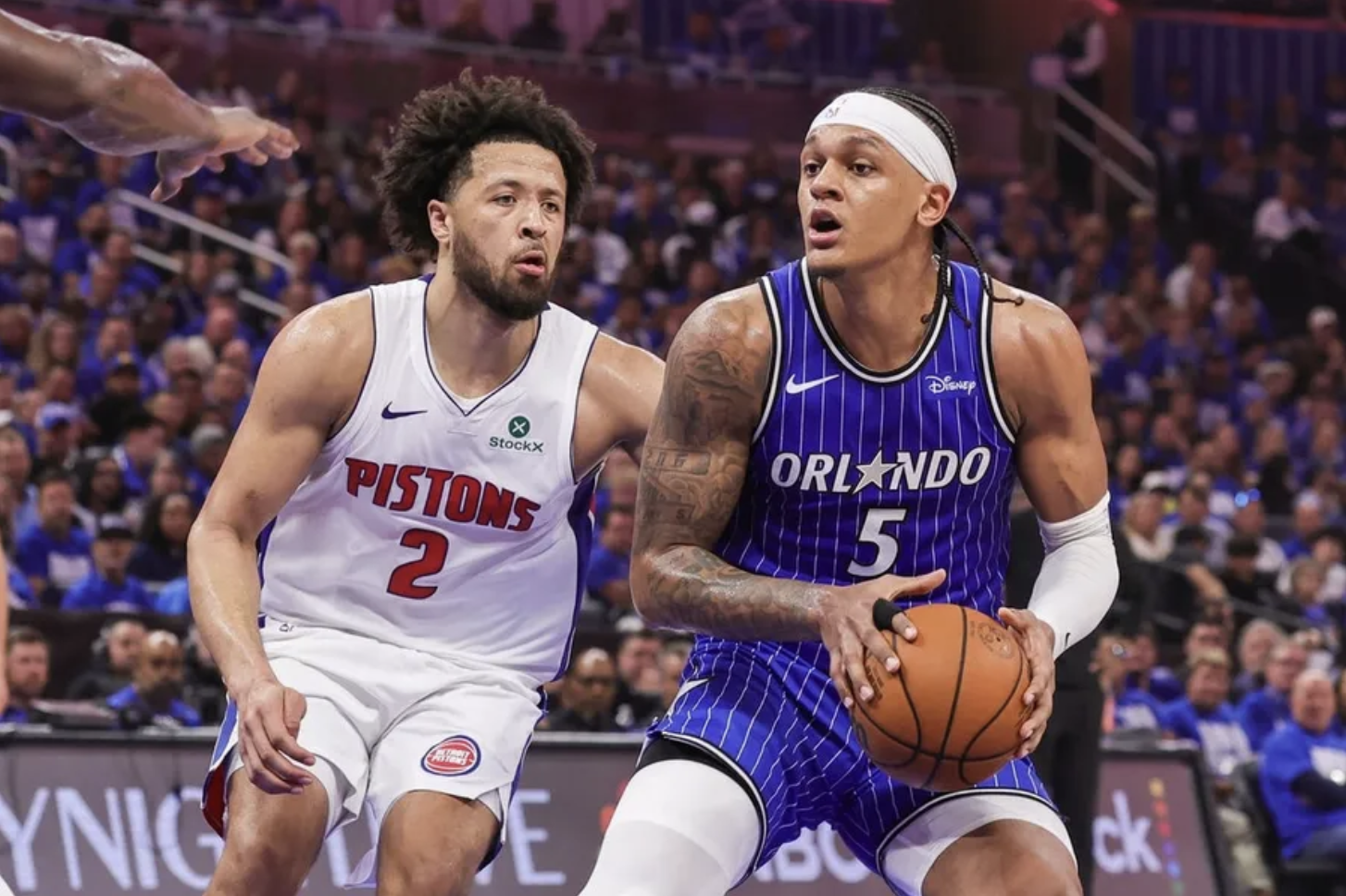
Inside the Orlando Magic’s Quest To Shock the NBA Against Detroit Pistons | Deadspin.com   The underdog has universal appeal because it represents all of us.Undersized and beating the odds. The common citizen saving the world. The unassuming hero.A No. 8 seed taking down a No. 1 in a playoff series is long shot gold. Or at least it should be.The Orlando Magic are poised to join the underdog hall of fame this week in their first-round playoff series against the Detroit Pistons.At No. 8 and the lowest seed in the Eastern Conference, Orlando earned an official playoff spot only after a loss and then a victory in the play-in tournament. Now they have the top-seeded Pistons on the ropes with a 3-1 series lead.Just eight games over .500 in the regular season, the Magic can now boot a 60-win team from the playoff field.And yet the rags-to-riches tale does not seem to be captivating a nation like it should.Don’t expect anybody to crank up the “Hoosiers” clips before what could be a decisive Game 5 on Wednesday. This isn’t even “The Fish That Saved Pittsburgh.”Only six No. 8 seeds have ever won a first-round series against a No. 1 in NBA playoff history. Perhaps the most famous was in 1994 when the Denver Nuggets got past the Seattle SuperSonics in a best-of-five opening round.The sight of Nuggets center Dikembe Mutombo lying on the court and holding the basketball aloft — part laughter, part tears — is the picture of playoff upsets.In 1999, the New York Knicks under Jeff Van Gundy knocked off the Miami Heat in another five-game thriller.Other first-round conquerors, all in seven-game series, include the 2007 Golden State Warriors over the Dallas Mavericks; the 2011 Memphis Grizzlies over the San Antonio Spurs; the 2012 Philadelphia 76ers over the Chicago Bulls; the 2023 Heat over the Milwaukee Bucks.Perhaps it has happened too often to stir the senses.Or maybe it’s that the top seed in this case was sort of the underdog of the regular season that rose to new heights. The Pistons had just ended a five-season playoff drought last year when they were dumped in the first round.That 2025 playoff appearance came after they were a brutal 14-68 one season earlier. They had averaged just shy of 19 wins per season over the previous five campaigns.This Pistons-Magic series is void of a proper villain.In Orlando, though, there is nothing Mickey Mouse about it.The Magic have been eliminated in the first round the last six times they have made the playoffs. They have not won a series since making the Eastern Conference finals in 2010 under Stan Van Gundy.Orlando looked ready to turn a corner when Franz Wagner and Jalen Suggs arrived before the 2021-22 season. They seemed well on their way when Paolo Banchero joined one season later.They added Desmond Bane this season in an eye-opening deal that cost four unprotected first-round draft picks and a 2029 draft pick swap. Bane ended up delivering 20.1 points per game in the regular season while providing veteran leadership. In the playoffs, he is scoring 19.0 points while shooting 44.1% from 3-point range.After Wagner missed 48 games during the regular season with an ankle injury, he has scored 16.8 points in the playoffs. Banchero has scored 21.0 points with 8.8 rebounds and 6.3 assists in the playoffs.If the Magic can get past the Pistons, they look like they also have a chance against the Cleveland Cavaliers or Toronto Raptors in the next round.If the Magic move deeper into the playoffs, maybe then they can move the masses then. It is a small world after all.   #Orlando #Magics #Quest #Shock #NBA #Detroit #Pistons #Deadspin.com

Inside the Orlando Magic’s Quest To Shock the NBA Against Detroit Pistons | Deadspin.com

The underdog has universal appeal because it represents all of us.

Undersized and beating the odds. The common citizen saving the world. The unassuming hero.

A No. 8 seed taking down a No. 1 in a playoff series is long shot gold. Or at least it should be.

The Orlando Magic are poised to join the underdog hall of fame this week in their first-round playoff series against the Detroit Pistons.

At No. 8 and the lowest seed in the Eastern Conference, Orlando earned an official playoff spot only after a loss and then a victory in the play-in tournament. Now they have the top-seeded Pistons on the ropes with a 3-1 series lead.

Just eight games over .500 in the regular season, the Magic can now boot a 60-win team from the playoff field.

And yet the rags-to-riches tale does not seem to be captivating a nation like it should.

Don’t expect anybody to crank up the “Hoosiers” clips before what could be a decisive Game 5 on Wednesday. This isn’t even “The Fish That Saved Pittsburgh.”

Only six No. 8 seeds have ever won a first-round series against a No. 1 in NBA playoff history. Perhaps the most famous was in 1994 when the Denver Nuggets got past the Seattle SuperSonics in a best-of-five opening round.

The sight of Nuggets center Dikembe Mutombo lying on the court and holding the basketball aloft — part laughter, part tears — is the picture of playoff upsets.

In 1999, the New York Knicks under Jeff Van Gundy knocked off the Miami Heat in another five-game thriller.

Other first-round conquerors, all in seven-game series, include the 2007 Golden State Warriors over the Dallas Mavericks; the 2011 Memphis Grizzlies over the San Antonio Spurs; the 2012 Philadelphia 76ers over the Chicago Bulls; the 2023 Heat over the Milwaukee Bucks.

Perhaps it has happened too often to stir the senses.

Or maybe it’s that the top seed in this case was sort of the underdog of the regular season that rose to new heights. The Pistons had just ended a five-season playoff drought last year when they were dumped in the first round.

That 2025 playoff appearance came after they were a brutal 14-68 one season earlier. They had averaged just shy of 19 wins per season over the previous five campaigns.

This Pistons-Magic series is void of a proper villain.

In Orlando, though, there is nothing Mickey Mouse about it.

The Magic have been eliminated in the first round the last six times they have made the playoffs. They have not won a series since making the Eastern Conference finals in 2010 under Stan Van Gundy.

Orlando looked ready to turn a corner when Franz Wagner and Jalen Suggs arrived before the 2021-22 season. They seemed well on their way when Paolo Banchero joined one season later.

They added Desmond Bane this season in an eye-opening deal that cost four unprotected first-round draft picks and a 2029 draft pick swap. Bane ended up delivering 20.1 points per game in the regular season while providing veteran leadership. In the playoffs, he is scoring 19.0 points while shooting 44.1% from 3-point range.

After Wagner missed 48 games during the regular season with an ankle injury, he has scored 16.8 points in the playoffs. Banchero has scored 21.0 points with 8.8 rebounds and 6.3 assists in the playoffs.

If the Magic can get past the Pistons, they look like they also have a chance against the Cleveland Cavaliers or Toronto Raptors in the next round.

If the Magic move deeper into the playoffs, maybe then they can move the masses then. It is a small world after all.

#Orlando #Magics #Quest #Shock #NBA #Detroit #Pistons #Deadspin.com

The underdog has universal appeal because it represents all of us.

Undersized and beating the odds. The common citizen saving the world. The unassuming hero.

A No. 8 seed taking down a No. 1 in a playoff series is long shot gold. Or at least it should be.

The Orlando Magic are poised to join the underdog hall of fame this week in their first-round playoff series against the Detroit Pistons.

At No. 8 and the lowest seed in the Eastern Conference, Orlando earned an official playoff spot only after a loss and then a victory in the play-in tournament. Now they have the top-seeded Pistons on the ropes with a 3-1 series lead.

Just eight games over .500 in the regular season, the Magic can now boot a 60-win team from the playoff field.

And yet the rags-to-riches tale does not seem to be captivating a nation like it should.

Don’t expect anybody to crank up the “Hoosiers” clips before what could be a decisive Game 5 on Wednesday. This isn’t even “The Fish That Saved Pittsburgh.”

Only six No. 8 seeds have ever won a first-round series against a No. 1 in NBA playoff history. Perhaps the most famous was in 1994 when the Denver Nuggets got past the Seattle SuperSonics in a best-of-five opening round.

The sight of Nuggets center Dikembe Mutombo lying on the court and holding the basketball aloft — part laughter, part tears — is the picture of playoff upsets.

In 1999, the New York Knicks under Jeff Van Gundy knocked off the Miami Heat in another five-game thriller.

Other first-round conquerors, all in seven-game series, include the 2007 Golden State Warriors over the Dallas Mavericks; the 2011 Memphis Grizzlies over the San Antonio Spurs; the 2012 Philadelphia 76ers over the Chicago Bulls; the 2023 Heat over the Milwaukee Bucks.

Perhaps it has happened too often to stir the senses.

Or maybe it’s that the top seed in this case was sort of the underdog of the regular season that rose to new heights. The Pistons had just ended a five-season playoff drought last year when they were dumped in the first round.

That 2025 playoff appearance came after they were a brutal 14-68 one season earlier. They had averaged just shy of 19 wins per season over the previous five campaigns.

This Pistons-Magic series is void of a proper villain.

In Orlando, though, there is nothing Mickey Mouse about it.

The Magic have been eliminated in the first round the last six times they have made the playoffs. They have not won a series since making the Eastern Conference finals in 2010 under Stan Van Gundy.

Orlando looked ready to turn a corner when Franz Wagner and Jalen Suggs arrived before the 2021-22 season. They seemed well on their way when Paolo Banchero joined one season later.

They added Desmond Bane this season in an eye-opening deal that cost four unprotected first-round draft picks and a 2029 draft pick swap. Bane ended up delivering 20.1 points per game in the regular season while providing veteran leadership. In the playoffs, he is scoring 19.0 points while shooting 44.1% from 3-point range.

After Wagner missed 48 games during the regular season with an ankle injury, he has scored 16.8 points in the playoffs. Banchero has scored 21.0 points with 8.8 rebounds and 6.3 assists in the playoffs.

If the Magic can get past the Pistons, they look like they also have a chance against the Cleveland Cavaliers or Toronto Raptors in the next round.

If the Magic move deeper into the playoffs, maybe then they can move the masses then. It is a small world after all.

Source link
#Orlando #Magics #Quest #Shock #NBA #Detroit #Pistons #Deadspin.com

Previous post

FIFA opens talks on rule requiring clubs to field at least one homegrown young player during matches <div id="content-body-70920539" itemprop="articleBody"><p>FIFA has opened talks on making it mandatory for all professional teams to field at least one homegrown young player throughout a match.</p><p>The FIFA Council agreed late on Tuesday to work towards a formal plan within a year, following global consultation with stakeholders.</p><p>The move is aimed at increasing playing opportunities for young players developed by clubs, especially at teams that usually rely on bought and imported talent.</p><p>FIFA said it is targeting “a regulatory obligation that senior club teams are obliged to always have at least one homegrown player from the Under-20 or Under-21 category on the field of play.”</p><p>Such a rule would be stricter than existing regulations in national and international club competitions, including the Champions League, which require a quota of homegrown and club-trained players in squad lists.</p><p><b>ALSO READ:<a href="https://sportstar.thehindu.com/football/fifa-world-cup-2026-prize-money-boosted-full-details-of-amount-for-teams-in-wc/article70919243.ece" target="_blank" rel="nofollow"> FIFA boosts cash payments for World Cup 2026</a></b></p><p>However, those rules do not make it compulsory for clubs to select such players in their starting line-ups or use them during matches.</p><p>Champions League rules require each squad to reserve at least eight places for “locally trained players” in a maximum squad of 25.</p><p>A locally trained player is defined by Champions League organiser UEFA as one developed by the club itself or by another club in the same country for at least three full seasons between the ages of 15 and 21.</p><p class="publish-time" id="end-of-article">Published on Apr 29, 2026</p></div> #FIFA #opens #talks #rule #requiring #clubs #field #homegrown #young #player #matches

Next post

Real Zaragoza keeper Esteban banned for 13 games after punching Huesca player Jorge <div id="content-body-70921092" itemprop="articleBody"><p>The Spanish football federation banned Real Zaragoza goalkeeper Esteban Andrada for 13 matches on Wednesday after he punched Huesca player Jorge Pulido in the face.</p><p>The federation’s disciplinary committee said in a statement that the Argentina international and his club would also be fined. Andrada was sent off before he “attacked” Pulido during the second-tier derby last Sunday.</p><p>Andrada was handed a 12-match ban for the punch, while his initial red card carried an automatic one-match suspension. The punishment rules him out for the rest of the season and deals a blow to Zaragoza’s hopes in its battle to avoid relegation.</p><p>The 35-year-old, on loan from Mexican side Monterrey, shoved Pulido and was shown a second yellow card for the incident.</p><p><b>ALSO READ: <a href="https://sportstar.thehindu.com/football/international-football/fifa-one-homegrown-young-player-in-team-during-matches-proposal-latest-football-updates/article70920539.ece" target="_blank" rel="nofollow">FIFA opens talks on rule requiring clubs to field one homegrown young player during matches</a></b></p><p>Andrada then became enraged, running towards Pulido and hitting him, sparking a brawl on the pitch in stoppage time.</p><p>“The truth is I’m very, very sorry for what happened,” Andrada said afterwards.</p><p>“It’s not a good image for the club, for the fans, and especially not for a professional like myself. So, I’m very sorry.”</p><p>Huesca goalkeeper Dani Jimenez and Zaragoza’s Dani Tasende were also sent off after the brawl, with host Huesca holding on for a 1-0 win. Jimenez was banned for four matches and Tasende for two.</p><p>“We witnessed scenes unbecoming of this sport and which should never have occurred,” Zaragoza said in a statement on Sunday.</p><p class="publish-time" id="end-of-article">Published on Apr 29, 2026</p></div> #Real #Zaragoza #keeper #Esteban #banned #games #punching #Huesca #player #Jorge

Deadspin | Phillies eager to ride ‘good start’ into rematch vs. Giants    Apr 28, 2026; Philadelphia, Pennsylvania, USA; Philadelphia Phillies interim manager Don Mattingly (8) in the dugout before start of game against the San Francisco Giants at Citizens Bank Park. Mandatory Credit: Eric Hartline-Imagn Images   After beginning the Don Mattingly era with a much-needed victory, the Philadelphia Phillies hope to ride the momentum into Wednesday night’s matchup with the visiting San Francisco Giants.  Philadelphia entered Tuesday with a league-worst-tying 9-19 record, prompting the team to part ways with manager Rob Thomson.   Mattingly was promoted from bench coach to replace Thomson on an interim basis — and the early results overwhelmingly were positive.  Jesus Luzardo allowed just two hits over seven scoreless innings, while Trea Turner spurred the offense with four hits in the Phillies’ 7-0 victory over the Giants on Tuesday. Adolis Garcia drove in two runs, while Bryce Harper and Alec Bohm each added two hits and an RBI in the lopsided triumph.  “It feels great, obviously, for us to win, and not necessarily for me,” said Mattingly, 65, a former major league manager with both the Los Angeles Dodgers and Miami Marlins “… It’s really about our club, and it’s a good win for us, as a team. Hopefully, this is the start of us playing better baseball.”  Turner had not recorded a multi-hit game since April 12, while Bohm (.157), Kyle Schwarber (.190) and Bryson Stott (.213) are among the Phillies with lower-than-expected batting averages this season.  “Tonight was a good start,” Turner said. “We’ve got to keep doing what we did. We played a great team game today. Everyone contributed.”  For his part, Luzardo had not worked seven innings in a game all season. However, he was at his best against a Giants team that entered with seven wins in its previous 10 games.  “We obviously could have done things better, but you can’t take away from the way Luzardo was throwing the ball,” San Francisco manager Tony Vitello said.   Wednesday’s pitching matchup will feature two aces who have not been at their best this season.  Philadelphia left-hander Cristopher Sanchez (2-2, 2.94 ERA) has won only once since Opening Day and is coming off a rough start against the Chicago Cubs on Thursday in a game in which he gave up six runs and a career-high 12 hits in 5 1/3 innings. Sanchez got a no-decision in his team’s 8-7 loss in 10 innings.  “I just tried to execute the plan that we had, stay as long as I could in the game,” he said through an interpreter. “They jumped on their plan, and they got me.”  Sanchez also was hit hard by San Francisco on April 7, when the Giants tagged him for four runs (two earned) and 11 hits in five innings in a 6-0 victory. That loss dropped Sanchez to 2-1 with a 1.82 ERA in six lifetime games against the Giants.  Wednesday’s scheduled starter for San Francisco, right-hander Logan Webb (2-3, 4.86 ERA), yielded three runs in seven innings in his last start — a 3-0 loss to the Los Angeles Dodgers on Thursday.  “I honestly thought that was one of the better games I’ve thrown this year,” Webb said, adding that he’s “still working, still trying to get back to what I expect of myself.”  Webb is 0-1 with a 6.19 ERA in three career outings (all starts) against the Phillies. He did not face them when the teams met in San Francisco last month.   –Field Level Media   #Deadspin #Phillies #eager #ride #good #start #rematch #GiantsApr 28, 2026; Philadelphia, Pennsylvania, USA; Philadelphia Phillies interim manager Don Mattingly (8) in the dugout before start of game against the San Francisco Giants at Citizens Bank Park. Mandatory Credit: Eric Hartline-Imagn Images

After beginning the Don Mattingly era with a much-needed victory, the Philadelphia Phillies hope to ride the momentum into Wednesday night’s matchup with the visiting San Francisco Giants.

Philadelphia entered Tuesday with a league-worst-tying 9-19 record, prompting the team to part ways with manager Rob Thomson.

Mattingly was promoted from bench coach to replace Thomson on an interim basis — and the early results overwhelmingly were positive.

Jesus Luzardo allowed just two hits over seven scoreless innings, while Trea Turner spurred the offense with four hits in the Phillies’ 7-0 victory over the Giants on Tuesday. Adolis Garcia drove in two runs, while Bryce Harper and Alec Bohm each added two hits and an RBI in the lopsided triumph.

“It feels great, obviously, for us to win, and not necessarily for me,” said Mattingly, 65, a former major league manager with both the Los Angeles Dodgers and Miami Marlins “… It’s really about our club, and it’s a good win for us, as a team. Hopefully, this is the start of us playing better baseball.”

Turner had not recorded a multi-hit game since April 12, while Bohm (.157), Kyle Schwarber (.190) and Bryson Stott (.213) are among the Phillies with lower-than-expected batting averages this season.

“Tonight was a good start,” Turner said. “We’ve got to keep doing what we did. We played a great team game today. Everyone contributed.”

For his part, Luzardo had not worked seven innings in a game all season. However, he was at his best against a Giants team that entered with seven wins in its previous 10 games.


“We obviously could have done things better, but you can’t take away from the way Luzardo was throwing the ball,” San Francisco manager Tony Vitello said.

Wednesday’s pitching matchup will feature two aces who have not been at their best this season.

Philadelphia left-hander Cristopher Sanchez (2-2, 2.94 ERA) has won only once since Opening Day and is coming off a rough start against the Chicago Cubs on Thursday in a game in which he gave up six runs and a career-high 12 hits in 5 1/3 innings. Sanchez got a no-decision in his team’s 8-7 loss in 10 innings.

“I just tried to execute the plan that we had, stay as long as I could in the game,” he said through an interpreter. “They jumped on their plan, and they got me.”

Sanchez also was hit hard by San Francisco on April 7, when the Giants tagged him for four runs (two earned) and 11 hits in five innings in a 6-0 victory. That loss dropped Sanchez to 2-1 with a 1.82 ERA in six lifetime games against the Giants.

Wednesday’s scheduled starter for San Francisco, right-hander Logan Webb (2-3, 4.86 ERA), yielded three runs in seven innings in his last start — a 3-0 loss to the Los Angeles Dodgers on Thursday.

“I honestly thought that was one of the better games I’ve thrown this year,” Webb said, adding that he’s “still working, still trying to get back to what I expect of myself.”

Webb is 0-1 with a 6.19 ERA in three career outings (all starts) against the Phillies. He did not face them when the teams met in San Francisco last month.

–Field Level Media

#Deadspin #Phillies #eager #ride #good #start #rematch #Giants">Deadspin | Phillies eager to ride ‘good start’ into rematch vs. Giants    Apr 28, 2026; Philadelphia, Pennsylvania, USA; Philadelphia Phillies interim manager Don Mattingly (8) in the dugout before start of game against the San Francisco Giants at Citizens Bank Park. Mandatory Credit: Eric Hartline-Imagn Images   After beginning the Don Mattingly era with a much-needed victory, the Philadelphia Phillies hope to ride the momentum into Wednesday night’s matchup with the visiting San Francisco Giants.  Philadelphia entered Tuesday with a league-worst-tying 9-19 record, prompting the team to part ways with manager Rob Thomson.   Mattingly was promoted from bench coach to replace Thomson on an interim basis — and the early results overwhelmingly were positive.  Jesus Luzardo allowed just two hits over seven scoreless innings, while Trea Turner spurred the offense with four hits in the Phillies’ 7-0 victory over the Giants on Tuesday. Adolis Garcia drove in two runs, while Bryce Harper and Alec Bohm each added two hits and an RBI in the lopsided triumph.  “It feels great, obviously, for us to win, and not necessarily for me,” said Mattingly, 65, a former major league manager with both the Los Angeles Dodgers and Miami Marlins “… It’s really about our club, and it’s a good win for us, as a team. Hopefully, this is the start of us playing better baseball.”  Turner had not recorded a multi-hit game since April 12, while Bohm (.157), Kyle Schwarber (.190) and Bryson Stott (.213) are among the Phillies with lower-than-expected batting averages this season.  “Tonight was a good start,” Turner said. “We’ve got to keep doing what we did. We played a great team game today. Everyone contributed.”  For his part, Luzardo had not worked seven innings in a game all season. However, he was at his best against a Giants team that entered with seven wins in its previous 10 games.  “We obviously could have done things better, but you can’t take away from the way Luzardo was throwing the ball,” San Francisco manager Tony Vitello said.   Wednesday’s pitching matchup will feature two aces who have not been at their best this season.  Philadelphia left-hander Cristopher Sanchez (2-2, 2.94 ERA) has won only once since Opening Day and is coming off a rough start against the Chicago Cubs on Thursday in a game in which he gave up six runs and a career-high 12 hits in 5 1/3 innings. Sanchez got a no-decision in his team’s 8-7 loss in 10 innings.  “I just tried to execute the plan that we had, stay as long as I could in the game,” he said through an interpreter. “They jumped on their plan, and they got me.”  Sanchez also was hit hard by San Francisco on April 7, when the Giants tagged him for four runs (two earned) and 11 hits in five innings in a 6-0 victory. That loss dropped Sanchez to 2-1 with a 1.82 ERA in six lifetime games against the Giants.  Wednesday’s scheduled starter for San Francisco, right-hander Logan Webb (2-3, 4.86 ERA), yielded three runs in seven innings in his last start — a 3-0 loss to the Los Angeles Dodgers on Thursday.  “I honestly thought that was one of the better games I’ve thrown this year,” Webb said, adding that he’s “still working, still trying to get back to what I expect of myself.”  Webb is 0-1 with a 6.19 ERA in three career outings (all starts) against the Phillies. He did not face them when the teams met in San Francisco last month.   –Field Level Media   #Deadspin #Phillies #eager #ride #good #start #rematch #Giants

Adam Silver heard the outcry over tanking ahead of a loaded 2026 NBA Draft and was determined to find a solution. The league has now settled on its preferred system of lottery reform, and it essentially reduces the distribution of top young talent entering the league to complete randomness.

ESPN insider Shams Charania revealed the NBA’s new “3-2-1” lottery system on Tuesday night. Here’s what you need to know:

  • The three worst teams in the league are in the “relegation zone,” which means they lose ping-pong balls.
  • Teams that finish 4th through 10th in the reverse standings get three lottery balls in the drawing.
  • Teams in the “relegation zone” get two lottery balls, and can’t fall further than the 12th pick
  • “The Nos. 9 and 10 play-in seeds in each conference receive two lottery balls each, and the losers of the 7-8 play-in games receive one lottery ball each.”
  • The lottery is expanded from 14 to 16 teams.
  • Under the current system, lottery balls are only drawn for the top-4 picks. Now, the first 16 spots in the draft will be up for grabs in the drawing.
  • Teams can’t land the No. 1 pick in back-to-back years, and they can’t pick in the top-5 three times in a row.

Got all that? Probably not, because it’s pretty complicated. When Adam Silver was weighing multiple options to reform the NBA Draft lottery last month, I wrote “in rushing to find a medicine to cure tanking, the NBA risks giving itself bigger problems from the side effects.” While this system likely will curb tanking to some extent, it opens up a ton of new problems for the league.

It’s pretty wild that Silver rushed this system through so hastily with it slated to take effect for the 2027 NBA Draft. Teams already made long-term roster decisions based on the incentives of the old rules. The Chicago Bulls traded Ayo Dosunmu and Coby White at the deadline after years of floundering in mediocrity to increase their chances at finding a star. This system rewards mediocrity. It would have been nice if Chicago actually knew the rules before making its February deals. The Memphis Grizzlies traded away Jaren Jackson Jr. and Desmond Bane because they felt like they couldn’t get out of the middle of the Western Conference standings. Would Memphis had made the same decisions if they knew the lottery format would change like this?

It’s no surprise the league is giving itself the option to opt out of this plan after the 2029 NBA Draft, per Charania’s report. This lottery format feels like an extremely slippery slope for a few reasons. Let’s get into it.

The new lottery system kills hope for diehard fans of bad teams

Teams had the ability to go from worst-to-first under the current lottery system despite the fact that the worst team in the league literally never won the lottery since the last round of reform went into effect in 2019. The Detroit Pistons, San Antonio Spurs, Oklahoma City Thunder, and Minnesota Timberwolves all made the worst-to-first jump in the 2020s.

Those are all small market teams who used the draft to land their franchise player. They still had to get lucky to land the top pick. It’s just going to require way more luck for bad teams to get good under this system.

The risk of this system is that it creates a permanent NBA underclass. Now the worst team in the league can fall to the 12th pick. Given how rarely good players change hands in free agency these days (more on that later), it feels like bad teams could get stuck in a cycle of being bad for a long, long time.

If teams can’t sell wins, they need to sell hope. What hope would fans of bad teams have now knowing they could fall out of the top-10 in the draft? The risk here is that diehard fans of bad teams just choose to give up because there’s no path forward.

Lottery reform feels like it should be coupled with free agency changes

How are bad teams supposed to get good players if they can’t do it through the draft? Free agency and trades are the only other options, but the prospect of bad teams overpaying free agents to land them only offers more downside, especially in this more punitive CBA.

It feels like the league needs more good young players to hit free agency if it doesn’t want teams to tank for the draft. One idea I saw elsewhere that I liked was eliminating restricted free agency. Under the current system, the Pistons still have the ability to match any contract offer to Jalen Duren even after failing to reach an extension with him. What if Duren was just an unrestricted free agent this year, and could be had for any team?

Something like that would open up more avenues for talent acquisition outside of the draft. For now, it feels like bad teams that don’t get lottery luck are simply screwed.

The NBA already killed free agency. Will these changes kill trades, too?

Silver heard the outcry over Kevin Durant signing with the Golden State Warriors, and essentially made rule changes that kept superstars away from free agency. The last true superstar to change teams in free agency was Kawhi Leonard signing with the Los Angeles Clippers in 2019. Since then, the biggest player to change teams in free agency is … washed Paul George in 2024?

The NBA gets a lot of attention from offseason player movement. I wonder if these changes will make teams more reluctant to trade their future first-round picks, thus diminishing the trade market, too.

First-round picks are the currency of trades. A team that was around .500 was more incentivized to trade a future first because it had a lower probability of turning into a premium pick. Now that’s been flipped on its head.

This is all pretty speculative for now, but it’s something to monitor. This new lottery system will have unintended consequences, and it would be a net-loss for the NBA if it resulted in fewer trades.

Tanking will still happen under these lottery rules, just in different ways

This lottery system should curb tanking, but it won’t eliminate it entirely. If the goal of these changes is to preserve the sanctity of March and April games, I’m not sure that’s going to happen.

Let’s say a team enters the All-Star break in 10th place in their conference. They might not want to risk losing a ping pong ball by making the 7/8 play-in game, so they will still rest players as long as they have a big enough cushion not to finish in the bottom-3. The sweet spot in this reform is the 4-10 range. Given how often injuries play a factor in team performance — and given how many significant injuries there are in the modern game — it feels likely a team can still rest players/try to lose on purpose from an organizational perspective and still enter the lottery sitting pretty.

Tanking was never the NBA’s biggest problem anyway

Adam Silver is a reactionary. He reads online criticism, and he acts quickly. My complaint with rushing through this tanking reform is that fans of teams that are tanking aren’t the ones doing the complaining. It’s usually coming from football fans after the Super Bowl who will just find another way to criticize the NBA even if tanking was solved.

The NBA’s biggest issue is that the regular season lacks anything resembling meaningful stakes. Silver thinks that these lottery reforms will fix that problem, but I’m extremely dubious. If the NBA wants to give the regular season more stakes, it needs to reduce the number of games. Play every team twice and call it a season. Once the NBA adds its two expansion teams in Las Vegas and Seattle, that would create a 62-game schedule. It gives the players more rest in between games, and cancels a lot of the end of season games where tanking tomfoolery is happening.

The point of the draft is to give the worst teams the best young players. The NBA apparently doesn’t see it that way, and they’re instead leaving it all up to chance.

This lottery simulator shows how much randomness is in the new system. Play with it yourself:

On my first spin, the Miami Heat drew the No. 1 pick and the Washington Wizards fell to 12th. Is that the type of system the NBA really wants?

The biggest winner of these lottery changes feel like … the Oklahoma City Thunder. Check out all of the future first-round picks OKC owns here. Now their future picks coming from the Nuggets and their swap rights with the Clippers could be even more valuable, as those teams likely wouldn’t have been near the bottom of the standings, but could be in the middle ground that is now more fruitful.

Back in 2017, the great Tom Ziller wrote a column at this site titled “Kill the NBA Draft.” Subscribe to Tom’s newsletter here for more great NBA coverage.

Given how much randomness is in this new system, I find myself far more open to just killing the draft entirely starting in 2030. Give every team a rookie exception they can offer top players. Let teams with cap space offer them more money beyond that. It would make sense if a bad team has more open cap space and could hypothetically offer the next Cooper Flagg a max deal out of college. If Flagg prefers to sign with his childhood favorite Boston Celtics instead, so be it.

The NBA is opening up a whole new can of worms with this lottery system, and the people it hurts the most are loyal fans of hopeless franchises. The NBA really does not want a world where those people check out of the league entirely. I feel like it could happen after these changes.

#NBA #Draft #lottery #shortsighted #confusing #create #problems">NBA Draft lottery changes are shortsighted, confusing, and create new problems  Adam Silver heard the outcry over tanking ahead of a loaded 2026 NBA Draft and was determined to find a solution. The league has now settled on its preferred system of lottery reform, and it essentially reduces the distribution of top young talent entering the league to complete randomness.ESPN insider Shams Charania revealed the NBA’s new “3-2-1” lottery system on Tuesday night. Here’s what you need to know:The three worst teams in the league are in the “relegation zone,” which means they lose ping-pong balls.Teams that finish 4th through 10th in the reverse standings get three lottery balls in the drawing.Teams in the “relegation zone” get two lottery balls, and can’t fall further than the 12th pick“The Nos. 9 and 10 play-in seeds in each conference receive two lottery balls each, and the losers of the 7-8 play-in games receive one lottery ball each.”The lottery is expanded from 14 to 16 teams.Under the current system, lottery balls are only drawn for the top-4 picks. Now, the first 16 spots in the draft will be up for grabs in the drawing.Teams can’t land the No. 1 pick in back-to-back years, and they can’t pick in the top-5 three times in a row.Got all that? Probably not, because it’s pretty complicated. When Adam Silver was weighing multiple options to reform the NBA Draft lottery last month, I wrote “in rushing to find a medicine to cure tanking, the NBA risks giving itself bigger problems from the side effects.” While this system likely will curb tanking to some extent, it opens up a ton of new problems for the league.It’s pretty wild that Silver rushed this system through so hastily with it slated to take effect for the 2027 NBA Draft. Teams already made long-term roster decisions based on the incentives of the old rules. The Chicago Bulls traded Ayo Dosunmu and Coby White at the deadline after years of floundering in mediocrity to increase their chances at finding a star. This system rewards mediocrity. It would have been nice if Chicago actually knew the rules before making its February deals. The Memphis Grizzlies traded away Jaren Jackson Jr. and Desmond Bane because they felt like they couldn’t get out of the middle of the Western Conference standings. Would Memphis had made the same decisions if they knew the lottery format would change like this?It’s no surprise the league is giving itself the option to opt out of this plan after the 2029 NBA Draft, per Charania’s report. This lottery format feels like an extremely slippery slope for a few reasons. Let’s get into it.The new lottery system kills hope for diehard fans of bad teamsTeams had the ability to go from worst-to-first under the current lottery system despite the fact that the worst team in the league literally never won the lottery since the last round of reform went into effect in 2019. The Detroit Pistons, San Antonio Spurs, Oklahoma City Thunder, and Minnesota Timberwolves all made the worst-to-first jump in the 2020s.Those are all small market teams who used the draft to land their franchise player. They still had to get lucky to land the top pick. It’s just going to require way more luck for bad teams to get good under this system.The risk of this system is that it creates a permanent NBA underclass. Now the worst team in the league can fall to the 12th pick. Given how rarely good players change hands in free agency these days (more on that later), it feels like bad teams could get stuck in a cycle of being bad for a long, long time.If teams can’t sell wins, they need to sell hope. What hope would fans of bad teams have now knowing they could fall out of the top-10 in the draft? The risk here is that diehard fans of bad teams just choose to give up because there’s no path forward.Lottery reform feels like it should be coupled with free agency changesHow are bad teams supposed to get good players if they can’t do it through the draft? Free agency and trades are the only other options, but the prospect of bad teams overpaying free agents to land them only offers more downside, especially in this more punitive CBA.It feels like the league needs more good young players to hit free agency if it doesn’t want teams to tank for the draft. One idea I saw elsewhere that I liked was eliminating restricted free agency. Under the current system, the Pistons still have the ability to match any contract offer to Jalen Duren even after failing to reach an extension with him. What if Duren was just an unrestricted free agent this year, and could be had for any team?Something like that would open up more avenues for talent acquisition outside of the draft. For now, it feels like bad teams that don’t get lottery luck are simply screwed.The NBA already killed free agency. Will these changes kill trades, too?Silver heard the outcry over Kevin Durant signing with the Golden State Warriors, and essentially made rule changes that kept superstars away from free agency. The last true superstar to change teams in free agency was Kawhi Leonard signing with the Los Angeles Clippers in 2019. Since then, the biggest player to change teams in free agency is … washed Paul George in 2024?The NBA gets a lot of attention from offseason player movement. I wonder if these changes will make teams more reluctant to trade their future first-round picks, thus diminishing the trade market, too.First-round picks are the currency of trades. A team that was around .500 was more incentivized to trade a future first because it had a lower probability of turning into a premium pick. Now that’s been flipped on its head.This is all pretty speculative for now, but it’s something to monitor. This new lottery system will have unintended consequences, and it would be a net-loss for the NBA if it resulted in fewer trades.Tanking will still happen under these lottery rules, just in different waysThis lottery system should curb tanking, but it won’t eliminate it entirely. If the goal of these changes is to preserve the sanctity of March and April games, I’m not sure that’s going to happen.Let’s say a team enters the All-Star break in 10th place in their conference. They might not want to risk losing a ping pong ball by making the 7/8 play-in game, so they will still rest players as long as they have a big enough cushion not to finish in the bottom-3. The sweet spot in this reform is the 4-10 range. Given how often injuries play a factor in team performance — and given how many significant injuries there are in the modern game — it feels likely a team can still rest players/try to lose on purpose from an organizational perspective and still enter the lottery sitting pretty.Tanking was never the NBA’s biggest problem anywayAdam Silver is a reactionary. He reads online criticism, and he acts quickly. My complaint with rushing through this tanking reform is that fans of teams that are tanking aren’t the ones doing the complaining. It’s usually coming from football fans after the Super Bowl who will just find another way to criticize the NBA even if tanking was solved.The NBA’s biggest issue is that the regular season lacks anything resembling meaningful stakes. Silver thinks that these lottery reforms will fix that problem, but I’m extremely dubious. If the NBA wants to give the regular season more stakes, it needs to reduce the number of games. Play every team twice and call it a season. Once the NBA adds its two expansion teams in Las Vegas and Seattle, that would create a 62-game schedule. It gives the players more rest in between games, and cancels a lot of the end of season games where tanking tomfoolery is happening.The point of the draft is to give the worst teams the best young players. The NBA apparently doesn’t see it that way, and they’re instead leaving it all up to chance.This lottery simulator shows how much randomness is in the new system. Play with it yourself:On my first spin, the Miami Heat drew the No. 1 pick and the Washington Wizards fell to 12th. Is that the type of system the NBA really wants?The biggest winner of these lottery changes feel like … the Oklahoma City Thunder. Check out all of the future first-round picks OKC owns here. Now their future picks coming from the Nuggets and their swap rights with the Clippers could be even more valuable, as those teams likely wouldn’t have been near the bottom of the standings, but could be in the middle ground that is now more fruitful.Back in 2017, the great Tom Ziller wrote a column at this site titled “Kill the NBA Draft.” Subscribe to Tom’s newsletter here for more great NBA coverage.Given how much randomness is in this new system, I find myself far more open to just killing the draft entirely starting in 2030. Give every team a rookie exception they can offer top players. Let teams with cap space offer them more money beyond that. It would make sense if a bad team has more open cap space and could hypothetically offer the next Cooper Flagg a max deal out of college. If Flagg prefers to sign with his childhood favorite Boston Celtics instead, so be it.The NBA is opening up a whole new can of worms with this lottery system, and the people it hurts the most are loyal fans of hopeless franchises. The NBA really does not want a world where those people check out of the league entirely. I feel like it could happen after these changes.  #NBA #Draft #lottery #shortsighted #confusing #create #problems

Adam Silver heard the outcry over tanking ahead of a loaded 2026 NBA Draft and was determined to find a solution. The league has now settled on its preferred system of lottery reform, and it essentially reduces the distribution of top young talent entering the league to complete randomness.

ESPN insider Shams Charania revealed the NBA’s new “3-2-1” lottery system on Tuesday night. Here’s what you need to know:

  • The three worst teams in the league are in the “relegation zone,” which means they lose ping-pong balls.
  • Teams that finish 4th through 10th in the reverse standings get three lottery balls in the drawing.
  • Teams in the “relegation zone” get two lottery balls, and can’t fall further than the 12th pick
  • “The Nos. 9 and 10 play-in seeds in each conference receive two lottery balls each, and the losers of the 7-8 play-in games receive one lottery ball each.”
  • The lottery is expanded from 14 to 16 teams.
  • Under the current system, lottery balls are only drawn for the top-4 picks. Now, the first 16 spots in the draft will be up for grabs in the drawing.
  • Teams can’t land the No. 1 pick in back-to-back years, and they can’t pick in the top-5 three times in a row.

Got all that? Probably not, because it’s pretty complicated. When Adam Silver was weighing multiple options to reform the NBA Draft lottery last month, I wrote “in rushing to find a medicine to cure tanking, the NBA risks giving itself bigger problems from the side effects.” While this system likely will curb tanking to some extent, it opens up a ton of new problems for the league.

It’s pretty wild that Silver rushed this system through so hastily with it slated to take effect for the 2027 NBA Draft. Teams already made long-term roster decisions based on the incentives of the old rules. The Chicago Bulls traded Ayo Dosunmu and Coby White at the deadline after years of floundering in mediocrity to increase their chances at finding a star. This system rewards mediocrity. It would have been nice if Chicago actually knew the rules before making its February deals. The Memphis Grizzlies traded away Jaren Jackson Jr. and Desmond Bane because they felt like they couldn’t get out of the middle of the Western Conference standings. Would Memphis had made the same decisions if they knew the lottery format would change like this?

It’s no surprise the league is giving itself the option to opt out of this plan after the 2029 NBA Draft, per Charania’s report. This lottery format feels like an extremely slippery slope for a few reasons. Let’s get into it.

The new lottery system kills hope for diehard fans of bad teams

Teams had the ability to go from worst-to-first under the current lottery system despite the fact that the worst team in the league literally never won the lottery since the last round of reform went into effect in 2019. The Detroit Pistons, San Antonio Spurs, Oklahoma City Thunder, and Minnesota Timberwolves all made the worst-to-first jump in the 2020s.

Those are all small market teams who used the draft to land their franchise player. They still had to get lucky to land the top pick. It’s just going to require way more luck for bad teams to get good under this system.

The risk of this system is that it creates a permanent NBA underclass. Now the worst team in the league can fall to the 12th pick. Given how rarely good players change hands in free agency these days (more on that later), it feels like bad teams could get stuck in a cycle of being bad for a long, long time.

If teams can’t sell wins, they need to sell hope. What hope would fans of bad teams have now knowing they could fall out of the top-10 in the draft? The risk here is that diehard fans of bad teams just choose to give up because there’s no path forward.

Lottery reform feels like it should be coupled with free agency changes

How are bad teams supposed to get good players if they can’t do it through the draft? Free agency and trades are the only other options, but the prospect of bad teams overpaying free agents to land them only offers more downside, especially in this more punitive CBA.

It feels like the league needs more good young players to hit free agency if it doesn’t want teams to tank for the draft. One idea I saw elsewhere that I liked was eliminating restricted free agency. Under the current system, the Pistons still have the ability to match any contract offer to Jalen Duren even after failing to reach an extension with him. What if Duren was just an unrestricted free agent this year, and could be had for any team?

Something like that would open up more avenues for talent acquisition outside of the draft. For now, it feels like bad teams that don’t get lottery luck are simply screwed.

The NBA already killed free agency. Will these changes kill trades, too?

Silver heard the outcry over Kevin Durant signing with the Golden State Warriors, and essentially made rule changes that kept superstars away from free agency. The last true superstar to change teams in free agency was Kawhi Leonard signing with the Los Angeles Clippers in 2019. Since then, the biggest player to change teams in free agency is … washed Paul George in 2024?

The NBA gets a lot of attention from offseason player movement. I wonder if these changes will make teams more reluctant to trade their future first-round picks, thus diminishing the trade market, too.

First-round picks are the currency of trades. A team that was around .500 was more incentivized to trade a future first because it had a lower probability of turning into a premium pick. Now that’s been flipped on its head.

This is all pretty speculative for now, but it’s something to monitor. This new lottery system will have unintended consequences, and it would be a net-loss for the NBA if it resulted in fewer trades.

Tanking will still happen under these lottery rules, just in different ways

This lottery system should curb tanking, but it won’t eliminate it entirely. If the goal of these changes is to preserve the sanctity of March and April games, I’m not sure that’s going to happen.

Let’s say a team enters the All-Star break in 10th place in their conference. They might not want to risk losing a ping pong ball by making the 7/8 play-in game, so they will still rest players as long as they have a big enough cushion not to finish in the bottom-3. The sweet spot in this reform is the 4-10 range. Given how often injuries play a factor in team performance — and given how many significant injuries there are in the modern game — it feels likely a team can still rest players/try to lose on purpose from an organizational perspective and still enter the lottery sitting pretty.

Tanking was never the NBA’s biggest problem anyway

Adam Silver is a reactionary. He reads online criticism, and he acts quickly. My complaint with rushing through this tanking reform is that fans of teams that are tanking aren’t the ones doing the complaining. It’s usually coming from football fans after the Super Bowl who will just find another way to criticize the NBA even if tanking was solved.

The NBA’s biggest issue is that the regular season lacks anything resembling meaningful stakes. Silver thinks that these lottery reforms will fix that problem, but I’m extremely dubious. If the NBA wants to give the regular season more stakes, it needs to reduce the number of games. Play every team twice and call it a season. Once the NBA adds its two expansion teams in Las Vegas and Seattle, that would create a 62-game schedule. It gives the players more rest in between games, and cancels a lot of the end of season games where tanking tomfoolery is happening.

The point of the draft is to give the worst teams the best young players. The NBA apparently doesn’t see it that way, and they’re instead leaving it all up to chance.

This lottery simulator shows how much randomness is in the new system. Play with it yourself:

On my first spin, the Miami Heat drew the No. 1 pick and the Washington Wizards fell to 12th. Is that the type of system the NBA really wants?

The biggest winner of these lottery changes feel like … the Oklahoma City Thunder. Check out all of the future first-round picks OKC owns here. Now their future picks coming from the Nuggets and their swap rights with the Clippers could be even more valuable, as those teams likely wouldn’t have been near the bottom of the standings, but could be in the middle ground that is now more fruitful.

Back in 2017, the great Tom Ziller wrote a column at this site titled “Kill the NBA Draft.” Subscribe to Tom’s newsletter here for more great NBA coverage.

Given how much randomness is in this new system, I find myself far more open to just killing the draft entirely starting in 2030. Give every team a rookie exception they can offer top players. Let teams with cap space offer them more money beyond that. It would make sense if a bad team has more open cap space and could hypothetically offer the next Cooper Flagg a max deal out of college. If Flagg prefers to sign with his childhood favorite Boston Celtics instead, so be it.

The NBA is opening up a whole new can of worms with this lottery system, and the people it hurts the most are loyal fans of hopeless franchises. The NBA really does not want a world where those people check out of the league entirely. I feel like it could happen after these changes.

#NBA #Draft #lottery #shortsighted #confusing #create #problems">NBA Draft lottery changes are shortsighted, confusing, and create new problems

Adam Silver heard the outcry over tanking ahead of a loaded 2026 NBA Draft and was determined to find a solution. The league has now settled on its preferred system of lottery reform, and it essentially reduces the distribution of top young talent entering the league to complete randomness.

ESPN insider Shams Charania revealed the NBA’s new “3-2-1” lottery system on Tuesday night. Here’s what you need to know:

  • The three worst teams in the league are in the “relegation zone,” which means they lose ping-pong balls.
  • Teams that finish 4th through 10th in the reverse standings get three lottery balls in the drawing.
  • Teams in the “relegation zone” get two lottery balls, and can’t fall further than the 12th pick
  • “The Nos. 9 and 10 play-in seeds in each conference receive two lottery balls each, and the losers of the 7-8 play-in games receive one lottery ball each.”
  • The lottery is expanded from 14 to 16 teams.
  • Under the current system, lottery balls are only drawn for the top-4 picks. Now, the first 16 spots in the draft will be up for grabs in the drawing.
  • Teams can’t land the No. 1 pick in back-to-back years, and they can’t pick in the top-5 three times in a row.

Got all that? Probably not, because it’s pretty complicated. When Adam Silver was weighing multiple options to reform the NBA Draft lottery last month, I wrote “in rushing to find a medicine to cure tanking, the NBA risks giving itself bigger problems from the side effects.” While this system likely will curb tanking to some extent, it opens up a ton of new problems for the league.

It’s pretty wild that Silver rushed this system through so hastily with it slated to take effect for the 2027 NBA Draft. Teams already made long-term roster decisions based on the incentives of the old rules. The Chicago Bulls traded Ayo Dosunmu and Coby White at the deadline after years of floundering in mediocrity to increase their chances at finding a star. This system rewards mediocrity. It would have been nice if Chicago actually knew the rules before making its February deals. The Memphis Grizzlies traded away Jaren Jackson Jr. and Desmond Bane because they felt like they couldn’t get out of the middle of the Western Conference standings. Would Memphis had made the same decisions if they knew the lottery format would change like this?

It’s no surprise the league is giving itself the option to opt out of this plan after the 2029 NBA Draft, per Charania’s report. This lottery format feels like an extremely slippery slope for a few reasons. Let’s get into it.

The new lottery system kills hope for diehard fans of bad teams

Teams had the ability to go from worst-to-first under the current lottery system despite the fact that the worst team in the league literally never won the lottery since the last round of reform went into effect in 2019. The Detroit Pistons, San Antonio Spurs, Oklahoma City Thunder, and Minnesota Timberwolves all made the worst-to-first jump in the 2020s.

Those are all small market teams who used the draft to land their franchise player. They still had to get lucky to land the top pick. It’s just going to require way more luck for bad teams to get good under this system.

The risk of this system is that it creates a permanent NBA underclass. Now the worst team in the league can fall to the 12th pick. Given how rarely good players change hands in free agency these days (more on that later), it feels like bad teams could get stuck in a cycle of being bad for a long, long time.

If teams can’t sell wins, they need to sell hope. What hope would fans of bad teams have now knowing they could fall out of the top-10 in the draft? The risk here is that diehard fans of bad teams just choose to give up because there’s no path forward.

Lottery reform feels like it should be coupled with free agency changes

How are bad teams supposed to get good players if they can’t do it through the draft? Free agency and trades are the only other options, but the prospect of bad teams overpaying free agents to land them only offers more downside, especially in this more punitive CBA.

It feels like the league needs more good young players to hit free agency if it doesn’t want teams to tank for the draft. One idea I saw elsewhere that I liked was eliminating restricted free agency. Under the current system, the Pistons still have the ability to match any contract offer to Jalen Duren even after failing to reach an extension with him. What if Duren was just an unrestricted free agent this year, and could be had for any team?

Something like that would open up more avenues for talent acquisition outside of the draft. For now, it feels like bad teams that don’t get lottery luck are simply screwed.

The NBA already killed free agency. Will these changes kill trades, too?

Silver heard the outcry over Kevin Durant signing with the Golden State Warriors, and essentially made rule changes that kept superstars away from free agency. The last true superstar to change teams in free agency was Kawhi Leonard signing with the Los Angeles Clippers in 2019. Since then, the biggest player to change teams in free agency is … washed Paul George in 2024?

The NBA gets a lot of attention from offseason player movement. I wonder if these changes will make teams more reluctant to trade their future first-round picks, thus diminishing the trade market, too.

First-round picks are the currency of trades. A team that was around .500 was more incentivized to trade a future first because it had a lower probability of turning into a premium pick. Now that’s been flipped on its head.

This is all pretty speculative for now, but it’s something to monitor. This new lottery system will have unintended consequences, and it would be a net-loss for the NBA if it resulted in fewer trades.

Tanking will still happen under these lottery rules, just in different ways

This lottery system should curb tanking, but it won’t eliminate it entirely. If the goal of these changes is to preserve the sanctity of March and April games, I’m not sure that’s going to happen.

Let’s say a team enters the All-Star break in 10th place in their conference. They might not want to risk losing a ping pong ball by making the 7/8 play-in game, so they will still rest players as long as they have a big enough cushion not to finish in the bottom-3. The sweet spot in this reform is the 4-10 range. Given how often injuries play a factor in team performance — and given how many significant injuries there are in the modern game — it feels likely a team can still rest players/try to lose on purpose from an organizational perspective and still enter the lottery sitting pretty.

Tanking was never the NBA’s biggest problem anyway

Adam Silver is a reactionary. He reads online criticism, and he acts quickly. My complaint with rushing through this tanking reform is that fans of teams that are tanking aren’t the ones doing the complaining. It’s usually coming from football fans after the Super Bowl who will just find another way to criticize the NBA even if tanking was solved.

The NBA’s biggest issue is that the regular season lacks anything resembling meaningful stakes. Silver thinks that these lottery reforms will fix that problem, but I’m extremely dubious. If the NBA wants to give the regular season more stakes, it needs to reduce the number of games. Play every team twice and call it a season. Once the NBA adds its two expansion teams in Las Vegas and Seattle, that would create a 62-game schedule. It gives the players more rest in between games, and cancels a lot of the end of season games where tanking tomfoolery is happening.

The point of the draft is to give the worst teams the best young players. The NBA apparently doesn’t see it that way, and they’re instead leaving it all up to chance.

This lottery simulator shows how much randomness is in the new system. Play with it yourself:

On my first spin, the Miami Heat drew the No. 1 pick and the Washington Wizards fell to 12th. Is that the type of system the NBA really wants?

The biggest winner of these lottery changes feel like … the Oklahoma City Thunder. Check out all of the future first-round picks OKC owns here. Now their future picks coming from the Nuggets and their swap rights with the Clippers could be even more valuable, as those teams likely wouldn’t have been near the bottom of the standings, but could be in the middle ground that is now more fruitful.

Back in 2017, the great Tom Ziller wrote a column at this site titled “Kill the NBA Draft.” Subscribe to Tom’s newsletter here for more great NBA coverage.

Given how much randomness is in this new system, I find myself far more open to just killing the draft entirely starting in 2030. Give every team a rookie exception they can offer top players. Let teams with cap space offer them more money beyond that. It would make sense if a bad team has more open cap space and could hypothetically offer the next Cooper Flagg a max deal out of college. If Flagg prefers to sign with his childhood favorite Boston Celtics instead, so be it.

The NBA is opening up a whole new can of worms with this lottery system, and the people it hurts the most are loyal fans of hopeless franchises. The NBA really does not want a world where those people check out of the league entirely. I feel like it could happen after these changes.

#NBA #Draft #lottery #shortsighted #confusing #create #problems

Post Comment