×
GT vs RCB, IPL 2026: Gujarat Titans looks for reversal in fortunes vs Royal Challengers Bengaluru  Gujarat Titans will have a second crack at Royal Challengers Bengaluru in less than a week, at the Narendra Modi Stadium here on Thursday.And this time, the Titans will hope for a reversal in fortunes after having lost the previous encounter by five wickets as RCB chased 206 with ease.Shubman Gill & Co. come into the contest after a thumping eight-wicket win over Chennai Super Kings that averted a third straight loss. It was fashioned by a fine bowling effort, led by Kagiso Rabada (three for 25), and some solid batting.It is however a fact that GT is heavily dependent on its top-three of B. Sai Sudharsan, Shubman Gill and Jos Buttler, who bat a lion’s share of the overs.There is no mistaking their quality, but they have so far proved to be more accumulators than ransackers. The line-up is like a simmering volcano that threatens to erupt but doesn’t follow through on the promise. GT’s highest total this season is 210; every other side, apart from Lucknow Super Giants, has scored more.Against RCB, a team that pursues totals in the vicinity of 200 like it’s child’s play, GT can ill-afford to bide its time. Even without Phil Salt, who missed the last two games, the defending champion strikes the same fear, for it has the equally marauding Jacob Bethell.And versus Delhi Capitals most recently, the RCB bowlers showed what devastation they can cause, dismissing Axar Patel’s men for a paltry 75.READ | Pitch perfect Hazlewood and Bhuvneshwar show how to restore IPL’s bat-ball balanceBhuvneshwar Kumar and Josh Hazlewood, 36 and 35 respectively, scalped seven wickets between them and gave away just 17 runs. Ageing – in sporting terms – is generally associated with physical decline and a slight dulling of the senses, but not for these two. On a lively surface at the Arun ‌Jaitley Stadium, Hazlewood and Bhuvneshwar claimed seven wickets ​between them and bundled out Delhi Capitals for 75.
                                                            | Photo Credit: 
                                SHIV KUMAR PUSHPAKAR
                            

                            On a lively surface at the Arun ‌Jaitley Stadium, Hazlewood and Bhuvneshwar claimed seven wickets ​between them and bundled out Delhi Capitals for 75.
                                                            | Photo Credit: 
                                SHIV KUMAR PUSHPAKAR
                                                    However, as the table-topping Punjab Kings found out in its six-wicket reverse to Rajasthan Royals on Tuesday, momentum has limited currency in T20 cricket. Can RCB prove otherwise?Published on Apr 29, 2026  #RCB #IPL #Gujarat #Titans #reversal #fortunes #Royal #Challengers #Bengaluru

GT vs RCB, IPL 2026: Gujarat Titans looks for reversal in fortunes vs Royal Challengers Bengaluru

Gujarat Titans will have a second crack at Royal Challengers Bengaluru in less than a week, at the Narendra Modi Stadium here on Thursday.

And this time, the Titans will hope for a reversal in fortunes after having lost the previous encounter by five wickets as RCB chased 206 with ease.

Shubman Gill & Co. come into the contest after a thumping eight-wicket win over Chennai Super Kings that averted a third straight loss. It was fashioned by a fine bowling effort, led by Kagiso Rabada (three for 25), and some solid batting.

It is however a fact that GT is heavily dependent on its top-three of B. Sai Sudharsan, Shubman Gill and Jos Buttler, who bat a lion’s share of the overs.

There is no mistaking their quality, but they have so far proved to be more accumulators than ransackers. The line-up is like a simmering volcano that threatens to erupt but doesn’t follow through on the promise. GT’s highest total this season is 210; every other side, apart from Lucknow Super Giants, has scored more.

Against RCB, a team that pursues totals in the vicinity of 200 like it’s child’s play, GT can ill-afford to bide its time. Even without Phil Salt, who missed the last two games, the defending champion strikes the same fear, for it has the equally marauding Jacob Bethell.

And versus Delhi Capitals most recently, the RCB bowlers showed what devastation they can cause, dismissing Axar Patel’s men for a paltry 75.

READ | Pitch perfect Hazlewood and Bhuvneshwar show how to restore IPL’s bat-ball balance

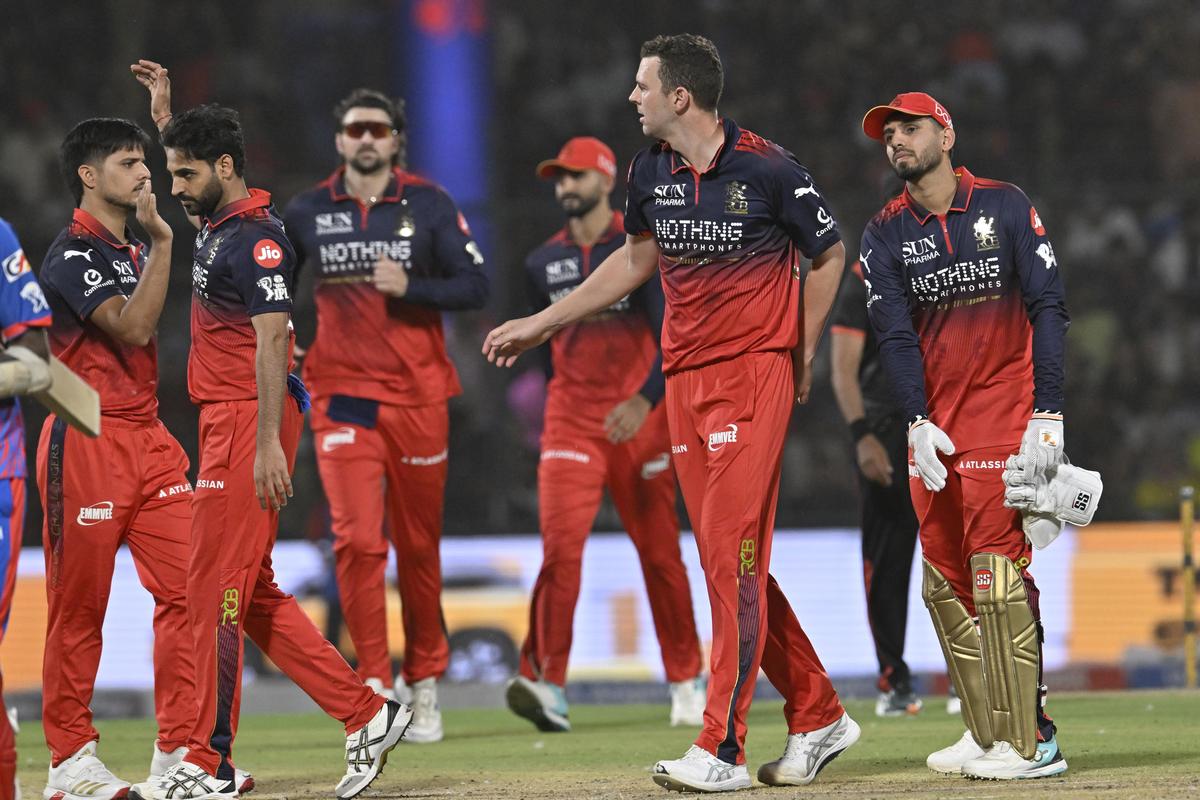
Bhuvneshwar Kumar and Josh Hazlewood, 36 and 35 respectively, scalped seven wickets between them and gave away just 17 runs. Ageing – in sporting terms – is generally associated with physical decline and a slight dulling of the senses, but not for these two.
GT vs RCB, IPL 2026: Gujarat Titans looks for reversal in fortunes vs Royal Challengers Bengaluru  Gujarat Titans will have a second crack at Royal Challengers Bengaluru in less than a week, at the Narendra Modi Stadium here on Thursday.And this time, the Titans will hope for a reversal in fortunes after having lost the previous encounter by five wickets as RCB chased 206 with ease.Shubman Gill & Co. come into the contest after a thumping eight-wicket win over Chennai Super Kings that averted a third straight loss. It was fashioned by a fine bowling effort, led by Kagiso Rabada (three for 25), and some solid batting.It is however a fact that GT is heavily dependent on its top-three of B. Sai Sudharsan, Shubman Gill and Jos Buttler, who bat a lion’s share of the overs.There is no mistaking their quality, but they have so far proved to be more accumulators than ransackers. The line-up is like a simmering volcano that threatens to erupt but doesn’t follow through on the promise. GT’s highest total this season is 210; every other side, apart from Lucknow Super Giants, has scored more.Against RCB, a team that pursues totals in the vicinity of 200 like it’s child’s play, GT can ill-afford to bide its time. Even without Phil Salt, who missed the last two games, the defending champion strikes the same fear, for it has the equally marauding Jacob Bethell.And versus Delhi Capitals most recently, the RCB bowlers showed what devastation they can cause, dismissing Axar Patel’s men for a paltry 75.READ | Pitch perfect Hazlewood and Bhuvneshwar show how to restore IPL’s bat-ball balanceBhuvneshwar Kumar and Josh Hazlewood, 36 and 35 respectively, scalped seven wickets between them and gave away just 17 runs. Ageing – in sporting terms – is generally associated with physical decline and a slight dulling of the senses, but not for these two. On a lively surface at the Arun ‌Jaitley Stadium, Hazlewood and Bhuvneshwar claimed seven wickets ​between them and bundled out Delhi Capitals for 75.
                                                            | Photo Credit: 
                                SHIV KUMAR PUSHPAKAR
                            

                            On a lively surface at the Arun ‌Jaitley Stadium, Hazlewood and Bhuvneshwar claimed seven wickets ​between them and bundled out Delhi Capitals for 75.
                                                            | Photo Credit: 
                                SHIV KUMAR PUSHPAKAR
                                                    However, as the table-topping Punjab Kings found out in its six-wicket reverse to Rajasthan Royals on Tuesday, momentum has limited currency in T20 cricket. Can RCB prove otherwise?Published on Apr 29, 2026  #RCB #IPL #Gujarat #Titans #reversal #fortunes #Royal #Challengers #Bengaluru

On a lively surface at the Arun ‌Jaitley Stadium, Hazlewood and Bhuvneshwar claimed seven wickets ​between them and bundled out Delhi Capitals for 75. | Photo Credit: SHIV KUMAR PUSHPAKAR

lightbox-info

On a lively surface at the Arun ‌Jaitley Stadium, Hazlewood and Bhuvneshwar claimed seven wickets ​between them and bundled out Delhi Capitals for 75. | Photo Credit: SHIV KUMAR PUSHPAKAR

However, as the table-topping Punjab Kings found out in its six-wicket reverse to Rajasthan Royals on Tuesday, momentum has limited currency in T20 cricket. Can RCB prove otherwise?

Published on Apr 29, 2026
#RCB #IPL #Gujarat #Titans #reversal #fortunes #Royal #Challengers #Bengaluru

Gujarat Titans will have a second crack at Royal Challengers Bengaluru in less than a week, at the Narendra Modi Stadium here on Thursday.

And this time, the Titans will hope for a reversal in fortunes after having lost the previous encounter by five wickets as RCB chased 206 with ease.

Shubman Gill & Co. come into the contest after a thumping eight-wicket win over Chennai Super Kings that averted a third straight loss. It was fashioned by a fine bowling effort, led by Kagiso Rabada (three for 25), and some solid batting.

It is however a fact that GT is heavily dependent on its top-three of B. Sai Sudharsan, Shubman Gill and Jos Buttler, who bat a lion’s share of the overs.

There is no mistaking their quality, but they have so far proved to be more accumulators than ransackers. The line-up is like a simmering volcano that threatens to erupt but doesn’t follow through on the promise. GT’s highest total this season is 210; every other side, apart from Lucknow Super Giants, has scored more.

Against RCB, a team that pursues totals in the vicinity of 200 like it’s child’s play, GT can ill-afford to bide its time. Even without Phil Salt, who missed the last two games, the defending champion strikes the same fear, for it has the equally marauding Jacob Bethell.

And versus Delhi Capitals most recently, the RCB bowlers showed what devastation they can cause, dismissing Axar Patel’s men for a paltry 75.

READ | Pitch perfect Hazlewood and Bhuvneshwar show how to restore IPL’s bat-ball balance

Bhuvneshwar Kumar and Josh Hazlewood, 36 and 35 respectively, scalped seven wickets between them and gave away just 17 runs. Ageing – in sporting terms – is generally associated with physical decline and a slight dulling of the senses, but not for these two.

On a lively surface at the Arun ‌Jaitley Stadium, Hazlewood and Bhuvneshwar claimed seven wickets ​between them and bundled out Delhi Capitals for 75.
| Photo Credit:
SHIV KUMAR PUSHPAKAR

lightbox-info

On a lively surface at the Arun ‌Jaitley Stadium, Hazlewood and Bhuvneshwar claimed seven wickets ​between them and bundled out Delhi Capitals for 75.
| Photo Credit:
SHIV KUMAR PUSHPAKAR

However, as the table-topping Punjab Kings found out in its six-wicket reverse to Rajasthan Royals on Tuesday, momentum has limited currency in T20 cricket. Can RCB prove otherwise?

Published on Apr 29, 2026

Source link
#RCB #IPL #Gujarat #Titans #reversal #fortunes #Royal #Challengers #Bengaluru

Previous post

MLB Picks Today: Astros vs Orioles and Dodgers vs Marlins Best Bets | Deadspin.com <div id=""><section id="0" class=" w-full"><div class="xl:container mx-0 !px-0 py-0 pb-4 undefined"><img src="https://images.deadspin.com/tr:w-1200/1777468618239" srcset="https://images.deadspin.com/tr:w-1200/1777468618239" alt="Apr 1, 2026; Miami, Florida, USA; Miami Marlins starting pitcher Sandy Alcantara (22) pitches against the Chicago White Sox in the first inning at loanDepot Park. Mandatory Credit: Jim Rassol-Imagn Images" class="w-full" fetchpriority="high" loading="eager"/><span class="text-0.8 leading-tight">Apr 1, 2026; Miami, Florida, USA; Miami Marlins starting pitcher Sandy Alcantara (22) pitches against the Chicago White Sox in the first inning at loanDepot Park. Mandatory Credit: Jim Rassol-Imagn Images<!-- --> <!-- --> </span></div></section><section id="section-1"> <p>How about a little East Coast-West Coast combo for our MLB picks today?</p><p>Season Record 14-12-1, -0.42 Units</p><h2 id="astros-at-orioles" class=" uppercase break-words">Astros at Orioles</h2><p><strong>Astros F5 (+102 BetRivers)</strong></p><p>It’s been quite the mess for Houston so far in 2025.</p><p>Expected to compete <a href="https://deadspin.com/mlb-al-west-future-betting-picks-totals-pennant-winner-and-more/" target="_blank">for the AL West as always,</a> they have instead fallen on hard times amid a raft of pitcher injuries. But this is an organization with an excellent record of developing arms, and they may have found one in today’s starter, Peter Lambert. You might recognize the name as he pitched parts of four seasons in Colorado from 2019 to 2024, never logging more than 89.1 IP in the majors and never finishing a season with an ERA under 5.36.</p><p>Well, he took his talents (or at that point, lack thereof) to Japan last year and well, was just okay there too with a 4.26 ERA and 20.1% K%. The Astros brought him back and appeared to have unlocked something in the minors as he had a 1.84 ERA and 0.95 WHIP in three minor league starts, and now a 3.27 ERA in 11 IP with a whopping 33.3% K% and 17.7% SwSwr% over two starts in MLB. His fastball has gone up about 2 MPH over where he typically sat in his Rockies days, and he’s now added a cutter to his arsenal. Are his improvements for real? Well, the results look promising very early on.</p><p>His Stuff+ is 94 if you’re into that sort of thing, which indicates he’s a shade below average.</p><p>He does appear to have the upper hand tonight as he faces off against <a href="https://www.si.com/mlb/orioles/onsi/news/chris-bassitt-raises-expectations-for-orioles-with-candid-take-grant9" target="_blank">the Orioles Chris Bassitt</a>. The well-traveled vet has gotten off to a brutal start in Baltimore, with a super ugly 6.75 ERA and 2.08 WHIP. His -2.70% K-BB% is the worst in MLB among starters who have logged at least 10 IP.</p><p>The best I can say is he keeps the ball on the ground and his EV allowed is low so there’s always a chance all the contact he induces will go to his fielders. The Astros have one of the best offenses in the league though and they have a 120 wRC+ on the road this year and an identical 120 wRC+ vs. righties. The Orioles for their part have a 119 wRC+ at home, so it’s a pretty even battle at the plate. Give me the Astros as I’d rather take the unknown SP who looks great right now vs. the aging vet who looks absolutely cooked right now.</p> </section><p><span class="inline-block mr-3 uppercase shrink-0 font-bold">Our Current Best Offers</span></p><p>Channel debug: <span class="font-semibold text-gray-700">betting</span></p> <section id="section-3"> <h2 id="marlins-at-dodgers" class=" uppercase break-words">Marlins at Dodgers</h2><p><strong>Sandy Alcantara Over 17.5 Outs Recorded (-107 DraftKings)</strong></p><p>The Marlins ace looked back to <a href="https://www.mlb.com/news/sandy-alcantara-wins-nl-cy-young-award-2022" target="_blank">his Cy Young form</a> through his first three starts as he logged 24.1 IP and the only two runs he allowed were in the 9th inning of the third start.</p><p>He was just two outs away from a second straight complete game shutout, which makes him a regular Old Hoss Radbourne in today’s game. The last three outings have not gone so great, 17 IP, 6.35 ERA and 1.88 WHIP and he’s at the Dodgers tonight. But innings are what Sandy does. He induces a lot of grounders (48%) and has low whiff and walk and barrel rates.</p><p>So in games where he’s not getting BABIP-ed around he’s extremely efficient. Let’s back on another Sandy Special today.</p> </section><p><span class="inline-block mr-3 uppercase shrink-0 font-bold">Our Current Best Offers</span></p><p>Channel debug: <span class="font-semibold text-gray-700">betting</span></p> </div> #MLB #Picks #Today #Astros #Orioles #Dodgers #Marlins #Bets #Deadspin.com

Next post

Israeli strike kills five family members in Lebanon

Deadspin | Phillies eager to ride ‘good start’ into rematch vs. Giants    Apr 28, 2026; Philadelphia, Pennsylvania, USA; Philadelphia Phillies interim manager Don Mattingly (8) in the dugout before start of game against the San Francisco Giants at Citizens Bank Park. Mandatory Credit: Eric Hartline-Imagn Images   After beginning the Don Mattingly era with a much-needed victory, the Philadelphia Phillies hope to ride the momentum into Wednesday night’s matchup with the visiting San Francisco Giants.  Philadelphia entered Tuesday with a league-worst-tying 9-19 record, prompting the team to part ways with manager Rob Thomson.   Mattingly was promoted from bench coach to replace Thomson on an interim basis — and the early results overwhelmingly were positive.  Jesus Luzardo allowed just two hits over seven scoreless innings, while Trea Turner spurred the offense with four hits in the Phillies’ 7-0 victory over the Giants on Tuesday. Adolis Garcia drove in two runs, while Bryce Harper and Alec Bohm each added two hits and an RBI in the lopsided triumph.  “It feels great, obviously, for us to win, and not necessarily for me,” said Mattingly, 65, a former major league manager with both the Los Angeles Dodgers and Miami Marlins “… It’s really about our club, and it’s a good win for us, as a team. Hopefully, this is the start of us playing better baseball.”  Turner had not recorded a multi-hit game since April 12, while Bohm (.157), Kyle Schwarber (.190) and Bryson Stott (.213) are among the Phillies with lower-than-expected batting averages this season.  “Tonight was a good start,” Turner said. “We’ve got to keep doing what we did. We played a great team game today. Everyone contributed.”  For his part, Luzardo had not worked seven innings in a game all season. However, he was at his best against a Giants team that entered with seven wins in its previous 10 games.  “We obviously could have done things better, but you can’t take away from the way Luzardo was throwing the ball,” San Francisco manager Tony Vitello said.   Wednesday’s pitching matchup will feature two aces who have not been at their best this season.  Philadelphia left-hander Cristopher Sanchez (2-2, 2.94 ERA) has won only once since Opening Day and is coming off a rough start against the Chicago Cubs on Thursday in a game in which he gave up six runs and a career-high 12 hits in 5 1/3 innings. Sanchez got a no-decision in his team’s 8-7 loss in 10 innings.  “I just tried to execute the plan that we had, stay as long as I could in the game,” he said through an interpreter. “They jumped on their plan, and they got me.”  Sanchez also was hit hard by San Francisco on April 7, when the Giants tagged him for four runs (two earned) and 11 hits in five innings in a 6-0 victory. That loss dropped Sanchez to 2-1 with a 1.82 ERA in six lifetime games against the Giants.  Wednesday’s scheduled starter for San Francisco, right-hander Logan Webb (2-3, 4.86 ERA), yielded three runs in seven innings in his last start — a 3-0 loss to the Los Angeles Dodgers on Thursday.  “I honestly thought that was one of the better games I’ve thrown this year,” Webb said, adding that he’s “still working, still trying to get back to what I expect of myself.”  Webb is 0-1 with a 6.19 ERA in three career outings (all starts) against the Phillies. He did not face them when the teams met in San Francisco last month.   –Field Level Media   #Deadspin #Phillies #eager #ride #good #start #rematch #GiantsApr 28, 2026; Philadelphia, Pennsylvania, USA; Philadelphia Phillies interim manager Don Mattingly (8) in the dugout before start of game against the San Francisco Giants at Citizens Bank Park. Mandatory Credit: Eric Hartline-Imagn Images

After beginning the Don Mattingly era with a much-needed victory, the Philadelphia Phillies hope to ride the momentum into Wednesday night’s matchup with the visiting San Francisco Giants.

Philadelphia entered Tuesday with a league-worst-tying 9-19 record, prompting the team to part ways with manager Rob Thomson.

Mattingly was promoted from bench coach to replace Thomson on an interim basis — and the early results overwhelmingly were positive.

Jesus Luzardo allowed just two hits over seven scoreless innings, while Trea Turner spurred the offense with four hits in the Phillies’ 7-0 victory over the Giants on Tuesday. Adolis Garcia drove in two runs, while Bryce Harper and Alec Bohm each added two hits and an RBI in the lopsided triumph.

“It feels great, obviously, for us to win, and not necessarily for me,” said Mattingly, 65, a former major league manager with both the Los Angeles Dodgers and Miami Marlins “… It’s really about our club, and it’s a good win for us, as a team. Hopefully, this is the start of us playing better baseball.”

Turner had not recorded a multi-hit game since April 12, while Bohm (.157), Kyle Schwarber (.190) and Bryson Stott (.213) are among the Phillies with lower-than-expected batting averages this season.

“Tonight was a good start,” Turner said. “We’ve got to keep doing what we did. We played a great team game today. Everyone contributed.”

For his part, Luzardo had not worked seven innings in a game all season. However, he was at his best against a Giants team that entered with seven wins in its previous 10 games.


“We obviously could have done things better, but you can’t take away from the way Luzardo was throwing the ball,” San Francisco manager Tony Vitello said.

Wednesday’s pitching matchup will feature two aces who have not been at their best this season.

Philadelphia left-hander Cristopher Sanchez (2-2, 2.94 ERA) has won only once since Opening Day and is coming off a rough start against the Chicago Cubs on Thursday in a game in which he gave up six runs and a career-high 12 hits in 5 1/3 innings. Sanchez got a no-decision in his team’s 8-7 loss in 10 innings.

“I just tried to execute the plan that we had, stay as long as I could in the game,” he said through an interpreter. “They jumped on their plan, and they got me.”

Sanchez also was hit hard by San Francisco on April 7, when the Giants tagged him for four runs (two earned) and 11 hits in five innings in a 6-0 victory. That loss dropped Sanchez to 2-1 with a 1.82 ERA in six lifetime games against the Giants.

Wednesday’s scheduled starter for San Francisco, right-hander Logan Webb (2-3, 4.86 ERA), yielded three runs in seven innings in his last start — a 3-0 loss to the Los Angeles Dodgers on Thursday.

“I honestly thought that was one of the better games I’ve thrown this year,” Webb said, adding that he’s “still working, still trying to get back to what I expect of myself.”

Webb is 0-1 with a 6.19 ERA in three career outings (all starts) against the Phillies. He did not face them when the teams met in San Francisco last month.

–Field Level Media

#Deadspin #Phillies #eager #ride #good #start #rematch #Giants">Deadspin | Phillies eager to ride ‘good start’ into rematch vs. Giants    Apr 28, 2026; Philadelphia, Pennsylvania, USA; Philadelphia Phillies interim manager Don Mattingly (8) in the dugout before start of game against the San Francisco Giants at Citizens Bank Park. Mandatory Credit: Eric Hartline-Imagn Images   After beginning the Don Mattingly era with a much-needed victory, the Philadelphia Phillies hope to ride the momentum into Wednesday night’s matchup with the visiting San Francisco Giants.  Philadelphia entered Tuesday with a league-worst-tying 9-19 record, prompting the team to part ways with manager Rob Thomson.   Mattingly was promoted from bench coach to replace Thomson on an interim basis — and the early results overwhelmingly were positive.  Jesus Luzardo allowed just two hits over seven scoreless innings, while Trea Turner spurred the offense with four hits in the Phillies’ 7-0 victory over the Giants on Tuesday. Adolis Garcia drove in two runs, while Bryce Harper and Alec Bohm each added two hits and an RBI in the lopsided triumph.  “It feels great, obviously, for us to win, and not necessarily for me,” said Mattingly, 65, a former major league manager with both the Los Angeles Dodgers and Miami Marlins “… It’s really about our club, and it’s a good win for us, as a team. Hopefully, this is the start of us playing better baseball.”  Turner had not recorded a multi-hit game since April 12, while Bohm (.157), Kyle Schwarber (.190) and Bryson Stott (.213) are among the Phillies with lower-than-expected batting averages this season.  “Tonight was a good start,” Turner said. “We’ve got to keep doing what we did. We played a great team game today. Everyone contributed.”  For his part, Luzardo had not worked seven innings in a game all season. However, he was at his best against a Giants team that entered with seven wins in its previous 10 games.  “We obviously could have done things better, but you can’t take away from the way Luzardo was throwing the ball,” San Francisco manager Tony Vitello said.   Wednesday’s pitching matchup will feature two aces who have not been at their best this season.  Philadelphia left-hander Cristopher Sanchez (2-2, 2.94 ERA) has won only once since Opening Day and is coming off a rough start against the Chicago Cubs on Thursday in a game in which he gave up six runs and a career-high 12 hits in 5 1/3 innings. Sanchez got a no-decision in his team’s 8-7 loss in 10 innings.  “I just tried to execute the plan that we had, stay as long as I could in the game,” he said through an interpreter. “They jumped on their plan, and they got me.”  Sanchez also was hit hard by San Francisco on April 7, when the Giants tagged him for four runs (two earned) and 11 hits in five innings in a 6-0 victory. That loss dropped Sanchez to 2-1 with a 1.82 ERA in six lifetime games against the Giants.  Wednesday’s scheduled starter for San Francisco, right-hander Logan Webb (2-3, 4.86 ERA), yielded three runs in seven innings in his last start — a 3-0 loss to the Los Angeles Dodgers on Thursday.  “I honestly thought that was one of the better games I’ve thrown this year,” Webb said, adding that he’s “still working, still trying to get back to what I expect of myself.”  Webb is 0-1 with a 6.19 ERA in three career outings (all starts) against the Phillies. He did not face them when the teams met in San Francisco last month.   –Field Level Media   #Deadspin #Phillies #eager #ride #good #start #rematch #Giants

Adam Silver heard the outcry over tanking ahead of a loaded 2026 NBA Draft and was determined to find a solution. The league has now settled on its preferred system of lottery reform, and it essentially reduces the distribution of top young talent entering the league to complete randomness.

ESPN insider Shams Charania revealed the NBA’s new “3-2-1” lottery system on Tuesday night. Here’s what you need to know:

  • The three worst teams in the league are in the “relegation zone,” which means they lose ping-pong balls.
  • Teams that finish 4th through 10th in the reverse standings get three lottery balls in the drawing.
  • Teams in the “relegation zone” get two lottery balls, and can’t fall further than the 12th pick
  • “The Nos. 9 and 10 play-in seeds in each conference receive two lottery balls each, and the losers of the 7-8 play-in games receive one lottery ball each.”
  • The lottery is expanded from 14 to 16 teams.
  • Under the current system, lottery balls are only drawn for the top-4 picks. Now, the first 16 spots in the draft will be up for grabs in the drawing.
  • Teams can’t land the No. 1 pick in back-to-back years, and they can’t pick in the top-5 three times in a row.

Got all that? Probably not, because it’s pretty complicated. When Adam Silver was weighing multiple options to reform the NBA Draft lottery last month, I wrote “in rushing to find a medicine to cure tanking, the NBA risks giving itself bigger problems from the side effects.” While this system likely will curb tanking to some extent, it opens up a ton of new problems for the league.

It’s pretty wild that Silver rushed this system through so hastily with it slated to take effect for the 2027 NBA Draft. Teams already made long-term roster decisions based on the incentives of the old rules. The Chicago Bulls traded Ayo Dosunmu and Coby White at the deadline after years of floundering in mediocrity to increase their chances at finding a star. This system rewards mediocrity. It would have been nice if Chicago actually knew the rules before making its February deals. The Memphis Grizzlies traded away Jaren Jackson Jr. and Desmond Bane because they felt like they couldn’t get out of the middle of the Western Conference standings. Would Memphis had made the same decisions if they knew the lottery format would change like this?

It’s no surprise the league is giving itself the option to opt out of this plan after the 2029 NBA Draft, per Charania’s report. This lottery format feels like an extremely slippery slope for a few reasons. Let’s get into it.

The new lottery system kills hope for diehard fans of bad teams

Teams had the ability to go from worst-to-first under the current lottery system despite the fact that the worst team in the league literally never won the lottery since the last round of reform went into effect in 2019. The Detroit Pistons, San Antonio Spurs, Oklahoma City Thunder, and Minnesota Timberwolves all made the worst-to-first jump in the 2020s.

Those are all small market teams who used the draft to land their franchise player. They still had to get lucky to land the top pick. It’s just going to require way more luck for bad teams to get good under this system.

The risk of this system is that it creates a permanent NBA underclass. Now the worst team in the league can fall to the 12th pick. Given how rarely good players change hands in free agency these days (more on that later), it feels like bad teams could get stuck in a cycle of being bad for a long, long time.

If teams can’t sell wins, they need to sell hope. What hope would fans of bad teams have now knowing they could fall out of the top-10 in the draft? The risk here is that diehard fans of bad teams just choose to give up because there’s no path forward.

Lottery reform feels like it should be coupled with free agency changes

How are bad teams supposed to get good players if they can’t do it through the draft? Free agency and trades are the only other options, but the prospect of bad teams overpaying free agents to land them only offers more downside, especially in this more punitive CBA.

It feels like the league needs more good young players to hit free agency if it doesn’t want teams to tank for the draft. One idea I saw elsewhere that I liked was eliminating restricted free agency. Under the current system, the Pistons still have the ability to match any contract offer to Jalen Duren even after failing to reach an extension with him. What if Duren was just an unrestricted free agent this year, and could be had for any team?

Something like that would open up more avenues for talent acquisition outside of the draft. For now, it feels like bad teams that don’t get lottery luck are simply screwed.

The NBA already killed free agency. Will these changes kill trades, too?

Silver heard the outcry over Kevin Durant signing with the Golden State Warriors, and essentially made rule changes that kept superstars away from free agency. The last true superstar to change teams in free agency was Kawhi Leonard signing with the Los Angeles Clippers in 2019. Since then, the biggest player to change teams in free agency is … washed Paul George in 2024?

The NBA gets a lot of attention from offseason player movement. I wonder if these changes will make teams more reluctant to trade their future first-round picks, thus diminishing the trade market, too.

First-round picks are the currency of trades. A team that was around .500 was more incentivized to trade a future first because it had a lower probability of turning into a premium pick. Now that’s been flipped on its head.

This is all pretty speculative for now, but it’s something to monitor. This new lottery system will have unintended consequences, and it would be a net-loss for the NBA if it resulted in fewer trades.

Tanking will still happen under these lottery rules, just in different ways

This lottery system should curb tanking, but it won’t eliminate it entirely. If the goal of these changes is to preserve the sanctity of March and April games, I’m not sure that’s going to happen.

Let’s say a team enters the All-Star break in 10th place in their conference. They might not want to risk losing a ping pong ball by making the 7/8 play-in game, so they will still rest players as long as they have a big enough cushion not to finish in the bottom-3. The sweet spot in this reform is the 4-10 range. Given how often injuries play a factor in team performance — and given how many significant injuries there are in the modern game — it feels likely a team can still rest players/try to lose on purpose from an organizational perspective and still enter the lottery sitting pretty.

Tanking was never the NBA’s biggest problem anyway

Adam Silver is a reactionary. He reads online criticism, and he acts quickly. My complaint with rushing through this tanking reform is that fans of teams that are tanking aren’t the ones doing the complaining. It’s usually coming from football fans after the Super Bowl who will just find another way to criticize the NBA even if tanking was solved.

The NBA’s biggest issue is that the regular season lacks anything resembling meaningful stakes. Silver thinks that these lottery reforms will fix that problem, but I’m extremely dubious. If the NBA wants to give the regular season more stakes, it needs to reduce the number of games. Play every team twice and call it a season. Once the NBA adds its two expansion teams in Las Vegas and Seattle, that would create a 62-game schedule. It gives the players more rest in between games, and cancels a lot of the end of season games where tanking tomfoolery is happening.

The point of the draft is to give the worst teams the best young players. The NBA apparently doesn’t see it that way, and they’re instead leaving it all up to chance.

This lottery simulator shows how much randomness is in the new system. Play with it yourself:

On my first spin, the Miami Heat drew the No. 1 pick and the Washington Wizards fell to 12th. Is that the type of system the NBA really wants?

The biggest winner of these lottery changes feel like … the Oklahoma City Thunder. Check out all of the future first-round picks OKC owns here. Now their future picks coming from the Nuggets and their swap rights with the Clippers could be even more valuable, as those teams likely wouldn’t have been near the bottom of the standings, but could be in the middle ground that is now more fruitful.

Back in 2017, the great Tom Ziller wrote a column at this site titled “Kill the NBA Draft.” Subscribe to Tom’s newsletter here for more great NBA coverage.

Given how much randomness is in this new system, I find myself far more open to just killing the draft entirely starting in 2030. Give every team a rookie exception they can offer top players. Let teams with cap space offer them more money beyond that. It would make sense if a bad team has more open cap space and could hypothetically offer the next Cooper Flagg a max deal out of college. If Flagg prefers to sign with his childhood favorite Boston Celtics instead, so be it.

The NBA is opening up a whole new can of worms with this lottery system, and the people it hurts the most are loyal fans of hopeless franchises. The NBA really does not want a world where those people check out of the league entirely. I feel like it could happen after these changes.

#NBA #Draft #lottery #shortsighted #confusing #create #problems">NBA Draft lottery changes are shortsighted, confusing, and create new problems  Adam Silver heard the outcry over tanking ahead of a loaded 2026 NBA Draft and was determined to find a solution. The league has now settled on its preferred system of lottery reform, and it essentially reduces the distribution of top young talent entering the league to complete randomness.ESPN insider Shams Charania revealed the NBA’s new “3-2-1” lottery system on Tuesday night. Here’s what you need to know:The three worst teams in the league are in the “relegation zone,” which means they lose ping-pong balls.Teams that finish 4th through 10th in the reverse standings get three lottery balls in the drawing.Teams in the “relegation zone” get two lottery balls, and can’t fall further than the 12th pick“The Nos. 9 and 10 play-in seeds in each conference receive two lottery balls each, and the losers of the 7-8 play-in games receive one lottery ball each.”The lottery is expanded from 14 to 16 teams.Under the current system, lottery balls are only drawn for the top-4 picks. Now, the first 16 spots in the draft will be up for grabs in the drawing.Teams can’t land the No. 1 pick in back-to-back years, and they can’t pick in the top-5 three times in a row.Got all that? Probably not, because it’s pretty complicated. When Adam Silver was weighing multiple options to reform the NBA Draft lottery last month, I wrote “in rushing to find a medicine to cure tanking, the NBA risks giving itself bigger problems from the side effects.” While this system likely will curb tanking to some extent, it opens up a ton of new problems for the league.It’s pretty wild that Silver rushed this system through so hastily with it slated to take effect for the 2027 NBA Draft. Teams already made long-term roster decisions based on the incentives of the old rules. The Chicago Bulls traded Ayo Dosunmu and Coby White at the deadline after years of floundering in mediocrity to increase their chances at finding a star. This system rewards mediocrity. It would have been nice if Chicago actually knew the rules before making its February deals. The Memphis Grizzlies traded away Jaren Jackson Jr. and Desmond Bane because they felt like they couldn’t get out of the middle of the Western Conference standings. Would Memphis had made the same decisions if they knew the lottery format would change like this?It’s no surprise the league is giving itself the option to opt out of this plan after the 2029 NBA Draft, per Charania’s report. This lottery format feels like an extremely slippery slope for a few reasons. Let’s get into it.The new lottery system kills hope for diehard fans of bad teamsTeams had the ability to go from worst-to-first under the current lottery system despite the fact that the worst team in the league literally never won the lottery since the last round of reform went into effect in 2019. The Detroit Pistons, San Antonio Spurs, Oklahoma City Thunder, and Minnesota Timberwolves all made the worst-to-first jump in the 2020s.Those are all small market teams who used the draft to land their franchise player. They still had to get lucky to land the top pick. It’s just going to require way more luck for bad teams to get good under this system.The risk of this system is that it creates a permanent NBA underclass. Now the worst team in the league can fall to the 12th pick. Given how rarely good players change hands in free agency these days (more on that later), it feels like bad teams could get stuck in a cycle of being bad for a long, long time.If teams can’t sell wins, they need to sell hope. What hope would fans of bad teams have now knowing they could fall out of the top-10 in the draft? The risk here is that diehard fans of bad teams just choose to give up because there’s no path forward.Lottery reform feels like it should be coupled with free agency changesHow are bad teams supposed to get good players if they can’t do it through the draft? Free agency and trades are the only other options, but the prospect of bad teams overpaying free agents to land them only offers more downside, especially in this more punitive CBA.It feels like the league needs more good young players to hit free agency if it doesn’t want teams to tank for the draft. One idea I saw elsewhere that I liked was eliminating restricted free agency. Under the current system, the Pistons still have the ability to match any contract offer to Jalen Duren even after failing to reach an extension with him. What if Duren was just an unrestricted free agent this year, and could be had for any team?Something like that would open up more avenues for talent acquisition outside of the draft. For now, it feels like bad teams that don’t get lottery luck are simply screwed.The NBA already killed free agency. Will these changes kill trades, too?Silver heard the outcry over Kevin Durant signing with the Golden State Warriors, and essentially made rule changes that kept superstars away from free agency. The last true superstar to change teams in free agency was Kawhi Leonard signing with the Los Angeles Clippers in 2019. Since then, the biggest player to change teams in free agency is … washed Paul George in 2024?The NBA gets a lot of attention from offseason player movement. I wonder if these changes will make teams more reluctant to trade their future first-round picks, thus diminishing the trade market, too.First-round picks are the currency of trades. A team that was around .500 was more incentivized to trade a future first because it had a lower probability of turning into a premium pick. Now that’s been flipped on its head.This is all pretty speculative for now, but it’s something to monitor. This new lottery system will have unintended consequences, and it would be a net-loss for the NBA if it resulted in fewer trades.Tanking will still happen under these lottery rules, just in different waysThis lottery system should curb tanking, but it won’t eliminate it entirely. If the goal of these changes is to preserve the sanctity of March and April games, I’m not sure that’s going to happen.Let’s say a team enters the All-Star break in 10th place in their conference. They might not want to risk losing a ping pong ball by making the 7/8 play-in game, so they will still rest players as long as they have a big enough cushion not to finish in the bottom-3. The sweet spot in this reform is the 4-10 range. Given how often injuries play a factor in team performance — and given how many significant injuries there are in the modern game — it feels likely a team can still rest players/try to lose on purpose from an organizational perspective and still enter the lottery sitting pretty.Tanking was never the NBA’s biggest problem anywayAdam Silver is a reactionary. He reads online criticism, and he acts quickly. My complaint with rushing through this tanking reform is that fans of teams that are tanking aren’t the ones doing the complaining. It’s usually coming from football fans after the Super Bowl who will just find another way to criticize the NBA even if tanking was solved.The NBA’s biggest issue is that the regular season lacks anything resembling meaningful stakes. Silver thinks that these lottery reforms will fix that problem, but I’m extremely dubious. If the NBA wants to give the regular season more stakes, it needs to reduce the number of games. Play every team twice and call it a season. Once the NBA adds its two expansion teams in Las Vegas and Seattle, that would create a 62-game schedule. It gives the players more rest in between games, and cancels a lot of the end of season games where tanking tomfoolery is happening.The point of the draft is to give the worst teams the best young players. The NBA apparently doesn’t see it that way, and they’re instead leaving it all up to chance.This lottery simulator shows how much randomness is in the new system. Play with it yourself:On my first spin, the Miami Heat drew the No. 1 pick and the Washington Wizards fell to 12th. Is that the type of system the NBA really wants?The biggest winner of these lottery changes feel like … the Oklahoma City Thunder. Check out all of the future first-round picks OKC owns here. Now their future picks coming from the Nuggets and their swap rights with the Clippers could be even more valuable, as those teams likely wouldn’t have been near the bottom of the standings, but could be in the middle ground that is now more fruitful.Back in 2017, the great Tom Ziller wrote a column at this site titled “Kill the NBA Draft.” Subscribe to Tom’s newsletter here for more great NBA coverage.Given how much randomness is in this new system, I find myself far more open to just killing the draft entirely starting in 2030. Give every team a rookie exception they can offer top players. Let teams with cap space offer them more money beyond that. It would make sense if a bad team has more open cap space and could hypothetically offer the next Cooper Flagg a max deal out of college. If Flagg prefers to sign with his childhood favorite Boston Celtics instead, so be it.The NBA is opening up a whole new can of worms with this lottery system, and the people it hurts the most are loyal fans of hopeless franchises. The NBA really does not want a world where those people check out of the league entirely. I feel like it could happen after these changes.  #NBA #Draft #lottery #shortsighted #confusing #create #problems

Adam Silver heard the outcry over tanking ahead of a loaded 2026 NBA Draft and was determined to find a solution. The league has now settled on its preferred system of lottery reform, and it essentially reduces the distribution of top young talent entering the league to complete randomness.

ESPN insider Shams Charania revealed the NBA’s new “3-2-1” lottery system on Tuesday night. Here’s what you need to know:

  • The three worst teams in the league are in the “relegation zone,” which means they lose ping-pong balls.
  • Teams that finish 4th through 10th in the reverse standings get three lottery balls in the drawing.
  • Teams in the “relegation zone” get two lottery balls, and can’t fall further than the 12th pick
  • “The Nos. 9 and 10 play-in seeds in each conference receive two lottery balls each, and the losers of the 7-8 play-in games receive one lottery ball each.”
  • The lottery is expanded from 14 to 16 teams.
  • Under the current system, lottery balls are only drawn for the top-4 picks. Now, the first 16 spots in the draft will be up for grabs in the drawing.
  • Teams can’t land the No. 1 pick in back-to-back years, and they can’t pick in the top-5 three times in a row.

Got all that? Probably not, because it’s pretty complicated. When Adam Silver was weighing multiple options to reform the NBA Draft lottery last month, I wrote “in rushing to find a medicine to cure tanking, the NBA risks giving itself bigger problems from the side effects.” While this system likely will curb tanking to some extent, it opens up a ton of new problems for the league.

It’s pretty wild that Silver rushed this system through so hastily with it slated to take effect for the 2027 NBA Draft. Teams already made long-term roster decisions based on the incentives of the old rules. The Chicago Bulls traded Ayo Dosunmu and Coby White at the deadline after years of floundering in mediocrity to increase their chances at finding a star. This system rewards mediocrity. It would have been nice if Chicago actually knew the rules before making its February deals. The Memphis Grizzlies traded away Jaren Jackson Jr. and Desmond Bane because they felt like they couldn’t get out of the middle of the Western Conference standings. Would Memphis had made the same decisions if they knew the lottery format would change like this?

It’s no surprise the league is giving itself the option to opt out of this plan after the 2029 NBA Draft, per Charania’s report. This lottery format feels like an extremely slippery slope for a few reasons. Let’s get into it.

The new lottery system kills hope for diehard fans of bad teams

Teams had the ability to go from worst-to-first under the current lottery system despite the fact that the worst team in the league literally never won the lottery since the last round of reform went into effect in 2019. The Detroit Pistons, San Antonio Spurs, Oklahoma City Thunder, and Minnesota Timberwolves all made the worst-to-first jump in the 2020s.

Those are all small market teams who used the draft to land their franchise player. They still had to get lucky to land the top pick. It’s just going to require way more luck for bad teams to get good under this system.

The risk of this system is that it creates a permanent NBA underclass. Now the worst team in the league can fall to the 12th pick. Given how rarely good players change hands in free agency these days (more on that later), it feels like bad teams could get stuck in a cycle of being bad for a long, long time.

If teams can’t sell wins, they need to sell hope. What hope would fans of bad teams have now knowing they could fall out of the top-10 in the draft? The risk here is that diehard fans of bad teams just choose to give up because there’s no path forward.

Lottery reform feels like it should be coupled with free agency changes

How are bad teams supposed to get good players if they can’t do it through the draft? Free agency and trades are the only other options, but the prospect of bad teams overpaying free agents to land them only offers more downside, especially in this more punitive CBA.

It feels like the league needs more good young players to hit free agency if it doesn’t want teams to tank for the draft. One idea I saw elsewhere that I liked was eliminating restricted free agency. Under the current system, the Pistons still have the ability to match any contract offer to Jalen Duren even after failing to reach an extension with him. What if Duren was just an unrestricted free agent this year, and could be had for any team?

Something like that would open up more avenues for talent acquisition outside of the draft. For now, it feels like bad teams that don’t get lottery luck are simply screwed.

The NBA already killed free agency. Will these changes kill trades, too?

Silver heard the outcry over Kevin Durant signing with the Golden State Warriors, and essentially made rule changes that kept superstars away from free agency. The last true superstar to change teams in free agency was Kawhi Leonard signing with the Los Angeles Clippers in 2019. Since then, the biggest player to change teams in free agency is … washed Paul George in 2024?

The NBA gets a lot of attention from offseason player movement. I wonder if these changes will make teams more reluctant to trade their future first-round picks, thus diminishing the trade market, too.

First-round picks are the currency of trades. A team that was around .500 was more incentivized to trade a future first because it had a lower probability of turning into a premium pick. Now that’s been flipped on its head.

This is all pretty speculative for now, but it’s something to monitor. This new lottery system will have unintended consequences, and it would be a net-loss for the NBA if it resulted in fewer trades.

Tanking will still happen under these lottery rules, just in different ways

This lottery system should curb tanking, but it won’t eliminate it entirely. If the goal of these changes is to preserve the sanctity of March and April games, I’m not sure that’s going to happen.

Let’s say a team enters the All-Star break in 10th place in their conference. They might not want to risk losing a ping pong ball by making the 7/8 play-in game, so they will still rest players as long as they have a big enough cushion not to finish in the bottom-3. The sweet spot in this reform is the 4-10 range. Given how often injuries play a factor in team performance — and given how many significant injuries there are in the modern game — it feels likely a team can still rest players/try to lose on purpose from an organizational perspective and still enter the lottery sitting pretty.

Tanking was never the NBA’s biggest problem anyway

Adam Silver is a reactionary. He reads online criticism, and he acts quickly. My complaint with rushing through this tanking reform is that fans of teams that are tanking aren’t the ones doing the complaining. It’s usually coming from football fans after the Super Bowl who will just find another way to criticize the NBA even if tanking was solved.

The NBA’s biggest issue is that the regular season lacks anything resembling meaningful stakes. Silver thinks that these lottery reforms will fix that problem, but I’m extremely dubious. If the NBA wants to give the regular season more stakes, it needs to reduce the number of games. Play every team twice and call it a season. Once the NBA adds its two expansion teams in Las Vegas and Seattle, that would create a 62-game schedule. It gives the players more rest in between games, and cancels a lot of the end of season games where tanking tomfoolery is happening.

The point of the draft is to give the worst teams the best young players. The NBA apparently doesn’t see it that way, and they’re instead leaving it all up to chance.

This lottery simulator shows how much randomness is in the new system. Play with it yourself:

On my first spin, the Miami Heat drew the No. 1 pick and the Washington Wizards fell to 12th. Is that the type of system the NBA really wants?

The biggest winner of these lottery changes feel like … the Oklahoma City Thunder. Check out all of the future first-round picks OKC owns here. Now their future picks coming from the Nuggets and their swap rights with the Clippers could be even more valuable, as those teams likely wouldn’t have been near the bottom of the standings, but could be in the middle ground that is now more fruitful.

Back in 2017, the great Tom Ziller wrote a column at this site titled “Kill the NBA Draft.” Subscribe to Tom’s newsletter here for more great NBA coverage.

Given how much randomness is in this new system, I find myself far more open to just killing the draft entirely starting in 2030. Give every team a rookie exception they can offer top players. Let teams with cap space offer them more money beyond that. It would make sense if a bad team has more open cap space and could hypothetically offer the next Cooper Flagg a max deal out of college. If Flagg prefers to sign with his childhood favorite Boston Celtics instead, so be it.

The NBA is opening up a whole new can of worms with this lottery system, and the people it hurts the most are loyal fans of hopeless franchises. The NBA really does not want a world where those people check out of the league entirely. I feel like it could happen after these changes.

#NBA #Draft #lottery #shortsighted #confusing #create #problems">NBA Draft lottery changes are shortsighted, confusing, and create new problems

Adam Silver heard the outcry over tanking ahead of a loaded 2026 NBA Draft and was determined to find a solution. The league has now settled on its preferred system of lottery reform, and it essentially reduces the distribution of top young talent entering the league to complete randomness.

ESPN insider Shams Charania revealed the NBA’s new “3-2-1” lottery system on Tuesday night. Here’s what you need to know:

  • The three worst teams in the league are in the “relegation zone,” which means they lose ping-pong balls.
  • Teams that finish 4th through 10th in the reverse standings get three lottery balls in the drawing.
  • Teams in the “relegation zone” get two lottery balls, and can’t fall further than the 12th pick
  • “The Nos. 9 and 10 play-in seeds in each conference receive two lottery balls each, and the losers of the 7-8 play-in games receive one lottery ball each.”
  • The lottery is expanded from 14 to 16 teams.
  • Under the current system, lottery balls are only drawn for the top-4 picks. Now, the first 16 spots in the draft will be up for grabs in the drawing.
  • Teams can’t land the No. 1 pick in back-to-back years, and they can’t pick in the top-5 three times in a row.

Got all that? Probably not, because it’s pretty complicated. When Adam Silver was weighing multiple options to reform the NBA Draft lottery last month, I wrote “in rushing to find a medicine to cure tanking, the NBA risks giving itself bigger problems from the side effects.” While this system likely will curb tanking to some extent, it opens up a ton of new problems for the league.

It’s pretty wild that Silver rushed this system through so hastily with it slated to take effect for the 2027 NBA Draft. Teams already made long-term roster decisions based on the incentives of the old rules. The Chicago Bulls traded Ayo Dosunmu and Coby White at the deadline after years of floundering in mediocrity to increase their chances at finding a star. This system rewards mediocrity. It would have been nice if Chicago actually knew the rules before making its February deals. The Memphis Grizzlies traded away Jaren Jackson Jr. and Desmond Bane because they felt like they couldn’t get out of the middle of the Western Conference standings. Would Memphis had made the same decisions if they knew the lottery format would change like this?

It’s no surprise the league is giving itself the option to opt out of this plan after the 2029 NBA Draft, per Charania’s report. This lottery format feels like an extremely slippery slope for a few reasons. Let’s get into it.

The new lottery system kills hope for diehard fans of bad teams

Teams had the ability to go from worst-to-first under the current lottery system despite the fact that the worst team in the league literally never won the lottery since the last round of reform went into effect in 2019. The Detroit Pistons, San Antonio Spurs, Oklahoma City Thunder, and Minnesota Timberwolves all made the worst-to-first jump in the 2020s.

Those are all small market teams who used the draft to land their franchise player. They still had to get lucky to land the top pick. It’s just going to require way more luck for bad teams to get good under this system.

The risk of this system is that it creates a permanent NBA underclass. Now the worst team in the league can fall to the 12th pick. Given how rarely good players change hands in free agency these days (more on that later), it feels like bad teams could get stuck in a cycle of being bad for a long, long time.

If teams can’t sell wins, they need to sell hope. What hope would fans of bad teams have now knowing they could fall out of the top-10 in the draft? The risk here is that diehard fans of bad teams just choose to give up because there’s no path forward.

Lottery reform feels like it should be coupled with free agency changes

How are bad teams supposed to get good players if they can’t do it through the draft? Free agency and trades are the only other options, but the prospect of bad teams overpaying free agents to land them only offers more downside, especially in this more punitive CBA.

It feels like the league needs more good young players to hit free agency if it doesn’t want teams to tank for the draft. One idea I saw elsewhere that I liked was eliminating restricted free agency. Under the current system, the Pistons still have the ability to match any contract offer to Jalen Duren even after failing to reach an extension with him. What if Duren was just an unrestricted free agent this year, and could be had for any team?

Something like that would open up more avenues for talent acquisition outside of the draft. For now, it feels like bad teams that don’t get lottery luck are simply screwed.

The NBA already killed free agency. Will these changes kill trades, too?

Silver heard the outcry over Kevin Durant signing with the Golden State Warriors, and essentially made rule changes that kept superstars away from free agency. The last true superstar to change teams in free agency was Kawhi Leonard signing with the Los Angeles Clippers in 2019. Since then, the biggest player to change teams in free agency is … washed Paul George in 2024?

The NBA gets a lot of attention from offseason player movement. I wonder if these changes will make teams more reluctant to trade their future first-round picks, thus diminishing the trade market, too.

First-round picks are the currency of trades. A team that was around .500 was more incentivized to trade a future first because it had a lower probability of turning into a premium pick. Now that’s been flipped on its head.

This is all pretty speculative for now, but it’s something to monitor. This new lottery system will have unintended consequences, and it would be a net-loss for the NBA if it resulted in fewer trades.

Tanking will still happen under these lottery rules, just in different ways

This lottery system should curb tanking, but it won’t eliminate it entirely. If the goal of these changes is to preserve the sanctity of March and April games, I’m not sure that’s going to happen.

Let’s say a team enters the All-Star break in 10th place in their conference. They might not want to risk losing a ping pong ball by making the 7/8 play-in game, so they will still rest players as long as they have a big enough cushion not to finish in the bottom-3. The sweet spot in this reform is the 4-10 range. Given how often injuries play a factor in team performance — and given how many significant injuries there are in the modern game — it feels likely a team can still rest players/try to lose on purpose from an organizational perspective and still enter the lottery sitting pretty.

Tanking was never the NBA’s biggest problem anyway

Adam Silver is a reactionary. He reads online criticism, and he acts quickly. My complaint with rushing through this tanking reform is that fans of teams that are tanking aren’t the ones doing the complaining. It’s usually coming from football fans after the Super Bowl who will just find another way to criticize the NBA even if tanking was solved.

The NBA’s biggest issue is that the regular season lacks anything resembling meaningful stakes. Silver thinks that these lottery reforms will fix that problem, but I’m extremely dubious. If the NBA wants to give the regular season more stakes, it needs to reduce the number of games. Play every team twice and call it a season. Once the NBA adds its two expansion teams in Las Vegas and Seattle, that would create a 62-game schedule. It gives the players more rest in between games, and cancels a lot of the end of season games where tanking tomfoolery is happening.

The point of the draft is to give the worst teams the best young players. The NBA apparently doesn’t see it that way, and they’re instead leaving it all up to chance.

This lottery simulator shows how much randomness is in the new system. Play with it yourself:

On my first spin, the Miami Heat drew the No. 1 pick and the Washington Wizards fell to 12th. Is that the type of system the NBA really wants?

The biggest winner of these lottery changes feel like … the Oklahoma City Thunder. Check out all of the future first-round picks OKC owns here. Now their future picks coming from the Nuggets and their swap rights with the Clippers could be even more valuable, as those teams likely wouldn’t have been near the bottom of the standings, but could be in the middle ground that is now more fruitful.

Back in 2017, the great Tom Ziller wrote a column at this site titled “Kill the NBA Draft.” Subscribe to Tom’s newsletter here for more great NBA coverage.

Given how much randomness is in this new system, I find myself far more open to just killing the draft entirely starting in 2030. Give every team a rookie exception they can offer top players. Let teams with cap space offer them more money beyond that. It would make sense if a bad team has more open cap space and could hypothetically offer the next Cooper Flagg a max deal out of college. If Flagg prefers to sign with his childhood favorite Boston Celtics instead, so be it.

The NBA is opening up a whole new can of worms with this lottery system, and the people it hurts the most are loyal fans of hopeless franchises. The NBA really does not want a world where those people check out of the league entirely. I feel like it could happen after these changes.

#NBA #Draft #lottery #shortsighted #confusing #create #problems

Post Comment