×
ASUS Launches New ExpertCenter P500 and P400 AiO With 13th Gen Intel Processors

ASUS Launches New ExpertCenter P500 and P400 AiO With 13th Gen Intel Processors

ASUS has announced an updated line of ExpertCenter PCs, which are designed to make office work easier and more productive. It doesn’t matter whether the office uses compact desktops or stylish all-in-ones; both designs feature reliability and long-term use. Here’s everything you need to know about them.

Specs of the ASUS ExpertCenter P500 SFF Desktop

Here are some of the features that make the ASUS ExpertCenter P500 SFF a great choice for the modern workplace.

  1. Energy-Saving: The desktop uses less power with its energy-efficient design and 80 PLUS certified PSU. It reduces electricity costs for businesses. It also supports long-term sustainability goals.
  2. Performance: The compact 8.6L design offers powerful performance with options up to the 13th Generation Intel Core H-series processors, optional pro-grade NVIDIA graphics, and speedy DDR5 memory. The system handles heavy workloads smoothly.
  3. AI tools: AI tools improve meetings with noise cancellation and camera enhancements. In addition, it supports smart transcription and automatic summaries. This makes online collaboration clearer and faster.
  4. Smart Design: Tool-free chassis enables quick, easy upgrades. Moreover, SSDs, HDDs, and RAM can be expanded at any time by the users themselves, which is ideal for growing business needs.
  5. Durable: It features MIL-STD 810H durability and is built for 24/7 operation. ASUS motherboards feature solid capacitors that ensure long-term reliability. Therefore, it maintains stability in extremely demanding office conditions.
  6. Safe: Security features include TPM 2.0 and a self-healing BIOS. ASUS provides years of BIOS and security updates. Additionally, McAfee+ Premium antivirus protects sensitive data.
  7. Cooling: Advanced cooling uses heat pipes and optimized airflow. The system stays cool even during heavy tasks. It runs quietly, suitable for noise-free offices.
  8. Connectivity: This is fitted with numerous ports, such as USB-A, USB-C, HDMI, and DisplayPort. It includes connectivity over Ethernet, Wi-Fi 6, and Bluetooth 5.4. Attaching monitors and peripherals becomes a breeze with it.

Specs of the ASUS ExpertCenter P400 AiO Series
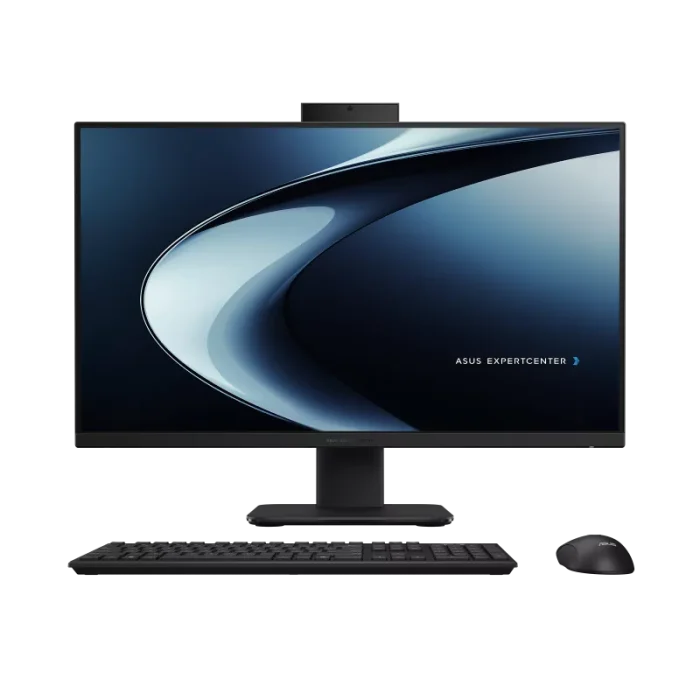
ASUS ExpertCenter P400

Here are the main features that make the ASUS ExpertCenter P400 AiO a strong choice for modern workplaces.

  1. Performance: The AiO runs on up to 13th Gen Intel Core processors for smooth, everyday performance. It handles daily tasks, calls, data work, and multitasking easily. Overall, it delivers fast and responsive operation throughout the workday.
  2. Display: It comes in 23.8-inch and 27-inch Full HD displays with accurate colors. The screen offers eye-care certification for comfortable long hours. Users get clear visuals for work and meetings.
  3. HDMI: The HDMI in feature allows the AiO to act as a display for laptops, CCTVs, and set-top boxes. Furthermore, switching between PC mode and the external display is fast and easy. This adds more flexibility for office setups.
  4. Connectivity: It provides HDMI in/out, USB-A, USB-C, Ethernet, Wi-Fi 6, and Bluetooth. There is no problem attaching peripherals and other devices.
  5. Design: Slim and clean, it saves desk space. Additionally, there’s an option for a Height-Adjustable Stand, which supports tilt, swivel, pivot, and height adjustment to help users create a neat and ergonomic workspace.
  6. Durability: The AiO is built to military-grade standards for long-term reliability. It is designed to take daily office usage in stride. Thus, a business can focus on reliable performance without disappointments.
  7. Audio: Dolby Atmos speakers supply crisp, clear sound for meetings and media. AI noise reduction results in noticeably clearer calls in noisy rooms. Better lighting and smart tracking from the retractable IR camera.
  8. Efficiency: The system meets eco-certifications such as Energy Star and EPEAT. Using less power in everyday work supports businesses’ sustainability efforts and saves money on energy costs.
  9. Security: It protects data with TPM 2.0 and a secure self-healing BIOS. Long-term firmware updates strengthen security further. Additionally, the retractable IR camera adds privacy for users.

Pricing and Availability

While the ASUS P500 SFF is priced from Rs 32,500 + taxes, the P400 AiO starts at Rs 41,500 + taxes. The new systems are available through the official ASUS commercial network and authorized distributors across India. As a result, enterprises can quickly find the right ASUS partner to guide them with pricing, custom builds, and shipment details.

Source link
#ASUS #Launches #ExpertCenter #P500 #P400 #AiO #13th #Gen #Intel #Processors

Bob Iger is returning to Thrive Capital as an advisor, just one month after stepping down as CEO of Disney, a role he held for nearly two decades.

Iger previously served a two-month stint as a venture partner at the firm in late 2022, but left when the Disney board asked him to retake the helm of the media conglomerate, following his initial departure from the company in 2020.

“Bob leads with boldness and conviction because he knows what he is building and why. He is rejoining Thrive at a time when that kind of leadership matters most,” Thrive’s founder Josh Kushner posted on X.

Iger, who already owns a stake in the firm, will work with Thrive’s investment staff and portfolio founders, the Wall Street Journal reported. However, his advisory role will likely not require a full-time commitment.

Thrive manages over $50 billion in assets, according to PitchBook. In February, the firm announced that it raised $10 billion in capital commitments for its 10th fund, the largest in the firm’s 17-year history. Thrive holds significant stakes in OpenAI, Stripe, and SpaceX. The firm also amassed a 7% ownership stake in Cursor, whose potential sale to SpaceX could be worth about $4.2 billion, Bloomberg reported.

#Bob #Iger #rejoins #Thrive #Capital #advisor #Disney #exit #TechCrunchBob Iger,Disney,Thrive Capital">Bob Iger rejoins Thrive Capital as advisor after Disney exit | TechCrunch
Bob Iger is returning to Thrive Capital as an advisor, just one month after stepping down as CEO of Disney, a role he held for nearly two decades.

Iger previously served a two-month stint as a venture partner at the firm in late 2022, but left when the Disney board asked him to retake the helm of the media conglomerate, following his initial departure from the company in 2020.


“Bob leads with boldness and conviction because he knows what he is building and why. He is rejoining Thrive at a time when that kind of leadership matters most,” Thrive’s founder Josh Kushner posted on X.

Iger, who already owns a stake in the firm, will work with Thrive’s investment staff and portfolio founders, the Wall Street Journal reported. However, his advisory role will likely not require a full-time commitment.

Thrive manages over  billion in assets, according to PitchBook. In February, the firm announced that it raised  billion in capital commitments for its 10th fund, the largest in the firm’s 17-year history. Thrive holds significant stakes in OpenAI, Stripe, and SpaceX. The firm also amassed a 7% ownership stake in Cursor, whose potential sale to SpaceX could be worth about .2 billion, Bloomberg reported.
#Bob #Iger #rejoins #Thrive #Capital #advisor #Disney #exit #TechCrunchBob Iger,Disney,Thrive Capital

posted on X.

Iger, who already owns a stake in the firm, will work with Thrive’s investment staff and portfolio founders, the Wall Street Journal reported. However, his advisory role will likely not require a full-time commitment.

Thrive manages over $50 billion in assets, according to PitchBook. In February, the firm announced that it raised $10 billion in capital commitments for its 10th fund, the largest in the firm’s 17-year history. Thrive holds significant stakes in OpenAI, Stripe, and SpaceX. The firm also amassed a 7% ownership stake in Cursor, whose potential sale to SpaceX could be worth about $4.2 billion, Bloomberg reported.

#Bob #Iger #rejoins #Thrive #Capital #advisor #Disney #exit #TechCrunchBob Iger,Disney,Thrive Capital">Bob Iger rejoins Thrive Capital as advisor after Disney exit | TechCrunch

Bob Iger is returning to Thrive Capital as an advisor, just one month after stepping down as CEO of Disney, a role he held for nearly two decades.

Iger previously served a two-month stint as a venture partner at the firm in late 2022, but left when the Disney board asked him to retake the helm of the media conglomerate, following his initial departure from the company in 2020.

“Bob leads with boldness and conviction because he knows what he is building and why. He is rejoining Thrive at a time when that kind of leadership matters most,” Thrive’s founder Josh Kushner posted on X.

Iger, who already owns a stake in the firm, will work with Thrive’s investment staff and portfolio founders, the Wall Street Journal reported. However, his advisory role will likely not require a full-time commitment.

Thrive manages over $50 billion in assets, according to PitchBook. In February, the firm announced that it raised $10 billion in capital commitments for its 10th fund, the largest in the firm’s 17-year history. Thrive holds significant stakes in OpenAI, Stripe, and SpaceX. The firm also amassed a 7% ownership stake in Cursor, whose potential sale to SpaceX could be worth about $4.2 billion, Bloomberg reported.

#Bob #Iger #rejoins #Thrive #Capital #advisor #Disney #exit #TechCrunchBob Iger,Disney,Thrive Capital
F31 Pro+ implemented this formula pretty well, and the Chinese smartphone maker is back at it again, with the F33 Pro.

It’s an interesting phone with a design that turns heads, a new processor family, and camera sensors. Sadly, without beloved AI companions jacking up RAM prices and ruining value smartphones, I wondered: how does the F33 Pro justify its price tag? To find out, I called OPPO, got the F33 Pro two weeks back, and made it my daily driver, using it to take hundreds of photos, play BGMI, and scroll through reels. Here’s my experience.

OPPO F33 Pro Review

Hisan Kidwai

Summary

The OPPO F33 Pro has the same ingredients as its predecessor, including a stellar battery, protection that’ll withstand the end of the world, and a beautiful design. Sadly, it’s not perfect. The cameras aren’t as versatile, and the performance is only good enough for everyday tasks. The F33 Pro is for people who value design, protection, and battery over anything else. And if you’re that person, then the F33 Pro makes a ton of sense.

Design & Hardware

OPPO F33 Pro Review: Looks Premium, Survives Drops, But Is It Worth ₹37,999?
	
When smartphones first became mainstream, durability took a back seat. We were expected to take care of our precious electronics and protect them from the elements. Somewhere along this journey, though, durability changed course and phones became resilient. OPPO’s F-series is a prime example, with a reputation for being the toughest phones money can buy. Last year’s F31 Pro+ implemented this formula pretty well, and the Chinese smartphone maker is back at it again, with the F33 Pro.


It’s an interesting phone with a design that turns heads, a new processor family, and camera sensors. Sadly, without beloved AI companions jacking up RAM prices and ruining value smartphones, I wondered: how does the F33 Pro justify its price tag? To find out, I called OPPO, got the F33 Pro two weeks back, and made it my daily driver, using it to take hundreds of photos, play BGMI, and scroll through reels. Here’s my experience.


        OPPO F33 Pro ReviewHisan KidwaiSummaryThe OPPO F33 Pro has the same ingredients as its predecessor, including a stellar battery, protection that’ll withstand the end of the world, and a beautiful design. Sadly, it’s not perfect. The cameras aren’t as versatile, and the performance is only good enough for everyday tasks. The F33 Pro is for people who value design, protection, and battery over anything else. And if you’re that person, then the F33 Pro makes a ton of sense.


Design & Hardware


OPPO is known for making gorgeous phones, and if I just had to use one word for the F33 Pro’s design, it would be, drum roll please, gorgeous. I’ve yet to see such an exquisite-looking midranger, and don’t even bother with the white; the red is the way to go. It looks super sophisticated, with a matte texture that picks up 0 fingerprints. 


The camera plateau does resemble the iPhone in shape, but that’s not a complaint. OPPO has added a halo ring around it, creating a floating effect and making it look super premium. While the inside of the plateau is the same color, OPPO has made it shiny and added sparkles for some flair. It’s not something I can easily describe with words, but if you see it, you’ll know what I’m talking about. Everyone I gave the phone to thought it cost much more than it actually does, and some, including my mum, wanted to switch over to it. 


The sides are, of course, made of plastic, and the same color as the back. In my clumsy day-to-day use, the phone held up decently well. I dropped it a couple of times, including once from head height, and it escaped with little more than a dent. The F33 Pro earns some brownie points in the comfort department, too. It’s not an overly large phone, similar in size to the OPPO Find X9, and you can reach the top corners of the screen with average-sized hands.


As expected, the F33 Pro packs all the IP ratings available on the market. These include IP66, IP68, IP69, and IP69K ratings, which mean your phone should stay just fine under high-pressure jets and full immersion for up to 12 hours. While I didn’t leave it submerged, I did wash it once after dropping my protein mix on it. It handled it pretty well, but I do recommend not submerging your phone under water since water damage isn’t covered under warranty.


Display


The OPPO F33 Pro features a 6.57-inch flat FHD+ AMOLED display with a 120Hz refresh rate. There’s not much to say about the panel, except that it is plenty good. Text and messages appear super sharp, and the AMOLED panel keeps colors popping with deep blacks. I took the F33 Pro outside on a hot summer day, and the 1400-nit peak brightness kept everything legible without me having to squint. As a result, the colors and HDR performance during the latest episode of The Pitt were amazing.


I had no problems throughout my testing. OPPO has also done a good job with the bezels on three sides, except for the chin, which is ever so slightly bigger, but still not by much. In terms of protection, OPPO has installed AGC DT-STAR D+ glass. While I haven’t heard of this protection before, it fared pretty well against drops and my usage, with no major scratches. On a positive note, OPPO pre-installs a screen protector, so I’d recommend keeping it on. 


Performance


Performance is what makes or breaks a phone. Last year’s F31 Pro+ was decent in terms of performance. I didn’t describe it as blazing fast, but good enough for everyday tasks. And the same can be said for the F33 Pro. At the beating heart of the F33 Pro lies the MediaTek Dimensity 6360 MAX (6nm) processor, essentially a bumped-up version of the 6300 we saw on the K14. ColorOS, being the best Android skin, keeps everything running super smooth without hiccups. The 8GB of RAM was enough to keep most of my apps in memory, and it was nice to see a mid-range phone with premium ColorOS features, including full lock-screen customizations and dark-mode icons. It’s a capable phone that can handle every daily task, be it scrolling through reels, watching Netflix, or reading a book.


The OPPO F33 Pro gets a dose of my favorite AI features, such as AI Recompose, which looks at the photo you captured and improves it. The object eraser works exceptionally well, and the portrait glow is decent for when you need to relight the subject. 


That all being said, there’s plenty of bloatware. Even though I said no to installing the recommended apps, the phone did install about 20 of them. After which, I had to sit and manually delete them one by one.


Since this is a review, I also put the MediaTek Dimensity 6360 MAX (6nm) through its paces by running some benchmarks. The results? About what you’d expect for this segment. The F33 Pro scored 1,039 on Geekbench’s single-core test and 2,833 on the multi-core test. On the flip side, in AnTuTu, the device scored 1,189,871 points. As benchmarks never tell the full story, I also played a few games on the F33 Pro, namely BGMI, since that’s the only game I’m actually good at. The experience was pretty decent; there’s no high-frame-rate support, but 60fps was maintained throughout the session without overheating.


Battery Life & Charging


Probably the biggest reason to consider the F33 Pro, aside from the design, will be its massive 7,000 mAh battery. I consider myself a heavy user, but even with my usage, I couldn’t kill the phone in a day. For context, I started my day with the excellent activity of scrolling reels, then replying to texts, capturing camera samples, taking the phone with me to struggle at the gym, and ending the day with BGMI sessions. 


When it was eventually time to recharge, the 80W fast charging came in handy. It brought the battery back from zero to full in just over an hour. 


Cameras


Optics on the OPPO F33 Pro are headlined by a 50MP OmniVision 50D40 sensor, and that’s essentially it. Like last year, you don’t get any UltraWide or telephoto sensor, except for a 2MP depth lens. Despite my reservations, the F33 Pro’s cameras aren’t that bad. Give the sensor enough light, and the photos it produces are detailed, with slightly boosted colors, without blowing out the highlights. Sure, there’s some struggle with harsh sunlight, but it’s occasional, not a consistent issue. 


Similarly, low-light performance, when you use night mode, is decent. While you’ll find some noise creeping in, the results still retain decent sharpness, and colors weren’t washed out at all. Since there’s no telephoto lens, the main sensor doubles as the portrait sensor, and it works pretty well. Skin tones are true to life, and OPPO’s processing effectively separates the subject from the background. 


OPPO, when launching the F33 Pro, talked heavily about the 50MP Ultra-Wide GC50F6 selfie shooter, and I’m happy to report it works like a charm. You don’t have to worry about playing hand gymnastics to fit multiple people in the shot, as the 100-degree FoV does the job for you. The shots are detailed enough, and colors do tend to be accurate. That said, there’s quite a lot of over-sharpening action when taking a selfie at night. Another big complaint is the lack of any 4K video recording support, which in 2026 should be a no-brainer. 


Verdict


Like many other smartphones this year, the F-series has received a price bump, with the F33 Pro now starting at ₹37,999. It has the same ingredients as its predecessor, including a stellar battery, protection that’ll withstand the end of the world, and a beautiful design. Sadly, it’s not perfect. The cameras aren’t as versatile, and the performance is only good enough for everyday tasks. The F33 Pro is for people who value design, protection, and battery over anything else. And if you’re that person, then the F33 Pro makes a ton of sense.

#OPPO #F33 #Pro #Review #Premium #Survives #Drops #WorthOppo

OPPO is known for making gorgeous phones, and if I just had to use one word for the F33 Pro’s design, it would be, drum roll please, gorgeous. I’ve yet to see such an exquisite-looking midranger, and don’t even bother with the white; the red is the way to go. It looks super sophisticated, with a matte texture that picks up 0 fingerprints.

The camera plateau does resemble the iPhone in shape, but that’s not a complaint. OPPO has added a halo ring around it, creating a floating effect and making it look super premium. While the inside of the plateau is the same color, OPPO has made it shiny and added sparkles for some flair. It’s not something I can easily describe with words, but if you see it, you’ll know what I’m talking about. Everyone I gave the phone to thought it cost much more than it actually does, and some, including my mum, wanted to switch over to it.

Sides of the F33 Pro

The sides are, of course, made of plastic, and the same color as the back. In my clumsy day-to-day use, the phone held up decently well. I dropped it a couple of times, including once from head height, and it escaped with little more than a dent. The F33 Pro earns some brownie points in the comfort department, too. It’s not an overly large phone, similar in size to the OPPO Find X9, and you can reach the top corners of the screen with average-sized hands.

As expected, the F33 Pro packs all the IP ratings available on the market. These include IP66, IP68, IP69, and IP69K ratings, which mean your phone should stay just fine under high-pressure jets and full immersion for up to 12 hours. While I didn’t leave it submerged, I did wash it once after dropping my protein mix on it. It handled it pretty well, but I do recommend not submerging your phone under water since water damage isn’t covered under warranty.

Display

HDR video playing on the phone

The OPPO F33 Pro features a 6.57-inch flat FHD+ AMOLED display with a 120Hz refresh rate. There’s not much to say about the panel, except that it is plenty good. Text and messages appear super sharp, and the AMOLED panel keeps colors popping with deep blacks. I took the F33 Pro outside on a hot summer day, and the 1400-nit peak brightness kept everything legible without me having to squint. As a result, the colors and HDR performance during the latest episode of The Pitt were amazing.

I had no problems throughout my testing. OPPO has also done a good job with the bezels on three sides, except for the chin, which is ever so slightly bigger, but still not by much. In terms of protection, OPPO has installed AGC DT-STAR D+ glass. While I haven’t heard of this protection before, it fared pretty well against drops and my usage, with no major scratches. On a positive note, OPPO pre-installs a screen protector, so I’d recommend keeping it on.

Performance

Lock screens closeup of the OPPO F33 Pro

Performance is what makes or breaks a phone. Last year’s F31 Pro+ was decent in terms of performance. I didn’t describe it as blazing fast, but good enough for everyday tasks. And the same can be said for the F33 Pro. At the beating heart of the F33 Pro lies the MediaTek Dimensity 6360 MAX (6nm) processor, essentially a bumped-up version of the 6300 we saw on the K14. ColorOS, being the best Android skin, keeps everything running super smooth without hiccups. The 8GB of RAM was enough to keep most of my apps in memory, and it was nice to see a mid-range phone with premium ColorOS features, including full lock-screen customizations and dark-mode icons. It’s a capable phone that can handle every daily task, be it scrolling through reels, watching Netflix, or reading a book.

The OPPO F33 Pro gets a dose of my favorite AI features, such as AI Recompose, which looks at the photo you captured and improves it. The object eraser works exceptionally well, and the portrait glow is decent for when you need to relight the subject.

Gen AI features

That all being said, there’s plenty of bloatware. Even though I said no to installing the recommended apps, the phone did install about 20 of them. After which, I had to sit and manually delete them one by one.

Since this is a review, I also put the MediaTek Dimensity 6360 MAX (6nm) through its paces by running some benchmarks. The results? About what you’d expect for this segment. The F33 Pro scored 1,039 on Geekbench’s single-core test and 2,833 on the multi-core test. On the flip side, in AnTuTu, the device scored 1,189,871 points. As benchmarks never tell the full story, I also played a few games on the F33 Pro, namely BGMI, since that’s the only game I’m actually good at. The experience was pretty decent; there’s no high-frame-rate support, but 60fps was maintained throughout the session without overheating.

Battery Life & Charging

A person holding the F33 pro

Probably the biggest reason to consider the F33 Pro, aside from the design, will be its massive 7,000 mAh battery. I consider myself a heavy user, but even with my usage, I couldn’t kill the phone in a day. For context, I started my day with the excellent activity of scrolling reels, then replying to texts, capturing camera samples, taking the phone with me to struggle at the gym, and ending the day with BGMI sessions.

When it was eventually time to recharge, the 80W fast charging came in handy. It brought the battery back from zero to full in just over an hour.

Cameras

Closeup of the camera module

Optics on the OPPO F33 Pro are headlined by a 50MP OmniVision 50D40 sensor, and that’s essentially it. Like last year, you don’t get any UltraWide or telephoto sensor, except for a 2MP depth lens. Despite my reservations, the F33 Pro’s cameras aren’t that bad. Give the sensor enough light, and the photos it produces are detailed, with slightly boosted colors, without blowing out the highlights. Sure, there’s some struggle with harsh sunlight, but it’s occasional, not a consistent issue.

Similarly, low-light performance, when you use night mode, is decent. While you’ll find some noise creeping in, the results still retain decent sharpness, and colors weren’t washed out at all. Since there’s no telephoto lens, the main sensor doubles as the portrait sensor, and it works pretty well. Skin tones are true to life, and OPPO’s processing effectively separates the subject from the background.

OPPO, when launching the F33 Pro, talked heavily about the 50MP Ultra-Wide GC50F6 selfie shooter, and I’m happy to report it works like a charm. You don’t have to worry about playing hand gymnastics to fit multiple people in the shot, as the 100-degree FoV does the job for you. The shots are detailed enough, and colors do tend to be accurate. That said, there’s quite a lot of over-sharpening action when taking a selfie at night. Another big complaint is the lack of any 4K video recording support, which in 2026 should be a no-brainer.

Verdict

Back Design of the F33 Pro

Like many other smartphones this year, the F-series has received a price bump, with the F33 Pro now starting at ₹37,999. It has the same ingredients as its predecessor, including a stellar battery, protection that’ll withstand the end of the world, and a beautiful design. Sadly, it’s not perfect. The cameras aren’t as versatile, and the performance is only good enough for everyday tasks. The F33 Pro is for people who value design, protection, and battery over anything else. And if you’re that person, then the F33 Pro makes a ton of sense.

#OPPO #F33 #Pro #Review #Premium #Survives #Drops #WorthOppo">OPPO F33 Pro Review: Looks Premium, Survives Drops, But Is It Worth ₹37,999?
	
When smartphones first became mainstream, durability took a back seat. We were expected to take care of our precious electronics and protect them from the elements. Somewhere along this journey, though, durability changed course and phones became resilient. OPPO’s F-series is a prime example, with a reputation for being the toughest phones money can buy. Last year’s F31 Pro+ implemented this formula pretty well, and the Chinese smartphone maker is back at it again, with the F33 Pro.


It’s an interesting phone with a design that turns heads, a new processor family, and camera sensors. Sadly, without beloved AI companions jacking up RAM prices and ruining value smartphones, I wondered: how does the F33 Pro justify its price tag? To find out, I called OPPO, got the F33 Pro two weeks back, and made it my daily driver, using it to take hundreds of photos, play BGMI, and scroll through reels. Here’s my experience.


        OPPO F33 Pro ReviewHisan KidwaiSummaryThe OPPO F33 Pro has the same ingredients as its predecessor, including a stellar battery, protection that’ll withstand the end of the world, and a beautiful design. Sadly, it’s not perfect. The cameras aren’t as versatile, and the performance is only good enough for everyday tasks. The F33 Pro is for people who value design, protection, and battery over anything else. And if you’re that person, then the F33 Pro makes a ton of sense.


Design & Hardware


OPPO is known for making gorgeous phones, and if I just had to use one word for the F33 Pro’s design, it would be, drum roll please, gorgeous. I’ve yet to see such an exquisite-looking midranger, and don’t even bother with the white; the red is the way to go. It looks super sophisticated, with a matte texture that picks up 0 fingerprints. 


The camera plateau does resemble the iPhone in shape, but that’s not a complaint. OPPO has added a halo ring around it, creating a floating effect and making it look super premium. While the inside of the plateau is the same color, OPPO has made it shiny and added sparkles for some flair. It’s not something I can easily describe with words, but if you see it, you’ll know what I’m talking about. Everyone I gave the phone to thought it cost much more than it actually does, and some, including my mum, wanted to switch over to it. 


The sides are, of course, made of plastic, and the same color as the back. In my clumsy day-to-day use, the phone held up decently well. I dropped it a couple of times, including once from head height, and it escaped with little more than a dent. The F33 Pro earns some brownie points in the comfort department, too. It’s not an overly large phone, similar in size to the OPPO Find X9, and you can reach the top corners of the screen with average-sized hands.


As expected, the F33 Pro packs all the IP ratings available on the market. These include IP66, IP68, IP69, and IP69K ratings, which mean your phone should stay just fine under high-pressure jets and full immersion for up to 12 hours. While I didn’t leave it submerged, I did wash it once after dropping my protein mix on it. It handled it pretty well, but I do recommend not submerging your phone under water since water damage isn’t covered under warranty.


Display


The OPPO F33 Pro features a 6.57-inch flat FHD+ AMOLED display with a 120Hz refresh rate. There’s not much to say about the panel, except that it is plenty good. Text and messages appear super sharp, and the AMOLED panel keeps colors popping with deep blacks. I took the F33 Pro outside on a hot summer day, and the 1400-nit peak brightness kept everything legible without me having to squint. As a result, the colors and HDR performance during the latest episode of The Pitt were amazing.


I had no problems throughout my testing. OPPO has also done a good job with the bezels on three sides, except for the chin, which is ever so slightly bigger, but still not by much. In terms of protection, OPPO has installed AGC DT-STAR D+ glass. While I haven’t heard of this protection before, it fared pretty well against drops and my usage, with no major scratches. On a positive note, OPPO pre-installs a screen protector, so I’d recommend keeping it on. 


Performance


Performance is what makes or breaks a phone. Last year’s F31 Pro+ was decent in terms of performance. I didn’t describe it as blazing fast, but good enough for everyday tasks. And the same can be said for the F33 Pro. At the beating heart of the F33 Pro lies the MediaTek Dimensity 6360 MAX (6nm) processor, essentially a bumped-up version of the 6300 we saw on the K14. ColorOS, being the best Android skin, keeps everything running super smooth without hiccups. The 8GB of RAM was enough to keep most of my apps in memory, and it was nice to see a mid-range phone with premium ColorOS features, including full lock-screen customizations and dark-mode icons. It’s a capable phone that can handle every daily task, be it scrolling through reels, watching Netflix, or reading a book.


The OPPO F33 Pro gets a dose of my favorite AI features, such as AI Recompose, which looks at the photo you captured and improves it. The object eraser works exceptionally well, and the portrait glow is decent for when you need to relight the subject. 


That all being said, there’s plenty of bloatware. Even though I said no to installing the recommended apps, the phone did install about 20 of them. After which, I had to sit and manually delete them one by one.


Since this is a review, I also put the MediaTek Dimensity 6360 MAX (6nm) through its paces by running some benchmarks. The results? About what you’d expect for this segment. The F33 Pro scored 1,039 on Geekbench’s single-core test and 2,833 on the multi-core test. On the flip side, in AnTuTu, the device scored 1,189,871 points. As benchmarks never tell the full story, I also played a few games on the F33 Pro, namely BGMI, since that’s the only game I’m actually good at. The experience was pretty decent; there’s no high-frame-rate support, but 60fps was maintained throughout the session without overheating.


Battery Life & Charging


Probably the biggest reason to consider the F33 Pro, aside from the design, will be its massive 7,000 mAh battery. I consider myself a heavy user, but even with my usage, I couldn’t kill the phone in a day. For context, I started my day with the excellent activity of scrolling reels, then replying to texts, capturing camera samples, taking the phone with me to struggle at the gym, and ending the day with BGMI sessions. 


When it was eventually time to recharge, the 80W fast charging came in handy. It brought the battery back from zero to full in just over an hour. 


Cameras


Optics on the OPPO F33 Pro are headlined by a 50MP OmniVision 50D40 sensor, and that’s essentially it. Like last year, you don’t get any UltraWide or telephoto sensor, except for a 2MP depth lens. Despite my reservations, the F33 Pro’s cameras aren’t that bad. Give the sensor enough light, and the photos it produces are detailed, with slightly boosted colors, without blowing out the highlights. Sure, there’s some struggle with harsh sunlight, but it’s occasional, not a consistent issue. 


Similarly, low-light performance, when you use night mode, is decent. While you’ll find some noise creeping in, the results still retain decent sharpness, and colors weren’t washed out at all. Since there’s no telephoto lens, the main sensor doubles as the portrait sensor, and it works pretty well. Skin tones are true to life, and OPPO’s processing effectively separates the subject from the background. 


OPPO, when launching the F33 Pro, talked heavily about the 50MP Ultra-Wide GC50F6 selfie shooter, and I’m happy to report it works like a charm. You don’t have to worry about playing hand gymnastics to fit multiple people in the shot, as the 100-degree FoV does the job for you. The shots are detailed enough, and colors do tend to be accurate. That said, there’s quite a lot of over-sharpening action when taking a selfie at night. Another big complaint is the lack of any 4K video recording support, which in 2026 should be a no-brainer. 


Verdict


Like many other smartphones this year, the F-series has received a price bump, with the F33 Pro now starting at ₹37,999. It has the same ingredients as its predecessor, including a stellar battery, protection that’ll withstand the end of the world, and a beautiful design. Sadly, it’s not perfect. The cameras aren’t as versatile, and the performance is only good enough for everyday tasks. The F33 Pro is for people who value design, protection, and battery over anything else. And if you’re that person, then the F33 Pro makes a ton of sense.

#OPPO #F33 #Pro #Review #Premium #Survives #Drops #WorthOppo

implemented this formula pretty well, and the Chinese smartphone maker is back at it again, with the F33 Pro.

It’s an interesting phone with a design that turns heads, a new processor family, and camera sensors. Sadly, without beloved AI companions jacking up RAM prices and ruining value smartphones, I wondered: how does the F33 Pro justify its price tag? To find out, I called OPPO, got the F33 Pro two weeks back, and made it my daily driver, using it to take hundreds of photos, play BGMI, and scroll through reels. Here’s my experience.

OPPO F33 Pro Review

Hisan Kidwai

Summary

The OPPO F33 Pro has the same ingredients as its predecessor, including a stellar battery, protection that’ll withstand the end of the world, and a beautiful design. Sadly, it’s not perfect. The cameras aren’t as versatile, and the performance is only good enough for everyday tasks. The F33 Pro is for people who value design, protection, and battery over anything else. And if you’re that person, then the F33 Pro makes a ton of sense.

Design & Hardware

OPPO F33 Pro Review: Looks Premium, Survives Drops, But Is It Worth ₹37,999?
	
When smartphones first became mainstream, durability took a back seat. We were expected to take care of our precious electronics and protect them from the elements. Somewhere along this journey, though, durability changed course and phones became resilient. OPPO’s F-series is a prime example, with a reputation for being the toughest phones money can buy. Last year’s F31 Pro+ implemented this formula pretty well, and the Chinese smartphone maker is back at it again, with the F33 Pro.


It’s an interesting phone with a design that turns heads, a new processor family, and camera sensors. Sadly, without beloved AI companions jacking up RAM prices and ruining value smartphones, I wondered: how does the F33 Pro justify its price tag? To find out, I called OPPO, got the F33 Pro two weeks back, and made it my daily driver, using it to take hundreds of photos, play BGMI, and scroll through reels. Here’s my experience.


        OPPO F33 Pro ReviewHisan KidwaiSummaryThe OPPO F33 Pro has the same ingredients as its predecessor, including a stellar battery, protection that’ll withstand the end of the world, and a beautiful design. Sadly, it’s not perfect. The cameras aren’t as versatile, and the performance is only good enough for everyday tasks. The F33 Pro is for people who value design, protection, and battery over anything else. And if you’re that person, then the F33 Pro makes a ton of sense.


Design & Hardware


OPPO is known for making gorgeous phones, and if I just had to use one word for the F33 Pro’s design, it would be, drum roll please, gorgeous. I’ve yet to see such an exquisite-looking midranger, and don’t even bother with the white; the red is the way to go. It looks super sophisticated, with a matte texture that picks up 0 fingerprints. 


The camera plateau does resemble the iPhone in shape, but that’s not a complaint. OPPO has added a halo ring around it, creating a floating effect and making it look super premium. While the inside of the plateau is the same color, OPPO has made it shiny and added sparkles for some flair. It’s not something I can easily describe with words, but if you see it, you’ll know what I’m talking about. Everyone I gave the phone to thought it cost much more than it actually does, and some, including my mum, wanted to switch over to it. 


The sides are, of course, made of plastic, and the same color as the back. In my clumsy day-to-day use, the phone held up decently well. I dropped it a couple of times, including once from head height, and it escaped with little more than a dent. The F33 Pro earns some brownie points in the comfort department, too. It’s not an overly large phone, similar in size to the OPPO Find X9, and you can reach the top corners of the screen with average-sized hands.


As expected, the F33 Pro packs all the IP ratings available on the market. These include IP66, IP68, IP69, and IP69K ratings, which mean your phone should stay just fine under high-pressure jets and full immersion for up to 12 hours. While I didn’t leave it submerged, I did wash it once after dropping my protein mix on it. It handled it pretty well, but I do recommend not submerging your phone under water since water damage isn’t covered under warranty.


Display


The OPPO F33 Pro features a 6.57-inch flat FHD+ AMOLED display with a 120Hz refresh rate. There’s not much to say about the panel, except that it is plenty good. Text and messages appear super sharp, and the AMOLED panel keeps colors popping with deep blacks. I took the F33 Pro outside on a hot summer day, and the 1400-nit peak brightness kept everything legible without me having to squint. As a result, the colors and HDR performance during the latest episode of The Pitt were amazing.


I had no problems throughout my testing. OPPO has also done a good job with the bezels on three sides, except for the chin, which is ever so slightly bigger, but still not by much. In terms of protection, OPPO has installed AGC DT-STAR D+ glass. While I haven’t heard of this protection before, it fared pretty well against drops and my usage, with no major scratches. On a positive note, OPPO pre-installs a screen protector, so I’d recommend keeping it on. 


Performance


Performance is what makes or breaks a phone. Last year’s F31 Pro+ was decent in terms of performance. I didn’t describe it as blazing fast, but good enough for everyday tasks. And the same can be said for the F33 Pro. At the beating heart of the F33 Pro lies the MediaTek Dimensity 6360 MAX (6nm) processor, essentially a bumped-up version of the 6300 we saw on the K14. ColorOS, being the best Android skin, keeps everything running super smooth without hiccups. The 8GB of RAM was enough to keep most of my apps in memory, and it was nice to see a mid-range phone with premium ColorOS features, including full lock-screen customizations and dark-mode icons. It’s a capable phone that can handle every daily task, be it scrolling through reels, watching Netflix, or reading a book.


The OPPO F33 Pro gets a dose of my favorite AI features, such as AI Recompose, which looks at the photo you captured and improves it. The object eraser works exceptionally well, and the portrait glow is decent for when you need to relight the subject. 


That all being said, there’s plenty of bloatware. Even though I said no to installing the recommended apps, the phone did install about 20 of them. After which, I had to sit and manually delete them one by one.


Since this is a review, I also put the MediaTek Dimensity 6360 MAX (6nm) through its paces by running some benchmarks. The results? About what you’d expect for this segment. The F33 Pro scored 1,039 on Geekbench’s single-core test and 2,833 on the multi-core test. On the flip side, in AnTuTu, the device scored 1,189,871 points. As benchmarks never tell the full story, I also played a few games on the F33 Pro, namely BGMI, since that’s the only game I’m actually good at. The experience was pretty decent; there’s no high-frame-rate support, but 60fps was maintained throughout the session without overheating.


Battery Life & Charging


Probably the biggest reason to consider the F33 Pro, aside from the design, will be its massive 7,000 mAh battery. I consider myself a heavy user, but even with my usage, I couldn’t kill the phone in a day. For context, I started my day with the excellent activity of scrolling reels, then replying to texts, capturing camera samples, taking the phone with me to struggle at the gym, and ending the day with BGMI sessions. 


When it was eventually time to recharge, the 80W fast charging came in handy. It brought the battery back from zero to full in just over an hour. 


Cameras


Optics on the OPPO F33 Pro are headlined by a 50MP OmniVision 50D40 sensor, and that’s essentially it. Like last year, you don’t get any UltraWide or telephoto sensor, except for a 2MP depth lens. Despite my reservations, the F33 Pro’s cameras aren’t that bad. Give the sensor enough light, and the photos it produces are detailed, with slightly boosted colors, without blowing out the highlights. Sure, there’s some struggle with harsh sunlight, but it’s occasional, not a consistent issue. 


Similarly, low-light performance, when you use night mode, is decent. While you’ll find some noise creeping in, the results still retain decent sharpness, and colors weren’t washed out at all. Since there’s no telephoto lens, the main sensor doubles as the portrait sensor, and it works pretty well. Skin tones are true to life, and OPPO’s processing effectively separates the subject from the background. 


OPPO, when launching the F33 Pro, talked heavily about the 50MP Ultra-Wide GC50F6 selfie shooter, and I’m happy to report it works like a charm. You don’t have to worry about playing hand gymnastics to fit multiple people in the shot, as the 100-degree FoV does the job for you. The shots are detailed enough, and colors do tend to be accurate. That said, there’s quite a lot of over-sharpening action when taking a selfie at night. Another big complaint is the lack of any 4K video recording support, which in 2026 should be a no-brainer. 


Verdict


Like many other smartphones this year, the F-series has received a price bump, with the F33 Pro now starting at ₹37,999. It has the same ingredients as its predecessor, including a stellar battery, protection that’ll withstand the end of the world, and a beautiful design. Sadly, it’s not perfect. The cameras aren’t as versatile, and the performance is only good enough for everyday tasks. The F33 Pro is for people who value design, protection, and battery over anything else. And if you’re that person, then the F33 Pro makes a ton of sense.

#OPPO #F33 #Pro #Review #Premium #Survives #Drops #WorthOppo

OPPO is known for making gorgeous phones, and if I just had to use one word for the F33 Pro’s design, it would be, drum roll please, gorgeous. I’ve yet to see such an exquisite-looking midranger, and don’t even bother with the white; the red is the way to go. It looks super sophisticated, with a matte texture that picks up 0 fingerprints.

The camera plateau does resemble the iPhone in shape, but that’s not a complaint. OPPO has added a halo ring around it, creating a floating effect and making it look super premium. While the inside of the plateau is the same color, OPPO has made it shiny and added sparkles for some flair. It’s not something I can easily describe with words, but if you see it, you’ll know what I’m talking about. Everyone I gave the phone to thought it cost much more than it actually does, and some, including my mum, wanted to switch over to it.

Sides of the F33 Pro

The sides are, of course, made of plastic, and the same color as the back. In my clumsy day-to-day use, the phone held up decently well. I dropped it a couple of times, including once from head height, and it escaped with little more than a dent. The F33 Pro earns some brownie points in the comfort department, too. It’s not an overly large phone, similar in size to the OPPO Find X9, and you can reach the top corners of the screen with average-sized hands.

As expected, the F33 Pro packs all the IP ratings available on the market. These include IP66, IP68, IP69, and IP69K ratings, which mean your phone should stay just fine under high-pressure jets and full immersion for up to 12 hours. While I didn’t leave it submerged, I did wash it once after dropping my protein mix on it. It handled it pretty well, but I do recommend not submerging your phone under water since water damage isn’t covered under warranty.

Display

HDR video playing on the phone

The OPPO F33 Pro features a 6.57-inch flat FHD+ AMOLED display with a 120Hz refresh rate. There’s not much to say about the panel, except that it is plenty good. Text and messages appear super sharp, and the AMOLED panel keeps colors popping with deep blacks. I took the F33 Pro outside on a hot summer day, and the 1400-nit peak brightness kept everything legible without me having to squint. As a result, the colors and HDR performance during the latest episode of The Pitt were amazing.

I had no problems throughout my testing. OPPO has also done a good job with the bezels on three sides, except for the chin, which is ever so slightly bigger, but still not by much. In terms of protection, OPPO has installed AGC DT-STAR D+ glass. While I haven’t heard of this protection before, it fared pretty well against drops and my usage, with no major scratches. On a positive note, OPPO pre-installs a screen protector, so I’d recommend keeping it on.

Performance

Lock screens closeup of the OPPO F33 Pro

Performance is what makes or breaks a phone. Last year’s F31 Pro+ was decent in terms of performance. I didn’t describe it as blazing fast, but good enough for everyday tasks. And the same can be said for the F33 Pro. At the beating heart of the F33 Pro lies the MediaTek Dimensity 6360 MAX (6nm) processor, essentially a bumped-up version of the 6300 we saw on the K14. ColorOS, being the best Android skin, keeps everything running super smooth without hiccups. The 8GB of RAM was enough to keep most of my apps in memory, and it was nice to see a mid-range phone with premium ColorOS features, including full lock-screen customizations and dark-mode icons. It’s a capable phone that can handle every daily task, be it scrolling through reels, watching Netflix, or reading a book.

The OPPO F33 Pro gets a dose of my favorite AI features, such as AI Recompose, which looks at the photo you captured and improves it. The object eraser works exceptionally well, and the portrait glow is decent for when you need to relight the subject.

Gen AI features

That all being said, there’s plenty of bloatware. Even though I said no to installing the recommended apps, the phone did install about 20 of them. After which, I had to sit and manually delete them one by one.

Since this is a review, I also put the MediaTek Dimensity 6360 MAX (6nm) through its paces by running some benchmarks. The results? About what you’d expect for this segment. The F33 Pro scored 1,039 on Geekbench’s single-core test and 2,833 on the multi-core test. On the flip side, in AnTuTu, the device scored 1,189,871 points. As benchmarks never tell the full story, I also played a few games on the F33 Pro, namely BGMI, since that’s the only game I’m actually good at. The experience was pretty decent; there’s no high-frame-rate support, but 60fps was maintained throughout the session without overheating.

Battery Life & Charging

A person holding the F33 pro

Probably the biggest reason to consider the F33 Pro, aside from the design, will be its massive 7,000 mAh battery. I consider myself a heavy user, but even with my usage, I couldn’t kill the phone in a day. For context, I started my day with the excellent activity of scrolling reels, then replying to texts, capturing camera samples, taking the phone with me to struggle at the gym, and ending the day with BGMI sessions.

When it was eventually time to recharge, the 80W fast charging came in handy. It brought the battery back from zero to full in just over an hour.

Cameras

Closeup of the camera module

Optics on the OPPO F33 Pro are headlined by a 50MP OmniVision 50D40 sensor, and that’s essentially it. Like last year, you don’t get any UltraWide or telephoto sensor, except for a 2MP depth lens. Despite my reservations, the F33 Pro’s cameras aren’t that bad. Give the sensor enough light, and the photos it produces are detailed, with slightly boosted colors, without blowing out the highlights. Sure, there’s some struggle with harsh sunlight, but it’s occasional, not a consistent issue.

Similarly, low-light performance, when you use night mode, is decent. While you’ll find some noise creeping in, the results still retain decent sharpness, and colors weren’t washed out at all. Since there’s no telephoto lens, the main sensor doubles as the portrait sensor, and it works pretty well. Skin tones are true to life, and OPPO’s processing effectively separates the subject from the background.

OPPO, when launching the F33 Pro, talked heavily about the 50MP Ultra-Wide GC50F6 selfie shooter, and I’m happy to report it works like a charm. You don’t have to worry about playing hand gymnastics to fit multiple people in the shot, as the 100-degree FoV does the job for you. The shots are detailed enough, and colors do tend to be accurate. That said, there’s quite a lot of over-sharpening action when taking a selfie at night. Another big complaint is the lack of any 4K video recording support, which in 2026 should be a no-brainer.

Verdict

Back Design of the F33 Pro

Like many other smartphones this year, the F-series has received a price bump, with the F33 Pro now starting at ₹37,999. It has the same ingredients as its predecessor, including a stellar battery, protection that’ll withstand the end of the world, and a beautiful design. Sadly, it’s not perfect. The cameras aren’t as versatile, and the performance is only good enough for everyday tasks. The F33 Pro is for people who value design, protection, and battery over anything else. And if you’re that person, then the F33 Pro makes a ton of sense.

#OPPO #F33 #Pro #Review #Premium #Survives #Drops #WorthOppo">OPPO F33 Pro Review: Looks Premium, Survives Drops, But Is It Worth ₹37,999?

When smartphones first became mainstream, durability took a back seat. We were expected to take care of our precious electronics and protect them from the elements. Somewhere along this journey, though, durability changed course and phones became resilient. OPPO’s F-series is a prime example, with a reputation for being the toughest phones money can buy. Last year’s F31 Pro+ implemented this formula pretty well, and the Chinese smartphone maker is back at it again, with the F33 Pro.

It’s an interesting phone with a design that turns heads, a new processor family, and camera sensors. Sadly, without beloved AI companions jacking up RAM prices and ruining value smartphones, I wondered: how does the F33 Pro justify its price tag? To find out, I called OPPO, got the F33 Pro two weeks back, and made it my daily driver, using it to take hundreds of photos, play BGMI, and scroll through reels. Here’s my experience.

OPPO F33 Pro Review

Hisan Kidwai

Summary

The OPPO F33 Pro has the same ingredients as its predecessor, including a stellar battery, protection that’ll withstand the end of the world, and a beautiful design. Sadly, it’s not perfect. The cameras aren’t as versatile, and the performance is only good enough for everyday tasks. The F33 Pro is for people who value design, protection, and battery over anything else. And if you’re that person, then the F33 Pro makes a ton of sense.

Design & Hardware

OPPO F33 Pro Review: Looks Premium, Survives Drops, But Is It Worth ₹37,999?
	
When smartphones first became mainstream, durability took a back seat. We were expected to take care of our precious electronics and protect them from the elements. Somewhere along this journey, though, durability changed course and phones became resilient. OPPO’s F-series is a prime example, with a reputation for being the toughest phones money can buy. Last year’s F31 Pro+ implemented this formula pretty well, and the Chinese smartphone maker is back at it again, with the F33 Pro.


It’s an interesting phone with a design that turns heads, a new processor family, and camera sensors. Sadly, without beloved AI companions jacking up RAM prices and ruining value smartphones, I wondered: how does the F33 Pro justify its price tag? To find out, I called OPPO, got the F33 Pro two weeks back, and made it my daily driver, using it to take hundreds of photos, play BGMI, and scroll through reels. Here’s my experience.


        OPPO F33 Pro ReviewHisan KidwaiSummaryThe OPPO F33 Pro has the same ingredients as its predecessor, including a stellar battery, protection that’ll withstand the end of the world, and a beautiful design. Sadly, it’s not perfect. The cameras aren’t as versatile, and the performance is only good enough for everyday tasks. The F33 Pro is for people who value design, protection, and battery over anything else. And if you’re that person, then the F33 Pro makes a ton of sense.


Design & Hardware


OPPO is known for making gorgeous phones, and if I just had to use one word for the F33 Pro’s design, it would be, drum roll please, gorgeous. I’ve yet to see such an exquisite-looking midranger, and don’t even bother with the white; the red is the way to go. It looks super sophisticated, with a matte texture that picks up 0 fingerprints. 


The camera plateau does resemble the iPhone in shape, but that’s not a complaint. OPPO has added a halo ring around it, creating a floating effect and making it look super premium. While the inside of the plateau is the same color, OPPO has made it shiny and added sparkles for some flair. It’s not something I can easily describe with words, but if you see it, you’ll know what I’m talking about. Everyone I gave the phone to thought it cost much more than it actually does, and some, including my mum, wanted to switch over to it. 


The sides are, of course, made of plastic, and the same color as the back. In my clumsy day-to-day use, the phone held up decently well. I dropped it a couple of times, including once from head height, and it escaped with little more than a dent. The F33 Pro earns some brownie points in the comfort department, too. It’s not an overly large phone, similar in size to the OPPO Find X9, and you can reach the top corners of the screen with average-sized hands.


As expected, the F33 Pro packs all the IP ratings available on the market. These include IP66, IP68, IP69, and IP69K ratings, which mean your phone should stay just fine under high-pressure jets and full immersion for up to 12 hours. While I didn’t leave it submerged, I did wash it once after dropping my protein mix on it. It handled it pretty well, but I do recommend not submerging your phone under water since water damage isn’t covered under warranty.


Display


The OPPO F33 Pro features a 6.57-inch flat FHD+ AMOLED display with a 120Hz refresh rate. There’s not much to say about the panel, except that it is plenty good. Text and messages appear super sharp, and the AMOLED panel keeps colors popping with deep blacks. I took the F33 Pro outside on a hot summer day, and the 1400-nit peak brightness kept everything legible without me having to squint. As a result, the colors and HDR performance during the latest episode of The Pitt were amazing.


I had no problems throughout my testing. OPPO has also done a good job with the bezels on three sides, except for the chin, which is ever so slightly bigger, but still not by much. In terms of protection, OPPO has installed AGC DT-STAR D+ glass. While I haven’t heard of this protection before, it fared pretty well against drops and my usage, with no major scratches. On a positive note, OPPO pre-installs a screen protector, so I’d recommend keeping it on. 


Performance


Performance is what makes or breaks a phone. Last year’s F31 Pro+ was decent in terms of performance. I didn’t describe it as blazing fast, but good enough for everyday tasks. And the same can be said for the F33 Pro. At the beating heart of the F33 Pro lies the MediaTek Dimensity 6360 MAX (6nm) processor, essentially a bumped-up version of the 6300 we saw on the K14. ColorOS, being the best Android skin, keeps everything running super smooth without hiccups. The 8GB of RAM was enough to keep most of my apps in memory, and it was nice to see a mid-range phone with premium ColorOS features, including full lock-screen customizations and dark-mode icons. It’s a capable phone that can handle every daily task, be it scrolling through reels, watching Netflix, or reading a book.


The OPPO F33 Pro gets a dose of my favorite AI features, such as AI Recompose, which looks at the photo you captured and improves it. The object eraser works exceptionally well, and the portrait glow is decent for when you need to relight the subject. 


That all being said, there’s plenty of bloatware. Even though I said no to installing the recommended apps, the phone did install about 20 of them. After which, I had to sit and manually delete them one by one.


Since this is a review, I also put the MediaTek Dimensity 6360 MAX (6nm) through its paces by running some benchmarks. The results? About what you’d expect for this segment. The F33 Pro scored 1,039 on Geekbench’s single-core test and 2,833 on the multi-core test. On the flip side, in AnTuTu, the device scored 1,189,871 points. As benchmarks never tell the full story, I also played a few games on the F33 Pro, namely BGMI, since that’s the only game I’m actually good at. The experience was pretty decent; there’s no high-frame-rate support, but 60fps was maintained throughout the session without overheating.


Battery Life & Charging


Probably the biggest reason to consider the F33 Pro, aside from the design, will be its massive 7,000 mAh battery. I consider myself a heavy user, but even with my usage, I couldn’t kill the phone in a day. For context, I started my day with the excellent activity of scrolling reels, then replying to texts, capturing camera samples, taking the phone with me to struggle at the gym, and ending the day with BGMI sessions. 


When it was eventually time to recharge, the 80W fast charging came in handy. It brought the battery back from zero to full in just over an hour. 


Cameras


Optics on the OPPO F33 Pro are headlined by a 50MP OmniVision 50D40 sensor, and that’s essentially it. Like last year, you don’t get any UltraWide or telephoto sensor, except for a 2MP depth lens. Despite my reservations, the F33 Pro’s cameras aren’t that bad. Give the sensor enough light, and the photos it produces are detailed, with slightly boosted colors, without blowing out the highlights. Sure, there’s some struggle with harsh sunlight, but it’s occasional, not a consistent issue. 


Similarly, low-light performance, when you use night mode, is decent. While you’ll find some noise creeping in, the results still retain decent sharpness, and colors weren’t washed out at all. Since there’s no telephoto lens, the main sensor doubles as the portrait sensor, and it works pretty well. Skin tones are true to life, and OPPO’s processing effectively separates the subject from the background. 


OPPO, when launching the F33 Pro, talked heavily about the 50MP Ultra-Wide GC50F6 selfie shooter, and I’m happy to report it works like a charm. You don’t have to worry about playing hand gymnastics to fit multiple people in the shot, as the 100-degree FoV does the job for you. The shots are detailed enough, and colors do tend to be accurate. That said, there’s quite a lot of over-sharpening action when taking a selfie at night. Another big complaint is the lack of any 4K video recording support, which in 2026 should be a no-brainer. 


Verdict


Like many other smartphones this year, the F-series has received a price bump, with the F33 Pro now starting at ₹37,999. It has the same ingredients as its predecessor, including a stellar battery, protection that’ll withstand the end of the world, and a beautiful design. Sadly, it’s not perfect. The cameras aren’t as versatile, and the performance is only good enough for everyday tasks. The F33 Pro is for people who value design, protection, and battery over anything else. And if you’re that person, then the F33 Pro makes a ton of sense.

#OPPO #F33 #Pro #Review #Premium #Survives #Drops #WorthOppo

OPPO is known for making gorgeous phones, and if I just had to use one word for the F33 Pro’s design, it would be, drum roll please, gorgeous. I’ve yet to see such an exquisite-looking midranger, and don’t even bother with the white; the red is the way to go. It looks super sophisticated, with a matte texture that picks up 0 fingerprints.

The camera plateau does resemble the iPhone in shape, but that’s not a complaint. OPPO has added a halo ring around it, creating a floating effect and making it look super premium. While the inside of the plateau is the same color, OPPO has made it shiny and added sparkles for some flair. It’s not something I can easily describe with words, but if you see it, you’ll know what I’m talking about. Everyone I gave the phone to thought it cost much more than it actually does, and some, including my mum, wanted to switch over to it.

Sides of the F33 Pro

The sides are, of course, made of plastic, and the same color as the back. In my clumsy day-to-day use, the phone held up decently well. I dropped it a couple of times, including once from head height, and it escaped with little more than a dent. The F33 Pro earns some brownie points in the comfort department, too. It’s not an overly large phone, similar in size to the OPPO Find X9, and you can reach the top corners of the screen with average-sized hands.

As expected, the F33 Pro packs all the IP ratings available on the market. These include IP66, IP68, IP69, and IP69K ratings, which mean your phone should stay just fine under high-pressure jets and full immersion for up to 12 hours. While I didn’t leave it submerged, I did wash it once after dropping my protein mix on it. It handled it pretty well, but I do recommend not submerging your phone under water since water damage isn’t covered under warranty.

Display

HDR video playing on the phone

The OPPO F33 Pro features a 6.57-inch flat FHD+ AMOLED display with a 120Hz refresh rate. There’s not much to say about the panel, except that it is plenty good. Text and messages appear super sharp, and the AMOLED panel keeps colors popping with deep blacks. I took the F33 Pro outside on a hot summer day, and the 1400-nit peak brightness kept everything legible without me having to squint. As a result, the colors and HDR performance during the latest episode of The Pitt were amazing.

I had no problems throughout my testing. OPPO has also done a good job with the bezels on three sides, except for the chin, which is ever so slightly bigger, but still not by much. In terms of protection, OPPO has installed AGC DT-STAR D+ glass. While I haven’t heard of this protection before, it fared pretty well against drops and my usage, with no major scratches. On a positive note, OPPO pre-installs a screen protector, so I’d recommend keeping it on.

Performance

Lock screens closeup of the OPPO F33 Pro

Performance is what makes or breaks a phone. Last year’s F31 Pro+ was decent in terms of performance. I didn’t describe it as blazing fast, but good enough for everyday tasks. And the same can be said for the F33 Pro. At the beating heart of the F33 Pro lies the MediaTek Dimensity 6360 MAX (6nm) processor, essentially a bumped-up version of the 6300 we saw on the K14. ColorOS, being the best Android skin, keeps everything running super smooth without hiccups. The 8GB of RAM was enough to keep most of my apps in memory, and it was nice to see a mid-range phone with premium ColorOS features, including full lock-screen customizations and dark-mode icons. It’s a capable phone that can handle every daily task, be it scrolling through reels, watching Netflix, or reading a book.

The OPPO F33 Pro gets a dose of my favorite AI features, such as AI Recompose, which looks at the photo you captured and improves it. The object eraser works exceptionally well, and the portrait glow is decent for when you need to relight the subject.

Gen AI features

That all being said, there’s plenty of bloatware. Even though I said no to installing the recommended apps, the phone did install about 20 of them. After which, I had to sit and manually delete them one by one.

Since this is a review, I also put the MediaTek Dimensity 6360 MAX (6nm) through its paces by running some benchmarks. The results? About what you’d expect for this segment. The F33 Pro scored 1,039 on Geekbench’s single-core test and 2,833 on the multi-core test. On the flip side, in AnTuTu, the device scored 1,189,871 points. As benchmarks never tell the full story, I also played a few games on the F33 Pro, namely BGMI, since that’s the only game I’m actually good at. The experience was pretty decent; there’s no high-frame-rate support, but 60fps was maintained throughout the session without overheating.

Battery Life & Charging

A person holding the F33 pro

Probably the biggest reason to consider the F33 Pro, aside from the design, will be its massive 7,000 mAh battery. I consider myself a heavy user, but even with my usage, I couldn’t kill the phone in a day. For context, I started my day with the excellent activity of scrolling reels, then replying to texts, capturing camera samples, taking the phone with me to struggle at the gym, and ending the day with BGMI sessions.

When it was eventually time to recharge, the 80W fast charging came in handy. It brought the battery back from zero to full in just over an hour.

Cameras

Closeup of the camera module

Optics on the OPPO F33 Pro are headlined by a 50MP OmniVision 50D40 sensor, and that’s essentially it. Like last year, you don’t get any UltraWide or telephoto sensor, except for a 2MP depth lens. Despite my reservations, the F33 Pro’s cameras aren’t that bad. Give the sensor enough light, and the photos it produces are detailed, with slightly boosted colors, without blowing out the highlights. Sure, there’s some struggle with harsh sunlight, but it’s occasional, not a consistent issue.

Similarly, low-light performance, when you use night mode, is decent. While you’ll find some noise creeping in, the results still retain decent sharpness, and colors weren’t washed out at all. Since there’s no telephoto lens, the main sensor doubles as the portrait sensor, and it works pretty well. Skin tones are true to life, and OPPO’s processing effectively separates the subject from the background.

OPPO, when launching the F33 Pro, talked heavily about the 50MP Ultra-Wide GC50F6 selfie shooter, and I’m happy to report it works like a charm. You don’t have to worry about playing hand gymnastics to fit multiple people in the shot, as the 100-degree FoV does the job for you. The shots are detailed enough, and colors do tend to be accurate. That said, there’s quite a lot of over-sharpening action when taking a selfie at night. Another big complaint is the lack of any 4K video recording support, which in 2026 should be a no-brainer.

Verdict

Back Design of the F33 Pro

Like many other smartphones this year, the F-series has received a price bump, with the F33 Pro now starting at ₹37,999. It has the same ingredients as its predecessor, including a stellar battery, protection that’ll withstand the end of the world, and a beautiful design. Sadly, it’s not perfect. The cameras aren’t as versatile, and the performance is only good enough for everyday tasks. The F33 Pro is for people who value design, protection, and battery over anything else. And if you’re that person, then the F33 Pro makes a ton of sense.

#OPPO #F33 #Pro #Review #Premium #Survives #Drops #WorthOppo

Post Comment
