×
‘Compute Equals Revenues’: Nvidia Needs Jensen Huang’s New Catchphrase to Be True

‘Compute Equals Revenues’: Nvidia Needs Jensen Huang’s New Catchphrase to Be True

Nvidia reported earnings on Wednesday, and as expected, the numbers were good. Really good. The company gets more than 91% of its sales from its data center unit, which generated revenue of $193,737 billion, up 68% year-over-year.

“We have now scaled our data center business by nearly 13x since the emergence of ChatGPT in fiscal 2023,” Nvidia CFO Colette Kress said in the company’s earnings call on Wednesday.

While very impressive, the number is not all that surprising given that global AI spending is expected to reach $2.5 trillion this year, and Nvidia’s largest customers, the major AI hyperscalers Amazon, Alphabet, Meta, and Microsoft, all reported record capex figures earlier this month.

The hyperscalers also made eyewatering financial commitments for 2026 totaling nearly $700 billion, which came to the dismay of many investors who have been growing wary of AI spending.

Earlier this month, Evercore analysts warned that the huge capex could turn the hyperscalers’ cash flow negative.

And despite the record after record multibillion-dollar commitment made to scale AI infrastructure and grow the technology’s adoption across the American economy, the results are yet to fully materialize. A Goldman Sachs analyst recently said that AI contributed “basically zero” to U.S. GDP in 2025.

Nvidia CEO Jensen Huang spent most of his time in the investor call trying to justify that capex growth.

“I am confident in their cash flow growing, and the reason for that is very simple: we have now seen the inflection of agentic AI and the usefulness of agents across the world in enterprises everywhere,” Huang said.

AI adoption by enterprises beyond the tech world, and whether these companies actually see real productivity gains and revenue returns from AI integration, is really important to Nvidia, because that’s a major thing that the AI industry is currently lacking to quell worries over an AI bubble.

A recent survey found that despite 70% of firms employing AI, over 80% reported no impact on employment or productivity.

Last week, OpenAI COO Brad Lightcap told TechCrunch that his company had “not really seen enterprise AI penetrate enterprise business process.”

Some experts believe that Anthropic’s Claude Cowork unveiled earlier this month is going to be a turning point in AI’s penetration into the workforce, so much so that they believe it will lead to a mass extinction-level event for software companies, and maybe even white-collar work. Huang gave a special shout-out to Claude Cowork in the call as well.

Huang also had a technical explanation to justify the capex commitments.

“In this new world of AI, compute equals revenues,” Huang said, a phrase that he repeated many times throughout the call. Huang argues that tokens, aka the chunks of data that AI models process, are the most important part of a new AI economy. The more tokens a model uses, the more computing power and time it requires. So, as models are getting more complex, the demand for computing is also going up “exponentially,” Huang said. He argued that the capex commitments will go towards building this compute capacity, which will thus power higher-level models and translate to revenue.

“The amount of token generation capability that the world needs is a lot, more than $700 billion, and I’m fairly confident that we’re going to continue to generate tokens…fundamentally because every single company depends on software, every software will depend on AI, and so every company will produce tokens,” Huang said. “If the new software requires tokens to be generated and the tokens are monetized, then it stands to reason that their data center build-out directly drives their revenues.”

Huang’s justifications may not have immediately convinced the market. Even though shares rose at first in response to the report, after the call, gains eventually pulled back to less than 1%. That’s despite revenue that exceeded market expectations.

OpenAI and China are still blind spots

Throughout the call, Huang also tried to address rumors of a falling out with OpenAI, first spurred after a $100 billion Nvidia investment announced back in September 2025 reportedly failed to progress beyond the early stages after months. Then, two back-to-back reports claimed that Huang was privately criticizing OpenAI’s business approach while OpenAI was unhappy with the inference speed of Nvidia’s chips.

In the call on Wednesday, Huang repeatedly praised the AI giant’s offerings, but revealed that the investment was still not finalized.

“We continue to work with OpenAI toward a partnership agreement, and believe we are close,” Huang said on the call. The filing also refuses to give any assurance that “a transaction will be completed.”

Another piece of uncertainty weighing on Nvidia is China. The company shared that, as of this month, the Trump administration has finally allowed it to start shipping small amounts of its H200 chips to China, where it once held 95% of the market share before Trump first banned the chipmaker’s sales to China, sparking a saga of dizzying trade tit-for-tat between the two global superpowers. But executives still don’t know if the imports will be allowed in, and are not factoring it into the revenue they expect this year.

Source link
#Compute #Equals #Revenues #Nvidia #Jensen #Huangs #Catchphrase #True

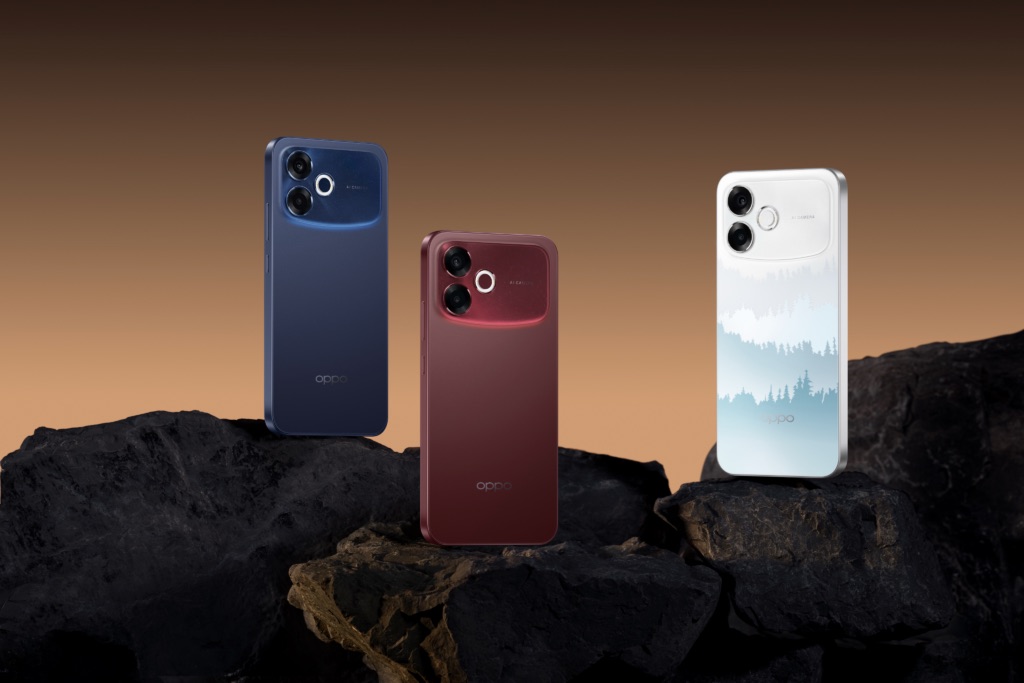
OPPO F-series has always focused on the durability side of things, with some of the toughest phones I’ve ever tested. With the new F33 series, the Chinese smartphone maker is bringing a new type of durability-focused smartphone to India. Based on details shared ahead of launch, the company is positioning the lineup as a solution to everyday smartphone problems like cracked screens, water damage, and battery anxiety.

Built for Indian Conditions

OPPO F33 Series to Launch With IP69K Rating and 7,000mAh Battery
	
The OPPO F-series has always focused on the durability side of things, with some of the toughest phones I’ve ever tested. With the new F33 series, the Chinese smartphone maker is bringing a new type of durability-focused smartphone to India. Based on details shared ahead of launch, the company is positioning the lineup as a solution to everyday smartphone problems like cracked screens, water damage, and battery anxiety.


Built for Indian Conditions


Durability seems to be the core focus here. The OPPO F33 series is said to come with IP69K certification, which is a step above the usual IP67 or IP68 ratings seen in most mid-range phones. In practical terms, this means the device can handle high-pressure, high-temperature water jets and provide complete dust protection. It’s designed to survive not just accidental splashes, but harsher environments like heavy rain, kitchens, or dusty outdoor conditions.


Beyond certifications, OPPO says the F33 series has undergone military-grade durability testing. This includes extreme temperature tests ranging from freezing cold to high heat, salt exposure for coastal conditions, and even simulations of strong winds and heavy rainfall. The devices are also tested for drops, with thousands of simulated falls and immersion tests to ensure real-world reliability.


Structurally, the phones feature a 360-degree armor body, built using an aerospace-grade aluminium frame, reinforced internals, and thicker protective materials for both the display and back panel. There’s also an internal cushioning system designed to absorb shocks during impact.


Long-Term Battery Health


Battery life is another major highlight of the F33 series. OPPO is introducing a 7,000mAh battery that’s designed to retain up to 80% of its capacity even after five years of usage.


The company is using a self-repairing electrolyte technology, which is said to help maintain battery health over time. Combined with 80W fast charging, reverse charging, and bypass charging support, the F33 series aims to reduce both charging time and long-term battery degradation.

#OPPO #F33 #Series #Launch #IP69K #Rating #7000mAh #BatteryOppo

Durability seems to be the core focus here. The OPPO F33 series is said to come with IP69K certification, which is a step above the usual IP67 or IP68 ratings seen in most mid-range phones. In practical terms, this means the device can handle high-pressure, high-temperature water jets and provide complete dust protection. It’s designed to survive not just accidental splashes, but harsher environments like heavy rain, kitchens, or dusty outdoor conditions.

Beyond certifications, OPPO says the F33 series has undergone military-grade durability testing. This includes extreme temperature tests ranging from freezing cold to high heat, salt exposure for coastal conditions, and even simulations of strong winds and heavy rainfall. The devices are also tested for drops, with thousands of simulated falls and immersion tests to ensure real-world reliability.

Structurally, the phones feature a 360-degree armor body, built using an aerospace-grade aluminium frame, reinforced internals, and thicker protective materials for both the display and back panel. There’s also an internal cushioning system designed to absorb shocks during impact.

Long-Term Battery Health

Battery life is another major highlight of the F33 series. OPPO is introducing a 7,000mAh battery that’s designed to retain up to 80% of its capacity even after five years of usage.

The company is using a self-repairing electrolyte technology, which is said to help maintain battery health over time. Combined with 80W fast charging, reverse charging, and bypass charging support, the F33 series aims to reduce both charging time and long-term battery degradation.

#OPPO #F33 #Series #Launch #IP69K #Rating #7000mAh #BatteryOppo">OPPO F33 Series to Launch With IP69K Rating and 7,000mAh Battery
	
The OPPO F-series has always focused on the durability side of things, with some of the toughest phones I’ve ever tested. With the new F33 series, the Chinese smartphone maker is bringing a new type of durability-focused smartphone to India. Based on details shared ahead of launch, the company is positioning the lineup as a solution to everyday smartphone problems like cracked screens, water damage, and battery anxiety.


Built for Indian Conditions


Durability seems to be the core focus here. The OPPO F33 series is said to come with IP69K certification, which is a step above the usual IP67 or IP68 ratings seen in most mid-range phones. In practical terms, this means the device can handle high-pressure, high-temperature water jets and provide complete dust protection. It’s designed to survive not just accidental splashes, but harsher environments like heavy rain, kitchens, or dusty outdoor conditions.


Beyond certifications, OPPO says the F33 series has undergone military-grade durability testing. This includes extreme temperature tests ranging from freezing cold to high heat, salt exposure for coastal conditions, and even simulations of strong winds and heavy rainfall. The devices are also tested for drops, with thousands of simulated falls and immersion tests to ensure real-world reliability.


Structurally, the phones feature a 360-degree armor body, built using an aerospace-grade aluminium frame, reinforced internals, and thicker protective materials for both the display and back panel. There’s also an internal cushioning system designed to absorb shocks during impact.


Long-Term Battery Health


Battery life is another major highlight of the F33 series. OPPO is introducing a 7,000mAh battery that’s designed to retain up to 80% of its capacity even after five years of usage.


The company is using a self-repairing electrolyte technology, which is said to help maintain battery health over time. Combined with 80W fast charging, reverse charging, and bypass charging support, the F33 series aims to reduce both charging time and long-term battery degradation.

#OPPO #F33 #Series #Launch #IP69K #Rating #7000mAh #BatteryOppo

has always focused on the durability side of things, with some of the toughest phones I’ve ever tested. With the new F33 series, the Chinese smartphone maker is bringing a new type of durability-focused smartphone to India. Based on details shared ahead of launch, the company is positioning the lineup as a solution to everyday smartphone problems like cracked screens, water damage, and battery anxiety.

Built for Indian Conditions

OPPO F33 Series to Launch With IP69K Rating and 7,000mAh Battery
	
The OPPO F-series has always focused on the durability side of things, with some of the toughest phones I’ve ever tested. With the new F33 series, the Chinese smartphone maker is bringing a new type of durability-focused smartphone to India. Based on details shared ahead of launch, the company is positioning the lineup as a solution to everyday smartphone problems like cracked screens, water damage, and battery anxiety.


Built for Indian Conditions


Durability seems to be the core focus here. The OPPO F33 series is said to come with IP69K certification, which is a step above the usual IP67 or IP68 ratings seen in most mid-range phones. In practical terms, this means the device can handle high-pressure, high-temperature water jets and provide complete dust protection. It’s designed to survive not just accidental splashes, but harsher environments like heavy rain, kitchens, or dusty outdoor conditions.


Beyond certifications, OPPO says the F33 series has undergone military-grade durability testing. This includes extreme temperature tests ranging from freezing cold to high heat, salt exposure for coastal conditions, and even simulations of strong winds and heavy rainfall. The devices are also tested for drops, with thousands of simulated falls and immersion tests to ensure real-world reliability.


Structurally, the phones feature a 360-degree armor body, built using an aerospace-grade aluminium frame, reinforced internals, and thicker protective materials for both the display and back panel. There’s also an internal cushioning system designed to absorb shocks during impact.


Long-Term Battery Health


Battery life is another major highlight of the F33 series. OPPO is introducing a 7,000mAh battery that’s designed to retain up to 80% of its capacity even after five years of usage.


The company is using a self-repairing electrolyte technology, which is said to help maintain battery health over time. Combined with 80W fast charging, reverse charging, and bypass charging support, the F33 series aims to reduce both charging time and long-term battery degradation.

#OPPO #F33 #Series #Launch #IP69K #Rating #7000mAh #BatteryOppo

Durability seems to be the core focus here. The OPPO F33 series is said to come with IP69K certification, which is a step above the usual IP67 or IP68 ratings seen in most mid-range phones. In practical terms, this means the device can handle high-pressure, high-temperature water jets and provide complete dust protection. It’s designed to survive not just accidental splashes, but harsher environments like heavy rain, kitchens, or dusty outdoor conditions.

Beyond certifications, OPPO says the F33 series has undergone military-grade durability testing. This includes extreme temperature tests ranging from freezing cold to high heat, salt exposure for coastal conditions, and even simulations of strong winds and heavy rainfall. The devices are also tested for drops, with thousands of simulated falls and immersion tests to ensure real-world reliability.

Structurally, the phones feature a 360-degree armor body, built using an aerospace-grade aluminium frame, reinforced internals, and thicker protective materials for both the display and back panel. There’s also an internal cushioning system designed to absorb shocks during impact.

Long-Term Battery Health

Battery life is another major highlight of the F33 series. OPPO is introducing a 7,000mAh battery that’s designed to retain up to 80% of its capacity even after five years of usage.

The company is using a self-repairing electrolyte technology, which is said to help maintain battery health over time. Combined with 80W fast charging, reverse charging, and bypass charging support, the F33 series aims to reduce both charging time and long-term battery degradation.

#OPPO #F33 #Series #Launch #IP69K #Rating #7000mAh #BatteryOppo">OPPO F33 Series to Launch With IP69K Rating and 7,000mAh Battery

The OPPO F-series has always focused on the durability side of things, with some of the toughest phones I’ve ever tested. With the new F33 series, the Chinese smartphone maker is bringing a new type of durability-focused smartphone to India. Based on details shared ahead of launch, the company is positioning the lineup as a solution to everyday smartphone problems like cracked screens, water damage, and battery anxiety.

Built for Indian Conditions

OPPO F33 Series to Launch With IP69K Rating and 7,000mAh Battery
	
The OPPO F-series has always focused on the durability side of things, with some of the toughest phones I’ve ever tested. With the new F33 series, the Chinese smartphone maker is bringing a new type of durability-focused smartphone to India. Based on details shared ahead of launch, the company is positioning the lineup as a solution to everyday smartphone problems like cracked screens, water damage, and battery anxiety.


Built for Indian Conditions


Durability seems to be the core focus here. The OPPO F33 series is said to come with IP69K certification, which is a step above the usual IP67 or IP68 ratings seen in most mid-range phones. In practical terms, this means the device can handle high-pressure, high-temperature water jets and provide complete dust protection. It’s designed to survive not just accidental splashes, but harsher environments like heavy rain, kitchens, or dusty outdoor conditions.


Beyond certifications, OPPO says the F33 series has undergone military-grade durability testing. This includes extreme temperature tests ranging from freezing cold to high heat, salt exposure for coastal conditions, and even simulations of strong winds and heavy rainfall. The devices are also tested for drops, with thousands of simulated falls and immersion tests to ensure real-world reliability.


Structurally, the phones feature a 360-degree armor body, built using an aerospace-grade aluminium frame, reinforced internals, and thicker protective materials for both the display and back panel. There’s also an internal cushioning system designed to absorb shocks during impact.


Long-Term Battery Health


Battery life is another major highlight of the F33 series. OPPO is introducing a 7,000mAh battery that’s designed to retain up to 80% of its capacity even after five years of usage.


The company is using a self-repairing electrolyte technology, which is said to help maintain battery health over time. Combined with 80W fast charging, reverse charging, and bypass charging support, the F33 series aims to reduce both charging time and long-term battery degradation.

#OPPO #F33 #Series #Launch #IP69K #Rating #7000mAh #BatteryOppo

Durability seems to be the core focus here. The OPPO F33 series is said to come with IP69K certification, which is a step above the usual IP67 or IP68 ratings seen in most mid-range phones. In practical terms, this means the device can handle high-pressure, high-temperature water jets and provide complete dust protection. It’s designed to survive not just accidental splashes, but harsher environments like heavy rain, kitchens, or dusty outdoor conditions.

Beyond certifications, OPPO says the F33 series has undergone military-grade durability testing. This includes extreme temperature tests ranging from freezing cold to high heat, salt exposure for coastal conditions, and even simulations of strong winds and heavy rainfall. The devices are also tested for drops, with thousands of simulated falls and immersion tests to ensure real-world reliability.

Structurally, the phones feature a 360-degree armor body, built using an aerospace-grade aluminium frame, reinforced internals, and thicker protective materials for both the display and back panel. There’s also an internal cushioning system designed to absorb shocks during impact.

Long-Term Battery Health

Battery life is another major highlight of the F33 series. OPPO is introducing a 7,000mAh battery that’s designed to retain up to 80% of its capacity even after five years of usage.

The company is using a self-repairing electrolyte technology, which is said to help maintain battery health over time. Combined with 80W fast charging, reverse charging, and bypass charging support, the F33 series aims to reduce both charging time and long-term battery degradation.

#OPPO #F33 #Series #Launch #IP69K #Rating #7000mAh #BatteryOppo

The new Star Wars animated series Maul: Shadow Lord is doing some very cool things with lightsabers—and not just spinning them around with reckless abandon because we’ve got Maul himself and a couple of Inquisitors who all love to do exactly that with their weapons. They look almost unlike any time we’ve seen the weapons in Lucasfilm’s past output: blades that flicker and snarl like their wielders do, living flames that carve paths of incandescent energy across the screen instead of that typically clean, minimalistic energy we see from them.

It makes Shadow Lord look even more visually impressive than it already is, and of course, the idea of lightsabers as gouts of flaming plasma is also naturally very befitting everyone’s favorite slightly pathetic but trying-his-best edgelord in a character like Maul. But it turns out Shadow Lord‘s lightsabers—Maul’s specifically—are going the extra edgelord mile. Because there’s screaming in the sound mix.

Not just any screaming either, but Sam Witwer’s own howls.

The delightfully silly factoid was revealed by the supervising sound editor for the show, David W. Collins, in a new featurette about the process of creating Shadow Lord, which also shows off Witwer performing some of his own moves for animation reference. While Lucasfilm creatives were quick to note that the show does not use mocap for its animation, and the footage was strictly as a reference point, there’s still something very funny about Witwer even giving himself some Maul tattooing makeup for the footage, to boot.

It’s long been clear that Witwer has put a lot of time and thought into his approach to Maul’s animated legacy over the past decade and a half, but now at least he’s put his vocals into it in a very different manner for Shadow Lord.

Want more io9 news? Check out when to expect the latest Marvel, Star Wars, and Star Trek releases, what’s next for the DC Universe on film and TV, and everything you need to know about the future of Doctor Who.

#Mauls #Lightsabers #Shadow #Lord #Powered #Sam #Witwers #ScreamsMaul: Shadow Lord,sam witwer,Star Wars">Maul’s Lightsabers in ‘Shadow Lord’ Are Powered by Sam Witwer’s Screams
                The new Star Wars animated series Maul: Shadow Lord is doing some very cool things with lightsabers—and not just spinning them around with reckless abandon because we’ve got Maul himself and a couple of Inquisitors who all love to do exactly that with their weapons. They look almost unlike any time we’ve seen the weapons in Lucasfilm’s past output: blades that flicker and snarl like their wielders do, living flames that carve paths of incandescent energy across the screen instead of that typically clean, minimalistic energy we see from them. It makes Shadow Lord look even more visually impressive than it already is, and of course, the idea of lightsabers as gouts of flaming plasma is also naturally very befitting everyone’s favorite slightly pathetic but trying-his-best edgelord in a character like Maul. But it turns out Shadow Lord‘s lightsabers—Maul’s specifically—are going the extra edgelord mile. Because there’s screaming in the sound mix.

 Not just any screaming either, but Sam Witwer’s own howls.  The delightfully silly factoid was revealed by the supervising sound editor for the show, David W. Collins, in a new featurette about the process of creating Shadow Lord, which also shows off Witwer performing some of his own moves for animation reference. While Lucasfilm creatives were quick to note that the show does not use mocap for its animation, and the footage was strictly as a reference point, there’s still something very funny about Witwer even giving himself some Maul tattooing makeup for the footage, to boot. It’s long been clear that Witwer has put a lot of time and thought into his approach to Maul’s animated legacy over the past decade and a half, but now at least he’s put his vocals into it in a very different manner for Shadow Lord.  Want more io9 news? Check out when to expect the latest Marvel, Star Wars, and Star Trek releases, what’s next for the DC Universe on film and TV, and everything you need to know about the future of Doctor Who.      #Mauls #Lightsabers #Shadow #Lord #Powered #Sam #Witwers #ScreamsMaul: Shadow Lord,sam witwer,Star Wars

Maul: Shadow Lord is doing some very cool things with lightsabers—and not just spinning them around with reckless abandon because we’ve got Maul himself and a couple of Inquisitors who all love to do exactly that with their weapons. They look almost unlike any time we’ve seen the weapons in Lucasfilm’s past output: blades that flicker and snarl like their wielders do, living flames that carve paths of incandescent energy across the screen instead of that typically clean, minimalistic energy we see from them.

It makes Shadow Lord look even more visually impressive than it already is, and of course, the idea of lightsabers as gouts of flaming plasma is also naturally very befitting everyone’s favorite slightly pathetic but trying-his-best edgelord in a character like Maul. But it turns out Shadow Lord‘s lightsabers—Maul’s specifically—are going the extra edgelord mile. Because there’s screaming in the sound mix.

Not just any screaming either, but Sam Witwer’s own howls.

The delightfully silly factoid was revealed by the supervising sound editor for the show, David W. Collins, in a new featurette about the process of creating Shadow Lord, which also shows off Witwer performing some of his own moves for animation reference. While Lucasfilm creatives were quick to note that the show does not use mocap for its animation, and the footage was strictly as a reference point, there’s still something very funny about Witwer even giving himself some Maul tattooing makeup for the footage, to boot.

It’s long been clear that Witwer has put a lot of time and thought into his approach to Maul’s animated legacy over the past decade and a half, but now at least he’s put his vocals into it in a very different manner for Shadow Lord.

Want more io9 news? Check out when to expect the latest Marvel, Star Wars, and Star Trek releases, what’s next for the DC Universe on film and TV, and everything you need to know about the future of Doctor Who.

#Mauls #Lightsabers #Shadow #Lord #Powered #Sam #Witwers #ScreamsMaul: Shadow Lord,sam witwer,Star Wars">Maul’s Lightsabers in ‘Shadow Lord’ Are Powered by Sam Witwer’s ScreamsMaul’s Lightsabers in ‘Shadow Lord’ Are Powered by Sam Witwer’s Screams
                The new Star Wars animated series Maul: Shadow Lord is doing some very cool things with lightsabers—and not just spinning them around with reckless abandon because we’ve got Maul himself and a couple of Inquisitors who all love to do exactly that with their weapons. They look almost unlike any time we’ve seen the weapons in Lucasfilm’s past output: blades that flicker and snarl like their wielders do, living flames that carve paths of incandescent energy across the screen instead of that typically clean, minimalistic energy we see from them. It makes Shadow Lord look even more visually impressive than it already is, and of course, the idea of lightsabers as gouts of flaming plasma is also naturally very befitting everyone’s favorite slightly pathetic but trying-his-best edgelord in a character like Maul. But it turns out Shadow Lord‘s lightsabers—Maul’s specifically—are going the extra edgelord mile. Because there’s screaming in the sound mix.

 Not just any screaming either, but Sam Witwer’s own howls.  The delightfully silly factoid was revealed by the supervising sound editor for the show, David W. Collins, in a new featurette about the process of creating Shadow Lord, which also shows off Witwer performing some of his own moves for animation reference. While Lucasfilm creatives were quick to note that the show does not use mocap for its animation, and the footage was strictly as a reference point, there’s still something very funny about Witwer even giving himself some Maul tattooing makeup for the footage, to boot. It’s long been clear that Witwer has put a lot of time and thought into his approach to Maul’s animated legacy over the past decade and a half, but now at least he’s put his vocals into it in a very different manner for Shadow Lord.  Want more io9 news? Check out when to expect the latest Marvel, Star Wars, and Star Trek releases, what’s next for the DC Universe on film and TV, and everything you need to know about the future of Doctor Who.      #Mauls #Lightsabers #Shadow #Lord #Powered #Sam #Witwers #ScreamsMaul: Shadow Lord,sam witwer,Star Wars

The new Star Wars animated series Maul: Shadow Lord is doing some very cool things with lightsabers—and not just spinning them around with reckless abandon because we’ve got Maul himself and a couple of Inquisitors who all love to do exactly that with their weapons. They look almost unlike any time we’ve seen the weapons in Lucasfilm’s past output: blades that flicker and snarl like their wielders do, living flames that carve paths of incandescent energy across the screen instead of that typically clean, minimalistic energy we see from them.

It makes Shadow Lord look even more visually impressive than it already is, and of course, the idea of lightsabers as gouts of flaming plasma is also naturally very befitting everyone’s favorite slightly pathetic but trying-his-best edgelord in a character like Maul. But it turns out Shadow Lord‘s lightsabers—Maul’s specifically—are going the extra edgelord mile. Because there’s screaming in the sound mix.

Not just any screaming either, but Sam Witwer’s own howls.

The delightfully silly factoid was revealed by the supervising sound editor for the show, David W. Collins, in a new featurette about the process of creating Shadow Lord, which also shows off Witwer performing some of his own moves for animation reference. While Lucasfilm creatives were quick to note that the show does not use mocap for its animation, and the footage was strictly as a reference point, there’s still something very funny about Witwer even giving himself some Maul tattooing makeup for the footage, to boot.

It’s long been clear that Witwer has put a lot of time and thought into his approach to Maul’s animated legacy over the past decade and a half, but now at least he’s put his vocals into it in a very different manner for Shadow Lord.

Want more io9 news? Check out when to expect the latest Marvel, Star Wars, and Star Trek releases, what’s next for the DC Universe on film and TV, and everything you need to know about the future of Doctor Who.

#Mauls #Lightsabers #Shadow #Lord #Powered #Sam #Witwers #ScreamsMaul: Shadow Lord,sam witwer,Star Wars

Post Comment