×
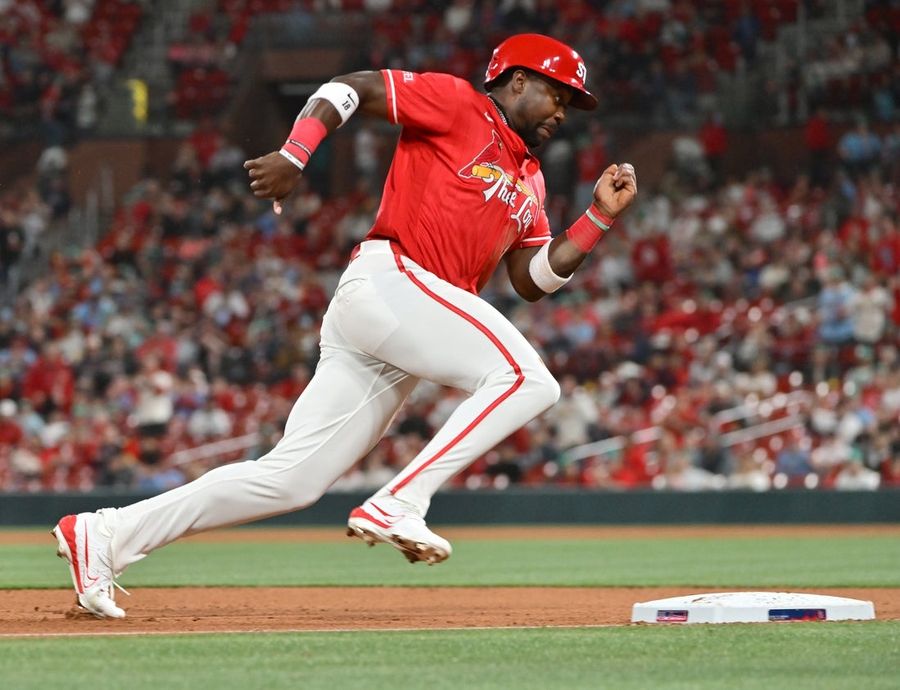
Deadspin | Dustin May’s best outing of season leads Cardinals past Red Sox  Apr 10, 2026; St. Louis, Missouri, USA;  St. Louis Cardinals right fielder Jordan Walker (18) heads to third base and then home in the fifth inning against the Boston Red Sox at Busch Stadium. Mandatory Credit: Tim Vizer-Imagn Images   Dustin May pitched six solid innings as the St. Louis Cardinals edged the visiting Boston Red Sox 3-2 on Friday in the opener of a three-game weekend series.  Jordan Walker went 2-for-4 with a run to help lead St. Louis, which had an 8-5 advantage in hits and won its third straight game. Ramon Urias crossed the plate twice, and Jose Fermin knocked in the decisive run in the fifth inning.  May (1-2), who entered the game with a 15.95 ERA through two starts, allowed two runs (one earned) on four hits and no walks. He struck out four.  Riley O’Brien pitched a 1-2-3 ninth to post his fourth save out of the Cardinals’ bullpen, which allowed just one hit across three scoreless innings.  Wilyer Abreu went 2-for-4 and Trevor Story drove in a run and stole home for the Red Sox, whose two-game winning streak ended.  In the St. Louis second inning, Ramon Urias ripped a leadoff double off Ceddanne Rafaela’s glove in deep center field, and the Cardinals loaded the bases with no outs. Boston starter Connelly Early limited the damage to just a single run, which scored on Victor Scott II’s sacrifice fly.  Early ended the inning with a strikeout, just as he did in each of his four full frames. The southpaw threw 86 pitches in his 4 1/3-inning stint, striking out five while allowing one run on five hits and two walks.   After May set the Red Sox down in order for his first 1-2-3 inning of the season in the third, the Red Sox moved in front with a two-run fourth.  Masataka Yoshida led off with a line single to right, and after Abreu’s one-out hit, Story plated the tying run on a fielder’s-choice grounder. Story advanced to second on a throwing error on the play, and he moved to third on Marcelo Mayer’s single before sliding home safely on a successful double steal.  Early departed after retiring the leadoff batter in the fifth, but the next three batters reached against Zack Kelly. St. Louis got a game-tying RBI single to left from Thomas Saggese, who entered the game after Masyn Winn got hit by a pitch. A wild pitch from Kelly moved put two runners into scoring position, and Fermin’s sacrifice fly made it a 3-2 lead.  Kelly (0-1) yielded two runs in two-thirds of an inning.  May retired the last seven hitters he faced before reliever Ryne Stanek continued that trend in the seventh. Rafaela opened the eighth with a double inside the right field line, and Boston had runners on the corners with one out, but JoJo Romero stranded them.  –Field Level Media   #Deadspin #Dustin #Mays #outing #season #leads #Cardinals #Red #Sox
Deadspin | Dustin May’s best outing of season leads Cardinals past Red Sox
Deadspin | Dustin May’s best outing of season leads Cardinals past Red Sox  Apr 10, 2026; St. Louis, Missouri, USA;  St. Louis Cardinals right fielder Jordan Walker (18) heads to third base and then home in the fifth inning against the Boston Red Sox at Busch Stadium. Mandatory Credit: Tim Vizer-Imagn Images   Dustin May pitched six solid innings as the St. Louis Cardinals edged the visiting Boston Red Sox 3-2 on Friday in the opener of a three-game weekend series.  Jordan Walker went 2-for-4 with a run to help lead St. Louis, which had an 8-5 advantage in hits and won its third straight game. Ramon Urias crossed the plate twice, and Jose Fermin knocked in the decisive run in the fifth inning.  May (1-2), who entered the game with a 15.95 ERA through two starts, allowed two runs (one earned) on four hits and no walks. He struck out four.  Riley O’Brien pitched a 1-2-3 ninth to post his fourth save out of the Cardinals’ bullpen, which allowed just one hit across three scoreless innings.  Wilyer Abreu went 2-for-4 and Trevor Story drove in a run and stole home for the Red Sox, whose two-game winning streak ended.  In the St. Louis second inning, Ramon Urias ripped a leadoff double off Ceddanne Rafaela’s glove in deep center field, and the Cardinals loaded the bases with no outs. Boston starter Connelly Early limited the damage to just a single run, which scored on Victor Scott II’s sacrifice fly.  Early ended the inning with a strikeout, just as he did in each of his four full frames. The southpaw threw 86 pitches in his 4 1/3-inning stint, striking out five while allowing one run on five hits and two walks.   After May set the Red Sox down in order for his first 1-2-3 inning of the season in the third, the Red Sox moved in front with a two-run fourth.  Masataka Yoshida led off with a line single to right, and after Abreu’s one-out hit, Story plated the tying run on a fielder’s-choice grounder. Story advanced to second on a throwing error on the play, and he moved to third on Marcelo Mayer’s single before sliding home safely on a successful double steal.  Early departed after retiring the leadoff batter in the fifth, but the next three batters reached against Zack Kelly. St. Louis got a game-tying RBI single to left from Thomas Saggese, who entered the game after Masyn Winn got hit by a pitch. A wild pitch from Kelly moved put two runners into scoring position, and Fermin’s sacrifice fly made it a 3-2 lead.  Kelly (0-1) yielded two runs in two-thirds of an inning.  May retired the last seven hitters he faced before reliever Ryne Stanek continued that trend in the seventh. Rafaela opened the eighth with a double inside the right field line, and Boston had runners on the corners with one out, but JoJo Romero stranded them.  –Field Level Media   #Deadspin #Dustin #Mays #outing #season #leads #Cardinals #Red #SoxApr 10, 2026; St. Louis, Missouri, USA; St. Louis Cardinals right fielder Jordan Walker (18) heads to third base and then home in the fifth inning against the Boston Red Sox at Busch Stadium. Mandatory Credit: Tim Vizer-Imagn Images

Dustin May pitched six solid innings as the St. Louis Cardinals edged the visiting Boston Red Sox 3-2 on Friday in the opener of a three-game weekend series.

Jordan Walker went 2-for-4 with a run to help lead St. Louis, which had an 8-5 advantage in hits and won its third straight game. Ramon Urias crossed the plate twice, and Jose Fermin knocked in the decisive run in the fifth inning.

May (1-2), who entered the game with a 15.95 ERA through two starts, allowed two runs (one earned) on four hits and no walks. He struck out four.

Riley O’Brien pitched a 1-2-3 ninth to post his fourth save out of the Cardinals’ bullpen, which allowed just one hit across three scoreless innings.

Wilyer Abreu went 2-for-4 and Trevor Story drove in a run and stole home for the Red Sox, whose two-game winning streak ended.

In the St. Louis second inning, Ramon Urias ripped a leadoff double off Ceddanne Rafaela’s glove in deep center field, and the Cardinals loaded the bases with no outs. Boston starter Connelly Early limited the damage to just a single run, which scored on Victor Scott II’s sacrifice fly.


Early ended the inning with a strikeout, just as he did in each of his four full frames. The southpaw threw 86 pitches in his 4 1/3-inning stint, striking out five while allowing one run on five hits and two walks.

After May set the Red Sox down in order for his first 1-2-3 inning of the season in the third, the Red Sox moved in front with a two-run fourth.

Masataka Yoshida led off with a line single to right, and after Abreu’s one-out hit, Story plated the tying run on a fielder’s-choice grounder. Story advanced to second on a throwing error on the play, and he moved to third on Marcelo Mayer’s single before sliding home safely on a successful double steal.

Early departed after retiring the leadoff batter in the fifth, but the next three batters reached against Zack Kelly. St. Louis got a game-tying RBI single to left from Thomas Saggese, who entered the game after Masyn Winn got hit by a pitch. A wild pitch from Kelly moved put two runners into scoring position, and Fermin’s sacrifice fly made it a 3-2 lead.

Kelly (0-1) yielded two runs in two-thirds of an inning.

May retired the last seven hitters he faced before reliever Ryne Stanek continued that trend in the seventh. Rafaela opened the eighth with a double inside the right field line, and Boston had runners on the corners with one out, but JoJo Romero stranded them.

–Field Level Media

#Deadspin #Dustin #Mays #outing #season #leads #Cardinals #Red #Sox

Apr 10, 2026; St. Louis, Missouri, USA; St. Louis Cardinals right fielder Jordan Walker (18) heads to third base and then home in the fifth inning against the Boston Red Sox at Busch Stadium. Mandatory Credit: Tim Vizer-Imagn Images

Dustin May pitched six solid innings as the St. Louis Cardinals edged the visiting Boston Red Sox 3-2 on Friday in the opener of a three-game weekend series.

Jordan Walker went 2-for-4 with a run to help lead St. Louis, which had an 8-5 advantage in hits and won its third straight game. Ramon Urias crossed the plate twice, and Jose Fermin knocked in the decisive run in the fifth inning.

May (1-2), who entered the game with a 15.95 ERA through two starts, allowed two runs (one earned) on four hits and no walks. He struck out four.

Riley O’Brien pitched a 1-2-3 ninth to post his fourth save out of the Cardinals’ bullpen, which allowed just one hit across three scoreless innings.

Wilyer Abreu went 2-for-4 and Trevor Story drove in a run and stole home for the Red Sox, whose two-game winning streak ended.

In the St. Louis second inning, Ramon Urias ripped a leadoff double off Ceddanne Rafaela’s glove in deep center field, and the Cardinals loaded the bases with no outs. Boston starter Connelly Early limited the damage to just a single run, which scored on Victor Scott II’s sacrifice fly.

Early ended the inning with a strikeout, just as he did in each of his four full frames. The southpaw threw 86 pitches in his 4 1/3-inning stint, striking out five while allowing one run on five hits and two walks.

After May set the Red Sox down in order for his first 1-2-3 inning of the season in the third, the Red Sox moved in front with a two-run fourth.

Masataka Yoshida led off with a line single to right, and after Abreu’s one-out hit, Story plated the tying run on a fielder’s-choice grounder. Story advanced to second on a throwing error on the play, and he moved to third on Marcelo Mayer’s single before sliding home safely on a successful double steal.

Early departed after retiring the leadoff batter in the fifth, but the next three batters reached against Zack Kelly. St. Louis got a game-tying RBI single to left from Thomas Saggese, who entered the game after Masyn Winn got hit by a pitch. A wild pitch from Kelly moved put two runners into scoring position, and Fermin’s sacrifice fly made it a 3-2 lead.

Kelly (0-1) yielded two runs in two-thirds of an inning.

May retired the last seven hitters he faced before reliever Ryne Stanek continued that trend in the seventh. Rafaela opened the eighth with a double inside the right field line, and Boston had runners on the corners with one out, but JoJo Romero stranded them.

–Field Level Media

Source link
#Deadspin #Dustin #Mays #outing #season #leads #Cardinals #Red #Sox

Previous post

PBKS vs SRH, IPL 2026: Punjab Kings’ batters overpower Sunrisers Hyderabad to continue unbeaten run <div id="content-body-70851327" itemprop="articleBody"><p>Just hours after the Artemis II crew splashed down from their historic journey around the moon, a few willow-wielders took guard at the Maharaja Yadavindra Singh Stadium as if they were determined to send some cricket balls back into the lunar orbit.</p><p>A mammoth 442 runs were plundered by the Punjab Kings and Sunrisers Hyderabad batters, at the end of which PBKS triumphed by six wickets.</p><p>While Abhishek Sharma’s 28-ball 74 (5×4, 8×6) proved the launchpad for SRH’s 219 for six, Priyansh Arya (57, 20b, 5×4, 5×6), Prabhsimran Singh (51, 25b, 4×4, 4×6) and Shreyas Iyer (69 n.o., 33b, 5×4, 5×6) ensured PBKS remained unbeaten in IPL 2026.</p><p>SRH left-arm wrist-spinner Shivang Kumar bowled with gumption (three for 33) and priced out the PBKS top-order, but the damage had been done before he was introduced in the seventh over.</p><p>While Abhishek’s half-century came off 18 balls, Priyansh’s came two deliveries faster. It took the SRH openers 3.4 overs to breach the 50-run mark; their counterparts did it in 3.3.</p><p>The blistering start made the rest of the run chase a formality as skipper Shreyas took the side home with seven deliveries to spare.</p><p><b>ALSO READ: <a href="https://sportstar.thehindu.com/cricket/ipl/lucknow-super-giants-vs-gujarat-titans-ipl-2026-lsg-v-gt-match-preview-ekana/article70850769.ece" target="_self">IPL 2026: Resurgent Lucknow Super Giants looks for a win at home against Gujarat Titans</a></b></p><p>Earlier, Arshdeep Singh’s 10-ball second over went for 24 runs, as Abhishek punished anything in his arc with elan.</p><p>Part-time bowler Shashank Singh proved to be the unlikely circuit-breaker after the 105-run PowerPlay.</p><p>The gentle medium-pacer repaid the faith shown by Shreyas by having Travis Head (38, 23b, 5×4, 1×6) and Abhishek caught in the deep.</p><p>After being 120 for no loss in eight overs, the SRH innings decelerated.</p><p>Arshdeep’s 14th over saw two contrasting fielding efforts. While Marcus Stoinis dropped Heinrich Klaasen at long-off, Marco Jansen ran to his right and plucked the ball out of thin air with his outstretched right hand to send back Ishan Kishan.</p><p>The nonchalance of the whole exercise saw Arshdeep cover his mouth and sit down in disbelief, though the crowd’s reaction was to stand up and applaud.</p><p>Later, Klaasen tossed his bat in the air out of frustration after his scratchy innings (39, 33b, 1×4, 1×6). Perhaps he knew that his knock would come back to haunt his team.</p><p>The PBKS willow-wielders made sure of it.</p><p class="publish-time" id="end-of-article">Published on Apr 11, 2026</p></div> #PBKS #SRH #IPL #Punjab #Kings #batters #overpower #Sunrisers #Hyderabad #continue #unbeaten #run

Next post

IPL 2026 — Sanju Samson hits first fifty for Chennai Super Kings <div id="content-body-70851488" itemprop="articleBody"><p>Sanju Samson on Saturday scored his maiden half century for five-time champion Chennai Super Kings during the side’s IPL 2026 match against Delhi Capitals at the M.A. Chidambaram Stadium.</p><p>The 31-year-old was traded in by CSK from Rajasthan Royals ahead of the season, in place of Ravindra Jadeja and Sam Curran.</p><p>Samson picked boundaries against Mukesh Kumar, Auqib Nabi, Lungi Ngidi, T. Natarajan and Axar Patel as he raced away to a 26-ball half century.</p><p>This was the 27th fifty for Samson in the IPL. He had scored 19 for RR and another seven for Delhi Capitals. Samson also has three centuries under his belt.</p><p class="publish-time" id="end-of-article">Published on Apr 11, 2026</p></div> #IPL #Sanju #Samson #hits #fifty #Chennai #Super #Kings

Soccer Meets America focuses around the meteoric rise in popularity, from the North American Soccer League days of the 1970s and 1980s to the 1984 Olympics, leading up to the 1994 World Cup. At the center of that history was Alan Rothenberg, who served as soccer commissioner for the 1984 Olympics, the president of the U.S. Soccer Federation from 1990 to 1998, and the CEO of the 1994 World Cup. He also had a hand in the start of Major League Soccer, adding women’s soccer to the Olympic program in 1996, and bringing the 1999 Women’s World Cup to the United States.

Rothenberg recently released a new book entitled The Big Bounce: The Surge that Shaped the Future of U.S. Soccer. In the book, Rothenberg gives an inside account at how American soccer went from the days where leagues were not organized and fizzled quickly to some of the success we have today with leagues like Major League Soccer, the National Women’s Soccer League, and the United Soccer Leagues. He details his firsthand knowledge of what it took for the United States to host a successful soccer tournament at the 1984 Olympics, how the nation won the bid to host the 1994 World Cup, and how he was able to organize the federation to get everything done and push the game forward. He recently sat down for an interview on the USA Soccercast, and in that interview, he mentioned that the rise in popularity of the game wasn’t based on one big moment, but a sustained buildup of momentum.

“[American soccer] sort of grew when I was starting in 1990,” Alan Rothenberg, former U.S. Soccer president and CEO of the 1994 World Cup, said in an interview for the USA Soccercast. “I had a glimpse of it back in the 70s when we had a team in Los Angeles ,and obviously the Cosmos set the world on fire at that time with Pelé and [Franz] Beckebauer…you had Giants Stadium. So there were those glimpses of what the future could hold. But as we started to build the soccer federation, our [1994] World cup team and the World cup organization, it just started to accelerate. So there wasn’t one ‘a ha!’ moment.”

Soccer Meets America takes the unique yet unexpected path of professional soccer in the United States andn gives the story some definition. Through people like Rothenberg, we see that the history is shaped by chance, persistence, and communities that kept the game alive long before it found mainstream recognition. Starting with the sport’s deep roots in immigrant communities in the 1920s, each episode of the docuseries explores soccer on a personal and professional level. Both nostalgic and forward-facing, the series features a variety of influential figures in American soccer and aims to resonate with new and old fans of the sport alike.

But there’s also the legacy of the 2026 World Cup, which will be different from what it was in 1994. “Well, obviously we’re starting from a different baseline,” Rothenberg said. “We started at virtually zero back in [1990], and now we’re starting from level 60 or 75…so the dramatic consequences will not be the same as they were after 94, but I think it’s going to be a huge spike in interest in the sport at all levels.”

To grow the history, you must learn from it. And Soccer Meets America gives you a review of America’s soccer history and strengthes the foundations from which the sport’s culture and passion were created. As we approach the World Cup, that knowledge will be essential to craft the legacy that will carry long after the tournament ends.

#Vox #Creative #Roku #debut #docuseries #history #American #soccer">Vox Creative, Roku debut new docuseries on history of American soccer  The history of American soccer has spanned well over 120 years, and to date there hasn’t been many opportunities to look back at that history. With the 2026 World Cup about a month away, we now have a chance to do just that. Yesterday, SB Nation collaborated with Vox Creative and Roku to release Soccer Meets America, a 3-part docuseries that focuses on the rise of soccer in the United States.Soccer Meets America focuses around the meteoric rise in popularity, from the North American Soccer League days of the 1970s and 1980s to the 1984 Olympics, leading up to the 1994 World Cup. At the center of that history was Alan Rothenberg, who served as soccer commissioner for the 1984 Olympics, the president of the U.S. Soccer Federation from 1990 to 1998, and the CEO of the 1994 World Cup. He also had a hand in the start of Major League Soccer, adding women’s soccer to the Olympic program in 1996, and bringing the 1999 Women’s World Cup to the United States.Rothenberg recently released a new book entitled The Big Bounce: The Surge that Shaped the Future of U.S. Soccer. In the book, Rothenberg gives an inside account at how American soccer went from the days where leagues were not organized and fizzled quickly to some of the success we have today with leagues like Major League Soccer, the National Women’s Soccer League, and the United Soccer Leagues. He details his firsthand knowledge of what it took for the United States to host a successful soccer tournament at the 1984 Olympics, how the nation won the bid to host the 1994 World Cup, and how he was able to organize the federation to get everything done and push the game forward. He recently sat down for an interview on the USA Soccercast, and in that interview, he mentioned that the rise in popularity of the game wasn’t based on one big moment, but a sustained buildup of momentum.“[American soccer] sort of grew when I was starting in 1990,” Alan Rothenberg, former U.S. Soccer president and CEO of the 1994 World Cup, said in an interview for the USA Soccercast. “I had a glimpse of it back in the 70s when we had a team in Los Angeles ,and obviously the Cosmos set the world on fire at that time with Pelé and [Franz] Beckebauer…you had Giants Stadium. So there were those glimpses of what the future could hold. But as we started to build the soccer federation, our [1994] World cup team and the World cup organization, it just started to accelerate. So there wasn’t one ‘a ha!’ moment.”Soccer Meets America takes the unique yet unexpected path of professional soccer in the United States andn gives the story some definition. Through people like Rothenberg, we see that the history is shaped by chance, persistence, and communities that kept the game alive long before it found mainstream recognition. Starting with the sport’s deep roots in immigrant communities in the 1920s, each episode of the docuseries explores soccer on a personal and professional level. Both nostalgic and forward-facing, the series features a variety of influential figures in American soccer and aims to resonate with new and old fans of the sport alike.But there’s also the legacy of the 2026 World Cup, which will be different from what it was in 1994. “Well, obviously we’re starting from a different baseline,” Rothenberg said. “We started at virtually zero back in [1990], and now we’re starting from level 60 or 75…so the dramatic consequences will not be the same as they were after 94, but I think it’s going to be a huge spike in interest in the sport at all levels.”To grow the history, you must learn from it. And Soccer Meets America gives you a review of America’s soccer history and strengthes the foundations from which the sport’s culture and passion were created. As we approach the World Cup, that knowledge will be essential to craft the legacy that will carry long after the tournament ends.  #Vox #Creative #Roku #debut #docuseries #history #American #soccer

Soccer Meets America, a 3-part docuseries that focuses on the rise of soccer in the United States.

Soccer Meets America focuses around the meteoric rise in popularity, from the North American Soccer League days of the 1970s and 1980s to the 1984 Olympics, leading up to the 1994 World Cup. At the center of that history was Alan Rothenberg, who served as soccer commissioner for the 1984 Olympics, the president of the U.S. Soccer Federation from 1990 to 1998, and the CEO of the 1994 World Cup. He also had a hand in the start of Major League Soccer, adding women’s soccer to the Olympic program in 1996, and bringing the 1999 Women’s World Cup to the United States.

Rothenberg recently released a new book entitled The Big Bounce: The Surge that Shaped the Future of U.S. Soccer. In the book, Rothenberg gives an inside account at how American soccer went from the days where leagues were not organized and fizzled quickly to some of the success we have today with leagues like Major League Soccer, the National Women’s Soccer League, and the United Soccer Leagues. He details his firsthand knowledge of what it took for the United States to host a successful soccer tournament at the 1984 Olympics, how the nation won the bid to host the 1994 World Cup, and how he was able to organize the federation to get everything done and push the game forward. He recently sat down for an interview on the USA Soccercast, and in that interview, he mentioned that the rise in popularity of the game wasn’t based on one big moment, but a sustained buildup of momentum.

“[American soccer] sort of grew when I was starting in 1990,” Alan Rothenberg, former U.S. Soccer president and CEO of the 1994 World Cup, said in an interview for the USA Soccercast. “I had a glimpse of it back in the 70s when we had a team in Los Angeles ,and obviously the Cosmos set the world on fire at that time with Pelé and [Franz] Beckebauer…you had Giants Stadium. So there were those glimpses of what the future could hold. But as we started to build the soccer federation, our [1994] World cup team and the World cup organization, it just started to accelerate. So there wasn’t one ‘a ha!’ moment.”

Soccer Meets America takes the unique yet unexpected path of professional soccer in the United States andn gives the story some definition. Through people like Rothenberg, we see that the history is shaped by chance, persistence, and communities that kept the game alive long before it found mainstream recognition. Starting with the sport’s deep roots in immigrant communities in the 1920s, each episode of the docuseries explores soccer on a personal and professional level. Both nostalgic and forward-facing, the series features a variety of influential figures in American soccer and aims to resonate with new and old fans of the sport alike.

But there’s also the legacy of the 2026 World Cup, which will be different from what it was in 1994. “Well, obviously we’re starting from a different baseline,” Rothenberg said. “We started at virtually zero back in [1990], and now we’re starting from level 60 or 75…so the dramatic consequences will not be the same as they were after 94, but I think it’s going to be a huge spike in interest in the sport at all levels.”

To grow the history, you must learn from it. And Soccer Meets America gives you a review of America’s soccer history and strengthes the foundations from which the sport’s culture and passion were created. As we approach the World Cup, that knowledge will be essential to craft the legacy that will carry long after the tournament ends.

#Vox #Creative #Roku #debut #docuseries #history #American #soccer">Vox Creative, Roku debut new docuseries on history of American soccer

The history of American soccer has spanned well over 120 years, and to date there hasn’t been many opportunities to look back at that history. With the 2026 World Cup about a month away, we now have a chance to do just that. Yesterday, SB Nation collaborated with Vox Creative and Roku to release Soccer Meets America, a 3-part docuseries that focuses on the rise of soccer in the United States.

Soccer Meets America focuses around the meteoric rise in popularity, from the North American Soccer League days of the 1970s and 1980s to the 1984 Olympics, leading up to the 1994 World Cup. At the center of that history was Alan Rothenberg, who served as soccer commissioner for the 1984 Olympics, the president of the U.S. Soccer Federation from 1990 to 1998, and the CEO of the 1994 World Cup. He also had a hand in the start of Major League Soccer, adding women’s soccer to the Olympic program in 1996, and bringing the 1999 Women’s World Cup to the United States.

Rothenberg recently released a new book entitled The Big Bounce: The Surge that Shaped the Future of U.S. Soccer. In the book, Rothenberg gives an inside account at how American soccer went from the days where leagues were not organized and fizzled quickly to some of the success we have today with leagues like Major League Soccer, the National Women’s Soccer League, and the United Soccer Leagues. He details his firsthand knowledge of what it took for the United States to host a successful soccer tournament at the 1984 Olympics, how the nation won the bid to host the 1994 World Cup, and how he was able to organize the federation to get everything done and push the game forward. He recently sat down for an interview on the USA Soccercast, and in that interview, he mentioned that the rise in popularity of the game wasn’t based on one big moment, but a sustained buildup of momentum.

“[American soccer] sort of grew when I was starting in 1990,” Alan Rothenberg, former U.S. Soccer president and CEO of the 1994 World Cup, said in an interview for the USA Soccercast. “I had a glimpse of it back in the 70s when we had a team in Los Angeles ,and obviously the Cosmos set the world on fire at that time with Pelé and [Franz] Beckebauer…you had Giants Stadium. So there were those glimpses of what the future could hold. But as we started to build the soccer federation, our [1994] World cup team and the World cup organization, it just started to accelerate. So there wasn’t one ‘a ha!’ moment.”

Soccer Meets America takes the unique yet unexpected path of professional soccer in the United States andn gives the story some definition. Through people like Rothenberg, we see that the history is shaped by chance, persistence, and communities that kept the game alive long before it found mainstream recognition. Starting with the sport’s deep roots in immigrant communities in the 1920s, each episode of the docuseries explores soccer on a personal and professional level. Both nostalgic and forward-facing, the series features a variety of influential figures in American soccer and aims to resonate with new and old fans of the sport alike.

But there’s also the legacy of the 2026 World Cup, which will be different from what it was in 1994. “Well, obviously we’re starting from a different baseline,” Rothenberg said. “We started at virtually zero back in [1990], and now we’re starting from level 60 or 75…so the dramatic consequences will not be the same as they were after 94, but I think it’s going to be a huge spike in interest in the sport at all levels.”

To grow the history, you must learn from it. And Soccer Meets America gives you a review of America’s soccer history and strengthes the foundations from which the sport’s culture and passion were created. As we approach the World Cup, that knowledge will be essential to craft the legacy that will carry long after the tournament ends.

#Vox #Creative #Roku #debut #docuseries #history #American #soccer

Delhi Capitals will host Chennai Super Kings at the Arun Jaitley Stadium in Delhi on Wednesday. Both teams have won four out of the nine games they have played.

In the reverse fixture, CSK beat DC by 23 runs in Chennai.

Here are the complete stats and head-to-head numbers you need to know before the teams face off:

DC vs CSK Head-to-Head Record in IPL

Matches Played: 32

Delhi Capitals: 12

Chennai Super Kings: 20

MOST RUNS IN DC vs CSK IPL MATCHES

Batter Innings Runs Average Strike Rate HS
MS Dhoni 29 696 38.66 142.04 63*
Suresh Raina 22 552 29.05 132.05 59
Shikhar Dhawan 10 433 54.12 136.16 101*
Rishabh Pant 11 375 46.87 156.9 79
Murali Vijay 12 346 34.6 136.22 113

MOST WICKETS IN DC vs CSK IPL MATCHES

Bowler Innings Wickets Economy Average BBI
Ravichandran Ashwin 17 19 6.52 21 3/23
Dwayne Bravo 17 19 8.06 22.42 3/33
Ravindra Jadeja 20 19 7.75 25.78 3/9
Deepak Chahar 12 13 8.06 26.69 3/22
Albie Morkel 14 13 8.29 29.76 3/32

Published on May 04, 2026

#CSK #headtohead #record #IPL #Delhi #Capitals #Chennai #Super #Kings #stats #runs #wickets">DC vs CSK head-to-head record, IPL 2026: Delhi Capitals vs Chennai Super Kings stats, runs, wickets  Delhi Capitals will host Chennai Super Kings at the Arun Jaitley Stadium in Delhi on Wednesday. Both teams have won four out of the nine games they have played.In the reverse fixture, CSK beat DC by 23 runs in Chennai.Here are the complete stats and head-to-head numbers you need to know before the teams face off:
DC vs CSK Head-to-Head Record in IPL

Matches Played: 32

Delhi Capitals: 12

Chennai Super Kings: 20
MOST RUNS IN DC vs CSK IPL MATCHES  Batter  Innings  Runs  Average  Strike Rate  HS   MS Dhoni  29  696  38.66  142.04  63*  Suresh Raina  22  552  29.05  132.05  59  Shikhar Dhawan  10  433  54.12  136.16  101*  Rishabh Pant  11  375  46.87  156.9  79  Murali Vijay  12  346  34.6  136.22  113MOST WICKETS IN DC vs CSK IPL MATCHES  Bowler  Innings  Wickets  Economy  Average  BBI  Ravichandran Ashwin  17  19  6.52  21  3/23  Dwayne Bravo  17  19  8.06  22.42  3/33  Ravindra Jadeja  20  19  7.75  25.78  3/9  Deepak Chahar  12  13  8.06  26.69  3/22  Albie Morkel  14  13  8.29  29.76  3/32Published on May 04, 2026  #CSK #headtohead #record #IPL #Delhi #Capitals #Chennai #Super #Kings #stats #runs #wickets

Post Comment