×
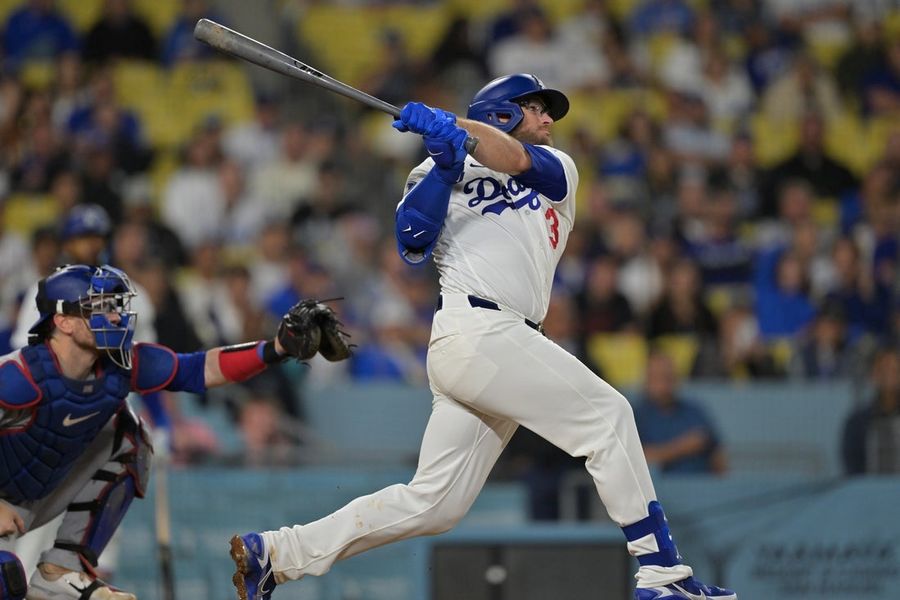
Deadspin | Max Muncy, high-octane Dodgers set for rematch vs. Rangers  Apr 10, 2026; Los Angeles, California, USA; Los Angeles Dodgers third baseman Max Muncy (13) hits a walk-off solo home run in the ninth inning to defeat the Texas Rangers at Dodger Stadium. Mandatory Credit: Jayne Kamin-Oncea-Imagn Images   The Los Angeles Dodgers are the first 10-win team in the majors, and they largely have gotten there with a potent offense.  The Dodgers, who host the Texas Rangers on Saturday night in the second contest of their three-game series, lead the majors in hits (134), batting average (.297) and homers (25).   Four of those homers came in Friday night’s 8-7 win over the Rangers. Max Muncy went deep three times — including a walk-off blast in the ninth inning — and the torrid Andy Pages also homered.  Pages has been a hot hitter from the first game of the season. He is batting .449 and after going 3-for-3 while driving in four runs on Friday to boost his team-leading totals in hits (22) and RBIs (16).  Muncy moved into sixth place all-time in career home runs as a Dodger with 213, and Shohei Ohtani is now the record holder for most consecutive games reaching base at 44. Ohtani’s single on Friday gave him the record after he broke a tie with Hall of Famer Ichiro Suzuki.  “It’s great,” Dodgers manager Dave Roberts said of Ohtani. “He’s taking walks, getting hits and he hasn’t really got going yet. For us to win the games we’ve won, score the runs we’ve scored … and Sho isn’t going, he’s going to get hot. That’s a good thing for us.”  The Dodgers will turn to right-hander Emmet Sheehan (1-0, 8.00 ERA) to make the start on Saturday.   Sheehan is looking for a better performance after having allowed four earned runs in each of his first two starts of the season. He has an 11-4 career record and has eight strikeouts to five walks this season.   Sheehan lost the only game he’s ever started against Texas, with eight runs allowed in 3 2/3 innings in his first major league loss in July 2023.  The Rangers, after a three-game sweep of the Seattle Mariners, pitched well as a team in that series. But they allowed more runs Friday night at Dodger Stadium than they did over the three games with Seattle combined.  The Texas bullpen allowed five runs on 10 hits over 3 2/3 innings of relief against the Dodgers, though left-hander Jalen Beeks pitched a scoreless inning.  Corey Seager and Wyatt Langford each hit a home run for the Rangers on Friday, Seager belted his team-high fourth of the season. But Langford left the game with right quad tightness after five innings.  It’s unclear of the severity of the injury.  The scheduled starting pitcher for the Rangers on Saturday is right-hander Jack Leiter (1-0, 2.45 ERA). Leiter has given up nine hits in 11 total innings of work and has 17 strikeouts to just two walks.  Leiter is facing the Dodgers for the first time in his career. He’s come up with an effective cut fastball to add to his arsenal, with the goal of “going deeper into games and throwing more innings this year,” he told MLB.com.  –Field Level Media    #Deadspin #Max #Muncy #highoctane #Dodgers #set #rematch #Rangers
Deadspin | Max Muncy, high-octane Dodgers set for rematch vs. Rangers
Deadspin | Max Muncy, high-octane Dodgers set for rematch vs. Rangers  Apr 10, 2026; Los Angeles, California, USA; Los Angeles Dodgers third baseman Max Muncy (13) hits a walk-off solo home run in the ninth inning to defeat the Texas Rangers at Dodger Stadium. Mandatory Credit: Jayne Kamin-Oncea-Imagn Images   The Los Angeles Dodgers are the first 10-win team in the majors, and they largely have gotten there with a potent offense.  The Dodgers, who host the Texas Rangers on Saturday night in the second contest of their three-game series, lead the majors in hits (134), batting average (.297) and homers (25).   Four of those homers came in Friday night’s 8-7 win over the Rangers. Max Muncy went deep three times — including a walk-off blast in the ninth inning — and the torrid Andy Pages also homered.  Pages has been a hot hitter from the first game of the season. He is batting .449 and after going 3-for-3 while driving in four runs on Friday to boost his team-leading totals in hits (22) and RBIs (16).  Muncy moved into sixth place all-time in career home runs as a Dodger with 213, and Shohei Ohtani is now the record holder for most consecutive games reaching base at 44. Ohtani’s single on Friday gave him the record after he broke a tie with Hall of Famer Ichiro Suzuki.  “It’s great,” Dodgers manager Dave Roberts said of Ohtani. “He’s taking walks, getting hits and he hasn’t really got going yet. For us to win the games we’ve won, score the runs we’ve scored … and Sho isn’t going, he’s going to get hot. That’s a good thing for us.”  The Dodgers will turn to right-hander Emmet Sheehan (1-0, 8.00 ERA) to make the start on Saturday.   Sheehan is looking for a better performance after having allowed four earned runs in each of his first two starts of the season. He has an 11-4 career record and has eight strikeouts to five walks this season.   Sheehan lost the only game he’s ever started against Texas, with eight runs allowed in 3 2/3 innings in his first major league loss in July 2023.  The Rangers, after a three-game sweep of the Seattle Mariners, pitched well as a team in that series. But they allowed more runs Friday night at Dodger Stadium than they did over the three games with Seattle combined.  The Texas bullpen allowed five runs on 10 hits over 3 2/3 innings of relief against the Dodgers, though left-hander Jalen Beeks pitched a scoreless inning.  Corey Seager and Wyatt Langford each hit a home run for the Rangers on Friday, Seager belted his team-high fourth of the season. But Langford left the game with right quad tightness after five innings.  It’s unclear of the severity of the injury.  The scheduled starting pitcher for the Rangers on Saturday is right-hander Jack Leiter (1-0, 2.45 ERA). Leiter has given up nine hits in 11 total innings of work and has 17 strikeouts to just two walks.  Leiter is facing the Dodgers for the first time in his career. He’s come up with an effective cut fastball to add to his arsenal, with the goal of “going deeper into games and throwing more innings this year,” he told MLB.com.  –Field Level Media    #Deadspin #Max #Muncy #highoctane #Dodgers #set #rematch #RangersApr 10, 2026; Los Angeles, California, USA; Los Angeles Dodgers third baseman Max Muncy (13) hits a walk-off solo home run in the ninth inning to defeat the Texas Rangers at Dodger Stadium. Mandatory Credit: Jayne Kamin-Oncea-Imagn Images

The Los Angeles Dodgers are the first 10-win team in the majors, and they largely have gotten there with a potent offense.

The Dodgers, who host the Texas Rangers on Saturday night in the second contest of their three-game series, lead the majors in hits (134), batting average (.297) and homers (25).

Four of those homers came in Friday night’s 8-7 win over the Rangers. Max Muncy went deep three times — including a walk-off blast in the ninth inning — and the torrid Andy Pages also homered.

Pages has been a hot hitter from the first game of the season. He is batting .449 and after going 3-for-3 while driving in four runs on Friday to boost his team-leading totals in hits (22) and RBIs (16).

Muncy moved into sixth place all-time in career home runs as a Dodger with 213, and Shohei Ohtani is now the record holder for most consecutive games reaching base at 44. Ohtani’s single on Friday gave him the record after he broke a tie with Hall of Famer Ichiro Suzuki.

“It’s great,” Dodgers manager Dave Roberts said of Ohtani. “He’s taking walks, getting hits and he hasn’t really got going yet. For us to win the games we’ve won, score the runs we’ve scored … and Sho isn’t going, he’s going to get hot. That’s a good thing for us.”

The Dodgers will turn to right-hander Emmet Sheehan (1-0, 8.00 ERA) to make the start on Saturday.


Sheehan is looking for a better performance after having allowed four earned runs in each of his first two starts of the season. He has an 11-4 career record and has eight strikeouts to five walks this season.

Sheehan lost the only game he’s ever started against Texas, with eight runs allowed in 3 2/3 innings in his first major league loss in July 2023.

The Rangers, after a three-game sweep of the Seattle Mariners, pitched well as a team in that series. But they allowed more runs Friday night at Dodger Stadium than they did over the three games with Seattle combined.

The Texas bullpen allowed five runs on 10 hits over 3 2/3 innings of relief against the Dodgers, though left-hander Jalen Beeks pitched a scoreless inning.

Corey Seager and Wyatt Langford each hit a home run for the Rangers on Friday, Seager belted his team-high fourth of the season. But Langford left the game with right quad tightness after five innings.

It’s unclear of the severity of the injury.

The scheduled starting pitcher for the Rangers on Saturday is right-hander Jack Leiter (1-0, 2.45 ERA). Leiter has given up nine hits in 11 total innings of work and has 17 strikeouts to just two walks.

Leiter is facing the Dodgers for the first time in his career. He’s come up with an effective cut fastball to add to his arsenal, with the goal of “going deeper into games and throwing more innings this year,” he told MLB.com.


–Field Level Media

#Deadspin #Max #Muncy #highoctane #Dodgers #set #rematch #Rangers

Apr 10, 2026; Los Angeles, California, USA; Los Angeles Dodgers third baseman Max Muncy (13) hits a walk-off solo home run in the ninth inning to defeat the Texas Rangers at Dodger Stadium. Mandatory Credit: Jayne Kamin-Oncea-Imagn Images

The Los Angeles Dodgers are the first 10-win team in the majors, and they largely have gotten there with a potent offense.

The Dodgers, who host the Texas Rangers on Saturday night in the second contest of their three-game series, lead the majors in hits (134), batting average (.297) and homers (25).

Four of those homers came in Friday night’s 8-7 win over the Rangers. Max Muncy went deep three times — including a walk-off blast in the ninth inning — and the torrid Andy Pages also homered.

Pages has been a hot hitter from the first game of the season. He is batting .449 and after going 3-for-3 while driving in four runs on Friday to boost his team-leading totals in hits (22) and RBIs (16).

Muncy moved into sixth place all-time in career home runs as a Dodger with 213, and Shohei Ohtani is now the record holder for most consecutive games reaching base at 44. Ohtani’s single on Friday gave him the record after he broke a tie with Hall of Famer Ichiro Suzuki.

“It’s great,” Dodgers manager Dave Roberts said of Ohtani. “He’s taking walks, getting hits and he hasn’t really got going yet. For us to win the games we’ve won, score the runs we’ve scored … and Sho isn’t going, he’s going to get hot. That’s a good thing for us.”

The Dodgers will turn to right-hander Emmet Sheehan (1-0, 8.00 ERA) to make the start on Saturday.

Sheehan is looking for a better performance after having allowed four earned runs in each of his first two starts of the season. He has an 11-4 career record and has eight strikeouts to five walks this season.

Sheehan lost the only game he’s ever started against Texas, with eight runs allowed in 3 2/3 innings in his first major league loss in July 2023.

The Rangers, after a three-game sweep of the Seattle Mariners, pitched well as a team in that series. But they allowed more runs Friday night at Dodger Stadium than they did over the three games with Seattle combined.

The Texas bullpen allowed five runs on 10 hits over 3 2/3 innings of relief against the Dodgers, though left-hander Jalen Beeks pitched a scoreless inning.

Corey Seager and Wyatt Langford each hit a home run for the Rangers on Friday, Seager belted his team-high fourth of the season. But Langford left the game with right quad tightness after five innings.

It’s unclear of the severity of the injury.

The scheduled starting pitcher for the Rangers on Saturday is right-hander Jack Leiter (1-0, 2.45 ERA). Leiter has given up nine hits in 11 total innings of work and has 17 strikeouts to just two walks.

Leiter is facing the Dodgers for the first time in his career. He’s come up with an effective cut fastball to add to his arsenal, with the goal of “going deeper into games and throwing more innings this year,” he told MLB.com.

–Field Level Media

Source link
#Deadspin #Max #Muncy #highoctane #Dodgers #set #rematch #Rangers

Previous post

CSK vs DC, IPL 2026: Samson ton fires CSK to first win of season <div id="content-body-70852009" itemprop="articleBody"><p>When it rains, it pours for Sanju Samson. After failing to get past single-digit scores in the first three matches for the Chennai Super Kings (CSK), the Samson storm struck the M. A. Chidambaram Stadium in Chennai on Sunday against the Delhi Capitals (DC).</p><p>The Kerala batter scored his fourth IPL hundred, the first for his new franchise, to help CSK beat the Capitals by 23 runs and open its account in IPL 2026. The wicketkeeper-batter battled through the humidity and lower-back strain to remain unbeaten on 115 off 56 balls, playing an innings built around piercing gaps rather than bludgeoning the ball into the stands.</p><p>Asked to bat first by Axar Patel on a surface termed dry by CSK skipper Ruturaj Gaikwad, the home side started on the front foot in the PowerPlay with Samson leading the charge. The 31-year-old oozed confidence with his footwork, putting away anything wide on offer from the new-ball bowlers. Samson’s intermittent boundaries meant Gaikwad’s scratchy start did not harm the scoring rate in the first phase.</p><p><b>ALSO READ |</b><b><a href="https://sportstar.thehindu.com/cricket/ipl/lucknow-super-giants-vs-gujarat-titans-ipl-2026-lsg-v-gt-match-preview-ekana/article70850769.ece" target="_blank" rel="nofollow">IPL 2026: Resurgent Lucknow Super Giants looks for a win at home against Gujarat Titans</a></b></p><p>He took on the unfavourable match-up against Axar by collecting two boundaries through cover, a prelude to the rest of the innings, where the spinners were denied a chance to enjoy any control. After Gaikwad’s dismissal, DC did not utilize the chances to send Samson and Ayush Mhatre back to the pavilion. K.L. Rahul failed to gather the ball when Mhatre looked to take a blind run and Samson was dropped at long off two balls later.</p><p>Despite the first six in the innings only coming in the 11th over, the host continued to maintain a nine-plus run rate, which only surged upwards during the partnership between Samson and his junior partner. Their 100-run stand was brought up in just 56 balls, setting up CSK to go big in the final phase of the innings. But Lungi Ngidi and Mukesh Kumar brought the run flow to an abrupt stop, stifling the batters by going full and wide. CSK rolled the dice by retiring out half-centurion Mhatre for Shivam Dube, a change which allowed the side to find late acceleration and post 212.</p><div class=" article-picture center"><img src="https://ss-i.thgim.com/public/incoming/xn4fg5/article70852122.ece/alternates/FREE_1200/DSC_3761.JPG" data-original="https://ss-i.thgim.com/public/incoming/xn4fg5/article70852122.ece/alternates/FREE_1200/DSC_3761.JPG" alt="Jamie Overton’s haul of four for 15 was crucial in restricting Delhi Capitals to 189 runs." title="Jamie Overton’s haul of four for 15 was crucial in restricting Delhi Capitals to 189 runs." class=" lazy" width="100%" height="100%"/><div class="pic-caption"><figcaption class="figure-caption align-text-bottom"><p> Jamie Overton’s haul of four for 15 was crucial in restricting Delhi Capitals to 189 runs. | Photo Credit: B. Jothi Ramalingam </p><img class="caption-image" src="https://assetsss.thehindu.com/theme/images/SSRX/lightbox-info.svg" alt="lightbox-info"/></figcaption></div><p class="caption"> Jamie Overton’s haul of four for 15 was crucial in restricting Delhi Capitals to 189 runs. | Photo Credit: B. Jothi Ramalingam </p></div><p>CSK’s worst nightmare seemed to be coming back to haunt it when openers Rahul and Pathum Nissanka blazed to a fifty-run opening association within four overs. Khaleel Ahmed managed to prise out the former with a well-directed short ball, a small tug on the door which the home side then slammed open. Nissanka perished soon after, unable to time his attempted lob over mid-on.</p><p>As the rumbling among fans grew in volume, Sarfaraz Khan held on to a diving catch at point, hanging in the air horizontally, parallel to the ground, to hand Gurjapneet Singh a wicket on his first ball in the IPL and drive the noise to its zenith.</p><p>David Miller and Tristan Stubbs managed to silence the yellow-clad population for a while with a 45-run stand in just 26 balls. Seeing the stumps light up behind Miller, the almost-hero from DC’s previous encounter, turned the whistles back on. A few lusty blows from Stubbs and the lower order kept the Men in Yellow on their toes before Jamie Overton capped off an excellent night with the ball (4/18) by removing the Protea batter in the penultimate over to help his side break its duck.</p><p class="publish-time" id="end-of-article">Published on Apr 11, 2026</p></div> #CSK #IPL #Samson #ton #fires #CSK #win #season

Next post

Nikki Garcia Offers Dating Update After Debunked Cooper DeJean Rumors: ‘I Love My Space’

Victor Wembanyama gave NBA fans a good reminder not to overreact to Las Vegas Summer League after the San Antonio Spurs selected him at No. 1 overall in the 2023 NBA Draft. Wembanyama’s summer league debut was a dud as he finished with nine points on 2-of-13 shooting from the field. It’s safe to say Wemby’s career would turn out just fine after he led the Spurs to the NBA Finals in his third season at age-22.

Still, it’s hard to shake a bad first impression for rookies entering the league. Fans want to think their new players are bound to be stars, or at least dependable role players. When rookies disappoint in summer league, it’s still a bummer even it means basically nothing for the long-term outlook of their career.

Here are the rookies who have underwhelmed in summer league so far. If nothing else, it will be helpful to look back on this list if and when these players become solid contributors to show future rookies that a bad start to summer league isn’t that big of a deal.

Aday Mara, C, Oklahoma City Thunder

Mara was arguably the biggest winner of March Madness, going from a player typically projected in the mid-20s to a surefire lottery pick after Michigan’s national championship run. The Thunder selected him at No. 12 overall, and his rim protection plus high-level passing ability felt like a natural fit for their system. I was on the Mara bandwagon in the predraft process, but during my conversations with front office people and other writers I started to notice that he was perhaps the most polarizing player in the class. Some people viewed him as a low ceiling center who should be a fringe first-round pick, while others had him in the top-10.

Mara has struggled a bit away from Michigan’s amazing infrastructure at the start of his summer league run. He’s only shot 46 percent from the field through his first four games, which is pretty underwhelming for a 7’3 guy. His touch has looked shaky around the rim, and there are moments of passivity defensively. There are positive flashes on the tape too of course, like this overpowering drive and dunk, and some of his signature passing to cutters on the move. I do think it’s fair to question Mara’s scoring utility if he struggles to get deep post position because of a high center of gravity, and there’s no doubt he has to earn his early minutes on the defensive end. I’m not worried, but the Mara skeptics have a little more ammunition after this summer league run.

Dailyn Swain, G, Chicago Bulls

I had a front row seat at the NBA Draft Combine scrimmages, and was surprised to see Dailyn Swain on the court. The combine scrimmages are typically only for fringe draft picks, and by this point Swain had already solidified himself as a mid first-rounder. Even more surprising was that Swain did not play particularly well in a setting where he should have been the best player on the floor, showing a slow and hitchy release on his jumper and looking a bit lost offensively. The Bulls were undeterred and selected Swain at No. 15, but his struggles have continued through his first couple games in summer league.

Swain shot 3-of-10 from the floor in Chicago’s opener in Las Vegas, then shot 0-of-9 from the floor in his second game and 0-of-7 from the floor in the third game. The Bulls have indicated that they see him as a ball handler long-term, but he’s clearly struggled to handle against pressure thus far. That would be less of an issue if Swain had a reliable off-ball game, but right now his jumper looks as broken as ever. The Bulls did Swain no favors with this roster construction, failing to put a dependable point guard next to him that could handle against ball pressure and get him some easier shots. Instead, Swain has admitted he’s overthinking every move on the court. There have been some flashes of the downhill driving that popped this past season at Texas, but for now it’s clear Swain isn’t a point guard and needs to put plenty of work in on fixing his jumper.

Darius Acuff, G, Sacramento Kings

Acuff had a legendary scoring season at Arkansas, but sharp scouts noticed concerns with process on both ends of the floor. The point guard’s shot profile was pretty mid-range heavy, and while his three-point shooting numbers were excellent in the small college sample, they were more concerning if you include the high school data. Acuff’s real questions came on the defensive end, where he didn’t show much effort in addition to having poor tools. These concerns have continued in summer league, where Acuff has posted underwhelming scoring efficiency and ghastly defensive tape while still showing the talent that made him a certain lottery pick.

Acuff hasn’t done anything to show that his NBA defense will be better than the level he showed in college. So far, lazy closeouts, spacey off-ball defense, and a lack of hustle have been all over the tape. It often feels like he’s not actively engaged in the game when his team doesn’t have the ball. There’s going to be a high bar to meet offensively for a guard who is this poor on defense, and Acuff hasn’t been close to it yet. He’s scored 78 points on 82 shots through four games. His decision-making hasn’t been great as a passer either with 18 assists to 14 turnovers. I was way low on Acuff on my mid-season board before he started to win me over by consistently delivering in big games at Arkansas. Will the Kings ever play in any big games while he’s on the team? I hope so, because that fanbase deserves better.

Keaton Wagler, G, Los Angeles Clippers

Wagler hasn’t made anything look easy in summer league. The No. 5 pick has struggled to create separation off the dribble, he hasn’t been a plus with his playmaking, and he’s basically a non-factor on the glass. Wagler’s 8.2 PER is the worst of any top-10 pick through two summer league games despite getting hot in the second half against Utah in his second game. The athletic concerns entering the draft appear to be valid for now. Wagler just doesn’t have a lot of burst as a ball handler, and even some of his effective drives have been pretty ugly. He got dusted by Darryn Peterson on a couple occasions, including on the No. 2 pick’s poster slam where he struggled to get under a screen. With five assists and four turnovers, he looks better suited for shooting guard than point guard at the moment. Wagler has admitted that leaving Illinois’ five-out system has been challenging, and I suspected that would be the case entering the draft. Wagler is naturally going to add muscle to his thin frame as he goes on in the league, and being in an NBA strength and conditioning program should be very good for him long-term. The Clippers can give him both on-ball and off-ball reps this year, and that should be good for his development. When the off-the-dribble shot-making is falling, Wagler looks terrific. He’s far from a finished product, but Clippers fans should still be feeling encouraged long-term.

Christian Anderson, G, Charlotte Hornets

Anderson should have a shot to be Coby White’s backup as a rookie after the Hornets traded LaMelo Ball, but he’s looked pretty far away from being a real contributor during his summer league run. Through three games, Anderson has been unable to catch a rhythm with his shot while struggling with turnovers and not doing much on the defensive end. Anderson had a reputation as one of the draft’s best shooters, but his inability to play to contact inside the arc means he’s settling for a lot of tough pull-up threes right now, which has hurt his scoring efficiency (43.2 percent true shooting). I liked his live-dribble passing at Texas Tech, but the passing windows haven’t been there yet, and it’s resulted in a 6.7 percent assist rate compared to a 20.1 percent turnover rate. Anderson isn’t too big or too athletic, so it’s hard to expect him to be a monster driving to the rim. That means he’s likely going to have to live off tough shots. It’s a good thing the Hornets are one of the best offensive rebounding teams around.

Nate Ament, F, Milwaukee Bucks

While Brayden Burries has been arguably the most impressive rookie at summer league thus far, the Bucks’ other lottery pick Nate Ament hasn’t looked very assertive or effective. Ament has only scored 21 points in 65 minutes, and just doesn’t seem very comfortable getting into his shot yet. He knocked down a couple threes against the Suns, and focusing on spacing the floor and making an impact on defense is probably his best path forward early in his career. Ament has the frame to be a good defender in time, but he’s just not there yet. His awareness is pretty poor right now, and he can struggle with physicality. As long as Ament is a good three-point shooter, he’ll have some immediate utility on offense, and his defense should improve in time as the Bucks continue to beef him up. Until then, just enjoy the Brayden Burries show, Bucks fans.

#NBA #Summer #League #rookies #struggling #live #hype">6 NBA Summer League rookies struggling to live up to the hype so far  Victor Wembanyama gave NBA fans a good reminder not to overreact to Las Vegas Summer League after the San Antonio Spurs selected him at No. 1 overall in the 2023 NBA Draft. Wembanyama’s summer league debut was a dud as he finished with nine points on 2-of-13 shooting from the field. It’s safe to say Wemby’s career would turn out just fine after he led the Spurs to the NBA Finals in his third season at age-22.Still, it’s hard to shake a bad first impression for rookies entering the league. Fans want to think their new players are bound to be stars, or at least dependable role players. When rookies disappoint in summer league, it’s still a bummer even it means basically nothing for the long-term outlook of their career.Here are the rookies who have underwhelmed in summer league so far. If nothing else, it will be helpful to look back on this list if and when these players become solid contributors to show future rookies that a bad start to summer league isn’t that big of a deal.Aday Mara, C, Oklahoma City ThunderMara was arguably the biggest winner of March Madness, going from a player typically projected in the mid-20s to a surefire lottery pick after Michigan’s national championship run. The Thunder selected him at No. 12 overall, and his rim protection plus high-level passing ability felt like a natural fit for their system. I was on the Mara bandwagon in the predraft process, but during my conversations with front office people and other writers I started to notice that he was perhaps the most polarizing player in the class. Some people viewed him as a low ceiling center who should be a fringe first-round pick, while others had him in the top-10.Mara has struggled a bit away from Michigan’s amazing infrastructure at the start of his summer league run. He’s only shot 46 percent from the field through his first four games, which is pretty underwhelming for a 7’3 guy. His touch has looked shaky around the rim, and there are moments of passivity defensively. There are positive flashes on the tape too of course, like this overpowering drive and dunk, and some of his signature passing to cutters on the move. I do think it’s fair to question Mara’s scoring utility if he struggles to get deep post position because of a high center of gravity, and there’s no doubt he has to earn his early minutes on the defensive end. I’m not worried, but the Mara skeptics have a little more ammunition after this summer league run.Dailyn Swain, G, Chicago BullsI had a front row seat at the NBA Draft Combine scrimmages, and was surprised to see Dailyn Swain on the court. The combine scrimmages are typically only for fringe draft picks, and by this point Swain had already solidified himself as a mid first-rounder. Even more surprising was that Swain did not play particularly well in a setting where he should have been the best player on the floor, showing a slow and hitchy release on his jumper and looking a bit lost offensively. The Bulls were undeterred and selected Swain at No. 15, but his struggles have continued through his first couple games in summer league.Swain shot 3-of-10 from the floor in Chicago’s opener in Las Vegas, then shot 0-of-9 from the floor in his second game and 0-of-7 from the floor in the third game. The Bulls have indicated that they see him as a ball handler long-term, but he’s clearly struggled to handle against pressure thus far. That would be less of an issue if Swain had a reliable off-ball game, but right now his jumper looks as broken as ever. The Bulls did Swain no favors with this roster construction, failing to put a dependable point guard next to him that could handle against ball pressure and get him some easier shots. Instead, Swain has admitted he’s overthinking every move on the court. There have been some flashes of the downhill driving that popped this past season at Texas, but for now it’s clear Swain isn’t a point guard and needs to put plenty of work in on fixing his jumper.Darius Acuff, G, Sacramento KingsAcuff had a legendary scoring season at Arkansas, but sharp scouts noticed concerns with process on both ends of the floor. The point guard’s shot profile was pretty mid-range heavy, and while his three-point shooting numbers were excellent in the small college sample, they were more concerning if you include the high school data. Acuff’s real questions came on the defensive end, where he didn’t show much effort in addition to having poor tools. These concerns have continued in summer league, where Acuff has posted underwhelming scoring efficiency and ghastly defensive tape while still showing the talent that made him a certain lottery pick.Acuff hasn’t done anything to show that his NBA defense will be better than the level he showed in college. So far, lazy closeouts, spacey off-ball defense, and a lack of hustle have been all over the tape. It often feels like he’s not actively engaged in the game when his team doesn’t have the ball. There’s going to be a high bar to meet offensively for a guard who is this poor on defense, and Acuff hasn’t been close to it yet. He’s scored 78 points on 82 shots through four games. His decision-making hasn’t been great as a passer either with 18 assists to 14 turnovers. I was way low on Acuff on my mid-season board before he started to win me over by consistently delivering in big games at Arkansas. Will the Kings ever play in any big games while he’s on the team? I hope so, because that fanbase deserves better.Keaton Wagler, G, Los Angeles ClippersWagler hasn’t made anything look easy in summer league. The No. 5 pick has struggled to create separation off the dribble, he hasn’t been a plus with his playmaking, and he’s basically a non-factor on the glass. Wagler’s 8.2 PER is the worst of any top-10 pick through two summer league games despite getting hot in the second half against Utah in his second game. The athletic concerns entering the draft appear to be valid for now. Wagler just doesn’t have a lot of burst as a ball handler, and even some of his effective drives have been pretty ugly. He got dusted by Darryn Peterson on a couple occasions, including on the No. 2 pick’s poster slam where he struggled to get under a screen. With five assists and four turnovers, he looks better suited for shooting guard than point guard at the moment. Wagler has admitted that leaving Illinois’ five-out system has been challenging, and I suspected that would be the case entering the draft. Wagler is naturally going to add muscle to his thin frame as he goes on in the league, and being in an NBA strength and conditioning program should be very good for him long-term. The Clippers can give him both on-ball and off-ball reps this year, and that should be good for his development. When the off-the-dribble shot-making is falling, Wagler looks terrific. He’s far from a finished product, but Clippers fans should still be feeling encouraged long-term.Christian Anderson, G, Charlotte HornetsAnderson should have a shot to be Coby White’s backup as a rookie after the Hornets traded LaMelo Ball, but he’s looked pretty far away from being a real contributor during his summer league run. Through three games, Anderson has been unable to catch a rhythm with his shot while struggling with turnovers and not doing much on the defensive end. Anderson had a reputation as one of the draft’s best shooters, but his inability to play to contact inside the arc means he’s settling for a lot of tough pull-up threes right now, which has hurt his scoring efficiency (43.2 percent true shooting). I liked his live-dribble passing at Texas Tech, but the passing windows haven’t been there yet, and it’s resulted in a 6.7 percent assist rate compared to a 20.1 percent turnover rate. Anderson isn’t too big or too athletic, so it’s hard to expect him to be a monster driving to the rim. That means he’s likely going to have to live off tough shots. It’s a good thing the Hornets are one of the best offensive rebounding teams around.Nate Ament, F, Milwaukee BucksWhile Brayden Burries has been arguably the most impressive rookie at summer league thus far, the Bucks’ other lottery pick Nate Ament hasn’t looked very assertive or effective. Ament has only scored 21 points in 65 minutes, and just doesn’t seem very comfortable getting into his shot yet. He knocked down a couple threes against the Suns, and focusing on spacing the floor and making an impact on defense is probably his best path forward early in his career. Ament has the frame to be a good defender in time, but he’s just not there yet. His awareness is pretty poor right now, and he can struggle with physicality. As long as Ament is a good three-point shooter, he’ll have some immediate utility on offense, and his defense should improve in time as the Bucks continue to beef him up. Until then, just enjoy the Brayden Burries show, Bucks fans.  #NBA #Summer #League #rookies #struggling #live #hype

Wembanyama’s summer league debut was a dud as he finished with nine points on 2-of-13 shooting from the field. It’s safe to say Wemby’s career would turn out just fine after he led the Spurs to the NBA Finals in his third season at age-22.

Still, it’s hard to shake a bad first impression for rookies entering the league. Fans want to think their new players are bound to be stars, or at least dependable role players. When rookies disappoint in summer league, it’s still a bummer even it means basically nothing for the long-term outlook of their career.

Here are the rookies who have underwhelmed in summer league so far. If nothing else, it will be helpful to look back on this list if and when these players become solid contributors to show future rookies that a bad start to summer league isn’t that big of a deal.

Aday Mara, C, Oklahoma City Thunder

Mara was arguably the biggest winner of March Madness, going from a player typically projected in the mid-20s to a surefire lottery pick after Michigan’s national championship run. The Thunder selected him at No. 12 overall, and his rim protection plus high-level passing ability felt like a natural fit for their system. I was on the Mara bandwagon in the predraft process, but during my conversations with front office people and other writers I started to notice that he was perhaps the most polarizing player in the class. Some people viewed him as a low ceiling center who should be a fringe first-round pick, while others had him in the top-10.

Mara has struggled a bit away from Michigan’s amazing infrastructure at the start of his summer league run. He’s only shot 46 percent from the field through his first four games, which is pretty underwhelming for a 7’3 guy. His touch has looked shaky around the rim, and there are moments of passivity defensively. There are positive flashes on the tape too of course, like this overpowering drive and dunk, and some of his signature passing to cutters on the move. I do think it’s fair to question Mara’s scoring utility if he struggles to get deep post position because of a high center of gravity, and there’s no doubt he has to earn his early minutes on the defensive end. I’m not worried, but the Mara skeptics have a little more ammunition after this summer league run.

Dailyn Swain, G, Chicago Bulls

I had a front row seat at the NBA Draft Combine scrimmages, and was surprised to see Dailyn Swain on the court. The combine scrimmages are typically only for fringe draft picks, and by this point Swain had already solidified himself as a mid first-rounder. Even more surprising was that Swain did not play particularly well in a setting where he should have been the best player on the floor, showing a slow and hitchy release on his jumper and looking a bit lost offensively. The Bulls were undeterred and selected Swain at No. 15, but his struggles have continued through his first couple games in summer league.

Swain shot 3-of-10 from the floor in Chicago’s opener in Las Vegas, then shot 0-of-9 from the floor in his second game and 0-of-7 from the floor in the third game. The Bulls have indicated that they see him as a ball handler long-term, but he’s clearly struggled to handle against pressure thus far. That would be less of an issue if Swain had a reliable off-ball game, but right now his jumper looks as broken as ever. The Bulls did Swain no favors with this roster construction, failing to put a dependable point guard next to him that could handle against ball pressure and get him some easier shots. Instead, Swain has admitted he’s overthinking every move on the court. There have been some flashes of the downhill driving that popped this past season at Texas, but for now it’s clear Swain isn’t a point guard and needs to put plenty of work in on fixing his jumper.

Darius Acuff, G, Sacramento Kings

Acuff had a legendary scoring season at Arkansas, but sharp scouts noticed concerns with process on both ends of the floor. The point guard’s shot profile was pretty mid-range heavy, and while his three-point shooting numbers were excellent in the small college sample, they were more concerning if you include the high school data. Acuff’s real questions came on the defensive end, where he didn’t show much effort in addition to having poor tools. These concerns have continued in summer league, where Acuff has posted underwhelming scoring efficiency and ghastly defensive tape while still showing the talent that made him a certain lottery pick.

Acuff hasn’t done anything to show that his NBA defense will be better than the level he showed in college. So far, lazy closeouts, spacey off-ball defense, and a lack of hustle have been all over the tape. It often feels like he’s not actively engaged in the game when his team doesn’t have the ball. There’s going to be a high bar to meet offensively for a guard who is this poor on defense, and Acuff hasn’t been close to it yet. He’s scored 78 points on 82 shots through four games. His decision-making hasn’t been great as a passer either with 18 assists to 14 turnovers. I was way low on Acuff on my mid-season board before he started to win me over by consistently delivering in big games at Arkansas. Will the Kings ever play in any big games while he’s on the team? I hope so, because that fanbase deserves better.

Keaton Wagler, G, Los Angeles Clippers

Wagler hasn’t made anything look easy in summer league. The No. 5 pick has struggled to create separation off the dribble, he hasn’t been a plus with his playmaking, and he’s basically a non-factor on the glass. Wagler’s 8.2 PER is the worst of any top-10 pick through two summer league games despite getting hot in the second half against Utah in his second game. The athletic concerns entering the draft appear to be valid for now. Wagler just doesn’t have a lot of burst as a ball handler, and even some of his effective drives have been pretty ugly. He got dusted by Darryn Peterson on a couple occasions, including on the No. 2 pick’s poster slam where he struggled to get under a screen. With five assists and four turnovers, he looks better suited for shooting guard than point guard at the moment. Wagler has admitted that leaving Illinois’ five-out system has been challenging, and I suspected that would be the case entering the draft. Wagler is naturally going to add muscle to his thin frame as he goes on in the league, and being in an NBA strength and conditioning program should be very good for him long-term. The Clippers can give him both on-ball and off-ball reps this year, and that should be good for his development. When the off-the-dribble shot-making is falling, Wagler looks terrific. He’s far from a finished product, but Clippers fans should still be feeling encouraged long-term.

Christian Anderson, G, Charlotte Hornets

Anderson should have a shot to be Coby White’s backup as a rookie after the Hornets traded LaMelo Ball, but he’s looked pretty far away from being a real contributor during his summer league run. Through three games, Anderson has been unable to catch a rhythm with his shot while struggling with turnovers and not doing much on the defensive end. Anderson had a reputation as one of the draft’s best shooters, but his inability to play to contact inside the arc means he’s settling for a lot of tough pull-up threes right now, which has hurt his scoring efficiency (43.2 percent true shooting). I liked his live-dribble passing at Texas Tech, but the passing windows haven’t been there yet, and it’s resulted in a 6.7 percent assist rate compared to a 20.1 percent turnover rate. Anderson isn’t too big or too athletic, so it’s hard to expect him to be a monster driving to the rim. That means he’s likely going to have to live off tough shots. It’s a good thing the Hornets are one of the best offensive rebounding teams around.

Nate Ament, F, Milwaukee Bucks

While Brayden Burries has been arguably the most impressive rookie at summer league thus far, the Bucks’ other lottery pick Nate Ament hasn’t looked very assertive or effective. Ament has only scored 21 points in 65 minutes, and just doesn’t seem very comfortable getting into his shot yet. He knocked down a couple threes against the Suns, and focusing on spacing the floor and making an impact on defense is probably his best path forward early in his career. Ament has the frame to be a good defender in time, but he’s just not there yet. His awareness is pretty poor right now, and he can struggle with physicality. As long as Ament is a good three-point shooter, he’ll have some immediate utility on offense, and his defense should improve in time as the Bucks continue to beef him up. Until then, just enjoy the Brayden Burries show, Bucks fans.

#NBA #Summer #League #rookies #struggling #live #hype">6 NBA Summer League rookies struggling to live up to the hype so far

Victor Wembanyama gave NBA fans a good reminder not to overreact to Las Vegas Summer League after the San Antonio Spurs selected him at No. 1 overall in the 2023 NBA Draft. Wembanyama’s summer league debut was a dud as he finished with nine points on 2-of-13 shooting from the field. It’s safe to say Wemby’s career would turn out just fine after he led the Spurs to the NBA Finals in his third season at age-22.

Still, it’s hard to shake a bad first impression for rookies entering the league. Fans want to think their new players are bound to be stars, or at least dependable role players. When rookies disappoint in summer league, it’s still a bummer even it means basically nothing for the long-term outlook of their career.

Here are the rookies who have underwhelmed in summer league so far. If nothing else, it will be helpful to look back on this list if and when these players become solid contributors to show future rookies that a bad start to summer league isn’t that big of a deal.

Aday Mara, C, Oklahoma City Thunder

Mara was arguably the biggest winner of March Madness, going from a player typically projected in the mid-20s to a surefire lottery pick after Michigan’s national championship run. The Thunder selected him at No. 12 overall, and his rim protection plus high-level passing ability felt like a natural fit for their system. I was on the Mara bandwagon in the predraft process, but during my conversations with front office people and other writers I started to notice that he was perhaps the most polarizing player in the class. Some people viewed him as a low ceiling center who should be a fringe first-round pick, while others had him in the top-10.

Mara has struggled a bit away from Michigan’s amazing infrastructure at the start of his summer league run. He’s only shot 46 percent from the field through his first four games, which is pretty underwhelming for a 7’3 guy. His touch has looked shaky around the rim, and there are moments of passivity defensively. There are positive flashes on the tape too of course, like this overpowering drive and dunk, and some of his signature passing to cutters on the move. I do think it’s fair to question Mara’s scoring utility if he struggles to get deep post position because of a high center of gravity, and there’s no doubt he has to earn his early minutes on the defensive end. I’m not worried, but the Mara skeptics have a little more ammunition after this summer league run.

Dailyn Swain, G, Chicago Bulls

I had a front row seat at the NBA Draft Combine scrimmages, and was surprised to see Dailyn Swain on the court. The combine scrimmages are typically only for fringe draft picks, and by this point Swain had already solidified himself as a mid first-rounder. Even more surprising was that Swain did not play particularly well in a setting where he should have been the best player on the floor, showing a slow and hitchy release on his jumper and looking a bit lost offensively. The Bulls were undeterred and selected Swain at No. 15, but his struggles have continued through his first couple games in summer league.

Swain shot 3-of-10 from the floor in Chicago’s opener in Las Vegas, then shot 0-of-9 from the floor in his second game and 0-of-7 from the floor in the third game. The Bulls have indicated that they see him as a ball handler long-term, but he’s clearly struggled to handle against pressure thus far. That would be less of an issue if Swain had a reliable off-ball game, but right now his jumper looks as broken as ever. The Bulls did Swain no favors with this roster construction, failing to put a dependable point guard next to him that could handle against ball pressure and get him some easier shots. Instead, Swain has admitted he’s overthinking every move on the court. There have been some flashes of the downhill driving that popped this past season at Texas, but for now it’s clear Swain isn’t a point guard and needs to put plenty of work in on fixing his jumper.

Darius Acuff, G, Sacramento Kings

Acuff had a legendary scoring season at Arkansas, but sharp scouts noticed concerns with process on both ends of the floor. The point guard’s shot profile was pretty mid-range heavy, and while his three-point shooting numbers were excellent in the small college sample, they were more concerning if you include the high school data. Acuff’s real questions came on the defensive end, where he didn’t show much effort in addition to having poor tools. These concerns have continued in summer league, where Acuff has posted underwhelming scoring efficiency and ghastly defensive tape while still showing the talent that made him a certain lottery pick.

Acuff hasn’t done anything to show that his NBA defense will be better than the level he showed in college. So far, lazy closeouts, spacey off-ball defense, and a lack of hustle have been all over the tape. It often feels like he’s not actively engaged in the game when his team doesn’t have the ball. There’s going to be a high bar to meet offensively for a guard who is this poor on defense, and Acuff hasn’t been close to it yet. He’s scored 78 points on 82 shots through four games. His decision-making hasn’t been great as a passer either with 18 assists to 14 turnovers. I was way low on Acuff on my mid-season board before he started to win me over by consistently delivering in big games at Arkansas. Will the Kings ever play in any big games while he’s on the team? I hope so, because that fanbase deserves better.

Keaton Wagler, G, Los Angeles Clippers

Wagler hasn’t made anything look easy in summer league. The No. 5 pick has struggled to create separation off the dribble, he hasn’t been a plus with his playmaking, and he’s basically a non-factor on the glass. Wagler’s 8.2 PER is the worst of any top-10 pick through two summer league games despite getting hot in the second half against Utah in his second game. The athletic concerns entering the draft appear to be valid for now. Wagler just doesn’t have a lot of burst as a ball handler, and even some of his effective drives have been pretty ugly. He got dusted by Darryn Peterson on a couple occasions, including on the No. 2 pick’s poster slam where he struggled to get under a screen. With five assists and four turnovers, he looks better suited for shooting guard than point guard at the moment. Wagler has admitted that leaving Illinois’ five-out system has been challenging, and I suspected that would be the case entering the draft. Wagler is naturally going to add muscle to his thin frame as he goes on in the league, and being in an NBA strength and conditioning program should be very good for him long-term. The Clippers can give him both on-ball and off-ball reps this year, and that should be good for his development. When the off-the-dribble shot-making is falling, Wagler looks terrific. He’s far from a finished product, but Clippers fans should still be feeling encouraged long-term.

Christian Anderson, G, Charlotte Hornets

Anderson should have a shot to be Coby White’s backup as a rookie after the Hornets traded LaMelo Ball, but he’s looked pretty far away from being a real contributor during his summer league run. Through three games, Anderson has been unable to catch a rhythm with his shot while struggling with turnovers and not doing much on the defensive end. Anderson had a reputation as one of the draft’s best shooters, but his inability to play to contact inside the arc means he’s settling for a lot of tough pull-up threes right now, which has hurt his scoring efficiency (43.2 percent true shooting). I liked his live-dribble passing at Texas Tech, but the passing windows haven’t been there yet, and it’s resulted in a 6.7 percent assist rate compared to a 20.1 percent turnover rate. Anderson isn’t too big or too athletic, so it’s hard to expect him to be a monster driving to the rim. That means he’s likely going to have to live off tough shots. It’s a good thing the Hornets are one of the best offensive rebounding teams around.

Nate Ament, F, Milwaukee Bucks

While Brayden Burries has been arguably the most impressive rookie at summer league thus far, the Bucks’ other lottery pick Nate Ament hasn’t looked very assertive or effective. Ament has only scored 21 points in 65 minutes, and just doesn’t seem very comfortable getting into his shot yet. He knocked down a couple threes against the Suns, and focusing on spacing the floor and making an impact on defense is probably his best path forward early in his career. Ament has the frame to be a good defender in time, but he’s just not there yet. His awareness is pretty poor right now, and he can struggle with physicality. As long as Ament is a good three-point shooter, he’ll have some immediate utility on offense, and his defense should improve in time as the Bucks continue to beef him up. Until then, just enjoy the Brayden Burries show, Bucks fans.

#NBA #Summer #League #rookies #struggling #live #hype

By breakfast, the World Cup semifinal had already begun. Hotel lobbies, elevators and street corners around downtown had become meeting points for two of football’s most passionate travelling nations. Argentinians, draped in sky blue and white, cradled their morning mate long before the first beer found its way into their hands. England supporters, wrapped in the white of the Three Lions, preferred to begin the day at the nearest pub, where breakfast arrived mostly in liquid form.

They exchanged smiles, songs and the occasional jab, but beneath the banter was the unmistakable tension that only England against Argentina can summon. This was never just another World Cup semifinal. It was a rivalry that had travelled from Antonio Rattín to Diego Maradona, from David Beckham to Lionel Messi, and was now in Atlanta for the latest battle.

Match Report –Argentina beats England to reach final

Argentina appeared to understand the emotional assignment from the opening whistle. There was an extra spring in every stride and greater force in every collision. Its players clattered into challenges, chased lost causes and celebrated tackles.

More than four decades have passed since the Falklands War, but in Argentina, the islands remain Las Malvinas, part of a national wound that has never completely healed. The 1982 conflict lasted from April 2 to June 14 and ended with Argentina’s surrender. Six hundred and forty-nine Argentine servicemen, 255 British personnel and three civilians were killed.

The dispute has endured across politics, public memory and football. For many Argentinians, an encounter with England cannot be separated entirely from the young men who left for the South Atlantic and never returned.

Maradona understood that instinctively. Four years after the war, he scored twice against England at the Azteca, first with the Hand of God and then with perhaps the greatest goal the World Cup has ever witnessed. Maradona would later describe the victory as revenge. For Argentina, those four minutes in 1986 are more than sporting history. They became part of the country’s mythology.

Malvinas, Maradona and Messi: Argentina draws strength from past and present to defeat England  By breakfast, the World Cup semifinal had already begun. Hotel lobbies, elevators and street corners around downtown had become meeting points for two of football’s most passionate travelling nations. Argentinians, draped in sky blue and white, cradled their morning mate long before the first beer found its way into their hands. England supporters, wrapped in the white of the Three Lions, preferred to begin the day at the nearest pub, where breakfast arrived mostly in liquid form.They exchanged smiles, songs and the occasional jab, but beneath the banter was the unmistakable tension that only England against Argentina can summon. This was never just another World Cup semifinal. It was a rivalry that had travelled from Antonio Rattín to Diego Maradona, from David Beckham to Lionel Messi, and was now in Atlanta for the latest battle.Match Report –Argentina beats England to reach finalArgentina appeared to understand the emotional assignment from the opening whistle. There was an extra spring in every stride and greater force in every collision. Its players clattered into challenges, chased lost causes and celebrated tackles.More than four decades have passed since the Falklands War, but in Argentina, the islands remain Las Malvinas, part of a national wound that has never completely healed. The 1982 conflict lasted from April 2 to June 14 and ended with Argentina’s surrender. Six hundred and forty-nine Argentine servicemen, 255 British personnel and three civilians were killed.The dispute has endured across politics, public memory and football. For many Argentinians, an encounter with England cannot be separated entirely from the young men who left for the South Atlantic and never returned.Maradona understood that instinctively. Four years after the war, he scored twice against England at the Azteca, first with the Hand of God and then with perhaps the greatest goal the World Cup has ever witnessed. Maradona would later describe the victory as revenge. For Argentina, those four minutes in 1986 are more than sporting history. They became part of the country’s mythology. Maradona gave Argentina one of football’s defining moments. Messi ensured the story would continue, not as a replay but as another chapter.
                                                            | Photo Credit: 
                                REUTERS
                            

                            Maradona gave Argentina one of football’s defining moments. Messi ensured the story would continue, not as a replay but as another chapter.
                                                            | Photo Credit: 
                                REUTERS
                                                    Maradona’s image has appeared across stadiums in the United States, along with those of Messi, the heir who eventually delivered the trophy Diego had once lifted. His name has been sung from Dallas to Atlanta, invoked not as a distant memory but as a continuing presence.After Argentina’s dramatic victory over Egypt in the round of 16, the players sang and danced in their dressing room to        La Cuarta Estrella (The Fourth Star), the anthem that has followed the team through its title defence.“I’m Argentine from the cradle to the grave,For Malvinas, for Diego, for Leo’s last one,Argentina, I want to see you become champions again.”The words place the Malvinas, Maradona and Messi within the same national story, where sacrifice, memory and football are intertwined.On Wednesday, Argentina played as though it all still mattered.And when the victory was finally secured, there was a connection between the past and present. Giovani Lo Celso and Nicolas Otamendi unfurled a banner reading: “       Las Malvinas son Argentinas”, or “The Malvinas (Falkland Islands) are Argentine.”It was neither an incidental gesture nor an improvised celebration. It was a message delivered after England was defeated again.Long after the final whistle, Argentina’s players and supporters remained united in celebration. The team stood facing the sky-blue-and-white end, singing and dancing with those who had followed it across cities, time zones and thousands of miles. Players drifted towards the tunnel only to return, lured back by another chorus from the stands.For Argentina, England has never been just another opponent. Forty-four years after the Falklands War and four decades after Maradona transformed this rivalry forever, another generation had carried that history into another World Cup final.Published on Jul 16, 2026  #Malvinas #Maradona #Messi #Argentina #draws #strength #present #defeat #England

Maradona gave Argentina one of football’s defining moments. Messi ensured the story would continue, not as a replay but as another chapter. | Photo Credit: REUTERS

lightbox-info

Maradona gave Argentina one of football’s defining moments. Messi ensured the story would continue, not as a replay but as another chapter. | Photo Credit: REUTERS

Maradona’s image has appeared across stadiums in the United States, along with those of Messi, the heir who eventually delivered the trophy Diego had once lifted. His name has been sung from Dallas to Atlanta, invoked not as a distant memory but as a continuing presence.

After Argentina’s dramatic victory over Egypt in the round of 16, the players sang and danced in their dressing room to La Cuarta Estrella (The Fourth Star), the anthem that has followed the team through its title defence.

“I’m Argentine from the cradle to the grave,

For Malvinas, for Diego, for Leo’s last one,

Argentina, I want to see you become champions again.”

The words place the Malvinas, Maradona and Messi within the same national story, where sacrifice, memory and football are intertwined.

On Wednesday, Argentina played as though it all still mattered.

And when the victory was finally secured, there was a connection between the past and present. Giovani Lo Celso and Nicolas Otamendi unfurled a banner reading: “ Las Malvinas son Argentinas”, or “The Malvinas (Falkland Islands) are Argentine.”

It was neither an incidental gesture nor an improvised celebration. It was a message delivered after England was defeated again.

Long after the final whistle, Argentina’s players and supporters remained united in celebration. The team stood facing the sky-blue-and-white end, singing and dancing with those who had followed it across cities, time zones and thousands of miles. Players drifted towards the tunnel only to return, lured back by another chorus from the stands.

For Argentina, England has never been just another opponent. Forty-four years after the Falklands War and four decades after Maradona transformed this rivalry forever, another generation had carried that history into another World Cup final.

Published on Jul 16, 2026

#Malvinas #Maradona #Messi #Argentina #draws #strength #present #defeat #England">Malvinas, Maradona and Messi: Argentina draws strength from past and present to defeat England  By breakfast, the World Cup semifinal had already begun. Hotel lobbies, elevators and street corners around downtown had become meeting points for two of football’s most passionate travelling nations. Argentinians, draped in sky blue and white, cradled their morning mate long before the first beer found its way into their hands. England supporters, wrapped in the white of the Three Lions, preferred to begin the day at the nearest pub, where breakfast arrived mostly in liquid form.They exchanged smiles, songs and the occasional jab, but beneath the banter was the unmistakable tension that only England against Argentina can summon. This was never just another World Cup semifinal. It was a rivalry that had travelled from Antonio Rattín to Diego Maradona, from David Beckham to Lionel Messi, and was now in Atlanta for the latest battle.Match Report –Argentina beats England to reach finalArgentina appeared to understand the emotional assignment from the opening whistle. There was an extra spring in every stride and greater force in every collision. Its players clattered into challenges, chased lost causes and celebrated tackles.More than four decades have passed since the Falklands War, but in Argentina, the islands remain Las Malvinas, part of a national wound that has never completely healed. The 1982 conflict lasted from April 2 to June 14 and ended with Argentina’s surrender. Six hundred and forty-nine Argentine servicemen, 255 British personnel and three civilians were killed.The dispute has endured across politics, public memory and football. For many Argentinians, an encounter with England cannot be separated entirely from the young men who left for the South Atlantic and never returned.Maradona understood that instinctively. Four years after the war, he scored twice against England at the Azteca, first with the Hand of God and then with perhaps the greatest goal the World Cup has ever witnessed. Maradona would later describe the victory as revenge. For Argentina, those four minutes in 1986 are more than sporting history. They became part of the country’s mythology. Maradona gave Argentina one of football’s defining moments. Messi ensured the story would continue, not as a replay but as another chapter.
                                                            | Photo Credit: 
                                REUTERS
                            

                            Maradona gave Argentina one of football’s defining moments. Messi ensured the story would continue, not as a replay but as another chapter.
                                                            | Photo Credit: 
                                REUTERS
                                                    Maradona’s image has appeared across stadiums in the United States, along with those of Messi, the heir who eventually delivered the trophy Diego had once lifted. His name has been sung from Dallas to Atlanta, invoked not as a distant memory but as a continuing presence.After Argentina’s dramatic victory over Egypt in the round of 16, the players sang and danced in their dressing room to        La Cuarta Estrella (The Fourth Star), the anthem that has followed the team through its title defence.“I’m Argentine from the cradle to the grave,For Malvinas, for Diego, for Leo’s last one,Argentina, I want to see you become champions again.”The words place the Malvinas, Maradona and Messi within the same national story, where sacrifice, memory and football are intertwined.On Wednesday, Argentina played as though it all still mattered.And when the victory was finally secured, there was a connection between the past and present. Giovani Lo Celso and Nicolas Otamendi unfurled a banner reading: “       Las Malvinas son Argentinas”, or “The Malvinas (Falkland Islands) are Argentine.”It was neither an incidental gesture nor an improvised celebration. It was a message delivered after England was defeated again.Long after the final whistle, Argentina’s players and supporters remained united in celebration. The team stood facing the sky-blue-and-white end, singing and dancing with those who had followed it across cities, time zones and thousands of miles. Players drifted towards the tunnel only to return, lured back by another chorus from the stands.For Argentina, England has never been just another opponent. Forty-four years after the Falklands War and four decades after Maradona transformed this rivalry forever, another generation had carried that history into another World Cup final.Published on Jul 16, 2026  #Malvinas #Maradona #Messi #Argentina #draws #strength #present #defeat #England

Argentina beats England to reach final

Argentina appeared to understand the emotional assignment from the opening whistle. There was an extra spring in every stride and greater force in every collision. Its players clattered into challenges, chased lost causes and celebrated tackles.

More than four decades have passed since the Falklands War, but in Argentina, the islands remain Las Malvinas, part of a national wound that has never completely healed. The 1982 conflict lasted from April 2 to June 14 and ended with Argentina’s surrender. Six hundred and forty-nine Argentine servicemen, 255 British personnel and three civilians were killed.

The dispute has endured across politics, public memory and football. For many Argentinians, an encounter with England cannot be separated entirely from the young men who left for the South Atlantic and never returned.

Maradona understood that instinctively. Four years after the war, he scored twice against England at the Azteca, first with the Hand of God and then with perhaps the greatest goal the World Cup has ever witnessed. Maradona would later describe the victory as revenge. For Argentina, those four minutes in 1986 are more than sporting history. They became part of the country’s mythology.

Malvinas, Maradona and Messi: Argentina draws strength from past and present to defeat England  By breakfast, the World Cup semifinal had already begun. Hotel lobbies, elevators and street corners around downtown had become meeting points for two of football’s most passionate travelling nations. Argentinians, draped in sky blue and white, cradled their morning mate long before the first beer found its way into their hands. England supporters, wrapped in the white of the Three Lions, preferred to begin the day at the nearest pub, where breakfast arrived mostly in liquid form.They exchanged smiles, songs and the occasional jab, but beneath the banter was the unmistakable tension that only England against Argentina can summon. This was never just another World Cup semifinal. It was a rivalry that had travelled from Antonio Rattín to Diego Maradona, from David Beckham to Lionel Messi, and was now in Atlanta for the latest battle.Match Report –Argentina beats England to reach finalArgentina appeared to understand the emotional assignment from the opening whistle. There was an extra spring in every stride and greater force in every collision. Its players clattered into challenges, chased lost causes and celebrated tackles.More than four decades have passed since the Falklands War, but in Argentina, the islands remain Las Malvinas, part of a national wound that has never completely healed. The 1982 conflict lasted from April 2 to June 14 and ended with Argentina’s surrender. Six hundred and forty-nine Argentine servicemen, 255 British personnel and three civilians were killed.The dispute has endured across politics, public memory and football. For many Argentinians, an encounter with England cannot be separated entirely from the young men who left for the South Atlantic and never returned.Maradona understood that instinctively. Four years after the war, he scored twice against England at the Azteca, first with the Hand of God and then with perhaps the greatest goal the World Cup has ever witnessed. Maradona would later describe the victory as revenge. For Argentina, those four minutes in 1986 are more than sporting history. They became part of the country’s mythology. Maradona gave Argentina one of football’s defining moments. Messi ensured the story would continue, not as a replay but as another chapter.
                                                            | Photo Credit: 
                                REUTERS
                            

                            Maradona gave Argentina one of football’s defining moments. Messi ensured the story would continue, not as a replay but as another chapter.
                                                            | Photo Credit: 
                                REUTERS
                                                    Maradona’s image has appeared across stadiums in the United States, along with those of Messi, the heir who eventually delivered the trophy Diego had once lifted. His name has been sung from Dallas to Atlanta, invoked not as a distant memory but as a continuing presence.After Argentina’s dramatic victory over Egypt in the round of 16, the players sang and danced in their dressing room to        La Cuarta Estrella (The Fourth Star), the anthem that has followed the team through its title defence.“I’m Argentine from the cradle to the grave,For Malvinas, for Diego, for Leo’s last one,Argentina, I want to see you become champions again.”The words place the Malvinas, Maradona and Messi within the same national story, where sacrifice, memory and football are intertwined.On Wednesday, Argentina played as though it all still mattered.And when the victory was finally secured, there was a connection between the past and present. Giovani Lo Celso and Nicolas Otamendi unfurled a banner reading: “       Las Malvinas son Argentinas”, or “The Malvinas (Falkland Islands) are Argentine.”It was neither an incidental gesture nor an improvised celebration. It was a message delivered after England was defeated again.Long after the final whistle, Argentina’s players and supporters remained united in celebration. The team stood facing the sky-blue-and-white end, singing and dancing with those who had followed it across cities, time zones and thousands of miles. Players drifted towards the tunnel only to return, lured back by another chorus from the stands.For Argentina, England has never been just another opponent. Forty-four years after the Falklands War and four decades after Maradona transformed this rivalry forever, another generation had carried that history into another World Cup final.Published on Jul 16, 2026  #Malvinas #Maradona #Messi #Argentina #draws #strength #present #defeat #England

Maradona gave Argentina one of football’s defining moments. Messi ensured the story would continue, not as a replay but as another chapter. | Photo Credit: REUTERS

lightbox-info

Maradona gave Argentina one of football’s defining moments. Messi ensured the story would continue, not as a replay but as another chapter. | Photo Credit: REUTERS

Maradona’s image has appeared across stadiums in the United States, along with those of Messi, the heir who eventually delivered the trophy Diego had once lifted. His name has been sung from Dallas to Atlanta, invoked not as a distant memory but as a continuing presence.

After Argentina’s dramatic victory over Egypt in the round of 16, the players sang and danced in their dressing room to La Cuarta Estrella (The Fourth Star), the anthem that has followed the team through its title defence.

“I’m Argentine from the cradle to the grave,

For Malvinas, for Diego, for Leo’s last one,

Argentina, I want to see you become champions again.”

The words place the Malvinas, Maradona and Messi within the same national story, where sacrifice, memory and football are intertwined.

On Wednesday, Argentina played as though it all still mattered.

And when the victory was finally secured, there was a connection between the past and present. Giovani Lo Celso and Nicolas Otamendi unfurled a banner reading: “ Las Malvinas son Argentinas”, or “The Malvinas (Falkland Islands) are Argentine.”

It was neither an incidental gesture nor an improvised celebration. It was a message delivered after England was defeated again.

Long after the final whistle, Argentina’s players and supporters remained united in celebration. The team stood facing the sky-blue-and-white end, singing and dancing with those who had followed it across cities, time zones and thousands of miles. Players drifted towards the tunnel only to return, lured back by another chorus from the stands.

For Argentina, England has never been just another opponent. Forty-four years after the Falklands War and four decades after Maradona transformed this rivalry forever, another generation had carried that history into another World Cup final.

Published on Jul 16, 2026

#Malvinas #Maradona #Messi #Argentina #draws #strength #present #defeat #England">Malvinas, Maradona and Messi: Argentina draws strength from past and present to defeat England

By breakfast, the World Cup semifinal had already begun. Hotel lobbies, elevators and street corners around downtown had become meeting points for two of football’s most passionate travelling nations. Argentinians, draped in sky blue and white, cradled their morning mate long before the first beer found its way into their hands. England supporters, wrapped in the white of the Three Lions, preferred to begin the day at the nearest pub, where breakfast arrived mostly in liquid form.

They exchanged smiles, songs and the occasional jab, but beneath the banter was the unmistakable tension that only England against Argentina can summon. This was never just another World Cup semifinal. It was a rivalry that had travelled from Antonio Rattín to Diego Maradona, from David Beckham to Lionel Messi, and was now in Atlanta for the latest battle.

Match Report –Argentina beats England to reach final

Argentina appeared to understand the emotional assignment from the opening whistle. There was an extra spring in every stride and greater force in every collision. Its players clattered into challenges, chased lost causes and celebrated tackles.

More than four decades have passed since the Falklands War, but in Argentina, the islands remain Las Malvinas, part of a national wound that has never completely healed. The 1982 conflict lasted from April 2 to June 14 and ended with Argentina’s surrender. Six hundred and forty-nine Argentine servicemen, 255 British personnel and three civilians were killed.

The dispute has endured across politics, public memory and football. For many Argentinians, an encounter with England cannot be separated entirely from the young men who left for the South Atlantic and never returned.

Maradona understood that instinctively. Four years after the war, he scored twice against England at the Azteca, first with the Hand of God and then with perhaps the greatest goal the World Cup has ever witnessed. Maradona would later describe the victory as revenge. For Argentina, those four minutes in 1986 are more than sporting history. They became part of the country’s mythology.

Malvinas, Maradona and Messi: Argentina draws strength from past and present to defeat England  By breakfast, the World Cup semifinal had already begun. Hotel lobbies, elevators and street corners around downtown had become meeting points for two of football’s most passionate travelling nations. Argentinians, draped in sky blue and white, cradled their morning mate long before the first beer found its way into their hands. England supporters, wrapped in the white of the Three Lions, preferred to begin the day at the nearest pub, where breakfast arrived mostly in liquid form.They exchanged smiles, songs and the occasional jab, but beneath the banter was the unmistakable tension that only England against Argentina can summon. This was never just another World Cup semifinal. It was a rivalry that had travelled from Antonio Rattín to Diego Maradona, from David Beckham to Lionel Messi, and was now in Atlanta for the latest battle.Match Report –Argentina beats England to reach finalArgentina appeared to understand the emotional assignment from the opening whistle. There was an extra spring in every stride and greater force in every collision. Its players clattered into challenges, chased lost causes and celebrated tackles.More than four decades have passed since the Falklands War, but in Argentina, the islands remain Las Malvinas, part of a national wound that has never completely healed. The 1982 conflict lasted from April 2 to June 14 and ended with Argentina’s surrender. Six hundred and forty-nine Argentine servicemen, 255 British personnel and three civilians were killed.The dispute has endured across politics, public memory and football. For many Argentinians, an encounter with England cannot be separated entirely from the young men who left for the South Atlantic and never returned.Maradona understood that instinctively. Four years after the war, he scored twice against England at the Azteca, first with the Hand of God and then with perhaps the greatest goal the World Cup has ever witnessed. Maradona would later describe the victory as revenge. For Argentina, those four minutes in 1986 are more than sporting history. They became part of the country’s mythology. Maradona gave Argentina one of football’s defining moments. Messi ensured the story would continue, not as a replay but as another chapter.
                                                            | Photo Credit: 
                                REUTERS
                            

                            Maradona gave Argentina one of football’s defining moments. Messi ensured the story would continue, not as a replay but as another chapter.
                                                            | Photo Credit: 
                                REUTERS
                                                    Maradona’s image has appeared across stadiums in the United States, along with those of Messi, the heir who eventually delivered the trophy Diego had once lifted. His name has been sung from Dallas to Atlanta, invoked not as a distant memory but as a continuing presence.After Argentina’s dramatic victory over Egypt in the round of 16, the players sang and danced in their dressing room to        La Cuarta Estrella (The Fourth Star), the anthem that has followed the team through its title defence.“I’m Argentine from the cradle to the grave,For Malvinas, for Diego, for Leo’s last one,Argentina, I want to see you become champions again.”The words place the Malvinas, Maradona and Messi within the same national story, where sacrifice, memory and football are intertwined.On Wednesday, Argentina played as though it all still mattered.And when the victory was finally secured, there was a connection between the past and present. Giovani Lo Celso and Nicolas Otamendi unfurled a banner reading: “       Las Malvinas son Argentinas”, or “The Malvinas (Falkland Islands) are Argentine.”It was neither an incidental gesture nor an improvised celebration. It was a message delivered after England was defeated again.Long after the final whistle, Argentina’s players and supporters remained united in celebration. The team stood facing the sky-blue-and-white end, singing and dancing with those who had followed it across cities, time zones and thousands of miles. Players drifted towards the tunnel only to return, lured back by another chorus from the stands.For Argentina, England has never been just another opponent. Forty-four years after the Falklands War and four decades after Maradona transformed this rivalry forever, another generation had carried that history into another World Cup final.Published on Jul 16, 2026  #Malvinas #Maradona #Messi #Argentina #draws #strength #present #defeat #England

Maradona gave Argentina one of football’s defining moments. Messi ensured the story would continue, not as a replay but as another chapter. | Photo Credit: REUTERS

lightbox-info

Maradona gave Argentina one of football’s defining moments. Messi ensured the story would continue, not as a replay but as another chapter. | Photo Credit: REUTERS

Maradona’s image has appeared across stadiums in the United States, along with those of Messi, the heir who eventually delivered the trophy Diego had once lifted. His name has been sung from Dallas to Atlanta, invoked not as a distant memory but as a continuing presence.

After Argentina’s dramatic victory over Egypt in the round of 16, the players sang and danced in their dressing room to La Cuarta Estrella (The Fourth Star), the anthem that has followed the team through its title defence.

“I’m Argentine from the cradle to the grave,

For Malvinas, for Diego, for Leo’s last one,

Argentina, I want to see you become champions again.”

The words place the Malvinas, Maradona and Messi within the same national story, where sacrifice, memory and football are intertwined.

On Wednesday, Argentina played as though it all still mattered.

And when the victory was finally secured, there was a connection between the past and present. Giovani Lo Celso and Nicolas Otamendi unfurled a banner reading: “ Las Malvinas son Argentinas”, or “The Malvinas (Falkland Islands) are Argentine.”

It was neither an incidental gesture nor an improvised celebration. It was a message delivered after England was defeated again.

Long after the final whistle, Argentina’s players and supporters remained united in celebration. The team stood facing the sky-blue-and-white end, singing and dancing with those who had followed it across cities, time zones and thousands of miles. Players drifted towards the tunnel only to return, lured back by another chorus from the stands.

For Argentina, England has never been just another opponent. Forty-four years after the Falklands War and four decades after Maradona transformed this rivalry forever, another generation had carried that history into another World Cup final.

Published on Jul 16, 2026

#Malvinas #Maradona #Messi #Argentina #draws #strength #present #defeat #England

Post Comment