×
Deadspin | Pete Crow-Armstrong homers twice as Cubs outslug Orioles  Jul 8, 2026; Baltimore, Maryland, USA;  Chicago Cubs outfielder Pete Crow-Armstrong (4) is congratulated by infielder Michael Busch (29) after hitting a home run in the third inning against the Baltimore Orioles at Oriole Park at Camden Yards. Mandatory Credit: Jamie Sabau-Imagn Images   Pete Crow-Armstrong hit two of Chicago’s five home runs and the Cubs held on to beat the host Baltimore Orioles 9-7 on Wednesday night.  Crow-Armstrong’s second long ball of the game and 21st of the season put the Cubs ahead for good, 4-3 in the fifth inning, before the teams combined for nine runs across the last three innings.  Michael Conforto and Carson Kelly hit back-to-back solo blasts in the fifth, then two batters later, Crow-Armstrong went deep. Crow-Armstrong earlier hit a solo shot in the third inning, and Seiya Suzuki added a three-run homer in the seventh.  The Cubs, who will go for a sweep of the three-game series on Thursday, produced their offense with eight hits and four walks. They won for the eighth time in the past 10 games.  Tyler O’Neill hit two home runs across the final three innings for the Orioles, and Pete Alonso and Coby Mayo also homered. Jackson Holliday rapped four of Baltimore’s 14 hits, but he never scored a run in what became the team’s third consecutive loss.  Right-hander Colin Rea (7-5) won his second start in a row, allowing three runs on seven hits in 5 1/3 innings. He walked two and struck out two. Jacob Webb was called upon to pitch the ninth, and the right-hander notched his fourth save by retiring the side in order.   Baltimore right-hander Dean Kremer (1-2) gave up four runs on six hits in five innings in his second start after coming off the injury list. He fanned four and walked one.  Following Crow-Armstrong’s third-inning home run, the Orioles built a 3-1 lead on Alonso’s two-run homer in the fourth.  Chicago’s three-homer fifth inning was followed by a five-run seventh for a 9-3 advantage.  O’Neill entered the game in the seventh as a pinch hitter and delivered his first homer of the game. The Orioles tacked on another run on Taylor Ward’s run-scoring single but stranded two runners on base while trailing 9-5.  Mayo slugged a pinch-hit homer in the eighth before O’Neill made it back-to-back blasts for the Orioles.  –Field Level Media    #Deadspin #Pete #CrowArmstrong #homers #Cubs #outslug #Orioles
Deadspin | Pete Crow-Armstrong homers twice as Cubs outslug Orioles
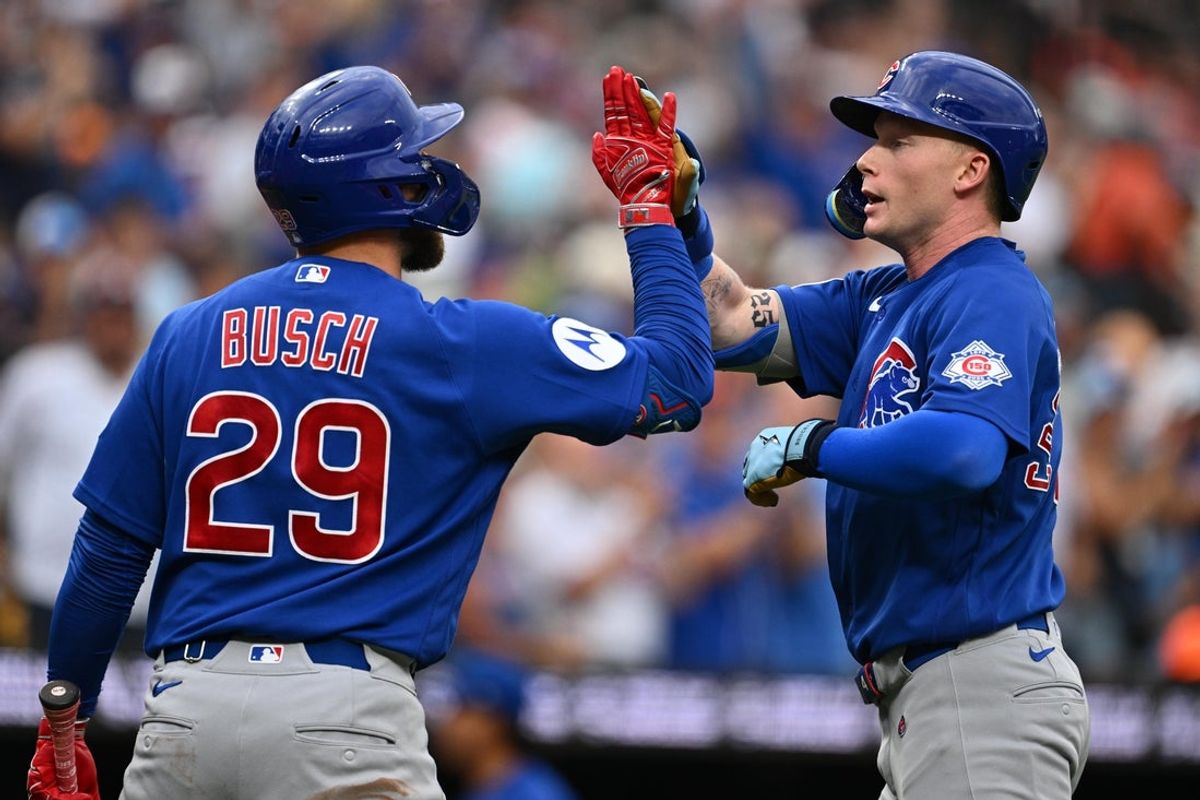
Deadspin | Pete Crow-Armstrong homers twice as Cubs outslug Orioles  Jul 8, 2026; Baltimore, Maryland, USA;  Chicago Cubs outfielder Pete Crow-Armstrong (4) is congratulated by infielder Michael Busch (29) after hitting a home run in the third inning against the Baltimore Orioles at Oriole Park at Camden Yards. Mandatory Credit: Jamie Sabau-Imagn Images   Pete Crow-Armstrong hit two of Chicago’s five home runs and the Cubs held on to beat the host Baltimore Orioles 9-7 on Wednesday night.  Crow-Armstrong’s second long ball of the game and 21st of the season put the Cubs ahead for good, 4-3 in the fifth inning, before the teams combined for nine runs across the last three innings.  Michael Conforto and Carson Kelly hit back-to-back solo blasts in the fifth, then two batters later, Crow-Armstrong went deep. Crow-Armstrong earlier hit a solo shot in the third inning, and Seiya Suzuki added a three-run homer in the seventh.  The Cubs, who will go for a sweep of the three-game series on Thursday, produced their offense with eight hits and four walks. They won for the eighth time in the past 10 games.  Tyler O’Neill hit two home runs across the final three innings for the Orioles, and Pete Alonso and Coby Mayo also homered. Jackson Holliday rapped four of Baltimore’s 14 hits, but he never scored a run in what became the team’s third consecutive loss.  Right-hander Colin Rea (7-5) won his second start in a row, allowing three runs on seven hits in 5 1/3 innings. He walked two and struck out two. Jacob Webb was called upon to pitch the ninth, and the right-hander notched his fourth save by retiring the side in order.   Baltimore right-hander Dean Kremer (1-2) gave up four runs on six hits in five innings in his second start after coming off the injury list. He fanned four and walked one.  Following Crow-Armstrong’s third-inning home run, the Orioles built a 3-1 lead on Alonso’s two-run homer in the fourth.  Chicago’s three-homer fifth inning was followed by a five-run seventh for a 9-3 advantage.  O’Neill entered the game in the seventh as a pinch hitter and delivered his first homer of the game. The Orioles tacked on another run on Taylor Ward’s run-scoring single but stranded two runners on base while trailing 9-5.  Mayo slugged a pinch-hit homer in the eighth before O’Neill made it back-to-back blasts for the Orioles.  –Field Level Media    #Deadspin #Pete #CrowArmstrong #homers #Cubs #outslug #OriolesJul 8, 2026; Baltimore, Maryland, USA; Chicago Cubs outfielder Pete Crow-Armstrong (4) is congratulated by infielder Michael Busch (29) after hitting a home run in the third inning against the Baltimore Orioles at Oriole Park at Camden Yards. Mandatory Credit: Jamie Sabau-Imagn Images

Pete Crow-Armstrong hit two of Chicago’s five home runs and the Cubs held on to beat the host Baltimore Orioles 9-7 on Wednesday night.

Crow-Armstrong’s second long ball of the game and 21st of the season put the Cubs ahead for good, 4-3 in the fifth inning, before the teams combined for nine runs across the last three innings.

Michael Conforto and Carson Kelly hit back-to-back solo blasts in the fifth, then two batters later, Crow-Armstrong went deep. Crow-Armstrong earlier hit a solo shot in the third inning, and Seiya Suzuki added a three-run homer in the seventh.

The Cubs, who will go for a sweep of the three-game series on Thursday, produced their offense with eight hits and four walks. They won for the eighth time in the past 10 games.

Tyler O’Neill hit two home runs across the final three innings for the Orioles, and Pete Alonso and Coby Mayo also homered. Jackson Holliday rapped four of Baltimore’s 14 hits, but he never scored a run in what became the team’s third consecutive loss.


Right-hander Colin Rea (7-5) won his second start in a row, allowing three runs on seven hits in 5 1/3 innings. He walked two and struck out two. Jacob Webb was called upon to pitch the ninth, and the right-hander notched his fourth save by retiring the side in order.

Baltimore right-hander Dean Kremer (1-2) gave up four runs on six hits in five innings in his second start after coming off the injury list. He fanned four and walked one.

Following Crow-Armstrong’s third-inning home run, the Orioles built a 3-1 lead on Alonso’s two-run homer in the fourth.

Chicago’s three-homer fifth inning was followed by a five-run seventh for a 9-3 advantage.

O’Neill entered the game in the seventh as a pinch hitter and delivered his first homer of the game. The Orioles tacked on another run on Taylor Ward’s run-scoring single but stranded two runners on base while trailing 9-5.

Mayo slugged a pinch-hit homer in the eighth before O’Neill made it back-to-back blasts for the Orioles.


–Field Level Media

#Deadspin #Pete #CrowArmstrong #homers #Cubs #outslug #Orioles

Jul 8, 2026; Baltimore, Maryland, USA; Chicago Cubs outfielder Pete Crow-Armstrong (4) is congratulated by infielder Michael Busch (29) after hitting a home run in the third inning against the Baltimore Orioles at Oriole Park at Camden Yards. Mandatory Credit: Jamie Sabau-Imagn Images

Pete Crow-Armstrong hit two of Chicago’s five home runs and the Cubs held on to beat the host Baltimore Orioles 9-7 on Wednesday night.

Crow-Armstrong’s second long ball of the game and 21st of the season put the Cubs ahead for good, 4-3 in the fifth inning, before the teams combined for nine runs across the last three innings.

Michael Conforto and Carson Kelly hit back-to-back solo blasts in the fifth, then two batters later, Crow-Armstrong went deep. Crow-Armstrong earlier hit a solo shot in the third inning, and Seiya Suzuki added a three-run homer in the seventh.

The Cubs, who will go for a sweep of the three-game series on Thursday, produced their offense with eight hits and four walks. They won for the eighth time in the past 10 games.

Tyler O’Neill hit two home runs across the final three innings for the Orioles, and Pete Alonso and Coby Mayo also homered. Jackson Holliday rapped four of Baltimore’s 14 hits, but he never scored a run in what became the team’s third consecutive loss.

Right-hander Colin Rea (7-5) won his second start in a row, allowing three runs on seven hits in 5 1/3 innings. He walked two and struck out two. Jacob Webb was called upon to pitch the ninth, and the right-hander notched his fourth save by retiring the side in order.

Baltimore right-hander Dean Kremer (1-2) gave up four runs on six hits in five innings in his second start after coming off the injury list. He fanned four and walked one.

Following Crow-Armstrong’s third-inning home run, the Orioles built a 3-1 lead on Alonso’s two-run homer in the fourth.

Chicago’s three-homer fifth inning was followed by a five-run seventh for a 9-3 advantage.

O’Neill entered the game in the seventh as a pinch hitter and delivered his first homer of the game. The Orioles tacked on another run on Taylor Ward’s run-scoring single but stranded two runners on base while trailing 9-5.

Mayo slugged a pinch-hit homer in the eighth before O’Neill made it back-to-back blasts for the Orioles.

–Field Level Media

Source link
#Deadspin #Pete #CrowArmstrong #homers #Cubs #outslug #Orioles

Previous post

Indore News: राजा रघुवंशी हत्याकांड-सोनम की तरफ से हलफनामा पेश, कोर्ट से कहा-मुझे झूठा फंसाया गया

Next post

बेटी को नागपुर छोड़ने निकला था… रास्ता भटका, पांढुर्णा में 80 फीट ऊंचे टावर पर 50 घंटे लटका रहा बुजुर्ग | Pandhurna Old Man Lost His Way Remained Suspended 80 Foot High Tower 50 Hours Rescued

#Dodgers #discovered #Mike #Piazza #despise">The Dodgers discovered Mike Piazza, then came to despise him  The fact that Mike Piazza is a metalhead really fits with this beef. I believe it’s quite metal to shake out your mullet and be like, “The Dodgers drafted me when no one else would, but f-you corporate ownership, I don’t owe you no debt of gratitude!”Now it might be slightly less metal to then say, “so make me the highest paid player in baseball or I’m gonna be distracted on the field,  million is not enough for me I have expensive taste.” But I’m not a heavy metal expert! Band t-shirts are probably expensive, officially licensed ones at least, maybe you have to be rich to be a metalhead?Either way, In a bitter contract dispute in 1998, Los Angeles saw Piazza as greedy and disloyal, and Piazza saw the Dodgers organization as calculating and disloyal, and the fans fickle. He also blamed Vin Scully for his “Greedy Mike” label and that right there turned this beef from soft supple meat that could in theory be easily squashed, to an everlasting gobstopper, flamin’ beef flavor.Wait… that sounds kind of good.. Or at least interesting, in a weird 7-11-spiciest-chip sort of way? Not my intent with the metaphor, but Willy Wonka, hit me up.  #Dodgers #discovered #Mike #Piazza #despise

When Dilip Mahadu Gavit stormed across the finish line to win gold in the men’s T47 100 metres at the Commonwealth Games, he didn’t run towards the photographers waiting beside the track. Instead, he turned around, scanned the stands at Scotstoun Stadium in Glasgow and sprinted towards one man in the crowd.

Coach Vaijnath Kale caught him in a bear hug as both men struggled to hold back tears. “There were no words,” Kale tells Sportstar. “Everything had already been said.”

Speaking to this publication later, Gavit would tell what the win — India’s third gold at Glasgow and the first ever in para-athletics at the Commonwealth Games — meant to him. “Today was Guru Purnima,” he says, referring to the Hindu festival dedicated to honouring teachers. “I wanted to do something special for sir. This gold is for him.”

Vaijnath Kale, the coach who gave Dilip Gavit a home — and a Commonwealth Games gold  When Dilip Mahadu Gavit stormed across the finish line to win gold in the men’s T47 100 metres at the Commonwealth Games, he didn’t run towards the photographers waiting beside the track. Instead, he turned around, scanned the stands at Scotstoun Stadium in Glasgow and sprinted towards one man in the crowd.Coach Vaijnath Kale caught him in a bear hug as both men struggled to hold back tears. “There were no words,” Kale tells        Sportstar. “Everything had already been said.”Speaking to this publication later, Gavit would tell what the win — India’s third gold at Glasgow and the first ever in para-athletics at the Commonwealth Games — meant to him. “Today was Guru Purnima,” he says, referring to the Hindu festival dedicated to honouring teachers. “I wanted to do something special for sir. This gold is for him.” Dilip Gavit wanted to do something special for his coach, Vaijnath Kale, on the occasion of Guru Purnima.
                                                            | Photo Credit: 
                                Special Arrangement
                            

                            Dilip Gavit wanted to do something special for his coach, Vaijnath Kale, on the occasion of Guru Purnima.
                                                            | Photo Credit: 
                                Special Arrangement
                                                    For most athletes, that would have been a heartfelt tribute to a coach. For Gavit, it barely scratched the surface. He admits their relationship goes beyond that of a coach and student. “He’s more than my guru (teacher). I live in his house. I eat at his table. Unhone mujhe adopt hi kiya hai. Mujhe bete jaise rakhte hain (He has adopted me. He has raised me as his son). He’s fed, trained and educated me. He’s my papa (father). Everything I have, I owe to him,” Gavit says.Kale agrees with that description. “I’ve adopted him in every way except giving him my surname. He is my son.”Chance meetingThere was a time when Gavit’s life could scarcely have been more different. As a child growing up in the village of Torandongri, a hamlet of less than a hundred families located in the hills of Maharashtra’s Nashik district, he had suffered a rough start to his life. One of six children of an impoverished tribal family, he had had his right arm amputated after suffering a fall that was treated improperly by an ayurvedic practitioner that he had been taken to in the absence of a medical facility.He was considered a burden growing up. “My family would work as labourers when there was not enough rain to farm our own land but I couldn’t even do that. I was seen as something useless,” he recalls.The one thing that gave him comfort was playing. It was while doing that that the then 11-year-old Gavit caught the eye of Kale.Kale had been a national level athlete but had given up his sport and started working a corporate job. After several years though, he had felt the urge to work in athletics once again and started working as a coach and technical official in Nashik. It was in that role that in the summer of 2014, he found himself in Gavit’s village. Vaijnath Kale made Dilip Gavit train with the able-bodied athletes from the beginning.
                                                            | Photo Credit: 
                                Special Arrangement
                            

                            Vaijnath Kale made Dilip Gavit train with the able-bodied athletes from the beginning.
                                                            | Photo Credit: 
                                Special Arrangement
                                                    “I remember seeing this tiny kid who was running around in the playground. He was clearly underweight and he was in a torn shirt and trousers and no shoes. He didn’t have a right arm, but it didn’t seem to hold him back. He had so much energy. I wanted to find out who he was,” Kale recalls.As he found out, Kale decided he had to do something for the boy. “When I asked Dilip what he would do later in life, he told me he would probably beg for a living. At that time, I didn’t think about sports or about the Commonwealth Games or anything. I just wanted to help this boy. I asked a village school teacher to help me talk to his parents,” he says.Gavit’s parents were uncertain. “They were a little suspicious when I said I wanted to adopt their son. They thought I wanted money, but I made it very clear that I just wanted to take care of him. They already had so many children to take care of that they agreed to let me take him to Nashik,” Kale recalls.His own family was equally concerned. “They thought I had gone mad. I had already given up a job where I was making nearly a lakh a month in order to work as a coach with young athletes. I had also recently got married. Now I was planning to raise a child who wasn’t even my own. I’m not wealthy. My family wanted to know where was I going to get the money from? What was I going to do when I had my own children?” he recalls.These were all legitimate questions, Kale admits. But he also remembers what he thought. “I was going to give this child a better life.” Dilip Gavit won bronze medal in the Delhi Grand Prix to qualify for the Commonwealth Games 2026.
                                                            | Photo Credit: 
                                Special Arrangement
                            

                            Dilip Gavit won bronze medal in the Delhi Grand Prix to qualify for the Commonwealth Games 2026.
                                                            | Photo Credit: 
                                Special Arrangement
                                                    In Nashik, Kale’s first intention was to educate Gavit. He realised though, that the child had a talent for running. He started letting him practice with the other young athletes that he was training at a local college ground.Despite the fact that he was missing his arm below the elbow left him with coordination and strength limitations compared to able bodied athletes, Kale encouraged Gavit to compete against them. “The biggest challenge that disabled children have is a lack of self-confidence. They feel inferior compared to able bodied people. I had to get that fear out of Dilip’s mind. So, for the first four or five years in which I trained him, I only made him compete with able bodied athletes. I didn’t want him to think he was a disabled runner,” he says.In all this while Kale never let Gavit believe he was only valued for his athletic ability. “Life is about more than athletics,” Kale says.His family, initially unwilling, would come on board. His wife, Jyothi, would leave her Human Resources job and work full time towards getting Gavit’s education, which had been languishing in his village, back on track.Gavit has now completed his graduation. Although the Kales have two children of their own, they’re supporting another four children similar to Gavit at their home. Kale now supports the academy and the athletes who live with him through charity and through a part-time property business.Rapid improvement With Vaijnath Kale on his side, Dilip Gavit wants to win gold in Para Asian Games and Paralympics as well.
                                                            | Photo Credit: 
                                Special Arrangement
                            

                            With Vaijnath Kale on his side, Dilip Gavit wants to win gold in Para Asian Games and Paralympics as well.
                                                            | Photo Credit: 
                                Special Arrangement
                                                    With the support of his adoptive family, Gavit was beating able bodied runners, and winning medals at the state and junior national level in the 200m and 400m. Eventually though, Kale started taking Gavit to compete amongst Para Athletes. The switch immediately paid dividends, with Gavit winning Para Asian gold in the 400m at Hangzhou in 2023.Last year Kale had Gavit make another switch. With there being no 400m event in his para disability category, Kale said he needed to compete in the 100m event, which was part of the Glasgow program. Although he had never run the 100m competitively, Gavit immediately agreed. “He can ask me to do anything and I would,” Gavit says.It was a plan that has played out perfectly. Gavit started running the 100m at the Grand Prix in Dubai and the won bronze in Grand Prix in India to qualify for the Commonwealth Games. At Glasgow, despite a slow start, Gavit steadily picked up speed and ran a personal best 10.71 to set a new Games record.While he’s proud of the gold medal, Gavit says his work is hardly done. “I will be competing in the 100m and 400m at the Para Asian Games this year and I want to win gold there also. Then at the Los Angeles Paralympics, I want to win another gold medal. Coach and I have the dream that one day India’s anthem plays at the Paralympics,” he says.It’s a lofty ambition. As Gavit pursues it, he’s glad he has Kale by his side. “He’s the most important person in my life. Everything I have achieved is because of him. We are a team,” he says.Kale is sure he can accomplish it. For his part, he’s just happy to be able to be alongside Gavit’s journey. “There are so many children in India who have talent. They simply don’t get the opportunity. It was God’s plan that he brought me to meet Dilip. I feel blessed that I have been able to help him fulfil his potential,” he says.Published on Jul 30, 2026  #Vaijnath #Kale #coach #gave #Dilip #Gavit #home #Commonwealth #Games #gold

Dilip Gavit wanted to do something special for his coach, Vaijnath Kale, on the occasion of Guru Purnima. | Photo Credit: Special Arrangement

lightbox-info

Dilip Gavit wanted to do something special for his coach, Vaijnath Kale, on the occasion of Guru Purnima. | Photo Credit: Special Arrangement

For most athletes, that would have been a heartfelt tribute to a coach. For Gavit, it barely scratched the surface. He admits their relationship goes beyond that of a coach and student. “He’s more than my guru (teacher). I live in his house. I eat at his table. Unhone mujhe adopt hi kiya hai. Mujhe bete jaise rakhte hain (He has adopted me. He has raised me as his son). He’s fed, trained and educated me. He’s my papa (father). Everything I have, I owe to him,” Gavit says.

Kale agrees with that description. “I’ve adopted him in every way except giving him my surname. He is my son.”

Chance meeting

There was a time when Gavit’s life could scarcely have been more different. As a child growing up in the village of Torandongri, a hamlet of less than a hundred families located in the hills of Maharashtra’s Nashik district, he had suffered a rough start to his life. One of six children of an impoverished tribal family, he had had his right arm amputated after suffering a fall that was treated improperly by an ayurvedic practitioner that he had been taken to in the absence of a medical facility.

He was considered a burden growing up. “My family would work as labourers when there was not enough rain to farm our own land but I couldn’t even do that. I was seen as something useless,” he recalls.

The one thing that gave him comfort was playing. It was while doing that that the then 11-year-old Gavit caught the eye of Kale.

Kale had been a national level athlete but had given up his sport and started working a corporate job. After several years though, he had felt the urge to work in athletics once again and started working as a coach and technical official in Nashik. It was in that role that in the summer of 2014, he found himself in Gavit’s village.

Vaijnath Kale made Dilip Gavit train with the able-bodied athletes from the beginning.

Vaijnath Kale made Dilip Gavit train with the able-bodied athletes from the beginning. | Photo Credit: Special Arrangement

lightbox-info

Vaijnath Kale made Dilip Gavit train with the able-bodied athletes from the beginning. | Photo Credit: Special Arrangement

“I remember seeing this tiny kid who was running around in the playground. He was clearly underweight and he was in a torn shirt and trousers and no shoes. He didn’t have a right arm, but it didn’t seem to hold him back. He had so much energy. I wanted to find out who he was,” Kale recalls.

As he found out, Kale decided he had to do something for the boy. “When I asked Dilip what he would do later in life, he told me he would probably beg for a living. At that time, I didn’t think about sports or about the Commonwealth Games or anything. I just wanted to help this boy. I asked a village school teacher to help me talk to his parents,” he says.

Gavit’s parents were uncertain. “They were a little suspicious when I said I wanted to adopt their son. They thought I wanted money, but I made it very clear that I just wanted to take care of him. They already had so many children to take care of that they agreed to let me take him to Nashik,” Kale recalls.

His own family was equally concerned. “They thought I had gone mad. I had already given up a job where I was making nearly a lakh a month in order to work as a coach with young athletes. I had also recently got married. Now I was planning to raise a child who wasn’t even my own. I’m not wealthy. My family wanted to know where was I going to get the money from? What was I going to do when I had my own children?” he recalls.

These were all legitimate questions, Kale admits. But he also remembers what he thought. “I was going to give this child a better life.”

Dilip Gavit won bronze medal in the Delhi Grand Prix to qualify for the Commonwealth Games 2026.

Dilip Gavit won bronze medal in the Delhi Grand Prix to qualify for the Commonwealth Games 2026. | Photo Credit: Special Arrangement

lightbox-info

Dilip Gavit won bronze medal in the Delhi Grand Prix to qualify for the Commonwealth Games 2026. | Photo Credit: Special Arrangement

In Nashik, Kale’s first intention was to educate Gavit. He realised though, that the child had a talent for running. He started letting him practice with the other young athletes that he was training at a local college ground.

Despite the fact that he was missing his arm below the elbow left him with coordination and strength limitations compared to able bodied athletes, Kale encouraged Gavit to compete against them. “The biggest challenge that disabled children have is a lack of self-confidence. They feel inferior compared to able bodied people. I had to get that fear out of Dilip’s mind. So, for the first four or five years in which I trained him, I only made him compete with able bodied athletes. I didn’t want him to think he was a disabled runner,” he says.

In all this while Kale never let Gavit believe he was only valued for his athletic ability. “Life is about more than athletics,” Kale says.

His family, initially unwilling, would come on board. His wife, Jyothi, would leave her Human Resources job and work full time towards getting Gavit’s education, which had been languishing in his village, back on track.

Gavit has now completed his graduation. Although the Kales have two children of their own, they’re supporting another four children similar to Gavit at their home. Kale now supports the academy and the athletes who live with him through charity and through a part-time property business.

Rapid improvement

With Vaijnath Kale on his side, Dilip Gavit wants to win gold in Para Asian Games and Paralympics as well.

With Vaijnath Kale on his side, Dilip Gavit wants to win gold in Para Asian Games and Paralympics as well. | Photo Credit: Special Arrangement

lightbox-info

With Vaijnath Kale on his side, Dilip Gavit wants to win gold in Para Asian Games and Paralympics as well. | Photo Credit: Special Arrangement

With the support of his adoptive family, Gavit was beating able bodied runners, and winning medals at the state and junior national level in the 200m and 400m. Eventually though, Kale started taking Gavit to compete amongst Para Athletes. The switch immediately paid dividends, with Gavit winning Para Asian gold in the 400m at Hangzhou in 2023.

Last year Kale had Gavit make another switch. With there being no 400m event in his para disability category, Kale said he needed to compete in the 100m event, which was part of the Glasgow program. Although he had never run the 100m competitively, Gavit immediately agreed. “He can ask me to do anything and I would,” Gavit says.

It was a plan that has played out perfectly. Gavit started running the 100m at the Grand Prix in Dubai and the won bronze in Grand Prix in India to qualify for the Commonwealth Games. At Glasgow, despite a slow start, Gavit steadily picked up speed and ran a personal best 10.71 to set a new Games record.

While he’s proud of the gold medal, Gavit says his work is hardly done. “I will be competing in the 100m and 400m at the Para Asian Games this year and I want to win gold there also. Then at the Los Angeles Paralympics, I want to win another gold medal. Coach and I have the dream that one day India’s anthem plays at the Paralympics,” he says.

It’s a lofty ambition. As Gavit pursues it, he’s glad he has Kale by his side. “He’s the most important person in my life. Everything I have achieved is because of him. We are a team,” he says.

Kale is sure he can accomplish it. For his part, he’s just happy to be able to be alongside Gavit’s journey. “There are so many children in India who have talent. They simply don’t get the opportunity. It was God’s plan that he brought me to meet Dilip. I feel blessed that I have been able to help him fulfil his potential,” he says.

Published on Jul 30, 2026

#Vaijnath #Kale #coach #gave #Dilip #Gavit #home #Commonwealth #Games #gold">Vaijnath Kale, the coach who gave Dilip Gavit a home — and a Commonwealth Games gold  When Dilip Mahadu Gavit stormed across the finish line to win gold in the men’s T47 100 metres at the Commonwealth Games, he didn’t run towards the photographers waiting beside the track. Instead, he turned around, scanned the stands at Scotstoun Stadium in Glasgow and sprinted towards one man in the crowd.Coach Vaijnath Kale caught him in a bear hug as both men struggled to hold back tears. “There were no words,” Kale tells        Sportstar. “Everything had already been said.”Speaking to this publication later, Gavit would tell what the win — India’s third gold at Glasgow and the first ever in para-athletics at the Commonwealth Games — meant to him. “Today was Guru Purnima,” he says, referring to the Hindu festival dedicated to honouring teachers. “I wanted to do something special for sir. This gold is for him.” Dilip Gavit wanted to do something special for his coach, Vaijnath Kale, on the occasion of Guru Purnima.
                                                            | Photo Credit: 
                                Special Arrangement
                            

                            Dilip Gavit wanted to do something special for his coach, Vaijnath Kale, on the occasion of Guru Purnima.
                                                            | Photo Credit: 
                                Special Arrangement
                                                    For most athletes, that would have been a heartfelt tribute to a coach. For Gavit, it barely scratched the surface. He admits their relationship goes beyond that of a coach and student. “He’s more than my guru (teacher). I live in his house. I eat at his table. Unhone mujhe adopt hi kiya hai. Mujhe bete jaise rakhte hain (He has adopted me. He has raised me as his son). He’s fed, trained and educated me. He’s my papa (father). Everything I have, I owe to him,” Gavit says.Kale agrees with that description. “I’ve adopted him in every way except giving him my surname. He is my son.”Chance meetingThere was a time when Gavit’s life could scarcely have been more different. As a child growing up in the village of Torandongri, a hamlet of less than a hundred families located in the hills of Maharashtra’s Nashik district, he had suffered a rough start to his life. One of six children of an impoverished tribal family, he had had his right arm amputated after suffering a fall that was treated improperly by an ayurvedic practitioner that he had been taken to in the absence of a medical facility.He was considered a burden growing up. “My family would work as labourers when there was not enough rain to farm our own land but I couldn’t even do that. I was seen as something useless,” he recalls.The one thing that gave him comfort was playing. It was while doing that that the then 11-year-old Gavit caught the eye of Kale.Kale had been a national level athlete but had given up his sport and started working a corporate job. After several years though, he had felt the urge to work in athletics once again and started working as a coach and technical official in Nashik. It was in that role that in the summer of 2014, he found himself in Gavit’s village. Vaijnath Kale made Dilip Gavit train with the able-bodied athletes from the beginning.
                                                            | Photo Credit: 
                                Special Arrangement
                            

                            Vaijnath Kale made Dilip Gavit train with the able-bodied athletes from the beginning.
                                                            | Photo Credit: 
                                Special Arrangement
                                                    “I remember seeing this tiny kid who was running around in the playground. He was clearly underweight and he was in a torn shirt and trousers and no shoes. He didn’t have a right arm, but it didn’t seem to hold him back. He had so much energy. I wanted to find out who he was,” Kale recalls.As he found out, Kale decided he had to do something for the boy. “When I asked Dilip what he would do later in life, he told me he would probably beg for a living. At that time, I didn’t think about sports or about the Commonwealth Games or anything. I just wanted to help this boy. I asked a village school teacher to help me talk to his parents,” he says.Gavit’s parents were uncertain. “They were a little suspicious when I said I wanted to adopt their son. They thought I wanted money, but I made it very clear that I just wanted to take care of him. They already had so many children to take care of that they agreed to let me take him to Nashik,” Kale recalls.His own family was equally concerned. “They thought I had gone mad. I had already given up a job where I was making nearly a lakh a month in order to work as a coach with young athletes. I had also recently got married. Now I was planning to raise a child who wasn’t even my own. I’m not wealthy. My family wanted to know where was I going to get the money from? What was I going to do when I had my own children?” he recalls.These were all legitimate questions, Kale admits. But he also remembers what he thought. “I was going to give this child a better life.” Dilip Gavit won bronze medal in the Delhi Grand Prix to qualify for the Commonwealth Games 2026.
                                                            | Photo Credit: 
                                Special Arrangement
                            

                            Dilip Gavit won bronze medal in the Delhi Grand Prix to qualify for the Commonwealth Games 2026.
                                                            | Photo Credit: 
                                Special Arrangement
                                                    In Nashik, Kale’s first intention was to educate Gavit. He realised though, that the child had a talent for running. He started letting him practice with the other young athletes that he was training at a local college ground.Despite the fact that he was missing his arm below the elbow left him with coordination and strength limitations compared to able bodied athletes, Kale encouraged Gavit to compete against them. “The biggest challenge that disabled children have is a lack of self-confidence. They feel inferior compared to able bodied people. I had to get that fear out of Dilip’s mind. So, for the first four or five years in which I trained him, I only made him compete with able bodied athletes. I didn’t want him to think he was a disabled runner,” he says.In all this while Kale never let Gavit believe he was only valued for his athletic ability. “Life is about more than athletics,” Kale says.His family, initially unwilling, would come on board. His wife, Jyothi, would leave her Human Resources job and work full time towards getting Gavit’s education, which had been languishing in his village, back on track.Gavit has now completed his graduation. Although the Kales have two children of their own, they’re supporting another four children similar to Gavit at their home. Kale now supports the academy and the athletes who live with him through charity and through a part-time property business.Rapid improvement With Vaijnath Kale on his side, Dilip Gavit wants to win gold in Para Asian Games and Paralympics as well.
                                                            | Photo Credit: 
                                Special Arrangement
                            

                            With Vaijnath Kale on his side, Dilip Gavit wants to win gold in Para Asian Games and Paralympics as well.
                                                            | Photo Credit: 
                                Special Arrangement
                                                    With the support of his adoptive family, Gavit was beating able bodied runners, and winning medals at the state and junior national level in the 200m and 400m. Eventually though, Kale started taking Gavit to compete amongst Para Athletes. The switch immediately paid dividends, with Gavit winning Para Asian gold in the 400m at Hangzhou in 2023.Last year Kale had Gavit make another switch. With there being no 400m event in his para disability category, Kale said he needed to compete in the 100m event, which was part of the Glasgow program. Although he had never run the 100m competitively, Gavit immediately agreed. “He can ask me to do anything and I would,” Gavit says.It was a plan that has played out perfectly. Gavit started running the 100m at the Grand Prix in Dubai and the won bronze in Grand Prix in India to qualify for the Commonwealth Games. At Glasgow, despite a slow start, Gavit steadily picked up speed and ran a personal best 10.71 to set a new Games record.While he’s proud of the gold medal, Gavit says his work is hardly done. “I will be competing in the 100m and 400m at the Para Asian Games this year and I want to win gold there also. Then at the Los Angeles Paralympics, I want to win another gold medal. Coach and I have the dream that one day India’s anthem plays at the Paralympics,” he says.It’s a lofty ambition. As Gavit pursues it, he’s glad he has Kale by his side. “He’s the most important person in my life. Everything I have achieved is because of him. We are a team,” he says.Kale is sure he can accomplish it. For his part, he’s just happy to be able to be alongside Gavit’s journey. “There are so many children in India who have talent. They simply don’t get the opportunity. It was God’s plan that he brought me to meet Dilip. I feel blessed that I have been able to help him fulfil his potential,” he says.Published on Jul 30, 2026  #Vaijnath #Kale #coach #gave #Dilip #Gavit #home #Commonwealth #Games #gold

Post Comment