×
Deadspin | Rory McIlroy to begin Masters defense paired with Cameron Young  Apr 7, 2026; Augusta, Georgia, USA; Rory McIlroy walks off of no. 7 with his caddie, Harry Diamond, during a practice round for the Masters Tournament at Augusta National Golf Club. Mandatory Credit: Katie Goodale-Imagn Images   AUGUSTA, Ga. — Rory McIlroy will begin the defense of his first Masters title paired with World No. 3 Cameron Young at 10:31 a.m. on Thursday.  McIlroy of Northern Ireland and Young, who won The Players Championship last month, will be paired with 18-year-old amateur Mason Howell for the first two rounds at Augusta National. They comprise the penultimate group in the Thursday’s morning wave.  Howell, a Thomasville, Ga., native who has committed to play for the University of Georgia next year, earned the traditional spot in this grouping as the reigning U.S. Amateur champion. The group will tee off at 1:44 p.m. in Friday’s second round.  The 90th edition of the Masters will officially begin at 7:25 a.m. on Thursday with honorary starters Jack Nicklaus, Gary Player and Tom Watson. The first official playing group will then be John Keefer and China’s Haotong Li, one of only two twosomes in the 91-player field.  World No. 1 and two-time Masters champion Scottie Scheffler will tee off in the penultimate grouping at 1:44 p.m. along with Gary Woodland and Scotland’s Robert MacIntyre.  Two other featured groupings are Bryson DeChambeau, Xander Schauffele and England’s Matt Fitzpatrick at 10:07 a.m., and Chris Gotterup, Spain’s Jon Rahm and Sweden’s Ludvig Aberg at 1:08 p.m.  PAIRINGS | THURSDAY/FRIDAY  –Gary Player (honorary starter), Jack Nicklaus (honorary starter), Tom Watson (honorary starter) | 7:25 a.m.  –John Keefer, Haotong Li (China) | 7:40 a.m., 10:51 a.m.   –Naoyuki Kataoka (Japan), Max Homa, Carlos Ortiz (Mexico) | 7:50 a.m., 11:03 a.m.  –Jose Maria Olazabal (Spain), Rasmus Neergaard-Petersen (Denmark), Aldrich Potgieter (South Africa) | 8:02 a.m., 11:15 a.m.  –Angel Cabrera (Argentina), Sami Valimaki (Finland), *Jackson Herrington | 8:14 a.m. 11:27 a.m.  –Charl Schwartzel (S. Africa), Max Greyserman, Ryan Fox (New Zealand) | 8:26 a.m./11:39 a.m.  –Vijay Singh (Fiji), Matt McCarty, Rasmus Hojgaard (Denmark) | 8:38 a.m./11:51 a.m.  –Kurt Kitayama, Kristoffer Reitan (Norway), Casey Jarvis (S. Africa) | 8:50 a.m./12:03 p.m.  –Bubba Watson, Nicolas Echavarria (Colombia), *Brandon Holtz | 9:02 a.m./12:15 p.m.  –Cameron Smith (Australia), Sam Burns, Jake Knapp | 9:19 a.m./12:32 p.m.  –Keegan Bradley, Ryan Gerard, Nick Taylor (Canada) | 9:31 a.m./12:44 p.m.  –Dustin Johnson, Shane Lowry (Ireland), Jason Day (Australia) | 9:43 a.m./12:56 p.m.  –Patrick Reed, Tommy Fleetwood (England), Akshay Bhatia | 9:55 a.m./1:08 p.m.  –Bryson DeChambeau, Matt Fitzpatrick (England), Xander Schauffele | 10:07 a.m./1:20 p.m.   –Hideki Matsuyama (Japan) , Collin Morikawa, Russell Henley | 10:19 a.m./1:32 p.m.  –Rory McIlroy (N. Ireland), Cameron Young, *Mason Howell | 10:31 a.m./1:44 p.m.  –Viktor Hovland (Norway), Patrick Cantlay, Alex Noren (Sweden) | 10:43 a.m./1:56 p.m.  –Samuel Stevens, Sungjae Im (Korea) | 11:03 a.m./7:40 a.m.  –Andrew Novak, Tom McKibbin (N. Ireland), Brian Campbell | 11:15 a.m./7:50 a.m.  –Mike Weir (Canada), Wyndham Clark, *Mateo Pulcini (Argentina) | 11:27 a.m./8:02 a.m.  –Zach Johnson, Michael Kim, Nicolai Hojgaard (Denmark) | 11:39 a.m./8:14 a.m.  –Danny Willett (England), Davis Riley, *Ethan Fang | 11:51 a.m./8:26 a.m.  –Adam Scott (Australia), Daniel Berger, Brian Harman | 12:03 p.m./8:38 a.m.  –Fred Couples, Min Woo Lee (Australia), *Fifa Laopakdee (Thailand) | 12:15 p.m./8:50 a.m.  –Sergio Garcia (Spain), Aaron Rai (England), Jacob Bridgeman | 12:27 p.m./9:02 a.m.  –Harry Hall (England), Corey Conners (Canada), Michael Brennan | 12:44 p.m./9:19 a.m.  –J.J. Spaun, Maverick McNealy, Tyrrell Hatton (England) | 12:56 p.m./9:31 a.m.  –Jon Rahm (Spain), Chris Gotterup, Ludvig Aberg (Sweden) | 1:08 p.m./9:43 a.m.  –Jordan Spieth, Justin Rose (England), Brooks Koepka | 1:20 p.m./9:55 a.m.  –Sepp Straka (Austria), Ben Griffin, Justin Thomas | 1:32 p.m./10:07 a.m.  –Scottie Scheffler, Robert MacIntyre (Scotland), Gary Woodland | 1:44 p.m./10:19 a.m.  –Harris English, Marco Penge (England), Si Woo Kim (Korea) | 1:56 p.m./10:31 a.m.  *Denotes amateur  The broadcast for the Masters will begin for the first time on Amazon Prime Video, which will begin its live coverage with an exclusive two-hour window beginning at 1 p.m. That will lead into the start of ESPN’s coverage at 3 p.m.  –Derek Harper, Field Level Media    #Deadspin #Rory #McIlroy #Masters #defense #paired #Cameron #Young
Deadspin | Rory McIlroy to begin Masters defense paired with Cameron Young
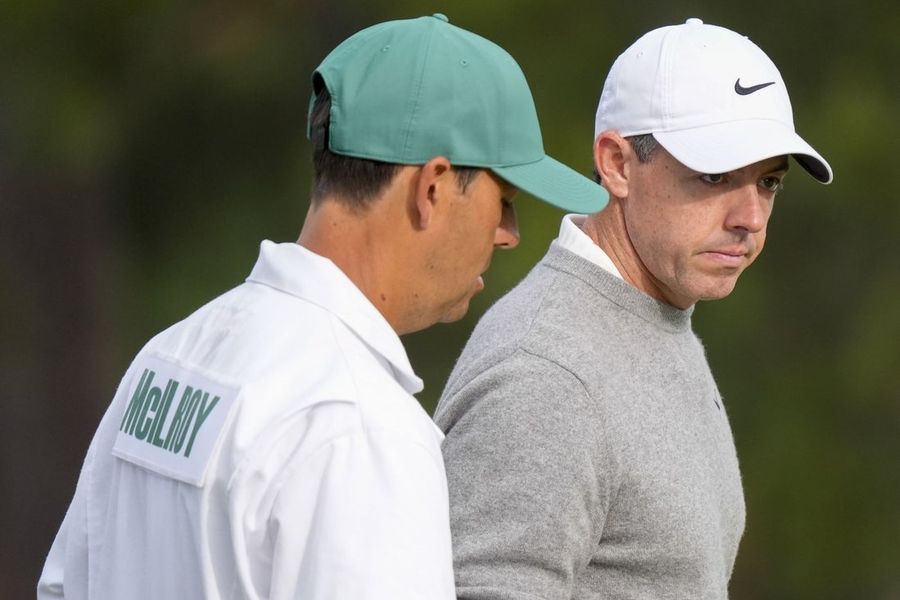
Deadspin | Rory McIlroy to begin Masters defense paired with Cameron Young  Apr 7, 2026; Augusta, Georgia, USA; Rory McIlroy walks off of no. 7 with his caddie, Harry Diamond, during a practice round for the Masters Tournament at Augusta National Golf Club. Mandatory Credit: Katie Goodale-Imagn Images   AUGUSTA, Ga. — Rory McIlroy will begin the defense of his first Masters title paired with World No. 3 Cameron Young at 10:31 a.m. on Thursday.  McIlroy of Northern Ireland and Young, who won The Players Championship last month, will be paired with 18-year-old amateur Mason Howell for the first two rounds at Augusta National. They comprise the penultimate group in the Thursday’s morning wave.  Howell, a Thomasville, Ga., native who has committed to play for the University of Georgia next year, earned the traditional spot in this grouping as the reigning U.S. Amateur champion. The group will tee off at 1:44 p.m. in Friday’s second round.  The 90th edition of the Masters will officially begin at 7:25 a.m. on Thursday with honorary starters Jack Nicklaus, Gary Player and Tom Watson. The first official playing group will then be John Keefer and China’s Haotong Li, one of only two twosomes in the 91-player field.  World No. 1 and two-time Masters champion Scottie Scheffler will tee off in the penultimate grouping at 1:44 p.m. along with Gary Woodland and Scotland’s Robert MacIntyre.  Two other featured groupings are Bryson DeChambeau, Xander Schauffele and England’s Matt Fitzpatrick at 10:07 a.m., and Chris Gotterup, Spain’s Jon Rahm and Sweden’s Ludvig Aberg at 1:08 p.m.  PAIRINGS | THURSDAY/FRIDAY  –Gary Player (honorary starter), Jack Nicklaus (honorary starter), Tom Watson (honorary starter) | 7:25 a.m.  –John Keefer, Haotong Li (China) | 7:40 a.m., 10:51 a.m.   –Naoyuki Kataoka (Japan), Max Homa, Carlos Ortiz (Mexico) | 7:50 a.m., 11:03 a.m.  –Jose Maria Olazabal (Spain), Rasmus Neergaard-Petersen (Denmark), Aldrich Potgieter (South Africa) | 8:02 a.m., 11:15 a.m.  –Angel Cabrera (Argentina), Sami Valimaki (Finland), *Jackson Herrington | 8:14 a.m. 11:27 a.m.  –Charl Schwartzel (S. Africa), Max Greyserman, Ryan Fox (New Zealand) | 8:26 a.m./11:39 a.m.  –Vijay Singh (Fiji), Matt McCarty, Rasmus Hojgaard (Denmark) | 8:38 a.m./11:51 a.m.  –Kurt Kitayama, Kristoffer Reitan (Norway), Casey Jarvis (S. Africa) | 8:50 a.m./12:03 p.m.  –Bubba Watson, Nicolas Echavarria (Colombia), *Brandon Holtz | 9:02 a.m./12:15 p.m.  –Cameron Smith (Australia), Sam Burns, Jake Knapp | 9:19 a.m./12:32 p.m.  –Keegan Bradley, Ryan Gerard, Nick Taylor (Canada) | 9:31 a.m./12:44 p.m.  –Dustin Johnson, Shane Lowry (Ireland), Jason Day (Australia) | 9:43 a.m./12:56 p.m.  –Patrick Reed, Tommy Fleetwood (England), Akshay Bhatia | 9:55 a.m./1:08 p.m.  –Bryson DeChambeau, Matt Fitzpatrick (England), Xander Schauffele | 10:07 a.m./1:20 p.m.   –Hideki Matsuyama (Japan) , Collin Morikawa, Russell Henley | 10:19 a.m./1:32 p.m.  –Rory McIlroy (N. Ireland), Cameron Young, *Mason Howell | 10:31 a.m./1:44 p.m.  –Viktor Hovland (Norway), Patrick Cantlay, Alex Noren (Sweden) | 10:43 a.m./1:56 p.m.  –Samuel Stevens, Sungjae Im (Korea) | 11:03 a.m./7:40 a.m.  –Andrew Novak, Tom McKibbin (N. Ireland), Brian Campbell | 11:15 a.m./7:50 a.m.  –Mike Weir (Canada), Wyndham Clark, *Mateo Pulcini (Argentina) | 11:27 a.m./8:02 a.m.  –Zach Johnson, Michael Kim, Nicolai Hojgaard (Denmark) | 11:39 a.m./8:14 a.m.  –Danny Willett (England), Davis Riley, *Ethan Fang | 11:51 a.m./8:26 a.m.  –Adam Scott (Australia), Daniel Berger, Brian Harman | 12:03 p.m./8:38 a.m.  –Fred Couples, Min Woo Lee (Australia), *Fifa Laopakdee (Thailand) | 12:15 p.m./8:50 a.m.  –Sergio Garcia (Spain), Aaron Rai (England), Jacob Bridgeman | 12:27 p.m./9:02 a.m.  –Harry Hall (England), Corey Conners (Canada), Michael Brennan | 12:44 p.m./9:19 a.m.  –J.J. Spaun, Maverick McNealy, Tyrrell Hatton (England) | 12:56 p.m./9:31 a.m.  –Jon Rahm (Spain), Chris Gotterup, Ludvig Aberg (Sweden) | 1:08 p.m./9:43 a.m.  –Jordan Spieth, Justin Rose (England), Brooks Koepka | 1:20 p.m./9:55 a.m.  –Sepp Straka (Austria), Ben Griffin, Justin Thomas | 1:32 p.m./10:07 a.m.  –Scottie Scheffler, Robert MacIntyre (Scotland), Gary Woodland | 1:44 p.m./10:19 a.m.  –Harris English, Marco Penge (England), Si Woo Kim (Korea) | 1:56 p.m./10:31 a.m.  *Denotes amateur  The broadcast for the Masters will begin for the first time on Amazon Prime Video, which will begin its live coverage with an exclusive two-hour window beginning at 1 p.m. That will lead into the start of ESPN’s coverage at 3 p.m.  –Derek Harper, Field Level Media    #Deadspin #Rory #McIlroy #Masters #defense #paired #Cameron #YoungApr 7, 2026; Augusta, Georgia, USA; Rory McIlroy walks off of no. 7 with his caddie, Harry Diamond, during a practice round for the Masters Tournament at Augusta National Golf Club. Mandatory Credit: Katie Goodale-Imagn Images

AUGUSTA, Ga. — Rory McIlroy will begin the defense of his first Masters title paired with World No. 3 Cameron Young at 10:31 a.m. on Thursday.

McIlroy of Northern Ireland and Young, who won The Players Championship last month, will be paired with 18-year-old amateur Mason Howell for the first two rounds at Augusta National. They comprise the penultimate group in the Thursday’s morning wave.

Howell, a Thomasville, Ga., native who has committed to play for the University of Georgia next year, earned the traditional spot in this grouping as the reigning U.S. Amateur champion. The group will tee off at 1:44 p.m. in Friday’s second round.

The 90th edition of the Masters will officially begin at 7:25 a.m. on Thursday with honorary starters Jack Nicklaus, Gary Player and Tom Watson. The first official playing group will then be John Keefer and China’s Haotong Li, one of only two twosomes in the 91-player field.

World No. 1 and two-time Masters champion Scottie Scheffler will tee off in the penultimate grouping at 1:44 p.m. along with Gary Woodland and Scotland’s Robert MacIntyre.

Two other featured groupings are Bryson DeChambeau, Xander Schauffele and England’s Matt Fitzpatrick at 10:07 a.m., and Chris Gotterup, Spain’s Jon Rahm and Sweden’s Ludvig Aberg at 1:08 p.m.

PAIRINGS | THURSDAY/FRIDAY

–Gary Player (honorary starter), Jack Nicklaus (honorary starter), Tom Watson (honorary starter) | 7:25 a.m.

–John Keefer, Haotong Li (China) | 7:40 a.m., 10:51 a.m.

–Naoyuki Kataoka (Japan), Max Homa, Carlos Ortiz (Mexico) | 7:50 a.m., 11:03 a.m.

–Jose Maria Olazabal (Spain), Rasmus Neergaard-Petersen (Denmark), Aldrich Potgieter (South Africa) | 8:02 a.m., 11:15 a.m.

–Angel Cabrera (Argentina), Sami Valimaki (Finland), *Jackson Herrington | 8:14 a.m. 11:27 a.m.

–Charl Schwartzel (S. Africa), Max Greyserman, Ryan Fox (New Zealand) | 8:26 a.m./11:39 a.m.

–Vijay Singh (Fiji), Matt McCarty, Rasmus Hojgaard (Denmark) | 8:38 a.m./11:51 a.m.

–Kurt Kitayama, Kristoffer Reitan (Norway), Casey Jarvis (S. Africa) | 8:50 a.m./12:03 p.m.

–Bubba Watson, Nicolas Echavarria (Colombia), *Brandon Holtz | 9:02 a.m./12:15 p.m.

–Cameron Smith (Australia), Sam Burns, Jake Knapp | 9:19 a.m./12:32 p.m.

–Keegan Bradley, Ryan Gerard, Nick Taylor (Canada) | 9:31 a.m./12:44 p.m.

–Dustin Johnson, Shane Lowry (Ireland), Jason Day (Australia) | 9:43 a.m./12:56 p.m.

–Patrick Reed, Tommy Fleetwood (England), Akshay Bhatia | 9:55 a.m./1:08 p.m.


–Bryson DeChambeau, Matt Fitzpatrick (England), Xander Schauffele | 10:07 a.m./1:20 p.m.

–Hideki Matsuyama (Japan) , Collin Morikawa, Russell Henley | 10:19 a.m./1:32 p.m.

–Rory McIlroy (N. Ireland), Cameron Young, *Mason Howell | 10:31 a.m./1:44 p.m.

–Viktor Hovland (Norway), Patrick Cantlay, Alex Noren (Sweden) | 10:43 a.m./1:56 p.m.

–Samuel Stevens, Sungjae Im (Korea) | 11:03 a.m./7:40 a.m.

–Andrew Novak, Tom McKibbin (N. Ireland), Brian Campbell | 11:15 a.m./7:50 a.m.

–Mike Weir (Canada), Wyndham Clark, *Mateo Pulcini (Argentina) | 11:27 a.m./8:02 a.m.

–Zach Johnson, Michael Kim, Nicolai Hojgaard (Denmark) | 11:39 a.m./8:14 a.m.

–Danny Willett (England), Davis Riley, *Ethan Fang | 11:51 a.m./8:26 a.m.

–Adam Scott (Australia), Daniel Berger, Brian Harman | 12:03 p.m./8:38 a.m.

–Fred Couples, Min Woo Lee (Australia), *Fifa Laopakdee (Thailand) | 12:15 p.m./8:50 a.m.

–Sergio Garcia (Spain), Aaron Rai (England), Jacob Bridgeman | 12:27 p.m./9:02 a.m.

–Harry Hall (England), Corey Conners (Canada), Michael Brennan | 12:44 p.m./9:19 a.m.

–J.J. Spaun, Maverick McNealy, Tyrrell Hatton (England) | 12:56 p.m./9:31 a.m.

–Jon Rahm (Spain), Chris Gotterup, Ludvig Aberg (Sweden) | 1:08 p.m./9:43 a.m.

–Jordan Spieth, Justin Rose (England), Brooks Koepka | 1:20 p.m./9:55 a.m.

–Sepp Straka (Austria), Ben Griffin, Justin Thomas | 1:32 p.m./10:07 a.m.

–Scottie Scheffler, Robert MacIntyre (Scotland), Gary Woodland | 1:44 p.m./10:19 a.m.

–Harris English, Marco Penge (England), Si Woo Kim (Korea) | 1:56 p.m./10:31 a.m.

*Denotes amateur

The broadcast for the Masters will begin for the first time on Amazon Prime Video, which will begin its live coverage with an exclusive two-hour window beginning at 1 p.m. That will lead into the start of ESPN’s coverage at 3 p.m.


–Derek Harper, Field Level Media

#Deadspin #Rory #McIlroy #Masters #defense #paired #Cameron #Young

Apr 7, 2026; Augusta, Georgia, USA; Rory McIlroy walks off of no. 7 with his caddie, Harry Diamond, during a practice round for the Masters Tournament at Augusta National Golf Club. Mandatory Credit: Katie Goodale-Imagn Images

AUGUSTA, Ga. — Rory McIlroy will begin the defense of his first Masters title paired with World No. 3 Cameron Young at 10:31 a.m. on Thursday.

McIlroy of Northern Ireland and Young, who won The Players Championship last month, will be paired with 18-year-old amateur Mason Howell for the first two rounds at Augusta National. They comprise the penultimate group in the Thursday’s morning wave.

Howell, a Thomasville, Ga., native who has committed to play for the University of Georgia next year, earned the traditional spot in this grouping as the reigning U.S. Amateur champion. The group will tee off at 1:44 p.m. in Friday’s second round.

The 90th edition of the Masters will officially begin at 7:25 a.m. on Thursday with honorary starters Jack Nicklaus, Gary Player and Tom Watson. The first official playing group will then be John Keefer and China’s Haotong Li, one of only two twosomes in the 91-player field.

World No. 1 and two-time Masters champion Scottie Scheffler will tee off in the penultimate grouping at 1:44 p.m. along with Gary Woodland and Scotland’s Robert MacIntyre.

Two other featured groupings are Bryson DeChambeau, Xander Schauffele and England’s Matt Fitzpatrick at 10:07 a.m., and Chris Gotterup, Spain’s Jon Rahm and Sweden’s Ludvig Aberg at 1:08 p.m.

PAIRINGS | THURSDAY/FRIDAY

–Gary Player (honorary starter), Jack Nicklaus (honorary starter), Tom Watson (honorary starter) | 7:25 a.m.

–John Keefer, Haotong Li (China) | 7:40 a.m., 10:51 a.m.

–Naoyuki Kataoka (Japan), Max Homa, Carlos Ortiz (Mexico) | 7:50 a.m., 11:03 a.m.

–Jose Maria Olazabal (Spain), Rasmus Neergaard-Petersen (Denmark), Aldrich Potgieter (South Africa) | 8:02 a.m., 11:15 a.m.

–Angel Cabrera (Argentina), Sami Valimaki (Finland), *Jackson Herrington | 8:14 a.m. 11:27 a.m.

–Charl Schwartzel (S. Africa), Max Greyserman, Ryan Fox (New Zealand) | 8:26 a.m./11:39 a.m.

–Vijay Singh (Fiji), Matt McCarty, Rasmus Hojgaard (Denmark) | 8:38 a.m./11:51 a.m.

–Kurt Kitayama, Kristoffer Reitan (Norway), Casey Jarvis (S. Africa) | 8:50 a.m./12:03 p.m.

–Bubba Watson, Nicolas Echavarria (Colombia), *Brandon Holtz | 9:02 a.m./12:15 p.m.

–Cameron Smith (Australia), Sam Burns, Jake Knapp | 9:19 a.m./12:32 p.m.

–Keegan Bradley, Ryan Gerard, Nick Taylor (Canada) | 9:31 a.m./12:44 p.m.

–Dustin Johnson, Shane Lowry (Ireland), Jason Day (Australia) | 9:43 a.m./12:56 p.m.

–Patrick Reed, Tommy Fleetwood (England), Akshay Bhatia | 9:55 a.m./1:08 p.m.

–Bryson DeChambeau, Matt Fitzpatrick (England), Xander Schauffele | 10:07 a.m./1:20 p.m.

–Hideki Matsuyama (Japan) , Collin Morikawa, Russell Henley | 10:19 a.m./1:32 p.m.

–Rory McIlroy (N. Ireland), Cameron Young, *Mason Howell | 10:31 a.m./1:44 p.m.

–Viktor Hovland (Norway), Patrick Cantlay, Alex Noren (Sweden) | 10:43 a.m./1:56 p.m.

–Samuel Stevens, Sungjae Im (Korea) | 11:03 a.m./7:40 a.m.

–Andrew Novak, Tom McKibbin (N. Ireland), Brian Campbell | 11:15 a.m./7:50 a.m.

–Mike Weir (Canada), Wyndham Clark, *Mateo Pulcini (Argentina) | 11:27 a.m./8:02 a.m.

–Zach Johnson, Michael Kim, Nicolai Hojgaard (Denmark) | 11:39 a.m./8:14 a.m.

–Danny Willett (England), Davis Riley, *Ethan Fang | 11:51 a.m./8:26 a.m.

–Adam Scott (Australia), Daniel Berger, Brian Harman | 12:03 p.m./8:38 a.m.

–Fred Couples, Min Woo Lee (Australia), *Fifa Laopakdee (Thailand) | 12:15 p.m./8:50 a.m.

–Sergio Garcia (Spain), Aaron Rai (England), Jacob Bridgeman | 12:27 p.m./9:02 a.m.

–Harry Hall (England), Corey Conners (Canada), Michael Brennan | 12:44 p.m./9:19 a.m.

–J.J. Spaun, Maverick McNealy, Tyrrell Hatton (England) | 12:56 p.m./9:31 a.m.

–Jon Rahm (Spain), Chris Gotterup, Ludvig Aberg (Sweden) | 1:08 p.m./9:43 a.m.

–Jordan Spieth, Justin Rose (England), Brooks Koepka | 1:20 p.m./9:55 a.m.

–Sepp Straka (Austria), Ben Griffin, Justin Thomas | 1:32 p.m./10:07 a.m.

–Scottie Scheffler, Robert MacIntyre (Scotland), Gary Woodland | 1:44 p.m./10:19 a.m.

–Harris English, Marco Penge (England), Si Woo Kim (Korea) | 1:56 p.m./10:31 a.m.

*Denotes amateur

The broadcast for the Masters will begin for the first time on Amazon Prime Video, which will begin its live coverage with an exclusive two-hour window beginning at 1 p.m. That will lead into the start of ESPN’s coverage at 3 p.m.

–Derek Harper, Field Level Media

Source link
#Deadspin #Rory #McIlroy #Masters #defense #paired #Cameron #Young

Previous post

FIDE Candidates Tournament 2026, Round 8: Sindarov drops points, held to draw by Esipenko <div id="content-body-70835314" itemprop="articleBody"><p>Divya Deshmukh produced one of the standout results of the round, toppling leader Anna Muzychuk to share the lead at the ongoing FIDE Candidates Tournament 2026 in Cyprus on Tuesday.</p><p>Playing her first Candidates, Divya weathered sustained pressure before turning the game around in the closing stages. The result lifted her to joint-top alongside Muzychuk, R Vaishali, Zhu Jiner and Kateryna Lagno.</p><p>For much of the middlegame and early endgame, Muzychuk appeared in control, maintaining pressure and keeping Divya tied down. The position drifted towards equality, with a draw looking the likely outcome as the players entered a queen endgame.</p><p>The turning point came in the sequence beginning 76.Qc8+ Kf5 77.Qh8+ Kg6 78.Qg8+ Kh6, when Divya began forcing checks. Instead of repeating moves, she kept the king on the move, gradually exposing it.</p><p>On move 80, Muzychuk chose Kh5, stepping further into the open. Divya seized the moment, forcing the king into a narrow corridor before switching from checks to a decisive attack, leaving Muzychuk without a safe continuation.</p><p><b>ALSO READ: <a href="https://sportstar.thehindu.com/chess/fide-candidates-2026-live-updates-round-8-boards-praggnandhaa-divya-vaishali-live/article70833880.ece" target="_blank" rel="nofollow">Check out all the live updates from Round 8 as it happened, over here</a></b></p><p>In the other games in the women’s section, Vaishali drew against Bibisara Assaubayeva, Lagno defeated Aleksandra Goryachkina, and Zhu Jiner beat Tan Zhongyi.</p><p>In the open section, leader Javokhir Sindarov could not complete a double over Andrey Esipenko, as their second-half encounter ended in a draw.</p><p>The game began at a brisk pace and remained balanced between moves 11 and 18, with both players simplifying the centre and activating their pieces. The critical moment came on move 17, when Sindarov played Na5 to target the c6 bishop, but the sequence that followed led to further simplification. By move 19, both kings were relatively safe, with no clear pawn breaks or attacking chances, and the game drifted towards a draw.</p><p>Meanwhile, R Praggnanandhaa’s bid to close the gap on Sindarov suffered a setback, as Anish Giri avenged his first-round loss with a win.</p><p>The game remained relatively balanced into the middlegame, but Praggnanandhaa never looked entirely comfortable, with Giri gradually building pressure. The decisive moment came with 36.e6, which created a dangerous passed pawn and disrupted Black’s coordination.</p><p>Praggnanandhaa attempted counterplay with 38…h5, but it backfired, forcing him into a passive position. Giri then seized the initiative with 41.Rf8+ Kh7, and with the black king exposed in the final phase, Praggnanandhaa was compelled to resign.</p><p>Hikaru Nakamura registered his first win of the tournament, defeating Fabiano Caruana, while Wei Yi drew against Matthias Bluebaum.</p><p class="publish-time" id="end-of-article">Published on Apr 07, 2026</p></div> #FIDE #Candidates #Tournament #Sindarov #drops #points #held #draw #Esipenko

Next post

7 Songs You Didn’t Know Were Written by Dolly Parton

Earlier this week, Argentina’s Lionel Messi added the new title of World Cup Goals King to his CV.

By the end of the tournament, it could be Kylian Mbappe holding that honor. Down the line, Erling Haaland and Vinicius Junior are young enough to get in the mix. And if everything goes right, the teenage Lamine Yamal has the time and talent to obliterate them all.

This is an amazing era for elite international goal-scorers. But maybe even more exciting, the convergence of those talents could be symbolic of a World Cup that is ushering in a new era of international competition, one that comes closer to the increasingly attack-oriented model that defines the modern club game.

Under the influence of rapidly improving data, modern soccer at the highest levels has become predicated on pressure and transition.

For sure, it’s not the aesthetic preference of every soccer critic.

Listen closely enough, and you’ll hear the cries of someone in Brazil whining that Carlo Ancelotti’s Selecao rejected the Jogo Bonito in favor of a modern devotion to backpressing that proved critical in their emphatic 3-0 win over Scotland on Wednesday night.

But for the average neutral, it’s hard to deny how much more compelling the club game has become as a result of data that shows the benefits of a higher octane approach.

You can see this in the UEFA Champions League, where goals per game have risen from 2.65 in 2015-16 to 3.45 in 2025-26.

Or you can see it in which teams are and aren’t succeeding at the international level.

Arguably, no side has fallen further than Italy, a nation whose footballing identity is most irrationally opposed to the ongoing tactical revolution.

Similarly, teams like Ecuador and Paraguay, who rode cynical tactics to success in South American qualifying, have so far been exposed by teams with more time to build attacking chemistry.

Yes, some teams have still succeeded out of a low block. But the Ghanas and Cape Verdes of the world have only done so when they could muster at least some threat of a vertical counterattack.

And now, with many of the same managers who orchestrated that rise in attacking play now coaching at this World Cup, goals are up here as well. If the rate of roughly 3.0 goals per game continues, it would be the highest scoring edition since 17-year-old Pele and Brazil dazzled their way to their first championship in Sweden in 1958.

The greatest attacking players are also staying great longer.

At 41, Ronaldo may come with baggage, but he’s still the best finisher on his Portugal team. At 32, Harry Kane’s career is only middle-aged when it would’ve been considered in its twilight era a generation ago.

And the engrossing all-time scoring chase is only possible because Messi is still playing at age 39, and arguably better at a World Cup than he ever has before.

There’s still a lot of time for this World Cup to go sideways. The knockout stages have a way of bringing out the worst conservative instincts in coaches. Oppressive summer weather could become more of a factor as June turns to July, and as more of the kickoffs fall before sunset to appease European TV audiences.

And there’s always the danger for off-the-field controversies to grow louder once the competitive field shrinks.

But on the evidence so far, this tournament has shown that the future of the game on the field is arguably the brightest it’s ever been. And whether it’s Messi or Mbappe who finishes on top of the all-time World Cup scoring chart this summer, you get the sense neither one will stay there for all that long.

#Lionel #Messi #Kylian #Mbappe #Headline #Era #World #Cup #Scoring #Deadspin.com">Lionel Messi and Kylian Mbappe Headline a New Era of World Cup Scoring | Deadspin.com   Earlier this week, Argentina’s Lionel Messi added the new title of World Cup Goals King to his CV.By the end of the tournament, it could be Kylian Mbappe holding that honor. Down the line, Erling Haaland and Vinicius Junior are young enough to get in the mix. And if everything goes right, the teenage Lamine Yamal has the time and talent to obliterate them all.This is an amazing era for elite international goal-scorers. But maybe even more exciting, the convergence of those talents could be symbolic of a World Cup that is ushering in a new era of international competition, one that comes closer to the increasingly attack-oriented model that defines the modern club game.Under the influence of rapidly improving data, modern soccer at the highest levels has become predicated on pressure and transition.For sure, it’s not the aesthetic preference of every soccer critic.Listen closely enough, and you’ll hear the cries of someone in Brazil whining that Carlo Ancelotti’s Selecao rejected the Jogo Bonito in favor of a modern devotion to backpressing that proved critical in their emphatic 3-0 win over Scotland on Wednesday night.But for the average neutral, it’s hard to deny how much more compelling the club game has become as a result of data that shows the benefits of a higher octane approach.You can see this in the UEFA Champions League, where goals per game have risen from 2.65 in 2015-16 to 3.45 in 2025-26.Or you can see it in which teams are and aren’t succeeding at the international level.Arguably, no side has fallen further than Italy, a nation whose footballing identity is most irrationally opposed to the ongoing tactical revolution.Similarly, teams like Ecuador and Paraguay, who rode cynical tactics to success in South American qualifying, have so far been exposed by teams with more time to build attacking chemistry.Yes, some teams have still succeeded out of a low block. But the Ghanas and Cape Verdes of the world have only done so when they could muster at least some threat of a vertical counterattack.And now, with many of the same managers who orchestrated that rise in attacking play now coaching at this World Cup, goals are up here as well. If the rate of roughly 3.0 goals per game continues, it would be the highest scoring edition since 17-year-old Pele and Brazil dazzled their way to their first championship in Sweden in 1958.The greatest attacking players are also staying great longer.At 41, Ronaldo may come with baggage, but he’s still the best finisher on his Portugal team. At 32, Harry Kane’s career is only middle-aged when it would’ve been considered in its twilight era a generation ago.And the engrossing all-time scoring chase is only possible because Messi is still playing at age 39, and arguably better at a World Cup than he ever has before.There’s still a lot of time for this World Cup to go sideways. The knockout stages have a way of bringing out the worst conservative instincts in coaches. Oppressive summer weather could become more of a factor as June turns to July, and as more of the kickoffs fall before sunset to appease European TV audiences.And there’s always the danger for off-the-field controversies to grow louder once the competitive field shrinks.But on the evidence so far, this tournament has shown that the future of the game on the field is arguably the brightest it’s ever been. And whether it’s Messi or Mbappe who finishes on top of the all-time World Cup scoring chart this summer, you get the sense neither one will stay there for all that long.   #Lionel #Messi #Kylian #Mbappe #Headline #Era #World #Cup #Scoring #Deadspin.com

symbolic of a World Cup that is ushering in a new era of international competition, one that comes closer to the increasingly attack-oriented model that defines the modern club game.

Under the influence of rapidly improving data, modern soccer at the highest levels has become predicated on pressure and transition.

For sure, it’s not the aesthetic preference of every soccer critic.

Listen closely enough, and you’ll hear the cries of someone in Brazil whining that Carlo Ancelotti’s Selecao rejected the Jogo Bonito in favor of a modern devotion to backpressing that proved critical in their emphatic 3-0 win over Scotland on Wednesday night.

But for the average neutral, it’s hard to deny how much more compelling the club game has become as a result of data that shows the benefits of a higher octane approach.

You can see this in the UEFA Champions League, where goals per game have risen from 2.65 in 2015-16 to 3.45 in 2025-26.

Or you can see it in which teams are and aren’t succeeding at the international level.

Arguably, no side has fallen further than Italy, a nation whose footballing identity is most irrationally opposed to the ongoing tactical revolution.

Similarly, teams like Ecuador and Paraguay, who rode cynical tactics to success in South American qualifying, have so far been exposed by teams with more time to build attacking chemistry.

Yes, some teams have still succeeded out of a low block. But the Ghanas and Cape Verdes of the world have only done so when they could muster at least some threat of a vertical counterattack.

And now, with many of the same managers who orchestrated that rise in attacking play now coaching at this World Cup, goals are up here as well. If the rate of roughly 3.0 goals per game continues, it would be the highest scoring edition since 17-year-old Pele and Brazil dazzled their way to their first championship in Sweden in 1958.

The greatest attacking players are also staying great longer.

At 41, Ronaldo may come with baggage, but he’s still the best finisher on his Portugal team. At 32, Harry Kane’s career is only middle-aged when it would’ve been considered in its twilight era a generation ago.

And the engrossing all-time scoring chase is only possible because Messi is still playing at age 39, and arguably better at a World Cup than he ever has before.

There’s still a lot of time for this World Cup to go sideways. The knockout stages have a way of bringing out the worst conservative instincts in coaches. Oppressive summer weather could become more of a factor as June turns to July, and as more of the kickoffs fall before sunset to appease European TV audiences.

And there’s always the danger for off-the-field controversies to grow louder once the competitive field shrinks.

But on the evidence so far, this tournament has shown that the future of the game on the field is arguably the brightest it’s ever been. And whether it’s Messi or Mbappe who finishes on top of the all-time World Cup scoring chart this summer, you get the sense neither one will stay there for all that long.

#Lionel #Messi #Kylian #Mbappe #Headline #Era #World #Cup #Scoring #Deadspin.com">Lionel Messi and Kylian Mbappe Headline a New Era of World Cup Scoring | Deadspin.com

Earlier this week, Argentina’s Lionel Messi added the new title of World Cup Goals King to his CV.

By the end of the tournament, it could be Kylian Mbappe holding that honor. Down the line, Erling Haaland and Vinicius Junior are young enough to get in the mix. And if everything goes right, the teenage Lamine Yamal has the time and talent to obliterate them all.

This is an amazing era for elite international goal-scorers. But maybe even more exciting, the convergence of those talents could be symbolic of a World Cup that is ushering in a new era of international competition, one that comes closer to the increasingly attack-oriented model that defines the modern club game.

Under the influence of rapidly improving data, modern soccer at the highest levels has become predicated on pressure and transition.

For sure, it’s not the aesthetic preference of every soccer critic.

Listen closely enough, and you’ll hear the cries of someone in Brazil whining that Carlo Ancelotti’s Selecao rejected the Jogo Bonito in favor of a modern devotion to backpressing that proved critical in their emphatic 3-0 win over Scotland on Wednesday night.

But for the average neutral, it’s hard to deny how much more compelling the club game has become as a result of data that shows the benefits of a higher octane approach.

You can see this in the UEFA Champions League, where goals per game have risen from 2.65 in 2015-16 to 3.45 in 2025-26.

Or you can see it in which teams are and aren’t succeeding at the international level.

Arguably, no side has fallen further than Italy, a nation whose footballing identity is most irrationally opposed to the ongoing tactical revolution.

Similarly, teams like Ecuador and Paraguay, who rode cynical tactics to success in South American qualifying, have so far been exposed by teams with more time to build attacking chemistry.

Yes, some teams have still succeeded out of a low block. But the Ghanas and Cape Verdes of the world have only done so when they could muster at least some threat of a vertical counterattack.

And now, with many of the same managers who orchestrated that rise in attacking play now coaching at this World Cup, goals are up here as well. If the rate of roughly 3.0 goals per game continues, it would be the highest scoring edition since 17-year-old Pele and Brazil dazzled their way to their first championship in Sweden in 1958.

The greatest attacking players are also staying great longer.

At 41, Ronaldo may come with baggage, but he’s still the best finisher on his Portugal team. At 32, Harry Kane’s career is only middle-aged when it would’ve been considered in its twilight era a generation ago.

And the engrossing all-time scoring chase is only possible because Messi is still playing at age 39, and arguably better at a World Cup than he ever has before.

There’s still a lot of time for this World Cup to go sideways. The knockout stages have a way of bringing out the worst conservative instincts in coaches. Oppressive summer weather could become more of a factor as June turns to July, and as more of the kickoffs fall before sunset to appease European TV audiences.

And there’s always the danger for off-the-field controversies to grow louder once the competitive field shrinks.

But on the evidence so far, this tournament has shown that the future of the game on the field is arguably the brightest it’s ever been. And whether it’s Messi or Mbappe who finishes on top of the all-time World Cup scoring chart this summer, you get the sense neither one will stay there for all that long.

#Lionel #Messi #Kylian #Mbappe #Headline #Era #World #Cup #Scoring #Deadspin.com

The 2026 World Cup is now officially in its second week, and some teams are starting to play their second matches of group play.

Which means some teams are already clinching spots in the knockout round.

With the World Cup expanding to 48 teams for the 2026 edition, the knockout round begins with the Round of 32, instead of the familiar Round of 16. That means that, beyond the top two teams in each group advancing to the knockout portion of the tournament, the eight best third-place teams are also advancing. We are tracking the third-place standings here if you are looking to see what teams are still in the running despite sitting in third place.

As far as teams that have clinched, read on.

Mexico became the first team to book a spot in the Round of 32, thanks to Thursday night’s 1-0 win over South Korea. Mexico opened the 2026 World Cup with a 2-0 win over South Africa, and when South Africa and Czechia played to a 1-1 draw earlier in the day, it opened the door for the winner of Thursday night’s match to win Group A.

After a scoreless first half, Luis Romo took advantage of a miscue from South Korea keeper Kim Seung-gyu, who collided with a teammate in the box and lost the ball, giving Romo a chance to give Mexico the lead.

Then the hero was Raúl Rangel, as Mexico’s keeper made a pair of brilliant saves in the closing stages to deny South Korea the equalizer:

El Tri are not only the winners of Group A and set to play a third-place team from Group C/E/F/H/I, but they will also stay in Mexico for the Round of 32, as that match will be held in Mexico City.

One host team became the first nation to book a spot in the Round of 32 on Thursday night, when Mexico’s win over South Korea secured Group A.

Friday, the United States joined them as the second team through to the Round of 32.

The 2-0 win over Australia guarantees that the United States will finish as one of the top two teams in Group D. And by the end of the night, the United States may be the winners of Group D, depending on how the late match between Paraguay and Türkiye finishes. If Türkiye lose or draw against Paraguay, then the United States will win Group D, and be locked into a match against a third-place team in the Round of 32.

The 2-0 win was also the USMNT’s first shutout since a 2-0 win in a friendly against Japan last September.

Update: With Paraguay winning on Friday night, the United States clinched Group D.

Germany’s 2-1 win over the Ivory Coast on Saturday clinched a spot in the knockout round as one of the top two teams out of Group E. Ivory Coast scored first, taking a 1-0 lead in the 30th minute on a Franck Kessié goal. They carried that lead into the second half before Deniz Undav evened it at 1 in the 68th minute. A draw looked likely before Undav managed another goal in the fourth minute of stoppage time.

They won Group E later in the evening when Curaçao managed a draw against Ecuador. It marked the first time Curaçao has earned a point in the World Cup. Goalkeeper Eloy Room made 15 saves, which is the most by any goalkeeper in 90 minutes of a World Cup match since records began in 1966.

Lionel Messi made history on Monday against Austria, as his left-footed strike put the living legend atop the list of all-time goal scorers in World Cup history.

It also clinched a spot in the Round of 32 for Argentina.

With the 2-0 win – Messi added a second goal late in the contest to ice the match – Argentina is guaranteed to finish in one of the top two spots in Group J, and a visit to the knockout round awaits. Argentina could clinch the group later tonight, and a match against a third-place team, if Jordan loses or draws against Algeria in the other match in Group J today.

Update: With Jordan’s loss to Algeria, Algeria has clinched Group J.

It took a little longer than expected, due to a lengthy weather delay, but France punched their ticket to the Round of 32 with a convincing win 3-0 against Iraq in Philadelphia.

Kylian Mbappé’s first goal of the match, coming in the first half, was all France would need on this day. But following a long halftime break, Mbappé and company added two more in the second half, as the French star continued climbing the record books.

France is now guaranteed a spot in the Round of 32 as one of the top two teams out of Group I. But they cannot clinch the group until their final match of group play, when they take on Erling Haaland and Norway later this week.

Norway qualified for the World Cup for the first time since 1998, and now they are through to the Round of 32 thanks to Monday’s 3-2 win over Senegal.

Erling Haaland’s first goal of the match gave Norway a 2-0 lead, but Senegal clawed a goal back, thanks to a lovely bit of skill from Ismaïla Sarr. But Haaland scored again, a right-footed deflection after a splendid reaction and turn, giving Norway a 3-1 lead in the second half.

Norway is guaranteed to be one of the top two teams out of Group I, but the job is not done. Friday’s heavyweight clash with France will determine the winner of the group. If there is a winner of that match, that team will claim Group I. If the match ends in a draw it will be decided by tiebreakers, where at the moment France has the advantage.

Colombia’s 1-0 win over DR Congo late Tuesday clinched a spot in the Round of 32. Colombia heads to the final day of group play in Group K guaranteed to finish as one of the top two teams in the group.

Colombia can still win the group and book a spot against a third-place team in the Round of 32, with a win or a draw against Cristiano Ronaldo and Portugal next Saturday.

Rubén Vargas found the back of the net almost immediately after halftime, giving Switzerland a 1-0 lead over Canada.

That put the Swiss on a path to winning Group B, and a goal from Johan Manzambi in the 57th minute gave Switzerland a two-goal lead, and eventually held up to clinch both the match, and Group B, for Switzerland.

The Swiss will now get to stay in Vancouver, as they will meet a third-place team from Group E, F, G, I or J in the same stadium on July 2.

Canada began play on Tuesday needing a win or a draw against Switzerland to win Group B, but goals from Rubén Vargas and Johan Manzambi early in the second half propelled Switzerland to a 2-1 victory. Promise David found the back of the net with a lovely first-touch goal with his right foot in the 76th minute, but Canada could not complete the comeback.

Even with the loss, Canada clinched the second spot in Group B thanks to the goal differential tiebreaker against Bosnia and Herzegovina, who beat Qatar. That means Canada finishes second in the group, and they will take on the second-place team from Group A, which will be determined later Wednesday night.

Brazil booked a spot in the Round of 32 with Wednesday’s 3-0 win over Brazil. A pair of first-half goals from Vini Jr. gave Brazil a 2-0 lead at the halftime break, and Matheus Cunha scored in the 60th minute to provide some insurance.

In addition, Neymar came off the bench to replace Cunha in the 76th minute, for his first action of this World Cup.

The win was also enough to clinch the top spot in Group C, as Brazil’s goal differential was enough to finish above Morocco. As such, Brazil will meet the second-place team from Group F – either the Netherlands, Japan, or Sweden – in the Round of 32.

Morocco’s 4-2 win over Haiti was not enough to catch Brazil in Group C, but the side moves on to the Round of 32 as the second-place team in the group. They will face the winners of Group F in Monterrey on June 29.

In perhaps the biggest twist of Wednesday’s action South Africa clinched the second spot in Group A.

For the first time, South Africa is heading to the knockout round. Despite entering Wednesday’s matches sitting in fourth place in Group A, their 1-0 win over South Korea gave them a chance to advance as the second-place team in the group. Then, when Mexico beat Czechia, it locked up that second spot.

South Africa will face the second-place team from Group B in the Round of 32.

With a 2-0 win over Curaçao, Ivory Coast clinched the second spot in Group E. They will face the runner-up in Group I, which will likely come down to the massive tilt between Norway and France later this week.

Ecuador’s 2-1 win over Germany was enough for the South American side to become the first team to book a spot in the Round of 32 as a third-place team. The win moved Ecuador to the top of the standings among third-place teams, ahead of Bosnia and Herzegovina on tiebreakers due to goal differential.

Even if the remaining third-place teams all win their matches, Ecuador will only drop to eighth among the third-place teams, enough to advance to the Round of 32.

#World #Cup #bracket #advanced #knockout">World Cup 2026 bracket: Who has advanced to the knockout round?  The 2026 World Cup is now officially in its second week, and some teams are starting to play their second matches of group play.Which means some teams are already clinching spots in the knockout round.With the World Cup expanding to 48 teams for the 2026 edition, the knockout round begins with the Round of 32, instead of the familiar Round of 16. That means that, beyond the top two teams in each group advancing to the knockout portion of the tournament, the eight best third-place teams are also advancing. We are tracking the third-place standings here if you are looking to see what teams are still in the running despite sitting in third place.As far as teams that have clinched, read on.Mexico became the first team to book a spot in the Round of 32, thanks to Thursday night’s 1-0 win over South Korea. Mexico opened the 2026 World Cup with a 2-0 win over South Africa, and when South Africa and Czechia played to a 1-1 draw earlier in the day, it opened the door for the winner of Thursday night’s match to win Group A.After a scoreless first half, Luis Romo took advantage of a miscue from South Korea keeper Kim Seung-gyu, who collided with a teammate in the box and lost the ball, giving Romo a chance to give Mexico the lead.Then the hero was Raúl Rangel, as Mexico’s keeper made a pair of brilliant saves in the closing stages to deny South Korea the equalizer:El Tri are not only the winners of Group A and set to play a third-place team from Group C/E/F/H/I, but they will also stay in Mexico for the Round of 32, as that match will be held in Mexico City.One host team became the first nation to book a spot in the Round of 32 on Thursday night, when Mexico’s win over South Korea secured Group A.Friday, the United States joined them as the second team through to the Round of 32.The 2-0 win over Australia guarantees that the United States will finish as one of the top two teams in Group D. And by the end of the night, the United States may be the winners of Group D, depending on how the late match between Paraguay and Türkiye finishes. If Türkiye lose or draw against Paraguay, then the United States will win Group D, and be locked into a match against a third-place team in the Round of 32.The 2-0 win was also the USMNT’s first shutout since a 2-0 win in a friendly against Japan last September.Update: With Paraguay winning on Friday night, the United States clinched Group D.Germany’s 2-1 win over the Ivory Coast on Saturday clinched a spot in the knockout round as one of the top two teams out of Group E. Ivory Coast scored first, taking a 1-0 lead in the 30th minute on a Franck Kessié goal. They carried that lead into the second half before Deniz Undav evened it at 1 in the 68th minute. A draw looked likely before Undav managed another goal in the fourth minute of stoppage time.They won Group E later in the evening when Curaçao managed a draw against Ecuador. It marked the first time Curaçao has earned a point in the World Cup. Goalkeeper Eloy Room made 15 saves, which is the most by any goalkeeper in 90 minutes of a World Cup match since records began in 1966.Lionel Messi made history on Monday against Austria, as his left-footed strike put the living legend atop the list of all-time goal scorers in World Cup history.It also clinched a spot in the Round of 32 for Argentina.With the 2-0 win – Messi added a second goal late in the contest to ice the match – Argentina is guaranteed to finish in one of the top two spots in Group J, and a visit to the knockout round awaits. Argentina could clinch the group later tonight, and a match against a third-place team, if Jordan loses or draws against Algeria in the other match in Group J today.Update: With Jordan’s loss to Algeria, Algeria has clinched Group J.It took a little longer than expected, due to a lengthy weather delay, but France punched their ticket to the Round of 32 with a convincing win 3-0 against Iraq in Philadelphia.Kylian Mbappé’s first goal of the match, coming in the first half, was all France would need on this day. But following a long halftime break, Mbappé and company added two more in the second half, as the French star continued climbing the record books.France is now guaranteed a spot in the Round of 32 as one of the top two teams out of Group I. But they cannot clinch the group until their final match of group play, when they take on Erling Haaland and Norway later this week.Norway qualified for the World Cup for the first time since 1998, and now they are through to the Round of 32 thanks to Monday’s 3-2 win over Senegal.Erling Haaland’s first goal of the match gave Norway a 2-0 lead, but Senegal clawed a goal back, thanks to a lovely bit of skill from Ismaïla Sarr. But Haaland scored again, a right-footed deflection after a splendid reaction and turn, giving Norway a 3-1 lead in the second half.Norway is guaranteed to be one of the top two teams out of Group I, but the job is not done. Friday’s heavyweight clash with France will determine the winner of the group. If there is a winner of that match, that team will claim Group I. If the match ends in a draw it will be decided by tiebreakers, where at the moment France has the advantage.Colombia’s 1-0 win over DR Congo late Tuesday clinched a spot in the Round of 32. Colombia heads to the final day of group play in Group K guaranteed to finish as one of the top two teams in the group.Colombia can still win the group and book a spot against a third-place team in the Round of 32, with a win or a draw against Cristiano Ronaldo and Portugal next Saturday.Rubén Vargas found the back of the net almost immediately after halftime, giving Switzerland a 1-0 lead over Canada.That put the Swiss on a path to winning Group B, and a goal from Johan Manzambi in the 57th minute gave Switzerland a two-goal lead, and eventually held up to clinch both the match, and Group B, for Switzerland.The Swiss will now get to stay in Vancouver, as they will meet a third-place team from Group E, F, G, I or J in the same stadium on July 2.Canada began play on Tuesday needing a win or a draw against Switzerland to win Group B, but goals from Rubén Vargas and Johan Manzambi early in the second half propelled Switzerland to a 2-1 victory. Promise David found the back of the net with a lovely first-touch goal with his right foot in the 76th minute, but Canada could not complete the comeback.Even with the loss, Canada clinched the second spot in Group B thanks to the goal differential tiebreaker against Bosnia and Herzegovina, who beat Qatar. That means Canada finishes second in the group, and they will take on the second-place team from Group A, which will be determined later Wednesday night.Brazil booked a spot in the Round of 32 with Wednesday’s 3-0 win over Brazil. A pair of first-half goals from Vini Jr. gave Brazil a 2-0 lead at the halftime break, and Matheus Cunha scored in the 60th minute to provide some insurance.In addition, Neymar came off the bench to replace Cunha in the 76th minute, for his first action of this World Cup.The win was also enough to clinch the top spot in Group C, as Brazil’s goal differential was enough to finish above Morocco. As such, Brazil will meet the second-place team from Group F – either the Netherlands, Japan, or Sweden – in the Round of 32.Morocco’s 4-2 win over Haiti was not enough to catch Brazil in Group C, but the side moves on to the Round of 32 as the second-place team in the group. They will face the winners of Group F in Monterrey on June 29.In perhaps the biggest twist of Wednesday’s action South Africa clinched the second spot in Group A.For the first time, South Africa is heading to the knockout round. Despite entering Wednesday’s matches sitting in fourth place in Group A, their 1-0 win over South Korea gave them a chance to advance as the second-place team in the group. Then, when Mexico beat Czechia, it locked up that second spot.South Africa will face the second-place team from Group B in the Round of 32.With a 2-0 win over Curaçao, Ivory Coast clinched the second spot in Group E. They will face the runner-up in Group I, which will likely come down to the massive tilt between Norway and France later this week.Ecuador’s 2-1 win over Germany was enough for the South American side to become the first team to book a spot in the Round of 32 as a third-place team. The win moved Ecuador to the top of the standings among third-place teams, ahead of Bosnia and Herzegovina on tiebreakers due to goal differential.Even if the remaining third-place teams all win their matches, Ecuador will only drop to eighth among the third-place teams, enough to advance to the Round of 32.  #World #Cup #bracket #advanced #knockout

Post Comment