×
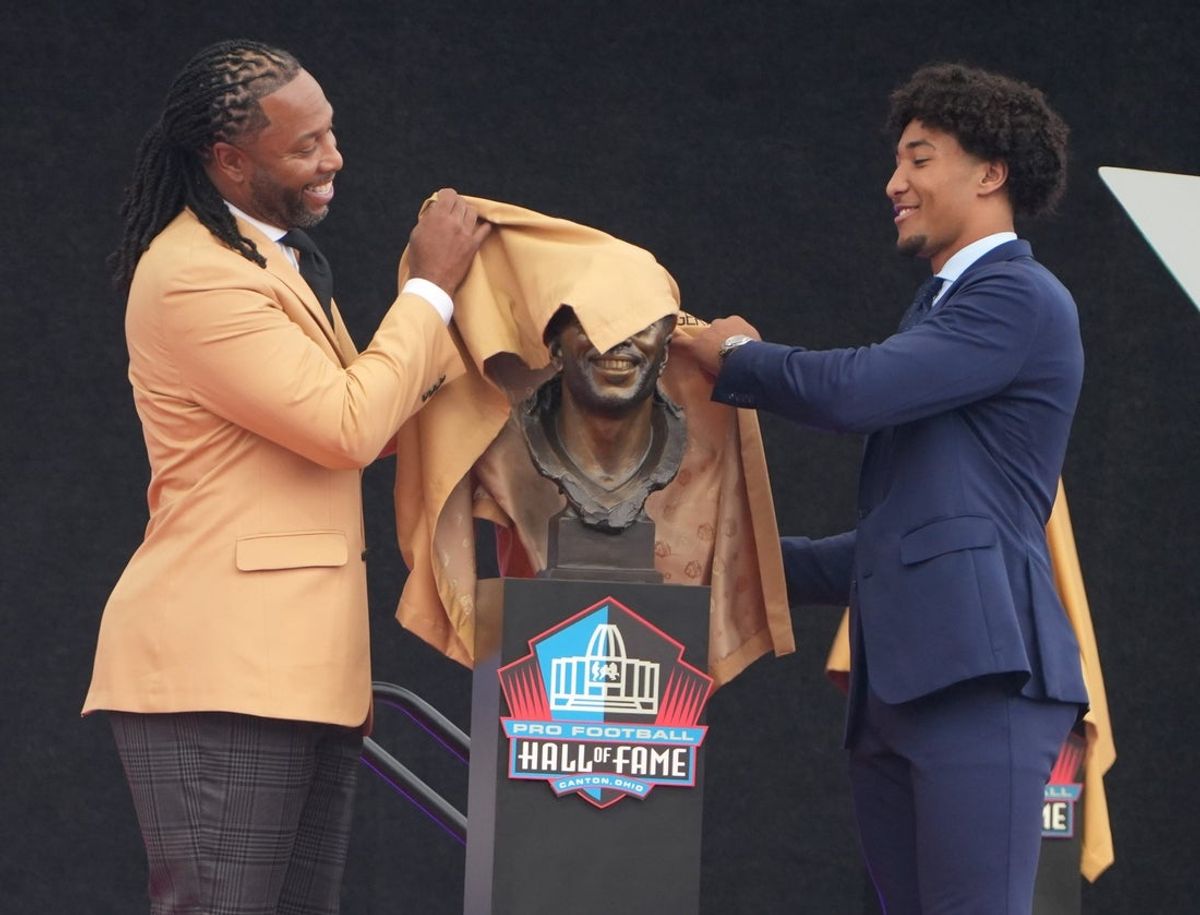
Drew Brees is emotional looking back on his career as he heads into the Hall of Fame  The Drew Brees story takes its next step in Ohio on Saturday with his induction into the Pro Football Hall of Fame. Brees’s story is one of overcoming, and overcoming on his way to great success.While “everything is bigger in Texas,” Brees’s home state, that wasn’t true of the soon-to-be gold jacket wearer, who stood at just six feet tall and just over 200 pounds in a time when quarterbacks were always 6’3” or taller with more girth. In a state where football is closer to a religion than a sport, in high school, Brees once thought about quitting football and focusing on baseball as his path forward.Instead of giving up the sport, an injury to the starting quarterback led him to high levels of success before another hurdle: a torn ACL and MCL late in his junior season. Brees was able to return for his senior season, winning a state title and the biggest awards, but his size and injury led him to be recruited by just two schools, Purdue and Kentucky, despite all of his success.Not exactly college football powerhouses, but even that was fitting for the Brees story.Brees chose the Boilermakers as a part of Joe Tiller’s first recruiting class in 1997. Heading into that season, Purdue had 12 straight seasons of losing records. Not only losing records, but only one of those years did the Boilermakers win at least five games. During Brees’ four-year tenure, three as the full-time starter, Purdue strung together four straight winning seasons, with four bowl game appearances, including two Alamo Bowl victories and a Rose Bowl appearance.In a different era than we see today, Brees was lighting up the box score in the Big 10 like a pinball machine. In three years as the starter, Brees completed over 60% of his passes (leading the conference twice), while throwing for over 3,300 yards each year (leading the conference all three seasons). Tossing (a lot) of touchdown passes to guys named Vinny Sutherland, John Standeford, Chris Daniels, Tim Stratton, and Isaac Jones, Brees was the engine that made things work at Purdue.Unknown date 1998; West Layfayette, IN, USA; FILE PHOTO; Purdue Boilermakers quarterback Drew Brees (15) in action against Central Florida at Ross-Ade Stadium. Mandatory Credit: Photo By USA TODAY Sports IMAGN IMAGES via Reuters ConnectDespite his unusually small size for the position, Brees’ success led him to the then-San Diego Chargers, being selected with the top pick in the second round of the 2001 NFL draft.While some fans only remember Brees as a part of the New Orleans Saints franchise, his four years as a starter in five seasons in San Diego saw a lot of success. After an 8-8 record in his first year as a starter, Brees led the Chargers to two winning seasons in his final three, throwing for over 12,000 yards as a part of the San Diego franchise.In those four years, Brees proved that he could overcome his limited height and size to become a successful NFL quarterback. Then, in the 2005 regular season finale, this play led to a dislocated shoulder, a 360-degree tear of his labrum, and the most shoulder anchors ever used in a surgery at that time.With another obstacle to overcome, Brees entered NFL free agency after having his throwing shoulder put back together with a major surgery. Much like his college recruitment, despite a proven track record, Brees was back to having only a few options for where to play.Infamously, at least down in South Florida, the Miami Dolphins backed away from their pursuit of Brees due to their concerns about his shoulder’s health. That is when the Saints swooped in, with the backdrop of the devastation of Hurricane Katrina, to recruit Brees to help lift their downtrodden franchise in the same way he did Purdue.The Saints’ 2006 return to New Orleans and Brees’ first home game for his new team, after playing away from the city the previous year, was an emotional one for everyone.The rest, as they say, is history. Impressive history, at that.As Brees did with the Boilermakers, the Saints started winning football games with a league-leading quarterback. Brees led the NFL in completions, completion percentage, passing yards, and passing touchdowns in multiple seasons. New Orleans had seven seasons of double-digit wins, multiple playoff appearances, and, of course, the 2009 Super Bowl championship.MIAMI GARDENS, FL – FEBRUARY 07: Drew Brees #9 of the New Orleans Saints holds up the Vince Lombardi Trophy on the podium as head coach Sean Payton looks on after defeating the Indianapolis Colts in Super Bowl XLIV on February 7, 2010 at Sun Life Stadium in Miami Gardens, Florida. (Photo by Rob Tringali/Sportschrome/Getty Images) Getty ImagesNow, in the birthplace of football, Brees enters the Hall of Fame. Overcoming major injuries, his limited size, being lightly recruited, having to lift struggling teams on his shoulders (one that he now cannot even use to throw a football), and helping the City of New Orleans move forward after the devastation of Katrina, Brees cannot help but get emotional when he looks back.In an event in Canton, Ohio, the day before he is to be enshrined, Brees talked at a Raising Cane’s restaurant about his emotions as he looks back at his career:Brees noted to those in attendance that he’s cried no less than 50 times while writing his Hall of Fame speech, one that he promises will go longer than his allotted time. Brees started to tear up as he talked about some of the different people he would be mentioning in his speech.Showing off his impressive memory as well as his emotional connection to his career, Brees was asked about a favorite play that he remembers well. Brees said he remembers them all. Brees then shared what one of those plays would sound like when he called it in the huddle:Did you get all of that? Me neither.While Brees’ story has been one of overcoming, his former head coach, Sean Payton, saw greatness in the future for a Saints team that didn’t have a lot of it. Talking about playing in the Hall of Fame game in 2007, Brees recounted Payton’s message to the team and promise of more gold jackets for players on a team whose primary color is gold:Despite the shoulder surgery, Brees, along with fellow greats like Tom Brady and Aaron Rodgers, was able to compete at a high level into his 40s. While trying to patiently wait to eat some of the Cane’s chicken in front of him, Brees noted how experience was such an advantage and recounted how he’s told Los Angeles Rams QB Matthew Stafford that his best years could still be in front of him:On Saturday, Brees enters the Hall of Football Immortals in Canton. Beyond that, Brees is still around football as a commentator and coaching his kids on the game. While overcoming obstacles has been a big part of the Brees story, perhaps he’s ready for a smooth ride for a bit. Given his history, if obstacles do pop up, we’d bet on Brees to take them on with all he has.As for Saturday, we can expect tears and maybe lots of them:  #Drew #Brees #emotional #career #heads #Hall #Fame

Drew Brees is emotional looking back on his career as he heads into the Hall of Fame

The Drew Brees story takes its next step in Ohio on Saturday with his induction into the Pro Football Hall of Fame. Brees’s story is one of overcoming, and overcoming on his way to great success.

While “everything is bigger in Texas,” Brees’s home state, that wasn’t true of the soon-to-be gold jacket wearer, who stood at just six feet tall and just over 200 pounds in a time when quarterbacks were always 6’3” or taller with more girth. In a state where football is closer to a religion than a sport, in high school, Brees once thought about quitting football and focusing on baseball as his path forward.

Instead of giving up the sport, an injury to the starting quarterback led him to high levels of success before another hurdle: a torn ACL and MCL late in his junior season. Brees was able to return for his senior season, winning a state title and the biggest awards, but his size and injury led him to be recruited by just two schools, Purdue and Kentucky, despite all of his success.

Not exactly college football powerhouses, but even that was fitting for the Brees story.

Brees chose the Boilermakers as a part of Joe Tiller’s first recruiting class in 1997. Heading into that season, Purdue had 12 straight seasons of losing records. Not only losing records, but only one of those years did the Boilermakers win at least five games. During Brees’ four-year tenure, three as the full-time starter, Purdue strung together four straight winning seasons, with four bowl game appearances, including two Alamo Bowl victories and a Rose Bowl appearance.

In a different era than we see today, Brees was lighting up the box score in the Big 10 like a pinball machine. In three years as the starter, Brees completed over 60% of his passes (leading the conference twice), while throwing for over 3,300 yards each year (leading the conference all three seasons). Tossing (a lot) of touchdown passes to guys named Vinny Sutherland, John Standeford, Chris Daniels, Tim Stratton, and Isaac Jones, Brees was the engine that made things work at Purdue.

Unknown date 1998; West Layfayette, IN, USA; FILE PHOTO; Purdue Boilermakers quarterback Drew Brees (15) in action against Central Florida at Ross-Ade Stadium. Mandatory Credit: Photo By USA TODAY Sports

Unknown date 1998; West Layfayette, IN, USA; FILE PHOTO; Purdue Boilermakers quarterback Drew Brees (15) in action against Central Florida at Ross-Ade Stadium. Mandatory Credit: Photo By USA TODAY Sports
IMAGN IMAGES via Reuters Connect

Despite his unusually small size for the position, Brees’ success led him to the then-San Diego Chargers, being selected with the top pick in the second round of the 2001 NFL draft.

While some fans only remember Brees as a part of the New Orleans Saints franchise, his four years as a starter in five seasons in San Diego saw a lot of success. After an 8-8 record in his first year as a starter, Brees led the Chargers to two winning seasons in his final three, throwing for over 12,000 yards as a part of the San Diego franchise.

In those four years, Brees proved that he could overcome his limited height and size to become a successful NFL quarterback. Then, in the 2005 regular season finale, this play led to a dislocated shoulder, a 360-degree tear of his labrum, and the most shoulder anchors ever used in a surgery at that time.

With another obstacle to overcome, Brees entered NFL free agency after having his throwing shoulder put back together with a major surgery. Much like his college recruitment, despite a proven track record, Brees was back to having only a few options for where to play.

Infamously, at least down in South Florida, the Miami Dolphins backed away from their pursuit of Brees due to their concerns about his shoulder’s health. That is when the Saints swooped in, with the backdrop of the devastation of Hurricane Katrina, to recruit Brees to help lift their downtrodden franchise in the same way he did Purdue.

The Saints’ 2006 return to New Orleans and Brees’ first home game for his new team, after playing away from the city the previous year, was an emotional one for everyone.

The rest, as they say, is history. Impressive history, at that.

As Brees did with the Boilermakers, the Saints started winning football games with a league-leading quarterback. Brees led the NFL in completions, completion percentage, passing yards, and passing touchdowns in multiple seasons. New Orleans had seven seasons of double-digit wins, multiple playoff appearances, and, of course, the 2009 Super Bowl championship.

MIAMI GARDENS, FL - FEBRUARY 07: Drew Brees #9 of the New Orleans Saints holds up the Vince Lombardi Trophy on the podium as head coach Sean Payton looks on after defeating the Indianapolis Colts in Super Bowl XLIV on February 7, 2010 at Sun Life Stadium in Miami Gardens, Florida. (Photo by Rob Tringali/Sportschrome/Getty Images)

MIAMI GARDENS, FL – FEBRUARY 07: Drew Brees #9 of the New Orleans Saints holds up the Vince Lombardi Trophy on the podium as head coach Sean Payton looks on after defeating the Indianapolis Colts in Super Bowl XLIV on February 7, 2010 at Sun Life Stadium in Miami Gardens, Florida. (Photo by Rob Tringali/Sportschrome/Getty Images)
Getty Images

Now, in the birthplace of football, Brees enters the Hall of Fame. Overcoming major injuries, his limited size, being lightly recruited, having to lift struggling teams on his shoulders (one that he now cannot even use to throw a football), and helping the City of New Orleans move forward after the devastation of Katrina, Brees cannot help but get emotional when he looks back.

In an event in Canton, Ohio, the day before he is to be enshrined, Brees talked at a Raising Cane’s restaurant about his emotions as he looks back at his career:

Brees noted to those in attendance that he’s cried no less than 50 times while writing his Hall of Fame speech, one that he promises will go longer than his allotted time. Brees started to tear up as he talked about some of the different people he would be mentioning in his speech.

Showing off his impressive memory as well as his emotional connection to his career, Brees was asked about a favorite play that he remembers well. Brees said he remembers them all. Brees then shared what one of those plays would sound like when he called it in the huddle:

Did you get all of that? Me neither.

While Brees’ story has been one of overcoming, his former head coach, Sean Payton, saw greatness in the future for a Saints team that didn’t have a lot of it. Talking about playing in the Hall of Fame game in 2007, Brees recounted Payton’s message to the team and promise of more gold jackets for players on a team whose primary color is gold:

Despite the shoulder surgery, Brees, along with fellow greats like Tom Brady and Aaron Rodgers, was able to compete at a high level into his 40s. While trying to patiently wait to eat some of the Cane’s chicken in front of him, Brees noted how experience was such an advantage and recounted how he’s told Los Angeles Rams QB Matthew Stafford that his best years could still be in front of him:

On Saturday, Brees enters the Hall of Football Immortals in Canton. Beyond that, Brees is still around football as a commentator and coaching his kids on the game. While overcoming obstacles has been a big part of the Brees story, perhaps he’s ready for a smooth ride for a bit. Given his history, if obstacles do pop up, we’d bet on Brees to take them on with all he has.

As for Saturday, we can expect tears and maybe lots of them:

#Drew #Brees #emotional #career #heads #Hall #Fame

The Drew Brees story takes its next step in Ohio on Saturday with his induction into the Pro Football Hall of Fame. Brees’s story is one of overcoming, and overcoming on his way to great success.

While “everything is bigger in Texas,” Brees’s home state, that wasn’t true of the soon-to-be gold jacket wearer, who stood at just six feet tall and just over 200 pounds in a time when quarterbacks were always 6’3” or taller with more girth. In a state where football is closer to a religion than a sport, in high school, Brees once thought about quitting football and focusing on baseball as his path forward.

Instead of giving up the sport, an injury to the starting quarterback led him to high levels of success before another hurdle: a torn ACL and MCL late in his junior season. Brees was able to return for his senior season, winning a state title and the biggest awards, but his size and injury led him to be recruited by just two schools, Purdue and Kentucky, despite all of his success.

Not exactly college football powerhouses, but even that was fitting for the Brees story.

Brees chose the Boilermakers as a part of Joe Tiller’s first recruiting class in 1997. Heading into that season, Purdue had 12 straight seasons of losing records. Not only losing records, but only one of those years did the Boilermakers win at least five games. During Brees’ four-year tenure, three as the full-time starter, Purdue strung together four straight winning seasons, with four bowl game appearances, including two Alamo Bowl victories and a Rose Bowl appearance.

In a different era than we see today, Brees was lighting up the box score in the Big 10 like a pinball machine. In three years as the starter, Brees completed over 60% of his passes (leading the conference twice), while throwing for over 3,300 yards each year (leading the conference all three seasons). Tossing (a lot) of touchdown passes to guys named Vinny Sutherland, John Standeford, Chris Daniels, Tim Stratton, and Isaac Jones, Brees was the engine that made things work at Purdue.

Unknown date 1998; West Layfayette, IN, USA; FILE PHOTO; Purdue Boilermakers quarterback Drew Brees (15) in action against Central Florida at Ross-Ade Stadium. Mandatory Credit: Photo By USA TODAY Sports

Unknown date 1998; West Layfayette, IN, USA; FILE PHOTO; Purdue Boilermakers quarterback Drew Brees (15) in action against Central Florida at Ross-Ade Stadium. Mandatory Credit: Photo By USA TODAY Sports
IMAGN IMAGES via Reuters Connect

Despite his unusually small size for the position, Brees’ success led him to the then-San Diego Chargers, being selected with the top pick in the second round of the 2001 NFL draft.

While some fans only remember Brees as a part of the New Orleans Saints franchise, his four years as a starter in five seasons in San Diego saw a lot of success. After an 8-8 record in his first year as a starter, Brees led the Chargers to two winning seasons in his final three, throwing for over 12,000 yards as a part of the San Diego franchise.

In those four years, Brees proved that he could overcome his limited height and size to become a successful NFL quarterback. Then, in the 2005 regular season finale, this play led to a dislocated shoulder, a 360-degree tear of his labrum, and the most shoulder anchors ever used in a surgery at that time.

With another obstacle to overcome, Brees entered NFL free agency after having his throwing shoulder put back together with a major surgery. Much like his college recruitment, despite a proven track record, Brees was back to having only a few options for where to play.

Infamously, at least down in South Florida, the Miami Dolphins backed away from their pursuit of Brees due to their concerns about his shoulder’s health. That is when the Saints swooped in, with the backdrop of the devastation of Hurricane Katrina, to recruit Brees to help lift their downtrodden franchise in the same way he did Purdue.

The Saints’ 2006 return to New Orleans and Brees’ first home game for his new team, after playing away from the city the previous year, was an emotional one for everyone.

The rest, as they say, is history. Impressive history, at that.

As Brees did with the Boilermakers, the Saints started winning football games with a league-leading quarterback. Brees led the NFL in completions, completion percentage, passing yards, and passing touchdowns in multiple seasons. New Orleans had seven seasons of double-digit wins, multiple playoff appearances, and, of course, the 2009 Super Bowl championship.

MIAMI GARDENS, FL - FEBRUARY 07: Drew Brees #9 of the New Orleans Saints holds up the Vince Lombardi Trophy on the podium as head coach Sean Payton looks on after defeating the Indianapolis Colts in Super Bowl XLIV on February 7, 2010 at Sun Life Stadium in Miami Gardens, Florida. (Photo by Rob Tringali/Sportschrome/Getty Images)

MIAMI GARDENS, FL – FEBRUARY 07: Drew Brees #9 of the New Orleans Saints holds up the Vince Lombardi Trophy on the podium as head coach Sean Payton looks on after defeating the Indianapolis Colts in Super Bowl XLIV on February 7, 2010 at Sun Life Stadium in Miami Gardens, Florida. (Photo by Rob Tringali/Sportschrome/Getty Images)
Getty Images

Now, in the birthplace of football, Brees enters the Hall of Fame. Overcoming major injuries, his limited size, being lightly recruited, having to lift struggling teams on his shoulders (one that he now cannot even use to throw a football), and helping the City of New Orleans move forward after the devastation of Katrina, Brees cannot help but get emotional when he looks back.

In an event in Canton, Ohio, the day before he is to be enshrined, Brees talked at a Raising Cane’s restaurant about his emotions as he looks back at his career:

Brees noted to those in attendance that he’s cried no less than 50 times while writing his Hall of Fame speech, one that he promises will go longer than his allotted time. Brees started to tear up as he talked about some of the different people he would be mentioning in his speech.

Showing off his impressive memory as well as his emotional connection to his career, Brees was asked about a favorite play that he remembers well. Brees said he remembers them all. Brees then shared what one of those plays would sound like when he called it in the huddle:

Did you get all of that? Me neither.

While Brees’ story has been one of overcoming, his former head coach, Sean Payton, saw greatness in the future for a Saints team that didn’t have a lot of it. Talking about playing in the Hall of Fame game in 2007, Brees recounted Payton’s message to the team and promise of more gold jackets for players on a team whose primary color is gold:

Despite the shoulder surgery, Brees, along with fellow greats like Tom Brady and Aaron Rodgers, was able to compete at a high level into his 40s. While trying to patiently wait to eat some of the Cane’s chicken in front of him, Brees noted how experience was such an advantage and recounted how he’s told Los Angeles Rams QB Matthew Stafford that his best years could still be in front of him:

On Saturday, Brees enters the Hall of Football Immortals in Canton. Beyond that, Brees is still around football as a commentator and coaching his kids on the game. While overcoming obstacles has been a big part of the Brees story, perhaps he’s ready for a smooth ride for a bit. Given his history, if obstacles do pop up, we’d bet on Brees to take them on with all he has.

As for Saturday, we can expect tears and maybe lots of them:
Source link
#Drew #Brees #emotional #career #heads #Hall #Fame

When I arrived to cover the Minnesota Vikings for the St. Paul Pioneer Press in 2000, it was clear I was dealing with a star-studded roster.

The team boasted future Pro Football Hall of Famers; wide receivers Cris Carter and Randy Moss and defensive tackle John Randle. Plus, there were a ton of other stars including quarterback Daunte Culpepper, center Matt Birk and running back Robert Smith. The Vikings were loaded with star power.

The talent around the team wasn’t relegated simply to the roster, however.

That summer I first laid my eyes on a 16-year-old high school junior named Larry Fitzgerald Jr. The son of a local media member and close friend of Vikings’ head coach Dennis Green, Little Fitzy was a ball boy during training camp and on game days. It turns out, Larry Fitzgerald Jr. is very likely the most famous former NFL ball boy in history.

On reporting date, fellow reporter Kevin Seifert pointed out Fitzgerald to me and said “that’s a bad man.” Seifert didn’t say that about any of the actual Vikings that day.

Fitzgerald was already known as the best Minnesota high school prospect in years and he was considered one of the best high school players in the country. Seifert told me the buzz was that the kid was, no doubt, headed to the NFL in a half decade or so. Seifert was on the money. I’m not sure the Hall of Fame was mentioned or not.

But this weekend of course, that’s exactly where Little Fitzy is headed. He will be enshrined into the Pro Football Hall of Fame in Canton, Ohio, on Saturday as a first-ballot Hall of Famer.

Fitzgerald will be remembered as one of the best and most productive wide receivers in league history after an incredible 17-season career with the Arizona Cardinals.

I have a ton of memories of being around Fitzgerald, but there’s one that stands out among them all.

One day after training camp, a nameless Vikings’ wide receiver camp body was getting extra work on a JUGS machine, catching balls. He was being tutored by Fitzgerald, who was showing this player how to properly approach the incoming ball. This was a child instructing a grown man an NFL team deemed good enough to attend training camp.

Larry Fitzgerald Jr. was special even back then.

In addition to his incredible natural football ability, Larry Fitzgerald Jr. stood out for his politeness and good nature. You could tell he was a good kid from the first time you met him.

There was no I’m-going-to-be-a-star attitude. He was genuine and he worked his tail off with the rest of the ball boys. There was no entitlement. It was as if he was using his time around an NFL camp as an internship for his future. He passed with flying colors.

I’ve always cherished following his career from his days at Pittsburgh in college to his days of dominating the NFL and I’ve enjoyed running into him over the years now and again.

Enjoy Canton, Little Fitzy, you’ve earned it.

#Larry #Fitzgeralds #Hall #Fame #induction #years #making">Larry Fitzgerald’s Hall of Fame induction is 25 years in the making  When I arrived to cover the Minnesota Vikings for the St. Paul Pioneer Press in 2000, it was clear I was dealing with a star-studded roster.The team boasted future Pro Football Hall of Famers; wide receivers Cris Carter and Randy Moss and defensive tackle John Randle. Plus, there were a ton of other stars including quarterback Daunte Culpepper, center Matt Birk and running back Robert Smith. The Vikings were loaded with star power.The talent around the team wasn’t relegated simply to the roster, however.That summer I first laid my eyes on a 16-year-old high school junior named Larry Fitzgerald Jr. The son of a local media member and close friend of Vikings’ head coach Dennis Green, Little Fitzy was a ball boy during training camp and on game days. It turns out, Larry Fitzgerald Jr. is very likely the most famous former NFL ball boy in history.On reporting date, fellow reporter Kevin Seifert pointed out Fitzgerald to me and said “that’s a bad man.” Seifert didn’t say that about any of the actual Vikings that day.Fitzgerald was already known as the best Minnesota high school prospect in years and he was considered one of the best high school players in the country. Seifert told me the buzz was that the kid was, no doubt, headed to the NFL in a half decade or so. Seifert was on the money. I’m not sure the Hall of Fame was mentioned or not.But this weekend of course, that’s exactly where Little Fitzy is headed. He will be enshrined into the Pro Football Hall of Fame in Canton, Ohio, on Saturday as a first-ballot Hall of Famer.Fitzgerald will be remembered as one of the best and most productive wide receivers in league history after an incredible 17-season career with the Arizona Cardinals.I have a ton of memories of being around Fitzgerald, but there’s one that stands out among them all.One day after training camp, a nameless Vikings’ wide receiver camp body was getting extra work on a JUGS machine, catching balls. He was being tutored by Fitzgerald, who was showing this player how to properly approach the incoming ball. This was a child instructing a grown man an NFL team deemed good enough to attend training camp.Larry Fitzgerald Jr. was special even back then.In addition to his incredible natural football ability, Larry Fitzgerald Jr. stood out for his politeness and good nature. You could tell he was a good kid from the first time you met him.There was no I’m-going-to-be-a-star attitude. He was genuine and he worked his tail off with the rest of the ball boys. There was no entitlement. It was as if he was using his time around an NFL camp as an internship for his future. He passed with flying colors.I’ve always cherished following his career from his days at Pittsburgh in college to his days of dominating the NFL and I’ve enjoyed running into him over the years now and again.Enjoy Canton, Little Fitzy, you’ve earned it.  #Larry #Fitzgeralds #Hall #Fame #induction #years #making

Follow Sportstar for extensive coverage of the tenth edition of the TNPL, from live scores and match reports to exclusive analysis and features.

TOSS

Tiruppur Tamizhans won the toss and chose to bowl first.

PLAYING XIs

Nellai Royal Kings: Athish SR(w), D Santhosh Kumar, Ajitesh Guruswamy, U Mukilesh, Rithik Easwaran, Sonu Yadav(c), Muhammed Adnan Khan, Ramalingam Rohit, Emmanuel Cherian, NS Harish, Rocky Bhasker

Tiruppur Tamizhans: Tushar Raheja(w), Amit Sathvik, Pradosh Ranjan Paul, Mohamed Ali, Uthirasamy Sasidev, Ravisrinivasan Sai Kishore(c), M Mathivannan, S Mohan Prasath, R Silambarasan, Esakkimuthu A, T Natarajan

Published on Aug 09, 2026

#TNPL #Live #Allround #batting #display #propels #Nellai #Royal #Kings">TNPL 2026 Live: All-round batting display propels Nellai Royal Kings to 206/8  Follow Sportstar for extensive coverage of the tenth edition of the TNPL, from live scores and match reports to exclusive analysis and features.TOSSTiruppur Tamizhans won the toss and chose to bowl first.PLAYING XIsNellai Royal Kings: Athish SR(w), D Santhosh Kumar, Ajitesh Guruswamy, U Mukilesh, Rithik Easwaran, Sonu Yadav(c), Muhammed Adnan Khan, Ramalingam Rohit, Emmanuel Cherian, NS Harish, Rocky BhaskerTiruppur Tamizhans: Tushar Raheja(w), Amit Sathvik, Pradosh Ranjan Paul, Mohamed Ali, Uthirasamy Sasidev, Ravisrinivasan Sai Kishore(c), M Mathivannan, S Mohan Prasath, R Silambarasan, Esakkimuthu A, T NatarajanPublished on Aug 09, 2026  #TNPL #Live #Allround #batting #display #propels #Nellai #Royal #Kings

Post Comment