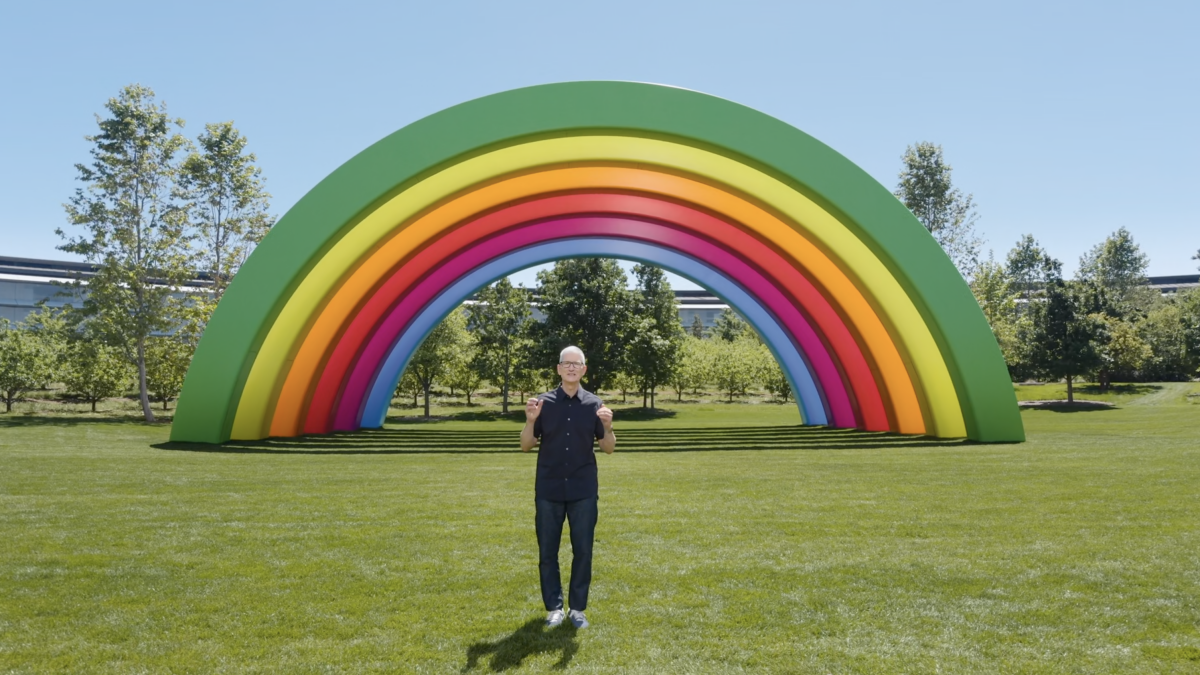
Apple’s 2025 Worldwide Developers Conference keynote was sparse on the kind of groundbreaking announcements it’s usually known for. With no major hardware reveals until September and no pressure to wade into undercooked tech categories like AI or augmented reality, the Silicon Valley giant went back to basics. The message was clear: iOS needs an update.
That was the crux of this year’s keynote, with Apple CEO Tim Cook and Senior VP Craig Federighi diving deep into the all-new iOS 26 redesign, dubbed Liquid Glass. Apple also confirmed it’s introducing a new naming convention for all of Apple’s software platforms, aimed at aligning with the company’s vision for the future. While Apple Intelligence and AI weren’t the headline act, the OS does include new AI features. From live translations to music tools and Safari enhancements, AI is embedded across the system, even if it feels a bit reactionary following the Google I/O 2025 keynote, which was all AI, AI, and more AI.
iOS 26, along with updates across Apple’s hardware operating systems, brings a mix of big swings and incremental upgrades. Here’s a full breakdown of everything announced at WWDC 2025, including iOS 26, iPadOS 26, macOS 26, tvOS 26, and WatchOS 26.
And let’s start with…
iOS 26 updates
Good enough, welcome back Windows Vista.
Credit: Apple
Apple’s new visual style is called Liquid Glass, and the translucent UI marks Apple’s most significant visual overhaul in years. It keeps the core layout familiar but introduces a suite of subtle quality-of-life improvements designed to make navigation smoother and more intuitive.
“Expressive” was the word Federighi leaned on to describe the new look, with demos showcasing apps that appear to float in space — a design language clearly borrowing from the spatial interface of Vision Pro. That spatiality now filters down to iPhone, giving everything a slick, responsive, and notably fluid feel.
This includes an updated Dark Mode and an all-new Clear theme — Apple’s take on a fully translucent UI that somehow feels modern, minimal, and a rich man’s version of Windows Vista.
It’s a noticeable shift that brings a handful of thoughtful features. Nothing revolutionary, but enough to make you pause and think, okay, that’s pretty clever.
Live translations

Credit: Apple
In one of the more genuinely useful Apple Intelligence features for everyday users, Live Translations are now integrated into Messages, FaceTime, and other core apps. It’s arguably the flagship AI-driven feature in iOS 26. Apple says the real-time translations are processed entirely on-device and can even mimic the user’s voice during translation — a technical flex that’s impressive, if slightly uncanny.
The feature also extends to music, with support for real-time lyric translations and live pronunciation to help users sing along. How seamless it all feels in practice remains to be seen.
Phone
The Phone app is getting a streamlined new layout that brings Favorites, Recents, and Voicemails into a single, unified view. Building on the existing Live Voicemail feature, Apple is also introducing Call Screening, which prompts unknown callers to explain why they’re calling, giving you the chance to decide whether it’s worth your time.

Apple wants to give you your time back.
Credit: Apple
The standout addition, though, is Hold Assist. When you’re stuck waiting for a live agent, your iPhone will now alert you the moment a real person picks up. A small upgrade, but a smart one.
Photos
Photos are finally — finally — getting the visual “overhaul” it desperately needed. The app has been a mess since iOS 18, when Apple turned what was a perfectly functional interface into something oddly convoluted, burying albums and making navigation a chore.

Credit: Apple
With iOS 26, Photos is being restructured around two main tabs: one for your full photo library and the other for your collections. Apple is framing it as a sleek, modern redesign, but really, it’s a return to the pre-iOS 18 layout, just better looking. It’s a reinvention of the wheel, sure, but at least it’s a wheel that actually rolls.
Messages

Credit: Apple
Group chats are getting a solid quality-of-life update in iOS 26, with the addition of Apple Pay integration and built-in Polls. It’s a small but meaningful upgrade that makes coordinating with friends or splitting bills a bit more seamless.
Messages is also getting smarter about unknown numbers, automatically sorting them into a separate folder. From there, you can mark them as known, request more info, or delete them entirely. Which is particularly useful for online daters navigating their talking stage graveyard.
Now integrated with Apple Intelligence, the app will now suggest creating a poll when it detects that a decision needs to be made, and works in tandem with Image Playground for generating custom backgrounds to personalize your chats.
CarPlay
The new design for CarPlay introduces a compact view for incoming calls, so drivers can see who’s calling without losing sight of critical info like navigation directions.

Credit: Apple
Messages in CarPlay now supports Tapbacks and pinned conversations, making it easier to keep track of active chats on the go. Plus, with the addition of widgets and Live Activities, staying informed while driving looks to be more seamless and less distracting.
Apple also introduced CarPlay Ultra, an enhanced version of CarPlay designed specifically for its luxury automotive partnerships, starting with Aston Martin. Despite the name sounding like a subscription tier (it’s not… at least for now), CarPlay Ultra is touted as a deeper, more immersive integration of Apple’s software into the car’s entire being.
Mashable Light Speed

Credit: Apple
Instead of being confined to the central infotainment screen, CarPlay Ultra extends across all driver-facing displays, blending iPhone functionality with the vehicle’s native systems for a more unified and premium in-car experience.
Maps, Wallet, and a Passport Digital ID
Apple Maps is getting a memory upgrade in iOS 26 with Visited Places, a feature that logs where you’ve been, like restaurants or shops, and organizes them right in the app. Sure, Google Maps has done this for years, but Apple’s finally catching up.

Credit: Apple
The app also gets smarter about your daily patterns. Using on-device intelligence, iPhone can now recognize regular routes — like your commute — and surface preferred directions, flag traffic delays, and suggest faster options, all from the lock screen.
As expected, it raises some privacy flags. But Apple claims both Visited Places and daily route tracking are end-to-end encrypted and can’t be accessed by the company itself, though by now, that promise feels more like a standard PR line than a standout feature.
Adding to the pile of privacy-adjacent updates, Apple Wallet in iOS 26 now supports Digital ID for passports, though Apple is quick to note it’s not a replacement for your physical passport. You can add it to your Wallet, and it’s currently accepted by TSA in 10 states and Puerto Rico. (For context, Digital IDs are recognized in 14 states total, but holdouts like New York and Louisiana use their own apps and don’t support Apple Wallet.)

Credit: Apple
Boarding Passes are also getting smarter with Live Activities integration. They let you share your flight status with friends in real-time, so they know when you land — no group text updates required.
A new Games app

Credit: Apple
Apple is finally taking mobile gaming more seriously with the new Apple Games app. It pulls everything into one place—a Home tab for updates to the games you actually play, a dedicated section for Apple Arcade, and a Library that tracks every game you’ve ever downloaded.
There’s a new “Play Together” tab for comparing scores, sending invites, and competing in real-time challenges with friends. It works in portrait or landscape, and pairs smoothly with a controller.
Safari
According to Apple, Safari in iOS 26 is getting a boost in privacy and design. The mobile browser now includes advanced fingerprinting protection while browsing. Visually, Safari adopts a more rounded, edge-to-edge look — web pages now flow seamlessly from the top of the screen to the bottom.
Accessibility Features
iOS 26 brings a wave of meaningful accessibility updates across the Apple ecosystem. Accessibility Reader introduces a customizable, systemwide reading experience tailored to individual needs, while Braille Access delivers a completely rethought interface for users connecting braille displays to iPhone.
Apple has also improved features like Live Listen, Background Sounds, and Personal Voice, aiming to make day-to-day device use more intuitive and inclusive.
iPadOS 26 updates

Credit: Apple
Apple claims iPadOS 26 is its most ambitious iPad update yet — combining the sleek new Liquid Glass design with deeper productivity features and expanded Apple Intelligence integration. The headline feature for iPadOS 26 is a powerful new Apple “invention” called Windows — an upgrade that finally lets users freely resize, move, and tile apps across their iPad screen. And no, this does not make the iPad just like a Mac. They have different names, after all.
Still, it’s the closest the iPad has come to feeling like a true multitasking machine, shedding some of the clunky constraints of Split View and Slide Over. It’s not macOS, but it’s not far off either — just don’t say that too loudly in Cupertino.
The Files app gets new folder customization and default app settings, and the long-awaited Preview app comes to iPad for editing PDFs and images with Apple Pencil.
Creative pros get features like Background Tasks, local capture for recording, and improved audio input tools, while the Journal app, Game Overlay, and a new menu bar round out a packed update focused on making the iPad more capable, personal, and pro-friendly than ever.
macOS Tahoe 26 updates

Credit: Apple
macOS 26, now officially named macOS Tahoe, builds out the Mac experience with deeper iPhone integration, smarter system-wide intelligence, and a much beefier Spotlight. The Phone app finally lands on macOS, complete with Call Screening and Hold Assist, while Live Activities can now surface in the menu bar for real-time updates like flights or rides.

Credit: Apple
Spotlight gets its biggest update yet — it can now execute actions like sending emails or creating notes, and supports filtering, quick keys, and results from third-party cloud services. Apple Intelligence brings on-device Live Translation, smarter Shortcuts, Genmoji customization, and new tools in Image Playground.

Credit: Apple
A personal favorite from the keynote is the updated Finder, which lets users customize folder icons with colors and symbols, and themes offer more personalized desktop setups.
tvOS 26 updates
tvOS 26 brings new content features and quality-of-life improvements to the Apple TV experience. Users can now set up individual profiles for personalized recommendations and continue watching across devices. The TV app has been redesigned to prioritize content, with streamlined playback controls that stay out of the way.

Credit: Apple
Cinematic poster art adds some polish, but, to be honest, the real highlight of the tvOS 26 spotlight was the Apple TV+ preview: Chief of War with Jason Momoa, Foundation season 3, Slow Horses season 5, and a new Denzel Washington film titled Highest to Lowest are all on the way.
It’s a steady update that Apple intends to be more personal and content-driven.
watchOS 26 introduces Workout Buddy

Credit: Apple
It kind of feels like Apple’s heart just isn’t in watchOS anymore, at least based on what was shown at WWDC. The headline feature is Workout Buddy, an AI-powered fitness coach that dishes out real-time encouragement, milestone callouts, and personalized playlists, all voiced by synthetic versions of Fitness+ trainers.
The Workout app itself finally gets a much-needed redesign, making it easier to jump into custom routines and access pacing tools without digging through menus. Beyond that, most of what’s new in watchOS is inherited directly from iOS 26 — small quality-of-life improvements that round out the experience, but don’t exactly move the needle.
VisionOS 26 updates

Good enough. Welcome back ‘L.A. Noire.”
Credit: Apple
Finally, to wrap up this round-up, it’s VisionOS 26 and Vision Pro — the source of inspiration behind Apple’s new Liquid Glass aesthetic and translucent UI design overhaul across its platforms.
This year’s update doubles down on spatial computing and everyone’s “love” for widgets. This includes spatially aware widgets that persist in your physical environment, letting users pin things like clocks, weather, and photos around their space, customizable down to frame depth and color.
Apple’s also focused on social and collaborative use cases. Users can now share spatial experiences with others in the same room or dial in friends via FaceTime. Safari supports interactive 3D models embedded in web pages, and developers can tap into new APIs to make apps more immersive.
That includes Personas, which is getting a — slightly less creepy — glowup. With the help of some “enhanced volumetric rendering,” Personas invade your digital space with sharper detail, full side profiles, and more natural motion.
And yes, you can still watch movies and play games — because it’s still a $3,500 headset, after all.
Source link
#announced #Apples #WWDC #keynote #event

![This former notorious red-light district is now one of the world’s top AI hubs | TechCrunch
What every U.K. AI startup wants to know these days is, how can I get office space in King’s Cross?
The area is so hot that a VC firm allegedly recently won a deal by promising a founder office space in the neighborhood. “We stop at nothing to win deals [for] and to support” founders, “including helping them source office space when needed,” the firm told me when asked about the rumor, declining to confirm or deny any details.
The neighborhood’s popularity began back in 2016 when DeepMind — then newly acquired by Google — moved in. Soon after, a flood of AI startups followed, wanting to be around the Google DeepMind magic. Today, they hope to take advantage of the cluster of AI talent there.
This has transformed King’s Cross into one of the world’s top AI hubs, rivaled only by San Francisco and Beijing. Around London, it’s known by the sobriquet “Knowledge Quarter,” as it’s home to names like OpenAI, Meta, Isomorphic Labs, Cusp AI, Wayne, Recursive, and, a little farther down the road, Synthesia and Anthropic. The European Technology Network (ETN) just moved into a glossy new office nearby, while University College London sits around the corner.
Mixed in with the new developments are trendy food spots like Hoppers and BAO. Hop a train from King’s Cross, and founders can be in Cambridge in 45 minutes to source talent or can be in Paris in two hours to strike a deal.
Who would have guessed that a little more than 20 years ago, this was one of the seediest areas in London?
“In the ’80s, crack and heroin made the area a major narcotics market,” Hussein Kanji, an investor at Hoxton Ventures, said, recalling syringes in tree trunks and gangs patrolling the streets. “In 1982, the local church was occupied by the English Collective of Prostitutes for 12 straight days.” Then, in the early 2000s, a real estate developer had a dream and, well, “now it is the AI hotbed of the United Kingdom,” Kanji said. “What a change.” Around 18 months ago, his portfolio company BioCorteX moved from the neighborhood Holborn to the Jellicoe building in King’s Cross, hoping to be near the action. “Lots going on in London right now,” Nik Sharma, co-founder of BioCorteX, told me. “Lots of hyperscalers moving in.” That includes, reportedly, Jeff Bezos’ AI company Prometheus, which is also said to be in talks to move into the Jellicoe.
There are around 3,600 AI startups in London, which, together, have raised around .1 billion out of the .8 billion raised in the city since late July, according to Dealroom. Since the start of June, AI-related startups have leased more than 1 million square feet of office space in London, according to the real estate firm Knight Frank. With that, prime rents in King’s Cross have risen 18% over the past three years, Chris Dunn, a commercial insight associate at the firm, told me. That percentage represents only the largest leases encompassing at least 10,000 square feet, like the ones OpenAI and Prometheus are signing. The shorter deals go for even more, he said, and now the vacancy rate for conventional office space is just 0.9%. “Demand has outstripped supply,” he continued.
Today, one of the big topics of the area is sovereignty. It was a wake-up call for many when Anthropic shut off access to Mythos and Fable this summer, leaving some in the ecosystem to conclude: “We’d better look after ourselves,” Saul Klein, co-founder of the VC firm Phoenix Court, told me.
Phoenix Court is located in the King’s Cross area and has three portfolio companies in the vicinity, including Olix (which just announced a .3 billion valuation), Early Health and CoMind. Robin Klein, co-founder of the firm, said the shutdown of Fable and Mythos access was a “small but sharp reminder that Europe can’t simply rent its AI capabilities and capacity; it needs to build and hold some of its own.” King’s Cross, he said, is where much of this building is actually happening.
“The bigger question,” he continued, “is whether the U.K. builds the infrastructure, compute, energy, capital, to make this self-reliance durable, rather than just hosting outposts of U.S. labs.”
Image Credits:Phoenix Court
Top founders want to stay
Simon Kohl, founder of Latent Labs, has offices in King’s Cross and San Francisco. The London office, at the moment, is growing faster, and he’s more bullish than ever on the ecosystem, he said. “The mood right now feels less like London trying to catch up and more like London becoming one of the default places to start a serious AI company,” he said. Look around and you are likely to see Wayve testing its autonomous cars. Founded in 2017 by co-founder Alex Kendall, the unicorn is one of London’s biggest success stories.
“Ten years ago, building a frontier AI company from London felt like an unusual choice,” Kendall told me. “Now it feels like an obvious one.” Wayve moved into King’s Cross in 2018 looking for a space that could double as a garage — “a rare combination in Central London,” Kendall said. He has watched the ecosystem mature around him — and it’s now evident that a startup can stay in London, raise serious capital, hire world-class AI talent, and remain globally competitive, he said. Down the street from Anthropic’s new 158,000-square-foot office is the AI agent builder Sierra and the AI video platform Synthesia.
Laura Gonzalez Florez, Synthesia’s chief of staff and head of people, says the company moved into its glossy new office building a year ago to accommodate its growing team. They were drawn to the area for the same reason as everyone else: “It’s very close to the airport … very close to where a lot of investors are,” she said.
Image Credits:Synthesia
Around two-thirds of Synthesia’s engineers are remote, Gonzalez Florez said, letting the company tap into an affordable, international, and diverse talent pool and helping it scale faster. “From London, we can hire and work, without any problem, people from anywhere, from Slovenia to Portugal,” she said.
Unsurprisingly, London’s AI boom is also causing a talent war.U.K. AI job postings have skyrocketed in the past few years, per data from PwC. When Anthropic announced it moved into town earlier this year, it listed, for example, a salary range of £260,000 to £630,000 for a machine learning research engineer when the average salary in London for the same role is around £102,000. Some founders in the U.K., like those in Silicon Valley, are being forced to raise more and bigger rounds to keep up.
“The real test is whether more globally significant AI companies are founded, funded, and scaled from the U.K., while continuing to attract the world’s best talent to build them here,” Zain Ali, founder of the King’s Cross-based AI legal firm Centuro, told me. “If that continues to happen, King’s Cross won’t just be an AI hub. It’ll become one of the U.K.’s most important strategic assets.”
When you purchase through links in our articles, we may earn a small commission. This doesn’t affect our editorial independence.#Thisformernotorious #redlight #districtis #nowone #worlds #top #hubs #TechCrunchUK](https://techcrunch.com/wp-content/uploads/2026/08/DM9A2852.jpg?w=680 "This former notorious red-light district is now one of the world’s top AI hubs | TechCrunch
What every U.K. AI startup wants to know these days is, how can I get office space in King’s Cross?
The area is so hot that a VC firm allegedly recently won a deal by promising a founder office space in the neighborhood. “We stop at nothing to win deals [for] and to support” founders, “including helping them source office space when needed,” the firm told me when asked about the rumor, declining to confirm or deny any details.
The neighborhood’s popularity began back in 2016 when DeepMind — then newly acquired by Google — moved in. Soon after, a flood of AI startups followed, wanting to be around the Google DeepMind magic. Today, they hope to take advantage of the cluster of AI talent there.
This has transformed King’s Cross into one of the world’s top AI hubs, rivaled only by San Francisco and Beijing. Around London, it’s known by the sobriquet “Knowledge Quarter,” as it’s home to names like OpenAI, Meta, Isomorphic Labs, Cusp AI, Wayne, Recursive, and, a little farther down the road, Synthesia and Anthropic. The European Technology Network (ETN) just moved into a glossy new office nearby, while University College London sits around the corner.
Mixed in with the new developments are trendy food spots like Hoppers and BAO. Hop a train from King’s Cross, and founders can be in Cambridge in 45 minutes to source talent or can be in Paris in two hours to strike a deal.
Who would have guessed that a little more than 20 years ago, this was one of the seediest areas in London?
“In the ’80s, crack and heroin made the area a major narcotics market,” Hussein Kanji, an investor at Hoxton Ventures, said, recalling syringes in tree trunks and gangs patrolling the streets. “In 1982, the local church was occupied by the English Collective of Prostitutes for 12 straight days.” Then, in the early 2000s, a real estate developer had a dream and, well, “now it is the AI hotbed of the United Kingdom,” Kanji said. “What a change.” Around 18 months ago, his portfolio company BioCorteX moved from the neighborhood Holborn to the Jellicoe building in King’s Cross, hoping to be near the action. “Lots going on in London right now,” Nik Sharma, co-founder of BioCorteX, told me. “Lots of hyperscalers moving in.” That includes, reportedly, Jeff Bezos’ AI company Prometheus, which is also said to be in talks to move into the Jellicoe.
There are around 3,600 AI startups in London, which, together, have raised around .1 billion out of the .8 billion raised in the city since late July, according to Dealroom. Since the start of June, AI-related startups have leased more than 1 million square feet of office space in London, according to the real estate firm Knight Frank. With that, prime rents in King’s Cross have risen 18% over the past three years, Chris Dunn, a commercial insight associate at the firm, told me. That percentage represents only the largest leases encompassing at least 10,000 square feet, like the ones OpenAI and Prometheus are signing. The shorter deals go for even more, he said, and now the vacancy rate for conventional office space is just 0.9%. “Demand has outstripped supply,” he continued.
Today, one of the big topics of the area is sovereignty. It was a wake-up call for many when Anthropic shut off access to Mythos and Fable this summer, leaving some in the ecosystem to conclude: “We’d better look after ourselves,” Saul Klein, co-founder of the VC firm Phoenix Court, told me.
Phoenix Court is located in the King’s Cross area and has three portfolio companies in the vicinity, including Olix (which just announced a .3 billion valuation), Early Health and CoMind. Robin Klein, co-founder of the firm, said the shutdown of Fable and Mythos access was a “small but sharp reminder that Europe can’t simply rent its AI capabilities and capacity; it needs to build and hold some of its own.” King’s Cross, he said, is where much of this building is actually happening.
“The bigger question,” he continued, “is whether the U.K. builds the infrastructure, compute, energy, capital, to make this self-reliance durable, rather than just hosting outposts of U.S. labs.”
Image Credits:Phoenix Court
Top founders want to stay
Simon Kohl, founder of Latent Labs, has offices in King’s Cross and San Francisco. The London office, at the moment, is growing faster, and he’s more bullish than ever on the ecosystem, he said. “The mood right now feels less like London trying to catch up and more like London becoming one of the default places to start a serious AI company,” he said. Look around and you are likely to see Wayve testing its autonomous cars. Founded in 2017 by co-founder Alex Kendall, the unicorn is one of London’s biggest success stories.
“Ten years ago, building a frontier AI company from London felt like an unusual choice,” Kendall told me. “Now it feels like an obvious one.” Wayve moved into King’s Cross in 2018 looking for a space that could double as a garage — “a rare combination in Central London,” Kendall said. He has watched the ecosystem mature around him — and it’s now evident that a startup can stay in London, raise serious capital, hire world-class AI talent, and remain globally competitive, he said. Down the street from Anthropic’s new 158,000-square-foot office is the AI agent builder Sierra and the AI video platform Synthesia.
Laura Gonzalez Florez, Synthesia’s chief of staff and head of people, says the company moved into its glossy new office building a year ago to accommodate its growing team. They were drawn to the area for the same reason as everyone else: “It’s very close to the airport … very close to where a lot of investors are,” she said.
Image Credits:Synthesia
Around two-thirds of Synthesia’s engineers are remote, Gonzalez Florez said, letting the company tap into an affordable, international, and diverse talent pool and helping it scale faster. “From London, we can hire and work, without any problem, people from anywhere, from Slovenia to Portugal,” she said.
Unsurprisingly, London’s AI boom is also causing a talent war.U.K. AI job postings have skyrocketed in the past few years, per data from PwC. When Anthropic announced it moved into town earlier this year, it listed, for example, a salary range of £260,000 to £630,000 for a machine learning research engineer when the average salary in London for the same role is around £102,000. Some founders in the U.K., like those in Silicon Valley, are being forced to raise more and bigger rounds to keep up.
“The real test is whether more globally significant AI companies are founded, funded, and scaled from the U.K., while continuing to attract the world’s best talent to build them here,” Zain Ali, founder of the King’s Cross-based AI legal firm Centuro, told me. “If that continues to happen, King’s Cross won’t just be an AI hub. It’ll become one of the U.K.’s most important strategic assets.”
When you purchase through links in our articles, we may earn a small commission. This doesn’t affect our editorial independence.#Thisformernotorious #redlight #districtis #nowone #worlds #top #hubs #TechCrunchUK")

![This former notorious red-light district is now one of the world’s top AI hubs | TechCrunch
What every U.K. AI startup wants to know these days is, how can I get office space in King’s Cross?
The area is so hot that a VC firm allegedly recently won a deal by promising a founder office space in the neighborhood. “We stop at nothing to win deals [for] and to support” founders, “including helping them source office space when needed,” the firm told me when asked about the rumor, declining to confirm or deny any details.
The neighborhood’s popularity began back in 2016 when DeepMind — then newly acquired by Google — moved in. Soon after, a flood of AI startups followed, wanting to be around the Google DeepMind magic. Today, they hope to take advantage of the cluster of AI talent there.
This has transformed King’s Cross into one of the world’s top AI hubs, rivaled only by San Francisco and Beijing. Around London, it’s known by the sobriquet “Knowledge Quarter,” as it’s home to names like OpenAI, Meta, Isomorphic Labs, Cusp AI, Wayne, Recursive, and, a little farther down the road, Synthesia and Anthropic. The European Technology Network (ETN) just moved into a glossy new office nearby, while University College London sits around the corner.
Mixed in with the new developments are trendy food spots like Hoppers and BAO. Hop a train from King’s Cross, and founders can be in Cambridge in 45 minutes to source talent or can be in Paris in two hours to strike a deal.
Who would have guessed that a little more than 20 years ago, this was one of the seediest areas in London?
“In the ’80s, crack and heroin made the area a major narcotics market,” Hussein Kanji, an investor at Hoxton Ventures, said, recalling syringes in tree trunks and gangs patrolling the streets. “In 1982, the local church was occupied by the English Collective of Prostitutes for 12 straight days.” Then, in the early 2000s, a real estate developer had a dream and, well, “now it is the AI hotbed of the United Kingdom,” Kanji said. “What a change.” Around 18 months ago, his portfolio company BioCorteX moved from the neighborhood Holborn to the Jellicoe building in King’s Cross, hoping to be near the action. “Lots going on in London right now,” Nik Sharma, co-founder of BioCorteX, told me. “Lots of hyperscalers moving in.” That includes, reportedly, Jeff Bezos’ AI company Prometheus, which is also said to be in talks to move into the Jellicoe.
There are around 3,600 AI startups in London, which, together, have raised around .1 billion out of the .8 billion raised in the city since late July, according to Dealroom. Since the start of June, AI-related startups have leased more than 1 million square feet of office space in London, according to the real estate firm Knight Frank. With that, prime rents in King’s Cross have risen 18% over the past three years, Chris Dunn, a commercial insight associate at the firm, told me. That percentage represents only the largest leases encompassing at least 10,000 square feet, like the ones OpenAI and Prometheus are signing. The shorter deals go for even more, he said, and now the vacancy rate for conventional office space is just 0.9%. “Demand has outstripped supply,” he continued.
Today, one of the big topics of the area is sovereignty. It was a wake-up call for many when Anthropic shut off access to Mythos and Fable this summer, leaving some in the ecosystem to conclude: “We’d better look after ourselves,” Saul Klein, co-founder of the VC firm Phoenix Court, told me.
Phoenix Court is located in the King’s Cross area and has three portfolio companies in the vicinity, including Olix (which just announced a .3 billion valuation), Early Health and CoMind. Robin Klein, co-founder of the firm, said the shutdown of Fable and Mythos access was a “small but sharp reminder that Europe can’t simply rent its AI capabilities and capacity; it needs to build and hold some of its own.” King’s Cross, he said, is where much of this building is actually happening.
“The bigger question,” he continued, “is whether the U.K. builds the infrastructure, compute, energy, capital, to make this self-reliance durable, rather than just hosting outposts of U.S. labs.”
Image Credits:Phoenix Court
Top founders want to stay
Simon Kohl, founder of Latent Labs, has offices in King’s Cross and San Francisco. The London office, at the moment, is growing faster, and he’s more bullish than ever on the ecosystem, he said. “The mood right now feels less like London trying to catch up and more like London becoming one of the default places to start a serious AI company,” he said. Look around and you are likely to see Wayve testing its autonomous cars. Founded in 2017 by co-founder Alex Kendall, the unicorn is one of London’s biggest success stories.
“Ten years ago, building a frontier AI company from London felt like an unusual choice,” Kendall told me. “Now it feels like an obvious one.” Wayve moved into King’s Cross in 2018 looking for a space that could double as a garage — “a rare combination in Central London,” Kendall said. He has watched the ecosystem mature around him — and it’s now evident that a startup can stay in London, raise serious capital, hire world-class AI talent, and remain globally competitive, he said. Down the street from Anthropic’s new 158,000-square-foot office is the AI agent builder Sierra and the AI video platform Synthesia.
Laura Gonzalez Florez, Synthesia’s chief of staff and head of people, says the company moved into its glossy new office building a year ago to accommodate its growing team. They were drawn to the area for the same reason as everyone else: “It’s very close to the airport … very close to where a lot of investors are,” she said.
Image Credits:Synthesia
Around two-thirds of Synthesia’s engineers are remote, Gonzalez Florez said, letting the company tap into an affordable, international, and diverse talent pool and helping it scale faster. “From London, we can hire and work, without any problem, people from anywhere, from Slovenia to Portugal,” she said.
Unsurprisingly, London’s AI boom is also causing a talent war.U.K. AI job postings have skyrocketed in the past few years, per data from PwC. When Anthropic announced it moved into town earlier this year, it listed, for example, a salary range of £260,000 to £630,000 for a machine learning research engineer when the average salary in London for the same role is around £102,000. Some founders in the U.K., like those in Silicon Valley, are being forced to raise more and bigger rounds to keep up.
“The real test is whether more globally significant AI companies are founded, funded, and scaled from the U.K., while continuing to attract the world’s best talent to build them here,” Zain Ali, founder of the King’s Cross-based AI legal firm Centuro, told me. “If that continues to happen, King’s Cross won’t just be an AI hub. It’ll become one of the U.K.’s most important strategic assets.”
When you purchase through links in our articles, we may earn a small commission. This doesn’t affect our editorial independence.#Thisformernotorious #redlight #districtis #nowone #worlds #top #hubs #TechCrunchUK](https://i0.wp.com/techcrunch.com/wp-content/uploads/2026/08/DM9A2852.jpg?w=680&ssl=1 "This former notorious red-light district is now one of the world’s top AI hubs | TechCrunch
What every U.K. AI startup wants to know these days is, how can I get office space in King’s Cross?
The area is so hot that a VC firm allegedly recently won a deal by promising a founder office space in the neighborhood. “We stop at nothing to win deals [for] and to support” founders, “including helping them source office space when needed,” the firm told me when asked about the rumor, declining to confirm or deny any details.
The neighborhood’s popularity began back in 2016 when DeepMind — then newly acquired by Google — moved in. Soon after, a flood of AI startups followed, wanting to be around the Google DeepMind magic. Today, they hope to take advantage of the cluster of AI talent there.
This has transformed King’s Cross into one of the world’s top AI hubs, rivaled only by San Francisco and Beijing. Around London, it’s known by the sobriquet “Knowledge Quarter,” as it’s home to names like OpenAI, Meta, Isomorphic Labs, Cusp AI, Wayne, Recursive, and, a little farther down the road, Synthesia and Anthropic. The European Technology Network (ETN) just moved into a glossy new office nearby, while University College London sits around the corner.
Mixed in with the new developments are trendy food spots like Hoppers and BAO. Hop a train from King’s Cross, and founders can be in Cambridge in 45 minutes to source talent or can be in Paris in two hours to strike a deal.
Who would have guessed that a little more than 20 years ago, this was one of the seediest areas in London?
“In the ’80s, crack and heroin made the area a major narcotics market,” Hussein Kanji, an investor at Hoxton Ventures, said, recalling syringes in tree trunks and gangs patrolling the streets. “In 1982, the local church was occupied by the English Collective of Prostitutes for 12 straight days.” Then, in the early 2000s, a real estate developer had a dream and, well, “now it is the AI hotbed of the United Kingdom,” Kanji said. “What a change.” Around 18 months ago, his portfolio company BioCorteX moved from the neighborhood Holborn to the Jellicoe building in King’s Cross, hoping to be near the action. “Lots going on in London right now,” Nik Sharma, co-founder of BioCorteX, told me. “Lots of hyperscalers moving in.” That includes, reportedly, Jeff Bezos’ AI company Prometheus, which is also said to be in talks to move into the Jellicoe.
There are around 3,600 AI startups in London, which, together, have raised around .1 billion out of the .8 billion raised in the city since late July, according to Dealroom. Since the start of June, AI-related startups have leased more than 1 million square feet of office space in London, according to the real estate firm Knight Frank. With that, prime rents in King’s Cross have risen 18% over the past three years, Chris Dunn, a commercial insight associate at the firm, told me. That percentage represents only the largest leases encompassing at least 10,000 square feet, like the ones OpenAI and Prometheus are signing. The shorter deals go for even more, he said, and now the vacancy rate for conventional office space is just 0.9%. “Demand has outstripped supply,” he continued.
Today, one of the big topics of the area is sovereignty. It was a wake-up call for many when Anthropic shut off access to Mythos and Fable this summer, leaving some in the ecosystem to conclude: “We’d better look after ourselves,” Saul Klein, co-founder of the VC firm Phoenix Court, told me.
Phoenix Court is located in the King’s Cross area and has three portfolio companies in the vicinity, including Olix (which just announced a .3 billion valuation), Early Health and CoMind. Robin Klein, co-founder of the firm, said the shutdown of Fable and Mythos access was a “small but sharp reminder that Europe can’t simply rent its AI capabilities and capacity; it needs to build and hold some of its own.” King’s Cross, he said, is where much of this building is actually happening.
“The bigger question,” he continued, “is whether the U.K. builds the infrastructure, compute, energy, capital, to make this self-reliance durable, rather than just hosting outposts of U.S. labs.”
Image Credits:Phoenix Court
Top founders want to stay
Simon Kohl, founder of Latent Labs, has offices in King’s Cross and San Francisco. The London office, at the moment, is growing faster, and he’s more bullish than ever on the ecosystem, he said. “The mood right now feels less like London trying to catch up and more like London becoming one of the default places to start a serious AI company,” he said. Look around and you are likely to see Wayve testing its autonomous cars. Founded in 2017 by co-founder Alex Kendall, the unicorn is one of London’s biggest success stories.
“Ten years ago, building a frontier AI company from London felt like an unusual choice,” Kendall told me. “Now it feels like an obvious one.” Wayve moved into King’s Cross in 2018 looking for a space that could double as a garage — “a rare combination in Central London,” Kendall said. He has watched the ecosystem mature around him — and it’s now evident that a startup can stay in London, raise serious capital, hire world-class AI talent, and remain globally competitive, he said. Down the street from Anthropic’s new 158,000-square-foot office is the AI agent builder Sierra and the AI video platform Synthesia.
Laura Gonzalez Florez, Synthesia’s chief of staff and head of people, says the company moved into its glossy new office building a year ago to accommodate its growing team. They were drawn to the area for the same reason as everyone else: “It’s very close to the airport … very close to where a lot of investors are,” she said.
Image Credits:Synthesia
Around two-thirds of Synthesia’s engineers are remote, Gonzalez Florez said, letting the company tap into an affordable, international, and diverse talent pool and helping it scale faster. “From London, we can hire and work, without any problem, people from anywhere, from Slovenia to Portugal,” she said.
Unsurprisingly, London’s AI boom is also causing a talent war.U.K. AI job postings have skyrocketed in the past few years, per data from PwC. When Anthropic announced it moved into town earlier this year, it listed, for example, a salary range of £260,000 to £630,000 for a machine learning research engineer when the average salary in London for the same role is around £102,000. Some founders in the U.K., like those in Silicon Valley, are being forced to raise more and bigger rounds to keep up.
“The real test is whether more globally significant AI companies are founded, funded, and scaled from the U.K., while continuing to attract the world’s best talent to build them here,” Zain Ali, founder of the King’s Cross-based AI legal firm Centuro, told me. “If that continues to happen, King’s Cross won’t just be an AI hub. It’ll become one of the U.K.’s most important strategic assets.”
When you purchase through links in our articles, we may earn a small commission. This doesn’t affect our editorial independence.#Thisformernotorious #redlight #districtis #nowone #worlds #top #hubs #TechCrunchUK")

Post Comment