
As audiences and studios grapple with the moral questions surrounding the concept of recreating dead actors digitally via artificial intelligence, it turns out Jon Hamm was onto this whole debacle years ago. His 2017 film “Marjorie Prime,” which definitely flew under most folk’s radar, even predicted AI services that could bring the dead back to life in a way that doesn’t quite match our current technology, but it isn’t far off.
For a long time, the threat of artificial intelligence seemed like some far off calamity that might involve Skynet and swarms of killer robots. It was something for our distant descendants to worry about. As it turns out, though, the AI revolution is actually a lot more monotonous, frustrating, and boring than that. Instead of self-aware megalomaniacal machines, the rise of AI has been characterized by fake Drake songs and chatbots that can’t count the number of certain letters in a word. But things do get slightly more insidious when it comes to the phenomenon of resurrecting performers by way of uncanny avatars.
“Alien: Romulus” repeated an infamous “Star Wars” mistake when it digitally resurrected Ian Holm as synthetic Ash. However, that particular example employed a mix of practical and CGI effects, with AI mainly being used for the character’s voice. But things are changing rapidly in that regard. In 2008, Val Kilmer voiced one of TV’s most famous AI characters when he lent his vocals to the “Knight Rider” reboot; now, in 2026, generative AI has been used to recreate the actor (who passed away in 2025) for the action adventure movie “As Deep as the Grave.” Its creatives reportedly had the permission of Kilmer’s estate, but even then, it’s creepy at best and points to a future that Hamm and co. already predicted going back a decade.
Jon Hamm plays a digitally-resurrected husband in Marjorie Prime
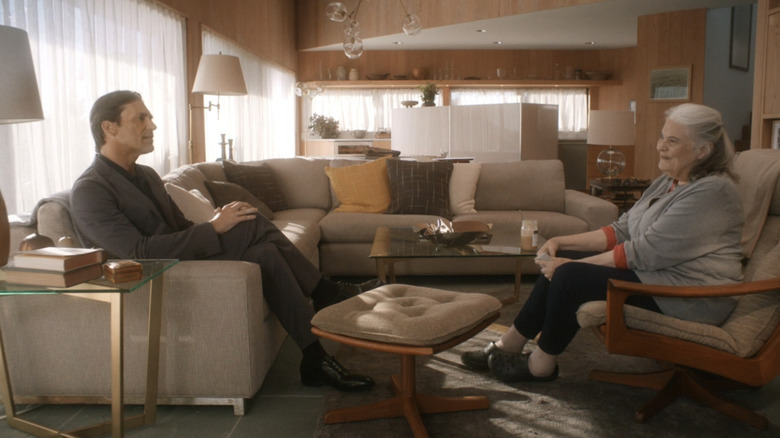
Back in 2017, none of us knew that artificial intelligence would become such a major influence in just a few short years … although “Marjorie Prime” writer/director Michael Almereyda might’ve had an inkling.
The film is based on Jordan Harrison’s 2014 play of the same name and stars Lois Smith as 85-year-old Marjorie, who is starting to experience Alzheimer’s symptoms. In an attempt to help, Majorie’s daughter Tess (Geena Davis) and son-in-law Jon (Tim Robbins) reach out to the Prime service, which creates holographic versions of late family members. These creations are then loaded with patients’ memories, which they can repeat to those patients to help them remember as they slip further into dementia. In Marjorie’s case, she opts for a holographic version of her late husband, Walter (Jon Hamm), who initially seems to be a big help as he regales Marjorie with stories from their life together. As you might imagine, though, things don’t stay peachy for too long, and as the synthetic Walter learns more about his family’s history, some painful and shocking memories come to light.
“Marjorie Prime” shares much in common with one of the many times “Black Mirror” predicted the future. The show’s 2013 episode “Be Right Back” also followed a woman who ordered a synthetic recreation of her late husband. Of course, in both “Black Mirror” and “Marjorie Prime,” the stories revolved around physical recreations of deceased loved ones, whereas we haven’t quite reached that stage in the real world. (Thank God!) That said, in 2017, recreating deceased loved ones felt as distant as a Skynet-controlled future. But here we are, almost a decade later, and such a thing doesn’t seem so far off, especially considering what’s currently going on with movies and TV shows.
The future of Marjorie Prime isn’t far from our own
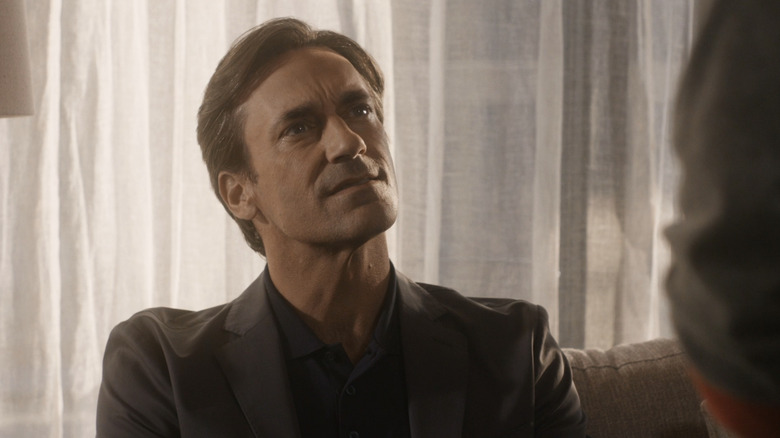
“Marjorie Prime” isn’t just oddly prescient; it’s also very much an under-seen film with a highly respectable 89% critic score on Rotten Tomatoes. Ed Potton of The Times wrote that “[Jon] Hamm is note-perfect in the role, programmed to be charming and empathetic but prone to gaucheness when someone wrong-foots his software.” Elsewhere the Washington Post’s Ann Hornaday described the film as “a sly chamber piece” that “reassures and unsettles in equal, exquisitely calibrated measure,” while Claudia Puig of TheWrap was even more complimentary, praising Lois Smith for a performance that “inspires the kind of awe one feels when looking at the brushstrokes of an artistic masterpiece.”
Today, “Marjorie Prime” feels even more unsettling, especially as we appear to be hurtling towards a version of the future it envisaged. Indeed, some of your favorite movies have already been butchered by AI in the form of uncanny remasters that’ve produced often hellish results. (Just take a look at the “I Love Lucy” Blu-ray remaster.) But again, things have evolved rapidly in recent years, and the issue of AI actors is now a very real one.
The 2023 actors’ strike revolved largely around establishing protections against AI to prevent the very thing that seems to be happening with films like “As Deep as the Grave.” For whatever reason, studios seem convinced that disturbing AI recreations of beloved performers are an inevitable part of our future, despite the widespread backlash and regulations that have been put in place. When you have James Earl Jones signing away the rights to his voice prior to his death, things start to look even more bleak, as it may be only a matter of time before other actors do the same with their physical likeness rights.
Source link
#Jon #Hamms #SciFi #Movie #Flew #Everyones #Radar #Predicted #Future #SlashFilm


Post Comment