×
NBA All-Star team 2026: Meet full USA vs. The World rosters

NBA All-Star team 2026: Meet full USA vs. The World rosters

The 2026 NBA All-Star Game has a new format of USA vs. The World, but the game will still be made up of 12 players each from the Eastern Conference and Western Conference. The full NBA All-Star rosters have now been released with the announcement of the All-Star reserves on Sunday evening.

We already knew that Giannis Antetokounmpo, Jalen Brunson, Tyrese Maxey, Cade Cunningham, and Jaylen Brown were voted as starters out of the East, while Shai Gilgeous-Alexander, Stephen Curry, Luka Dončić, Victor Wembanyama, and Nikola Jokić will start out of the West.

We now know the 14 players who will be All-Star reserves with seven from the East and seven from the West. Here’s the full conference breakdown for the All-Stars, followed by the USA vs. the World teams.

NBA All-Star reserves in Eastern Conference

East starters: Giannis Antetokounmpo, Jalen Brunson, Tyrese Maxey, Cade Cunningham, and Jaylen Brown

Donovan Mitchell, G, Cleveland Cavaliers: Mitchell was the biggest snub among the East starters. He’s averaging 29.1 points, 4.7 rebounds, and 5.8 assists per game on 61.8 percent true shooting.

Jalen Johnson, F, Atlanta Hawks: The Hawks selected Johnson with the No. 20 overall pick in the 2021 NBA Draft, and now he’s a first-time All-Star. He’s averaging 23.1 points, 10.5 rebounds, and 8.0 assists per game on 59 percent true shooting.

Karl-Anthony Towns, C, New York Knicks: Towns has had a down season by his standards mostly because he’s not shooting as well from deep as he usually does. 20.0 points, 11.8 rebounds, and 2.9 assists per game on 59.4 percent true shooting.

Pascal Siakam, F, Indiana Pacers: The Pacers have been one of the very worst teams in the NBA all year, but Siakam has still has an outstanding season in Indiana’s “gap year” without Tyrese Haliburton. He’s averaging 23.8 points, 6.9 rebounds, and 4.0 assists per game on 56.4 percent true shooting.

Norman Powell, G, Miami Heat: Powell is a first-time All-Star at age-32 after just missing it last season with the Los Angeles Clippers. He’s averaging 23.0 points, 3.7 rebounds, and 2.6 assists per game on 61.2 percent true shooting after an offseason trade to the Miami Heat.

Scottie Barnes, F, Toronto Raptors: The Raptors have been reborn as an Eastern Conference contender this season, and Barnes’ bounce-back from a down year last season is a big reason why. He’s averaging 19.4 points, 8.3 rebounds, and 5.6 assists per game on 57.6 percent true shooting.

Jalen Duren, C, Detroit Pistons: Duren has morphed into an All-Star in his fourth season after being selected with the No. 13 overall pick in the 2022 draft. The 22-year-old is averaging 17.9 points, 10.7 rebounds, and 1.8 assists per game on 66.6 percent true shooting.

NBA All-Star starters in Western Conference

West starters: Shai Gilgeous-Alexander, Stephen Curry, Luka Dončić, Victor Wembanyama, and Nikola Jokić

Anthony Edwards, G, Minnesota Timberwolves: Edwards was the biggest snub among the starters in the West. He’s averaging 29.4 points, 5.2 rebounds, and 3.7 assists per game on 62.2 percent true shooting.

Jamal Murray, G, Denver Nuggets: Murray was thought of as the best player in the NBA who had never been named an All-Star. Not anymore. The Canadian guard is averaging 25.8 points, 4.3 rebounds, and 7.4 assists per game on 62.3 percent true shooting.

Chet Holmgren, F, Oklahoma City Thunder: Holmgren is one of the best young bigs in the NBA after helping the Thunder win a championship last season. The 23-year-old is averaging 17.8 points, 8.6 rebounds, and 1.6 assists per game on 66 percent true shooting.

Kevin Durant, F, Houston Rockets: KD is still one of the best scorers alive at age-37. He’s averaging 26.2 points, 5.4 rebounds, and 4.6 assists per game on 63 percent true shooting.

Devin Booker, G, Phoenix Suns: The Suns have been the biggest surprise of this season with Booker leading the way. He’s averaging 25.4 points, 4.0 rebounds, and 6.2 assists per game on 58 percent true shooting.

Deni Avdija, F, Portland Trail Blazers: Avdija has emerged as the Blazers’ best player as a jumbo ball handler who gets to the free throw line at will. He’s averaging 25.5 points, 7.2 rebounds, and 6.7 assists per game on 61 percent true shooting.

LeBron James, F, Los Angeles Lakers: Yes, LeBron made it again despite only playing 30 games and posting his worst numbers since his rookie year. The 41-year-old is averaging 21.9 points, 5.8 rebounds, and 6.6 assists per game on 58.8 percent true shooting.

Team USA All-Star player pool

Team USA will be split into two teams of eight among the 16 players. Here’s the pool:

The World team will be one team of eight players. Here’s the roster:

Giannis Antetokounmpo (Greece)

Shai Gilgeous-Alexander (Canada)

Victor Wembanyama (France)

Antetokounmpo will likely need an injury replacement.

Source link
#NBA #AllStar #team #Meet #full #USA #World #rosters
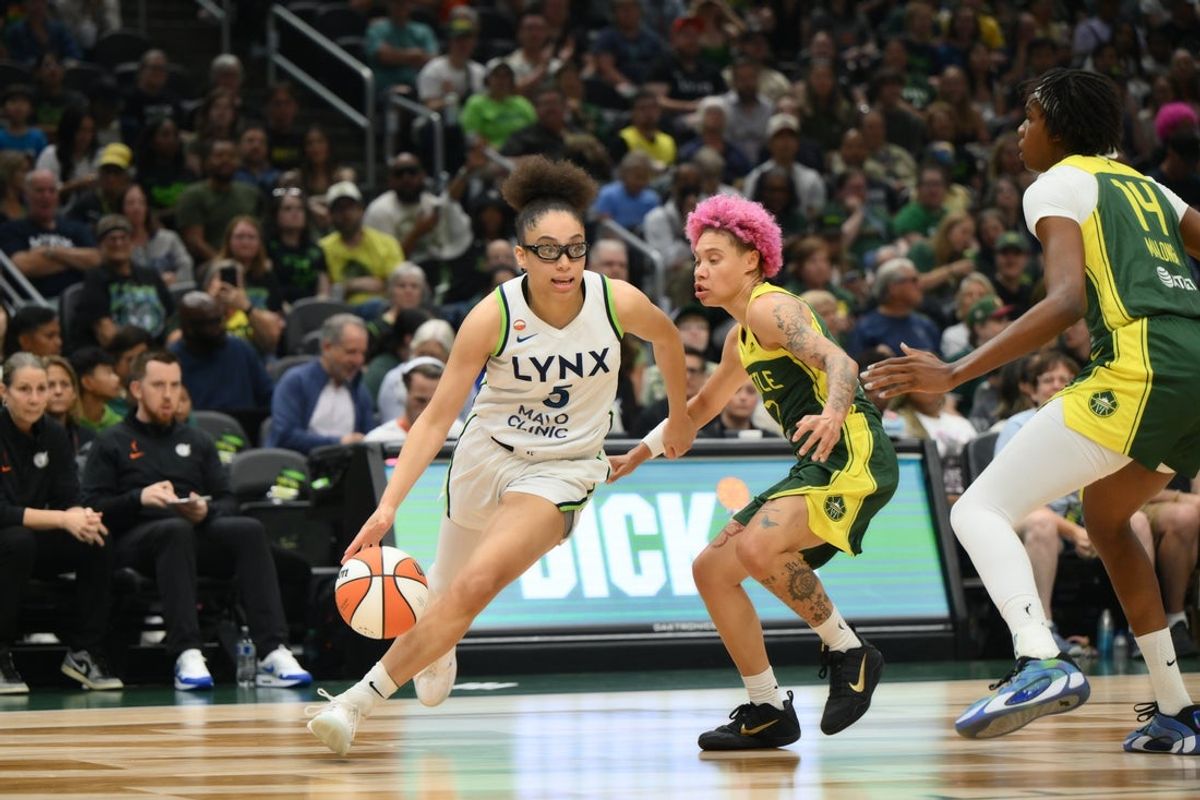
Sophie Cunningham understands the brand business, and business is booming. The iconic and infamous finger-pointing Caitlin Clark enforcer preached a message of centrism in her latest profile from ESPN, knowing full well she’s actively courting one side of a culture war. Cunningham has become the collective crush of the internet’s men, feeding the flames of their desperation. The Missouri native is riding this wave as long as possible, garnering fame that eclipses her skill on the court ten times over, and seemingly has no scruples when it comes to the grift.

Cunningham has been the Fever enforcer since arriving via trade in January of 2025. It was a much-needed role, designed to send a message to opponents that they won’t get away with messing with Caitlin Clark without strong retribution. This is precisely what happened in 2025 when Cunningham first went viral for wrestling Jacy Sheldon to the ground after Clark was poked in the eye. The first run-in went viral inside the basketball sphere, but June of 2026 propelled her into the stratosphere when Cunningham argued with officials over a foul between Clark and DeWanna Bonner, resulting in Cunningham taunting Bonner by pointing at her for 22 straight seconds, becoming a meme in the process.

That was the moment everything changed. Cunningham was caught up in the moment and wanted to instigate her opponent in the process, but it took on an entirely different meaning for Cunningham’s core audience. There’s a reason the Bonner point went viral in a way the Sheldon video didn’t, because it became a catch-cry of the culture war, a blonde, white, cisgender woman taunting and infuriating a black woman. It played into every trope one side of the spectrum has about the WNBA as a whole, with Caitlin Clark being an innocent, fragile, Midwestern flower getting abused on all sides by bigger, meaner, “jealous” women who are either black, gay, or both.

Cunningham became a reflection of their online personas in that moment. The men who constantly cry foul of Clark being treated poorly now had their symbol of resistance.

The role of enforcer in basketball is nothing new, nor is the inescapable double standard surrounding it. For years we’ve seen black enforcers like Dennis Rodman or Charles Oakley get labeled as “dirty,” while white compatriots Bill Laimbeer and Kurt Rambis are praised for their “grit” and “courage.” The same happened with Cunningham during her rise to fame. The attention and endorsements ranged from an ad deal with Ring doorbell, to being added to the Sports Illustrated Swimsuit Edition, to appearing on late-night TV, getting her own shoe colorway, and becoming a UFC ring girl. Hundreds of thousands of social media followers rolled in, conveying fame that far outstrips Cunningham’s basketball ability.

That’s not to say Cunningham is a bad player, because she’s been an excellent three-point shooter during her seven-year career, a solid contributor off the bench, and gives much-needed edge — but it’s intellectually dishonest to pretend that the fame Cunningham has experienced is because of her basketball ability. She is garnering a level of attention reserved only for the WNBA’s biggest stars, despite being a role player who has started fewer than 50 percent of her career games.

A brand has grown around Cunningham which may have begun without her consent, but she’s certainly stoked the flames of it. She knows precisely who she’s marketing herself to with daily thirst trap videos, the UFC ring girl schtick, turning up at NASCAR races, and taking shots with country music stars — but when asked about her beliefs she plays the role of centrist, as she did with ESPN.

“I’m very much in the middle. I agree with things on both sides, disagree with things on both sides. And that’s all I’ve ever said about my political beliefs. But people love to assume.”

This is crap. Spend even a few casual minutes looking through her social media history and you’ll find no evidence that she actually has feelings on both sides of the spectrum. In the last year Cunningham has retweeted Riley Gaines, reposted the video of Kash Patel in the locker room of the U.S. Hockey Team, and echoed numerous posts about Charlie Kirk — with the only post that could even remotely be considered “on the other side” was decrying AI data centers, which was carefully put through the lens of being a threat to farm land.

Then there’s the quote making waves on Wednesday where Cunningham took her ESPN profile as a chance to amplify a key transphobic talking point.

“I think that I am here to extend love. But I also think with that love is truth, being honest. And I want to protect young girls in a locker room, or young girls in sport who shouldn’t have to go against biological men.”

There’s careful wording in here too. Cunningham notably puts “girls” in opposition with “men,” a catch-cry for anti-trans groups designed to heighten a predatory nature. We don’t need to litigate the issue continually. Still, data shows that the perceived “threat” of trans athletes is overblown but often used to marginalize trans individuals as part of a systematic plan to remove their rights.

Sophie Cunningham is the enforcer for the Indiana Fever. Not just in terms of gloving up and fighting anyone who messes with Caitlin Clark on the court, but by garnering a lion’s share of the attention off of it. That might have value far beyond the superficial, but by doing this she has cultivated an effective, albeit insidious brand. One that cozies up to the very men who made fun of women’s basketball before Clark came along, the guys who shrieked every time the WNBA was mentioned or given airtime. These are the people who are her consumers, and they view her not as an athlete, but a tool — a tool of their culture war, a tool of their desire, a disposable star occupying space until the next iteration comes along.

I hope it’s worth it for Sophie Cunningham in the long run.

#Sophie #Cunningham #turned #culture #war #brand">Sophie Cunningham has turned culture war into her brand  Sophie Cunningham understands the brand business, and business is booming. The iconic and infamous finger-pointing Caitlin Clark enforcer preached a message of centrism in her latest profile from ESPN, knowing full well she’s actively courting one side of a culture war. Cunningham has become the collective crush of the internet’s men, feeding the flames of their desperation. The Missouri native is riding this wave as long as possible, garnering fame that eclipses her skill on the court ten times over, and seemingly has no scruples when it comes to the grift.Cunningham has been the Fever enforcer since arriving via trade in January of 2025. It was a much-needed role, designed to send a message to opponents that they won’t get away with messing with Caitlin Clark without strong retribution. This is precisely what happened in 2025 when Cunningham first went viral for wrestling Jacy Sheldon to the ground after Clark was poked in the eye. The first run-in went viral inside the basketball sphere, but June of 2026 propelled her into the stratosphere when Cunningham argued with officials over a foul between Clark and DeWanna Bonner, resulting in Cunningham taunting Bonner by pointing at her for 22 straight seconds, becoming a meme in the process.That was the moment everything changed. Cunningham was caught up in the moment and wanted to instigate her opponent in the process, but it took on an entirely different meaning for Cunningham’s core audience. There’s a reason the Bonner point went viral in a way the Sheldon video didn’t, because it became a catch-cry of the culture war, a blonde, white, cisgender woman taunting and infuriating a black woman. It played into every trope one side of the spectrum has about the WNBA as a whole, with Caitlin Clark being an innocent, fragile, Midwestern flower getting abused on all sides by bigger, meaner, “jealous” women who are either black, gay, or both.Cunningham became a reflection of their online personas in that moment. The men who constantly cry foul of Clark being treated poorly now had their symbol of resistance.The role of enforcer in basketball is nothing new, nor is the inescapable double standard surrounding it. For years we’ve seen black enforcers like Dennis Rodman or Charles Oakley get labeled as “dirty,” while white compatriots Bill Laimbeer and Kurt Rambis are praised for their “grit” and “courage.” The same happened with Cunningham during her rise to fame. The attention and endorsements ranged from an ad deal with Ring doorbell, to being added to the Sports Illustrated Swimsuit Edition, to appearing on late-night TV, getting her own shoe colorway, and becoming a UFC ring girl. Hundreds of thousands of social media followers rolled in, conveying fame that far outstrips Cunningham’s basketball ability.That’s not to say Cunningham is a bad player, because she’s been an excellent three-point shooter during her seven-year career, a solid contributor off the bench, and gives much-needed edge — but it’s intellectually dishonest to pretend that the fame Cunningham has experienced is because of her basketball ability. She is garnering a level of attention reserved only for the WNBA’s biggest stars, despite being a role player who has started fewer than 50 percent of her career games.A brand has grown around Cunningham which may have begun without her consent, but she’s certainly stoked the flames of it. She knows precisely who she’s marketing herself to with daily thirst trap videos, the UFC ring girl schtick, turning up at NASCAR races, and taking shots with country music stars — but when asked about her beliefs she plays the role of centrist, as she did with ESPN.“I’m very much in the middle. I agree with things on both sides, disagree with things on both sides. And that’s all I’ve ever said about my political beliefs. But people love to assume.”This is crap. Spend even a few casual minutes looking through her social media history and you’ll find no evidence that she actually has feelings on both sides of the spectrum. In the last year Cunningham has retweeted Riley Gaines, reposted the video of Kash Patel in the locker room of the U.S. Hockey Team, and echoed numerous posts about Charlie Kirk — with the only post that could even remotely be considered “on the other side” was decrying AI data centers, which was carefully put through the lens of being a threat to farm land.Then there’s the quote making waves on Wednesday where Cunningham took her ESPN profile as a chance to amplify a key transphobic talking point.“I think that I am here to extend love. But I also think with that love is truth, being honest. And I want to protect young girls in a locker room, or young girls in sport who shouldn’t have to go against biological men.”There’s careful wording in here too. Cunningham notably puts “girls” in opposition with “men,” a catch-cry for anti-trans groups designed to heighten a predatory nature. We don’t need to litigate the issue continually. Still, data shows that the perceived “threat” of trans athletes is overblown but often used to marginalize trans individuals as part of a systematic plan to remove their rights.Sophie Cunningham is the enforcer for the Indiana Fever. Not just in terms of gloving up and fighting anyone who messes with Caitlin Clark on the court, but by garnering a lion’s share of the attention off of it. That might have value far beyond the superficial, but by doing this she has cultivated an effective, albeit insidious brand. One that cozies up to the very men who made fun of women’s basketball before Clark came along, the guys who shrieked every time the WNBA was mentioned or given airtime. These are the people who are her consumers, and they view her not as an athlete, but a tool — a tool of their culture war, a tool of their desire, a disposable star occupying space until the next iteration comes along.I hope it’s worth it for Sophie Cunningham in the long run.  #Sophie #Cunningham #turned #culture #war #brand

preached a message of centrism in her latest profile from ESPN, knowing full well she’s actively courting one side of a culture war. Cunningham has become the collective crush of the internet’s men, feeding the flames of their desperation. The Missouri native is riding this wave as long as possible, garnering fame that eclipses her skill on the court ten times over, and seemingly has no scruples when it comes to the grift.

Cunningham has been the Fever enforcer since arriving via trade in January of 2025. It was a much-needed role, designed to send a message to opponents that they won’t get away with messing with Caitlin Clark without strong retribution. This is precisely what happened in 2025 when Cunningham first went viral for wrestling Jacy Sheldon to the ground after Clark was poked in the eye. The first run-in went viral inside the basketball sphere, but June of 2026 propelled her into the stratosphere when Cunningham argued with officials over a foul between Clark and DeWanna Bonner, resulting in Cunningham taunting Bonner by pointing at her for 22 straight seconds, becoming a meme in the process.

That was the moment everything changed. Cunningham was caught up in the moment and wanted to instigate her opponent in the process, but it took on an entirely different meaning for Cunningham’s core audience. There’s a reason the Bonner point went viral in a way the Sheldon video didn’t, because it became a catch-cry of the culture war, a blonde, white, cisgender woman taunting and infuriating a black woman. It played into every trope one side of the spectrum has about the WNBA as a whole, with Caitlin Clark being an innocent, fragile, Midwestern flower getting abused on all sides by bigger, meaner, “jealous” women who are either black, gay, or both.

Cunningham became a reflection of their online personas in that moment. The men who constantly cry foul of Clark being treated poorly now had their symbol of resistance.

The role of enforcer in basketball is nothing new, nor is the inescapable double standard surrounding it. For years we’ve seen black enforcers like Dennis Rodman or Charles Oakley get labeled as “dirty,” while white compatriots Bill Laimbeer and Kurt Rambis are praised for their “grit” and “courage.” The same happened with Cunningham during her rise to fame. The attention and endorsements ranged from an ad deal with Ring doorbell, to being added to the Sports Illustrated Swimsuit Edition, to appearing on late-night TV, getting her own shoe colorway, and becoming a UFC ring girl. Hundreds of thousands of social media followers rolled in, conveying fame that far outstrips Cunningham’s basketball ability.

That’s not to say Cunningham is a bad player, because she’s been an excellent three-point shooter during her seven-year career, a solid contributor off the bench, and gives much-needed edge — but it’s intellectually dishonest to pretend that the fame Cunningham has experienced is because of her basketball ability. She is garnering a level of attention reserved only for the WNBA’s biggest stars, despite being a role player who has started fewer than 50 percent of her career games.

A brand has grown around Cunningham which may have begun without her consent, but she’s certainly stoked the flames of it. She knows precisely who she’s marketing herself to with daily thirst trap videos, the UFC ring girl schtick, turning up at NASCAR races, and taking shots with country music stars — but when asked about her beliefs she plays the role of centrist, as she did with ESPN.

“I’m very much in the middle. I agree with things on both sides, disagree with things on both sides. And that’s all I’ve ever said about my political beliefs. But people love to assume.”

This is crap. Spend even a few casual minutes looking through her social media history and you’ll find no evidence that she actually has feelings on both sides of the spectrum. In the last year Cunningham has retweeted Riley Gaines, reposted the video of Kash Patel in the locker room of the U.S. Hockey Team, and echoed numerous posts about Charlie Kirk — with the only post that could even remotely be considered “on the other side” was decrying AI data centers, which was carefully put through the lens of being a threat to farm land.

Then there’s the quote making waves on Wednesday where Cunningham took her ESPN profile as a chance to amplify a key transphobic talking point.

“I think that I am here to extend love. But I also think with that love is truth, being honest. And I want to protect young girls in a locker room, or young girls in sport who shouldn’t have to go against biological men.”

There’s careful wording in here too. Cunningham notably puts “girls” in opposition with “men,” a catch-cry for anti-trans groups designed to heighten a predatory nature. We don’t need to litigate the issue continually. Still, data shows that the perceived “threat” of trans athletes is overblown but often used to marginalize trans individuals as part of a systematic plan to remove their rights.

Sophie Cunningham is the enforcer for the Indiana Fever. Not just in terms of gloving up and fighting anyone who messes with Caitlin Clark on the court, but by garnering a lion’s share of the attention off of it. That might have value far beyond the superficial, but by doing this she has cultivated an effective, albeit insidious brand. One that cozies up to the very men who made fun of women’s basketball before Clark came along, the guys who shrieked every time the WNBA was mentioned or given airtime. These are the people who are her consumers, and they view her not as an athlete, but a tool — a tool of their culture war, a tool of their desire, a disposable star occupying space until the next iteration comes along.

I hope it’s worth it for Sophie Cunningham in the long run.

#Sophie #Cunningham #turned #culture #war #brand">Sophie Cunningham has turned culture war into her brand

Sophie Cunningham understands the brand business, and business is booming. The iconic and infamous finger-pointing Caitlin Clark enforcer preached a message of centrism in her latest profile from ESPN, knowing full well she’s actively courting one side of a culture war. Cunningham has become the collective crush of the internet’s men, feeding the flames of their desperation. The Missouri native is riding this wave as long as possible, garnering fame that eclipses her skill on the court ten times over, and seemingly has no scruples when it comes to the grift.

Cunningham has been the Fever enforcer since arriving via trade in January of 2025. It was a much-needed role, designed to send a message to opponents that they won’t get away with messing with Caitlin Clark without strong retribution. This is precisely what happened in 2025 when Cunningham first went viral for wrestling Jacy Sheldon to the ground after Clark was poked in the eye. The first run-in went viral inside the basketball sphere, but June of 2026 propelled her into the stratosphere when Cunningham argued with officials over a foul between Clark and DeWanna Bonner, resulting in Cunningham taunting Bonner by pointing at her for 22 straight seconds, becoming a meme in the process.

That was the moment everything changed. Cunningham was caught up in the moment and wanted to instigate her opponent in the process, but it took on an entirely different meaning for Cunningham’s core audience. There’s a reason the Bonner point went viral in a way the Sheldon video didn’t, because it became a catch-cry of the culture war, a blonde, white, cisgender woman taunting and infuriating a black woman. It played into every trope one side of the spectrum has about the WNBA as a whole, with Caitlin Clark being an innocent, fragile, Midwestern flower getting abused on all sides by bigger, meaner, “jealous” women who are either black, gay, or both.

Cunningham became a reflection of their online personas in that moment. The men who constantly cry foul of Clark being treated poorly now had their symbol of resistance.

The role of enforcer in basketball is nothing new, nor is the inescapable double standard surrounding it. For years we’ve seen black enforcers like Dennis Rodman or Charles Oakley get labeled as “dirty,” while white compatriots Bill Laimbeer and Kurt Rambis are praised for their “grit” and “courage.” The same happened with Cunningham during her rise to fame. The attention and endorsements ranged from an ad deal with Ring doorbell, to being added to the Sports Illustrated Swimsuit Edition, to appearing on late-night TV, getting her own shoe colorway, and becoming a UFC ring girl. Hundreds of thousands of social media followers rolled in, conveying fame that far outstrips Cunningham’s basketball ability.

That’s not to say Cunningham is a bad player, because she’s been an excellent three-point shooter during her seven-year career, a solid contributor off the bench, and gives much-needed edge — but it’s intellectually dishonest to pretend that the fame Cunningham has experienced is because of her basketball ability. She is garnering a level of attention reserved only for the WNBA’s biggest stars, despite being a role player who has started fewer than 50 percent of her career games.

A brand has grown around Cunningham which may have begun without her consent, but she’s certainly stoked the flames of it. She knows precisely who she’s marketing herself to with daily thirst trap videos, the UFC ring girl schtick, turning up at NASCAR races, and taking shots with country music stars — but when asked about her beliefs she plays the role of centrist, as she did with ESPN.

“I’m very much in the middle. I agree with things on both sides, disagree with things on both sides. And that’s all I’ve ever said about my political beliefs. But people love to assume.”

This is crap. Spend even a few casual minutes looking through her social media history and you’ll find no evidence that she actually has feelings on both sides of the spectrum. In the last year Cunningham has retweeted Riley Gaines, reposted the video of Kash Patel in the locker room of the U.S. Hockey Team, and echoed numerous posts about Charlie Kirk — with the only post that could even remotely be considered “on the other side” was decrying AI data centers, which was carefully put through the lens of being a threat to farm land.

Then there’s the quote making waves on Wednesday where Cunningham took her ESPN profile as a chance to amplify a key transphobic talking point.

“I think that I am here to extend love. But I also think with that love is truth, being honest. And I want to protect young girls in a locker room, or young girls in sport who shouldn’t have to go against biological men.”

There’s careful wording in here too. Cunningham notably puts “girls” in opposition with “men,” a catch-cry for anti-trans groups designed to heighten a predatory nature. We don’t need to litigate the issue continually. Still, data shows that the perceived “threat” of trans athletes is overblown but often used to marginalize trans individuals as part of a systematic plan to remove their rights.

Sophie Cunningham is the enforcer for the Indiana Fever. Not just in terms of gloving up and fighting anyone who messes with Caitlin Clark on the court, but by garnering a lion’s share of the attention off of it. That might have value far beyond the superficial, but by doing this she has cultivated an effective, albeit insidious brand. One that cozies up to the very men who made fun of women’s basketball before Clark came along, the guys who shrieked every time the WNBA was mentioned or given airtime. These are the people who are her consumers, and they view her not as an athlete, but a tool — a tool of their culture war, a tool of their desire, a disposable star occupying space until the next iteration comes along.

I hope it’s worth it for Sophie Cunningham in the long run.

#Sophie #Cunningham #turned #culture #war #brand

The basketball world was ablaze on Wednesday morning after the Miami Heat’s ​YouTube account mistakenly posted a video the night ‌before teasing the possible return of LeBron ​James, who has yet to announce ⁠where he will play his 24th NBA season.

A live stream titled “LeBron James Introductory Press Conference” scheduled for ‌July 27 was uploaded to the Heat’s channel on Tuesday night but was ‌later deleted, leaving fans wondering if ‌the ⁠41-year-old is heading back to the ⁠team he won two championships with.

A team spokesperson told ESPN that the Heat’s social media department was preparing for ​the possibility of ‌James’ signing and mistakenly posted the link to the team’s YouTube page.

The Heat did not immediately respond to a request for comment ‌from Reuters.

James announced he was leaving ​the Los Angeles Lakers last month and where he plays next has become ⁠the most compelling off-season storyline, with the Cleveland Cavaliers, Philadelphia 76ers and Heat all reportedly ‌top candidates.

The anticipation has even seeped into the betting world as BetOnline Sports & Casino is taking wagers on when James will announce his decision, with July 24 leading the way and Miami coming as the favoured destination.

Rich ‌Paul, James’ long-time friend and agent, said on ​a podcast episode released earlier this week that his client will not be ⁠hurried into a decision.

“We’re not going to be ⁠rushed,” Paul said on an episode of “Game Over with Max Kellerman and Rich ‌Paul” released on Monday. “It’s his choice to make and when he makes the choice, ​he’ll make it.”

Published on Jul 22, 2026

#Miami #Heat #mistakenly #posts #video #teasing #LeBron #James #return">Miami Heat mistakenly posts video teasing possible LeBron James return  The basketball world was ablaze on Wednesday morning after the Miami Heat’s        ​YouTube account mistakenly posted a video the night ‌before teasing the possible return of LeBron ​James, who has yet to announce ⁠where he will play his 24th NBA season.A live stream titled “LeBron James Introductory Press Conference” scheduled for ‌July 27 was uploaded to the Heat’s channel on Tuesday night but was ‌later deleted, leaving fans wondering if ‌the ⁠41-year-old is heading back to the ⁠team he won two championships with.A team spokesperson told        ESPN that the Heat’s social media department was preparing for ​the possibility of ‌James’ signing and mistakenly posted the link to the team’s        YouTube page.The Heat did not immediately respond to a request for comment ‌from        Reuters.James announced he was leaving ​the Los Angeles Lakers last month and where he plays next has become ⁠the most compelling off-season storyline, with the Cleveland Cavaliers, Philadelphia 76ers and Heat all reportedly ‌top candidates.The anticipation has even seeped into the betting world as        BetOnline Sports & Casino is taking wagers on when James will announce his decision, with July 24 leading the way and Miami coming as the favoured destination.Rich ‌Paul, James’ long-time friend and agent, said on ​a podcast episode released earlier this week that his client will not be ⁠hurried into a decision.“We’re not going to be ⁠rushed,” Paul said on an episode of “Game Over with Max Kellerman and Rich ‌Paul” released on Monday. “It’s his choice to make and when he makes the choice, ​he’ll make it.”Published on Jul 22, 2026  #Miami #Heat #mistakenly #posts #video #teasing #LeBron #James #return

Post Comment