×
ONLYOFFICE Docs 9.0: New Diagram Viewer, Markdown, and AI-Powered Sheets

ONLYOFFICE Docs 9.0: New Diagram Viewer, Markdown, and AI-Powered Sheets

ONLYOFFICE now has a new version, ONLYOFFICE Docs 9.0, and it features a whole host of new improvements, such as an intelligent Diagram Viewer, native Markdown, and AI-driven features. This update can completely change the way you work. And in this article, we’ll go through every new feature and how it can make your life easier.

1. Streamlined Editing with a Redesigned Interface

ONLYOFFICE Docs 9.0 comes with a new, clean look to make your editing experience even more intuitive than ever. All editors, such as Document, Spreadsheet, PDF, and Presentation, now have a cleaner and more minimalist look. Now you can switch between Modern Light and Modern Dark themes depending on your taste.

2. Diagrams Made Easy

Diagram Viewer ONLYOFFICE Docs 9.0

With Diagram Viewer, ONLYOFFICE Docs 9.0 features a built-in tool for collaborating on diagram files. Whether explaining a multifaceted procedure or reviewing an organizational chart, this tool makes the process easier by not depending on third-party tools.

It can be accessed on the web, desktop, and mobile and provides users with the convenience to work from anywhere.

3. Improved .md File Handling

This release adds Markdown file support, thus becoming a useful tool for writers as well as developers. With the simplicity of dealing with .md files, the platform promotes proper team communication on projects such as blog outlines or documentation. It makes it easy to format while providing the entire team with a smoother experience.

4. AI-Powered Sheets
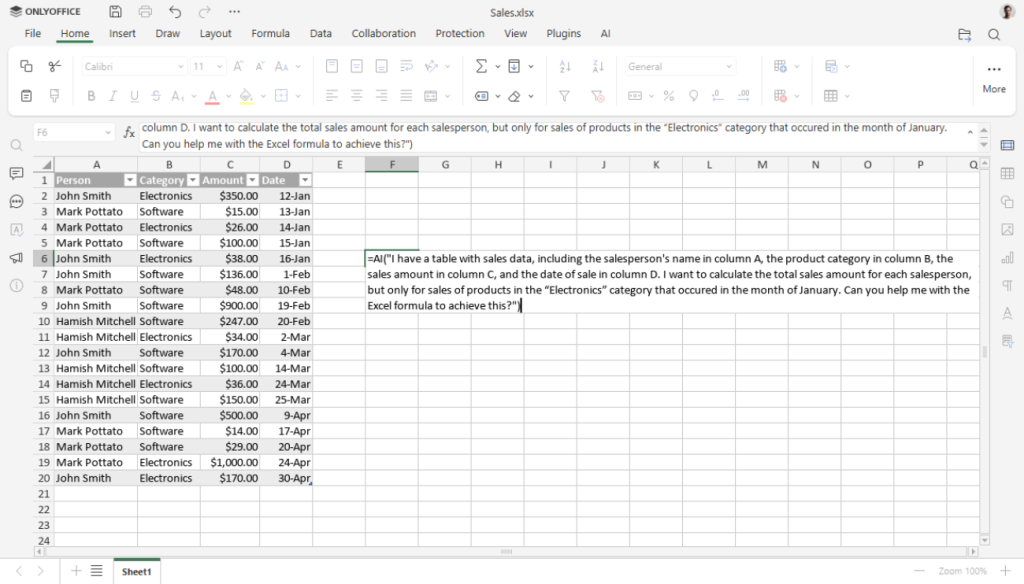
AI-Powered Sheets in ONLYOFFICE Docs 9.0

AI-powered features bring a new level of efficiency to spreadsheets. These capabilities collectively make spreadsheets smarter, more productive, and more capable of handling today’s workflows:

  • AI-Powered Formula Application: Simplify complex calculations automatically by applying AI to apply equations and formulas accurately and at high speed within seconds.
  • Advanced Data Analysis: Utilize AI features to extract meaningful insights from data with minimal effort, saving time and improving decision-making.
  • PDF OCR: Pull text out of scanned PDFs in minutes without retyping frustration and improved usability.
  • AI Macro Automation: Utilize AI to automate routine tasks such as macro creation and VBA translation to save errors and increase efficiency.

5. Enhanced PDF Editor
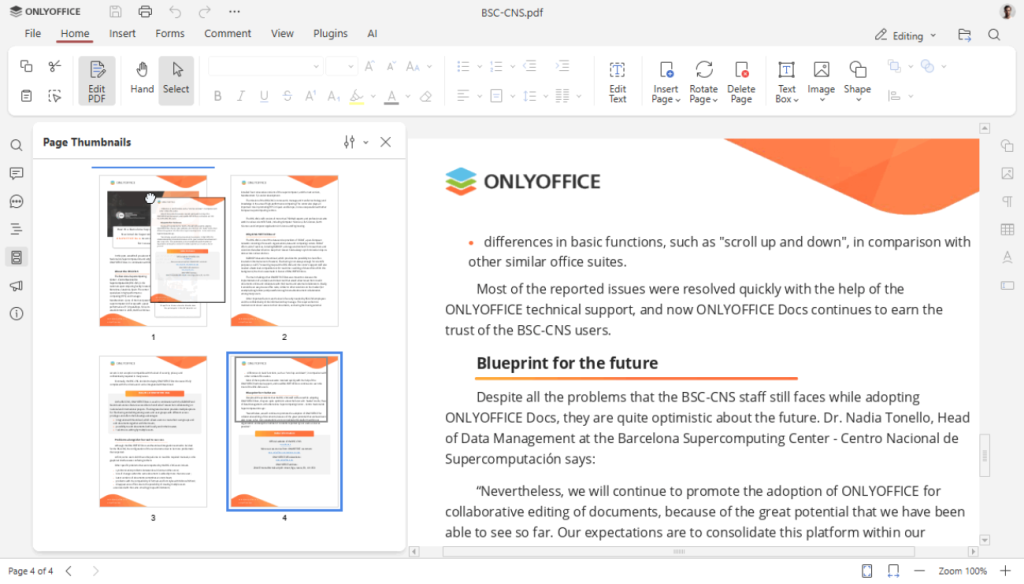
Enhanced PDF Editor ONLYOFFICE Docs 9.0

This release features a new PDF Editor aimed at productivity and collaborative editing. Real-time co-editing of forms makes it easy to finish tasks such as tax reports. Co-editing-friendly drag and drop page reordering and page copy shortcuts (Ctrl + C, Ctrl + V) also speed up editing.

6. Document and Presentation Enhancements
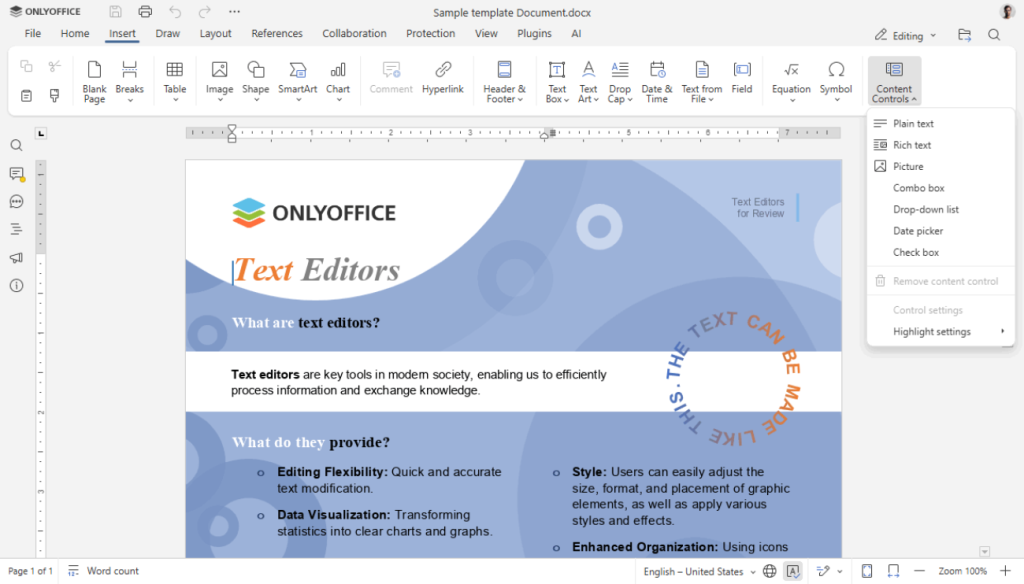
Document Enhancements

In ONLYOFFICE Docs 9.0, the Document Editor is provided with a simplified paragraph border tool in the Home tab. Improved Content Controls provide improved tracking graphics and plugin-based settings to ensure editing is seamless.

In the Presentation Editor, people can now insert dynamic text animations for dramatic slides. And advanced chart customizations, such as up/down bars and WordArt titles, provide presentations with a professional touch.
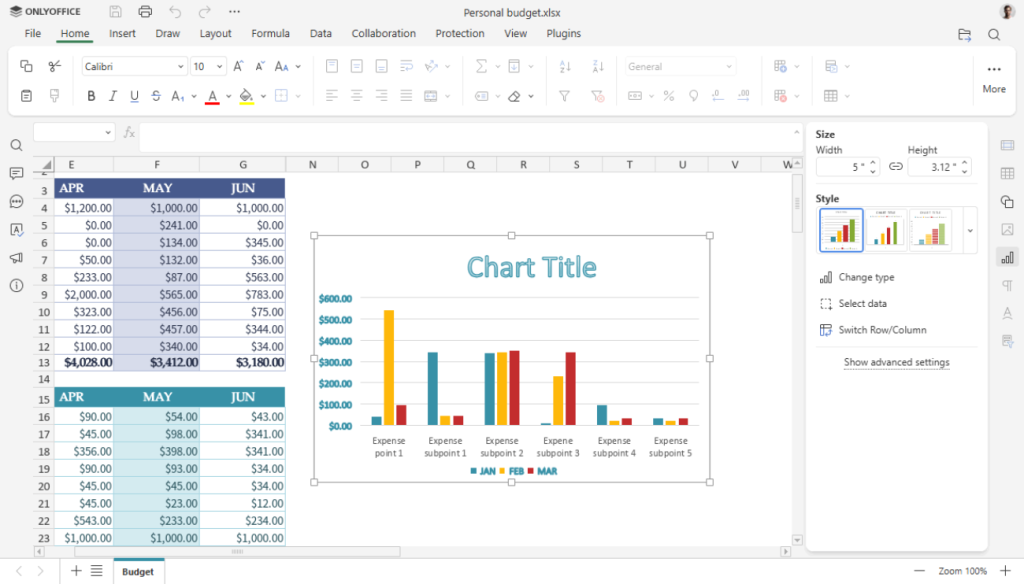
Presentation Enhancements (1)

7. Localization and RTL Improvements

Localization and RTL Improvements (1)

ONLYOFFICE Docs 9.0 takes localization and RTL text editing to new levels, offering authors of various linguistic backgrounds seamless editing. With improved RTL support, authors of languages like Arabic and Urdu benefit from improved usability features, such as improved border drawing, accurate TextArt placement, and improved paragraph navigation. These work seamlessly and accurately while editing right-to-left languages.

Localization updates also include enhanced language support, like Urdu, and region-specific functionality, such as the use of Hindi numerals and the Arabic spellcheck dictionary. Admins are now able to develop custom dictionaries to support industry-specific terms and enhance productivity for specialist teams. The updates transform the platform into a feasible tool for use by a global user base.

8. Feedback Platform for User Ideas

ONLYOFFICE Docs has opened a dedicated feedback gateway at feedback.onlyoffice.com, where you can provide your feedback and ideas. No matter what your ideas on new features, refinement of current tools, or out-of-the-box ideas to save time, you are being heard. Participating enables you to directly influence where updates are headed and guarantee the platform evolves in the way you need.

Get ONLYOFFICE Docs 9.0

Check out a webinar showcasing the newest tools and updates in ONLYOFFICE Docs 9.0.

Download the self-hosted version of ONLYOFFICE Docs 9.0 directly from the official website and start exploring the updates today.

Source link
#ONLYOFFICE #Docs #Diagram #Viewer #Markdown #AIPowered #Sheets

A buzzy Bloomberg report citing Netflix data suggests viewers are increasingly abandoning popular shows before the second season. The likely reasons aren’t hard to guess: Netflix frequently cancels shows, there’s too long a wait in between seasons, and much of Netflix’s content is designed for an algorithm instead of for the sake of art.

But the data also points to a shift in how people are consuming entertainment. Netflix’s defining innovation – the binge — was built for an era when streaming was competing with traditional TV. Today, Netflix is competing with TikTok, YouTube, Reels, and various microdrama apps. That shift makes Netflix’s binge model feel like a dated relic from another era.

Bingeing helped Netflix beat TV

When Netflix first dropped an entire season of “House of Cards” in February 2013, it was a revelation.
Ad-free, internet-connected TV meant we could be unshackled from the traditional routine of once-per-week shows punctuated by commercials. Instead, bingeable shows meant viewers could be entertained for hours on end, quickly forming a bond with titles and their characters that would have otherwise taken years to develop. Plus, you could drop in on them at any time — not only the day the network decided to air them, as with linear television.

This way of viewing made sense in a world where Netflix was largely still competing with traditional TV like broadcast, cable, and satellite. But Netflix won that fight. Nielsen in June 2025 announced that the TV era reached a new milestone, when the Netflix-style streaming format for the first time eclipsed broadcast and cable viewing — a milestone that made clear Netflix’s original competition was no longer the threat.

Now Netflix’s competition isn’t the TV of old, but what has become the TV of today: video apps.

TikTok and YouTube are today’s threats

Thanks to the rise of TikTok, Reels, and other short-form video platforms, there’s no need for you to visit Netflix when you have a couple of hours to kill with mindless entertainment. There’s an endless, free supply of video you can turn to instead.

According to eMarketer analysts, TikTok was already nearing Netflix in terms of time spent back in 2024, when U.S. adults were spending an average of 62.1 minutes per day streaming from Netflix and 58.4 minutes per day on TikTok. In 2024, the Financial Times reported that, globally, TikTok users spent an average of 95 minutes per day on the app, the highest engagement rate among major social networks.

Netflix invented binge-watching. Now it may have outgrown it. | TechCrunch
A buzzy Bloomberg report citing Netflix data suggests viewers are increasingly abandoning popular shows before the second season. The likely reasons aren’t hard to guess: Netflix frequently cancels shows, there’s too long a wait in between seasons, and much of Netflix’s content is designed for an algorithm instead of for the sake of art.

But the data also points to a shift in how people are consuming entertainment. Netflix’s defining innovation – the binge — was built for an era when streaming was competing with traditional TV. Today, Netflix is competing with TikTok, YouTube, Reels, and various microdrama apps. That shift makes Netflix’s binge model feel like a dated relic from another era.

Bingeing helped Netflix beat TV

When Netflix first dropped an entire season of “House of Cards” in February 2013, it was a revelation. Ad-free, internet-connected TV meant we could be unshackled from the traditional routine of once-per-week shows punctuated by commercials. Instead, bingeable shows meant viewers could be entertained for hours on end, quickly forming a bond with titles and their characters that would have otherwise taken years to develop. Plus, you could drop in on them at any time — not only the day the network decided to air them, as with linear television. 


This way of viewing made sense in a world where Netflix was largely still competing with traditional TV like broadcast, cable, and satellite. But Netflix won that fight. Nielsen in June 2025 announced that the TV era reached a new milestone, when the Netflix-style streaming format for the first time eclipsed broadcast and cable viewing — a milestone that made clear Netflix’s original competition was no longer the threat.

Now Netflix’s competition isn’t the TV of old, but what has become the TV of today: video apps. 

TikTok and YouTube are today’s threats

Thanks to the rise of TikTok, Reels, and other short-form video platforms, there’s no need for you to visit Netflix when you have a couple of hours to kill with mindless entertainment. There’s an endless, free supply of video you can turn to instead.

According to eMarketer analysts, TikTok was already nearing Netflix in terms of time spent back in 2024, when U.S. adults were spending an average of 62.1 minutes per day streaming from Netflix and 58.4 minutes per day on TikTok. In 2024, the Financial Times reported that, globally, TikTok users spent an average of 95 minutes per day on the app, the highest engagement rate among major social networks. 

Image Credits:eMarketer

Then there is YouTube, which offers a combination of both short and longer-form content. Per a report released this year by Digital i, YouTube surpassed Netflix in average daily viewing for the first time, with 99.1 minutes daily in 2025 compared with Netflix’s 93.4 minutes. 

These market reports use differing methodologies and demographics, so they should be taken with a grain of salt — but directionally, they point the same way. YouTube and apps like TikTok are Netflix’s real competition, not TV.

Netflix has even acknowledged this existential threat by way of a product redesign in April that added a TikTok-like feed based on Netflix content.

Where Netflix gets the feed wrong is that it’s still pitched as a way to help you find something to watch, rather than being the thing you watch. It’s understandable why Netflix went this route, given its library, but it’s not necessarily what the end user wants. Today, many people with dopamine-drained attention spans are instead seeking out microdrama apps in growing numbers when they want a serialized storyline they can consume in minutes.

Image Credits:ReelShort

According to data from the app intelligence firm Appfigures, one top microdrama app, ReelShort, saw roughly .2 billion in gross consumer spending in 2025, up 119% from 2024, TechCrunch’s Amanda Silberling previously reported. Meanwhile, another leading app, DramaBox, generated 6 million in gross consumer spending last year, more than doubling its 2024 numbers. Even TikTok acknowledged the competition, launching a microdrama app of its own to test the market appetite for this type of content.

Where does Netflix go from here?

Where does that leave Netflix, whose claim to fame has been full seasons dropped at once for rapid consumption? 


Likely, it will have to rethink how it’s greenlighting, producing, and releasing what it considers a “TV show.” 

That doesn’t mean that the Netflix model has to pivot entirely to short-form to keep up with the competition, but it may need to reconsider how people want to stream. Viewers may no longer want to commit the hours and weeks it takes to get through a show and all of its subsequent seasons, for instance. They want something that feels more “finishable,” the way you can easily get through a YouTube video or TikTok series from a creator.

A simple fix could see Netflix try prioritizing single-season shows, traditionally known as miniseries or limited series, allowing people to tune into a completed work without having to worry whether it would end on a cliffhanger and never be renewed. 

Netflix could also experiment with breaking up shows into smaller chunks, like the before-its-time Quibi model. 

The Jeffrey Katzenberg-backed startup, Quibi, had bet that people would eventually gravitate towards TV content designed to be consumed in shorter sessions. Unfortunately for Quibi, the pandemic hit, and people suddenly had a lot of time to watch TV, leading to its demise.

Many Netflix shows could be easily revamped for shorter viewing sessions, particularly lightweight competition shows like “Nailed It,” “Is It Cake?,” or “Squid Game: The Challenge.” Meanwhile, Netflix could surely produce better microdramas than the ones currently on the market with their awful acting and ridiculous storylines.

To generate interest in its higher-quality content, some Netflix shows could be shifted to the weekly release model. This is something Netflix has already proven works in specific cases. For instance, it drops new episodes of its reality show “Love Is Blind” in weekly dumps, making it great watercooler fodder as everyone is watching the new episodes around the same time. (Faster consumption models could work, too. For instance, Peacock’s “Love Island USA” is the reality hit of the summer, as there’s a new episode almost daily).

But instead of experimenting with different types of short-form content for quick entertainment, combined with slower releases for seasons, or focusing more heavily on miniseries worth watching, Netflix has been dabbling in other areas. 


As of late, it’s expanded its lineup with podcasts, which reportedly no one is watching, and live content, which can be hit or miss. In terms of the latter, Netflix investments in live sports have generally done well, but its recent entry into live reality competition shows, “Star Search,” has already been canceled despite a clever real-time voting feature. More work here is still needed.

Bloomberg’s report framed the problem facing Netflix as a failure to create loyal TV viewers who tune into a Season 2, but the underlying issue facing the streamer is much bigger. Netflix may need to rethink whether it still needs to focus on competing with traditional TV and its long-running shows, or whether it should focus on entertainment projects whose storytelling arcs have less filler and wrap up more quickly. 

To find the right balance between viewers ditching cable and those who just want something better than TikTok, Netflix is finding itself needing to reinvent TV all over again.


When you purchase through links in our articles, we may earn a small commission. This doesn’t affect our editorial independence.#Netflix #invented #bingewatching #outgrown #TechCrunchNetflix,streaming,tv
Image Credits:eMarketer

Then there is YouTube, which offers a combination of both short and longer-form content. Per a report released this year by Digital i, YouTube surpassed Netflix in average daily viewing for the first time, with 99.1 minutes daily in 2025 compared with Netflix’s 93.4 minutes.

These market reports use differing methodologies and demographics, so they should be taken with a grain of salt — but directionally, they point the same way. YouTube and apps like TikTok are Netflix’s real competition, not TV.

Netflix has even acknowledged this existential threat by way of a product redesign in April that added a TikTok-like feed based on Netflix content.

Where Netflix gets the feed wrong is that it’s still pitched as a way to help you find something to watch, rather than being the thing you watch. It’s understandable why Netflix went this route, given its library, but it’s not necessarily what the end user wants. Today, many people with dopamine-drained attention spans are instead seeking out microdrama apps in growing numbers when they want a serialized storyline they can consume in minutes.

Image Credits:ReelShort

According to data from the app intelligence firm Appfigures, one top microdrama app, ReelShort, saw roughly $1.2 billion in gross consumer spending in 2025, up 119% from 2024, TechCrunch’s Amanda Silberling previously reported. Meanwhile, another leading app, DramaBox, generated $276 million in gross consumer spending last year, more than doubling its 2024 numbers. Even TikTok acknowledged the competition, launching a microdrama app of its own to test the market appetite for this type of content.

Where does Netflix go from here?

Where does that leave Netflix, whose claim to fame has been full seasons dropped at once for rapid consumption?

Likely, it will have to rethink how it’s greenlighting, producing, and releasing what it considers a “TV show.”

That doesn’t mean that the Netflix model has to pivot entirely to short-form to keep up with the competition, but it may need to reconsider how people want to stream. Viewers may no longer want to commit the hours and weeks it takes to get through a show and all of its subsequent seasons, for instance. They want something that feels more “finishable,” the way you can easily get through a YouTube video or TikTok series from a creator.

A simple fix could see Netflix try prioritizing single-season shows, traditionally known as miniseries or limited series, allowing people to tune into a completed work without having to worry whether it would end on a cliffhanger and never be renewed.

Netflix could also experiment with breaking up shows into smaller chunks, like the before-its-time Quibi model.

The Jeffrey Katzenberg-backed startup, Quibi, had bet that people would eventually gravitate towards TV content designed to be consumed in shorter sessions. Unfortunately for Quibi, the pandemic hit, and people suddenly had a lot of time to watch TV, leading to its demise.

Many Netflix shows could be easily revamped for shorter viewing sessions, particularly lightweight competition shows like “Nailed It,” “Is It Cake?,” or “Squid Game: The Challenge.” Meanwhile, Netflix could surely produce better microdramas than the ones currently on the market with their awful acting and ridiculous storylines.

To generate interest in its higher-quality content, some Netflix shows could be shifted to the weekly release model. This is something Netflix has already proven works in specific cases. For instance, it drops new episodes of its reality show “Love Is Blind” in weekly dumps, making it great watercooler fodder as everyone is watching the new episodes around the same time. (Faster consumption models could work, too. For instance, Peacock’s “Love Island USA” is the reality hit of the summer, as there’s a new episode almost daily).

But instead of experimenting with different types of short-form content for quick entertainment, combined with slower releases for seasons, or focusing more heavily on miniseries worth watching, Netflix has been dabbling in other areas.

As of late, it’s expanded its lineup with podcasts, which reportedly no one is watching, and live content, which can be hit or miss. In terms of the latter, Netflix investments in live sports have generally done well, but its recent entry into live reality competition shows, “Star Search,” has already been canceled despite a clever real-time voting feature. More work here is still needed.

Bloomberg’s report framed the problem facing Netflix as a failure to create loyal TV viewers who tune into a Season 2, but the underlying issue facing the streamer is much bigger. Netflix may need to rethink whether it still needs to focus on competing with traditional TV and its long-running shows, or whether it should focus on entertainment projects whose storytelling arcs have less filler and wrap up more quickly.

To find the right balance between viewers ditching cable and those who just want something better than TikTok, Netflix is finding itself needing to reinvent TV all over again.

When you purchase through links in our articles, we may earn a small commission. This doesn’t affect our editorial independence.

#Netflix #invented #bingewatching #outgrown #TechCrunchNetflix,streaming,tv">Netflix invented binge-watching. Now it may have outgrown it. | TechCrunch
A buzzy Bloomberg report citing Netflix data suggests viewers are increasingly abandoning popular shows before the second season. The likely reasons aren’t hard to guess: Netflix frequently cancels shows, there’s too long a wait in between seasons, and much of Netflix’s content is designed for an algorithm instead of for the sake of art.

But the data also points to a shift in how people are consuming entertainment. Netflix’s defining innovation – the binge — was built for an era when streaming was competing with traditional TV. Today, Netflix is competing with TikTok, YouTube, Reels, and various microdrama apps. That shift makes Netflix’s binge model feel like a dated relic from another era.

Bingeing helped Netflix beat TV

When Netflix first dropped an entire season of “House of Cards” in February 2013, it was a revelation. Ad-free, internet-connected TV meant we could be unshackled from the traditional routine of once-per-week shows punctuated by commercials. Instead, bingeable shows meant viewers could be entertained for hours on end, quickly forming a bond with titles and their characters that would have otherwise taken years to develop. Plus, you could drop in on them at any time — not only the day the network decided to air them, as with linear television. 


This way of viewing made sense in a world where Netflix was largely still competing with traditional TV like broadcast, cable, and satellite. But Netflix won that fight. Nielsen in June 2025 announced that the TV era reached a new milestone, when the Netflix-style streaming format for the first time eclipsed broadcast and cable viewing — a milestone that made clear Netflix’s original competition was no longer the threat.

Now Netflix’s competition isn’t the TV of old, but what has become the TV of today: video apps. 

TikTok and YouTube are today’s threats

Thanks to the rise of TikTok, Reels, and other short-form video platforms, there’s no need for you to visit Netflix when you have a couple of hours to kill with mindless entertainment. There’s an endless, free supply of video you can turn to instead.

According to eMarketer analysts, TikTok was already nearing Netflix in terms of time spent back in 2024, when U.S. adults were spending an average of 62.1 minutes per day streaming from Netflix and 58.4 minutes per day on TikTok. In 2024, the Financial Times reported that, globally, TikTok users spent an average of 95 minutes per day on the app, the highest engagement rate among major social networks. 

Image Credits:eMarketer

Then there is YouTube, which offers a combination of both short and longer-form content. Per a report released this year by Digital i, YouTube surpassed Netflix in average daily viewing for the first time, with 99.1 minutes daily in 2025 compared with Netflix’s 93.4 minutes. 

These market reports use differing methodologies and demographics, so they should be taken with a grain of salt — but directionally, they point the same way. YouTube and apps like TikTok are Netflix’s real competition, not TV.

Netflix has even acknowledged this existential threat by way of a product redesign in April that added a TikTok-like feed based on Netflix content.

Where Netflix gets the feed wrong is that it’s still pitched as a way to help you find something to watch, rather than being the thing you watch. It’s understandable why Netflix went this route, given its library, but it’s not necessarily what the end user wants. Today, many people with dopamine-drained attention spans are instead seeking out microdrama apps in growing numbers when they want a serialized storyline they can consume in minutes.

Image Credits:ReelShort

According to data from the app intelligence firm Appfigures, one top microdrama app, ReelShort, saw roughly .2 billion in gross consumer spending in 2025, up 119% from 2024, TechCrunch’s Amanda Silberling previously reported. Meanwhile, another leading app, DramaBox, generated 6 million in gross consumer spending last year, more than doubling its 2024 numbers. Even TikTok acknowledged the competition, launching a microdrama app of its own to test the market appetite for this type of content.

Where does Netflix go from here?

Where does that leave Netflix, whose claim to fame has been full seasons dropped at once for rapid consumption? 


Likely, it will have to rethink how it’s greenlighting, producing, and releasing what it considers a “TV show.” 

That doesn’t mean that the Netflix model has to pivot entirely to short-form to keep up with the competition, but it may need to reconsider how people want to stream. Viewers may no longer want to commit the hours and weeks it takes to get through a show and all of its subsequent seasons, for instance. They want something that feels more “finishable,” the way you can easily get through a YouTube video or TikTok series from a creator.

A simple fix could see Netflix try prioritizing single-season shows, traditionally known as miniseries or limited series, allowing people to tune into a completed work without having to worry whether it would end on a cliffhanger and never be renewed. 

Netflix could also experiment with breaking up shows into smaller chunks, like the before-its-time Quibi model. 

The Jeffrey Katzenberg-backed startup, Quibi, had bet that people would eventually gravitate towards TV content designed to be consumed in shorter sessions. Unfortunately for Quibi, the pandemic hit, and people suddenly had a lot of time to watch TV, leading to its demise.

Many Netflix shows could be easily revamped for shorter viewing sessions, particularly lightweight competition shows like “Nailed It,” “Is It Cake?,” or “Squid Game: The Challenge.” Meanwhile, Netflix could surely produce better microdramas than the ones currently on the market with their awful acting and ridiculous storylines.

To generate interest in its higher-quality content, some Netflix shows could be shifted to the weekly release model. This is something Netflix has already proven works in specific cases. For instance, it drops new episodes of its reality show “Love Is Blind” in weekly dumps, making it great watercooler fodder as everyone is watching the new episodes around the same time. (Faster consumption models could work, too. For instance, Peacock’s “Love Island USA” is the reality hit of the summer, as there’s a new episode almost daily).

But instead of experimenting with different types of short-form content for quick entertainment, combined with slower releases for seasons, or focusing more heavily on miniseries worth watching, Netflix has been dabbling in other areas. 


As of late, it’s expanded its lineup with podcasts, which reportedly no one is watching, and live content, which can be hit or miss. In terms of the latter, Netflix investments in live sports have generally done well, but its recent entry into live reality competition shows, “Star Search,” has already been canceled despite a clever real-time voting feature. More work here is still needed.

Bloomberg’s report framed the problem facing Netflix as a failure to create loyal TV viewers who tune into a Season 2, but the underlying issue facing the streamer is much bigger. Netflix may need to rethink whether it still needs to focus on competing with traditional TV and its long-running shows, or whether it should focus on entertainment projects whose storytelling arcs have less filler and wrap up more quickly. 

To find the right balance between viewers ditching cable and those who just want something better than TikTok, Netflix is finding itself needing to reinvent TV all over again.


When you purchase through links in our articles, we may earn a small commission. This doesn’t affect our editorial independence.#Netflix #invented #bingewatching #outgrown #TechCrunchNetflix,streaming,tv

Bloomberg report citing Netflix data suggests viewers are increasingly abandoning popular shows before the second season. The likely reasons aren’t hard to guess: Netflix frequently cancels shows, there’s too long a wait in between seasons, and much of Netflix’s content is designed for an algorithm instead of for the sake of art.

But the data also points to a shift in how people are consuming entertainment. Netflix’s defining innovation – the binge — was built for an era when streaming was competing with traditional TV. Today, Netflix is competing with TikTok, YouTube, Reels, and various microdrama apps. That shift makes Netflix’s binge model feel like a dated relic from another era.

Bingeing helped Netflix beat TV

When Netflix first dropped an entire season of “House of Cards” in February 2013, it was a revelation.
Ad-free, internet-connected TV meant we could be unshackled from the traditional routine of once-per-week shows punctuated by commercials. Instead, bingeable shows meant viewers could be entertained for hours on end, quickly forming a bond with titles and their characters that would have otherwise taken years to develop. Plus, you could drop in on them at any time — not only the day the network decided to air them, as with linear television.

This way of viewing made sense in a world where Netflix was largely still competing with traditional TV like broadcast, cable, and satellite. But Netflix won that fight. Nielsen in June 2025 announced that the TV era reached a new milestone, when the Netflix-style streaming format for the first time eclipsed broadcast and cable viewing — a milestone that made clear Netflix’s original competition was no longer the threat.

Now Netflix’s competition isn’t the TV of old, but what has become the TV of today: video apps.

TikTok and YouTube are today’s threats

Thanks to the rise of TikTok, Reels, and other short-form video platforms, there’s no need for you to visit Netflix when you have a couple of hours to kill with mindless entertainment. There’s an endless, free supply of video you can turn to instead.

According to eMarketer analysts, TikTok was already nearing Netflix in terms of time spent back in 2024, when U.S. adults were spending an average of 62.1 minutes per day streaming from Netflix and 58.4 minutes per day on TikTok. In 2024, the Financial Times reported that, globally, TikTok users spent an average of 95 minutes per day on the app, the highest engagement rate among major social networks.

Netflix invented binge-watching. Now it may have outgrown it. | TechCrunch
A buzzy Bloomberg report citing Netflix data suggests viewers are increasingly abandoning popular shows before the second season. The likely reasons aren’t hard to guess: Netflix frequently cancels shows, there’s too long a wait in between seasons, and much of Netflix’s content is designed for an algorithm instead of for the sake of art.

But the data also points to a shift in how people are consuming entertainment. Netflix’s defining innovation – the binge — was built for an era when streaming was competing with traditional TV. Today, Netflix is competing with TikTok, YouTube, Reels, and various microdrama apps. That shift makes Netflix’s binge model feel like a dated relic from another era.

Bingeing helped Netflix beat TV

When Netflix first dropped an entire season of “House of Cards” in February 2013, it was a revelation. Ad-free, internet-connected TV meant we could be unshackled from the traditional routine of once-per-week shows punctuated by commercials. Instead, bingeable shows meant viewers could be entertained for hours on end, quickly forming a bond with titles and their characters that would have otherwise taken years to develop. Plus, you could drop in on them at any time — not only the day the network decided to air them, as with linear television. 


This way of viewing made sense in a world where Netflix was largely still competing with traditional TV like broadcast, cable, and satellite. But Netflix won that fight. Nielsen in June 2025 announced that the TV era reached a new milestone, when the Netflix-style streaming format for the first time eclipsed broadcast and cable viewing — a milestone that made clear Netflix’s original competition was no longer the threat.

Now Netflix’s competition isn’t the TV of old, but what has become the TV of today: video apps. 

TikTok and YouTube are today’s threats

Thanks to the rise of TikTok, Reels, and other short-form video platforms, there’s no need for you to visit Netflix when you have a couple of hours to kill with mindless entertainment. There’s an endless, free supply of video you can turn to instead.

According to eMarketer analysts, TikTok was already nearing Netflix in terms of time spent back in 2024, when U.S. adults were spending an average of 62.1 minutes per day streaming from Netflix and 58.4 minutes per day on TikTok. In 2024, the Financial Times reported that, globally, TikTok users spent an average of 95 minutes per day on the app, the highest engagement rate among major social networks. 

Image Credits:eMarketer

Then there is YouTube, which offers a combination of both short and longer-form content. Per a report released this year by Digital i, YouTube surpassed Netflix in average daily viewing for the first time, with 99.1 minutes daily in 2025 compared with Netflix’s 93.4 minutes. 

These market reports use differing methodologies and demographics, so they should be taken with a grain of salt — but directionally, they point the same way. YouTube and apps like TikTok are Netflix’s real competition, not TV.

Netflix has even acknowledged this existential threat by way of a product redesign in April that added a TikTok-like feed based on Netflix content.

Where Netflix gets the feed wrong is that it’s still pitched as a way to help you find something to watch, rather than being the thing you watch. It’s understandable why Netflix went this route, given its library, but it’s not necessarily what the end user wants. Today, many people with dopamine-drained attention spans are instead seeking out microdrama apps in growing numbers when they want a serialized storyline they can consume in minutes.

Image Credits:ReelShort

According to data from the app intelligence firm Appfigures, one top microdrama app, ReelShort, saw roughly .2 billion in gross consumer spending in 2025, up 119% from 2024, TechCrunch’s Amanda Silberling previously reported. Meanwhile, another leading app, DramaBox, generated 6 million in gross consumer spending last year, more than doubling its 2024 numbers. Even TikTok acknowledged the competition, launching a microdrama app of its own to test the market appetite for this type of content.

Where does Netflix go from here?

Where does that leave Netflix, whose claim to fame has been full seasons dropped at once for rapid consumption? 


Likely, it will have to rethink how it’s greenlighting, producing, and releasing what it considers a “TV show.” 

That doesn’t mean that the Netflix model has to pivot entirely to short-form to keep up with the competition, but it may need to reconsider how people want to stream. Viewers may no longer want to commit the hours and weeks it takes to get through a show and all of its subsequent seasons, for instance. They want something that feels more “finishable,” the way you can easily get through a YouTube video or TikTok series from a creator.

A simple fix could see Netflix try prioritizing single-season shows, traditionally known as miniseries or limited series, allowing people to tune into a completed work without having to worry whether it would end on a cliffhanger and never be renewed. 

Netflix could also experiment with breaking up shows into smaller chunks, like the before-its-time Quibi model. 

The Jeffrey Katzenberg-backed startup, Quibi, had bet that people would eventually gravitate towards TV content designed to be consumed in shorter sessions. Unfortunately for Quibi, the pandemic hit, and people suddenly had a lot of time to watch TV, leading to its demise.

Many Netflix shows could be easily revamped for shorter viewing sessions, particularly lightweight competition shows like “Nailed It,” “Is It Cake?,” or “Squid Game: The Challenge.” Meanwhile, Netflix could surely produce better microdramas than the ones currently on the market with their awful acting and ridiculous storylines.

To generate interest in its higher-quality content, some Netflix shows could be shifted to the weekly release model. This is something Netflix has already proven works in specific cases. For instance, it drops new episodes of its reality show “Love Is Blind” in weekly dumps, making it great watercooler fodder as everyone is watching the new episodes around the same time. (Faster consumption models could work, too. For instance, Peacock’s “Love Island USA” is the reality hit of the summer, as there’s a new episode almost daily).

But instead of experimenting with different types of short-form content for quick entertainment, combined with slower releases for seasons, or focusing more heavily on miniseries worth watching, Netflix has been dabbling in other areas. 


As of late, it’s expanded its lineup with podcasts, which reportedly no one is watching, and live content, which can be hit or miss. In terms of the latter, Netflix investments in live sports have generally done well, but its recent entry into live reality competition shows, “Star Search,” has already been canceled despite a clever real-time voting feature. More work here is still needed.

Bloomberg’s report framed the problem facing Netflix as a failure to create loyal TV viewers who tune into a Season 2, but the underlying issue facing the streamer is much bigger. Netflix may need to rethink whether it still needs to focus on competing with traditional TV and its long-running shows, or whether it should focus on entertainment projects whose storytelling arcs have less filler and wrap up more quickly. 

To find the right balance between viewers ditching cable and those who just want something better than TikTok, Netflix is finding itself needing to reinvent TV all over again.


When you purchase through links in our articles, we may earn a small commission. This doesn’t affect our editorial independence.#Netflix #invented #bingewatching #outgrown #TechCrunchNetflix,streaming,tv
Image Credits:eMarketer

Then there is YouTube, which offers a combination of both short and longer-form content. Per a report released this year by Digital i, YouTube surpassed Netflix in average daily viewing for the first time, with 99.1 minutes daily in 2025 compared with Netflix’s 93.4 minutes.

These market reports use differing methodologies and demographics, so they should be taken with a grain of salt — but directionally, they point the same way. YouTube and apps like TikTok are Netflix’s real competition, not TV.

Netflix has even acknowledged this existential threat by way of a product redesign in April that added a TikTok-like feed based on Netflix content.

Where Netflix gets the feed wrong is that it’s still pitched as a way to help you find something to watch, rather than being the thing you watch. It’s understandable why Netflix went this route, given its library, but it’s not necessarily what the end user wants. Today, many people with dopamine-drained attention spans are instead seeking out microdrama apps in growing numbers when they want a serialized storyline they can consume in minutes.

Image Credits:ReelShort

According to data from the app intelligence firm Appfigures, one top microdrama app, ReelShort, saw roughly $1.2 billion in gross consumer spending in 2025, up 119% from 2024, TechCrunch’s Amanda Silberling previously reported. Meanwhile, another leading app, DramaBox, generated $276 million in gross consumer spending last year, more than doubling its 2024 numbers. Even TikTok acknowledged the competition, launching a microdrama app of its own to test the market appetite for this type of content.

Where does Netflix go from here?

Where does that leave Netflix, whose claim to fame has been full seasons dropped at once for rapid consumption?

Likely, it will have to rethink how it’s greenlighting, producing, and releasing what it considers a “TV show.”

That doesn’t mean that the Netflix model has to pivot entirely to short-form to keep up with the competition, but it may need to reconsider how people want to stream. Viewers may no longer want to commit the hours and weeks it takes to get through a show and all of its subsequent seasons, for instance. They want something that feels more “finishable,” the way you can easily get through a YouTube video or TikTok series from a creator.

A simple fix could see Netflix try prioritizing single-season shows, traditionally known as miniseries or limited series, allowing people to tune into a completed work without having to worry whether it would end on a cliffhanger and never be renewed.

Netflix could also experiment with breaking up shows into smaller chunks, like the before-its-time Quibi model.

The Jeffrey Katzenberg-backed startup, Quibi, had bet that people would eventually gravitate towards TV content designed to be consumed in shorter sessions. Unfortunately for Quibi, the pandemic hit, and people suddenly had a lot of time to watch TV, leading to its demise.

Many Netflix shows could be easily revamped for shorter viewing sessions, particularly lightweight competition shows like “Nailed It,” “Is It Cake?,” or “Squid Game: The Challenge.” Meanwhile, Netflix could surely produce better microdramas than the ones currently on the market with their awful acting and ridiculous storylines.

To generate interest in its higher-quality content, some Netflix shows could be shifted to the weekly release model. This is something Netflix has already proven works in specific cases. For instance, it drops new episodes of its reality show “Love Is Blind” in weekly dumps, making it great watercooler fodder as everyone is watching the new episodes around the same time. (Faster consumption models could work, too. For instance, Peacock’s “Love Island USA” is the reality hit of the summer, as there’s a new episode almost daily).

But instead of experimenting with different types of short-form content for quick entertainment, combined with slower releases for seasons, or focusing more heavily on miniseries worth watching, Netflix has been dabbling in other areas.

As of late, it’s expanded its lineup with podcasts, which reportedly no one is watching, and live content, which can be hit or miss. In terms of the latter, Netflix investments in live sports have generally done well, but its recent entry into live reality competition shows, “Star Search,” has already been canceled despite a clever real-time voting feature. More work here is still needed.

Bloomberg’s report framed the problem facing Netflix as a failure to create loyal TV viewers who tune into a Season 2, but the underlying issue facing the streamer is much bigger. Netflix may need to rethink whether it still needs to focus on competing with traditional TV and its long-running shows, or whether it should focus on entertainment projects whose storytelling arcs have less filler and wrap up more quickly.

To find the right balance between viewers ditching cable and those who just want something better than TikTok, Netflix is finding itself needing to reinvent TV all over again.

When you purchase through links in our articles, we may earn a small commission. This doesn’t affect our editorial independence.

#Netflix #invented #bingewatching #outgrown #TechCrunchNetflix,streaming,tv">Netflix invented binge-watching. Now it may have outgrown it. | TechCrunch

A buzzy Bloomberg report citing Netflix data suggests viewers are increasingly abandoning popular shows before the second season. The likely reasons aren’t hard to guess: Netflix frequently cancels shows, there’s too long a wait in between seasons, and much of Netflix’s content is designed for an algorithm instead of for the sake of art.

But the data also points to a shift in how people are consuming entertainment. Netflix’s defining innovation – the binge — was built for an era when streaming was competing with traditional TV. Today, Netflix is competing with TikTok, YouTube, Reels, and various microdrama apps. That shift makes Netflix’s binge model feel like a dated relic from another era.

Bingeing helped Netflix beat TV

When Netflix first dropped an entire season of “House of Cards” in February 2013, it was a revelation.
Ad-free, internet-connected TV meant we could be unshackled from the traditional routine of once-per-week shows punctuated by commercials. Instead, bingeable shows meant viewers could be entertained for hours on end, quickly forming a bond with titles and their characters that would have otherwise taken years to develop. Plus, you could drop in on them at any time — not only the day the network decided to air them, as with linear television.

This way of viewing made sense in a world where Netflix was largely still competing with traditional TV like broadcast, cable, and satellite. But Netflix won that fight. Nielsen in June 2025 announced that the TV era reached a new milestone, when the Netflix-style streaming format for the first time eclipsed broadcast and cable viewing — a milestone that made clear Netflix’s original competition was no longer the threat.

Now Netflix’s competition isn’t the TV of old, but what has become the TV of today: video apps.

TikTok and YouTube are today’s threats

Thanks to the rise of TikTok, Reels, and other short-form video platforms, there’s no need for you to visit Netflix when you have a couple of hours to kill with mindless entertainment. There’s an endless, free supply of video you can turn to instead.

According to eMarketer analysts, TikTok was already nearing Netflix in terms of time spent back in 2024, when U.S. adults were spending an average of 62.1 minutes per day streaming from Netflix and 58.4 minutes per day on TikTok. In 2024, the Financial Times reported that, globally, TikTok users spent an average of 95 minutes per day on the app, the highest engagement rate among major social networks.

Netflix invented binge-watching. Now it may have outgrown it. | TechCrunch
A buzzy Bloomberg report citing Netflix data suggests viewers are increasingly abandoning popular shows before the second season. The likely reasons aren’t hard to guess: Netflix frequently cancels shows, there’s too long a wait in between seasons, and much of Netflix’s content is designed for an algorithm instead of for the sake of art.

But the data also points to a shift in how people are consuming entertainment. Netflix’s defining innovation – the binge — was built for an era when streaming was competing with traditional TV. Today, Netflix is competing with TikTok, YouTube, Reels, and various microdrama apps. That shift makes Netflix’s binge model feel like a dated relic from another era.

Bingeing helped Netflix beat TV

When Netflix first dropped an entire season of “House of Cards” in February 2013, it was a revelation. Ad-free, internet-connected TV meant we could be unshackled from the traditional routine of once-per-week shows punctuated by commercials. Instead, bingeable shows meant viewers could be entertained for hours on end, quickly forming a bond with titles and their characters that would have otherwise taken years to develop. Plus, you could drop in on them at any time — not only the day the network decided to air them, as with linear television. 


This way of viewing made sense in a world where Netflix was largely still competing with traditional TV like broadcast, cable, and satellite. But Netflix won that fight. Nielsen in June 2025 announced that the TV era reached a new milestone, when the Netflix-style streaming format for the first time eclipsed broadcast and cable viewing — a milestone that made clear Netflix’s original competition was no longer the threat.

Now Netflix’s competition isn’t the TV of old, but what has become the TV of today: video apps. 

TikTok and YouTube are today’s threats

Thanks to the rise of TikTok, Reels, and other short-form video platforms, there’s no need for you to visit Netflix when you have a couple of hours to kill with mindless entertainment. There’s an endless, free supply of video you can turn to instead.

According to eMarketer analysts, TikTok was already nearing Netflix in terms of time spent back in 2024, when U.S. adults were spending an average of 62.1 minutes per day streaming from Netflix and 58.4 minutes per day on TikTok. In 2024, the Financial Times reported that, globally, TikTok users spent an average of 95 minutes per day on the app, the highest engagement rate among major social networks. 

Image Credits:eMarketer

Then there is YouTube, which offers a combination of both short and longer-form content. Per a report released this year by Digital i, YouTube surpassed Netflix in average daily viewing for the first time, with 99.1 minutes daily in 2025 compared with Netflix’s 93.4 minutes. 

These market reports use differing methodologies and demographics, so they should be taken with a grain of salt — but directionally, they point the same way. YouTube and apps like TikTok are Netflix’s real competition, not TV.

Netflix has even acknowledged this existential threat by way of a product redesign in April that added a TikTok-like feed based on Netflix content.

Where Netflix gets the feed wrong is that it’s still pitched as a way to help you find something to watch, rather than being the thing you watch. It’s understandable why Netflix went this route, given its library, but it’s not necessarily what the end user wants. Today, many people with dopamine-drained attention spans are instead seeking out microdrama apps in growing numbers when they want a serialized storyline they can consume in minutes.

Image Credits:ReelShort

According to data from the app intelligence firm Appfigures, one top microdrama app, ReelShort, saw roughly .2 billion in gross consumer spending in 2025, up 119% from 2024, TechCrunch’s Amanda Silberling previously reported. Meanwhile, another leading app, DramaBox, generated 6 million in gross consumer spending last year, more than doubling its 2024 numbers. Even TikTok acknowledged the competition, launching a microdrama app of its own to test the market appetite for this type of content.

Where does Netflix go from here?

Where does that leave Netflix, whose claim to fame has been full seasons dropped at once for rapid consumption? 


Likely, it will have to rethink how it’s greenlighting, producing, and releasing what it considers a “TV show.” 

That doesn’t mean that the Netflix model has to pivot entirely to short-form to keep up with the competition, but it may need to reconsider how people want to stream. Viewers may no longer want to commit the hours and weeks it takes to get through a show and all of its subsequent seasons, for instance. They want something that feels more “finishable,” the way you can easily get through a YouTube video or TikTok series from a creator.

A simple fix could see Netflix try prioritizing single-season shows, traditionally known as miniseries or limited series, allowing people to tune into a completed work without having to worry whether it would end on a cliffhanger and never be renewed. 

Netflix could also experiment with breaking up shows into smaller chunks, like the before-its-time Quibi model. 

The Jeffrey Katzenberg-backed startup, Quibi, had bet that people would eventually gravitate towards TV content designed to be consumed in shorter sessions. Unfortunately for Quibi, the pandemic hit, and people suddenly had a lot of time to watch TV, leading to its demise.

Many Netflix shows could be easily revamped for shorter viewing sessions, particularly lightweight competition shows like “Nailed It,” “Is It Cake?,” or “Squid Game: The Challenge.” Meanwhile, Netflix could surely produce better microdramas than the ones currently on the market with their awful acting and ridiculous storylines.

To generate interest in its higher-quality content, some Netflix shows could be shifted to the weekly release model. This is something Netflix has already proven works in specific cases. For instance, it drops new episodes of its reality show “Love Is Blind” in weekly dumps, making it great watercooler fodder as everyone is watching the new episodes around the same time. (Faster consumption models could work, too. For instance, Peacock’s “Love Island USA” is the reality hit of the summer, as there’s a new episode almost daily).

But instead of experimenting with different types of short-form content for quick entertainment, combined with slower releases for seasons, or focusing more heavily on miniseries worth watching, Netflix has been dabbling in other areas. 


As of late, it’s expanded its lineup with podcasts, which reportedly no one is watching, and live content, which can be hit or miss. In terms of the latter, Netflix investments in live sports have generally done well, but its recent entry into live reality competition shows, “Star Search,” has already been canceled despite a clever real-time voting feature. More work here is still needed.

Bloomberg’s report framed the problem facing Netflix as a failure to create loyal TV viewers who tune into a Season 2, but the underlying issue facing the streamer is much bigger. Netflix may need to rethink whether it still needs to focus on competing with traditional TV and its long-running shows, or whether it should focus on entertainment projects whose storytelling arcs have less filler and wrap up more quickly. 

To find the right balance between viewers ditching cable and those who just want something better than TikTok, Netflix is finding itself needing to reinvent TV all over again.


When you purchase through links in our articles, we may earn a small commission. This doesn’t affect our editorial independence.#Netflix #invented #bingewatching #outgrown #TechCrunchNetflix,streaming,tv
Image Credits:eMarketer

Then there is YouTube, which offers a combination of both short and longer-form content. Per a report released this year by Digital i, YouTube surpassed Netflix in average daily viewing for the first time, with 99.1 minutes daily in 2025 compared with Netflix’s 93.4 minutes.

These market reports use differing methodologies and demographics, so they should be taken with a grain of salt — but directionally, they point the same way. YouTube and apps like TikTok are Netflix’s real competition, not TV.

Netflix has even acknowledged this existential threat by way of a product redesign in April that added a TikTok-like feed based on Netflix content.

Where Netflix gets the feed wrong is that it’s still pitched as a way to help you find something to watch, rather than being the thing you watch. It’s understandable why Netflix went this route, given its library, but it’s not necessarily what the end user wants. Today, many people with dopamine-drained attention spans are instead seeking out microdrama apps in growing numbers when they want a serialized storyline they can consume in minutes.

Image Credits:ReelShort

According to data from the app intelligence firm Appfigures, one top microdrama app, ReelShort, saw roughly $1.2 billion in gross consumer spending in 2025, up 119% from 2024, TechCrunch’s Amanda Silberling previously reported. Meanwhile, another leading app, DramaBox, generated $276 million in gross consumer spending last year, more than doubling its 2024 numbers. Even TikTok acknowledged the competition, launching a microdrama app of its own to test the market appetite for this type of content.

Where does Netflix go from here?

Where does that leave Netflix, whose claim to fame has been full seasons dropped at once for rapid consumption?

Likely, it will have to rethink how it’s greenlighting, producing, and releasing what it considers a “TV show.”

That doesn’t mean that the Netflix model has to pivot entirely to short-form to keep up with the competition, but it may need to reconsider how people want to stream. Viewers may no longer want to commit the hours and weeks it takes to get through a show and all of its subsequent seasons, for instance. They want something that feels more “finishable,” the way you can easily get through a YouTube video or TikTok series from a creator.

A simple fix could see Netflix try prioritizing single-season shows, traditionally known as miniseries or limited series, allowing people to tune into a completed work without having to worry whether it would end on a cliffhanger and never be renewed.

Netflix could also experiment with breaking up shows into smaller chunks, like the before-its-time Quibi model.

The Jeffrey Katzenberg-backed startup, Quibi, had bet that people would eventually gravitate towards TV content designed to be consumed in shorter sessions. Unfortunately for Quibi, the pandemic hit, and people suddenly had a lot of time to watch TV, leading to its demise.

Many Netflix shows could be easily revamped for shorter viewing sessions, particularly lightweight competition shows like “Nailed It,” “Is It Cake?,” or “Squid Game: The Challenge.” Meanwhile, Netflix could surely produce better microdramas than the ones currently on the market with their awful acting and ridiculous storylines.

To generate interest in its higher-quality content, some Netflix shows could be shifted to the weekly release model. This is something Netflix has already proven works in specific cases. For instance, it drops new episodes of its reality show “Love Is Blind” in weekly dumps, making it great watercooler fodder as everyone is watching the new episodes around the same time. (Faster consumption models could work, too. For instance, Peacock’s “Love Island USA” is the reality hit of the summer, as there’s a new episode almost daily).

But instead of experimenting with different types of short-form content for quick entertainment, combined with slower releases for seasons, or focusing more heavily on miniseries worth watching, Netflix has been dabbling in other areas.

As of late, it’s expanded its lineup with podcasts, which reportedly no one is watching, and live content, which can be hit or miss. In terms of the latter, Netflix investments in live sports have generally done well, but its recent entry into live reality competition shows, “Star Search,” has already been canceled despite a clever real-time voting feature. More work here is still needed.

Bloomberg’s report framed the problem facing Netflix as a failure to create loyal TV viewers who tune into a Season 2, but the underlying issue facing the streamer is much bigger. Netflix may need to rethink whether it still needs to focus on competing with traditional TV and its long-running shows, or whether it should focus on entertainment projects whose storytelling arcs have less filler and wrap up more quickly.

To find the right balance between viewers ditching cable and those who just want something better than TikTok, Netflix is finding itself needing to reinvent TV all over again.

When you purchase through links in our articles, we may earn a small commission. This doesn’t affect our editorial independence.

#Netflix #invented #bingewatching #outgrown #TechCrunchNetflix,streaming,tv
ASUS has unveiled the newly designed Vivobook 15 in the Indian market. This laptop is the first in the country to feature Intel’s new Core 5 Series 3 processor and targets users seeking an optimal combination of performance, portability, and AI capabilities. Along with the newly announced model, ASUS is providing discounts on other laptop variants.

ASUS VivoBook 15 Features and Specifications

ASUS Vivobook 15 is equipped with the latest Intel Core 5 Series 3 Processor, along with the advanced Intel AI Boost NPU, delivering up to 16 TOPS of performance. It also supports AI-enabled Windows features and includes 16GB of DDR5 RAM and 512GB of PCIe 4.0 SSD storage. The laptop has a 15.6-inch Full HD anti-glare screen and Wi-Fi 6.

ASUS has designed the Vivobook 15 with a lightweight 1.7kg body for better portability. It has added a backlit keyboard with a dedicated Copilot key, a fingerprint sensor for secure access, and an HD webcam with a privacy shutter.

ASUS TUF Gaming A15

ASUS Launches Vivobook 15 with Special Prime Day & Flipkart GOAT Sale Offers
	
Ahead of Amazon Prime Day and the Flipkart GOAT Sale, ASUS has unveiled the newly designed Vivobook 15 in the Indian market. This laptop is the first in the country to feature Intel’s new Core 5 Series 3 processor and targets users seeking an optimal combination of performance, portability, and AI capabilities. Along with the newly announced model, ASUS is providing discounts on other laptop variants.


ASUS VivoBook 15 Features and Specifications


ASUS Vivobook 15 is equipped with the latest Intel Core 5 Series 3 Processor, along with the advanced Intel AI Boost NPU, delivering up to 16 TOPS of performance. It also supports AI-enabled Windows features and includes 16GB of DDR5 RAM and 512GB of PCIe 4.0 SSD storage. The laptop has a 15.6-inch Full HD anti-glare screen and Wi-Fi 6.


ASUS has designed the Vivobook 15 with a lightweight 1.7kg body for better portability. It has added a backlit keyboard with a dedicated Copilot key, a fingerprint sensor for secure access, and an HD webcam with a privacy shutter. 


ASUS TUF Gaming A15


Alongside the Vivobook 15, ASUS has launched another model, the TUF Gaming A15, which will be available exclusively on Amazon Prime Day. The gaming laptop is equipped with an AMD Ryzen 7 8845HS chip and an NVIDIA GeForce RTX 3050 graphics card that has 4GB of graphics memory. This gaming laptop also has 16GB of DDR5 RAM and a 512GB PCIe 4.0 NVMe SSD.


The laptop features a 15.6-inch Full HD display with a 144Hz refresh rate for smoother visuals. ASUS offers the TUF Gaming A15 in Graphite Black. It is available at a launch price of Rs. 1,24,990 during the Prime Day sale.


Price, Availability, and Sale Offers


ASUS is combining the launch of the Vivobook 15 with limited-time shopping offers across its laptop portfolio. The new laptop is priced at Rs. 1,07,990 and will be available only on Amazon and Flipkart. Buyers can pick from Cool Silver, Quiet Blue, and Terra Cotta color options. They can also access bank discounts, Easy Pay benefits, and no-cost EMI for up to nine months.


The sale extends beyond the Vivobook 15. ASUS is offering discounts of up to 55% across selected consumer, gaming, and creator laptops. Buyers can also get instant bank discounts of up to Rs. 6,000, exchange bonuses of up to Rs. 20,000, and no-cost EMI for up to 18 months on select models. ASUS is also introducing the TUF Gaming A15 as an Amazon Prime Day special.

#ASUS #Launches #Vivobook #Special #Prime #Day #Flipkart #GOAT #Sale #OffersAsus

Alongside the Vivobook 15, ASUS has launched another model, the TUF Gaming A15, which will be available exclusively on Amazon Prime Day. The gaming laptop is equipped with an AMD Ryzen 7 8845HS chip and an NVIDIA GeForce RTX 3050 graphics card that has 4GB of graphics memory. This gaming laptop also has 16GB of DDR5 RAM and a 512GB PCIe 4.0 NVMe SSD.

The laptop features a 15.6-inch Full HD display with a 144Hz refresh rate for smoother visuals. ASUS offers the TUF Gaming A15 in Graphite Black. It is available at a launch price of Rs. 1,24,990 during the Prime Day sale.

Price, Availability, and Sale Offers

ASUS is combining the launch of the Vivobook 15 with limited-time shopping offers across its laptop portfolio. The new laptop is priced at Rs. 1,07,990 and will be available only on Amazon and Flipkart. Buyers can pick from Cool Silver, Quiet Blue, and Terra Cotta color options. They can also access bank discounts, Easy Pay benefits, and no-cost EMI for up to nine months.

The sale extends beyond the Vivobook 15. ASUS is offering discounts of up to 55% across selected consumer, gaming, and creator laptops. Buyers can also get instant bank discounts of up to Rs. 6,000, exchange bonuses of up to Rs. 20,000, and no-cost EMI for up to 18 months on select models. ASUS is also introducing the TUF Gaming A15 as an Amazon Prime Day special.

#ASUS #Launches #Vivobook #Special #Prime #Day #Flipkart #GOAT #Sale #OffersAsus">ASUS Launches Vivobook 15 with Special Prime Day & Flipkart GOAT Sale Offers
	
Ahead of Amazon Prime Day and the Flipkart GOAT Sale, ASUS has unveiled the newly designed Vivobook 15 in the Indian market. This laptop is the first in the country to feature Intel’s new Core 5 Series 3 processor and targets users seeking an optimal combination of performance, portability, and AI capabilities. Along with the newly announced model, ASUS is providing discounts on other laptop variants.


ASUS VivoBook 15 Features and Specifications


ASUS Vivobook 15 is equipped with the latest Intel Core 5 Series 3 Processor, along with the advanced Intel AI Boost NPU, delivering up to 16 TOPS of performance. It also supports AI-enabled Windows features and includes 16GB of DDR5 RAM and 512GB of PCIe 4.0 SSD storage. The laptop has a 15.6-inch Full HD anti-glare screen and Wi-Fi 6.


ASUS has designed the Vivobook 15 with a lightweight 1.7kg body for better portability. It has added a backlit keyboard with a dedicated Copilot key, a fingerprint sensor for secure access, and an HD webcam with a privacy shutter. 


ASUS TUF Gaming A15


Alongside the Vivobook 15, ASUS has launched another model, the TUF Gaming A15, which will be available exclusively on Amazon Prime Day. The gaming laptop is equipped with an AMD Ryzen 7 8845HS chip and an NVIDIA GeForce RTX 3050 graphics card that has 4GB of graphics memory. This gaming laptop also has 16GB of DDR5 RAM and a 512GB PCIe 4.0 NVMe SSD.


The laptop features a 15.6-inch Full HD display with a 144Hz refresh rate for smoother visuals. ASUS offers the TUF Gaming A15 in Graphite Black. It is available at a launch price of Rs. 1,24,990 during the Prime Day sale.


Price, Availability, and Sale Offers


ASUS is combining the launch of the Vivobook 15 with limited-time shopping offers across its laptop portfolio. The new laptop is priced at Rs. 1,07,990 and will be available only on Amazon and Flipkart. Buyers can pick from Cool Silver, Quiet Blue, and Terra Cotta color options. They can also access bank discounts, Easy Pay benefits, and no-cost EMI for up to nine months.


The sale extends beyond the Vivobook 15. ASUS is offering discounts of up to 55% across selected consumer, gaming, and creator laptops. Buyers can also get instant bank discounts of up to Rs. 6,000, exchange bonuses of up to Rs. 20,000, and no-cost EMI for up to 18 months on select models. ASUS is also introducing the TUF Gaming A15 as an Amazon Prime Day special.

#ASUS #Launches #Vivobook #Special #Prime #Day #Flipkart #GOAT #Sale #OffersAsus

has unveiled the newly designed Vivobook 15 in the Indian market. This laptop is the first in the country to feature Intel’s new Core 5 Series 3 processor and targets users seeking an optimal combination of performance, portability, and AI capabilities. Along with the newly announced model, ASUS is providing discounts on other laptop variants.

ASUS VivoBook 15 Features and Specifications

ASUS Vivobook 15 is equipped with the latest Intel Core 5 Series 3 Processor, along with the advanced Intel AI Boost NPU, delivering up to 16 TOPS of performance. It also supports AI-enabled Windows features and includes 16GB of DDR5 RAM and 512GB of PCIe 4.0 SSD storage. The laptop has a 15.6-inch Full HD anti-glare screen and Wi-Fi 6.

ASUS has designed the Vivobook 15 with a lightweight 1.7kg body for better portability. It has added a backlit keyboard with a dedicated Copilot key, a fingerprint sensor for secure access, and an HD webcam with a privacy shutter.

ASUS TUF Gaming A15

ASUS Launches Vivobook 15 with Special Prime Day & Flipkart GOAT Sale Offers
	
Ahead of Amazon Prime Day and the Flipkart GOAT Sale, ASUS has unveiled the newly designed Vivobook 15 in the Indian market. This laptop is the first in the country to feature Intel’s new Core 5 Series 3 processor and targets users seeking an optimal combination of performance, portability, and AI capabilities. Along with the newly announced model, ASUS is providing discounts on other laptop variants.


ASUS VivoBook 15 Features and Specifications


ASUS Vivobook 15 is equipped with the latest Intel Core 5 Series 3 Processor, along with the advanced Intel AI Boost NPU, delivering up to 16 TOPS of performance. It also supports AI-enabled Windows features and includes 16GB of DDR5 RAM and 512GB of PCIe 4.0 SSD storage. The laptop has a 15.6-inch Full HD anti-glare screen and Wi-Fi 6.


ASUS has designed the Vivobook 15 with a lightweight 1.7kg body for better portability. It has added a backlit keyboard with a dedicated Copilot key, a fingerprint sensor for secure access, and an HD webcam with a privacy shutter. 


ASUS TUF Gaming A15


Alongside the Vivobook 15, ASUS has launched another model, the TUF Gaming A15, which will be available exclusively on Amazon Prime Day. The gaming laptop is equipped with an AMD Ryzen 7 8845HS chip and an NVIDIA GeForce RTX 3050 graphics card that has 4GB of graphics memory. This gaming laptop also has 16GB of DDR5 RAM and a 512GB PCIe 4.0 NVMe SSD.


The laptop features a 15.6-inch Full HD display with a 144Hz refresh rate for smoother visuals. ASUS offers the TUF Gaming A15 in Graphite Black. It is available at a launch price of Rs. 1,24,990 during the Prime Day sale.


Price, Availability, and Sale Offers


ASUS is combining the launch of the Vivobook 15 with limited-time shopping offers across its laptop portfolio. The new laptop is priced at Rs. 1,07,990 and will be available only on Amazon and Flipkart. Buyers can pick from Cool Silver, Quiet Blue, and Terra Cotta color options. They can also access bank discounts, Easy Pay benefits, and no-cost EMI for up to nine months.


The sale extends beyond the Vivobook 15. ASUS is offering discounts of up to 55% across selected consumer, gaming, and creator laptops. Buyers can also get instant bank discounts of up to Rs. 6,000, exchange bonuses of up to Rs. 20,000, and no-cost EMI for up to 18 months on select models. ASUS is also introducing the TUF Gaming A15 as an Amazon Prime Day special.

#ASUS #Launches #Vivobook #Special #Prime #Day #Flipkart #GOAT #Sale #OffersAsus

Alongside the Vivobook 15, ASUS has launched another model, the TUF Gaming A15, which will be available exclusively on Amazon Prime Day. The gaming laptop is equipped with an AMD Ryzen 7 8845HS chip and an NVIDIA GeForce RTX 3050 graphics card that has 4GB of graphics memory. This gaming laptop also has 16GB of DDR5 RAM and a 512GB PCIe 4.0 NVMe SSD.

The laptop features a 15.6-inch Full HD display with a 144Hz refresh rate for smoother visuals. ASUS offers the TUF Gaming A15 in Graphite Black. It is available at a launch price of Rs. 1,24,990 during the Prime Day sale.

Price, Availability, and Sale Offers

ASUS is combining the launch of the Vivobook 15 with limited-time shopping offers across its laptop portfolio. The new laptop is priced at Rs. 1,07,990 and will be available only on Amazon and Flipkart. Buyers can pick from Cool Silver, Quiet Blue, and Terra Cotta color options. They can also access bank discounts, Easy Pay benefits, and no-cost EMI for up to nine months.

The sale extends beyond the Vivobook 15. ASUS is offering discounts of up to 55% across selected consumer, gaming, and creator laptops. Buyers can also get instant bank discounts of up to Rs. 6,000, exchange bonuses of up to Rs. 20,000, and no-cost EMI for up to 18 months on select models. ASUS is also introducing the TUF Gaming A15 as an Amazon Prime Day special.

#ASUS #Launches #Vivobook #Special #Prime #Day #Flipkart #GOAT #Sale #OffersAsus">ASUS Launches Vivobook 15 with Special Prime Day & Flipkart GOAT Sale Offers

Ahead of Amazon Prime Day and the Flipkart GOAT Sale, ASUS has unveiled the newly designed Vivobook 15 in the Indian market. This laptop is the first in the country to feature Intel’s new Core 5 Series 3 processor and targets users seeking an optimal combination of performance, portability, and AI capabilities. Along with the newly announced model, ASUS is providing discounts on other laptop variants.

ASUS VivoBook 15 Features and Specifications

ASUS Vivobook 15 is equipped with the latest Intel Core 5 Series 3 Processor, along with the advanced Intel AI Boost NPU, delivering up to 16 TOPS of performance. It also supports AI-enabled Windows features and includes 16GB of DDR5 RAM and 512GB of PCIe 4.0 SSD storage. The laptop has a 15.6-inch Full HD anti-glare screen and Wi-Fi 6.

ASUS has designed the Vivobook 15 with a lightweight 1.7kg body for better portability. It has added a backlit keyboard with a dedicated Copilot key, a fingerprint sensor for secure access, and an HD webcam with a privacy shutter.

ASUS TUF Gaming A15

ASUS Launches Vivobook 15 with Special Prime Day & Flipkart GOAT Sale Offers
	
Ahead of Amazon Prime Day and the Flipkart GOAT Sale, ASUS has unveiled the newly designed Vivobook 15 in the Indian market. This laptop is the first in the country to feature Intel’s new Core 5 Series 3 processor and targets users seeking an optimal combination of performance, portability, and AI capabilities. Along with the newly announced model, ASUS is providing discounts on other laptop variants.


ASUS VivoBook 15 Features and Specifications


ASUS Vivobook 15 is equipped with the latest Intel Core 5 Series 3 Processor, along with the advanced Intel AI Boost NPU, delivering up to 16 TOPS of performance. It also supports AI-enabled Windows features and includes 16GB of DDR5 RAM and 512GB of PCIe 4.0 SSD storage. The laptop has a 15.6-inch Full HD anti-glare screen and Wi-Fi 6.


ASUS has designed the Vivobook 15 with a lightweight 1.7kg body for better portability. It has added a backlit keyboard with a dedicated Copilot key, a fingerprint sensor for secure access, and an HD webcam with a privacy shutter. 


ASUS TUF Gaming A15


Alongside the Vivobook 15, ASUS has launched another model, the TUF Gaming A15, which will be available exclusively on Amazon Prime Day. The gaming laptop is equipped with an AMD Ryzen 7 8845HS chip and an NVIDIA GeForce RTX 3050 graphics card that has 4GB of graphics memory. This gaming laptop also has 16GB of DDR5 RAM and a 512GB PCIe 4.0 NVMe SSD.


The laptop features a 15.6-inch Full HD display with a 144Hz refresh rate for smoother visuals. ASUS offers the TUF Gaming A15 in Graphite Black. It is available at a launch price of Rs. 1,24,990 during the Prime Day sale.


Price, Availability, and Sale Offers


ASUS is combining the launch of the Vivobook 15 with limited-time shopping offers across its laptop portfolio. The new laptop is priced at Rs. 1,07,990 and will be available only on Amazon and Flipkart. Buyers can pick from Cool Silver, Quiet Blue, and Terra Cotta color options. They can also access bank discounts, Easy Pay benefits, and no-cost EMI for up to nine months.


The sale extends beyond the Vivobook 15. ASUS is offering discounts of up to 55% across selected consumer, gaming, and creator laptops. Buyers can also get instant bank discounts of up to Rs. 6,000, exchange bonuses of up to Rs. 20,000, and no-cost EMI for up to 18 months on select models. ASUS is also introducing the TUF Gaming A15 as an Amazon Prime Day special.

#ASUS #Launches #Vivobook #Special #Prime #Day #Flipkart #GOAT #Sale #OffersAsus

Alongside the Vivobook 15, ASUS has launched another model, the TUF Gaming A15, which will be available exclusively on Amazon Prime Day. The gaming laptop is equipped with an AMD Ryzen 7 8845HS chip and an NVIDIA GeForce RTX 3050 graphics card that has 4GB of graphics memory. This gaming laptop also has 16GB of DDR5 RAM and a 512GB PCIe 4.0 NVMe SSD.

The laptop features a 15.6-inch Full HD display with a 144Hz refresh rate for smoother visuals. ASUS offers the TUF Gaming A15 in Graphite Black. It is available at a launch price of Rs. 1,24,990 during the Prime Day sale.

Price, Availability, and Sale Offers

ASUS is combining the launch of the Vivobook 15 with limited-time shopping offers across its laptop portfolio. The new laptop is priced at Rs. 1,07,990 and will be available only on Amazon and Flipkart. Buyers can pick from Cool Silver, Quiet Blue, and Terra Cotta color options. They can also access bank discounts, Easy Pay benefits, and no-cost EMI for up to nine months.

The sale extends beyond the Vivobook 15. ASUS is offering discounts of up to 55% across selected consumer, gaming, and creator laptops. Buyers can also get instant bank discounts of up to Rs. 6,000, exchange bonuses of up to Rs. 20,000, and no-cost EMI for up to 18 months on select models. ASUS is also introducing the TUF Gaming A15 as an Amazon Prime Day special.

#ASUS #Launches #Vivobook #Special #Prime #Day #Flipkart #GOAT #Sale #OffersAsus

Post Comment