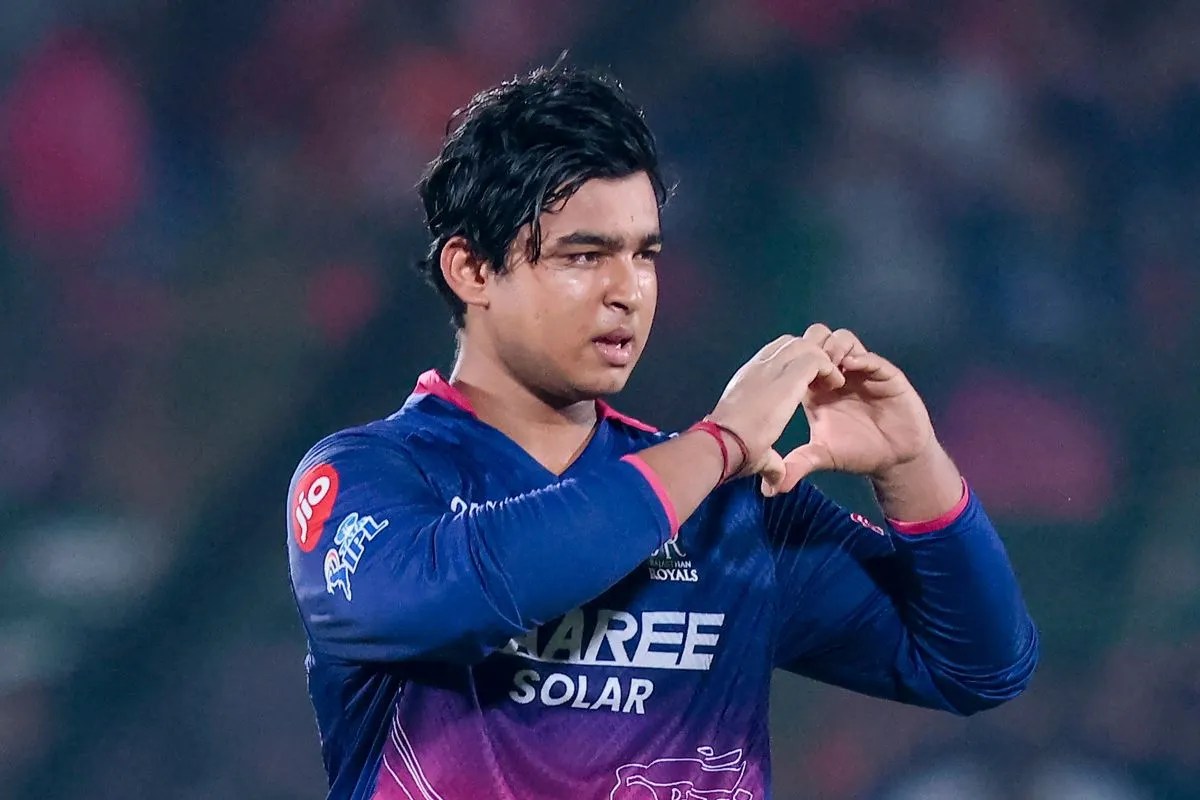
In Punjab Kings’ first match of the Indian Premier League (IPL) 2026 against Gujarat Titans, Arshdeep Singh was entrusted with the final over of the first innings. The left-arm pacer ended up bowling an 11-ball over—the joint-longest in IPL history. Across that over, Arshdeep largely tried to go short and wide to the left-handed Rahul Tewatia, which resulted in multiple wides; against Rashid Khan, he switched to yorkers, both at the stumps and outside off.
Twenty-four matches into the season, the PBKS bowler has delivered the most wides so far—18, four more than Mumbai Indians’ Shardul Thakur, who has 14. Of Shardul’s 14 wides, 13 have come while bowling wide outside off. In Arshdeep’s case, 11 of his 18 wides have come while operating around the tramline outside off.
What often shows up as poor execution is more often than not a calculated attempt to keep the ball away from the batter, with modern T20 batters favouring the leg side for their big shots. Even deliveries just outside off stump are now being whipped over the on-side with ease, thanks to the natural swing arc and high bat speeds.
In response, the bowlers have moved further away from the stumps, forcing batters to manufacture shots square of the wicket, particularly in the point and square regions, where power is harder to generate.
“If the batter is set and there’s a longer boundary on one side, you use that and keep the ball away from their strength. If the batter is new, you attack the stumps. When you feel the yorker is coming out well, you go for it. When the batter is set, you go wide. You just have to adapt before the batter knows what’s coming,” Arshdeep explained after the win over Mumbai Indians on Thursday, after picking three for 22, continuing to back his wide line tactic.
That constant adjustment, though, often pushes bowlers closer to the wide line, where the margin for error is smaller.
One such option is the wide yorker, aimed just inside the wide line outside off stump. It is one of the hardest deliveries to execute because of the precision required—more often than not, it ends up as a full toss or a slot ball. But when nailed, it is extremely difficult to put away.
“That’s probably one of the hardest balls to bowl,” Delhi Capitals pacer Lungi Ngidi said. “You’ve got to land it on a yorker length, just inside the wide line – everything has to be perfect. If you land that ball, it’s a huge advantage in an over.”
Since his IPL debut in 2019, Arshdeep has bowled 99 wide-line yorkers – joint second-most with Harshal Patel, with Avesh Khan leading the list with 104.
Despite the risk, the tactic remains popular. In the 2021 season, there was a more than 46 per cent increase in attempts to bowl around the tramline, resulting in 114 wides—an 87 per cent jump from the previous season’s 61.

The shift became even more pronounced in 2022, when wides across the season rose from 521 to 861—jump of 340 (65.26 per cent). While part of that increase was due to the addition of two teams—Gujarat Titans and Lucknow Super Giants—and therefore more matches, venue conditions also played a major role.
That season was held across four venues in Maharashtra during the league stage—the Wankhede Stadium, DY Patil Stadium, Brabourne Stadium, and MCA International Stadium. Smaller boundaries, flatter pitches, and heavy dew made execution significantly harder for bowlers.
Since that spike, the increase from 2023 onwards has appeared more gradual. The average number of wides per season, which stood at around 530 until 2021, has now risen to roughly 810. The ongoing 2026 season is not included in that average, but it has already seen 289 wides in 24 matches and is projected to finish close to 900 at the current rate of six wides per innings.
What changed in 2023?
That season introduced the option for teams to review wides and no-balls. With technology in play, the margin for error has reduced. As Ngidi pointed out: “The margins are very small. The review system helps now because earlier, you could bowl it correctly and still get called for a wide.”
Ahead of the 2025 season, another tweak followed—the introduction of the moving wide guideline, where the line shifts with the batter’s position. This has made adjudication clearer for umpires and players alike. It made an immediate impact last season as the wides bowled while attempting the wide yorker dropped from 182 to 101.
For bowlers like Arshdeep, operating around the wide tramline is a risky trade-off, where the margin for error is minimal. But in a format where batters dictate terms, it is a risk they are willing to take. Because on the days it comes off, the wide yorker can set up the game for the bowling side.
Published on Apr 17, 2026

![From MRF Pace Foundation to IPL spotlight—Charting Praful Hinge and Sakib Hussain’s meteoric rise Sunrisers Hyderabad’s bowlers have been among the most expensive in this Indian Premier League (IPL). Across their first four games, they have returned an economy of 10.42 and an average of 36.65, the third-highest in the competition, while their dot-ball percentage of 28.9 is the lowest in the tournament.The PowerPlay has been even worse. SRH’s four wickets in this phase have come at an economy of 12.04 and an average of 72.25, with seven different bowlers used in the first six overs and only one taking more than a single wicket.So, when Praful Hinge and Sakib Hussain were handed their IPL debuts against a free-swinging Rajasthan Royals line-up, expectations were low.Not, however, for M. Senthilnathan, head coach at the MRF Pace Foundation in Chennai.“Praful’s strength was always the line and length; the length he had was always very solid,” Senthilnathan told Sportstar. “When he keeps on hitting that length, there could always be some deviation in and out.”Monday night delivered. Hinge, as well as Sakib, combined for eight for 58 in eight overs, removing RR’s top five inside the first three overs. Hinge set it up with four wickets in his first two overs, including three in the opening over — the first bowler to do so in an IPL match — before Sakib ensured there was no way back.Built on repeatable lengthsHinge ripped through the RR top order with the new ball, first dismissing Vaibhav Suryavanshi with a delivery that climbed sharply on him, before splattering Dhruv Jurel’s stumps and having fellow debutant Lhuan-dre Pretorius caught in the deep.Senthilnathan, who worked with Hinge from 2023 to 2024, first met the 24-year-old during the foundation’s selection trials three years ago, where his potential was immediately apparent.“Praful had some injury, so he didn’t bowl much, but from whatever he bowled, we could see that he’s got something. Then he went to rehab, and we got him ready in the off-season from March to August,” he said.The recovery from a back injury dominated his 2023 stint, bringing its own physical and mental uncertainties.“He had a lot of doubts, everybody goes through it, whether he would be able to play and bowl, those kinds of things will come to anyone,” the coach said. “So, he was doing his rehab, and mentally we were talking to him, just telling him that he would be OK.“When he came to the bowling phase, we felt that if the L4 is fractured, then there must be something in his bowling that we need to get right,” Senthilnathan explained. “Nobody has such injuries without any technical fault; there will be something. He was falling off and trying to muscle the ball instead of going forward, so automatically the lateral refraction was happening.“So, we started doing a lot of short runs and putting in his mind what we needed to do—go forward rather than twisting or curving his back. We worked on it, and then he went in August, September and played. They (Vidarbha) were also surprised that he was ready, and he had a very reasonable season.”Hinge returned to MRF in 2024, this time focused on skill development.“We couldn’t put him into hard training when we met in 2023 because of his injury, so in 2024, we really took on the challenge, and he took the challenge as well. He worked on his bowling areas and then worked on skills, looking for the right areas, moving them all from that length.”Alongside the technical work came lessons in handling pressure from Aussie fast bowling great Glenn McGrath, who serves as Director at the MRF Pace Foundation.“A lot of mental work was also put in by Glenn, about taking the pressure and how to handle pressure in a crunch situation, and at the same time, when there is success, how to handle it,” he noted.“These are all very important points, only experience like Glenn McGrath’s would have been able to share.”Hinge also went on an exchange programme in Australia, where he trained on the centre wicket at the Gabba alongside current Australian pacers Pat Cummins, Josh Hazlewood and Jhye Richardson. Praful Hinge at the CA Centre of Excellence.
| Photo Credit:
SPECIAL ARRANGEMENT
Praful Hinge at the CA Centre of Excellence.
| Photo Credit:
SPECIAL ARRANGEMENT
“That’s a great experience for these boys,” Senthilnathan said. “When they go there, the wickets are different, they’ll be bowling to different kinds of batters, and the wicket is helpful. When the wicket is helpful, you have to be patient and hitting the right areas is what you need to look at. The length also differs in Australia, so all these things they learn, along with professionalism, how to keep yourself fit, what to eat, how to hydrate, how to train, and taking initiative.”That work was evident on Monday night. Hinge later said he had been “manifesting” his performance, but Senthilnathan had a more grounded explanation.“You can’t do what Jasprit Bumrah is doing, or Prasidh [Krishna] is doing, but Praful is known for something, which has taken him there. You have got to keep on repeating the same thing, so that’s why he’s confident, because he knows that he can bowl those lengths.”A peculiar action, and a slower ballWhile Hinge took the spotlight, Senthilnathan was equally impressed by Sakib.“Sakib will bowl 140kmph, and he’s very slippery, somewhere close to Bumrah, everything (his action) is quite fast. He’s got good speed; people have not seen his slower one, which he can also execute easily because of his action, so picking it also will be difficult for the batsmen,” he said.“I feel a lot of importance has gone to Praful, but this boy has not bowled any less; he’s given a lesser number of runs, and he’s also got four wickets.”Sakib, originally from Bihar, was introduced to the Pace Foundation through fellow cricketers and quickly made an impression.“Sakib comes from a very humble background, and everything was new for him when he first came here. Everything is taken care of, and they only have to worry about the training they have to do. That phase was good,” Senthilnathan said. Sakib with McGrath and Senthilnathan at the MRF Pace Foundation.
| Photo Credit:
SPECIAL ARRANGEMENT
Sakib with McGrath and Senthilnathan at the MRF Pace Foundation.
| Photo Credit:
SPECIAL ARRANGEMENT
He was later called up as a net bowler with Chennai Super Kings in IPL 2023, but an injury cut his stint short.“He did go to CSK as a net bowler, and they were all impressed, but to his bad luck, he had a stiff back,” Senthilnathan explained. “Had he been able to bowl, CSK probably would not have left him, so he went off. Next year, he went to Kolkata Knight Riders, and they actually won that year.”The match against RR showcased both sides of his skill set. He hurried an in-form Yashasvi Jaiswal into a catch at third man and later worked through the middle and lower order, including Donovan Ferreira, with a cleverly disguised slower ball after the batter had crossed fifty.Senthilnathan believes there is more to come.“I still think we have a lot to see of him at the death. Slower ones will come, and yorkers will come, so 140 kmph+ yorkers, if he handles them too, I think then it will be very good. Picking his action is a bit difficult; it’s not easy, not conventional. He sort of falls in front, so that means there’s no lateral reflection.”A look to the futureThe immediate challenge for SRH’s new fast-bowling pair is to sustain this impact through the rest of the IPL.For Senthilnathan, the message remains simple.“IPL is like a lottery, I won’t say anything more than that, because you’re restricted to bowl only four overs. With four overs, you cannot have too many strategies, so basically, you have to bowl what you know to do. You should do what you know best, simple as that.”Published on Apr 16, 2026 #MRF #Pace #Foundation #IPL #spotlightCharting #Praful #Hinge #Sakib #Hussains #meteoric #rise From MRF Pace Foundation to IPL spotlight—Charting Praful Hinge and Sakib Hussain’s meteoric rise Sunrisers Hyderabad’s bowlers have been among the most expensive in this Indian Premier League (IPL). Across their first four games, they have returned an economy of 10.42 and an average of 36.65, the third-highest in the competition, while their dot-ball percentage of 28.9 is the lowest in the tournament.The PowerPlay has been even worse. SRH’s four wickets in this phase have come at an economy of 12.04 and an average of 72.25, with seven different bowlers used in the first six overs and only one taking more than a single wicket.So, when Praful Hinge and Sakib Hussain were handed their IPL debuts against a free-swinging Rajasthan Royals line-up, expectations were low.Not, however, for M. Senthilnathan, head coach at the MRF Pace Foundation in Chennai.“Praful’s strength was always the line and length; the length he had was always very solid,” Senthilnathan told Sportstar. “When he keeps on hitting that length, there could always be some deviation in and out.”Monday night delivered. Hinge, as well as Sakib, combined for eight for 58 in eight overs, removing RR’s top five inside the first three overs. Hinge set it up with four wickets in his first two overs, including three in the opening over — the first bowler to do so in an IPL match — before Sakib ensured there was no way back.Built on repeatable lengthsHinge ripped through the RR top order with the new ball, first dismissing Vaibhav Suryavanshi with a delivery that climbed sharply on him, before splattering Dhruv Jurel’s stumps and having fellow debutant Lhuan-dre Pretorius caught in the deep.Senthilnathan, who worked with Hinge from 2023 to 2024, first met the 24-year-old during the foundation’s selection trials three years ago, where his potential was immediately apparent.“Praful had some injury, so he didn’t bowl much, but from whatever he bowled, we could see that he’s got something. Then he went to rehab, and we got him ready in the off-season from March to August,” he said.The recovery from a back injury dominated his 2023 stint, bringing its own physical and mental uncertainties.“He had a lot of doubts, everybody goes through it, whether he would be able to play and bowl, those kinds of things will come to anyone,” the coach said. “So, he was doing his rehab, and mentally we were talking to him, just telling him that he would be OK.“When he came to the bowling phase, we felt that if the L4 is fractured, then there must be something in his bowling that we need to get right,” Senthilnathan explained. “Nobody has such injuries without any technical fault; there will be something. He was falling off and trying to muscle the ball instead of going forward, so automatically the lateral refraction was happening.“So, we started doing a lot of short runs and putting in his mind what we needed to do—go forward rather than twisting or curving his back. We worked on it, and then he went in August, September and played. They (Vidarbha) were also surprised that he was ready, and he had a very reasonable season.”Hinge returned to MRF in 2024, this time focused on skill development.“We couldn’t put him into hard training when we met in 2023 because of his injury, so in 2024, we really took on the challenge, and he took the challenge as well. He worked on his bowling areas and then worked on skills, looking for the right areas, moving them all from that length.”Alongside the technical work came lessons in handling pressure from Aussie fast bowling great Glenn McGrath, who serves as Director at the MRF Pace Foundation.“A lot of mental work was also put in by Glenn, about taking the pressure and how to handle pressure in a crunch situation, and at the same time, when there is success, how to handle it,” he noted.“These are all very important points, only experience like Glenn McGrath’s would have been able to share.”Hinge also went on an exchange programme in Australia, where he trained on the centre wicket at the Gabba alongside current Australian pacers Pat Cummins, Josh Hazlewood and Jhye Richardson. Praful Hinge at the CA Centre of Excellence.
| Photo Credit:
SPECIAL ARRANGEMENT
Praful Hinge at the CA Centre of Excellence.
| Photo Credit:
SPECIAL ARRANGEMENT
“That’s a great experience for these boys,” Senthilnathan said. “When they go there, the wickets are different, they’ll be bowling to different kinds of batters, and the wicket is helpful. When the wicket is helpful, you have to be patient and hitting the right areas is what you need to look at. The length also differs in Australia, so all these things they learn, along with professionalism, how to keep yourself fit, what to eat, how to hydrate, how to train, and taking initiative.”That work was evident on Monday night. Hinge later said he had been “manifesting” his performance, but Senthilnathan had a more grounded explanation.“You can’t do what Jasprit Bumrah is doing, or Prasidh [Krishna] is doing, but Praful is known for something, which has taken him there. You have got to keep on repeating the same thing, so that’s why he’s confident, because he knows that he can bowl those lengths.”A peculiar action, and a slower ballWhile Hinge took the spotlight, Senthilnathan was equally impressed by Sakib.“Sakib will bowl 140kmph, and he’s very slippery, somewhere close to Bumrah, everything (his action) is quite fast. He’s got good speed; people have not seen his slower one, which he can also execute easily because of his action, so picking it also will be difficult for the batsmen,” he said.“I feel a lot of importance has gone to Praful, but this boy has not bowled any less; he’s given a lesser number of runs, and he’s also got four wickets.”Sakib, originally from Bihar, was introduced to the Pace Foundation through fellow cricketers and quickly made an impression.“Sakib comes from a very humble background, and everything was new for him when he first came here. Everything is taken care of, and they only have to worry about the training they have to do. That phase was good,” Senthilnathan said. Sakib with McGrath and Senthilnathan at the MRF Pace Foundation.
| Photo Credit:
SPECIAL ARRANGEMENT
Sakib with McGrath and Senthilnathan at the MRF Pace Foundation.
| Photo Credit:
SPECIAL ARRANGEMENT
He was later called up as a net bowler with Chennai Super Kings in IPL 2023, but an injury cut his stint short.“He did go to CSK as a net bowler, and they were all impressed, but to his bad luck, he had a stiff back,” Senthilnathan explained. “Had he been able to bowl, CSK probably would not have left him, so he went off. Next year, he went to Kolkata Knight Riders, and they actually won that year.”The match against RR showcased both sides of his skill set. He hurried an in-form Yashasvi Jaiswal into a catch at third man and later worked through the middle and lower order, including Donovan Ferreira, with a cleverly disguised slower ball after the batter had crossed fifty.Senthilnathan believes there is more to come.“I still think we have a lot to see of him at the death. Slower ones will come, and yorkers will come, so 140 kmph+ yorkers, if he handles them too, I think then it will be very good. Picking his action is a bit difficult; it’s not easy, not conventional. He sort of falls in front, so that means there’s no lateral reflection.”A look to the futureThe immediate challenge for SRH’s new fast-bowling pair is to sustain this impact through the rest of the IPL.For Senthilnathan, the message remains simple.“IPL is like a lottery, I won’t say anything more than that, because you’re restricted to bowl only four overs. With four overs, you cannot have too many strategies, so basically, you have to bowl what you know to do. You should do what you know best, simple as that.”Published on Apr 16, 2026 #MRF #Pace #Foundation #IPL #spotlightCharting #Praful #Hinge #Sakib #Hussains #meteoric #rise](https://ss-i.thgim.com/public/incoming/tmkxsn/article70867987.ece/alternates/FREE_1200/Praful_MRF.jpeg)