
PLOT: A young arthouse director, Kris (Hannah Einbinder), seeks to reboot her favorite horror franchise, Camp Miasma, by tracking down the reclusive final girl from the first film, Billy (Gillian Anderson).
REVIEW: Teenage Sex and Death at Camp Miasma is director Jane Schoenbrun’s follow-up to I Saw the TV Glow. That movie was a solid arthouse hit following its acclaimed run at Sundance, and Camp Miasma is clearly designed to scratch a similar itch, with the two thematically similar in some ways. I Saw the TV Glow was an allegory for the transformative effect the content we watch at an early age has on us, and Miasma is similar in that way. Yet, where I Saw the TV Glow had a more complicated mythology, with the leads obsessing over a TV show (and expanded universe) called “The Pink Opaque,” Miasma is more universal. Who among us wasn’t obsessed with teen slashers while coming of age?
The Camp Miasma franchise, which we learn spanned the nineties and 2000s across multiple entries, is presented very much in the mold of Friday the 13th, with the original classic giving way to a whole variety of installments, including the inevitable sci-fi entry, Miasma 3000 — a riff on Jason X. But it’s also heavily influenced by Sleepaway Camp (although both franchises actually exist in the world of this film), particularly the shock ending.
Teenage Sex and Death at Camp Miasma, for the first half, anyway, is Schoenbrun’s most accessible film to date, functioning as a fairly knowing satire of the current state of horror franchises and how they are handled by studios. Kris, whose first feature was a Sundance hit but bombed (it’s described as Psycho from the POV of the shower curtain), has been hired to reboot Camp Miasma because the original has been deemed transphobic, but because she’s queer, the studio believes she will deliver a woke reboot that will relaunch what she dubs “zombie IP.”
Schoenbrun’s movie is largely a celebration of movies like Sleepaway Camp and Friday the 13th, with any discussion of their “problematic” aspects somewhat brushed aside. Even if the POV might have been of its time, many of these films have now been reclaimed by contemporary audiences — particularly trans audiences in the case of Sleepaway Camp.
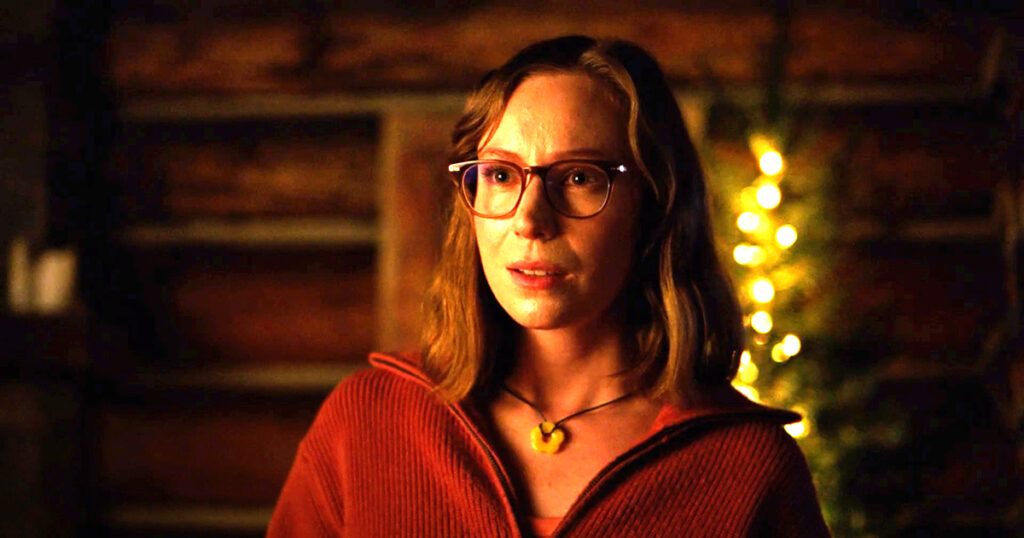
Teenage Sex and Death at Camp Miasma largely splits the narrative in two. Half of the movie focuses on Kris as she visits Gillian Anderson’s Billy, who has become a recluse but now actually lives on the set from the first film. The two have a unique dynamic, with Billy not quite understanding Kris’s high-minded ideas for a reboot, even if there’s something else at play, with the vibe between the two immediately turning flirtatious. A KFC fried chicken-eating scene is this movie’s riff on the famous chess sequence from The Thomas Crown Affair.
Einbinder plays Kris with the right amount of pretentiousness and likability, making her easy to invest in—a good thing, as, through the film’s surreal twists and turns, she effectively becomes a kind of final girl, even if it’s not quite as simple as that. Anderson plays Billy to the hilt as a kind of sexy Norma Desmond type (she even wears a similar hat with a diamond), but the film is knowing enough to basically name-check the character outright.
But a big chunk of the movie is Schoenbrun’s recreation of the original Camp Miasma, which plays out as a nostalgic, nearly pitch-perfect recreation of these kinds of slasher movies (I say “nearly” because too much CGI blood is used, which lessens the impact of the gore and makes it cartoonish). We get our slasher, Little Death (Jack Haven — star of I Saw the TV Glow), his origin story, and a group of teens ready to be slaughtered. The casting is a hoot, with deliberately too-old actors, including the great Zach Cherry from Severance and Sorry, Baby’s Eva Victor sporting a mohawk.
Where the film will prove divisive is in the highly meta final third, in which it becomes more of an allegory for Kris’s sexual awakening, with both her and Billy presented as being in a sort of erotic thrall to Little Death and his murders. They become excited at the prospect of being one of his victims — but he’s not real, right? Or is he?
What’s real and what isn’t doesn’t matter all that much in Schoenbrun’s film, which is highly surreal and not open to easy interpretation. This isn’t that different from I Saw the TV Glow, but I found Camp Miasma to be more openly entertaining, with a great sense of humor that Schoenbrun’s last film only showed in brief flashes. Teenage Sex and Death at Camp Miasma is amusing from start to finish, and it’s gorgeously assembled.
With backing from Mubi and Brad Pitt’s Plan B, it seems to have been made on a healthy budget, and it boasts beautiful cinematography by Eric Yue, with cigarette burns and print damage worked into the Camp Miasma scenes, as though we’re watching a battered 16mm print. The soundtrack is also well assembled, with Alex G’s score and the needle drops carefully curated.
It will be interesting to see how hardcore horror fans take to Teenage Sex and Death at Camp Miasma. While it’s probably too meta to actually be scary, it does have a strong love for the genre running through it, as well as nostalgia for the movies it riffs on. It’s lovingly made and certainly a unique experience that should become a cult hit — particularly for younger viewers, who it could serve as a gateway to some of the classics it references.

Subscribe to our weekly newsletter
Source link
#Teenage #Sex #Death #Camp #Miasma #Cannes #Review #Jane #Schoenbruns #meta #riff #80s #slashers #wild


Post Comment