×
The best Xbox controllers: Microsoft, Razer, 8BitDo, and more

The best Xbox controllers: Microsoft, Razer, 8BitDo, and more

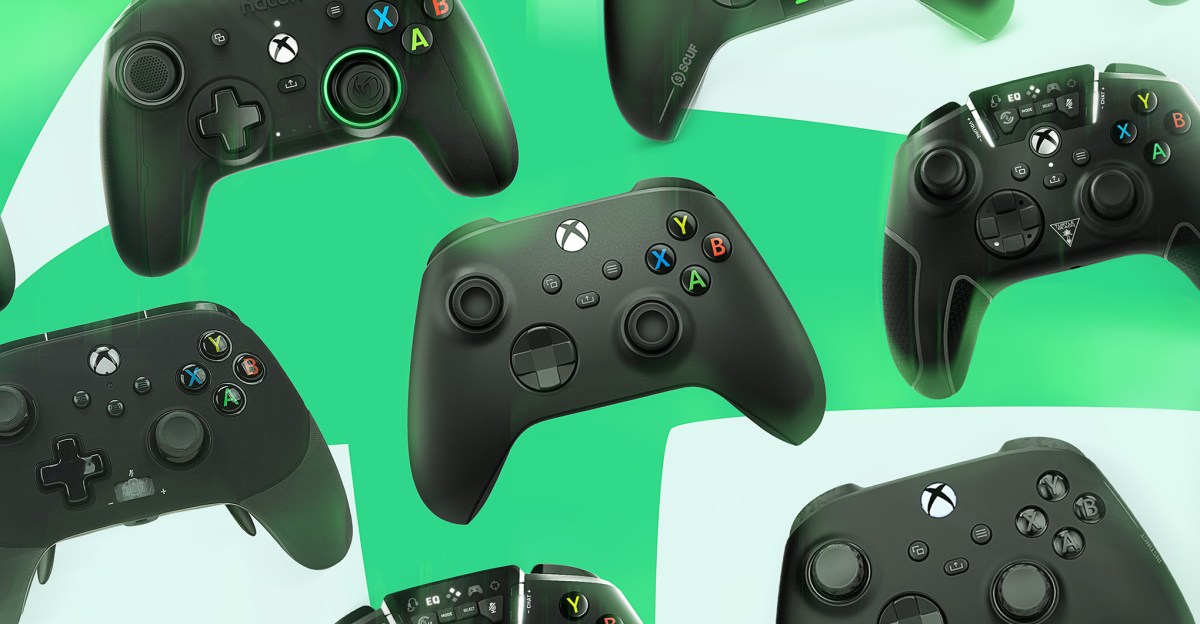
We live in a golden age of controllers. The gamepads on the market now are of higher quality, more versatile, and more customizable than anything from even one console generation ago. If you play games on an Xbox Series X or Series S (or a Windows PC), you have the unenviable task of choosing between several high-quality controllers from Microsoft as well as a plethora of great options from the likes of 8BitDo, PowerA, Razer, Scuf, Nacon, and Turtle Beach. Some of them have drift-proof Hall effect or TMR-based joysticks for improved longevity, yet all of them are good for one reason or another. The days of the cheap “little sibling” controller that looked cool, but barely worked, are over.

We’ve spent a ton of time playing all kinds of games (first-person shooters, fighters, third-person action-adventure, racing, indie roguelikes, etc.) to test a wide swath of Xbox controllers, and it may not be a surprise that the standard, relatively inexpensive Xbox Wireless Controller is the best option for most folks. It makes for a great PC and Steam Deck controller, too. The default Xbox gamepad strikes the right balance of quality, comfort, versatility, and price, but there are several alternatives worth considering.

$50

The official Xbox Wireless Controller has a dedicated share button for saving clips and screenshots and sharing them online, Bluetooth support, and a USB-C port for charging up Microsoft’s play-and-charge rechargeable battery.

$30

The new 8BitDo Ultimate Wired Controller for Xbox includes Hall effect analog sticks and triggers, plus two rear buttons, customizable mapping and sensitivity, and compatibility with PC and mobile devices.

What we’re looking for

We test Xbox controllers by playing with them for an extended period of time across a variety of genres. Our test targets include team-based arena games like Marvel Rivals, competitive shooters like Call of Duty, fighters like Tekken 8, and role-playing titles like Elden Ring. When doing so, we pay close attention to how all of the components feel. Are the triggers satisfying to pull? Do the analog sticks offer the right level of resistance? Are the D-pads and face buttons too mushy, or just right? If a controller includes customization options — such as adjustable trigger stops and sensitivity, and / or remappable back buttons — we test how easy they are to configure, then judge their impact on our gameplay experience.

Is it wireless? Does it support Bluetooth? Or is it wired only? If so, is the cable replaceable?

Does it feel cheap or nicely made? Any glitches or reliability issues while testing?

Does it have handy extras, like remappable buttons or fancy triggers?

Can you remap buttons or tune it with custom software profiles?

Is it priced affordably, about average, or does it come at a steep premium?

The best Xbox controller for most people

$50

The Good

  • Incredible value for Xbox Wireless support
  • Great ergonomic design
  • Satisfying buttons and triggers

The Bad

  • Lacks customization
  • Requires AA batteries (or an optional rechargeable cell)

Connectivity: Xbox wireless, Bluetooth, wired / Connector type: USB-C / Mappable rear buttons: No / Software customization: No / Power: AA batteries or add-on rechargeable

Okay, I already know what you’re thinking. “The best controller for Xbox is the one that comes with the Xbox?” That may seem like a no-brainer, but this standard controller truly does earn this title as the best. It lacks some extras found on pricier options, but this controller is the distillation of all that has made the last 20 years of Xbox gamepads great, and it shows.

Thanks to Microsoft’s proprietary wireless protocol, this is the only affordable wireless Xbox controller out there. (Third-party wireless options have been trickling out in recent years, but they’re mostly at the high end.) While some hate the standard Xbox wireless controller for its use of AA batteries instead of a built-in rechargeable cell, that also means it’s flexible, allowing for rechargeable AAs or a battery pack. And user-replaceable batteries mean you’re not stuck with a controller that doesn’t hold its charge after years of use. It also works over a USB-C wired connection.

Two Xbox controllers, one blue and one black, being held by wooden mannequin hands.

You won’t find a better wireless controller at this price.
Photo by Antonio G. Di Benedetto / The Verge

But the standard-issue Xbox pad isn’t just great because of its varied connectivity. The hardware itself is excellent for the controller’s $65 (and often less) asking price. The sticks, buttons, triggers, and the sunken dish-shaped D-pad all feel impeccably tight, with the latter having a satisfying clickiness to it. If you’re a hardcore fighting game fan, you’ll probably be best served by a dedicated fight stick or a controller geared toward that genre — one with a superb D-pad like Hori’s Horipad Pro — but the Xbox Wireless Controller is otherwise an extraordinary jack-of-all-trades.

The only things it really lacks compared to pricier options are extra, customizable buttons and software tuning for things like stick sensitivity (button remapping is available), though Microsoft does offer cosmetic customization through its Xbox Design Lab, which bumps the price from $69.99 to $109.93 depending on the configuration. There’s a lot to love about these controllers, whether you make your own or pick one from the many colors Microsoft offers.

The best cheap Xbox controller

Someone playing on Xbox with 8BitDo Ultimate wired controllerSomeone playing on Xbox with 8BitDo Ultimate wired controller

$30

The Good

  • Inexpensive
  • Lightweight and comfortable
  • Satisfying buttons and Hall effect components
  • Programmable back buttons are easy to press

Connectivity: Wired / Connector type: USB-C / Mappable rear buttons: Two / Software customization: Yes / Power: Wired

The 8BitDo Ultimate Wired Controller for Xbox is a fantastic budget model that typically retails for $44.99 but can often be found for as little as $29.99. The shape is reminiscent of Nintendo’s Switch Pro Controller, only a bit smaller, with hints of Xbox influence and a curvaceous design that feels great to hold.

On the hardware front, the Ultimate Wired Controller features Hall effect sticks with satisfying tension. It also uses Hall effect triggers with dedicated vibration motors, though it lacks trigger stops, unlike our previous budget pick, the PowerA Advantage Wired. Its D-pad, face buttons, and bumpers are nice and clicky, too, despite being smaller than we’d typically like. It has two rear paddles, remappable buttons, and the ability to save up to three profiles, which you can switch between on the fly using a dedicated button. There’s even a built-in mute switch for audio, which isn’t common on cheaper controllers. You can download the 8BitDo Ultimate Software X app on PC or Xbox to fully customize this controller.

A pairof 8BitDo Ultimate Wired for Xbox controllers on wooden table

8BitDo controllers may be inexpensive, but that doesn’t mean they should be considered cheap.
Photo: Quentyn Kennemer / The Verge

The 8BitDo Ultimate Wired works as a wired controller with your PC, but if you prefer wireless connectivity, the company also makes a three-mode wireless version with support for both Bluetooth and 2.4GHz wireless (via a dongle). The wireless version is a bit more expensive, however, and it’s still limited to wired connectivity on Xbox consoles.

The best “pro” Xbox controller

$150

The Good

  • Extensive modular customization
  • Premium look and feel
  • Rechargeable battery lasts an incredible 40 hours

The Bad

  • Pricey
  • Questionable quality control
  • No Hall effect components

Connectivity: Xbox wireless, Bluetooth, wired / Connector type: USB-C / Mappable rear buttons: Up to four / Software customization: Yes / Power: Built-in rechargeable

The Xbox Elite Wireless Controller Series 2 is Microsoft’s fanciest controller, and it’s got a lot of nice extras, like better build quality, extra buttons, user-swappable sticks and D-pad, a built-in rechargeable battery, and loads of software customization. Where the standard Xbox controller is constructed entirely of unassuming plastic, the Elite mixes higher quality soft-touch plastic, rubberized grips, and metallic touches for a superior fit and finish. This makes it heftier than the stock controller, and as a result, it just feels nicer in your hands. It also comes with a charging dock and zip-up case with passthrough charging, completing a really nice package for $199.99 (or sometimes less, if it’s on sale).

There’s also the stripped-down Elite Series 2 “Core” version with an MSRP of $149.99, which ditches the add-ons, but is equally customizable. You can buy them separately in a $59.99 accessories pack, but you’ll end up paying more that way, barring sales or discounts.

A pricey controller like an Xbox Elite is a bit of a splurge purchase. Most of us are not competing at e-sports levels that require its high-end features. Nevertheless, it’s fun to use something that feels nicer, offers ways to custom-tailor it to your likings, and maybe gives you a slight competitive edge thanks to features like hair triggers and removable rear paddles. In theory, you may be able to get shots off faster in an online shooter with the hair triggers, and you can map the paddles to functions like jump, crouch, reload, etc. while keeping your thumb on the right stick. You could teach yourself claw grip to accomplish the latter with even a cheap wired controller, sure, but it just won’t feel as cool or easy as when using an Elite.

While the Elite is still a great controller in 2025, you should keep in mind that it’s been around since 2019 and a Series 3 revision is feeling long overdue. The Series 2 also has a bit of a reputation for lackluster quality control — with horror stories from users about going through multiple replacements under warranty. Microsoft extended the controller’s warranty from 90 days to a year in late 2020 to help address concerns, but buying an Elite Series 2 may still feel like a slightly risky proposition. It also predates the current-gen implementation of a dedicated Share button, and its potentiometer-based sticks run the risk of stick drift after long-term use (something third parties are addressing with controllers that use drift-free Hall effect sticks, unlike all three big console manufacturers).

A close-up of the Xbox Elite Series 2 controller, showing its matte black finish.

The Elite Series 2 offers unprecedented customization with analog sticks and a D-pad you can pluck right off.
Photo by Antonio G. Di Benedetto / The Verge

Even so, the Elite 2 remains by far the most well-rounded option for a step-up Xbox controller — thanks in large part to its impressive build and expansive software experience. If all these caveats give you pause, though, there is another promising option.

Read our Xbox Elite Wireless Controller Series 2 review.

A formidable alternative to the Elite

$200

The Good

  • Supports Xbox Wireless protocol
  • Hall effect sticks use replaceable tops
  • Four rear buttons smartly positioned for comfort
  • Two extra shoulder buttons add unique versatility
  • Trigger stops and back buttons offer a satisfying mouse-like click

The Bad

  • Expensive
  • Requires a USB dongle
  • Razer Synapse software needs work

Connectivity: Wireless USB dongle (Xbox / PC), wired / Connector type: USB-C / Mappable rear buttons: Four / Software customization: Yes / Power: Built-in rechargeable

At $199.99, Razer’s Wolverine V3 Pro controller is as expensive (or more, depending on available deals) than the Elite Series 2, but it’s worth the cost if you want a high-end controller with drift-free sticks. Not only is the V3 Pro Razer’s first foray into using Hall effect sticks, it’s the company’s first fully wireless Xbox gamepad. It also sports some of the best hair-trigger lockouts around, yielding a mouse-like click usually found on even pricier Scuf controllers (a previous high-ranking pick of ours).

Other than that, the V3 Pro is similar to the previous V2 Pro, with six remappable buttons — four rear paddles in new, angled orientations and two extra shoulder buttons — and some RGB lighting. The buttons and D-pad still have that satisfying micro-switch tactility and audible clickiness like the previous-gen V2 Pro, but the RGB lighting is more subtle this time around.

It’s not every day you see six buttons on top of a controller.

It’s not every day you see six buttons on top of a controller.
Photo by Antonio G. Di Benedetto / The Verge

The Wolverine V3 Pro’s biggest shortcomings compared to Microsoft’s Elite Series 2 are its more basic software customization, its lack of Bluetooth, and the fact that it needs a USB dongle to work wirelessly. The V3 Pro is otherwise the better pick if you can justify its high price, which, unlike the Series 2, is rarely subjected to discounts. Luckily, if you can’t, there’s also the $99.99 Wolverine V3 Pro Tournament Edition that has a nearly identical set of features in a wired configuration.

Other Xbox controllers we tested

  • The Scuf Valor Pro is the company’s first Xbox controller with Hall effect sticks (as well as its cheapest). It’s wired but otherwise builds admirably on the foundation laid by the Scuf Instinct Pro, which was once our top third-party pro-style controller. Scuf emulates Microsoft’s winning ergonomics while implementing redesigned remappable rear buttons (two are removable) and shoulder bumpers that are more comfortable to reach. It also has trigger stops that produce a satisfying click with next to no travel when pressed. The D-pad produces a similarly satisfying click, one we prefer over the softer tactile feel of the Instinct. The Valor Pro is not the most exciting controller on paper, but it’s a solid option for Scuf faithful or anyone who wants more durable analog sticks. Read our hands-on impressions.
  • If you’re a fan of competitive shooters, Turtle Beach controllers like the Recon and React-R have several audio features that might come in handy. The company’s fanciest option, the Stealth Ultra, is a $200 wireless model with Hall effect sticks that’s an excellent choice overall. That being said, we still prefer the Razer Wolverine V3 Pro, as the built-in customization screen on the Stealth Ultra is clunky to use and the ergonomics don’t feel nearly as nice as that of the V3 Pro.
  • Turtle Beach also recently released the Stealth Pivot, which lets you quickly swap the analog sticks for extra face buttons by swiveling the plates around. It’s neat but ultimately niche, as it’s primarily meant for fighting games and retro titles. That feature necessitates a chassis that’s noticeably bigger than most controllers, too, which may be a downer if you already struggle with wrapping your digits around standard-sized controllers.
  • We recently tested PowerA’s newest pro-style Xbox controllers, including the Fusion Pro 4 Wired ($69.99) and PowerA Fusion Pro Wireless ($149.99). They’re standard fare for pro-style controllers these days, with height-adjustable Hall effect sticks, four remappable rear buttons, three-way trigger locks, and onboard volume controls. They’re similar, but the Pro Wireless has four trippy Lumectra lighting zones that respond to your button presses. Both controllers are satisfying to use and a clear step up from PowerA’s older products in terms of overall quality, but they ultimately don’t stand out much at these price points.
  • Nacon’s Revolution X remains one of the most customizable wired controllers you can get (it even has removable weights in its handles), and its software is nearly as expansive as Microsoft’s first-party app.
  • As mentioned above, the Horipad Pro has one of the best D-pads around. It also offers a lot of software customization at an affordable price, but its shoulder buttons are a bit stiff.
  • If you’re the nostalgic type, the Hyperkin Duke, DuchesS, and Xenon are faithful wired recreations of Xbox gamepads from Microsoft’s first two console generations. They’re kind of dumb but endearing (especially the chunky Duke), but they’re unique collector pieces you can also use on modern games.
  • The wired GameSir G7 SE is another budget pick with drift-resistant Hall effect sticks and USB-C connectivity, one that can typically be found for around $40. Like 8BitDo’s controllers, it neglects trigger stops, but it’s one of the only options with dedicated switches for disabling the rear buttons.

The race to perfect Xbox controllers hasn’t yet reached a conclusion. Manufacturers continue updating their lineup with newer, more durable analog sticks and triggers, while some experiment with gimmicks. Case in point: the upcoming Hyperkin Competitor, which was announced at CES in January and is set to arrive later in 2025. The wired gamepad’s design is unashamedly inspired by the PlayStation 5’s DualSense controllers, complete with glassy buttons and a non-contiguous D-pad.

Update, June 4th: Updated with current pricing and availability.

Source link
#Xbox #controllers #Microsoft #Razer #8BitDo

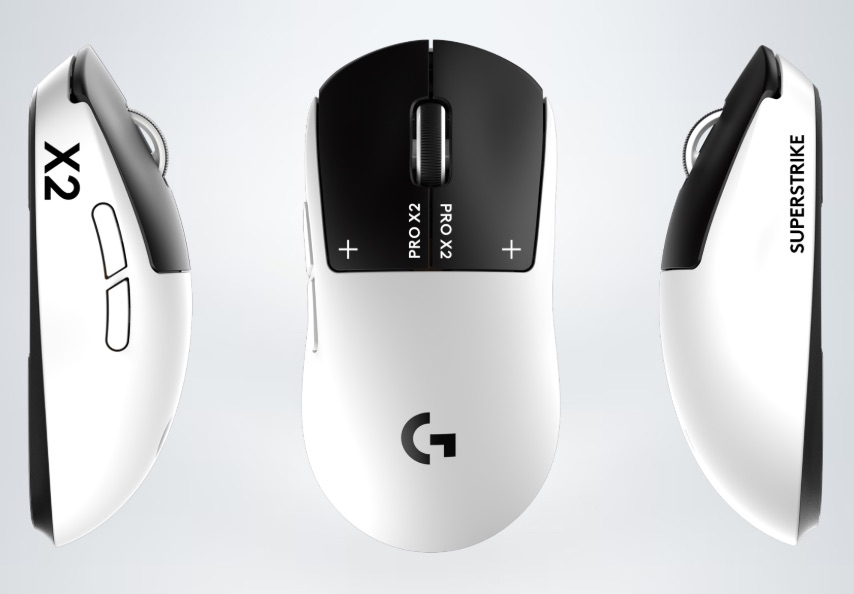
gaming mouse world has pretty much been the same for the last few years, with the only real improvement being weight savings. Now, Logitech has just introduced a new high-end gaming mouse in India, the Pro X2 Superstrike, and it’s bringing something genuinely new to the table. With it, the company is trying to rethink how mouse clicks work entirely, replacing traditional mechanical switches with a new system designed for faster response and better control. Here’s what you need to know about it.

A New Way to Click

The biggest highlight of the PRO X2 SUPERSTRIKE is its Haptic Inductive Trigger System (HITS), which ditches conventional microswitches in favor of inductive analog sensing paired with real-time haptic feedback.

In simpler terms, clicks aren’t just registered—they’re felt instantly. The system allows players to adjust the sensitivity of each click, with multiple actuation levels and reset points to suit their playstyle. Whether you prefer quick taps in FPS games or more deliberate clicks in strategy titles, the mouse can be tuned accordingly. Logitech claims this setup can reduce click latency by up to 30 milliseconds, and if this is true, it’ll reshape the landscape altogether. We have the Pro X2 for testing purposes, so keep an eye out for the full review dropping soon.

Beyond the click tech, the PRO X2 SUPERSTRIKE packs serious hardware. It features Logitech’s HERO 2 sensor with up to 44K DPI and supports an 8K polling rate, meaning it sends data to your PC every 0.125 milliseconds. The mouse is also capable of tracking extremely fast movements, with support for high acceleration and precise tracking even during rapid flicks. Despite all that, Logitech has kept the weight down to around 65 grams, making it suitable for long gaming sessions without fatigue. It also includes PTFE feet for smoother gliding and a battery life of up to 90 hours, which should easily last through extended sessions.

The Logitech G PRO X2 SUPERSTRIKE will be available in India in a Lunar Eclipse color option, priced at ₹23,995.

#Logitech #PRO #SUPERSTRIKE #Mouse #Debuts #Haptic #Click #System #44K #DPIlogitech,logitech g">Logitech PRO X2 SUPERSTRIKE Mouse Debuts With Haptic Click System, 44K DPI
	
The gaming mouse world has pretty much been the same for the last few years, with the only real improvement being weight savings. Now, Logitech has just introduced a new high-end gaming mouse in India, the Pro X2 Superstrike, and it’s bringing something genuinely new to the table. With it, the company is trying to rethink how mouse clicks work entirely, replacing traditional mechanical switches with a new system designed for faster response and better control. Here’s what you need to know about it. 


A New Way to Click


The biggest highlight of the PRO X2 SUPERSTRIKE is its Haptic Inductive Trigger System (HITS), which ditches conventional microswitches in favor of inductive analog sensing paired with real-time haptic feedback.


In simpler terms, clicks aren’t just registered—they’re felt instantly. The system allows players to adjust the sensitivity of each click, with multiple actuation levels and reset points to suit their playstyle. Whether you prefer quick taps in FPS games or more deliberate clicks in strategy titles, the mouse can be tuned accordingly. Logitech claims this setup can reduce click latency by up to 30 milliseconds, and if this is true, it’ll reshape the landscape altogether. We have the Pro X2 for testing purposes, so keep an eye out for the full review dropping soon. 


Beyond the click tech, the PRO X2 SUPERSTRIKE packs serious hardware. It features Logitech’s HERO 2 sensor with up to 44K DPI and supports an 8K polling rate, meaning it sends data to your PC every 0.125 milliseconds. The mouse is also capable of tracking extremely fast movements, with support for high acceleration and precise tracking even during rapid flicks. Despite all that, Logitech has kept the weight down to around 65 grams, making it suitable for long gaming sessions without fatigue. It also includes PTFE feet for smoother gliding and a battery life of up to 90 hours, which should easily last through extended sessions.


The Logitech G PRO X2 SUPERSTRIKE will be available in India in a Lunar Eclipse color option, priced at ₹23,995.


#Logitech #PRO #SUPERSTRIKE #Mouse #Debuts #Haptic #Click #System #44K #DPIlogitech,logitech g

world has pretty much been the same for the last few years, with the only real improvement being weight savings. Now, Logitech has just introduced a new high-end gaming mouse in India, the Pro X2 Superstrike, and it’s bringing something genuinely new to the table. With it, the company is trying to rethink how mouse clicks work entirely, replacing traditional mechanical switches with a new system designed for faster response and better control. Here’s what you need to know about it.

A New Way to Click

The biggest highlight of the PRO X2 SUPERSTRIKE is its Haptic Inductive Trigger System (HITS), which ditches conventional microswitches in favor of inductive analog sensing paired with real-time haptic feedback.

In simpler terms, clicks aren’t just registered—they’re felt instantly. The system allows players to adjust the sensitivity of each click, with multiple actuation levels and reset points to suit their playstyle. Whether you prefer quick taps in FPS games or more deliberate clicks in strategy titles, the mouse can be tuned accordingly. Logitech claims this setup can reduce click latency by up to 30 milliseconds, and if this is true, it’ll reshape the landscape altogether. We have the Pro X2 for testing purposes, so keep an eye out for the full review dropping soon.

Beyond the click tech, the PRO X2 SUPERSTRIKE packs serious hardware. It features Logitech’s HERO 2 sensor with up to 44K DPI and supports an 8K polling rate, meaning it sends data to your PC every 0.125 milliseconds. The mouse is also capable of tracking extremely fast movements, with support for high acceleration and precise tracking even during rapid flicks. Despite all that, Logitech has kept the weight down to around 65 grams, making it suitable for long gaming sessions without fatigue. It also includes PTFE feet for smoother gliding and a battery life of up to 90 hours, which should easily last through extended sessions.

The Logitech G PRO X2 SUPERSTRIKE will be available in India in a Lunar Eclipse color option, priced at ₹23,995.

#Logitech #PRO #SUPERSTRIKE #Mouse #Debuts #Haptic #Click #System #44K #DPIlogitech,logitech g">Logitech PRO X2 SUPERSTRIKE Mouse Debuts With Haptic Click System, 44K DPI

The gaming mouse world has pretty much been the same for the last few years, with the only real improvement being weight savings. Now, Logitech has just introduced a new high-end gaming mouse in India, the Pro X2 Superstrike, and it’s bringing something genuinely new to the table. With it, the company is trying to rethink how mouse clicks work entirely, replacing traditional mechanical switches with a new system designed for faster response and better control. Here’s what you need to know about it.

A New Way to Click

The biggest highlight of the PRO X2 SUPERSTRIKE is its Haptic Inductive Trigger System (HITS), which ditches conventional microswitches in favor of inductive analog sensing paired with real-time haptic feedback.

In simpler terms, clicks aren’t just registered—they’re felt instantly. The system allows players to adjust the sensitivity of each click, with multiple actuation levels and reset points to suit their playstyle. Whether you prefer quick taps in FPS games or more deliberate clicks in strategy titles, the mouse can be tuned accordingly. Logitech claims this setup can reduce click latency by up to 30 milliseconds, and if this is true, it’ll reshape the landscape altogether. We have the Pro X2 for testing purposes, so keep an eye out for the full review dropping soon.

Beyond the click tech, the PRO X2 SUPERSTRIKE packs serious hardware. It features Logitech’s HERO 2 sensor with up to 44K DPI and supports an 8K polling rate, meaning it sends data to your PC every 0.125 milliseconds. The mouse is also capable of tracking extremely fast movements, with support for high acceleration and precise tracking even during rapid flicks. Despite all that, Logitech has kept the weight down to around 65 grams, making it suitable for long gaming sessions without fatigue. It also includes PTFE feet for smoother gliding and a battery life of up to 90 hours, which should easily last through extended sessions.

The Logitech G PRO X2 SUPERSTRIKE will be available in India in a Lunar Eclipse color option, priced at ₹23,995.

#Logitech #PRO #SUPERSTRIKE #Mouse #Debuts #Haptic #Click #System #44K #DPIlogitech,logitech g
wired earbuds enjoying all of the shine. A yearning for wired audio is bringing its good friend along for the ride: the king of all things MP3. The one, the only, the iPod.

That’s right, the iPod is f*cking back. Not in an official sense, of course—it was discontinued officially in 2022—but it’s back in a very unofficial capacity. By nostalgia’s standards, the iPod is relevant once more, and you’ve probably got your phone (or the icky apps in it) to thank for that.

Okay, but how “back” is it?

The iPod is pretty back, to be honest. As the AP notes, secondhand sites like eBay are basically loaded with listings for used iPods, and on a more empirical level, Back Market, which also sells used and refurbished electronics, tells the AP that used iPod sales jumped 48% since 2024.

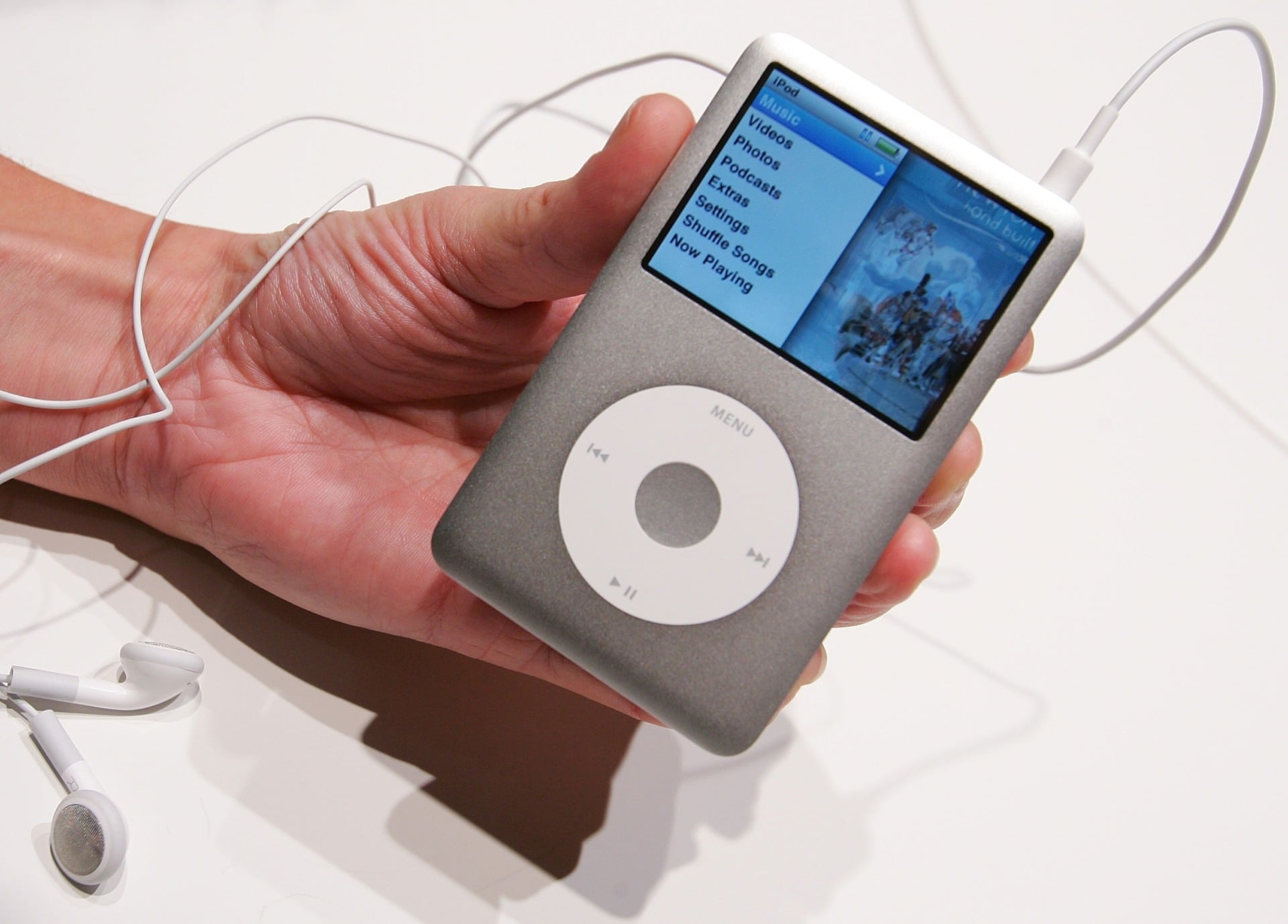
Anecdotally, I’ve been seeing the iPod everywhere, not just in a literal sense, but in a spiritual one. As I’ve written about before, digital audio players (DAPs) are seemingly a real category again, and new DAPs come in all shapes and sizes. There are DAPs shaped like cassette players, big utilitarian rectangles, and tiny little MP3-playing hunks of plastic. None of them has the iPod’s iconic click wheel, of course, but the spirit that the iPod helped popularize is still there. It’s a dedicated device that carries your music and almost nothing more.

The World Is Basically Begging for Another iPod
                Audio nostalgia is a thing right now, and it’s not just wired earbuds enjoying all of the shine. A yearning for wired audio is bringing its good friend along for the ride: the king of all things MP3. The one, the only, the iPod. That’s right, the iPod is f*cking back. Not in an official sense, of course—it was discontinued officially in 2022—but it’s back in a very unofficial capacity. By nostalgia’s standards, the iPod is relevant once more, and you’ve probably got your phone (or the icky apps in it) to thank for that.

 Okay, but how “back” is it? The iPod is pretty back, to be honest. As the AP notes, secondhand sites like eBay are basically loaded with listings for used iPods, and on a more empirical level, Back Market, which also sells used and refurbished electronics, tells the AP that used iPod sales jumped 48% since 2024. Anecdotally, I’ve been seeing the iPod everywhere, not just in a literal sense, but in a spiritual one. As I’ve written about before, digital audio players (DAPs) are seemingly a real category again, and new DAPs come in all shapes and sizes. There are DAPs shaped like cassette players, big utilitarian rectangles, and tiny little MP3-playing hunks of plastic. None of them has the iPod’s iconic click wheel, of course, but the spirit that the iPod helped popularize is still there. It’s a dedicated device that carries your music and almost nothing more. © Mario Tama / Getty Images On a more iPod-specific note, there are also people trying to replicate the iPod experience on your phone, like this guy building an iPod maker. Or how about people marrying AirPods Max with an iPod—wires and all. It’s even inspiring new products, like this upcoming AI gadget from two ex-Apple employees who tell Wired that the iPod Shuffle was a big inspiration design-wise. Those are all just window dressing, though, compared to the loads of people who actually bother to refurbish iPods, whether for personal use, resale, or because they’re nostalgic about the days when you could walk around listening to music without your phone delivering stress-inducing emails.

 None of this interest in iPods is brand new, by any means—people have been modding iPods or selling them secondhand for a while now, but it feels as though it’s reached a tipping point. It’s hard to pinpoint why exactly iPods feel more relevant than ever, but nostalgia doesn’t quite cover it.

 There’s also the Spotify of it all. Remember owning stuff? There’s no denying that nostalgia is a driving force in the iPod’s renewed relevance. Gen Z in particular has zeroed in on the early-2000s for inspiration, whether in fashion or tech, and there’s not a more iconic gadget from the early aughts than the iPod. According to Anshel Sag, a tech analyst for Moor Insights & Strategy, renewed interest in the iPod has been a long time coming. For one, Sag says there’s a resurgence in interest in wired earbuds, specifically EarPods, Apple’s wired earbuds that predate AirPods. Not only are they cheap, but they also deliver much higher fidelity than lots of wireless earbuds you can buy, even in the midrange.

 Then there’s the comeback of formats like vinyl and CDs, which have helped to create more interest in the idea of owning music as opposed to just borrowing it through a streaming service. Owning things! Remember that? It’s that last part, streaming, that feels particularly potent, though. As convenient as streaming music is, people have felt the slow creep of subscriptions on their wallets, and Spotify is a part of that. In January, Spotify raised its prices once again, this time reaching  a month. For context, in 2023, subscription fees rose from .99 to .99, and again in 2024 from .99 to .99. Apple Music is more affordable, but not by much at  per month.

 It’s been a slow turn of the dial, but coupled with the weight of other streaming services, the burden is palpable. And how does one deal with that burden? By opting out, of course. © Cate Gillon / Staff “I think people are evaluating all their streaming services, whether it’s music or TV or movies…because the price has ballooned,” Sag told Gizmodo. “Every time a service goes up in price, they become hyperaware of all the streaming services they’re paying for, and that includes music.

 Sag also says that the younger generation is also more aware of how artists make money and how much of a cut they get from streaming services. “They might not want to actually pay for the streaming service because they don’t think the artists are getting what they deserve and might otherwise just pay for the music directly from the artist and put it on their iPod, or whatever their choice of music player is.” As others have covered, it’s impossible to discount the ripple effects from the backlash against phones when it comes to nostalgic gadgets like iPods. There’s a yearning for phone-free experiences, and iPods deliver that. Sag notes that there’s also independence with gadgets like iPods or CDs and vinyl that appeals to those (particularly Gen Z) who feel bereft of things to hold onto. “There’s a demand for something that isn’t tied to a streaming connection that always sounds good, no matter where you are—and you’re in control of the experience,” Sag says. “And that’s why I think stuff like iPods is having a bit of a comeback.”

 Mostly, it’s what Sag calls “a perfect storm.” There’s no one answer to why iPods are back, and whether our love of them ever left is debatable, but somehow they do feel magnetic again. We’ll probably not live to see the day when new iPods exist, getting churned out of Foxconn like the next iPhone, but that’s for the best. They’d probably just have Apple Music on them anyway.      #World #Basically #Begging #iPodApple,audio,iPod
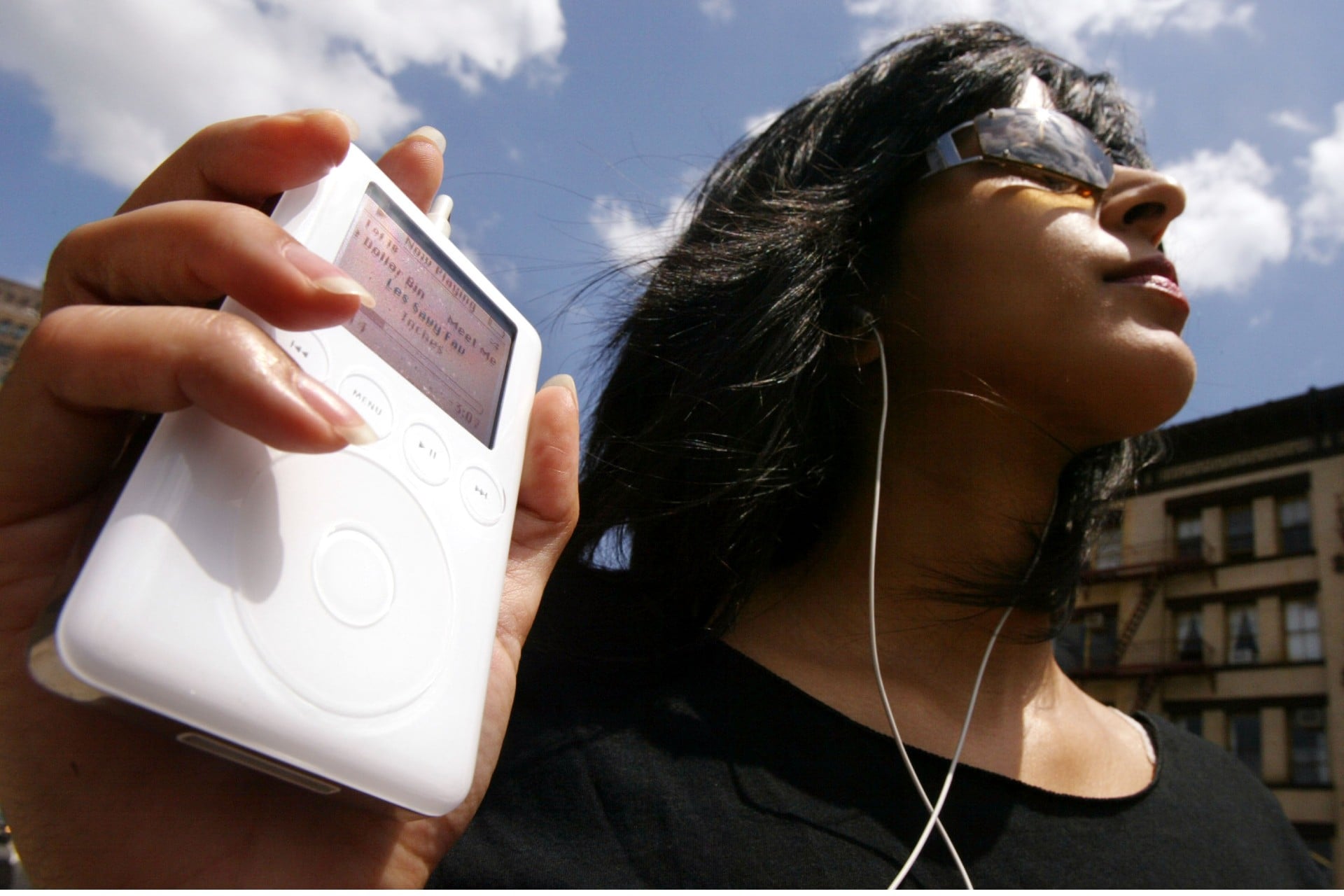
© Mario Tama / Getty Images

On a more iPod-specific note, there are also people trying to replicate the iPod experience on your phone, like this guy building an iPod maker. Or how about people marrying AirPods Max with an iPod—wires and all. It’s even inspiring new products, like this upcoming AI gadget from two ex-Apple employees who tell Wired that the iPod Shuffle was a big inspiration design-wise. Those are all just window dressing, though, compared to the loads of people who actually bother to refurbish iPods, whether for personal use, resale, or because they’re nostalgic about the days when you could walk around listening to music without your phone delivering stress-inducing emails.

None of this interest in iPods is brand new, by any means—people have been modding iPods or selling them secondhand for a while now, but it feels as though it’s reached a tipping point. It’s hard to pinpoint why exactly iPods feel more relevant than ever, but nostalgia doesn’t quite cover it.

There’s also the Spotify of it all.

Remember owning stuff?

There’s no denying that nostalgia is a driving force in the iPod’s renewed relevance. Gen Z in particular has zeroed in on the early-2000s for inspiration, whether in fashion or tech, and there’s not a more iconic gadget from the early aughts than the iPod.

According to Anshel Sag, a tech analyst for Moor Insights & Strategy, renewed interest in the iPod has been a long time coming. For one, Sag says there’s a resurgence in interest in wired earbuds, specifically EarPods, Apple’s wired earbuds that predate AirPods. Not only are they cheap, but they also deliver much higher fidelity than lots of wireless earbuds you can buy, even in the midrange.

Then there’s the comeback of formats like vinyl and CDs, which have helped to create more interest in the idea of owning music as opposed to just borrowing it through a streaming service. Owning things! Remember that?

It’s that last part, streaming, that feels particularly potent, though. As convenient as streaming music is, people have felt the slow creep of subscriptions on their wallets, and Spotify is a part of that. In January, Spotify raised its prices once again, this time reaching $13 a month. For context, in 2023, subscription fees rose from $9.99 to $10.99, and again in 2024 from $10.99 to $11.99. Apple Music is more affordable, but not by much at $11 per month.

It’s been a slow turn of the dial, but coupled with the weight of other streaming services, the burden is palpable. And how does one deal with that burden? By opting out, of course.

New Ipod Launch
© Cate Gillon / Staff

“I think people are evaluating all their streaming services, whether it’s music or TV or movies…because the price has ballooned,” Sag told Gizmodo. “Every time a service goes up in price, they become hyperaware of all the streaming services they’re paying for, and that includes music.

Sag also says that the younger generation is also more aware of how artists make money and how much of a cut they get from streaming services. “They might not want to actually pay for the streaming service because they don’t think the artists are getting what they deserve and might otherwise just pay for the music directly from the artist and put it on their iPod, or whatever their choice of music player is.”

As others have covered, it’s impossible to discount the ripple effects from the backlash against phones when it comes to nostalgic gadgets like iPods. There’s a yearning for phone-free experiences, and iPods deliver that. Sag notes that there’s also independence with gadgets like iPods or CDs and vinyl that appeals to those (particularly Gen Z) who feel bereft of things to hold onto.

“There’s a demand for something that isn’t tied to a streaming connection that always sounds good, no matter where you are—and you’re in control of the experience,” Sag says. “And that’s why I think stuff like iPods is having a bit of a comeback.”

Mostly, it’s what Sag calls “a perfect storm.” There’s no one answer to why iPods are back, and whether our love of them ever left is debatable, but somehow they do feel magnetic again. We’ll probably not live to see the day when new iPods exist, getting churned out of Foxconn like the next iPhone, but that’s for the best. They’d probably just have Apple Music on them anyway.

#World #Basically #Begging #iPodApple,audio,iPod">The World Is Basically Begging for Another iPod
                Audio nostalgia is a thing right now, and it’s not just wired earbuds enjoying all of the shine. A yearning for wired audio is bringing its good friend along for the ride: the king of all things MP3. The one, the only, the iPod. That’s right, the iPod is f*cking back. Not in an official sense, of course—it was discontinued officially in 2022—but it’s back in a very unofficial capacity. By nostalgia’s standards, the iPod is relevant once more, and you’ve probably got your phone (or the icky apps in it) to thank for that.

 Okay, but how “back” is it? The iPod is pretty back, to be honest. As the AP notes, secondhand sites like eBay are basically loaded with listings for used iPods, and on a more empirical level, Back Market, which also sells used and refurbished electronics, tells the AP that used iPod sales jumped 48% since 2024. Anecdotally, I’ve been seeing the iPod everywhere, not just in a literal sense, but in a spiritual one. As I’ve written about before, digital audio players (DAPs) are seemingly a real category again, and new DAPs come in all shapes and sizes. There are DAPs shaped like cassette players, big utilitarian rectangles, and tiny little MP3-playing hunks of plastic. None of them has the iPod’s iconic click wheel, of course, but the spirit that the iPod helped popularize is still there. It’s a dedicated device that carries your music and almost nothing more. © Mario Tama / Getty Images On a more iPod-specific note, there are also people trying to replicate the iPod experience on your phone, like this guy building an iPod maker. Or how about people marrying AirPods Max with an iPod—wires and all. It’s even inspiring new products, like this upcoming AI gadget from two ex-Apple employees who tell Wired that the iPod Shuffle was a big inspiration design-wise. Those are all just window dressing, though, compared to the loads of people who actually bother to refurbish iPods, whether for personal use, resale, or because they’re nostalgic about the days when you could walk around listening to music without your phone delivering stress-inducing emails.

 None of this interest in iPods is brand new, by any means—people have been modding iPods or selling them secondhand for a while now, but it feels as though it’s reached a tipping point. It’s hard to pinpoint why exactly iPods feel more relevant than ever, but nostalgia doesn’t quite cover it.

 There’s also the Spotify of it all. Remember owning stuff? There’s no denying that nostalgia is a driving force in the iPod’s renewed relevance. Gen Z in particular has zeroed in on the early-2000s for inspiration, whether in fashion or tech, and there’s not a more iconic gadget from the early aughts than the iPod. According to Anshel Sag, a tech analyst for Moor Insights & Strategy, renewed interest in the iPod has been a long time coming. For one, Sag says there’s a resurgence in interest in wired earbuds, specifically EarPods, Apple’s wired earbuds that predate AirPods. Not only are they cheap, but they also deliver much higher fidelity than lots of wireless earbuds you can buy, even in the midrange.

 Then there’s the comeback of formats like vinyl and CDs, which have helped to create more interest in the idea of owning music as opposed to just borrowing it through a streaming service. Owning things! Remember that? It’s that last part, streaming, that feels particularly potent, though. As convenient as streaming music is, people have felt the slow creep of subscriptions on their wallets, and Spotify is a part of that. In January, Spotify raised its prices once again, this time reaching  a month. For context, in 2023, subscription fees rose from .99 to .99, and again in 2024 from .99 to .99. Apple Music is more affordable, but not by much at  per month.

 It’s been a slow turn of the dial, but coupled with the weight of other streaming services, the burden is palpable. And how does one deal with that burden? By opting out, of course. © Cate Gillon / Staff “I think people are evaluating all their streaming services, whether it’s music or TV or movies…because the price has ballooned,” Sag told Gizmodo. “Every time a service goes up in price, they become hyperaware of all the streaming services they’re paying for, and that includes music.

 Sag also says that the younger generation is also more aware of how artists make money and how much of a cut they get from streaming services. “They might not want to actually pay for the streaming service because they don’t think the artists are getting what they deserve and might otherwise just pay for the music directly from the artist and put it on their iPod, or whatever their choice of music player is.” As others have covered, it’s impossible to discount the ripple effects from the backlash against phones when it comes to nostalgic gadgets like iPods. There’s a yearning for phone-free experiences, and iPods deliver that. Sag notes that there’s also independence with gadgets like iPods or CDs and vinyl that appeals to those (particularly Gen Z) who feel bereft of things to hold onto. “There’s a demand for something that isn’t tied to a streaming connection that always sounds good, no matter where you are—and you’re in control of the experience,” Sag says. “And that’s why I think stuff like iPods is having a bit of a comeback.”

 Mostly, it’s what Sag calls “a perfect storm.” There’s no one answer to why iPods are back, and whether our love of them ever left is debatable, but somehow they do feel magnetic again. We’ll probably not live to see the day when new iPods exist, getting churned out of Foxconn like the next iPhone, but that’s for the best. They’d probably just have Apple Music on them anyway.      #World #Basically #Begging #iPodApple,audio,iPod

enjoying all of the shine. A yearning for wired audio is bringing its good friend along for the ride: the king of all things MP3. The one, the only, the iPod.

That’s right, the iPod is f*cking back. Not in an official sense, of course—it was discontinued officially in 2022—but it’s back in a very unofficial capacity. By nostalgia’s standards, the iPod is relevant once more, and you’ve probably got your phone (or the icky apps in it) to thank for that.

Okay, but how “back” is it?

The iPod is pretty back, to be honest. As the AP notes, secondhand sites like eBay are basically loaded with listings for used iPods, and on a more empirical level, Back Market, which also sells used and refurbished electronics, tells the AP that used iPod sales jumped 48% since 2024.

Anecdotally, I’ve been seeing the iPod everywhere, not just in a literal sense, but in a spiritual one. As I’ve written about before, digital audio players (DAPs) are seemingly a real category again, and new DAPs come in all shapes and sizes. There are DAPs shaped like cassette players, big utilitarian rectangles, and tiny little MP3-playing hunks of plastic. None of them has the iPod’s iconic click wheel, of course, but the spirit that the iPod helped popularize is still there. It’s a dedicated device that carries your music and almost nothing more.

The World Is Basically Begging for Another iPod
                Audio nostalgia is a thing right now, and it’s not just wired earbuds enjoying all of the shine. A yearning for wired audio is bringing its good friend along for the ride: the king of all things MP3. The one, the only, the iPod. That’s right, the iPod is f*cking back. Not in an official sense, of course—it was discontinued officially in 2022—but it’s back in a very unofficial capacity. By nostalgia’s standards, the iPod is relevant once more, and you’ve probably got your phone (or the icky apps in it) to thank for that.

 Okay, but how “back” is it? The iPod is pretty back, to be honest. As the AP notes, secondhand sites like eBay are basically loaded with listings for used iPods, and on a more empirical level, Back Market, which also sells used and refurbished electronics, tells the AP that used iPod sales jumped 48% since 2024. Anecdotally, I’ve been seeing the iPod everywhere, not just in a literal sense, but in a spiritual one. As I’ve written about before, digital audio players (DAPs) are seemingly a real category again, and new DAPs come in all shapes and sizes. There are DAPs shaped like cassette players, big utilitarian rectangles, and tiny little MP3-playing hunks of plastic. None of them has the iPod’s iconic click wheel, of course, but the spirit that the iPod helped popularize is still there. It’s a dedicated device that carries your music and almost nothing more. © Mario Tama / Getty Images On a more iPod-specific note, there are also people trying to replicate the iPod experience on your phone, like this guy building an iPod maker. Or how about people marrying AirPods Max with an iPod—wires and all. It’s even inspiring new products, like this upcoming AI gadget from two ex-Apple employees who tell Wired that the iPod Shuffle was a big inspiration design-wise. Those are all just window dressing, though, compared to the loads of people who actually bother to refurbish iPods, whether for personal use, resale, or because they’re nostalgic about the days when you could walk around listening to music without your phone delivering stress-inducing emails.

 None of this interest in iPods is brand new, by any means—people have been modding iPods or selling them secondhand for a while now, but it feels as though it’s reached a tipping point. It’s hard to pinpoint why exactly iPods feel more relevant than ever, but nostalgia doesn’t quite cover it.

 There’s also the Spotify of it all. Remember owning stuff? There’s no denying that nostalgia is a driving force in the iPod’s renewed relevance. Gen Z in particular has zeroed in on the early-2000s for inspiration, whether in fashion or tech, and there’s not a more iconic gadget from the early aughts than the iPod. According to Anshel Sag, a tech analyst for Moor Insights & Strategy, renewed interest in the iPod has been a long time coming. For one, Sag says there’s a resurgence in interest in wired earbuds, specifically EarPods, Apple’s wired earbuds that predate AirPods. Not only are they cheap, but they also deliver much higher fidelity than lots of wireless earbuds you can buy, even in the midrange.

 Then there’s the comeback of formats like vinyl and CDs, which have helped to create more interest in the idea of owning music as opposed to just borrowing it through a streaming service. Owning things! Remember that? It’s that last part, streaming, that feels particularly potent, though. As convenient as streaming music is, people have felt the slow creep of subscriptions on their wallets, and Spotify is a part of that. In January, Spotify raised its prices once again, this time reaching  a month. For context, in 2023, subscription fees rose from .99 to .99, and again in 2024 from .99 to .99. Apple Music is more affordable, but not by much at  per month.

 It’s been a slow turn of the dial, but coupled with the weight of other streaming services, the burden is palpable. And how does one deal with that burden? By opting out, of course. © Cate Gillon / Staff “I think people are evaluating all their streaming services, whether it’s music or TV or movies…because the price has ballooned,” Sag told Gizmodo. “Every time a service goes up in price, they become hyperaware of all the streaming services they’re paying for, and that includes music.

 Sag also says that the younger generation is also more aware of how artists make money and how much of a cut they get from streaming services. “They might not want to actually pay for the streaming service because they don’t think the artists are getting what they deserve and might otherwise just pay for the music directly from the artist and put it on their iPod, or whatever their choice of music player is.” As others have covered, it’s impossible to discount the ripple effects from the backlash against phones when it comes to nostalgic gadgets like iPods. There’s a yearning for phone-free experiences, and iPods deliver that. Sag notes that there’s also independence with gadgets like iPods or CDs and vinyl that appeals to those (particularly Gen Z) who feel bereft of things to hold onto. “There’s a demand for something that isn’t tied to a streaming connection that always sounds good, no matter where you are—and you’re in control of the experience,” Sag says. “And that’s why I think stuff like iPods is having a bit of a comeback.”

 Mostly, it’s what Sag calls “a perfect storm.” There’s no one answer to why iPods are back, and whether our love of them ever left is debatable, but somehow they do feel magnetic again. We’ll probably not live to see the day when new iPods exist, getting churned out of Foxconn like the next iPhone, but that’s for the best. They’d probably just have Apple Music on them anyway.      #World #Basically #Begging #iPodApple,audio,iPod
© Mario Tama / Getty Images

On a more iPod-specific note, there are also people trying to replicate the iPod experience on your phone, like this guy building an iPod maker. Or how about people marrying AirPods Max with an iPod—wires and all. It’s even inspiring new products, like this upcoming AI gadget from two ex-Apple employees who tell Wired that the iPod Shuffle was a big inspiration design-wise. Those are all just window dressing, though, compared to the loads of people who actually bother to refurbish iPods, whether for personal use, resale, or because they’re nostalgic about the days when you could walk around listening to music without your phone delivering stress-inducing emails.

None of this interest in iPods is brand new, by any means—people have been modding iPods or selling them secondhand for a while now, but it feels as though it’s reached a tipping point. It’s hard to pinpoint why exactly iPods feel more relevant than ever, but nostalgia doesn’t quite cover it.

There’s also the Spotify of it all.

Remember owning stuff?

There’s no denying that nostalgia is a driving force in the iPod’s renewed relevance. Gen Z in particular has zeroed in on the early-2000s for inspiration, whether in fashion or tech, and there’s not a more iconic gadget from the early aughts than the iPod.

According to Anshel Sag, a tech analyst for Moor Insights & Strategy, renewed interest in the iPod has been a long time coming. For one, Sag says there’s a resurgence in interest in wired earbuds, specifically EarPods, Apple’s wired earbuds that predate AirPods. Not only are they cheap, but they also deliver much higher fidelity than lots of wireless earbuds you can buy, even in the midrange.

Then there’s the comeback of formats like vinyl and CDs, which have helped to create more interest in the idea of owning music as opposed to just borrowing it through a streaming service. Owning things! Remember that?

It’s that last part, streaming, that feels particularly potent, though. As convenient as streaming music is, people have felt the slow creep of subscriptions on their wallets, and Spotify is a part of that. In January, Spotify raised its prices once again, this time reaching $13 a month. For context, in 2023, subscription fees rose from $9.99 to $10.99, and again in 2024 from $10.99 to $11.99. Apple Music is more affordable, but not by much at $11 per month.

It’s been a slow turn of the dial, but coupled with the weight of other streaming services, the burden is palpable. And how does one deal with that burden? By opting out, of course.

New Ipod Launch
© Cate Gillon / Staff

“I think people are evaluating all their streaming services, whether it’s music or TV or movies…because the price has ballooned,” Sag told Gizmodo. “Every time a service goes up in price, they become hyperaware of all the streaming services they’re paying for, and that includes music.

Sag also says that the younger generation is also more aware of how artists make money and how much of a cut they get from streaming services. “They might not want to actually pay for the streaming service because they don’t think the artists are getting what they deserve and might otherwise just pay for the music directly from the artist and put it on their iPod, or whatever their choice of music player is.”

As others have covered, it’s impossible to discount the ripple effects from the backlash against phones when it comes to nostalgic gadgets like iPods. There’s a yearning for phone-free experiences, and iPods deliver that. Sag notes that there’s also independence with gadgets like iPods or CDs and vinyl that appeals to those (particularly Gen Z) who feel bereft of things to hold onto.

“There’s a demand for something that isn’t tied to a streaming connection that always sounds good, no matter where you are—and you’re in control of the experience,” Sag says. “And that’s why I think stuff like iPods is having a bit of a comeback.”

Mostly, it’s what Sag calls “a perfect storm.” There’s no one answer to why iPods are back, and whether our love of them ever left is debatable, but somehow they do feel magnetic again. We’ll probably not live to see the day when new iPods exist, getting churned out of Foxconn like the next iPhone, but that’s for the best. They’d probably just have Apple Music on them anyway.

#World #Basically #Begging #iPodApple,audio,iPod">The World Is Basically Begging for Another iPod

Audio nostalgia is a thing right now, and it’s not just wired earbuds enjoying all of the shine. A yearning for wired audio is bringing its good friend along for the ride: the king of all things MP3. The one, the only, the iPod.

That’s right, the iPod is f*cking back. Not in an official sense, of course—it was discontinued officially in 2022—but it’s back in a very unofficial capacity. By nostalgia’s standards, the iPod is relevant once more, and you’ve probably got your phone (or the icky apps in it) to thank for that.

Okay, but how “back” is it?

The iPod is pretty back, to be honest. As the AP notes, secondhand sites like eBay are basically loaded with listings for used iPods, and on a more empirical level, Back Market, which also sells used and refurbished electronics, tells the AP that used iPod sales jumped 48% since 2024.

Anecdotally, I’ve been seeing the iPod everywhere, not just in a literal sense, but in a spiritual one. As I’ve written about before, digital audio players (DAPs) are seemingly a real category again, and new DAPs come in all shapes and sizes. There are DAPs shaped like cassette players, big utilitarian rectangles, and tiny little MP3-playing hunks of plastic. None of them has the iPod’s iconic click wheel, of course, but the spirit that the iPod helped popularize is still there. It’s a dedicated device that carries your music and almost nothing more.

The World Is Basically Begging for Another iPod
                Audio nostalgia is a thing right now, and it’s not just wired earbuds enjoying all of the shine. A yearning for wired audio is bringing its good friend along for the ride: the king of all things MP3. The one, the only, the iPod. That’s right, the iPod is f*cking back. Not in an official sense, of course—it was discontinued officially in 2022—but it’s back in a very unofficial capacity. By nostalgia’s standards, the iPod is relevant once more, and you’ve probably got your phone (or the icky apps in it) to thank for that.

 Okay, but how “back” is it? The iPod is pretty back, to be honest. As the AP notes, secondhand sites like eBay are basically loaded with listings for used iPods, and on a more empirical level, Back Market, which also sells used and refurbished electronics, tells the AP that used iPod sales jumped 48% since 2024. Anecdotally, I’ve been seeing the iPod everywhere, not just in a literal sense, but in a spiritual one. As I’ve written about before, digital audio players (DAPs) are seemingly a real category again, and new DAPs come in all shapes and sizes. There are DAPs shaped like cassette players, big utilitarian rectangles, and tiny little MP3-playing hunks of plastic. None of them has the iPod’s iconic click wheel, of course, but the spirit that the iPod helped popularize is still there. It’s a dedicated device that carries your music and almost nothing more. © Mario Tama / Getty Images On a more iPod-specific note, there are also people trying to replicate the iPod experience on your phone, like this guy building an iPod maker. Or how about people marrying AirPods Max with an iPod—wires and all. It’s even inspiring new products, like this upcoming AI gadget from two ex-Apple employees who tell Wired that the iPod Shuffle was a big inspiration design-wise. Those are all just window dressing, though, compared to the loads of people who actually bother to refurbish iPods, whether for personal use, resale, or because they’re nostalgic about the days when you could walk around listening to music without your phone delivering stress-inducing emails.

 None of this interest in iPods is brand new, by any means—people have been modding iPods or selling them secondhand for a while now, but it feels as though it’s reached a tipping point. It’s hard to pinpoint why exactly iPods feel more relevant than ever, but nostalgia doesn’t quite cover it.

 There’s also the Spotify of it all. Remember owning stuff? There’s no denying that nostalgia is a driving force in the iPod’s renewed relevance. Gen Z in particular has zeroed in on the early-2000s for inspiration, whether in fashion or tech, and there’s not a more iconic gadget from the early aughts than the iPod. According to Anshel Sag, a tech analyst for Moor Insights & Strategy, renewed interest in the iPod has been a long time coming. For one, Sag says there’s a resurgence in interest in wired earbuds, specifically EarPods, Apple’s wired earbuds that predate AirPods. Not only are they cheap, but they also deliver much higher fidelity than lots of wireless earbuds you can buy, even in the midrange.

 Then there’s the comeback of formats like vinyl and CDs, which have helped to create more interest in the idea of owning music as opposed to just borrowing it through a streaming service. Owning things! Remember that? It’s that last part, streaming, that feels particularly potent, though. As convenient as streaming music is, people have felt the slow creep of subscriptions on their wallets, and Spotify is a part of that. In January, Spotify raised its prices once again, this time reaching  a month. For context, in 2023, subscription fees rose from .99 to .99, and again in 2024 from .99 to .99. Apple Music is more affordable, but not by much at  per month.

 It’s been a slow turn of the dial, but coupled with the weight of other streaming services, the burden is palpable. And how does one deal with that burden? By opting out, of course. © Cate Gillon / Staff “I think people are evaluating all their streaming services, whether it’s music or TV or movies…because the price has ballooned,” Sag told Gizmodo. “Every time a service goes up in price, they become hyperaware of all the streaming services they’re paying for, and that includes music.

 Sag also says that the younger generation is also more aware of how artists make money and how much of a cut they get from streaming services. “They might not want to actually pay for the streaming service because they don’t think the artists are getting what they deserve and might otherwise just pay for the music directly from the artist and put it on their iPod, or whatever their choice of music player is.” As others have covered, it’s impossible to discount the ripple effects from the backlash against phones when it comes to nostalgic gadgets like iPods. There’s a yearning for phone-free experiences, and iPods deliver that. Sag notes that there’s also independence with gadgets like iPods or CDs and vinyl that appeals to those (particularly Gen Z) who feel bereft of things to hold onto. “There’s a demand for something that isn’t tied to a streaming connection that always sounds good, no matter where you are—and you’re in control of the experience,” Sag says. “And that’s why I think stuff like iPods is having a bit of a comeback.”

 Mostly, it’s what Sag calls “a perfect storm.” There’s no one answer to why iPods are back, and whether our love of them ever left is debatable, but somehow they do feel magnetic again. We’ll probably not live to see the day when new iPods exist, getting churned out of Foxconn like the next iPhone, but that’s for the best. They’d probably just have Apple Music on them anyway.      #World #Basically #Begging #iPodApple,audio,iPod
© Mario Tama / Getty Images

On a more iPod-specific note, there are also people trying to replicate the iPod experience on your phone, like this guy building an iPod maker. Or how about people marrying AirPods Max with an iPod—wires and all. It’s even inspiring new products, like this upcoming AI gadget from two ex-Apple employees who tell Wired that the iPod Shuffle was a big inspiration design-wise. Those are all just window dressing, though, compared to the loads of people who actually bother to refurbish iPods, whether for personal use, resale, or because they’re nostalgic about the days when you could walk around listening to music without your phone delivering stress-inducing emails.

None of this interest in iPods is brand new, by any means—people have been modding iPods or selling them secondhand for a while now, but it feels as though it’s reached a tipping point. It’s hard to pinpoint why exactly iPods feel more relevant than ever, but nostalgia doesn’t quite cover it.

There’s also the Spotify of it all.

Remember owning stuff?

There’s no denying that nostalgia is a driving force in the iPod’s renewed relevance. Gen Z in particular has zeroed in on the early-2000s for inspiration, whether in fashion or tech, and there’s not a more iconic gadget from the early aughts than the iPod.

According to Anshel Sag, a tech analyst for Moor Insights & Strategy, renewed interest in the iPod has been a long time coming. For one, Sag says there’s a resurgence in interest in wired earbuds, specifically EarPods, Apple’s wired earbuds that predate AirPods. Not only are they cheap, but they also deliver much higher fidelity than lots of wireless earbuds you can buy, even in the midrange.

Then there’s the comeback of formats like vinyl and CDs, which have helped to create more interest in the idea of owning music as opposed to just borrowing it through a streaming service. Owning things! Remember that?

It’s that last part, streaming, that feels particularly potent, though. As convenient as streaming music is, people have felt the slow creep of subscriptions on their wallets, and Spotify is a part of that. In January, Spotify raised its prices once again, this time reaching $13 a month. For context, in 2023, subscription fees rose from $9.99 to $10.99, and again in 2024 from $10.99 to $11.99. Apple Music is more affordable, but not by much at $11 per month.

It’s been a slow turn of the dial, but coupled with the weight of other streaming services, the burden is palpable. And how does one deal with that burden? By opting out, of course.

New Ipod Launch
© Cate Gillon / Staff

“I think people are evaluating all their streaming services, whether it’s music or TV or movies…because the price has ballooned,” Sag told Gizmodo. “Every time a service goes up in price, they become hyperaware of all the streaming services they’re paying for, and that includes music.

Sag also says that the younger generation is also more aware of how artists make money and how much of a cut they get from streaming services. “They might not want to actually pay for the streaming service because they don’t think the artists are getting what they deserve and might otherwise just pay for the music directly from the artist and put it on their iPod, or whatever their choice of music player is.”

As others have covered, it’s impossible to discount the ripple effects from the backlash against phones when it comes to nostalgic gadgets like iPods. There’s a yearning for phone-free experiences, and iPods deliver that. Sag notes that there’s also independence with gadgets like iPods or CDs and vinyl that appeals to those (particularly Gen Z) who feel bereft of things to hold onto.

“There’s a demand for something that isn’t tied to a streaming connection that always sounds good, no matter where you are—and you’re in control of the experience,” Sag says. “And that’s why I think stuff like iPods is having a bit of a comeback.”

Mostly, it’s what Sag calls “a perfect storm.” There’s no one answer to why iPods are back, and whether our love of them ever left is debatable, but somehow they do feel magnetic again. We’ll probably not live to see the day when new iPods exist, getting churned out of Foxconn like the next iPhone, but that’s for the best. They’d probably just have Apple Music on them anyway.

#World #Basically #Begging #iPodApple,audio,iPod

Post Comment