×
‘Wicked Spot’ Is a Fun, Sapphic Rom-Com That Yeets a Witch Into the Magical World of Influencer Culture

‘Wicked Spot’ Is a Fun, Sapphic Rom-Com That Yeets a Witch Into the Magical World of Influencer Culture

For years, fantasy has been stuck in the mass-produced churn of isekai power maxing—a mad‑libbed mash of modern life and magic that often feels more derivative than daring, telegraphed entirely by those sentence‑long, tell‑you‑everything titles. Thankfully, the genre is finally clawing its way out of that rut and remembering what it used to be: a realm of wonder, witchcraft, and worlds that don’t need a stat-sheet HUD to denote character growth or tell a good story.

Right now, both anime and manga are in a deeply old-school fantasy renaissance, with series like Delicious in Dungeon, Frieren: Beyond Journey’s End, and Witch Hat Atelier leading the charge. But that doesn’t mean the upholstery of the fish‑out‑of‑water formula from isekai’s dark ages has lost its charm. When done right, it still sings—and Wicked Spot, a new manga that blends the witchy, whimsical magic of classic fantasy with the contemporary spell of influencer culture, proves the genre can still feel both familiar and refreshingly strange in a way that absolutely slaps.

© Sal Jiang/Kodansha

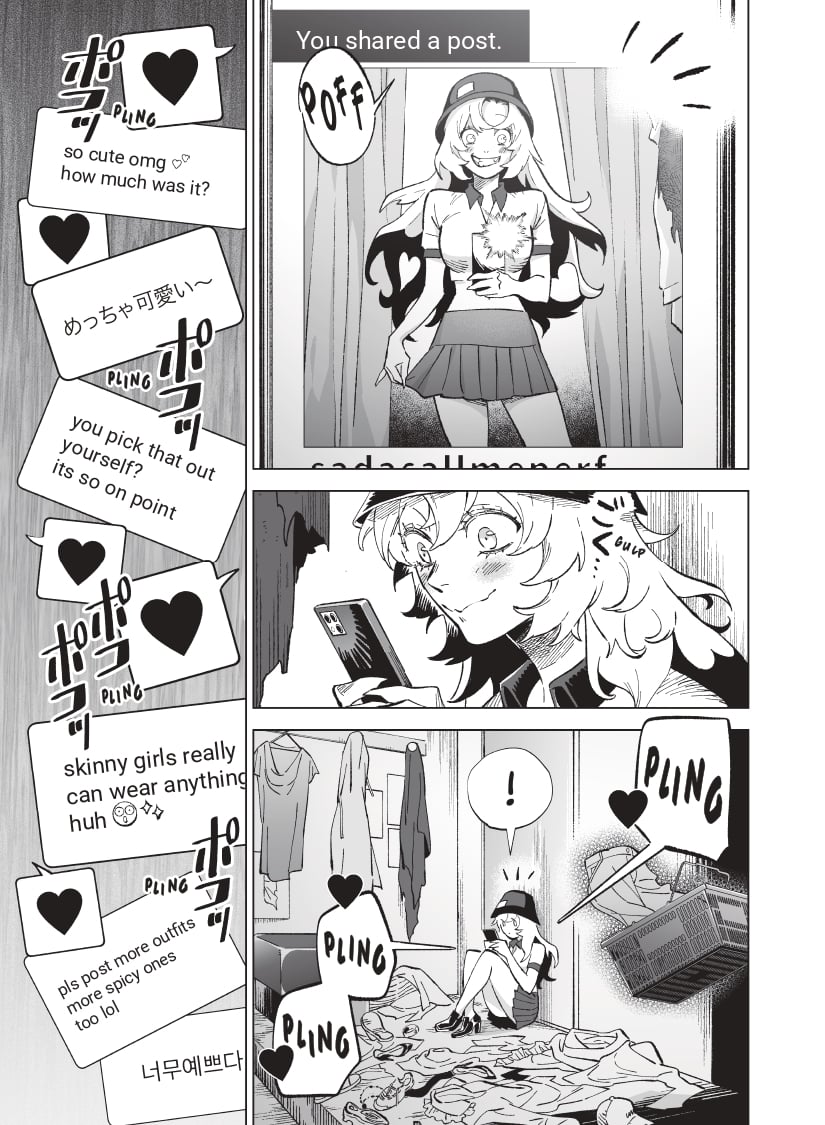
Wicked Spot, by Sal Jiang, follows Sadako, a witch sequestered in a haunted forest that only foolhardy livestreamers would ever venture into in the hopes of getting some good content out of it… which just so happens to be how the story starts out. After scaring the bejesus out of her intrusive houseguests, Sada notices that they dropped a smartphone (or as she calls it, a “glowing little board”) as they fled into the night. And like placing an iPad in front of a child and watching their little brains melt in real time at all the glowing colors, Sada immediately becomes mesmerized by the glamour of social media and all the pretty influencers sharing cute pics for likes. After years of feeling unseen, Sada decides to go into the city and become an influencer.

Things are pretty sweet for Sada, largely due to her Princess Diaries-style glow-up shopping spree in the big city, all without having to pay the high prices at stores she shoplifts from because she has no money—thanks to her casting spells on cashiers to get a five-finger discount—and using magic to make her phone camera float so she can get all her best angles for her growing social media presence. However, her rising fame quickly puffs her up, and she makes a big mistake by outing herself as a witch. 
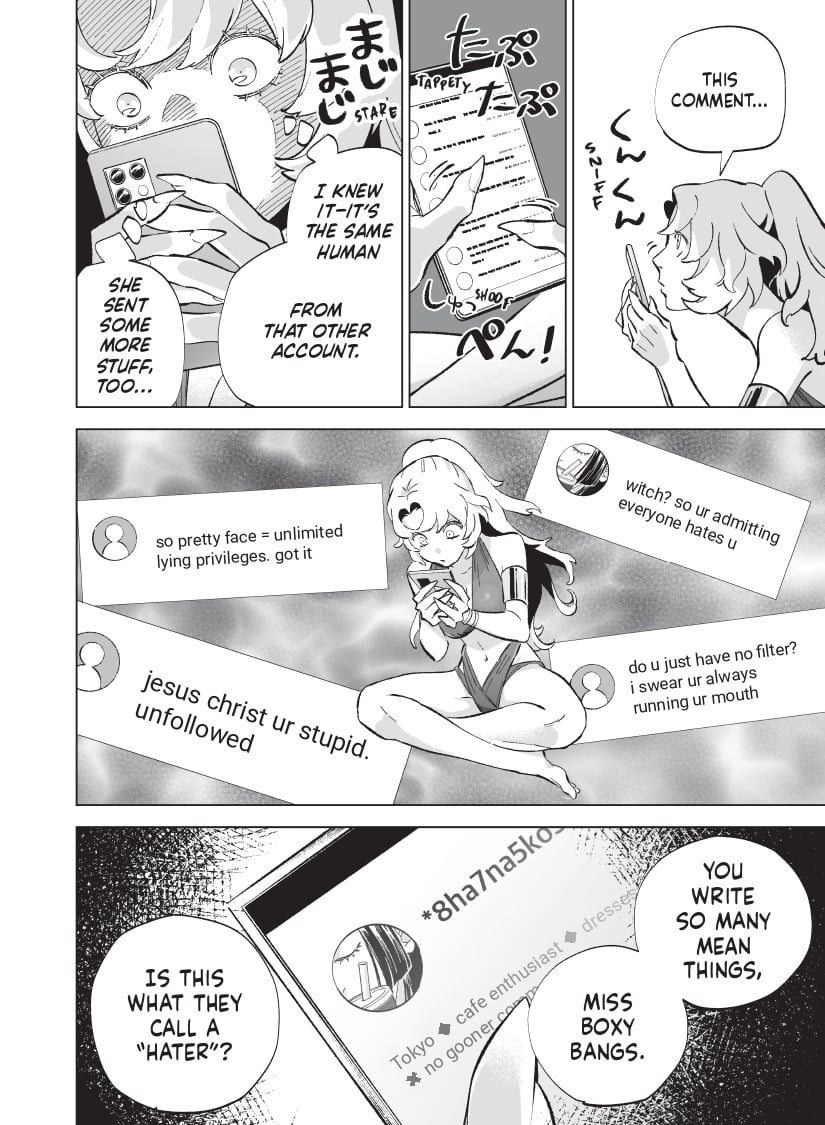
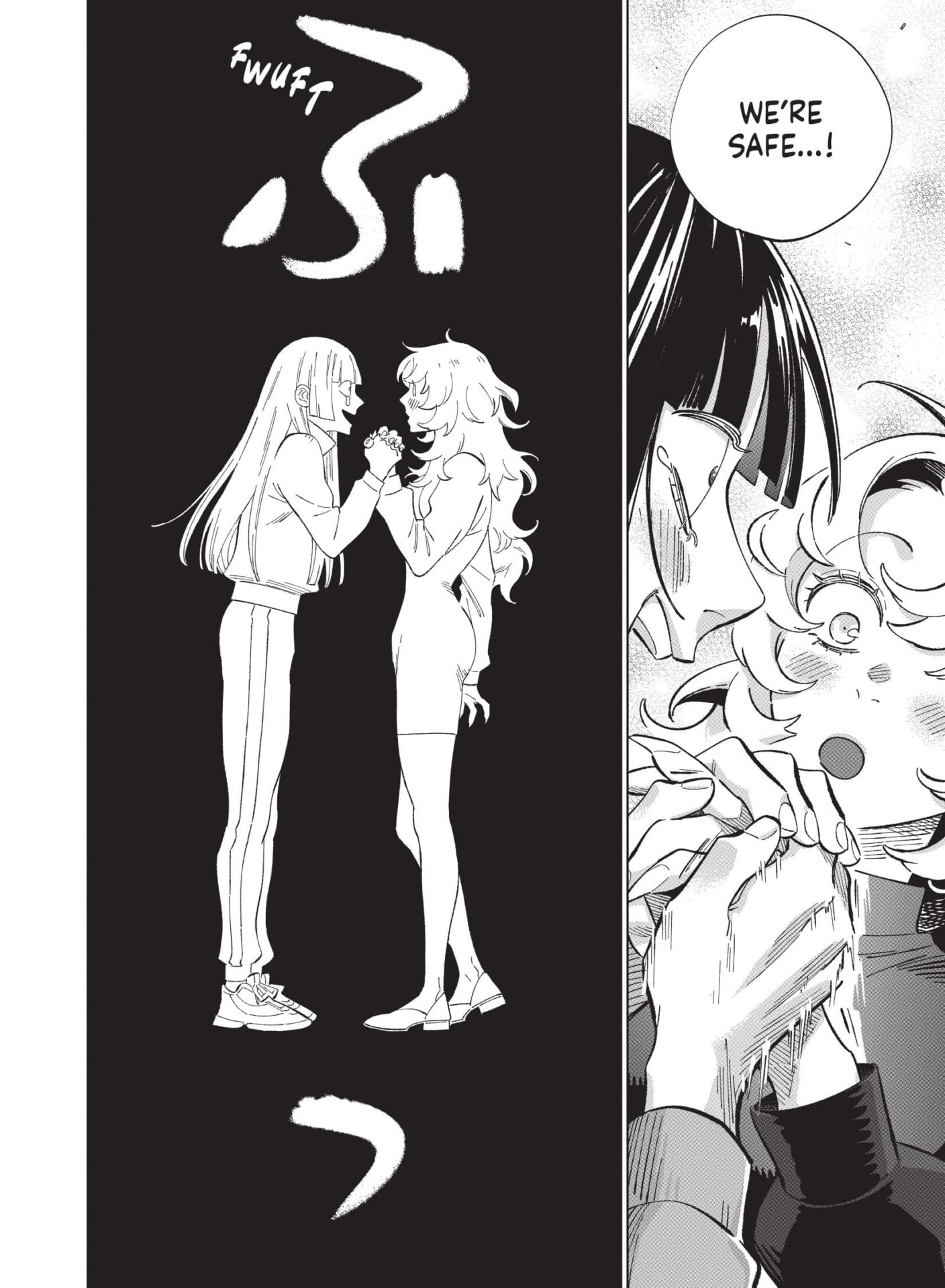
While fans take Sada’s ill-advised moment of transparency in stride as a joke, her witch confession has the opposite effect on Hanako, a woman with ogre strength who is immune to magic and despises witches so much that her double-tap thumbs-up on Sada’s posts turns into Twitter fingers, making her Sada’s first troll. Delightfully, instead of becoming a serious look at the chaos of social media and online fame à la Oshi No Ko, Wicked Spot goes the enemies-to-lovers route as the goth and pink house meme characters enter each other’s worlds on a wild journey where the excitement and danger of social media and witchcraft collide.
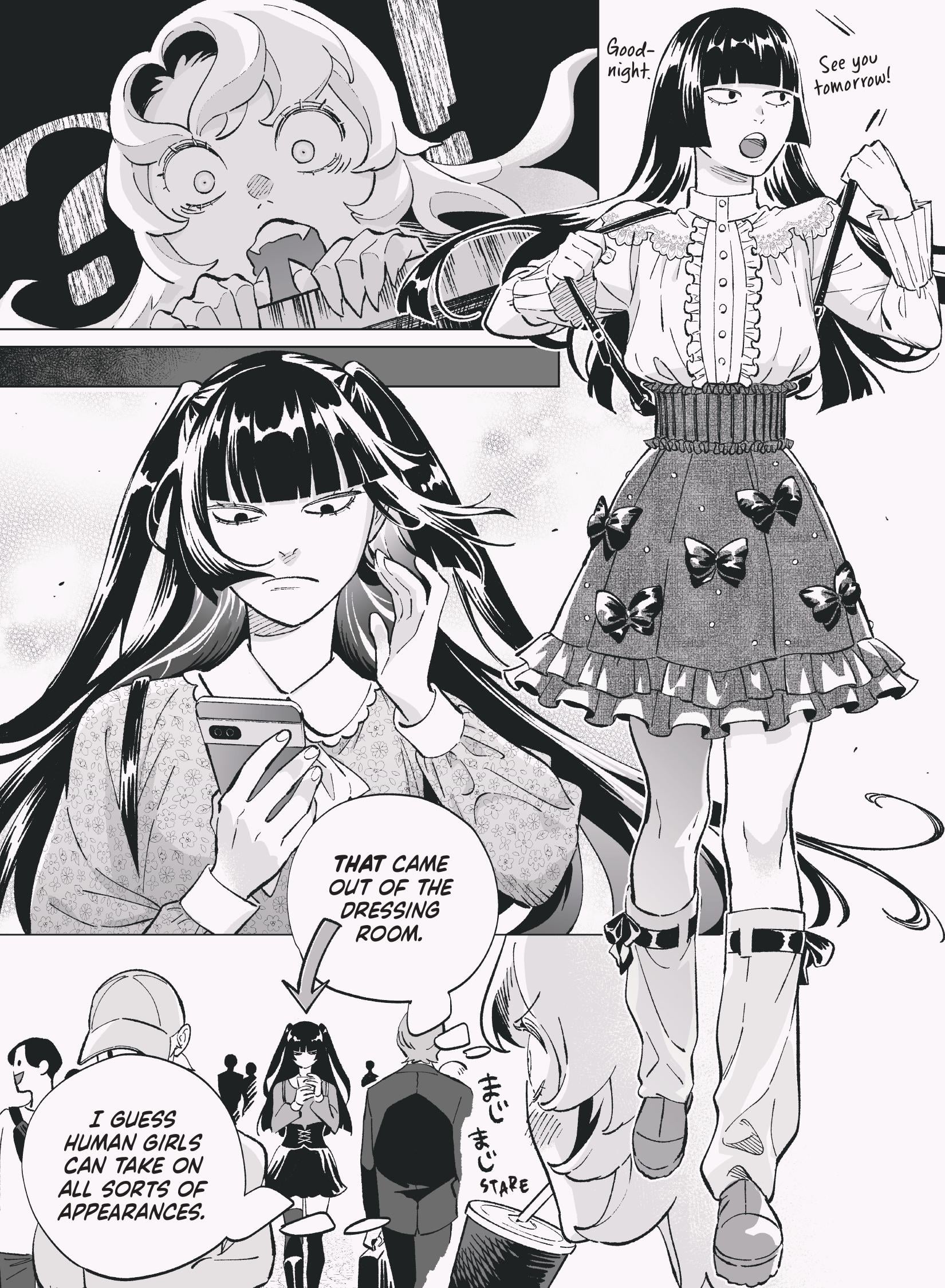
Wicked Spot Sada watching Hana walk down the street
© Sal Jiang/Kodansha

What drew me to Wicked Spot is that it’s a fun little manga with a unique vibe, reminiscent of early-aughts romcoms. If I had to compare that vibe to something, it feels like a mix of Enchanted, Bryan Lee O’Malley, and Leslie Hung’s Snot GirlWicked Spot effortlessly balances the comedy and drama its premise promises without one overshadowing the other. It also doesn’t hurt that the manga’s endearing Hana‑and‑Sada dynamic is pretty gay (appreciative). No need to squint, overanalyze, or enhance screenshots like other series that leave queer fans piecing together a corkboard and yarn to connect a queer story that stays in their heads and makes its way to the page. 
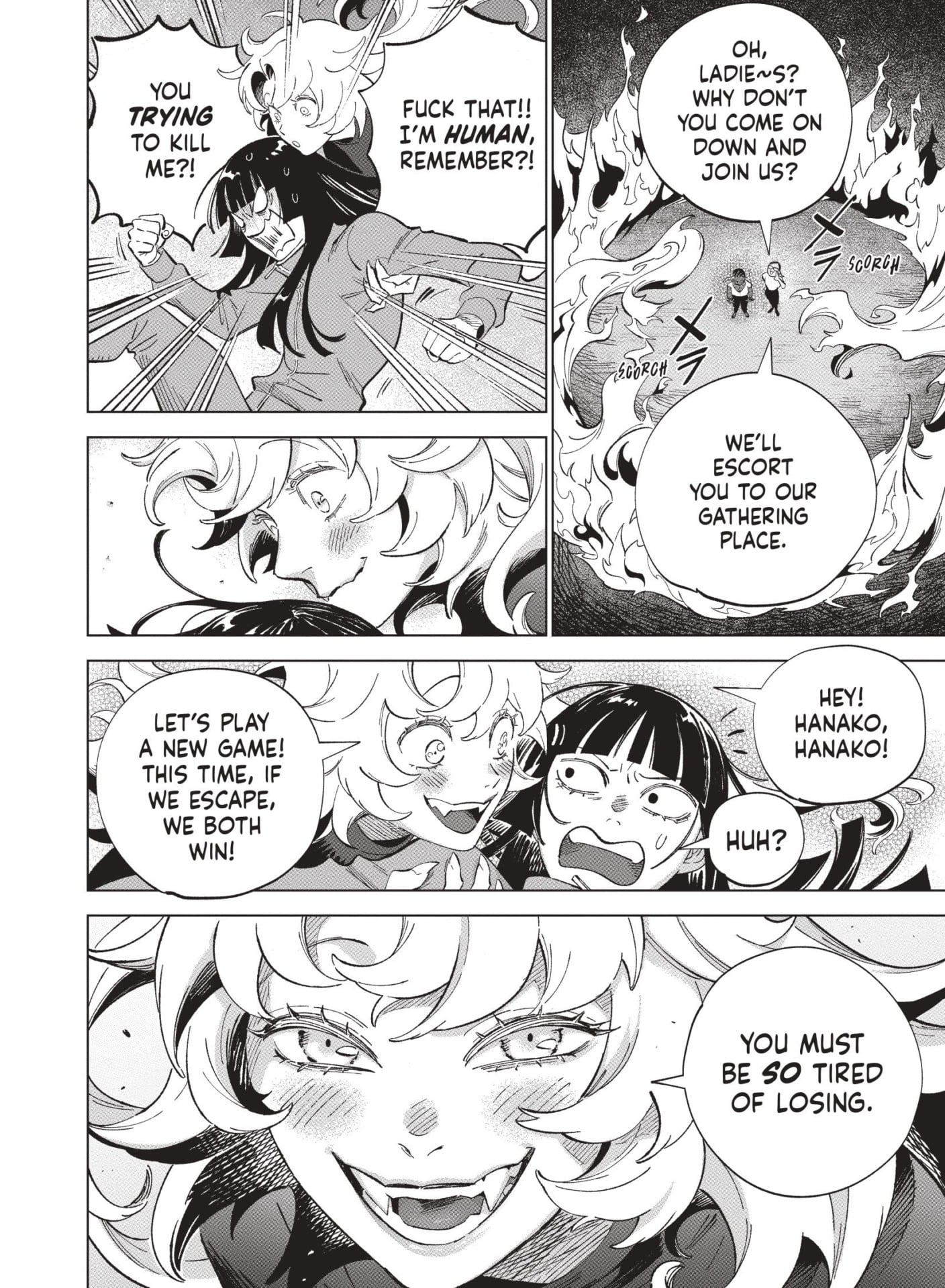
While Wicked Spot doesn’t break out the airplane runway lights, making Hana and Sada look like a guaranteed endgame by the end of its first volume, Jiang definitely does her big thing, laying down enough blushes, stolen glances, and odd-couple spark between them, channeling the same flirtatious promise as Sumiko Arai’s The Guy She Was Interested In Wasn’t A Guy At All.

If anything, TGSWIIWAGA (“Green Yuri,” for short) is a picture-perfect twin to Wicked Spot‘s charming, witchy, sapphic vibes. Only, where Green Yuri feels like a high-school-era Nana that actually commits to the sapphic yearning of its leads, Wicked Spot reads like a (somehow) even more yuri-tinged take on Kamome Shirahama‘s slept-on pre-Witch Hat Atelier series, Eniale & Dewiela. Honestly, that’s as good a back-of-the-box quote as any new manga destined to inspire the meme-ready Google search “Does Wicked Spot is gay?” could hope for.

Considering Jiang is already a household name among yuri fans, having written the spicy, toxic yuri workplace series Black and White: Tough Love at the Office, it’s likely that Wicked Spot won’t leave people feeling queer-baited over whether or not its opposites-attract girlies with horror icon names will eventually work it out on the remix.

Want more io9 news? Check out when to expect the latest Marvel, Star Wars, and Star Trek releases, what’s next for the DC Universe on film and TV, and everything you need to know about the future of Doctor Who.

Source link
#Wicked #Spot #Fun #Sapphic #RomCom #Yeets #Witch #Magical #World #Influencer #Culture

launched the Enco Air 5 Pro TWS earbuds in India, featuring premium audio, robust active noise cancellation, and long battery life. The new earbuds are designed for users who listen to music, attend calls, travel frequently, or stream content daily. Oppo is offering the earbuds in Matte Black and Pearl White.

Oppo Enco Air 5 Pro Specifications and Features

The Enco Air 5 Pro earbuds feature up to 55dB of Active Noise Cancellation for a quieter, more focused listening experience. Oppo claims the earbuds can reduce noise across a broad 5,000Hz frequency range, helping block voices and background sounds more effectively. Adaptive ANC automatically adjusts noise cancellation based on the user’s environment. The earbuds have also received TUV Rheinland certification for high-performance noise cancellation.

Oppo Enco Air 5 Pro India Launch: Price, Features and Availability
	
Oppo has officially launched the Enco Air 5 Pro TWS earbuds in India, featuring premium audio, robust active noise cancellation, and long battery life. The new earbuds are designed for users who listen to music, attend calls, travel frequently, or stream content daily. Oppo is offering the earbuds in Matte Black and Pearl White.


Oppo Enco Air 5 Pro Specifications and Features


The Enco Air 5 Pro earbuds feature up to 55dB of Active Noise Cancellation for a quieter, more focused listening experience. Oppo claims the earbuds can reduce noise across a broad 5,000Hz frequency range, helping block voices and background sounds more effectively. Adaptive ANC automatically adjusts noise cancellation based on the user’s environment. The earbuds have also received TUV Rheinland certification for high-performance noise cancellation.


Oppo has added a triple-mic system to the earbuds for better call quality. The AI-backed noise cancellation feature focuses on the user’s voice while lowering unwanted environmental sounds. The earbuds are claimed to deliver clearer calls even in windy conditions or busy outdoor areas.


For audio performance, Oppo uses the Enco Air 5 Pro with 12mm titanium-coated drivers to deliver deeper bass, balanced vocals, and detailed sound. Hi-Res Audio certification, as well as the LHDC 5.0, ensure high-quality audio signal transmission. Oppo also features Alive Audio, which provides a broader, richer sound experience for music, streaming, and gaming.


The Enco Air 5 Pro offers up to 54 hours of combined battery life along with the charging case. The earbuds alone can run for up to 13 hours on a single charge with selected settings. Fast charging support is also available, and a 10-minute charge can deliver enough power for long listening sessions. Oppo notes that battery life may vary depending on whether ANC or high-resolution LHDC audio is enabled.


Price and Availability


Oppo has launched the Enco Air 5 Pro in India at a price of Rs 4,999. The earbuds are currently available for pre-order on Oppo India’s official website, with official sales beginning on May 28, 2026.

#Oppo #Enco #Air #Pro #India #Launch #Price #Features #AvailabilityOppo

Oppo has added a triple-mic system to the earbuds for better call quality. The AI-backed noise cancellation feature focuses on the user’s voice while lowering unwanted environmental sounds. The earbuds are claimed to deliver clearer calls even in windy conditions or busy outdoor areas.

For audio performance, Oppo uses the Enco Air 5 Pro with 12mm titanium-coated drivers to deliver deeper bass, balanced vocals, and detailed sound. Hi-Res Audio certification, as well as the LHDC 5.0, ensure high-quality audio signal transmission. Oppo also features Alive Audio, which provides a broader, richer sound experience for music, streaming, and gaming.

The Enco Air 5 Pro offers up to 54 hours of combined battery life along with the charging case. The earbuds alone can run for up to 13 hours on a single charge with selected settings. Fast charging support is also available, and a 10-minute charge can deliver enough power for long listening sessions. Oppo notes that battery life may vary depending on whether ANC or high-resolution LHDC audio is enabled.

Price and Availability

Oppo has launched the Enco Air 5 Pro in India at a price of Rs 4,999. The earbuds are currently available for pre-order on Oppo India’s official website, with official sales beginning on May 28, 2026.

#Oppo #Enco #Air #Pro #India #Launch #Price #Features #AvailabilityOppo">Oppo Enco Air 5 Pro India Launch: Price, Features and Availability
	
Oppo has officially launched the Enco Air 5 Pro TWS earbuds in India, featuring premium audio, robust active noise cancellation, and long battery life. The new earbuds are designed for users who listen to music, attend calls, travel frequently, or stream content daily. Oppo is offering the earbuds in Matte Black and Pearl White.


Oppo Enco Air 5 Pro Specifications and Features


The Enco Air 5 Pro earbuds feature up to 55dB of Active Noise Cancellation for a quieter, more focused listening experience. Oppo claims the earbuds can reduce noise across a broad 5,000Hz frequency range, helping block voices and background sounds more effectively. Adaptive ANC automatically adjusts noise cancellation based on the user’s environment. The earbuds have also received TUV Rheinland certification for high-performance noise cancellation.


Oppo has added a triple-mic system to the earbuds for better call quality. The AI-backed noise cancellation feature focuses on the user’s voice while lowering unwanted environmental sounds. The earbuds are claimed to deliver clearer calls even in windy conditions or busy outdoor areas.


For audio performance, Oppo uses the Enco Air 5 Pro with 12mm titanium-coated drivers to deliver deeper bass, balanced vocals, and detailed sound. Hi-Res Audio certification, as well as the LHDC 5.0, ensure high-quality audio signal transmission. Oppo also features Alive Audio, which provides a broader, richer sound experience for music, streaming, and gaming.


The Enco Air 5 Pro offers up to 54 hours of combined battery life along with the charging case. The earbuds alone can run for up to 13 hours on a single charge with selected settings. Fast charging support is also available, and a 10-minute charge can deliver enough power for long listening sessions. Oppo notes that battery life may vary depending on whether ANC or high-resolution LHDC audio is enabled.


Price and Availability


Oppo has launched the Enco Air 5 Pro in India at a price of Rs 4,999. The earbuds are currently available for pre-order on Oppo India’s official website, with official sales beginning on May 28, 2026.

#Oppo #Enco #Air #Pro #India #Launch #Price #Features #AvailabilityOppo

the Enco Air 5 Pro TWS earbuds in India, featuring premium audio, robust active noise cancellation, and long battery life. The new earbuds are designed for users who listen to music, attend calls, travel frequently, or stream content daily. Oppo is offering the earbuds in Matte Black and Pearl White.

Oppo Enco Air 5 Pro Specifications and Features

The Enco Air 5 Pro earbuds feature up to 55dB of Active Noise Cancellation for a quieter, more focused listening experience. Oppo claims the earbuds can reduce noise across a broad 5,000Hz frequency range, helping block voices and background sounds more effectively. Adaptive ANC automatically adjusts noise cancellation based on the user’s environment. The earbuds have also received TUV Rheinland certification for high-performance noise cancellation.

Oppo Enco Air 5 Pro India Launch: Price, Features and Availability
	
Oppo has officially launched the Enco Air 5 Pro TWS earbuds in India, featuring premium audio, robust active noise cancellation, and long battery life. The new earbuds are designed for users who listen to music, attend calls, travel frequently, or stream content daily. Oppo is offering the earbuds in Matte Black and Pearl White.


Oppo Enco Air 5 Pro Specifications and Features


The Enco Air 5 Pro earbuds feature up to 55dB of Active Noise Cancellation for a quieter, more focused listening experience. Oppo claims the earbuds can reduce noise across a broad 5,000Hz frequency range, helping block voices and background sounds more effectively. Adaptive ANC automatically adjusts noise cancellation based on the user’s environment. The earbuds have also received TUV Rheinland certification for high-performance noise cancellation.


Oppo has added a triple-mic system to the earbuds for better call quality. The AI-backed noise cancellation feature focuses on the user’s voice while lowering unwanted environmental sounds. The earbuds are claimed to deliver clearer calls even in windy conditions or busy outdoor areas.


For audio performance, Oppo uses the Enco Air 5 Pro with 12mm titanium-coated drivers to deliver deeper bass, balanced vocals, and detailed sound. Hi-Res Audio certification, as well as the LHDC 5.0, ensure high-quality audio signal transmission. Oppo also features Alive Audio, which provides a broader, richer sound experience for music, streaming, and gaming.


The Enco Air 5 Pro offers up to 54 hours of combined battery life along with the charging case. The earbuds alone can run for up to 13 hours on a single charge with selected settings. Fast charging support is also available, and a 10-minute charge can deliver enough power for long listening sessions. Oppo notes that battery life may vary depending on whether ANC or high-resolution LHDC audio is enabled.


Price and Availability


Oppo has launched the Enco Air 5 Pro in India at a price of Rs 4,999. The earbuds are currently available for pre-order on Oppo India’s official website, with official sales beginning on May 28, 2026.

#Oppo #Enco #Air #Pro #India #Launch #Price #Features #AvailabilityOppo

Oppo has added a triple-mic system to the earbuds for better call quality. The AI-backed noise cancellation feature focuses on the user’s voice while lowering unwanted environmental sounds. The earbuds are claimed to deliver clearer calls even in windy conditions or busy outdoor areas.

For audio performance, Oppo uses the Enco Air 5 Pro with 12mm titanium-coated drivers to deliver deeper bass, balanced vocals, and detailed sound. Hi-Res Audio certification, as well as the LHDC 5.0, ensure high-quality audio signal transmission. Oppo also features Alive Audio, which provides a broader, richer sound experience for music, streaming, and gaming.

The Enco Air 5 Pro offers up to 54 hours of combined battery life along with the charging case. The earbuds alone can run for up to 13 hours on a single charge with selected settings. Fast charging support is also available, and a 10-minute charge can deliver enough power for long listening sessions. Oppo notes that battery life may vary depending on whether ANC or high-resolution LHDC audio is enabled.

Price and Availability

Oppo has launched the Enco Air 5 Pro in India at a price of Rs 4,999. The earbuds are currently available for pre-order on Oppo India’s official website, with official sales beginning on May 28, 2026.

#Oppo #Enco #Air #Pro #India #Launch #Price #Features #AvailabilityOppo">Oppo Enco Air 5 Pro India Launch: Price, Features and Availability

Oppo has officially launched the Enco Air 5 Pro TWS earbuds in India, featuring premium audio, robust active noise cancellation, and long battery life. The new earbuds are designed for users who listen to music, attend calls, travel frequently, or stream content daily. Oppo is offering the earbuds in Matte Black and Pearl White.

Oppo Enco Air 5 Pro Specifications and Features

The Enco Air 5 Pro earbuds feature up to 55dB of Active Noise Cancellation for a quieter, more focused listening experience. Oppo claims the earbuds can reduce noise across a broad 5,000Hz frequency range, helping block voices and background sounds more effectively. Adaptive ANC automatically adjusts noise cancellation based on the user’s environment. The earbuds have also received TUV Rheinland certification for high-performance noise cancellation.

Oppo Enco Air 5 Pro India Launch: Price, Features and Availability
	
Oppo has officially launched the Enco Air 5 Pro TWS earbuds in India, featuring premium audio, robust active noise cancellation, and long battery life. The new earbuds are designed for users who listen to music, attend calls, travel frequently, or stream content daily. Oppo is offering the earbuds in Matte Black and Pearl White.


Oppo Enco Air 5 Pro Specifications and Features


The Enco Air 5 Pro earbuds feature up to 55dB of Active Noise Cancellation for a quieter, more focused listening experience. Oppo claims the earbuds can reduce noise across a broad 5,000Hz frequency range, helping block voices and background sounds more effectively. Adaptive ANC automatically adjusts noise cancellation based on the user’s environment. The earbuds have also received TUV Rheinland certification for high-performance noise cancellation.


Oppo has added a triple-mic system to the earbuds for better call quality. The AI-backed noise cancellation feature focuses on the user’s voice while lowering unwanted environmental sounds. The earbuds are claimed to deliver clearer calls even in windy conditions or busy outdoor areas.


For audio performance, Oppo uses the Enco Air 5 Pro with 12mm titanium-coated drivers to deliver deeper bass, balanced vocals, and detailed sound. Hi-Res Audio certification, as well as the LHDC 5.0, ensure high-quality audio signal transmission. Oppo also features Alive Audio, which provides a broader, richer sound experience for music, streaming, and gaming.


The Enco Air 5 Pro offers up to 54 hours of combined battery life along with the charging case. The earbuds alone can run for up to 13 hours on a single charge with selected settings. Fast charging support is also available, and a 10-minute charge can deliver enough power for long listening sessions. Oppo notes that battery life may vary depending on whether ANC or high-resolution LHDC audio is enabled.


Price and Availability


Oppo has launched the Enco Air 5 Pro in India at a price of Rs 4,999. The earbuds are currently available for pre-order on Oppo India’s official website, with official sales beginning on May 28, 2026.

#Oppo #Enco #Air #Pro #India #Launch #Price #Features #AvailabilityOppo

Oppo has added a triple-mic system to the earbuds for better call quality. The AI-backed noise cancellation feature focuses on the user’s voice while lowering unwanted environmental sounds. The earbuds are claimed to deliver clearer calls even in windy conditions or busy outdoor areas.

For audio performance, Oppo uses the Enco Air 5 Pro with 12mm titanium-coated drivers to deliver deeper bass, balanced vocals, and detailed sound. Hi-Res Audio certification, as well as the LHDC 5.0, ensure high-quality audio signal transmission. Oppo also features Alive Audio, which provides a broader, richer sound experience for music, streaming, and gaming.

The Enco Air 5 Pro offers up to 54 hours of combined battery life along with the charging case. The earbuds alone can run for up to 13 hours on a single charge with selected settings. Fast charging support is also available, and a 10-minute charge can deliver enough power for long listening sessions. Oppo notes that battery life may vary depending on whether ANC or high-resolution LHDC audio is enabled.

Price and Availability

Oppo has launched the Enco Air 5 Pro in India at a price of Rs 4,999. The earbuds are currently available for pre-order on Oppo India’s official website, with official sales beginning on May 28, 2026.

#Oppo #Enco #Air #Pro #India #Launch #Price #Features #AvailabilityOppo
Whenever folks think of the late Satoshi Kon, the first thing that usually comes to mind is the legendary anime director’s films: Perfect Blue, Millennium Actress, Tokyo Godfathers, Paprika, and the trippy Paranoia Agent TV show. But what doesn’t get enough love is Dream Fossil and Opus, Kon’s works as a manga creator before he became a household name. Manga, I’d argue, make for the perfect bookend for folks like myself who’ve made his films an annual rewatch to appreciate the full scope of his unique ability to blur the lines between dreams and reality.

While I’d heard of Opus before, I stumbled upon Dream Fossil by complete happenstance while browsing my local bookstore. In the same wayTatsuki Fujimoto 17-26 piqued my interest as a collection of short stories before he hit it big with Fire Punch and Chainsaw ManDream Fossil: The Complete Stories of Satoshi Kon was the quickest purchase of my life. Why? Well, it’s a collection of fifteen short stories he wrote before he dove into directorial work. As a fan of Kon, whom critically acclaimed directors like Christopher Nolan and Darren Aronofsky have paid homage to (and ripped off, respectively), I was curious to see the kinds of works the auteur wove before stunning the world with his anime. Unsurprisingly, I walked away from the book with a newfound appreciation for Kon, with inklings of ideas he’d revisit in the larger arc of his work, while learning a couple of really cool facts about him I hadn’t connected the dots on before. 

Satoshi Kon’s Manga Deserve Just as Much Love as His Iconic Anime
                Whenever folks think of the late Satoshi Kon, the first thing that usually comes to mind is the legendary anime director’s films: Perfect Blue, Millennium Actress, Tokyo Godfathers, Paprika, and the trippy Paranoia Agent TV show. But what doesn’t get enough love is Dream Fossil and Opus, Kon’s works as a manga creator before he became a household name. Manga, I’d argue, make for the perfect bookend for folks like myself who’ve made his films an annual rewatch to appreciate the full scope of his unique ability to blur the lines between dreams and reality. While I’d heard of Opus before, I stumbled upon Dream Fossil by complete happenstance while browsing my local bookstore. In the same way, Tatsuki Fujimoto 17-26 piqued my interest as a collection of short stories before he hit it big with Fire Punch and Chainsaw Man, Dream Fossil: The Complete Stories of Satoshi Kon was the quickest purchase of my life. Why? Well, it’s a collection of fifteen short stories he wrote before he dove into directorial work. As a fan of Kon, whom critically acclaimed directors like Christopher Nolan and Darren Aronofsky have paid homage to (and ripped off, respectively), I was curious to see the kinds of works the auteur wove before stunning the world with his anime. Unsurprisingly, I walked away from the book with a newfound appreciation for Kon, with inklings of ideas he’d revisit in the larger arc of his work, while learning a couple of really cool facts about him I hadn’t connected the dots on before.  © Satoshi Kon/Kodansha If I were to pin down the overall vibe of the 15 short stories in Dream Fossil, I’d say they’re the less-depressing doppelgänger of Paranoia Agent. Sure, there are speculative fiction thrillers in there to showcase his ability to dream up imaginative stories. Key among them are Carve, a tale about two twins gifted with ESP trying to survive in a FUBAR world; Guests, a humorous tale about a family trying their damnedest to ignore that their fancy countryside house is haunted by ghosts; and Toriko, his two-part Akira-esque dystopian story about a rebellious boy running away from robot police in a desperate attempt to avoid being tossed into a rehabilitation center for the crime of buying cigarettes and sneaking liquor from his parents’ cabinet. 

 Picnic, the full-color short story Dream Fossil‘s editor’s notes all but declare as the sister tale to Akira, came with the casual mention that Kon was a former assistant to Akira creator Katsuhiro Otomo, a fact that makes a lot of sense when I think about their uncannily similar art styles and the themes in their works. We love the goated assistant-to-mentor pipeline in manga. 

 But my absolute favorite short stories in Dream Fossil were the ones teeming with slice-of-life whimsy. Tales like Summer of Anxiety, where a bike rider strikes up a meet-cute romance with a woman while being chased by her ex. Or Joyful Bell, a story about a mall Santa who spends his night helping a little girl find her way home while she pesters him about getting her a daddy for Christmas. But my favorite of all of Kon’s short stories was Beyond The Sun, an unserious Looney Tunes-like adventure about a nurse giving chase to her elderly patient after her hospital bed unlocks and it becomes the whole town’s problem. Every one of these stories had the magical ability to conjure up a visceral sense of nostalgia, like the heat of the summer sun on my skin as I walked under trees to the school bus in elementary school. And it managed to do so for a time I wasn’t alive for. Mind you, this was Kon before the world really knew what he was about.  While Dream Fossil touches on the latent potential Kon had at the onset of his career, Opus lands with a painful what-if that made me go, “Oh my god, it ends like that?!” out loud at my big age.

 © Satoshi Kon Dark Horse Whenever folks think of the big what-if of Kon’s career, they often think of Dream Machine, his proposed fifth film that never came to be before he died in 2010 at the age of 46. But the pang of agony I felt after reading Opus was leagues beyond my everyday misery over the indefinite hiatuses of Ai Yazawa’s Nana and Takehiko Inoue’s Vagabond.  Opus, in my humblest opinion, is the most ambitious, experimental story Kon has ever concocted. Like what-if-Paprika-were-a-manga levels of ambition. What’s more, despite its metanarrative premise being pretty common, I’ve never experienced a story quite like Kon’s. Opus follows Chikara Nagai, a famous mangaka on the verge of penning the final page of Resonance, his beloved sci-fi manga. The only problem is that the final page of the manga is stolen by the very character he planned to shockingly kill on that page, leading to Nagai being spirited away into his own series.  			 				 			 				 				© Satoshi Kon/Dark Horse 				 			 				 			 				 				© Satoshi Kon/Dark Horse 				 			 				 			 				 				© Satoshi Kon/Dark Horse 				 			 				 			 				 				© Satoshi Kon/Dark Horse 				 		  Since this is Satoshi Kon we’re talking about, what follows in the manga’s rousing adventure isn’t as clear-cut as Nagai and Satoko, the heroine of Nagai’s manga, teaming up to fetch the final page from her rogue sidekick and save the day. Things are far messier than that. For starters, the fact that Nagai wastes no time revealing that he made Satoko and the world she inhabits—including all the trauma she’s experienced thus far—for entertainment value (and to please his editor) leaves her existentially conflicted about helping him. The manga dives headfirst into how messy their whole arrangement is through imaginative panels that take full advantage of using the medium as a canvas to tell its meta story.

 Key among its breathtaking panel work are moments where over-detailed background art gives way to rough outlines of crowd shots and characters mixed with a flood of overlapping panels where characters break reality, diving through a maze of memories and graphic novel volumes like ripping portals through a page.  Witness the stunning remaster of PERFECT BLUE, coming to 4K UHD Steelbook for the first time ever. Packed with tons of extras including interviews & lectures from director Satoshi Kon.  Available June 16. 🎀 💙 Pre-order now: https://t.co/AqyLo0ygZ3 pic.twitter.com/VsnVtJjTRq — GKIDS Films (@GKIDSfilms) May 21, 2026  But my big “oh shit” moment with Opus is that its manga never reaches a conclusion. You see, the series was halted so Kon could take a hiatus and make Perfect Blue. That hiatus ended up being permanent and Opus was never completed. Worse yet, it ends on a cliffhanger. Like, I’m talking Berserk-level cliffhanger from when Kentaro Miura passed away. Thankfully, there’s a half step toward a happy ending to the shock I felt in real time flipping through the not-climax of Opus. In the greatest bit of posthumous metanarrative writing I’ve ever seen, the folks at Dark Horse were able to acquire an additional rough chapter that Kon worked on for Opus but never officially released and add it to the end of the manga.

 © Satoshi Kon/Dark Horse While I won’t give away what happens in the additional chapter, I will say that it goes even further beyond how over-the-top meta Opus already was. It had me guffawing and misty-eyed. But more importantly, it cemented Kon’s legacy as an absolute master of his craft.  Want more io9 news? Check out when to expect the latest Marvel, Star Wars, and Star Trek releases, what’s next for the DC Universe on film and TV, and everything you need to know about the future of Doctor Who.      #Satoshi #Kons #Manga #Deserve #Love #Iconic #AnimeDark Horse,Kodansha,Manga,Satoshi Kon
© Satoshi Kon/Kodansha

If I were to pin down the overall vibe of the 15 short stories in Dream Fossil, I’d say they’re the less-depressing doppelgänger of Paranoia Agent. Sure, there are speculative fiction thrillers in there to showcase his ability to dream up imaginative stories. Key among them are Carve, a tale about two twins gifted with ESP trying to survive in a FUBAR world; Guests, a humorous tale about a family trying their damnedest to ignore that their fancy countryside house is haunted by ghosts; and Toriko, his two-part Akira-esque dystopian story about a rebellious boy running away from robot police in a desperate attempt to avoid being tossed into a rehabilitation center for the crime of buying cigarettes and sneaking liquor from his parents’ cabinet.

Picnic, the full-color short story Dream Fossil‘s editor’s notes all but declare as the sister tale to Akira, came with the casual mention that Kon was a former assistant to Akira creator Katsuhiro Otomo, a fact that makes a lot of sense when I think about their uncannily similar art styles and the themes in their works. We love the goated assistant-to-mentor pipeline in manga. 

But my absolute favorite short stories in Dream Fossil were the ones teeming with slice-of-life whimsy. Tales like Summer of Anxiety, where a bike rider strikes up a meet-cute romance with a woman while being chased by her ex. Or Joyful Bell, a story about a mall Santa who spends his night helping a little girl find her way home while she pesters him about getting her a daddy for Christmas. But my favorite of all of Kon’s short stories was Beyond The Sun, an unserious Looney Tunes-like adventure about a nurse giving chase to her elderly patient after her hospital bed unlocks and it becomes the whole town’s problem. Every one of these stories had the magical ability to conjure up a visceral sense of nostalgia, like the heat of the summer sun on my skin as I walked under trees to the school bus in elementary school. And it managed to do so for a time I wasn’t alive for. Mind you, this was Kon before the world really knew what he was about.

While Dream Fossil touches on the latent potential Kon had at the onset of his career, Opus lands with a painful what-if that made me go, “Oh my god, it ends like that?!” out loud at my big age.

Opus manga volume cover.
© Satoshi Kon Dark Horse

Whenever folks think of the big what-if of Kon’s career, they often think of Dream Machine, his proposed fifth film that never came to be before he died in 2010 at the age of 46. But the pang of agony I felt after reading Opus was leagues beyond my everyday misery over the indefinite hiatuses of Ai Yazawa’s Nana and Takehiko Inoue’s Vagabond

Opus, in my humblest opinion, is the most ambitious, experimental story Kon has ever concocted. Like what-if-Paprika-were-a-manga levels of ambition. What’s more, despite its metanarrative premise being pretty common, I’ve never experienced a story quite like Kon’s. Opus follows Chikara Nagai, a famous mangaka on the verge of penning the final page of Resonance, his beloved sci-fi manga. The only problem is that the final page of the manga is stolen by the very character he planned to shockingly kill on that page, leading to Nagai being spirited away into his own series.

Since this is Satoshi Kon we’re talking about, what follows in the manga’s rousing adventure isn’t as clear-cut as Nagai and Satoko, the heroine of Nagai’s manga, teaming up to fetch the final page from her rogue sidekick and save the day. Things are far messier than that. For starters, the fact that Nagai wastes no time revealing that he made Satoko and the world she inhabits—including all the trauma she’s experienced thus far—for entertainment value (and to please his editor) leaves her existentially conflicted about helping him. The manga dives headfirst into how messy their whole arrangement is through imaginative panels that take full advantage of using the medium as a canvas to tell its meta story.

Key among its breathtaking panel work are moments where over-detailed background art gives way to rough outlines of crowd shots and characters mixed with a flood of overlapping panels where characters break reality, diving through a maze of memories and graphic novel volumes like ripping portals through a page.

But my big “oh shit” moment with Opus is that its manga never reaches a conclusion. You see, the series was halted so Kon could take a hiatus and make Perfect Blue. That hiatus ended up being permanent and Opus was never completed. Worse yet, it ends on a cliffhanger. Like, I’m talking Berserk-level cliffhanger from when Kentaro Miura passed away. Thankfully, there’s a half step toward a happy ending to the shock I felt in real time flipping through the not-climax of OpusIn the greatest bit of posthumous metanarrative writing I’ve ever seen, the folks at Dark Horse were able to acquire an additional rough chapter that Kon worked on for Opus but never officially released and add it to the end of the manga.

Opus illustration by Satoshi.
© Satoshi Kon/Dark Horse

While I won’t give away what happens in the additional chapter, I will say that it goes even further beyond how over-the-top meta Opus already was. It had me guffawing and misty-eyed. But more importantly, it cemented Kon’s legacy as an absolute master of his craft.

Want more io9 news? Check out when to expect the latest Marvel, Star Wars, and Star Trek releases, what’s next for the DC Universe on film and TV, and everything you need to know about the future of Doctor Who.

#Satoshi #Kons #Manga #Deserve #Love #Iconic #AnimeDark Horse,Kodansha,Manga,Satoshi Kon">Satoshi Kon’s Manga Deserve Just as Much Love as His Iconic Anime
                Whenever folks think of the late Satoshi Kon, the first thing that usually comes to mind is the legendary anime director’s films: Perfect Blue, Millennium Actress, Tokyo Godfathers, Paprika, and the trippy Paranoia Agent TV show. But what doesn’t get enough love is Dream Fossil and Opus, Kon’s works as a manga creator before he became a household name. Manga, I’d argue, make for the perfect bookend for folks like myself who’ve made his films an annual rewatch to appreciate the full scope of his unique ability to blur the lines between dreams and reality. While I’d heard of Opus before, I stumbled upon Dream Fossil by complete happenstance while browsing my local bookstore. In the same way, Tatsuki Fujimoto 17-26 piqued my interest as a collection of short stories before he hit it big with Fire Punch and Chainsaw Man, Dream Fossil: The Complete Stories of Satoshi Kon was the quickest purchase of my life. Why? Well, it’s a collection of fifteen short stories he wrote before he dove into directorial work. As a fan of Kon, whom critically acclaimed directors like Christopher Nolan and Darren Aronofsky have paid homage to (and ripped off, respectively), I was curious to see the kinds of works the auteur wove before stunning the world with his anime. Unsurprisingly, I walked away from the book with a newfound appreciation for Kon, with inklings of ideas he’d revisit in the larger arc of his work, while learning a couple of really cool facts about him I hadn’t connected the dots on before.  © Satoshi Kon/Kodansha If I were to pin down the overall vibe of the 15 short stories in Dream Fossil, I’d say they’re the less-depressing doppelgänger of Paranoia Agent. Sure, there are speculative fiction thrillers in there to showcase his ability to dream up imaginative stories. Key among them are Carve, a tale about two twins gifted with ESP trying to survive in a FUBAR world; Guests, a humorous tale about a family trying their damnedest to ignore that their fancy countryside house is haunted by ghosts; and Toriko, his two-part Akira-esque dystopian story about a rebellious boy running away from robot police in a desperate attempt to avoid being tossed into a rehabilitation center for the crime of buying cigarettes and sneaking liquor from his parents’ cabinet. 

 Picnic, the full-color short story Dream Fossil‘s editor’s notes all but declare as the sister tale to Akira, came with the casual mention that Kon was a former assistant to Akira creator Katsuhiro Otomo, a fact that makes a lot of sense when I think about their uncannily similar art styles and the themes in their works. We love the goated assistant-to-mentor pipeline in manga. 

 But my absolute favorite short stories in Dream Fossil were the ones teeming with slice-of-life whimsy. Tales like Summer of Anxiety, where a bike rider strikes up a meet-cute romance with a woman while being chased by her ex. Or Joyful Bell, a story about a mall Santa who spends his night helping a little girl find her way home while she pesters him about getting her a daddy for Christmas. But my favorite of all of Kon’s short stories was Beyond The Sun, an unserious Looney Tunes-like adventure about a nurse giving chase to her elderly patient after her hospital bed unlocks and it becomes the whole town’s problem. Every one of these stories had the magical ability to conjure up a visceral sense of nostalgia, like the heat of the summer sun on my skin as I walked under trees to the school bus in elementary school. And it managed to do so for a time I wasn’t alive for. Mind you, this was Kon before the world really knew what he was about.  While Dream Fossil touches on the latent potential Kon had at the onset of his career, Opus lands with a painful what-if that made me go, “Oh my god, it ends like that?!” out loud at my big age.

 © Satoshi Kon Dark Horse Whenever folks think of the big what-if of Kon’s career, they often think of Dream Machine, his proposed fifth film that never came to be before he died in 2010 at the age of 46. But the pang of agony I felt after reading Opus was leagues beyond my everyday misery over the indefinite hiatuses of Ai Yazawa’s Nana and Takehiko Inoue’s Vagabond.  Opus, in my humblest opinion, is the most ambitious, experimental story Kon has ever concocted. Like what-if-Paprika-were-a-manga levels of ambition. What’s more, despite its metanarrative premise being pretty common, I’ve never experienced a story quite like Kon’s. Opus follows Chikara Nagai, a famous mangaka on the verge of penning the final page of Resonance, his beloved sci-fi manga. The only problem is that the final page of the manga is stolen by the very character he planned to shockingly kill on that page, leading to Nagai being spirited away into his own series.  			 				 			 				 				© Satoshi Kon/Dark Horse 				 			 				 			 				 				© Satoshi Kon/Dark Horse 				 			 				 			 				 				© Satoshi Kon/Dark Horse 				 			 				 			 				 				© Satoshi Kon/Dark Horse 				 		  Since this is Satoshi Kon we’re talking about, what follows in the manga’s rousing adventure isn’t as clear-cut as Nagai and Satoko, the heroine of Nagai’s manga, teaming up to fetch the final page from her rogue sidekick and save the day. Things are far messier than that. For starters, the fact that Nagai wastes no time revealing that he made Satoko and the world she inhabits—including all the trauma she’s experienced thus far—for entertainment value (and to please his editor) leaves her existentially conflicted about helping him. The manga dives headfirst into how messy their whole arrangement is through imaginative panels that take full advantage of using the medium as a canvas to tell its meta story.

 Key among its breathtaking panel work are moments where over-detailed background art gives way to rough outlines of crowd shots and characters mixed with a flood of overlapping panels where characters break reality, diving through a maze of memories and graphic novel volumes like ripping portals through a page.  Witness the stunning remaster of PERFECT BLUE, coming to 4K UHD Steelbook for the first time ever. Packed with tons of extras including interviews & lectures from director Satoshi Kon.  Available June 16. 🎀 💙 Pre-order now: https://t.co/AqyLo0ygZ3 pic.twitter.com/VsnVtJjTRq — GKIDS Films (@GKIDSfilms) May 21, 2026  But my big “oh shit” moment with Opus is that its manga never reaches a conclusion. You see, the series was halted so Kon could take a hiatus and make Perfect Blue. That hiatus ended up being permanent and Opus was never completed. Worse yet, it ends on a cliffhanger. Like, I’m talking Berserk-level cliffhanger from when Kentaro Miura passed away. Thankfully, there’s a half step toward a happy ending to the shock I felt in real time flipping through the not-climax of Opus. In the greatest bit of posthumous metanarrative writing I’ve ever seen, the folks at Dark Horse were able to acquire an additional rough chapter that Kon worked on for Opus but never officially released and add it to the end of the manga.

 © Satoshi Kon/Dark Horse While I won’t give away what happens in the additional chapter, I will say that it goes even further beyond how over-the-top meta Opus already was. It had me guffawing and misty-eyed. But more importantly, it cemented Kon’s legacy as an absolute master of his craft.  Want more io9 news? Check out when to expect the latest Marvel, Star Wars, and Star Trek releases, what’s next for the DC Universe on film and TV, and everything you need to know about the future of Doctor Who.      #Satoshi #Kons #Manga #Deserve #Love #Iconic #AnimeDark Horse,Kodansha,Manga,Satoshi Kon

Satoshi Kon, the first thing that usually comes to mind is the legendary anime director’s films: Perfect Blue, Millennium Actress, Tokyo Godfathers, Paprika, and the trippy Paranoia Agent TV show. But what doesn’t get enough love is Dream Fossil and Opus, Kon’s works as a manga creator before he became a household name. Manga, I’d argue, make for the perfect bookend for folks like myself who’ve made his films an annual rewatch to appreciate the full scope of his unique ability to blur the lines between dreams and reality.

While I’d heard of Opus before, I stumbled upon Dream Fossil by complete happenstance while browsing my local bookstore. In the same wayTatsuki Fujimoto 17-26 piqued my interest as a collection of short stories before he hit it big with Fire Punch and Chainsaw ManDream Fossil: The Complete Stories of Satoshi Kon was the quickest purchase of my life. Why? Well, it’s a collection of fifteen short stories he wrote before he dove into directorial work. As a fan of Kon, whom critically acclaimed directors like Christopher Nolan and Darren Aronofsky have paid homage to (and ripped off, respectively), I was curious to see the kinds of works the auteur wove before stunning the world with his anime. Unsurprisingly, I walked away from the book with a newfound appreciation for Kon, with inklings of ideas he’d revisit in the larger arc of his work, while learning a couple of really cool facts about him I hadn’t connected the dots on before. 

Satoshi Kon’s Manga Deserve Just as Much Love as His Iconic Anime
                Whenever folks think of the late Satoshi Kon, the first thing that usually comes to mind is the legendary anime director’s films: Perfect Blue, Millennium Actress, Tokyo Godfathers, Paprika, and the trippy Paranoia Agent TV show. But what doesn’t get enough love is Dream Fossil and Opus, Kon’s works as a manga creator before he became a household name. Manga, I’d argue, make for the perfect bookend for folks like myself who’ve made his films an annual rewatch to appreciate the full scope of his unique ability to blur the lines between dreams and reality. While I’d heard of Opus before, I stumbled upon Dream Fossil by complete happenstance while browsing my local bookstore. In the same way, Tatsuki Fujimoto 17-26 piqued my interest as a collection of short stories before he hit it big with Fire Punch and Chainsaw Man, Dream Fossil: The Complete Stories of Satoshi Kon was the quickest purchase of my life. Why? Well, it’s a collection of fifteen short stories he wrote before he dove into directorial work. As a fan of Kon, whom critically acclaimed directors like Christopher Nolan and Darren Aronofsky have paid homage to (and ripped off, respectively), I was curious to see the kinds of works the auteur wove before stunning the world with his anime. Unsurprisingly, I walked away from the book with a newfound appreciation for Kon, with inklings of ideas he’d revisit in the larger arc of his work, while learning a couple of really cool facts about him I hadn’t connected the dots on before.  © Satoshi Kon/Kodansha If I were to pin down the overall vibe of the 15 short stories in Dream Fossil, I’d say they’re the less-depressing doppelgänger of Paranoia Agent. Sure, there are speculative fiction thrillers in there to showcase his ability to dream up imaginative stories. Key among them are Carve, a tale about two twins gifted with ESP trying to survive in a FUBAR world; Guests, a humorous tale about a family trying their damnedest to ignore that their fancy countryside house is haunted by ghosts; and Toriko, his two-part Akira-esque dystopian story about a rebellious boy running away from robot police in a desperate attempt to avoid being tossed into a rehabilitation center for the crime of buying cigarettes and sneaking liquor from his parents’ cabinet. 

 Picnic, the full-color short story Dream Fossil‘s editor’s notes all but declare as the sister tale to Akira, came with the casual mention that Kon was a former assistant to Akira creator Katsuhiro Otomo, a fact that makes a lot of sense when I think about their uncannily similar art styles and the themes in their works. We love the goated assistant-to-mentor pipeline in manga. 

 But my absolute favorite short stories in Dream Fossil were the ones teeming with slice-of-life whimsy. Tales like Summer of Anxiety, where a bike rider strikes up a meet-cute romance with a woman while being chased by her ex. Or Joyful Bell, a story about a mall Santa who spends his night helping a little girl find her way home while she pesters him about getting her a daddy for Christmas. But my favorite of all of Kon’s short stories was Beyond The Sun, an unserious Looney Tunes-like adventure about a nurse giving chase to her elderly patient after her hospital bed unlocks and it becomes the whole town’s problem. Every one of these stories had the magical ability to conjure up a visceral sense of nostalgia, like the heat of the summer sun on my skin as I walked under trees to the school bus in elementary school. And it managed to do so for a time I wasn’t alive for. Mind you, this was Kon before the world really knew what he was about.  While Dream Fossil touches on the latent potential Kon had at the onset of his career, Opus lands with a painful what-if that made me go, “Oh my god, it ends like that?!” out loud at my big age.

 © Satoshi Kon Dark Horse Whenever folks think of the big what-if of Kon’s career, they often think of Dream Machine, his proposed fifth film that never came to be before he died in 2010 at the age of 46. But the pang of agony I felt after reading Opus was leagues beyond my everyday misery over the indefinite hiatuses of Ai Yazawa’s Nana and Takehiko Inoue’s Vagabond.  Opus, in my humblest opinion, is the most ambitious, experimental story Kon has ever concocted. Like what-if-Paprika-were-a-manga levels of ambition. What’s more, despite its metanarrative premise being pretty common, I’ve never experienced a story quite like Kon’s. Opus follows Chikara Nagai, a famous mangaka on the verge of penning the final page of Resonance, his beloved sci-fi manga. The only problem is that the final page of the manga is stolen by the very character he planned to shockingly kill on that page, leading to Nagai being spirited away into his own series.  			 				 			 				 				© Satoshi Kon/Dark Horse 				 			 				 			 				 				© Satoshi Kon/Dark Horse 				 			 				 			 				 				© Satoshi Kon/Dark Horse 				 			 				 			 				 				© Satoshi Kon/Dark Horse 				 		  Since this is Satoshi Kon we’re talking about, what follows in the manga’s rousing adventure isn’t as clear-cut as Nagai and Satoko, the heroine of Nagai’s manga, teaming up to fetch the final page from her rogue sidekick and save the day. Things are far messier than that. For starters, the fact that Nagai wastes no time revealing that he made Satoko and the world she inhabits—including all the trauma she’s experienced thus far—for entertainment value (and to please his editor) leaves her existentially conflicted about helping him. The manga dives headfirst into how messy their whole arrangement is through imaginative panels that take full advantage of using the medium as a canvas to tell its meta story.

 Key among its breathtaking panel work are moments where over-detailed background art gives way to rough outlines of crowd shots and characters mixed with a flood of overlapping panels where characters break reality, diving through a maze of memories and graphic novel volumes like ripping portals through a page.  Witness the stunning remaster of PERFECT BLUE, coming to 4K UHD Steelbook for the first time ever. Packed with tons of extras including interviews & lectures from director Satoshi Kon.  Available June 16. 🎀 💙 Pre-order now: https://t.co/AqyLo0ygZ3 pic.twitter.com/VsnVtJjTRq — GKIDS Films (@GKIDSfilms) May 21, 2026  But my big “oh shit” moment with Opus is that its manga never reaches a conclusion. You see, the series was halted so Kon could take a hiatus and make Perfect Blue. That hiatus ended up being permanent and Opus was never completed. Worse yet, it ends on a cliffhanger. Like, I’m talking Berserk-level cliffhanger from when Kentaro Miura passed away. Thankfully, there’s a half step toward a happy ending to the shock I felt in real time flipping through the not-climax of Opus. In the greatest bit of posthumous metanarrative writing I’ve ever seen, the folks at Dark Horse were able to acquire an additional rough chapter that Kon worked on for Opus but never officially released and add it to the end of the manga.

 © Satoshi Kon/Dark Horse While I won’t give away what happens in the additional chapter, I will say that it goes even further beyond how over-the-top meta Opus already was. It had me guffawing and misty-eyed. But more importantly, it cemented Kon’s legacy as an absolute master of his craft.  Want more io9 news? Check out when to expect the latest Marvel, Star Wars, and Star Trek releases, what’s next for the DC Universe on film and TV, and everything you need to know about the future of Doctor Who.      #Satoshi #Kons #Manga #Deserve #Love #Iconic #AnimeDark Horse,Kodansha,Manga,Satoshi Kon
© Satoshi Kon/Kodansha

If I were to pin down the overall vibe of the 15 short stories in Dream Fossil, I’d say they’re the less-depressing doppelgänger of Paranoia Agent. Sure, there are speculative fiction thrillers in there to showcase his ability to dream up imaginative stories. Key among them are Carve, a tale about two twins gifted with ESP trying to survive in a FUBAR world; Guests, a humorous tale about a family trying their damnedest to ignore that their fancy countryside house is haunted by ghosts; and Toriko, his two-part Akira-esque dystopian story about a rebellious boy running away from robot police in a desperate attempt to avoid being tossed into a rehabilitation center for the crime of buying cigarettes and sneaking liquor from his parents’ cabinet.

Picnic, the full-color short story Dream Fossil‘s editor’s notes all but declare as the sister tale to Akira, came with the casual mention that Kon was a former assistant to Akira creator Katsuhiro Otomo, a fact that makes a lot of sense when I think about their uncannily similar art styles and the themes in their works. We love the goated assistant-to-mentor pipeline in manga. 

But my absolute favorite short stories in Dream Fossil were the ones teeming with slice-of-life whimsy. Tales like Summer of Anxiety, where a bike rider strikes up a meet-cute romance with a woman while being chased by her ex. Or Joyful Bell, a story about a mall Santa who spends his night helping a little girl find her way home while she pesters him about getting her a daddy for Christmas. But my favorite of all of Kon’s short stories was Beyond The Sun, an unserious Looney Tunes-like adventure about a nurse giving chase to her elderly patient after her hospital bed unlocks and it becomes the whole town’s problem. Every one of these stories had the magical ability to conjure up a visceral sense of nostalgia, like the heat of the summer sun on my skin as I walked under trees to the school bus in elementary school. And it managed to do so for a time I wasn’t alive for. Mind you, this was Kon before the world really knew what he was about.

While Dream Fossil touches on the latent potential Kon had at the onset of his career, Opus lands with a painful what-if that made me go, “Oh my god, it ends like that?!” out loud at my big age.

Opus manga volume cover.
© Satoshi Kon Dark Horse

Whenever folks think of the big what-if of Kon’s career, they often think of Dream Machine, his proposed fifth film that never came to be before he died in 2010 at the age of 46. But the pang of agony I felt after reading Opus was leagues beyond my everyday misery over the indefinite hiatuses of Ai Yazawa’s Nana and Takehiko Inoue’s Vagabond

Opus, in my humblest opinion, is the most ambitious, experimental story Kon has ever concocted. Like what-if-Paprika-were-a-manga levels of ambition. What’s more, despite its metanarrative premise being pretty common, I’ve never experienced a story quite like Kon’s. Opus follows Chikara Nagai, a famous mangaka on the verge of penning the final page of Resonance, his beloved sci-fi manga. The only problem is that the final page of the manga is stolen by the very character he planned to shockingly kill on that page, leading to Nagai being spirited away into his own series.

Since this is Satoshi Kon we’re talking about, what follows in the manga’s rousing adventure isn’t as clear-cut as Nagai and Satoko, the heroine of Nagai’s manga, teaming up to fetch the final page from her rogue sidekick and save the day. Things are far messier than that. For starters, the fact that Nagai wastes no time revealing that he made Satoko and the world she inhabits—including all the trauma she’s experienced thus far—for entertainment value (and to please his editor) leaves her existentially conflicted about helping him. The manga dives headfirst into how messy their whole arrangement is through imaginative panels that take full advantage of using the medium as a canvas to tell its meta story.

Key among its breathtaking panel work are moments where over-detailed background art gives way to rough outlines of crowd shots and characters mixed with a flood of overlapping panels where characters break reality, diving through a maze of memories and graphic novel volumes like ripping portals through a page.

But my big “oh shit” moment with Opus is that its manga never reaches a conclusion. You see, the series was halted so Kon could take a hiatus and make Perfect Blue. That hiatus ended up being permanent and Opus was never completed. Worse yet, it ends on a cliffhanger. Like, I’m talking Berserk-level cliffhanger from when Kentaro Miura passed away. Thankfully, there’s a half step toward a happy ending to the shock I felt in real time flipping through the not-climax of OpusIn the greatest bit of posthumous metanarrative writing I’ve ever seen, the folks at Dark Horse were able to acquire an additional rough chapter that Kon worked on for Opus but never officially released and add it to the end of the manga.

Opus illustration by Satoshi.
© Satoshi Kon/Dark Horse

While I won’t give away what happens in the additional chapter, I will say that it goes even further beyond how over-the-top meta Opus already was. It had me guffawing and misty-eyed. But more importantly, it cemented Kon’s legacy as an absolute master of his craft.

Want more io9 news? Check out when to expect the latest Marvel, Star Wars, and Star Trek releases, what’s next for the DC Universe on film and TV, and everything you need to know about the future of Doctor Who.

#Satoshi #Kons #Manga #Deserve #Love #Iconic #AnimeDark Horse,Kodansha,Manga,Satoshi Kon">Satoshi Kon’s Manga Deserve Just as Much Love as His Iconic Anime

Whenever folks think of the late Satoshi Kon, the first thing that usually comes to mind is the legendary anime director’s films: Perfect Blue, Millennium Actress, Tokyo Godfathers, Paprika, and the trippy Paranoia Agent TV show. But what doesn’t get enough love is Dream Fossil and Opus, Kon’s works as a manga creator before he became a household name. Manga, I’d argue, make for the perfect bookend for folks like myself who’ve made his films an annual rewatch to appreciate the full scope of his unique ability to blur the lines between dreams and reality.

While I’d heard of Opus before, I stumbled upon Dream Fossil by complete happenstance while browsing my local bookstore. In the same wayTatsuki Fujimoto 17-26 piqued my interest as a collection of short stories before he hit it big with Fire Punch and Chainsaw ManDream Fossil: The Complete Stories of Satoshi Kon was the quickest purchase of my life. Why? Well, it’s a collection of fifteen short stories he wrote before he dove into directorial work. As a fan of Kon, whom critically acclaimed directors like Christopher Nolan and Darren Aronofsky have paid homage to (and ripped off, respectively), I was curious to see the kinds of works the auteur wove before stunning the world with his anime. Unsurprisingly, I walked away from the book with a newfound appreciation for Kon, with inklings of ideas he’d revisit in the larger arc of his work, while learning a couple of really cool facts about him I hadn’t connected the dots on before. 

Satoshi Kon’s Manga Deserve Just as Much Love as His Iconic Anime
                Whenever folks think of the late Satoshi Kon, the first thing that usually comes to mind is the legendary anime director’s films: Perfect Blue, Millennium Actress, Tokyo Godfathers, Paprika, and the trippy Paranoia Agent TV show. But what doesn’t get enough love is Dream Fossil and Opus, Kon’s works as a manga creator before he became a household name. Manga, I’d argue, make for the perfect bookend for folks like myself who’ve made his films an annual rewatch to appreciate the full scope of his unique ability to blur the lines between dreams and reality. While I’d heard of Opus before, I stumbled upon Dream Fossil by complete happenstance while browsing my local bookstore. In the same way, Tatsuki Fujimoto 17-26 piqued my interest as a collection of short stories before he hit it big with Fire Punch and Chainsaw Man, Dream Fossil: The Complete Stories of Satoshi Kon was the quickest purchase of my life. Why? Well, it’s a collection of fifteen short stories he wrote before he dove into directorial work. As a fan of Kon, whom critically acclaimed directors like Christopher Nolan and Darren Aronofsky have paid homage to (and ripped off, respectively), I was curious to see the kinds of works the auteur wove before stunning the world with his anime. Unsurprisingly, I walked away from the book with a newfound appreciation for Kon, with inklings of ideas he’d revisit in the larger arc of his work, while learning a couple of really cool facts about him I hadn’t connected the dots on before.  © Satoshi Kon/Kodansha If I were to pin down the overall vibe of the 15 short stories in Dream Fossil, I’d say they’re the less-depressing doppelgänger of Paranoia Agent. Sure, there are speculative fiction thrillers in there to showcase his ability to dream up imaginative stories. Key among them are Carve, a tale about two twins gifted with ESP trying to survive in a FUBAR world; Guests, a humorous tale about a family trying their damnedest to ignore that their fancy countryside house is haunted by ghosts; and Toriko, his two-part Akira-esque dystopian story about a rebellious boy running away from robot police in a desperate attempt to avoid being tossed into a rehabilitation center for the crime of buying cigarettes and sneaking liquor from his parents’ cabinet. 

 Picnic, the full-color short story Dream Fossil‘s editor’s notes all but declare as the sister tale to Akira, came with the casual mention that Kon was a former assistant to Akira creator Katsuhiro Otomo, a fact that makes a lot of sense when I think about their uncannily similar art styles and the themes in their works. We love the goated assistant-to-mentor pipeline in manga. 

 But my absolute favorite short stories in Dream Fossil were the ones teeming with slice-of-life whimsy. Tales like Summer of Anxiety, where a bike rider strikes up a meet-cute romance with a woman while being chased by her ex. Or Joyful Bell, a story about a mall Santa who spends his night helping a little girl find her way home while she pesters him about getting her a daddy for Christmas. But my favorite of all of Kon’s short stories was Beyond The Sun, an unserious Looney Tunes-like adventure about a nurse giving chase to her elderly patient after her hospital bed unlocks and it becomes the whole town’s problem. Every one of these stories had the magical ability to conjure up a visceral sense of nostalgia, like the heat of the summer sun on my skin as I walked under trees to the school bus in elementary school. And it managed to do so for a time I wasn’t alive for. Mind you, this was Kon before the world really knew what he was about.  While Dream Fossil touches on the latent potential Kon had at the onset of his career, Opus lands with a painful what-if that made me go, “Oh my god, it ends like that?!” out loud at my big age.

 © Satoshi Kon Dark Horse Whenever folks think of the big what-if of Kon’s career, they often think of Dream Machine, his proposed fifth film that never came to be before he died in 2010 at the age of 46. But the pang of agony I felt after reading Opus was leagues beyond my everyday misery over the indefinite hiatuses of Ai Yazawa’s Nana and Takehiko Inoue’s Vagabond.  Opus, in my humblest opinion, is the most ambitious, experimental story Kon has ever concocted. Like what-if-Paprika-were-a-manga levels of ambition. What’s more, despite its metanarrative premise being pretty common, I’ve never experienced a story quite like Kon’s. Opus follows Chikara Nagai, a famous mangaka on the verge of penning the final page of Resonance, his beloved sci-fi manga. The only problem is that the final page of the manga is stolen by the very character he planned to shockingly kill on that page, leading to Nagai being spirited away into his own series.  			 				 			 				 				© Satoshi Kon/Dark Horse 				 			 				 			 				 				© Satoshi Kon/Dark Horse 				 			 				 			 				 				© Satoshi Kon/Dark Horse 				 			 				 			 				 				© Satoshi Kon/Dark Horse 				 		  Since this is Satoshi Kon we’re talking about, what follows in the manga’s rousing adventure isn’t as clear-cut as Nagai and Satoko, the heroine of Nagai’s manga, teaming up to fetch the final page from her rogue sidekick and save the day. Things are far messier than that. For starters, the fact that Nagai wastes no time revealing that he made Satoko and the world she inhabits—including all the trauma she’s experienced thus far—for entertainment value (and to please his editor) leaves her existentially conflicted about helping him. The manga dives headfirst into how messy their whole arrangement is through imaginative panels that take full advantage of using the medium as a canvas to tell its meta story.

 Key among its breathtaking panel work are moments where over-detailed background art gives way to rough outlines of crowd shots and characters mixed with a flood of overlapping panels where characters break reality, diving through a maze of memories and graphic novel volumes like ripping portals through a page.  Witness the stunning remaster of PERFECT BLUE, coming to 4K UHD Steelbook for the first time ever. Packed with tons of extras including interviews & lectures from director Satoshi Kon.  Available June 16. 🎀 💙 Pre-order now: https://t.co/AqyLo0ygZ3 pic.twitter.com/VsnVtJjTRq — GKIDS Films (@GKIDSfilms) May 21, 2026  But my big “oh shit” moment with Opus is that its manga never reaches a conclusion. You see, the series was halted so Kon could take a hiatus and make Perfect Blue. That hiatus ended up being permanent and Opus was never completed. Worse yet, it ends on a cliffhanger. Like, I’m talking Berserk-level cliffhanger from when Kentaro Miura passed away. Thankfully, there’s a half step toward a happy ending to the shock I felt in real time flipping through the not-climax of Opus. In the greatest bit of posthumous metanarrative writing I’ve ever seen, the folks at Dark Horse were able to acquire an additional rough chapter that Kon worked on for Opus but never officially released and add it to the end of the manga.

 © Satoshi Kon/Dark Horse While I won’t give away what happens in the additional chapter, I will say that it goes even further beyond how over-the-top meta Opus already was. It had me guffawing and misty-eyed. But more importantly, it cemented Kon’s legacy as an absolute master of his craft.  Want more io9 news? Check out when to expect the latest Marvel, Star Wars, and Star Trek releases, what’s next for the DC Universe on film and TV, and everything you need to know about the future of Doctor Who.      #Satoshi #Kons #Manga #Deserve #Love #Iconic #AnimeDark Horse,Kodansha,Manga,Satoshi Kon
© Satoshi Kon/Kodansha

If I were to pin down the overall vibe of the 15 short stories in Dream Fossil, I’d say they’re the less-depressing doppelgänger of Paranoia Agent. Sure, there are speculative fiction thrillers in there to showcase his ability to dream up imaginative stories. Key among them are Carve, a tale about two twins gifted with ESP trying to survive in a FUBAR world; Guests, a humorous tale about a family trying their damnedest to ignore that their fancy countryside house is haunted by ghosts; and Toriko, his two-part Akira-esque dystopian story about a rebellious boy running away from robot police in a desperate attempt to avoid being tossed into a rehabilitation center for the crime of buying cigarettes and sneaking liquor from his parents’ cabinet.

Picnic, the full-color short story Dream Fossil‘s editor’s notes all but declare as the sister tale to Akira, came with the casual mention that Kon was a former assistant to Akira creator Katsuhiro Otomo, a fact that makes a lot of sense when I think about their uncannily similar art styles and the themes in their works. We love the goated assistant-to-mentor pipeline in manga. 

But my absolute favorite short stories in Dream Fossil were the ones teeming with slice-of-life whimsy. Tales like Summer of Anxiety, where a bike rider strikes up a meet-cute romance with a woman while being chased by her ex. Or Joyful Bell, a story about a mall Santa who spends his night helping a little girl find her way home while she pesters him about getting her a daddy for Christmas. But my favorite of all of Kon’s short stories was Beyond The Sun, an unserious Looney Tunes-like adventure about a nurse giving chase to her elderly patient after her hospital bed unlocks and it becomes the whole town’s problem. Every one of these stories had the magical ability to conjure up a visceral sense of nostalgia, like the heat of the summer sun on my skin as I walked under trees to the school bus in elementary school. And it managed to do so for a time I wasn’t alive for. Mind you, this was Kon before the world really knew what he was about.

While Dream Fossil touches on the latent potential Kon had at the onset of his career, Opus lands with a painful what-if that made me go, “Oh my god, it ends like that?!” out loud at my big age.

Opus manga volume cover.
© Satoshi Kon Dark Horse

Whenever folks think of the big what-if of Kon’s career, they often think of Dream Machine, his proposed fifth film that never came to be before he died in 2010 at the age of 46. But the pang of agony I felt after reading Opus was leagues beyond my everyday misery over the indefinite hiatuses of Ai Yazawa’s Nana and Takehiko Inoue’s Vagabond

Opus, in my humblest opinion, is the most ambitious, experimental story Kon has ever concocted. Like what-if-Paprika-were-a-manga levels of ambition. What’s more, despite its metanarrative premise being pretty common, I’ve never experienced a story quite like Kon’s. Opus follows Chikara Nagai, a famous mangaka on the verge of penning the final page of Resonance, his beloved sci-fi manga. The only problem is that the final page of the manga is stolen by the very character he planned to shockingly kill on that page, leading to Nagai being spirited away into his own series.

Since this is Satoshi Kon we’re talking about, what follows in the manga’s rousing adventure isn’t as clear-cut as Nagai and Satoko, the heroine of Nagai’s manga, teaming up to fetch the final page from her rogue sidekick and save the day. Things are far messier than that. For starters, the fact that Nagai wastes no time revealing that he made Satoko and the world she inhabits—including all the trauma she’s experienced thus far—for entertainment value (and to please his editor) leaves her existentially conflicted about helping him. The manga dives headfirst into how messy their whole arrangement is through imaginative panels that take full advantage of using the medium as a canvas to tell its meta story.

Key among its breathtaking panel work are moments where over-detailed background art gives way to rough outlines of crowd shots and characters mixed with a flood of overlapping panels where characters break reality, diving through a maze of memories and graphic novel volumes like ripping portals through a page.

But my big “oh shit” moment with Opus is that its manga never reaches a conclusion. You see, the series was halted so Kon could take a hiatus and make Perfect Blue. That hiatus ended up being permanent and Opus was never completed. Worse yet, it ends on a cliffhanger. Like, I’m talking Berserk-level cliffhanger from when Kentaro Miura passed away. Thankfully, there’s a half step toward a happy ending to the shock I felt in real time flipping through the not-climax of OpusIn the greatest bit of posthumous metanarrative writing I’ve ever seen, the folks at Dark Horse were able to acquire an additional rough chapter that Kon worked on for Opus but never officially released and add it to the end of the manga.

Opus illustration by Satoshi.
© Satoshi Kon/Dark Horse

While I won’t give away what happens in the additional chapter, I will say that it goes even further beyond how over-the-top meta Opus already was. It had me guffawing and misty-eyed. But more importantly, it cemented Kon’s legacy as an absolute master of his craft.

Want more io9 news? Check out when to expect the latest Marvel, Star Wars, and Star Trek releases, what’s next for the DC Universe on film and TV, and everything you need to know about the future of Doctor Who.

#Satoshi #Kons #Manga #Deserve #Love #Iconic #AnimeDark Horse,Kodansha,Manga,Satoshi Kon

Post Comment