L’Atitude 52°N’s glasses is called Goya, named after Francisco Goya, the famous Spanish artist who painted renowned masterpieces of romanticism.
CEO and founder Gary Chen, who has worked on wearable devices for companies like Oppo, OnePlus, and HTC, says his company’s glasses are focused on travelers, with AI features that act like a tour guide and talk about all the paintings in famous museums.
“Basically, you can say, ‘Hey, Goya, what is the story about Mona Lisa?’” Chen says. “You can ask anything and, with your permission, they will take a photo to analyze what’s in front of you.”
I ask if you could quiz it about perhaps the most famous Goya painting, the terrifying, Gothic horror-esque image of Saturn devouring his own son.
“Yes, yes,” Chen says, “It can also give you some recommendations about restaurants.”
Berlin-based L’Atitude 52°N is a new player in the smart glasses space, selling its first pairs on Kickstarter in September 2025, where the campaign surpassed its funding goal and raised more than $400,000. There have been some bumps since then, as shipments were delayed from an originally announced release date in February 2026, and one model in development was scrapped outright. Now, L’Atitude 52°N has announced an official release date for its smart glasses.
Preorders for one model, called Berlin, start on May 19. The glasses actually go on sale on May 26. This might be a disappointment for Kickstarter backers, as the most recent official update from the campaign came in March and said shipping would begin on April 15 for Berlin units and June 7 for the second model, called Milan. L’Atitude 52°N still hasn’t set an official launch date for the Milan, except to say that it will be “arriving in the second quarter of 2026.”
The Berlin glasses cost $399. Add another $50 for the photochromatic lenses. There is one very big catch: The AI features enabled on the device will only work for 12 months, which L’Atitude 52°N calls an “AI feature trial.” After that, customers have to pay for a subscription service, or will be limited to the base features, like playing music and capturing media.
How much will that subscription service cost? Chen says he doesn’t know.
L’Atitude 52°N’s glasses is called Goya, named after Francisco Goya, the famous Spanish artist who painted renowned masterpieces of romanticism.
CEO and founder Gary Chen, who has worked on wearable devices for companies like Oppo, OnePlus, and HTC, says his company’s glasses are focused on travelers, with AI features that act like a tour guide and talk about all the paintings in famous museums.
“Basically, you can say, ‘Hey, Goya, what is the story about Mona Lisa?’” Chen says. “You can ask anything and, with your permission, they will take a photo to analyze what’s in front of you.”
I ask if you could quiz it about perhaps the most famous Goya painting, the terrifying, Gothic horror-esque image of Saturn devouring his own son.
“Yes, yes,” Chen says, “It can also give you some recommendations about restaurants.”
Berlin-based L’Atitude 52°N is a new player in the smart glasses space, selling its first pairs on Kickstarter in September 2025, where the campaign surpassed its funding goal and raised more than $400,000. There have been some bumps since then, as shipments were delayed from an originally announced release date in February 2026, and one model in development was scrapped outright. Now, L’Atitude 52°N has announced an official release date for its smart glasses.
Preorders for one model, called Berlin, start on May 19. The glasses actually go on sale on May 26. This might be a disappointment for Kickstarter backers, as the most recent official update from the campaign came in March and said shipping would begin on April 15 for Berlin units and June 7 for the second model, called Milan. L’Atitude 52°N still hasn’t set an official launch date for the Milan, except to say that it will be “arriving in the second quarter of 2026.”
The Berlin glasses cost $399. Add another $50 for the photochromatic lenses. There is one very big catch: The AI features enabled on the device will only work for 12 months, which L’Atitude 52°N calls an “AI feature trial.” After that, customers have to pay for a subscription service, or will be limited to the base features, like playing music and capturing media.
How much will that subscription service cost? Chen says he doesn’t know.
#Smart #Glasses #ExOnePlus #Engineers #Hidden #Costsmart glasses,wearables,design,gadgets">These New Smart Glasses From Ex-OnePlus Engineers Have a Hidden Cost
Lots of smart glasses have AI bots inside them now. The one in L’Atitude 52°N’s glasses is called Goya, named after Francisco Goya, the famous Spanish artist who painted renowned masterpieces of romanticism.
CEO and founder Gary Chen, who has worked on wearable devices for companies like Oppo, OnePlus, and HTC, says his company’s glasses are focused on travelers, with AI features that act like a tour guide and talk about all the paintings in famous museums.
“Basically, you can say, ‘Hey, Goya, what is the story about Mona Lisa?’” Chen says. “You can ask anything and, with your permission, they will take a photo to analyze what’s in front of you.”
I ask if you could quiz it about perhaps the most famous Goya painting, the terrifying, Gothic horror-esque image of Saturn devouring his own son.
“Yes, yes,” Chen says, “It can also give you some recommendations about restaurants.”
Berlin-based L’Atitude 52°N is a new player in the smart glasses space, selling its first pairs on Kickstarter in September 2025, where the campaign surpassed its funding goal and raised more than $400,000. There have been some bumps since then, as shipments were delayed from an originally announced release date in February 2026, and one model in development was scrapped outright. Now, L’Atitude 52°N has announced an official release date for its smart glasses.
Preorders for one model, called Berlin, start on May 19. The glasses actually go on sale on May 26. This might be a disappointment for Kickstarter backers, as the most recent official update from the campaign came in March and said shipping would begin on April 15 for Berlin units and June 7 for the second model, called Milan. L’Atitude 52°N still hasn’t set an official launch date for the Milan, except to say that it will be “arriving in the second quarter of 2026.”
The Berlin glasses cost $399. Add another $50 for the photochromatic lenses. There is one very big catch: The AI features enabled on the device will only work for 12 months, which L’Atitude 52°N calls an “AI feature trial.” After that, customers have to pay for a subscription service, or will be limited to the base features, like playing music and capturing media.
How much will that subscription service cost? Chen says he doesn’t know.
But while he will be the first player picked, that does not make him the top-graded player in the class. Looking at prospects in a vacuum, we have Arvell Reese, Jeremiyah Love, Caleb Downs, Sonny Styles, and cornerback Mansoor Delane graded higher.
Positional value, and a lack of other true top options at quarterback, will see Mendoza go first. And he is a very good prospect!
Just not the top player on our board.
Why is David Bailey at 10?
Opinions are mixed on David Bailey, who may very well go off the board at No. 2 to the New York Jets.
Bailey has the length, size and explosiveness you look for in a top pass rusher, erupting off the ball to win the edge repeatedly at the college level. Things will get harder in the NFL, where better tackles will force him to play with more nuance and consistency as a rusher. If Bailey improves his pass rush plan execution and efficiency against better competition, he’ll be in the conversation for best edge in the class despite his struggles at the point-of-attack in the run game.
Ledyard has Bailey ranked as his fourth-best EDGE in this class, while we have him at EDGE2 behind Rueben Bain Jr. Studying Bailey we saw a bit more promise to his game, and perhaps more from a pass rush plan standpoint. Some of his 14 sacks were due to scheme, and being put in a wide-9 alignment to win with pure speed off the edge, which will get tougher against top-flight offensive tackles in the NFL.
But some of his sacks did see him counter with a second move, or win to the inside with a spin move that he had set up earlier in the game.
We might not be as high on him as the Jets may be, but we still see the potential.
Is Jermod McCoy still a top-15 talent?
The reports coming out about Tennessee cornerback Jermod McCoy, and the status of his knee, are not good. Beyond the surgically repaired ACL is news that doctors used a “bone plug” to repair a cartilage defect in his knee, that will require a second surgery. If this is starting to feel to you like the fall of Will Johnson a year ago, you are not alone.
But based on purely McCoy’s 2024 film … this is a top prospect in the class.
Again, we are not doctors. This is where a team will need to trust their medical personnel and make a tough decision.
Where is the depth of this class?
If you need help in the trenches, whether on offense or on defense, this is a good year.
Of our top 50 players, ten are offensive linemen — seven offensive tackles and three interior tackles. There are also eight EDGE players, along with four defensive tackles, in our top 50. If you expand the trenches a bit to include off-ball linebackers, there are another six players in the top 50 at that position.
We should note that we are including Arvell Reese as a linebacker here for ranking purposes, even though he might be more of an EDGE in the NFL.
That is where the depth is, along the line of scrimmage. If you need a quarterback this year, for example, you might want to kick that decision to next year, unless you are the Las Vegas Raiders.
But while he will be the first player picked, that does not make him the top-graded player in the class. Looking at prospects in a vacuum, we have Arvell Reese, Jeremiyah Love, Caleb Downs, Sonny Styles, and cornerback Mansoor Delane graded higher.
Positional value, and a lack of other true top options at quarterback, will see Mendoza go first. And he is a very good prospect!
Just not the top player on our board.
Why is David Bailey at 10?
Opinions are mixed on David Bailey, who may very well go off the board at No. 2 to the New York Jets.
Bailey has the length, size and explosiveness you look for in a top pass rusher, erupting off the ball to win the edge repeatedly at the college level. Things will get harder in the NFL, where better tackles will force him to play with more nuance and consistency as a rusher. If Bailey improves his pass rush plan execution and efficiency against better competition, he’ll be in the conversation for best edge in the class despite his struggles at the point-of-attack in the run game.
Ledyard has Bailey ranked as his fourth-best EDGE in this class, while we have him at EDGE2 behind Rueben Bain Jr. Studying Bailey we saw a bit more promise to his game, and perhaps more from a pass rush plan standpoint. Some of his 14 sacks were due to scheme, and being put in a wide-9 alignment to win with pure speed off the edge, which will get tougher against top-flight offensive tackles in the NFL.
But some of his sacks did see him counter with a second move, or win to the inside with a spin move that he had set up earlier in the game.
We might not be as high on him as the Jets may be, but we still see the potential.
Is Jermod McCoy still a top-15 talent?
The reports coming out about Tennessee cornerback Jermod McCoy, and the status of his knee, are not good. Beyond the surgically repaired ACL is news that doctors used a “bone plug” to repair a cartilage defect in his knee, that will require a second surgery. If this is starting to feel to you like the fall of Will Johnson a year ago, you are not alone.
But based on purely McCoy’s 2024 film … this is a top prospect in the class.
Again, we are not doctors. This is where a team will need to trust their medical personnel and make a tough decision.
Where is the depth of this class?
If you need help in the trenches, whether on offense or on defense, this is a good year.
Of our top 50 players, ten are offensive linemen — seven offensive tackles and three interior tackles. There are also eight EDGE players, along with four defensive tackles, in our top 50. If you expand the trenches a bit to include off-ball linebackers, there are another six players in the top 50 at that position.
We should note that we are including Arvell Reese as a linebacker here for ranking purposes, even though he might be more of an EDGE in the NFL.
That is where the depth is, along the line of scrimmage. If you need a quarterback this year, for example, you might want to kick that decision to next year, unless you are the Las Vegas Raiders.
#NFL #Draft #rankings #top100 #players">NFL Draft rankings for top-100 players available in 2026
The 2026 NFL Draft has finally arrived, and it will begin in just a few hours.
So, this is the perfect time to drop our top 100 players.
James Dator and Mark Schofield have poured through the film, looked at all the available testing, and put together this list of the top players in the draft. As we will discuss in a moment, there are factors that could see players come off the board much earlier — or much later — than we have them ranked here. Positional needs, team depth charts, medical testing, and more will all play a role starting later tonight.
For now, the rankings followed by some thoughts on these players, and the class overall.
Rank
Player
Position
School
Position Rank
1
Arvell Reese
LB
Ohio State
LB1
2
Jeremiyah Love
RB
Notre Dame
RB1
3
Caleb Downs
S
Ohio State
S1
4
Sonny Styles
LB
Ohio State
LB2
5
Mansoor Delane
CB
LSU
CB1
6
Fernando Mendoza
QB
Indiana
QB1
7
Rueben Bain Jr.
EDGE
Miami
EDGE1
8
Francis Mauigoa
OT
Miami
OT1
9
Carnell Tate
WR
Ohio State
WR1
10
David Bailey
EDGE
Texas Tech
EDGE2
11
Spencer Fano
OT
Utah
OT2
12
Olaivavega Ioane
IOL
Penn State
IOL1
13
Makai Lemon
WR
USC
WR2
14
Jermod McCoy
CB
Tennessee
CB2
15
Kenyon Sadiq
TE
Oregon
TE1
16
Kadyn Proctor
OT
Alabama
OT3
17
Monroe Freeling
OT
Georgia
OT4
18
Jordyn Tyson
WR
Arizona State
WR3
19
Keldric Faulk
EDGE
Auburn
EDGE3
20
Denzel Boston
WR
Washington
WR4
21
Dillon Thieneman
S
Oregon
S2
22
Avieon Terrell
CB
Clemson
CB3
23
KC Concepcion
WR
Texas A&M
WR5
24
Omar Cooper JR
WR
Indiana
WR6
25
Caleb Lomu
OT
Utah
OT5
26
Kayden McDonald
DT
Ohio State
DT1
27
Akheem Mesidor
EDGE
Miami
EDGE4
28
Emmanuel McNeil-Warren
S
Toledo
S3
29
Colton Hood
CB
Tennessee
CB4
30
Peter Woods
DT
Clemson
DT2
31
Max Iheanachor
OT
Arizona State
OT6
32
Zion Young
EDGE
Missouri
EDGE5
33
Cashius Howell
EDGE
Texas A&M
EDGE6
34
CJ Allen
LB
Georgia
LB3
35
Jacob Rodriguez
LB
Texas Tech
LB4
36
Blake Miller
OT
Clemson
OT7
37
Ty Simpson
QB
Alabama
QB2
38
Chris Johnson
CB
San Diego State
CB5
39
Caleb Banks
DT
Florida
DT3
40
Anthony Hill Jr.
LB
Texas
LB5
41
Germie Bernard
WR
Alabama
WR7
42
Malachi Lawrence
EDGE
UCF
EDGE7
43
T.J. Parker
EDGE
Clemson
EDGE8
44
Emmanuel Pregnon
IOL
Oregon
IOL2
45
Lee Hunter
DT
Texas Tech
DT4
46
Brandon Cisse
CB
South Carolina
CB6
47
Jadarian Price
RB
Notre Dame
RB2
48
Keionte Scott
CB
Miami
CB7
49
Chase Bisontis
IOL
Texas A&M
IOL3
50
Jake Golday
LB
Cincinnati
LB6
51
Christian Miller
DT
Georgia
DT4
52
Gabe Jacas
EDGE
Illinois
EDGE9
53
Eli Stowers
TE
Vanderbilt
TE2
54
R Mason Thomas
EDGE
Oklahoma
EDGE10
55
D’Angelo Ponds
CB
Indiana
CB8
56
A.J. Haulcy
S
LSU
S4
57
Treydan Stukes
CB
Arizona State
CB9
58
Chris Brazell
WR
Tennessee
WR8
59
Zachariah Branch
WR
Georgia
WR9
60
Keylan Rutledge
IOL
Georgia Tech
IOL3
61
Chris Bell
WR
Louisville
WR10
62
Derrick Moore
EDGE
Michigan
EDGE11
63
Max Klare
TE
Ohio State
TE3
64
Josiah Trotter
LB
Missouti
LB7
65
Connor Lew
IOL
Auburn
IOL4
66
Caleb Tiernan
OT
Northwestern
OT8
67
Domonique Orange
DT
Iowa State
DT5
68
Mike Washington Jr
RB
Arkansas
RB3
69
Antonio Williams
WR
Clemson
WR11
70
Keith Abney II
CB
Arizona State
CB10
71
Gennings Dunker
OT
Iowa
OT9
72
Dani Dennis-Sutton
EDGE
Penn State
EDGE12
73
Gracen Holton
DT
Oklahoma
DT6
74
Romello Height
EDGE
Texas Tech
EDGE13
75
Kyle Louis
LB
Pitt
LB8
76
Davison Igbinosun
CB
Ohio State
CB11
77
Malachi Fields
WR
Notre Dame
WR12
78
Darrell Jackson Jr.
DT
Florida State
DT7
79
Elijah Sarratt
WR
Indiana
WR13
80
Sam Hecht
IOL
Kansas State
IOL5
81
Joshua Josephs
EDGE
Tennessee
EDGE14
82
Ted Hurst
WR
Georgia State
WR14
83
Garrett Nussmeier
QB
LSU
QB3
84
Jonah Coleman
RB
Washington
RB4
85
Kamari Ramsey
S
USC
S4
86
Carson Beck
QB
Miami
QB4
87
Skyler Bell
WR
UConn
WR15
88
Dametrious Crownover
OT
Texas A&M
OT10
89
Keyron Crawford
EDGE
Auburn
EDGE15
90
Oscar Delp
TE
Georgia
TE4
91
Jaishawn Barham
LB
Michigan
LB9
92
Markel Bell
OT
Miami
OT11
93
Daylen Everette
CB
Georgia
CB12
94
Devin Moore
CB
Florida
CB13
95
Bryce Lance
WR
North Dakota State
WR16
96
Taylen Green
QB
Arkansas
QB4
97
Genesis Smith
S
Arizona
S5
98
Julian Neal
CB
Arkansas
CB14
99
Bud Clark
S
TCU
S6
100
Jalon Kilgore
CB
South Carolina
CB15
Fernando Mendoza is going first but is ranked sixth?
But while he will be the first player picked, that does not make him the top-graded player in the class. Looking at prospects in a vacuum, we have Arvell Reese, Jeremiyah Love, Caleb Downs, Sonny Styles, and cornerback Mansoor Delane graded higher.
Positional value, and a lack of other true top options at quarterback, will see Mendoza go first. And he is a very good prospect!
Just not the top player on our board.
Why is David Bailey at 10?
Opinions are mixed on David Bailey, who may very well go off the board at No. 2 to the New York Jets.
Bailey has the length, size and explosiveness you look for in a top pass rusher, erupting off the ball to win the edge repeatedly at the college level. Things will get harder in the NFL, where better tackles will force him to play with more nuance and consistency as a rusher. If Bailey improves his pass rush plan execution and efficiency against better competition, he’ll be in the conversation for best edge in the class despite his struggles at the point-of-attack in the run game.
Ledyard has Bailey ranked as his fourth-best EDGE in this class, while we have him at EDGE2 behind Rueben Bain Jr. Studying Bailey we saw a bit more promise to his game, and perhaps more from a pass rush plan standpoint. Some of his 14 sacks were due to scheme, and being put in a wide-9 alignment to win with pure speed off the edge, which will get tougher against top-flight offensive tackles in the NFL.
But some of his sacks did see him counter with a second move, or win to the inside with a spin move that he had set up earlier in the game.
We might not be as high on him as the Jets may be, but we still see the potential.
Is Jermod McCoy still a top-15 talent?
The reports coming out about Tennessee cornerback Jermod McCoy, and the status of his knee, are not good. Beyond the surgically repaired ACL is news that doctors used a “bone plug” to repair a cartilage defect in his knee, that will require a second surgery. If this is starting to feel to you like the fall of Will Johnson a year ago, you are not alone.
But based on purely McCoy’s 2024 film … this is a top prospect in the class.
Again, we are not doctors. This is where a team will need to trust their medical personnel and make a tough decision.
Where is the depth of this class?
If you need help in the trenches, whether on offense or on defense, this is a good year.
Of our top 50 players, ten are offensive linemen — seven offensive tackles and three interior tackles. There are also eight EDGE players, along with four defensive tackles, in our top 50. If you expand the trenches a bit to include off-ball linebackers, there are another six players in the top 50 at that position.
We should note that we are including Arvell Reese as a linebacker here for ranking purposes, even though he might be more of an EDGE in the NFL.
That is where the depth is, along the line of scrimmage. If you need a quarterback this year, for example, you might want to kick that decision to next year, unless you are the Las Vegas Raiders.
#NFL #Draft #rankings #top100 #players
The 2026 NFL Draft has finally arrived, and it will begin in just a few…
#Lamine #Yamal #season #thigh #injury #Barcelona">Lamine Yamal out for season with thigh injury: Barcelona
Barcelona winger Lamine Yamal is out for the rest of the season after sustaining a thigh injury during his side’s La Liga 2025-26 match against Celta Vigo, the club confirmed on Thursday.
The Spanish league leader, however, said that he is likely to be available for the FIFA World Cup 2026 happening over the summer, where Spain will be looking for a second title.
“The tests carried out have confirmed that first-team player Lamine Yamal has an injury to the biceps femoris of his left leg,” Barcelona said in a statement.
“The player will follow a conservative treatment plan. Lamine Yamal will miss the remainder of the season and is expected to be available for the World Cup,” it added.
Published on Apr 23, 2026
#Lamine #Yamal #season #thigh #injury #Barcelona
Barcelona winger Lamine Yamal is out for the rest of the season after sustaining a…
#Deadspin #Stars #series #lead #edge #Wild #Wyatt #Johnstons #2OT #goal">Deadspin | Stars take 2-1 series lead, edge Wild on Wyatt Johnston’s 2OT goal
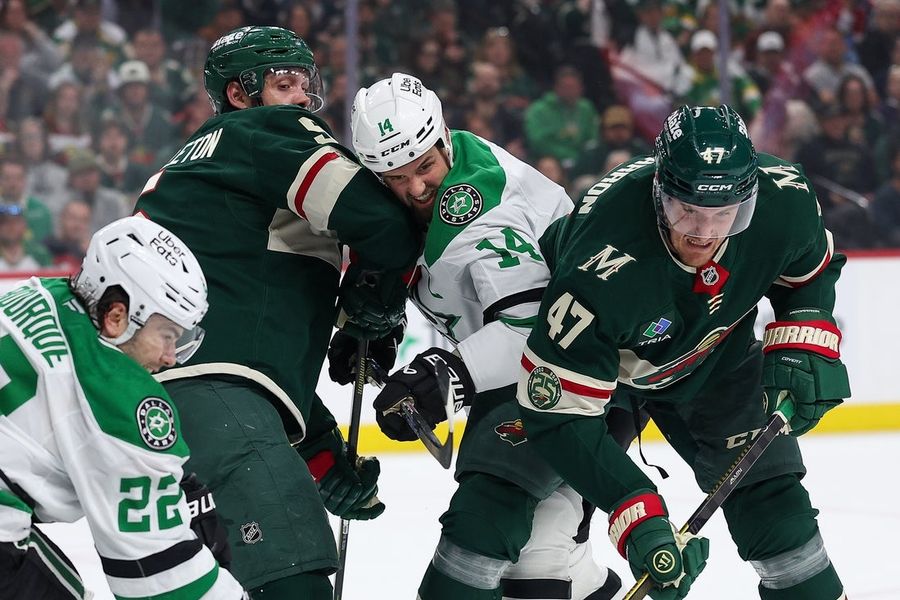
Apr 22, 2026; Saint Paul, Minnesota, USA; Minnesota Wild defenseman Jake Middleton (5), center Michael McCarron (47) and Dallas Stars left wing Jamie Benn (14) complete for the puck during the first period in game three of the first round of the 2026 Stanley Cup Playoffs at Grand Casino Arena. Mandatory Credit: Matt Krohn-Imagn Images
Wyatt Johnston scored a power-play goal with 7:50 left in double overtime to lift the Dallas Stars to a 4-3 win over the Minnesota Wild in Game 3 of their Western Conference quarterfinal series on Wednesday in Saint Paul, Minn.
Matt Duchene and Jason Robertson finished with a goal and two assists apiece for Dallas, which grabbed a 2-1 lead in the best-of-seven series. Johnston and Mikko Rantanen each tallied one goal and one assist.
Marcus Johansson, Joel Eriksson Ek and Michael McCarron scored one goal apiece for Minnesota.
Stars goaltender Jake Oettinger stopped 28 of 31 shots to win the marathon contest.
“That was awesome,” Oettinger said of the victory. “I’m just so proud of the guys, especially the penalty killers. So many huge moments — blocks, just everything. It takes everything from everyone. So many guys stepped up huge. When you leave it all out there with guys you love playing with, it’s really fun.”
Wild goaltender Jesper Wallstedt allowed four goals on 36 shots.
Minnesota forward Matt Boldy was asked whether the team felt frustrated with its power play, which finished 1-for-7.
“Absolutely not,” Boldy said.
Johnston provided the winning goal on a deflection. Miro Heiskanen fired a shot toward traffic in front of the net, and Johnston redirected it for his third goal of the series.
An early penalty by Minnesota paved the way for Dallas to grab a 1-0 lead on the power play 1:25 into the first period. Robertson zipped a pinpoint pass to Rantanen, who punched in a backhand shot.
The Stars increased their lead to 2-0 with 6:12 to play in the first period. Robertson kept the puck on a two-on-one rush and ripped a wrist shot beneath Wallstedt’s glove.
The Wild got on the scoreboard on a power-play goal with 1:40 left in the first period. Johansson fired a shot from the slot that deflected off a pair of Stars defenders and into the net.
Minnesota evened the score at 2-all with 15 minutes to go in the second period. Boldy weaved through the Dallas defense with the puck and slid a pass to a wide-open Eriksson Ek, who capitalized with a one-timer.
The Wild seized a 3-2 lead with 2:35 remaining in the second period. McCarron sprinted into the offensive zone and buried a shot from the slot for his first career playoff goal.
Dallas responded on the power play to make it 3-all with 9:42 to go in the third period. Rantanen waited until Wallstedt was out of position and fed a pass to Duchene, who scored on a one-timer from the left side of the crease.
#foreign #coaches #prepare #Indian #wrestlers #Asian #Games #Olympics">Four foreign coaches to prepare Indian wrestlers for Asian Games, Olympics
The Wrestling Federation of India (WFI) and the Sports Authority of India (SAI) have finalised four coaches, including high performance director Ian Butler from the USA, to train the country’s elite wrestlers in the run-up to this year’s Asian Games and 2028 Olympics.
The other three coaches are Shako Bentinidis, Gogi Koguashvili and Kosei Akaishi. They are expected to sign their contracts next week.
Hailing from Georgia, Bentinidis, a three-time Olympian and a former European champion, is well known as Worlds and Olympics medallist Bajrang Punia’s personal coach. Under Bentinidis’ guidance, Bajrang bagged two Worlds medals, Tokyo Olympics bronze and Asian Games gold. Bentinidis, who has also coached international athletes to Worlds and European medals, will work with India’s freestyle wrestlers.
Koguashvili, a five-time World championships medallist and a 1992 Olympics bronze medallist, has worked as the head coach of Russia’s national team and led it to 62 World Championships medals and 15 Olympic medals, including those by Olympic champions Roman Vlasov and Nazir Mankiev. The Russian will serve as the Greco-Roman coach in India.
Akaishi is a two-time Olympic medallist (1984 and 1992). He has coached wrestlers from his own country, Japan, and Afghanistan. He worked at top positions in Japan’s high performance department during the Tokyo and Paris Olympics. In his coaching career spanning more than 25 years, Akaishi has guided several athletes, such as Kyoko Hamaguchi and Yukako Kawai, to Olympic medals. He will coach the women.
Butler is a professional fighter and world level grappler. Competing across global combat sports platforms, he has secured multiple medals. The founder and owner of Silverback Wrestling Club, Butler has worked with the USA and Canada teams. He will coordinate between Indian and foreign coaches, monitor training plans and athletes’ progress, ensure good communication across camps and ensure accountability for better performance.
“It wasn’t that we were scared,” says Shaun Burnie, recalling that night. “It was that we were terrified.”
For Greenpeace veteran nuclear specialist Burnie, who has worked in some of the most radioactive places on earth, the danger lay in what could have followed.
Shaun Burnie has been inside the structure protecing the Chernobyl reactor three times and says he’s not keen to have to make too many return visitsImage: Pavlo Siromenko/Greenpeace
Nuclear plants rely on a constant external power supply to run cooling systems for the reactor core and spent fuel. If the grid buckles and plants disconnect, they switch to diesel generators.
In a worst-case scenario, if they can’t reconnect, cooling systems fail and reactors overheat. Ukraine knows what that means. On April 26 1986, a reactor at the Chernobyl Nuclear Power Plant exploded, forcing the evacuation of hundreds of thousands from the area and contaminating large parts of Europe.
“Chernobyl is part of our collective memory. Everyone has family or community stories about it,” says Lena Kondratiuk, a 25-year-old from Rivne in western Ukraine. “And now, during the war, this meaning has become even more real.”
Because large, centralized plants — nuclear, coal, or gas — that generate huge amounts of electricity in one place are such easy targets, decentralization is an attractive idea.
And that also means more renewable energy, which is harder to target, cheaper to fix, and faster to deploy.
Chris Alyett, an energy specialist at UK think tank Chatham House said that while a single missile can take out a 250-megawatt coal plant, it would require 40 to destroy the same capacity in wind generation. Solar parks are also more resistant.
“If there is damage to that, it doesn’t necessarily need to take everything out — you could swap new panels in,” Aylett said.
Engineers repairing the grid have helped avert disaster, but some have been killed in Russian “double tap” strikes in the course of their workImage: Vyacheslav Madiyevskyy/REUTERS
These benefits are driving Ukrainian energy companies and NGOs to push renewables. Rooftop solar now covers hospitals, schools, and public buildings. In 2025, the country installed enough to power over a million homes, all while under fire.
Keeping the lights on with renewables
Lena Kondratiuk is part of that effort. She joined the NGO Ecoclub as a volunteer at 18, before taking on a job as renewables analyst there in 2020. After Russia’s full-scale invasion, the organization shifted from advocacy worked and launched the Solar Aid for Ukraine campaign, as power outages became a part of daily life.
At 21, she began managing projects. At first, she was daunted by the responsibility but agreed to it “because of the war, because I understand that, for example, I can die tomorrow.”
Lena Kondratiuk travels around the country bringing solar power to communities with NGO Ecoclub Image: Ecoclub
Like many Ukrainians she has learned to adapt. Her work now takes her all over the country, including south to Mykolaiv, about 60 kilometers (37 miles) from the front line. On her first trip to the city, it was being shelled and running on diesel generators.
“I didn’t want to come back to the city because I’m scared,” she says.
Now Kondraktiuk makes the 13-hour trip around once a month, even as Russia targets passenger trains. She loves it there because of the people. “They teach that even during such a war time it’s still possible to find happy moments in your life and continue it.”
Renewable energy as survival
Despite the risks, Kondratiuk has helped bring nearly 90 solar systems online. In places like Mykolaiv, these systems are more than green energy, they are lifelines.
“Renewable energy in Ukraine is not about the climate and sustainability; it’s about surviving now,” says Kondratiuk. “It’s about the access to basic needs.”
These solar and battery systems keep water utilities running during blackouts. They also enable hospitals to operate and children to charge their phones during outages so they can keep in touch with their parents.
Hybrid solar and battery systems have proven to be a lifeline for Ukrainians during blackoutsImage: Anatolii Stepanov/AFP
One project she worked on installed solar panels at a care home for women with mental health and neurological conditions. Before the installation, staff woke at 4am to try and prepare meals ahead of power cuts, but the patients often went without warm food.
“And after that they were happy because they have like access to everything,” she says.
Lessons learned from Ukraine
The priority for Ukrainians is to keep power flowing. Nuclear has been essential to that, and without it, experts say Ukraine would be in a far worse position given how much fossil fuel capacity has been destroyed during the war. The country still needs baseload power.
Chris Aylett has been looking at what other countries in Europe can learn from Ukraine’s experience of running an energy grid under constant attack.
“They’ve gone through this terrible experience, they’re continuing to go through it, they’ve shown amazing sort of ingenuity at rebuilding fast and it’s told us a lot about what’s vulnerable and what you need to consider,” he says.
The hidden cost of nuclear power
The main lesson is the geographical spread of infrastructure — and that applies regardless of energy source. Diversifying the mix, with more renewables and storage, is another. As is stockpiling the right components that keep a system running — and standardizing them, so restoration takes weeks rather than months.
On nuclear’s future, he is pragmatic, saying that in countries such as France, where it is a major energy source, he sees no reason for that to stop. “Ultimately you just want to build out as much low carbon as you can, and make it as secure as you can while you’re doing it.”
Kondratiuk says she’s glad she was born long after Chernobyl — even as she lives through a different kind of disaster in Ukraine, one she doesn’t expect to end soon. But she’s still looking to a time when the war is over.
“I still want to help my country, still want to continue my work at the Ecoclub and I still think that even after the war and after our victory there would be even more work compared to now because we have to rebuild the country and rebuild it in greener and better way,” she says.
Edited by: Tamsin Walker
This story was adapted from an episode of DW’s Living Planet podcast.
“It wasn’t that we were scared,” says Shaun Burnie, recalling that night. “It was that we were terrified.”
For Greenpeace veteran nuclear specialist Burnie, who has worked in some of the most radioactive places on earth, the danger lay in what could have followed.
Shaun Burnie has been inside the structure protecing the Chernobyl reactor three times and says he’s not keen to have to make too many return visitsImage: Pavlo Siromenko/Greenpeace
Nuclear plants rely on a constant external power supply to run cooling systems for the reactor core and spent fuel. If the grid buckles and plants disconnect, they switch to diesel generators.
In a worst-case scenario, if they can’t reconnect, cooling systems fail and reactors overheat. Ukraine knows what that means. On April 26 1986, a reactor at the Chernobyl Nuclear Power Plant exploded, forcing the evacuation of hundreds of thousands from the area and contaminating large parts of Europe.
“Chernobyl is part of our collective memory. Everyone has family or community stories about it,” says Lena Kondratiuk, a 25-year-old from Rivne in western Ukraine. “And now, during the war, this meaning has become even more real.”
Because large, centralized plants — nuclear, coal, or gas — that generate huge amounts of electricity in one place are such easy targets, decentralization is an attractive idea.
And that also means more renewable energy, which is harder to target, cheaper to fix, and faster to deploy.
Chris Alyett, an energy specialist at UK think tank Chatham House said that while a single missile can take out a 250-megawatt coal plant, it would require 40 to destroy the same capacity in wind generation. Solar parks are also more resistant.
“If there is damage to that, it doesn’t necessarily need to take everything out — you could swap new panels in,” Aylett said.
Engineers repairing the grid have helped avert disaster, but some have been killed in Russian “double tap” strikes in the course of their workImage: Vyacheslav Madiyevskyy/REUTERS
These benefits are driving Ukrainian energy companies and NGOs to push renewables. Rooftop solar now covers hospitals, schools, and public buildings. In 2025, the country installed enough to power over a million homes, all while under fire.
Keeping the lights on with renewables
Lena Kondratiuk is part of that effort. She joined the NGO Ecoclub as a volunteer at 18, before taking on a job as renewables analyst there in 2020. After Russia’s full-scale invasion, the organization shifted from advocacy worked and launched the Solar Aid for Ukraine campaign, as power outages became a part of daily life.
At 21, she began managing projects. At first, she was daunted by the responsibility but agreed to it “because of the war, because I understand that, for example, I can die tomorrow.”
Lena Kondratiuk travels around the country bringing solar power to communities with NGO Ecoclub Image: Ecoclub
Like many Ukrainians she has learned to adapt. Her work now takes her all over the country, including south to Mykolaiv, about 60 kilometers (37 miles) from the front line. On her first trip to the city, it was being shelled and running on diesel generators.
“I didn’t want to come back to the city because I’m scared,” she says.
Now Kondraktiuk makes the 13-hour trip around once a month, even as Russia targets passenger trains. She loves it there because of the people. “They teach that even during such a war time it’s still possible to find happy moments in your life and continue it.”
Renewable energy as survival
Despite the risks, Kondratiuk has helped bring nearly 90 solar systems online. In places like Mykolaiv, these systems are more than green energy, they are lifelines.
“Renewable energy in Ukraine is not about the climate and sustainability; it’s about surviving now,” says Kondratiuk. “It’s about the access to basic needs.”
These solar and battery systems keep water utilities running during blackouts. They also enable hospitals to operate and children to charge their phones during outages so they can keep in touch with their parents.
Hybrid solar and battery systems have proven to be a lifeline for Ukrainians during blackoutsImage: Anatolii Stepanov/AFP
One project she worked on installed solar panels at a care home for women with mental health and neurological conditions. Before the installation, staff woke at 4am to try and prepare meals ahead of power cuts, but the patients often went without warm food.
“And after that they were happy because they have like access to everything,” she says.
Lessons learned from Ukraine
The priority for Ukrainians is to keep power flowing. Nuclear has been essential to that, and without it, experts say Ukraine would be in a far worse position given how much fossil fuel capacity has been destroyed during the war. The country still needs baseload power.
Chris Aylett has been looking at what other countries in Europe can learn from Ukraine’s experience of running an energy grid under constant attack.
“They’ve gone through this terrible experience, they’re continuing to go through it, they’ve shown amazing sort of ingenuity at rebuilding fast and it’s told us a lot about what’s vulnerable and what you need to consider,” he says.
The hidden cost of nuclear power
The main lesson is the geographical spread of infrastructure — and that applies regardless of energy source. Diversifying the mix, with more renewables and storage, is another. As is stockpiling the right components that keep a system running — and standardizing them, so restoration takes weeks rather than months.
On nuclear’s future, he is pragmatic, saying that in countries such as France, where it is a major energy source, he sees no reason for that to stop. “Ultimately you just want to build out as much low carbon as you can, and make it as secure as you can while you’re doing it.”
Kondratiuk says she’s glad she was born long after Chernobyl — even as she lives through a different kind of disaster in Ukraine, one she doesn’t expect to end soon. But she’s still looking to a time when the war is over.
“I still want to help my country, still want to continue my work at the Ecoclub and I still think that even after the war and after our victory there would be even more work compared to now because we have to rebuild the country and rebuild it in greener and better way,” she says.
Edited by: Tamsin Walker
This story was adapted from an episode of DW’s Living Planet podcast.
#Ukraine #rebuilding #energy #system #fire">How Ukraine is rebuilding its energy system under fire
In autumn 2024, Russia launched massive aerial assaults on Ukraine, pounding its energy system and raising fears about the safety of its nuclear power plants. Several reactors disconnected from the grid. One shut down entirely.
“It wasn’t that we were scared,” says Shaun Burnie, recalling that night. “It was that we were terrified.”
For Greenpeace veteran nuclear specialist Burnie, who has worked in some of the most radioactive places on earth, the danger lay in what could have followed.
Shaun Burnie has been inside the structure protecing the Chernobyl reactor three times and says he’s not keen to have to make too many return visitsImage: Pavlo Siromenko/Greenpeace
Nuclear plants rely on a constant external power supply to run cooling systems for the reactor core and spent fuel. If the grid buckles and plants disconnect, they switch to diesel generators.
In a worst-case scenario, if they can’t reconnect, cooling systems fail and reactors overheat. Ukraine knows what that means. On April 26 1986, a reactor at the Chernobyl Nuclear Power Plant exploded, forcing the evacuation of hundreds of thousands from the area and contaminating large parts of Europe.
“Chernobyl is part of our collective memory. Everyone has family or community stories about it,” says Lena Kondratiuk, a 25-year-old from Rivne in western Ukraine. “And now, during the war, this meaning has become even more real.”
Because large, centralized plants — nuclear, coal, or gas — that generate huge amounts of electricity in one place are such easy targets, decentralization is an attractive idea.
And that also means more renewable energy, which is harder to target, cheaper to fix, and faster to deploy.
Chris Alyett, an energy specialist at UK think tank Chatham House said that while a single missile can take out a 250-megawatt coal plant, it would require 40 to destroy the same capacity in wind generation. Solar parks are also more resistant.
“If there is damage to that, it doesn’t necessarily need to take everything out — you could swap new panels in,” Aylett said.
Engineers repairing the grid have helped avert disaster, but some have been killed in Russian “double tap” strikes in the course of their workImage: Vyacheslav Madiyevskyy/REUTERS
These benefits are driving Ukrainian energy companies and NGOs to push renewables. Rooftop solar now covers hospitals, schools, and public buildings. In 2025, the country installed enough to power over a million homes, all while under fire.
Keeping the lights on with renewables
Lena Kondratiuk is part of that effort. She joined the NGO Ecoclub as a volunteer at 18, before taking on a job as renewables analyst there in 2020. After Russia’s full-scale invasion, the organization shifted from advocacy worked and launched the Solar Aid for Ukraine campaign, as power outages became a part of daily life.
At 21, she began managing projects. At first, she was daunted by the responsibility but agreed to it “because of the war, because I understand that, for example, I can die tomorrow.”
Lena Kondratiuk travels around the country bringing solar power to communities with NGO Ecoclub Image: Ecoclub
Like many Ukrainians she has learned to adapt. Her work now takes her all over the country, including south to Mykolaiv, about 60 kilometers (37 miles) from the front line. On her first trip to the city, it was being shelled and running on diesel generators.
“I didn’t want to come back to the city because I’m scared,” she says.
Now Kondraktiuk makes the 13-hour trip around once a month, even as Russia targets passenger trains. She loves it there because of the people. “They teach that even during such a war time it’s still possible to find happy moments in your life and continue it.”
Renewable energy as survival
Despite the risks, Kondratiuk has helped bring nearly 90 solar systems online. In places like Mykolaiv, these systems are more than green energy, they are lifelines.
“Renewable energy in Ukraine is not about the climate and sustainability; it’s about surviving now,” says Kondratiuk. “It’s about the access to basic needs.”
These solar and battery systems keep water utilities running during blackouts. They also enable hospitals to operate and children to charge their phones during outages so they can keep in touch with their parents.
Hybrid solar and battery systems have proven to be a lifeline for Ukrainians during blackoutsImage: Anatolii Stepanov/AFP
One project she worked on installed solar panels at a care home for women with mental health and neurological conditions. Before the installation, staff woke at 4am to try and prepare meals ahead of power cuts, but the patients often went without warm food.
“And after that they were happy because they have like access to everything,” she says.
Lessons learned from Ukraine
The priority for Ukrainians is to keep power flowing. Nuclear has been essential to that, and without it, experts say Ukraine would be in a far worse position given how much fossil fuel capacity has been destroyed during the war. The country still needs baseload power.
Chris Aylett has been looking at what other countries in Europe can learn from Ukraine’s experience of running an energy grid under constant attack.
“They’ve gone through this terrible experience, they’re continuing to go through it, they’ve shown amazing sort of ingenuity at rebuilding fast and it’s told us a lot about what’s vulnerable and what you need to consider,” he says.
The hidden cost of nuclear power
The main lesson is the geographical spread of infrastructure — and that applies regardless of energy source. Diversifying the mix, with more renewables and storage, is another. As is stockpiling the right components that keep a system running — and standardizing them, so restoration takes weeks rather than months.
On nuclear’s future, he is pragmatic, saying that in countries such as France, where it is a major energy source, he sees no reason for that to stop. “Ultimately you just want to build out as much low carbon as you can, and make it as secure as you can while you’re doing it.”
Kondratiuk says she’s glad she was born long after Chernobyl — even as she lives through a different kind of disaster in Ukraine, one she doesn’t expect to end soon. But she’s still looking to a time when the war is over.
“I still want to help my country, still want to continue my work at the Ecoclub and I still think that even after the war and after our victory there would be even more work compared to now because we have to rebuild the country and rebuild it in greener and better way,” she says.
Edited by: Tamsin Walker
This story was adapted from an episode of DW’s Living Planet podcast.
#Ukraine #rebuilding #energy #system #fire
In autumn 2024, Russia launched massive aerial assaults on Ukraine, pounding its energy system and…
#Deadspin #NHL #roundup #Stars #top #Wild #double #series #lead">Deadspin | NHL roundup: Stars top Wild in double OT to take 2-1 series lead
Apr 22, 2026; Saint Paul, Minnesota, USA; Dallas Stars center Wyatt Johnston (53) celebrates his game winning goal during the second overtime period in game three of the first round of the 2026 Stanley Cup Playoffs against the Minnesota Wild at Grand Casino Arena. Mandatory Credit: Matt Krohn-Imagn Images
Wyatt Johnston scored a power-play goal with 7:50 left in double overtime to lift the Dallas Stars to a 4-3 win over the Minnesota Wild in Game 3 of their Western Conference quarterfinal series on Wednesday in Saint Paul, Minn.
Matt Duchene and Jason Robertson finished with a goal and two assists apiece for Dallas, which grabbed a 2-1 lead in the best-of-seven series. Johnston and Mikko Rantanen each tallied one goal and one assist.
Jake Oettinger stopped 28 of 31 shots to win the marathon contest.
Marcus Johansson, Joel Eriksson Ek and Michael McCarron scored one goal apiece for Minnesota. Jesper Wallstedt allowed four goals on 36 shots.
Ducks 6, Oilers 4
Cutter Gauthier produced two goals and an assist as Anaheim evened its Western Conference first-round playoff series against Edmonton in Game 2.
Ryan Poehling also scored twice for the Ducks. Alex Killorn had a goal and two assists, Jacob Trouba added a goal, Jackson LaCombe had three assists, and Lukas Dostal made 33 saves.
Leon Draisaitl registered a goal and an assist and Connor Ingram stopped 22 shots for the Oilers. Connor Murphy, Zach Hyman and Josh Samanski posted Edmonton’s other goals.
Flyers 5, Penguins 2
Trevor Zegras, Rasmus Ristolainen, Nick Seeler and Noah Cates all scored their first career playoff goals to guide Philadelphia over Pittsburgh and a 3-0 series lead.
Dan Vladar had 28 saves in the win and Owen Tippett had the other goal for the Flyers. Cates and Zegras each added an assist, and Jamie Drysdale, Sean Couturier and Noah Juulsen logged two assists apiece.
Evgeni Malkin and Erik Karlsson scored for Pittsburgh, which needs to win Saturday in Philadelphia to save its season. Stuart Skinner made 24 saves for the Penguins.