Verstappen said Lambiase’s move had no bearing on his future and there were no hard feelings.
He once said he would stop racing if Lambiase was no longer his race engineer, the voice in his ear over the team radio during the race, but he distanced himself from that stance on Thursday and made clear he would have to find someone else.
“Otherwise I don’t get to drive,” Verstappen said grinning. “I think also, you know, times change. I would be an idiot to try and keep him. It’s not only about me all the time.
“The future, that’s what we are looking at now. You know, with a different race engineer. I’m sure we’ll find solutions for that as well.”
Verstappen said Lambiase’s move had no bearing on his future and there were no hard feelings.
He once said he would stop racing if Lambiase was no longer his race engineer, the voice in his ear over the team radio during the race, but he distanced himself from that stance on Thursday and made clear he would have to find someone else.
“Otherwise I don’t get to drive,” Verstappen said grinning. “I think also, you know, times change. I would be an idiot to try and keep him. It’s not only about me all the time.
“The future, that’s what we are looking at now. You know, with a different race engineer. I’m sure we’ll find solutions for that as well.”
Published on May 01, 2026
#Verstappen #time #future">Verstappen taking his time on F1 future
Max Verstappen said he was taking his time in deciding his Formula One future and called recent rule changes merely a ‘tickle’ rather than what was really required.
Red Bull’s four-time world champion is no fan of the sport’s new engine era and has suggested he is unhappy enough to walk away.
The uncertainty around him has increased after McLaren announced the Dutchman’s race engineer Gianpiero Lambiase would be joining them by 2028 at the latest.
“I still have time and I’m taking my time,” Verstappen, 28, told reporters on Thursday ahead of the Miami Grand Prix weekend. “What I said in Japan is still the same, but I also still have a lot of time.”
Verstappen said Lambiase’s move had no bearing on his future and there were no hard feelings.
He once said he would stop racing if Lambiase was no longer his race engineer, the voice in his ear over the team radio during the race, but he distanced himself from that stance on Thursday and made clear he would have to find someone else.
“Otherwise I don’t get to drive,” Verstappen said grinning. “I think also, you know, times change. I would be an idiot to try and keep him. It’s not only about me all the time.
“The future, that’s what we are looking at now. You know, with a different race engineer. I’m sure we’ll find solutions for that as well.”
Published on May 01, 2026
#Verstappen #time #future
Max Verstappen said he was taking his time in deciding his Formula One future and…
As the first week of trial in Musk v. Altman comes to a close, one person has emerged as a critical behind-the-scenes manager of communications and egos in OpenAI’s early years: Shivon Zilis.
A longtime employee of Musk and the mother to four of his children, Zilis joined OpenAI as an adviser in 2016. She later served as a director of its nonprofit board from 2020 until 2023 and has worked as an executive at Musk’s other companies, Neuralink and Tesla.
When asked about the nature of his relationship with Zilis in court, Musk offered several answers. At one point, he called her a “chief of staff.” Later, a “close adviser.” At another point, he said “we live together, and she’s the mother of four of my children,” though Zilis said in a deposition that Musk is more of a regular guest and maintains his own residence. Last September, Zilis told OpenAI’s attorneys that she became romantic with Musk around 2016 after she had become an informal adviser to OpenAI. They had their first two children in 2021, she said.
But OpenAI’s lawyers have made the case in witness testimonies and evidence that her most important role, as it pertains to this lawsuit, is being a covert liaison between OpenAI and Musk, even years after he left the nonprofit’s board in February 2018.
“Do you prefer I stay close and friendly to OpenAI to keep info flowing or begin to disassociate? Trust game is about to get tricky so any guidance for how to do right by you is appreciated,” Zilis wrote in a text message to Musk on February 16, 2018, days before OpenAI announced he was leaving the board. Musk responded, “Close and friendly, but we are going to actively try to move three or four people from OpenAI to Tesla. More than that will join over time, but we won’t actively recruit them.”
When asked about this exchange on the witness stand, Musk said he “wanted to know what’s going on.”
In the same text thread, Musk wrote, “There is little chance of OpenAI being a serious force if I focus on Tesla AI.” Zilis reaffirmed him, saying: “There is very low probability of a good future if someone doesn’t slow Demis down,” referring to Demis Hassabis, the leader of Google DeepMind, who Musk has said he didn’t trust to control a superintelligent AI system. “You don’t realize how much you have an ability to influence him directly or otherwise slow him down. I think you know I’m not a malicious person, but in this case it feels fundamentally irresponsible to not find a way to slow or alter his path.”
Roughly two months later, in an email from April 23, 2018, Zilis updated Musk on OpenAI’s fundraising efforts and progress on a project to develop an AI that could play video games. In the same message, she said she had reallocated most of her time away from OpenAI to his other companies, Neuralink and Tesla, but told him, “If you’d prefer I pull more hours back to OpenAI oversight please let me know.”
Almost a year earlier, in the summer of 2017, OpenAI’s cofounders had started negotiating changes to the organization’s corporate structure—Musk wanted control of the company to start out. In an email from August 28, 2017, Zilis wrote to Musk that she had met with OpenAI president Greg Brockman and cofounder Ilya Sutskever to discuss how equity would be divided up in the new company. She summarized points from the meeting, including that Brockman and Sutskever thought one person shouldn’t have unilateral power over AGI, should they develop it. Musk wrote back to Zilis, “This is very annoying. Please encourage them to go start a company. I’ve had enough.”
As the first week of trial in Musk v. Altman comes to a close, one person has emerged as a critical behind-the-scenes manager of communications and egos in OpenAI’s early years: Shivon Zilis.
A longtime employee of Musk and the mother to four of his children, Zilis joined OpenAI as an adviser in 2016. She later served as a director of its nonprofit board from 2020 until 2023 and has worked as an executive at Musk’s other companies, Neuralink and Tesla.
When asked about the nature of his relationship with Zilis in court, Musk offered several answers. At one point, he called her a “chief of staff.” Later, a “close adviser.” At another point, he said “we live together, and she’s the mother of four of my children,” though Zilis said in a deposition that Musk is more of a regular guest and maintains his own residence. Last September, Zilis told OpenAI’s attorneys that she became romantic with Musk around 2016 after she had become an informal adviser to OpenAI. They had their first two children in 2021, she said.
But OpenAI’s lawyers have made the case in witness testimonies and evidence that her most important role, as it pertains to this lawsuit, is being a covert liaison between OpenAI and Musk, even years after he left the nonprofit’s board in February 2018.
“Do you prefer I stay close and friendly to OpenAI to keep info flowing or begin to disassociate? Trust game is about to get tricky so any guidance for how to do right by you is appreciated,” Zilis wrote in a text message to Musk on February 16, 2018, days before OpenAI announced he was leaving the board. Musk responded, “Close and friendly, but we are going to actively try to move three or four people from OpenAI to Tesla. More than that will join over time, but we won’t actively recruit them.”
When asked about this exchange on the witness stand, Musk said he “wanted to know what’s going on.”
In the same text thread, Musk wrote, “There is little chance of OpenAI being a serious force if I focus on Tesla AI.” Zilis reaffirmed him, saying: “There is very low probability of a good future if someone doesn’t slow Demis down,” referring to Demis Hassabis, the leader of Google DeepMind, who Musk has said he didn’t trust to control a superintelligent AI system. “You don’t realize how much you have an ability to influence him directly or otherwise slow him down. I think you know I’m not a malicious person, but in this case it feels fundamentally irresponsible to not find a way to slow or alter his path.”
Roughly two months later, in an email from April 23, 2018, Zilis updated Musk on OpenAI’s fundraising efforts and progress on a project to develop an AI that could play video games. In the same message, she said she had reallocated most of her time away from OpenAI to his other companies, Neuralink and Tesla, but told him, “If you’d prefer I pull more hours back to OpenAI oversight please let me know.”
Almost a year earlier, in the summer of 2017, OpenAI’s cofounders had started negotiating changes to the organization’s corporate structure—Musk wanted control of the company to start out. In an email from August 28, 2017, Zilis wrote to Musk that she had met with OpenAI president Greg Brockman and cofounder Ilya Sutskever to discuss how equity would be divided up in the new company. She summarized points from the meeting, including that Brockman and Sutskever thought one person shouldn’t have unilateral power over AGI, should they develop it. Musk wrote back to Zilis, “This is very annoying. Please encourage them to go start a company. I’ve had enough.”
As the first week of trial in Musk v. Altman comes to a close, one person has emerged as a critical behind-the-scenes manager of communications and egos in OpenAI’s early years: Shivon Zilis.
A longtime employee of Musk and the mother to four of his children, Zilis joined OpenAI as an adviser in 2016. She later served as a director of its nonprofit board from 2020 until 2023 and has worked as an executive at Musk’s other companies, Neuralink and Tesla.
When asked about the nature of his relationship with Zilis in court, Musk offered several answers. At one point, he called her a “chief of staff.” Later, a “close adviser.” At another point, he said “we live together, and she’s the mother of four of my children,” though Zilis said in a deposition that Musk is more of a regular guest and maintains his own residence. Last September, Zilis told OpenAI’s attorneys that she became romantic with Musk around 2016 after she had become an informal adviser to OpenAI. They had their first two children in 2021, she said.
But OpenAI’s lawyers have made the case in witness testimonies and evidence that her most important role, as it pertains to this lawsuit, is being a covert liaison between OpenAI and Musk, even years after he left the nonprofit’s board in February 2018.
“Do you prefer I stay close and friendly to OpenAI to keep info flowing or begin to disassociate? Trust game is about to get tricky so any guidance for how to do right by you is appreciated,” Zilis wrote in a text message to Musk on February 16, 2018, days before OpenAI announced he was leaving the board. Musk responded, “Close and friendly, but we are going to actively try to move three or four people from OpenAI to Tesla. More than that will join over time, but we won’t actively recruit them.”
When asked about this exchange on the witness stand, Musk said he “wanted to know what’s going on.”
In the same text thread, Musk wrote, “There is little chance of OpenAI being a serious force if I focus on Tesla AI.” Zilis reaffirmed him, saying: “There is very low probability of a good future if someone doesn’t slow Demis down,” referring to Demis Hassabis, the leader of Google DeepMind, who Musk has said he didn’t trust to control a superintelligent AI system. “You don’t realize how much you have an ability to influence him directly or otherwise slow him down. I think you know I’m not a malicious person, but in this case it feels fundamentally irresponsible to not find a way to slow or alter his path.”
Roughly two months later, in an email from April 23, 2018, Zilis updated Musk on OpenAI’s fundraising efforts and progress on a project to develop an AI that could play video games. In the same message, she said she had reallocated most of her time away from OpenAI to his other companies, Neuralink and Tesla, but told him, “If you’d prefer I pull more hours back to OpenAI oversight please let me know.”
Almost a year earlier, in the summer of 2017, OpenAI’s cofounders had started negotiating changes to the organization’s corporate structure—Musk wanted control of the company to start out. In an email from August 28, 2017, Zilis wrote to Musk that she had met with OpenAI president Greg Brockman and cofounder Ilya Sutskever to discuss how equity would be divided up in the new company. She summarized points from the meeting, including that Brockman and Sutskever thought one person shouldn’t have unilateral power over AGI, should they develop it. Musk wrote back to Zilis, “This is very annoying. Please encourage them to go start a company. I’ve had enough.”
#Deadspin #Bobby #Witt #finding #groove #streaking #Royals #face">Deadspin | Bobby Witt Jr. finding his groove as streaking Royals face A’s
Apr 25, 2026; Kansas City, Missouri, USA; Kansas City Royals shortstop Bobby Witt Jr. (7) is congratulated by teammates after scoring a run during the third inning against the Los Angeles Angels at Kauffman Stadium. Mandatory Credit: Jay Biggerstaff-Imagn Images
The power bat of star shortstop Bobby Witt Jr. was missing in action for the first 27 games of the Kansas City Royals’ season.
But suddenly, Witt has homered in back-to-back games, and he’ll look to continue the streak Wednesday night when the Royals visit the Athletics in West Sacramento, Calif.
Witt delivered a tie-breaking, three-run blast in the top of the 10th inning as the Royals beat the A’s 4-1 in Tuesday’s opener of the three-game series.
He went the opposite way, and the blast barely cleared the short wall in right center to help Kansas City win its season-best fourth straight game.
“Just trying to piece it at-bat by at-bat and day-by-day and just trying to enjoy every moment that we can,” Witt said. “We’re going out there playing the game we love.”
Things are certainly more enjoyable now with the Royals having won five of six games following an eight-game slide.
Plus, Witt showing signs of putting his power slump behind him is a pleasing element. The 25-year-old hit 105 homers over his first four seasons, twice hitting 30 or more.
“He’s going to hit homers. We know that,” Royals manager Matt Quatraro said of the two-time All-Star, who has two home runs, 15 RBIs and a .289 batting average this season. “Just putting good swings on the ball more frequently is going to lead to that. He’s got unbelievable ability all around.”
Kansas City catcher Salvador Perez also homered for the second time in three games. He nearly had two home runs in the contest, but his other shot was a liner that wasn’t high enough to clear the wall. He was held to a single on that bid.
Shea Langeliers had three hits and Jacob Wilson had an RBI single on a frustrating night for the A’s, who left 14 runners on base.
“We’re not getting that hit we need to extend leads and have some margin for error,” Athletics manager Mark Kotsay said. “Tough loss. … We played a really good game except for offense. We just couldn’t get a hit.”
Athletics left fielder Tyler Soderstrom injured his right shoulder and was a little woozy after he missed on a diving catch in the fifth. He was replaced prior to the top of the sixth.
“There’s not signs of a concussion right now,” Kotsay said, “but obviously that dive, if you watch it, he slammed down pretty hard, fully extended.”
Kansas City outfielder Jonathan India (shoulder) underwent season-ending surgery on Tuesday, while first baseman Vinnie Pasquantino (lower back tightness) exited in the sixth inning. The latter was hurt while grounding out.
Kansas City is scheduled to send Michael Wacha (2-1, 2.51 ERA) to the mound against the Athletics’ Luis Severino (1-2, 5.17) on Wednesday in a battle of right-handers.
Wacha lost last Wednesday in his most recent start, when he allowed season worsts of six runs and seven hits over 5 1/3 innings in an 8-6 defeat to the Baltimore Orioles.
Wacha, 34, is 1-1 with a 3.31 ERA in three career starts against the Athletics.
Severino picked up his first victory of the season on Friday when he limited the Texas Rangers to one run and six hits over 6 2/3 innings in an 8-1 win.
Severino continues to struggle at Sutter Health Park and is 0-1 with a 7.15 ERA in two starts there this season. Overall, he is 2-10 with a 6.15 ERA in 17 starts at the ballpark since joining the A’s prior to the 2025 campaign.
Severino, 32, is 5-1 with a 3.67 ERA in seven career starts against Kansas City.
“At the end of the day, it’s a very complex and political sport, but at least I think everyone has tried their best to do something — but, of course, it won’t change the world!”
The conflict has stemmed from this year’s introduction of the 50-50 split between use of battery power and traditional engine power in an attempt to create a greener sport.
Many drivers feel the sport needs more naturally aspirated power from an engine and less from the battery.
“It’s a step in the right direction,” said Audi’s Nico Hulkenberg. “I’m curious to see how it feels and works on track now.”
McLaren’s Oscar Piastri said the collaboration had produced good changes, but added that he felt the chief problems could not be fixed without a fundamental overhaul of the hardware of the power units.
He said it was good that the rules had been tweaked to reduce the huge imbalance in performance and speed between cars that are using maximum power and those slowing to harvest and store battery power.
A crash in Japan involving Oliver Bearman of Haas, who escaped serious injury left many drivers worried about similar future accidents.
“After Olly’s crash, something needed to change and it is good that they listened to us,” said Piastri. “The tweaks are good, and sensible and well thought out so it is a positive thing, but let’s wait and see how it pans out from a safety point of view.”
Many drivers and observers had criticised the formula for producing artificial racing controlled by computers and the needs for management of battery power.
“At the end of the day, it’s a very complex and political sport, but at least I think everyone has tried their best to do something — but, of course, it won’t change the world!”
The conflict has stemmed from this year’s introduction of the 50-50 split between use of battery power and traditional engine power in an attempt to create a greener sport.
Many drivers feel the sport needs more naturally aspirated power from an engine and less from the battery.
“It’s a step in the right direction,” said Audi’s Nico Hulkenberg. “I’m curious to see how it feels and works on track now.”
McLaren’s Oscar Piastri said the collaboration had produced good changes, but added that he felt the chief problems could not be fixed without a fundamental overhaul of the hardware of the power units.
He said it was good that the rules had been tweaked to reduce the huge imbalance in performance and speed between cars that are using maximum power and those slowing to harvest and store battery power.
A crash in Japan involving Oliver Bearman of Haas, who escaped serious injury left many drivers worried about similar future accidents.
“After Olly’s crash, something needed to change and it is good that they listened to us,” said Piastri. “The tweaks are good, and sensible and well thought out so it is a positive thing, but let’s wait and see how it pans out from a safety point of view.”
Many drivers and observers had criticised the formula for producing artificial racing controlled by computers and the needs for management of battery power.
Published on May 01, 2026
#drivers #rule #tweaks #change #needed">F1 drivers welcome rule tweaks, but say more change needed
Formula One’s drivers on Thursday welcomed rules tweaks made on safety grounds, but warned that more was needed to improve the racing at this weekend’s Miami Grand Prix.
Speaking at an official news conference, most drivers said the changes made to the levels of ‘super-clipping’ and of battery power harvesting would reduce dangers, but have little overall effect on the spectacle in the sport’s new hybrid era.
While Aston Martin’s Canadian driver Lance Stroll lambasted the new formula as “fundamentally flawed” and a thousand times less fun than Formula Three, others took a more positive approach.
“The positive thing is that we had some nice meetings with F1 and the FIA and I think that’s probably a starting point for the future even if there is time for that or maybe I’m not here anymore,” said four-time champion Max Verstappen, who has struggled this season.
Verstappen had been a leading critic of this season’s changes, accusing F1 of losing its identity and suggested that he was contemplating his future if the sport did not take action to salvage its heritage as an all-out test of power and speed for drivers and machines.
“I really hope that the drivers give more input to the organisers in general because most drivers have a good understanding and a good feel of what is needed to make F1 a good product, a fun product.”
“At the end of the day, it’s a very complex and political sport, but at least I think everyone has tried their best to do something — but, of course, it won’t change the world!”
The conflict has stemmed from this year’s introduction of the 50-50 split between use of battery power and traditional engine power in an attempt to create a greener sport.
Many drivers feel the sport needs more naturally aspirated power from an engine and less from the battery.
“It’s a step in the right direction,” said Audi’s Nico Hulkenberg. “I’m curious to see how it feels and works on track now.”
McLaren’s Oscar Piastri said the collaboration had produced good changes, but added that he felt the chief problems could not be fixed without a fundamental overhaul of the hardware of the power units.
He said it was good that the rules had been tweaked to reduce the huge imbalance in performance and speed between cars that are using maximum power and those slowing to harvest and store battery power.
A crash in Japan involving Oliver Bearman of Haas, who escaped serious injury left many drivers worried about similar future accidents.
“After Olly’s crash, something needed to change and it is good that they listened to us,” said Piastri. “The tweaks are good, and sensible and well thought out so it is a positive thing, but let’s wait and see how it pans out from a safety point of view.”
Many drivers and observers had criticised the formula for producing artificial racing controlled by computers and the needs for management of battery power.
Published on May 01, 2026
#drivers #rule #tweaks #change #needed
Formula One’s drivers on Thursday welcomed rules tweaks made on safety grounds, but warned that…
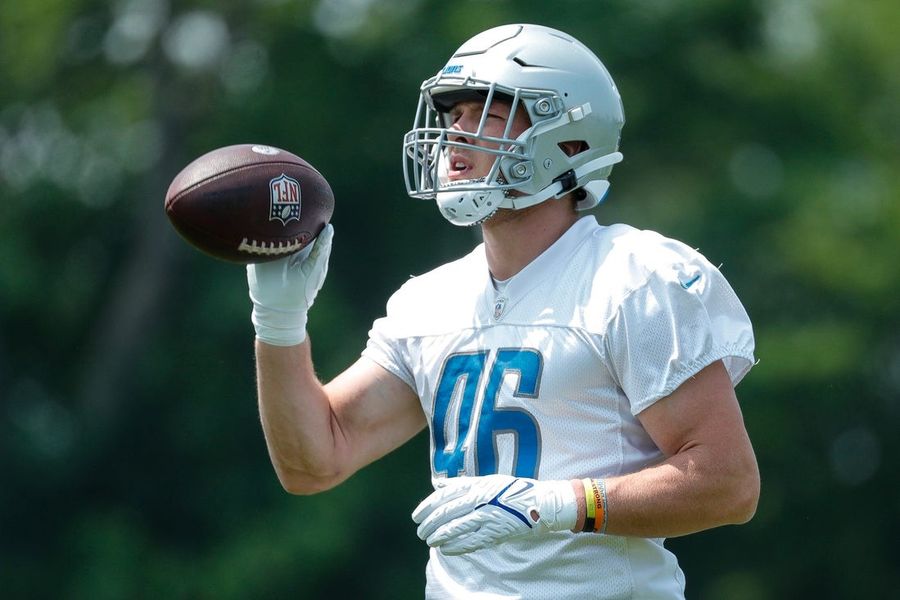
Lions linebacker Jack Campbell practices during minicamp at Allen Park.
The Lions reportedly made a split decision with their 2023 first-round draft selections, picking up running back Jahmyr Gibbs’ fifth-year option but not All-Pro linebacker Jack Campbell’s.
Fox 2 Detroit broke the news Tuesday night and a source confirmed the information to ESPN.
Gibbs will earn a guaranteed $14.29 million for the 2027 season. Campbell’s option would have paid him an estimated $21.925 million, which is more than the league’s highest-paid off-ball linebacker, per ESPN.
ESPN reported that the Lions want to bring Campbell back on a long-term extension, as well as Gibbs. Tight end Sam LaPorta and Brian Branch, also are due for extensions. Since they were not first-round picks, the Lions do not need to sign them to extensions immediately.
Gibbs, 24, made the decision a no-brainer by racking up 5,029 yards from scrimmage with 49 touchdowns in 49 games (24 starts) across his first three seasons, earning three straight Pro Bowl selections.
Campbell, 25, earned All-Pro first-team and Pro Bowl honors last season with career highs in tackles (176), sacks (five) and forced fumbles (three) in 17 starts. He has 402 tackles and 8.5 sacks through 51 games (46 starts).
The Lions took Gibbs with the 12th overall pick and Campbell with the 18th selection in the 2023 NFL Draft.
#Officials #Palestine #Israel #refuse #shake #hands #FIFA #Congress">Officials from Palestine, Israel refuse to shake hands at FIFA Congress
Palestine Football Association (PFA) president Jibril Rajoub refused to shake hands with Basim Sheikh Suliman, the vice president of Israel’s football governing body, during a tense moment at the FIFA Congress on Thursday.
After the two men addressed the congress, they were called on stage by FIFA President Gianni Infantino. They stood far apart from each other, and Rajoub protested loudly away from the microphones before leaving the stage.
Speaking before the congress, Rajoub called on FIFA to address PFA’s allegations that Israel has breached anti-discrimination regulations by allowing clubs based in the West Bank settlements.
He confirmed that the PFA is taking the matter to the Court of Arbitration for Sport after FIFA ruled in March not to suspend Israel over its West Bank clubs. FIFA cited the unresolved and complex legal status of the West Bank.
But in a separate matter involving an Israeli club, FIFA fined the Israel Football Association $190,000 on disciplinary charges relating to “discrimination and racist abuse,” plus “offensive behaviour and violations of the principles of fair play.”
After the two men left the stage at the Vancouver Convention Centre, Infantino thanked them for addressing the delegates and made an appeal.
“President Rajoub, Vice President Suliman, let’s work together. Let’s work together to give hope to the children. Let’s work together for that,” Infantino said.
Following the congress, Rajoub gave an impassioned plea, asking whether Israel has “the right to even be part of FIFA.”
“From my side, I still respect and follow all the legal procedures through FIFA institutions, but I think it’s time to understand that Israel should be sanctioned because of the violations of the statutes of FIFA, the human rights,” he said.
Yariv Teper, acting general secretary of the Israel Football Association, would not comment on the specifics of Rajoub’s comments but said the IFA would be willing to work with the Palestinian counterparts.
“We are in the FIFA Congress,” Teper said. “Our mission is to promote football and a better future for all regions, and this is our mission.”
Palestinian football officials have long argued — including at FIFA annual congresses across the past 15 years, before Infantino was president — that Israel violates statutes by letting teams from settlements in the West Bank play in Israel’s national league.
The disciplinary investigation of Israeli football was also opened 18 months ago in response to a second objection by the Palestinian federation.