
Parsons professor Geoffrey Gertz remembers the days when peak visibility for a designer came from paying for an ad in the glossy pages of Vogue, Harper’s Bazaar or another high-profile magazine. They might cost more than $30,000, but media ad placements were among the leading channels for driving consumers to brands, he tells Fashionista. Today, that objective can be achieved for free with one viral post online.
Social platforms are now a crucial tool for designers: TikTok, Instagram and even Pinterest engage target audiences, shape trends and drive sales. According to Numerator, 44% of Gen Z consumers have made purchases on social apps, and 82% let social media influence their shopping decisions.
Now that social media is woven into the fabric of the fashion business, design schools and their students are adapting. As early as freshman year, students create dedicated Instagram accounts that serve as their portfolios. Social media has become a major piece of the creative processes — a resource for inspiration, getting feedback, self-promotion and more, especially as students prepare to present their final collections and graduate this spring. But could it end up having too big of an influence on aspiring creatives?
Photo: John Lamparski/Getty Images
“The algorithm has a lot of influence on myself and my peers… Whether we realize it or not, we’re consuming social media every single day,” says Ellie Warnke, a senior fashion design student at the Savannah College of Art and Design (SCAD) who already has more than 60k Instagram followers. “Specifically on platforms like Instagram, its Explore page is so tailored to your style nowadays that it’s so hard not to get inspiration.”
Emily Bennett, a first-year fashion design student in Parsons’ Associate’s for Professionals Program, says that scrolling through social media for inspiration has become a first step in her design process. She follows various artists and photographers whose distinctive aesthetics always serve as a springboard for developing new design ideas. “Social media brings awareness to things I wouldn’t necessarily know about,” she explains.
On the flip side, engaging with social media also brings visibility to design students themselves. It’s a pathway for these young creatives to get their work on the radar of intrigued users and industry figures alike. That’s why most design students today regularly post their work online.
View this post on Instagram
Instagram is the most popular platform for students, according to Selen Artuc, a senior fashion design student at the Fashion Institute of Technology (FIT). Arctuc uses her Instagram account to document her design journey by posting close-up shots of her work, from sketches to muslin mockups to the final result. TikTok is another student favorite. The platform allows creatives to show their more playful side by posting content centered on their lives as student designers rather than solely on their projects. “It’s way more casual,” Warnke shares. “It’s more lighthearted and comical, and where I’m maybe trying to make a funny meme or something about fashion school.”
Posting on social media can also help students get feedback on their work. That’s at least the case for Warnke: While she doesn’t listen to every comment that comes her way (especially hateful ones), she’s open to what people have to say. The way she sees it, the more people engage with her work, the more motivated she is. “I love sharing my work,” she explains. “I find that it’s helpful for me to post my progress because when I see that people are responding well, it pushes me to be like, ‘Okay, what I’m doing is important.'”
View this post on Instagram
But when students know they’ll end up posting their work, it raises the question: How much does social media impact their design decisions? Are they choosing fabrics, colors, silhouettes and details just to land the best hit on the explore page?
“A lot of my personal design process comes from: What is a scroll-stopping element that is going to catch people’s attention?” says Warnke, whose senior collection is inspired by social media overstimulation. “I’m thinking about, ‘If this were to be pulled for styling a celebrity, how would this look on their social media pages?’ You want to create something that will stand out.”
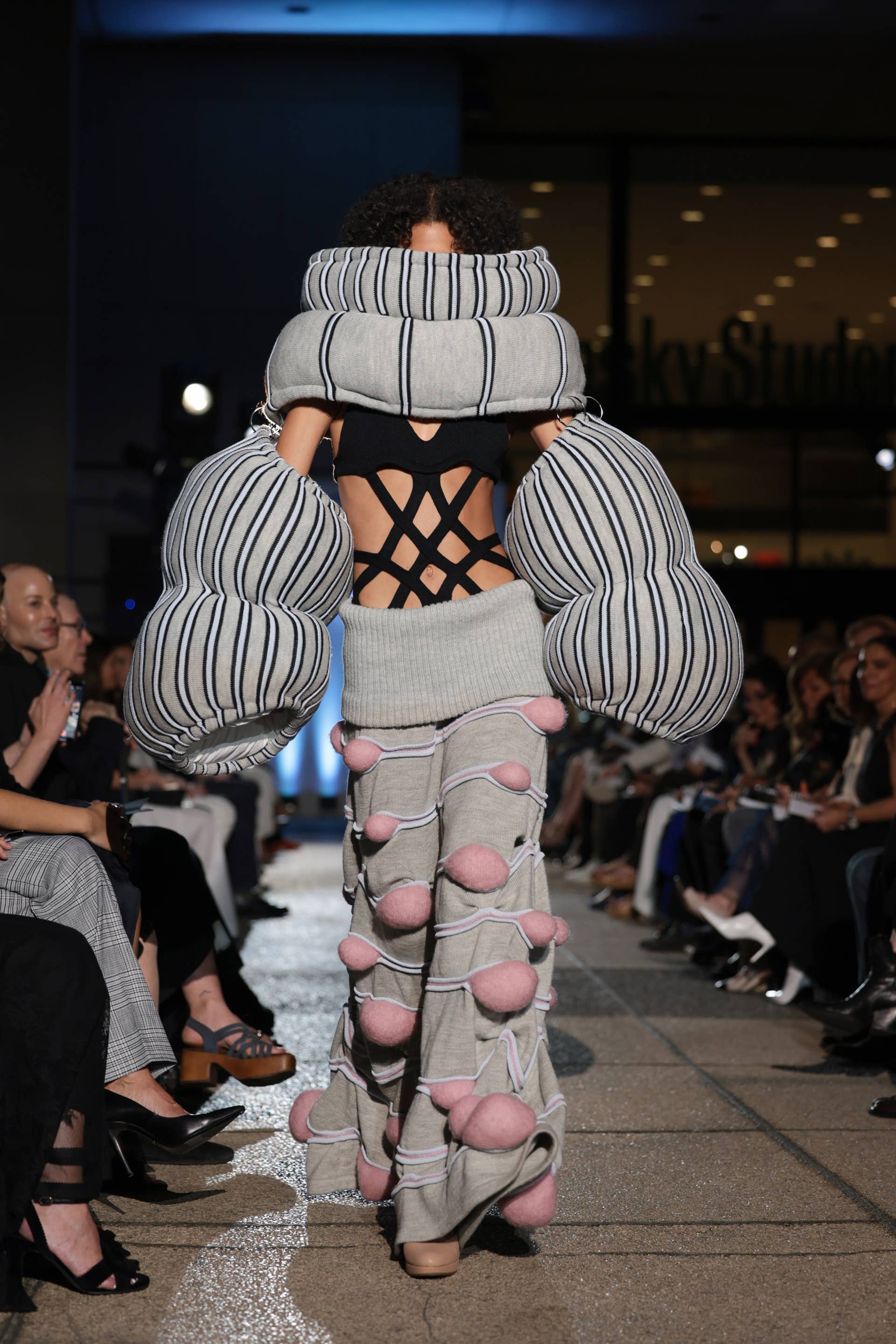
Photo: Michael Loccisano/Getty Images for Fashion Institute of Technology
Conversely, other students see social media’s infiltration of the design process as creatively limiting. “I think if you are focused on designing for the algorithm, and while you’re sketching, you’re already thinking about, ‘Oh, this color would look best on Instagram,’ I think that does hold you back in creating truly innovative pieces,” says Bennett.
Whether or not students are creating for the algorithm, the reality is that their work will end up posted on social media. It’s why fashion educators have adapted their curricula to address social media strategy.
“In the curriculum, we really talk about the different storytelling tools, like why you would do a post versus why you would do a story versus why you would do a reel,” says Gertz, the Parsons professor.
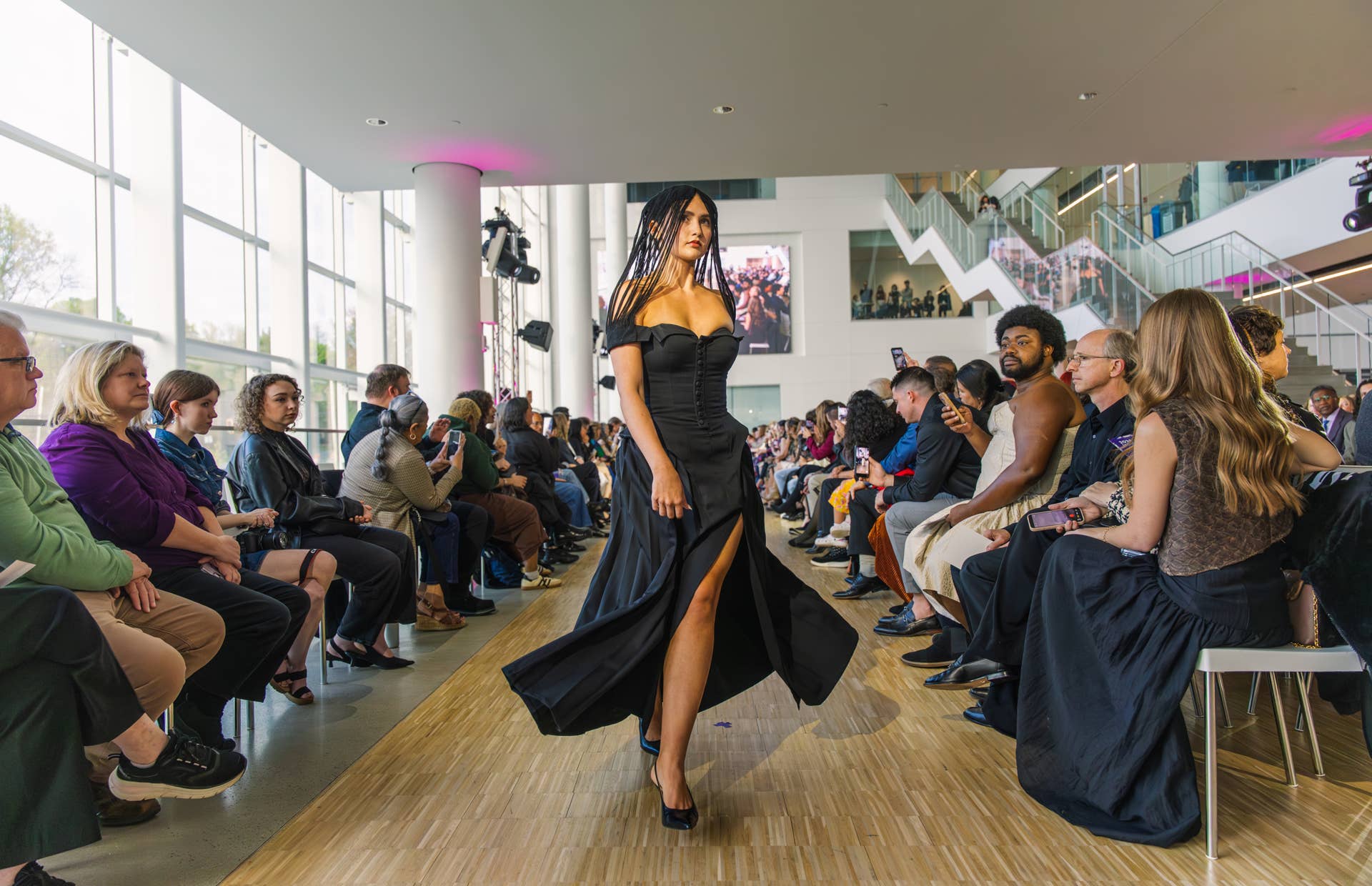
P
Parsons professor Tiffany Webber teaches a Professional Practices course in which students are assigned to develop business strategies for an existing brand. This past fall, Webber observed that the majority of her students prioritized digital strategies. “They thought of all these wonderful ideas for making social content,” she shares. “Social media is becoming more and more a part of strategic thinking. They’re thinking about it [in all stages], from design and development to sales and marketing.”
SCAD professor Maria Korovilas dissuades students from creating for the algorithm and encourages them to use it only as a research tool. “We definitely push them to design from a place of authorship,” Korovilas says. “We come from a place of depth, research and point of view.”
“I don’t think students are specifically trying to design for an algorithm, or at least we’re not encouraging that,” says. Dr. Lauren Copeland, a professor at Kent State University. “We want them to be unique to themselves and true to the brands that they’ll be working for.” Instead, Kent State teaches social media as a vehicle for trend forecasting. In both design and merchandising courses, Dr. Copeland sees students taking inspiration from the algorithm, but applying it to their design DNA.
“Fashion is individual; what we wear and how we design is individual,” she emphasizes. “If we were to only follow what we see on social media, we would never be creating something new. So how do we push that envelope? That’s where we’re challenging the students. Yes, take inspiration and understanding from what you’re seeing on social media, but what new thing are you going to say through your designs?”
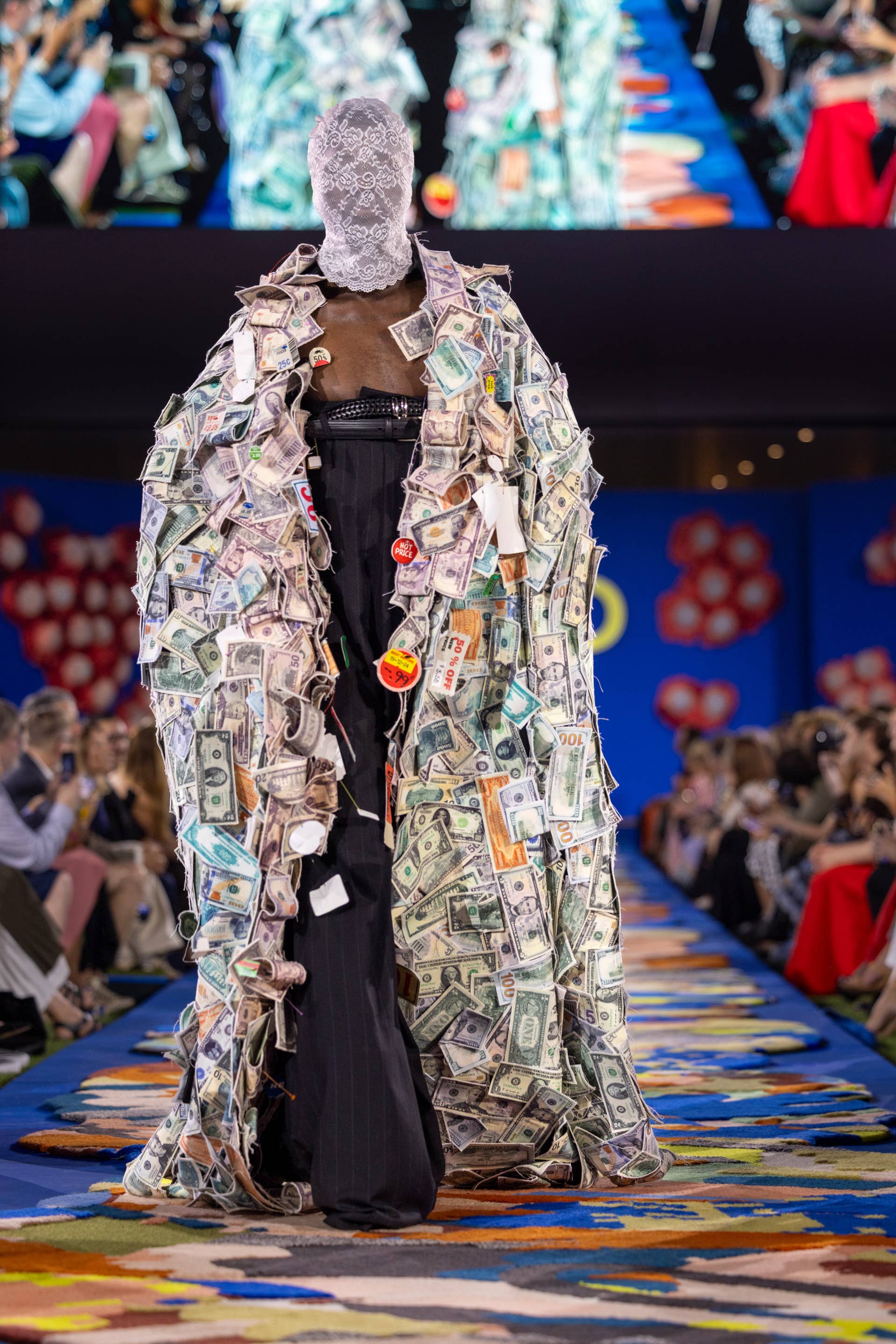
Photo: Courtesy of SCAD
Professors acknowledge that provocative, eye-catching designs may be more likely to generate strong engagement. But they argue that making noise online is possible without them, and instead propose that designers get creative with styling choices and marketing tactics.
Nicole Benefield, an assistant professor at FIT, teaches a class called Sportswear Development Concepts, in which students create a brand and its strategy from scratch. Part of the final presentation includes building a website and establishing a strong online presence. In her critique, she looks at composition, styling and presentation. “Students are thinking about what their editorial looks like,” she says. “What do your style shots look like? And how will their work show up on social?”
Webber considers runway visuals in her class, Fashion Show Production. “One thing we always speak to is the ‘money shot,’ and that’s always been a product of fashion shows in particular,” she says. “When you develop a collection and want to put it into the world with a show or some type of in-person experience, there’s that sense of designing to get that ‘money shot’ that people will look at and want to see, whether it’s on Vogue Runway or social media.”
While educators encourage students to embrace social media, they also warn against overexposure, given the risk of their ideas being stolen. “There’s a fine line between a wonderful tease and getting people to see your process versus sharing too much,” Webber says. “It’s about showing just enough to engage, but still protecting your work. We’re very conscientious of our students’ intellectual property and really protective of it.” Korovilas steers her students towards posting very close-up, detailed shots so they aren’t giving away too much.
Many students have come to accept that the risk of being copied comes with the territory of having a social presence. “Other people can try to replicate [a design] or take the idea,” Bennett admits. “But I also think with design, we’re constantly coming up with new ideas. So, say an idea gets taken, I still have a million more designs I’m thinking of, so you could just keep moving forward.”
View this post on Instagram
For aspiring designers, the benefits, like potential job opportunities, often outweigh the risks. Today, Instagram is a visual resume in its own right. Warnke, for example, has landed job opportunities with companies like eBay and Apple thanks to her putting her work out there. Bennett, too, posts work content to get industry attention: “It can open up the door for a lot of opportunities,” she says.
Looking toward the future, social media is likely to have an even bigger presence in fashion education.
“I think that [social media] should be integrated into our curriculum more,” Warnke says. “It should be taught in school to learn how to block off a content calendar, learn where to pull inspiration from, know how often you need to post and learn how to read the analytics of your own Instagram. I feel like people often dismiss the importance of posting times of day and trending sounds. It sounds unimportant, but learning how to utilize these different things can really boost a designer and can lead to so many opportunities.”
Do you have an emerging brand you want to share with Fashionista readers? Jumpstart your business with our affordable digital offerings.
Source link
#Fashion #Students #Designing #Algorithm


Post Comment