×
Jensen Huang Says Nvidia’s New Vera Rubin Chips Are in ‘Full Production’

Jensen Huang Says Nvidia’s New Vera Rubin Chips Are in ‘Full Production’

Nvidia CEO Jensen Huang says that the company’s next-generation AI superchip platform, Vera Rubin, is on schedule to begin arriving to customers later this year. “Today, I can tell you that Vera Rubin is in full production,” Huang said during a press event on Monday at the annual CES technology trade show in Las Vegas.

Rubin will cut the cost of running AI models to about one-tenth of Nvidia’s current leading chip system, Blackwell, the company told analysts and journalists during a call on Sunday. Nvidia also said Rubin can train certain large models using roughly one-fourth as many chips as Blackwell requires. Taken together, those gains could make advanced AI systems significantly cheaper to operate and make it harder for Nvidia’s customers to justify moving away from its hardware.

Nvidia said on the call that two of its existing partners, Microsoft and CoreWeave, will be among the first companies to begin offering services powered by Rubin chips later this year. Two major AI data centers that Microsoft is currently building in Georgia and Wisconsin will eventually include thousands of Rubin chips, Nvidia added. Some of Nvidia’s partners have started running their next-generation AI models on early Rubin systems, the company said.

The semiconductor giant also said it’s working with Red Hat, which makes open source enterprise software for banks, automakers, airlines, and government agencies, to offer more products that will run on the new Rubin chip system.

Nvidia’s latest chip platform is named after Vera Rubin, an American astronomer who reshaped how scientists understand the properties of galaxies. The system includes six different chips, including the Rubin GPU and a Vera CPU, both of which are built using Taiwan Semiconductor Manufacturing Company’s 3-nanometer fabrication process and the most advanced bandwidth memory technology available. Nvidia’s sixth-generation interconnect and switching technologies link the various chips together.

Each part of this chip system is “completely revolutionary and the best of its kind,” Huang proclaimed during the company’s CES press conference.

Nvidia has been developing the Rubin system for years, and Huang first announced the chips were coming during a keynote speech in 2024. Last year, the company said that systems built on Rubin would begin arriving in the second half of 2026.

It’s unclear exactly what Nvidia means by saying that Vera Rubin is in “full production.” Typically, production for chips this advanced—which Nvidia is building with its longtime partner TSMC—starts at low volume while the chips go through testing and validation and ramps up at a later stage.

“This CES announcement around Rubin is to tell investors, ‘We’re on track,’” says Austin Lyons, an analyst at Creative Strategists and author of the semiconductor industry newsletter Chipstrat. There were rumors on Wall Street that the Rubin GPU was running behind schedule, Lyons says, so Nvidia is now pushing back by saying it has cleared key development and testing steps, and it’s confident Rubin is still on course to begin scaling up production in the second half of 2026.

In 2024, Nvidia had to delay delivery of its then-new Blackwell chips due to a design flaw that caused them to overheat when they were connected together in server racks. Shipments for Blackwell were back on schedule by the middle of 2025.

As the AI industry rapidly expands, software companies and cloud service providers have had to fiercely compete for access to Nvidia’s newest GPUs. Demand will likely be just as high for Rubin. But some firms are also hedging their bets by investing in their own custom chip designs. OpenAI, for example, has said it is working with Broadcom to build bespoke silicon for its next generation of AI models. These partnerships highlight a longer-term risk for Nvidia: Customers that design their own chips can gain a level of control over their hardware that the company doesn’t offer.

But Lyons says today’s announcements demonstrate how Nvidia is evolving beyond merely offering GPUs to becoming a “full AI system architect, spanning compute, networking, memory hierarchy, storage, and software orchestration.” Even as hyperscalers pour money into custom silicon, he adds, Nvidia’s tightly integrated platform “is getting harder to displace.”

Source link
#Jensen #Huang #Nvidias #Vera #Rubin #Chips #Full #Production

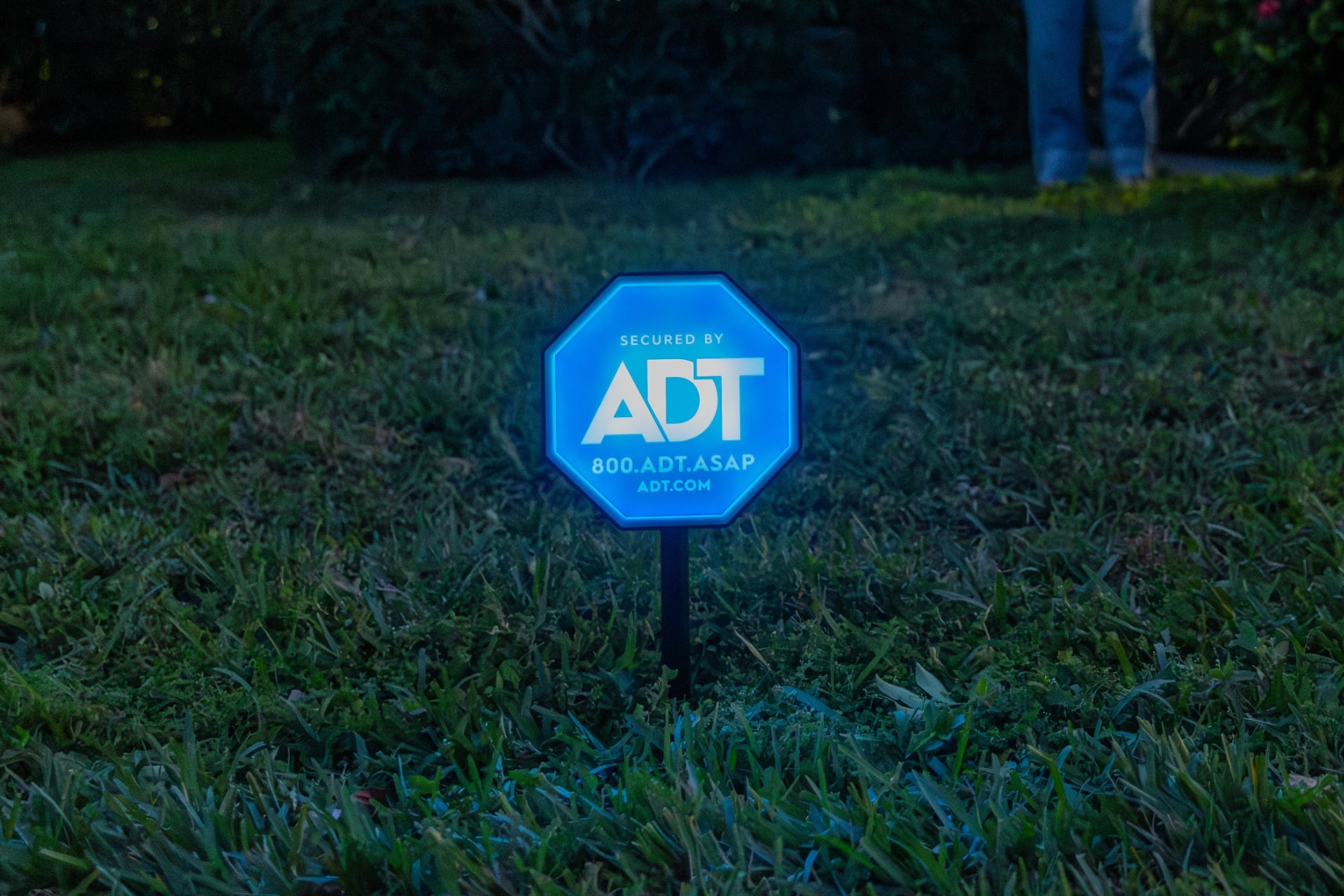
You know those little ADT security signs? You know, the ADT logo-emblazoned yard signs or stickers you find in front of houses or slapped on a window by the front door. Well, ADT is rethinking them: today, the home security company announced the ADT Live Light, a light-up version of its logo yard sign that will—you guessed it—shine when your ADT alarm system has been tripped. 

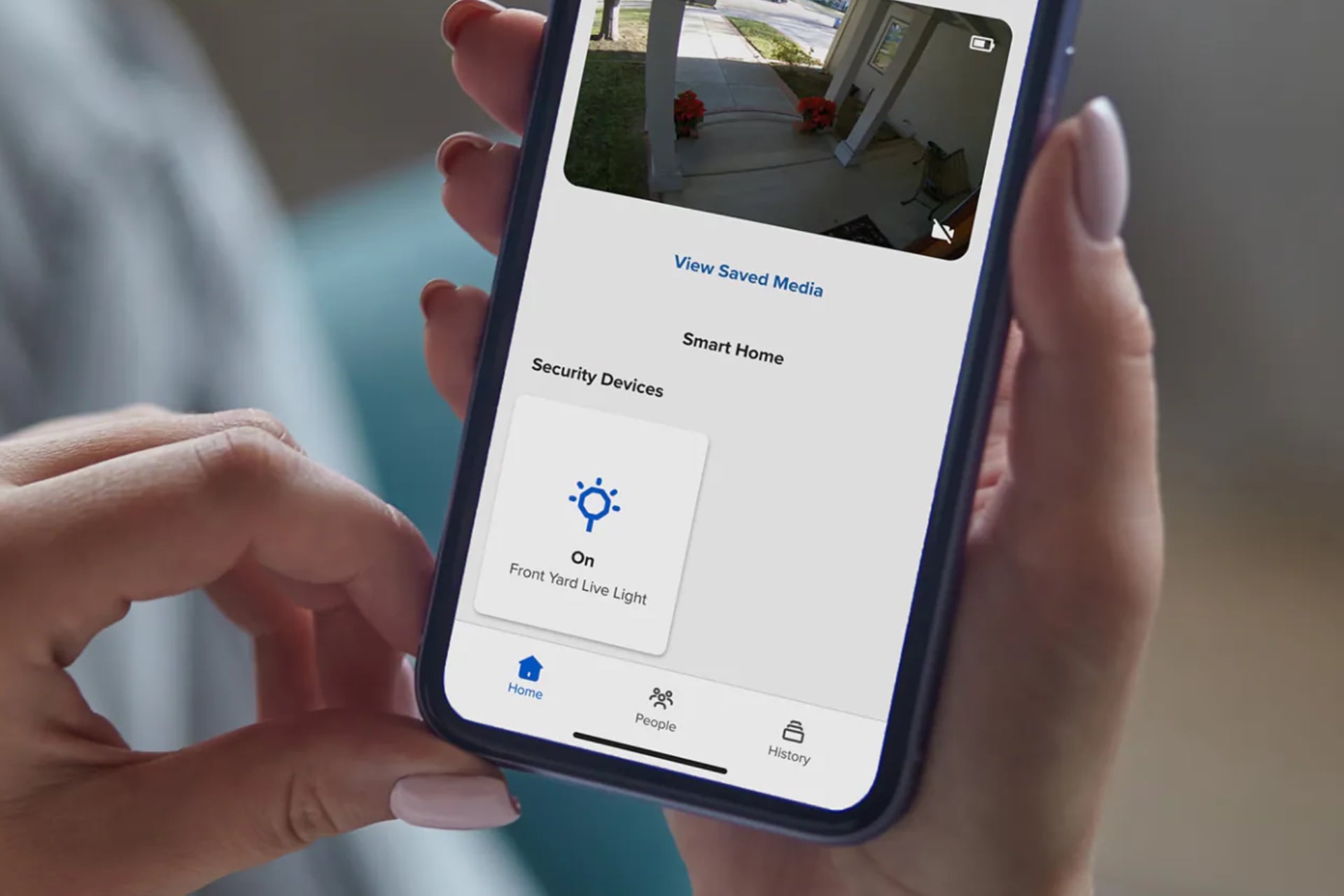
Besides being a visual indicator for your neighbors that something is amiss, ADT says the Live Light could be useful in helping first responders identify which house is yours. It would also serve the same purpose as the stickers and yard signs that came before it: letting would-be intruders know that they risk triggering an alarm by messing with your stuff. And while it can activate automatically, you can also turn it on using the ADT+ app if you want.

The Live Light is wireless and powered by three included AAA lithium batteries. It’s IP65-rated, meaning it should be dust-proof and resistant to water jets from any direction, and should operate in temperatures ranging from 4 to 122 degrees Fahrenheit. Both good things if you’re expecting people to leave their light-up sign out in the elements year-round (although those of us in the Midwest might want to bring it in for a couple of months in the winter). The sign itself is 10 x 10 inches tall and 1.75 inches thick, and goes into the ground with a 21-inch stake, although it can also be wall-mounted. 

The Live Light requires a $25-per-month ADT Professional Monitoring subscription and costs $50, including professional installation. There’s no option to install it yourself; ADT requires that one of its own installers carry out what doesn’t strike me as a terribly complicated procedure. (But what do I know? I’m just a little ol’ country technology reporter.)

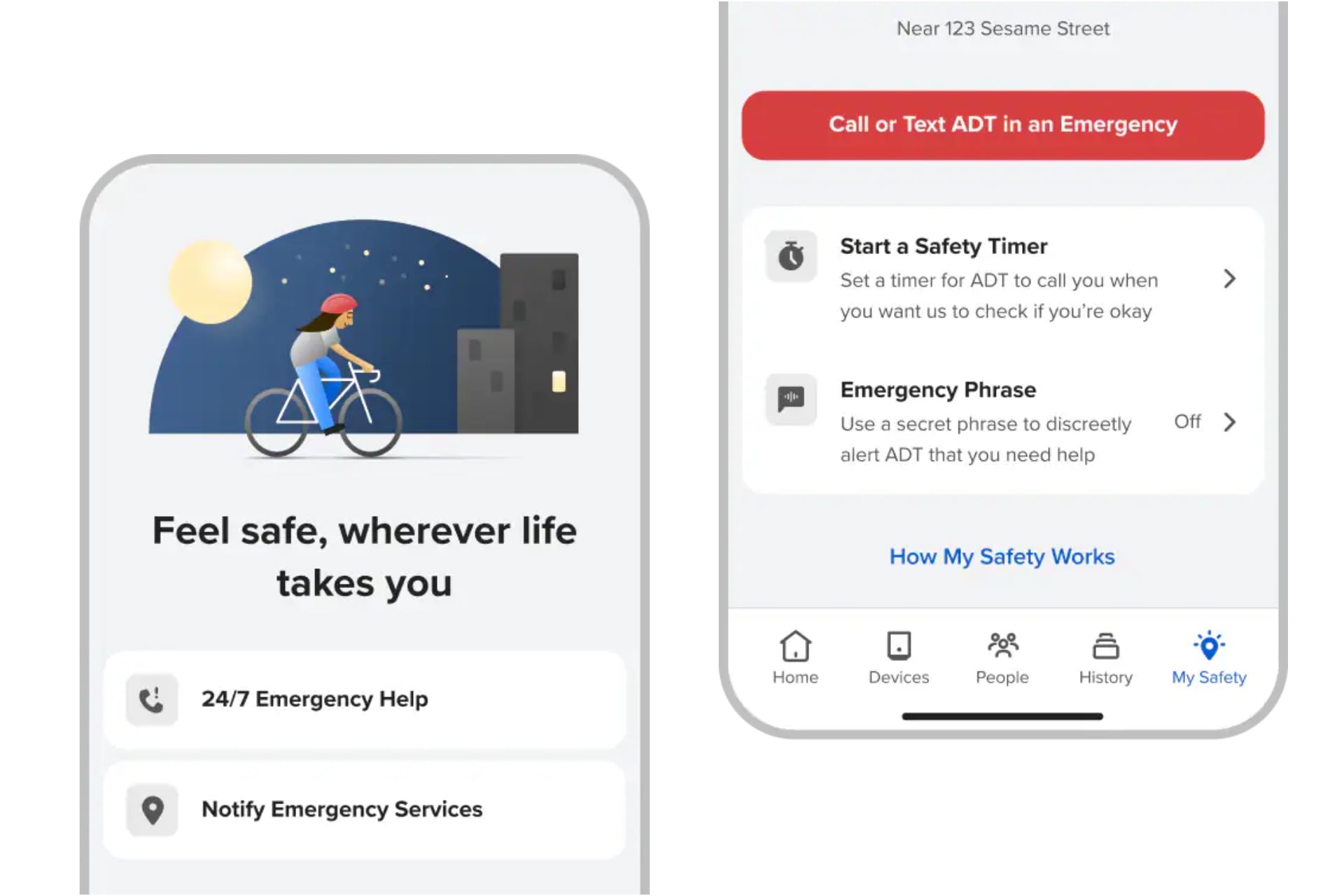
Images showing the ADT My Safety feature in the ADT+ app.
© ADT

ADT also announced a new ADT+ app feature called My Safety. My Safety extends ADT’s subscriber service beyond your house by letting you do things like set a check-in timer that, if missed, will prompt ADT to contact emergency services for you. It also offers the manual options of speaking or texting with ADT agents, or setting an “Emergency Phrase” that lets you speak a custom phrase to summon help—that is, ADT will again contact emergency services for you. The company says subscribers will be able to use that last feature even if their phone isn’t in their hand, and I’ve asked exactly how that works.

For the My Safety feature, there’s no call history, and for subscriptions with multiple people on them, only the person who initiates a call with ADT monitoring will be able to see status, activity, alerts, and notifications. It’s nice to see the company has thought of that—it can be important for victims of abuse to be able to discreetly seek help. An ADT representative told Gizmodo via email that the ADT+ app update with My Safety is available now for all subscribers in the U.S., except in Milwaukee, WI.

#ADTs #Big #Idea #LightUp #ADT #Sign #YardADT,apps,Home security,Smart Home">ADT’s New Big Idea Is a Light-Up ADT Sign for Your Yard
                You know those little ADT security signs? You know, the ADT logo-emblazoned yard signs or stickers you find in front of houses or slapped on a window by the front door. Well, ADT is rethinking them: today, the home security company announced the ADT Live Light, a light-up version of its logo yard sign that will—you guessed it—shine when your ADT alarm system has been tripped. 

 Besides being a visual indicator for your neighbors that something is amiss, ADT says the Live Light could be useful in helping first responders identify which house is yours. It would also serve the same purpose as the stickers and yard signs that came before it: letting would-be intruders know that they risk triggering an alarm by messing with your stuff. And while it can activate automatically, you can also turn it on using the ADT+ app if you want.  			 				 			 				 				© ADT 				 			 				 			 				 				© ADT 				 		  The Live Light is wireless and powered by three included AAA lithium batteries. It’s IP65-rated, meaning it should be dust-proof and resistant to water jets from any direction, and should operate in temperatures ranging from 4 to 122 degrees Fahrenheit. Both good things if you’re expecting people to leave their light-up sign out in the elements year-round (although those of us in the Midwest might want to bring it in for a couple of months in the winter). The sign itself is 10 x 10 inches tall and 1.75 inches thick, and goes into the ground with a 21-inch stake, although it can also be wall-mounted.  The Live Light requires a -per-month ADT Professional Monitoring subscription and costs , including professional installation. There’s no option to install it yourself; ADT requires that one of its own installers carry out what doesn’t strike me as a terribly complicated procedure. (But what do I know? I’m just a little ol’ country technology reporter.) © ADT ADT also announced a new ADT+ app feature called My Safety. My Safety extends ADT’s subscriber service beyond your house by letting you do things like set a check-in timer that, if missed, will prompt ADT to contact emergency services for you. It also offers the manual options of speaking or texting with ADT agents, or setting an “Emergency Phrase” that lets you speak a custom phrase to summon help—that is, ADT will again contact emergency services for you. The company says subscribers will be able to use that last feature even if their phone isn’t in their hand, and I’ve asked exactly how that works.

 For the My Safety feature, there’s no call history, and for subscriptions with multiple people on them, only the person who initiates a call with ADT monitoring will be able to see status, activity, alerts, and notifications. It’s nice to see the company has thought of that—it can be important for victims of abuse to be able to discreetly seek help. An ADT representative told Gizmodo via email that the ADT+ app update with My Safety is available now for all subscribers in the U.S., except in Milwaukee, WI.      #ADTs #Big #Idea #LightUp #ADT #Sign #YardADT,apps,Home security,Smart Home

ADT Live Light, a light-up version of its logo yard sign that will—you guessed it—shine when your ADT alarm system has been tripped. 

Besides being a visual indicator for your neighbors that something is amiss, ADT says the Live Light could be useful in helping first responders identify which house is yours. It would also serve the same purpose as the stickers and yard signs that came before it: letting would-be intruders know that they risk triggering an alarm by messing with your stuff. And while it can activate automatically, you can also turn it on using the ADT+ app if you want.

The Live Light is wireless and powered by three included AAA lithium batteries. It’s IP65-rated, meaning it should be dust-proof and resistant to water jets from any direction, and should operate in temperatures ranging from 4 to 122 degrees Fahrenheit. Both good things if you’re expecting people to leave their light-up sign out in the elements year-round (although those of us in the Midwest might want to bring it in for a couple of months in the winter). The sign itself is 10 x 10 inches tall and 1.75 inches thick, and goes into the ground with a 21-inch stake, although it can also be wall-mounted. 

The Live Light requires a $25-per-month ADT Professional Monitoring subscription and costs $50, including professional installation. There’s no option to install it yourself; ADT requires that one of its own installers carry out what doesn’t strike me as a terribly complicated procedure. (But what do I know? I’m just a little ol’ country technology reporter.)

Images showing the ADT My Safety feature in the ADT+ app.
© ADT

ADT also announced a new ADT+ app feature called My Safety. My Safety extends ADT’s subscriber service beyond your house by letting you do things like set a check-in timer that, if missed, will prompt ADT to contact emergency services for you. It also offers the manual options of speaking or texting with ADT agents, or setting an “Emergency Phrase” that lets you speak a custom phrase to summon help—that is, ADT will again contact emergency services for you. The company says subscribers will be able to use that last feature even if their phone isn’t in their hand, and I’ve asked exactly how that works.

For the My Safety feature, there’s no call history, and for subscriptions with multiple people on them, only the person who initiates a call with ADT monitoring will be able to see status, activity, alerts, and notifications. It’s nice to see the company has thought of that—it can be important for victims of abuse to be able to discreetly seek help. An ADT representative told Gizmodo via email that the ADT+ app update with My Safety is available now for all subscribers in the U.S., except in Milwaukee, WI.

#ADTs #Big #Idea #LightUp #ADT #Sign #YardADT,apps,Home security,Smart Home">ADT’s New Big Idea Is a Light-Up ADT Sign for Your Yard

You know those little ADT security signs? You know, the ADT logo-emblazoned yard signs or stickers you find in front of houses or slapped on a window by the front door. Well, ADT is rethinking them: today, the home security company announced the ADT Live Light, a light-up version of its logo yard sign that will—you guessed it—shine when your ADT alarm system has been tripped. 

Besides being a visual indicator for your neighbors that something is amiss, ADT says the Live Light could be useful in helping first responders identify which house is yours. It would also serve the same purpose as the stickers and yard signs that came before it: letting would-be intruders know that they risk triggering an alarm by messing with your stuff. And while it can activate automatically, you can also turn it on using the ADT+ app if you want.

The Live Light is wireless and powered by three included AAA lithium batteries. It’s IP65-rated, meaning it should be dust-proof and resistant to water jets from any direction, and should operate in temperatures ranging from 4 to 122 degrees Fahrenheit. Both good things if you’re expecting people to leave their light-up sign out in the elements year-round (although those of us in the Midwest might want to bring it in for a couple of months in the winter). The sign itself is 10 x 10 inches tall and 1.75 inches thick, and goes into the ground with a 21-inch stake, although it can also be wall-mounted. 

The Live Light requires a $25-per-month ADT Professional Monitoring subscription and costs $50, including professional installation. There’s no option to install it yourself; ADT requires that one of its own installers carry out what doesn’t strike me as a terribly complicated procedure. (But what do I know? I’m just a little ol’ country technology reporter.)

Images showing the ADT My Safety feature in the ADT+ app.
© ADT

ADT also announced a new ADT+ app feature called My Safety. My Safety extends ADT’s subscriber service beyond your house by letting you do things like set a check-in timer that, if missed, will prompt ADT to contact emergency services for you. It also offers the manual options of speaking or texting with ADT agents, or setting an “Emergency Phrase” that lets you speak a custom phrase to summon help—that is, ADT will again contact emergency services for you. The company says subscribers will be able to use that last feature even if their phone isn’t in their hand, and I’ve asked exactly how that works.

For the My Safety feature, there’s no call history, and for subscriptions with multiple people on them, only the person who initiates a call with ADT monitoring will be able to see status, activity, alerts, and notifications. It’s nice to see the company has thought of that—it can be important for victims of abuse to be able to discreetly seek help. An ADT representative told Gizmodo via email that the ADT+ app update with My Safety is available now for all subscribers in the U.S., except in Milwaukee, WI.

#ADTs #Big #Idea #LightUp #ADT #Sign #YardADT,apps,Home security,Smart Home

Post Comment