The label “space rock” feels like an understatement for what NASA just observed.
A rock is something you throw at a window to get someone’s attention. A rock holds down your picnic blanket to keep it from flapping in the wind. This rock, at 660 feet wide, spans two American football fields — and then some.
The asteroid, called 1997 QK1, made its nearest approach in space on Aug. 20 at 1.9 million miles away from Earth. The ancient rubble hasn’t come this close to the planet in more than 350 years.
The flyby gave astronomers a chance to inspect its size, rotation, surface, and shape. Before taking these images with the Deep Space Network’s Goldstone Solar System Radar, shown below, scientists knew hardly anything about it. Now it’s less of a stranger.
“The asteroid is classified as potentially hazardous,” according to NASA, “but it does not pose a hazard to Earth for the foreseeable future.”
SEE ALSO:
The Webb telescope snapped a baby picture. But these babies are tyrants.
The flyby of asteroid 1997 QK1 gave astronomers a chance to inspect its size, rotation, surface, and shape with radar images. Credit: NASA / JPL-Caltech
Millions of asteroids orbit the sun, remnants of the solar system’s birth 4.6 billion years ago. Most are harmless, tucked away in the belt between Mars and Jupiter. But sometimes, gravity shoves a rock closer to Earth.
Mashable Light Speed
None are currently on track to hit us. Still, astronomers are tracking close to 40,000 large space rocks and think perhaps thousands more are out there. Telescopes spot hundreds of new ones every year.
“An asteroid impact is an extremely rare event,” said Lindley Johnson, NASA’s former planetary defense officer, in 2022. “Maybe once a century is there an asteroid that we would really worry about and want to deflect.”
Despite the slim chance of one headed for Earth, these rare smacks can be disastrous. NASA estimates that a 100 to 170-foot-wide asteroid could level a small city. In 2013, a 60-foot meteor exploded over Chelyabinsk, Russia, damaging buildings and injuring 1,600 people.
To guard against that possibility, countries are building warning systems and deflection plans. NASA proved such efforts could work in 2022, when its $330 million DART mission slammed into a harmless asteroid and nudged it off course. The target practice was largely deemed a success, though follow-up studies have recently shown the results are far more complicated than anyone thought.
The clear radar images of 1997 QK1 give scientists valuable insight into how such asteroids behave — useful information for developing planetary defense strategies, regardless of whether the giant rock is dangerous.
Through a series of 28 pictures, astronomers learned the asteroid makes a full spin every five hours and is a “contact binary” with a long peanut shape, attributed to its having two rounded lobes. One of those bulbous ends is twice the size of the other, and both ends have valleys “tens of meters deep.”
Some 15 percent of near-Earth asteroids of a similar scale or larger have this shape. That’s because many of these objects aren’t single solid rocks but loose piles of rubble that drift together. Over time, those piles can connect.
The asteroid will get closer to Earth in 2039, according to NASA. At that time, it’ll come within 1.5 million miles — about six times farther than the moon.
Source link
#NASA #asteroid #spanning #football #fields #wide
Leading the lineup is the ASUS Chromebook CM32, a 2-in-1 device designed for users who want the flexibility of both a tablet and a laptop. The device features a 2.5K touchscreen display, a detachable keyboard, a magnetic kickstand, and support for the ASUS Pen. This makes it suitable for everything from note-taking and studying to media consumption and light gaming.
ASUS has also focused on portability and durability. Despite its lightweight design, the Chromebook comes with military-grade durability certifications and Corning Gorilla Glass protection, making it better equipped to handle everyday wear and tear.
Chromebook CM14 and CM15 Focus on Battery Life
If you prefer a traditional laptop design, ASUS is also offering the Chromebook CM14 and Chromebook CM15. The two laptops feature 14-inch and 15-inch displays, respectively, and are powered by the MediaTek Kompanio 540 processor. While these aren’t performance-focused machines, they should be more than capable of handling web browsing, document editing, online classes, and other everyday workloads.
One of the standout features is battery life. ASUS claims both laptops can deliver up to 20 hours of usage on a single charge, which should easily get most users through a full day of work or study. The laptops also include a 180-degree hinge, allowing users to lay the display flat for easier collaboration during meetings, presentations, or classroom sessions.
Price and Availability
The new ASUS Chromebook lineup is now available through Amazon and the ASUS eShop. Pricing starts at ₹26,990 for the Chromebook CM14, while the larger Chromebook CM15 starts at ₹28,990. The more premium Chromebook CM32 Detachable is priced at ₹37,990. ASUS is also offering No Cost EMI and ASUS Easy Pay financing options. Monthly installments start at ₹5,165 for the CM14, ₹5,665 for the CM15, and ₹6,332 for the CM32 Detachable.
Leading the lineup is the ASUS Chromebook CM32, a 2-in-1 device designed for users who want the flexibility of both a tablet and a laptop. The device features a 2.5K touchscreen display, a detachable keyboard, a magnetic kickstand, and support for the ASUS Pen. This makes it suitable for everything from note-taking and studying to media consumption and light gaming.
ASUS has also focused on portability and durability. Despite its lightweight design, the Chromebook comes with military-grade durability certifications and Corning Gorilla Glass protection, making it better equipped to handle everyday wear and tear.
Chromebook CM14 and CM15 Focus on Battery Life
If you prefer a traditional laptop design, ASUS is also offering the Chromebook CM14 and Chromebook CM15. The two laptops feature 14-inch and 15-inch displays, respectively, and are powered by the MediaTek Kompanio 540 processor. While these aren’t performance-focused machines, they should be more than capable of handling web browsing, document editing, online classes, and other everyday workloads.
One of the standout features is battery life. ASUS claims both laptops can deliver up to 20 hours of usage on a single charge, which should easily get most users through a full day of work or study. The laptops also include a 180-degree hinge, allowing users to lay the display flat for easier collaboration during meetings, presentations, or classroom sessions.
Price and Availability
The new ASUS Chromebook lineup is now available through Amazon and the ASUS eShop. Pricing starts at ₹26,990 for the Chromebook CM14, while the larger Chromebook CM15 starts at ₹28,990. The more premium Chromebook CM32 Detachable is priced at ₹37,990. ASUS is also offering No Cost EMI and ASUS Easy Pay financing options. Monthly installments start at ₹5,165 for the CM14, ₹5,665 for the CM15, and ₹6,332 for the CM32 Detachable.
#ASUS #Expands #Chromebook #Lineup #India #CM14 #CM15 #CM32 #ModelsAsus">ASUS Expands Chromebook Lineup in India With New CM14, CM15, and CM32 Models
Chromebooks aren’t exactly the most exciting laptops on the market, but they continue to be a popular option for students and anyone who primarily works in the cloud. Looking to capitalize on that demand, ASUS has launched three new Chromebooks in India, including a detachable 2-in-1 model that doubles as a tablet.
The new lineup consists of the ASUS Chromebook CM32 Detachable, Chromebook CM14, and Chromebook CM15. All three devices run ChromeOS and come with Google’s latest AI-powered features, along with cloud-first productivity tools aimed at students, educators, and young professionals. ASUS is also bundling three months of Google AI Pro with the devices, giving buyers access to Google’s AI tools and 5TB of cloud storage.
ASUS Chromebook CM32 Detachable Leads the Lineup
Leading the lineup is the ASUS Chromebook CM32, a 2-in-1 device designed for users who want the flexibility of both a tablet and a laptop. The device features a 2.5K touchscreen display, a detachable keyboard, a magnetic kickstand, and support for the ASUS Pen. This makes it suitable for everything from note-taking and studying to media consumption and light gaming.
ASUS has also focused on portability and durability. Despite its lightweight design, the Chromebook comes with military-grade durability certifications and Corning Gorilla Glass protection, making it better equipped to handle everyday wear and tear.
Chromebook CM14 and CM15 Focus on Battery Life
If you prefer a traditional laptop design, ASUS is also offering the Chromebook CM14 and Chromebook CM15. The two laptops feature 14-inch and 15-inch displays, respectively, and are powered by the MediaTek Kompanio 540 processor. While these aren’t performance-focused machines, they should be more than capable of handling web browsing, document editing, online classes, and other everyday workloads.
One of the standout features is battery life. ASUS claims both laptops can deliver up to 20 hours of usage on a single charge, which should easily get most users through a full day of work or study. The laptops also include a 180-degree hinge, allowing users to lay the display flat for easier collaboration during meetings, presentations, or classroom sessions.
Price and Availability
The new ASUS Chromebook lineup is now available through Amazon and the ASUS eShop. Pricing starts at ₹26,990 for the Chromebook CM14, while the larger Chromebook CM15 starts at ₹28,990. The more premium Chromebook CM32 Detachable is priced at ₹37,990. ASUS is also offering No Cost EMI and ASUS Easy Pay financing options. Monthly installments start at ₹5,165 for the CM14, ₹5,665 for the CM15, and ₹6,332 for the CM32 Detachable.
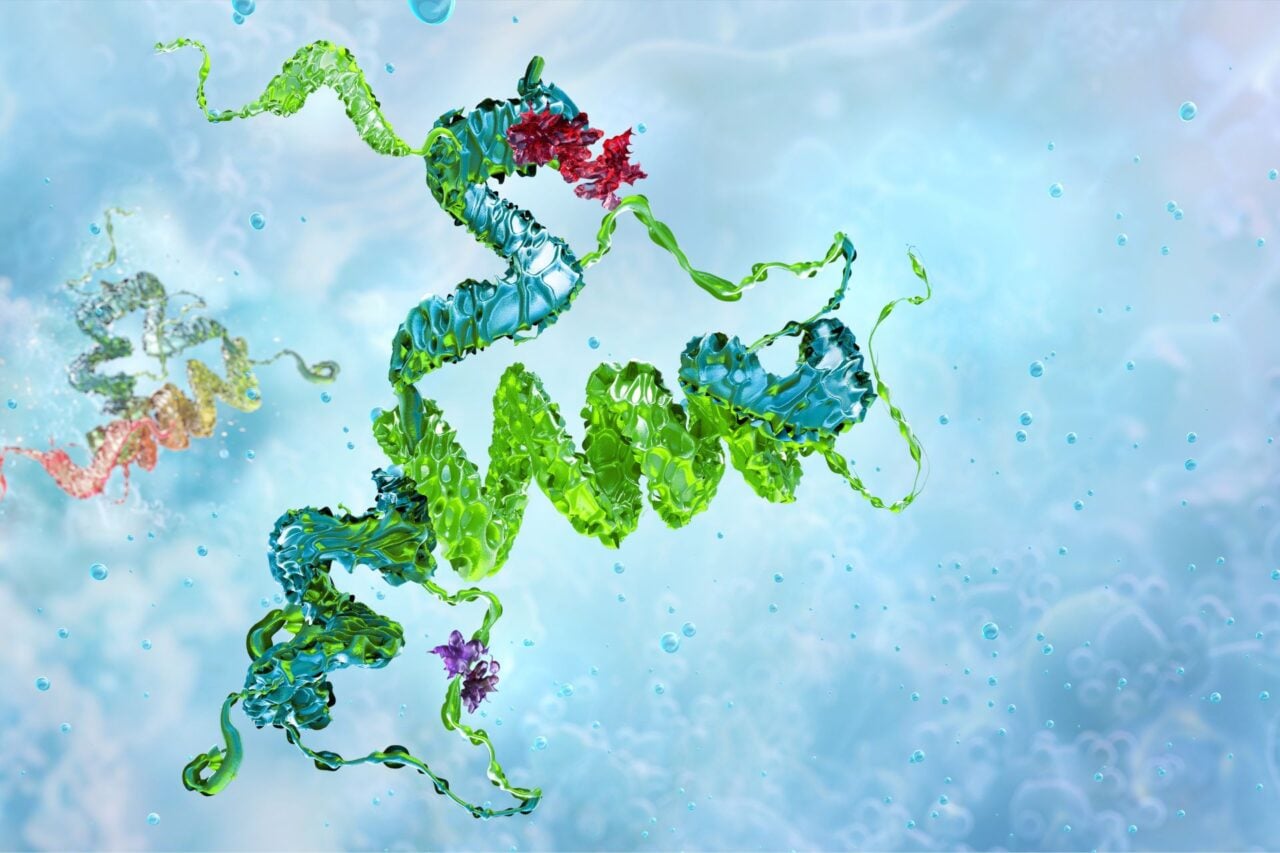
The next frontier of antibiotics might come from an unexpected place. Recent research identifies potential antibiotic candidates from inside prions—proteins capable of causing some of the deadliest brain infections ever known, such as mad cow disease.
Scientists at the University of Pennsylvania used artificial intelligence to rapidly search hundreds of prions and prion-like proteins for peptides with antibacterial activity. They found several dozen promising candidates, two of which have already shown results treating bacterial infections in mice.
The team’s findings establish “prion-related proteins as a productive source space for antibiotic discovery,” the scientists wrote in their paper, published late last week in the journal Nature Microbiology.
Good guy prions?
Prions are some of the strangest things around. They’re the misfolded form of a protein naturally found in the body. When a prion comes across its “normal” counterpart, it can somehow induce the latter to turn into a prion itself, almost like a zombie infection.
Classic prion disorders like mad cow disease and Creutzfeldt-Jakob disease are caused by the steady accumulation of one particular type of protein, aptly named the prion protein; these disorders are universally fatal. Some scientists have also argued that other neurodegenerative conditions, such as Alzheimer’s disease, are caused by other kinds of misfolded proteins that act in a similar way to prions.
According to the study researchers, there’s growing evidence that prions and prion-like proteins are more than just harbingers of death. Studies have found that the normal prion protein and the prion-like amyloid beta (one of the drivers of Alzheimer’s) can have antimicrobial activity, for instance. So the team decided to conduct a sweeping analysis looking for antimicrobial peptide fragments within these proteins.
The researchers had previously built an AI model intended to predict the antimicrobial activity of any given peptide fragment, named APEX 1.1. Then they let APEX scan through 19.3 million short peptide fragments found in 2,897 prion and prion-like proteins. They initially uncovered 1,179 candidates, which the team narrowed down to 75 that showed the most potential. Of these, 59 were able to inhibit the growth of at least one bacterial germ in the lab, including 42 that did so at low levels (important for dosing considerations).
Finally, the researchers tested two of the strongest candidates on the skin of mice infected with Acinetobacter baumannii, a common source of drug-resistant infections in people. The candidates appeared to be roughly as effective as polymyxin B, an existing antibiotic often used as a last resort drug for certain drug-resistant infections.
The researchers have coined these antibacterial fragments collected from prions as “prionins.”
The future of prionins
More research is obviously needed to verify whether the team’s prionins can actually work as hoped—and safely—in people. The researchers also note their findings don’t settle the open question as to whether prions or prion-like proteins naturally tackle bacterial infections in our body.
At the same time, they do argue their work provides a strong proof of concept that prionins identified through AI can be viable antibiotic candidates for further testing.
“For a long time, drug discovery has been limited not only by what we can test, but by where we choose to look,” said senior study author César de la Fuente, director of the Machine Biology Group at the University of Pennsylvania Perelman School of Medicine, in a statement from the university. “AI is changing that. It gives us a way to search the hidden layers of biology and ask whether molecules associated with one story—in this case, disease—may also carry another story with therapeutic potential.”
With any luck, the proteins known for causing the scariest diseases around could someday turn into our antibacterial allies.
The next frontier of antibiotics might come from an unexpected place. Recent research identifies potential antibiotic candidates from inside prions—proteins capable of causing some of the deadliest brain infections ever known, such as mad cow disease.
Scientists at the University of Pennsylvania used artificial intelligence to rapidly search hundreds of prions and prion-like proteins for peptides with antibacterial activity. They found several dozen promising candidates, two of which have already shown results treating bacterial infections in mice.
The team’s findings establish “prion-related proteins as a productive source space for antibiotic discovery,” the scientists wrote in their paper, published late last week in the journal Nature Microbiology.
Good guy prions?
Prions are some of the strangest things around. They’re the misfolded form of a protein naturally found in the body. When a prion comes across its “normal” counterpart, it can somehow induce the latter to turn into a prion itself, almost like a zombie infection.
Classic prion disorders like mad cow disease and Creutzfeldt-Jakob disease are caused by the steady accumulation of one particular type of protein, aptly named the prion protein; these disorders are universally fatal. Some scientists have also argued that other neurodegenerative conditions, such as Alzheimer’s disease, are caused by other kinds of misfolded proteins that act in a similar way to prions.
According to the study researchers, there’s growing evidence that prions and prion-like proteins are more than just harbingers of death. Studies have found that the normal prion protein and the prion-like amyloid beta (one of the drivers of Alzheimer’s) can have antimicrobial activity, for instance. So the team decided to conduct a sweeping analysis looking for antimicrobial peptide fragments within these proteins.
The researchers had previously built an AI model intended to predict the antimicrobial activity of any given peptide fragment, named APEX 1.1. Then they let APEX scan through 19.3 million short peptide fragments found in 2,897 prion and prion-like proteins. They initially uncovered 1,179 candidates, which the team narrowed down to 75 that showed the most potential. Of these, 59 were able to inhibit the growth of at least one bacterial germ in the lab, including 42 that did so at low levels (important for dosing considerations).
Finally, the researchers tested two of the strongest candidates on the skin of mice infected with Acinetobacter baumannii, a common source of drug-resistant infections in people. The candidates appeared to be roughly as effective as polymyxin B, an existing antibiotic often used as a last resort drug for certain drug-resistant infections.
The researchers have coined these antibacterial fragments collected from prions as “prionins.”
The future of prionins
More research is obviously needed to verify whether the team’s prionins can actually work as hoped—and safely—in people. The researchers also note their findings don’t settle the open question as to whether prions or prion-like proteins naturally tackle bacterial infections in our body.
At the same time, they do argue their work provides a strong proof of concept that prionins identified through AI can be viable antibiotic candidates for further testing.
“For a long time, drug discovery has been limited not only by what we can test, but by where we choose to look,” said senior study author César de la Fuente, director of the Machine Biology Group at the University of Pennsylvania Perelman School of Medicine, in a statement from the university. “AI is changing that. It gives us a way to search the hidden layers of biology and ask whether molecules associated with one story—in this case, disease—may also carry another story with therapeutic potential.”
With any luck, the proteins known for causing the scariest diseases around could someday turn into our antibacterial allies.
#Deadly #Proteins #Mad #Cow #Disease #Fight #Superbugsantibiotic resistance,experimental drugs,prions">Deadly Proteins Behind Mad Cow Disease Might Help Us Fight Superbugs
The next frontier of antibiotics might come from an unexpected place. Recent research identifies potential antibiotic candidates from inside prions—proteins capable of causing some of the deadliest brain infections ever known, such as mad cow disease.
Scientists at the University of Pennsylvania used artificial intelligence to rapidly search hundreds of prions and prion-like proteins for peptides with antibacterial activity. They found several dozen promising candidates, two of which have already shown results treating bacterial infections in mice.
The team’s findings establish “prion-related proteins as a productive source space for antibiotic discovery,” the scientists wrote in their paper, published late last week in the journal Nature Microbiology.
Good guy prions?
Prions are some of the strangest things around. They’re the misfolded form of a protein naturally found in the body. When a prion comes across its “normal” counterpart, it can somehow induce the latter to turn into a prion itself, almost like a zombie infection.
Classic prion disorders like mad cow disease and Creutzfeldt-Jakob disease are caused by the steady accumulation of one particular type of protein, aptly named the prion protein; these disorders are universally fatal. Some scientists have also argued that other neurodegenerative conditions, such as Alzheimer’s disease, are caused by other kinds of misfolded proteins that act in a similar way to prions.
According to the study researchers, there’s growing evidence that prions and prion-like proteins are more than just harbingers of death. Studies have found that the normal prion protein and the prion-like amyloid beta (one of the drivers of Alzheimer’s) can have antimicrobial activity, for instance. So the team decided to conduct a sweeping analysis looking for antimicrobial peptide fragments within these proteins.
The researchers had previously built an AI model intended to predict the antimicrobial activity of any given peptide fragment, named APEX 1.1. Then they let APEX scan through 19.3 million short peptide fragments found in 2,897 prion and prion-like proteins. They initially uncovered 1,179 candidates, which the team narrowed down to 75 that showed the most potential. Of these, 59 were able to inhibit the growth of at least one bacterial germ in the lab, including 42 that did so at low levels (important for dosing considerations).
Finally, the researchers tested two of the strongest candidates on the skin of mice infected with Acinetobacter baumannii, a common source of drug-resistant infections in people. The candidates appeared to be roughly as effective as polymyxin B, an existing antibiotic often used as a last resort drug for certain drug-resistant infections.
The researchers have coined these antibacterial fragments collected from prions as “prionins.”
The future of prionins
More research is obviously needed to verify whether the team’s prionins can actually work as hoped—and safely—in people. The researchers also note their findings don’t settle the open question as to whether prions or prion-like proteins naturally tackle bacterial infections in our body.
At the same time, they do argue their work provides a strong proof of concept that prionins identified through AI can be viable antibiotic candidates for further testing.
“For a long time, drug discovery has been limited not only by what we can test, but by where we choose to look,” said senior study author César de la Fuente, director of the Machine Biology Group at the University of Pennsylvania Perelman School of Medicine, in a statement from the university. “AI is changing that. It gives us a way to search the hidden layers of biology and ask whether molecules associated with one story—in this case, disease—may also carry another story with therapeutic potential.”
With any luck, the proteins known for causing the scariest diseases around could someday turn into our antibacterial allies.
“Some stuff I did myself, like this one. The Svarva lamp we made with the design group Front for the PS 2009 collection. They were quite newly established and so we did an armchair and this lamp. The desire was to do a wooden turned lamp, but you should also be able to twist it, articulate it.”
“I felt that that would be very difficult to do. Along with a colleague in lighting at the time, I went to Hungary to this factory that was producing lamps for us. It was all metal tubes that they were doing, so we were a little bit hesitant whether they should be able to solve this. But they made some mock-ups based on the designer drawings. So we went there to have a look, and it was standing there. It was this floor lamp, and also a table lamp where the wooden beads were going in a circle and then up, like a snake.”
“What we didn’t know was that next to the lamp factory was this factory that was doing the turned wooden beads, the small individual pieces that we put together. None of us knew that. It was just pure serendipity. So they were turning these wooden beads, and the lamp factory was putting them on the metal tubes, just like on a necklace. They had very little to do, so they were happy to get the business.”
A Sinka Cabinet resides in Ejdemo’s hallway.
Courtesy of Johan Ejdemo
PS Sinka Cabinet
“I have another favorite from that PS 2009 collection, it’s in my hallway. The PS Sinka, with the small drawers with a wooden base. Sinka means “dovetail” in Swedish, so the name explaining that construction.”
“But the problem we had with this one was the packaging volume was too big. So what we did was each drawer is slightly shallower. So four drawers stack into each other. And four more drawers stack. There’s a little bit of a stopper in the back when you push them in, so they stop evenly at the front. There’s also a hidden compartment behind the smallest drawer. Really good drawers for all this stuff that is just lying around and getting in the way. In the top one I have all my keys that I no longer know where they go.”
PS Jonsberg Vases
“I have this vase from the PS collection to hold the cables [on my Samsung Serif TV]. It was a set, the Jonsberg vases by Hella Jongerius. There were four of them in different ceramic techniques. I had all four, but the terracotta one broke, which was a pity.” [It certainly is. These $39 vases now sell secondhand for $1,700 for a full set.]
“They’re inspired by different regions, and the different techniques are beautiful. I use the big black one for toilet paper in one bathroom. It’s not disrespect for the design. It’s just such a good design to stand there, and it makes the bathroom beautiful, and it can fit the toilet roll. So, why have something like an ugly stick? It’s nice for that.”
Pax Wardrobes
“Pax. We have to mention Pax. I have Pax wardrobes in a few rooms, but also I’m a little bit peculiar. Like in the kitchen, these veneer doors have been sanded and hand-painted by me, just to make them fit my house, in my space. I repaint them sometimes.”
Chipped Spraka pepper mills.
Courtesy of Johan Ejdemo
Spraka Pepper Mills
“I have these pepper mills. One for white pepper, one for black pepper. That was also in a PS collection. We did these with Marcus Arvonen. These pepper mills are beautiful, and these have been around for, like, 20 years as well. They are pretty tall. A smaller version came later on, but I like these.”
“They have their chips, yes, but this just makes them nicer. It’s age. They’ve been around and are used every day. Everything has a little bit of imperfection. You can spend your whole life bothering about that, but there should be some imperfection in life. Fix it? Then something else needs fixing. It just moves. Leave it, be proud.”
Where’s the Billy Bookcase or Kallax?
“I don’t have a Billy in the house now. But there have been! Kallax? I have owned many. Brilliant piece. Really good for vinyl, because that’s the time they come from. I listen to a lot of vinyl.”
“Some stuff I did myself, like this one. The Svarva lamp we made with the design group Front for the PS 2009 collection. They were quite newly established and so we did an armchair and this lamp. The desire was to do a wooden turned lamp, but you should also be able to twist it, articulate it.”
“I felt that that would be very difficult to do. Along with a colleague in lighting at the time, I went to Hungary to this factory that was producing lamps for us. It was all metal tubes that they were doing, so we were a little bit hesitant whether they should be able to solve this. But they made some mock-ups based on the designer drawings. So we went there to have a look, and it was standing there. It was this floor lamp, and also a table lamp where the wooden beads were going in a circle and then up, like a snake.”
“What we didn’t know was that next to the lamp factory was this factory that was doing the turned wooden beads, the small individual pieces that we put together. None of us knew that. It was just pure serendipity. So they were turning these wooden beads, and the lamp factory was putting them on the metal tubes, just like on a necklace. They had very little to do, so they were happy to get the business.”
A Sinka Cabinet resides in Ejdemo’s hallway.
Courtesy of Johan Ejdemo
PS Sinka Cabinet
“I have another favorite from that PS 2009 collection, it’s in my hallway. The PS Sinka, with the small drawers with a wooden base. Sinka means “dovetail” in Swedish, so the name explaining that construction.”
“But the problem we had with this one was the packaging volume was too big. So what we did was each drawer is slightly shallower. So four drawers stack into each other. And four more drawers stack. There’s a little bit of a stopper in the back when you push them in, so they stop evenly at the front. There’s also a hidden compartment behind the smallest drawer. Really good drawers for all this stuff that is just lying around and getting in the way. In the top one I have all my keys that I no longer know where they go.”
PS Jonsberg Vases
“I have this vase from the PS collection to hold the cables [on my Samsung Serif TV]. It was a set, the Jonsberg vases by Hella Jongerius. There were four of them in different ceramic techniques. I had all four, but the terracotta one broke, which was a pity.” [It certainly is. These $39 vases now sell secondhand for $1,700 for a full set.]
“They’re inspired by different regions, and the different techniques are beautiful. I use the big black one for toilet paper in one bathroom. It’s not disrespect for the design. It’s just such a good design to stand there, and it makes the bathroom beautiful, and it can fit the toilet roll. So, why have something like an ugly stick? It’s nice for that.”
Pax Wardrobes
“Pax. We have to mention Pax. I have Pax wardrobes in a few rooms, but also I’m a little bit peculiar. Like in the kitchen, these veneer doors have been sanded and hand-painted by me, just to make them fit my house, in my space. I repaint them sometimes.”
Chipped Spraka pepper mills.
Courtesy of Johan Ejdemo
Spraka Pepper Mills
“I have these pepper mills. One for white pepper, one for black pepper. That was also in a PS collection. We did these with Marcus Arvonen. These pepper mills are beautiful, and these have been around for, like, 20 years as well. They are pretty tall. A smaller version came later on, but I like these.”
“They have their chips, yes, but this just makes them nicer. It’s age. They’ve been around and are used every day. Everything has a little bit of imperfection. You can spend your whole life bothering about that, but there should be some imperfection in life. Fix it? Then something else needs fixing. It just moves. Leave it, be proud.”
Where’s the Billy Bookcase or Kallax?
“I don’t have a Billy in the house now. But there have been! Kallax? I have owned many. Brilliant piece. Really good for vinyl, because that’s the time they come from. I listen to a lot of vinyl.”
#Ikea #Products #Companys #Design #Chief #Personally #Ownsikea,design,home,furniture,household,interviews">These Are the 12 Ikea Products the Company’s Design Chief Personally Owns
The Svarva lamp can be twisted into different shapes.
Courtesy of Johan Ejdemo
PS Svarva Floor Lamp
“Some stuff I did myself, like this one. The Svarva lamp we made with the design group Front for the PS 2009 collection. They were quite newly established and so we did an armchair and this lamp. The desire was to do a wooden turned lamp, but you should also be able to twist it, articulate it.”
“I felt that that would be very difficult to do. Along with a colleague in lighting at the time, I went to Hungary to this factory that was producing lamps for us. It was all metal tubes that they were doing, so we were a little bit hesitant whether they should be able to solve this. But they made some mock-ups based on the designer drawings. So we went there to have a look, and it was standing there. It was this floor lamp, and also a table lamp where the wooden beads were going in a circle and then up, like a snake.”
“What we didn’t know was that next to the lamp factory was this factory that was doing the turned wooden beads, the small individual pieces that we put together. None of us knew that. It was just pure serendipity. So they were turning these wooden beads, and the lamp factory was putting them on the metal tubes, just like on a necklace. They had very little to do, so they were happy to get the business.”
A Sinka Cabinet resides in Ejdemo’s hallway.
Courtesy of Johan Ejdemo
PS Sinka Cabinet
“I have another favorite from that PS 2009 collection, it’s in my hallway. The PS Sinka, with the small drawers with a wooden base. Sinka means “dovetail” in Swedish, so the name explaining that construction.”
“But the problem we had with this one was the packaging volume was too big. So what we did was each drawer is slightly shallower. So four drawers stack into each other. And four more drawers stack. There’s a little bit of a stopper in the back when you push them in, so they stop evenly at the front. There’s also a hidden compartment behind the smallest drawer. Really good drawers for all this stuff that is just lying around and getting in the way. In the top one I have all my keys that I no longer know where they go.”
PS Jonsberg Vases
“I have this vase from the PS collection to hold the cables [on my Samsung Serif TV]. It was a set, the Jonsberg vases by Hella Jongerius. There were four of them in different ceramic techniques. I had all four, but the terracotta one broke, which was a pity.” [It certainly is. These $39 vases now sell secondhand for $1,700 for a full set.]
“They’re inspired by different regions, and the different techniques are beautiful. I use the big black one for toilet paper in one bathroom. It’s not disrespect for the design. It’s just such a good design to stand there, and it makes the bathroom beautiful, and it can fit the toilet roll. So, why have something like an ugly stick? It’s nice for that.”
Pax Wardrobes
“Pax. We have to mention Pax. I have Pax wardrobes in a few rooms, but also I’m a little bit peculiar. Like in the kitchen, these veneer doors have been sanded and hand-painted by me, just to make them fit my house, in my space. I repaint them sometimes.”
Chipped Spraka pepper mills.
Courtesy of Johan Ejdemo
Spraka Pepper Mills
“I have these pepper mills. One for white pepper, one for black pepper. That was also in a PS collection. We did these with Marcus Arvonen. These pepper mills are beautiful, and these have been around for, like, 20 years as well. They are pretty tall. A smaller version came later on, but I like these.”
“They have their chips, yes, but this just makes them nicer. It’s age. They’ve been around and are used every day. Everything has a little bit of imperfection. You can spend your whole life bothering about that, but there should be some imperfection in life. Fix it? Then something else needs fixing. It just moves. Leave it, be proud.”
Where’s the Billy Bookcase or Kallax?
“I don’t have a Billy in the house now. But there have been! Kallax? I have owned many. Brilliant piece. Really good for vinyl, because that’s the time they come from. I listen to a lot of vinyl.”






![These Are the 12 Ikea Products the Company’s Design Chief Personally OwnsThe Svarva lamp can be twisted into different shapes.
Courtesy of Johan EjdemoPS Svarva Floor Lamp“Some stuff I did myself, like this one. The Svarva lamp we made with the design group Front for the PS 2009 collection. They were quite newly established and so we did an armchair and this lamp. The desire was to do a wooden turned lamp, but you should also be able to twist it, articulate it.”“I felt that that would be very difficult to do. Along with a colleague in lighting at the time, I went to Hungary to this factory that was producing lamps for us. It was all metal tubes that they were doing, so we were a little bit hesitant whether they should be able to solve this. But they made some mock-ups based on the designer drawings. So we went there to have a look, and it was standing there. It was this floor lamp, and also a table lamp where the wooden beads were going in a circle and then up, like a snake.”“What we didn’t know was that next to the lamp factory was this factory that was doing the turned wooden beads, the small individual pieces that we put together. None of us knew that. It was just pure serendipity. So they were turning these wooden beads, and the lamp factory was putting them on the metal tubes, just like on a necklace. They had very little to do, so they were happy to get the business.”A Sinka Cabinet resides in Ejdemo’s hallway.
Courtesy of Johan EjdemoPS Sinka Cabinet“I have another favorite from that PS 2009 collection, it’s in my hallway. The PS Sinka, with the small drawers with a wooden base. Sinka means “dovetail” in Swedish, so the name explaining that construction.”“But the problem we had with this one was the packaging volume was too big. So what we did was each drawer is slightly shallower. So four drawers stack into each other. And four more drawers stack. There’s a little bit of a stopper in the back when you push them in, so they stop evenly at the front. There’s also a hidden compartment behind the smallest drawer. Really good drawers for all this stuff that is just lying around and getting in the way. In the top one I have all my keys that I no longer know where they go.”PS Jonsberg Vases“I have this vase from the PS collection to hold the cables [on my Samsung Serif TV]. It was a set, the Jonsberg vases by Hella Jongerius. There were four of them in different ceramic techniques. I had all four, but the terracotta one broke, which was a pity.” [It certainly is. These vases now sell secondhand for ,700 for a full set.]“They’re inspired by different regions, and the different techniques are beautiful. I use the big black one for toilet paper in one bathroom. It’s not disrespect for the design. It’s just such a good design to stand there, and it makes the bathroom beautiful, and it can fit the toilet roll. So, why have something like an ugly stick? It’s nice for that.”Pax Wardrobes“Pax. We have to mention Pax. I have Pax wardrobes in a few rooms, but also I’m a little bit peculiar. Like in the kitchen, these veneer doors have been sanded and hand-painted by me, just to make them fit my house, in my space. I repaint them sometimes.”Chipped Spraka pepper mills.
Courtesy of Johan EjdemoSpraka Pepper Mills“I have these pepper mills. One for white pepper, one for black pepper. That was also in a PS collection. We did these with Marcus Arvonen. These pepper mills are beautiful, and these have been around for, like, 20 years as well. They are pretty tall. A smaller version came later on, but I like these.”“They have their chips, yes, but this just makes them nicer. It’s age. They’ve been around and are used every day. Everything has a little bit of imperfection. You can spend your whole life bothering about that, but there should be some imperfection in life. Fix it? Then something else needs fixing. It just moves. Leave it, be proud.”Where’s the Billy Bookcase or Kallax?“I don’t have a Billy in the house now. But there have been! Kallax? I have owned many. Brilliant piece. Really good for vinyl, because that’s the time they come from. I listen to a lot of vinyl.”#Ikea #Products #Companys #Design #Chief #Personally #Ownsikea,design,home,furniture,household,interviews](https://i2.wp.com/media.wired.com/photos/6a33ff12acc128b064d51d9c/master/w_1600%2Cc_limit/IKEA%2520PS%2520SVARVA%25202.jpg?ssl=1 "These Are the 12 Ikea Products the Company’s Design Chief Personally OwnsThe Svarva lamp can be twisted into different shapes.
Courtesy of Johan EjdemoPS Svarva Floor Lamp“Some stuff I did myself, like this one. The Svarva lamp we made with the design group Front for the PS 2009 collection. They were quite newly established and so we did an armchair and this lamp. The desire was to do a wooden turned lamp, but you should also be able to twist it, articulate it.”“I felt that that would be very difficult to do. Along with a colleague in lighting at the time, I went to Hungary to this factory that was producing lamps for us. It was all metal tubes that they were doing, so we were a little bit hesitant whether they should be able to solve this. But they made some mock-ups based on the designer drawings. So we went there to have a look, and it was standing there. It was this floor lamp, and also a table lamp where the wooden beads were going in a circle and then up, like a snake.”“What we didn’t know was that next to the lamp factory was this factory that was doing the turned wooden beads, the small individual pieces that we put together. None of us knew that. It was just pure serendipity. So they were turning these wooden beads, and the lamp factory was putting them on the metal tubes, just like on a necklace. They had very little to do, so they were happy to get the business.”A Sinka Cabinet resides in Ejdemo’s hallway.
Courtesy of Johan EjdemoPS Sinka Cabinet“I have another favorite from that PS 2009 collection, it’s in my hallway. The PS Sinka, with the small drawers with a wooden base. Sinka means “dovetail” in Swedish, so the name explaining that construction.”“But the problem we had with this one was the packaging volume was too big. So what we did was each drawer is slightly shallower. So four drawers stack into each other. And four more drawers stack. There’s a little bit of a stopper in the back when you push them in, so they stop evenly at the front. There’s also a hidden compartment behind the smallest drawer. Really good drawers for all this stuff that is just lying around and getting in the way. In the top one I have all my keys that I no longer know where they go.”PS Jonsberg Vases“I have this vase from the PS collection to hold the cables [on my Samsung Serif TV]. It was a set, the Jonsberg vases by Hella Jongerius. There were four of them in different ceramic techniques. I had all four, but the terracotta one broke, which was a pity.” [It certainly is. These vases now sell secondhand for ,700 for a full set.]“They’re inspired by different regions, and the different techniques are beautiful. I use the big black one for toilet paper in one bathroom. It’s not disrespect for the design. It’s just such a good design to stand there, and it makes the bathroom beautiful, and it can fit the toilet roll. So, why have something like an ugly stick? It’s nice for that.”Pax Wardrobes“Pax. We have to mention Pax. I have Pax wardrobes in a few rooms, but also I’m a little bit peculiar. Like in the kitchen, these veneer doors have been sanded and hand-painted by me, just to make them fit my house, in my space. I repaint them sometimes.”Chipped Spraka pepper mills.
Courtesy of Johan EjdemoSpraka Pepper Mills“I have these pepper mills. One for white pepper, one for black pepper. That was also in a PS collection. We did these with Marcus Arvonen. These pepper mills are beautiful, and these have been around for, like, 20 years as well. They are pretty tall. A smaller version came later on, but I like these.”“They have their chips, yes, but this just makes them nicer. It’s age. They’ve been around and are used every day. Everything has a little bit of imperfection. You can spend your whole life bothering about that, but there should be some imperfection in life. Fix it? Then something else needs fixing. It just moves. Leave it, be proud.”Where’s the Billy Bookcase or Kallax?“I don’t have a Billy in the house now. But there have been! Kallax? I have owned many. Brilliant piece. Really good for vinyl, because that’s the time they come from. I listen to a lot of vinyl.”#Ikea #Products #Companys #Design #Chief #Personally #Ownsikea,design,home,furniture,household,interviews")
Post Comment