×
NFL playoff picture: What Broncos win over Packers means for NFC & AFC standings

NFL playoff picture: What Broncos win over Packers means for NFC & AFC standings

Update: With their win over the Green Bay Packers, the Denver Broncos have clinched a spot in the playoffs. They remain in the No. 1 spot right now, with an added advantage over the New ENgland Patriots due to their loss to the Buffalo Bills earlier in the day.

As for the Packers, the loss dropped them to 9-4-1 on the season, and all the way down to the No. 7 spot in the NFC playoff picture.

Previous: The NFL heads into Week 15 with several huge games on the slate, and Sunday will feature a potential Super Bowl preview (and rematch) when the Denver Broncos host the Green Bay Packers. The game kicks off at 4:25 p.m. ET and by the end of it, either team could be in the top spot in their conference.

The Packers enter the game with a 9-3-1 record and have won four straight. Notably, they held off the Bears last week to take the divisional lead. The Broncos enter the game with an 11-2 record. Last week, they held off the Raiders in Las Vegas to win their tenth straight game.

Green Bay is a 2.5-point road favorite in this matchup.

Green Bay Packers playoff picture

The Packers have a half game lead on the Bears and a 1.5 game lead on the Lions in the division. The Bears are hosting the Browns this week, while the Lions are on the road against the Rams. Green Bay cannot clinch a playoff berth this week, but they can move themselves into position to clinch at least a wild card berth next week with a win and a Lions loss this week.

Green Bay enters the game with a 58% chance of winning the division and hosting a wild card round game at The Athletic’s playoff simulator. A win over the Broncos would increase that to 62% while a loss would drop it to 54%.

  1. Green Bay Packers: 9-3-1
  2. Chicago Bears: 9-4
  3. Detroit Lions: 8-5
  4. Minnesota Vikings: 5-8

The Packers are in second place, a half game back of the Rams for the No. 1 seed. While a Lions loss to the Rams helps the Packers get closer to clinching a playoff berth, a Lions upset of the Rams would be more valuable since it would open the door to the No. 1 seed. The playoff simulator gives the Packers a 10% chance of claiming the No. 1 seed. A win this week moves it to 19% and a Lions upset of the Rams added to that improves the Packers chances at a No. 1 seed to 27%. A loss this week drops their chances at the No. 1 seed to 1%.

  1. Los Angeles Rams: 10-3
  2. Green Bay Packers: 9-3-1
  3. Philadelphia Eagles: 8-5
  4. Carolina Panthers: 7-6
  5. Seattle Seahawks: 10-3
  6. San Francisco 49ers: 9-4
  7. Chicago Bears: 9-4
  8. Detroit Lions: 8-5
  9. Tampa Bay Buccaneers: 7-7
  10. Dallas Cowboys: 6-6-1

Denver Broncos playoff picture

The Broncos can clinch a playoff berth this week with a win, but the earliest they can clinch the division title is next week. The Chargers are two games ahead of the Chargers, but lost the first head-to-head game with them. The two teams face off in Week 18, so it’s possible that a late Broncos collapse could turn that game into the division-decider. The Chargers are traveling to face the Chiefs this week. The Broncos enter Sunday with a 47% chance of winning the division and hosting a wild card round game. A win actually decreases that to 39% because their chances at the No. 1 seed become their most likely result. A loss improves their hosting a wild card round matchup to 56% because their chances at a No. 1 seed decline and they’re such strong division favorites.

  1. Denver Broncos: 11-2
  2. Los Angeles Chargers: 9-4
  3. Kansas City Chiefs: 6-7
  4. Las Vegas Raiders: 2-11

Denver is in first place in the conference, holding the conference record tiebreaker over the Patriots. If both teams win out, that will also be a tie and the tiebreaker will move to common games. The Patriots Week 1 loss to the Raiders would decide that in favor of the Broncos if both teams win out. They have a 39% chance of claiming the No. 1 seed. A win improves that to 55% and a loss decreases that to 24%.

  1. Denver Broncos: 11-2
  2. New England Patriots: 11-2
  3. Jacksonville Jaguars: 9-4
  4. Pittsburgh Steelers: 7-6
  5. Los Angeles Chargers: 9-4
  6. Buffalo Bills: 9-4
  7. Houston Texans: 8-5
  8. Indianapolis Colts: 8-5
  9. Baltimore Ravens: 6-7
  10. Kansas City Chiefs: 6-7
  11. Miami Dolphins: 6-7

This game has no tiebreaker implications. The Broncos were a common opponent for the Packers and Eagles, but Philadelphia beat Green Bay for the head-to-head tiebreaker, and a tie on Green Bay’s record means we likely won’t see a tiebreaker needed against Philly.

Source link
#NFL #playoff #picture #Broncos #win #Packers #means #NFC #AFC #standings

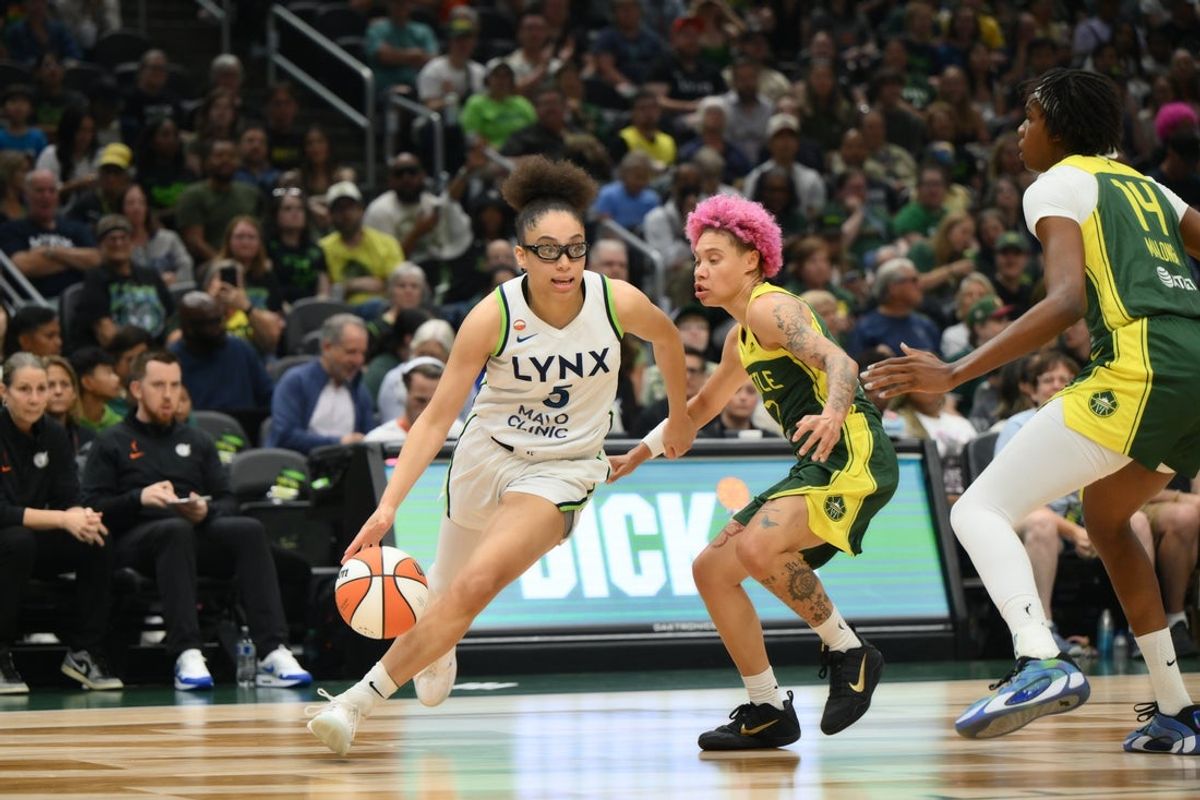
Deadspin | Lynx easing in Napheesa Collier for season debut vs. Storm  Jul 20, 2026; Seattle, Washington, USA; Minnesota Lynx guard Olivia Miles (5) dribbles the ball while guarded by Seattle Storm guard Natisha Hiedeman (2) during the first half at Climate Pledge Arena. Mandatory Credit: Steven Bisig-Imagn Images   For the second time this week, the Minnesota Lynx will face the Storm in Seattle on Wednesday in the final game for both teams before the WNBA’s All-Star break.  The Lynx (21-6) defeated the Storm (6-22) on Monday night behind a herculean effort from rookie point guard Olivia Miles. The No. 2 overall draft pick tallied 32 points, eight rebounds and eight assists in the 105-102 victory. Miles became just the fifth player in WNBA history to record such a stat line in a game and joined Candace Parker as the only rookie to do it.  On the season, Miles is averaging 19.6 points, 4.8 rebounds and 6.0 assists per game while shooting 50.1% from the floor. She ranks eighth in the league in scoring and seventh in assists.  The Lynx also have enjoyed recent standout performances from veteran guard Kayla McBride, who was named WNBA Player of the Week after averaging 27 points per game over her last three outings, all wins for Minnesota.  The Lynx have needed great scoring performances from Miles and McBride because, while they’ve won six straight games, they’ve allowed 90 points or more in three of their last four.  “It’s special when you can walk away with a win and be like, ‘We have so many things to get better at,'” Miles said.  Lynx coach Cheryl Reeve added: “Our three perimeter players have been special all season. Right now, we’re needing them to have these prolific efforts in order for us to win a game because our defense is nowhere to be found.”   Help is on the way. Napheesa Collier, the two-time MVP runner-up and 2024 Defensive Player of the Year, will be on a minutes restriction when she makes her season debut on Wednesday, per Reeve. Collier had offseason surgery on both her ankles after tearing ligaments in her left ankle during a playoff game last September.  “I’m going to be mindful of how many minutes she plays, but she hates the idea of a minutes restriction, so just don’t tell her,” Reeve told reporters.  “… We still have a couple more steps to go before we see the Phee we know her to be.”  The Storm are riding a five-game losing streak and have lost seven of their last eight games.  Still, their young core of Dominique Malonga, Awa Fam and Flau’jae Johnson — all first-round picks over the last two drafts — have continued to shine. Johnson had 26 points against the Lynx on Monday, while Malonga is averaging 16.1 points, 8.5 rebounds and 1.2 blocks per game.  “Actually, our youth is our strength. We have a lot of energy, and we never stop,” Malonga recently told Slam Magazine. “I really can’t wait to keep developing this chemistry with the two of them because I think that’s a real big three right there.”  –Field Level Media    #Deadspin #Lynx #easing #Napheesa #Collier #season #debut #StormJul 20, 2026; Seattle, Washington, USA; Minnesota Lynx guard Olivia Miles (5) dribbles the ball while guarded by Seattle Storm guard Natisha Hiedeman (2) during the first half at Climate Pledge Arena. Mandatory Credit: Steven Bisig-Imagn Images

For the second time this week, the Minnesota Lynx will face the Storm in Seattle on Wednesday in the final game for both teams before the WNBA’s All-Star break.

The Lynx (21-6) defeated the Storm (6-22) on Monday night behind a herculean effort from rookie point guard Olivia Miles. The No. 2 overall draft pick tallied 32 points, eight rebounds and eight assists in the 105-102 victory. Miles became just the fifth player in WNBA history to record such a stat line in a game and joined Candace Parker as the only rookie to do it.

On the season, Miles is averaging 19.6 points, 4.8 rebounds and 6.0 assists per game while shooting 50.1% from the floor. She ranks eighth in the league in scoring and seventh in assists.

The Lynx also have enjoyed recent standout performances from veteran guard Kayla McBride, who was named WNBA Player of the Week after averaging 27 points per game over her last three outings, all wins for Minnesota.

The Lynx have needed great scoring performances from Miles and McBride because, while they’ve won six straight games, they’ve allowed 90 points or more in three of their last four.

“It’s special when you can walk away with a win and be like, ‘We have so many things to get better at,'” Miles said.


Lynx coach Cheryl Reeve added: “Our three perimeter players have been special all season. Right now, we’re needing them to have these prolific efforts in order for us to win a game because our defense is nowhere to be found.”

Help is on the way. Napheesa Collier, the two-time MVP runner-up and 2024 Defensive Player of the Year, will be on a minutes restriction when she makes her season debut on Wednesday, per Reeve. Collier had offseason surgery on both her ankles after tearing ligaments in her left ankle during a playoff game last September.

“I’m going to be mindful of how many minutes she plays, but she hates the idea of a minutes restriction, so just don’t tell her,” Reeve told reporters.

“… We still have a couple more steps to go before we see the Phee we know her to be.”

The Storm are riding a five-game losing streak and have lost seven of their last eight games.

Still, their young core of Dominique Malonga, Awa Fam and Flau’jae Johnson — all first-round picks over the last two drafts — have continued to shine. Johnson had 26 points against the Lynx on Monday, while Malonga is averaging 16.1 points, 8.5 rebounds and 1.2 blocks per game.

“Actually, our youth is our strength. We have a lot of energy, and we never stop,” Malonga recently told Slam Magazine. “I really can’t wait to keep developing this chemistry with the two of them because I think that’s a real big three right there.”


–Field Level Media

#Deadspin #Lynx #easing #Napheesa #Collier #season #debut #Storm">Deadspin | Lynx easing in Napheesa Collier for season debut vs. Storm  Jul 20, 2026; Seattle, Washington, USA; Minnesota Lynx guard Olivia Miles (5) dribbles the ball while guarded by Seattle Storm guard Natisha Hiedeman (2) during the first half at Climate Pledge Arena. Mandatory Credit: Steven Bisig-Imagn Images   For the second time this week, the Minnesota Lynx will face the Storm in Seattle on Wednesday in the final game for both teams before the WNBA’s All-Star break.  The Lynx (21-6) defeated the Storm (6-22) on Monday night behind a herculean effort from rookie point guard Olivia Miles. The No. 2 overall draft pick tallied 32 points, eight rebounds and eight assists in the 105-102 victory. Miles became just the fifth player in WNBA history to record such a stat line in a game and joined Candace Parker as the only rookie to do it.  On the season, Miles is averaging 19.6 points, 4.8 rebounds and 6.0 assists per game while shooting 50.1% from the floor. She ranks eighth in the league in scoring and seventh in assists.  The Lynx also have enjoyed recent standout performances from veteran guard Kayla McBride, who was named WNBA Player of the Week after averaging 27 points per game over her last three outings, all wins for Minnesota.  The Lynx have needed great scoring performances from Miles and McBride because, while they’ve won six straight games, they’ve allowed 90 points or more in three of their last four.  “It’s special when you can walk away with a win and be like, ‘We have so many things to get better at,'” Miles said.  Lynx coach Cheryl Reeve added: “Our three perimeter players have been special all season. Right now, we’re needing them to have these prolific efforts in order for us to win a game because our defense is nowhere to be found.”   Help is on the way. Napheesa Collier, the two-time MVP runner-up and 2024 Defensive Player of the Year, will be on a minutes restriction when she makes her season debut on Wednesday, per Reeve. Collier had offseason surgery on both her ankles after tearing ligaments in her left ankle during a playoff game last September.  “I’m going to be mindful of how many minutes she plays, but she hates the idea of a minutes restriction, so just don’t tell her,” Reeve told reporters.  “… We still have a couple more steps to go before we see the Phee we know her to be.”  The Storm are riding a five-game losing streak and have lost seven of their last eight games.  Still, their young core of Dominique Malonga, Awa Fam and Flau’jae Johnson — all first-round picks over the last two drafts — have continued to shine. Johnson had 26 points against the Lynx on Monday, while Malonga is averaging 16.1 points, 8.5 rebounds and 1.2 blocks per game.  “Actually, our youth is our strength. We have a lot of energy, and we never stop,” Malonga recently told Slam Magazine. “I really can’t wait to keep developing this chemistry with the two of them because I think that’s a real big three right there.”  –Field Level Media    #Deadspin #Lynx #easing #Napheesa #Collier #season #debut #Storm

Sophie Cunningham understands the brand business, and business is booming. The iconic and infamous finger-pointing Caitlin Clark enforcer preached a message of centrism in her latest profile from ESPN, knowing full well she’s actively courting one side of a culture war. Cunningham has become the collective crush of the internet’s men, feeding the flames of their desperation. The Missouri native is riding this wave as long as possible, garnering fame that eclipses her skill on the court ten times over, and seemingly has no scruples when it comes to the grift.

Cunningham has been the Fever enforcer since arriving via trade in January of 2025. It was a much-needed role, designed to send a message to opponents that they won’t get away with messing with Caitlin Clark without strong retribution. This is precisely what happened in 2025 when Cunningham first went viral for wrestling Jacy Sheldon to the ground after Clark was poked in the eye. The first run-in went viral inside the basketball sphere, but June of 2026 propelled her into the stratosphere when Cunningham argued with officials over a foul between Clark and DeWanna Bonner, resulting in Cunningham taunting Bonner by pointing at her for 22 straight seconds, becoming a meme in the process.

That was the moment everything changed. Cunningham was caught up in the moment and wanted to instigate her opponent in the process, but it took on an entirely different meaning for Cunningham’s core audience. There’s a reason the Bonner point went viral in a way the Sheldon video didn’t, because it became a catch-cry of the culture war, a blonde, white, cisgender woman taunting and infuriating a black woman. It played into every trope one side of the spectrum has about the WNBA as a whole, with Caitlin Clark being an innocent, fragile, Midwestern flower getting abused on all sides by bigger, meaner, “jealous” women who are either black, gay, or both.

Cunningham became a reflection of their online personas in that moment. The men who constantly cry foul of Clark being treated poorly now had their symbol of resistance.

The role of enforcer in basketball is nothing new, nor is the inescapable double standard surrounding it. For years we’ve seen black enforcers like Dennis Rodman or Charles Oakley get labeled as “dirty,” while white compatriots Bill Laimbeer and Kurt Rambis are praised for their “grit” and “courage.” The same happened with Cunningham during her rise to fame. The attention and endorsements ranged from an ad deal with Ring doorbell, to being added to the Sports Illustrated Swimsuit Edition, to appearing on late-night TV, getting her own shoe colorway, and becoming a UFC ring girl. Hundreds of thousands of social media followers rolled in, conveying fame that far outstrips Cunningham’s basketball ability.

That’s not to say Cunningham is a bad player, because she’s been an excellent three-point shooter during her seven-year career, a solid contributor off the bench, and gives much-needed edge — but it’s intellectually dishonest to pretend that the fame Cunningham has experienced is because of her basketball ability. She is garnering a level of attention reserved only for the WNBA’s biggest stars, despite being a role player who has started fewer than 50 percent of her career games.

A brand has grown around Cunningham which may have begun without her consent, but she’s certainly stoked the flames of it. She knows precisely who she’s marketing herself to with daily thirst trap videos, the UFC ring girl schtick, turning up at NASCAR races, and taking shots with country music stars — but when asked about her beliefs she plays the role of centrist, as she did with ESPN.

“I’m very much in the middle. I agree with things on both sides, disagree with things on both sides. And that’s all I’ve ever said about my political beliefs. But people love to assume.”

This is crap. Spend even a few casual minutes looking through her social media history and you’ll find no evidence that she actually has feelings on both sides of the spectrum. In the last year Cunningham has retweeted Riley Gaines, reposted the video of Kash Patel in the locker room of the U.S. Hockey Team, and echoed numerous posts about Charlie Kirk — with the only post that could even remotely be considered “on the other side” was decrying AI data centers, which was carefully put through the lens of being a threat to farm land.

Then there’s the quote making waves on Wednesday where Cunningham took her ESPN profile as a chance to amplify a key transphobic talking point.

“I think that I am here to extend love. But I also think with that love is truth, being honest. And I want to protect young girls in a locker room, or young girls in sport who shouldn’t have to go against biological men.”

There’s careful wording in here too. Cunningham notably puts “girls” in opposition with “men,” a catch-cry for anti-trans groups designed to heighten a predatory nature. We don’t need to litigate the issue continually. Still, data shows that the perceived “threat” of trans athletes is overblown but often used to marginalize trans individuals as part of a systematic plan to remove their rights.

Sophie Cunningham is the enforcer for the Indiana Fever. Not just in terms of gloving up and fighting anyone who messes with Caitlin Clark on the court, but by garnering a lion’s share of the attention off of it. That might have value far beyond the superficial, but by doing this she has cultivated an effective, albeit insidious brand. One that cozies up to the very men who made fun of women’s basketball before Clark came along, the guys who shrieked every time the WNBA was mentioned or given airtime. These are the people who are her consumers, and they view her not as an athlete, but a tool — a tool of their culture war, a tool of their desire, a disposable star occupying space until the next iteration comes along.

I hope it’s worth it for Sophie Cunningham in the long run.

#Sophie #Cunningham #turned #culture #war #brand">Sophie Cunningham has turned culture war into her brand  Sophie Cunningham understands the brand business, and business is booming. The iconic and infamous finger-pointing Caitlin Clark enforcer preached a message of centrism in her latest profile from ESPN, knowing full well she’s actively courting one side of a culture war. Cunningham has become the collective crush of the internet’s men, feeding the flames of their desperation. The Missouri native is riding this wave as long as possible, garnering fame that eclipses her skill on the court ten times over, and seemingly has no scruples when it comes to the grift.Cunningham has been the Fever enforcer since arriving via trade in January of 2025. It was a much-needed role, designed to send a message to opponents that they won’t get away with messing with Caitlin Clark without strong retribution. This is precisely what happened in 2025 when Cunningham first went viral for wrestling Jacy Sheldon to the ground after Clark was poked in the eye. The first run-in went viral inside the basketball sphere, but June of 2026 propelled her into the stratosphere when Cunningham argued with officials over a foul between Clark and DeWanna Bonner, resulting in Cunningham taunting Bonner by pointing at her for 22 straight seconds, becoming a meme in the process.That was the moment everything changed. Cunningham was caught up in the moment and wanted to instigate her opponent in the process, but it took on an entirely different meaning for Cunningham’s core audience. There’s a reason the Bonner point went viral in a way the Sheldon video didn’t, because it became a catch-cry of the culture war, a blonde, white, cisgender woman taunting and infuriating a black woman. It played into every trope one side of the spectrum has about the WNBA as a whole, with Caitlin Clark being an innocent, fragile, Midwestern flower getting abused on all sides by bigger, meaner, “jealous” women who are either black, gay, or both.Cunningham became a reflection of their online personas in that moment. The men who constantly cry foul of Clark being treated poorly now had their symbol of resistance.The role of enforcer in basketball is nothing new, nor is the inescapable double standard surrounding it. For years we’ve seen black enforcers like Dennis Rodman or Charles Oakley get labeled as “dirty,” while white compatriots Bill Laimbeer and Kurt Rambis are praised for their “grit” and “courage.” The same happened with Cunningham during her rise to fame. The attention and endorsements ranged from an ad deal with Ring doorbell, to being added to the Sports Illustrated Swimsuit Edition, to appearing on late-night TV, getting her own shoe colorway, and becoming a UFC ring girl. Hundreds of thousands of social media followers rolled in, conveying fame that far outstrips Cunningham’s basketball ability.That’s not to say Cunningham is a bad player, because she’s been an excellent three-point shooter during her seven-year career, a solid contributor off the bench, and gives much-needed edge — but it’s intellectually dishonest to pretend that the fame Cunningham has experienced is because of her basketball ability. She is garnering a level of attention reserved only for the WNBA’s biggest stars, despite being a role player who has started fewer than 50 percent of her career games.A brand has grown around Cunningham which may have begun without her consent, but she’s certainly stoked the flames of it. She knows precisely who she’s marketing herself to with daily thirst trap videos, the UFC ring girl schtick, turning up at NASCAR races, and taking shots with country music stars — but when asked about her beliefs she plays the role of centrist, as she did with ESPN.“I’m very much in the middle. I agree with things on both sides, disagree with things on both sides. And that’s all I’ve ever said about my political beliefs. But people love to assume.”This is crap. Spend even a few casual minutes looking through her social media history and you’ll find no evidence that she actually has feelings on both sides of the spectrum. In the last year Cunningham has retweeted Riley Gaines, reposted the video of Kash Patel in the locker room of the U.S. Hockey Team, and echoed numerous posts about Charlie Kirk — with the only post that could even remotely be considered “on the other side” was decrying AI data centers, which was carefully put through the lens of being a threat to farm land.Then there’s the quote making waves on Wednesday where Cunningham took her ESPN profile as a chance to amplify a key transphobic talking point.“I think that I am here to extend love. But I also think with that love is truth, being honest. And I want to protect young girls in a locker room, or young girls in sport who shouldn’t have to go against biological men.”There’s careful wording in here too. Cunningham notably puts “girls” in opposition with “men,” a catch-cry for anti-trans groups designed to heighten a predatory nature. We don’t need to litigate the issue continually. Still, data shows that the perceived “threat” of trans athletes is overblown but often used to marginalize trans individuals as part of a systematic plan to remove their rights.Sophie Cunningham is the enforcer for the Indiana Fever. Not just in terms of gloving up and fighting anyone who messes with Caitlin Clark on the court, but by garnering a lion’s share of the attention off of it. That might have value far beyond the superficial, but by doing this she has cultivated an effective, albeit insidious brand. One that cozies up to the very men who made fun of women’s basketball before Clark came along, the guys who shrieked every time the WNBA was mentioned or given airtime. These are the people who are her consumers, and they view her not as an athlete, but a tool — a tool of their culture war, a tool of their desire, a disposable star occupying space until the next iteration comes along.I hope it’s worth it for Sophie Cunningham in the long run.  #Sophie #Cunningham #turned #culture #war #brand

preached a message of centrism in her latest profile from ESPN, knowing full well she’s actively courting one side of a culture war. Cunningham has become the collective crush of the internet’s men, feeding the flames of their desperation. The Missouri native is riding this wave as long as possible, garnering fame that eclipses her skill on the court ten times over, and seemingly has no scruples when it comes to the grift.

Cunningham has been the Fever enforcer since arriving via trade in January of 2025. It was a much-needed role, designed to send a message to opponents that they won’t get away with messing with Caitlin Clark without strong retribution. This is precisely what happened in 2025 when Cunningham first went viral for wrestling Jacy Sheldon to the ground after Clark was poked in the eye. The first run-in went viral inside the basketball sphere, but June of 2026 propelled her into the stratosphere when Cunningham argued with officials over a foul between Clark and DeWanna Bonner, resulting in Cunningham taunting Bonner by pointing at her for 22 straight seconds, becoming a meme in the process.

That was the moment everything changed. Cunningham was caught up in the moment and wanted to instigate her opponent in the process, but it took on an entirely different meaning for Cunningham’s core audience. There’s a reason the Bonner point went viral in a way the Sheldon video didn’t, because it became a catch-cry of the culture war, a blonde, white, cisgender woman taunting and infuriating a black woman. It played into every trope one side of the spectrum has about the WNBA as a whole, with Caitlin Clark being an innocent, fragile, Midwestern flower getting abused on all sides by bigger, meaner, “jealous” women who are either black, gay, or both.

Cunningham became a reflection of their online personas in that moment. The men who constantly cry foul of Clark being treated poorly now had their symbol of resistance.

The role of enforcer in basketball is nothing new, nor is the inescapable double standard surrounding it. For years we’ve seen black enforcers like Dennis Rodman or Charles Oakley get labeled as “dirty,” while white compatriots Bill Laimbeer and Kurt Rambis are praised for their “grit” and “courage.” The same happened with Cunningham during her rise to fame. The attention and endorsements ranged from an ad deal with Ring doorbell, to being added to the Sports Illustrated Swimsuit Edition, to appearing on late-night TV, getting her own shoe colorway, and becoming a UFC ring girl. Hundreds of thousands of social media followers rolled in, conveying fame that far outstrips Cunningham’s basketball ability.

That’s not to say Cunningham is a bad player, because she’s been an excellent three-point shooter during her seven-year career, a solid contributor off the bench, and gives much-needed edge — but it’s intellectually dishonest to pretend that the fame Cunningham has experienced is because of her basketball ability. She is garnering a level of attention reserved only for the WNBA’s biggest stars, despite being a role player who has started fewer than 50 percent of her career games.

A brand has grown around Cunningham which may have begun without her consent, but she’s certainly stoked the flames of it. She knows precisely who she’s marketing herself to with daily thirst trap videos, the UFC ring girl schtick, turning up at NASCAR races, and taking shots with country music stars — but when asked about her beliefs she plays the role of centrist, as she did with ESPN.

“I’m very much in the middle. I agree with things on both sides, disagree with things on both sides. And that’s all I’ve ever said about my political beliefs. But people love to assume.”

This is crap. Spend even a few casual minutes looking through her social media history and you’ll find no evidence that she actually has feelings on both sides of the spectrum. In the last year Cunningham has retweeted Riley Gaines, reposted the video of Kash Patel in the locker room of the U.S. Hockey Team, and echoed numerous posts about Charlie Kirk — with the only post that could even remotely be considered “on the other side” was decrying AI data centers, which was carefully put through the lens of being a threat to farm land.

Then there’s the quote making waves on Wednesday where Cunningham took her ESPN profile as a chance to amplify a key transphobic talking point.

“I think that I am here to extend love. But I also think with that love is truth, being honest. And I want to protect young girls in a locker room, or young girls in sport who shouldn’t have to go against biological men.”

There’s careful wording in here too. Cunningham notably puts “girls” in opposition with “men,” a catch-cry for anti-trans groups designed to heighten a predatory nature. We don’t need to litigate the issue continually. Still, data shows that the perceived “threat” of trans athletes is overblown but often used to marginalize trans individuals as part of a systematic plan to remove their rights.

Sophie Cunningham is the enforcer for the Indiana Fever. Not just in terms of gloving up and fighting anyone who messes with Caitlin Clark on the court, but by garnering a lion’s share of the attention off of it. That might have value far beyond the superficial, but by doing this she has cultivated an effective, albeit insidious brand. One that cozies up to the very men who made fun of women’s basketball before Clark came along, the guys who shrieked every time the WNBA was mentioned or given airtime. These are the people who are her consumers, and they view her not as an athlete, but a tool — a tool of their culture war, a tool of their desire, a disposable star occupying space until the next iteration comes along.

I hope it’s worth it for Sophie Cunningham in the long run.

#Sophie #Cunningham #turned #culture #war #brand">Sophie Cunningham has turned culture war into her brand

Sophie Cunningham understands the brand business, and business is booming. The iconic and infamous finger-pointing Caitlin Clark enforcer preached a message of centrism in her latest profile from ESPN, knowing full well she’s actively courting one side of a culture war. Cunningham has become the collective crush of the internet’s men, feeding the flames of their desperation. The Missouri native is riding this wave as long as possible, garnering fame that eclipses her skill on the court ten times over, and seemingly has no scruples when it comes to the grift.

Cunningham has been the Fever enforcer since arriving via trade in January of 2025. It was a much-needed role, designed to send a message to opponents that they won’t get away with messing with Caitlin Clark without strong retribution. This is precisely what happened in 2025 when Cunningham first went viral for wrestling Jacy Sheldon to the ground after Clark was poked in the eye. The first run-in went viral inside the basketball sphere, but June of 2026 propelled her into the stratosphere when Cunningham argued with officials over a foul between Clark and DeWanna Bonner, resulting in Cunningham taunting Bonner by pointing at her for 22 straight seconds, becoming a meme in the process.

That was the moment everything changed. Cunningham was caught up in the moment and wanted to instigate her opponent in the process, but it took on an entirely different meaning for Cunningham’s core audience. There’s a reason the Bonner point went viral in a way the Sheldon video didn’t, because it became a catch-cry of the culture war, a blonde, white, cisgender woman taunting and infuriating a black woman. It played into every trope one side of the spectrum has about the WNBA as a whole, with Caitlin Clark being an innocent, fragile, Midwestern flower getting abused on all sides by bigger, meaner, “jealous” women who are either black, gay, or both.

Cunningham became a reflection of their online personas in that moment. The men who constantly cry foul of Clark being treated poorly now had their symbol of resistance.

The role of enforcer in basketball is nothing new, nor is the inescapable double standard surrounding it. For years we’ve seen black enforcers like Dennis Rodman or Charles Oakley get labeled as “dirty,” while white compatriots Bill Laimbeer and Kurt Rambis are praised for their “grit” and “courage.” The same happened with Cunningham during her rise to fame. The attention and endorsements ranged from an ad deal with Ring doorbell, to being added to the Sports Illustrated Swimsuit Edition, to appearing on late-night TV, getting her own shoe colorway, and becoming a UFC ring girl. Hundreds of thousands of social media followers rolled in, conveying fame that far outstrips Cunningham’s basketball ability.

That’s not to say Cunningham is a bad player, because she’s been an excellent three-point shooter during her seven-year career, a solid contributor off the bench, and gives much-needed edge — but it’s intellectually dishonest to pretend that the fame Cunningham has experienced is because of her basketball ability. She is garnering a level of attention reserved only for the WNBA’s biggest stars, despite being a role player who has started fewer than 50 percent of her career games.

A brand has grown around Cunningham which may have begun without her consent, but she’s certainly stoked the flames of it. She knows precisely who she’s marketing herself to with daily thirst trap videos, the UFC ring girl schtick, turning up at NASCAR races, and taking shots with country music stars — but when asked about her beliefs she plays the role of centrist, as she did with ESPN.

“I’m very much in the middle. I agree with things on both sides, disagree with things on both sides. And that’s all I’ve ever said about my political beliefs. But people love to assume.”

This is crap. Spend even a few casual minutes looking through her social media history and you’ll find no evidence that she actually has feelings on both sides of the spectrum. In the last year Cunningham has retweeted Riley Gaines, reposted the video of Kash Patel in the locker room of the U.S. Hockey Team, and echoed numerous posts about Charlie Kirk — with the only post that could even remotely be considered “on the other side” was decrying AI data centers, which was carefully put through the lens of being a threat to farm land.

Then there’s the quote making waves on Wednesday where Cunningham took her ESPN profile as a chance to amplify a key transphobic talking point.

“I think that I am here to extend love. But I also think with that love is truth, being honest. And I want to protect young girls in a locker room, or young girls in sport who shouldn’t have to go against biological men.”

There’s careful wording in here too. Cunningham notably puts “girls” in opposition with “men,” a catch-cry for anti-trans groups designed to heighten a predatory nature. We don’t need to litigate the issue continually. Still, data shows that the perceived “threat” of trans athletes is overblown but often used to marginalize trans individuals as part of a systematic plan to remove their rights.

Sophie Cunningham is the enforcer for the Indiana Fever. Not just in terms of gloving up and fighting anyone who messes with Caitlin Clark on the court, but by garnering a lion’s share of the attention off of it. That might have value far beyond the superficial, but by doing this she has cultivated an effective, albeit insidious brand. One that cozies up to the very men who made fun of women’s basketball before Clark came along, the guys who shrieked every time the WNBA was mentioned or given airtime. These are the people who are her consumers, and they view her not as an athlete, but a tool — a tool of their culture war, a tool of their desire, a disposable star occupying space until the next iteration comes along.

I hope it’s worth it for Sophie Cunningham in the long run.

#Sophie #Cunningham #turned #culture #war #brand

Post Comment