
Brands have often prioritised battery life when contemplating a new smartphone launch in the budget segment. While many have also placed emphasis on delivering on other parameters such as cameras and displays, durability has often been an afterthought for OEMs. However, this is where the Oppo K13x 5G is potentially a game-changer. It aims to shift the perception of what a budget smartphone can offer in terms of toughness, thanks to the inclusion of durability features such as SGS Gold Drop Certification, MIL-STD 810H military-grade standard, and 360-degree Damage-Proof Armour Body.
The Oppo K13x 5G price in India starts at Rs. 11,999 for the 4GB + 128GB RAM and storage configuration. The 6GB and 8GB variants, which have the same storage capacity, are priced at Rs. 12,999 and Rs. 14,999, respectively. On paper, the handset looks to be a complete package, offering a good display, decent cameras, a tough build, and an enduring battery. But does it hold its own in real-world usage? Read on for our review to find out.
Oppo K13x 5G Design: Durability Set to Max
- Dimensions – 165.7 x 76.24 x 7.99 mm Weight – 194g
- Colours – Midnight Violet, Sunset Peach
- Ingress rating – IP65
In terms of appearance, the Oppo K13x 5G sticks to the basic entry-level smartphone aesthetics. The phone sports a polycarbonate back panel with a matte finish that can subtly shift texture based on the lighting conditions. It also proves to be a plus point as the texture does not allow for any fingerprints at all. Then there is an aluminium alloy frame which is colour-matched to the back cover.
You can get the Oppo K13x 5G in Midnight Violet and Sunset Peach colour options. We received the former, and although it is a very muted version of violet, it is the one to go for if you do not like flamboyant shades.
The Midnight Violet shade of the Oppo K13x 5G can appear black at certain angles
There is a dual rear camera unit at the back of the phone. You can see three distinct lenses placed vertically in a glossy strip that runs along with the module, but the Oppo K13x 5G has only two cameras, and the third lens is actually an LED flash. The power and volume buttons are placed on the right side of the phone and are positioned for easy access. This is important since the power button also doubles up as a fingerprint scanner. The SIM/ microSD card tray is located on the left side of the phone. At the bottom, you’ll find the USB Type-C port, a 3.5mm headphone jack, speaker grille, and a microphone.
Despite weighing 194g on paper, the Oppo K13x 5G feels surprisingly lightweight and well-balanced, but not delicate. Its 7.9mm thickness contributes to the ergonomics, and the rounded edges of the frame make the handset comfortable to hold, without digging into your palms. However, it is certainly a big phone, and people with smaller hands might struggle to reach the top of the screen, especially with one-handed usage.
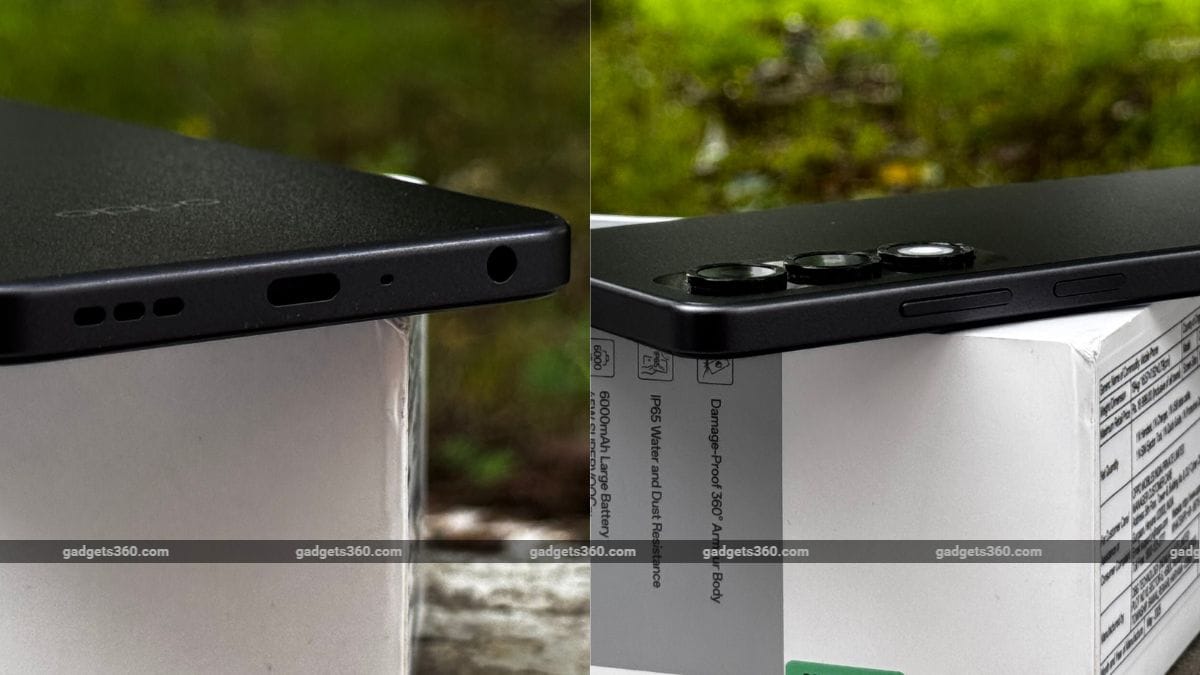
You can find the speaker grille and USB Type-C port on the bottom of the handset
Moving on, durability is one of the biggest USPs of the Oppo K13x 5G. It features all the bells and whistles, including SGS Gold Drop Certification and MIL-STD 810H military-grade standards, a 360-degree Damage-Proof Armour Body, an AM04 aerospace-grade aluminium alloy frame, a biomimetic Sponge Shock Absorption System, and Crystal Shield Glass. On top of that, you get an IP65 rating for dust and water ingress protection.
Now, I use my phones carefully and seldom drop them, so I did not get a chance to try out its claimed durability features. But even if you do, the company has left no stone unturned to make sure that no major harm befalls the Oppo K13x 5G.
Oppo K13x 5G Display: Mixed Bag
- Size and resolution – 6.67-inch HD+ LCD
- Refresh rate – 120Hz
- Screen protection – Crystal Shield Glass
The Oppo K13x 5G sports a HD+ (720 x 1,604 pixels) LCD screen with 850 nits (normal) and 1,000 nits (HBM) brightness. The screen’s legibility is fine for outdoor usage, as long as you’re not directly standing under the sun at 2 pm. In the aforementioned conditions, you might have to find a tree or a shadow to read what’s on your phone.
Moving on to the display, I would have liked to see a higher full HD+ resolution here. The panel quality is nothing special but can be considered adequate for consuming content on Netflix and YouTube. You can select from vivid and natural colour modes. The former outputs vibrant visuals, whereas the latter opts for a softer colour tone. During my time with the Oppo K13x 5G, I kept it on Vivid and the display produced fairly punchy colours.
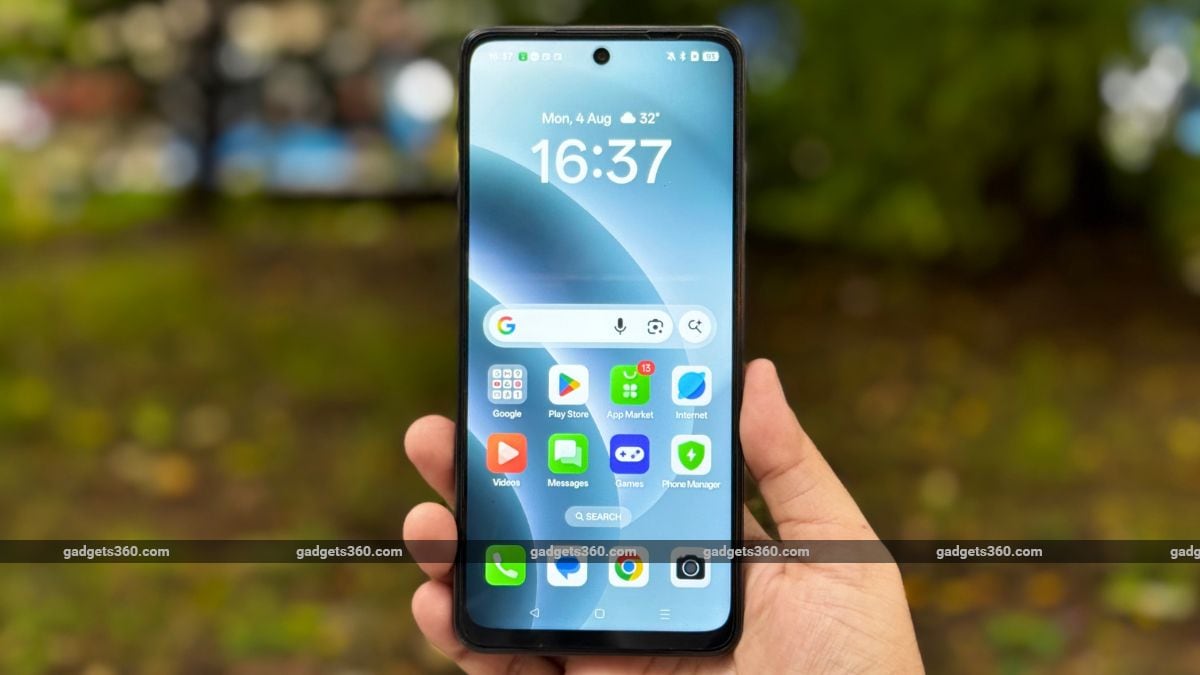
The Oppo K13x 5G’s display gets bright enough for outdoor usage
One plus point is the adaptive 120Hz refresh rate, which results in a smooth scrolling experience. Alongside, the 240Hz touch sampling rate maintains responsiveness and is a good inclusion for gamers. There is one feature which I found to be extremely useful — Splash Touch. It, along with Glove Touch, ensures that the phone can be operated even if you have wet hands.
Oppo claims the K13x 5G handset features a modest 89.9 per cent screen-to-body ratio, which is evident from the noticeable chin at the bottom. The bezels on the remaining three sides of the phone are less discernible.
Oppo K13x 5G Software: Feature Rich, Bloatware-Ridden Mess
- Software – ColorOS 15.0
- Version – Android 15
- Updates Promised – 2 Years OS, 3 years security patches
The Oppo K13x 5G ships with ColorOS 15, which is based on Android 15. The brand has promised two years of operating system (OS) upgrades and three years of security patches, which is par for the course. The software experience on the Oppo K13x 5G is superior to that of most entry-level budget phones. I did not face any issues during my time with the handset, with fluid navigation and lag-free operation.
The software on the handset is certainly feature-rich. You get access to suggested replies, floating windows, conversation bubbles, smart sidebar, charging limit, network speeds in real time, and Game Toolkit. Then there are artificial intelligence (AI)-backed photo-editing tools such as AI Recompose, Enhance Clarity, AI Eraser, Unblur, Remove reflections, and many more. You can also use Gemini for daily tasks and content creation.
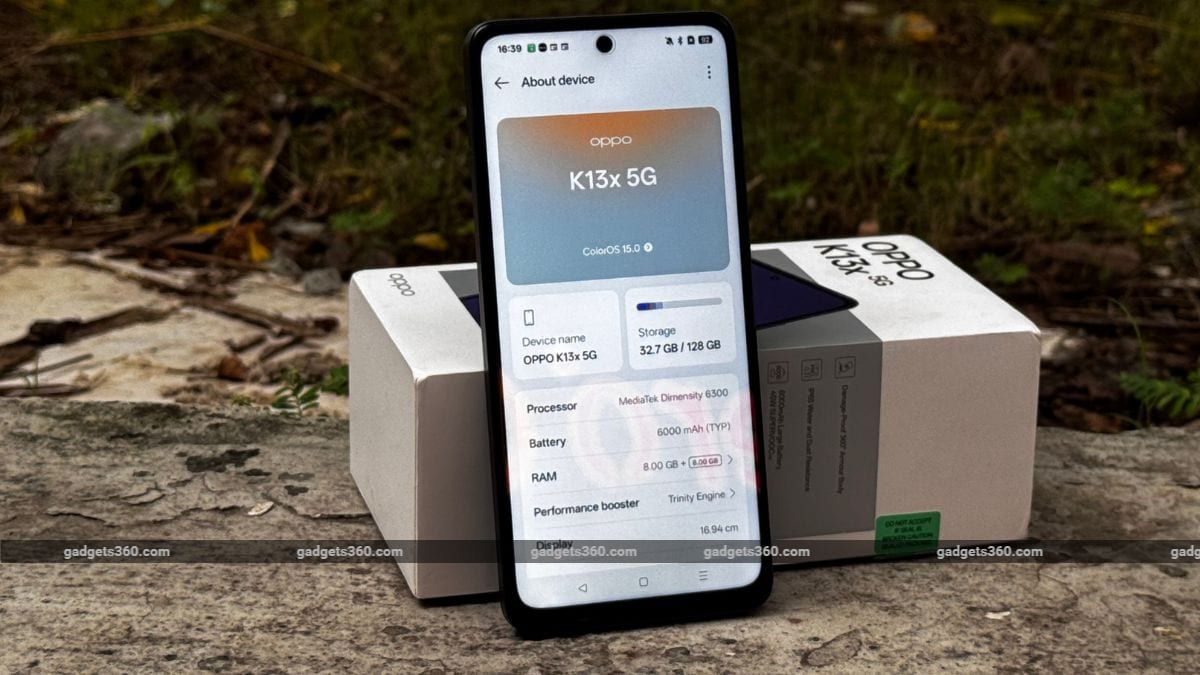
Oppo K13x 5G runs on ColorOS 15`
While all of these are decent additions, one thing degrades them all — bloatware. Lots and lots of bloatware. At first bootup, there are not only numerous first-party apps that are unnecessary, but also plenty of third-party bloatware.
There are the usual culprits, such as Hot Apps and Hot Games, along with others like Block Blast, Bubble Pop, Collect Ball, TilePark, Tile Match, Word Connect, and Worm Family.
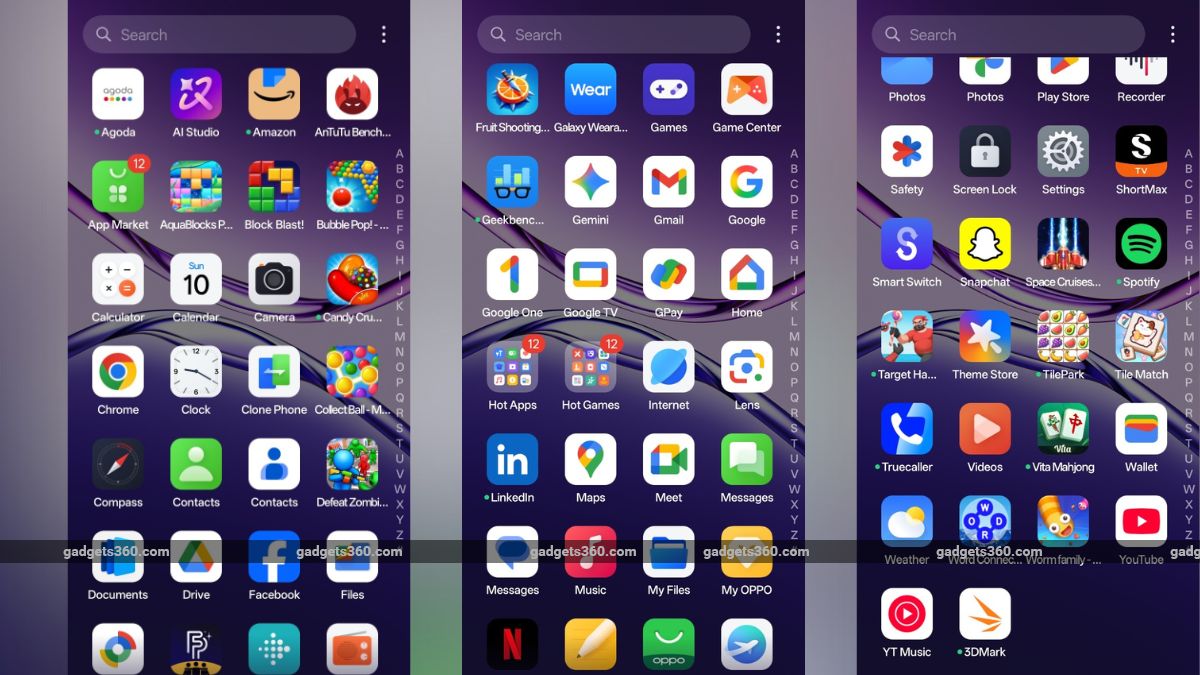
Bloatware on the Oppo K13x 5G
The worst part? You will need to manually disable notifications for each of the bloatware apps to prevent them from annoying you multiple times a day. Although you can uninstall most of them, their presence ruins what would have been a great overall experience.
Oppo K13x 5G Performance: Par for the Course
- Processor – MediaTek Dimensity 6300
- Memory – Up to 8GB LPDDR4X
- Storage – 128GB UFS 2.2
The Oppo K13x 5G is powered by a 6nm MediaTek Dimensity 6300 chipset, paired with up to 8GB of LPDDR4X RAM and 128GB of UFS 2.2 onboard storage. It is not a performance powerhouse in terms of benchmarks, but it still gets the job done fairly well. Those upgrading from sub-Rs. 10,000 smartphones will encounter no problem in daily usage, which involves multi-tasking or casual gaming, even if you opt for the 6GB RAM variant.
The handset does not throttle when browsing the web, scrolling on social media, switching between apps, or streaming YouTube videos. Further, it can also handle Battlegrounds Mobile India (BGMI) on medium settings, but anything above that, and you can start to feel the Oppo K13x 5G heating up slightly. Below are some synthetic benchmark scores for your reference: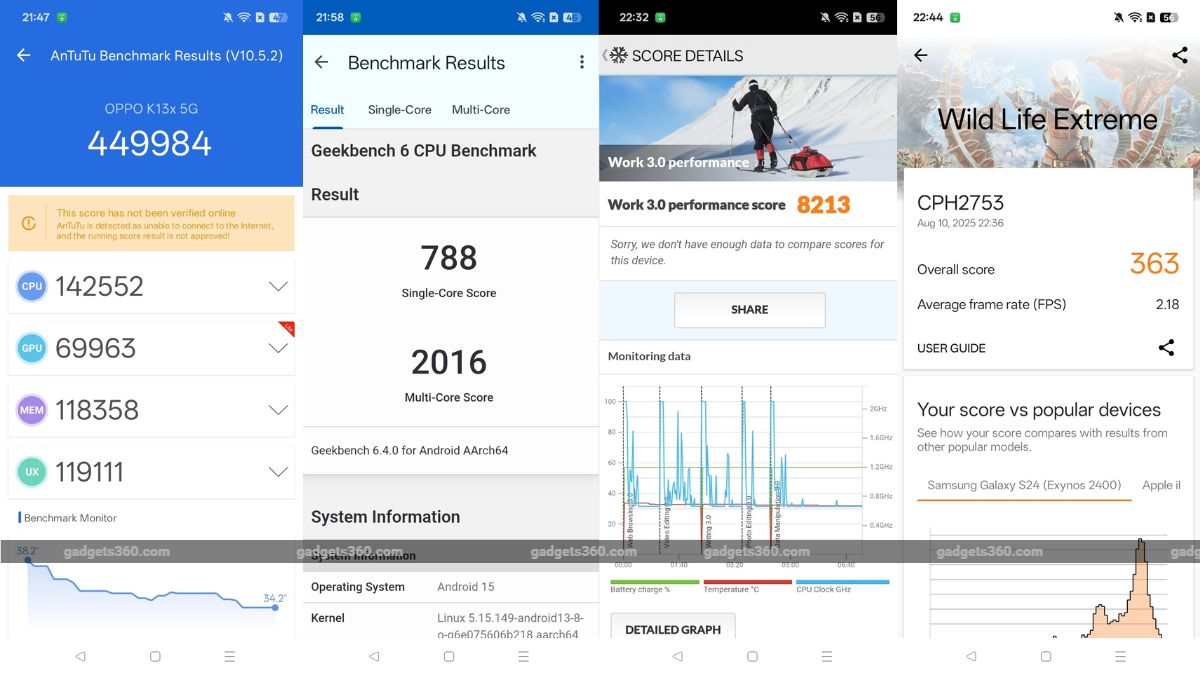
You can also enhance your gaming experience courtesy of gaming-centric features such as a dedicated Game Mode and Game Toolkit. Game Mode ensures that games run smoothly by optimising the memory usage and performance. Meanwhile, Game Toolkit offers additional options such as network optimisation, screen recording, voice changer, and improved touch response.
Oppo K13x 5G Cameras: Average
- Rear – 50-megapixel primary (f/1.8) + 2-megapixel depth (f/2.4)
- Front – 50-megapixel (f/2.0)
Cameras on entry-level smartphones are not expected to charm any photo buffs, and unsurprisingly, that is the case with the Oppo K13x 5G as well. It is equipped with a dual rear camera unit, which comprises a 50-megapixel primary camera with an f/1.8 aperture and a 2-megapixel depth sensor with an f/2.4 aperture.
In terms of image quality, daylight shots captured with the Oppo K13x 5G’s primary camera are passable as long as you are not pixel-peeping.


Top to bottom: 1x vs 2x daylight camera sample (tap to expand)
Some elements in images have a decent amount of detail, although others tend to lose detail as well. The phone appears to have a weak dynamic range and colour contrast, with surprisingly flat highlights and shadows, and washed-out colours.
For example, the phone’s colour tones shifted when shot in 1x and 2x modes in low-light. Now, I don’t expect the same performance from the K13x 5G, but it should capture colours better. Here’s what it looked like.
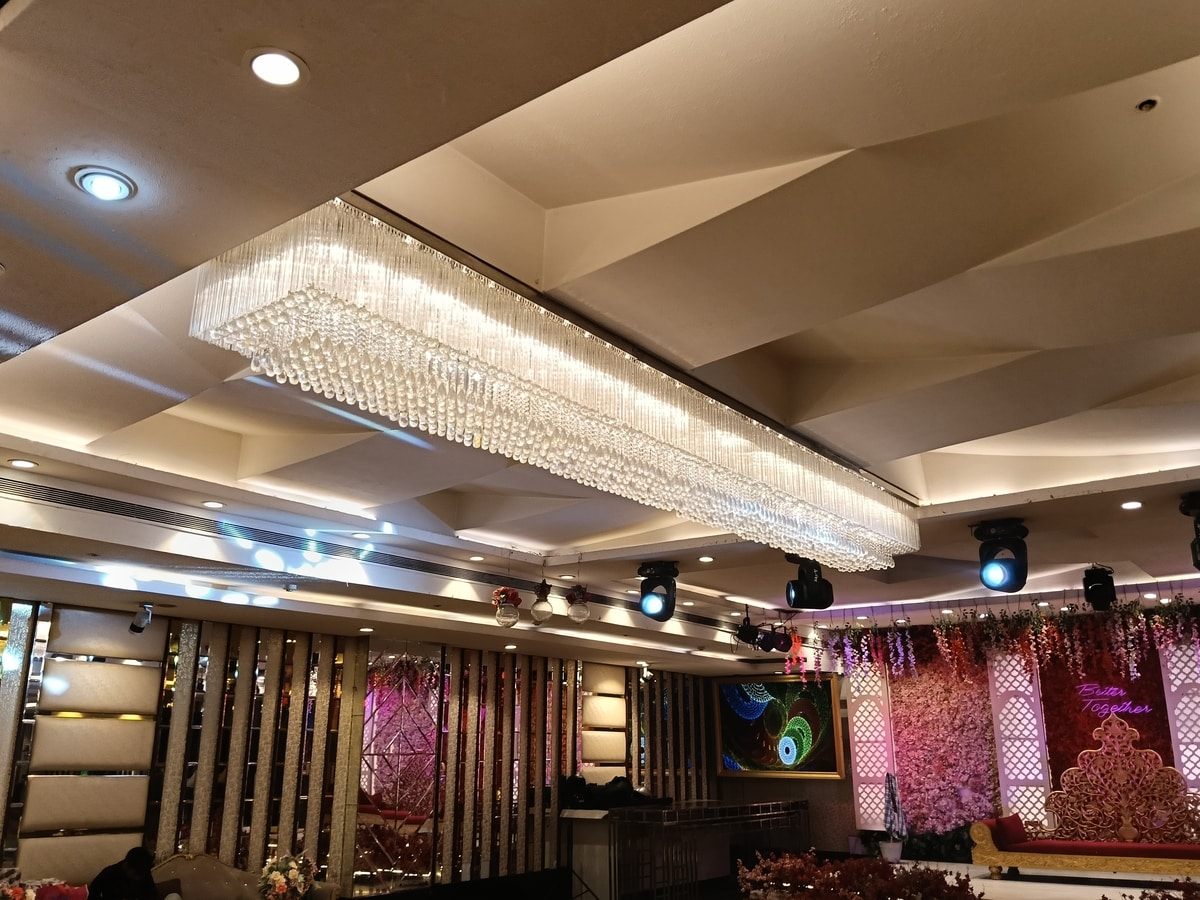

Top to bottom: 1x vs 2x low-light camera sample (tap to expand)
On the other hand, night-time shots come out fine as long as there is more than one light source. In extremely dimly lit scenarios, you can notice the noise creep in. However, this is on par with some of its competitors and nothing to complain about.
Meanwhile, the 2-megapixel depth camera works well in daylight but is average at best in low-light situations. Edge detection is more of a miss than a hit. It often blurs out elements such as hair, whereas the skin also looks unrealistically smooth, even without any of the face tuning filters switched on.


Top to bottom: 1x vs 2x daylight portrait camera sample (tap to expand)
Moving on, the 8-megapixel front-facing camera does a similar job. It captures the skin tone fairly accurately but smoothens out the skin. This is especially evident when taking selfies in low light.


Top to bottom: Daylight vs low light selfie camera sample (tap to expand)
The Oppo K13x 5G can record videos in up to 1080p resolution at 60fps via the rear camera and 1080p 30fps from the selfie camera. The video quality is passable when shot in daylight conditions, and this is also where electronic image stabilisation works best too. Both get reduced drastically as the conditions get dim.
Oppo K13x 5G Battery: Star of the Show
- Battery capacity – 6,000mAh
- Wired charging – 45W
- Wireless charging – No
- Charger in the box – Yes
Alongside its durability, the battery is one of the biggest USPs of the Oppo K13x 5G. It has a 6,000mAh battery, which can easily deliver a usage time of up to two days even if you use it moderately. Heavy usage might see it get reduced to slightly over a day, which is still more than sufficient for a phone at its price point.
The Oppo K13x 5G supports 45W SuperVOOC charging. Charging the phone from 0 to 100 percent took 1 hour and 15 minutes on average.
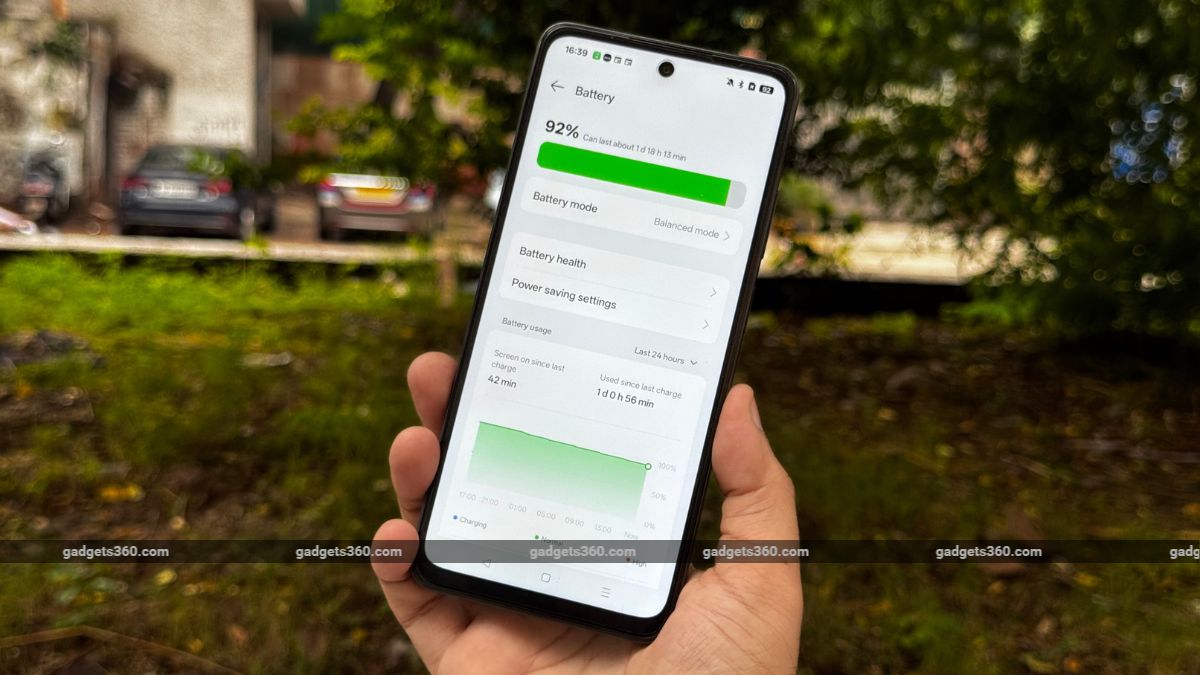
The Oppo K13x 5G ships with a 45W adapter in the box
It also comes with a feature that lets you cap charging at 80 percent. Alternatively, you can enable trickle charging so that the phone charges up completely just before you need it. Both of these features are appreciable and can potentially help prolong the battery’s lifespan.
Oppo K13x 5G Verdict
The Oppo K13x 5G is a unique proposition in the entry-level smartphone market. It prioritises durability, banking on features like MIL-STD 810H military standard and an IP65 rating, which is a rare feat at its price point. Another USP is its massive 6,000mAh battery life, which can easily last almost two days with moderate usage. Its performance is adequate for daily usage and casual gaming, and you should not experience any lag, complemented by an adaptive 120Hz screen.
However, there are a few trade-offs as well. The camera system is average, and even the daylight performance can be considered just passable. There is an excessive amount of bloatware, which hampers the overall experience and can make it a tough buy for consumers who want a clean software experience.
So, should you buy the Oppo K13x 5G? If a durable build and a long battery life are two parameters that matter to you, then the handset can be an ideal purchase. However, for those seeking a more balanced experience, the Infinix Note 50X and Samsung Galaxy M16 5G might be better options to consider.
Source link
#Oppo #K13x #Review

![This former notorious red-light district is now one of the world’s top AI hubs | TechCrunch
What every U.K. AI startup wants to know these days is, how can I get office space in King’s Cross?
The area is so hot that a VC firm allegedly recently won a deal by promising a founder office space in the neighborhood. “We stop at nothing to win deals [for] and to support” founders, “including helping them source office space when needed,” the firm told me when asked about the rumor, declining to confirm or deny any details.
The neighborhood’s popularity began back in 2016 when DeepMind — then newly acquired by Google — moved in. Soon after, a flood of AI startups followed, wanting to be around the Google DeepMind magic. Today, they hope to take advantage of the cluster of AI talent there.
This has transformed King’s Cross into one of the world’s top AI hubs, rivaled only by San Francisco and Beijing. Around London, it’s known by the sobriquet “Knowledge Quarter,” as it’s home to names like OpenAI, Meta, Isomorphic Labs, Cusp AI, Wayne, Recursive, and, a little farther down the road, Synthesia and Anthropic. The European Technology Network (ETN) just moved into a glossy new office nearby, while University College London sits around the corner.
Mixed in with the new developments are trendy food spots like Hoppers and BAO. Hop a train from King’s Cross, and founders can be in Cambridge in 45 minutes to source talent or can be in Paris in two hours to strike a deal.
Who would have guessed that a little more than 20 years ago, this was one of the seediest areas in London?
“In the ’80s, crack and heroin made the area a major narcotics market,” Hussein Kanji, an investor at Hoxton Ventures, said, recalling syringes in tree trunks and gangs patrolling the streets. “In 1982, the local church was occupied by the English Collective of Prostitutes for 12 straight days.” Then, in the early 2000s, a real estate developer had a dream and, well, “now it is the AI hotbed of the United Kingdom,” Kanji said. “What a change.” Around 18 months ago, his portfolio company BioCorteX moved from the neighborhood Holborn to the Jellicoe building in King’s Cross, hoping to be near the action. “Lots going on in London right now,” Nik Sharma, co-founder of BioCorteX, told me. “Lots of hyperscalers moving in.” That includes, reportedly, Jeff Bezos’ AI company Prometheus, which is also said to be in talks to move into the Jellicoe.
There are around 3,600 AI startups in London, which, together, have raised around .1 billion out of the .8 billion raised in the city since late July, according to Dealroom. Since the start of June, AI-related startups have leased more than 1 million square feet of office space in London, according to the real estate firm Knight Frank. With that, prime rents in King’s Cross have risen 18% over the past three years, Chris Dunn, a commercial insight associate at the firm, told me. That percentage represents only the largest leases encompassing at least 10,000 square feet, like the ones OpenAI and Prometheus are signing. The shorter deals go for even more, he said, and now the vacancy rate for conventional office space is just 0.9%. “Demand has outstripped supply,” he continued.
Today, one of the big topics of the area is sovereignty. It was a wake-up call for many when Anthropic shut off access to Mythos and Fable this summer, leaving some in the ecosystem to conclude: “We’d better look after ourselves,” Saul Klein, co-founder of the VC firm Phoenix Court, told me.
Phoenix Court is located in the King’s Cross area and has three portfolio companies in the vicinity, including Olix (which just announced a .3 billion valuation), Early Health and CoMind. Robin Klein, co-founder of the firm, said the shutdown of Fable and Mythos access was a “small but sharp reminder that Europe can’t simply rent its AI capabilities and capacity; it needs to build and hold some of its own.” King’s Cross, he said, is where much of this building is actually happening.
“The bigger question,” he continued, “is whether the U.K. builds the infrastructure, compute, energy, capital, to make this self-reliance durable, rather than just hosting outposts of U.S. labs.”
Image Credits:Phoenix Court
Top founders want to stay
Simon Kohl, founder of Latent Labs, has offices in King’s Cross and San Francisco. The London office, at the moment, is growing faster, and he’s more bullish than ever on the ecosystem, he said. “The mood right now feels less like London trying to catch up and more like London becoming one of the default places to start a serious AI company,” he said. Look around and you are likely to see Wayve testing its autonomous cars. Founded in 2017 by co-founder Alex Kendall, the unicorn is one of London’s biggest success stories.
“Ten years ago, building a frontier AI company from London felt like an unusual choice,” Kendall told me. “Now it feels like an obvious one.” Wayve moved into King’s Cross in 2018 looking for a space that could double as a garage — “a rare combination in Central London,” Kendall said. He has watched the ecosystem mature around him — and it’s now evident that a startup can stay in London, raise serious capital, hire world-class AI talent, and remain globally competitive, he said. Down the street from Anthropic’s new 158,000-square-foot office is the AI agent builder Sierra and the AI video platform Synthesia.
Laura Gonzalez Florez, Synthesia’s chief of staff and head of people, says the company moved into its glossy new office building a year ago to accommodate its growing team. They were drawn to the area for the same reason as everyone else: “It’s very close to the airport … very close to where a lot of investors are,” she said.
Image Credits:Synthesia
Around two-thirds of Synthesia’s engineers are remote, Gonzalez Florez said, letting the company tap into an affordable, international, and diverse talent pool and helping it scale faster. “From London, we can hire and work, without any problem, people from anywhere, from Slovenia to Portugal,” she said.
Unsurprisingly, London’s AI boom is also causing a talent war.U.K. AI job postings have skyrocketed in the past few years, per data from PwC. When Anthropic announced it moved into town earlier this year, it listed, for example, a salary range of £260,000 to £630,000 for a machine learning research engineer when the average salary in London for the same role is around £102,000. Some founders in the U.K., like those in Silicon Valley, are being forced to raise more and bigger rounds to keep up.
“The real test is whether more globally significant AI companies are founded, funded, and scaled from the U.K., while continuing to attract the world’s best talent to build them here,” Zain Ali, founder of the King’s Cross-based AI legal firm Centuro, told me. “If that continues to happen, King’s Cross won’t just be an AI hub. It’ll become one of the U.K.’s most important strategic assets.”
When you purchase through links in our articles, we may earn a small commission. This doesn’t affect our editorial independence.#Thisformernotorious #redlight #districtis #nowone #worlds #top #hubs #TechCrunchUK](https://techcrunch.com/wp-content/uploads/2026/08/DM9A2852.jpg?w=680 "This former notorious red-light district is now one of the world’s top AI hubs | TechCrunch
What every U.K. AI startup wants to know these days is, how can I get office space in King’s Cross?
The area is so hot that a VC firm allegedly recently won a deal by promising a founder office space in the neighborhood. “We stop at nothing to win deals [for] and to support” founders, “including helping them source office space when needed,” the firm told me when asked about the rumor, declining to confirm or deny any details.
The neighborhood’s popularity began back in 2016 when DeepMind — then newly acquired by Google — moved in. Soon after, a flood of AI startups followed, wanting to be around the Google DeepMind magic. Today, they hope to take advantage of the cluster of AI talent there.
This has transformed King’s Cross into one of the world’s top AI hubs, rivaled only by San Francisco and Beijing. Around London, it’s known by the sobriquet “Knowledge Quarter,” as it’s home to names like OpenAI, Meta, Isomorphic Labs, Cusp AI, Wayne, Recursive, and, a little farther down the road, Synthesia and Anthropic. The European Technology Network (ETN) just moved into a glossy new office nearby, while University College London sits around the corner.
Mixed in with the new developments are trendy food spots like Hoppers and BAO. Hop a train from King’s Cross, and founders can be in Cambridge in 45 minutes to source talent or can be in Paris in two hours to strike a deal.
Who would have guessed that a little more than 20 years ago, this was one of the seediest areas in London?
“In the ’80s, crack and heroin made the area a major narcotics market,” Hussein Kanji, an investor at Hoxton Ventures, said, recalling syringes in tree trunks and gangs patrolling the streets. “In 1982, the local church was occupied by the English Collective of Prostitutes for 12 straight days.” Then, in the early 2000s, a real estate developer had a dream and, well, “now it is the AI hotbed of the United Kingdom,” Kanji said. “What a change.” Around 18 months ago, his portfolio company BioCorteX moved from the neighborhood Holborn to the Jellicoe building in King’s Cross, hoping to be near the action. “Lots going on in London right now,” Nik Sharma, co-founder of BioCorteX, told me. “Lots of hyperscalers moving in.” That includes, reportedly, Jeff Bezos’ AI company Prometheus, which is also said to be in talks to move into the Jellicoe.
There are around 3,600 AI startups in London, which, together, have raised around .1 billion out of the .8 billion raised in the city since late July, according to Dealroom. Since the start of June, AI-related startups have leased more than 1 million square feet of office space in London, according to the real estate firm Knight Frank. With that, prime rents in King’s Cross have risen 18% over the past three years, Chris Dunn, a commercial insight associate at the firm, told me. That percentage represents only the largest leases encompassing at least 10,000 square feet, like the ones OpenAI and Prometheus are signing. The shorter deals go for even more, he said, and now the vacancy rate for conventional office space is just 0.9%. “Demand has outstripped supply,” he continued.
Today, one of the big topics of the area is sovereignty. It was a wake-up call for many when Anthropic shut off access to Mythos and Fable this summer, leaving some in the ecosystem to conclude: “We’d better look after ourselves,” Saul Klein, co-founder of the VC firm Phoenix Court, told me.
Phoenix Court is located in the King’s Cross area and has three portfolio companies in the vicinity, including Olix (which just announced a .3 billion valuation), Early Health and CoMind. Robin Klein, co-founder of the firm, said the shutdown of Fable and Mythos access was a “small but sharp reminder that Europe can’t simply rent its AI capabilities and capacity; it needs to build and hold some of its own.” King’s Cross, he said, is where much of this building is actually happening.
“The bigger question,” he continued, “is whether the U.K. builds the infrastructure, compute, energy, capital, to make this self-reliance durable, rather than just hosting outposts of U.S. labs.”
Image Credits:Phoenix Court
Top founders want to stay
Simon Kohl, founder of Latent Labs, has offices in King’s Cross and San Francisco. The London office, at the moment, is growing faster, and he’s more bullish than ever on the ecosystem, he said. “The mood right now feels less like London trying to catch up and more like London becoming one of the default places to start a serious AI company,” he said. Look around and you are likely to see Wayve testing its autonomous cars. Founded in 2017 by co-founder Alex Kendall, the unicorn is one of London’s biggest success stories.
“Ten years ago, building a frontier AI company from London felt like an unusual choice,” Kendall told me. “Now it feels like an obvious one.” Wayve moved into King’s Cross in 2018 looking for a space that could double as a garage — “a rare combination in Central London,” Kendall said. He has watched the ecosystem mature around him — and it’s now evident that a startup can stay in London, raise serious capital, hire world-class AI talent, and remain globally competitive, he said. Down the street from Anthropic’s new 158,000-square-foot office is the AI agent builder Sierra and the AI video platform Synthesia.
Laura Gonzalez Florez, Synthesia’s chief of staff and head of people, says the company moved into its glossy new office building a year ago to accommodate its growing team. They were drawn to the area for the same reason as everyone else: “It’s very close to the airport … very close to where a lot of investors are,” she said.
Image Credits:Synthesia
Around two-thirds of Synthesia’s engineers are remote, Gonzalez Florez said, letting the company tap into an affordable, international, and diverse talent pool and helping it scale faster. “From London, we can hire and work, without any problem, people from anywhere, from Slovenia to Portugal,” she said.
Unsurprisingly, London’s AI boom is also causing a talent war.U.K. AI job postings have skyrocketed in the past few years, per data from PwC. When Anthropic announced it moved into town earlier this year, it listed, for example, a salary range of £260,000 to £630,000 for a machine learning research engineer when the average salary in London for the same role is around £102,000. Some founders in the U.K., like those in Silicon Valley, are being forced to raise more and bigger rounds to keep up.
“The real test is whether more globally significant AI companies are founded, funded, and scaled from the U.K., while continuing to attract the world’s best talent to build them here,” Zain Ali, founder of the King’s Cross-based AI legal firm Centuro, told me. “If that continues to happen, King’s Cross won’t just be an AI hub. It’ll become one of the U.K.’s most important strategic assets.”
When you purchase through links in our articles, we may earn a small commission. This doesn’t affect our editorial independence.#Thisformernotorious #redlight #districtis #nowone #worlds #top #hubs #TechCrunchUK")

![This former notorious red-light district is now one of the world’s top AI hubs | TechCrunch
What every U.K. AI startup wants to know these days is, how can I get office space in King’s Cross?
The area is so hot that a VC firm allegedly recently won a deal by promising a founder office space in the neighborhood. “We stop at nothing to win deals [for] and to support” founders, “including helping them source office space when needed,” the firm told me when asked about the rumor, declining to confirm or deny any details.
The neighborhood’s popularity began back in 2016 when DeepMind — then newly acquired by Google — moved in. Soon after, a flood of AI startups followed, wanting to be around the Google DeepMind magic. Today, they hope to take advantage of the cluster of AI talent there.
This has transformed King’s Cross into one of the world’s top AI hubs, rivaled only by San Francisco and Beijing. Around London, it’s known by the sobriquet “Knowledge Quarter,” as it’s home to names like OpenAI, Meta, Isomorphic Labs, Cusp AI, Wayne, Recursive, and, a little farther down the road, Synthesia and Anthropic. The European Technology Network (ETN) just moved into a glossy new office nearby, while University College London sits around the corner.
Mixed in with the new developments are trendy food spots like Hoppers and BAO. Hop a train from King’s Cross, and founders can be in Cambridge in 45 minutes to source talent or can be in Paris in two hours to strike a deal.
Who would have guessed that a little more than 20 years ago, this was one of the seediest areas in London?
“In the ’80s, crack and heroin made the area a major narcotics market,” Hussein Kanji, an investor at Hoxton Ventures, said, recalling syringes in tree trunks and gangs patrolling the streets. “In 1982, the local church was occupied by the English Collective of Prostitutes for 12 straight days.” Then, in the early 2000s, a real estate developer had a dream and, well, “now it is the AI hotbed of the United Kingdom,” Kanji said. “What a change.” Around 18 months ago, his portfolio company BioCorteX moved from the neighborhood Holborn to the Jellicoe building in King’s Cross, hoping to be near the action. “Lots going on in London right now,” Nik Sharma, co-founder of BioCorteX, told me. “Lots of hyperscalers moving in.” That includes, reportedly, Jeff Bezos’ AI company Prometheus, which is also said to be in talks to move into the Jellicoe.
There are around 3,600 AI startups in London, which, together, have raised around .1 billion out of the .8 billion raised in the city since late July, according to Dealroom. Since the start of June, AI-related startups have leased more than 1 million square feet of office space in London, according to the real estate firm Knight Frank. With that, prime rents in King’s Cross have risen 18% over the past three years, Chris Dunn, a commercial insight associate at the firm, told me. That percentage represents only the largest leases encompassing at least 10,000 square feet, like the ones OpenAI and Prometheus are signing. The shorter deals go for even more, he said, and now the vacancy rate for conventional office space is just 0.9%. “Demand has outstripped supply,” he continued.
Today, one of the big topics of the area is sovereignty. It was a wake-up call for many when Anthropic shut off access to Mythos and Fable this summer, leaving some in the ecosystem to conclude: “We’d better look after ourselves,” Saul Klein, co-founder of the VC firm Phoenix Court, told me.
Phoenix Court is located in the King’s Cross area and has three portfolio companies in the vicinity, including Olix (which just announced a .3 billion valuation), Early Health and CoMind. Robin Klein, co-founder of the firm, said the shutdown of Fable and Mythos access was a “small but sharp reminder that Europe can’t simply rent its AI capabilities and capacity; it needs to build and hold some of its own.” King’s Cross, he said, is where much of this building is actually happening.
“The bigger question,” he continued, “is whether the U.K. builds the infrastructure, compute, energy, capital, to make this self-reliance durable, rather than just hosting outposts of U.S. labs.”
Image Credits:Phoenix Court
Top founders want to stay
Simon Kohl, founder of Latent Labs, has offices in King’s Cross and San Francisco. The London office, at the moment, is growing faster, and he’s more bullish than ever on the ecosystem, he said. “The mood right now feels less like London trying to catch up and more like London becoming one of the default places to start a serious AI company,” he said. Look around and you are likely to see Wayve testing its autonomous cars. Founded in 2017 by co-founder Alex Kendall, the unicorn is one of London’s biggest success stories.
“Ten years ago, building a frontier AI company from London felt like an unusual choice,” Kendall told me. “Now it feels like an obvious one.” Wayve moved into King’s Cross in 2018 looking for a space that could double as a garage — “a rare combination in Central London,” Kendall said. He has watched the ecosystem mature around him — and it’s now evident that a startup can stay in London, raise serious capital, hire world-class AI talent, and remain globally competitive, he said. Down the street from Anthropic’s new 158,000-square-foot office is the AI agent builder Sierra and the AI video platform Synthesia.
Laura Gonzalez Florez, Synthesia’s chief of staff and head of people, says the company moved into its glossy new office building a year ago to accommodate its growing team. They were drawn to the area for the same reason as everyone else: “It’s very close to the airport … very close to where a lot of investors are,” she said.
Image Credits:Synthesia
Around two-thirds of Synthesia’s engineers are remote, Gonzalez Florez said, letting the company tap into an affordable, international, and diverse talent pool and helping it scale faster. “From London, we can hire and work, without any problem, people from anywhere, from Slovenia to Portugal,” she said.
Unsurprisingly, London’s AI boom is also causing a talent war.U.K. AI job postings have skyrocketed in the past few years, per data from PwC. When Anthropic announced it moved into town earlier this year, it listed, for example, a salary range of £260,000 to £630,000 for a machine learning research engineer when the average salary in London for the same role is around £102,000. Some founders in the U.K., like those in Silicon Valley, are being forced to raise more and bigger rounds to keep up.
“The real test is whether more globally significant AI companies are founded, funded, and scaled from the U.K., while continuing to attract the world’s best talent to build them here,” Zain Ali, founder of the King’s Cross-based AI legal firm Centuro, told me. “If that continues to happen, King’s Cross won’t just be an AI hub. It’ll become one of the U.K.’s most important strategic assets.”
When you purchase through links in our articles, we may earn a small commission. This doesn’t affect our editorial independence.#Thisformernotorious #redlight #districtis #nowone #worlds #top #hubs #TechCrunchUK](https://i0.wp.com/techcrunch.com/wp-content/uploads/2026/08/DM9A2852.jpg?w=680&ssl=1 "This former notorious red-light district is now one of the world’s top AI hubs | TechCrunch
What every U.K. AI startup wants to know these days is, how can I get office space in King’s Cross?
The area is so hot that a VC firm allegedly recently won a deal by promising a founder office space in the neighborhood. “We stop at nothing to win deals [for] and to support” founders, “including helping them source office space when needed,” the firm told me when asked about the rumor, declining to confirm or deny any details.
The neighborhood’s popularity began back in 2016 when DeepMind — then newly acquired by Google — moved in. Soon after, a flood of AI startups followed, wanting to be around the Google DeepMind magic. Today, they hope to take advantage of the cluster of AI talent there.
This has transformed King’s Cross into one of the world’s top AI hubs, rivaled only by San Francisco and Beijing. Around London, it’s known by the sobriquet “Knowledge Quarter,” as it’s home to names like OpenAI, Meta, Isomorphic Labs, Cusp AI, Wayne, Recursive, and, a little farther down the road, Synthesia and Anthropic. The European Technology Network (ETN) just moved into a glossy new office nearby, while University College London sits around the corner.
Mixed in with the new developments are trendy food spots like Hoppers and BAO. Hop a train from King’s Cross, and founders can be in Cambridge in 45 minutes to source talent or can be in Paris in two hours to strike a deal.
Who would have guessed that a little more than 20 years ago, this was one of the seediest areas in London?
“In the ’80s, crack and heroin made the area a major narcotics market,” Hussein Kanji, an investor at Hoxton Ventures, said, recalling syringes in tree trunks and gangs patrolling the streets. “In 1982, the local church was occupied by the English Collective of Prostitutes for 12 straight days.” Then, in the early 2000s, a real estate developer had a dream and, well, “now it is the AI hotbed of the United Kingdom,” Kanji said. “What a change.” Around 18 months ago, his portfolio company BioCorteX moved from the neighborhood Holborn to the Jellicoe building in King’s Cross, hoping to be near the action. “Lots going on in London right now,” Nik Sharma, co-founder of BioCorteX, told me. “Lots of hyperscalers moving in.” That includes, reportedly, Jeff Bezos’ AI company Prometheus, which is also said to be in talks to move into the Jellicoe.
There are around 3,600 AI startups in London, which, together, have raised around .1 billion out of the .8 billion raised in the city since late July, according to Dealroom. Since the start of June, AI-related startups have leased more than 1 million square feet of office space in London, according to the real estate firm Knight Frank. With that, prime rents in King’s Cross have risen 18% over the past three years, Chris Dunn, a commercial insight associate at the firm, told me. That percentage represents only the largest leases encompassing at least 10,000 square feet, like the ones OpenAI and Prometheus are signing. The shorter deals go for even more, he said, and now the vacancy rate for conventional office space is just 0.9%. “Demand has outstripped supply,” he continued.
Today, one of the big topics of the area is sovereignty. It was a wake-up call for many when Anthropic shut off access to Mythos and Fable this summer, leaving some in the ecosystem to conclude: “We’d better look after ourselves,” Saul Klein, co-founder of the VC firm Phoenix Court, told me.
Phoenix Court is located in the King’s Cross area and has three portfolio companies in the vicinity, including Olix (which just announced a .3 billion valuation), Early Health and CoMind. Robin Klein, co-founder of the firm, said the shutdown of Fable and Mythos access was a “small but sharp reminder that Europe can’t simply rent its AI capabilities and capacity; it needs to build and hold some of its own.” King’s Cross, he said, is where much of this building is actually happening.
“The bigger question,” he continued, “is whether the U.K. builds the infrastructure, compute, energy, capital, to make this self-reliance durable, rather than just hosting outposts of U.S. labs.”
Image Credits:Phoenix Court
Top founders want to stay
Simon Kohl, founder of Latent Labs, has offices in King’s Cross and San Francisco. The London office, at the moment, is growing faster, and he’s more bullish than ever on the ecosystem, he said. “The mood right now feels less like London trying to catch up and more like London becoming one of the default places to start a serious AI company,” he said. Look around and you are likely to see Wayve testing its autonomous cars. Founded in 2017 by co-founder Alex Kendall, the unicorn is one of London’s biggest success stories.
“Ten years ago, building a frontier AI company from London felt like an unusual choice,” Kendall told me. “Now it feels like an obvious one.” Wayve moved into King’s Cross in 2018 looking for a space that could double as a garage — “a rare combination in Central London,” Kendall said. He has watched the ecosystem mature around him — and it’s now evident that a startup can stay in London, raise serious capital, hire world-class AI talent, and remain globally competitive, he said. Down the street from Anthropic’s new 158,000-square-foot office is the AI agent builder Sierra and the AI video platform Synthesia.
Laura Gonzalez Florez, Synthesia’s chief of staff and head of people, says the company moved into its glossy new office building a year ago to accommodate its growing team. They were drawn to the area for the same reason as everyone else: “It’s very close to the airport … very close to where a lot of investors are,” she said.
Image Credits:Synthesia
Around two-thirds of Synthesia’s engineers are remote, Gonzalez Florez said, letting the company tap into an affordable, international, and diverse talent pool and helping it scale faster. “From London, we can hire and work, without any problem, people from anywhere, from Slovenia to Portugal,” she said.
Unsurprisingly, London’s AI boom is also causing a talent war.U.K. AI job postings have skyrocketed in the past few years, per data from PwC. When Anthropic announced it moved into town earlier this year, it listed, for example, a salary range of £260,000 to £630,000 for a machine learning research engineer when the average salary in London for the same role is around £102,000. Some founders in the U.K., like those in Silicon Valley, are being forced to raise more and bigger rounds to keep up.
“The real test is whether more globally significant AI companies are founded, funded, and scaled from the U.K., while continuing to attract the world’s best talent to build them here,” Zain Ali, founder of the King’s Cross-based AI legal firm Centuro, told me. “If that continues to happen, King’s Cross won’t just be an AI hub. It’ll become one of the U.K.’s most important strategic assets.”
When you purchase through links in our articles, we may earn a small commission. This doesn’t affect our editorial independence.#Thisformernotorious #redlight #districtis #nowone #worlds #top #hubs #TechCrunchUK")

Post Comment