
Why Osteoarthritis, Pinched Nerves and Repetitive Strain Contribute to Hand Weakness and Grip Problems
Struggling to open a jar or feeling your handshake go soft might seem like a…
Struggling to open a jar or feeling your handshake go soft might seem like a…
Veteran actor Shabana Azmi has revealed that she has been diagnosed with H1N1 (swine flu), forcing her to miss the student protest held at Mumbai’s Shivaji Park on Friday. The actor shared the health update on social media, saying she has been advised to remain in isolation for the next five days.
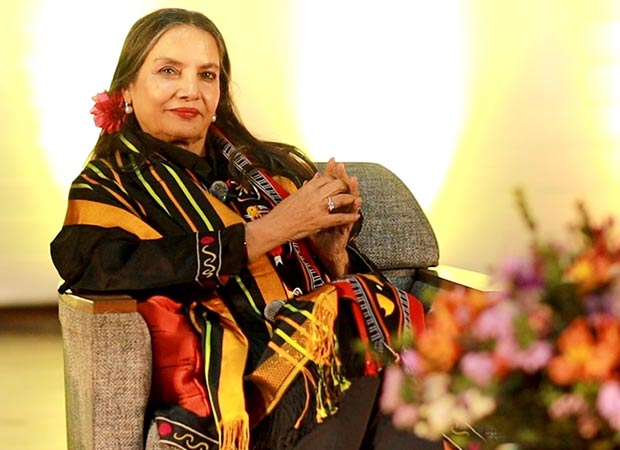
Azmi has been one of the most prominent public figures supporting the student-led protests over the alleged NEET paper leak. Over the past three days, she actively participated in demonstrations at Delhi’s Jantar Mantar, where she marched alongside students, joined the “Chalo Sansad” rally and extended support to those on hunger strike.
Informing her followers about her absence from the Mumbai protest, Azmi wrote that she had planned to join demonstrators but was unable to do so after being diagnosed with H1N1. She wrote, “”My dear Mumbaikars, I was meant to join your protest yesterday, but I’ve come down with H1N1 and need to remain in isolation for the next five days.”
Despite her illness, the actor said she remains closely connected with the movement and continues to receive updates from those participating on the ground.
Azmi also lauded the determination shown by young protesters, many of whom, she said, were taking part in a demonstration for the first time: “I want to express my solidarity and appreciation. I’m receiving first-hand reports from the young people on the ground. Many of them have taken part in a protest for the first time and have experienced how much their voice counts.”
She added that their commitment continues to inspire her: “I continue to be inspired by your courage and commitment and stand by you in solidarity.”
The veteran actor concluded her post by sharing a poem written by her late father, renowned poet Kaifi Azmi.
Azmi has been among the few celebrities who chose to participate in the protests in person instead of limiting their support to social media. During the demonstrations at Jantar Mantar, she marched alongside students, rode atop a protest vehicle with actor Prakash Raj, addressed the gathering and was also seen serving food to students observing a hunger strike.
Also Read: Shabana Azmi suffers asthma attack at Delhi protest; says, “I got an attack because of the tear gas”
Catch us for latest Bollywood News, New Bollywood Movies update, Box office collection, New Movies Release , Bollywood News Hindi, Entertainment News, Bollywood Live News Today & Upcoming Movies 2026 and stay updated with latest hindi movies only on Bollywood Hungama.

Veteran actor Shabana Azmi has revealed that she has been diagnosed with H1N1 (swine flu), forcing her to miss the student protest held at Mumbai’s Shivaji Park on Friday. The actor shared the health update on social media, saying she has been advised to remain in isolation for the next five days.
Azmi has been one of the most prominent public figures supporting the student-led protests over the alleged NEET paper leak. Over the past three days, she actively participated in demonstrations at Delhi’s Jantar Mantar, where she marched alongside students, joined the “Chalo Sansad” rally and extended support to those on hunger strike.
Informing her followers about her absence from the Mumbai protest, Azmi wrote that she had planned to join demonstrators but was unable to do so after being diagnosed with H1N1. She wrote, “”My dear Mumbaikars, I was meant to join your protest yesterday, but I’ve come down with H1N1 and need to remain in isolation for the next five days.”
Despite her illness, the actor said she remains closely connected with the movement and continues to receive updates from those participating on the ground.
Azmi also lauded the determination shown by young protesters, many of whom, she said, were taking part in a demonstration for the first time: “I want to express my solidarity and appreciation. I’m receiving first-hand reports from the young people on the ground. Many of them have taken part in a protest for the first time and have experienced how much their voice counts.”
She added that their commitment continues to inspire her: “I continue to be inspired by your courage and commitment and stand by you in solidarity.”
The veteran actor concluded her post by sharing a poem written by her late father, renowned poet Kaifi Azmi.
Azmi has been among the few celebrities who chose to participate in the protests in person instead of limiting their support to social media. During the demonstrations at Jantar Mantar, she marched alongside students, rode atop a protest vehicle with actor Prakash Raj, addressed the gathering and was also seen serving food to students observing a hunger strike.
Also Read: Shabana Azmi suffers asthma attack at Delhi protest; says, “I got an attack because of the tear gas”
Catch us for latest Bollywood News, New Bollywood Movies update, Box office collection, New Movies Release , Bollywood News Hindi, Entertainment News, Bollywood Live News Today & Upcoming Movies 2026 and stay updated with latest hindi movies only on Bollywood Hungama.
Veteran actor Shabana Azmi has revealed that she has been diagnosed with H1N1 (swine flu), forcing her to miss the student protest held at Mumbai’s Shivaji Park on Friday. The actor shared the health update on social media, saying she has been advised to remain in isolation for the next five days.
Azmi has been one of the most prominent public figures supporting the student-led protests over the alleged NEET paper leak. Over the past three days, she actively participated in demonstrations at Delhi’s Jantar Mantar, where she marched alongside students, joined the “Chalo Sansad” rally and extended support to those on hunger strike.
Informing her followers about her absence from the Mumbai protest, Azmi wrote that she had planned to join demonstrators but was unable to do so after being diagnosed with H1N1. She wrote, “”My dear Mumbaikars, I was meant to join your protest yesterday, but I’ve come down with H1N1 and need to remain in isolation for the next five days.”
Despite her illness, the actor said she remains closely connected with the movement and continues to receive updates from those participating on the ground.
Azmi also lauded the determination shown by young protesters, many of whom, she said, were taking part in a demonstration for the first time: “I want to express my solidarity and appreciation. I’m receiving first-hand reports from the young people on the ground. Many of them have taken part in a protest for the first time and have experienced how much their voice counts.”
She added that their commitment continues to inspire her: “I continue to be inspired by your courage and commitment and stand by you in solidarity.”
The veteran actor concluded her post by sharing a poem written by her late father, renowned poet Kaifi Azmi.
Azmi has been among the few celebrities who chose to participate in the protests in person instead of limiting their support to social media. During the demonstrations at Jantar Mantar, she marched alongside students, rode atop a protest vehicle with actor Prakash Raj, addressed the gathering and was also seen serving food to students observing a hunger strike.
Also Read: Shabana Azmi suffers asthma attack at Delhi protest; says, “I got an attack because of the tear gas”
Catch us for latest Bollywood News, New Bollywood Movies update, Box office collection, New Movies Release , Bollywood News Hindi, Entertainment News, Bollywood Live News Today & Upcoming Movies 2026 and stay updated with latest hindi movies only on Bollywood Hungama.
Veteran actor Shabana Azmi has revealed that she has been diagnosed with H1N1 (swine flu),…
A dementia study that followed 16,010 women for decades found one clear eating pattern tied…
Search interest in sleep supplements has spiked as more people look for alternatives to prescription…
पश्चिम क्षेत्र में धार रोड स्थित नवनिर्मित 300 बिस्तरीय जिला अस्पताल में गुरुवार से स्वास्थ्य…
पोषण ट्रैकर के अनुसार जिले में 0 से 5 वर्ष के 1 लाख 36 हजार…

They were wrong.
Instead, Messi came back four years later to lift the trophy in Qatar. Then he came back again this year at 39. However, Messi is not the exception any more.
Cristiano Ronaldo, 41, has said that this World Cup will be his last after Portugal’s Round of 16 exit following the team’s loss to Spain. Brazil’s Neymar, 34, too, announced his retirement from international football, as did Germany’s Manuel Neuer, 40. Meanwhile, Guillermo Ochoa, who turned 41 this month, is stepping away from professional football after becoming the first goalkeeper to make six World Cup squads.
Even as this World Cup has felt like one long farewell tour, for many of these players, the goodbye came years later than anyone expected.
While there isn’t a definitive global dataset comparing retirement ages across generations, the evidence points in one direction: football’s elite has been getting older for decades. A 2019 peer-reviewed study published in Frontiers of Psychology tracking nearly 30 seasons of UEFA Champions League football found the average age of players rose from 24.9 years in 1992-93 to 26.5 years by 2017-18. That trend is now on full display at the 2026 FIFA World Cup, which had eight players in their forties—more than every previous edition combined—including Cape Verde’s 40-year-old goalkeeper Vozinha, one of the tournament’s breakout stars.
What’s striking is that this celebration of more veteran players on the pitch is happening during an era of football that has produced teenage stars like Lamine Yamal, Endrick, and Bara Sapoko Ndiaye. Soccer isn’t necessarily getting older because young players have disappeared; it’s getting older because veterans are leaving later.
Research suggests professional footballers still reach their physical peak in their mid-to-late twenties, though the exact age depends on position. And while aging is gradual, players in their thirties begin to lose their explosive speed and the stamina to maintain the high-intensity running that modern soccer demands most.
A long-term study of Spain’s top players found these reported losses in endurance were most notable among external defenders, external midfielders, and forwards, whose roles rely on explosive acceleration to either score a goal or shield their keeper’s box. Central defenders and central midfielders, meanwhile, became more accurate passers with age, suggesting that positioning, anticipation, and decisionmaking increasingly compensate for fading speed.
Messi may be the best example of how elite players adapt with age. Rather than constantly chasing the ball, he often spends long stretches walking, reading the game before deciding exactly when to get involved. According to The Athletic, FIFA tracking data shows Messi has spent 63 percent of his movement at this World Cup walking, conserving energy for the moments that matter most.
This just goes to prove that sports science hasn’t changed the biology of aging—it changed how soccer clubs respond to it. A 2024 review of athletes with extended careers found a correlation between professionals staying at the top of their game and increasingly individualized training.
Instead of prescribing the same program to an entire squad, coaches now tailor workloads around a player’s injury history, recovery, training response, and physical capacity.
However, as players get older, experience becomes a competitive advantage. Veteran footballers increasingly compensate for declining physicality with sharper decisionmaking, game intelligence, and a better understanding of their own limits.
Mere moments after Argentina lost to France in a Round of 16 match during the 2018 World Cup in Russia, commentators were already predicting it would be his final time on a World Cup pitch. “This was Lionel Messi’s final World Cup match, surely,” one stated, “and maybe his final game for his country.” Messi was 31 at the time, and many assumed they had just watched his last appearance on soccer’s biggest stage.
They were wrong.
Instead, Messi came back four years later to lift the trophy in Qatar. Then he came back again this year at 39. However, Messi is not the exception any more.
Cristiano Ronaldo, 41, has said that this World Cup will be his last after Portugal’s Round of 16 exit following the team’s loss to Spain. Brazil’s Neymar, 34, too, announced his retirement from international football, as did Germany’s Manuel Neuer, 40. Meanwhile, Guillermo Ochoa, who turned 41 this month, is stepping away from professional football after becoming the first goalkeeper to make six World Cup squads.
Even as this World Cup has felt like one long farewell tour, for many of these players, the goodbye came years later than anyone expected.
While there isn’t a definitive global dataset comparing retirement ages across generations, the evidence points in one direction: football’s elite has been getting older for decades. A 2019 peer-reviewed study published in Frontiers of Psychology tracking nearly 30 seasons of UEFA Champions League football found the average age of players rose from 24.9 years in 1992-93 to 26.5 years by 2017-18. That trend is now on full display at the 2026 FIFA World Cup, which had eight players in their forties—more than every previous edition combined—including Cape Verde’s 40-year-old goalkeeper Vozinha, one of the tournament’s breakout stars.
What’s striking is that this celebration of more veteran players on the pitch is happening during an era of football that has produced teenage stars like Lamine Yamal, Endrick, and Bara Sapoko Ndiaye. Soccer isn’t necessarily getting older because young players have disappeared; it’s getting older because veterans are leaving later.
Research suggests professional footballers still reach their physical peak in their mid-to-late twenties, though the exact age depends on position. And while aging is gradual, players in their thirties begin to lose their explosive speed and the stamina to maintain the high-intensity running that modern soccer demands most.
A long-term study of Spain’s top players found these reported losses in endurance were most notable among external defenders, external midfielders, and forwards, whose roles rely on explosive acceleration to either score a goal or shield their keeper’s box. Central defenders and central midfielders, meanwhile, became more accurate passers with age, suggesting that positioning, anticipation, and decisionmaking increasingly compensate for fading speed.
Messi may be the best example of how elite players adapt with age. Rather than constantly chasing the ball, he often spends long stretches walking, reading the game before deciding exactly when to get involved. According to The Athletic, FIFA tracking data shows Messi has spent 63 percent of his movement at this World Cup walking, conserving energy for the moments that matter most.
This just goes to prove that sports science hasn’t changed the biology of aging—it changed how soccer clubs respond to it. A 2024 review of athletes with extended careers found a correlation between professionals staying at the top of their game and increasingly individualized training.
Instead of prescribing the same program to an entire squad, coaches now tailor workloads around a player’s injury history, recovery, training response, and physical capacity.
However, as players get older, experience becomes a competitive advantage. Veteran footballers increasingly compensate for declining physicality with sharper decisionmaking, game intelligence, and a better understanding of their own limits.
Mere moments after Argentina lost to France in a Round of 16 match during the…
जिले के हजारों मरीजों के लिए बुधवार का दिन किसी बड़े उत्सव से कम नहीं…
डायबिटीज के इलाज में अब तक रोज इंसुलिन का इंजेक्शन लगाने वाले मरीजों को राहत…
शासकीय अस्पतालों में व्यवस्थाओं में सुधार के सिर्फ दावे होते हैं, हकीकत यह है कि…


_m.webp?ssl=1 "इंदौर के नए जिला अस्पताल में शुरू हुई स्वास्थ्य सेवाएं, पहले दिन पहुंचे 462 मरीज, 13 एमआरआई और 4 बच्चों का टीकाकरण")

_m.webp?ssl=1 "इंदौर में इलाज के लिए आठ साल बाद खुल रहे जिला अस्पताल के द्वार, मरीजों को मिलेगी आधुनिक सुविधा")

