“Call us optimists, call us dreamers, call us whatever the hell you want—but we’re betting on people, and we like those odds,” the narrator says, as a toddler plays with a butterfly, two parents laugh with their infant, and Jalen Brunson waves at the Knicks Championship Parade. (The ad also takes special care to highlight use cases for its controversial smart glasses that are not, say, harassing women while surreptitiously recording them.)
The snippet of “Five Years” used in the ad includes the following lyrics:
I heard telephones, opera house, favorite melodies
I saw boys, toys, electric irons and TVs
My brain hurt like a warehouse, it had no room to spare
I had to cram so many things to store everything in there
And all the fat, skinny people
And all the tall, short people
And all the nobody people
And all the somebody people
I never thought I’d need so many people
Perhaps understandably, it skips other parts of the song, including the opening:
News had just come over We had five years left to cry in News guy wept and told us Earth was really dying
When reached for comment, Meta spokesperson Francis Brennan said he “would like to highlight what David Bowie himself said about ‘Five Years’ and its meaning: having optimism for the future.” Brennan sent along a 1972 quote about the song that he sourced to BowieBible.com.
“People are so incredibly serious and scared of the future that I would wish to turn the feeling the other way, into a wave of optimism,” reads the quote, which is itself sourced from NME Magazine. “If one can take the micky out of the future, and what it is going to be like … It’s going to be unbelievably technological.”
Nevertheless, BowieBible.com also notes that the song “speaks of a dystopian nightmare in which Earth enters its final five years, for reasons undisclosed, and the ensuing panic, violence, and attempts at redemption.”
BowieBible.com also quotes from a 2018 interview with drummer Mick Woodmansey: “Well, we chatted about it, and we knew it was about the end of the world and pretty depressing,” Woodmansey said of the song. “I remember when we recorded it, he was actually in tears. He was doing the vocal and he was actually crying.”
According to Jeremy D. Larson, the deputy director of Condé Nast sister publication Pitchfork, taking songs out of context for commercials is a time-honored tradition. He points to a Carnival Cruise ad that uses an Iggy Pop song about heroin addiction. (He also says that since Warner Chappell Music owns Bowie’s catalog, they are the ones with discretion over where his songs end up.)
“Call us optimists, call us dreamers, call us whatever the hell you want—but we’re betting on people, and we like those odds,” the narrator says, as a toddler plays with a butterfly, two parents laugh with their infant, and Jalen Brunson waves at the Knicks Championship Parade. (The ad also takes special care to highlight use cases for its controversial smart glasses that are not, say, harassing women while surreptitiously recording them.)
The snippet of “Five Years” used in the ad includes the following lyrics:
I heard telephones, opera house, favorite melodies
I saw boys, toys, electric irons and TVs
My brain hurt like a warehouse, it had no room to spare
I had to cram so many things to store everything in there
And all the fat, skinny people
And all the tall, short people
And all the nobody people
And all the somebody people
I never thought I’d need so many people
Perhaps understandably, it skips other parts of the song, including the opening:
News had just come over We had five years left to cry in News guy wept and told us Earth was really dying
When reached for comment, Meta spokesperson Francis Brennan said he “would like to highlight what David Bowie himself said about ‘Five Years’ and its meaning: having optimism for the future.” Brennan sent along a 1972 quote about the song that he sourced to BowieBible.com.
“People are so incredibly serious and scared of the future that I would wish to turn the feeling the other way, into a wave of optimism,” reads the quote, which is itself sourced from NME Magazine. “If one can take the micky out of the future, and what it is going to be like … It’s going to be unbelievably technological.”
Nevertheless, BowieBible.com also notes that the song “speaks of a dystopian nightmare in which Earth enters its final five years, for reasons undisclosed, and the ensuing panic, violence, and attempts at redemption.”
BowieBible.com also quotes from a 2018 interview with drummer Mick Woodmansey: “Well, we chatted about it, and we knew it was about the end of the world and pretty depressing,” Woodmansey said of the song. “I remember when we recorded it, he was actually in tears. He was doing the vocal and he was actually crying.”
According to Jeremy D. Larson, the deputy director of Condé Nast sister publication Pitchfork, taking songs out of context for commercials is a time-honored tradition. He points to a Carnival Cruise ad that uses an Iggy Pop song about heroin addiction. (He also says that since Warner Chappell Music owns Bowie’s catalog, they are the ones with discretion over where his songs end up.)
#Metas #FeelGood #Song #Worlddavid bowie,meta,smart glasses,ads,apocalypse,artificial intelligence">Meta’s New Feel-Good AI Ad Uses a Song About the World Ending
On Thursday morning, Meta published an ad to its official Instagram account with the message that artificial intelligence will not “make us less connected” or “leave us behind.” It was set to the 1972 David Bowie track “Five Years,” which is about, among other things, the end of the world.
“Call us optimists, call us dreamers, call us whatever the hell you want—but we’re betting on people, and we like those odds,” the narrator says, as a toddler plays with a butterfly, two parents laugh with their infant, and Jalen Brunson waves at the Knicks Championship Parade. (The ad also takes special care to highlight use cases for its controversial smart glasses that are not, say, harassing women while surreptitiously recording them.)
The snippet of “Five Years” used in the ad includes the following lyrics:
I heard telephones, opera house, favorite melodies
I saw boys, toys, electric irons and TVs
My brain hurt like a warehouse, it had no room to spare
I had to cram so many things to store everything in there
And all the fat, skinny people
And all the tall, short people
And all the nobody people
And all the somebody people
I never thought I’d need so many people
Perhaps understandably, it skips other parts of the song, including the opening:
News had just come over We had five years left to cry in News guy wept and told us Earth was really dying
When reached for comment, Meta spokesperson Francis Brennan said he “would like to highlight what David Bowie himself said about ‘Five Years’ and its meaning: having optimism for the future.” Brennan sent along a 1972 quote about the song that he sourced to BowieBible.com.
“People are so incredibly serious and scared of the future that I would wish to turn the feeling the other way, into a wave of optimism,” reads the quote, which is itself sourced from NME Magazine. “If one can take the micky out of the future, and what it is going to be like … It’s going to be unbelievably technological.”
Nevertheless, BowieBible.com also notes that the song “speaks of a dystopian nightmare in which Earth enters its final five years, for reasons undisclosed, and the ensuing panic, violence, and attempts at redemption.”
BowieBible.com also quotes from a 2018 interview with drummer Mick Woodmansey: “Well, we chatted about it, and we knew it was about the end of the world and pretty depressing,” Woodmansey said of the song. “I remember when we recorded it, he was actually in tears. He was doing the vocal and he was actually crying.”
According to Jeremy D. Larson, the deputy director of Condé Nast sister publication Pitchfork, taking songs out of context for commercials is a time-honored tradition. He points to a Carnival Cruise ad that uses an Iggy Pop song about heroin addiction. (He also says that since Warner Chappell Music owns Bowie’s catalog, they are the ones with discretion over where his songs end up.)
The companies say the bikes were designed with the same “safety-first philosophy” as a modern passenger vehicle and come packed with tech more commonly found in cars like radar, a rearview camera, blind-spot alerts and turn signals.
These e-bikes arrive as automakers and startups are showing growing interest in smaller and cheaper electric vehicles designed for shorter trips. But Volkswagen’s smart bikes are surprisingly loaded with more safety features than many of the alternatives.
The bikes’ main feature is the Smart View system, which pairs a rear-facing camera with a screen mounted between the bikes’ handlebars. It also uses radar to provide blind-spot alerts, helping riders to stay aware of approaching traffic without having to take their eyes off the road.
The bikes also feature an LED strip integrated into the frame’s top tube that acts as a high-visibility daytime running light. It glows red when the rider brakes and amber to signal a turn.
Beyond those standard features, Volkswagen and n+ are also offering some optional safety gear.
The first is a smart helmet that connects to the bike over Bluetooth and uses high-visibility LEDs that synched to the bike’s brake and turn signals. The helmet also includes a built-in accelerometer that can detect a possible crash and automatically send a text message to the rider’s emergency contacts.
And finally, riders can grab a pair of smart glasses with a heads-up display that puts navigation directions, blind-spot warnings, and other ride information directly within their field of vision.
“[T]echnologies like these are most commonly known from the automotive world. Seeing them make their way onto an e-bike demonstrates how technologies can evolve and be adapted in meaningful ways,” said Peter Jost, CEO of Volkswagen Accessories, Lifestyle & Licenses, in a press release.
The smart e-bikes come in two models. The Sport model is designed with agility in mind, while the Crossover model is built for comfort and includes a rear cargo tray.
Both bikes offer pedal assistance up to 25 kilometers per hour (about 15.5 mph) and have a maximum estimated range of 160 kilometers (99 miles). The actual range will vary depending on factors like terrain, wind, tire pressure, and rider weight. Battery extenders are available for both models
The Sport model starts at $3,999, while the Crossover starts at $4,349. The optional smart helmet costs $399, and the smart glasses will set customers back another $499.
The companies say the bikes were designed with the same “safety-first philosophy” as a modern passenger vehicle and come packed with tech more commonly found in cars like radar, a rearview camera, blind-spot alerts and turn signals.
These e-bikes arrive as automakers and startups are showing growing interest in smaller and cheaper electric vehicles designed for shorter trips. But Volkswagen’s smart bikes are surprisingly loaded with more safety features than many of the alternatives.
The bikes’ main feature is the Smart View system, which pairs a rear-facing camera with a screen mounted between the bikes’ handlebars. It also uses radar to provide blind-spot alerts, helping riders to stay aware of approaching traffic without having to take their eyes off the road.
The bikes also feature an LED strip integrated into the frame’s top tube that acts as a high-visibility daytime running light. It glows red when the rider brakes and amber to signal a turn.
Beyond those standard features, Volkswagen and n+ are also offering some optional safety gear.
The first is a smart helmet that connects to the bike over Bluetooth and uses high-visibility LEDs that synched to the bike’s brake and turn signals. The helmet also includes a built-in accelerometer that can detect a possible crash and automatically send a text message to the rider’s emergency contacts.
And finally, riders can grab a pair of smart glasses with a heads-up display that puts navigation directions, blind-spot warnings, and other ride information directly within their field of vision.
“[T]echnologies like these are most commonly known from the automotive world. Seeing them make their way onto an e-bike demonstrates how technologies can evolve and be adapted in meaningful ways,” said Peter Jost, CEO of Volkswagen Accessories, Lifestyle & Licenses, in a press release.
The smart e-bikes come in two models. The Sport model is designed with agility in mind, while the Crossover model is built for comfort and includes a rear cargo tray.
Both bikes offer pedal assistance up to 25 kilometers per hour (about 15.5 mph) and have a maximum estimated range of 160 kilometers (99 miles). The actual range will vary depending on factors like terrain, wind, tire pressure, and rider weight. Battery extenders are available for both models
The Sport model starts at $3,999, while the Crossover starts at $4,349. The optional smart helmet costs $399, and the smart glasses will set customers back another $499.
#Volkswagen #Thinks #EBike #Pair #Smart #Glassese-bikes,smart glasses,Volkswagen">Volkswagen Thinks Your E-Bike Needs a Pair of Smart Glasses
Volkswagen is bringing some high-tech car features to a new line of electric bikes, including an optional pair of smart glasses.
The German automaker recently unveiled two premium Volkswagen-branded e-bikes developed by n+, a bike company that has previously partnered with Mercedes-AMG’s Formula 1 team.
The companies say the bikes were designed with the same “safety-first philosophy” as a modern passenger vehicle and come packed with tech more commonly found in cars like radar, a rearview camera, blind-spot alerts and turn signals.
These e-bikes arrive as automakers and startups are showing growing interest in smaller and cheaper electric vehicles designed for shorter trips. But Volkswagen’s smart bikes are surprisingly loaded with more safety features than many of the alternatives.
The bikes’ main feature is the Smart View system, which pairs a rear-facing camera with a screen mounted between the bikes’ handlebars. It also uses radar to provide blind-spot alerts, helping riders to stay aware of approaching traffic without having to take their eyes off the road.
The bikes also feature an LED strip integrated into the frame’s top tube that acts as a high-visibility daytime running light. It glows red when the rider brakes and amber to signal a turn.
Beyond those standard features, Volkswagen and n+ are also offering some optional safety gear.
The first is a smart helmet that connects to the bike over Bluetooth and uses high-visibility LEDs that synched to the bike’s brake and turn signals. The helmet also includes a built-in accelerometer that can detect a possible crash and automatically send a text message to the rider’s emergency contacts.
And finally, riders can grab a pair of smart glasses with a heads-up display that puts navigation directions, blind-spot warnings, and other ride information directly within their field of vision.
“[T]echnologies like these are most commonly known from the automotive world. Seeing them make their way onto an e-bike demonstrates how technologies can evolve and be adapted in meaningful ways,” said Peter Jost, CEO of Volkswagen Accessories, Lifestyle & Licenses, in a press release.
The smart e-bikes come in two models. The Sport model is designed with agility in mind, while the Crossover model is built for comfort and includes a rear cargo tray.
Both bikes offer pedal assistance up to 25 kilometers per hour (about 15.5 mph) and have a maximum estimated range of 160 kilometers (99 miles). The actual range will vary depending on factors like terrain, wind, tire pressure, and rider weight. Battery extenders are available for both models
The Sport model starts at $3,999, while the Crossover starts at $4,349. The optional smart helmet costs $399, and the smart glasses will set customers back another $499.
Solos’ new smart glasses are the audio-only AirGo A6 and the second iteration of its camera-enabled glasses, the Solos AirGo V2. The latter was first announced last year as an effort to directly “outshine Meta.” These $299 glasses do just about everything you’d expect from Meta’s new $299 Meta Smartglasses, including photo and video capture, playing music, and interacting with an AI-powered assistant that can see what you see. They can be fitted with prescription lenses and have a 10- to 12-hour battery life.
The AirGo V2 glasses can also be paired with a new Privacy Kit, a set of clip-on accessories that let wearers control what their camera glasses can access. The clip-on privacy shield blocks the cameras from view and from recording the world, allowing you to keep wearing the glasses in audio-only mode. There’s also a clip-on polarized lens, and the full kit of modular options costs $79.
Selling a privacy kit as a clip-on accessory is perhaps not the most effective way to stave off concerns about people running around with small, discreet cameras on their faces. Having to buy a separate item, then clip it on and off every time you want to use or disable the camera, is a lot of extra steps that will likely keep people from bothering with privacy at all. Also, there isn’t anything stopping bad actors from removing the clip-on blockers later in an interaction—say, after entering an event that prohibits camera recording.
Courtesy of Solos Smartglasses
Solos’ first camera-enabled glasses, the Solos AirGo Vision, launched in 2024. WIRED put them in the “Don’t Bother” section of our Best Smart Glasses gallery, citing some decent design choices, albeit ones held back by middling media capture quality, frustrating touch controls, and a power-hungry app that demands too many permissions. All in all, the glasses haven’t quite reached the standard Meta has set with its popular smart glasses.
Meta has been the dominant force in the smart glasses market, but other big companies are trying to fill in the cracks. Google and Samsung have a partnership to build out Google’s Android XR platform, with new glasses arriving later this year from eyewear brands Warby Parker and Gentle Monster. Apple has reportedly been building its own smart glasses as well.
Some smaller companies are adjusting their target markets to counter Meta, like Even Realities and its camera-free glasses. Solos’ reemphasis on privacy comes after a period of widespread criticism of Meta’s glasses. The devices have been called creepy “pervert glasses” and were criticized after the company silently added face recognition code to its glasses, then quickly removed it after public outcry following a WIRED report. Meta hasn’t done itself any favors since then, announcing last week that it will start charging for features on its smart glasses that have previously been free.
Meta has acknowledged that a market for audio-only smart glasses exists, as CTO Andrew Bosworth said in a private Q&A session with media that he thinks there is “market demand for that product for sure.” But Meta hasn’t moved away from its camera-forward spectacles yet. It may very well make audio-only glasses in the future. Until then, companies like Solos are eager to chip away at that market.
Solos’ new smart glasses are the audio-only AirGo A6 and the second iteration of its camera-enabled glasses, the Solos AirGo V2. The latter was first announced last year as an effort to directly “outshine Meta.” These $299 glasses do just about everything you’d expect from Meta’s new $299 Meta Smartglasses, including photo and video capture, playing music, and interacting with an AI-powered assistant that can see what you see. They can be fitted with prescription lenses and have a 10- to 12-hour battery life.
The AirGo V2 glasses can also be paired with a new Privacy Kit, a set of clip-on accessories that let wearers control what their camera glasses can access. The clip-on privacy shield blocks the cameras from view and from recording the world, allowing you to keep wearing the glasses in audio-only mode. There’s also a clip-on polarized lens, and the full kit of modular options costs $79.
Selling a privacy kit as a clip-on accessory is perhaps not the most effective way to stave off concerns about people running around with small, discreet cameras on their faces. Having to buy a separate item, then clip it on and off every time you want to use or disable the camera, is a lot of extra steps that will likely keep people from bothering with privacy at all. Also, there isn’t anything stopping bad actors from removing the clip-on blockers later in an interaction—say, after entering an event that prohibits camera recording.
Courtesy of Solos Smartglasses
Solos’ first camera-enabled glasses, the Solos AirGo Vision, launched in 2024. WIRED put them in the “Don’t Bother” section of our Best Smart Glasses gallery, citing some decent design choices, albeit ones held back by middling media capture quality, frustrating touch controls, and a power-hungry app that demands too many permissions. All in all, the glasses haven’t quite reached the standard Meta has set with its popular smart glasses.
Meta has been the dominant force in the smart glasses market, but other big companies are trying to fill in the cracks. Google and Samsung have a partnership to build out Google’s Android XR platform, with new glasses arriving later this year from eyewear brands Warby Parker and Gentle Monster. Apple has reportedly been building its own smart glasses as well.
Some smaller companies are adjusting their target markets to counter Meta, like Even Realities and its camera-free glasses. Solos’ reemphasis on privacy comes after a period of widespread criticism of Meta’s glasses. The devices have been called creepy “pervert glasses” and were criticized after the company silently added face recognition code to its glasses, then quickly removed it after public outcry following a WIRED report. Meta hasn’t done itself any favors since then, announcing last week that it will start charging for features on its smart glasses that have previously been free.
Meta has acknowledged that a market for audio-only smart glasses exists, as CTO Andrew Bosworth said in a private Q&A session with media that he thinks there is “market demand for that product for sure.” But Meta hasn’t moved away from its camera-forward spectacles yet. It may very well make audio-only glasses in the future. Until then, companies like Solos are eager to chip away at that market.
#Smart #Glasses #Solos #Privacy #Shield #Camerascameras,design,smart glasses,wearables,artificial intelligence,meta">These New Smart Glasses From Solos Come With a Privacy Shield for the Cameras
Smart glasses company Solos has long focused on audio-only smart glasses. On Tuesday, it announced two new pairs of glasses, one of which has a camera—but you can buy a separate accessory to hide the camera for privacy’s sake.
Solos’ new smart glasses are the audio-only AirGo A6 and the second iteration of its camera-enabled glasses, the Solos AirGo V2. The latter was first announced last year as an effort to directly “outshine Meta.” These $299 glasses do just about everything you’d expect from Meta’s new $299 Meta Smartglasses, including photo and video capture, playing music, and interacting with an AI-powered assistant that can see what you see. They can be fitted with prescription lenses and have a 10- to 12-hour battery life.
The AirGo V2 glasses can also be paired with a new Privacy Kit, a set of clip-on accessories that let wearers control what their camera glasses can access. The clip-on privacy shield blocks the cameras from view and from recording the world, allowing you to keep wearing the glasses in audio-only mode. There’s also a clip-on polarized lens, and the full kit of modular options costs $79.
Selling a privacy kit as a clip-on accessory is perhaps not the most effective way to stave off concerns about people running around with small, discreet cameras on their faces. Having to buy a separate item, then clip it on and off every time you want to use or disable the camera, is a lot of extra steps that will likely keep people from bothering with privacy at all. Also, there isn’t anything stopping bad actors from removing the clip-on blockers later in an interaction—say, after entering an event that prohibits camera recording.
Courtesy of Solos Smartglasses
Solos’ first camera-enabled glasses, the Solos AirGo Vision, launched in 2024. WIRED put them in the “Don’t Bother” section of our Best Smart Glasses gallery, citing some decent design choices, albeit ones held back by middling media capture quality, frustrating touch controls, and a power-hungry app that demands too many permissions. All in all, the glasses haven’t quite reached the standard Meta has set with its popular smart glasses.
Meta has been the dominant force in the smart glasses market, but other big companies are trying to fill in the cracks. Google and Samsung have a partnership to build out Google’s Android XR platform, with new glasses arriving later this year from eyewear brands Warby Parker and Gentle Monster. Apple has reportedly been building its own smart glasses as well.
Some smaller companies are adjusting their target markets to counter Meta, like Even Realities and its camera-free glasses. Solos’ reemphasis on privacy comes after a period of widespread criticism of Meta’s glasses. The devices have been called creepy “pervert glasses” and were criticized after the company silently added face recognition code to its glasses, then quickly removed it after public outcry following a WIRED report. Meta hasn’t done itself any favors since then, announcing last week that it will start charging for features on its smart glasses that have previously been free.
Meta has acknowledged that a market for audio-only smart glasses exists, as CTO Andrew Bosworth said in a private Q&A session with media that he thinks there is “market demand for that product for sure.” But Meta hasn’t moved away from its camera-forward spectacles yet. It may very well make audio-only glasses in the future. Until then, companies like Solos are eager to chip away at that market.
Earlier this month, WIRED discovered code in the public-facing Meta AI app, suggesting that Meta was gearing up to debut a face recognition feature in its consumer smart glasses, technology that may have been trained by a company that builds surveillance tools for the US military and police departments. After WIRED’s report, Meta deleted the code, and none of this technology is present in the new Meta Glasses. Ankit Brahmbhatt, senior director of Product Management for AI Glasses at Meta, tells WIRED there are “no plans for facial recognition,” as it’s not the focus for what the company is building here.
Meta’s goal with these glasses is to get them onto more faces. “It’s more than just whether they fit—fit and comfort are extremely critical to get right—but it’s also your personal brand,” Bristol says. “It’s a really important decision if we want people to wear them as daily driver glasses.” If more people start wearing these Meta Glasses, that means more people are using Meta AI.
Bristol and Bosworth both lamented that with many of today’s AI tools, you have to supply the context manually, whether by providing a picture, document, or search query. With smart glasses, the AI assistant sees what you’re seeing, and that’s one less burden on your part. “It’s not that the thing isn’t smart enough—sometimes that’s a problem—it’s the amount of work I have to do to get it up to speed,” Bosworth says.
But making smart glasses comfier is just one step. Many people are still concerned about the privacy oversteps made possible by wearable cameras that can discreetly record the user’s surroundings. Bosworth believes such anxieties are akin to what happened when smartphones first put high-quality cameras in our pockets.
“There’s this social norming thing that has to happen,” he says. “The glasses are very popular … that doesn’t mean we aren’t worried about every corner case.”
The new Meta Glasses arrive at a turbulent time for the company’s relationship with its workforce. Bosworth himself sent an internal memo to employees last week promising better communication, stability, and workplace perks to improve morale, which is at an all-time low.
Earlier this month, WIRED discovered code in the public-facing Meta AI app, suggesting that Meta was gearing up to debut a face recognition feature in its consumer smart glasses, technology that may have been trained by a company that builds surveillance tools for the US military and police departments. After WIRED’s report, Meta deleted the code, and none of this technology is present in the new Meta Glasses. Ankit Brahmbhatt, senior director of Product Management for AI Glasses at Meta, tells WIRED there are “no plans for facial recognition,” as it’s not the focus for what the company is building here.
Meta’s goal with these glasses is to get them onto more faces. “It’s more than just whether they fit—fit and comfort are extremely critical to get right—but it’s also your personal brand,” Bristol says. “It’s a really important decision if we want people to wear them as daily driver glasses.” If more people start wearing these Meta Glasses, that means more people are using Meta AI.
Bristol and Bosworth both lamented that with many of today’s AI tools, you have to supply the context manually, whether by providing a picture, document, or search query. With smart glasses, the AI assistant sees what you’re seeing, and that’s one less burden on your part. “It’s not that the thing isn’t smart enough—sometimes that’s a problem—it’s the amount of work I have to do to get it up to speed,” Bosworth says.
But making smart glasses comfier is just one step. Many people are still concerned about the privacy oversteps made possible by wearable cameras that can discreetly record the user’s surroundings. Bosworth believes such anxieties are akin to what happened when smartphones first put high-quality cameras in our pockets.
“There’s this social norming thing that has to happen,” he says. “The glasses are very popular … that doesn’t mean we aren’t worried about every corner case.”
The new Meta Glasses arrive at a turbulent time for the company’s relationship with its workforce. Bosworth himself sent an internal memo to employees last week promising better communication, stability, and workplace perks to improve morale, which is at an all-time low.
#Metas #Smart #Glasses #Sale #Todaymeta,smart glasses,design,wearables,cameras">Meta’s Very Own Smart Glasses Go on Sale Today for $299
Speaking of, Bosworth says Meta has heard feedback that some folks don’t care for the camera capabilities on its smart glasses and would prefer audio-only glasses. “There’s a market demand for that product for sure.” Bosworth then said, “one thing at a time.”
The Meta Fury.
Photograph: Julian Chokkattu
Earlier this month, WIRED discovered code in the public-facing Meta AI app, suggesting that Meta was gearing up to debut a face recognition feature in its consumer smart glasses, technology that may have been trained by a company that builds surveillance tools for the US military and police departments. After WIRED’s report, Meta deleted the code, and none of this technology is present in the new Meta Glasses. Ankit Brahmbhatt, senior director of Product Management for AI Glasses at Meta, tells WIRED there are “no plans for facial recognition,” as it’s not the focus for what the company is building here.
Meta’s goal with these glasses is to get them onto more faces. “It’s more than just whether they fit—fit and comfort are extremely critical to get right—but it’s also your personal brand,” Bristol says. “It’s a really important decision if we want people to wear them as daily driver glasses.” If more people start wearing these Meta Glasses, that means more people are using Meta AI.
Bristol and Bosworth both lamented that with many of today’s AI tools, you have to supply the context manually, whether by providing a picture, document, or search query. With smart glasses, the AI assistant sees what you’re seeing, and that’s one less burden on your part. “It’s not that the thing isn’t smart enough—sometimes that’s a problem—it’s the amount of work I have to do to get it up to speed,” Bosworth says.
But making smart glasses comfier is just one step. Many people are still concerned about the privacy oversteps made possible by wearable cameras that can discreetly record the user’s surroundings. Bosworth believes such anxieties are akin to what happened when smartphones first put high-quality cameras in our pockets.
“There’s this social norming thing that has to happen,” he says. “The glasses are very popular … that doesn’t mean we aren’t worried about every corner case.”
The new Meta Glasses arrive at a turbulent time for the company’s relationship with its workforce. Bosworth himself sent an internal memo to employees last week promising better communication, stability, and workplace perks to improve morale, which is at an all-time low.
Its initial success hasn’t gone unnoticed, either. Ray-Ban Meta smart glasses have pulled Google, Samsung, and potentially even Apple into the mix, with the former two companies planning to release their own pair this year. And that’s not even counting the various other upstarts that have managed to carve out a niche already.
The interest in face-worn wearables is palpable, and in a lot of ways, smart glasses, for all of their obvious flaws, feel concrete. But as concrete as the interest is, the category also feels as nebulous as ever, and Meta, for all its popularity, is a perfect example.
Take apps, for instance. Meta has made some strides since the launch of the Meta Ray-Ban Display last year to try to add more functionality, but for the most part, it still feels like there’s not a ton to do once they’re on your face. You can get notifications, you can get directions, and you can swipe through Instagram Reels, and sure, it’s novel to be doing those things on a small screen on your face, but they don’t necessarily add up to a game-changing experience.
Meta clearly knows that those “core” apps aren’t enough, which is why it recently opened up its developer program for the Meta Ray-Ban Display so that people can make apps that use both the built-in screen as well as the included Neural Band, the wristband you use to control the UI inside the smart glasses.
While the apps being built are in early stages and aren’t being made generally available to people who own the smart glasses yet, initial results are… something? There are people making speedometers, apps that control your smart home, and Doom (because, of course). Someone even made the bold choice of making an app that can unlock your car. Again, they’re interesting ideas, but I’m not sure that any of them will have people rushing out to spend $800 on a pair of smart glasses.
Meta’s non-display smart glasses face similar issues. While I like the fact that you can use them as an open-ear audio device—they’re great for calling and listening to music while you’re riding a bike or exercising—some of the banner features of Meta’s “AI glasses” feel less-than-useful, and one of them is the AI itself.
Features like computer vision, which uses the camera on the smart glasses to answer questions about the world around you, are somewhat novel, but maybe not altogether useful for most. Don’t get me wrong, I think it could be great for accessibility purposes—people who have vision impairments could use computer vision to parse their surroundings. But for a general audience, the AI part of AI glasses can feel underwhelming, and I’m not the only one who thinks so.
“The biggest hurdle to success that I see so far for Meta is the quality of Meta AI and the slow nature of getting third-party apps onboard,” says Anshel Sag, principal analyst at Moor Insights & Strategy, which follows the consumer tech space closely. “The ways that they enhance my life in their most simple form, as smart glasses, are still pretty much paired to just Meta apps.”
Outside of translating a menu or telling you about items in your surroundings, I’ve yet to see lots of practical uses for computer vision, and that’s not even factoring in the bad habit that Meta AI has of getting things wrong, which is a real issue in my experience using the Ray-Ban Meta AI glasses.
I get that not every new gadget has to have a purpose right off the bat. Take the Apple Watch, for example, which entered the scene as a frivolous accessory to your iPhone. In many ways, you can write off smart glasses for the same reasons that people wrote off the Apple Watch at first. Yes, it delivers notifications and comes in a wearable form factor, but it mostly duplicates the experience of using your phone. And not only that, it’s utterly dependent on your phone to work, same as Meta’s Ray-Bans and Oakleys.
Those criticisms didn’t hold up forever, though. Eventually, the Apple Watch found health tracking features like heart rate monitoring and crash detection, and now it’s a device unto itself that also acts as an accessory to your iPhone. The thing is, health features aren’t exactly up for grabs anymore, though Meta has tried to introduce nutrition tracking as a feature, which uses the camera on the smart glasses to log what you eat and then gives you AI-powered recommendations. Whether that gets any traction remains to be seen, but I personally don’t envision loads of people lining up to have Meta AI shame them for their diets.
So, smart glasses will have to find their own niche, just like the Apple Watch, though whether such a niche really exists is anyone’s guess. It’s not that smart glasses can’t be useful at times—they can—but as it stands, even Meta lacks a “killer app” to drive adoption. Sure, people like recording stuff, but that is an entire can of worms from a privacy perspective, and for as many people that want smart glasses for their recording abilities, there are just as many that hate them for it.
Millions of units sold or not, smart glasses like Meta’s still feel like they’re a long way from the proverbial Apple Watch moment—a holy grail that is never guaranteed to arrive.
Its initial success hasn’t gone unnoticed, either. Ray-Ban Meta smart glasses have pulled Google, Samsung, and potentially even Apple into the mix, with the former two companies planning to release their own pair this year. And that’s not even counting the various other upstarts that have managed to carve out a niche already.
The interest in face-worn wearables is palpable, and in a lot of ways, smart glasses, for all of their obvious flaws, feel concrete. But as concrete as the interest is, the category also feels as nebulous as ever, and Meta, for all its popularity, is a perfect example.
Take apps, for instance. Meta has made some strides since the launch of the Meta Ray-Ban Display last year to try to add more functionality, but for the most part, it still feels like there’s not a ton to do once they’re on your face. You can get notifications, you can get directions, and you can swipe through Instagram Reels, and sure, it’s novel to be doing those things on a small screen on your face, but they don’t necessarily add up to a game-changing experience.
Meta clearly knows that those “core” apps aren’t enough, which is why it recently opened up its developer program for the Meta Ray-Ban Display so that people can make apps that use both the built-in screen as well as the included Neural Band, the wristband you use to control the UI inside the smart glasses.
While the apps being built are in early stages and aren’t being made generally available to people who own the smart glasses yet, initial results are… something? There are people making speedometers, apps that control your smart home, and Doom (because, of course). Someone even made the bold choice of making an app that can unlock your car. Again, they’re interesting ideas, but I’m not sure that any of them will have people rushing out to spend $800 on a pair of smart glasses.
Meta’s non-display smart glasses face similar issues. While I like the fact that you can use them as an open-ear audio device—they’re great for calling and listening to music while you’re riding a bike or exercising—some of the banner features of Meta’s “AI glasses” feel less-than-useful, and one of them is the AI itself.
Features like computer vision, which uses the camera on the smart glasses to answer questions about the world around you, are somewhat novel, but maybe not altogether useful for most. Don’t get me wrong, I think it could be great for accessibility purposes—people who have vision impairments could use computer vision to parse their surroundings. But for a general audience, the AI part of AI glasses can feel underwhelming, and I’m not the only one who thinks so.
“The biggest hurdle to success that I see so far for Meta is the quality of Meta AI and the slow nature of getting third-party apps onboard,” says Anshel Sag, principal analyst at Moor Insights & Strategy, which follows the consumer tech space closely. “The ways that they enhance my life in their most simple form, as smart glasses, are still pretty much paired to just Meta apps.”
Outside of translating a menu or telling you about items in your surroundings, I’ve yet to see lots of practical uses for computer vision, and that’s not even factoring in the bad habit that Meta AI has of getting things wrong, which is a real issue in my experience using the Ray-Ban Meta AI glasses.
I get that not every new gadget has to have a purpose right off the bat. Take the Apple Watch, for example, which entered the scene as a frivolous accessory to your iPhone. In many ways, you can write off smart glasses for the same reasons that people wrote off the Apple Watch at first. Yes, it delivers notifications and comes in a wearable form factor, but it mostly duplicates the experience of using your phone. And not only that, it’s utterly dependent on your phone to work, same as Meta’s Ray-Bans and Oakleys.
Those criticisms didn’t hold up forever, though. Eventually, the Apple Watch found health tracking features like heart rate monitoring and crash detection, and now it’s a device unto itself that also acts as an accessory to your iPhone. The thing is, health features aren’t exactly up for grabs anymore, though Meta has tried to introduce nutrition tracking as a feature, which uses the camera on the smart glasses to log what you eat and then gives you AI-powered recommendations. Whether that gets any traction remains to be seen, but I personally don’t envision loads of people lining up to have Meta AI shame them for their diets.
So, smart glasses will have to find their own niche, just like the Apple Watch, though whether such a niche really exists is anyone’s guess. It’s not that smart glasses can’t be useful at times—they can—but as it stands, even Meta lacks a “killer app” to drive adoption. Sure, people like recording stuff, but that is an entire can of worms from a privacy perspective, and for as many people that want smart glasses for their recording abilities, there are just as many that hate them for it.
Millions of units sold or not, smart glasses like Meta’s still feel like they’re a long way from the proverbial Apple Watch moment—a holy grail that is never guaranteed to arrive.
#Metas #Smart #Glasses #Long #Ways #Eureka #MomentMeta,Ray-Ban Meta,smart glasses,The Next Interface,Wearables">Meta’s Smart Glasses Are Long Ways From Their ‘Eureka’ Moment
Smart glasses have come a long way since the days of Google Glass. For one, they actually exist in a way that has been commercially viable, thanks mostly to Meta. With the help of Ray-Ban branding, Meta has sold millions of smart glasses, and, if recent reporting is any indication, it already has several more pairs on the way this year alone.
Its initial success hasn’t gone unnoticed, either. Ray-Ban Meta smart glasses have pulled Google, Samsung, and potentially even Apple into the mix, with the former two companies planning to release their own pair this year. And that’s not even counting the various other upstarts that have managed to carve out a niche already.
The interest in face-worn wearables is palpable, and in a lot of ways, smart glasses, for all of their obvious flaws, feel concrete. But as concrete as the interest is, the category also feels as nebulous as ever, and Meta, for all its popularity, is a perfect example.
Take apps, for instance. Meta has made some strides since the launch of the Meta Ray-Ban Display last year to try to add more functionality, but for the most part, it still feels like there’s not a ton to do once they’re on your face. You can get notifications, you can get directions, and you can swipe through Instagram Reels, and sure, it’s novel to be doing those things on a small screen on your face, but they don’t necessarily add up to a game-changing experience.
Meta clearly knows that those “core” apps aren’t enough, which is why it recently opened up its developer program for the Meta Ray-Ban Display so that people can make apps that use both the built-in screen as well as the included Neural Band, the wristband you use to control the UI inside the smart glasses.
While the apps being built are in early stages and aren’t being made generally available to people who own the smart glasses yet, initial results are… something? There are people making speedometers, apps that control your smart home, and Doom (because, of course). Someone even made the bold choice of making an app that can unlock your car. Again, they’re interesting ideas, but I’m not sure that any of them will have people rushing out to spend $800 on a pair of smart glasses.
Meta’s non-display smart glasses face similar issues. While I like the fact that you can use them as an open-ear audio device—they’re great for calling and listening to music while you’re riding a bike or exercising—some of the banner features of Meta’s “AI glasses” feel less-than-useful, and one of them is the AI itself.
Features like computer vision, which uses the camera on the smart glasses to answer questions about the world around you, are somewhat novel, but maybe not altogether useful for most. Don’t get me wrong, I think it could be great for accessibility purposes—people who have vision impairments could use computer vision to parse their surroundings. But for a general audience, the AI part of AI glasses can feel underwhelming, and I’m not the only one who thinks so.
“The biggest hurdle to success that I see so far for Meta is the quality of Meta AI and the slow nature of getting third-party apps onboard,” says Anshel Sag, principal analyst at Moor Insights & Strategy, which follows the consumer tech space closely. “The ways that they enhance my life in their most simple form, as smart glasses, are still pretty much paired to just Meta apps.”
Outside of translating a menu or telling you about items in your surroundings, I’ve yet to see lots of practical uses for computer vision, and that’s not even factoring in the bad habit that Meta AI has of getting things wrong, which is a real issue in my experience using the Ray-Ban Meta AI glasses.
I get that not every new gadget has to have a purpose right off the bat. Take the Apple Watch, for example, which entered the scene as a frivolous accessory to your iPhone. In many ways, you can write off smart glasses for the same reasons that people wrote off the Apple Watch at first. Yes, it delivers notifications and comes in a wearable form factor, but it mostly duplicates the experience of using your phone. And not only that, it’s utterly dependent on your phone to work, same as Meta’s Ray-Bans and Oakleys.
Those criticisms didn’t hold up forever, though. Eventually, the Apple Watch found health tracking features like heart rate monitoring and crash detection, and now it’s a device unto itself that also acts as an accessory to your iPhone. The thing is, health features aren’t exactly up for grabs anymore, though Meta has tried to introduce nutrition tracking as a feature, which uses the camera on the smart glasses to log what you eat and then gives you AI-powered recommendations. Whether that gets any traction remains to be seen, but I personally don’t envision loads of people lining up to have Meta AI shame them for their diets.
So, smart glasses will have to find their own niche, just like the Apple Watch, though whether such a niche really exists is anyone’s guess. It’s not that smart glasses can’t be useful at times—they can—but as it stands, even Meta lacks a “killer app” to drive adoption. Sure, people like recording stuff, but that is an entire can of worms from a privacy perspective, and for as many people that want smart glasses for their recording abilities, there are just as many that hate them for it.
Millions of units sold or not, smart glasses like Meta’s still feel like they’re a long way from the proverbial Apple Watch moment—a holy grail that is never guaranteed to arrive.
“Everybody’s losing money,” said Chi Xu, the founder and CEO of the smart glasses company Xreal, which is a longtime partner of Google. I met Xu at Google’s I/O conference in Mountain View last week, where he was promoting Xreal’s Project Aura. That’s its latest effort to create a set of functional XR glasses that people actually want to use.
“That’s because it’s very hard, what we’re doing,” he said.
For much of the industry’s existence, the problems of smart glasses have seemed somewhat obvious: bulky, uncomfortable, and socially awkward form factor, paired with negligibly beneficial software. Now, however, industry insiders — including Xu — feel like their business has turned a corner and may be reaching an inflection point.
That supposed inflection point has something to do with Meta, whose 2023 partnership with Ray-Ban launched one of the first lines of models that has actually managed to sell a lot of units. (It’s worth noting, however, that the division responsible for the glasses, Reality Labs, still operates at a massive loss.)
Now, as form factors shrink and software improves, Xu feels that Xreal can finally become a leader in the space. “You need all the key pieces ready — you need the hardware ready, the operating system needs to be ready, and then you need a great user interface,” Xu said.
Xreal’s newest model Aura is wired smart glasses that have OLED displays embedded within them, meaning that you can watch high-resolution videos within the frames themselves. Somewhat awkwardly, Aura comes tethered to a “puck” — essentially a phone-shaped mini-computer that powers the experience behind the glasses. When using it, you can ostensibly just slip it into your pocket.
But in exchange for the awkwardness of the puck, the user gets a wider variety of fun experiences with the glasses, including an immersive Google Maps app, VR YouTube videos, and a “painting app” that lets you — via the powers of hand tracking — create holographic imagery that only you can see. There are also reportedly games, playable (again) via hand tracking, and basic web surfing functionality.
“Whether you are following a floating recipe while cooking, setting up a private workspace at a coffee shop or on a flight, or watching a movie on a virtual big screen at home, the experience is seamless,” the company promises.
Xu also says that he imagines the device being used not just by the casual consumer but by professionals as well. “It’s not just about watching the NBA game in a hologram type of format, you could also go to a coffee shop and do some work,” he said.
Currently, the glasses are only available for developers, but the plan is for them to launch commercially later this year. Xreal is also working on an IPO that is expected to take place before 2026 is over, although Xu declined to say much about it.
In the meantime, the company is working on that whole turning-a-profit thing. Xu notes that his company has been raising its gross margin while lowering its costs for marketing and sales. “Next year is the year when we could actually break even,” he says.
When you purchase through links in our articles, we may earn a small commission. This doesn’t affect our editorial independence.
“Everybody’s losing money,” said Chi Xu, the founder and CEO of the smart glasses company Xreal, which is a longtime partner of Google. I met Xu at Google’s I/O conference in Mountain View last week, where he was promoting Xreal’s Project Aura. That’s its latest effort to create a set of functional XR glasses that people actually want to use.
“That’s because it’s very hard, what we’re doing,” he said.
For much of the industry’s existence, the problems of smart glasses have seemed somewhat obvious: bulky, uncomfortable, and socially awkward form factor, paired with negligibly beneficial software. Now, however, industry insiders — including Xu — feel like their business has turned a corner and may be reaching an inflection point.
That supposed inflection point has something to do with Meta, whose 2023 partnership with Ray-Ban launched one of the first lines of models that has actually managed to sell a lot of units. (It’s worth noting, however, that the division responsible for the glasses, Reality Labs, still operates at a massive loss.)
Now, as form factors shrink and software improves, Xu feels that Xreal can finally become a leader in the space. “You need all the key pieces ready — you need the hardware ready, the operating system needs to be ready, and then you need a great user interface,” Xu said.
Xreal’s newest model Aura is wired smart glasses that have OLED displays embedded within them, meaning that you can watch high-resolution videos within the frames themselves. Somewhat awkwardly, Aura comes tethered to a “puck” — essentially a phone-shaped mini-computer that powers the experience behind the glasses. When using it, you can ostensibly just slip it into your pocket.
But in exchange for the awkwardness of the puck, the user gets a wider variety of fun experiences with the glasses, including an immersive Google Maps app, VR YouTube videos, and a “painting app” that lets you — via the powers of hand tracking — create holographic imagery that only you can see. There are also reportedly games, playable (again) via hand tracking, and basic web surfing functionality.
“Whether you are following a floating recipe while cooking, setting up a private workspace at a coffee shop or on a flight, or watching a movie on a virtual big screen at home, the experience is seamless,” the company promises.
Xu also says that he imagines the device being used not just by the casual consumer but by professionals as well. “It’s not just about watching the NBA game in a hologram type of format, you could also go to a coffee shop and do some work,” he said.
Currently, the glasses are only available for developers, but the plan is for them to launch commercially later this year. Xreal is also working on an IPO that is expected to take place before 2026 is over, although Xu declined to say much about it.
In the meantime, the company is working on that whole turning-a-profit thing. Xu notes that his company has been raising its gross margin while lowering its costs for marketing and sales. “Next year is the year when we could actually break even,” he says.
When you purchase through links in our articles, we may earn a small commission. This doesn’t affect our editorial independence.
#Xreal #Googles #smartglasses #partner #thinks #finally #mastered #notoriously #tricky #industry #TechCrunchGoogle,Google I/O,AI,SMART Glasses,XReal">Xreal, Google’s smartglasses partner, thinks it has finally mastered this notoriously tricky industry | TechCrunch
The smart glasses industry has long been a tortured dream of Silicon Valley. The premise is appealing enough: What if, to enjoy the benefits of mobile computing, people didn’t have to stare at their phones all day long and could, instead, simply wear a lightweight computing device on their face? Science fiction fans (a demographic that is strong in the tech industry) can see this vision perfectly.
However, the industry has — for much of the last decade — resembled a financial black hole into which gargantuan investments have been sunk and from which little to no profit has ever emerged.
“Everybody’s losing money,” said Chi Xu, the founder and CEO of the smart glasses company Xreal, which is a longtime partner of Google. I met Xu at Google’s I/O conference in Mountain View last week, where he was promoting Xreal’s Project Aura. That’s its latest effort to create a set of functional XR glasses that people actually want to use.
“That’s because it’s very hard, what we’re doing,” he said.
For much of the industry’s existence, the problems of smart glasses have seemed somewhat obvious: bulky, uncomfortable, and socially awkward form factor, paired with negligibly beneficial software. Now, however, industry insiders — including Xu — feel like their business has turned a corner and may be reaching an inflection point.
That supposed inflection point has something to do with Meta, whose 2023 partnership with Ray-Ban launched one of the first lines of models that has actually managed to sell a lot of units. (It’s worth noting, however, that the division responsible for the glasses, Reality Labs, still operates at a massive loss.)
Now, as form factors shrink and software improves, Xu feels that Xreal can finally become a leader in the space. “You need all the key pieces ready — you need the hardware ready, the operating system needs to be ready, and then you need a great user interface,” Xu said.
Xreal’s newest model Aura is wired smart glasses that have OLED displays embedded within them, meaning that you can watch high-resolution videos within the frames themselves. Somewhat awkwardly, Aura comes tethered to a “puck” — essentially a phone-shaped mini-computer that powers the experience behind the glasses. When using it, you can ostensibly just slip it into your pocket.
But in exchange for the awkwardness of the puck, the user gets a wider variety of fun experiences with the glasses, including an immersive Google Maps app, VR YouTube videos, and a “painting app” that lets you — via the powers of hand tracking — create holographic imagery that only you can see. There are also reportedly games, playable (again) via hand tracking, and basic web surfing functionality.
“Whether you are following a floating recipe while cooking, setting up a private workspace at a coffee shop or on a flight, or watching a movie on a virtual big screen at home, the experience is seamless,” the company promises.
Xu also says that he imagines the device being used not just by the casual consumer but by professionals as well. “It’s not just about watching the NBA game in a hologram type of format, you could also go to a coffee shop and do some work,” he said.
Currently, the glasses are only available for developers, but the plan is for them to launch commercially later this year. Xreal is also working on an IPO that is expected to take place before 2026 is over, although Xu declined to say much about it.
In the meantime, the company is working on that whole turning-a-profit thing. Xu notes that his company has been raising its gross margin while lowering its costs for marketing and sales. “Next year is the year when we could actually break even,” he says.
When you purchase through links in our articles, we may earn a small commission. This doesn’t affect our editorial independence.
The smart glasses industry has long been a tortured dream of Silicon Valley. The premise…
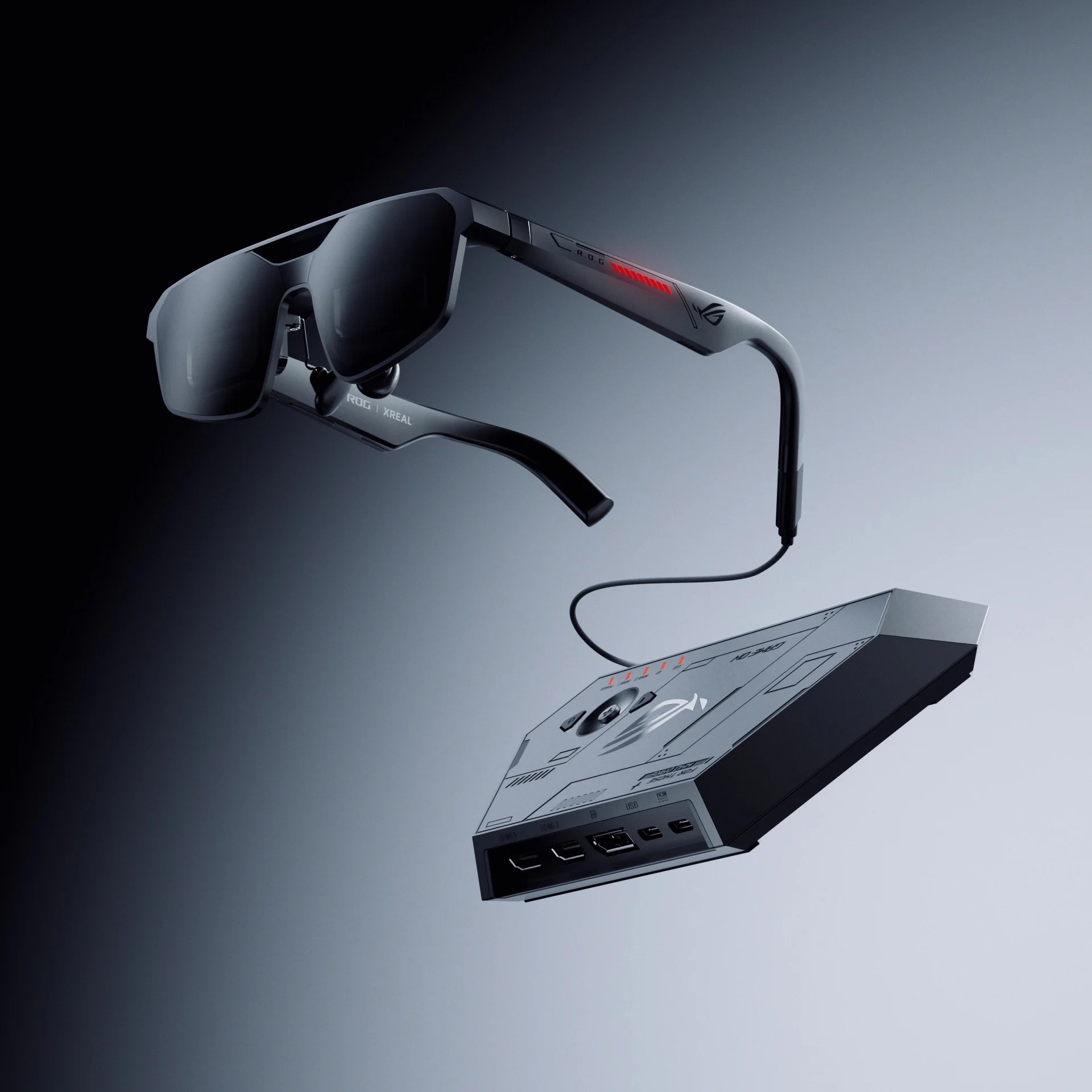
Asus ROG’s Xreal R1, the world’s first pair of AR smart glasses capable of projecting a virtual screen before your eyes with a blistering 240Hz rate, finally has… a price and preorder dates.
Ahead of Google I/O 2026, Asus ROG has announced the Xreal R1 costs $849—$200 more than the $650 MSRP for the Xreal One Pro, which top out at a 120Hz refresh rate. The gaming-focused AR smart glasses can be ordered from Best Buy starting today, May 15. The Xreal store will accept preorders on May 17 at 3 a.m. ET / 12 a.m. PT.
Spec for spec, the Xreal R1 and the Xreal One Pro are the same, except for that refresh rate and the slightly more gamer-y design. You get the same 171-inch (1,920 x 1,080) virtual display through the micro OLED panel, 57-degree field of view, Bose-tuned sound, 3DoF (three degrees of freedom) tracking technology used for anchoring virtual windows, and more. Asus ROG is hoping the 240Hz refresh rate will be worth the additional cost.
The only other difference is that the Xreal R1 comes with an “ROG Control Dock.” This docking station lets you switch between three connected devices (two via HDMI 2.0 and one through DisplayPort 1.4). So for example, with the push of a button, you could flip between a PS5, Switch 2, and a PC. Asus ROG touts the Xreal R1 as requiring no additional software to get up and running. Just plug the AR smart glasses into the Control Dock, select an input, and get gaming on your 171-inch virtual screen. You can also connect the Xreal R1 to any phone, tablet, laptop, or handheld that supports display out. For the Switch 2, you will need to use the Control Dock, as the Xreal Neo adapter/video was canceled before it could launch.
Will a 240Hz refresh rate in video smart glasses make any meaningful difference when you’re gaming? Who knows, but we’re hoping to find out soon when we get a pair to try out.
Asus ROG’s Xreal R1, the world’s first pair of AR smart glasses capable of projecting a virtual screen before your eyes with a blistering 240Hz rate, finally has… a price and preorder dates.
Ahead of Google I/O 2026, Asus ROG has announced the Xreal R1 costs $849—$200 more than the $650 MSRP for the Xreal One Pro, which top out at a 120Hz refresh rate. The gaming-focused AR smart glasses can be ordered from Best Buy starting today, May 15. The Xreal store will accept preorders on May 17 at 3 a.m. ET / 12 a.m. PT.
Spec for spec, the Xreal R1 and the Xreal One Pro are the same, except for that refresh rate and the slightly more gamer-y design. You get the same 171-inch (1,920 x 1,080) virtual display through the micro OLED panel, 57-degree field of view, Bose-tuned sound, 3DoF (three degrees of freedom) tracking technology used for anchoring virtual windows, and more. Asus ROG is hoping the 240Hz refresh rate will be worth the additional cost.
The only other difference is that the Xreal R1 comes with an “ROG Control Dock.” This docking station lets you switch between three connected devices (two via HDMI 2.0 and one through DisplayPort 1.4). So for example, with the push of a button, you could flip between a PS5, Switch 2, and a PC. Asus ROG touts the Xreal R1 as requiring no additional software to get up and running. Just plug the AR smart glasses into the Control Dock, select an input, and get gaming on your 171-inch virtual screen. You can also connect the Xreal R1 to any phone, tablet, laptop, or handheld that supports display out. For the Switch 2, you will need to use the Control Dock, as the Xreal Neo adapter/video was canceled before it could launch.
Will a 240Hz refresh rate in video smart glasses make any meaningful difference when you’re gaming? Who knows, but we’re hoping to find out soon when we get a pair to try out.
#Worlds #240Hz #Video #Smart #Glasses #Gaming #Arent #CheapAsus,Asus ROG,Gaming,smart glasses,XReal">The World’s First 240Hz Video Smart Glasses for Gaming Aren’t Cheap
Asus ROG’s Xreal R1, the world’s first pair of AR smart glasses capable of projecting a virtual screen before your eyes with a blistering 240Hz rate, finally has… a price and preorder dates.
Ahead of Google I/O 2026, Asus ROG has announced the Xreal R1 costs $849—$200 more than the $650 MSRP for the Xreal One Pro, which top out at a 120Hz refresh rate. The gaming-focused AR smart glasses can be ordered from Best Buy starting today, May 15. The Xreal store will accept preorders on May 17 at 3 a.m. ET / 12 a.m. PT.
Spec for spec, the Xreal R1 and the Xreal One Pro are the same, except for that refresh rate and the slightly more gamer-y design. You get the same 171-inch (1,920 x 1,080) virtual display through the micro OLED panel, 57-degree field of view, Bose-tuned sound, 3DoF (three degrees of freedom) tracking technology used for anchoring virtual windows, and more. Asus ROG is hoping the 240Hz refresh rate will be worth the additional cost.
The only other difference is that the Xreal R1 comes with an “ROG Control Dock.” This docking station lets you switch between three connected devices (two via HDMI 2.0 and one through DisplayPort 1.4). So for example, with the push of a button, you could flip between a PS5, Switch 2, and a PC. Asus ROG touts the Xreal R1 as requiring no additional software to get up and running. Just plug the AR smart glasses into the Control Dock, select an input, and get gaming on your 171-inch virtual screen. You can also connect the Xreal R1 to any phone, tablet, laptop, or handheld that supports display out. For the Switch 2, you will need to use the Control Dock, as the Xreal Neo adapter/video was canceled before it could launch.
Will a 240Hz refresh rate in video smart glasses make any meaningful difference when you’re gaming? Who knows, but we’re hoping to find out soon when we get a pair to try out.
Asus ROG’s Xreal R1, the world’s first pair of AR smart glasses capable of projecting…
The only downside I could find with the G2 is that it is largely devoid of offline features, so the glasses have to be connected to the internet to do much of anything. Considering the G2’s capabilities, it’s a trade-off I am more than happy to make.
Other Captioning Glasses I Tested
There are plenty of capable captioning eyeglasses on the market, but they are surprisingly similar in both looks and features. While many are quite capable, none had the combination of power and affordability that I got with Even’s G2. Here’s a rundown of everything else I tested.
Photograph: Christopher Null
Photograph: Christopher Null
Photograph: Christopher Null
Leion’s Hey 2 is the price leader in this market, and even its prescription lenses ($90 to $299) are pretty affordable. The hardware, however, is heavy: 50 grams without lenses, 60 grams with them. A full charge gets you six to eight hours of operation; the case adds juice for up to 12 recharges.
I like the Leion interface, which lays out caption, translation, “free talk” (two-way translation), and a teleprompter feature on its clean app. You get access to nine languages; using Pro minutes expands that to 143. Leion sells its premium plan by the minute, not the month, so you need to remember to toggle this mode off when you don’t need it. Pricing is $10 for 120 minutes, $50 for 1,200 minutes, and $200 for 6,000 minutes. There’s no offline use supported, and I often struggled to get AI summaries to show up in English instead of Chinese (regardless of the recorded language).
Photograph: Christopher Null
Photograph: Christopher Null
You’re not seeing double: XRAI and Leion use the same manufacturer for their hardware, and the glasses weigh the same. The battery spec is also similar, with up to eight hours on the frames and another 96 hours when recharging with the case. XRAI claims its display is significantly brighter than competitors’, but I didn’t see much of a difference in day-to-day use.
The features and user experience are roughly the same, though Leion’s teleprompter feature isn’t implemented in XRAI’s app, and it doesn’t offer AI summaries of conversations. I also didn’t find XRAI’s app as user-friendly as Leion’s version, particularly when trying to switch among the admittedly exhaustive 300 language options. Only 20 of these are included without ponying up for a Pro subscription, which is sold both by the month and minute: $20/month gets you a max of 600 upgraded transcription minutes and 300 translation minutes; $40/month gets you 1,800 and 1,200 minutes, respectively. On the plus side, XRAI does have a rudimentary offline mode that works better than most. For prescription lenses, add $140 to $170.
Photograph: Christopher Null
Photograph: Christopher Null
AirCaps
AirCaps Smart Glasses
AirCaps does not make its own prescription lenses. Instead, you must purchase a pair of $39 “lens holders” and take them to an optician if you want prescription inserts. I was unable to test these with prescription lenses and ultimately had to try them out over my regular glasses, which worked well enough for short-term testing. Frames weigh a hefty 53 grams without add-on lenses; the company couldn’t tell me how much extra weight prescription lenses would add to that, but it’s safe to say these are the bulkiest and heaviest captioning glasses on the market. Despite the weight, they only carry two to four hours of battery life, with 10 or so recharges packed into the comically large case. Another option is to clip one of AirCaps’ rechargeable 13-gram Power Capsules ($79 for two) to one of the arms, which can provide 12 to 18 extra hours of juice.
The AirCaps feature list and interface make it perhaps the simplest of all these devices, with just a single button to start and stop recording. Transcriptions and translations are available for free in nine languages. For $20/month, you can add the Pro package, which offers better accuracy, access to more than 60 languages, and the option to generate AI summaries on demand (though only if recordings are long enough). As a bonus: Five hours of Pro features are free each month. Offline mode works pretty well, too. The only bad news is that these bulky frames just aren’t comfortable enough for long-term wear.
Photograph: Christopher Null
Photograph: Christopher Null
The most expensive option on the market (up to $1,399 with prescription lenses!) weighs a relatively svelte 40 grams (52 grams with lenses) and offers about four hours of battery life. There’s no charging case; the glasses must be charged directly using the included USB-connected dongle.
The glasses are extremely simple, offering transcription and translation features—with support for about 80 languages, which is impressive. I unfortunately found the prescription lenses Captify sent to be the blurriest of the bunch, making the captions comparatively hard to read. And while the device supports offline transcription, performance suffered badly when disconnected from the internet. I couldn’t get translations to work at all when offline. For $15/month, you get better accuracy and speaker differentiation, and access to AI summaries of conversations. Prescription lenses cost between $99 and $600.
The only downside I could find with the G2 is that it is largely devoid of offline features, so the glasses have to be connected to the internet to do much of anything. Considering the G2’s capabilities, it’s a trade-off I am more than happy to make.
Other Captioning Glasses I Tested
There are plenty of capable captioning eyeglasses on the market, but they are surprisingly similar in both looks and features. While many are quite capable, none had the combination of power and affordability that I got with Even’s G2. Here’s a rundown of everything else I tested.
Photograph: Christopher Null
Photograph: Christopher Null
Photograph: Christopher Null
Leion’s Hey 2 is the price leader in this market, and even its prescription lenses ($90 to $299) are pretty affordable. The hardware, however, is heavy: 50 grams without lenses, 60 grams with them. A full charge gets you six to eight hours of operation; the case adds juice for up to 12 recharges.
I like the Leion interface, which lays out caption, translation, “free talk” (two-way translation), and a teleprompter feature on its clean app. You get access to nine languages; using Pro minutes expands that to 143. Leion sells its premium plan by the minute, not the month, so you need to remember to toggle this mode off when you don’t need it. Pricing is $10 for 120 minutes, $50 for 1,200 minutes, and $200 for 6,000 minutes. There’s no offline use supported, and I often struggled to get AI summaries to show up in English instead of Chinese (regardless of the recorded language).
Photograph: Christopher Null
Photograph: Christopher Null
You’re not seeing double: XRAI and Leion use the same manufacturer for their hardware, and the glasses weigh the same. The battery spec is also similar, with up to eight hours on the frames and another 96 hours when recharging with the case. XRAI claims its display is significantly brighter than competitors’, but I didn’t see much of a difference in day-to-day use.
The features and user experience are roughly the same, though Leion’s teleprompter feature isn’t implemented in XRAI’s app, and it doesn’t offer AI summaries of conversations. I also didn’t find XRAI’s app as user-friendly as Leion’s version, particularly when trying to switch among the admittedly exhaustive 300 language options. Only 20 of these are included without ponying up for a Pro subscription, which is sold both by the month and minute: $20/month gets you a max of 600 upgraded transcription minutes and 300 translation minutes; $40/month gets you 1,800 and 1,200 minutes, respectively. On the plus side, XRAI does have a rudimentary offline mode that works better than most. For prescription lenses, add $140 to $170.
Photograph: Christopher Null
Photograph: Christopher Null
AirCaps
AirCaps Smart Glasses
AirCaps does not make its own prescription lenses. Instead, you must purchase a pair of $39 “lens holders” and take them to an optician if you want prescription inserts. I was unable to test these with prescription lenses and ultimately had to try them out over my regular glasses, which worked well enough for short-term testing. Frames weigh a hefty 53 grams without add-on lenses; the company couldn’t tell me how much extra weight prescription lenses would add to that, but it’s safe to say these are the bulkiest and heaviest captioning glasses on the market. Despite the weight, they only carry two to four hours of battery life, with 10 or so recharges packed into the comically large case. Another option is to clip one of AirCaps’ rechargeable 13-gram Power Capsules ($79 for two) to one of the arms, which can provide 12 to 18 extra hours of juice.
The AirCaps feature list and interface make it perhaps the simplest of all these devices, with just a single button to start and stop recording. Transcriptions and translations are available for free in nine languages. For $20/month, you can add the Pro package, which offers better accuracy, access to more than 60 languages, and the option to generate AI summaries on demand (though only if recordings are long enough). As a bonus: Five hours of Pro features are free each month. Offline mode works pretty well, too. The only bad news is that these bulky frames just aren’t comfortable enough for long-term wear.
Photograph: Christopher Null
Photograph: Christopher Null
The most expensive option on the market (up to $1,399 with prescription lenses!) weighs a relatively svelte 40 grams (52 grams with lenses) and offers about four hours of battery life. There’s no charging case; the glasses must be charged directly using the included USB-connected dongle.
The glasses are extremely simple, offering transcription and translation features—with support for about 80 languages, which is impressive. I unfortunately found the prescription lenses Captify sent to be the blurriest of the bunch, making the captions comparatively hard to read. And while the device supports offline transcription, performance suffered badly when disconnected from the internet. I couldn’t get translations to work at all when offline. For $15/month, you get better accuracy and speaker differentiation, and access to AI summaries of conversations. Prescription lenses cost between $99 and $600.
#Captioning #Smart #Glasses #Leads #Packbuying guides,shopping,smart glasses,eyewear,health,augmented reality,accessibility">I Tried the Best Captioning Smart Glasses, and Only One Leads the Pack
Unlike the other glasses I tested, Even doesn’t sell a subscription plan; everything’s included out of the box.
The only downside I could find with the G2 is that it is largely devoid of offline features, so the glasses have to be connected to the internet to do much of anything. Considering the G2’s capabilities, it’s a trade-off I am more than happy to make.
Other Captioning Glasses I Tested
There are plenty of capable captioning eyeglasses on the market, but they are surprisingly similar in both looks and features. While many are quite capable, none had the combination of power and affordability that I got with Even’s G2. Here’s a rundown of everything else I tested.
Photograph: Christopher Null
Photograph: Christopher Null
Photograph: Christopher Null
Leion’s Hey 2 is the price leader in this market, and even its prescription lenses ($90 to $299) are pretty affordable. The hardware, however, is heavy: 50 grams without lenses, 60 grams with them. A full charge gets you six to eight hours of operation; the case adds juice for up to 12 recharges.
I like the Leion interface, which lays out caption, translation, “free talk” (two-way translation), and a teleprompter feature on its clean app. You get access to nine languages; using Pro minutes expands that to 143. Leion sells its premium plan by the minute, not the month, so you need to remember to toggle this mode off when you don’t need it. Pricing is $10 for 120 minutes, $50 for 1,200 minutes, and $200 for 6,000 minutes. There’s no offline use supported, and I often struggled to get AI summaries to show up in English instead of Chinese (regardless of the recorded language).
Photograph: Christopher Null
Photograph: Christopher Null
You’re not seeing double: XRAI and Leion use the same manufacturer for their hardware, and the glasses weigh the same. The battery spec is also similar, with up to eight hours on the frames and another 96 hours when recharging with the case. XRAI claims its display is significantly brighter than competitors’, but I didn’t see much of a difference in day-to-day use.
The features and user experience are roughly the same, though Leion’s teleprompter feature isn’t implemented in XRAI’s app, and it doesn’t offer AI summaries of conversations. I also didn’t find XRAI’s app as user-friendly as Leion’s version, particularly when trying to switch among the admittedly exhaustive 300 language options. Only 20 of these are included without ponying up for a Pro subscription, which is sold both by the month and minute: $20/month gets you a max of 600 upgraded transcription minutes and 300 translation minutes; $40/month gets you 1,800 and 1,200 minutes, respectively. On the plus side, XRAI does have a rudimentary offline mode that works better than most. For prescription lenses, add $140 to $170.
Photograph: Christopher Null
Photograph: Christopher Null
AirCaps
AirCaps Smart Glasses
AirCaps does not make its own prescription lenses. Instead, you must purchase a pair of $39 “lens holders” and take them to an optician if you want prescription inserts. I was unable to test these with prescription lenses and ultimately had to try them out over my regular glasses, which worked well enough for short-term testing. Frames weigh a hefty 53 grams without add-on lenses; the company couldn’t tell me how much extra weight prescription lenses would add to that, but it’s safe to say these are the bulkiest and heaviest captioning glasses on the market. Despite the weight, they only carry two to four hours of battery life, with 10 or so recharges packed into the comically large case. Another option is to clip one of AirCaps’ rechargeable 13-gram Power Capsules ($79 for two) to one of the arms, which can provide 12 to 18 extra hours of juice.
The AirCaps feature list and interface make it perhaps the simplest of all these devices, with just a single button to start and stop recording. Transcriptions and translations are available for free in nine languages. For $20/month, you can add the Pro package, which offers better accuracy, access to more than 60 languages, and the option to generate AI summaries on demand (though only if recordings are long enough). As a bonus: Five hours of Pro features are free each month. Offline mode works pretty well, too. The only bad news is that these bulky frames just aren’t comfortable enough for long-term wear.
Photograph: Christopher Null
Photograph: Christopher Null
The most expensive option on the market (up to $1,399 with prescription lenses!) weighs a relatively svelte 40 grams (52 grams with lenses) and offers about four hours of battery life. There’s no charging case; the glasses must be charged directly using the included USB-connected dongle.
The glasses are extremely simple, offering transcription and translation features—with support for about 80 languages, which is impressive. I unfortunately found the prescription lenses Captify sent to be the blurriest of the bunch, making the captions comparatively hard to read. And while the device supports offline transcription, performance suffered badly when disconnected from the internet. I couldn’t get translations to work at all when offline. For $15/month, you get better accuracy and speaker differentiation, and access to AI summaries of conversations. Prescription lenses cost between $99 and $600.
Unlike the other glasses I tested, Even doesn’t sell a subscription plan; everything’s included out…
recording you discreetly, you probably don’t like smart glasses. Video and photo capture are easily some of the most divisive aspects of the form factor, if not the most divisive. However divisive the recording part is, though, there are unifying aspects of smart glasses with cameras—things that fans and critics can hate together. Take subscriptions, for example.
As noted by Wired, L’Atitude 52°N, a smart glasses company that successfully crowdfunded last year, just launched its Berlin model of AI specs, which is set to go on sale May 26, and they have one tiny little quirk that I haven’t seen yet, or at least not to this extent: the AI features on the smart glasses (a good deal of the stuff that might actually convince you to buy them) will all be paywalled after a year’s trial.
Per Wired, which spoke to L’Atitude 52°N CEO Gary Chen, there’s no word on how much the $399 smart glasses’ subscription will cost, but if you don’t pay up, Berlin will be limited to “base features,” which include playing music and capturing media. I guess anyone interested in buying Berlin will have to be okay with a looming, unknown cost down the road.
It’s an interesting choice for a company that positions its smart glasses as being ideal for travel, pitching stuff like an “AI tour guide” that uses computer vision to provide information on your surroundings as a centerpiece of that travel functionality. Outside of a tour guide, the Berlin smart glasses also appear to lean into translation and a voice assistant in the AI department.
On the bright side—call it transparency if you want—at least Chen is being honest about future ambitions to squeeze recurring profits out of anyone who buys the company’s smart glasses. A lot of the time, that’s just an unacknowledged minefield customers unknowingly step onto when buying any gadget with a cloud service.
If you’re okay with potentially having to cough up a monthly sum to get the most out of your smart glasses, the Berlin look like a decent pair, but not quite the best. There’s no screen, but there’s a 12-megapixel camera, which is the same as the Ray-Ban Meta AI glasses, though there’s a significant difference in capture resolution. The Berlin have a max recording resolution of 1080p, while the Ray-Ban Meta AI glasses can record in 3K. They do look stylish, or at the very least unique, and if they can compete on open-ear audio, they might be a worthy consideration even with that very annoying subscription caveat.
I’m skeptical that smart glasses are practical enough to justify paying for monthly, but I guess the only way to find out is by adding to everyone’s already Sisyphean monthly subscription budget.
recording you discreetly, you probably don’t like smart glasses. Video and photo capture are easily some of the most divisive aspects of the form factor, if not the most divisive. However divisive the recording part is, though, there are unifying aspects of smart glasses with cameras—things that fans and critics can hate together. Take subscriptions, for example.
As noted by Wired, L’Atitude 52°N, a smart glasses company that successfully crowdfunded last year, just launched its Berlin model of AI specs, which is set to go on sale May 26, and they have one tiny little quirk that I haven’t seen yet, or at least not to this extent: the AI features on the smart glasses (a good deal of the stuff that might actually convince you to buy them) will all be paywalled after a year’s trial.
Per Wired, which spoke to L’Atitude 52°N CEO Gary Chen, there’s no word on how much the $399 smart glasses’ subscription will cost, but if you don’t pay up, Berlin will be limited to “base features,” which include playing music and capturing media. I guess anyone interested in buying Berlin will have to be okay with a looming, unknown cost down the road.
It’s an interesting choice for a company that positions its smart glasses as being ideal for travel, pitching stuff like an “AI tour guide” that uses computer vision to provide information on your surroundings as a centerpiece of that travel functionality. Outside of a tour guide, the Berlin smart glasses also appear to lean into translation and a voice assistant in the AI department.
On the bright side—call it transparency if you want—at least Chen is being honest about future ambitions to squeeze recurring profits out of anyone who buys the company’s smart glasses. A lot of the time, that’s just an unacknowledged minefield customers unknowingly step onto when buying any gadget with a cloud service.
If you’re okay with potentially having to cough up a monthly sum to get the most out of your smart glasses, the Berlin look like a decent pair, but not quite the best. There’s no screen, but there’s a 12-megapixel camera, which is the same as the Ray-Ban Meta AI glasses, though there’s a significant difference in capture resolution. The Berlin have a max recording resolution of 1080p, while the Ray-Ban Meta AI glasses can record in 3K. They do look stylish, or at the very least unique, and if they can compete on open-ear audio, they might be a worthy consideration even with that very annoying subscription caveat.
I’m skeptical that smart glasses are practical enough to justify paying for monthly, but I guess the only way to find out is by adding to everyone’s already Sisyphean monthly subscription budget.
#Smart #Glasses #Eyeing #People #Hate #Spiedsmart glasses,wearables">Smart Glasses Are Eyeing the One Thing People Hate More Than Being Spied On
If you don’t like the idea of someone recording you discreetly, you probably don’t like smart glasses. Video and photo capture are easily some of the most divisive aspects of the form factor, if not the most divisive. However divisive the recording part is, though, there are unifying aspects of smart glasses with cameras—things that fans and critics can hate together. Take subscriptions, for example.
As noted by Wired, L’Atitude 52°N, a smart glasses company that successfully crowdfunded last year, just launched its Berlin model of AI specs, which is set to go on sale May 26, and they have one tiny little quirk that I haven’t seen yet, or at least not to this extent: the AI features on the smart glasses (a good deal of the stuff that might actually convince you to buy them) will all be paywalled after a year’s trial.
Per Wired, which spoke to L’Atitude 52°N CEO Gary Chen, there’s no word on how much the $399 smart glasses’ subscription will cost, but if you don’t pay up, Berlin will be limited to “base features,” which include playing music and capturing media. I guess anyone interested in buying Berlin will have to be okay with a looming, unknown cost down the road.
It’s an interesting choice for a company that positions its smart glasses as being ideal for travel, pitching stuff like an “AI tour guide” that uses computer vision to provide information on your surroundings as a centerpiece of that travel functionality. Outside of a tour guide, the Berlin smart glasses also appear to lean into translation and a voice assistant in the AI department.
On the bright side—call it transparency if you want—at least Chen is being honest about future ambitions to squeeze recurring profits out of anyone who buys the company’s smart glasses. A lot of the time, that’s just an unacknowledged minefield customers unknowingly step onto when buying any gadget with a cloud service.
If you’re okay with potentially having to cough up a monthly sum to get the most out of your smart glasses, the Berlin look like a decent pair, but not quite the best. There’s no screen, but there’s a 12-megapixel camera, which is the same as the Ray-Ban Meta AI glasses, though there’s a significant difference in capture resolution. The Berlin have a max recording resolution of 1080p, while the Ray-Ban Meta AI glasses can record in 3K. They do look stylish, or at the very least unique, and if they can compete on open-ear audio, they might be a worthy consideration even with that very annoying subscription caveat.
I’m skeptical that smart glasses are practical enough to justify paying for monthly, but I guess the only way to find out is by adding to everyone’s already Sisyphean monthly subscription budget.
If you don’t like the idea of someone recording you discreetly, you probably don’t like…
L’Atitude 52°N’s glasses is called Goya, named after Francisco Goya, the famous Spanish artist who painted renowned masterpieces of romanticism.
CEO and founder Gary Chen, who has worked on wearable devices for companies like Oppo, OnePlus, and HTC, says his company’s glasses are focused on travelers, with AI features that act like a tour guide and talk about all the paintings in famous museums.
“Basically, you can say, ‘Hey, Goya, what is the story about Mona Lisa?’” Chen says. “You can ask anything and, with your permission, they will take a photo to analyze what’s in front of you.”
I ask if you could quiz it about perhaps the most famous Goya painting, the terrifying, Gothic horror-esque image of Saturn devouring his own son.
“Yes, yes,” Chen says, “It can also give you some recommendations about restaurants.”
Berlin-based L’Atitude 52°N is a new player in the smart glasses space, selling its first pairs on Kickstarter in September 2025, where the campaign surpassed its funding goal and raised more than $400,000. There have been some bumps since then, as shipments were delayed from an originally announced release date in February 2026, and one model in development was scrapped outright. Now, L’Atitude 52°N has announced an official release date for its smart glasses.
Preorders for one model, called Berlin, start on May 19. The glasses actually go on sale on May 26. This might be a disappointment for Kickstarter backers, as the most recent official update from the campaign came in March and said shipping would begin on April 15 for Berlin units and June 7 for the second model, called Milan. L’Atitude 52°N still hasn’t set an official launch date for the Milan, except to say that it will be “arriving in the second quarter of 2026.”
The Berlin glasses cost $399. Add another $50 for the photochromatic lenses. There is one very big catch: The AI features enabled on the device will only work for 12 months, which L’Atitude 52°N calls an “AI feature trial.” After that, customers have to pay for a subscription service, or will be limited to the base features, like playing music and capturing media.
How much will that subscription service cost? Chen says he doesn’t know.
L’Atitude 52°N’s glasses is called Goya, named after Francisco Goya, the famous Spanish artist who painted renowned masterpieces of romanticism.
CEO and founder Gary Chen, who has worked on wearable devices for companies like Oppo, OnePlus, and HTC, says his company’s glasses are focused on travelers, with AI features that act like a tour guide and talk about all the paintings in famous museums.
“Basically, you can say, ‘Hey, Goya, what is the story about Mona Lisa?’” Chen says. “You can ask anything and, with your permission, they will take a photo to analyze what’s in front of you.”
I ask if you could quiz it about perhaps the most famous Goya painting, the terrifying, Gothic horror-esque image of Saturn devouring his own son.
“Yes, yes,” Chen says, “It can also give you some recommendations about restaurants.”
Berlin-based L’Atitude 52°N is a new player in the smart glasses space, selling its first pairs on Kickstarter in September 2025, where the campaign surpassed its funding goal and raised more than $400,000. There have been some bumps since then, as shipments were delayed from an originally announced release date in February 2026, and one model in development was scrapped outright. Now, L’Atitude 52°N has announced an official release date for its smart glasses.
Preorders for one model, called Berlin, start on May 19. The glasses actually go on sale on May 26. This might be a disappointment for Kickstarter backers, as the most recent official update from the campaign came in March and said shipping would begin on April 15 for Berlin units and June 7 for the second model, called Milan. L’Atitude 52°N still hasn’t set an official launch date for the Milan, except to say that it will be “arriving in the second quarter of 2026.”
The Berlin glasses cost $399. Add another $50 for the photochromatic lenses. There is one very big catch: The AI features enabled on the device will only work for 12 months, which L’Atitude 52°N calls an “AI feature trial.” After that, customers have to pay for a subscription service, or will be limited to the base features, like playing music and capturing media.
How much will that subscription service cost? Chen says he doesn’t know.
#Smart #Glasses #ExOnePlus #Engineers #Hidden #Costsmart glasses,wearables,design,gadgets">These New Smart Glasses From Ex-OnePlus Engineers Have a Hidden Cost
Lots of smart glasses have AI bots inside them now. The one in L’Atitude 52°N’s glasses is called Goya, named after Francisco Goya, the famous Spanish artist who painted renowned masterpieces of romanticism.
CEO and founder Gary Chen, who has worked on wearable devices for companies like Oppo, OnePlus, and HTC, says his company’s glasses are focused on travelers, with AI features that act like a tour guide and talk about all the paintings in famous museums.
“Basically, you can say, ‘Hey, Goya, what is the story about Mona Lisa?’” Chen says. “You can ask anything and, with your permission, they will take a photo to analyze what’s in front of you.”
I ask if you could quiz it about perhaps the most famous Goya painting, the terrifying, Gothic horror-esque image of Saturn devouring his own son.
“Yes, yes,” Chen says, “It can also give you some recommendations about restaurants.”
Berlin-based L’Atitude 52°N is a new player in the smart glasses space, selling its first pairs on Kickstarter in September 2025, where the campaign surpassed its funding goal and raised more than $400,000. There have been some bumps since then, as shipments were delayed from an originally announced release date in February 2026, and one model in development was scrapped outright. Now, L’Atitude 52°N has announced an official release date for its smart glasses.
Preorders for one model, called Berlin, start on May 19. The glasses actually go on sale on May 26. This might be a disappointment for Kickstarter backers, as the most recent official update from the campaign came in March and said shipping would begin on April 15 for Berlin units and June 7 for the second model, called Milan. L’Atitude 52°N still hasn’t set an official launch date for the Milan, except to say that it will be “arriving in the second quarter of 2026.”
The Berlin glasses cost $399. Add another $50 for the photochromatic lenses. There is one very big catch: The AI features enabled on the device will only work for 12 months, which L’Atitude 52°N calls an “AI feature trial.” After that, customers have to pay for a subscription service, or will be limited to the base features, like playing music and capturing media.
How much will that subscription service cost? Chen says he doesn’t know.

![Volkswagen Thinks Your E-Bike Needs a Pair of Smart Glasses
Volkswagen is bringing some high-tech car features to a new line of electric bikes, including an optional pair of smart glasses. The German automaker recently unveiled two premium Volkswagen-branded e-bikes developed by n+, a bike company that has previously partnered with Mercedes-AMG’s Formula 1 team. © Volkswagen The companies say the bikes were designed with the same “safety-first philosophy” as a modern passenger vehicle and come packed with tech more commonly found in cars like radar, a rearview camera, blind-spot alerts and turn signals. These e-bikes arrive as automakers and startups are showing growing interest in smaller and cheaper electric vehicles designed for shorter trips. But Volkswagen’s smart bikes are surprisingly loaded with more safety features than many of the alternatives.
The bikes’ main feature is the Smart View system, which pairs a rear-facing camera with a screen mounted between the bikes’ handlebars. It also uses radar to provide blind-spot alerts, helping riders to stay aware of approaching traffic without having to take their eyes off the road.
© Volkswagen The bikes also feature an LED strip integrated into the frame’s top tube that acts as a high-visibility daytime running light. It glows red when the rider brakes and amber to signal a turn. Beyond those standard features, Volkswagen and n+ are also offering some optional safety gear. The first is a smart helmet that connects to the bike over Bluetooth and uses high-visibility LEDs that synched to the bike’s brake and turn signals. The helmet also includes a built-in accelerometer that can detect a possible crash and automatically send a text message to the rider’s emergency contacts.
And finally, riders can grab a pair of smart glasses with a heads-up display that puts navigation directions, blind-spot warnings, and other ride information directly within their field of vision. © Volkswagen “[T]echnologies like these are most commonly known from the automotive world. Seeing them make their way onto an e-bike demonstrates how technologies can evolve and be adapted in meaningful ways,” said Peter Jost, CEO of Volkswagen Accessories, Lifestyle & Licenses, in a press release. The smart e-bikes come in two models. The Sport model is designed with agility in mind, while the Crossover model is built for comfort and includes a rear cargo tray. Both bikes offer pedal assistance up to 25 kilometers per hour (about 15.5 mph) and have a maximum estimated range of 160 kilometers (99 miles). The actual range will vary depending on factors like terrain, wind, tire pressure, and rider weight. Battery extenders are available for both models
The Sport model starts at ,999, while the Crossover starts at ,349. The optional smart helmet costs 9, and the smart glasses will set customers back another 9. #Volkswagen #Thinks #EBike #Pair #Smart #Glassese-bikes,smart glasses,Volkswagen](https://gizmodo.com/app/uploads/2026/07/volkswagen-smart-bike.jpeg "Volkswagen Thinks Your E-Bike Needs a Pair of Smart Glasses
Volkswagen is bringing some high-tech car features to a new line of electric bikes, including an optional pair of smart glasses. The German automaker recently unveiled two premium Volkswagen-branded e-bikes developed by n+, a bike company that has previously partnered with Mercedes-AMG’s Formula 1 team. © Volkswagen The companies say the bikes were designed with the same “safety-first philosophy” as a modern passenger vehicle and come packed with tech more commonly found in cars like radar, a rearview camera, blind-spot alerts and turn signals. These e-bikes arrive as automakers and startups are showing growing interest in smaller and cheaper electric vehicles designed for shorter trips. But Volkswagen’s smart bikes are surprisingly loaded with more safety features than many of the alternatives.
The bikes’ main feature is the Smart View system, which pairs a rear-facing camera with a screen mounted between the bikes’ handlebars. It also uses radar to provide blind-spot alerts, helping riders to stay aware of approaching traffic without having to take their eyes off the road.
© Volkswagen The bikes also feature an LED strip integrated into the frame’s top tube that acts as a high-visibility daytime running light. It glows red when the rider brakes and amber to signal a turn. Beyond those standard features, Volkswagen and n+ are also offering some optional safety gear. The first is a smart helmet that connects to the bike over Bluetooth and uses high-visibility LEDs that synched to the bike’s brake and turn signals. The helmet also includes a built-in accelerometer that can detect a possible crash and automatically send a text message to the rider’s emergency contacts.
And finally, riders can grab a pair of smart glasses with a heads-up display that puts navigation directions, blind-spot warnings, and other ride information directly within their field of vision. © Volkswagen “[T]echnologies like these are most commonly known from the automotive world. Seeing them make their way onto an e-bike demonstrates how technologies can evolve and be adapted in meaningful ways,” said Peter Jost, CEO of Volkswagen Accessories, Lifestyle & Licenses, in a press release. The smart e-bikes come in two models. The Sport model is designed with agility in mind, while the Crossover model is built for comfort and includes a rear cargo tray. Both bikes offer pedal assistance up to 25 kilometers per hour (about 15.5 mph) and have a maximum estimated range of 160 kilometers (99 miles). The actual range will vary depending on factors like terrain, wind, tire pressure, and rider weight. Battery extenders are available for both models
The Sport model starts at ,999, while the Crossover starts at ,349. The optional smart helmet costs 9, and the smart glasses will set customers back another 9. #Volkswagen #Thinks #EBike #Pair #Smart #Glassese-bikes,smart glasses,Volkswagen")
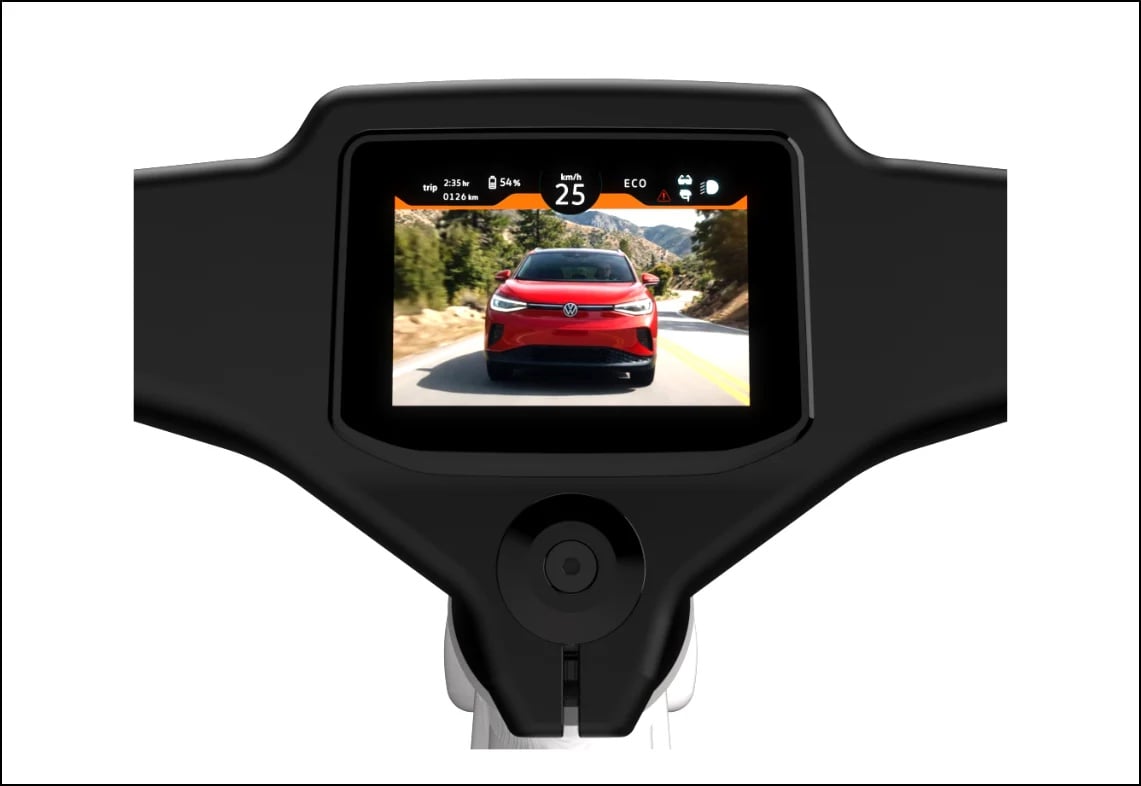
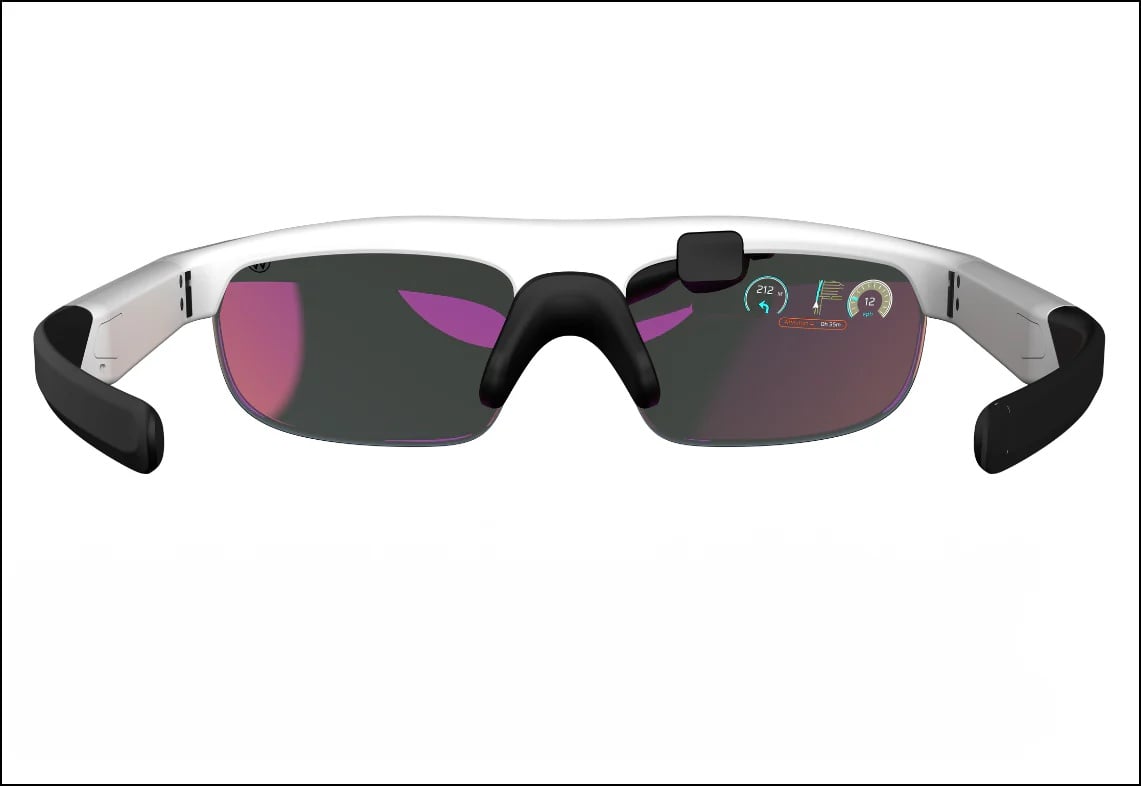
![Volkswagen Thinks Your E-Bike Needs a Pair of Smart Glasses
Volkswagen is bringing some high-tech car features to a new line of electric bikes, including an optional pair of smart glasses. The German automaker recently unveiled two premium Volkswagen-branded e-bikes developed by n+, a bike company that has previously partnered with Mercedes-AMG’s Formula 1 team. © Volkswagen The companies say the bikes were designed with the same “safety-first philosophy” as a modern passenger vehicle and come packed with tech more commonly found in cars like radar, a rearview camera, blind-spot alerts and turn signals. These e-bikes arrive as automakers and startups are showing growing interest in smaller and cheaper electric vehicles designed for shorter trips. But Volkswagen’s smart bikes are surprisingly loaded with more safety features than many of the alternatives.
The bikes’ main feature is the Smart View system, which pairs a rear-facing camera with a screen mounted between the bikes’ handlebars. It also uses radar to provide blind-spot alerts, helping riders to stay aware of approaching traffic without having to take their eyes off the road.
© Volkswagen The bikes also feature an LED strip integrated into the frame’s top tube that acts as a high-visibility daytime running light. It glows red when the rider brakes and amber to signal a turn. Beyond those standard features, Volkswagen and n+ are also offering some optional safety gear. The first is a smart helmet that connects to the bike over Bluetooth and uses high-visibility LEDs that synched to the bike’s brake and turn signals. The helmet also includes a built-in accelerometer that can detect a possible crash and automatically send a text message to the rider’s emergency contacts.
And finally, riders can grab a pair of smart glasses with a heads-up display that puts navigation directions, blind-spot warnings, and other ride information directly within their field of vision. © Volkswagen “[T]echnologies like these are most commonly known from the automotive world. Seeing them make their way onto an e-bike demonstrates how technologies can evolve and be adapted in meaningful ways,” said Peter Jost, CEO of Volkswagen Accessories, Lifestyle & Licenses, in a press release. The smart e-bikes come in two models. The Sport model is designed with agility in mind, while the Crossover model is built for comfort and includes a rear cargo tray. Both bikes offer pedal assistance up to 25 kilometers per hour (about 15.5 mph) and have a maximum estimated range of 160 kilometers (99 miles). The actual range will vary depending on factors like terrain, wind, tire pressure, and rider weight. Battery extenders are available for both models
The Sport model starts at ,999, while the Crossover starts at ,349. The optional smart helmet costs 9, and the smart glasses will set customers back another 9. #Volkswagen #Thinks #EBike #Pair #Smart #Glassese-bikes,smart glasses,Volkswagen](https://i1.wp.com/gizmodo.com/app/uploads/2026/07/volkswagen-smart-bike.jpeg?ssl=1 "Volkswagen Thinks Your E-Bike Needs a Pair of Smart Glasses
Volkswagen is bringing some high-tech car features to a new line of electric bikes, including an optional pair of smart glasses. The German automaker recently unveiled two premium Volkswagen-branded e-bikes developed by n+, a bike company that has previously partnered with Mercedes-AMG’s Formula 1 team. © Volkswagen The companies say the bikes were designed with the same “safety-first philosophy” as a modern passenger vehicle and come packed with tech more commonly found in cars like radar, a rearview camera, blind-spot alerts and turn signals. These e-bikes arrive as automakers and startups are showing growing interest in smaller and cheaper electric vehicles designed for shorter trips. But Volkswagen’s smart bikes are surprisingly loaded with more safety features than many of the alternatives.
The bikes’ main feature is the Smart View system, which pairs a rear-facing camera with a screen mounted between the bikes’ handlebars. It also uses radar to provide blind-spot alerts, helping riders to stay aware of approaching traffic without having to take their eyes off the road.
© Volkswagen The bikes also feature an LED strip integrated into the frame’s top tube that acts as a high-visibility daytime running light. It glows red when the rider brakes and amber to signal a turn. Beyond those standard features, Volkswagen and n+ are also offering some optional safety gear. The first is a smart helmet that connects to the bike over Bluetooth and uses high-visibility LEDs that synched to the bike’s brake and turn signals. The helmet also includes a built-in accelerometer that can detect a possible crash and automatically send a text message to the rider’s emergency contacts.
And finally, riders can grab a pair of smart glasses with a heads-up display that puts navigation directions, blind-spot warnings, and other ride information directly within their field of vision. © Volkswagen “[T]echnologies like these are most commonly known from the automotive world. Seeing them make their way onto an e-bike demonstrates how technologies can evolve and be adapted in meaningful ways,” said Peter Jost, CEO of Volkswagen Accessories, Lifestyle & Licenses, in a press release. The smart e-bikes come in two models. The Sport model is designed with agility in mind, while the Crossover model is built for comfort and includes a rear cargo tray. Both bikes offer pedal assistance up to 25 kilometers per hour (about 15.5 mph) and have a maximum estimated range of 160 kilometers (99 miles). The actual range will vary depending on factors like terrain, wind, tire pressure, and rider weight. Battery extenders are available for both models
The Sport model starts at ,999, while the Crossover starts at ,349. The optional smart helmet costs 9, and the smart glasses will set customers back another 9. #Volkswagen #Thinks #EBike #Pair #Smart #Glassese-bikes,smart glasses,Volkswagen")
.jpg)
.jpg?ssl=1 "These New Smart Glasses From Solos Come With a Privacy Shield for the CamerasSmart glasses company Solos has long focused on audio-only smart glasses. On Tuesday, it announced two new pairs of glasses, one of which has a camera—but you can buy a separate accessory to hide the camera for privacy’s sake.Solos’ new smart glasses are the audio-only AirGo A6 and the second iteration of its camera-enabled glasses, the Solos AirGo V2. The latter was first announced last year as an effort to directly “outshine Meta.” These 9 glasses do just about everything you’d expect from Meta’s new 9 Meta Smartglasses, including photo and video capture, playing music, and interacting with an AI-powered assistant that can see what you see. They can be fitted with prescription lenses and have a 10- to 12-hour battery life.The AirGo V2 glasses can also be paired with a new Privacy Kit, a set of clip-on accessories that let wearers control what their camera glasses can access. The clip-on privacy shield blocks the cameras from view and from recording the world, allowing you to keep wearing the glasses in audio-only mode. There’s also a clip-on polarized lens, and the full kit of modular options costs .Selling a privacy kit as a clip-on accessory is perhaps not the most effective way to stave off concerns about people running around with small, discreet cameras on their faces. Having to buy a separate item, then clip it on and off every time you want to use or disable the camera, is a lot of extra steps that will likely keep people from bothering with privacy at all. Also, there isn’t anything stopping bad actors from removing the clip-on blockers later in an interaction—say, after entering an event that prohibits camera recording.Courtesy of Solos SmartglassesSolos’ first camera-enabled glasses, the Solos AirGo Vision, launched in 2024. WIRED put them in the “Don’t Bother” section of our Best Smart Glasses gallery, citing some decent design choices, albeit ones held back by middling media capture quality, frustrating touch controls, and a power-hungry app that demands too many permissions. All in all, the glasses haven’t quite reached the standard Meta has set with its popular smart glasses.Meta has been the dominant force in the smart glasses market, but other big companies are trying to fill in the cracks. Google and Samsung have a partnership to build out Google’s Android XR platform, with new glasses arriving later this year from eyewear brands Warby Parker and Gentle Monster. Apple has reportedly been building its own smart glasses as well.Some smaller companies are adjusting their target markets to counter Meta, like Even Realities and its camera-free glasses. Solos’ reemphasis on privacy comes after a period of widespread criticism of Meta’s glasses. The devices have been called creepy “pervert glasses” and were criticized after the company silently added face recognition code to its glasses, then quickly removed it after public outcry following a WIRED report. Meta hasn’t done itself any favors since then, announcing last week that it will start charging for features on its smart glasses that have previously been free.Meta has acknowledged that a market for audio-only smart glasses exists, as CTO Andrew Bosworth said in a private Q&A session with media that he thinks there is “market demand for that product for sure.” But Meta hasn’t moved away from its camera-forward spectacles yet. It may very well make audio-only glasses in the future. Until then, companies like Solos are eager to chip away at that market.#Smart #Glasses #Solos #Privacy #Shield #Camerascameras,design,smart glasses,wearables,artificial intelligence,meta")