×
vivo T4 Lite Review: Best Phone Under 10K?

vivo T4 Lite Review: Best Phone Under 10K?

Most brands shy away from the sub-10k budget segment simply because the compromises needed to design a phone fit for purpose are pretty extensive. But after launching multiple T series phones this year, vivo has just come out with the all-new T4 Lite, which features a 90Hz display, the MediaTek Dimensity 6300 chip, and a 50MP Sony camera—all for just INR 9,999.

I had the opportunity to test out the vivo T4 Lite for a week. And in this review, I’ll share my experience of using the phone in everyday life, which should hopefully help you decide if it’s worth shelling out the money for.

vivo T4 Lite Review

Hisan Kidwai

Summary

At just INR 9,999, the vivo T4 Lite gets a lot of things right. You get a pretty design, a high-refresh-rate display, decent performance, and good daytime cameras.

Design & Hardware

When making a phone with such a tight budget, design isn’t the top priority, as there are many more important things to focus on. However, this isn’t the case with the T4 Lite, which, in the Titanium Gold color, looks pretty neat. The design is premium, and the way light shimmers on the back makes using the T4 Lite an eye-catcher in every way.

Plus, the positioning of the dual camera module mimics that of much more expensive vivo phones, which adds to the premium touch.
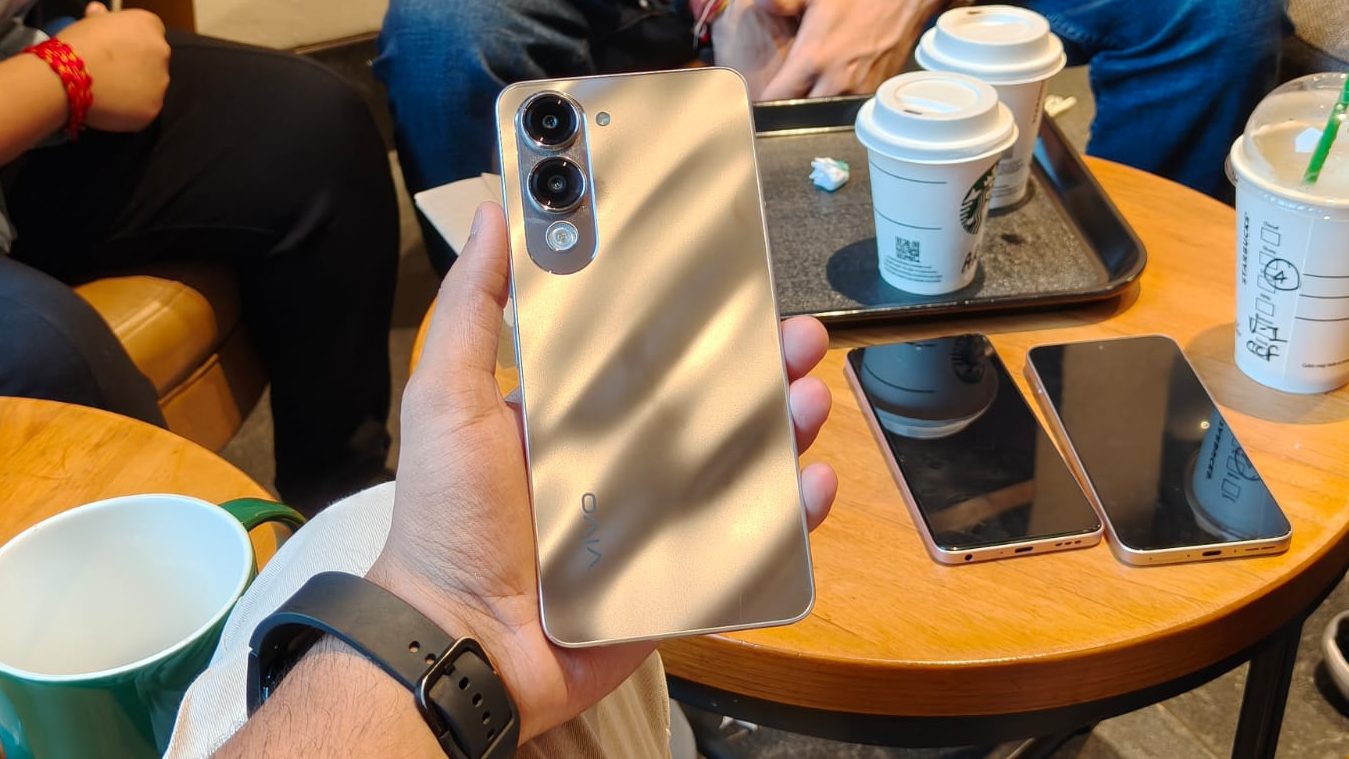
Image of the back design

Similarly, I quite liked the plastic sides since they are both good-looking and protect the device from drops. However, I would advise using the included case, as dropping the phone can scuff up the sides. The sides also house the fingerprint scanner, which works as expected, though not as fast as I’ve seen from other makers.

Display
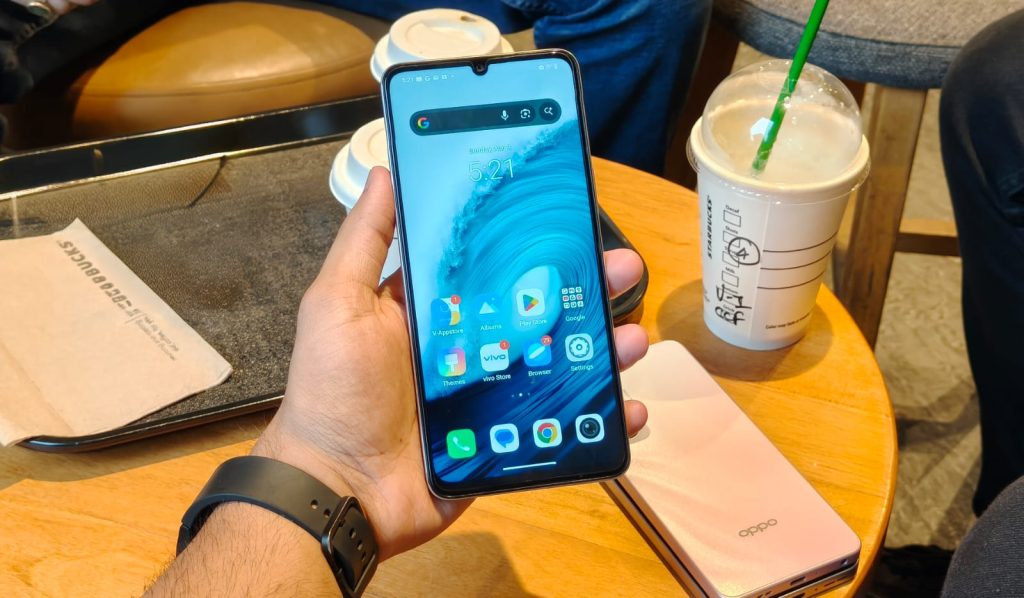
Image of the display on the vivo t4 lite

The vivo T4 Lite features a 6.74-inch HD+ LCD panel with a 90Hz refresh rate. For the money, there isn’t much to complain about. The display is serviceable in almost every condition, reproduces good-looking colors, and makes for a decent media experience.

On the other hand, the outdoor visibility was somewhat less desirable, as the panel wasn’t entirely visible when exposed to direct sunlight. Nevertheless, if you just need the phone to work or study, it’s totally okay.

Performance
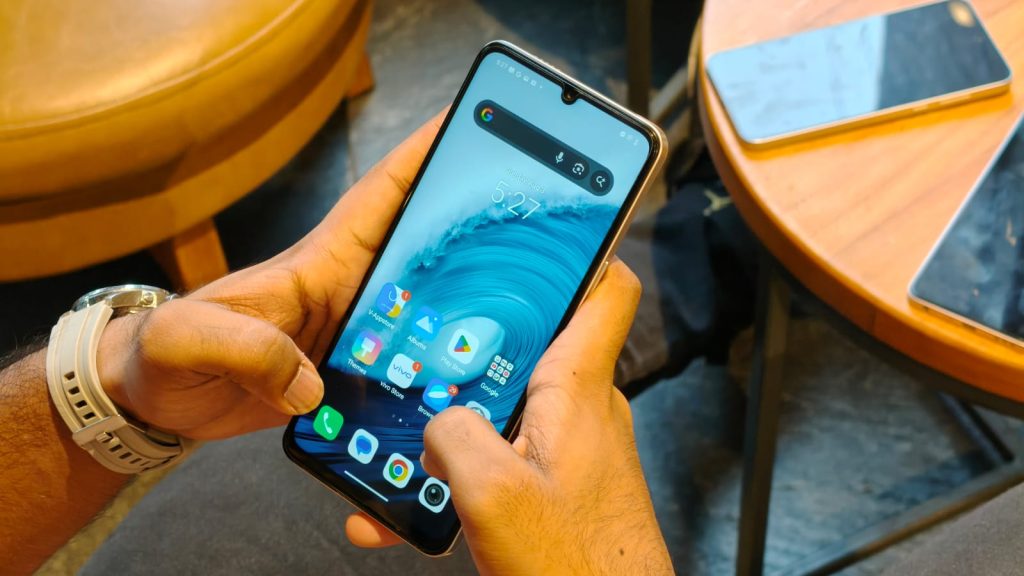
Image of a person using the device

vivo T4 Lite comes with MediaTek’s new Dimensity 6300 chipset, which features two high-performance Cortex-A76 cores clocked at up to 2.4 GHz and six power-efficient Cortex-A55 cores clocked at up to 2.0 GHz, along with the ARM Mali-G57 MC2 GPU. My unit also came with 8GB of LPDDR4X RAM and 128GB UFS 2.2 storage.

I recently reviewed the OPPO K13x, which includes the same processor, and performed pretty decently. Unfortunately, the vivo T4 Lite falls a bit short, as I’ve noticed hitches and lag in everyday tasks. There was a slight delay with almost every task, whether opening apps, navigating the UI, or taking pictures.

The 90Hz refresh rate also fluctuated sometimes, which became a major distraction. That said, it’s important to mention that the performance of the T4 Lite is not bad by any means.

Benchmarks & Gaming
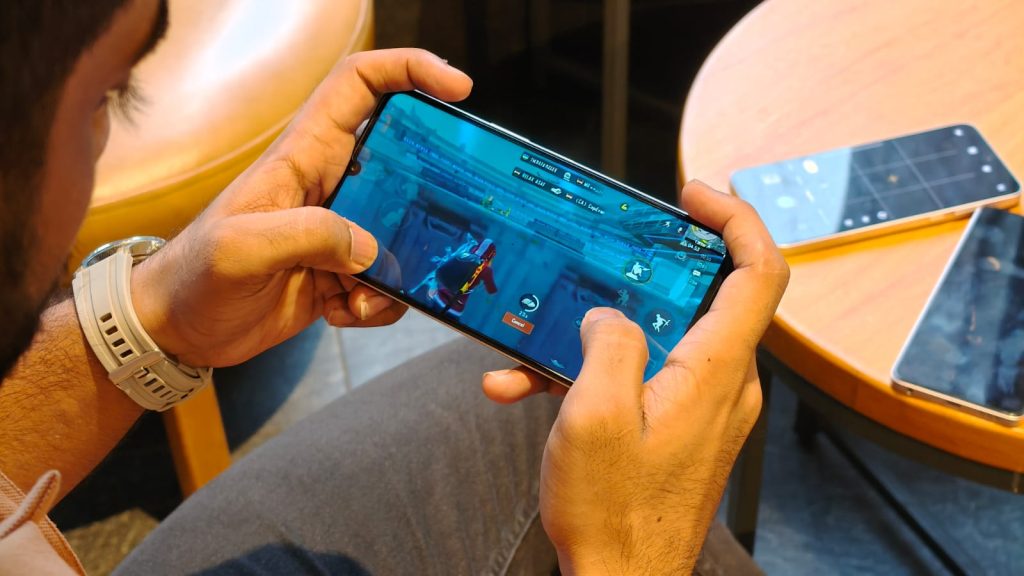
image of a person gaming on the vivo t4 lite

To put the Dimensity 6300 through its paces, I also ran a series of benchmarks. In Geekbench, the device scored 899 in the single-core and 2344 in the multi-core tests. On the other hand, in AnTuTu, the phone scored 676777 points.

Coming to gaming, I played a bit of BGMI and CODM on the T4 Lite, and the experience was okayish. At Smooth and Ultra settings, the gameplay was not ideal, with dropped frames in high-intensity areas.

Battery Life & Charging
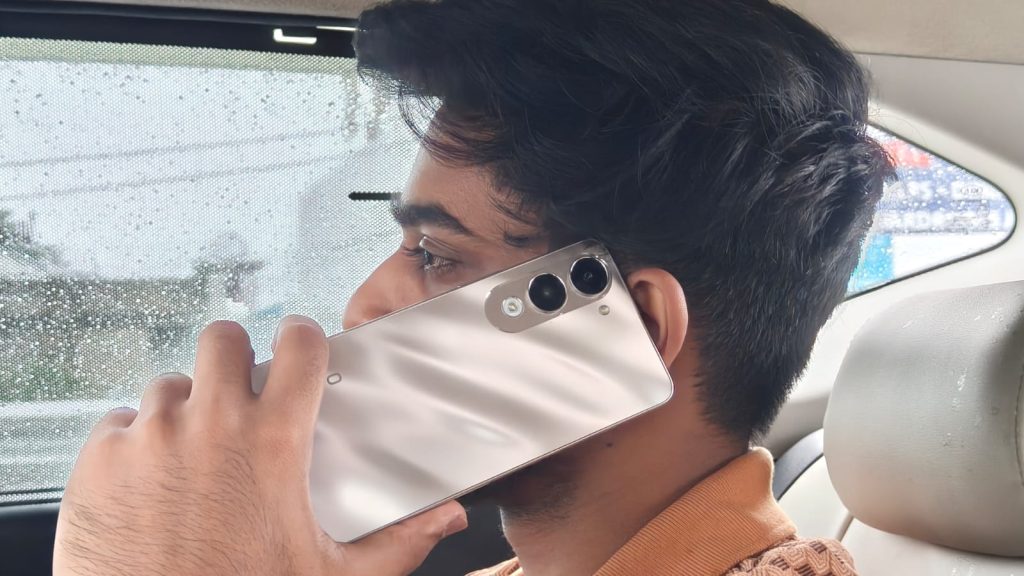
Image of a person taking a call

Battery life is the strongest point of the T4 Lite, all thanks to the massive 6,000 mAh cell. Paired with the mid-range processor, the device easily lasted two days on a single charge. To put this in perspective, the days included taking multiple camera samples, playing a few rounds of BGMI, and scrolling social media.

When it was finally time to recharge, the included fast charger took the battery from 20% to 80% in just around 90 minutes. A full charge can be done in 150 minutes.

Cameras
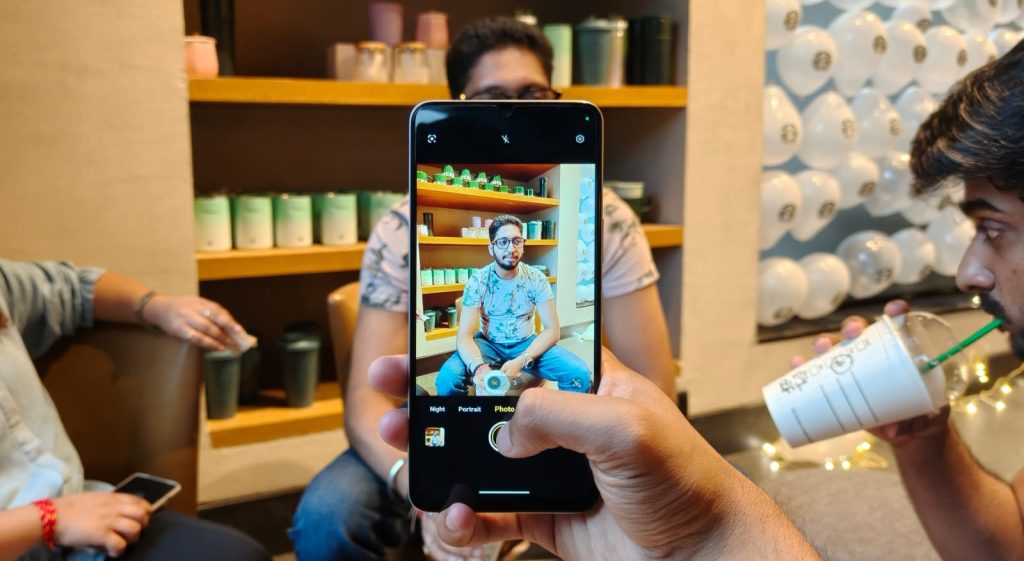
Image of a person taking a photo with the vivo t4 lite

In terms of optics, the T4 Lite houses a 50MP Sony IMX852 main camera sensor with an f/1.8 aperture. While you also get a 2MP bokeh lens, it is of little use and serves primarily an aesthetic purpose. The picture quality in daylight was pretty good. There were enough details, the colors looked accurate, and there was some HDR too. The portrait performance was also decent, with a natural depth of field and colors.

Unfortunately, the quality falls off a cliff at low light. The shots have a lot of grain, the sharpness is low, and the colors look washed out. That said, this phenomenon is present with every other budget phone and isn’t exclusive to the T4 Lite.

Like others, the video is limited to 1080p at 60fps, and the quality is usable in daytime scenarios. As usual, noise is everywhere in artificial and low-lighting scenarios, which hinders the output.

The selfie shooter, on the other hand, was pretty decent with natural colors and a good amount of sharpness. There’s a beauty filter pre-applied, but you can disable it pretty easily.

Should you buy the vivo T4 Lite?
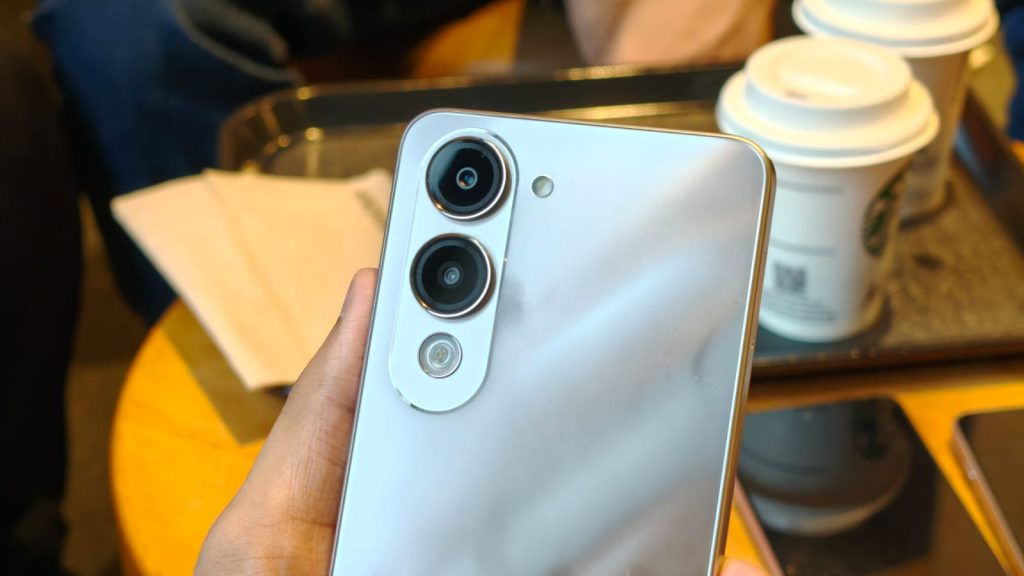
Image of the design of the phone

At INR 9,999, the vivo T4 Lite is one of the very budget phones from a big company under the 10K INR segment. And for the price, it gets a lot of things right, like a pretty design, a high-refresh-rate display, decent performance, and good daytime cameras.

Sure, there are some drawbacks too, like the performance hiccups. But if you aren’t coming from a much more expensive phone like mine, you won’t notice the performance dips at all. And that’s why the vivo T4 Lite gets a recommendation from my end.

Source link
#vivo #Lite #Review #Phone #10K

At a trendy venue near the San Francisco pier, Sam Altman’s verification project World celebrated its next evolution and rapid expansion of its ambitions.  And it’s starting with Tinder.

Tools for Humanity (TFH), the company behind the World project, announced Friday plans to integrate its verification tech into dating apps, event and concert ticketing systems, business organizations, email, and other arenas of public life.

“The world is getting close to very powerful AI, and this is doing a lot of wonderful things,” said Altman, speaking before a packed crowd at The Midway. “We are also heading to a world now where there’s going to be more stuff generated by AI than by humans,” he added. “I’m sure many of you [have had moments] where you’re like, ‘Am I interacting with an AI or a person, or how much of each, and how do I know?”

World (formerly Worldcoin) distinguishes itself from many of its ID verification peers by offering the ability to verify that a real, living human is using a digital service while still protecting that person’s anonymity. There is some complex cryptographic alchemy behind this (something called “zero-knowledge proof-based authentication”). The upshot: The company is creating what it calls “proof of human” tools, which are mechanisms that can verify human activity in a world rife with AI agents and bots.

Its chief tool for verification is a spherical digital reader called the Orb that scans a user’s eyes, converting their iris into a unique and anonymous cryptographic identifier (known as a verified World ID). This can then be used to access World’s services, although users can also access World’s app without one.

Altman kept his remarks brief on Friday (TFH’s co-founder and CEO, Alex Blania, was absent due to a last-minute hand surgery, Altman said). He then turned much of the presentation over to World’s chief product officer, Tiago Sada, and his team.

Sada explained that World was launching the newest version of its app (the last version was launched at an event in December), along with a plethora of new integrations for its technology.

World has been preparing, for some time, to deploy a verification service for dating apps — most notably, Tinder. Last year, Tinder launched a World ID pilot program in Japan. That pilot was apparently a success because World announced that Tinder would be launching its verification integration in global markets —including the U.S. The program integrates a World ID emblem into the profiles of users who have gone through its verification processes, thus authenticating them as a real person.

Sam Altman’s project World looks to scale its human verification empire. First stop: Tinder. | TechCrunch
At a trendy venue near the San Francisco pier, Sam Altman’s verification project World celebrated its next evolution and rapid expansion of its ambitions.  And it’s starting with Tinder.

Tools for Humanity (TFH), the company behind the World project, announced Friday plans to integrate its verification tech into dating apps, event and concert ticketing systems, business organizations, email, and other arenas of public life.


“The world is getting close to very powerful AI, and this is doing a lot of wonderful things,” said Altman, speaking before a packed crowd at The Midway. “We are also heading to a world now where there’s going to be more stuff generated by AI than by humans,” he added. “I’m sure many of you [have had moments] where you’re like, ‘Am I interacting with an AI or a person, or how much of each, and how do I know?”

World (formerly Worldcoin) distinguishes itself from many of its ID verification peers by offering the ability to verify that a real, living human is using a digital service while still protecting that person’s anonymity. There is some complex cryptographic alchemy behind this (something called “zero-knowledge proof-based authentication”). The upshot: The company is creating what it calls “proof of human” tools, which are mechanisms that can verify human activity in a world rife with AI agents and bots.

Its chief tool for verification is a spherical digital reader called the Orb that scans a user’s eyes, converting their iris into a unique and anonymous cryptographic identifier (known as a verified World ID). This can then be used to access World’s services, although users can also access World’s app without one.

Altman kept his remarks brief on Friday (TFH’s co-founder and CEO, Alex Blania, was absent due to a last-minute hand surgery, Altman said). He then turned much of the presentation over to World’s chief product officer, Tiago Sada, and his team.

Sada explained that World was launching the newest version of its app (the last version was launched at an event in December), along with a plethora of new integrations for its technology.

World has been preparing, for some time, to deploy a verification service for dating apps — most notably, Tinder. Last year, Tinder launched a World ID pilot program in Japan. That pilot was apparently a success because World announced that Tinder would be launching its verification integration in global markets —including the U.S. The program integrates a World ID emblem into the profiles of users who have gone through its verification processes, thus authenticating them as a real person.

Image Credits:World

World is also courting the entertainment industry by launching a new feature called Concert Kit, where musical artists can reserve a certain number of concert tickets for World ID-verified humans. This is designed to ensure that fans are safe from scalpers who often use automated ticket-buying bots to scarf up seats. Concert Kit is compatible with major ticketing systems, including Ticketmaster and Eventbrite, and the company is promoting it via partnerships with 30 Seconds to Mars and Bruno Mars — both of whom plan to use it for their upcoming tours.

The event was full of many other announcements, including some aimed at businesses. A Zoom/World ID verification integration seeks to battle a supposed deepfake threat to business calls, and a Docusign partnership is designed to ensure signatures come from authentic users.


The company is also working on a number of features in anticipation of the Wild West of the agentic web, including one called “agent delegation,” in which a person can delegate their World ID to an agent to carry out online activities on their behalf. A partnership with authentication firm Okta has also created a system (currently in beta) that verifies that an agent is acting on behalf of a human. The system is set up so that a World ID can be tied to a specific agent and then, when the agent goes out into the web to operate on that person’s behalf, websites will know a verified person is behind the behavior, said Okta’s chief product officer, Gareth Davies, at the event.

So far, it’s been difficult for World to scale, due largely to the verification process itself. For much of the company’s history, to get its gold standard, you had to travel to one of its offices and have your eyeballs scanned by an Orb — a fairly inconvenient (not to mention weird) experience.

Image Credits:World

However, World has continually made moves to increase the ease and incentive structure for verification. In the past, it offered its crypto asset, Worldcoin, to some members who signed up and has distributed its Orbs into big retail chains so that users can verify themselves while they’re out shopping or getting a coffee. Now the company is announcing that it is significantly expanding its Orb saturation in New York, Los Angeles, and San Francisco. The company also promoted a service where interested users could have World bring an Orb to their location for remote verification.

In a conversation with TechCrunch, Sada also shared that World has attempted to solve the scaling problem by creating different tiers of verification. The highest tier is Orb verification, but below that, World has previously offered a mid-level tier, which uses an anonymized scan of an official government ID via the card’s NFC chip. 

The company also introduced a low-level tier, or what Sada called “low friction”— meaning low effort, I guess, but also “low security” — which involves merely taking a selfie.

Selfie Check, which Sada’s team presented during the event, is designed to maintain user privacy.

“Selfie is private by design,” said Daniel Shorr, one of TFH’s executives, during the presentation. “That means that we maximize the local processing that’s happening on your device, on your phone, which means that your images are yours.”

Selfie verification obviously isn’t new, and fraudsters have long managed to spoof it. “Obviously, we do our best, and it’s like one of the best systems that you’ll see for this. But it has limits,” Sada told TechCrunch. Developers looking to integrate World’s services can choose from the three different verification tiers depending on the level of security that’s important to them, he noted.


#Sam #Altmans #project #World #scale #human #verification #empire #stop #Tinder #TechCrunchDocuSign,sam altman,Tinder,World,Worldcoin,zoom
Image Credits:World

World is also courting the entertainment industry by launching a new feature called Concert Kit, where musical artists can reserve a certain number of concert tickets for World ID-verified humans. This is designed to ensure that fans are safe from scalpers who often use automated ticket-buying bots to scarf up seats. Concert Kit is compatible with major ticketing systems, including Ticketmaster and Eventbrite, and the company is promoting it via partnerships with 30 Seconds to Mars and Bruno Mars — both of whom plan to use it for their upcoming tours.

The event was full of many other announcements, including some aimed at businesses. A Zoom/World ID verification integration seeks to battle a supposed deepfake threat to business calls, and a Docusign partnership is designed to ensure signatures come from authentic users.

The company is also working on a number of features in anticipation of the Wild West of the agentic web, including one called “agent delegation,” in which a person can delegate their World ID to an agent to carry out online activities on their behalf. A partnership with authentication firm Okta has also created a system (currently in beta) that verifies that an agent is acting on behalf of a human. The system is set up so that a World ID can be tied to a specific agent and then, when the agent goes out into the web to operate on that person’s behalf, websites will know a verified person is behind the behavior, said Okta’s chief product officer, Gareth Davies, at the event.

So far, it’s been difficult for World to scale, due largely to the verification process itself. For much of the company’s history, to get its gold standard, you had to travel to one of its offices and have your eyeballs scanned by an Orb — a fairly inconvenient (not to mention weird) experience.

Image Credits:World

However, World has continually made moves to increase the ease and incentive structure for verification. In the past, it offered its crypto asset, Worldcoin, to some members who signed up and has distributed its Orbs into big retail chains so that users can verify themselves while they’re out shopping or getting a coffee. Now the company is announcing that it is significantly expanding its Orb saturation in New York, Los Angeles, and San Francisco. The company also promoted a service where interested users could have World bring an Orb to their location for remote verification.

In a conversation with TechCrunch, Sada also shared that World has attempted to solve the scaling problem by creating different tiers of verification. The highest tier is Orb verification, but below that, World has previously offered a mid-level tier, which uses an anonymized scan of an official government ID via the card’s NFC chip.

The company also introduced a low-level tier, or what Sada called “low friction”— meaning low effort, I guess, but also “low security” — which involves merely taking a selfie.

Selfie Check, which Sada’s team presented during the event, is designed to maintain user privacy.

“Selfie is private by design,” said Daniel Shorr, one of TFH’s executives, during the presentation. “That means that we maximize the local processing that’s happening on your device, on your phone, which means that your images are yours.”

Selfie verification obviously isn’t new, and fraudsters have long managed to spoof it. “Obviously, we do our best, and it’s like one of the best systems that you’ll see for this. But it has limits,” Sada told TechCrunch. Developers looking to integrate World’s services can choose from the three different verification tiers depending on the level of security that’s important to them, he noted.

#Sam #Altmans #project #World #scale #human #verification #empire #stop #Tinder #TechCrunchDocuSign,sam altman,Tinder,World,Worldcoin,zoom">Sam Altman’s project World looks to scale its human verification empire. First stop: Tinder. | TechCrunch
At a trendy venue near the San Francisco pier, Sam Altman’s verification project World celebrated its next evolution and rapid expansion of its ambitions.  And it’s starting with Tinder.

Tools for Humanity (TFH), the company behind the World project, announced Friday plans to integrate its verification tech into dating apps, event and concert ticketing systems, business organizations, email, and other arenas of public life.


“The world is getting close to very powerful AI, and this is doing a lot of wonderful things,” said Altman, speaking before a packed crowd at The Midway. “We are also heading to a world now where there’s going to be more stuff generated by AI than by humans,” he added. “I’m sure many of you [have had moments] where you’re like, ‘Am I interacting with an AI or a person, or how much of each, and how do I know?”

World (formerly Worldcoin) distinguishes itself from many of its ID verification peers by offering the ability to verify that a real, living human is using a digital service while still protecting that person’s anonymity. There is some complex cryptographic alchemy behind this (something called “zero-knowledge proof-based authentication”). The upshot: The company is creating what it calls “proof of human” tools, which are mechanisms that can verify human activity in a world rife with AI agents and bots.

Its chief tool for verification is a spherical digital reader called the Orb that scans a user’s eyes, converting their iris into a unique and anonymous cryptographic identifier (known as a verified World ID). This can then be used to access World’s services, although users can also access World’s app without one.

Altman kept his remarks brief on Friday (TFH’s co-founder and CEO, Alex Blania, was absent due to a last-minute hand surgery, Altman said). He then turned much of the presentation over to World’s chief product officer, Tiago Sada, and his team.

Sada explained that World was launching the newest version of its app (the last version was launched at an event in December), along with a plethora of new integrations for its technology.

World has been preparing, for some time, to deploy a verification service for dating apps — most notably, Tinder. Last year, Tinder launched a World ID pilot program in Japan. That pilot was apparently a success because World announced that Tinder would be launching its verification integration in global markets —including the U.S. The program integrates a World ID emblem into the profiles of users who have gone through its verification processes, thus authenticating them as a real person.

Image Credits:World

World is also courting the entertainment industry by launching a new feature called Concert Kit, where musical artists can reserve a certain number of concert tickets for World ID-verified humans. This is designed to ensure that fans are safe from scalpers who often use automated ticket-buying bots to scarf up seats. Concert Kit is compatible with major ticketing systems, including Ticketmaster and Eventbrite, and the company is promoting it via partnerships with 30 Seconds to Mars and Bruno Mars — both of whom plan to use it for their upcoming tours.

The event was full of many other announcements, including some aimed at businesses. A Zoom/World ID verification integration seeks to battle a supposed deepfake threat to business calls, and a Docusign partnership is designed to ensure signatures come from authentic users.


The company is also working on a number of features in anticipation of the Wild West of the agentic web, including one called “agent delegation,” in which a person can delegate their World ID to an agent to carry out online activities on their behalf. A partnership with authentication firm Okta has also created a system (currently in beta) that verifies that an agent is acting on behalf of a human. The system is set up so that a World ID can be tied to a specific agent and then, when the agent goes out into the web to operate on that person’s behalf, websites will know a verified person is behind the behavior, said Okta’s chief product officer, Gareth Davies, at the event.

So far, it’s been difficult for World to scale, due largely to the verification process itself. For much of the company’s history, to get its gold standard, you had to travel to one of its offices and have your eyeballs scanned by an Orb — a fairly inconvenient (not to mention weird) experience.

Image Credits:World

However, World has continually made moves to increase the ease and incentive structure for verification. In the past, it offered its crypto asset, Worldcoin, to some members who signed up and has distributed its Orbs into big retail chains so that users can verify themselves while they’re out shopping or getting a coffee. Now the company is announcing that it is significantly expanding its Orb saturation in New York, Los Angeles, and San Francisco. The company also promoted a service where interested users could have World bring an Orb to their location for remote verification.

In a conversation with TechCrunch, Sada also shared that World has attempted to solve the scaling problem by creating different tiers of verification. The highest tier is Orb verification, but below that, World has previously offered a mid-level tier, which uses an anonymized scan of an official government ID via the card’s NFC chip. 

The company also introduced a low-level tier, or what Sada called “low friction”— meaning low effort, I guess, but also “low security” — which involves merely taking a selfie.

Selfie Check, which Sada’s team presented during the event, is designed to maintain user privacy.

“Selfie is private by design,” said Daniel Shorr, one of TFH’s executives, during the presentation. “That means that we maximize the local processing that’s happening on your device, on your phone, which means that your images are yours.”

Selfie verification obviously isn’t new, and fraudsters have long managed to spoof it. “Obviously, we do our best, and it’s like one of the best systems that you’ll see for this. But it has limits,” Sada told TechCrunch. Developers looking to integrate World’s services can choose from the three different verification tiers depending on the level of security that’s important to them, he noted.


#Sam #Altmans #project #World #scale #human #verification #empire #stop #Tinder #TechCrunchDocuSign,sam altman,Tinder,World,Worldcoin,zoom

verification project World celebrated its next evolution and rapid expansion of its ambitions.  And it’s starting with Tinder.

Tools for Humanity (TFH), the company behind the World project, announced Friday plans to integrate its verification tech into dating apps, event and concert ticketing systems, business organizations, email, and other arenas of public life.

“The world is getting close to very powerful AI, and this is doing a lot of wonderful things,” said Altman, speaking before a packed crowd at The Midway. “We are also heading to a world now where there’s going to be more stuff generated by AI than by humans,” he added. “I’m sure many of you [have had moments] where you’re like, ‘Am I interacting with an AI or a person, or how much of each, and how do I know?”

World (formerly Worldcoin) distinguishes itself from many of its ID verification peers by offering the ability to verify that a real, living human is using a digital service while still protecting that person’s anonymity. There is some complex cryptographic alchemy behind this (something called “zero-knowledge proof-based authentication”). The upshot: The company is creating what it calls “proof of human” tools, which are mechanisms that can verify human activity in a world rife with AI agents and bots.

Its chief tool for verification is a spherical digital reader called the Orb that scans a user’s eyes, converting their iris into a unique and anonymous cryptographic identifier (known as a verified World ID). This can then be used to access World’s services, although users can also access World’s app without one.

Altman kept his remarks brief on Friday (TFH’s co-founder and CEO, Alex Blania, was absent due to a last-minute hand surgery, Altman said). He then turned much of the presentation over to World’s chief product officer, Tiago Sada, and his team.

Sada explained that World was launching the newest version of its app (the last version was launched at an event in December), along with a plethora of new integrations for its technology.

World has been preparing, for some time, to deploy a verification service for dating apps — most notably, Tinder. Last year, Tinder launched a World ID pilot program in Japan. That pilot was apparently a success because World announced that Tinder would be launching its verification integration in global markets —including the U.S. The program integrates a World ID emblem into the profiles of users who have gone through its verification processes, thus authenticating them as a real person.

Sam Altman’s project World looks to scale its human verification empire. First stop: Tinder. | TechCrunch
At a trendy venue near the San Francisco pier, Sam Altman’s verification project World celebrated its next evolution and rapid expansion of its ambitions.  And it’s starting with Tinder.

Tools for Humanity (TFH), the company behind the World project, announced Friday plans to integrate its verification tech into dating apps, event and concert ticketing systems, business organizations, email, and other arenas of public life.


“The world is getting close to very powerful AI, and this is doing a lot of wonderful things,” said Altman, speaking before a packed crowd at The Midway. “We are also heading to a world now where there’s going to be more stuff generated by AI than by humans,” he added. “I’m sure many of you [have had moments] where you’re like, ‘Am I interacting with an AI or a person, or how much of each, and how do I know?”

World (formerly Worldcoin) distinguishes itself from many of its ID verification peers by offering the ability to verify that a real, living human is using a digital service while still protecting that person’s anonymity. There is some complex cryptographic alchemy behind this (something called “zero-knowledge proof-based authentication”). The upshot: The company is creating what it calls “proof of human” tools, which are mechanisms that can verify human activity in a world rife with AI agents and bots.

Its chief tool for verification is a spherical digital reader called the Orb that scans a user’s eyes, converting their iris into a unique and anonymous cryptographic identifier (known as a verified World ID). This can then be used to access World’s services, although users can also access World’s app without one.

Altman kept his remarks brief on Friday (TFH’s co-founder and CEO, Alex Blania, was absent due to a last-minute hand surgery, Altman said). He then turned much of the presentation over to World’s chief product officer, Tiago Sada, and his team.

Sada explained that World was launching the newest version of its app (the last version was launched at an event in December), along with a plethora of new integrations for its technology.

World has been preparing, for some time, to deploy a verification service for dating apps — most notably, Tinder. Last year, Tinder launched a World ID pilot program in Japan. That pilot was apparently a success because World announced that Tinder would be launching its verification integration in global markets —including the U.S. The program integrates a World ID emblem into the profiles of users who have gone through its verification processes, thus authenticating them as a real person.

Image Credits:World

World is also courting the entertainment industry by launching a new feature called Concert Kit, where musical artists can reserve a certain number of concert tickets for World ID-verified humans. This is designed to ensure that fans are safe from scalpers who often use automated ticket-buying bots to scarf up seats. Concert Kit is compatible with major ticketing systems, including Ticketmaster and Eventbrite, and the company is promoting it via partnerships with 30 Seconds to Mars and Bruno Mars — both of whom plan to use it for their upcoming tours.

The event was full of many other announcements, including some aimed at businesses. A Zoom/World ID verification integration seeks to battle a supposed deepfake threat to business calls, and a Docusign partnership is designed to ensure signatures come from authentic users.


The company is also working on a number of features in anticipation of the Wild West of the agentic web, including one called “agent delegation,” in which a person can delegate their World ID to an agent to carry out online activities on their behalf. A partnership with authentication firm Okta has also created a system (currently in beta) that verifies that an agent is acting on behalf of a human. The system is set up so that a World ID can be tied to a specific agent and then, when the agent goes out into the web to operate on that person’s behalf, websites will know a verified person is behind the behavior, said Okta’s chief product officer, Gareth Davies, at the event.

So far, it’s been difficult for World to scale, due largely to the verification process itself. For much of the company’s history, to get its gold standard, you had to travel to one of its offices and have your eyeballs scanned by an Orb — a fairly inconvenient (not to mention weird) experience.

Image Credits:World

However, World has continually made moves to increase the ease and incentive structure for verification. In the past, it offered its crypto asset, Worldcoin, to some members who signed up and has distributed its Orbs into big retail chains so that users can verify themselves while they’re out shopping or getting a coffee. Now the company is announcing that it is significantly expanding its Orb saturation in New York, Los Angeles, and San Francisco. The company also promoted a service where interested users could have World bring an Orb to their location for remote verification.

In a conversation with TechCrunch, Sada also shared that World has attempted to solve the scaling problem by creating different tiers of verification. The highest tier is Orb verification, but below that, World has previously offered a mid-level tier, which uses an anonymized scan of an official government ID via the card’s NFC chip. 

The company also introduced a low-level tier, or what Sada called “low friction”— meaning low effort, I guess, but also “low security” — which involves merely taking a selfie.

Selfie Check, which Sada’s team presented during the event, is designed to maintain user privacy.

“Selfie is private by design,” said Daniel Shorr, one of TFH’s executives, during the presentation. “That means that we maximize the local processing that’s happening on your device, on your phone, which means that your images are yours.”

Selfie verification obviously isn’t new, and fraudsters have long managed to spoof it. “Obviously, we do our best, and it’s like one of the best systems that you’ll see for this. But it has limits,” Sada told TechCrunch. Developers looking to integrate World’s services can choose from the three different verification tiers depending on the level of security that’s important to them, he noted.


#Sam #Altmans #project #World #scale #human #verification #empire #stop #Tinder #TechCrunchDocuSign,sam altman,Tinder,World,Worldcoin,zoom
Image Credits:World

World is also courting the entertainment industry by launching a new feature called Concert Kit, where musical artists can reserve a certain number of concert tickets for World ID-verified humans. This is designed to ensure that fans are safe from scalpers who often use automated ticket-buying bots to scarf up seats. Concert Kit is compatible with major ticketing systems, including Ticketmaster and Eventbrite, and the company is promoting it via partnerships with 30 Seconds to Mars and Bruno Mars — both of whom plan to use it for their upcoming tours.

The event was full of many other announcements, including some aimed at businesses. A Zoom/World ID verification integration seeks to battle a supposed deepfake threat to business calls, and a Docusign partnership is designed to ensure signatures come from authentic users.

The company is also working on a number of features in anticipation of the Wild West of the agentic web, including one called “agent delegation,” in which a person can delegate their World ID to an agent to carry out online activities on their behalf. A partnership with authentication firm Okta has also created a system (currently in beta) that verifies that an agent is acting on behalf of a human. The system is set up so that a World ID can be tied to a specific agent and then, when the agent goes out into the web to operate on that person’s behalf, websites will know a verified person is behind the behavior, said Okta’s chief product officer, Gareth Davies, at the event.

So far, it’s been difficult for World to scale, due largely to the verification process itself. For much of the company’s history, to get its gold standard, you had to travel to one of its offices and have your eyeballs scanned by an Orb — a fairly inconvenient (not to mention weird) experience.

Image Credits:World

However, World has continually made moves to increase the ease and incentive structure for verification. In the past, it offered its crypto asset, Worldcoin, to some members who signed up and has distributed its Orbs into big retail chains so that users can verify themselves while they’re out shopping or getting a coffee. Now the company is announcing that it is significantly expanding its Orb saturation in New York, Los Angeles, and San Francisco. The company also promoted a service where interested users could have World bring an Orb to their location for remote verification.

In a conversation with TechCrunch, Sada also shared that World has attempted to solve the scaling problem by creating different tiers of verification. The highest tier is Orb verification, but below that, World has previously offered a mid-level tier, which uses an anonymized scan of an official government ID via the card’s NFC chip.

The company also introduced a low-level tier, or what Sada called “low friction”— meaning low effort, I guess, but also “low security” — which involves merely taking a selfie.

Selfie Check, which Sada’s team presented during the event, is designed to maintain user privacy.

“Selfie is private by design,” said Daniel Shorr, one of TFH’s executives, during the presentation. “That means that we maximize the local processing that’s happening on your device, on your phone, which means that your images are yours.”

Selfie verification obviously isn’t new, and fraudsters have long managed to spoof it. “Obviously, we do our best, and it’s like one of the best systems that you’ll see for this. But it has limits,” Sada told TechCrunch. Developers looking to integrate World’s services can choose from the three different verification tiers depending on the level of security that’s important to them, he noted.

#Sam #Altmans #project #World #scale #human #verification #empire #stop #Tinder #TechCrunchDocuSign,sam altman,Tinder,World,Worldcoin,zoom">Sam Altman’s project World looks to scale its human verification empire. First stop: Tinder. | TechCrunch

At a trendy venue near the San Francisco pier, Sam Altman’s verification project World celebrated its next evolution and rapid expansion of its ambitions.  And it’s starting with Tinder.

Tools for Humanity (TFH), the company behind the World project, announced Friday plans to integrate its verification tech into dating apps, event and concert ticketing systems, business organizations, email, and other arenas of public life.

“The world is getting close to very powerful AI, and this is doing a lot of wonderful things,” said Altman, speaking before a packed crowd at The Midway. “We are also heading to a world now where there’s going to be more stuff generated by AI than by humans,” he added. “I’m sure many of you [have had moments] where you’re like, ‘Am I interacting with an AI or a person, or how much of each, and how do I know?”

World (formerly Worldcoin) distinguishes itself from many of its ID verification peers by offering the ability to verify that a real, living human is using a digital service while still protecting that person’s anonymity. There is some complex cryptographic alchemy behind this (something called “zero-knowledge proof-based authentication”). The upshot: The company is creating what it calls “proof of human” tools, which are mechanisms that can verify human activity in a world rife with AI agents and bots.

Its chief tool for verification is a spherical digital reader called the Orb that scans a user’s eyes, converting their iris into a unique and anonymous cryptographic identifier (known as a verified World ID). This can then be used to access World’s services, although users can also access World’s app without one.

Altman kept his remarks brief on Friday (TFH’s co-founder and CEO, Alex Blania, was absent due to a last-minute hand surgery, Altman said). He then turned much of the presentation over to World’s chief product officer, Tiago Sada, and his team.

Sada explained that World was launching the newest version of its app (the last version was launched at an event in December), along with a plethora of new integrations for its technology.

World has been preparing, for some time, to deploy a verification service for dating apps — most notably, Tinder. Last year, Tinder launched a World ID pilot program in Japan. That pilot was apparently a success because World announced that Tinder would be launching its verification integration in global markets —including the U.S. The program integrates a World ID emblem into the profiles of users who have gone through its verification processes, thus authenticating them as a real person.

Sam Altman’s project World looks to scale its human verification empire. First stop: Tinder. | TechCrunch
At a trendy venue near the San Francisco pier, Sam Altman’s verification project World celebrated its next evolution and rapid expansion of its ambitions.  And it’s starting with Tinder.

Tools for Humanity (TFH), the company behind the World project, announced Friday plans to integrate its verification tech into dating apps, event and concert ticketing systems, business organizations, email, and other arenas of public life.


“The world is getting close to very powerful AI, and this is doing a lot of wonderful things,” said Altman, speaking before a packed crowd at The Midway. “We are also heading to a world now where there’s going to be more stuff generated by AI than by humans,” he added. “I’m sure many of you [have had moments] where you’re like, ‘Am I interacting with an AI or a person, or how much of each, and how do I know?”

World (formerly Worldcoin) distinguishes itself from many of its ID verification peers by offering the ability to verify that a real, living human is using a digital service while still protecting that person’s anonymity. There is some complex cryptographic alchemy behind this (something called “zero-knowledge proof-based authentication”). The upshot: The company is creating what it calls “proof of human” tools, which are mechanisms that can verify human activity in a world rife with AI agents and bots.

Its chief tool for verification is a spherical digital reader called the Orb that scans a user’s eyes, converting their iris into a unique and anonymous cryptographic identifier (known as a verified World ID). This can then be used to access World’s services, although users can also access World’s app without one.

Altman kept his remarks brief on Friday (TFH’s co-founder and CEO, Alex Blania, was absent due to a last-minute hand surgery, Altman said). He then turned much of the presentation over to World’s chief product officer, Tiago Sada, and his team.

Sada explained that World was launching the newest version of its app (the last version was launched at an event in December), along with a plethora of new integrations for its technology.

World has been preparing, for some time, to deploy a verification service for dating apps — most notably, Tinder. Last year, Tinder launched a World ID pilot program in Japan. That pilot was apparently a success because World announced that Tinder would be launching its verification integration in global markets —including the U.S. The program integrates a World ID emblem into the profiles of users who have gone through its verification processes, thus authenticating them as a real person.

Image Credits:World

World is also courting the entertainment industry by launching a new feature called Concert Kit, where musical artists can reserve a certain number of concert tickets for World ID-verified humans. This is designed to ensure that fans are safe from scalpers who often use automated ticket-buying bots to scarf up seats. Concert Kit is compatible with major ticketing systems, including Ticketmaster and Eventbrite, and the company is promoting it via partnerships with 30 Seconds to Mars and Bruno Mars — both of whom plan to use it for their upcoming tours.

The event was full of many other announcements, including some aimed at businesses. A Zoom/World ID verification integration seeks to battle a supposed deepfake threat to business calls, and a Docusign partnership is designed to ensure signatures come from authentic users.


The company is also working on a number of features in anticipation of the Wild West of the agentic web, including one called “agent delegation,” in which a person can delegate their World ID to an agent to carry out online activities on their behalf. A partnership with authentication firm Okta has also created a system (currently in beta) that verifies that an agent is acting on behalf of a human. The system is set up so that a World ID can be tied to a specific agent and then, when the agent goes out into the web to operate on that person’s behalf, websites will know a verified person is behind the behavior, said Okta’s chief product officer, Gareth Davies, at the event.

So far, it’s been difficult for World to scale, due largely to the verification process itself. For much of the company’s history, to get its gold standard, you had to travel to one of its offices and have your eyeballs scanned by an Orb — a fairly inconvenient (not to mention weird) experience.

Image Credits:World

However, World has continually made moves to increase the ease and incentive structure for verification. In the past, it offered its crypto asset, Worldcoin, to some members who signed up and has distributed its Orbs into big retail chains so that users can verify themselves while they’re out shopping or getting a coffee. Now the company is announcing that it is significantly expanding its Orb saturation in New York, Los Angeles, and San Francisco. The company also promoted a service where interested users could have World bring an Orb to their location for remote verification.

In a conversation with TechCrunch, Sada also shared that World has attempted to solve the scaling problem by creating different tiers of verification. The highest tier is Orb verification, but below that, World has previously offered a mid-level tier, which uses an anonymized scan of an official government ID via the card’s NFC chip. 

The company also introduced a low-level tier, or what Sada called “low friction”— meaning low effort, I guess, but also “low security” — which involves merely taking a selfie.

Selfie Check, which Sada’s team presented during the event, is designed to maintain user privacy.

“Selfie is private by design,” said Daniel Shorr, one of TFH’s executives, during the presentation. “That means that we maximize the local processing that’s happening on your device, on your phone, which means that your images are yours.”

Selfie verification obviously isn’t new, and fraudsters have long managed to spoof it. “Obviously, we do our best, and it’s like one of the best systems that you’ll see for this. But it has limits,” Sada told TechCrunch. Developers looking to integrate World’s services can choose from the three different verification tiers depending on the level of security that’s important to them, he noted.


#Sam #Altmans #project #World #scale #human #verification #empire #stop #Tinder #TechCrunchDocuSign,sam altman,Tinder,World,Worldcoin,zoom
Image Credits:World

World is also courting the entertainment industry by launching a new feature called Concert Kit, where musical artists can reserve a certain number of concert tickets for World ID-verified humans. This is designed to ensure that fans are safe from scalpers who often use automated ticket-buying bots to scarf up seats. Concert Kit is compatible with major ticketing systems, including Ticketmaster and Eventbrite, and the company is promoting it via partnerships with 30 Seconds to Mars and Bruno Mars — both of whom plan to use it for their upcoming tours.

The event was full of many other announcements, including some aimed at businesses. A Zoom/World ID verification integration seeks to battle a supposed deepfake threat to business calls, and a Docusign partnership is designed to ensure signatures come from authentic users.

The company is also working on a number of features in anticipation of the Wild West of the agentic web, including one called “agent delegation,” in which a person can delegate their World ID to an agent to carry out online activities on their behalf. A partnership with authentication firm Okta has also created a system (currently in beta) that verifies that an agent is acting on behalf of a human. The system is set up so that a World ID can be tied to a specific agent and then, when the agent goes out into the web to operate on that person’s behalf, websites will know a verified person is behind the behavior, said Okta’s chief product officer, Gareth Davies, at the event.

So far, it’s been difficult for World to scale, due largely to the verification process itself. For much of the company’s history, to get its gold standard, you had to travel to one of its offices and have your eyeballs scanned by an Orb — a fairly inconvenient (not to mention weird) experience.

Image Credits:World

However, World has continually made moves to increase the ease and incentive structure for verification. In the past, it offered its crypto asset, Worldcoin, to some members who signed up and has distributed its Orbs into big retail chains so that users can verify themselves while they’re out shopping or getting a coffee. Now the company is announcing that it is significantly expanding its Orb saturation in New York, Los Angeles, and San Francisco. The company also promoted a service where interested users could have World bring an Orb to their location for remote verification.

In a conversation with TechCrunch, Sada also shared that World has attempted to solve the scaling problem by creating different tiers of verification. The highest tier is Orb verification, but below that, World has previously offered a mid-level tier, which uses an anonymized scan of an official government ID via the card’s NFC chip.

The company also introduced a low-level tier, or what Sada called “low friction”— meaning low effort, I guess, but also “low security” — which involves merely taking a selfie.

Selfie Check, which Sada’s team presented during the event, is designed to maintain user privacy.

“Selfie is private by design,” said Daniel Shorr, one of TFH’s executives, during the presentation. “That means that we maximize the local processing that’s happening on your device, on your phone, which means that your images are yours.”

Selfie verification obviously isn’t new, and fraudsters have long managed to spoof it. “Obviously, we do our best, and it’s like one of the best systems that you’ll see for this. But it has limits,” Sada told TechCrunch. Developers looking to integrate World’s services can choose from the three different verification tiers depending on the level of security that’s important to them, he noted.

#Sam #Altmans #project #World #scale #human #verification #empire #stop #Tinder #TechCrunchDocuSign,sam altman,Tinder,World,Worldcoin,zoom
Pro X2 Superstrike, has seen this trend and just said, “yeah, no.”

So, what’s the Pro X2 Superstrike about? It’s a mouse, of course, that takes the clicks of a conventional one and throws them away. Instead, the Superstrike takes a page from the MacBook playbook by borrowing its haptic motors for the clicking mechanism. It’s something that’s never been done before, yet still makes a ton of sense for serious gamers. But are these latency benefits even worth it? To answer this very question, I used the Pro X2 Superstrike for over two weeks. Spoiler alert: it might be the best gaming mouse I’ve used. Here’s why.

Logitech Pro X2 Superstrike Review

Hisan Kidwai

Summary

The Logitech Pro X2 Superstrike is something genuinely different. The haptic buttons are one-of-a-kind and work exceptionally well for both gaming and general productivity. In fast-paced games, the reduced actuation distance can actually make a noticeable difference to reaction times. The Logitech G Hub software is easy to use and offers plenty of customization, while the lightweight design makes it comfortable for long sessions.

Design & No Clicks???

Logitech Pro X2 Superstrike Review: This Gaming Mouse Has No Clicks and It’s Perfect
	
Gaming mice used to be at the forefront of exciting features, with brands working hard to gain a competitive edge. Sadly, that hasn’t happened in the last few years, as we’ve slowly gone down the numbers-game road, which isn’t scenic at all. These days, it’s only about which mouse has a DPI reaching high enough to operate a projector screen, or a weight so light it’s difficult to comprehend if you’re even holding something or not. Logitech, however, with its all-new Pro X2 Superstrike, has seen this trend and just said, “yeah, no.”


So, what’s the Pro X2 Superstrike about? It’s a mouse, of course, that takes the clicks of a conventional one and throws them away. Instead, the Superstrike takes a page from the MacBook playbook by borrowing its haptic motors for the clicking mechanism. It’s something that’s never been done before, yet still makes a ton of sense for serious gamers. But are these latency benefits even worth it? To answer this very question, I used the Pro X2 Superstrike for over two weeks. Spoiler alert: it might be the best gaming mouse I’ve used. Here’s why.


        Logitech Pro X2 Superstrike ReviewHisan KidwaiSummaryThe Logitech Pro X2 Superstrike is something genuinely different. The haptic buttons are one-of-a-kind and work exceptionally well for both gaming and general productivity. In fast-paced games, the reduced actuation distance can actually make a noticeable difference to reaction times. The Logitech G Hub software is easy to use and offers plenty of customization, while the lightweight design makes it comfortable for long sessions.


Design & No Clicks???


Despite the all-new mechanism, which we’ll talk about soon, Logitech hasn’t changed much about the Superstrike’s design. Instead, it bears a striking resemblance to the SuperLight 2, and that’s not a bad thing. I’m a fan of this new Stormtrooper-inspired color with the white shell and black buttons. The shape is fairly standard without all the ergonomic trickery. The finish is smooth, doesn’t attract any fingerprints, and is super easy to clean, if you like eating Doritos like me when gaming. Weight is kept at 61g, for which the company pulled a lot of strings, like using titanium screws and drilling holes in the PCB. While comfort is subjective, my pain-prone wrists did like the Superstrike during long gaming sessions.


Let’s talk buttons and clicks. The two extra buttons on the left side are the standard kind, meaning they push down when you press them. The real magic happens on the left and right clicks. Logitech has developed a new system called HITS (Haptic Inductive Trigger System). It’s a bit of a mouthful for something that means the mouse combines tiny haptic motors with an electrical sensor to register a click. Remember the Hall Effect on the keyboard? It’s pretty much the same thing, except you can change when the click is registered. 


The benefits of this system are pretty obvious. In most mice, the click is activated after 0.6mm of travel. It’s not a lot, but still more than an eSports player in the heat of a battle would like. With the Superstrike, you can set it to activate after just 0.1mm of travel. That’s incredibly sensitive and means your movements will be registered faster than anyone else’s when coming out of a corner in Valorant or CS2. Logitech claims up to a 30ms reduction in latency.


Speaking of those clicks, I do like them a lot. If you’ve used a MacBook trackpad, then these would be familiar. They are not quite as sharp but still really tactile. You can configure how hard the click should be. The feedback at the highest setting is simply lovely, and I’d actually much rather have these than buttons. What makes things even better is the consistency. Usually, when playing games that require rapid right-clicking, you need to press the button at the optimal area to minimize resistance. But with the Superstrike, you can tap anywhere, and both the feedback and actuation would remain the same.


Gaming on the Logitech Pro X2 Superstrike


Let me get one thing straight: the Pro X2 Superstrike won’t make a bad gamer like me into an eSports player. It can, however, put a good player into eSports territory. I noticed that difference right away, when I first used the mouse, and thought, “Yup, this is it.” Logitech’s Hero sensors play beautifully with the HITS system. Sure, DPI can be set to an oblivion-like 44,000, but for the sake of my tiny 27-inch monitor, I kept it between 900 and 2,000. Tracking was more precise than any other mouse I’ve tested.


Let’s talk numbers. For testing, I picked up a generic ASUS mouse that used the same 2.5 GHz connection. The software of choice was AimLabs, a training ground for players to improve their reaction time by quickly hitting different objects on the screen. I first locked in with the regular mouse (three tries) and got an average reaction time of 243ms (not bad, right?). Then I switched to the Superstrike, with the clicks set to activate as soon as possible. In my best attempt, the reaction time was 218ms, which was noticeably better than my usual results. 


But that’s not all the Superstrike has to offer. That’s because it introduces Rapid Triggers to a mouse for the very first time. For the uninitiated, Rapid Triggers are a keyboard technology that allows the keys to reset and re-actuate instantly after a slight lift of your finger.


I loved how it all comes together in games like CS2, where I went from averaging a few kills to at least landing some headshots. And that pretty much explains the Pro X2 Superstrike. It’s the best tool for gaming, and something you can rely on to help climb the eSports ladder.


For all my fellow Excel and Google Sheets users, while Superstrike isn’t really designed for productivity, I still used it as my daily driver for research. The results? I was doing spreadsheets a tad bit quicker thanks to the haptic clicks, which I configured to perfection. After a long day of work, I also noticed that my index finger didn’t hurt as much with a normal mouse.


Software & Customization


I talked about the customization part above, but to reiterate, the G Hub app handles it all. It’s available on both macOS and Windows and works pretty well. The app is neatly laid out with different sections. At the top is Sensitivity, which, as the name suggests, lets you adjust the DPI. If you’re new, Logitech has a bunch of presets baked in for different types of games. You can adjust the XY axis split, too. Beyond that, there are Assignments that let you assign different functions to the buttons and configure macros. The Scroll Wheel section has BHOP mode, designed to prevent activation from accidental bumps on the scroll wheel.


The real star is the HITS Configuration. Here, you adjust the Actuation point, or the point at which the haptic system registers a click. It can be set from a scale of 0-10, with zero requiring the least effort, and is better for gaming. Then there’s the Rapid Trigger adjustment, and lastly, Click Haptics. While a stronger haptic results in higher battery drain, I didn’t worry much as the Superstrike’s battery life is impressive. It lasted more than a week on a single charge, and I used it as my primary work mouse every day for 8 hours, too.


Verdict


At 9.99 or ₹23,995 on Amazon in India, I agree that the Logitech Pro X2 Superstrike is a premium mouse. But unlike others, it’s something genuinely different. The haptic buttons are one-of-a-kind and work exceptionally well for both gaming and general productivity. In fast-paced games, the reduced actuation distance can actually make a noticeable difference to reaction times. The Logitech G Hub software is easy to use and offers plenty of customization, while the lightweight design makes it comfortable for long sessions. I’m sure we’ll see this tech being copied by others, but until then, if you’re shopping for a serious mouse, the Logitech Pro X2 Superstrike should be on your list.

#Logitech #Pro #Superstrike #Review #Gaming #Mouse #Clicks #Perfectlogitech

Despite the all-new mechanism, which we’ll talk about soon, Logitech hasn’t changed much about the Superstrike’s design. Instead, it bears a striking resemblance to the SuperLight 2, and that’s not a bad thing. I’m a fan of this new Stormtrooper-inspired color with the white shell and black buttons. The shape is fairly standard without all the ergonomic trickery. The finish is smooth, doesn’t attract any fingerprints, and is super easy to clean, if you like eating Doritos like me when gaming. Weight is kept at 61g, for which the company pulled a lot of strings, like using titanium screws and drilling holes in the PCB. While comfort is subjective, my pain-prone wrists did like the Superstrike during long gaming sessions.

Let’s talk buttons and clicks. The two extra buttons on the left side are the standard kind, meaning they push down when you press them. The real magic happens on the left and right clicks. Logitech has developed a new system called HITS (Haptic Inductive Trigger System). It’s a bit of a mouthful for something that means the mouse combines tiny haptic motors with an electrical sensor to register a click. Remember the Hall Effect on the keyboard? It’s pretty much the same thing, except you can change when the click is registered.

Closeup of the HITS clicks

The benefits of this system are pretty obvious. In most mice, the click is activated after 0.6mm of travel. It’s not a lot, but still more than an eSports player in the heat of a battle would like. With the Superstrike, you can set it to activate after just 0.1mm of travel. That’s incredibly sensitive and means your movements will be registered faster than anyone else’s when coming out of a corner in Valorant or CS2. Logitech claims up to a 30ms reduction in latency.

Speaking of those clicks, I do like them a lot. If you’ve used a MacBook trackpad, then these would be familiar. They are not quite as sharp but still really tactile. You can configure how hard the click should be. The feedback at the highest setting is simply lovely, and I’d actually much rather have these than buttons. What makes things even better is the consistency. Usually, when playing games that require rapid right-clicking, you need to press the button at the optimal area to minimize resistance. But with the Superstrike, you can tap anywhere, and both the feedback and actuation would remain the same.

Gaming on the Logitech Pro X2 Superstrike

A person gaming on the Logitech Pro X2 Superstrike

Let me get one thing straight: the Pro X2 Superstrike won’t make a bad gamer like me into an eSports player. It can, however, put a good player into eSports territory. I noticed that difference right away, when I first used the mouse, and thought, “Yup, this is it.” Logitech’s Hero sensors play beautifully with the HITS system. Sure, DPI can be set to an oblivion-like 44,000, but for the sake of my tiny 27-inch monitor, I kept it between 900 and 2,000. Tracking was more precise than any other mouse I’ve tested.

Let’s talk numbers. For testing, I picked up a generic ASUS mouse that used the same 2.5 GHz connection. The software of choice was AimLabs, a training ground for players to improve their reaction time by quickly hitting different objects on the screen. I first locked in with the regular mouse (three tries) and got an average reaction time of 243ms (not bad, right?). Then I switched to the Superstrike, with the clicks set to activate as soon as possible. In my best attempt, the reaction time was 218ms, which was noticeably better than my usual results.

Logitech Pro X2 Superstrike against a regular Asus mouse

But that’s not all the Superstrike has to offer. That’s because it introduces Rapid Triggers to a mouse for the very first time. For the uninitiated, Rapid Triggers are a keyboard technology that allows the keys to reset and re-actuate instantly after a slight lift of your finger.

I loved how it all comes together in games like CS2, where I went from averaging a few kills to at least landing some headshots. And that pretty much explains the Pro X2 Superstrike. It’s the best tool for gaming, and something you can rely on to help climb the eSports ladder.

For all my fellow Excel and Google Sheets users, while Superstrike isn’t really designed for productivity, I still used it as my daily driver for research. The results? I was doing spreadsheets a tad bit quicker thanks to the haptic clicks, which I configured to perfection. After a long day of work, I also noticed that my index finger didn’t hurt as much with a normal mouse.

Software & Customization

I talked about the customization part above, but to reiterate, the G Hub app handles it all. It’s available on both macOS and Windows and works pretty well. The app is neatly laid out with different sections. At the top is Sensitivity, which, as the name suggests, lets you adjust the DPI. If you’re new, Logitech has a bunch of presets baked in for different types of games. You can adjust the XY axis split, too. Beyond that, there are Assignments that let you assign different functions to the buttons and configure macros. The Scroll Wheel section has BHOP mode, designed to prevent activation from accidental bumps on the scroll wheel.

The real star is the HITS Configuration. Here, you adjust the Actuation point, or the point at which the haptic system registers a click. It can be set from a scale of 0-10, with zero requiring the least effort, and is better for gaming. Then there’s the Rapid Trigger adjustment, and lastly, Click Haptics. While a stronger haptic results in higher battery drain, I didn’t worry much as the Superstrike’s battery life is impressive. It lasted more than a week on a single charge, and I used it as my primary work mouse every day for 8 hours, too.

Verdict

Logitech Pro X2 Superstrike from the back

At $189.99 or ₹23,995 on Amazon in India, I agree that the Logitech Pro X2 Superstrike is a premium mouse. But unlike others, it’s something genuinely different. The haptic buttons are one-of-a-kind and work exceptionally well for both gaming and general productivity. In fast-paced games, the reduced actuation distance can actually make a noticeable difference to reaction times. The Logitech G Hub software is easy to use and offers plenty of customization, while the lightweight design makes it comfortable for long sessions. I’m sure we’ll see this tech being copied by others, but until then, if you’re shopping for a serious mouse, the Logitech Pro X2 Superstrike should be on your list.

#Logitech #Pro #Superstrike #Review #Gaming #Mouse #Clicks #Perfectlogitech">Logitech Pro X2 Superstrike Review: This Gaming Mouse Has No Clicks and It’s Perfect
	
Gaming mice used to be at the forefront of exciting features, with brands working hard to gain a competitive edge. Sadly, that hasn’t happened in the last few years, as we’ve slowly gone down the numbers-game road, which isn’t scenic at all. These days, it’s only about which mouse has a DPI reaching high enough to operate a projector screen, or a weight so light it’s difficult to comprehend if you’re even holding something or not. Logitech, however, with its all-new Pro X2 Superstrike, has seen this trend and just said, “yeah, no.”


So, what’s the Pro X2 Superstrike about? It’s a mouse, of course, that takes the clicks of a conventional one and throws them away. Instead, the Superstrike takes a page from the MacBook playbook by borrowing its haptic motors for the clicking mechanism. It’s something that’s never been done before, yet still makes a ton of sense for serious gamers. But are these latency benefits even worth it? To answer this very question, I used the Pro X2 Superstrike for over two weeks. Spoiler alert: it might be the best gaming mouse I’ve used. Here’s why.


        Logitech Pro X2 Superstrike ReviewHisan KidwaiSummaryThe Logitech Pro X2 Superstrike is something genuinely different. The haptic buttons are one-of-a-kind and work exceptionally well for both gaming and general productivity. In fast-paced games, the reduced actuation distance can actually make a noticeable difference to reaction times. The Logitech G Hub software is easy to use and offers plenty of customization, while the lightweight design makes it comfortable for long sessions.


Design & No Clicks???


Despite the all-new mechanism, which we’ll talk about soon, Logitech hasn’t changed much about the Superstrike’s design. Instead, it bears a striking resemblance to the SuperLight 2, and that’s not a bad thing. I’m a fan of this new Stormtrooper-inspired color with the white shell and black buttons. The shape is fairly standard without all the ergonomic trickery. The finish is smooth, doesn’t attract any fingerprints, and is super easy to clean, if you like eating Doritos like me when gaming. Weight is kept at 61g, for which the company pulled a lot of strings, like using titanium screws and drilling holes in the PCB. While comfort is subjective, my pain-prone wrists did like the Superstrike during long gaming sessions.


Let’s talk buttons and clicks. The two extra buttons on the left side are the standard kind, meaning they push down when you press them. The real magic happens on the left and right clicks. Logitech has developed a new system called HITS (Haptic Inductive Trigger System). It’s a bit of a mouthful for something that means the mouse combines tiny haptic motors with an electrical sensor to register a click. Remember the Hall Effect on the keyboard? It’s pretty much the same thing, except you can change when the click is registered. 


The benefits of this system are pretty obvious. In most mice, the click is activated after 0.6mm of travel. It’s not a lot, but still more than an eSports player in the heat of a battle would like. With the Superstrike, you can set it to activate after just 0.1mm of travel. That’s incredibly sensitive and means your movements will be registered faster than anyone else’s when coming out of a corner in Valorant or CS2. Logitech claims up to a 30ms reduction in latency.


Speaking of those clicks, I do like them a lot. If you’ve used a MacBook trackpad, then these would be familiar. They are not quite as sharp but still really tactile. You can configure how hard the click should be. The feedback at the highest setting is simply lovely, and I’d actually much rather have these than buttons. What makes things even better is the consistency. Usually, when playing games that require rapid right-clicking, you need to press the button at the optimal area to minimize resistance. But with the Superstrike, you can tap anywhere, and both the feedback and actuation would remain the same.


Gaming on the Logitech Pro X2 Superstrike


Let me get one thing straight: the Pro X2 Superstrike won’t make a bad gamer like me into an eSports player. It can, however, put a good player into eSports territory. I noticed that difference right away, when I first used the mouse, and thought, “Yup, this is it.” Logitech’s Hero sensors play beautifully with the HITS system. Sure, DPI can be set to an oblivion-like 44,000, but for the sake of my tiny 27-inch monitor, I kept it between 900 and 2,000. Tracking was more precise than any other mouse I’ve tested.


Let’s talk numbers. For testing, I picked up a generic ASUS mouse that used the same 2.5 GHz connection. The software of choice was AimLabs, a training ground for players to improve their reaction time by quickly hitting different objects on the screen. I first locked in with the regular mouse (three tries) and got an average reaction time of 243ms (not bad, right?). Then I switched to the Superstrike, with the clicks set to activate as soon as possible. In my best attempt, the reaction time was 218ms, which was noticeably better than my usual results. 


But that’s not all the Superstrike has to offer. That’s because it introduces Rapid Triggers to a mouse for the very first time. For the uninitiated, Rapid Triggers are a keyboard technology that allows the keys to reset and re-actuate instantly after a slight lift of your finger.


I loved how it all comes together in games like CS2, where I went from averaging a few kills to at least landing some headshots. And that pretty much explains the Pro X2 Superstrike. It’s the best tool for gaming, and something you can rely on to help climb the eSports ladder.


For all my fellow Excel and Google Sheets users, while Superstrike isn’t really designed for productivity, I still used it as my daily driver for research. The results? I was doing spreadsheets a tad bit quicker thanks to the haptic clicks, which I configured to perfection. After a long day of work, I also noticed that my index finger didn’t hurt as much with a normal mouse.


Software & Customization


I talked about the customization part above, but to reiterate, the G Hub app handles it all. It’s available on both macOS and Windows and works pretty well. The app is neatly laid out with different sections. At the top is Sensitivity, which, as the name suggests, lets you adjust the DPI. If you’re new, Logitech has a bunch of presets baked in for different types of games. You can adjust the XY axis split, too. Beyond that, there are Assignments that let you assign different functions to the buttons and configure macros. The Scroll Wheel section has BHOP mode, designed to prevent activation from accidental bumps on the scroll wheel.


The real star is the HITS Configuration. Here, you adjust the Actuation point, or the point at which the haptic system registers a click. It can be set from a scale of 0-10, with zero requiring the least effort, and is better for gaming. Then there’s the Rapid Trigger adjustment, and lastly, Click Haptics. While a stronger haptic results in higher battery drain, I didn’t worry much as the Superstrike’s battery life is impressive. It lasted more than a week on a single charge, and I used it as my primary work mouse every day for 8 hours, too.


Verdict


At 9.99 or ₹23,995 on Amazon in India, I agree that the Logitech Pro X2 Superstrike is a premium mouse. But unlike others, it’s something genuinely different. The haptic buttons are one-of-a-kind and work exceptionally well for both gaming and general productivity. In fast-paced games, the reduced actuation distance can actually make a noticeable difference to reaction times. The Logitech G Hub software is easy to use and offers plenty of customization, while the lightweight design makes it comfortable for long sessions. I’m sure we’ll see this tech being copied by others, but until then, if you’re shopping for a serious mouse, the Logitech Pro X2 Superstrike should be on your list.

#Logitech #Pro #Superstrike #Review #Gaming #Mouse #Clicks #Perfectlogitech

, has seen this trend and just said, “yeah, no.”

So, what’s the Pro X2 Superstrike about? It’s a mouse, of course, that takes the clicks of a conventional one and throws them away. Instead, the Superstrike takes a page from the MacBook playbook by borrowing its haptic motors for the clicking mechanism. It’s something that’s never been done before, yet still makes a ton of sense for serious gamers. But are these latency benefits even worth it? To answer this very question, I used the Pro X2 Superstrike for over two weeks. Spoiler alert: it might be the best gaming mouse I’ve used. Here’s why.

Logitech Pro X2 Superstrike Review

Hisan Kidwai

Summary

The Logitech Pro X2 Superstrike is something genuinely different. The haptic buttons are one-of-a-kind and work exceptionally well for both gaming and general productivity. In fast-paced games, the reduced actuation distance can actually make a noticeable difference to reaction times. The Logitech G Hub software is easy to use and offers plenty of customization, while the lightweight design makes it comfortable for long sessions.

Design & No Clicks???

Logitech Pro X2 Superstrike Review: This Gaming Mouse Has No Clicks and It’s Perfect
	
Gaming mice used to be at the forefront of exciting features, with brands working hard to gain a competitive edge. Sadly, that hasn’t happened in the last few years, as we’ve slowly gone down the numbers-game road, which isn’t scenic at all. These days, it’s only about which mouse has a DPI reaching high enough to operate a projector screen, or a weight so light it’s difficult to comprehend if you’re even holding something or not. Logitech, however, with its all-new Pro X2 Superstrike, has seen this trend and just said, “yeah, no.”


So, what’s the Pro X2 Superstrike about? It’s a mouse, of course, that takes the clicks of a conventional one and throws them away. Instead, the Superstrike takes a page from the MacBook playbook by borrowing its haptic motors for the clicking mechanism. It’s something that’s never been done before, yet still makes a ton of sense for serious gamers. But are these latency benefits even worth it? To answer this very question, I used the Pro X2 Superstrike for over two weeks. Spoiler alert: it might be the best gaming mouse I’ve used. Here’s why.


        Logitech Pro X2 Superstrike ReviewHisan KidwaiSummaryThe Logitech Pro X2 Superstrike is something genuinely different. The haptic buttons are one-of-a-kind and work exceptionally well for both gaming and general productivity. In fast-paced games, the reduced actuation distance can actually make a noticeable difference to reaction times. The Logitech G Hub software is easy to use and offers plenty of customization, while the lightweight design makes it comfortable for long sessions.


Design & No Clicks???


Despite the all-new mechanism, which we’ll talk about soon, Logitech hasn’t changed much about the Superstrike’s design. Instead, it bears a striking resemblance to the SuperLight 2, and that’s not a bad thing. I’m a fan of this new Stormtrooper-inspired color with the white shell and black buttons. The shape is fairly standard without all the ergonomic trickery. The finish is smooth, doesn’t attract any fingerprints, and is super easy to clean, if you like eating Doritos like me when gaming. Weight is kept at 61g, for which the company pulled a lot of strings, like using titanium screws and drilling holes in the PCB. While comfort is subjective, my pain-prone wrists did like the Superstrike during long gaming sessions.


Let’s talk buttons and clicks. The two extra buttons on the left side are the standard kind, meaning they push down when you press them. The real magic happens on the left and right clicks. Logitech has developed a new system called HITS (Haptic Inductive Trigger System). It’s a bit of a mouthful for something that means the mouse combines tiny haptic motors with an electrical sensor to register a click. Remember the Hall Effect on the keyboard? It’s pretty much the same thing, except you can change when the click is registered. 


The benefits of this system are pretty obvious. In most mice, the click is activated after 0.6mm of travel. It’s not a lot, but still more than an eSports player in the heat of a battle would like. With the Superstrike, you can set it to activate after just 0.1mm of travel. That’s incredibly sensitive and means your movements will be registered faster than anyone else’s when coming out of a corner in Valorant or CS2. Logitech claims up to a 30ms reduction in latency.


Speaking of those clicks, I do like them a lot. If you’ve used a MacBook trackpad, then these would be familiar. They are not quite as sharp but still really tactile. You can configure how hard the click should be. The feedback at the highest setting is simply lovely, and I’d actually much rather have these than buttons. What makes things even better is the consistency. Usually, when playing games that require rapid right-clicking, you need to press the button at the optimal area to minimize resistance. But with the Superstrike, you can tap anywhere, and both the feedback and actuation would remain the same.


Gaming on the Logitech Pro X2 Superstrike


Let me get one thing straight: the Pro X2 Superstrike won’t make a bad gamer like me into an eSports player. It can, however, put a good player into eSports territory. I noticed that difference right away, when I first used the mouse, and thought, “Yup, this is it.” Logitech’s Hero sensors play beautifully with the HITS system. Sure, DPI can be set to an oblivion-like 44,000, but for the sake of my tiny 27-inch monitor, I kept it between 900 and 2,000. Tracking was more precise than any other mouse I’ve tested.


Let’s talk numbers. For testing, I picked up a generic ASUS mouse that used the same 2.5 GHz connection. The software of choice was AimLabs, a training ground for players to improve their reaction time by quickly hitting different objects on the screen. I first locked in with the regular mouse (three tries) and got an average reaction time of 243ms (not bad, right?). Then I switched to the Superstrike, with the clicks set to activate as soon as possible. In my best attempt, the reaction time was 218ms, which was noticeably better than my usual results. 


But that’s not all the Superstrike has to offer. That’s because it introduces Rapid Triggers to a mouse for the very first time. For the uninitiated, Rapid Triggers are a keyboard technology that allows the keys to reset and re-actuate instantly after a slight lift of your finger.


I loved how it all comes together in games like CS2, where I went from averaging a few kills to at least landing some headshots. And that pretty much explains the Pro X2 Superstrike. It’s the best tool for gaming, and something you can rely on to help climb the eSports ladder.


For all my fellow Excel and Google Sheets users, while Superstrike isn’t really designed for productivity, I still used it as my daily driver for research. The results? I was doing spreadsheets a tad bit quicker thanks to the haptic clicks, which I configured to perfection. After a long day of work, I also noticed that my index finger didn’t hurt as much with a normal mouse.


Software & Customization


I talked about the customization part above, but to reiterate, the G Hub app handles it all. It’s available on both macOS and Windows and works pretty well. The app is neatly laid out with different sections. At the top is Sensitivity, which, as the name suggests, lets you adjust the DPI. If you’re new, Logitech has a bunch of presets baked in for different types of games. You can adjust the XY axis split, too. Beyond that, there are Assignments that let you assign different functions to the buttons and configure macros. The Scroll Wheel section has BHOP mode, designed to prevent activation from accidental bumps on the scroll wheel.


The real star is the HITS Configuration. Here, you adjust the Actuation point, or the point at which the haptic system registers a click. It can be set from a scale of 0-10, with zero requiring the least effort, and is better for gaming. Then there’s the Rapid Trigger adjustment, and lastly, Click Haptics. While a stronger haptic results in higher battery drain, I didn’t worry much as the Superstrike’s battery life is impressive. It lasted more than a week on a single charge, and I used it as my primary work mouse every day for 8 hours, too.


Verdict


At 9.99 or ₹23,995 on Amazon in India, I agree that the Logitech Pro X2 Superstrike is a premium mouse. But unlike others, it’s something genuinely different. The haptic buttons are one-of-a-kind and work exceptionally well for both gaming and general productivity. In fast-paced games, the reduced actuation distance can actually make a noticeable difference to reaction times. The Logitech G Hub software is easy to use and offers plenty of customization, while the lightweight design makes it comfortable for long sessions. I’m sure we’ll see this tech being copied by others, but until then, if you’re shopping for a serious mouse, the Logitech Pro X2 Superstrike should be on your list.

#Logitech #Pro #Superstrike #Review #Gaming #Mouse #Clicks #Perfectlogitech

Despite the all-new mechanism, which we’ll talk about soon, Logitech hasn’t changed much about the Superstrike’s design. Instead, it bears a striking resemblance to the SuperLight 2, and that’s not a bad thing. I’m a fan of this new Stormtrooper-inspired color with the white shell and black buttons. The shape is fairly standard without all the ergonomic trickery. The finish is smooth, doesn’t attract any fingerprints, and is super easy to clean, if you like eating Doritos like me when gaming. Weight is kept at 61g, for which the company pulled a lot of strings, like using titanium screws and drilling holes in the PCB. While comfort is subjective, my pain-prone wrists did like the Superstrike during long gaming sessions.

Let’s talk buttons and clicks. The two extra buttons on the left side are the standard kind, meaning they push down when you press them. The real magic happens on the left and right clicks. Logitech has developed a new system called HITS (Haptic Inductive Trigger System). It’s a bit of a mouthful for something that means the mouse combines tiny haptic motors with an electrical sensor to register a click. Remember the Hall Effect on the keyboard? It’s pretty much the same thing, except you can change when the click is registered.

Closeup of the HITS clicks

The benefits of this system are pretty obvious. In most mice, the click is activated after 0.6mm of travel. It’s not a lot, but still more than an eSports player in the heat of a battle would like. With the Superstrike, you can set it to activate after just 0.1mm of travel. That’s incredibly sensitive and means your movements will be registered faster than anyone else’s when coming out of a corner in Valorant or CS2. Logitech claims up to a 30ms reduction in latency.

Speaking of those clicks, I do like them a lot. If you’ve used a MacBook trackpad, then these would be familiar. They are not quite as sharp but still really tactile. You can configure how hard the click should be. The feedback at the highest setting is simply lovely, and I’d actually much rather have these than buttons. What makes things even better is the consistency. Usually, when playing games that require rapid right-clicking, you need to press the button at the optimal area to minimize resistance. But with the Superstrike, you can tap anywhere, and both the feedback and actuation would remain the same.

Gaming on the Logitech Pro X2 Superstrike

A person gaming on the Logitech Pro X2 Superstrike

Let me get one thing straight: the Pro X2 Superstrike won’t make a bad gamer like me into an eSports player. It can, however, put a good player into eSports territory. I noticed that difference right away, when I first used the mouse, and thought, “Yup, this is it.” Logitech’s Hero sensors play beautifully with the HITS system. Sure, DPI can be set to an oblivion-like 44,000, but for the sake of my tiny 27-inch monitor, I kept it between 900 and 2,000. Tracking was more precise than any other mouse I’ve tested.

Let’s talk numbers. For testing, I picked up a generic ASUS mouse that used the same 2.5 GHz connection. The software of choice was AimLabs, a training ground for players to improve their reaction time by quickly hitting different objects on the screen. I first locked in with the regular mouse (three tries) and got an average reaction time of 243ms (not bad, right?). Then I switched to the Superstrike, with the clicks set to activate as soon as possible. In my best attempt, the reaction time was 218ms, which was noticeably better than my usual results.

Logitech Pro X2 Superstrike against a regular Asus mouse

But that’s not all the Superstrike has to offer. That’s because it introduces Rapid Triggers to a mouse for the very first time. For the uninitiated, Rapid Triggers are a keyboard technology that allows the keys to reset and re-actuate instantly after a slight lift of your finger.

I loved how it all comes together in games like CS2, where I went from averaging a few kills to at least landing some headshots. And that pretty much explains the Pro X2 Superstrike. It’s the best tool for gaming, and something you can rely on to help climb the eSports ladder.

For all my fellow Excel and Google Sheets users, while Superstrike isn’t really designed for productivity, I still used it as my daily driver for research. The results? I was doing spreadsheets a tad bit quicker thanks to the haptic clicks, which I configured to perfection. After a long day of work, I also noticed that my index finger didn’t hurt as much with a normal mouse.

Software & Customization

I talked about the customization part above, but to reiterate, the G Hub app handles it all. It’s available on both macOS and Windows and works pretty well. The app is neatly laid out with different sections. At the top is Sensitivity, which, as the name suggests, lets you adjust the DPI. If you’re new, Logitech has a bunch of presets baked in for different types of games. You can adjust the XY axis split, too. Beyond that, there are Assignments that let you assign different functions to the buttons and configure macros. The Scroll Wheel section has BHOP mode, designed to prevent activation from accidental bumps on the scroll wheel.

The real star is the HITS Configuration. Here, you adjust the Actuation point, or the point at which the haptic system registers a click. It can be set from a scale of 0-10, with zero requiring the least effort, and is better for gaming. Then there’s the Rapid Trigger adjustment, and lastly, Click Haptics. While a stronger haptic results in higher battery drain, I didn’t worry much as the Superstrike’s battery life is impressive. It lasted more than a week on a single charge, and I used it as my primary work mouse every day for 8 hours, too.

Verdict

Logitech Pro X2 Superstrike from the back

At $189.99 or ₹23,995 on Amazon in India, I agree that the Logitech Pro X2 Superstrike is a premium mouse. But unlike others, it’s something genuinely different. The haptic buttons are one-of-a-kind and work exceptionally well for both gaming and general productivity. In fast-paced games, the reduced actuation distance can actually make a noticeable difference to reaction times. The Logitech G Hub software is easy to use and offers plenty of customization, while the lightweight design makes it comfortable for long sessions. I’m sure we’ll see this tech being copied by others, but until then, if you’re shopping for a serious mouse, the Logitech Pro X2 Superstrike should be on your list.

#Logitech #Pro #Superstrike #Review #Gaming #Mouse #Clicks #Perfectlogitech">Logitech Pro X2 Superstrike Review: This Gaming Mouse Has No Clicks and It’s Perfect

Gaming mice used to be at the forefront of exciting features, with brands working hard to gain a competitive edge. Sadly, that hasn’t happened in the last few years, as we’ve slowly gone down the numbers-game road, which isn’t scenic at all. These days, it’s only about which mouse has a DPI reaching high enough to operate a projector screen, or a weight so light it’s difficult to comprehend if you’re even holding something or not. Logitech, however, with its all-new Pro X2 Superstrike, has seen this trend and just said, “yeah, no.”

So, what’s the Pro X2 Superstrike about? It’s a mouse, of course, that takes the clicks of a conventional one and throws them away. Instead, the Superstrike takes a page from the MacBook playbook by borrowing its haptic motors for the clicking mechanism. It’s something that’s never been done before, yet still makes a ton of sense for serious gamers. But are these latency benefits even worth it? To answer this very question, I used the Pro X2 Superstrike for over two weeks. Spoiler alert: it might be the best gaming mouse I’ve used. Here’s why.

Logitech Pro X2 Superstrike Review

Hisan Kidwai

Summary

The Logitech Pro X2 Superstrike is something genuinely different. The haptic buttons are one-of-a-kind and work exceptionally well for both gaming and general productivity. In fast-paced games, the reduced actuation distance can actually make a noticeable difference to reaction times. The Logitech G Hub software is easy to use and offers plenty of customization, while the lightweight design makes it comfortable for long sessions.

Design & No Clicks???

Logitech Pro X2 Superstrike Review: This Gaming Mouse Has No Clicks and It’s Perfect
	
Gaming mice used to be at the forefront of exciting features, with brands working hard to gain a competitive edge. Sadly, that hasn’t happened in the last few years, as we’ve slowly gone down the numbers-game road, which isn’t scenic at all. These days, it’s only about which mouse has a DPI reaching high enough to operate a projector screen, or a weight so light it’s difficult to comprehend if you’re even holding something or not. Logitech, however, with its all-new Pro X2 Superstrike, has seen this trend and just said, “yeah, no.”


So, what’s the Pro X2 Superstrike about? It’s a mouse, of course, that takes the clicks of a conventional one and throws them away. Instead, the Superstrike takes a page from the MacBook playbook by borrowing its haptic motors for the clicking mechanism. It’s something that’s never been done before, yet still makes a ton of sense for serious gamers. But are these latency benefits even worth it? To answer this very question, I used the Pro X2 Superstrike for over two weeks. Spoiler alert: it might be the best gaming mouse I’ve used. Here’s why.


        Logitech Pro X2 Superstrike ReviewHisan KidwaiSummaryThe Logitech Pro X2 Superstrike is something genuinely different. The haptic buttons are one-of-a-kind and work exceptionally well for both gaming and general productivity. In fast-paced games, the reduced actuation distance can actually make a noticeable difference to reaction times. The Logitech G Hub software is easy to use and offers plenty of customization, while the lightweight design makes it comfortable for long sessions.


Design & No Clicks???


Despite the all-new mechanism, which we’ll talk about soon, Logitech hasn’t changed much about the Superstrike’s design. Instead, it bears a striking resemblance to the SuperLight 2, and that’s not a bad thing. I’m a fan of this new Stormtrooper-inspired color with the white shell and black buttons. The shape is fairly standard without all the ergonomic trickery. The finish is smooth, doesn’t attract any fingerprints, and is super easy to clean, if you like eating Doritos like me when gaming. Weight is kept at 61g, for which the company pulled a lot of strings, like using titanium screws and drilling holes in the PCB. While comfort is subjective, my pain-prone wrists did like the Superstrike during long gaming sessions.


Let’s talk buttons and clicks. The two extra buttons on the left side are the standard kind, meaning they push down when you press them. The real magic happens on the left and right clicks. Logitech has developed a new system called HITS (Haptic Inductive Trigger System). It’s a bit of a mouthful for something that means the mouse combines tiny haptic motors with an electrical sensor to register a click. Remember the Hall Effect on the keyboard? It’s pretty much the same thing, except you can change when the click is registered. 


The benefits of this system are pretty obvious. In most mice, the click is activated after 0.6mm of travel. It’s not a lot, but still more than an eSports player in the heat of a battle would like. With the Superstrike, you can set it to activate after just 0.1mm of travel. That’s incredibly sensitive and means your movements will be registered faster than anyone else’s when coming out of a corner in Valorant or CS2. Logitech claims up to a 30ms reduction in latency.


Speaking of those clicks, I do like them a lot. If you’ve used a MacBook trackpad, then these would be familiar. They are not quite as sharp but still really tactile. You can configure how hard the click should be. The feedback at the highest setting is simply lovely, and I’d actually much rather have these than buttons. What makes things even better is the consistency. Usually, when playing games that require rapid right-clicking, you need to press the button at the optimal area to minimize resistance. But with the Superstrike, you can tap anywhere, and both the feedback and actuation would remain the same.


Gaming on the Logitech Pro X2 Superstrike


Let me get one thing straight: the Pro X2 Superstrike won’t make a bad gamer like me into an eSports player. It can, however, put a good player into eSports territory. I noticed that difference right away, when I first used the mouse, and thought, “Yup, this is it.” Logitech’s Hero sensors play beautifully with the HITS system. Sure, DPI can be set to an oblivion-like 44,000, but for the sake of my tiny 27-inch monitor, I kept it between 900 and 2,000. Tracking was more precise than any other mouse I’ve tested.


Let’s talk numbers. For testing, I picked up a generic ASUS mouse that used the same 2.5 GHz connection. The software of choice was AimLabs, a training ground for players to improve their reaction time by quickly hitting different objects on the screen. I first locked in with the regular mouse (three tries) and got an average reaction time of 243ms (not bad, right?). Then I switched to the Superstrike, with the clicks set to activate as soon as possible. In my best attempt, the reaction time was 218ms, which was noticeably better than my usual results. 


But that’s not all the Superstrike has to offer. That’s because it introduces Rapid Triggers to a mouse for the very first time. For the uninitiated, Rapid Triggers are a keyboard technology that allows the keys to reset and re-actuate instantly after a slight lift of your finger.


I loved how it all comes together in games like CS2, where I went from averaging a few kills to at least landing some headshots. And that pretty much explains the Pro X2 Superstrike. It’s the best tool for gaming, and something you can rely on to help climb the eSports ladder.


For all my fellow Excel and Google Sheets users, while Superstrike isn’t really designed for productivity, I still used it as my daily driver for research. The results? I was doing spreadsheets a tad bit quicker thanks to the haptic clicks, which I configured to perfection. After a long day of work, I also noticed that my index finger didn’t hurt as much with a normal mouse.


Software & Customization


I talked about the customization part above, but to reiterate, the G Hub app handles it all. It’s available on both macOS and Windows and works pretty well. The app is neatly laid out with different sections. At the top is Sensitivity, which, as the name suggests, lets you adjust the DPI. If you’re new, Logitech has a bunch of presets baked in for different types of games. You can adjust the XY axis split, too. Beyond that, there are Assignments that let you assign different functions to the buttons and configure macros. The Scroll Wheel section has BHOP mode, designed to prevent activation from accidental bumps on the scroll wheel.


The real star is the HITS Configuration. Here, you adjust the Actuation point, or the point at which the haptic system registers a click. It can be set from a scale of 0-10, with zero requiring the least effort, and is better for gaming. Then there’s the Rapid Trigger adjustment, and lastly, Click Haptics. While a stronger haptic results in higher battery drain, I didn’t worry much as the Superstrike’s battery life is impressive. It lasted more than a week on a single charge, and I used it as my primary work mouse every day for 8 hours, too.


Verdict


At 9.99 or ₹23,995 on Amazon in India, I agree that the Logitech Pro X2 Superstrike is a premium mouse. But unlike others, it’s something genuinely different. The haptic buttons are one-of-a-kind and work exceptionally well for both gaming and general productivity. In fast-paced games, the reduced actuation distance can actually make a noticeable difference to reaction times. The Logitech G Hub software is easy to use and offers plenty of customization, while the lightweight design makes it comfortable for long sessions. I’m sure we’ll see this tech being copied by others, but until then, if you’re shopping for a serious mouse, the Logitech Pro X2 Superstrike should be on your list.

#Logitech #Pro #Superstrike #Review #Gaming #Mouse #Clicks #Perfectlogitech

Despite the all-new mechanism, which we’ll talk about soon, Logitech hasn’t changed much about the Superstrike’s design. Instead, it bears a striking resemblance to the SuperLight 2, and that’s not a bad thing. I’m a fan of this new Stormtrooper-inspired color with the white shell and black buttons. The shape is fairly standard without all the ergonomic trickery. The finish is smooth, doesn’t attract any fingerprints, and is super easy to clean, if you like eating Doritos like me when gaming. Weight is kept at 61g, for which the company pulled a lot of strings, like using titanium screws and drilling holes in the PCB. While comfort is subjective, my pain-prone wrists did like the Superstrike during long gaming sessions.

Let’s talk buttons and clicks. The two extra buttons on the left side are the standard kind, meaning they push down when you press them. The real magic happens on the left and right clicks. Logitech has developed a new system called HITS (Haptic Inductive Trigger System). It’s a bit of a mouthful for something that means the mouse combines tiny haptic motors with an electrical sensor to register a click. Remember the Hall Effect on the keyboard? It’s pretty much the same thing, except you can change when the click is registered.

Closeup of the HITS clicks

The benefits of this system are pretty obvious. In most mice, the click is activated after 0.6mm of travel. It’s not a lot, but still more than an eSports player in the heat of a battle would like. With the Superstrike, you can set it to activate after just 0.1mm of travel. That’s incredibly sensitive and means your movements will be registered faster than anyone else’s when coming out of a corner in Valorant or CS2. Logitech claims up to a 30ms reduction in latency.

Speaking of those clicks, I do like them a lot. If you’ve used a MacBook trackpad, then these would be familiar. They are not quite as sharp but still really tactile. You can configure how hard the click should be. The feedback at the highest setting is simply lovely, and I’d actually much rather have these than buttons. What makes things even better is the consistency. Usually, when playing games that require rapid right-clicking, you need to press the button at the optimal area to minimize resistance. But with the Superstrike, you can tap anywhere, and both the feedback and actuation would remain the same.

Gaming on the Logitech Pro X2 Superstrike

A person gaming on the Logitech Pro X2 Superstrike

Let me get one thing straight: the Pro X2 Superstrike won’t make a bad gamer like me into an eSports player. It can, however, put a good player into eSports territory. I noticed that difference right away, when I first used the mouse, and thought, “Yup, this is it.” Logitech’s Hero sensors play beautifully with the HITS system. Sure, DPI can be set to an oblivion-like 44,000, but for the sake of my tiny 27-inch monitor, I kept it between 900 and 2,000. Tracking was more precise than any other mouse I’ve tested.

Let’s talk numbers. For testing, I picked up a generic ASUS mouse that used the same 2.5 GHz connection. The software of choice was AimLabs, a training ground for players to improve their reaction time by quickly hitting different objects on the screen. I first locked in with the regular mouse (three tries) and got an average reaction time of 243ms (not bad, right?). Then I switched to the Superstrike, with the clicks set to activate as soon as possible. In my best attempt, the reaction time was 218ms, which was noticeably better than my usual results.

Logitech Pro X2 Superstrike against a regular Asus mouse

But that’s not all the Superstrike has to offer. That’s because it introduces Rapid Triggers to a mouse for the very first time. For the uninitiated, Rapid Triggers are a keyboard technology that allows the keys to reset and re-actuate instantly after a slight lift of your finger.

I loved how it all comes together in games like CS2, where I went from averaging a few kills to at least landing some headshots. And that pretty much explains the Pro X2 Superstrike. It’s the best tool for gaming, and something you can rely on to help climb the eSports ladder.

For all my fellow Excel and Google Sheets users, while Superstrike isn’t really designed for productivity, I still used it as my daily driver for research. The results? I was doing spreadsheets a tad bit quicker thanks to the haptic clicks, which I configured to perfection. After a long day of work, I also noticed that my index finger didn’t hurt as much with a normal mouse.

Software & Customization

I talked about the customization part above, but to reiterate, the G Hub app handles it all. It’s available on both macOS and Windows and works pretty well. The app is neatly laid out with different sections. At the top is Sensitivity, which, as the name suggests, lets you adjust the DPI. If you’re new, Logitech has a bunch of presets baked in for different types of games. You can adjust the XY axis split, too. Beyond that, there are Assignments that let you assign different functions to the buttons and configure macros. The Scroll Wheel section has BHOP mode, designed to prevent activation from accidental bumps on the scroll wheel.

The real star is the HITS Configuration. Here, you adjust the Actuation point, or the point at which the haptic system registers a click. It can be set from a scale of 0-10, with zero requiring the least effort, and is better for gaming. Then there’s the Rapid Trigger adjustment, and lastly, Click Haptics. While a stronger haptic results in higher battery drain, I didn’t worry much as the Superstrike’s battery life is impressive. It lasted more than a week on a single charge, and I used it as my primary work mouse every day for 8 hours, too.

Verdict

Logitech Pro X2 Superstrike from the back

At $189.99 or ₹23,995 on Amazon in India, I agree that the Logitech Pro X2 Superstrike is a premium mouse. But unlike others, it’s something genuinely different. The haptic buttons are one-of-a-kind and work exceptionally well for both gaming and general productivity. In fast-paced games, the reduced actuation distance can actually make a noticeable difference to reaction times. The Logitech G Hub software is easy to use and offers plenty of customization, while the lightweight design makes it comfortable for long sessions. I’m sure we’ll see this tech being copied by others, but until then, if you’re shopping for a serious mouse, the Logitech Pro X2 Superstrike should be on your list.

#Logitech #Pro #Superstrike #Review #Gaming #Mouse #Clicks #Perfectlogitech

Post Comment