×
Off-side: Indian sport needs institutions, not just teams  In my last column, I wrote that the soaring valuations of Royal Challengers Bengaluru and Rajasthan Royals were less a triumph of Indian sport and more a triumph of one sport. But perhaps, the larger question lies beyond valuation: what comes after the franchise boom?Because while India has spent the last decade trying to replicate the IPL, many of the world’s mature sporting cultures have spent the last century building something more durable.A franchise can win titles, sell sponsorships and command television ratings. But sporting institutions shape a city, develop generations of athletes and survive cycles of victory and defeat. India has many of the former, but it needs more of the latter.If you are ever in Barcelona, you will quickly understand that FC Barcelona is not merely a football club. It is a cultural identity. The same crest lives across basketball, women’s football, handball, futsal and youth sport. Real Madrid, for all its global glamour, follows a similar pattern. Olympiacos in Greece, Fenerbahce in Turkey and Sporting CP in Portugal are not simply clubs but social organisms of their cities.They live by a simple maxim: one badge, many sports; one fan base, many emotional entry points.The model compounds powerfully. A child may enter through basketball and stay for football. A sponsor may buy one property and inherit five. A city remains engaged across the calendar, not merely during a single league window.Despite the astronomical success of the IPL, and the more modest gains made by the Pro Kabaddi League, Women’s Premier League, Hockey India League and the Indian Super League, much of Indian sport remains event-led rather than institution-driven.Every year, IPL teams appear, compete, market themselves for a few months and then recede from public consciousness. Fan engagement is intense but episodic. Sponsorship is sold season by season. Youth pathways remain peripheral, and cities host teams without fully owning them.If the first wave of sports investment in India was about buying a franchise and entering a league, the next wave should focus on building permanent sporting institutions that are deeply integrated into cities.Imagine a Bengaluru sporting institution operating cricket, football, women’s cricket, volleyball and academies under one umbrella. Imagine Kolkata reviving its historic club culture into a modern multi-sport platform. Imagine Chennai, Ahmedabad or Lucknow building year-round city brands rather than seasonal, cricket-centric assets.Sponsors would buy into annual ecosystems. Fans would engage for 12 months. Academies would become both a pipeline and a business, while merchandise, memberships and content would generate recurring revenue.This future is not theoretical. JSW already owns teams across cricket, football and kabaddi while investing in Olympic sports. Reliance has built beyond teams into pathways and infrastructure. RPSG spans cricket and football. But many such investments remain scattered rather than rooted in one geography.Seven IPL franchise owners have already expanded overseas, buying teams in South Africa, the UAE, the Caribbean and elsewhere. Profits generated in India are being exported to acquire cricketing assets abroad. But when one sport already commands more than 80 per cent of the domestic sports economy, there is a legitimate question: should some of that capital instead be reinvested into the underfunded Indian sports ecosystem? Should governments remain passive, or design smart incentives through tax rebates, infrastructure credits, co-investment schemes and grassroots grants as cross-sport ownership benefits for franchise groups that invest meaningfully in city-based multi-sport development?The opportunity now is to build across sports within India: an RCB football team in Bengaluru, a CSK women’s cricket team in Chennai, an LSG hockey team in Lucknow, a Gujarat Titans volleyball team in Ahmedabad, all tied to a city crest.To make these teams not just tenants of the city, but part of its psyche and consciousness.The next phase of Indian sport should not be global acquisition but local permanence. Franchises must become sporting institutions embedded in the heartbeat of their cities.Published on Apr 23, 2026  #Offside #Indian #sport #institutions #teams

Off-side: Indian sport needs institutions, not just teams

In my last column, I wrote that the soaring valuations of Royal Challengers Bengaluru and Rajasthan Royals were less a triumph of Indian sport and more a triumph of one sport. But perhaps, the larger question lies beyond valuation: what comes after the franchise boom?

Because while India has spent the last decade trying to replicate the IPL, many of the world’s mature sporting cultures have spent the last century building something more durable.

A franchise can win titles, sell sponsorships and command television ratings. But sporting institutions shape a city, develop generations of athletes and survive cycles of victory and defeat. India has many of the former, but it needs more of the latter.

If you are ever in Barcelona, you will quickly understand that FC Barcelona is not merely a football club. It is a cultural identity. The same crest lives across basketball, women’s football, handball, futsal and youth sport. Real Madrid, for all its global glamour, follows a similar pattern. Olympiacos in Greece, Fenerbahce in Turkey and Sporting CP in Portugal are not simply clubs but social organisms of their cities.

They live by a simple maxim: one badge, many sports; one fan base, many emotional entry points.

The model compounds powerfully. A child may enter through basketball and stay for football. A sponsor may buy one property and inherit five. A city remains engaged across the calendar, not merely during a single league window.

Despite the astronomical success of the IPL, and the more modest gains made by the Pro Kabaddi League, Women’s Premier League, Hockey India League and the Indian Super League, much of Indian sport remains event-led rather than institution-driven.

Every year, IPL teams appear, compete, market themselves for a few months and then recede from public consciousness. Fan engagement is intense but episodic. Sponsorship is sold season by season. Youth pathways remain peripheral, and cities host teams without fully owning them.

If the first wave of sports investment in India was about buying a franchise and entering a league, the next wave should focus on building permanent sporting institutions that are deeply integrated into cities.

Imagine a Bengaluru sporting institution operating cricket, football, women’s cricket, volleyball and academies under one umbrella. Imagine Kolkata reviving its historic club culture into a modern multi-sport platform. Imagine Chennai, Ahmedabad or Lucknow building year-round city brands rather than seasonal, cricket-centric assets.

Sponsors would buy into annual ecosystems. Fans would engage for 12 months. Academies would become both a pipeline and a business, while merchandise, memberships and content would generate recurring revenue.

This future is not theoretical. JSW already owns teams across cricket, football and kabaddi while investing in Olympic sports. Reliance has built beyond teams into pathways and infrastructure. RPSG spans cricket and football. But many such investments remain scattered rather than rooted in one geography.

Seven IPL franchise owners have already expanded overseas, buying teams in South Africa, the UAE, the Caribbean and elsewhere. Profits generated in India are being exported to acquire cricketing assets abroad. But when one sport already commands more than 80 per cent of the domestic sports economy, there is a legitimate question: should some of that capital instead be reinvested into the underfunded Indian sports ecosystem? Should governments remain passive, or design smart incentives through tax rebates, infrastructure credits, co-investment schemes and grassroots grants as cross-sport ownership benefits for franchise groups that invest meaningfully in city-based multi-sport development?

The opportunity now is to build across sports within India: an RCB football team in Bengaluru, a CSK women’s cricket team in Chennai, an LSG hockey team in Lucknow, a Gujarat Titans volleyball team in Ahmedabad, all tied to a city crest.

To make these teams not just tenants of the city, but part of its psyche and consciousness.

The next phase of Indian sport should not be global acquisition but local permanence. Franchises must become sporting institutions embedded in the heartbeat of their cities.

Published on Apr 23, 2026
#Offside #Indian #sport #institutions #teams

In my last column, I wrote that the soaring valuations of Royal Challengers Bengaluru and Rajasthan Royals were less a triumph of Indian sport and more a triumph of one sport. But perhaps, the larger question lies beyond valuation: what comes after the franchise boom?

Because while India has spent the last decade trying to replicate the IPL, many of the world’s mature sporting cultures have spent the last century building something more durable.

A franchise can win titles, sell sponsorships and command television ratings. But sporting institutions shape a city, develop generations of athletes and survive cycles of victory and defeat. India has many of the former, but it needs more of the latter.

If you are ever in Barcelona, you will quickly understand that FC Barcelona is not merely a football club. It is a cultural identity. The same crest lives across basketball, women’s football, handball, futsal and youth sport. Real Madrid, for all its global glamour, follows a similar pattern. Olympiacos in Greece, Fenerbahce in Turkey and Sporting CP in Portugal are not simply clubs but social organisms of their cities.

They live by a simple maxim: one badge, many sports; one fan base, many emotional entry points.

The model compounds powerfully. A child may enter through basketball and stay for football. A sponsor may buy one property and inherit five. A city remains engaged across the calendar, not merely during a single league window.

Despite the astronomical success of the IPL, and the more modest gains made by the Pro Kabaddi League, Women’s Premier League, Hockey India League and the Indian Super League, much of Indian sport remains event-led rather than institution-driven.

Every year, IPL teams appear, compete, market themselves for a few months and then recede from public consciousness. Fan engagement is intense but episodic. Sponsorship is sold season by season. Youth pathways remain peripheral, and cities host teams without fully owning them.

If the first wave of sports investment in India was about buying a franchise and entering a league, the next wave should focus on building permanent sporting institutions that are deeply integrated into cities.

Imagine a Bengaluru sporting institution operating cricket, football, women’s cricket, volleyball and academies under one umbrella. Imagine Kolkata reviving its historic club culture into a modern multi-sport platform. Imagine Chennai, Ahmedabad or Lucknow building year-round city brands rather than seasonal, cricket-centric assets.

Sponsors would buy into annual ecosystems. Fans would engage for 12 months. Academies would become both a pipeline and a business, while merchandise, memberships and content would generate recurring revenue.

This future is not theoretical. JSW already owns teams across cricket, football and kabaddi while investing in Olympic sports. Reliance has built beyond teams into pathways and infrastructure. RPSG spans cricket and football. But many such investments remain scattered rather than rooted in one geography.

Seven IPL franchise owners have already expanded overseas, buying teams in South Africa, the UAE, the Caribbean and elsewhere. Profits generated in India are being exported to acquire cricketing assets abroad. But when one sport already commands more than 80 per cent of the domestic sports economy, there is a legitimate question: should some of that capital instead be reinvested into the underfunded Indian sports ecosystem? Should governments remain passive, or design smart incentives through tax rebates, infrastructure credits, co-investment schemes and grassroots grants as cross-sport ownership benefits for franchise groups that invest meaningfully in city-based multi-sport development?

The opportunity now is to build across sports within India: an RCB football team in Bengaluru, a CSK women’s cricket team in Chennai, an LSG hockey team in Lucknow, a Gujarat Titans volleyball team in Ahmedabad, all tied to a city crest.

To make these teams not just tenants of the city, but part of its psyche and consciousness.

The next phase of Indian sport should not be global acquisition but local permanence. Franchises must become sporting institutions embedded in the heartbeat of their cities.

Published on Apr 23, 2026

Source link
#Offside #Indian #sport #institutions #teams

Previous post

Old man rides tiny bike

Next post

‘Stranger Things: Tales From ’85’ review: This baffling prequel won’t cure the Season 5 hatred<div id="article"> <p><a href="https://mashable.com/article/stranger-things-tales-from-85-first-look-netflix" target="_blank" data-ga-click="1" data-ga-label="$text" data-ga-item="text-link" data-ga-module="content_body"><em>Stranger Things: Tales From ’85</em></a><em> </em>might be the most bizarre step <a href="https://mashable.com/category/stranger-things" target="_blank" data-ga-click="1" data-ga-label="$text" data-ga-item="text-link" data-ga-module="content_body"><em>Stranger Things</em></a><em> </em>could have taken.</p><p>Take the release date, for starters. <em>Tales From ’85 </em>airs just four months after the <a href="https://mashable.com/article/stranger-things-finale-reactions-did-eleven-die" target="_blank" data-ga-click="1" data-ga-label="$text" data-ga-item="text-link" data-ga-module="content_body"><em>Stranger Things</em> series finale</a>. That gives fans barely any breathing room between the end of the flagship series and the beginning of this animated spin-off, proof of Netflix’s ambitious, nonstop designs to turn one of its most original shows into a massive franchise. (It’s already got a <a href="https://mashable.com/article/stranger-things-play-the-first-shadow-review" target="_blank" data-ga-click="1" data-ga-label="$text" data-ga-item="text-link" data-ga-module="content_body">stage play</a>, books, and games to its name.)</p><div class="flex mx-auto mt-8 w-full max-w-3xl font-sans text-lg leading-normal md:text-xl md:leading-7"> <span class="font-bold text-primary-400">SEE ALSO:</span> <a href="https://mashable.com/article/stranger-things-finale-reactions-did-eleven-die" class="flex items-center text-secondary-300"> <span class="ml-1">‘Stranger Things’ fans are furious about the finale. Here’s why.</span> <svg class="ml-1 w-4 h-4 font-normal fill-current"><use href="http://mashable.com/images/icons/spritemap.svg#sprite-arrow-right-thin"/></svg> </a> </div> <p>There’s just one big wrinkle in that plan: <em>Stranger Things</em>‘ final season was so controversial, it left distraught fans theorizing about a secret surprise episode and <a href="https://mashable.com/article/stranger-things-chatgpt-finale-script" target="_blank" data-ga-click="1" data-ga-label="$text" data-ga-item="text-link" data-ga-module="content_body">accusing the Duffer Brothers of writing Season 5 with ChatGPT</a>. The outrage is still too fresh for another TV trip to Hawkins, Indiana, to go the way Netflix hoped.</p> <p>That trip back to Hawkins doesn’t actually move the story of <em>Stranger Things </em>forward. Instead, <em>Tales From ’85 </em>returns to the past, sandwiching itself between Seasons 2 and 3 and raising tons of questions about the series. Namely, why?</p><h2><em>Stranger Things: Tales From ’85 </em>is a bewildering trip to the past.</h2><div class="eloquent-imagery-image"> <div class="flex justify-center"> <img class="w-full" src="https://helios-i.mashable.com/imagery/articles/05qRLBJiEB03VW0MTweUQrn/images-1.fill.size_2000x1125.v1776791904.jpg" alt="A monster attacks Eleven and the Hawkins party in "Stranger Things: Tales From '85."" width="2000" height="1125" loading="lazy" srcset="https://helios-i.mashable.com/imagery/articles/05qRLBJiEB03VW0MTweUQrn/images-1.fill.size_800x450.v1776791904.jpg 800w, https://helios-i.mashable.com/imagery/articles/05qRLBJiEB03VW0MTweUQrn/images-1.fill.size_1400x788.v1776791904.jpg 1400w, https://helios-i.mashable.com/imagery/articles/05qRLBJiEB03VW0MTweUQrn/images-1.fill.size_2000x1125.v1776791904.jpg 2000w" sizes="(max-width: 1408px) 100vw, 1408px"/> </div> <p> <span class="normal-case text-gray-1000"/> <span class="text-gray-600 credit">Credit: Netflix</span> </p> </div> <p><em>Tales From ’85 </em>is set during the winter of 1985, many months before the Hawkins kids ever set foot in Starcourt Mall. It’s winter break, and Mike (voiced by Luca Diaz), Eleven (voiced by Brooklyn Davey Norstedt), Dustin (voiced by Braxton Quinney), Lucas (voiced by Elisha Williams), Will (voiced by Ben Plessala), and Max (voiced by Jolie Hoang-Rappaport) are excited to enjoy the snow, the Hawkins winter festival, and of course, some <em>Dungeons & Dragons</em>.</p><p>But the Upside Down has other plans, as a strange new wave of creatures descends on Hawkins. A “snow shark” burrows through snowdrifts, its relentless motion reminiscent of the Graboids from <em>Tremors</em>. “Jerk-O-Lanterns” plague the pumpkin patch that proved pivotal to Season 2. </p><p>Encounters with these beasts range from frightening to full-on fun, thanks to dynamic, vivid animation from Flying Bark Productions. The painterly style is reminiscent of Netflix’s smash hit <a href="https://mashable.com/article/netflix-arcane-league-of-legends-animation" target="_blank" data-ga-click="1" data-ga-label="$text" data-ga-item="text-link" data-ga-module="content_body"><em>Arcane</em></a>, and while that series certainly isn’t the first to pioneer that look, there is a sense that Netflix is trying to recreate that same magic in what could be a blockbuster new animated series.</p><section x-data="window.newsletter({ isDeal: false })" x-init="init()" aria-label="Newsletter Sign-Up" class="relative invisible my-12 mx-auto w-full max-w-3xl md:my-16 ziff-component accent-cut-for-gradient-bg accent-cut-border-for-gradient-bg bg-gradient-fuchsia-secondary p-[2px]"> <p> <span class="text-gradient-fuchsia-secondary">Mashable Top Stories</span> </p> </section> <div class="flex mx-auto mt-8 w-full max-w-3xl font-sans text-lg leading-normal md:text-xl md:leading-7"> <span class="font-bold text-primary-400">SEE ALSO:</span> <a href="https://mashable.com/article/stranger-things-gaten-matarazzo-interview-dustin-steve-grief" class="flex items-center text-secondary-300"> <span class="ml-1">Gaten Matarazzo hoped ‘Stranger Things’ fans would be conflicted about Dustin in Season 5</span> <svg class="ml-1 w-4 h-4 font-normal fill-current"><use href="http://mashable.com/images/icons/spritemap.svg#sprite-arrow-right-thin"/></svg> </a> </div> <p>However, as inventive as each creature or fight gets, there’s a larger issue hanging over <em>Tales From ’85</em>. None of this has any bearing on future seasons of <em>Stranger Things </em>itself. In Season 3 and beyond, no one brings up the perilous winter of ’85, or discusses how the strategies they used while solving this mystery could help them in their current investigations. Dustin even makes a full-on push to start a Hawkins Investigators’ Club, something that would <em>definitely </em>come up in later seasons were <em>Tales From ’85 </em>more than an afterthought.</p><p>Plus, not to be <em>too </em>much of a stickler for canon, but Eleven is pushing her psychic abilities here to almost Season 5 levels of superhero-dom, all without breaking a sweat. (Nosebleeds are still included, of course.) That comes down to the magic of animation, which allows <em>Tales From ’85 </em>to go wild with its portrayal of Eleven’s powers. As epic as it is, it’s also divorced from the reality of the main series. For something that’s meant to fit into <em>Stranger Things</em>, <em>Tales From ’85 </em>winds up feeling woefully disjointed. Nowhere is that clearer than when it introduces a new key character whom we know has to disappear from Hawkins before Season 3.</p><h2>Nikki is the heart of <em>Stranger Things: Tales From ’85</em>… and its biggest problem.</h2><div class="eloquent-imagery-image"> <div class="flex justify-center"> <img class="w-full" src="https://helios-i.mashable.com/imagery/articles/05qRLBJiEB03VW0MTweUQrn/images-2.fill.size_2000x1125.v1776791904.jpg" alt="Nikki greets the Hawkins party in "Stranger Things: Tales From '85."" width="2000" height="1125" loading="lazy" srcset="https://helios-i.mashable.com/imagery/articles/05qRLBJiEB03VW0MTweUQrn/images-2.fill.size_800x450.v1776791904.jpg 800w, https://helios-i.mashable.com/imagery/articles/05qRLBJiEB03VW0MTweUQrn/images-2.fill.size_1400x788.v1776791904.jpg 1400w, https://helios-i.mashable.com/imagery/articles/05qRLBJiEB03VW0MTweUQrn/images-2.fill.size_2000x1125.v1776791904.jpg 2000w" sizes="(max-width: 1408px) 100vw, 1408px"/> </div> <p> <span class="normal-case text-gray-1000"/> <span class="text-gray-600 credit">Credit: Netflix</span> </p> </div> <p>That new character is Nikki Baxter (voiced by Odessa A’zion). A brawny punk accustomed to moving towns with her scientist mother Anna (Janeane Garofalo), Nikki’s not used to putting down roots. But when she gets caught up in a snow shark attack and witnesses Eleven’s powers firsthand, she’s welcomed into the Hawkins party and quickly becomes fast friends with them.</p><p>Despite her intimidating appearance, Nikki proves to have a heart of gold (as well as a keen ability for tinkering that makes her indispensable to the party’s investigation). While she often serves as the friend group therapist, mediating arguments with ease, she also bonds with Will over their outsider status, encouraging him to embrace what makes him different. <em>Tales From ’85 </em>overtly ties Will’s “difference” to his supernatural troubles in Seasons 1 and 2, although given his coming out as gay in Season 5, Nikki’s advice takes on new meaning here. Does <em>Tales From ’85</em> act further on that subtext, or do anything in its power to reflect more meaningfully onto the show’s next seasons? No.</p><p>In rewinding us to the time period between Seasons 2 and 3, <em>Tales From ’85 </em>traps its characters in an odd arrested development. We know where their character arcs lead them, but here, we’ve taken several leaps back in their journeys. That none of the original actors lend their voices to the series doesn’t help either. While the voice cast does a solid job, even nailing several of their live-action counterparts’ mannerisms, there’s no denying how important the original cast was in establishing these characters. Without them, the <em>Tales From ’85 </em>versions of the Hawkins party wind up as uncanny simulacra of the real thing.</p> <p>That’s why Nikki is so important to <em>Tales From ’85</em>. As an original character, she’s a breath of fresh air in an ensemble we’ve spent a decade with. It’s exciting to shake up the Hawkins party with a new face, even if her worries about moving away or not fitting in are fairly cliché.</p><p>Given that Nikki doesn’t appear or even get <em>mentioned </em>in future <em>Stranger Things </em>seasons, audiences will know she eventually exits the narrative. Does she continue <em>Stranger Things</em>‘ proud tradition of introducing a beloved side character only to kill them off? (See: Barb, Bob, Alexei, and Eddie.) Does she move away as she’s always feared? Does she get wiped from everyone’s memories somehow?</p><p>I tried to banish these questions from my mind as I watched <em>Tales From ’85</em>, hoping to meet the show more on its level. But when its level is awkwardly shoehorning itself into a broader show in order to keep a franchise chugging, how can I not be thinking of how it will all eventually connect, and why this exists in the first place?</p><p>Of course, we already know why it exists: franchising. More than that, though, it’s an attempt to stir up easy nostalgia for earlier <em>Stranger Things </em>seasons, which fans might be more willing to digest following their reaction to Season 5. But a franchise needs more than nostalgia to survive, and it’s clear from <em>Tales From ’85 </em>that <em>Stranger Things </em>still needs to learn that lesson.</p><p><a href="https://zdcs.link/z7RKjL?pageview_type=Standard&template=article&module=content_body&element=offer&item=text-link&element_label=Stranger%20Things%3A%20Tales%20From%20%2785%20is%20now%20streaming%20on%20Netflix.&object_type=article&object_uuid=05qRLBJiEB03VW0MTweUQrn&short_url=z7RKjL&u=https%3A%2F%2Fmashable.com%2Farticle%2Fstranger-things-tales-from-85-review" rel="sponsored" target="_blank" data-ga-click="1" data-ga-label="$text" data-ga-item="text-link" data-ga-module="content_body" title="(opens in a new window)"><em>Stranger Things: Tales From ’85 </em>is now streaming on Netflix.</a></p> <section class="mx-auto max-w-7xl"> <div class="flex flex-wrap mt-8 w-full font-sans subtitle-2 editor-content"> <p> <span class="mr-1.5 font-sans font-bold">Topics</span> <a class="underline-link hover:no-underline text-secondary-300 mr-1.5" href="https://mashable.com/category/netflix" aria-label="Navigate to the Netflix tag" data-ga-click="" data-ga-label="$text">Netflix</a> <a class="underline-link hover:no-underline text-secondary-300 " href="https://mashable.com/category/stranger-things" aria-label="Navigate to the Stranger Things tag" data-ga-click="" data-ga-label="$text">Stranger Things</a> </p> </div> </section> </div>#Stranger #Tales #review #baffling #prequel #wont #cure #Season #hatred

When I arrived to cover the Minnesota Vikings for the St. Paul Pioneer Press in 2000, it was clear I was dealing with a star-studded roster.

The team boasted future Pro Football Hall of Famers; wide receivers Cris Carter and Randy Moss and defensive tackle John Randle. Plus, there were a ton of other stars including quarterback Daunte Culpepper, center Matt Birk and running back Robert Smith. The Vikings were loaded with star power.

The talent around the team wasn’t relegated simply to the roster, however.

That summer I first laid my eyes on a 16-year-old high school junior named Larry Fitzgerald Jr. The son of a local media member and close friend of Vikings’ head coach Dennis Green, Little Fitzy was a ball boy during training camp and on game days. It turns out, Larry Fitzgerald Jr. is very likely the most famous former NFL ball boy in history.

On reporting date, fellow reporter Kevin Seifert pointed out Fitzgerald to me and said “that’s a bad man.” Seifert didn’t say that about any of the actual Vikings that day.

Fitzgerald was already known as the best Minnesota high school prospect in years and he was considered one of the best high school players in the country. Seifert told me the buzz was that the kid was, no doubt, headed to the NFL in a half decade or so. Seifert was on the money. I’m not sure the Hall of Fame was mentioned or not.

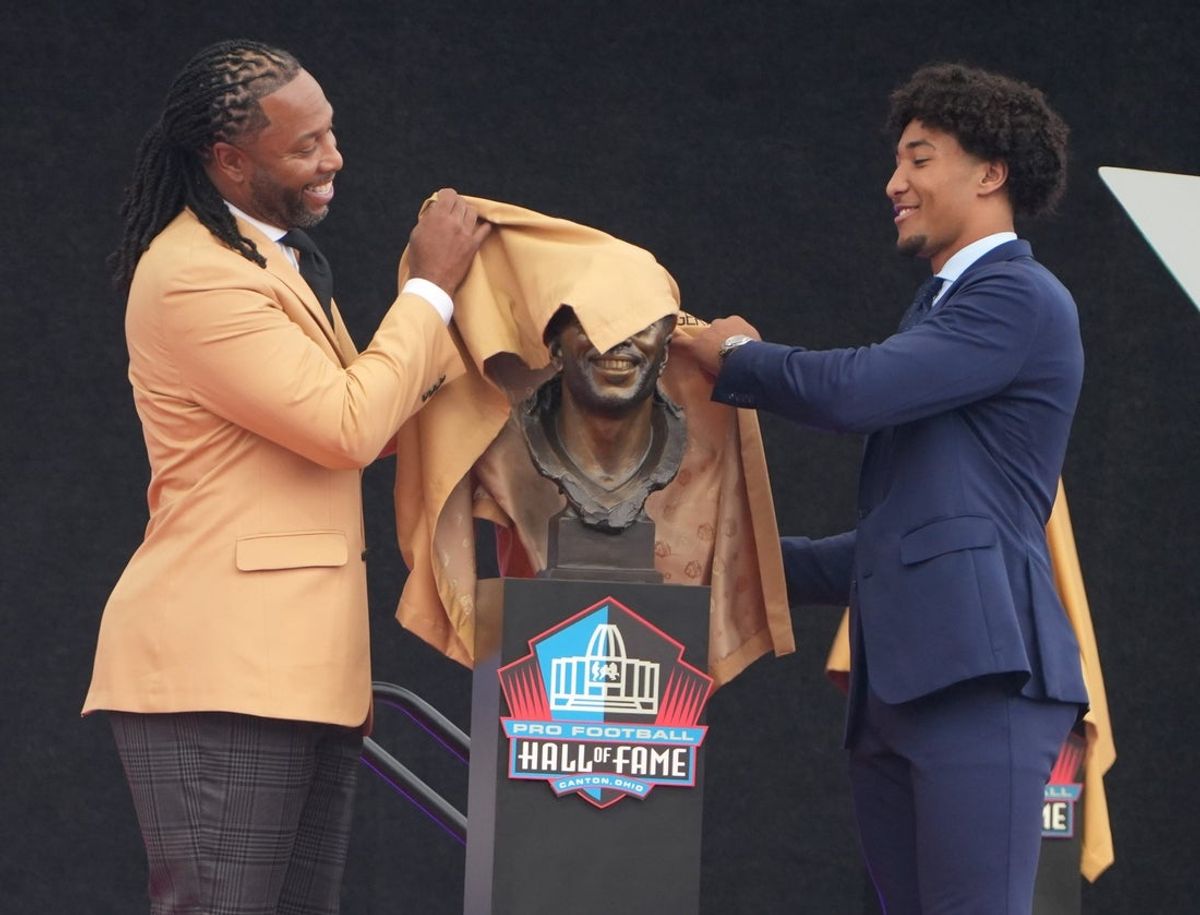
But this weekend of course, that’s exactly where Little Fitzy is headed. He will be enshrined into the Pro Football Hall of Fame in Canton, Ohio, on Saturday as a first-ballot Hall of Famer.

Fitzgerald will be remembered as one of the best and most productive wide receivers in league history after an incredible 17-season career with the Arizona Cardinals.

I have a ton of memories of being around Fitzgerald, but there’s one that stands out among them all.

One day after training camp, a nameless Vikings’ wide receiver camp body was getting extra work on a JUGS machine, catching balls. He was being tutored by Fitzgerald, who was showing this player how to properly approach the incoming ball. This was a child instructing a grown man an NFL team deemed good enough to attend training camp.

Larry Fitzgerald Jr. was special even back then.

In addition to his incredible natural football ability, Larry Fitzgerald Jr. stood out for his politeness and good nature. You could tell he was a good kid from the first time you met him.

There was no I’m-going-to-be-a-star attitude. He was genuine and he worked his tail off with the rest of the ball boys. There was no entitlement. It was as if he was using his time around an NFL camp as an internship for his future. He passed with flying colors.

I’ve always cherished following his career from his days at Pittsburgh in college to his days of dominating the NFL and I’ve enjoyed running into him over the years now and again.

Enjoy Canton, Little Fitzy, you’ve earned it.

#Larry #Fitzgeralds #Hall #Fame #induction #years #making">Larry Fitzgerald’s Hall of Fame induction is 25 years in the making  When I arrived to cover the Minnesota Vikings for the St. Paul Pioneer Press in 2000, it was clear I was dealing with a star-studded roster.The team boasted future Pro Football Hall of Famers; wide receivers Cris Carter and Randy Moss and defensive tackle John Randle. Plus, there were a ton of other stars including quarterback Daunte Culpepper, center Matt Birk and running back Robert Smith. The Vikings were loaded with star power.The talent around the team wasn’t relegated simply to the roster, however.That summer I first laid my eyes on a 16-year-old high school junior named Larry Fitzgerald Jr. The son of a local media member and close friend of Vikings’ head coach Dennis Green, Little Fitzy was a ball boy during training camp and on game days. It turns out, Larry Fitzgerald Jr. is very likely the most famous former NFL ball boy in history.On reporting date, fellow reporter Kevin Seifert pointed out Fitzgerald to me and said “that’s a bad man.” Seifert didn’t say that about any of the actual Vikings that day.Fitzgerald was already known as the best Minnesota high school prospect in years and he was considered one of the best high school players in the country. Seifert told me the buzz was that the kid was, no doubt, headed to the NFL in a half decade or so. Seifert was on the money. I’m not sure the Hall of Fame was mentioned or not.But this weekend of course, that’s exactly where Little Fitzy is headed. He will be enshrined into the Pro Football Hall of Fame in Canton, Ohio, on Saturday as a first-ballot Hall of Famer.Fitzgerald will be remembered as one of the best and most productive wide receivers in league history after an incredible 17-season career with the Arizona Cardinals.I have a ton of memories of being around Fitzgerald, but there’s one that stands out among them all.One day after training camp, a nameless Vikings’ wide receiver camp body was getting extra work on a JUGS machine, catching balls. He was being tutored by Fitzgerald, who was showing this player how to properly approach the incoming ball. This was a child instructing a grown man an NFL team deemed good enough to attend training camp.Larry Fitzgerald Jr. was special even back then.In addition to his incredible natural football ability, Larry Fitzgerald Jr. stood out for his politeness and good nature. You could tell he was a good kid from the first time you met him.There was no I’m-going-to-be-a-star attitude. He was genuine and he worked his tail off with the rest of the ball boys. There was no entitlement. It was as if he was using his time around an NFL camp as an internship for his future. He passed with flying colors.I’ve always cherished following his career from his days at Pittsburgh in college to his days of dominating the NFL and I’ve enjoyed running into him over the years now and again.Enjoy Canton, Little Fitzy, you’ve earned it.  #Larry #Fitzgeralds #Hall #Fame #induction #years #making

Follow Sportstar for extensive coverage of the tenth edition of the TNPL, from live scores and match reports to exclusive analysis and features.

TOSS

Tiruppur Tamizhans won the toss and chose to bowl first.

PLAYING XIs

Nellai Royal Kings: Athish SR(w), D Santhosh Kumar, Ajitesh Guruswamy, U Mukilesh, Rithik Easwaran, Sonu Yadav(c), Muhammed Adnan Khan, Ramalingam Rohit, Emmanuel Cherian, NS Harish, Rocky Bhasker

Tiruppur Tamizhans: Tushar Raheja(w), Amit Sathvik, Pradosh Ranjan Paul, Mohamed Ali, Uthirasamy Sasidev, Ravisrinivasan Sai Kishore(c), M Mathivannan, S Mohan Prasath, R Silambarasan, Esakkimuthu A, T Natarajan

Published on Aug 09, 2026

#TNPL #Live #Allround #batting #display #propels #Nellai #Royal #Kings">TNPL 2026 Live: All-round batting display propels Nellai Royal Kings to 206/8  Follow Sportstar for extensive coverage of the tenth edition of the TNPL, from live scores and match reports to exclusive analysis and features.TOSSTiruppur Tamizhans won the toss and chose to bowl first.PLAYING XIsNellai Royal Kings: Athish SR(w), D Santhosh Kumar, Ajitesh Guruswamy, U Mukilesh, Rithik Easwaran, Sonu Yadav(c), Muhammed Adnan Khan, Ramalingam Rohit, Emmanuel Cherian, NS Harish, Rocky BhaskerTiruppur Tamizhans: Tushar Raheja(w), Amit Sathvik, Pradosh Ranjan Paul, Mohamed Ali, Uthirasamy Sasidev, Ravisrinivasan Sai Kishore(c), M Mathivannan, S Mohan Prasath, R Silambarasan, Esakkimuthu A, T NatarajanPublished on Aug 09, 2026  #TNPL #Live #Allround #batting #display #propels #Nellai #Royal #Kings

Post Comment