×
Is the AI Conveyor Belt of Capital About to Stop?

Is the AI Conveyor Belt of Capital About to Stop?

The American economy is little more than a big bet on AI. Morgan Stanley investor Ruchir Sharma recently noted that money poured into AI investments now accounts for about 40% of the United States’ GDP growth in 2025, and AI companies are responsible for 80% of growth in American stocks. So how bad is it that the most recent major deal among AI giants, agreements that have driven up stock prices dramatically, look like a snake eating its own tail?

In recent months, Nvidia announced that it would invest $100 billion into OpenAI, OpenAI announced that it would pay $300 billion to Oracle for computing power, and Oracle announced it would buy $40 billion worth of chips from Nvidia. It doesn’t take a flow chart to get the feeling that these firms are just moving money around between each other. But surely that’s not happening…right?

It’s a little harder to get assurances of that than you might think. 

Artur Widak/Anadolu via Getty Images

Is it all round-tripping?

Many of these agreements are, on their face, mutually beneficial. If everything is on the level, while these deals might be circular, they should be moving everything forward. Rishi Jaluria, an analyst at RBC Capital Markets, told Gizmodo that deals like these could result in a “less capacity-constrained world,” which would allow for faster development of models that could produce higher returns on investment.

“The better models we have, the more we can realize a lot of these AI use cases that are on hold just because the technology isn’t powerful enough yet to handle it,” he said. “If that happens, and that can generate real [return on investment] for customers … that results in real cost savings, potentially new revenue generation opportunities, and that creates net benefits from a GDP perspective.”

So as long as we keep having AI breakthroughs and these companies figure out how to monetize their products, everything should be fine. On the off chance that doesn’t happen, though? 

“If that doesn’t happen, if there is no real enterprise AI adoption, then it’s all round-tripping,” Jaluria said.

Round-tripping, generally speaking, refers to the unethical and typically illegal practice of making trades or transactions to artificially prop up a particular asset or company, making it look like it’s more valuable and in demand than it actually is. In this case, it would be tech companies that are trying to make it appear like they are more valuable than they actually are by announcing big deals with each other that move the stock price. 

So what might suggest whether this money is actually accomplishing anything other than serving as hot air in a rapidly inflating bubble? Jaluria said he’s watching for faster developments of models, advancements in performance, and overall AI adoption. “If this leads to a step function change in the way enterprise is adopting and utilizing AI, that creates a benefit,” he said.

Whether that is happening currently or not is kind of in the eye of the beholder. OpenAI has certainly shown advancements in its technology. The release of its Sora 2 video generation model has unleashed a fresh hell upon the world, used to generate significant amounts of copyright violations and misinformation. But the latest version of the company’s flagship model, GPT-5, underwhelmed and failed to live up to expectations when it was released in August. 

Adoption rates of the technology are also a bit of a Rorschach test. The company boasts that 10% of the world is using ChatGPT, and nearly 80% of the business world says that it’s looking into how to utilize the technology. But the early adopters aren’t finding much utility. According to a survey from the Massachusetts Institute of Technology, 95% of companies that have tried to integrate generative AI tools into their operations have produced zero return on investment.

Where these investments are generating a return is in the stock market. Which, frankly, does not quell concerns about these firms simply boosting one another’s bottom line.

Take Oracle, for example. Last month, the cloud provider had a rough quarter by all traditional indicators. It missed on both its revenue and earnings projections, and its net income was flat year-over-year. And yet, the stock price soared. The reason: the company’s plump list of remaining performance obligations—financial agreements that will provide revenue that have not yet been fulfilled. There, the company showed a massive amount of growth, a 359% increase from the year prior, with a projected $455 billion coming in. 

That money is not real yet. Nor is the growth the company has promised, claiming that its Oracle Cloud Infrastructure revenue would grow from under $20 billion to nearly $150 billion before the start of the 2030s. But all of it was sufficient for investors to drive up Oracle’s share price enough to slingshot CEO Larry Ellison into the top spot on the world’s richest person list, briefly leapfrogging Elon Musk. 

A video of Sam Altman generated by OpenAI's Sora 2
Still from a promotion video of Sam Altman generated by OpenAI’s Sora 2. © OpenAI

OpenAI is either the nexus point or the void at the center

Most of this promised revenue will come from OpenAI, which made a commitment to purchase $300 billion worth of computing power from the company over five years. The clock on that contract doesn’t start until 2027, but assuming it actually happens, it would be one of the largest cloud computing deals in history.

It’s also one of the most unlikely, just based on where the companies involved currently stand. In order to provide the compute that it has promised to OpenAI, Oracle will reportedly need to generate 4.5 gigawatts of power capacity, more than two Hoover Dams’ worth of power. On the other side of the deal, OpenAI will have to pay about $60 billion per year to fit the bill for the agreement. It currently generates about $10 billion in revenue, which, statistically speaking, is less than $60 billion.

You can see a similar circular shape to OpenAI’s recent deal with Nvidia rival AMD, too. The exact details of the agreement weren’t reported, but chipmaker AMD expects to generate tens of billions of dollars over the next half-decade as it sells its AI chips to OpenAI. As part of the agreement, OpenAI gets a swath of shares in AMD, with options to buy up to 10% of the company. Lucky for OpenAI, there’s really no better time to get your hands on some AMD shares than right before it announces a big AI-related deal. The company’s stock price surged by about 35% following the announcement. 

With those two most recent deals on the books, OpenAI has agreed to more than $1 trillion worth of computing deals so far this year. That’s a lot for any company to spend, but it’s especially a lot for a still-private company that reports just $10 billion in projected revenue through 2025. Even by its most recent funding rounds, the company as a whole is currently valued at about $500 billion.

Most of those deals have contingencies attached. For instance, Nvidia’s investment in OpenAI isn’t actually $100 billion, but an initial $10 billion for one gigawatt of data center capacity with the potential for $100 billion if 10 gigawatts are ultimately achieved. But the stock prices and valuations certainly seem to treat these deals as if they are set in stone. And OpenAI seems to be operating that way, too. The company claims that it’ll more than 10x its revenue in the next few years, and projects it’ll hit $129 billion annually by 2029.

Conveyor belts of capital

That type of potentially inflated revenue figure is the kind of thing that makes some people think of the Dot Com bubble of the early 2000s, where we saw companies like Commerce One receive a $21 billion valuation despite barely having any revenue. But Peter Atwater, Adjunct Professor of Economics at William and Mary and President of consulting firm Financial Insyghts, sees a different reflection in the AI bubble: the housing market collapse. 

“What we saw at the top of the mortgage market was all of these conveyor belts of capital, money flowing from one party to another party to another party. And what you started to see was that there were multiple points of relationship so that any participant in the system was then dependent on every other conveyor belt in the system working simultaneously to keep the system going,” he told Gizmodo. “In many ways, we’re seeing the same developing web of capital flows across the AI space.”

This creates some obvious problems. The circular deals that, in theory, are wheels moving the whole thing forward all have to keep turning. If any of them stop, the whole thing stops, because they are all so interconnected that no failure is truly isolated. 

Atwater said that the types of major, metric-contingent deals that have been dominating headlines in the AI space aren’t all that different from some of what was happening in the mortgage industry back in 2007, where some of the financial commitments required mortgages to meet certain conditions.

“In the frenzy of a bubble, everyone overcommits. The purpose of overcommitting is to stake a claim in what you believe will be an intensely scarce commodity in the future. So you have buyers overcommit and you have sellers agreeing to overprovide as a result,” he explained. “What we find over and over is that commitments are among the first obligations to be cut off once conditions change, once confidence begins to fall.”

Right now, there’s a stomach for those commitments. That isn’t guaranteed to be there in the future if all of these promised returns on investment don’t materialize. Atwater said that the market requires credit markets being willing to continue to extend massive sums of money to cover the agreements made, equity markets that value these transactions at “an extraordinary multiple,” and suppliers capable of delivering the promised products. There’s no guarantee that all of those factors will hold. 

The math is already pretty tricky. As tech commentator Ed Zitron has pointed out, major firms like Microsoft, Meta, Tesla, Amazon, and Google have invested about $560 billion in AI infrastructure over the last two years. They’ve brought in a combined $35 billion in AI-related revenue. OpenAI’s commitments are even bigger, with returns that are arguably even smaller. 

The company’s development and expansion of its services will rely in no small part on massive data center projects, which will require the same amount of energy to operate as New York City and San Diego combined—energy that currently isn’t even available. And, once again, there is no guarantee that the end product, once all of that energy is spent and data centers are built, will actually generate revenue.

“Ultimately, if you do not have a consumer for the product, there will be no AI space because these companies can’t continue to do this for nothing. Listening to a lot of the calls in the last couple of weeks, there’s a clear open question as to how these companies are going to make money at this,” Atwater said.

For the moment, everyone is seeing green, and hope springs eternal. As long as that is the case, no one will ask where the revenue is coming from. “Right now, the AI sector is operating in a forever mindset. They are acting as if they have a very long period of time under which they can figure this out and make money,” Atwater said. “As long as confidence is high, this entire ecosystem can offer fantasy. When confidence falls, they’re going to be expected to deliver real-term performance in a very short time frame.”

Unfortunately, should that happen, it won’t just be these companies that bear the brunt of the failure. “You have to look at this as a larger ecosystem. To talk about AI today, it means we have to talk about the credit market, we have to talk about the credit market. Wall Street and AI are a single beast,” Atwater said, warning that a very small number of firms currently have a major grasp on the whole of the American economy. 

Lots of investors are piling into the AI space, fearful of missing out on a market that seems like it can only go up. But few of them are looking at why those valuations and stock prices keep climbing, showing little curiosity as to what might happen if all of this money is just getting shifted around, artificially inflating the actual value of the companies they are betting on. 

“‘Why?’,” Atwater said, “is the last question asked in a bull market.”

Source link
#Conveyor #Belt #Capital #Stop

Soundboks Mix party speaker, actually a great way to make friends.


Soundboks Mix

The Soundboks Mix is a party speaker that’s loud and portable with decent sound.

  • Loud!
  • Still pretty portable despite its size
  • Sound is pretty good
  • Sound is good but not great
  • No way to get battery readings from the app
  • Underwhelming EQ options
  • Party speakers are pricey and so is the Soundboks Mix

This speaker goes to 11

Party speakers are first and foremost meant for parties, and the $800 Soundbox Mix is no different. Soundboks is known for its Bluetooth speakers and, in particular, for making ones that get ridiculously loud. In case you had any doubt about the loudness, the Soundboks Mix even has a volume dial on the side that goes to 11 instead of 10, Spinal Tap-style.

Soundoks Mix Review: This Loud-Ass Party Speaker Almost Got Me High AF
                Party speakers aren’t really my thing. It’s not that I don’t like to party—I do. Not in a “friends and family surprise you at your house for a serious talk” kind of way, but in a “mid-30s, I have sh*t to do in the morning” kind of way. Really, I just don’t like to annoy people more than I have to.

 New York City isn’t known for its serenity, but it takes a certain level of decorum to get along, and party speakers, with their inherent obnoxiousness, break a very tenuous code. They’re big (not great for small living spaces), loud (not great for proximate neighbors), and expensive (not great for paying rent on time). They’re, in many ways, antithetical to what most New Yorkers (and other urban-dwelling people) look for in personal audio. They’re also, as I learned in my experience using the 21-pound Soundboks Mix party speaker, actually a great way to make friends.                        Soundboks Mix           The Soundboks Mix is a party speaker that’s loud and portable with decent sound.                                                                                                                                                                                              Loud!                                                                                   Still pretty portable despite its size                                                                                   Sound is pretty good                                                                                                                                                                                                                                                    Sound is good but not great                                                                                   No way to get battery readings from the app                                                                                   Underwhelming EQ options                                                                                   Party speakers are pricey and so is the Soundboks Mix                                                                                                                                      This speaker goes to 11 Party speakers are first and foremost meant for parties, and the 0 Soundbox Mix is no different. Soundboks is known for its Bluetooth speakers and, in particular, for making ones that get ridiculously loud. In case you had any doubt about the loudness, the Soundboks Mix even has a volume dial on the side that goes to 11 instead of 10, Spinal Tap-style.

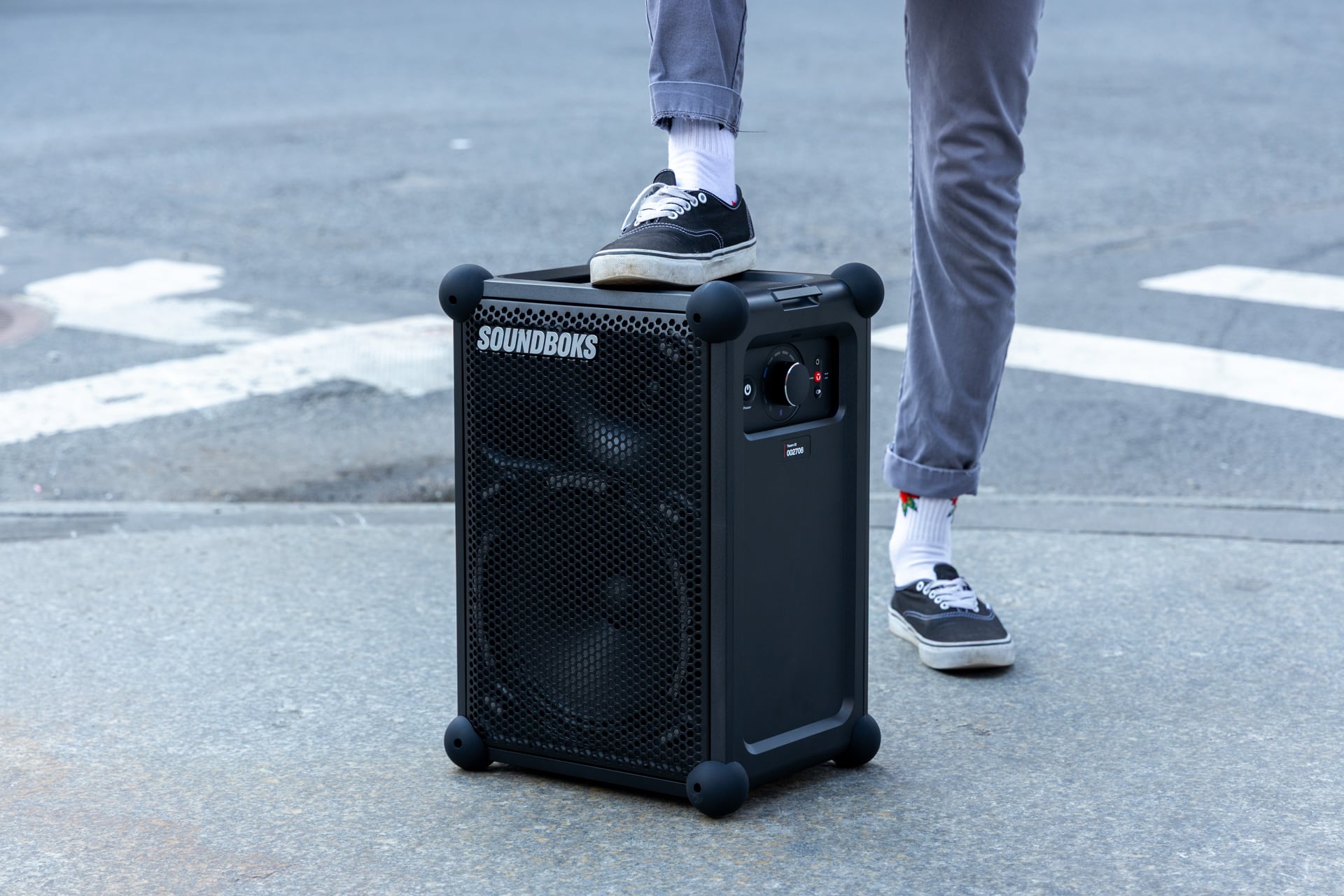
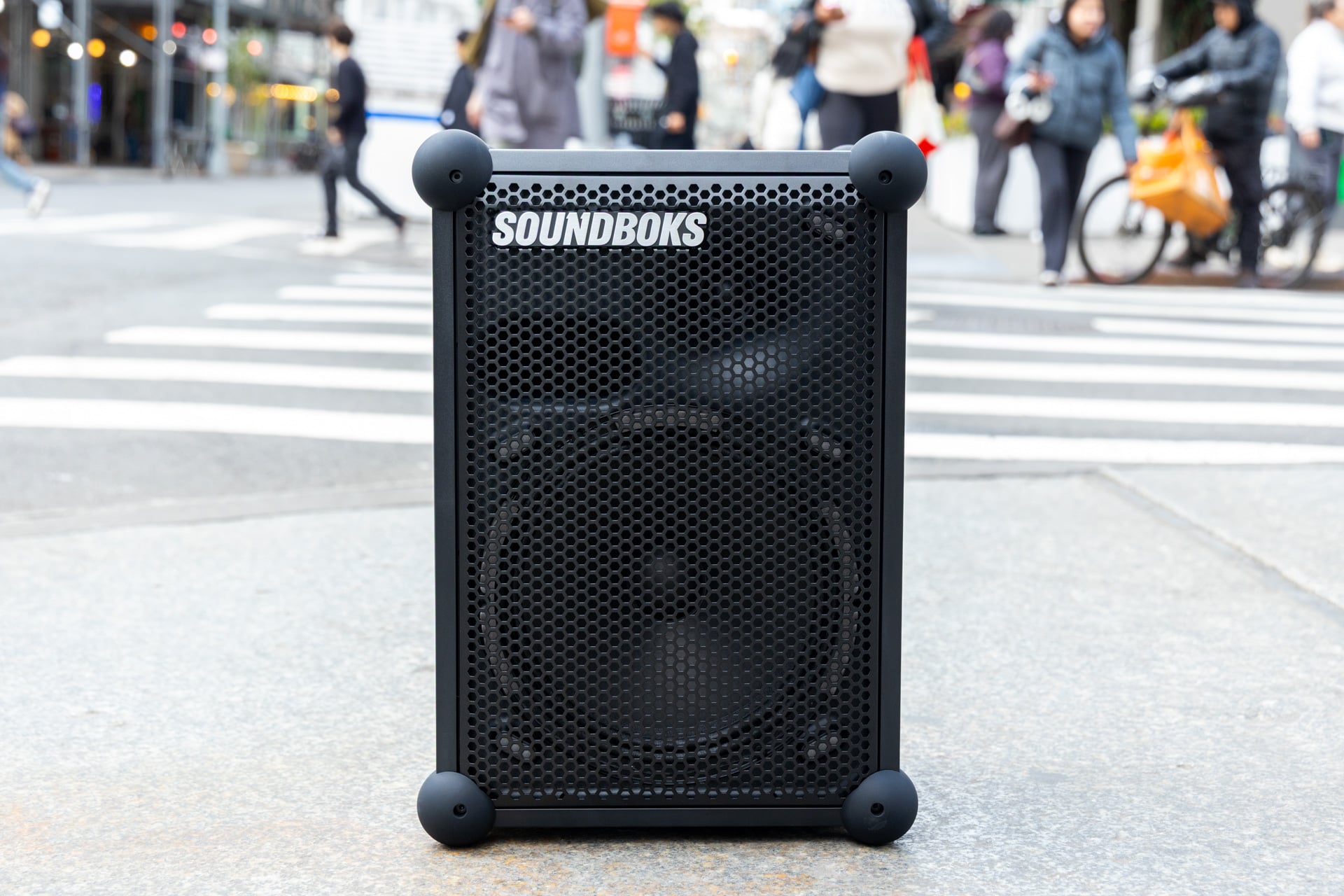
 © Raymond Wong / Gizmodo To test out that volume, I went to Washington Square Park in Manhattan and let loose. The Soundboks Mix is indeed loud, folks. It didn’t quake the Earth upon which we walk or anything like that, but it’s got juice. I tested the party speaker at a range of volumes playing music across different genres—mostly rock, but some electronic music and soul—and the park got an earful. I can’t say for certain, but I’m pretty sure I chased off two guys hitting a volleyball around. You heard it here first: if you hate people playing volleyball, the Soundboks Mix is a repellent.

 It’s hard to quantify volume into words, but if I were to try, I would say that the Soundboks Mix is loud enough for a graduation party or a medium-sized quinceañera. It’s not going to bring down the house like a full PA, but if you’re outside within a frisbee distance of the speaker, you’re going to hear it. I also tested the Soundboks Mix briefly at full volume in my office playing Creed’s “One Last Breath,” and it was loud enough to make me feel like we could get kicked out, both for the Creed and the volume. © Raymond Wong / Gizmodo Maybe I’m masochistic, but I was actually expecting it to be a little louder—maybe I’m just old and have bad hearing, though. I guess it’s good that it isn’t. Permanent hearing loss isn’t high on my list of occupational hazards.

 One thing you’ll be happy to know is that the Soundboks Mix isn’t just loud; it also manages to stave off distortion even at high volumes. Even at 11 out of 11, the Soundboks Mix sounded pretty clear, both from close up and from about 30 feet away. This isn’t the most impressive speaker I’ve heard in the sound department—you’re not getting Sonos outside—but for a party, where people need volume and not necessarily fidelity, it does the trick. I played a few Steely Dan songs at 50% volume and was pleased with the soundstage. There’s a tasteful amount of low end that doesn’t drown out mids and highs. Vocals were clear, and I never felt like I was sorely lacking in any frequency range. Likewise, when I played songs like “Digital Love” by Daft Punk, the bass was present and tangible without overpowering, and auto-tuned vocals didn’t sound tinny or cheap. Using a party speaker outside isn’t the most high-fidelity way to listen to anything, but for what the experience is, I think the Soundboks Mix is pretty solid.

 © Raymond Wong / Gizmodo If you absolutely need more volume and you have the budget, you can also couple the Soundboks Mix with another Soundboks speaker and use them in pairs in stereo mode. I was only sent one speaker for review, so I didn’t get a chance to test that feature out, but I assume it kicks everything up a notch, as celebrity chef Emeril Lagasse would say. Loudness and audio quality aren’t the only things you have to consider when you’re looking at party speaker. You also have to think about rolling joints.

 Portability is friendability If there’s one thing that party speakers aren’t known for, it’s being easy to carry around. To get loud, they have to be big—that’s literally just how physics works. But how big is too big? It’s difficult to strike a balance between giving you enough oomph to really project into a party and enough portability so that you don’t feel like you need to rent an ATV just to drag the speaker down the beach. Having carried the speaker from my office to Washington Square Park, which is about 0.3 miles according to Google Maps, I can say for certain that the experience wasn’t so bad. © Raymond Wong / Gizmodo There’s a built-in handle, which helps, but to be honest, it does weigh 21.4 pounds, so putting all the weight on one hand is a bit much. If you’re moving the Soundboks Mix over longer distances, I would recommend either holding it to your chest like a baby or buying one of Soundboks’ first-party straps that can hook to the speaker, allowing you to sling it over your back. Soundboks didn’t send over a strap for me to try, so I went with the baby method, which was fine, if not ideal. Its portability also helped make me a friend, who asked me to play some music while he rolled joints. I don’t smoke weed because it makes me feel like the world is ending, but my new friend did offer to share, which was a nice gesture. His first sound request was Beyoncé’s “Me, Myself, and I,” which honestly sounded pretty good at full volume.

 The whole thing was kind of heart-warming, really. It’s how I imagine people felt about boomboxes back in the day, when portable ways to play weren’t easy to come by. And I assume the experience is a lot better than it used to be from a convenience standpoint—especially because of the battery. © Raymond Wong / Gizmodo One cool thing about the Soundboks Mix is that it has a removable battery that you can just pull out and top up with USB-C. That also means you can hot swap it if you really need a new battery ASAP, though you’ll have to buy an extra for 0. There’s also an app for convenience, but it’s pretty barebones. © Raymond Wong / Gizmodo I like that you can adjust volume from the Soundboks app as well as EQ—there are presets for indoor and outdoor as well as custom EQ if you’re feeling picky. I’ll be honest, I didn’t hear a huge difference between the outdoor and indoor EQs, but according to the bars, the outdoor EQ brings down the mids just a tad, letting bass and treble take the lead.

 There is, however, a way to get quick battery readings, which is just odd. Soundboks claims that the Mix gets 8 hours of battery at full volume, though it was hard to get a read since the only way to monitor battery life was to use one of the five circular light indicators on the battery itself. You have to press the button and then just go off those increments and vibes. It’s not ideal. I played the Soundboks Mix for an hour at 60% volume, and none of the five circles dropped out, so take that for what you will. © Raymond Wong / Gizmodo Outside of volume adjustment and EQ, you can also turn the Soundboks Mix off through the app and initiate the “TeamUp” feature to pair the Mix with other Soundboks speakers. It’s nice to be able to adjust the volume remotely, but to be honest, the built-in volume dial on the Soundboks mix feels so nice and premium (it’s metal and there’s plenty of resistance) that I didn’t want to adjust the volume any other way. Button-wise, there’s also a power button and a button for the TeamUp feature that allows you to pair speakers together. There’s also a “Bond” button that can cycle through modes when you’re using TeamUp and Bluetooth connections. Lastly, there’s a 3.5mm aux in if that’s your thing.

 The Soundboks Mix keeps things pretty simple design-wise, but one nice touch is the inclusion of rubber balls on the bottom of each corner, which makes setting it down feel safe and easy. You also won’t have to worry about the Soundboks Mix getting fried in the rain, either. The speaker is IP65-rated, meaning it’s resistant to dust and water, and if you get caught in the rain, you should be fine. Should you Mix it up? © Raymond Wong / Gizmodo Listen, 0 is a lot of money to spend on a speaker, even if it can get as loud as a chainsaw. This isn’t something that you’re going to want to use all the time, and it certainly isn’t the most versatile speaker in the world, but no party speaker really is. If you’re looking for something that gets loud, sounds good, and can be built out to get even louder and more obnoxious, the Soundboks Mix is not a bad pick. It helps that it’s still somewhat portable despite its loudness, too, so if you plan on hauling this to the beach or something, it’s not an insurmountable task.

 Party speakers aren’t for everyone, but if they’re for you, then the Mix might be a great way to make friends and maybe get a little high on someone else’s supply.        #Soundoks #Mix #Review #LoudAss #Party #Speaker #Highaudio,Reviews,Wireless Speakers
© Raymond Wong / Gizmodo

To test out that volume, I went to Washington Square Park in Manhattan and let loose. The Soundboks Mix is indeed loud, folks. It didn’t quake the Earth upon which we walk or anything like that, but it’s got juice. I tested the party speaker at a range of volumes playing music across different genres—mostly rock, but some electronic music and soul—and the park got an earful. I can’t say for certain, but I’m pretty sure I chased off two guys hitting a volleyball around. You heard it here first: if you hate people playing volleyball, the Soundboks Mix is a repellent.

It’s hard to quantify volume into words, but if I were to try, I would say that the Soundboks Mix is loud enough for a graduation party or a medium-sized quinceañera. It’s not going to bring down the house like a full PA, but if you’re outside within a frisbee distance of the speaker, you’re going to hear it. I also tested the Soundboks Mix briefly at full volume in my office playing Creed’s “One Last Breath,” and it was loud enough to make me feel like we could get kicked out, both for the Creed and the volume.

Soundboks Mix Party Speaker Review
© Raymond Wong / Gizmodo

Maybe I’m masochistic, but I was actually expecting it to be a little louder—maybe I’m just old and have bad hearing, though. I guess it’s good that it isn’t. Permanent hearing loss isn’t high on my list of occupational hazards.

One thing you’ll be happy to know is that the Soundboks Mix isn’t just loud; it also manages to stave off distortion even at high volumes. Even at 11 out of 11, the Soundboks Mix sounded pretty clear, both from close up and from about 30 feet away. This isn’t the most impressive speaker I’ve heard in the sound department—you’re not getting Sonos outside—but for a party, where people need volume and not necessarily fidelity, it does the trick.

I played a few Steely Dan songs at 50% volume and was pleased with the soundstage. There’s a tasteful amount of low end that doesn’t drown out mids and highs. Vocals were clear, and I never felt like I was sorely lacking in any frequency range. Likewise, when I played songs like “Digital Love” by Daft Punk, the bass was present and tangible without overpowering, and auto-tuned vocals didn’t sound tinny or cheap. Using a party speaker outside isn’t the most high-fidelity way to listen to anything, but for what the experience is, I think the Soundboks Mix is pretty solid.

Soundboks Mix Party Speaker Review
© Raymond Wong / Gizmodo

If you absolutely need more volume and you have the budget, you can also couple the Soundboks Mix with another Soundboks speaker and use them in pairs in stereo mode. I was only sent one speaker for review, so I didn’t get a chance to test that feature out, but I assume it kicks everything up a notch, as celebrity chef Emeril Lagasse would say.

Loudness and audio quality aren’t the only things you have to consider when you’re looking at party speaker. You also have to think about rolling joints.

Portability is friendability

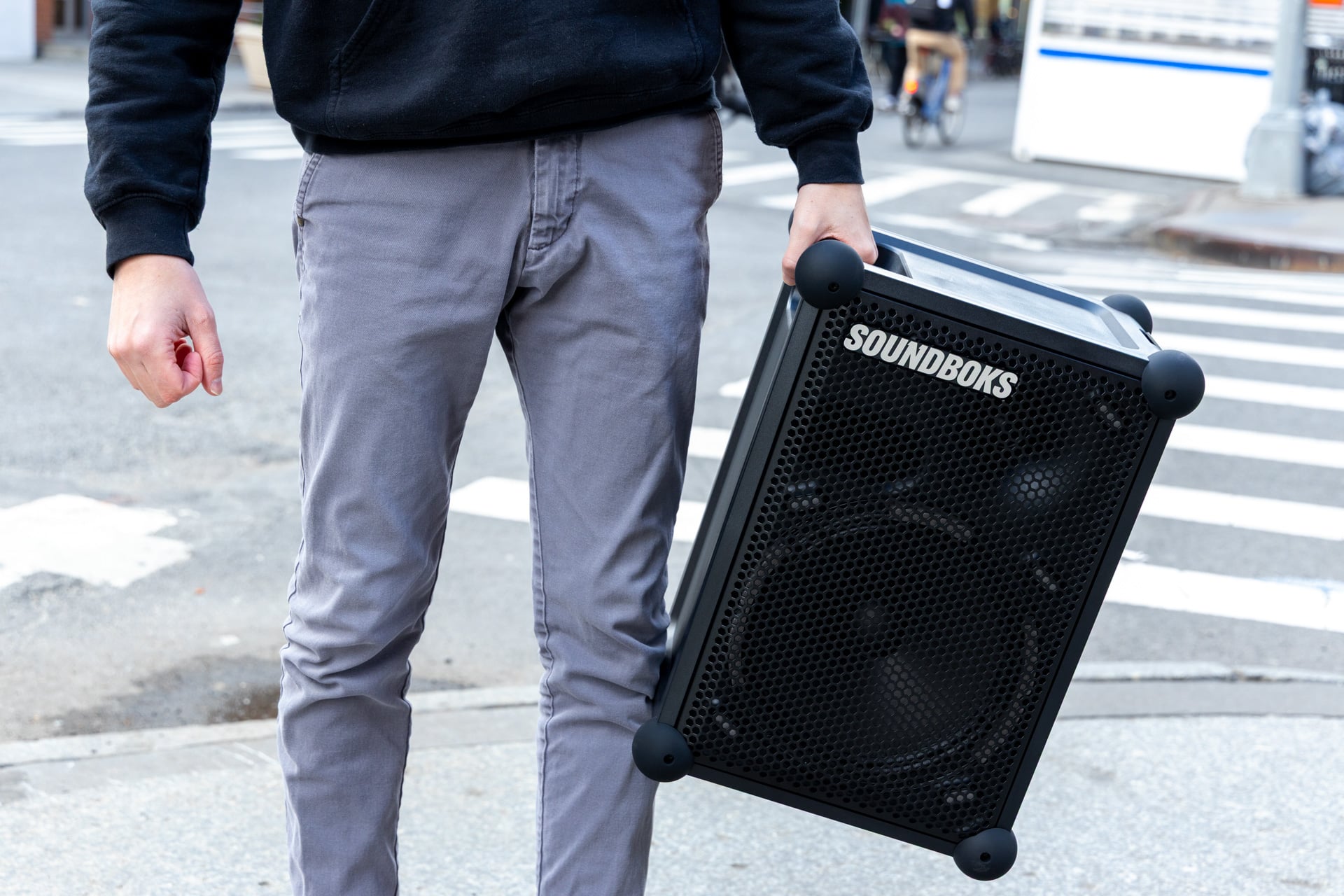
If there’s one thing that party speakers aren’t known for, it’s being easy to carry around. To get loud, they have to be big—that’s literally just how physics works. But how big is too big? It’s difficult to strike a balance between giving you enough oomph to really project into a party and enough portability so that you don’t feel like you need to rent an ATV just to drag the speaker down the beach. Having carried the speaker from my office to Washington Square Park, which is about 0.3 miles according to Google Maps, I can say for certain that the experience wasn’t so bad.

Soundboks Party SpSoundboks Mix Party Speaker Revieweaker Review 04
© Raymond Wong / Gizmodo

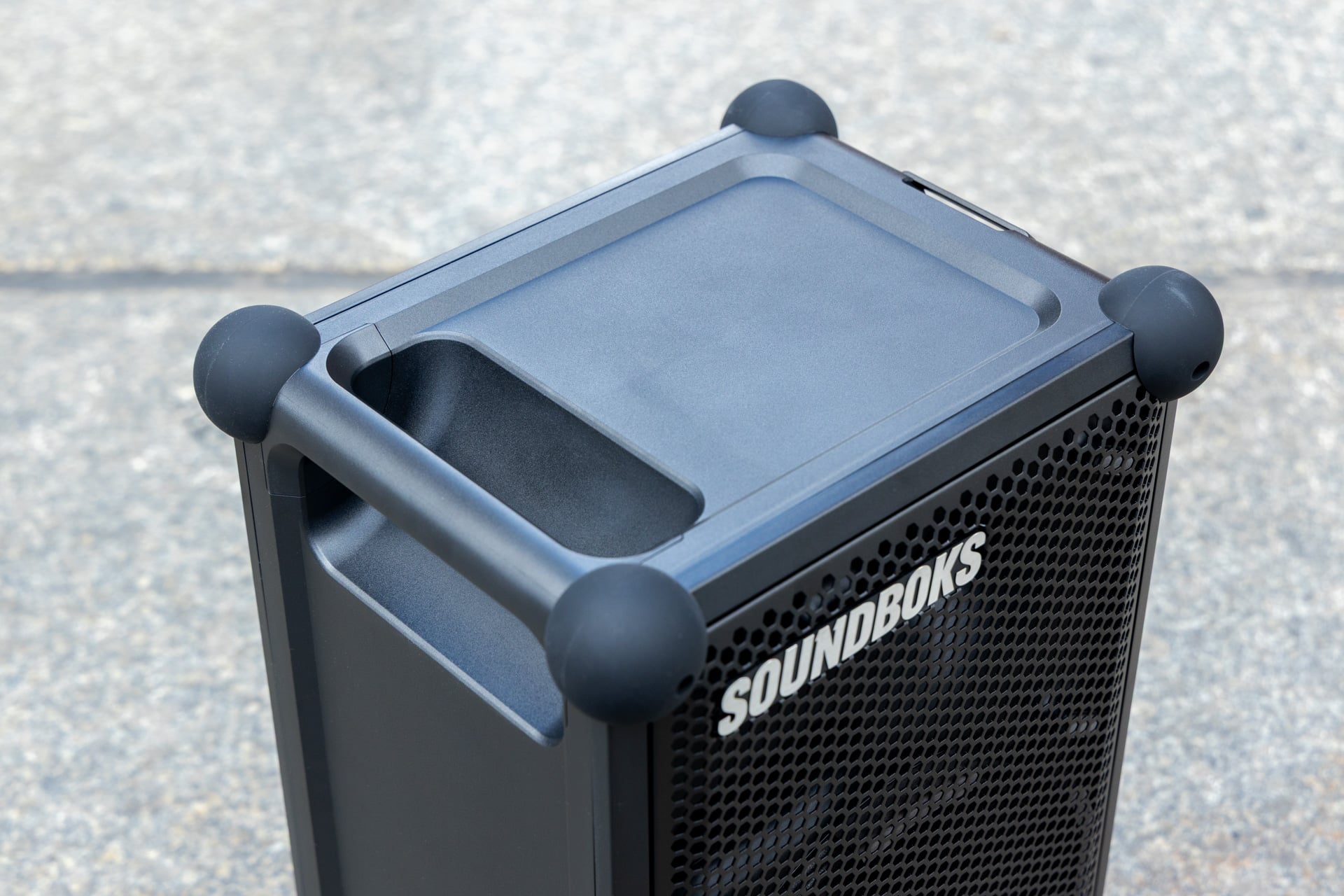
There’s a built-in handle, which helps, but to be honest, it does weigh 21.4 pounds, so putting all the weight on one hand is a bit much. If you’re moving the Soundboks Mix over longer distances, I would recommend either holding it to your chest like a baby or buying one of Soundboks’ first-party straps that can hook to the speaker, allowing you to sling it over your back. Soundboks didn’t send over a strap for me to try, so I went with the baby method, which was fine, if not ideal.

Its portability also helped make me a friend, who asked me to play some music while he rolled joints. I don’t smoke weed because it makes me feel like the world is ending, but my new friend did offer to share, which was a nice gesture. His first sound request was Beyoncé’s “Me, Myself, and I,” which honestly sounded pretty good at full volume.

The whole thing was kind of heart-warming, really. It’s how I imagine people felt about boomboxes back in the day, when portable ways to play weren’t easy to come by. And I assume the experience is a lot better than it used to be from a convenience standpoint—especially because of the battery.

Soundboks Mix Party Speaker Review
© Raymond Wong / Gizmodo

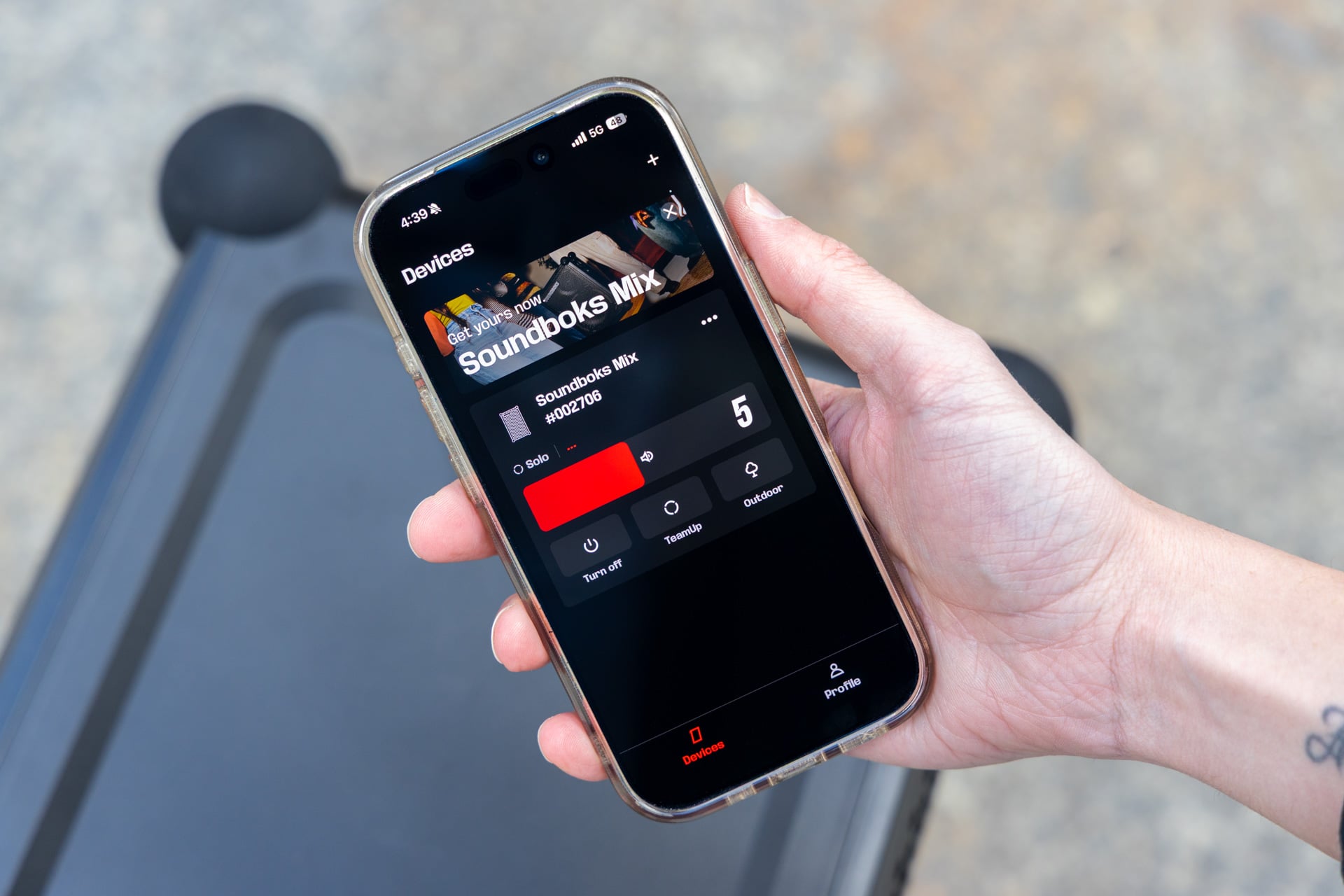
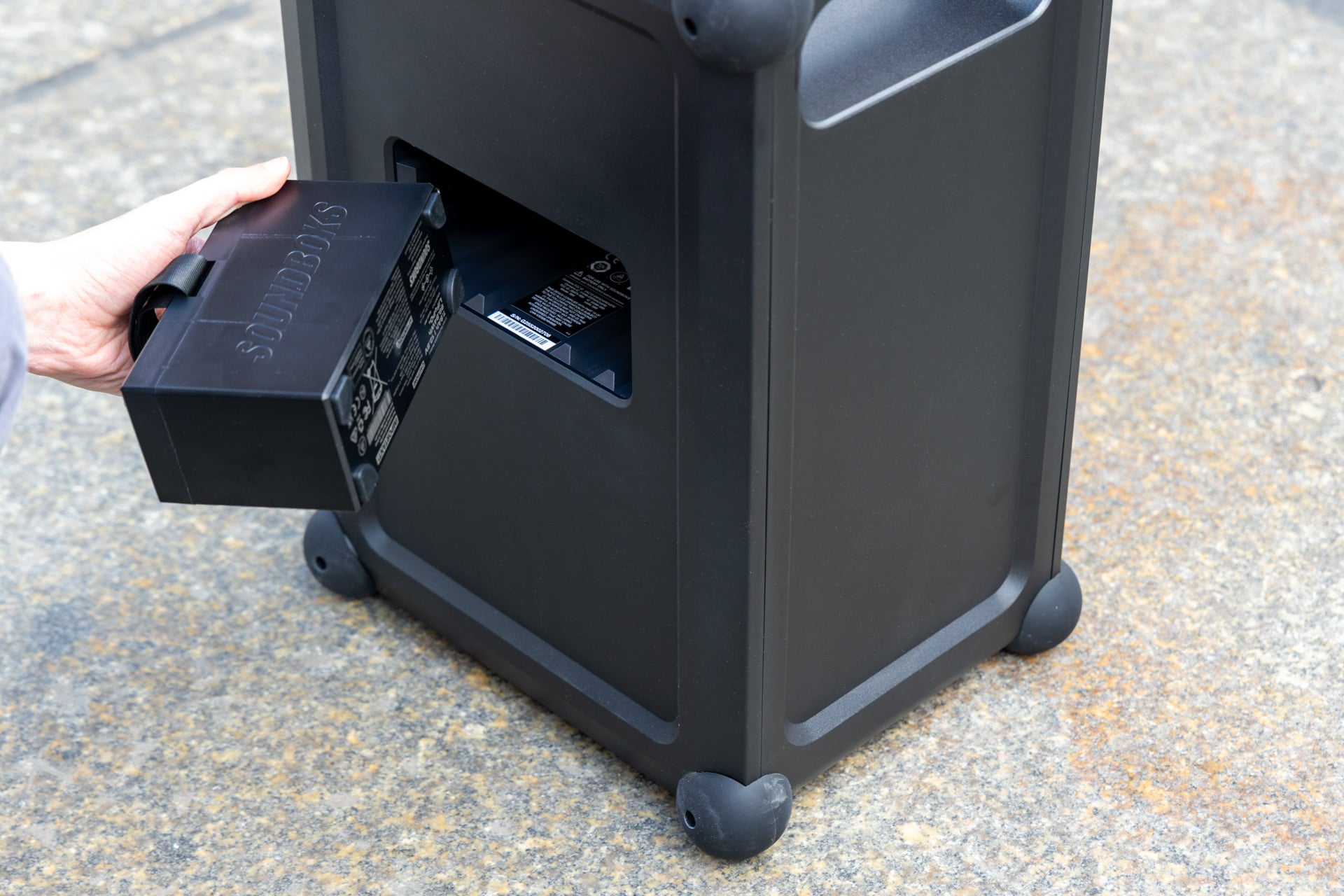
One cool thing about the Soundboks Mix is that it has a removable battery that you can just pull out and top up with USB-C. That also means you can hot swap it if you really need a new battery ASAP, though you’ll have to buy an extra for $150. There’s also an app for convenience, but it’s pretty barebones.

Soundboks Mix Party Speaker Review
© Raymond Wong / Gizmodo

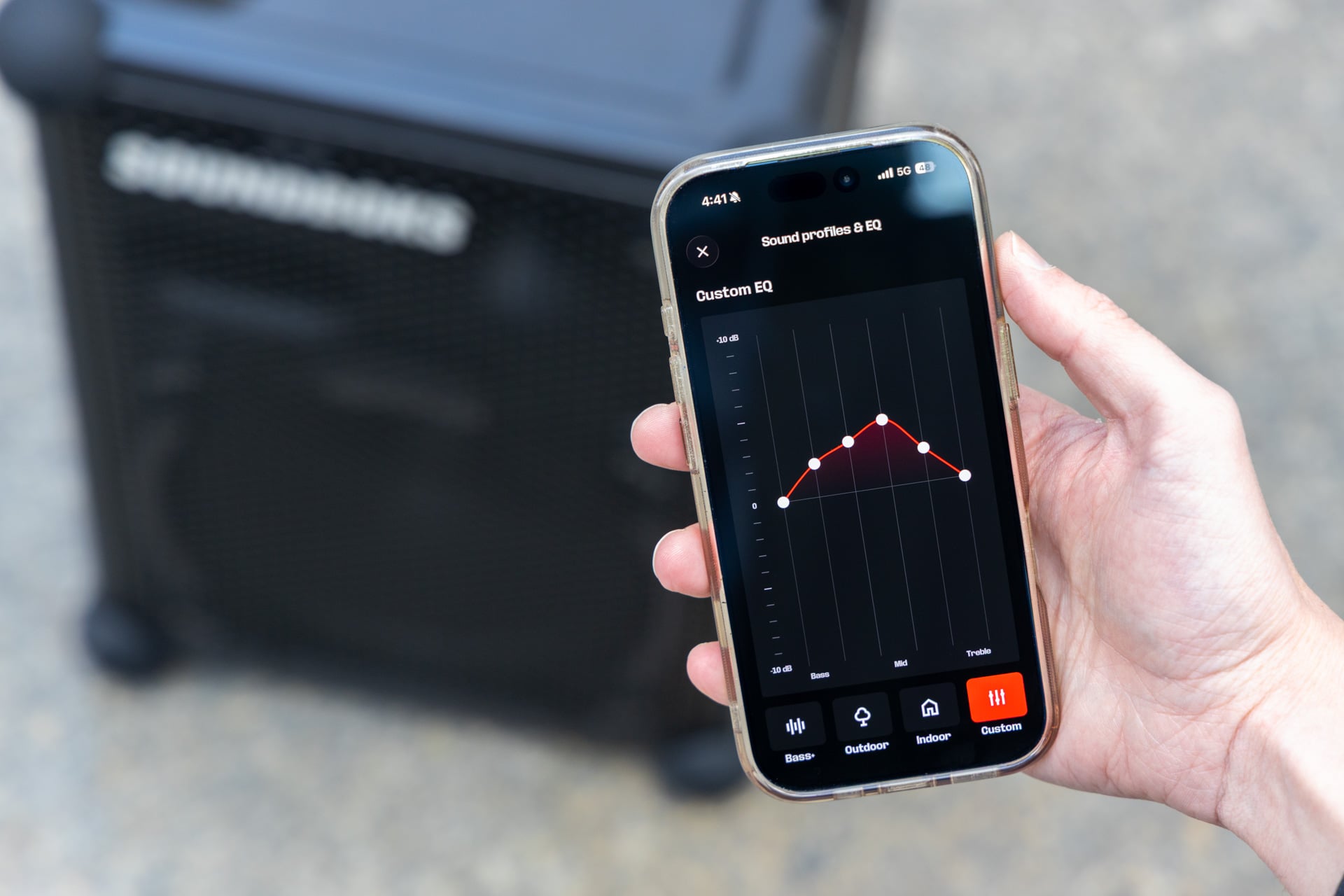
I like that you can adjust volume from the Soundboks app as well as EQ—there are presets for indoor and outdoor as well as custom EQ if you’re feeling picky. I’ll be honest, I didn’t hear a huge difference between the outdoor and indoor EQs, but according to the bars, the outdoor EQ brings down the mids just a tad, letting bass and treble take the lead.

There is, however, a way to get quick battery readings, which is just odd. Soundboks claims that the Mix gets 8 hours of battery at full volume, though it was hard to get a read since the only way to monitor battery life was to use one of the five circular light indicators on the battery itself. You have to press the button and then just go off those increments and vibes. It’s not ideal. I played the Soundboks Mix for an hour at 60% volume, and none of the five circles dropped out, so take that for what you will.

Soundboks Mix Party Speaker Review
© Raymond Wong / Gizmodo

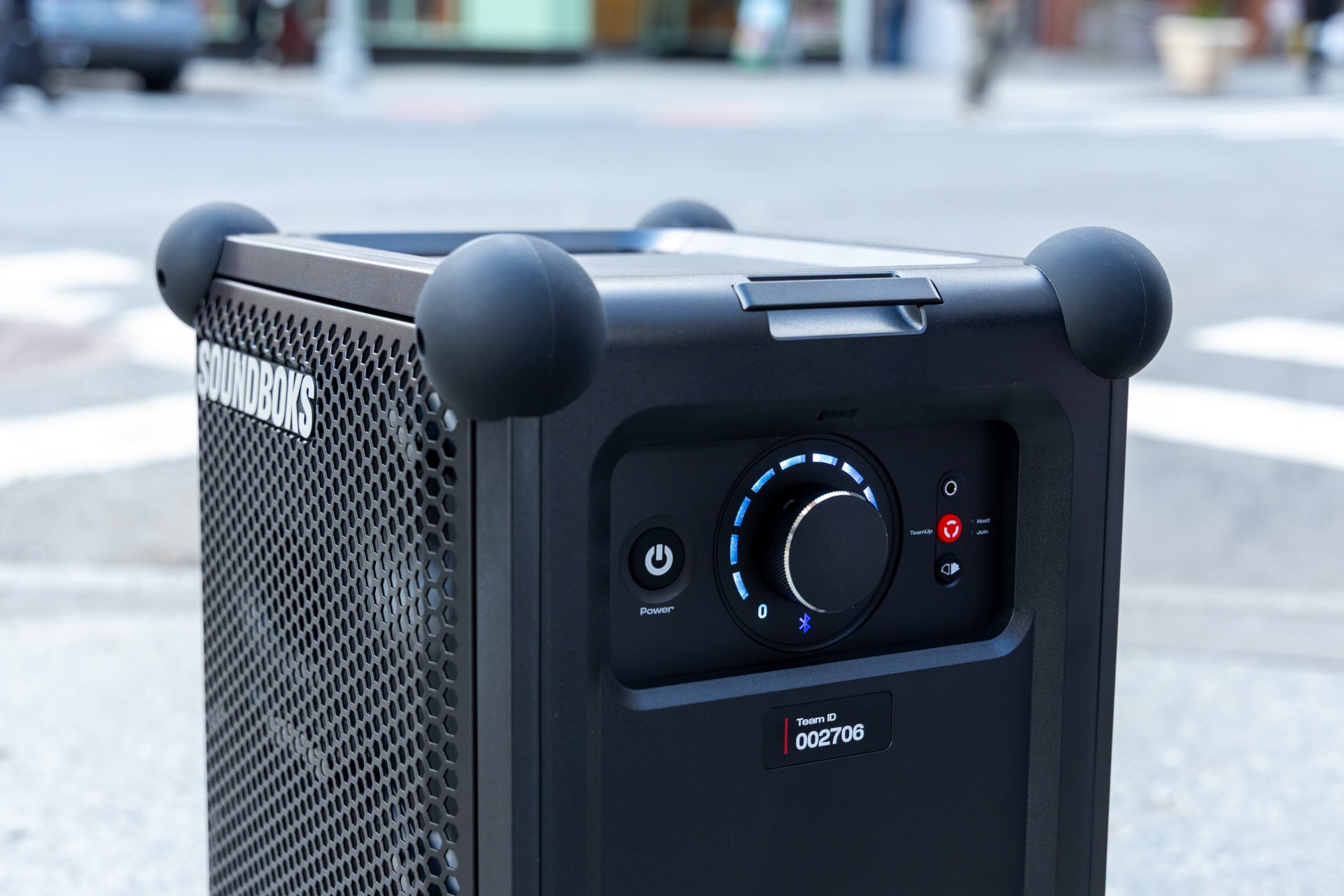
Outside of volume adjustment and EQ, you can also turn the Soundboks Mix off through the app and initiate the “TeamUp” feature to pair the Mix with other Soundboks speakers. It’s nice to be able to adjust the volume remotely, but to be honest, the built-in volume dial on the Soundboks mix feels so nice and premium (it’s metal and there’s plenty of resistance) that I didn’t want to adjust the volume any other way. Button-wise, there’s also a power button and a button for the TeamUp feature that allows you to pair speakers together. There’s also a “Bond” button that can cycle through modes when you’re using TeamUp and Bluetooth connections. Lastly, there’s a 3.5mm aux in if that’s your thing.

The Soundboks Mix keeps things pretty simple design-wise, but one nice touch is the inclusion of rubber balls on the bottom of each corner, which makes setting it down feel safe and easy. You also won’t have to worry about the Soundboks Mix getting fried in the rain, either. The speaker is IP65-rated, meaning it’s resistant to dust and water, and if you get caught in the rain, you should be fine.

Should you Mix it up?

Soundboks Mix Party Speaker Review
© Raymond Wong / Gizmodo

Listen, $800 is a lot of money to spend on a speaker, even if it can get as loud as a chainsaw. This isn’t something that you’re going to want to use all the time, and it certainly isn’t the most versatile speaker in the world, but no party speaker really is. If you’re looking for something that gets loud, sounds good, and can be built out to get even louder and more obnoxious, the Soundboks Mix is not a bad pick. It helps that it’s still somewhat portable despite its loudness, too, so if you plan on hauling this to the beach or something, it’s not an insurmountable task.

Party speakers aren’t for everyone, but if they’re for you, then the Mix might be a great way to make friends and maybe get a little high on someone else’s supply.

#Soundoks #Mix #Review #LoudAss #Party #Speaker #Highaudio,Reviews,Wireless Speakers">Soundoks Mix Review: This Loud-Ass Party Speaker Almost Got Me High AF
                Party speakers aren’t really my thing. It’s not that I don’t like to party—I do. Not in a “friends and family surprise you at your house for a serious talk” kind of way, but in a “mid-30s, I have sh*t to do in the morning” kind of way. Really, I just don’t like to annoy people more than I have to.

 New York City isn’t known for its serenity, but it takes a certain level of decorum to get along, and party speakers, with their inherent obnoxiousness, break a very tenuous code. They’re big (not great for small living spaces), loud (not great for proximate neighbors), and expensive (not great for paying rent on time). They’re, in many ways, antithetical to what most New Yorkers (and other urban-dwelling people) look for in personal audio. They’re also, as I learned in my experience using the 21-pound Soundboks Mix party speaker, actually a great way to make friends.                        Soundboks Mix           The Soundboks Mix is a party speaker that’s loud and portable with decent sound.                                                                                                                                                                                              Loud!                                                                                   Still pretty portable despite its size                                                                                   Sound is pretty good                                                                                                                                                                                                                                                    Sound is good but not great                                                                                   No way to get battery readings from the app                                                                                   Underwhelming EQ options                                                                                   Party speakers are pricey and so is the Soundboks Mix                                                                                                                                      This speaker goes to 11 Party speakers are first and foremost meant for parties, and the 0 Soundbox Mix is no different. Soundboks is known for its Bluetooth speakers and, in particular, for making ones that get ridiculously loud. In case you had any doubt about the loudness, the Soundboks Mix even has a volume dial on the side that goes to 11 instead of 10, Spinal Tap-style.

 © Raymond Wong / Gizmodo To test out that volume, I went to Washington Square Park in Manhattan and let loose. The Soundboks Mix is indeed loud, folks. It didn’t quake the Earth upon which we walk or anything like that, but it’s got juice. I tested the party speaker at a range of volumes playing music across different genres—mostly rock, but some electronic music and soul—and the park got an earful. I can’t say for certain, but I’m pretty sure I chased off two guys hitting a volleyball around. You heard it here first: if you hate people playing volleyball, the Soundboks Mix is a repellent.

 It’s hard to quantify volume into words, but if I were to try, I would say that the Soundboks Mix is loud enough for a graduation party or a medium-sized quinceañera. It’s not going to bring down the house like a full PA, but if you’re outside within a frisbee distance of the speaker, you’re going to hear it. I also tested the Soundboks Mix briefly at full volume in my office playing Creed’s “One Last Breath,” and it was loud enough to make me feel like we could get kicked out, both for the Creed and the volume. © Raymond Wong / Gizmodo Maybe I’m masochistic, but I was actually expecting it to be a little louder—maybe I’m just old and have bad hearing, though. I guess it’s good that it isn’t. Permanent hearing loss isn’t high on my list of occupational hazards.

 One thing you’ll be happy to know is that the Soundboks Mix isn’t just loud; it also manages to stave off distortion even at high volumes. Even at 11 out of 11, the Soundboks Mix sounded pretty clear, both from close up and from about 30 feet away. This isn’t the most impressive speaker I’ve heard in the sound department—you’re not getting Sonos outside—but for a party, where people need volume and not necessarily fidelity, it does the trick. I played a few Steely Dan songs at 50% volume and was pleased with the soundstage. There’s a tasteful amount of low end that doesn’t drown out mids and highs. Vocals were clear, and I never felt like I was sorely lacking in any frequency range. Likewise, when I played songs like “Digital Love” by Daft Punk, the bass was present and tangible without overpowering, and auto-tuned vocals didn’t sound tinny or cheap. Using a party speaker outside isn’t the most high-fidelity way to listen to anything, but for what the experience is, I think the Soundboks Mix is pretty solid.

 © Raymond Wong / Gizmodo If you absolutely need more volume and you have the budget, you can also couple the Soundboks Mix with another Soundboks speaker and use them in pairs in stereo mode. I was only sent one speaker for review, so I didn’t get a chance to test that feature out, but I assume it kicks everything up a notch, as celebrity chef Emeril Lagasse would say. Loudness and audio quality aren’t the only things you have to consider when you’re looking at party speaker. You also have to think about rolling joints.

 Portability is friendability If there’s one thing that party speakers aren’t known for, it’s being easy to carry around. To get loud, they have to be big—that’s literally just how physics works. But how big is too big? It’s difficult to strike a balance between giving you enough oomph to really project into a party and enough portability so that you don’t feel like you need to rent an ATV just to drag the speaker down the beach. Having carried the speaker from my office to Washington Square Park, which is about 0.3 miles according to Google Maps, I can say for certain that the experience wasn’t so bad. © Raymond Wong / Gizmodo There’s a built-in handle, which helps, but to be honest, it does weigh 21.4 pounds, so putting all the weight on one hand is a bit much. If you’re moving the Soundboks Mix over longer distances, I would recommend either holding it to your chest like a baby or buying one of Soundboks’ first-party straps that can hook to the speaker, allowing you to sling it over your back. Soundboks didn’t send over a strap for me to try, so I went with the baby method, which was fine, if not ideal. Its portability also helped make me a friend, who asked me to play some music while he rolled joints. I don’t smoke weed because it makes me feel like the world is ending, but my new friend did offer to share, which was a nice gesture. His first sound request was Beyoncé’s “Me, Myself, and I,” which honestly sounded pretty good at full volume.

 The whole thing was kind of heart-warming, really. It’s how I imagine people felt about boomboxes back in the day, when portable ways to play weren’t easy to come by. And I assume the experience is a lot better than it used to be from a convenience standpoint—especially because of the battery. © Raymond Wong / Gizmodo One cool thing about the Soundboks Mix is that it has a removable battery that you can just pull out and top up with USB-C. That also means you can hot swap it if you really need a new battery ASAP, though you’ll have to buy an extra for 0. There’s also an app for convenience, but it’s pretty barebones. © Raymond Wong / Gizmodo I like that you can adjust volume from the Soundboks app as well as EQ—there are presets for indoor and outdoor as well as custom EQ if you’re feeling picky. I’ll be honest, I didn’t hear a huge difference between the outdoor and indoor EQs, but according to the bars, the outdoor EQ brings down the mids just a tad, letting bass and treble take the lead.

 There is, however, a way to get quick battery readings, which is just odd. Soundboks claims that the Mix gets 8 hours of battery at full volume, though it was hard to get a read since the only way to monitor battery life was to use one of the five circular light indicators on the battery itself. You have to press the button and then just go off those increments and vibes. It’s not ideal. I played the Soundboks Mix for an hour at 60% volume, and none of the five circles dropped out, so take that for what you will. © Raymond Wong / Gizmodo Outside of volume adjustment and EQ, you can also turn the Soundboks Mix off through the app and initiate the “TeamUp” feature to pair the Mix with other Soundboks speakers. It’s nice to be able to adjust the volume remotely, but to be honest, the built-in volume dial on the Soundboks mix feels so nice and premium (it’s metal and there’s plenty of resistance) that I didn’t want to adjust the volume any other way. Button-wise, there’s also a power button and a button for the TeamUp feature that allows you to pair speakers together. There’s also a “Bond” button that can cycle through modes when you’re using TeamUp and Bluetooth connections. Lastly, there’s a 3.5mm aux in if that’s your thing.

 The Soundboks Mix keeps things pretty simple design-wise, but one nice touch is the inclusion of rubber balls on the bottom of each corner, which makes setting it down feel safe and easy. You also won’t have to worry about the Soundboks Mix getting fried in the rain, either. The speaker is IP65-rated, meaning it’s resistant to dust and water, and if you get caught in the rain, you should be fine. Should you Mix it up? © Raymond Wong / Gizmodo Listen, 0 is a lot of money to spend on a speaker, even if it can get as loud as a chainsaw. This isn’t something that you’re going to want to use all the time, and it certainly isn’t the most versatile speaker in the world, but no party speaker really is. If you’re looking for something that gets loud, sounds good, and can be built out to get even louder and more obnoxious, the Soundboks Mix is not a bad pick. It helps that it’s still somewhat portable despite its loudness, too, so if you plan on hauling this to the beach or something, it’s not an insurmountable task.

 Party speakers aren’t for everyone, but if they’re for you, then the Mix might be a great way to make friends and maybe get a little high on someone else’s supply.        #Soundoks #Mix #Review #LoudAss #Party #Speaker #Highaudio,Reviews,Wireless Speakers

party speaker, actually a great way to make friends.


Soundboks Mix

The Soundboks Mix is a party speaker that’s loud and portable with decent sound.

  • Loud!
  • Still pretty portable despite its size
  • Sound is pretty good
  • Sound is good but not great
  • No way to get battery readings from the app
  • Underwhelming EQ options
  • Party speakers are pricey and so is the Soundboks Mix

This speaker goes to 11

Party speakers are first and foremost meant for parties, and the $800 Soundbox Mix is no different. Soundboks is known for its Bluetooth speakers and, in particular, for making ones that get ridiculously loud. In case you had any doubt about the loudness, the Soundboks Mix even has a volume dial on the side that goes to 11 instead of 10, Spinal Tap-style.

Soundoks Mix Review: This Loud-Ass Party Speaker Almost Got Me High AF
                Party speakers aren’t really my thing. It’s not that I don’t like to party—I do. Not in a “friends and family surprise you at your house for a serious talk” kind of way, but in a “mid-30s, I have sh*t to do in the morning” kind of way. Really, I just don’t like to annoy people more than I have to.

 New York City isn’t known for its serenity, but it takes a certain level of decorum to get along, and party speakers, with their inherent obnoxiousness, break a very tenuous code. They’re big (not great for small living spaces), loud (not great for proximate neighbors), and expensive (not great for paying rent on time). They’re, in many ways, antithetical to what most New Yorkers (and other urban-dwelling people) look for in personal audio. They’re also, as I learned in my experience using the 21-pound Soundboks Mix party speaker, actually a great way to make friends.                        Soundboks Mix           The Soundboks Mix is a party speaker that’s loud and portable with decent sound.                                                                                                                                                                                              Loud!                                                                                   Still pretty portable despite its size                                                                                   Sound is pretty good                                                                                                                                                                                                                                                    Sound is good but not great                                                                                   No way to get battery readings from the app                                                                                   Underwhelming EQ options                                                                                   Party speakers are pricey and so is the Soundboks Mix                                                                                                                                      This speaker goes to 11 Party speakers are first and foremost meant for parties, and the 0 Soundbox Mix is no different. Soundboks is known for its Bluetooth speakers and, in particular, for making ones that get ridiculously loud. In case you had any doubt about the loudness, the Soundboks Mix even has a volume dial on the side that goes to 11 instead of 10, Spinal Tap-style.

 © Raymond Wong / Gizmodo To test out that volume, I went to Washington Square Park in Manhattan and let loose. The Soundboks Mix is indeed loud, folks. It didn’t quake the Earth upon which we walk or anything like that, but it’s got juice. I tested the party speaker at a range of volumes playing music across different genres—mostly rock, but some electronic music and soul—and the park got an earful. I can’t say for certain, but I’m pretty sure I chased off two guys hitting a volleyball around. You heard it here first: if you hate people playing volleyball, the Soundboks Mix is a repellent.

 It’s hard to quantify volume into words, but if I were to try, I would say that the Soundboks Mix is loud enough for a graduation party or a medium-sized quinceañera. It’s not going to bring down the house like a full PA, but if you’re outside within a frisbee distance of the speaker, you’re going to hear it. I also tested the Soundboks Mix briefly at full volume in my office playing Creed’s “One Last Breath,” and it was loud enough to make me feel like we could get kicked out, both for the Creed and the volume. © Raymond Wong / Gizmodo Maybe I’m masochistic, but I was actually expecting it to be a little louder—maybe I’m just old and have bad hearing, though. I guess it’s good that it isn’t. Permanent hearing loss isn’t high on my list of occupational hazards.

 One thing you’ll be happy to know is that the Soundboks Mix isn’t just loud; it also manages to stave off distortion even at high volumes. Even at 11 out of 11, the Soundboks Mix sounded pretty clear, both from close up and from about 30 feet away. This isn’t the most impressive speaker I’ve heard in the sound department—you’re not getting Sonos outside—but for a party, where people need volume and not necessarily fidelity, it does the trick. I played a few Steely Dan songs at 50% volume and was pleased with the soundstage. There’s a tasteful amount of low end that doesn’t drown out mids and highs. Vocals were clear, and I never felt like I was sorely lacking in any frequency range. Likewise, when I played songs like “Digital Love” by Daft Punk, the bass was present and tangible without overpowering, and auto-tuned vocals didn’t sound tinny or cheap. Using a party speaker outside isn’t the most high-fidelity way to listen to anything, but for what the experience is, I think the Soundboks Mix is pretty solid.

 © Raymond Wong / Gizmodo If you absolutely need more volume and you have the budget, you can also couple the Soundboks Mix with another Soundboks speaker and use them in pairs in stereo mode. I was only sent one speaker for review, so I didn’t get a chance to test that feature out, but I assume it kicks everything up a notch, as celebrity chef Emeril Lagasse would say. Loudness and audio quality aren’t the only things you have to consider when you’re looking at party speaker. You also have to think about rolling joints.

 Portability is friendability If there’s one thing that party speakers aren’t known for, it’s being easy to carry around. To get loud, they have to be big—that’s literally just how physics works. But how big is too big? It’s difficult to strike a balance between giving you enough oomph to really project into a party and enough portability so that you don’t feel like you need to rent an ATV just to drag the speaker down the beach. Having carried the speaker from my office to Washington Square Park, which is about 0.3 miles according to Google Maps, I can say for certain that the experience wasn’t so bad. © Raymond Wong / Gizmodo There’s a built-in handle, which helps, but to be honest, it does weigh 21.4 pounds, so putting all the weight on one hand is a bit much. If you’re moving the Soundboks Mix over longer distances, I would recommend either holding it to your chest like a baby or buying one of Soundboks’ first-party straps that can hook to the speaker, allowing you to sling it over your back. Soundboks didn’t send over a strap for me to try, so I went with the baby method, which was fine, if not ideal. Its portability also helped make me a friend, who asked me to play some music while he rolled joints. I don’t smoke weed because it makes me feel like the world is ending, but my new friend did offer to share, which was a nice gesture. His first sound request was Beyoncé’s “Me, Myself, and I,” which honestly sounded pretty good at full volume.

 The whole thing was kind of heart-warming, really. It’s how I imagine people felt about boomboxes back in the day, when portable ways to play weren’t easy to come by. And I assume the experience is a lot better than it used to be from a convenience standpoint—especially because of the battery. © Raymond Wong / Gizmodo One cool thing about the Soundboks Mix is that it has a removable battery that you can just pull out and top up with USB-C. That also means you can hot swap it if you really need a new battery ASAP, though you’ll have to buy an extra for 0. There’s also an app for convenience, but it’s pretty barebones. © Raymond Wong / Gizmodo I like that you can adjust volume from the Soundboks app as well as EQ—there are presets for indoor and outdoor as well as custom EQ if you’re feeling picky. I’ll be honest, I didn’t hear a huge difference between the outdoor and indoor EQs, but according to the bars, the outdoor EQ brings down the mids just a tad, letting bass and treble take the lead.

 There is, however, a way to get quick battery readings, which is just odd. Soundboks claims that the Mix gets 8 hours of battery at full volume, though it was hard to get a read since the only way to monitor battery life was to use one of the five circular light indicators on the battery itself. You have to press the button and then just go off those increments and vibes. It’s not ideal. I played the Soundboks Mix for an hour at 60% volume, and none of the five circles dropped out, so take that for what you will. © Raymond Wong / Gizmodo Outside of volume adjustment and EQ, you can also turn the Soundboks Mix off through the app and initiate the “TeamUp” feature to pair the Mix with other Soundboks speakers. It’s nice to be able to adjust the volume remotely, but to be honest, the built-in volume dial on the Soundboks mix feels so nice and premium (it’s metal and there’s plenty of resistance) that I didn’t want to adjust the volume any other way. Button-wise, there’s also a power button and a button for the TeamUp feature that allows you to pair speakers together. There’s also a “Bond” button that can cycle through modes when you’re using TeamUp and Bluetooth connections. Lastly, there’s a 3.5mm aux in if that’s your thing.

 The Soundboks Mix keeps things pretty simple design-wise, but one nice touch is the inclusion of rubber balls on the bottom of each corner, which makes setting it down feel safe and easy. You also won’t have to worry about the Soundboks Mix getting fried in the rain, either. The speaker is IP65-rated, meaning it’s resistant to dust and water, and if you get caught in the rain, you should be fine. Should you Mix it up? © Raymond Wong / Gizmodo Listen, 0 is a lot of money to spend on a speaker, even if it can get as loud as a chainsaw. This isn’t something that you’re going to want to use all the time, and it certainly isn’t the most versatile speaker in the world, but no party speaker really is. If you’re looking for something that gets loud, sounds good, and can be built out to get even louder and more obnoxious, the Soundboks Mix is not a bad pick. It helps that it’s still somewhat portable despite its loudness, too, so if you plan on hauling this to the beach or something, it’s not an insurmountable task.

 Party speakers aren’t for everyone, but if they’re for you, then the Mix might be a great way to make friends and maybe get a little high on someone else’s supply.        #Soundoks #Mix #Review #LoudAss #Party #Speaker #Highaudio,Reviews,Wireless Speakers
© Raymond Wong / Gizmodo

To test out that volume, I went to Washington Square Park in Manhattan and let loose. The Soundboks Mix is indeed loud, folks. It didn’t quake the Earth upon which we walk or anything like that, but it’s got juice. I tested the party speaker at a range of volumes playing music across different genres—mostly rock, but some electronic music and soul—and the park got an earful. I can’t say for certain, but I’m pretty sure I chased off two guys hitting a volleyball around. You heard it here first: if you hate people playing volleyball, the Soundboks Mix is a repellent.

It’s hard to quantify volume into words, but if I were to try, I would say that the Soundboks Mix is loud enough for a graduation party or a medium-sized quinceañera. It’s not going to bring down the house like a full PA, but if you’re outside within a frisbee distance of the speaker, you’re going to hear it. I also tested the Soundboks Mix briefly at full volume in my office playing Creed’s “One Last Breath,” and it was loud enough to make me feel like we could get kicked out, both for the Creed and the volume.

Soundboks Mix Party Speaker Review
© Raymond Wong / Gizmodo

Maybe I’m masochistic, but I was actually expecting it to be a little louder—maybe I’m just old and have bad hearing, though. I guess it’s good that it isn’t. Permanent hearing loss isn’t high on my list of occupational hazards.

One thing you’ll be happy to know is that the Soundboks Mix isn’t just loud; it also manages to stave off distortion even at high volumes. Even at 11 out of 11, the Soundboks Mix sounded pretty clear, both from close up and from about 30 feet away. This isn’t the most impressive speaker I’ve heard in the sound department—you’re not getting Sonos outside—but for a party, where people need volume and not necessarily fidelity, it does the trick.

I played a few Steely Dan songs at 50% volume and was pleased with the soundstage. There’s a tasteful amount of low end that doesn’t drown out mids and highs. Vocals were clear, and I never felt like I was sorely lacking in any frequency range. Likewise, when I played songs like “Digital Love” by Daft Punk, the bass was present and tangible without overpowering, and auto-tuned vocals didn’t sound tinny or cheap. Using a party speaker outside isn’t the most high-fidelity way to listen to anything, but for what the experience is, I think the Soundboks Mix is pretty solid.

Soundboks Mix Party Speaker Review
© Raymond Wong / Gizmodo

If you absolutely need more volume and you have the budget, you can also couple the Soundboks Mix with another Soundboks speaker and use them in pairs in stereo mode. I was only sent one speaker for review, so I didn’t get a chance to test that feature out, but I assume it kicks everything up a notch, as celebrity chef Emeril Lagasse would say.

Loudness and audio quality aren’t the only things you have to consider when you’re looking at party speaker. You also have to think about rolling joints.

Portability is friendability

If there’s one thing that party speakers aren’t known for, it’s being easy to carry around. To get loud, they have to be big—that’s literally just how physics works. But how big is too big? It’s difficult to strike a balance between giving you enough oomph to really project into a party and enough portability so that you don’t feel like you need to rent an ATV just to drag the speaker down the beach. Having carried the speaker from my office to Washington Square Park, which is about 0.3 miles according to Google Maps, I can say for certain that the experience wasn’t so bad.

Soundboks Party SpSoundboks Mix Party Speaker Revieweaker Review 04
© Raymond Wong / Gizmodo

There’s a built-in handle, which helps, but to be honest, it does weigh 21.4 pounds, so putting all the weight on one hand is a bit much. If you’re moving the Soundboks Mix over longer distances, I would recommend either holding it to your chest like a baby or buying one of Soundboks’ first-party straps that can hook to the speaker, allowing you to sling it over your back. Soundboks didn’t send over a strap for me to try, so I went with the baby method, which was fine, if not ideal.

Its portability also helped make me a friend, who asked me to play some music while he rolled joints. I don’t smoke weed because it makes me feel like the world is ending, but my new friend did offer to share, which was a nice gesture. His first sound request was Beyoncé’s “Me, Myself, and I,” which honestly sounded pretty good at full volume.

The whole thing was kind of heart-warming, really. It’s how I imagine people felt about boomboxes back in the day, when portable ways to play weren’t easy to come by. And I assume the experience is a lot better than it used to be from a convenience standpoint—especially because of the battery.

Soundboks Mix Party Speaker Review
© Raymond Wong / Gizmodo

One cool thing about the Soundboks Mix is that it has a removable battery that you can just pull out and top up with USB-C. That also means you can hot swap it if you really need a new battery ASAP, though you’ll have to buy an extra for $150. There’s also an app for convenience, but it’s pretty barebones.

Soundboks Mix Party Speaker Review
© Raymond Wong / Gizmodo

I like that you can adjust volume from the Soundboks app as well as EQ—there are presets for indoor and outdoor as well as custom EQ if you’re feeling picky. I’ll be honest, I didn’t hear a huge difference between the outdoor and indoor EQs, but according to the bars, the outdoor EQ brings down the mids just a tad, letting bass and treble take the lead.

There is, however, a way to get quick battery readings, which is just odd. Soundboks claims that the Mix gets 8 hours of battery at full volume, though it was hard to get a read since the only way to monitor battery life was to use one of the five circular light indicators on the battery itself. You have to press the button and then just go off those increments and vibes. It’s not ideal. I played the Soundboks Mix for an hour at 60% volume, and none of the five circles dropped out, so take that for what you will.

Soundboks Mix Party Speaker Review
© Raymond Wong / Gizmodo

Outside of volume adjustment and EQ, you can also turn the Soundboks Mix off through the app and initiate the “TeamUp” feature to pair the Mix with other Soundboks speakers. It’s nice to be able to adjust the volume remotely, but to be honest, the built-in volume dial on the Soundboks mix feels so nice and premium (it’s metal and there’s plenty of resistance) that I didn’t want to adjust the volume any other way. Button-wise, there’s also a power button and a button for the TeamUp feature that allows you to pair speakers together. There’s also a “Bond” button that can cycle through modes when you’re using TeamUp and Bluetooth connections. Lastly, there’s a 3.5mm aux in if that’s your thing.

The Soundboks Mix keeps things pretty simple design-wise, but one nice touch is the inclusion of rubber balls on the bottom of each corner, which makes setting it down feel safe and easy. You also won’t have to worry about the Soundboks Mix getting fried in the rain, either. The speaker is IP65-rated, meaning it’s resistant to dust and water, and if you get caught in the rain, you should be fine.

Should you Mix it up?

Soundboks Mix Party Speaker Review
© Raymond Wong / Gizmodo

Listen, $800 is a lot of money to spend on a speaker, even if it can get as loud as a chainsaw. This isn’t something that you’re going to want to use all the time, and it certainly isn’t the most versatile speaker in the world, but no party speaker really is. If you’re looking for something that gets loud, sounds good, and can be built out to get even louder and more obnoxious, the Soundboks Mix is not a bad pick. It helps that it’s still somewhat portable despite its loudness, too, so if you plan on hauling this to the beach or something, it’s not an insurmountable task.

Party speakers aren’t for everyone, but if they’re for you, then the Mix might be a great way to make friends and maybe get a little high on someone else’s supply.

#Soundoks #Mix #Review #LoudAss #Party #Speaker #Highaudio,Reviews,Wireless Speakers">Soundoks Mix Review: This Loud-Ass Party Speaker Almost Got Me High AF

Party speakers aren’t really my thing. It’s not that I don’t like to party—I do. Not in a “friends and family surprise you at your house for a serious talk” kind of way, but in a “mid-30s, I have sh*t to do in the morning” kind of way. Really, I just don’t like to annoy people more than I have to.

New York City isn’t known for its serenity, but it takes a certain level of decorum to get along, and party speakers, with their inherent obnoxiousness, break a very tenuous code. They’re big (not great for small living spaces), loud (not great for proximate neighbors), and expensive (not great for paying rent on time). They’re, in many ways, antithetical to what most New Yorkers (and other urban-dwelling people) look for in personal audio.

They’re also, as I learned in my experience using the 21-pound Soundboks Mix party speaker, actually a great way to make friends.


Soundboks Mix

The Soundboks Mix is a party speaker that’s loud and portable with decent sound.

  • Loud!
  • Still pretty portable despite its size
  • Sound is pretty good
  • Sound is good but not great
  • No way to get battery readings from the app
  • Underwhelming EQ options
  • Party speakers are pricey and so is the Soundboks Mix

This speaker goes to 11

Party speakers are first and foremost meant for parties, and the $800 Soundbox Mix is no different. Soundboks is known for its Bluetooth speakers and, in particular, for making ones that get ridiculously loud. In case you had any doubt about the loudness, the Soundboks Mix even has a volume dial on the side that goes to 11 instead of 10, Spinal Tap-style.

Soundoks Mix Review: This Loud-Ass Party Speaker Almost Got Me High AF
                Party speakers aren’t really my thing. It’s not that I don’t like to party—I do. Not in a “friends and family surprise you at your house for a serious talk” kind of way, but in a “mid-30s, I have sh*t to do in the morning” kind of way. Really, I just don’t like to annoy people more than I have to.

 New York City isn’t known for its serenity, but it takes a certain level of decorum to get along, and party speakers, with their inherent obnoxiousness, break a very tenuous code. They’re big (not great for small living spaces), loud (not great for proximate neighbors), and expensive (not great for paying rent on time). They’re, in many ways, antithetical to what most New Yorkers (and other urban-dwelling people) look for in personal audio. They’re also, as I learned in my experience using the 21-pound Soundboks Mix party speaker, actually a great way to make friends.                        Soundboks Mix           The Soundboks Mix is a party speaker that’s loud and portable with decent sound.                                                                                                                                                                                              Loud!                                                                                   Still pretty portable despite its size                                                                                   Sound is pretty good                                                                                                                                                                                                                                                    Sound is good but not great                                                                                   No way to get battery readings from the app                                                                                   Underwhelming EQ options                                                                                   Party speakers are pricey and so is the Soundboks Mix                                                                                                                                      This speaker goes to 11 Party speakers are first and foremost meant for parties, and the 0 Soundbox Mix is no different. Soundboks is known for its Bluetooth speakers and, in particular, for making ones that get ridiculously loud. In case you had any doubt about the loudness, the Soundboks Mix even has a volume dial on the side that goes to 11 instead of 10, Spinal Tap-style.

 © Raymond Wong / Gizmodo To test out that volume, I went to Washington Square Park in Manhattan and let loose. The Soundboks Mix is indeed loud, folks. It didn’t quake the Earth upon which we walk or anything like that, but it’s got juice. I tested the party speaker at a range of volumes playing music across different genres—mostly rock, but some electronic music and soul—and the park got an earful. I can’t say for certain, but I’m pretty sure I chased off two guys hitting a volleyball around. You heard it here first: if you hate people playing volleyball, the Soundboks Mix is a repellent.

 It’s hard to quantify volume into words, but if I were to try, I would say that the Soundboks Mix is loud enough for a graduation party or a medium-sized quinceañera. It’s not going to bring down the house like a full PA, but if you’re outside within a frisbee distance of the speaker, you’re going to hear it. I also tested the Soundboks Mix briefly at full volume in my office playing Creed’s “One Last Breath,” and it was loud enough to make me feel like we could get kicked out, both for the Creed and the volume. © Raymond Wong / Gizmodo Maybe I’m masochistic, but I was actually expecting it to be a little louder—maybe I’m just old and have bad hearing, though. I guess it’s good that it isn’t. Permanent hearing loss isn’t high on my list of occupational hazards.

 One thing you’ll be happy to know is that the Soundboks Mix isn’t just loud; it also manages to stave off distortion even at high volumes. Even at 11 out of 11, the Soundboks Mix sounded pretty clear, both from close up and from about 30 feet away. This isn’t the most impressive speaker I’ve heard in the sound department—you’re not getting Sonos outside—but for a party, where people need volume and not necessarily fidelity, it does the trick. I played a few Steely Dan songs at 50% volume and was pleased with the soundstage. There’s a tasteful amount of low end that doesn’t drown out mids and highs. Vocals were clear, and I never felt like I was sorely lacking in any frequency range. Likewise, when I played songs like “Digital Love” by Daft Punk, the bass was present and tangible without overpowering, and auto-tuned vocals didn’t sound tinny or cheap. Using a party speaker outside isn’t the most high-fidelity way to listen to anything, but for what the experience is, I think the Soundboks Mix is pretty solid.

 © Raymond Wong / Gizmodo If you absolutely need more volume and you have the budget, you can also couple the Soundboks Mix with another Soundboks speaker and use them in pairs in stereo mode. I was only sent one speaker for review, so I didn’t get a chance to test that feature out, but I assume it kicks everything up a notch, as celebrity chef Emeril Lagasse would say. Loudness and audio quality aren’t the only things you have to consider when you’re looking at party speaker. You also have to think about rolling joints.

 Portability is friendability If there’s one thing that party speakers aren’t known for, it’s being easy to carry around. To get loud, they have to be big—that’s literally just how physics works. But how big is too big? It’s difficult to strike a balance between giving you enough oomph to really project into a party and enough portability so that you don’t feel like you need to rent an ATV just to drag the speaker down the beach. Having carried the speaker from my office to Washington Square Park, which is about 0.3 miles according to Google Maps, I can say for certain that the experience wasn’t so bad. © Raymond Wong / Gizmodo There’s a built-in handle, which helps, but to be honest, it does weigh 21.4 pounds, so putting all the weight on one hand is a bit much. If you’re moving the Soundboks Mix over longer distances, I would recommend either holding it to your chest like a baby or buying one of Soundboks’ first-party straps that can hook to the speaker, allowing you to sling it over your back. Soundboks didn’t send over a strap for me to try, so I went with the baby method, which was fine, if not ideal. Its portability also helped make me a friend, who asked me to play some music while he rolled joints. I don’t smoke weed because it makes me feel like the world is ending, but my new friend did offer to share, which was a nice gesture. His first sound request was Beyoncé’s “Me, Myself, and I,” which honestly sounded pretty good at full volume.

 The whole thing was kind of heart-warming, really. It’s how I imagine people felt about boomboxes back in the day, when portable ways to play weren’t easy to come by. And I assume the experience is a lot better than it used to be from a convenience standpoint—especially because of the battery. © Raymond Wong / Gizmodo One cool thing about the Soundboks Mix is that it has a removable battery that you can just pull out and top up with USB-C. That also means you can hot swap it if you really need a new battery ASAP, though you’ll have to buy an extra for 0. There’s also an app for convenience, but it’s pretty barebones. © Raymond Wong / Gizmodo I like that you can adjust volume from the Soundboks app as well as EQ—there are presets for indoor and outdoor as well as custom EQ if you’re feeling picky. I’ll be honest, I didn’t hear a huge difference between the outdoor and indoor EQs, but according to the bars, the outdoor EQ brings down the mids just a tad, letting bass and treble take the lead.

 There is, however, a way to get quick battery readings, which is just odd. Soundboks claims that the Mix gets 8 hours of battery at full volume, though it was hard to get a read since the only way to monitor battery life was to use one of the five circular light indicators on the battery itself. You have to press the button and then just go off those increments and vibes. It’s not ideal. I played the Soundboks Mix for an hour at 60% volume, and none of the five circles dropped out, so take that for what you will. © Raymond Wong / Gizmodo Outside of volume adjustment and EQ, you can also turn the Soundboks Mix off through the app and initiate the “TeamUp” feature to pair the Mix with other Soundboks speakers. It’s nice to be able to adjust the volume remotely, but to be honest, the built-in volume dial on the Soundboks mix feels so nice and premium (it’s metal and there’s plenty of resistance) that I didn’t want to adjust the volume any other way. Button-wise, there’s also a power button and a button for the TeamUp feature that allows you to pair speakers together. There’s also a “Bond” button that can cycle through modes when you’re using TeamUp and Bluetooth connections. Lastly, there’s a 3.5mm aux in if that’s your thing.

 The Soundboks Mix keeps things pretty simple design-wise, but one nice touch is the inclusion of rubber balls on the bottom of each corner, which makes setting it down feel safe and easy. You also won’t have to worry about the Soundboks Mix getting fried in the rain, either. The speaker is IP65-rated, meaning it’s resistant to dust and water, and if you get caught in the rain, you should be fine. Should you Mix it up? © Raymond Wong / Gizmodo Listen, 0 is a lot of money to spend on a speaker, even if it can get as loud as a chainsaw. This isn’t something that you’re going to want to use all the time, and it certainly isn’t the most versatile speaker in the world, but no party speaker really is. If you’re looking for something that gets loud, sounds good, and can be built out to get even louder and more obnoxious, the Soundboks Mix is not a bad pick. It helps that it’s still somewhat portable despite its loudness, too, so if you plan on hauling this to the beach or something, it’s not an insurmountable task.

 Party speakers aren’t for everyone, but if they’re for you, then the Mix might be a great way to make friends and maybe get a little high on someone else’s supply.        #Soundoks #Mix #Review #LoudAss #Party #Speaker #Highaudio,Reviews,Wireless Speakers
© Raymond Wong / Gizmodo

To test out that volume, I went to Washington Square Park in Manhattan and let loose. The Soundboks Mix is indeed loud, folks. It didn’t quake the Earth upon which we walk or anything like that, but it’s got juice. I tested the party speaker at a range of volumes playing music across different genres—mostly rock, but some electronic music and soul—and the park got an earful. I can’t say for certain, but I’m pretty sure I chased off two guys hitting a volleyball around. You heard it here first: if you hate people playing volleyball, the Soundboks Mix is a repellent.

It’s hard to quantify volume into words, but if I were to try, I would say that the Soundboks Mix is loud enough for a graduation party or a medium-sized quinceañera. It’s not going to bring down the house like a full PA, but if you’re outside within a frisbee distance of the speaker, you’re going to hear it. I also tested the Soundboks Mix briefly at full volume in my office playing Creed’s “One Last Breath,” and it was loud enough to make me feel like we could get kicked out, both for the Creed and the volume.

Soundboks Mix Party Speaker Review
© Raymond Wong / Gizmodo

Maybe I’m masochistic, but I was actually expecting it to be a little louder—maybe I’m just old and have bad hearing, though. I guess it’s good that it isn’t. Permanent hearing loss isn’t high on my list of occupational hazards.

One thing you’ll be happy to know is that the Soundboks Mix isn’t just loud; it also manages to stave off distortion even at high volumes. Even at 11 out of 11, the Soundboks Mix sounded pretty clear, both from close up and from about 30 feet away. This isn’t the most impressive speaker I’ve heard in the sound department—you’re not getting Sonos outside—but for a party, where people need volume and not necessarily fidelity, it does the trick.

I played a few Steely Dan songs at 50% volume and was pleased with the soundstage. There’s a tasteful amount of low end that doesn’t drown out mids and highs. Vocals were clear, and I never felt like I was sorely lacking in any frequency range. Likewise, when I played songs like “Digital Love” by Daft Punk, the bass was present and tangible without overpowering, and auto-tuned vocals didn’t sound tinny or cheap. Using a party speaker outside isn’t the most high-fidelity way to listen to anything, but for what the experience is, I think the Soundboks Mix is pretty solid.

Soundboks Mix Party Speaker Review
© Raymond Wong / Gizmodo

If you absolutely need more volume and you have the budget, you can also couple the Soundboks Mix with another Soundboks speaker and use them in pairs in stereo mode. I was only sent one speaker for review, so I didn’t get a chance to test that feature out, but I assume it kicks everything up a notch, as celebrity chef Emeril Lagasse would say.

Loudness and audio quality aren’t the only things you have to consider when you’re looking at party speaker. You also have to think about rolling joints.

Portability is friendability

If there’s one thing that party speakers aren’t known for, it’s being easy to carry around. To get loud, they have to be big—that’s literally just how physics works. But how big is too big? It’s difficult to strike a balance between giving you enough oomph to really project into a party and enough portability so that you don’t feel like you need to rent an ATV just to drag the speaker down the beach. Having carried the speaker from my office to Washington Square Park, which is about 0.3 miles according to Google Maps, I can say for certain that the experience wasn’t so bad.

Soundboks Party SpSoundboks Mix Party Speaker Revieweaker Review 04
© Raymond Wong / Gizmodo

There’s a built-in handle, which helps, but to be honest, it does weigh 21.4 pounds, so putting all the weight on one hand is a bit much. If you’re moving the Soundboks Mix over longer distances, I would recommend either holding it to your chest like a baby or buying one of Soundboks’ first-party straps that can hook to the speaker, allowing you to sling it over your back. Soundboks didn’t send over a strap for me to try, so I went with the baby method, which was fine, if not ideal.

Its portability also helped make me a friend, who asked me to play some music while he rolled joints. I don’t smoke weed because it makes me feel like the world is ending, but my new friend did offer to share, which was a nice gesture. His first sound request was Beyoncé’s “Me, Myself, and I,” which honestly sounded pretty good at full volume.

The whole thing was kind of heart-warming, really. It’s how I imagine people felt about boomboxes back in the day, when portable ways to play weren’t easy to come by. And I assume the experience is a lot better than it used to be from a convenience standpoint—especially because of the battery.

Soundboks Mix Party Speaker Review
© Raymond Wong / Gizmodo

One cool thing about the Soundboks Mix is that it has a removable battery that you can just pull out and top up with USB-C. That also means you can hot swap it if you really need a new battery ASAP, though you’ll have to buy an extra for $150. There’s also an app for convenience, but it’s pretty barebones.

Soundboks Mix Party Speaker Review
© Raymond Wong / Gizmodo

I like that you can adjust volume from the Soundboks app as well as EQ—there are presets for indoor and outdoor as well as custom EQ if you’re feeling picky. I’ll be honest, I didn’t hear a huge difference between the outdoor and indoor EQs, but according to the bars, the outdoor EQ brings down the mids just a tad, letting bass and treble take the lead.

There is, however, a way to get quick battery readings, which is just odd. Soundboks claims that the Mix gets 8 hours of battery at full volume, though it was hard to get a read since the only way to monitor battery life was to use one of the five circular light indicators on the battery itself. You have to press the button and then just go off those increments and vibes. It’s not ideal. I played the Soundboks Mix for an hour at 60% volume, and none of the five circles dropped out, so take that for what you will.

Soundboks Mix Party Speaker Review
© Raymond Wong / Gizmodo

Outside of volume adjustment and EQ, you can also turn the Soundboks Mix off through the app and initiate the “TeamUp” feature to pair the Mix with other Soundboks speakers. It’s nice to be able to adjust the volume remotely, but to be honest, the built-in volume dial on the Soundboks mix feels so nice and premium (it’s metal and there’s plenty of resistance) that I didn’t want to adjust the volume any other way. Button-wise, there’s also a power button and a button for the TeamUp feature that allows you to pair speakers together. There’s also a “Bond” button that can cycle through modes when you’re using TeamUp and Bluetooth connections. Lastly, there’s a 3.5mm aux in if that’s your thing.

The Soundboks Mix keeps things pretty simple design-wise, but one nice touch is the inclusion of rubber balls on the bottom of each corner, which makes setting it down feel safe and easy. You also won’t have to worry about the Soundboks Mix getting fried in the rain, either. The speaker is IP65-rated, meaning it’s resistant to dust and water, and if you get caught in the rain, you should be fine.

Should you Mix it up?

Soundboks Mix Party Speaker Review
© Raymond Wong / Gizmodo

Listen, $800 is a lot of money to spend on a speaker, even if it can get as loud as a chainsaw. This isn’t something that you’re going to want to use all the time, and it certainly isn’t the most versatile speaker in the world, but no party speaker really is. If you’re looking for something that gets loud, sounds good, and can be built out to get even louder and more obnoxious, the Soundboks Mix is not a bad pick. It helps that it’s still somewhat portable despite its loudness, too, so if you plan on hauling this to the beach or something, it’s not an insurmountable task.

Party speakers aren’t for everyone, but if they’re for you, then the Mix might be a great way to make friends and maybe get a little high on someone else’s supply.

#Soundoks #Mix #Review #LoudAss #Party #Speaker #Highaudio,Reviews,Wireless Speakers
Lego-style propaganda videos alleging war crimes are flooding online feeds, echoing the White House’s own turn toward cryptic teaser clips and meme-native visuals. This is not just content drift. It is a new front in the information war, one where speed, ambiguity, and algorithmic reach matter as much as accuracy.

One Iran-linked outlet, Explosive News, can reportedly turn around a two-minute synthetic Lego segment in about 24 hours. The speed is the point. Synthetic media does not need to hold up forever; it only needs to travel before verification catches up.

Last month, the White House added to that confusion when it posted two vague “launching soon” videos, then removed them after online investigators and open source researchers began dissecting them.

The reveal turned out to be anticlimactic: a promotional push for the official White House app. But the episode demonstrated how thoroughly official communication has absorbed the aesthetics of leaks, virality, and platform-native intrigue. Even when official accounts adopt the aesthetics of a leak, questioning whether a record is real or synthetic is the only defensive move left.

Real vs. Synthetic: The New Friction

A zero digital footprint used to signal authenticity. Now, it can signal the opposite. The absence of a trail no longer means something is original—it may mean it was never captured by a lens at all. The signal has inverted. Truth lags; engagement leads.

Automated traffic now commands an estimated 51 percent of internet activity, scaling eight times faster than human traffic according to the 2026 State of AI Traffic & Cyberthreat Benchmark Report. These systems don’t just distribute content, they prioritize low-quality virality, ensuring the synthetic record travels while verification is still catching up.

Open source investigators are still holding the line, but they are fighting a volume war. The rise of hyperactive “super sharers,” often backed by paid verification, adds a layer of false authority that traditional open source intelligence (OSINT) now has to navigate.

“We’re perpetually catching up to someone pressing repost without a second thought,” says Maryam Ishani, an OSINT journalist covering the conflict. “The algorithm prioritizes that reflex, and our information is always going to be one step behind.”

At the same time, the surge of war-monitoring accounts is beginning to interfere with reporting itself. Manisha Ganguly, visual forensics lead at The Guardian and an OSINT specialist investigating war crimes, points to the false certainty created by the flood of aggregated content on Telegram and X.

“Open source verification starts to create false certainty when it stops being a method of inquiry—through confirmation bias, or when OSINT is used to cosmetically validate official accounts or knowingly misapplied to align with ideological narratives rather than interrogate them,” Ganguly says.

While this plays out, the verification toolkit itself is becoming harder to access. On April 4, Planet Labs—one of the most relied-upon commercial satellite providers for conflict journalism—announced it would indefinitely withhold imagery of Iran and the broader Middle East conflict zone, retroactive to March 9, following a request from the US government.

The response from US defense secretary Pete Hegseth to concerns about the delay was unambiguous: “Open source is not the place to determine what did or did not happen.”

That shift matters. When access to primary visual evidence is restricted, the ability to independently verify events narrows. And in that narrowing gap, something else expands: Generative AI doesn’t just fill the silence—it competes to define what’s seen in the first place.

Generative AI Is Getting Harder to Spot

Generative AI platforms have been learning from their mistakes. Henk van Ess, an investigative trainer and verification specialist, says many of the classic tells—incorrect finger counts, garbled protest signs, distorted text—have largely been fixed in the latest generation of models. Tools like Imagen 3, Midjourney, and Dall·E have improved in prompt understanding, photorealism, and text-in-image rendering.

But the harder problem is what van Ess calls the hybrid.

#Internet #Broke #Everyones #Bullshit #Detectorspropaganda,artificial intelligence,open source,satellite images,iran,war,politics">How the Internet Broke Everyone’s Bullshit DetectorsLego-style propaganda videos alleging war crimes are flooding online feeds, echoing the White House’s own turn toward cryptic teaser clips and meme-native visuals. This is not just content drift. It is a new front in the information war, one where speed, ambiguity, and algorithmic reach matter as much as accuracy.One Iran-linked outlet, Explosive News, can reportedly turn around a two-minute synthetic Lego segment in about 24 hours. The speed is the point. Synthetic media does not need to hold up forever; it only needs to travel before verification catches up.Last month, the White House added to that confusion when it posted two vague “launching soon” videos, then removed them after online investigators and open source researchers began dissecting them.The reveal turned out to be anticlimactic: a promotional push for the official White House app. But the episode demonstrated how thoroughly official communication has absorbed the aesthetics of leaks, virality, and platform-native intrigue. Even when official accounts adopt the aesthetics of a leak, questioning whether a record is real or synthetic is the only defensive move left.Real vs. Synthetic: The New FrictionA zero digital footprint used to signal authenticity. Now, it can signal the opposite. The absence of a trail no longer means something is original—it may mean it was never captured by a lens at all. The signal has inverted. Truth lags; engagement leads.Automated traffic now commands an estimated 51 percent of internet activity, scaling eight times faster than human traffic according to the 2026 State of AI Traffic & Cyberthreat Benchmark Report. These systems don’t just distribute content, they prioritize low-quality virality, ensuring the synthetic record travels while verification is still catching up.Open source investigators are still holding the line, but they are fighting a volume war. The rise of hyperactive “super sharers,” often backed by paid verification, adds a layer of false authority that traditional open source intelligence (OSINT) now has to navigate.“We’re perpetually catching up to someone pressing repost without a second thought,” says Maryam Ishani, an OSINT journalist covering the conflict. “The algorithm prioritizes that reflex, and our information is always going to be one step behind.”At the same time, the surge of war-monitoring accounts is beginning to interfere with reporting itself. Manisha Ganguly, visual forensics lead at The Guardian and an OSINT specialist investigating war crimes, points to the false certainty created by the flood of aggregated content on Telegram and X.“Open source verification starts to create false certainty when it stops being a method of inquiry—through confirmation bias, or when OSINT is used to cosmetically validate official accounts or knowingly misapplied to align with ideological narratives rather than interrogate them,” Ganguly says.While this plays out, the verification toolkit itself is becoming harder to access. On April 4, Planet Labs—one of the most relied-upon commercial satellite providers for conflict journalism—announced it would indefinitely withhold imagery of Iran and the broader Middle East conflict zone, retroactive to March 9, following a request from the US government.The response from US defense secretary Pete Hegseth to concerns about the delay was unambiguous: “Open source is not the place to determine what did or did not happen.”That shift matters. When access to primary visual evidence is restricted, the ability to independently verify events narrows. And in that narrowing gap, something else expands: Generative AI doesn’t just fill the silence—it competes to define what’s seen in the first place.Generative AI Is Getting Harder to SpotGenerative AI platforms have been learning from their mistakes. Henk van Ess, an investigative trainer and verification specialist, says many of the classic tells—incorrect finger counts, garbled protest signs, distorted text—have largely been fixed in the latest generation of models. Tools like Imagen 3, Midjourney, and Dall·E have improved in prompt understanding, photorealism, and text-in-image rendering.But the harder problem is what van Ess calls the hybrid.#Internet #Broke #Everyones #Bullshit #Detectorspropaganda,artificial intelligence,open source,satellite images,iran,war,politics

flooding online feeds, echoing the White House’s own turn toward cryptic teaser clips and meme-native visuals. This is not just content drift. It is a new front in the information war, one where speed, ambiguity, and algorithmic reach matter as much as accuracy.

One Iran-linked outlet, Explosive News, can reportedly turn around a two-minute synthetic Lego segment in about 24 hours. The speed is the point. Synthetic media does not need to hold up forever; it only needs to travel before verification catches up.

Last month, the White House added to that confusion when it posted two vague “launching soon” videos, then removed them after online investigators and open source researchers began dissecting them.

The reveal turned out to be anticlimactic: a promotional push for the official White House app. But the episode demonstrated how thoroughly official communication has absorbed the aesthetics of leaks, virality, and platform-native intrigue. Even when official accounts adopt the aesthetics of a leak, questioning whether a record is real or synthetic is the only defensive move left.

Real vs. Synthetic: The New Friction

A zero digital footprint used to signal authenticity. Now, it can signal the opposite. The absence of a trail no longer means something is original—it may mean it was never captured by a lens at all. The signal has inverted. Truth lags; engagement leads.

Automated traffic now commands an estimated 51 percent of internet activity, scaling eight times faster than human traffic according to the 2026 State of AI Traffic & Cyberthreat Benchmark Report. These systems don’t just distribute content, they prioritize low-quality virality, ensuring the synthetic record travels while verification is still catching up.

Open source investigators are still holding the line, but they are fighting a volume war. The rise of hyperactive “super sharers,” often backed by paid verification, adds a layer of false authority that traditional open source intelligence (OSINT) now has to navigate.

“We’re perpetually catching up to someone pressing repost without a second thought,” says Maryam Ishani, an OSINT journalist covering the conflict. “The algorithm prioritizes that reflex, and our information is always going to be one step behind.”

At the same time, the surge of war-monitoring accounts is beginning to interfere with reporting itself. Manisha Ganguly, visual forensics lead at The Guardian and an OSINT specialist investigating war crimes, points to the false certainty created by the flood of aggregated content on Telegram and X.

“Open source verification starts to create false certainty when it stops being a method of inquiry—through confirmation bias, or when OSINT is used to cosmetically validate official accounts or knowingly misapplied to align with ideological narratives rather than interrogate them,” Ganguly says.

While this plays out, the verification toolkit itself is becoming harder to access. On April 4, Planet Labs—one of the most relied-upon commercial satellite providers for conflict journalism—announced it would indefinitely withhold imagery of Iran and the broader Middle East conflict zone, retroactive to March 9, following a request from the US government.

The response from US defense secretary Pete Hegseth to concerns about the delay was unambiguous: “Open source is not the place to determine what did or did not happen.”

That shift matters. When access to primary visual evidence is restricted, the ability to independently verify events narrows. And in that narrowing gap, something else expands: Generative AI doesn’t just fill the silence—it competes to define what’s seen in the first place.

Generative AI Is Getting Harder to Spot

Generative AI platforms have been learning from their mistakes. Henk van Ess, an investigative trainer and verification specialist, says many of the classic tells—incorrect finger counts, garbled protest signs, distorted text—have largely been fixed in the latest generation of models. Tools like Imagen 3, Midjourney, and Dall·E have improved in prompt understanding, photorealism, and text-in-image rendering.

But the harder problem is what van Ess calls the hybrid.

#Internet #Broke #Everyones #Bullshit #Detectorspropaganda,artificial intelligence,open source,satellite images,iran,war,politics">How the Internet Broke Everyone’s Bullshit Detectors

Lego-style propaganda videos alleging war crimes are flooding online feeds, echoing the White House’s own turn toward cryptic teaser clips and meme-native visuals. This is not just content drift. It is a new front in the information war, one where speed, ambiguity, and algorithmic reach matter as much as accuracy.

One Iran-linked outlet, Explosive News, can reportedly turn around a two-minute synthetic Lego segment in about 24 hours. The speed is the point. Synthetic media does not need to hold up forever; it only needs to travel before verification catches up.

Last month, the White House added to that confusion when it posted two vague “launching soon” videos, then removed them after online investigators and open source researchers began dissecting them.

The reveal turned out to be anticlimactic: a promotional push for the official White House app. But the episode demonstrated how thoroughly official communication has absorbed the aesthetics of leaks, virality, and platform-native intrigue. Even when official accounts adopt the aesthetics of a leak, questioning whether a record is real or synthetic is the only defensive move left.

Real vs. Synthetic: The New Friction

A zero digital footprint used to signal authenticity. Now, it can signal the opposite. The absence of a trail no longer means something is original—it may mean it was never captured by a lens at all. The signal has inverted. Truth lags; engagement leads.

Automated traffic now commands an estimated 51 percent of internet activity, scaling eight times faster than human traffic according to the 2026 State of AI Traffic & Cyberthreat Benchmark Report. These systems don’t just distribute content, they prioritize low-quality virality, ensuring the synthetic record travels while verification is still catching up.

Open source investigators are still holding the line, but they are fighting a volume war. The rise of hyperactive “super sharers,” often backed by paid verification, adds a layer of false authority that traditional open source intelligence (OSINT) now has to navigate.

“We’re perpetually catching up to someone pressing repost without a second thought,” says Maryam Ishani, an OSINT journalist covering the conflict. “The algorithm prioritizes that reflex, and our information is always going to be one step behind.”

At the same time, the surge of war-monitoring accounts is beginning to interfere with reporting itself. Manisha Ganguly, visual forensics lead at The Guardian and an OSINT specialist investigating war crimes, points to the false certainty created by the flood of aggregated content on Telegram and X.

“Open source verification starts to create false certainty when it stops being a method of inquiry—through confirmation bias, or when OSINT is used to cosmetically validate official accounts or knowingly misapplied to align with ideological narratives rather than interrogate them,” Ganguly says.

While this plays out, the verification toolkit itself is becoming harder to access. On April 4, Planet Labs—one of the most relied-upon commercial satellite providers for conflict journalism—announced it would indefinitely withhold imagery of Iran and the broader Middle East conflict zone, retroactive to March 9, following a request from the US government.

The response from US defense secretary Pete Hegseth to concerns about the delay was unambiguous: “Open source is not the place to determine what did or did not happen.”

That shift matters. When access to primary visual evidence is restricted, the ability to independently verify events narrows. And in that narrowing gap, something else expands: Generative AI doesn’t just fill the silence—it competes to define what’s seen in the first place.

Generative AI Is Getting Harder to Spot

Generative AI platforms have been learning from their mistakes. Henk van Ess, an investigative trainer and verification specialist, says many of the classic tells—incorrect finger counts, garbled protest signs, distorted text—have largely been fixed in the latest generation of models. Tools like Imagen 3, Midjourney, and Dall·E have improved in prompt understanding, photorealism, and text-in-image rendering.

But the harder problem is what van Ess calls the hybrid.

#Internet #Broke #Everyones #Bullshit #Detectorspropaganda,artificial intelligence,open source,satellite images,iran,war,politics

Post Comment